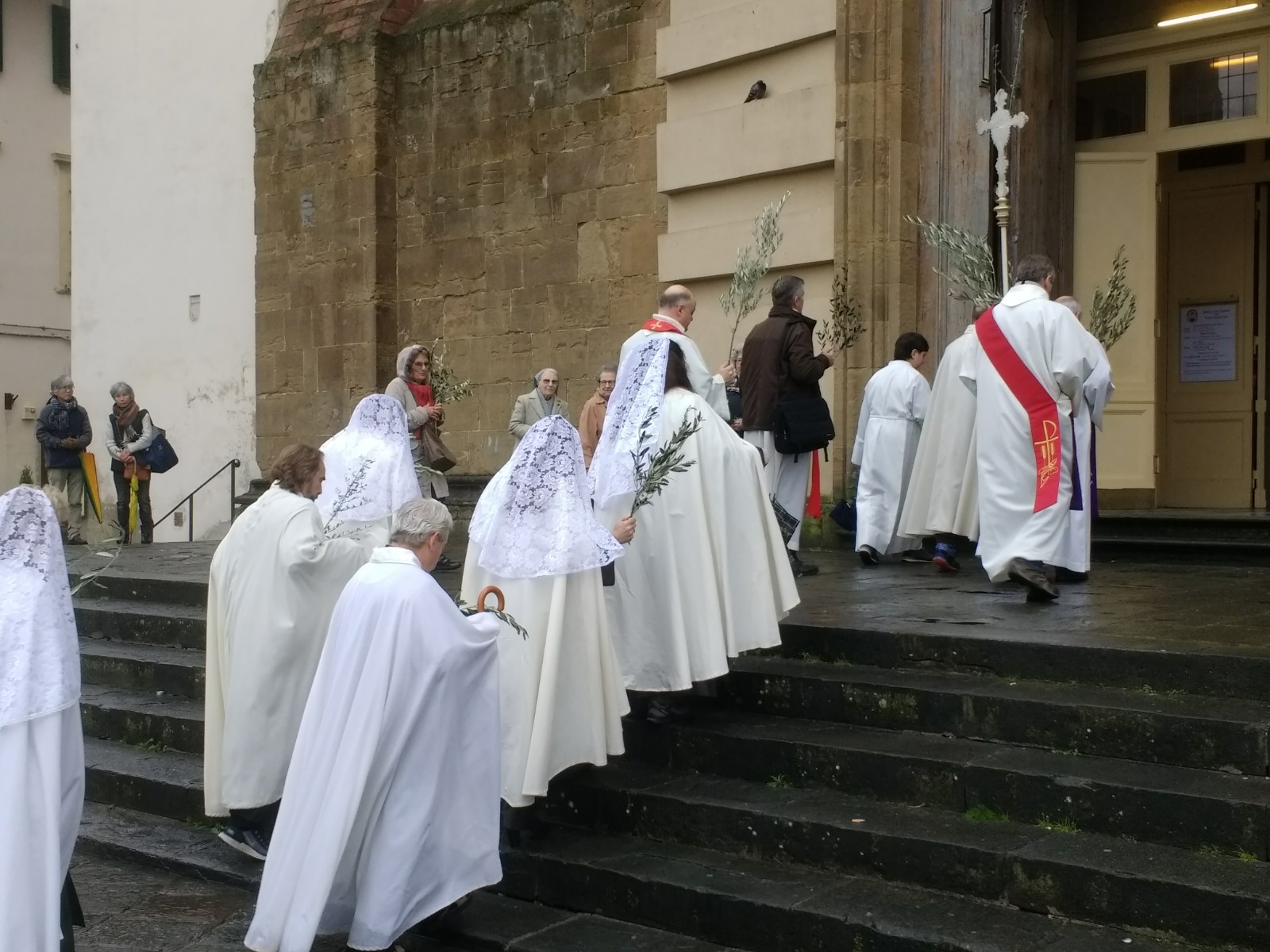
After the worst of the rain this morning, we had a wander through town and bumped into two Palm Sunday parades. The first comprised the priest, choir and congregation all carrying olive branches and singing along to a tune played on a mobile speaker.
The ladies in the choir also had white veils.
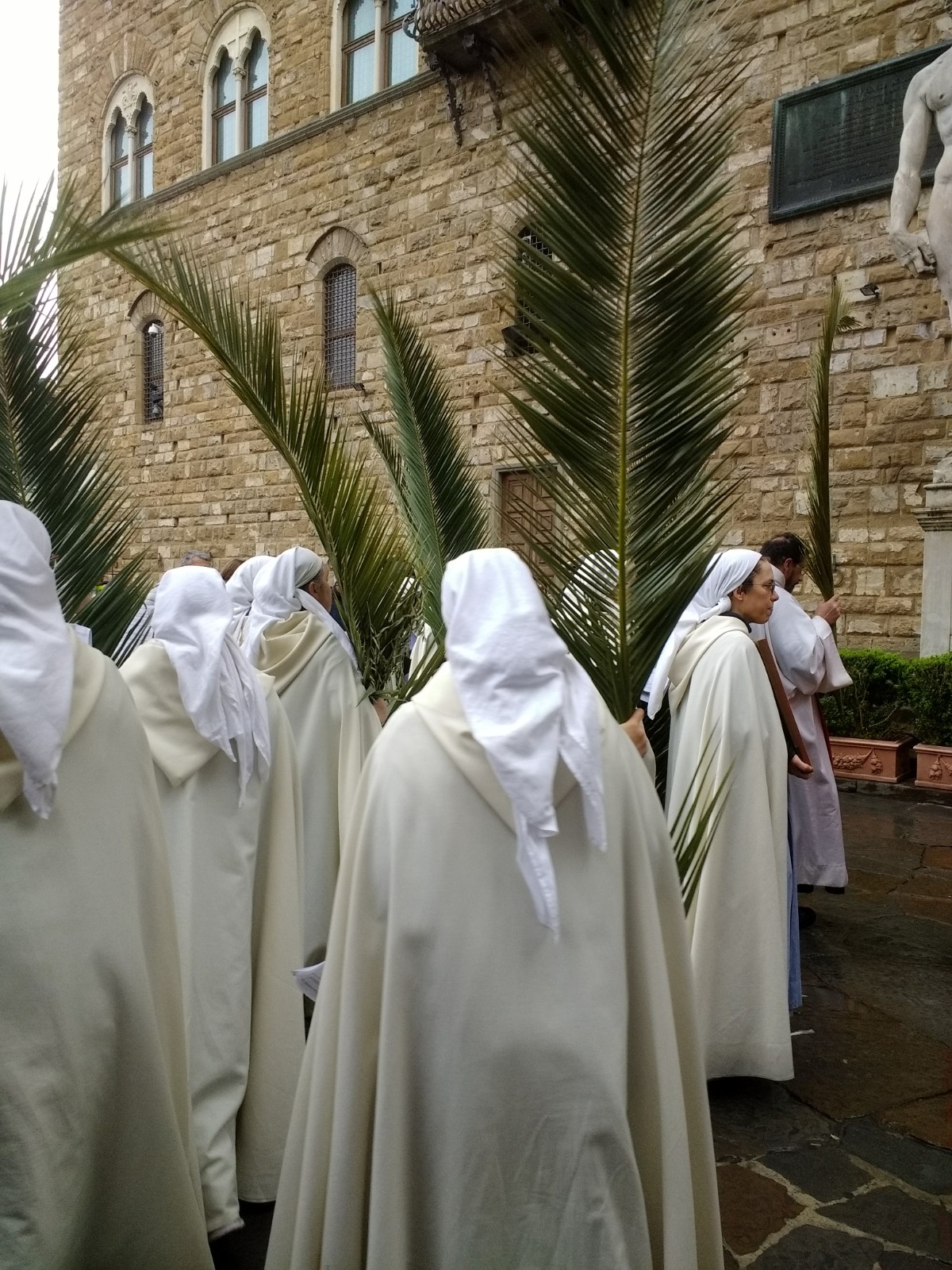
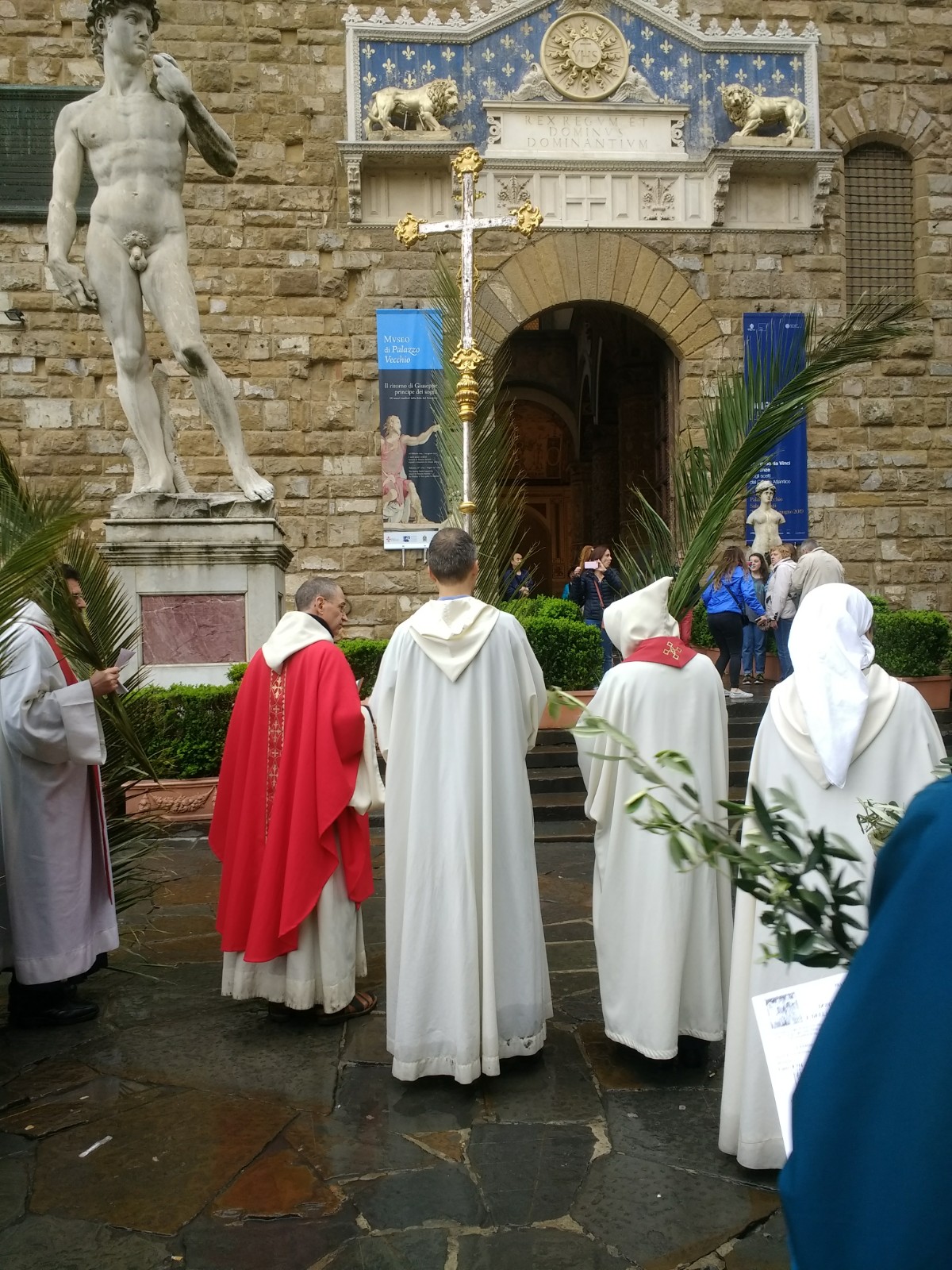
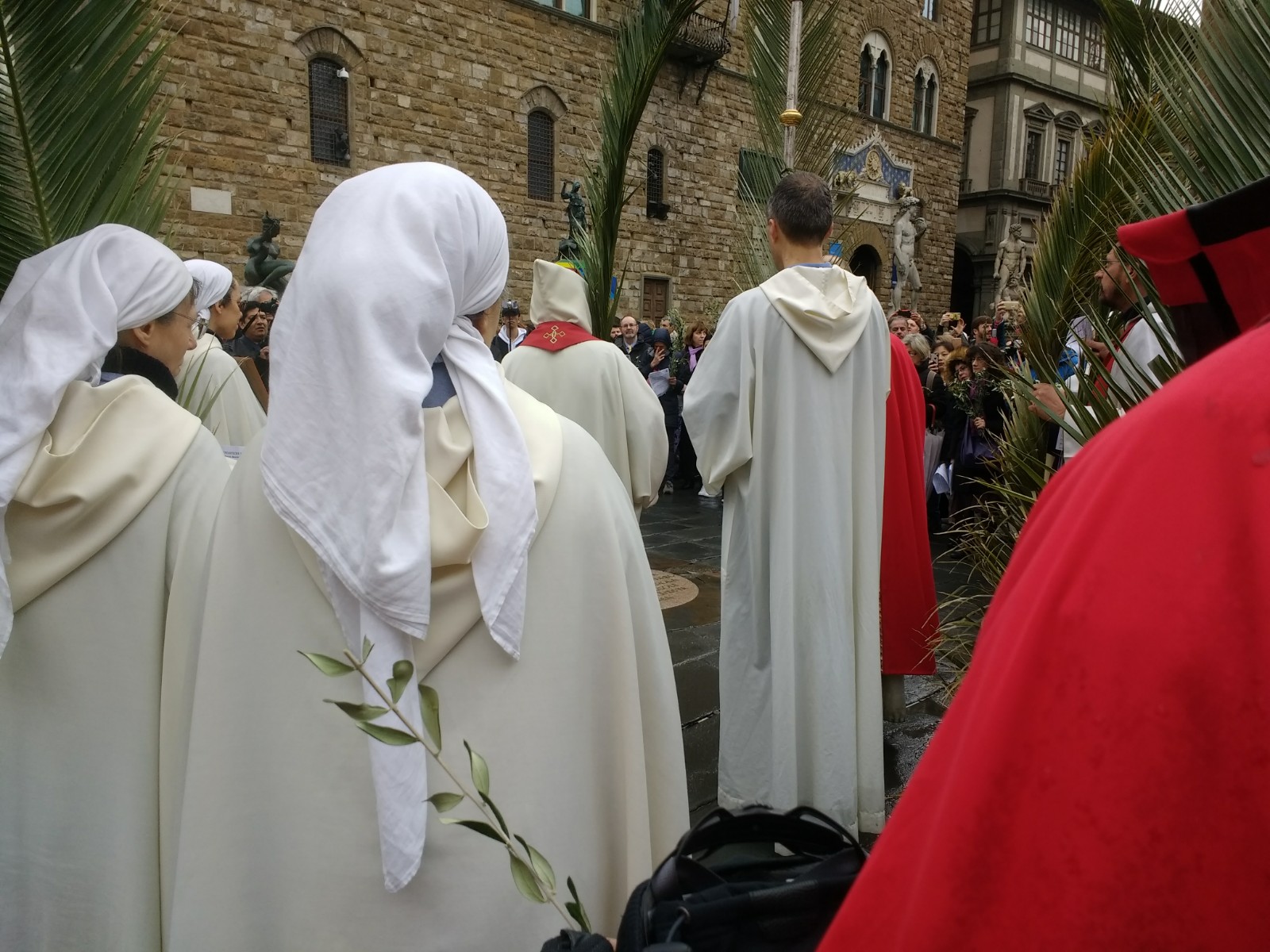
We then saw another group of celebrants as we passed through Piazza della Signoria (piazza in front of Palazzo Vecchio). The clergy and choir were carrying palms, and the congregation, olive branches. Bystanders were offered olive branches too.
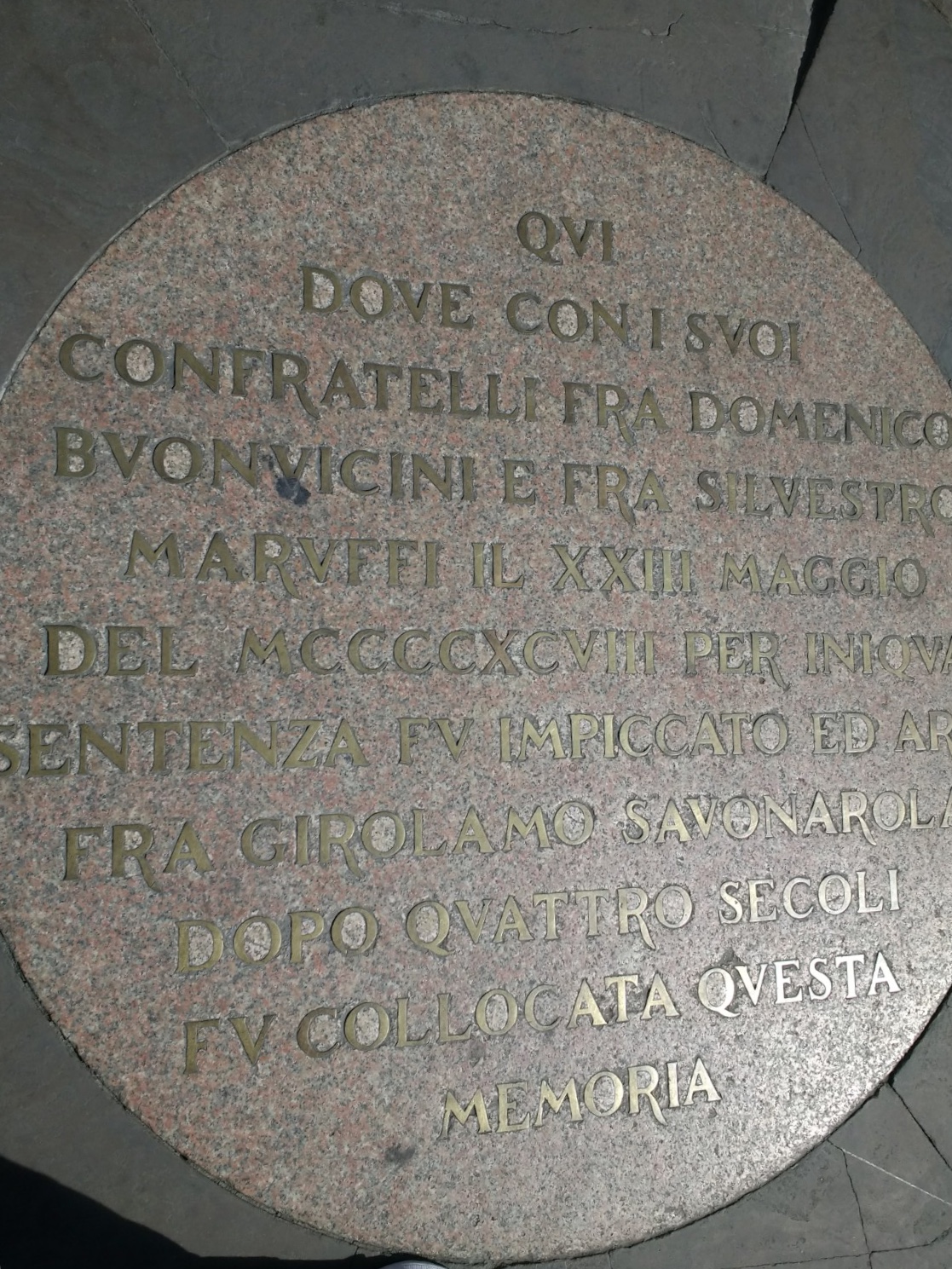
The priest blessed the plaque marking the spot where the monk Savonarola died back in 1498.
It was on Palm Sunday that year that San Marco’s monastery, where Savonarola was taking shelter, was stormed and Savonarola was captured, later to be hung and burnt.
Killed for challenging the Pope’s authority, having a part in the fall of the Medicis, and the public tiring of Savonarola’s brand of extreme piety, he was seen, after his death, as a forerunner to the early Protestant reformers, including Martin Luther.
In the twentieth century Savonarola was remembered as a champion for the poor and oppressed, and has been considered by the present-day Catholic Church for beatification.
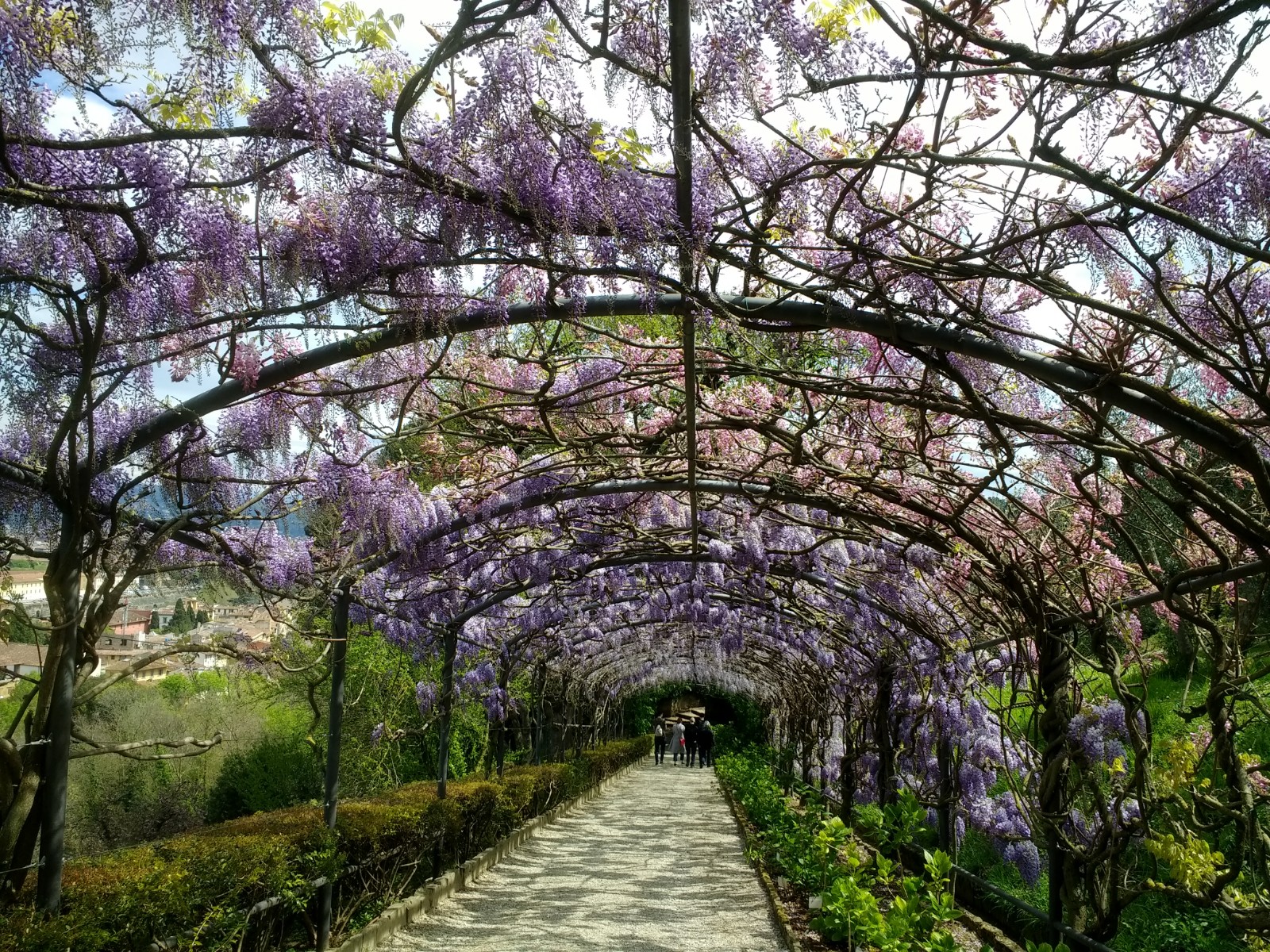
Spring has really sprung in Florence this week and we popped back to the Bardini Gardens to see how the wisteria was progressing.
The wisteria will ever even lovelier in a few days, but we won’t, sadly, be here.
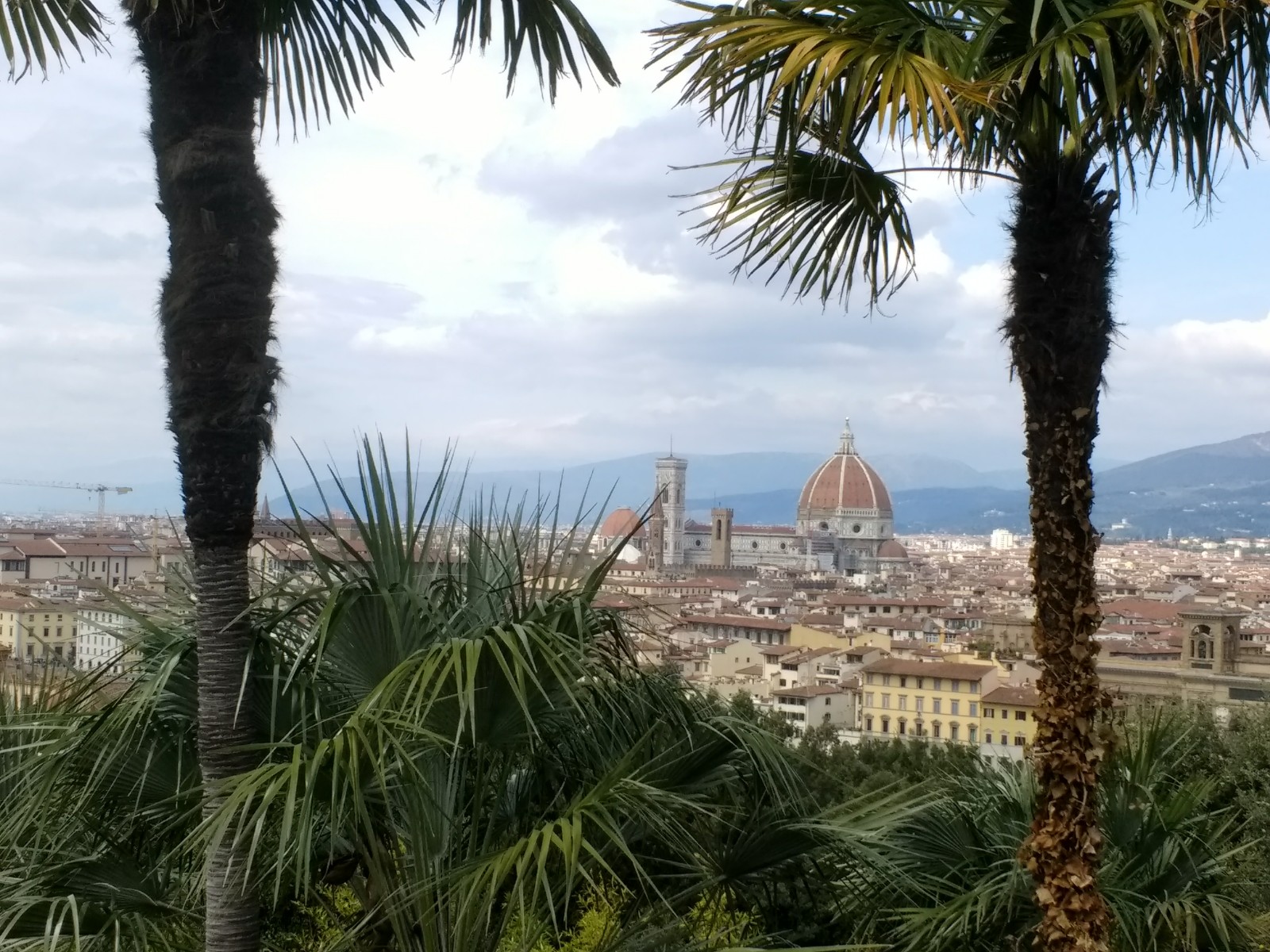
From the gardens, we walked up to Piazzale Michelangelo for supposedly the best view of Florence. (If ‘piazzale’ is a new one for you, as it was for me, a ‘piazzale’ has at least one open side, whereas a ‘piazza’ is enclosed on all sides).
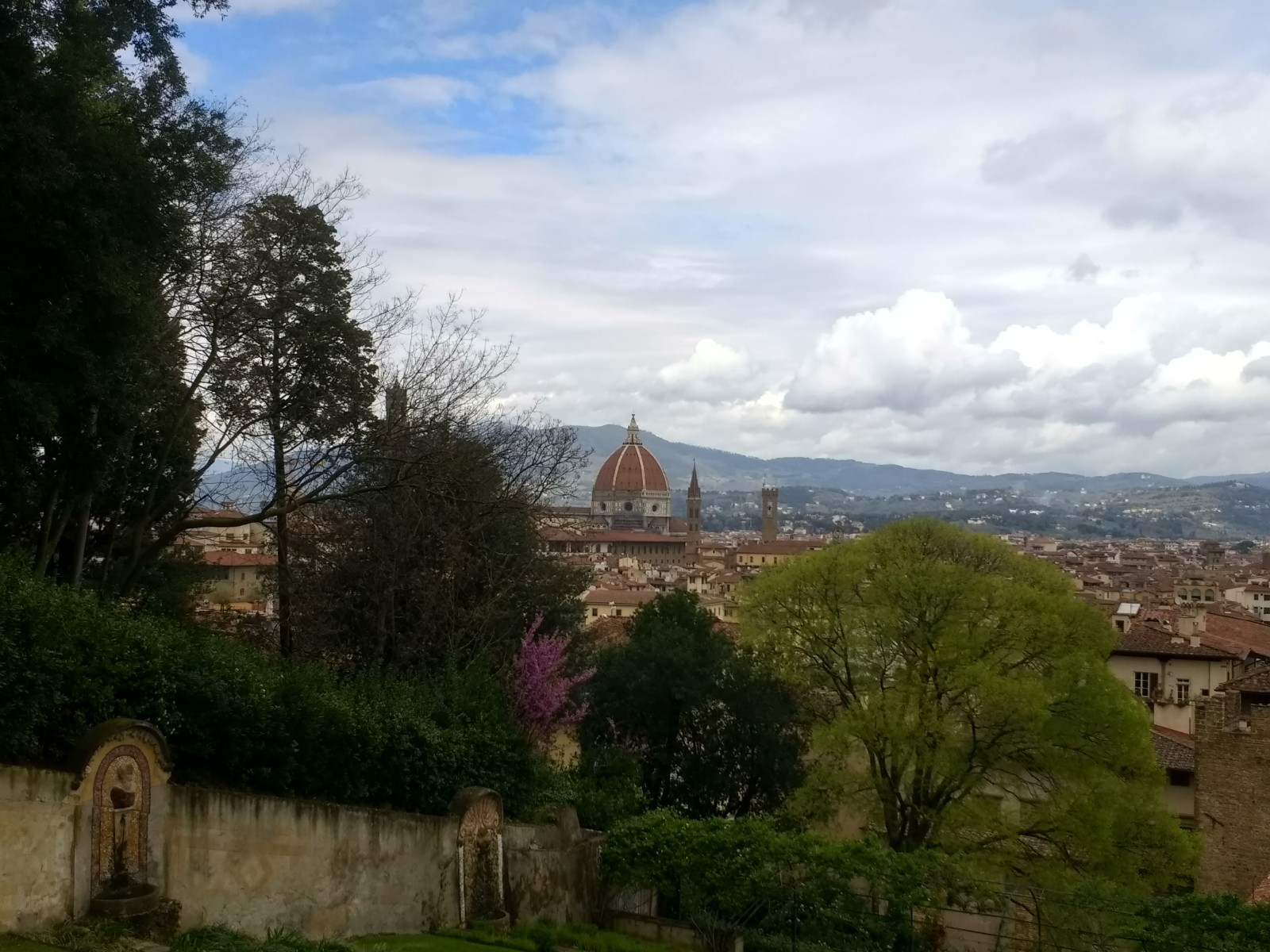
View of the Cathedral from Piazzale Michelangelo
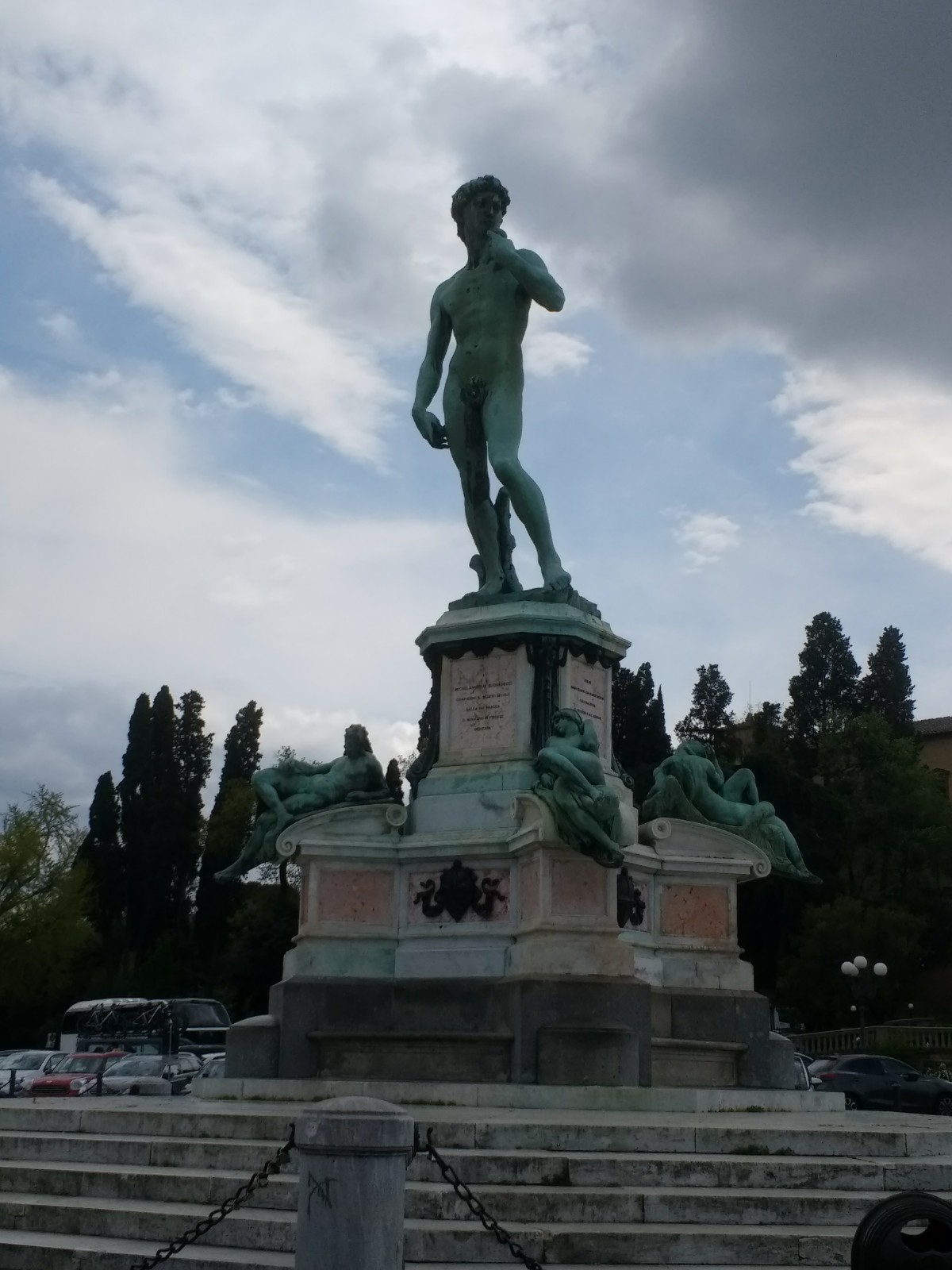
The Piazzale was one of the projects undertaken when Florence was chosen to be the new capital of Italy after re-unification. (Unfortunately this elevated status was only to last for six years from 1865-1871). The Italian Government donated a bronze statue of David for the centre.
David in Piazzale Michelangelo
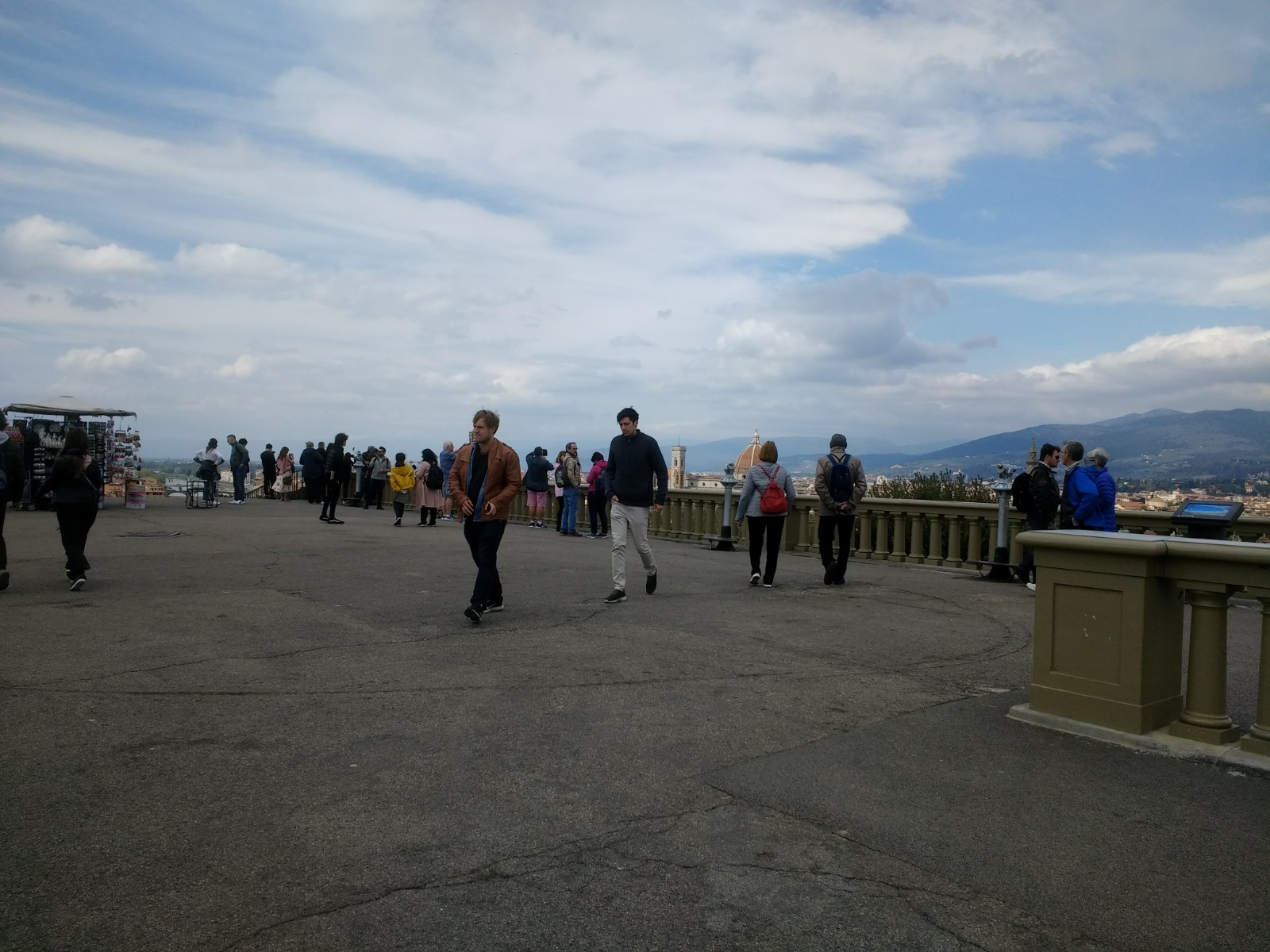
Today the Piazzale is popular with locals, tourists and souvenir sellers.
The Piazzale today
The balustrade, made of cast-iron and painted to look like stone, has just been restored. It has undergone restoration twice previously – once in 1882 and then again in 1938, for Hitler’s tour of Florence.
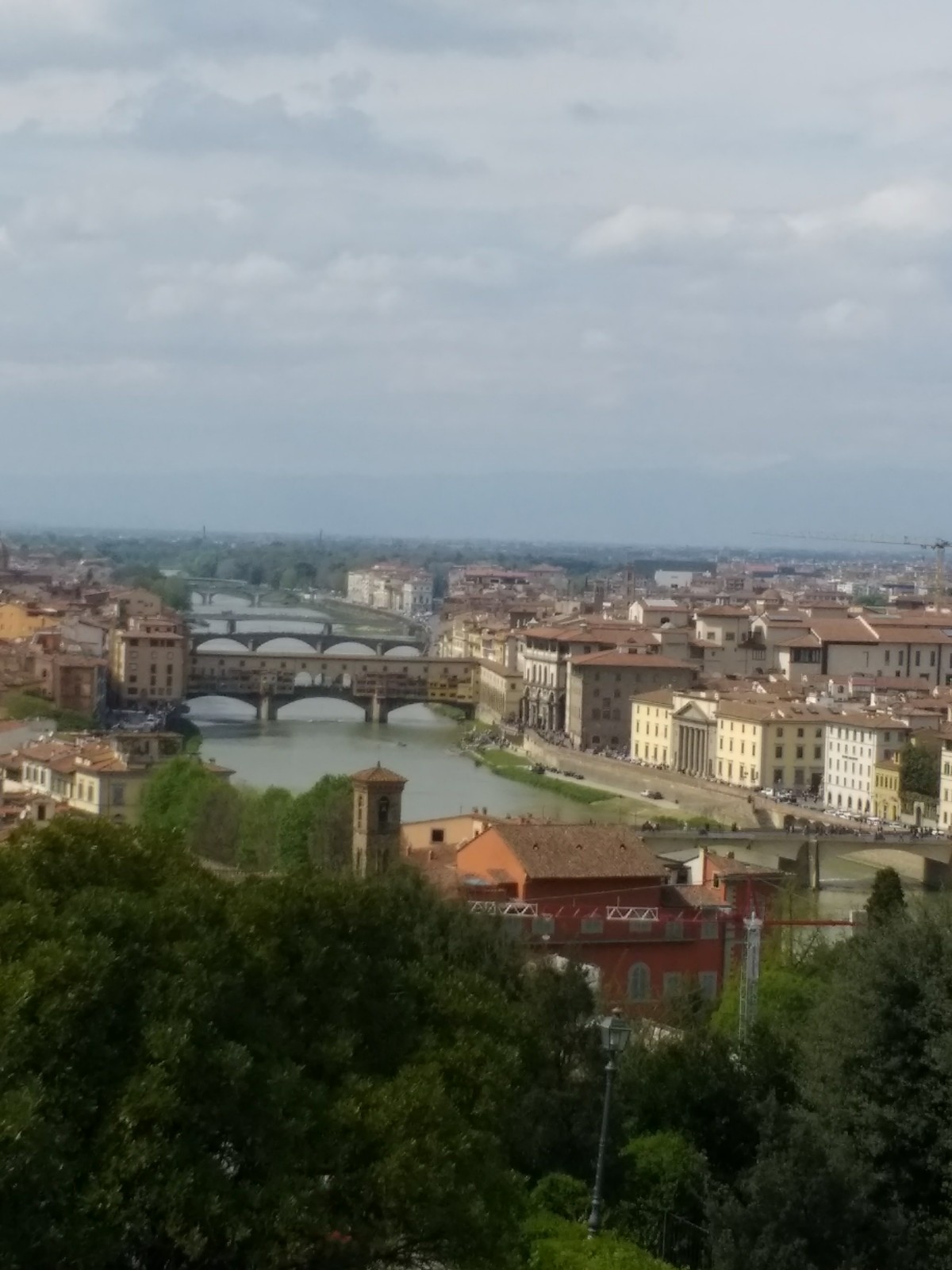
Bridges across the Arno. The one with the buildings along it is Ponte Vecchio, the only bridge to survive the retreating German army in the Second World War.
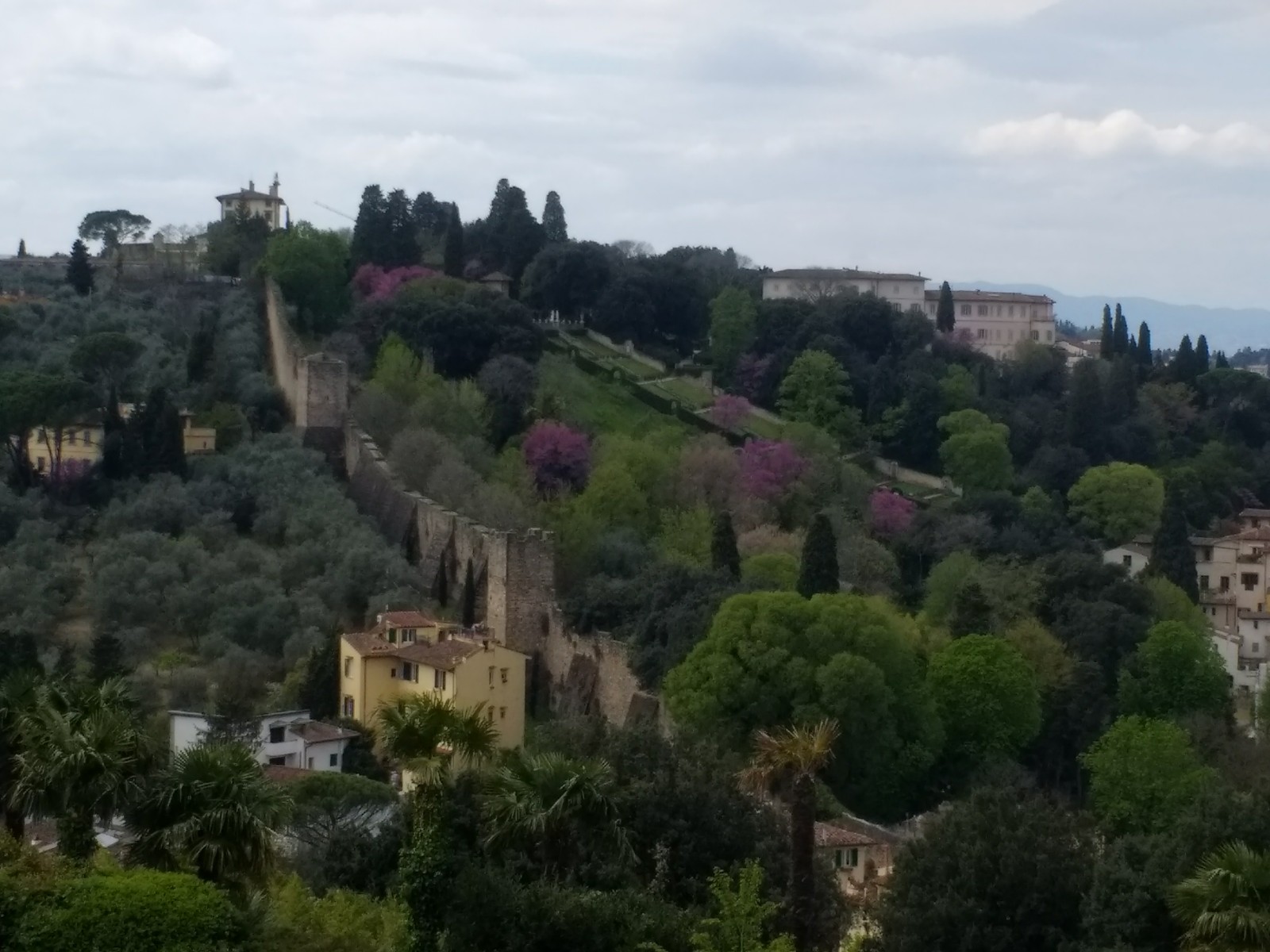
A good view of some of the Florentine walls – I think they look as if they are taken from a picture in a child’s book of fairy tales. To the right of the wall are the Bardini Gardens.
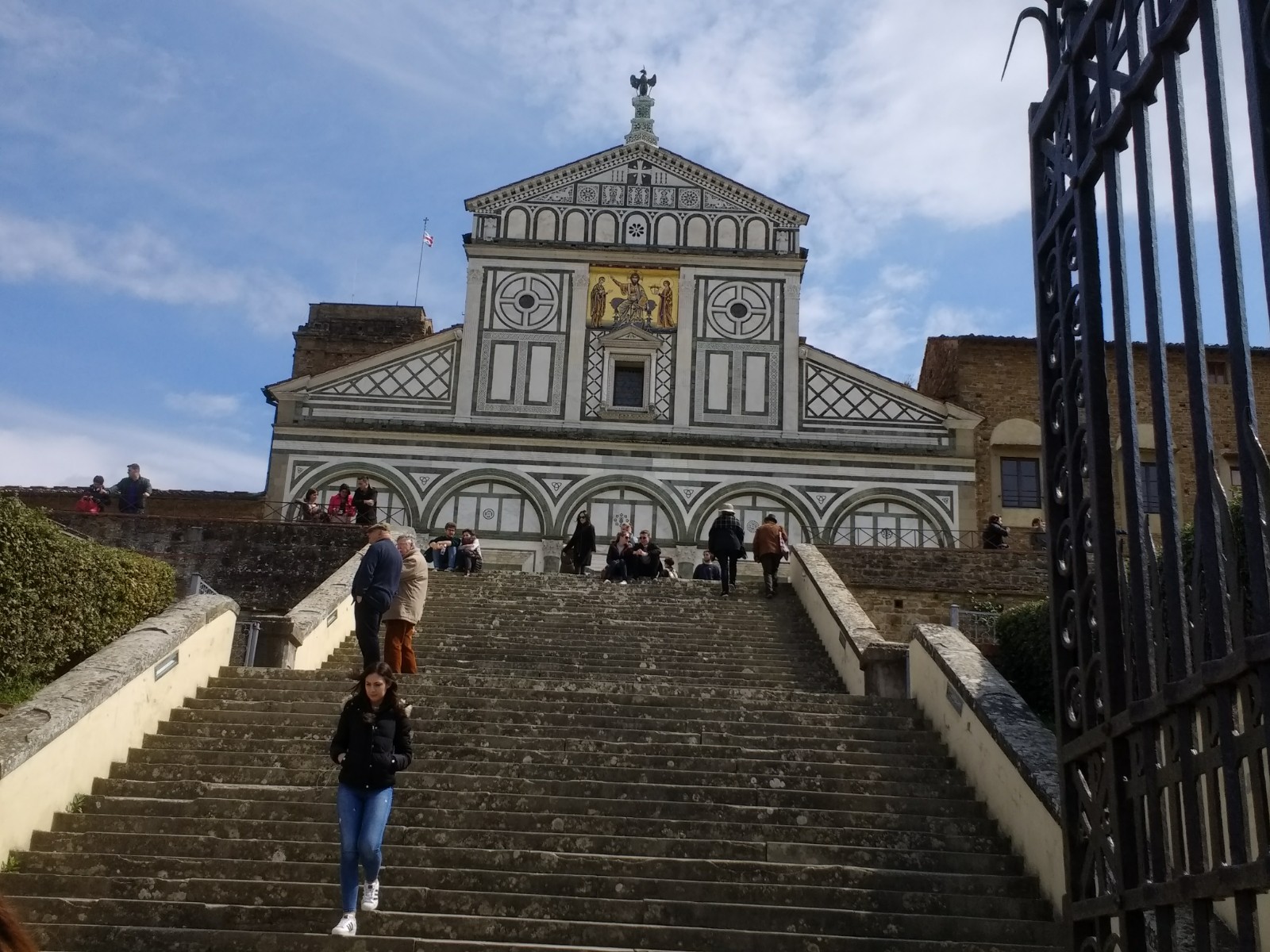
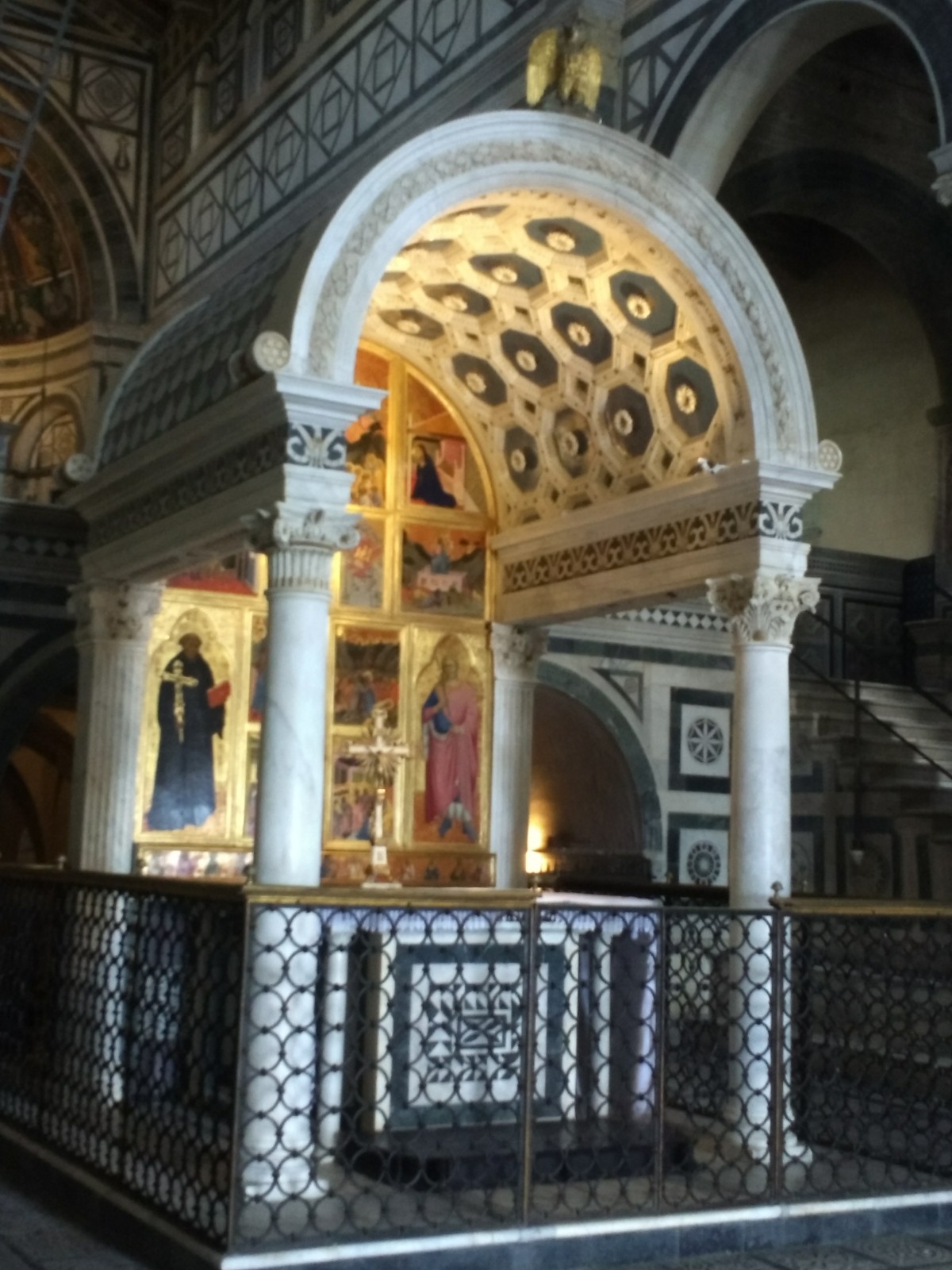
After a good look at the Piazzale and the views, we climbed further up to San Miniato al Monte, the highest church in Florence.
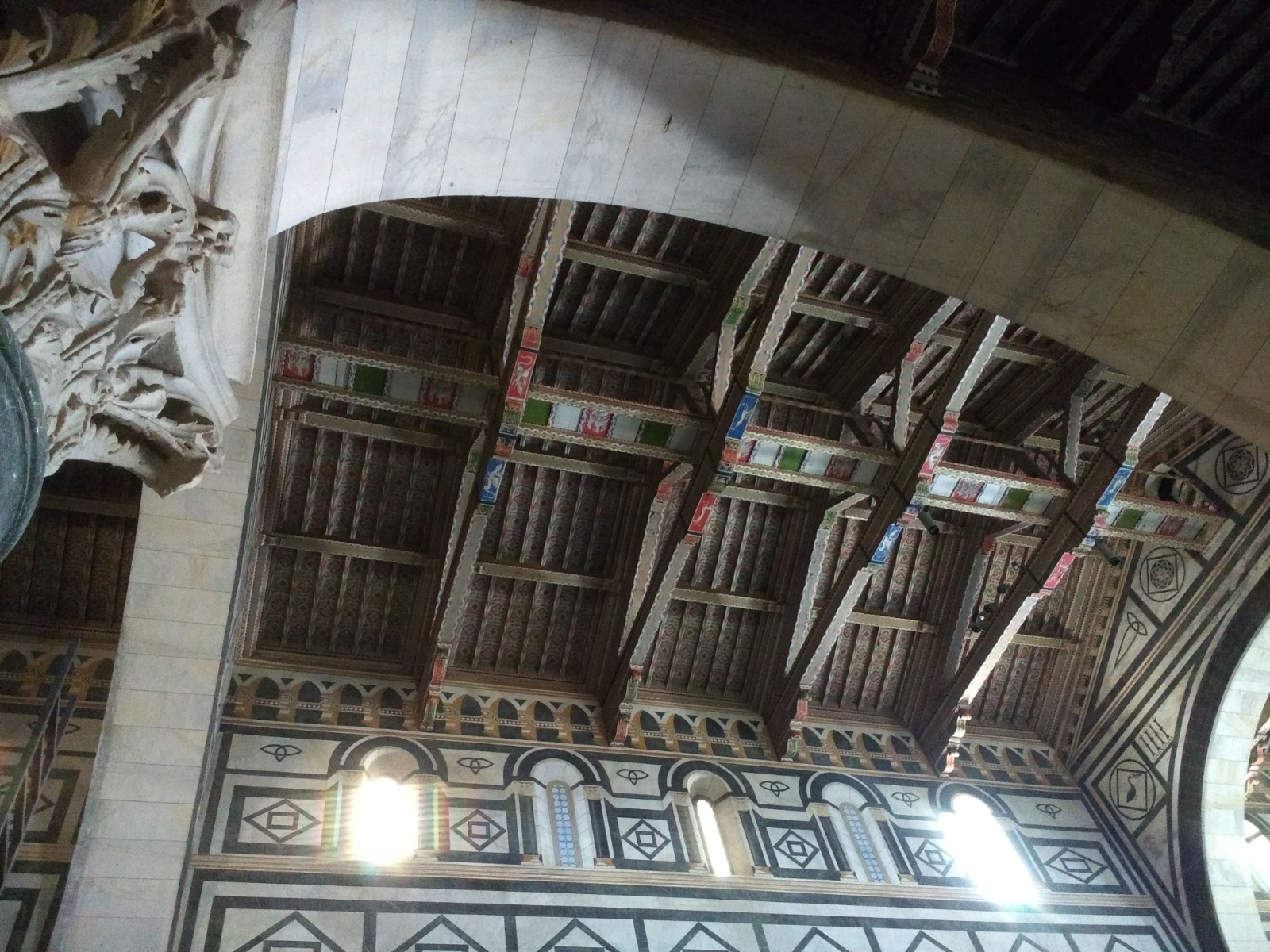
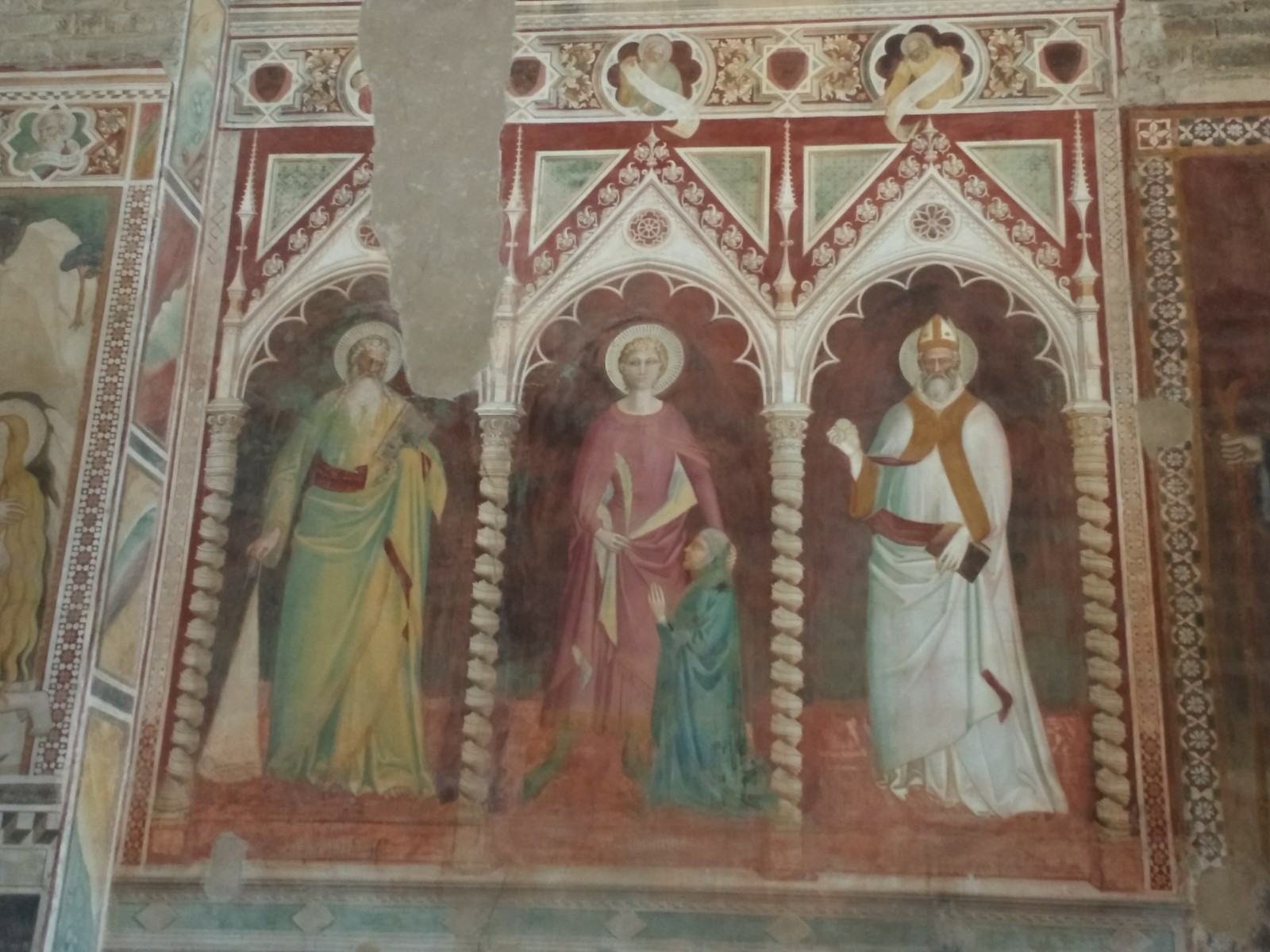
San Miniato al Monte Ceiling in San Miniato al MonteSmall free-standing chapel, thirteenth century Fresco
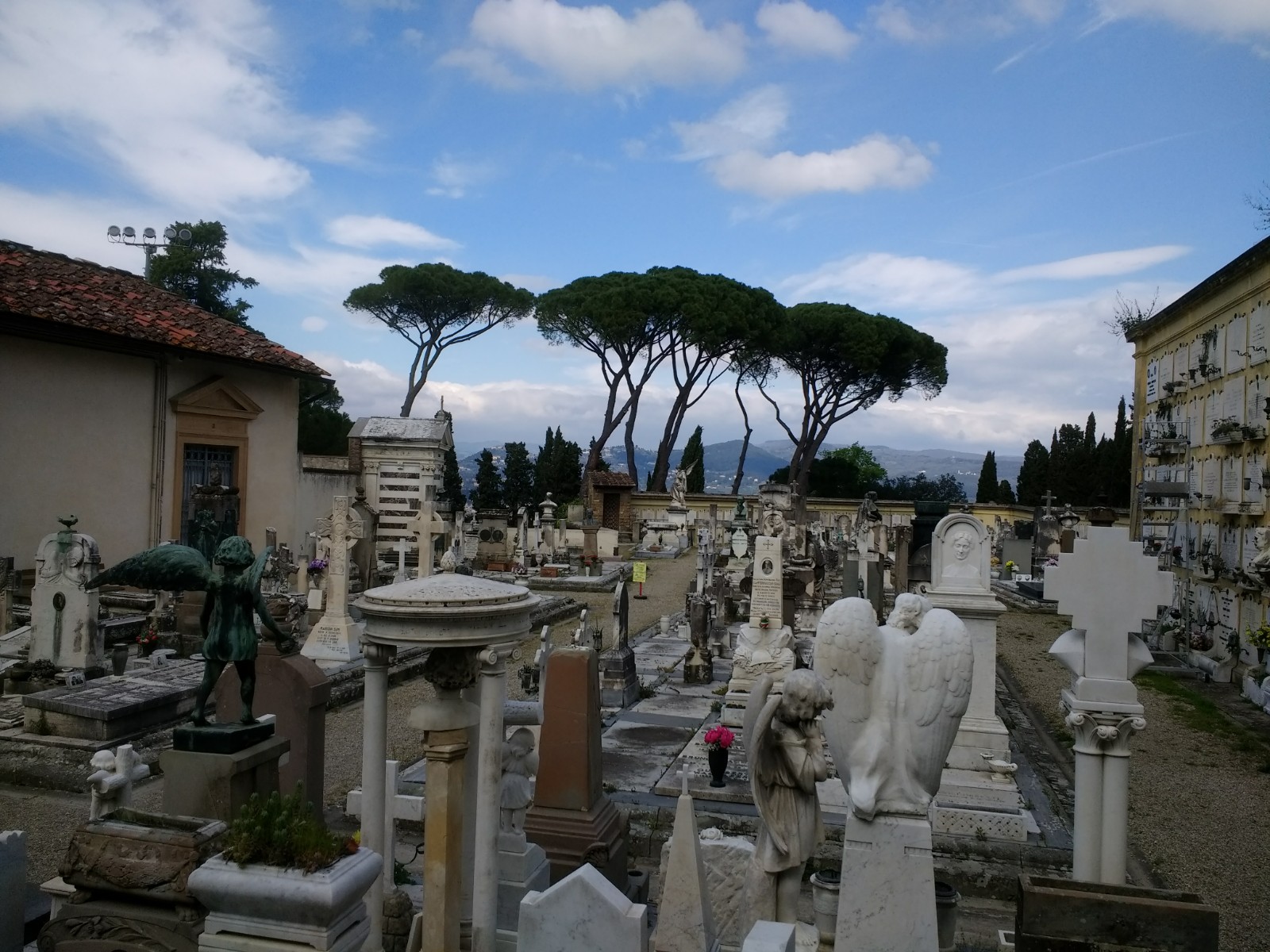
Behind the church is a cemetery, where, among others, Carlo Collodi, creator of Pinocchio, is buried.
Cemetery. A lovely place, but very different to an English churchyard. The memorials are all very close together.
A lot of steps again today. While we’ve been in Florence we haven’t used public transport at all and have averaged 14,222 steps a day since 18 March, when we were still on Capri.
This is a tale of two men, unrelated, but both brothers in the Monastery of San Marco in Florence.
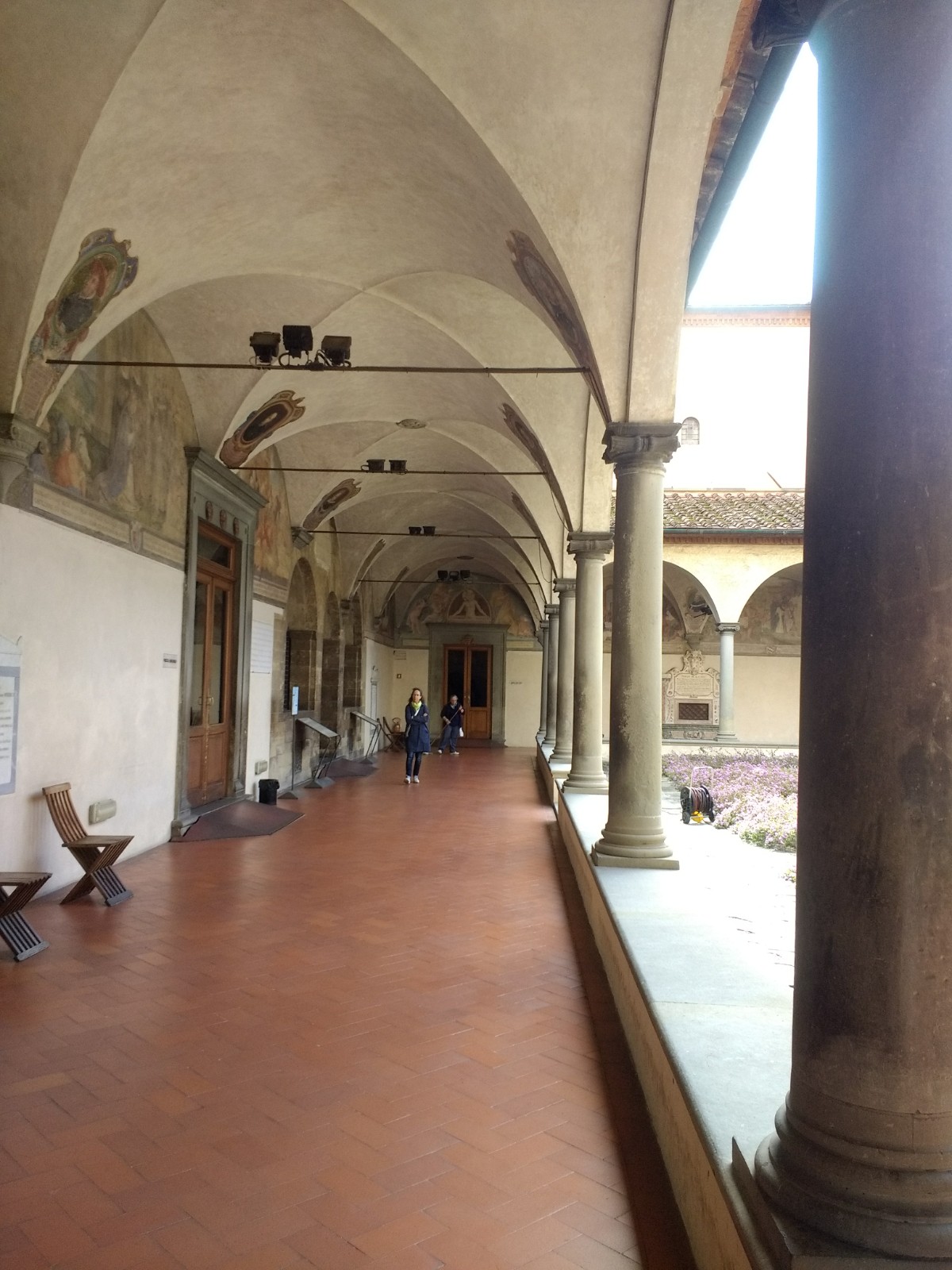
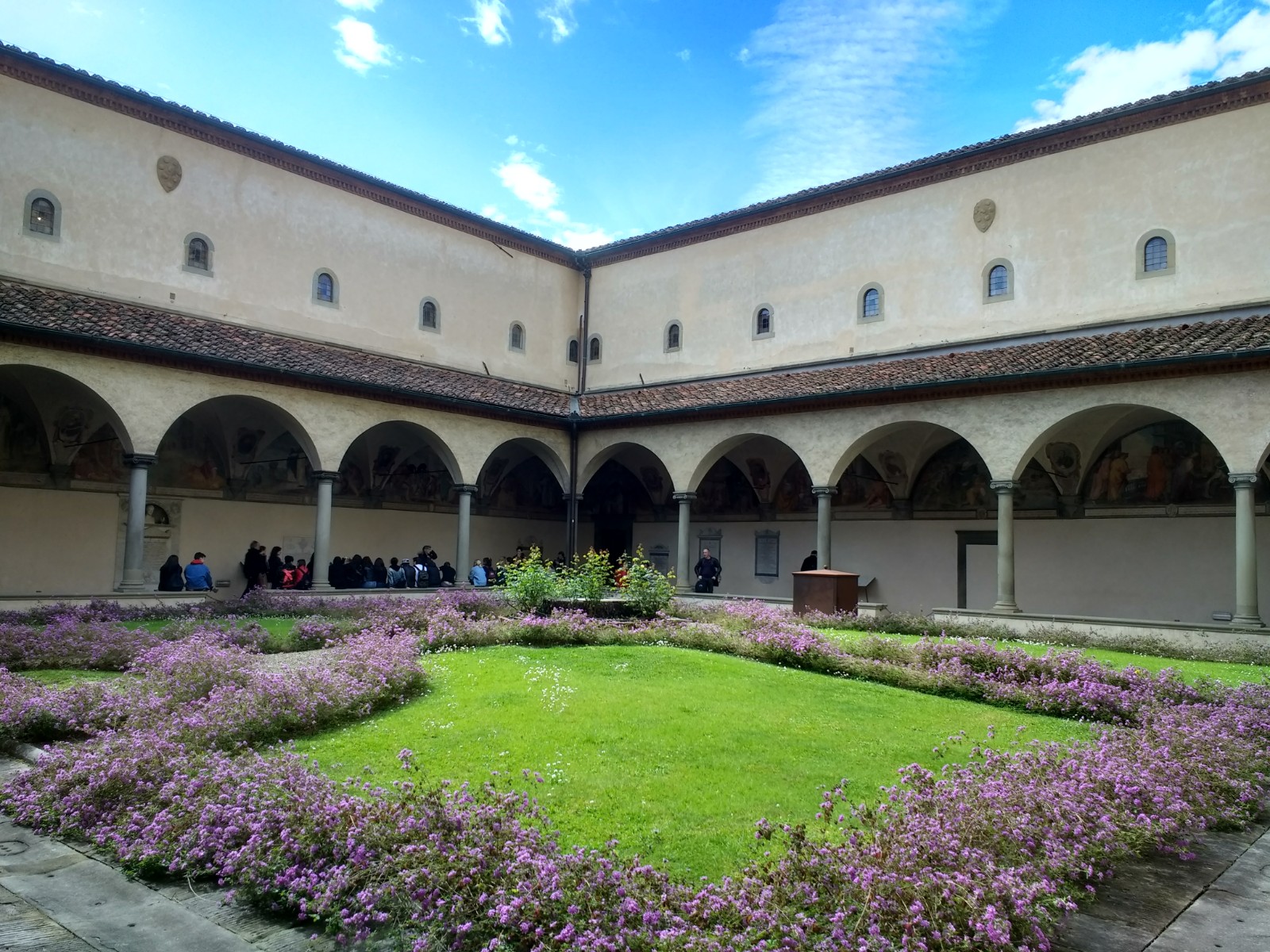
Cloisters of San Marco
Cloister Garden
The Dominican Monastery of San Marco was established in 1439 by Cosimo I, founder of the Medici dynasty. Fra Angelico, the first brother in this story, was a gentle, modest man who came to fame through his religious painting.
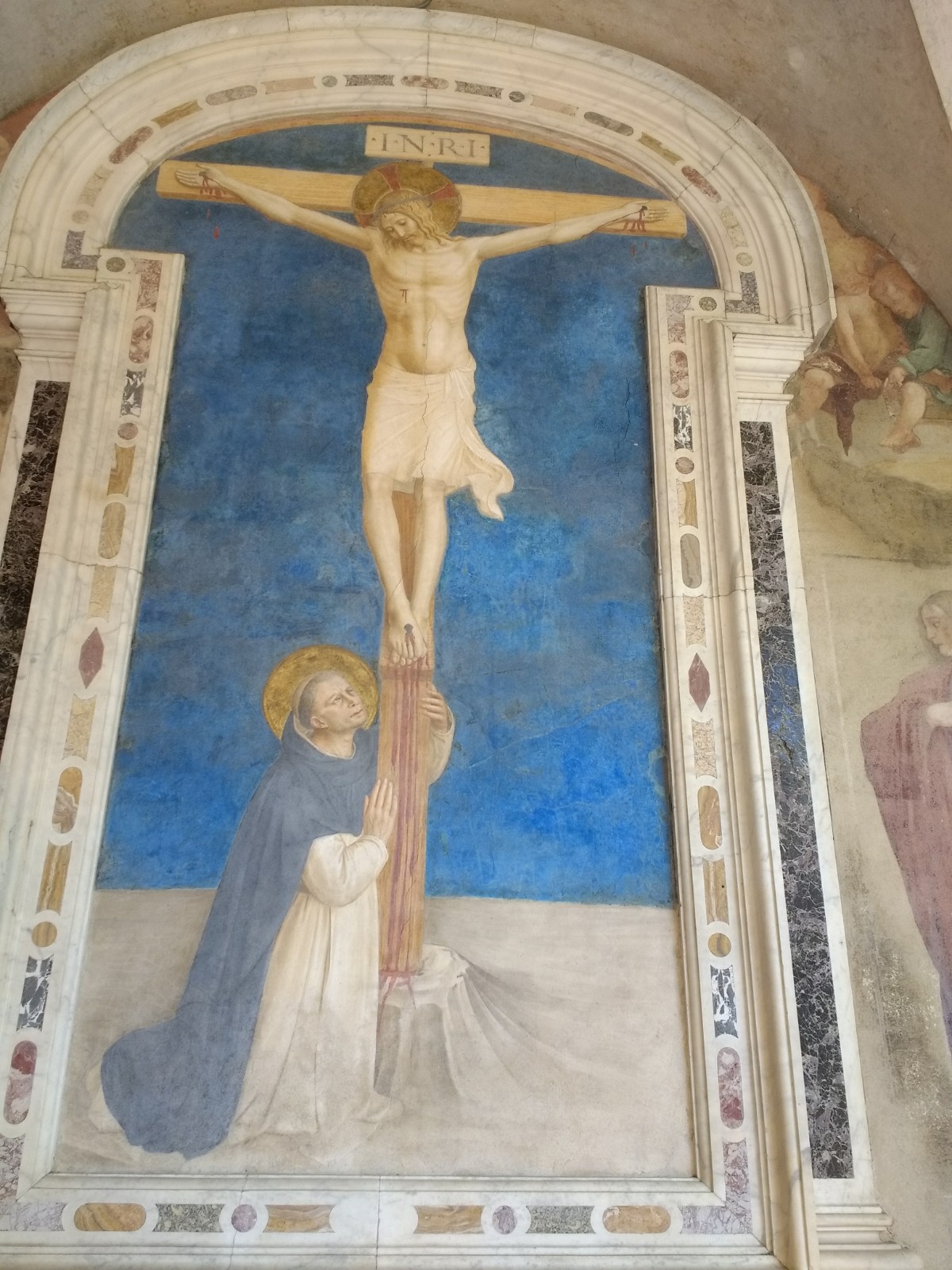
St Dominic, founder of the Dominican order, with Christ on the Cross by Fra Angelico
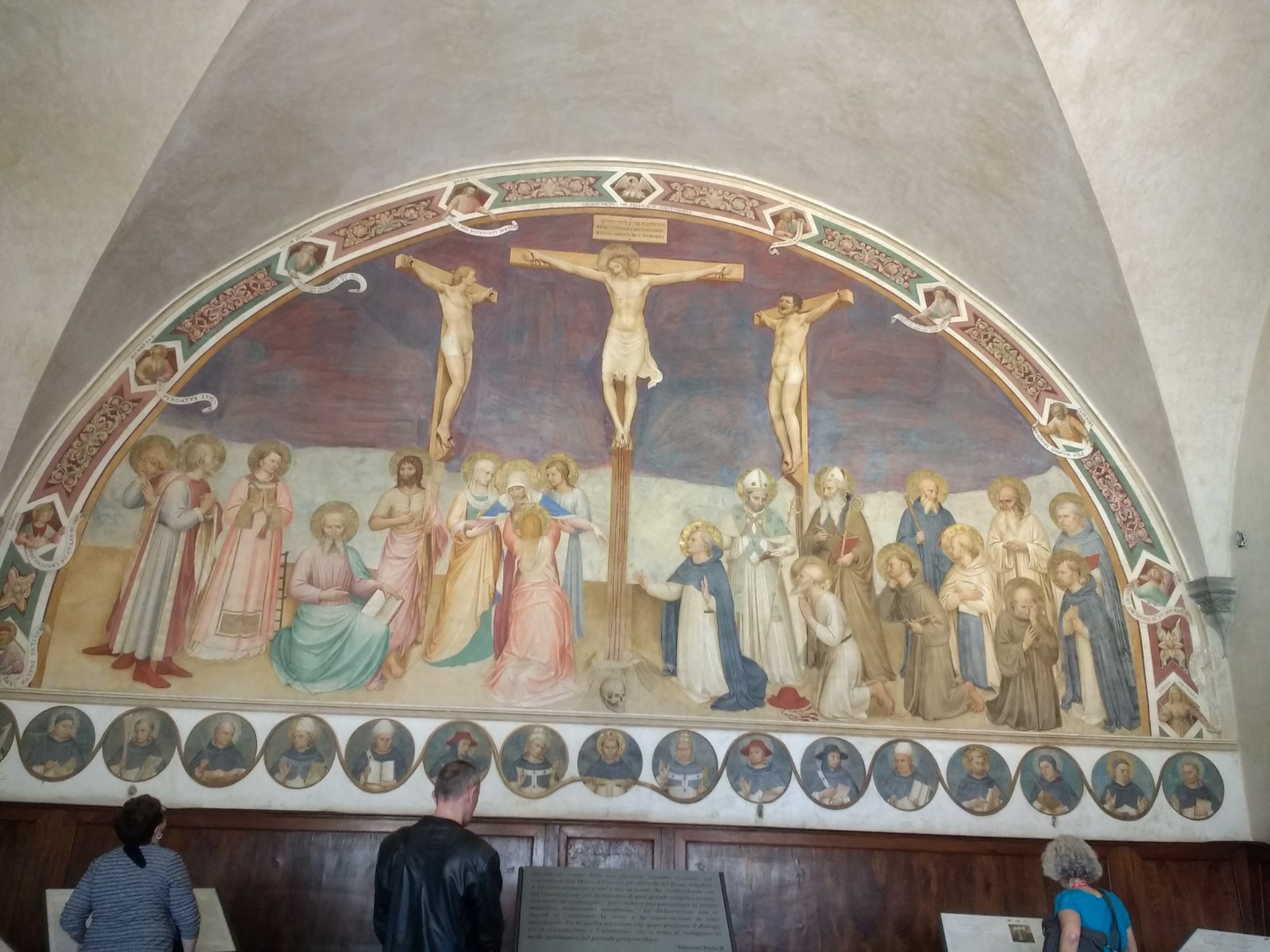
Painting was like praying for Fra Angelico. He painted to commune with God and to help others with their prayers. He decorated the walls of his own monastery, as well as taking commissions for churches.
Crucifixion by Fra Angelico
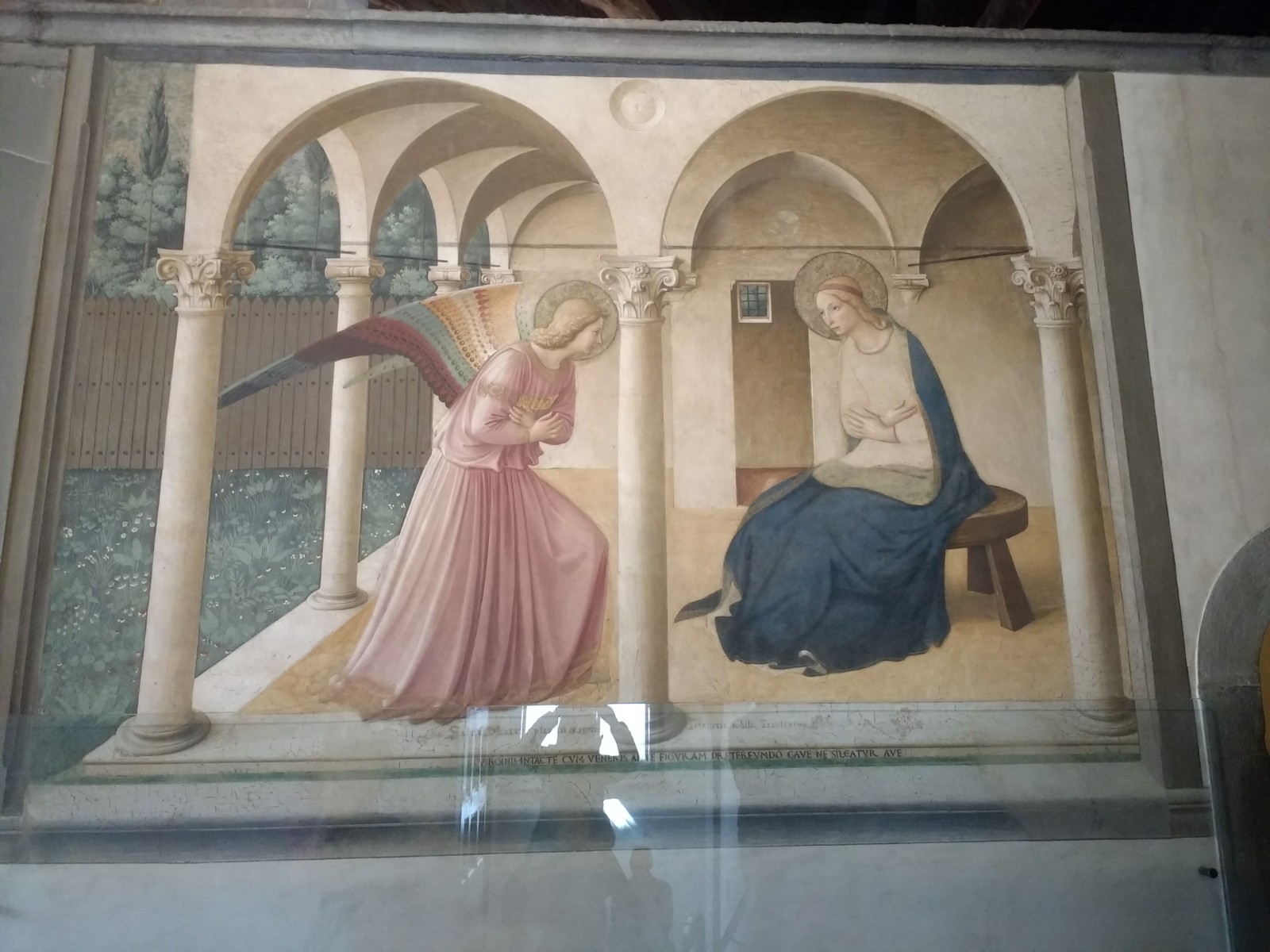
Fra Angelico is credited with taking inspiration from other Renaissance painters, and including realism (people in natural poses) and perspective, in his work.
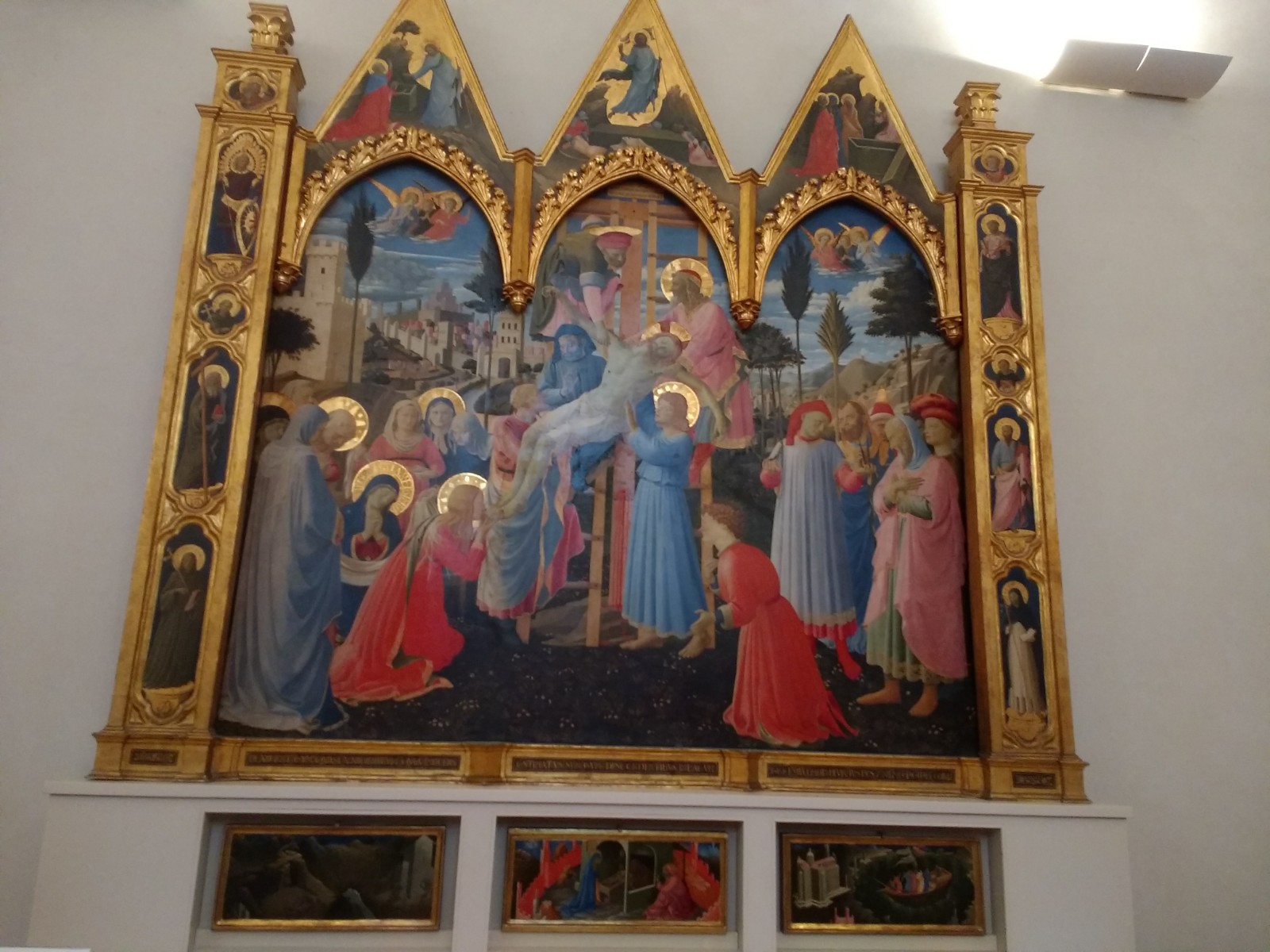
Annunciation by Fra Angelico An Altarpiece by Fra Angelico
Fra Angelico became Prior of the monastery, and was also invited to take up the role of archbishop, but turned it down in order to stay with his brother monks.
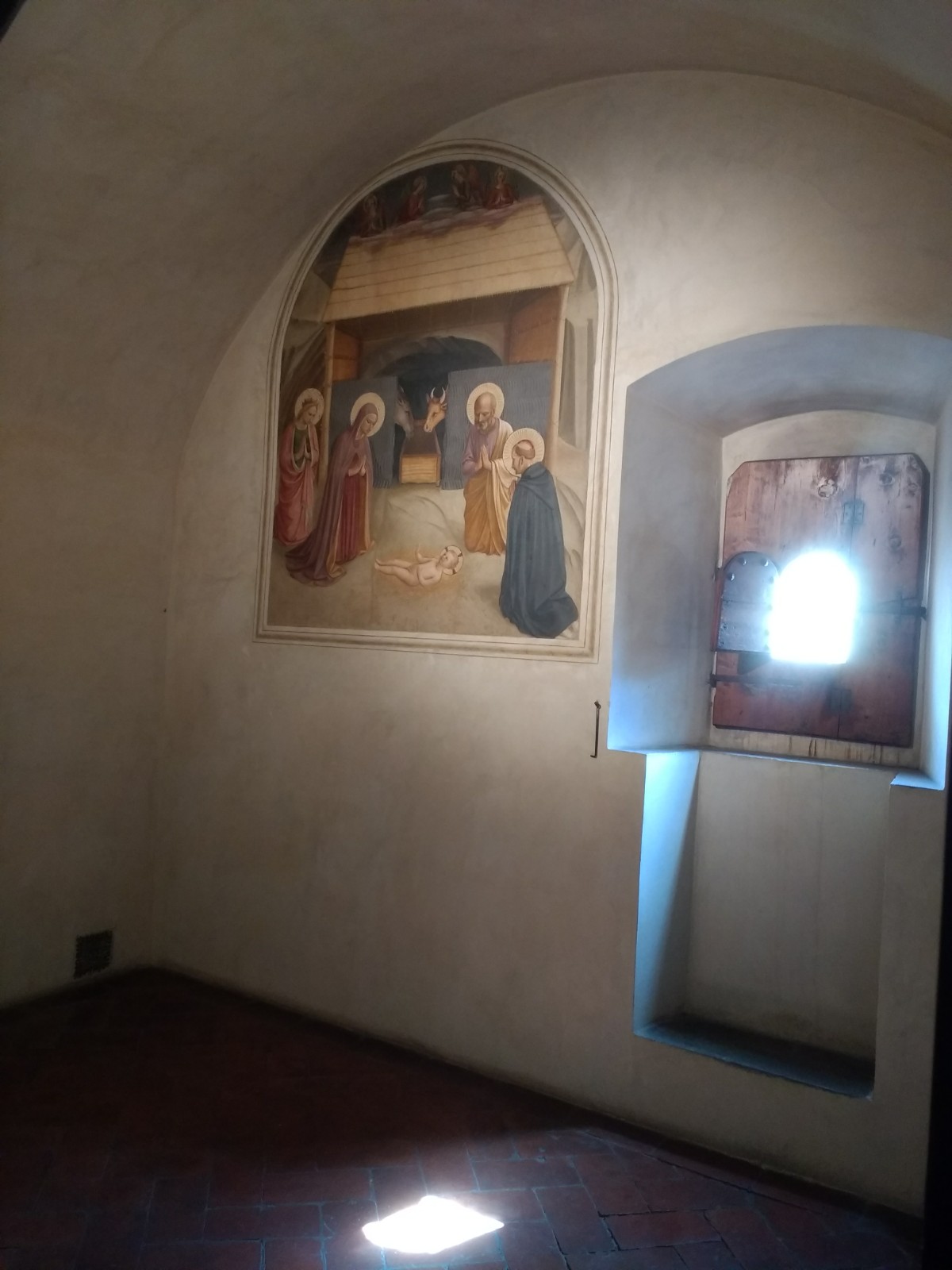
Fra Angelico painted a fresco in each of the cells used by the senior monks.
Fra Angelico died in 1455, about the time of birth of the second brother in this tale, Girolamo Savonarola.
Savonarola started on the path for academia, but on hearing a sermon on repentance, decided to give up the worldly life, and joined the same order of monks where Fra Angelico had served, and died, San Marco.
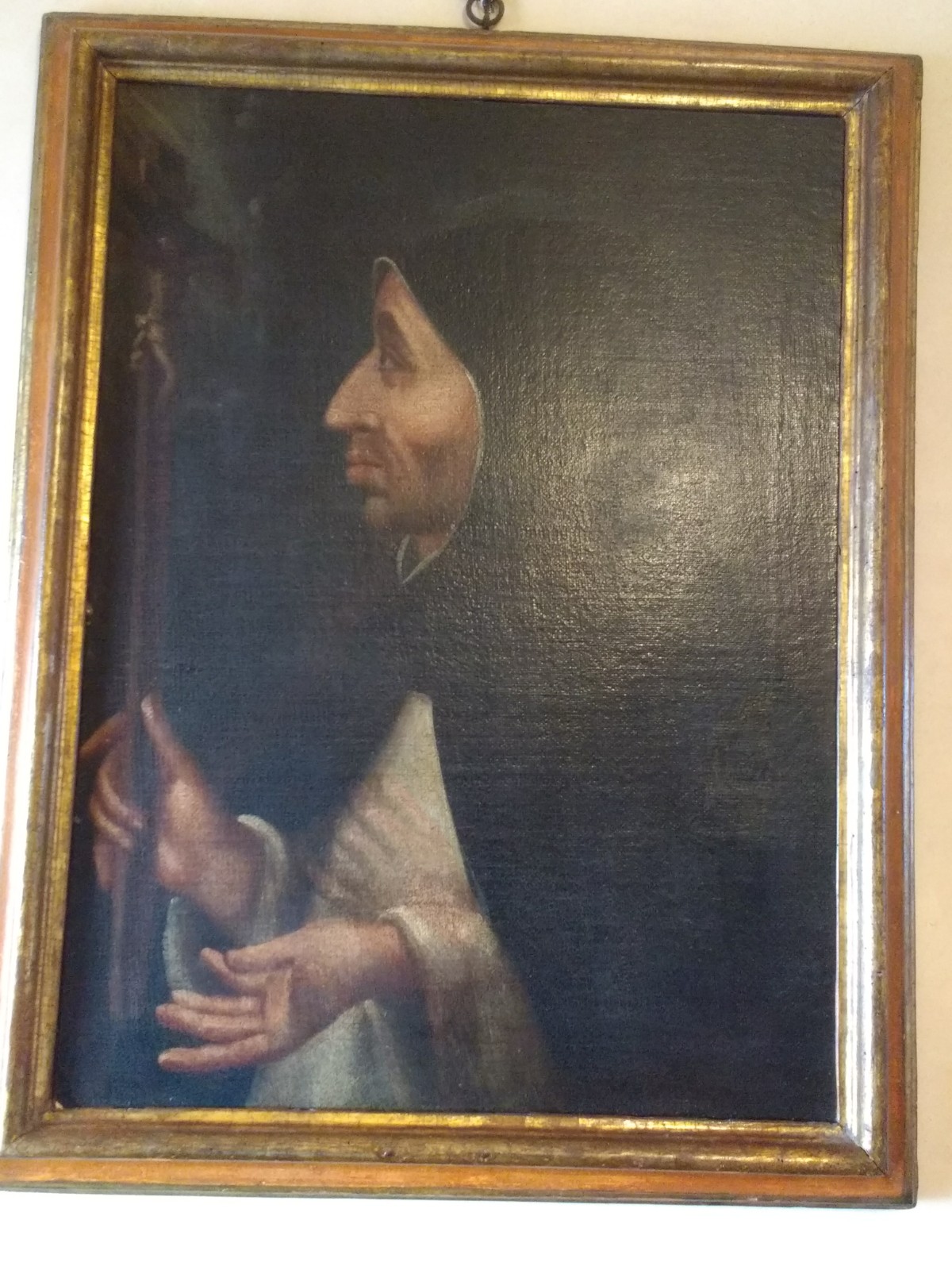
Savonarola
Savonarola was an austere monk who fought against the excesses of the age and rallied for a return to a simple, more puritanical way of life.
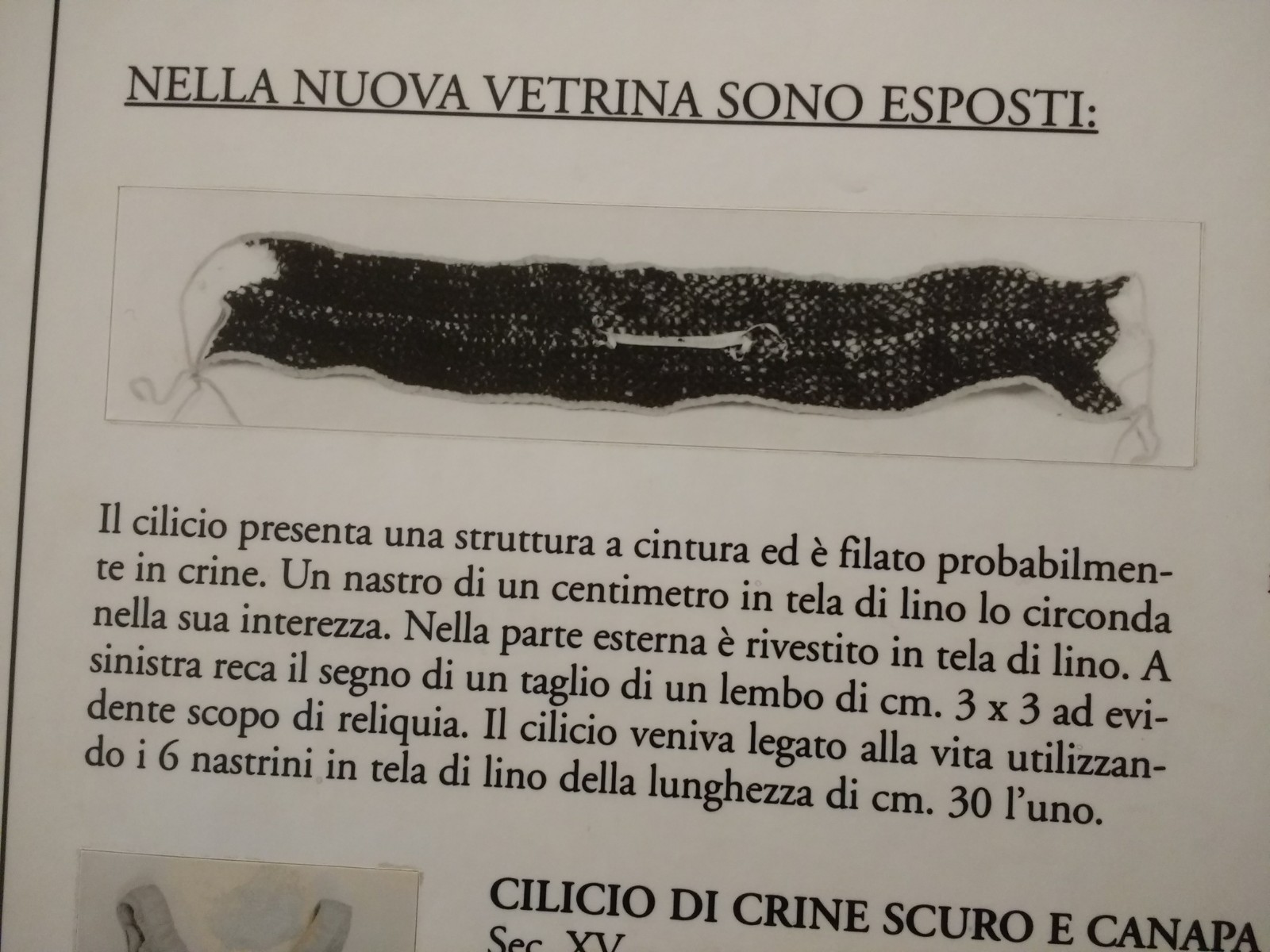
Hair shirt girdle worn by Savonarola
As time went on, Savonarola’s influence grew, taking control of the monastery in the 1480’s, and ten years later, as the banks were failing, and the Medici dynasty was falling apart, of the city of Florence.
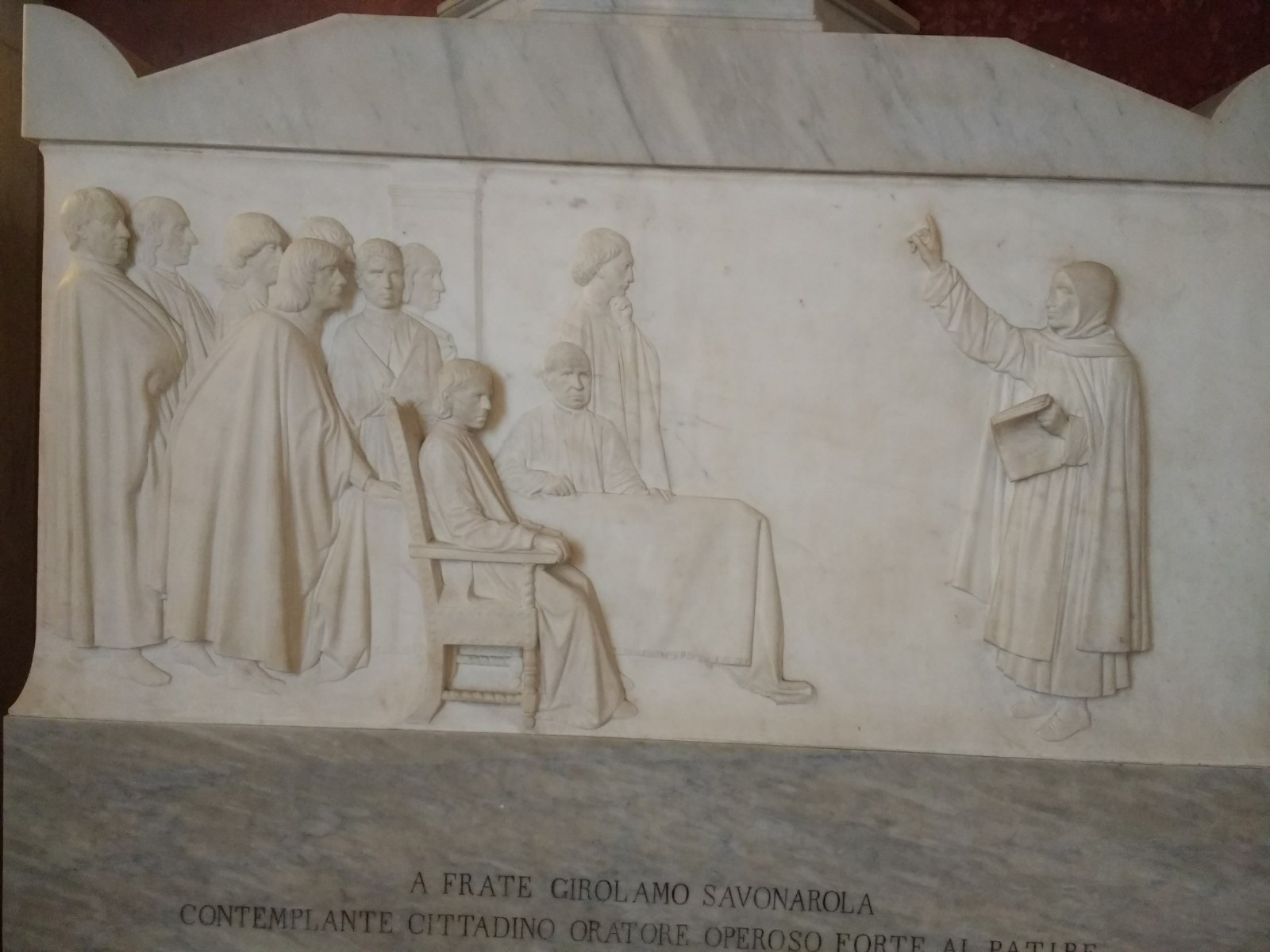
Savonarola stands before the Florence city council, pledging allegiance to the city’s constitution
At first, Savonarola was a very popular figure, cutting taxes, reducing street crime and transferring power from the Medicis to the citizens. Later, not content with merely making sermons against the corrupt church and the excesses of life, he drove his followers to carry out acts of theft and vandalism.
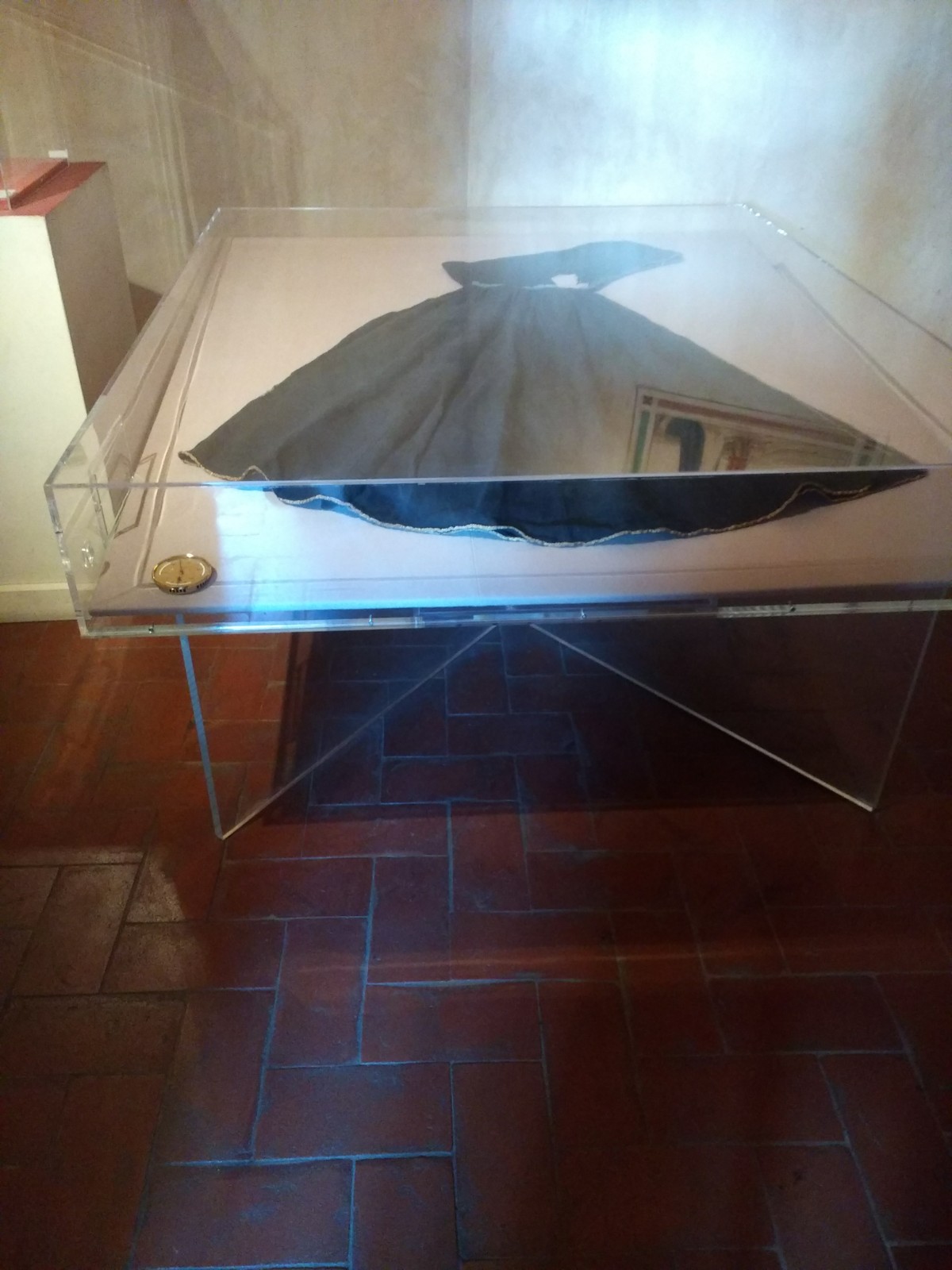
Savonarola’s cloak
In 1497 his followers lit a huge bonfire in front of Palazzo Vecchio, the Palace of the Medicis before their exile, and anything considered sinful was thrown onto it, including dice, cards, wigs, musical instruments, books and paintings.
However, people grew tired of their frugal life-style. The tide of popularity turned against Savonarola and in 1497, a mob entered the San Marco monastery, where he had taken refuge, captured Savonarola, tortured and tried him.
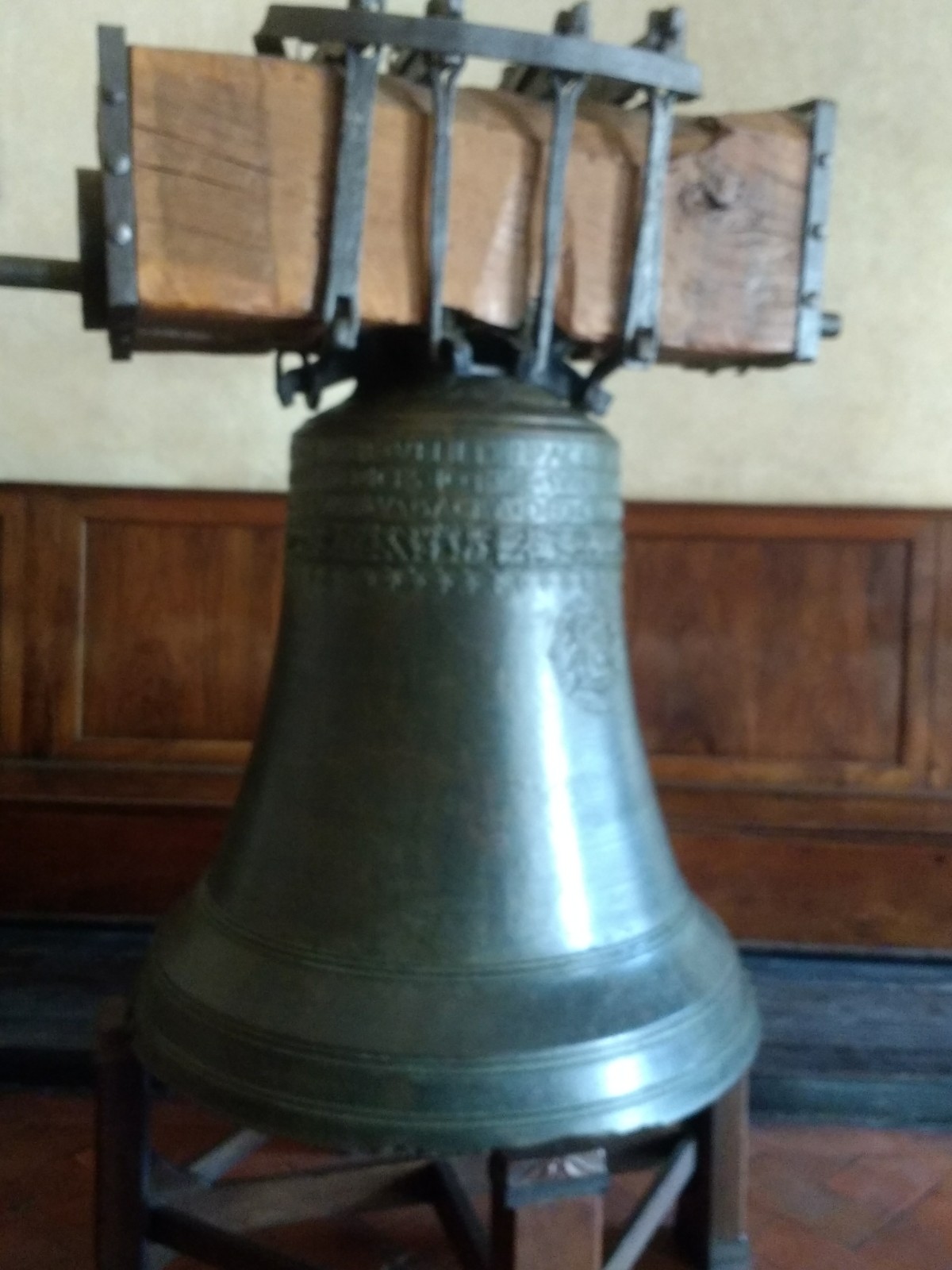
This is the bell that the monks of San Marco rang to warn Savonarola that a mob were coming to take him.
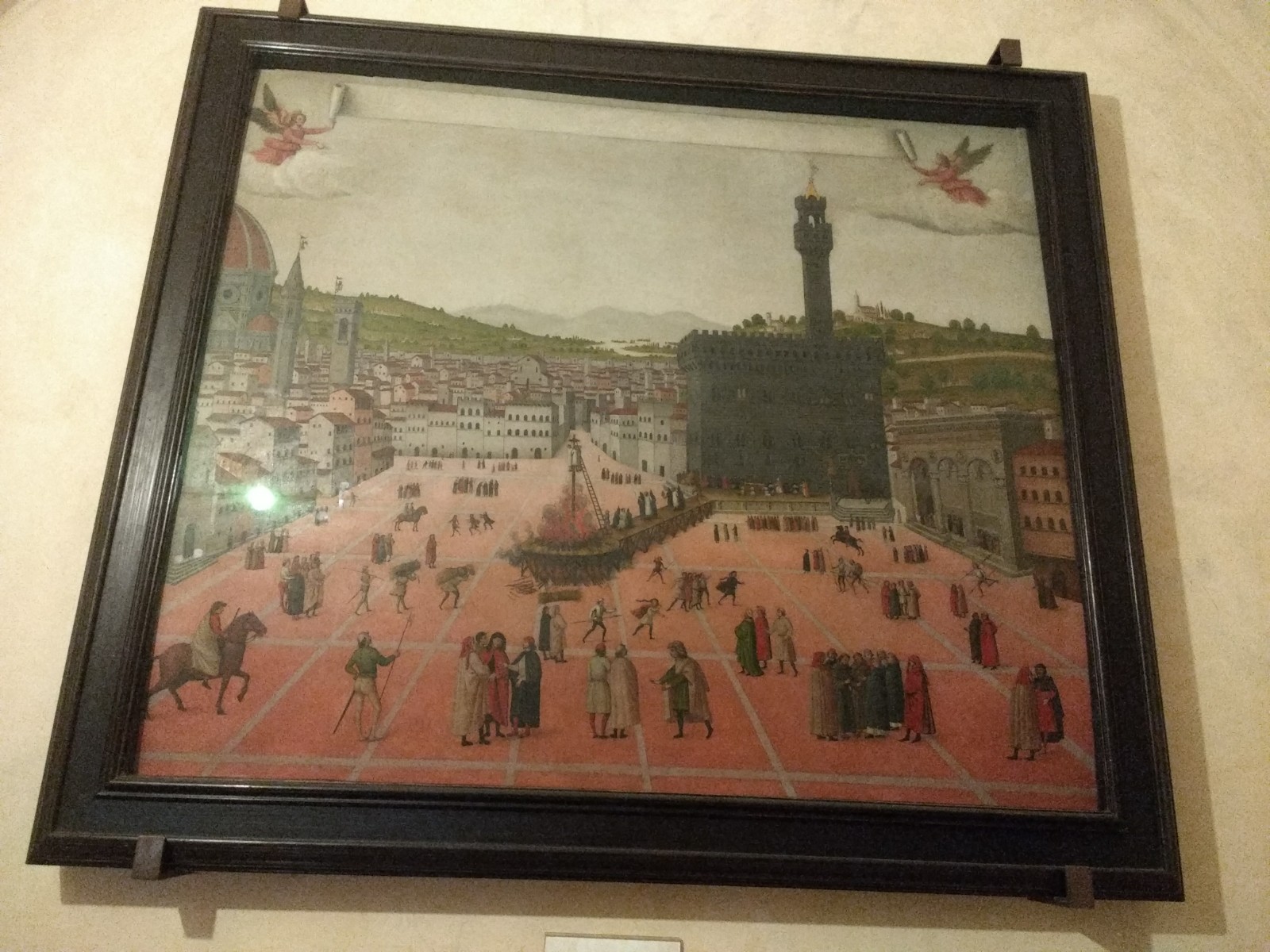
In a twist of irony, Savonarola was first hung, and then burnt on a huge bonfire outside Palazzo Vecchio, where his devotees had previously built fires to burn the trappings of more extravagant lives.
Death of Savonarola Plaque marking the spot of Savonarola’s demise outside Palazzo Vecchio
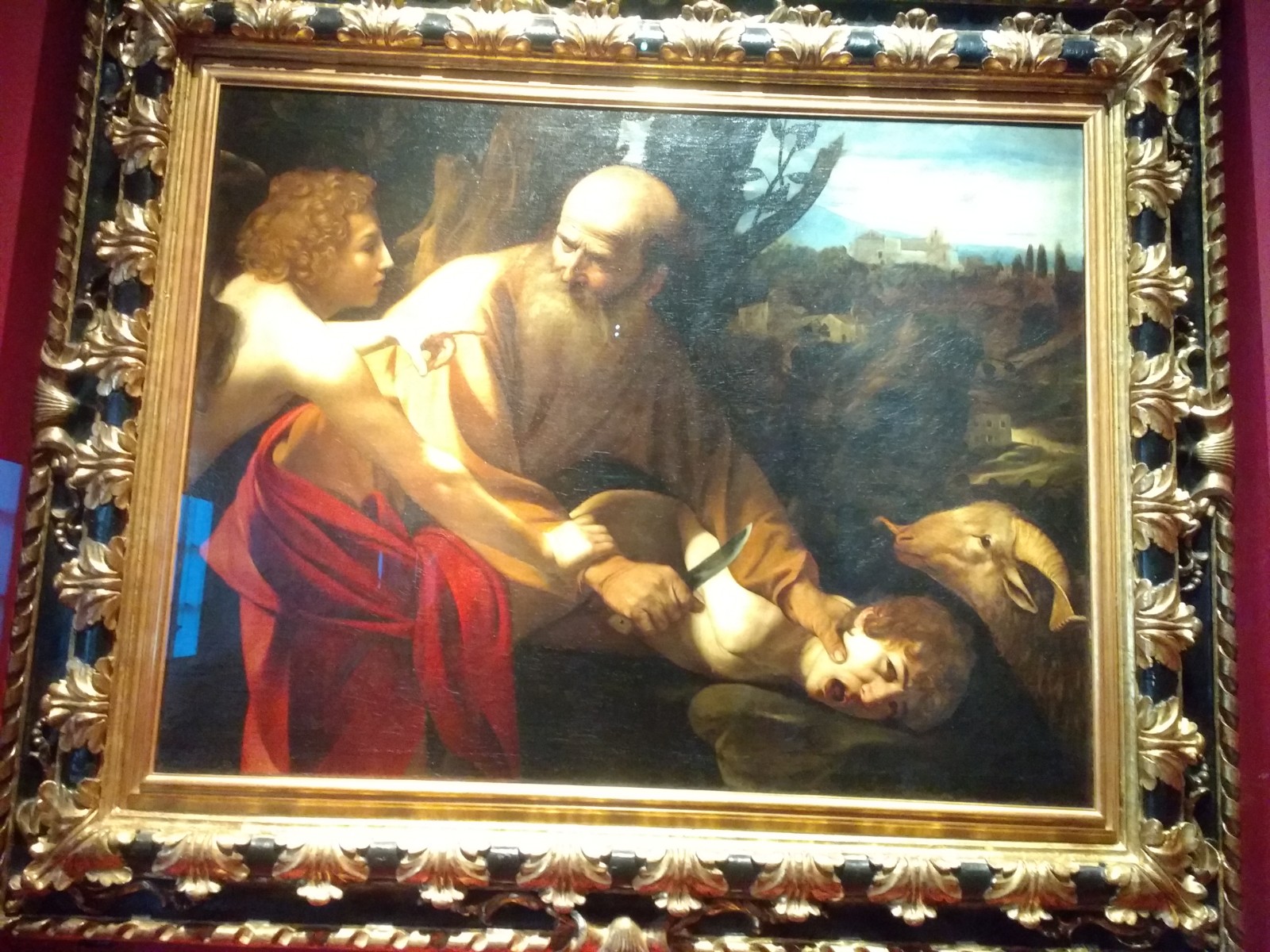
It’s no fun fighting for space in an art gallery to view the pictures, but by the time we got down to the first floor of the Uffizi today, the crowds had thinned out, and we began to enjoy ourselves. The majority of visitors wear themselves out trying to look at every picture on the walls, then suddenly find they can’t take any more, and leave. The pity is that they then miss out on the Caravaggios. Not that I’m complaining.
Sacrifice of Isaac by Caravaggio I will never be able to understand what people are prepared to do in the name of religion, or belief. I feel sorry for the goat – he clearly doesn’t know what’s coming next.
We have decided that the way to go about the Uffizi is to research a few pictures, go and see them, trying not to get distracted by too many others, then move on and do something else.
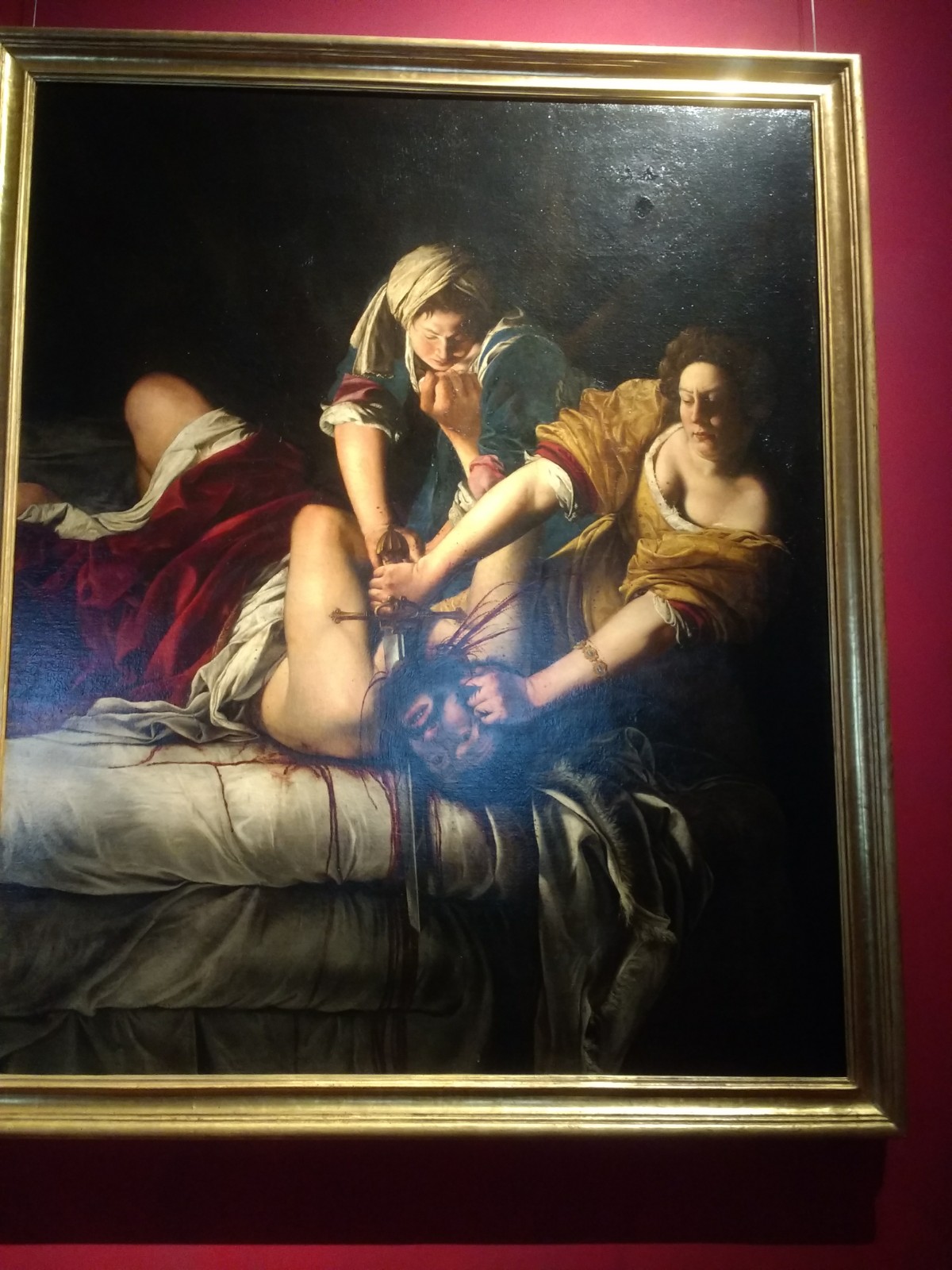
Judith Beheading Holofernes by Artemisia Gentileschi No, this one is not by Caravaggio, but by the daughter of one of his followers. To be a successful female artist was rare in the seventeenth century, let alone to paint a grisly subject in such a gruesome way. Apparently, due to the violence in the picture, it was kept in a dark corner in the Pitti Palace for many years.
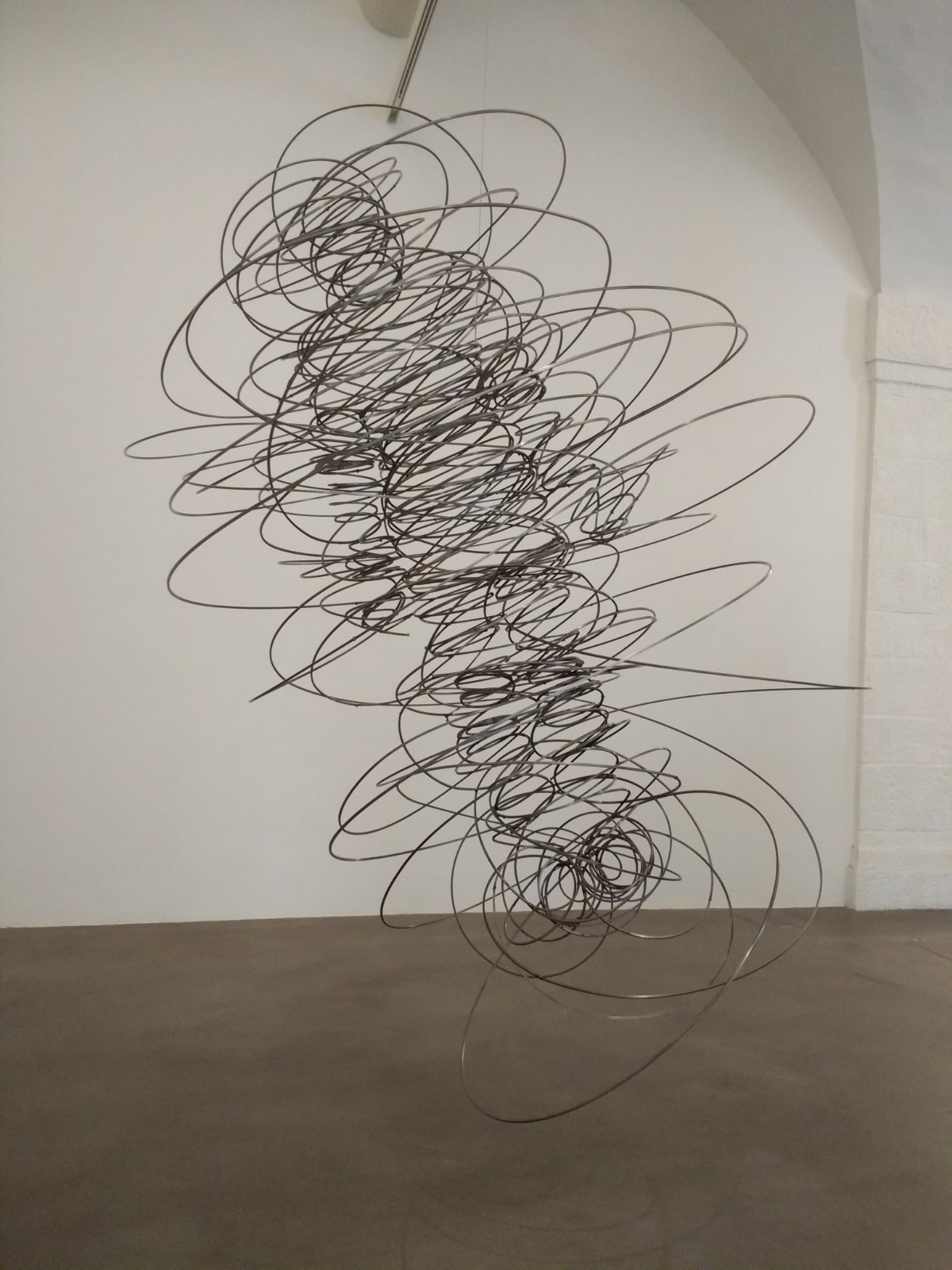
On our way out we noticed the entrance to the Antony Gormley exhibition ‘Being’ (‘Essere’ in Italian) which according to all the posters, had finished.
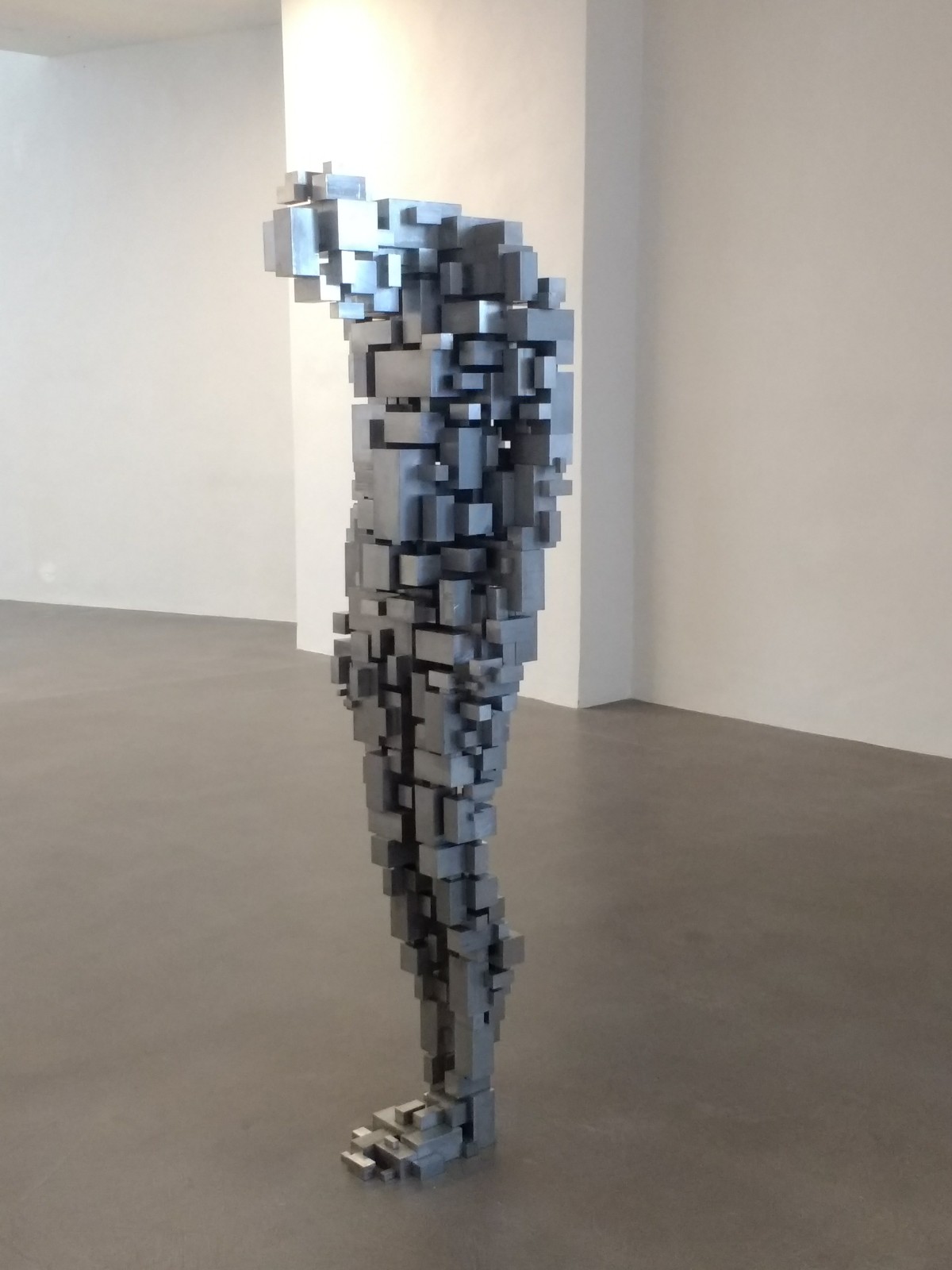
Feeling Material XXXVI
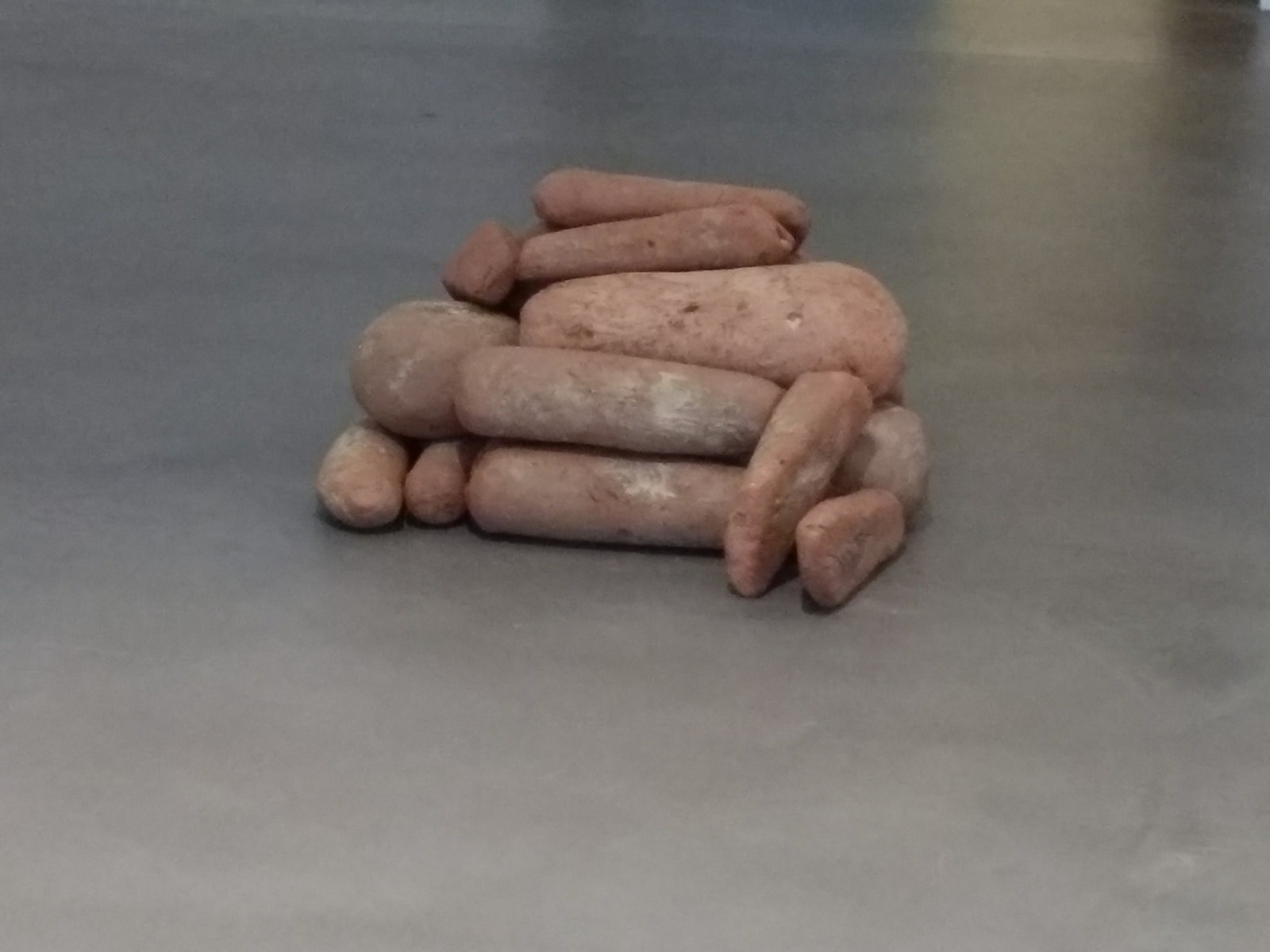
The theme of the exhibition is the human form and the space, negative or positive, that it takes up. One glory of the exhibition was that there was nobody else there (apart from Elton John who was leaving as we arrived – I kid you not. He was in a wheelchair as he apparently has an ankle injury. I hope he recovers in time for his frenetic European tour which is starting on May 1.)
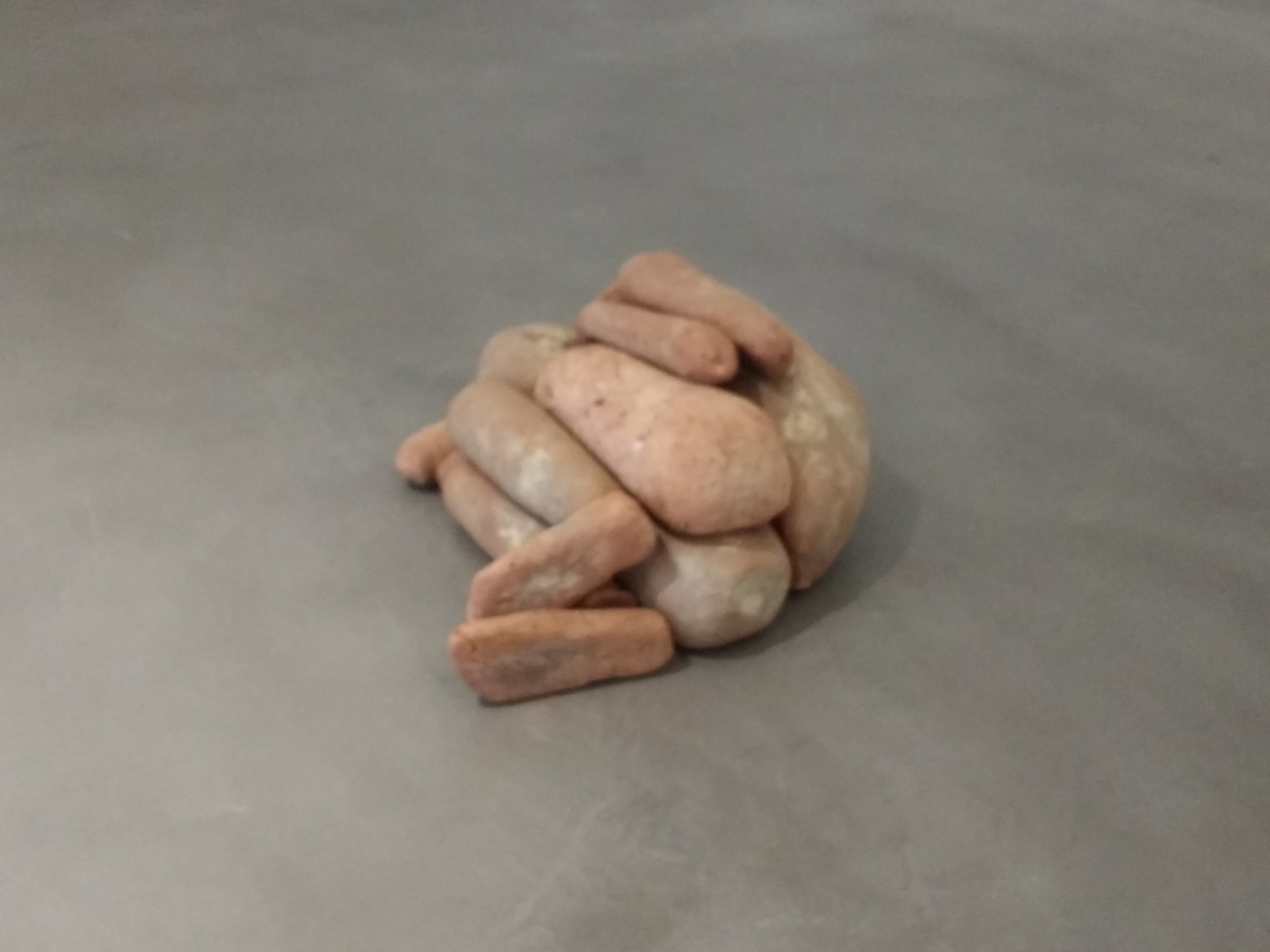
Pile I don’t know if it’s obvious, but someone is lying down in a foetal position.
It was great being able to walk around the exhibits and view from different angles.
Pile (from a different angle)
Loss
The weather forecast being for rain, we had decided against a picnic today, and instead to return to the cafe at the Oblate library and grab a sandwich. To our surprise, they also have a lunch time menu, which means no one has to cook tonight. It’s very reasonable, too. For one dish of ravioli with tomato sauce (Mark) and one plate of cold cuts, cheeses, chutney and er …. whole uncooked beans (they were actually nice) plus a large bottle of fizzy water, we paid €18.50.
We had just got back to the apartment, and it absolutely poured. We were very lucky.
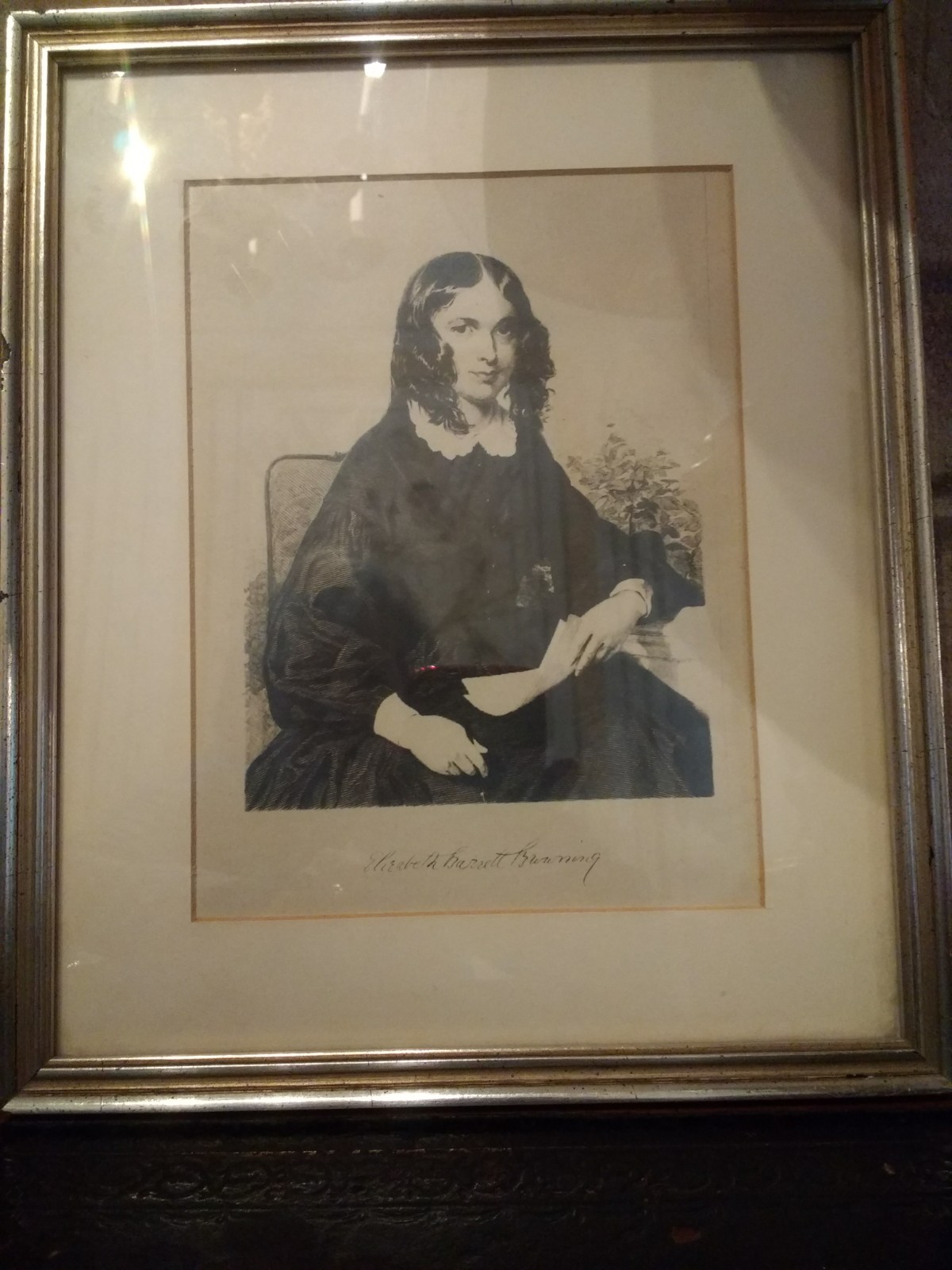
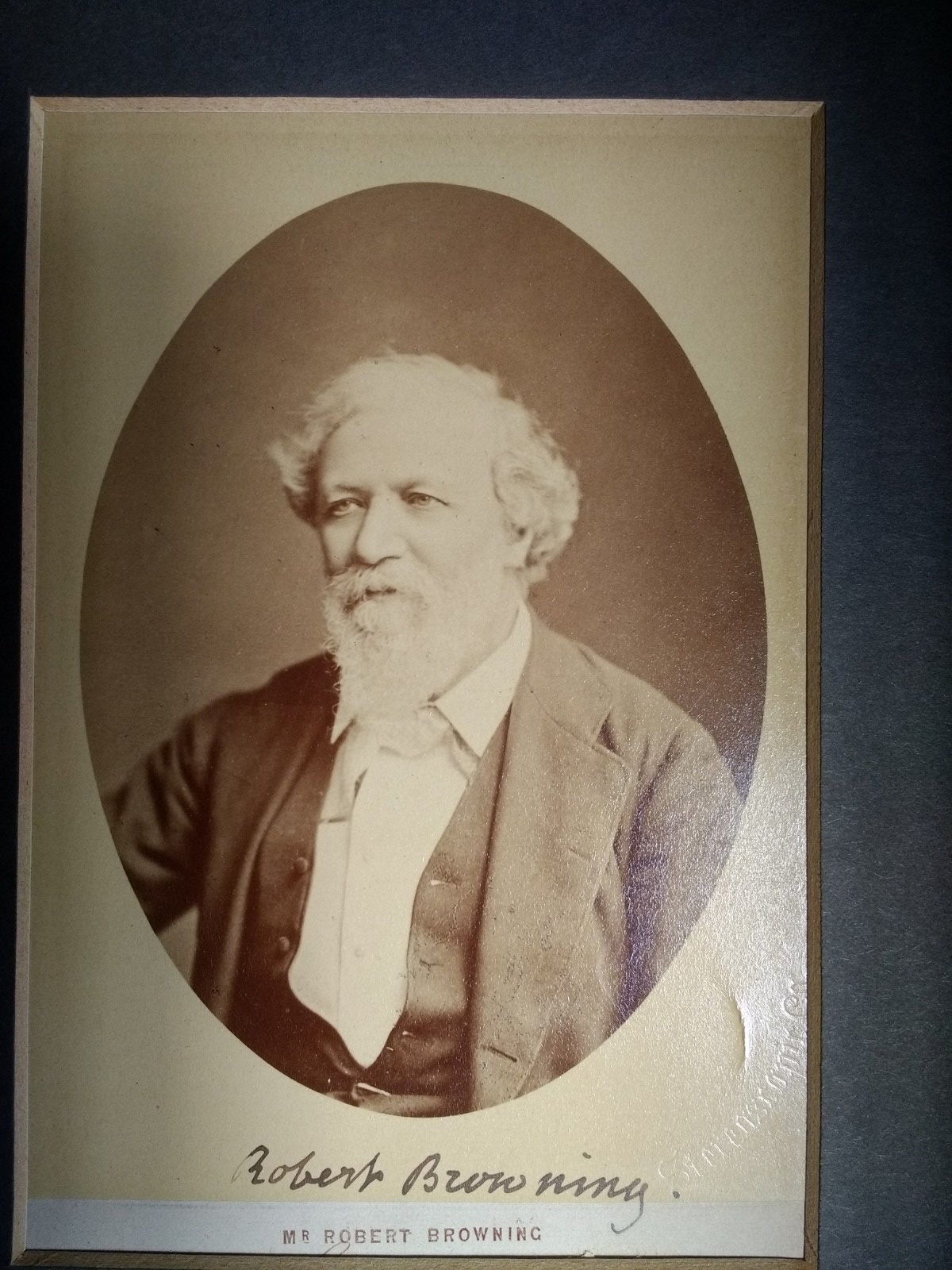
Not all museums in Florence are over-subscribed with queues of several hours. Casa Guidi, visited today, is the opposite extreme, with an average of just seven visitors a day. Casa Guidi was the home of Elizabeth Barrett Browning and Robert Browning for fourteen years until Elizabeth’s death in 1861.
You may remember the film, ‘The Barretts of Wimpole Street’, based on the meeting and subsequent marriage of the two poets.
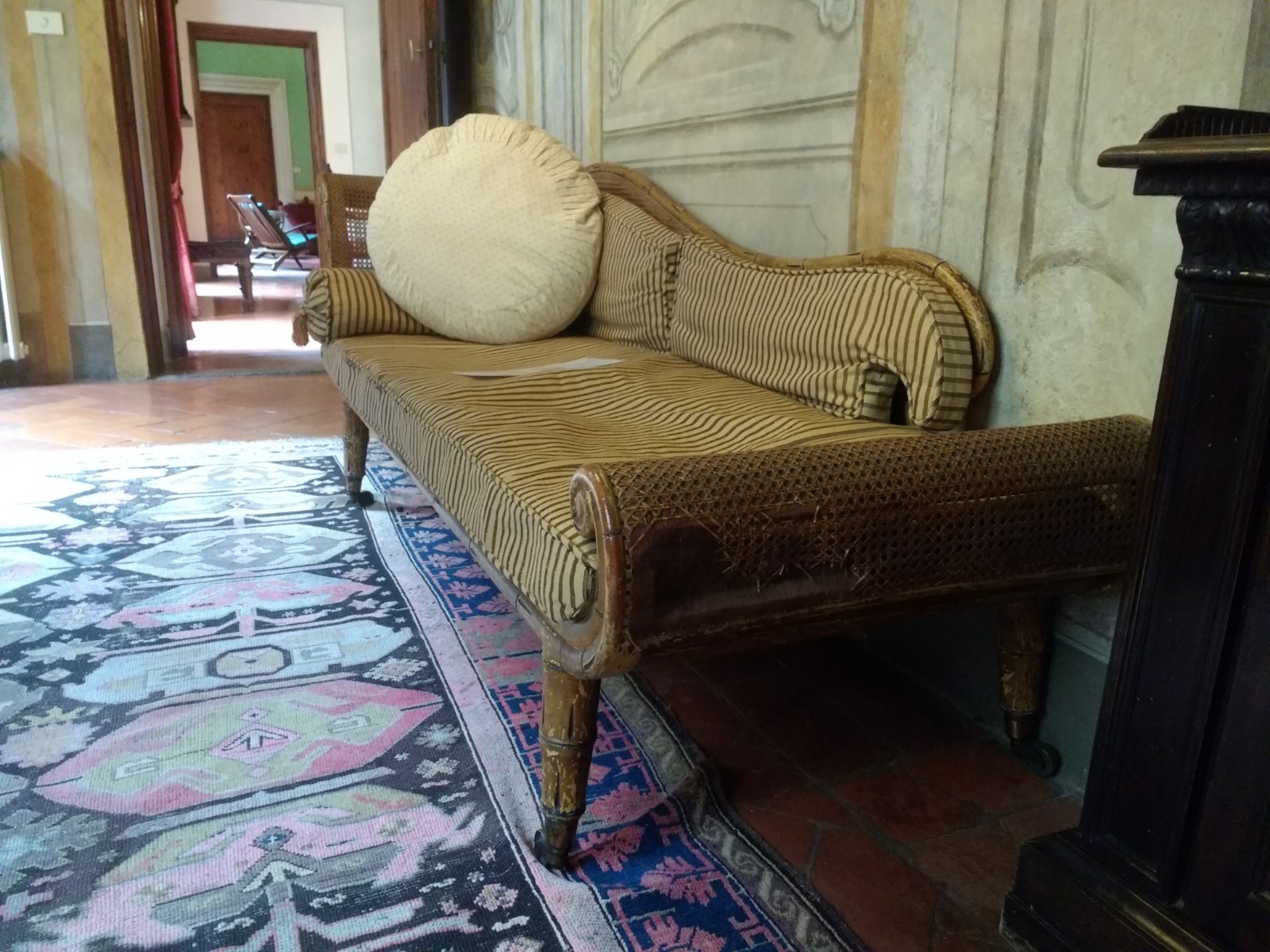
Elizabeth suffered from poor health (possibly tuberculosis). This is the sofa where she reclined when living with her father in Wimpole Street.
Elizabeth had a domineering father who did not believe in marriage for any of his children, so when Elizabeth and Robert first met, they kept their relationship secret. On their marriage, Elizabeth was disinherited by her father, but fortunately with income of her own, Elizabeth and Robert were able to rent rooms in Florence.
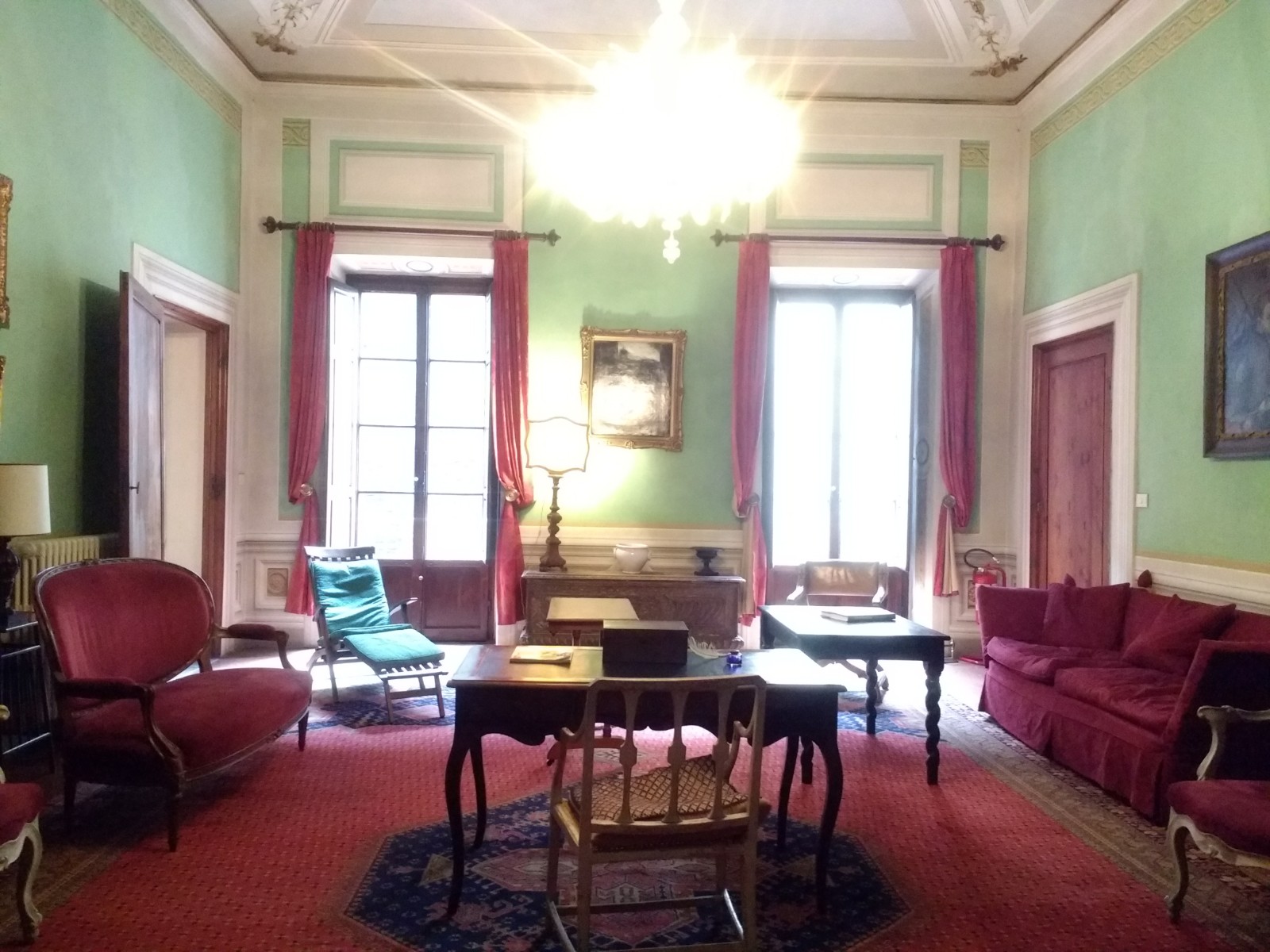
Drawing Room
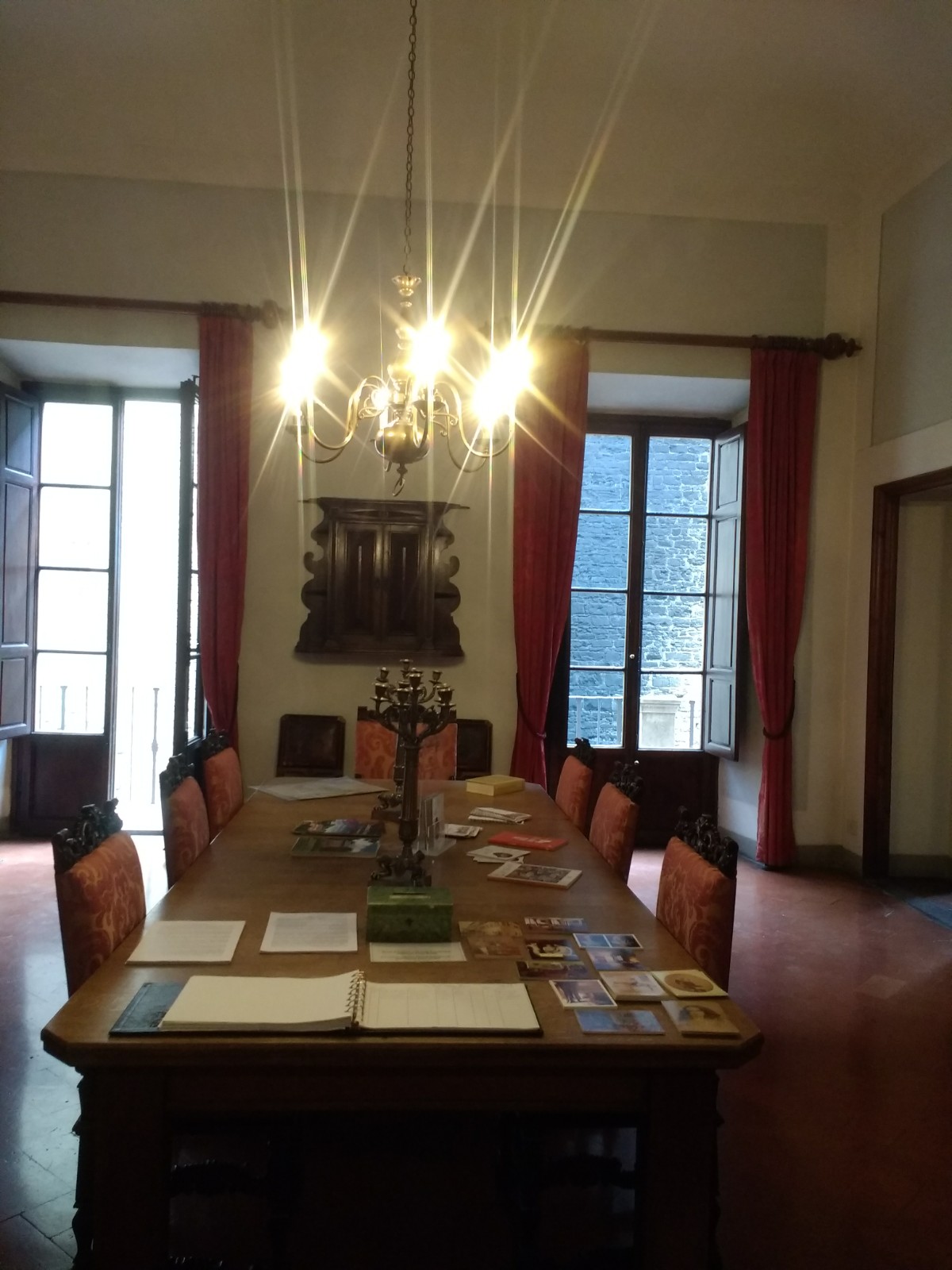
Dining room
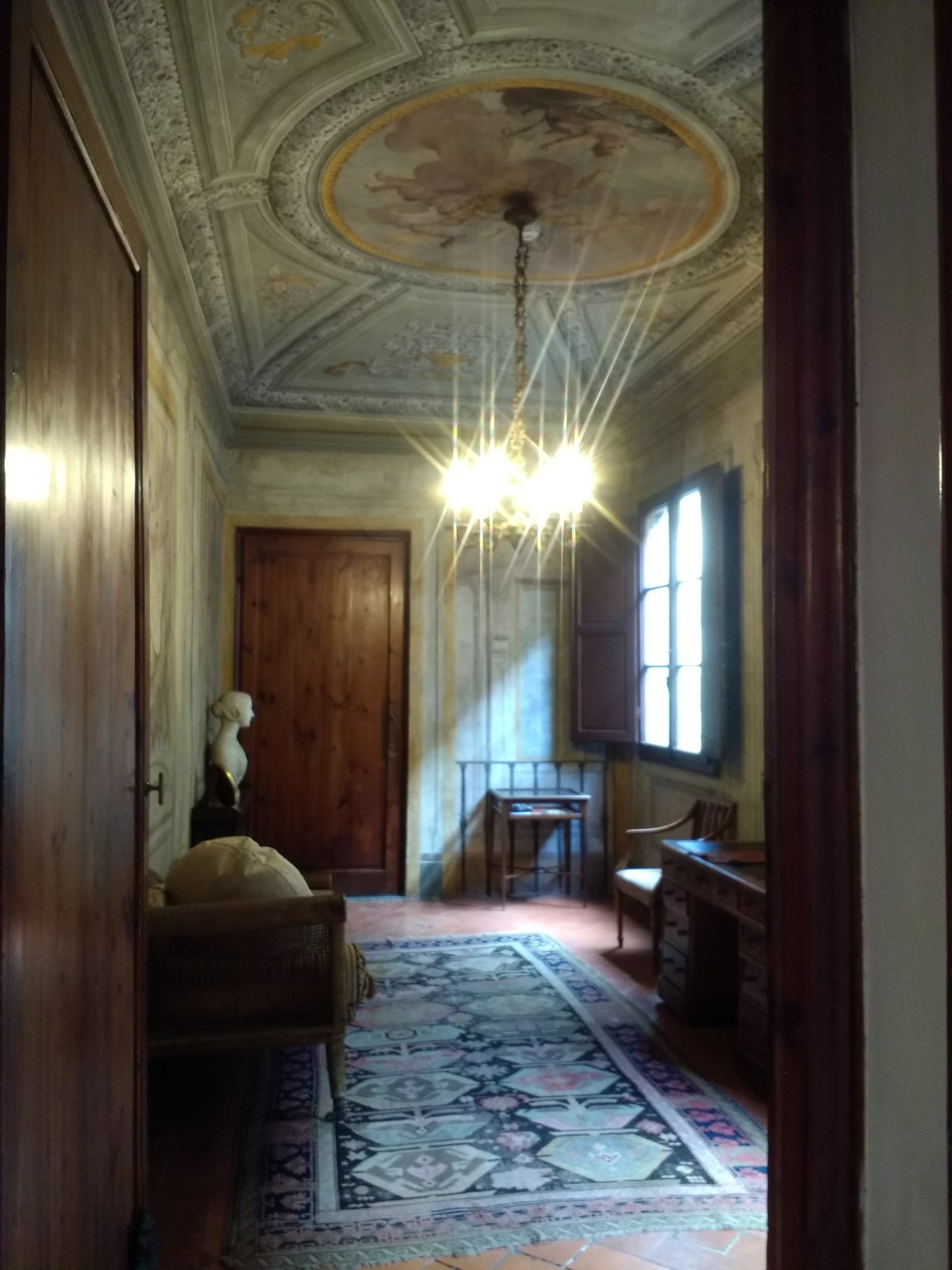
Robert’s Study
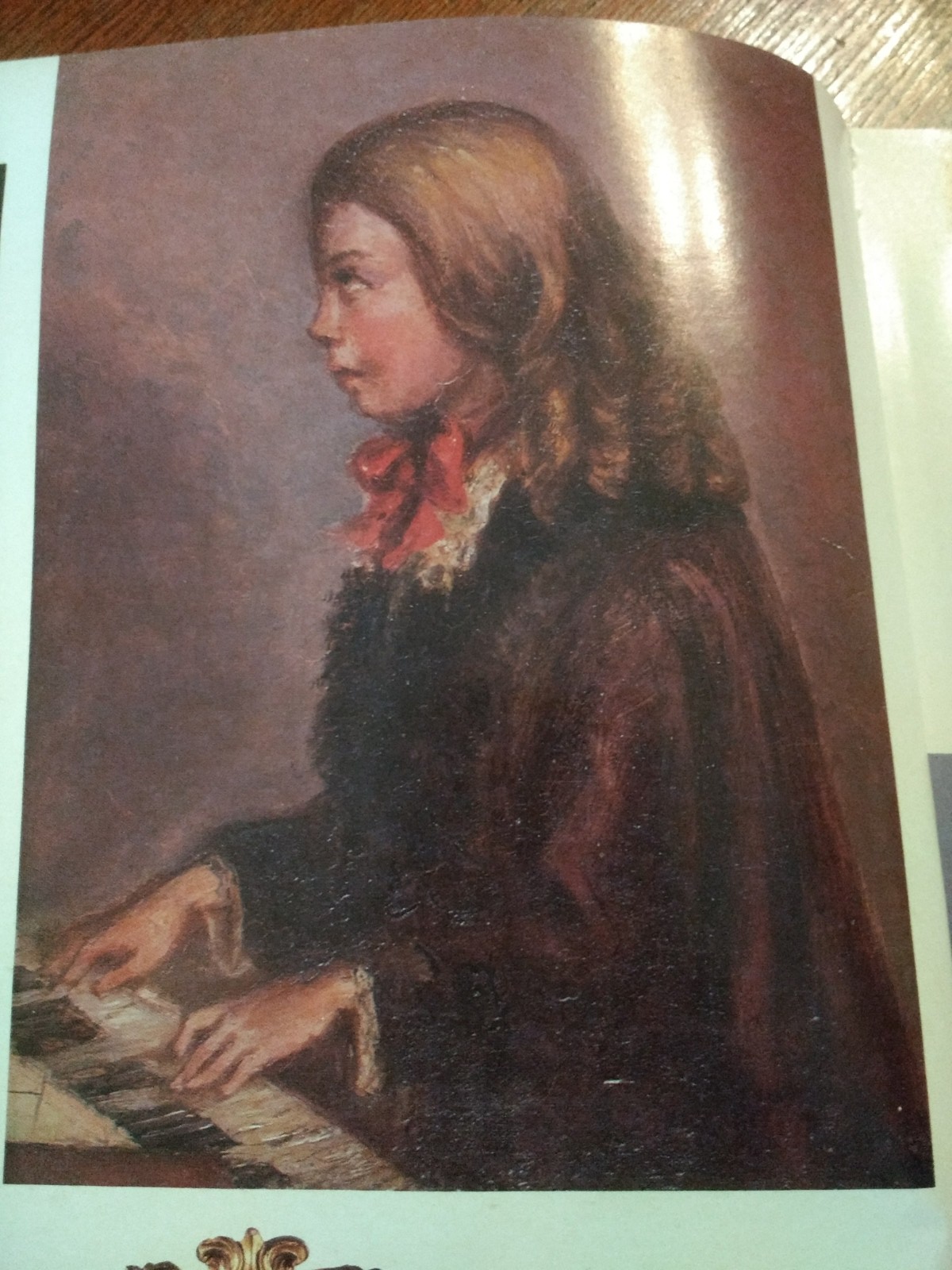
Despite Elizabeth’s poor health, she and Robert had one son, Pen, who himself married, but had no children.
Elizabeth’s and Robert’s son, Pen
The house is managed by The Landmark Trust and may be rented for holidays. It is open for just three afternoons a week between April and the end of November.
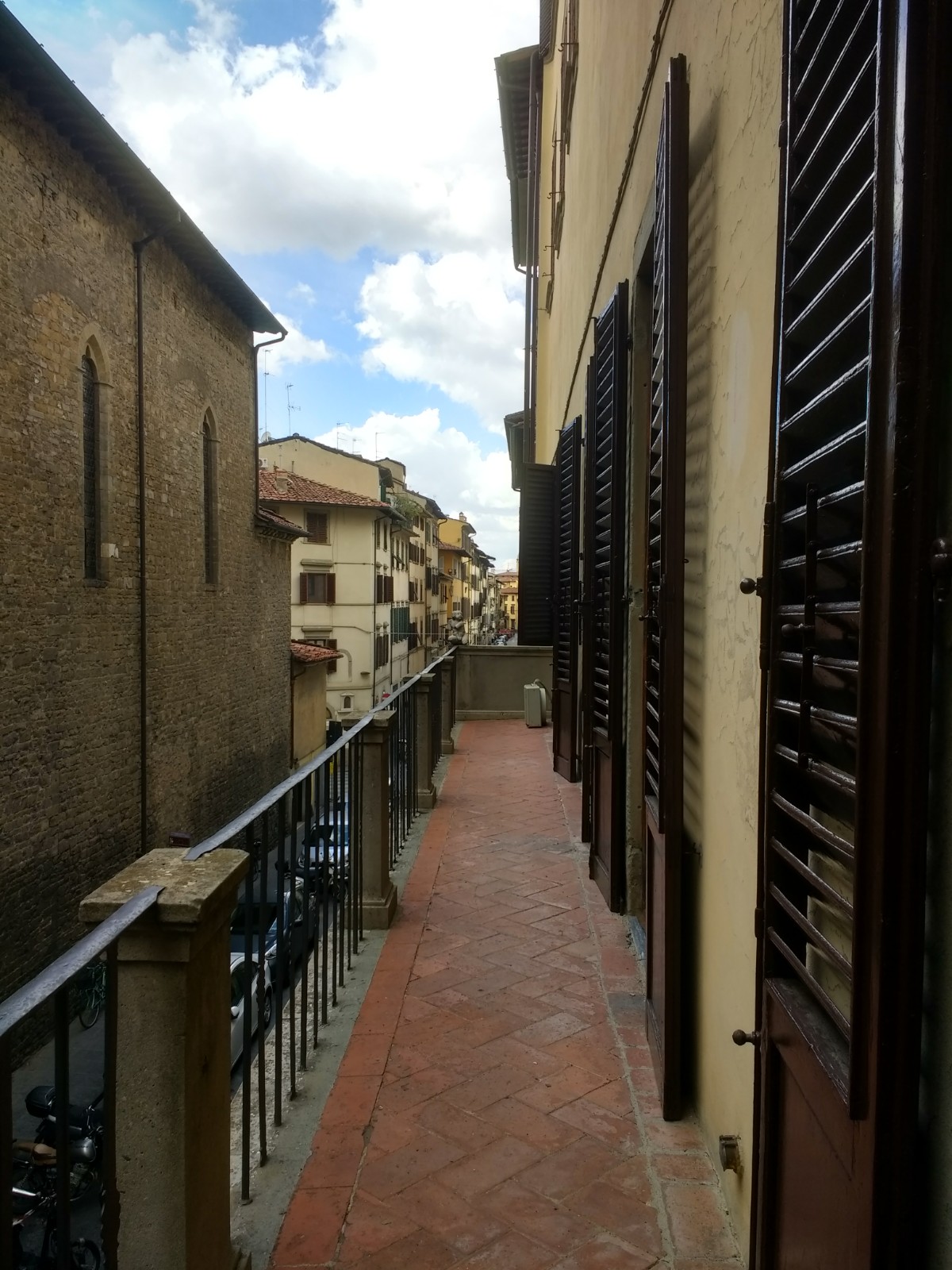
The terrace, where Pen kept his pet rabbits
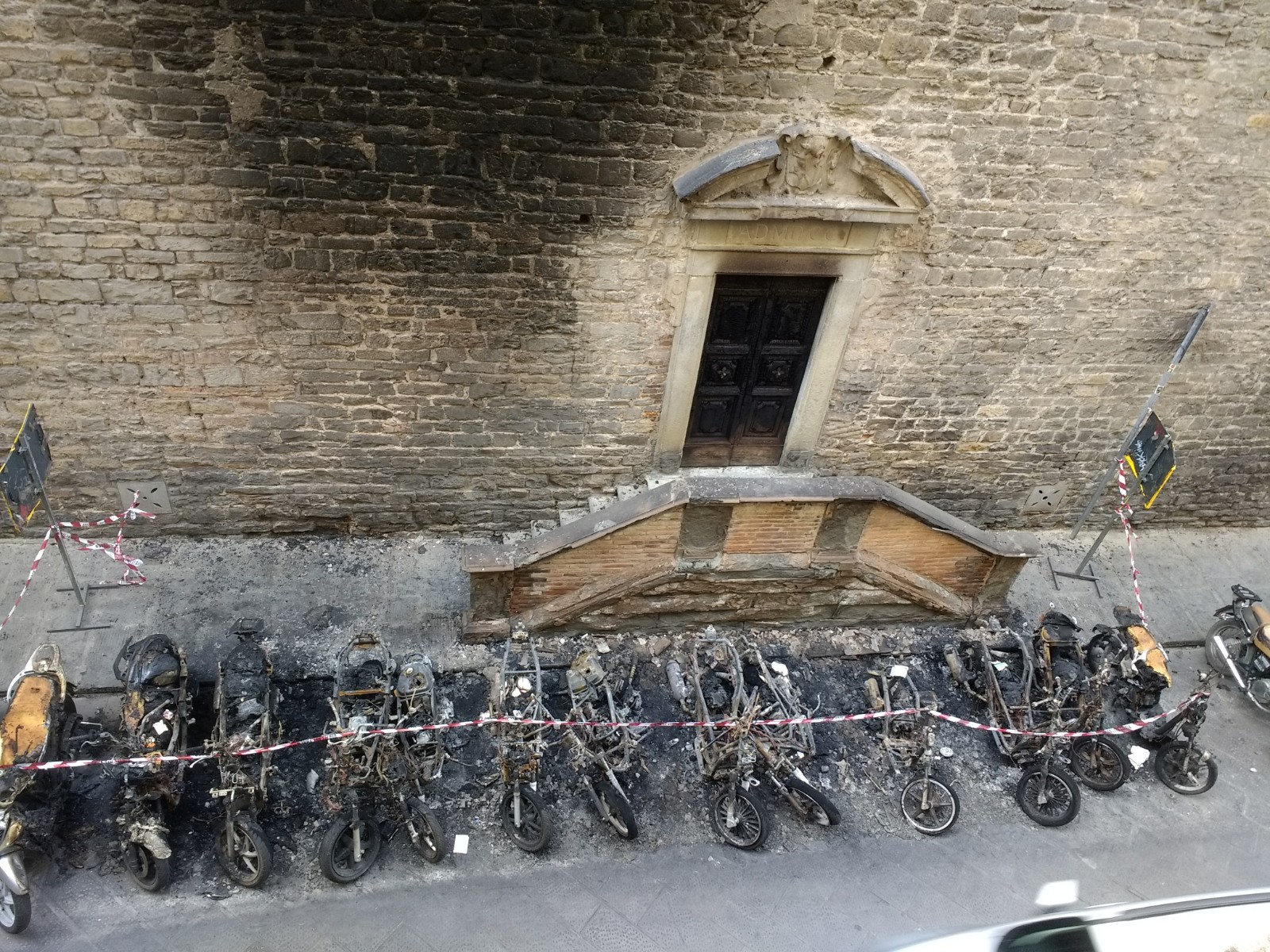
From the terrace we had a view of these motorbikes which were set alight the other night. In all, fifteen motorbikes and one car were destroyed – the perpetrator of the crime has still to be caught.
An early start again this morning as we wanted to see inside the Cathedral. The entrance is free, but there always seems to be a long, snaking queue outside. After waiting to enter the Accademia the other day, we didn’t feel much like standing in line again, but thought we couldn’t come to Florence and not go inside the Duomo.
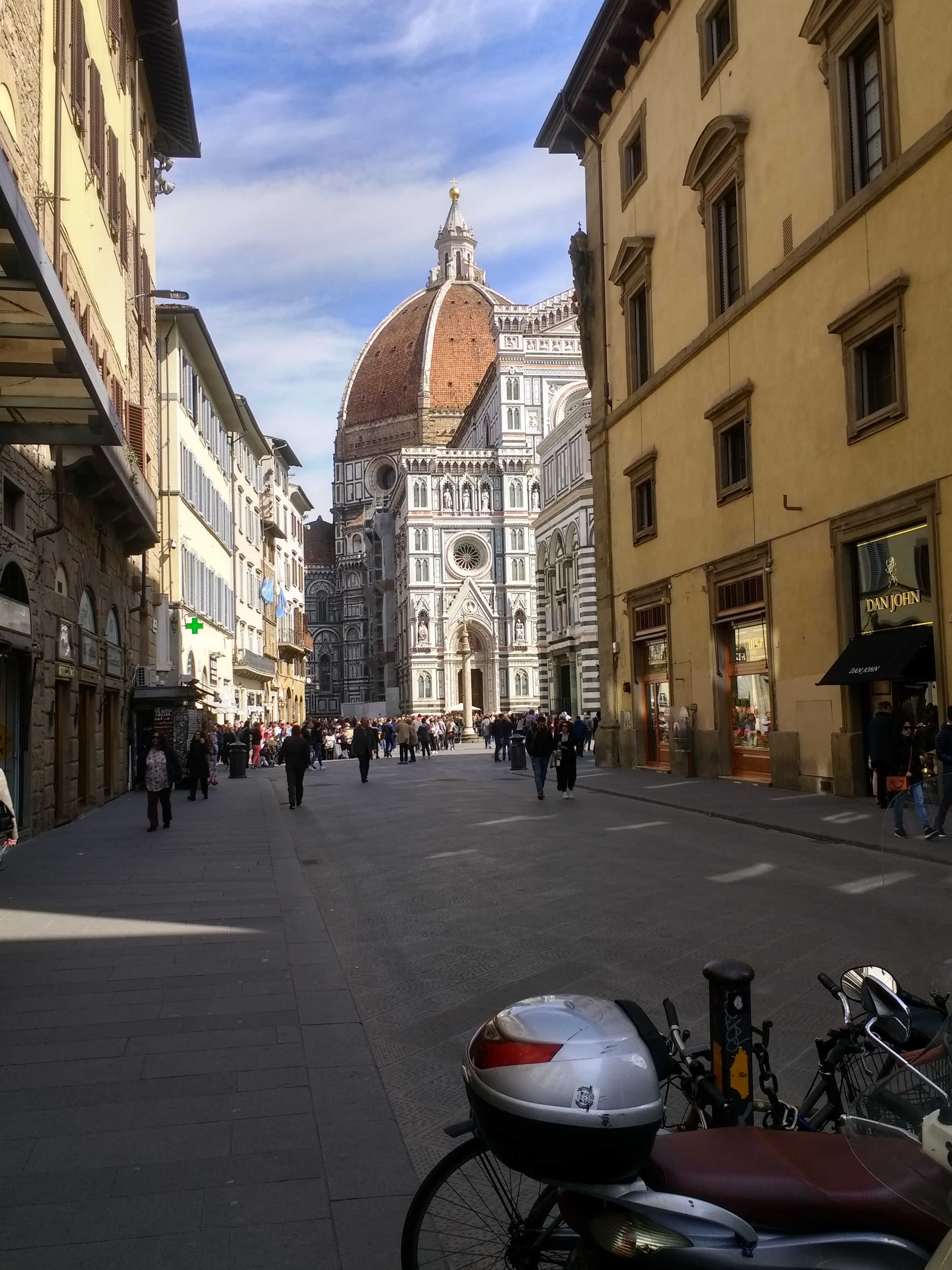
Approaching the Duomo
So 9.30 saw us joining a 150m line for a 10.00 opening. (We thought we were early). Oh well, it only took us one-and-a-half hours to get inside this time.
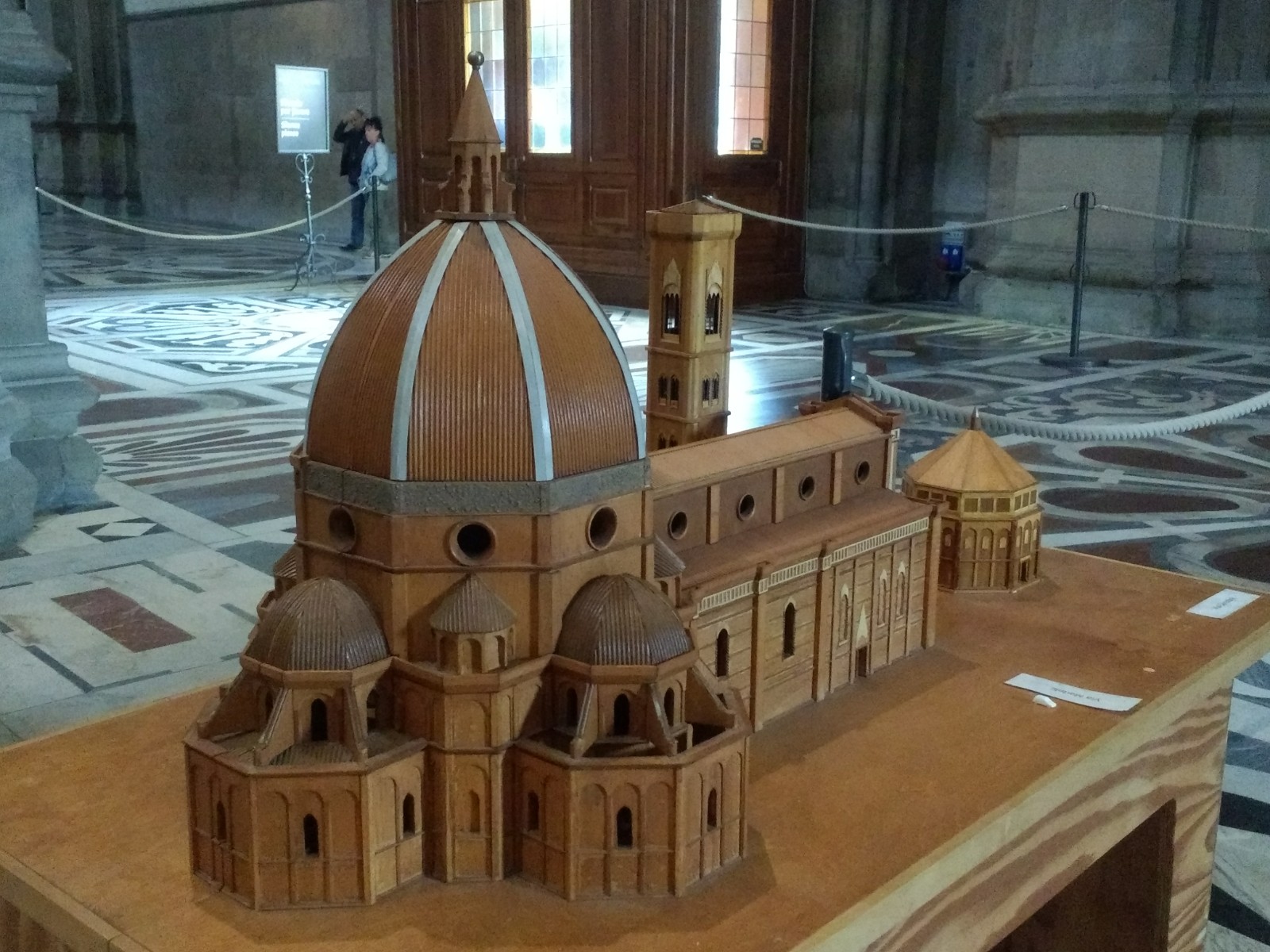
Scale model of Duomo, campanile and Baptistry
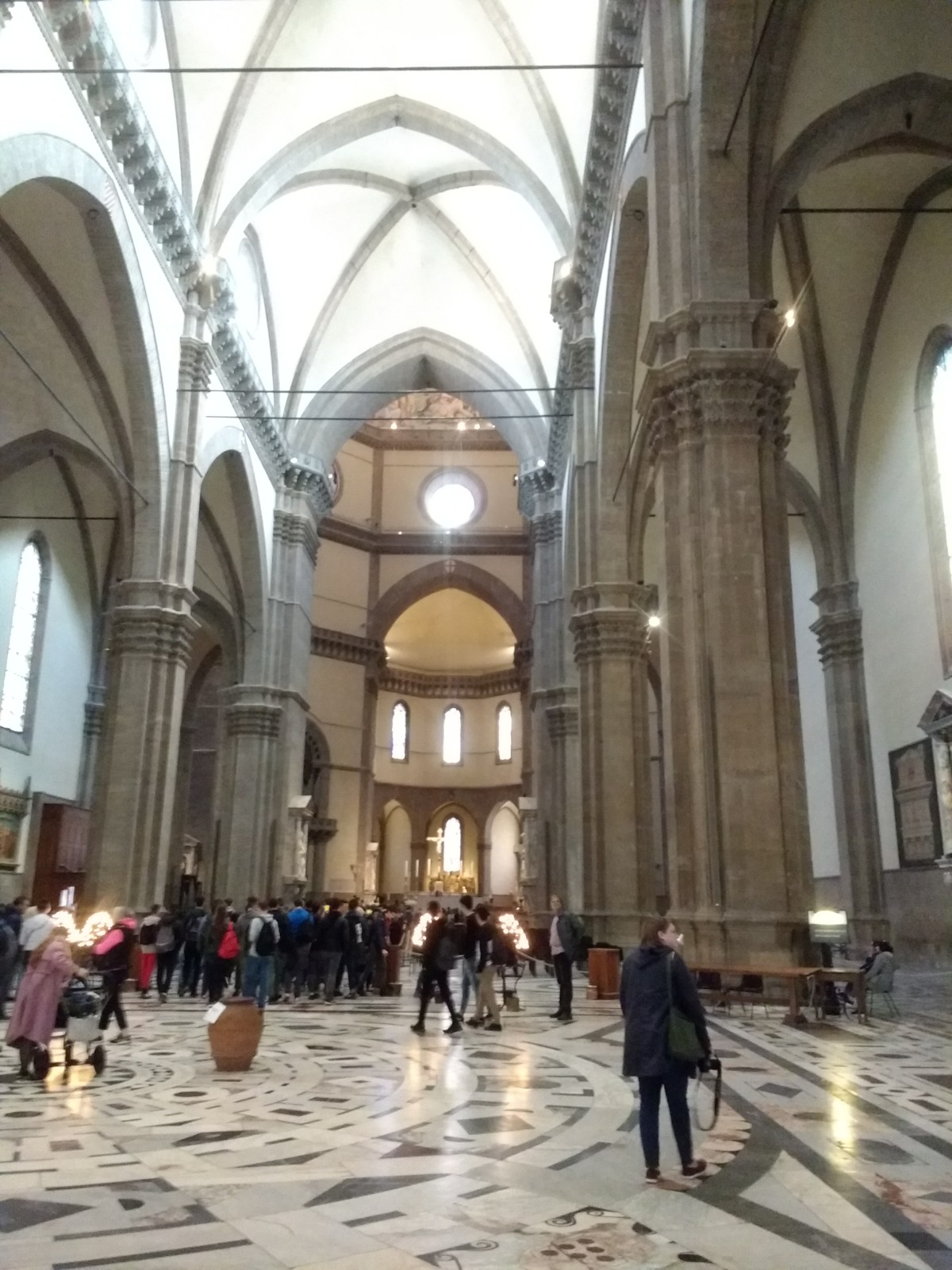
Once inside, we were fairly underwhelmed. It is large, but plain (apart from the inside of the dome which I think is magnificent). When built, the Cathedral was the largest in the world, but has now been overtaken by St Peter’s in Rome and St Paul’s in London.
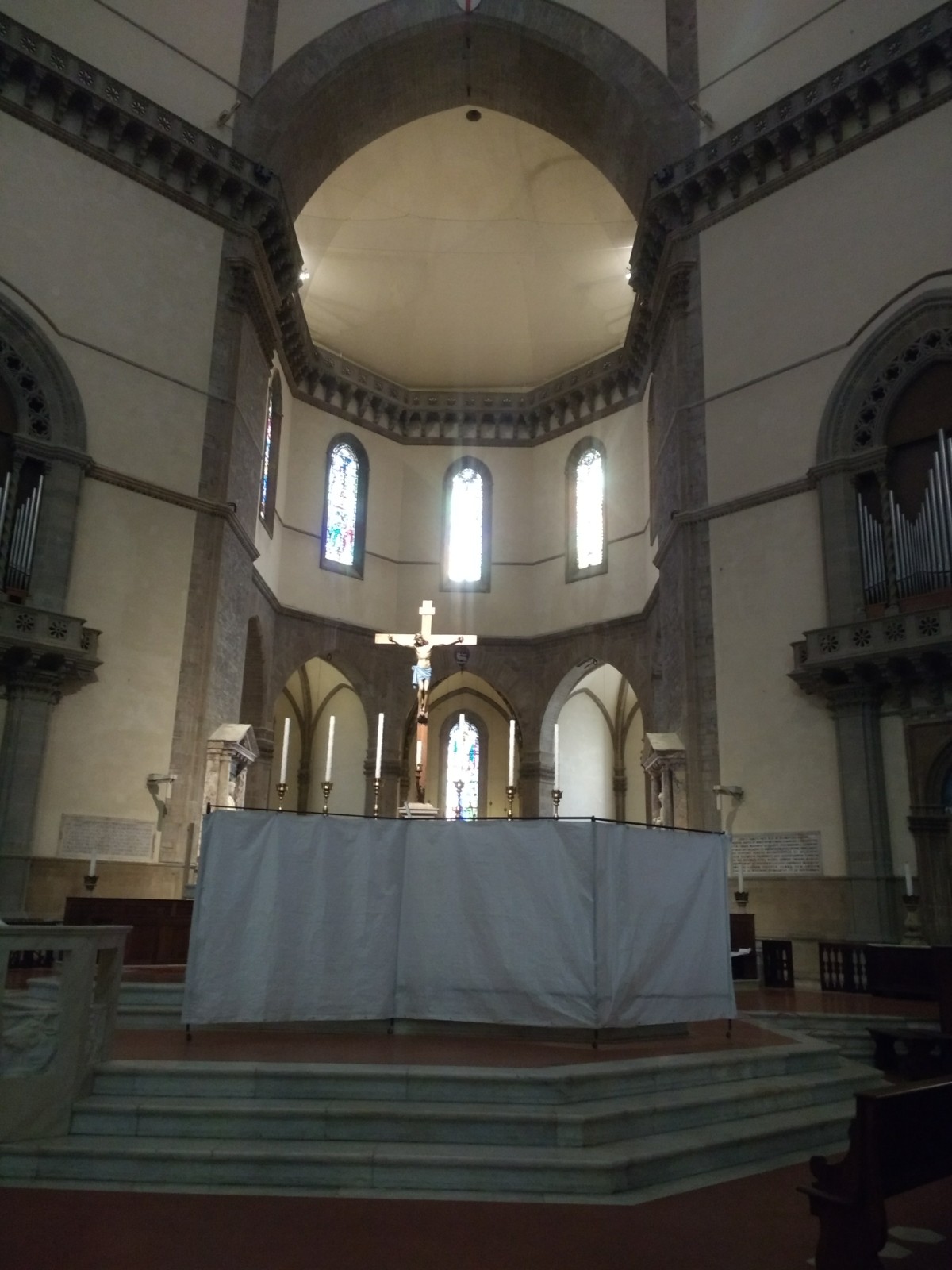
Inside the DuomoThe altar I don’t know what the reason was for the white screen. Inside the dome
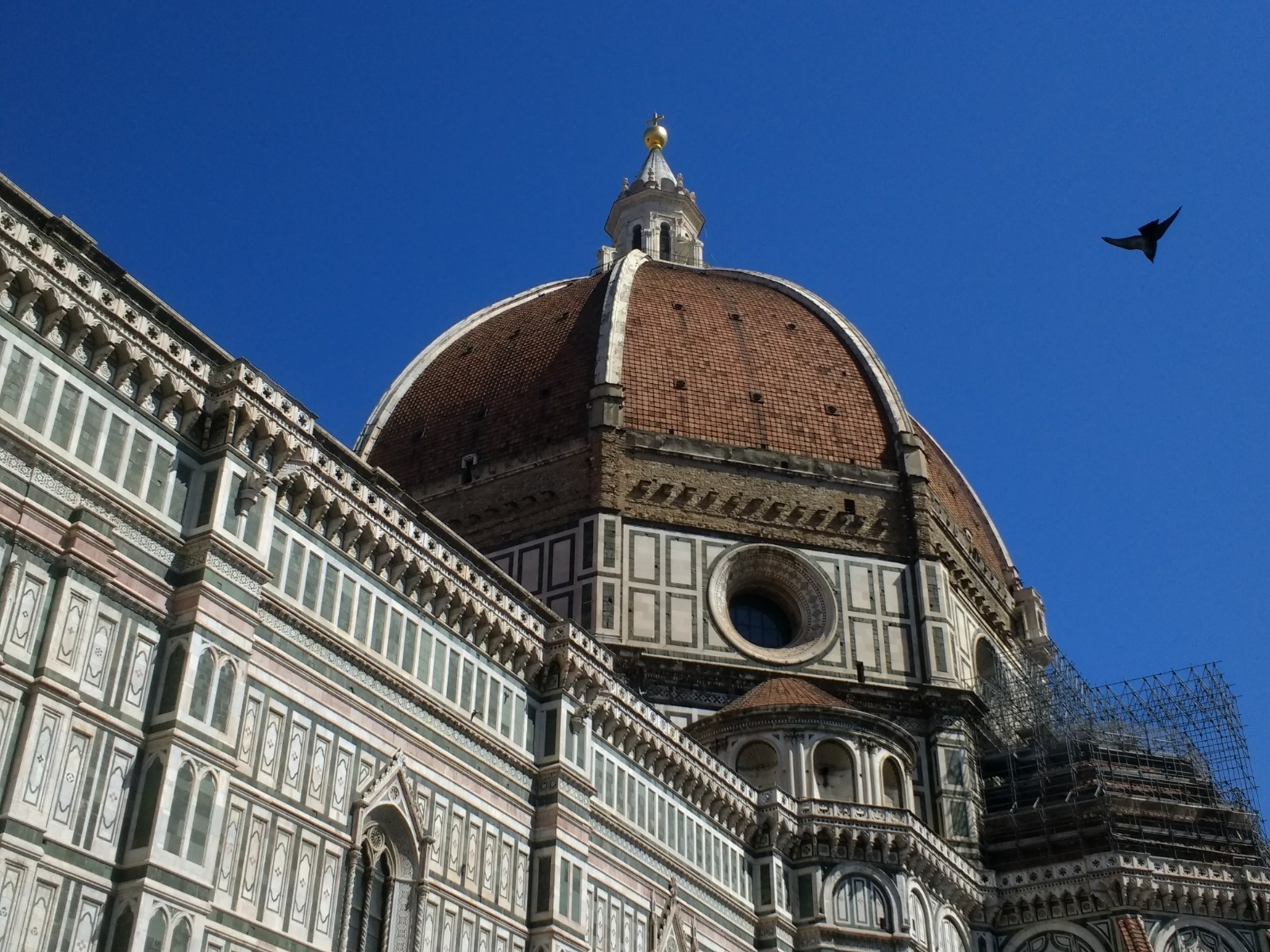
The outside of the Cathedral is wonderful, faced with three different marbles, Carrara (white) Prato (green) and Siena (Red) but was only added in the nineteenth century.
Outside of Duomo
After the cathedral, we were in need of a hot drink as we had got chilled while standing in the queue. Spurning the expensive cafes round the piazza, we headed a few minutes down the road to the Oblate library, the central library in Florence, housed in a former convent. It is a very welcoming space, free for all to enter (and says anyone can join too, but we haven’t tested this out).
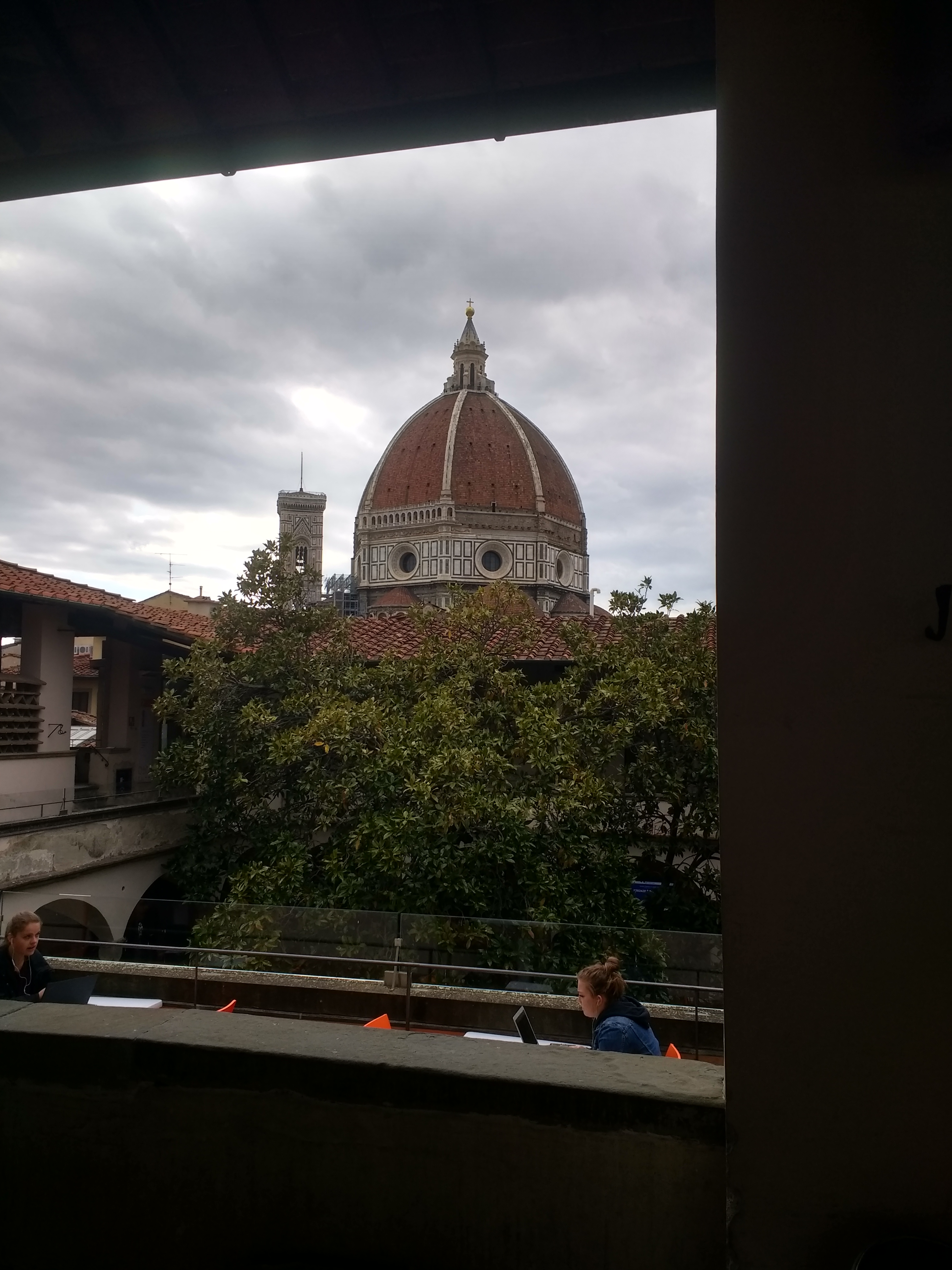
Heading up to the second floor, you pass through a large covered terrace which is full of school students in the afternoon doing schoolwork (and chatting) and come to a lovely, and inexpensive, cafe, complete with wonderful views of the Cathedral dome.
View of the dome from the Oblate Library cafe
Down on the first floor of the same building is a small Pre-history museum (small charge). The explanations are in Italian, but they have an English translation. You do have to ask though (in my experience things like that are seldom offered). The alternative to using the translated script provided by the museum, is to use an app on your phone, google translate. It can scan a piece of text and translate it for you with variable results (depending on the style of text and amount of glare).
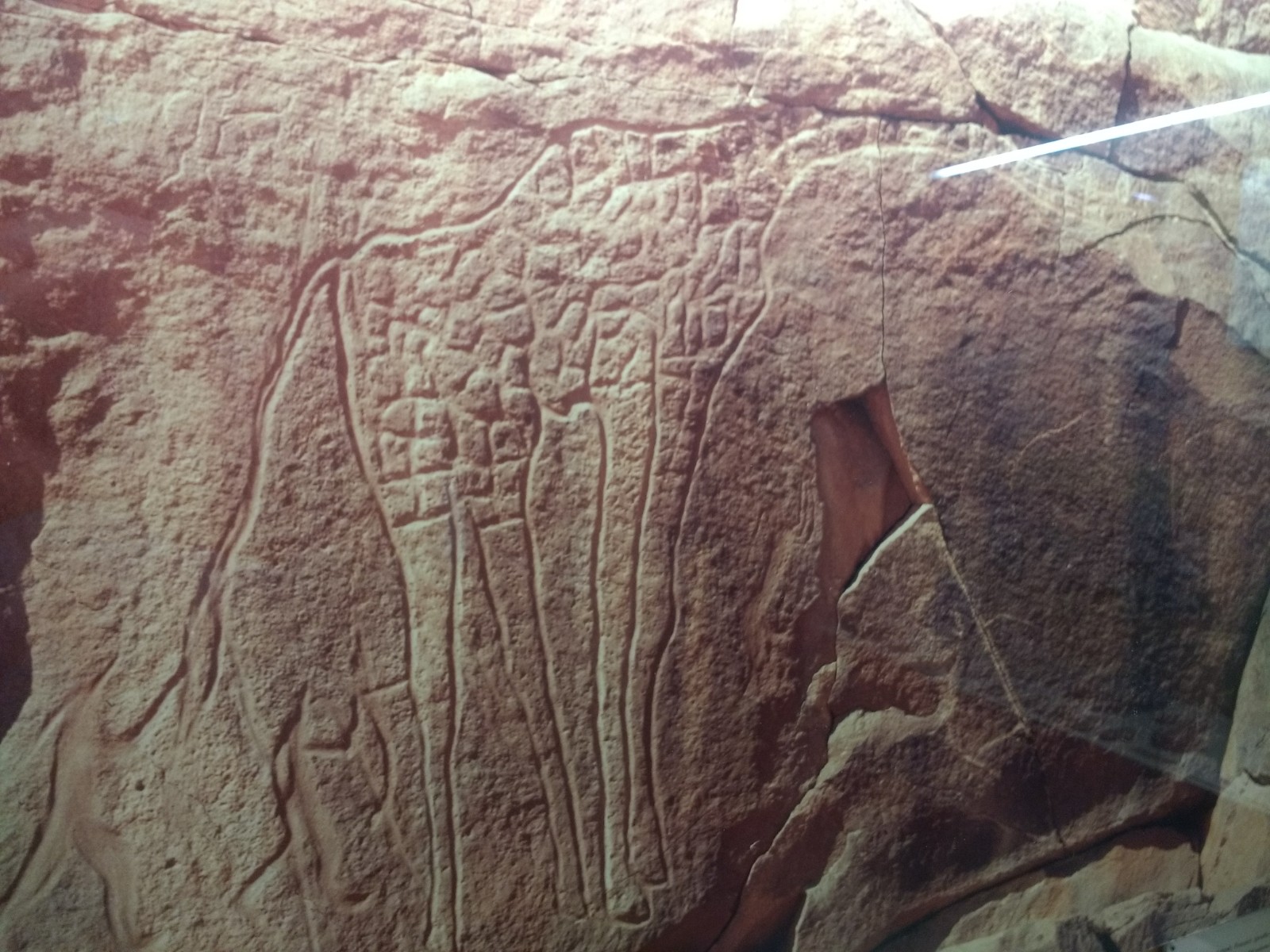
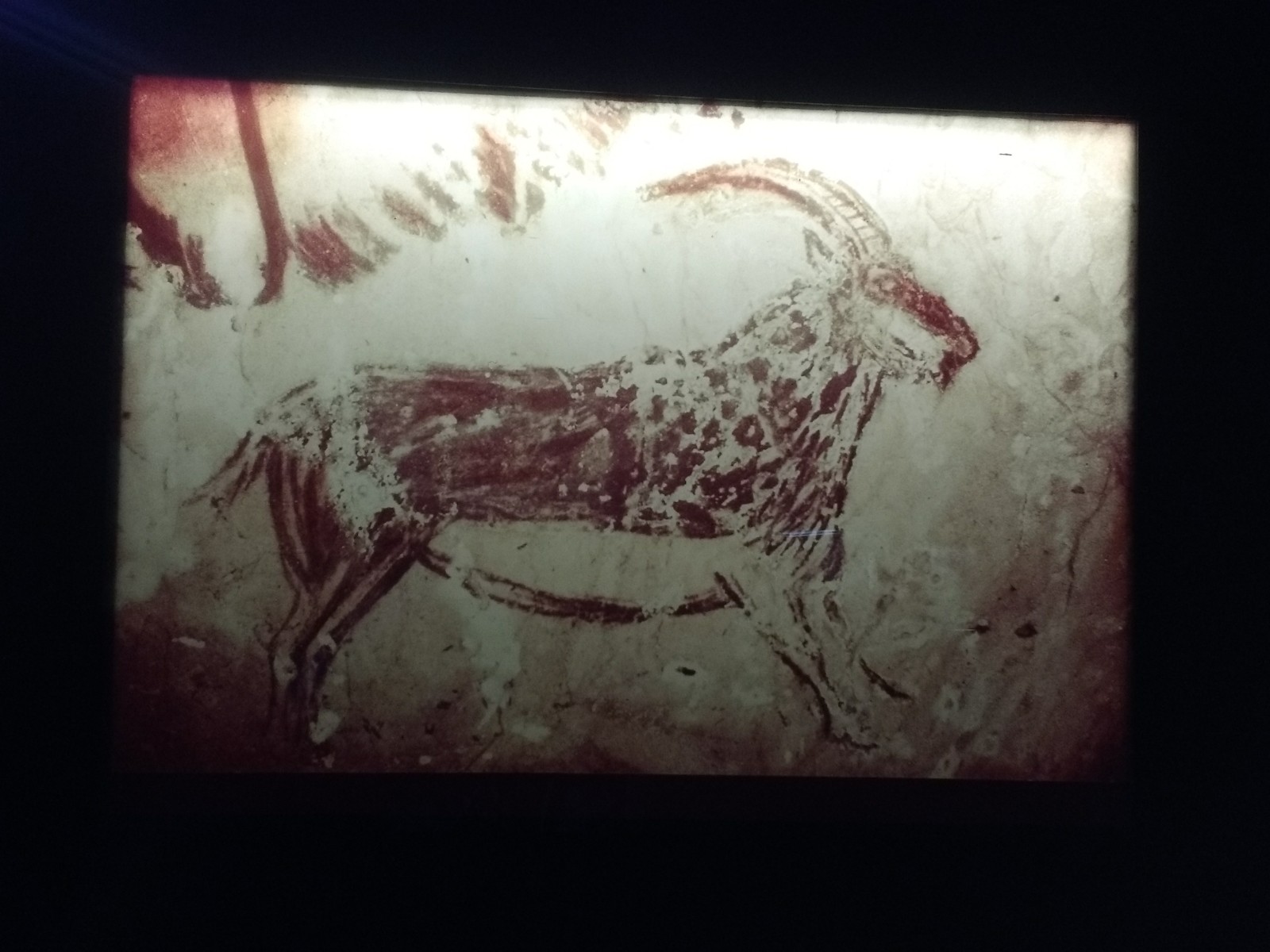
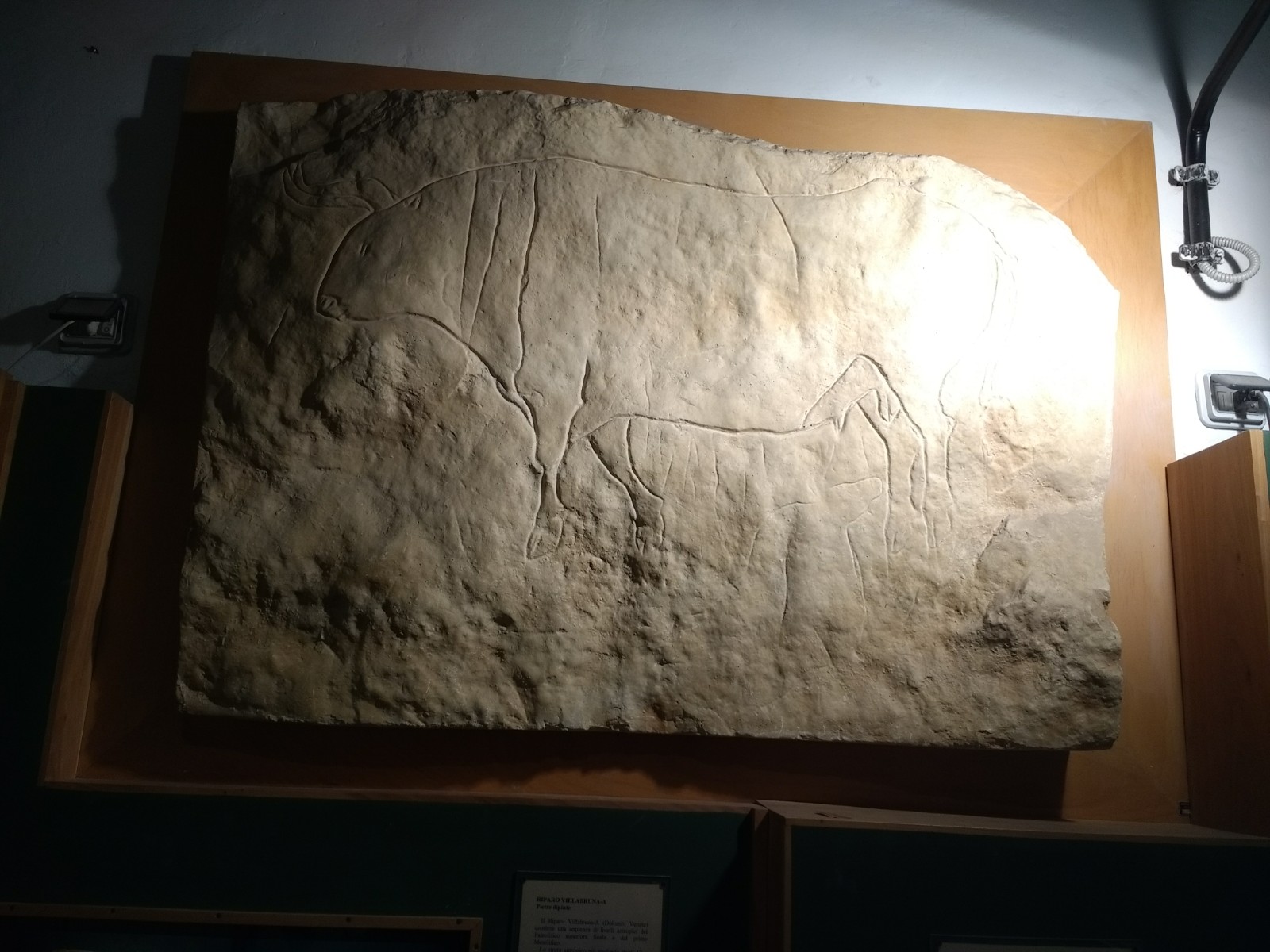
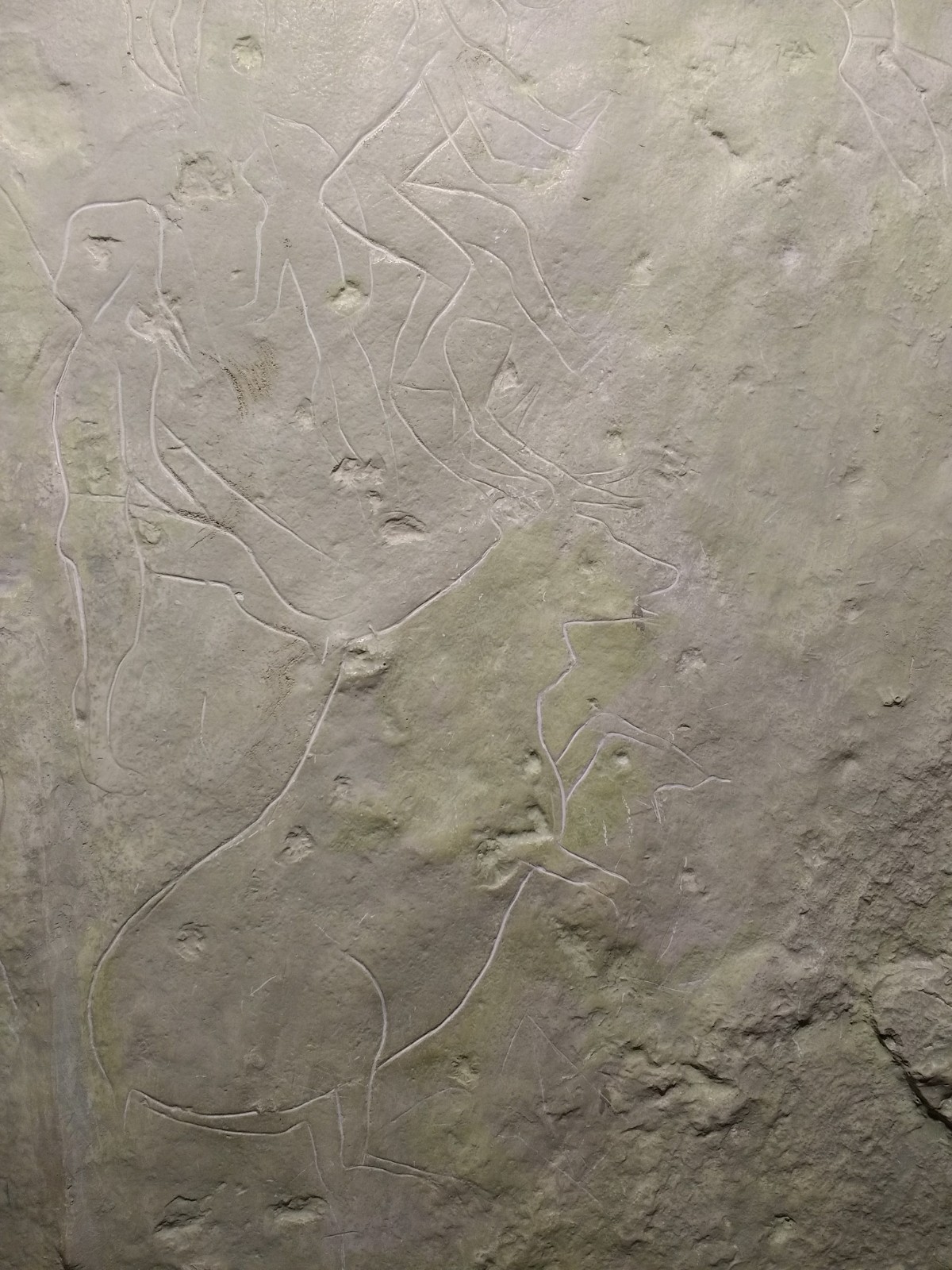
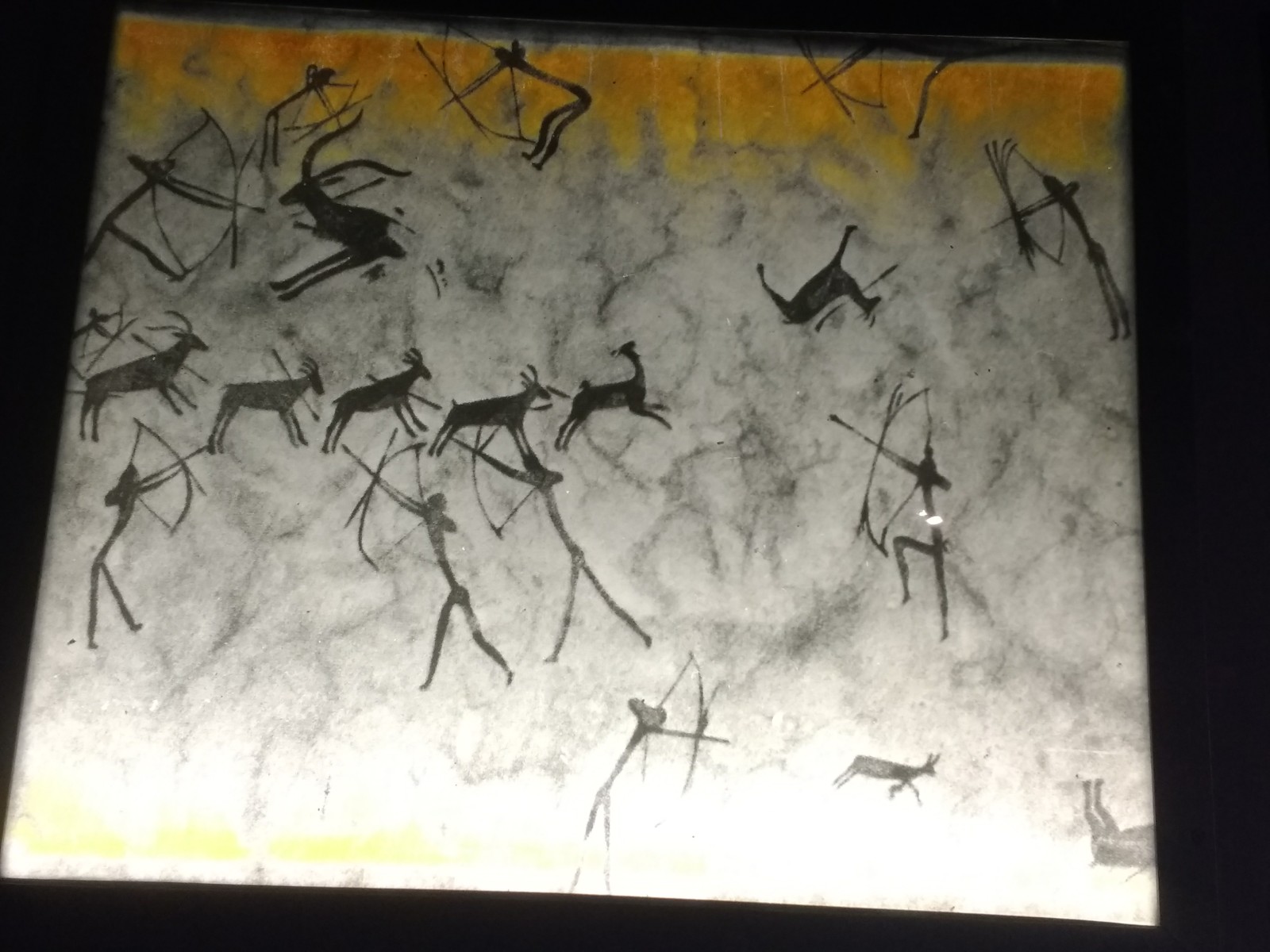
I found the section on ‘cave art’, which has reproductions of drawings and paintings from Europe and Africa, particularly fascinating.
GiraffeA variety of antelopeFemale ox or bison?Found on Monte Pellegrino, outside Palermo The Hunt
It is surprising how quickly you can move from a packed piazza, teeming with tourists, to an oasis of calm, where you are the only foreigners.
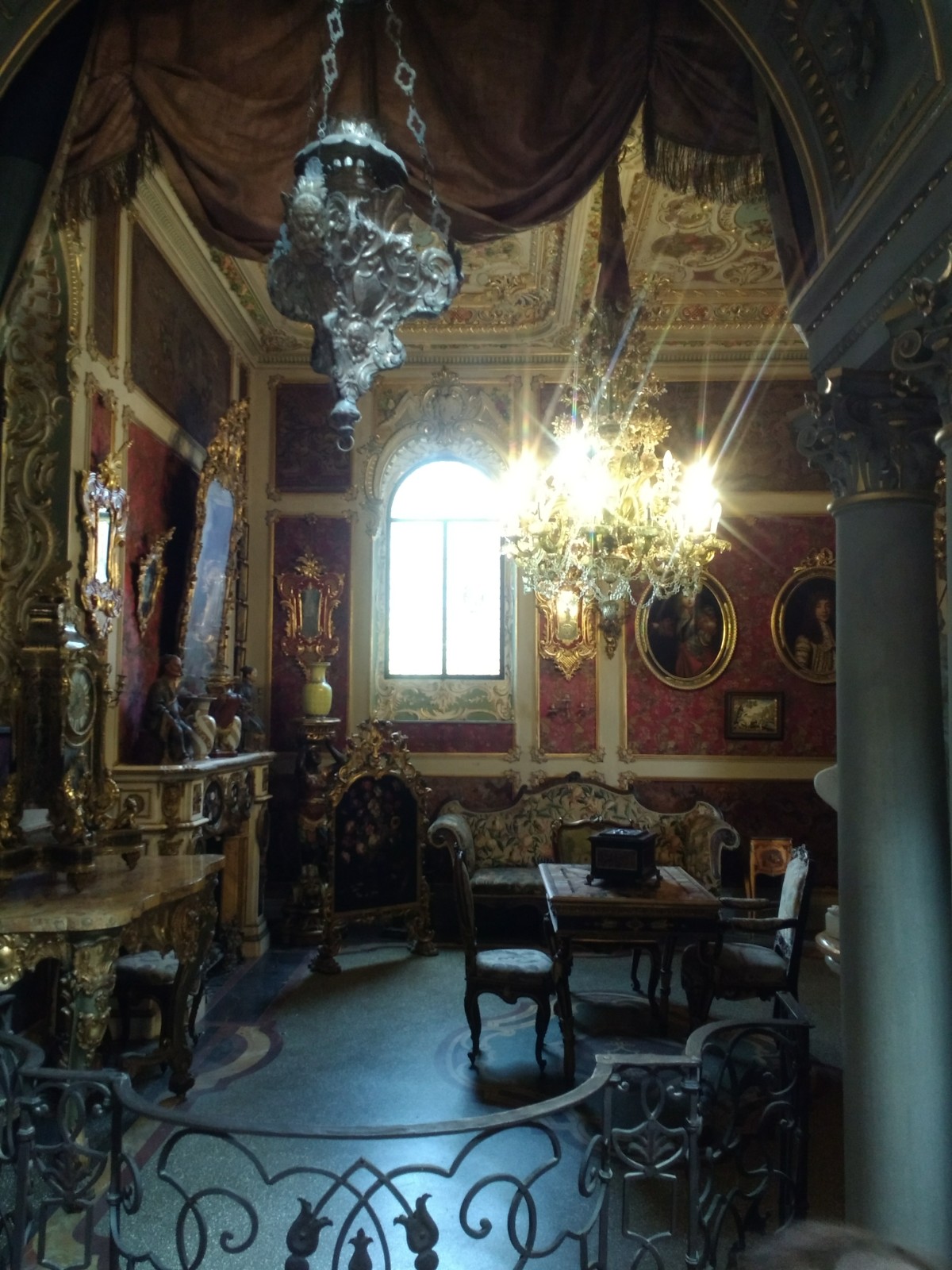
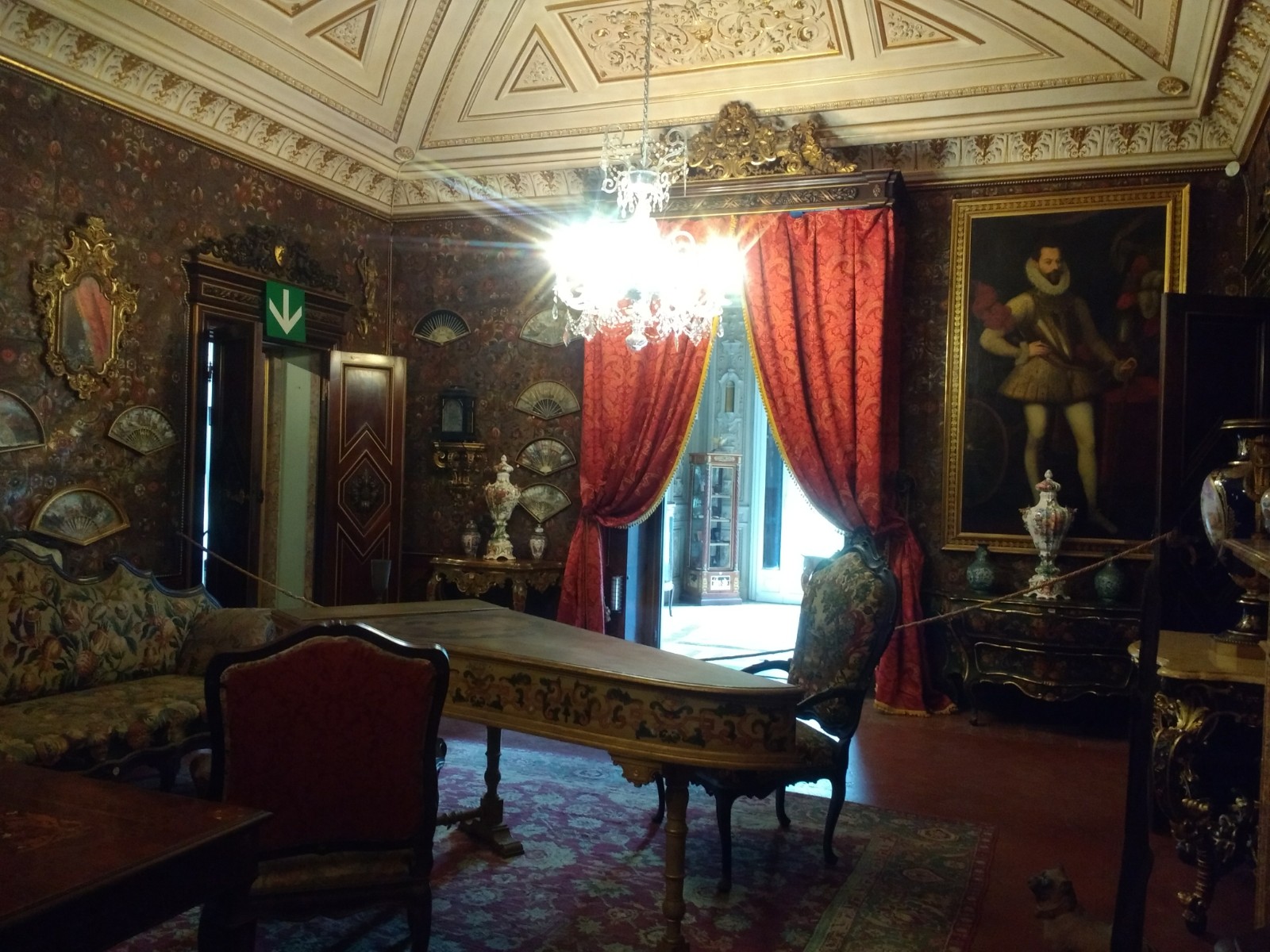
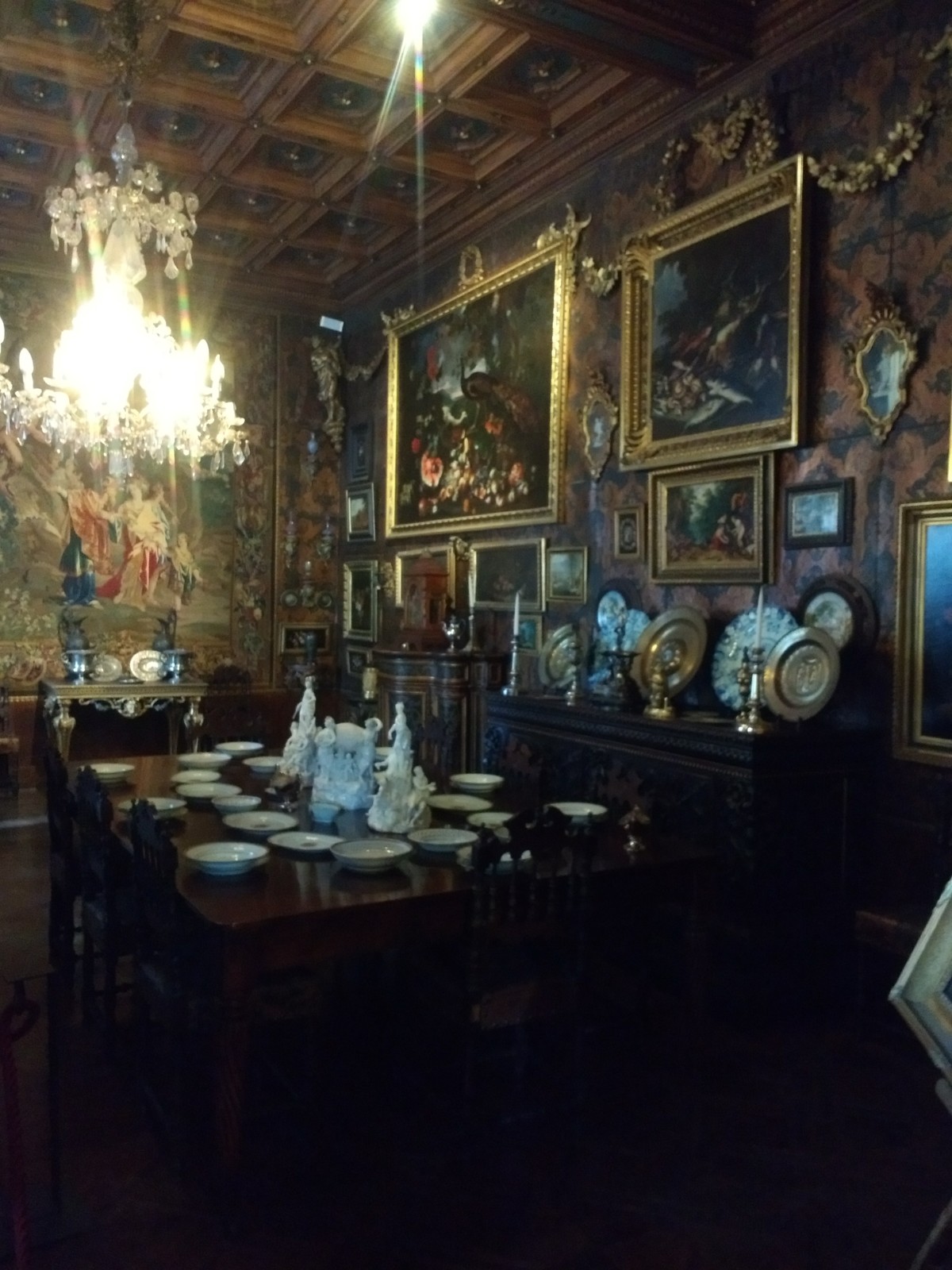
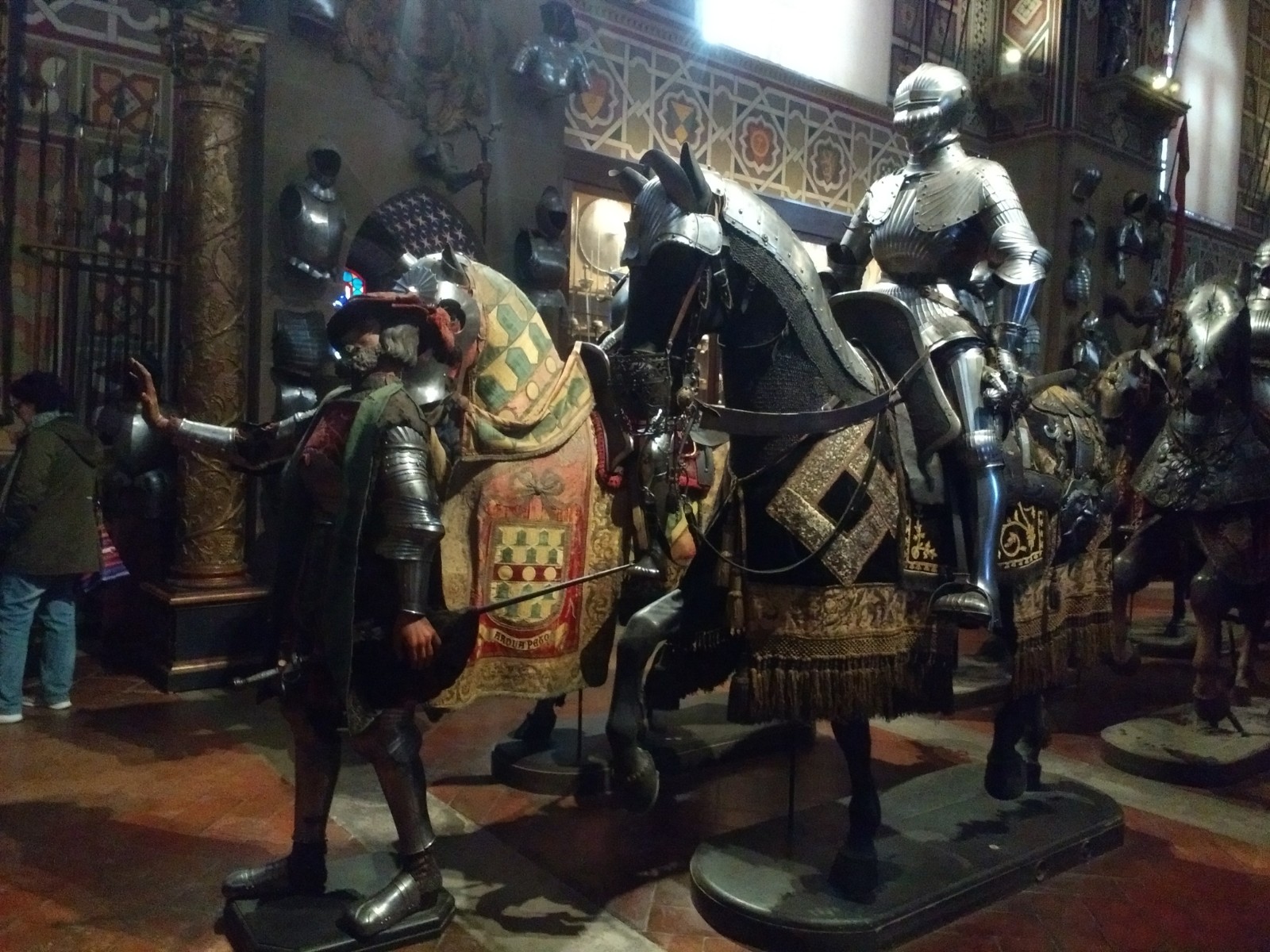
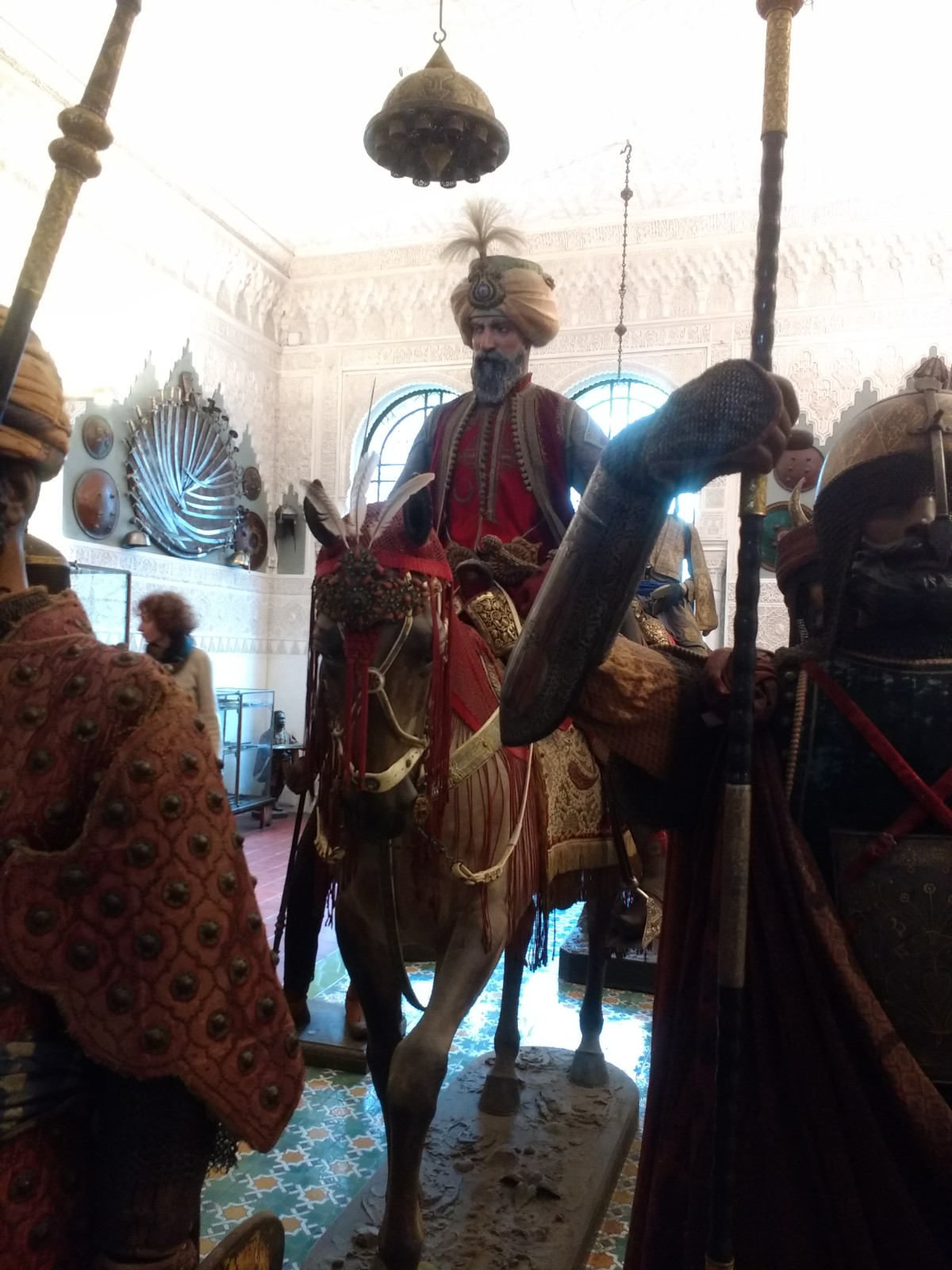
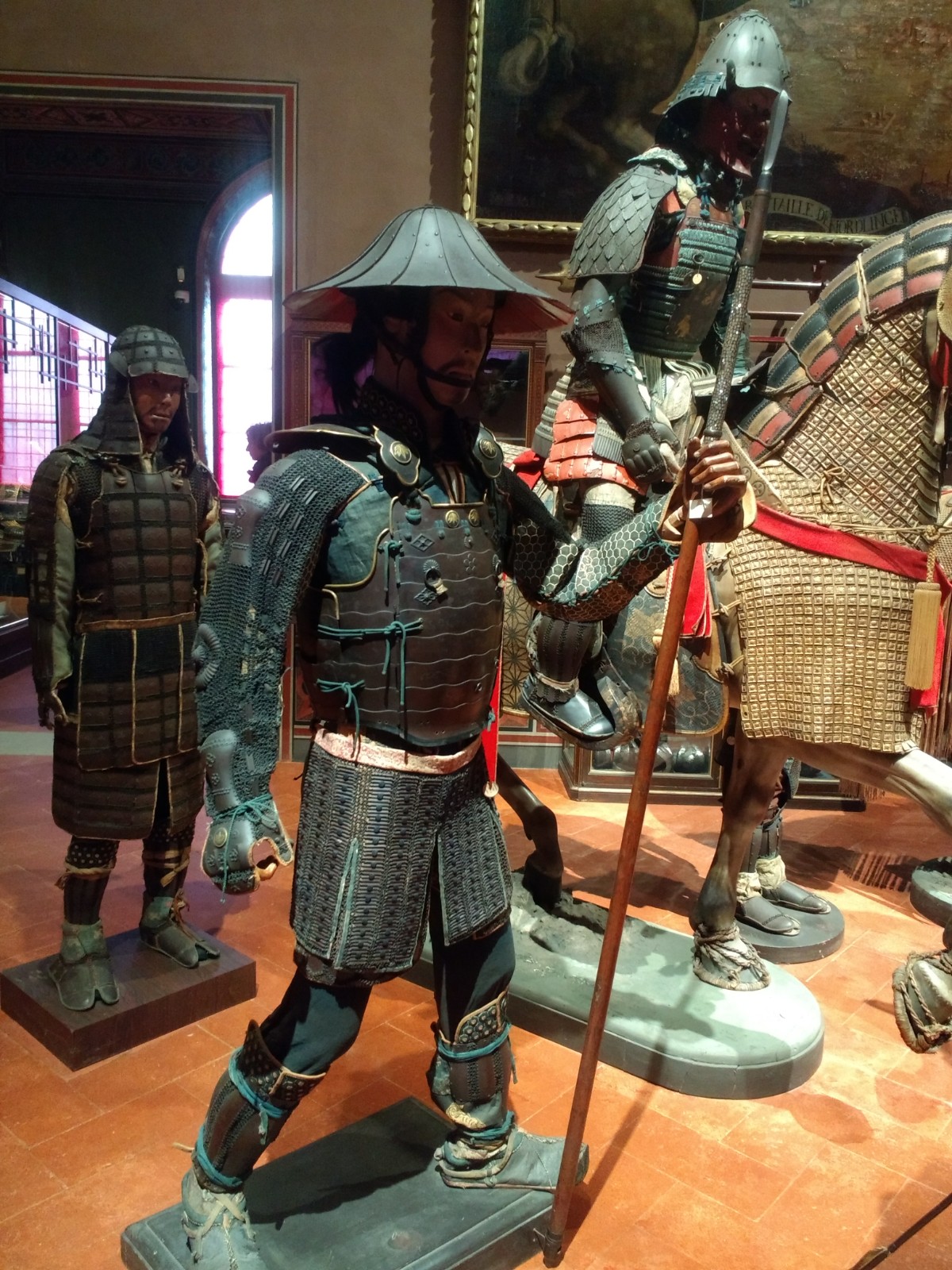
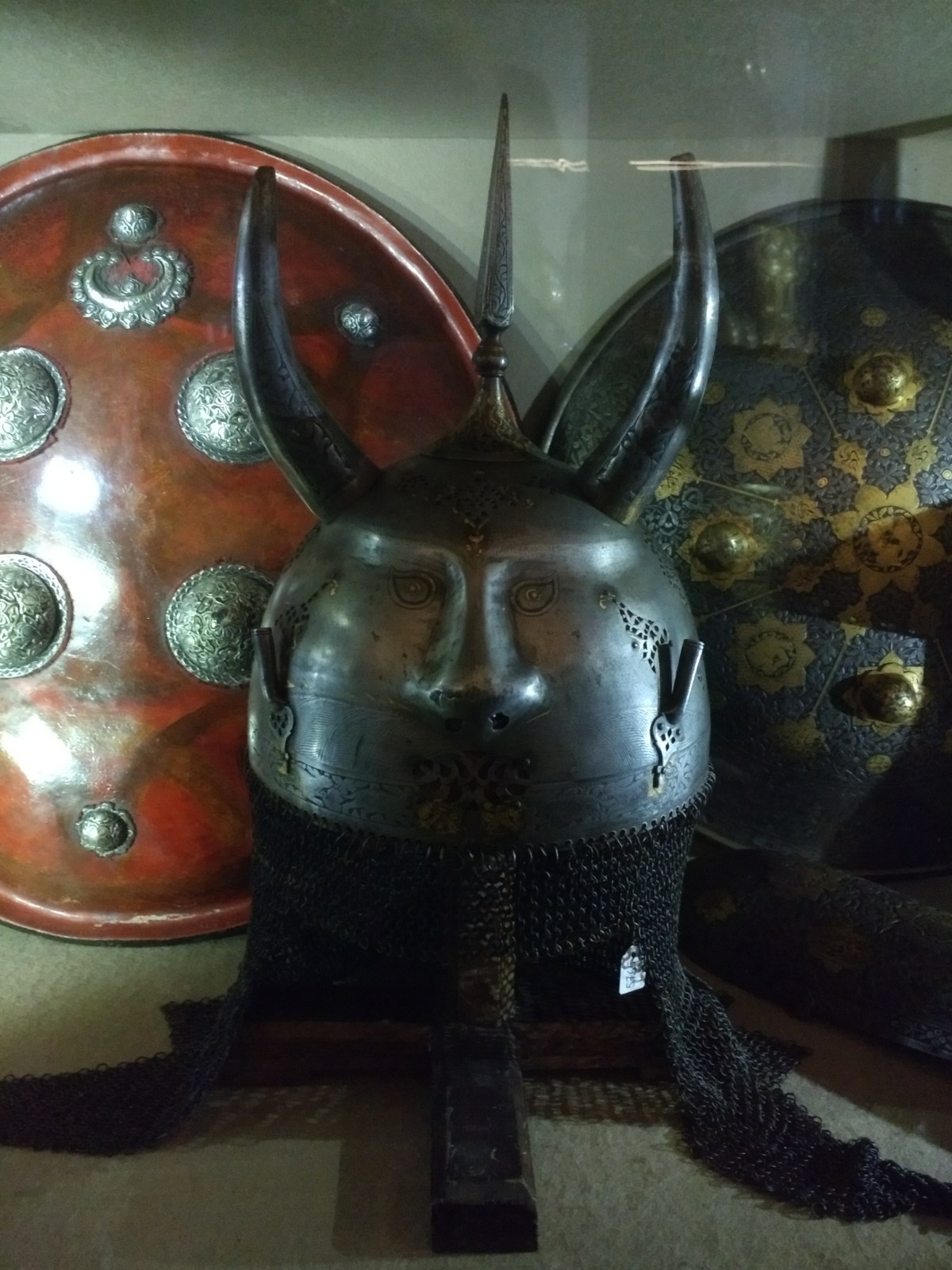
Yesterday afternoon we visited Museo Stibbert, home of Frederick Stibbert, collector extraordinaire, born in Florence to an English father and Italian mother in 1838.
Inside Museo Stibbert
Despite the death of his father when Frederick was only 11, he was sent to England for his education, but on its completion he moved back to Montughi in Florence, where his mother had bought a house.
Sitting Room
At the age of 21, being the only male heir, Frederick inherited enormous wealth from his father and uncles (his grandfather had been general commander in the East India Company and Governor of Bengal). In 1866 he fought as a volunteer in Garibaldi’s army and won a silver medal.
Dining Room
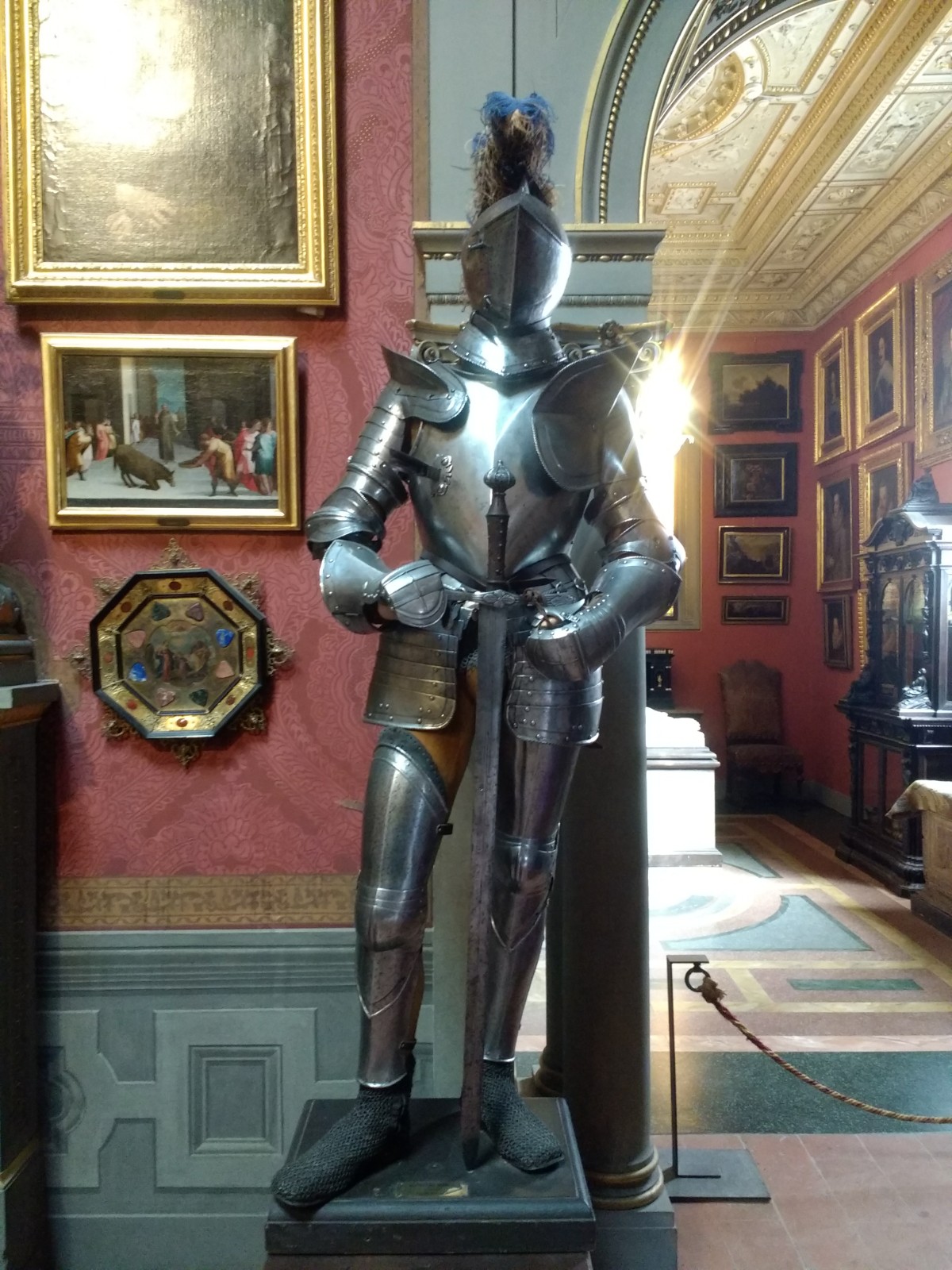
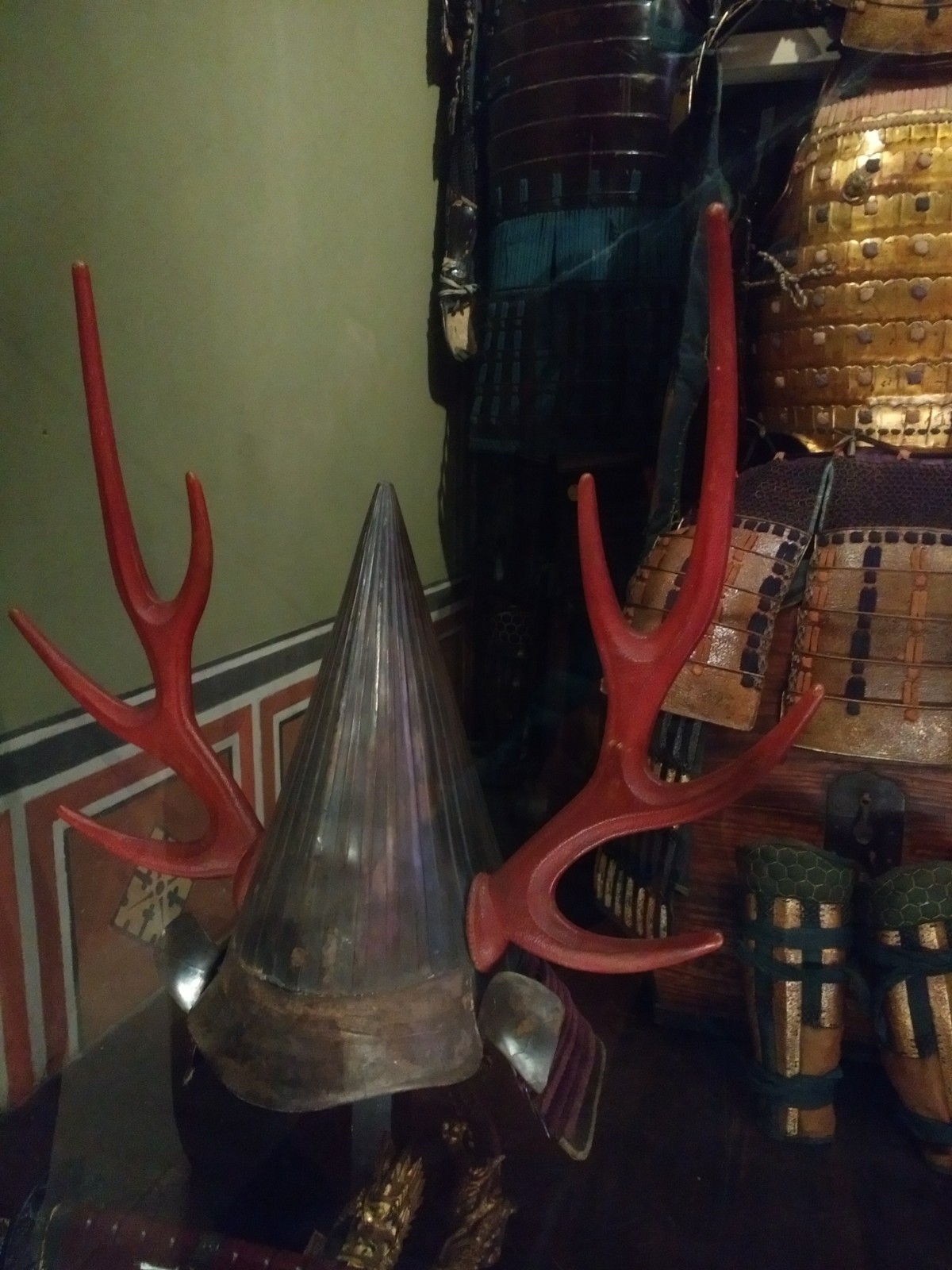
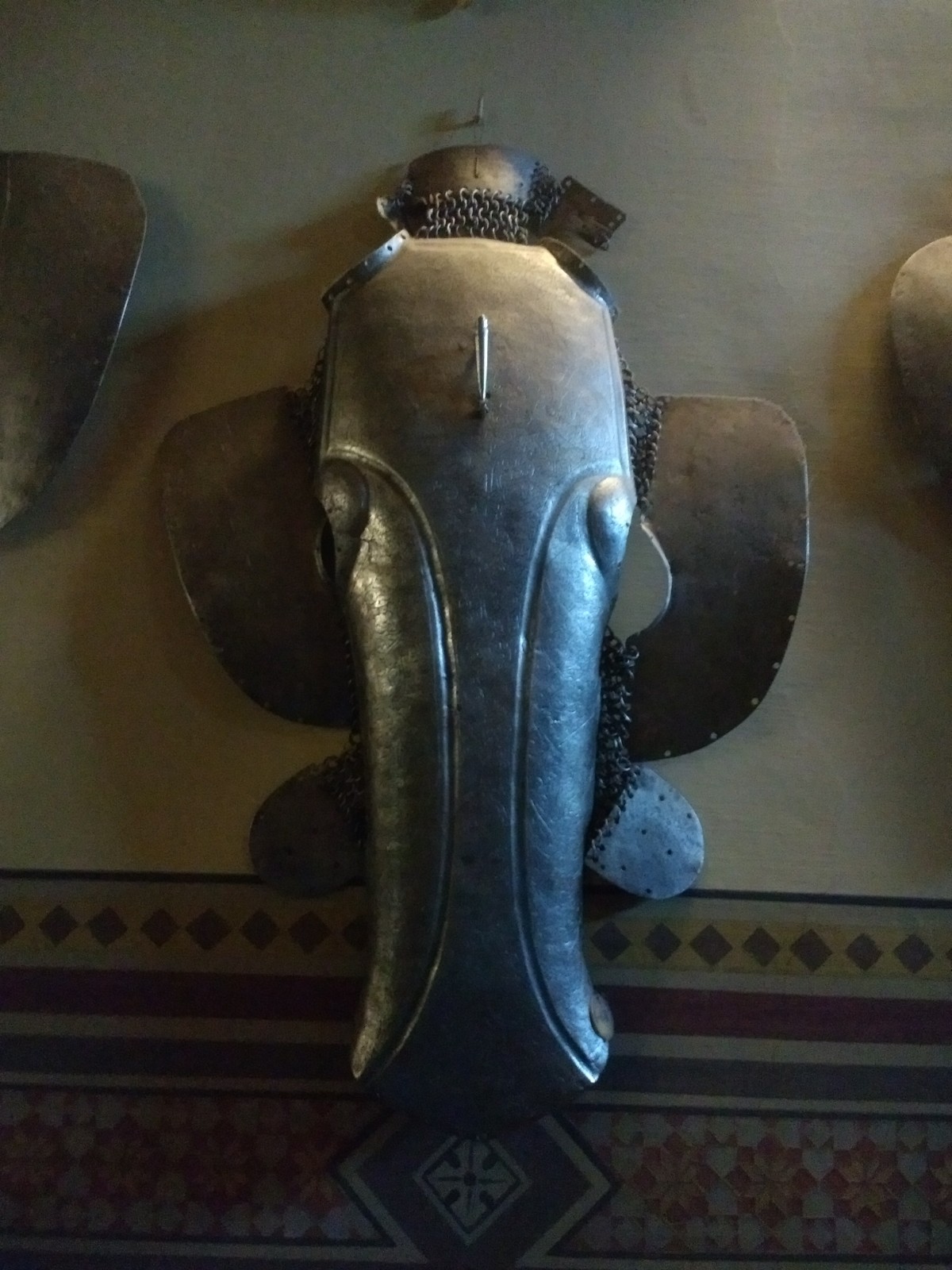
Stibbert then seems seems to have been devoted most of the rest of his life to amassing huge collections of items, particularly arms and armour from the sixteenth century, and creating appropriate settings to display them in.
Ready for battle, sixteenth-century-styleIslamic Horseman
For Stibbert, his house was his museum, and his museum was his house.
Japanese soldiers ready for battle
Looks like a Viking helmet, but it isn’tI think someone has just stuck reindeer horns onto this helmet.
Face armour for a horse
Stibbert died in 1906 and three years later his house, with all the collections, were opened to the public, which had been his wish.
Having tried, and failed, to reserve tickets on-line last night for the Accademia, we were in the queue early this morning (8.50am) to buy tickets. Not early enough, it would seem (they open at 8.15am) as we were in the queue for the next TWO HOURS and FORTY MINUTES. (When we got to the front of the queue we were told that for people joining the queue at that time, the wait was four hours).
We had totally under-estimated the demand. It appears to be the most popular sight in Florence. I notice on the Accademia website that bookings are now being taken for 22 April – two weeks away.
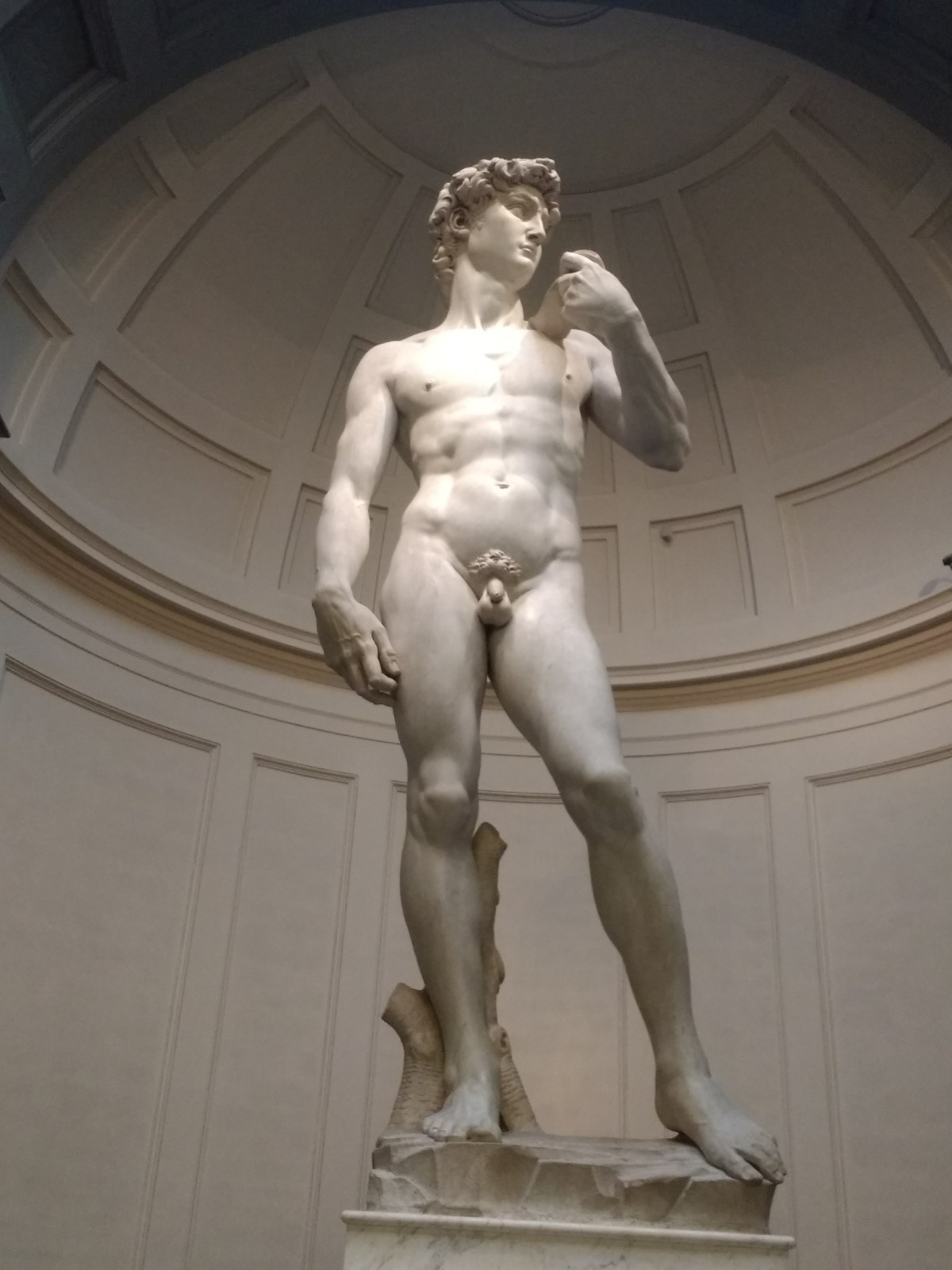
Was it worth it, yes. David is sufficiently elevated for everyone to see, and it was great to see the original after having seen several copies. Again, we used a Rick Steves’ audio guide.
Apparently, unlike other sculptors, Michelangelo would just start chipping away at a piece of marble without planning or marking out beforehand.
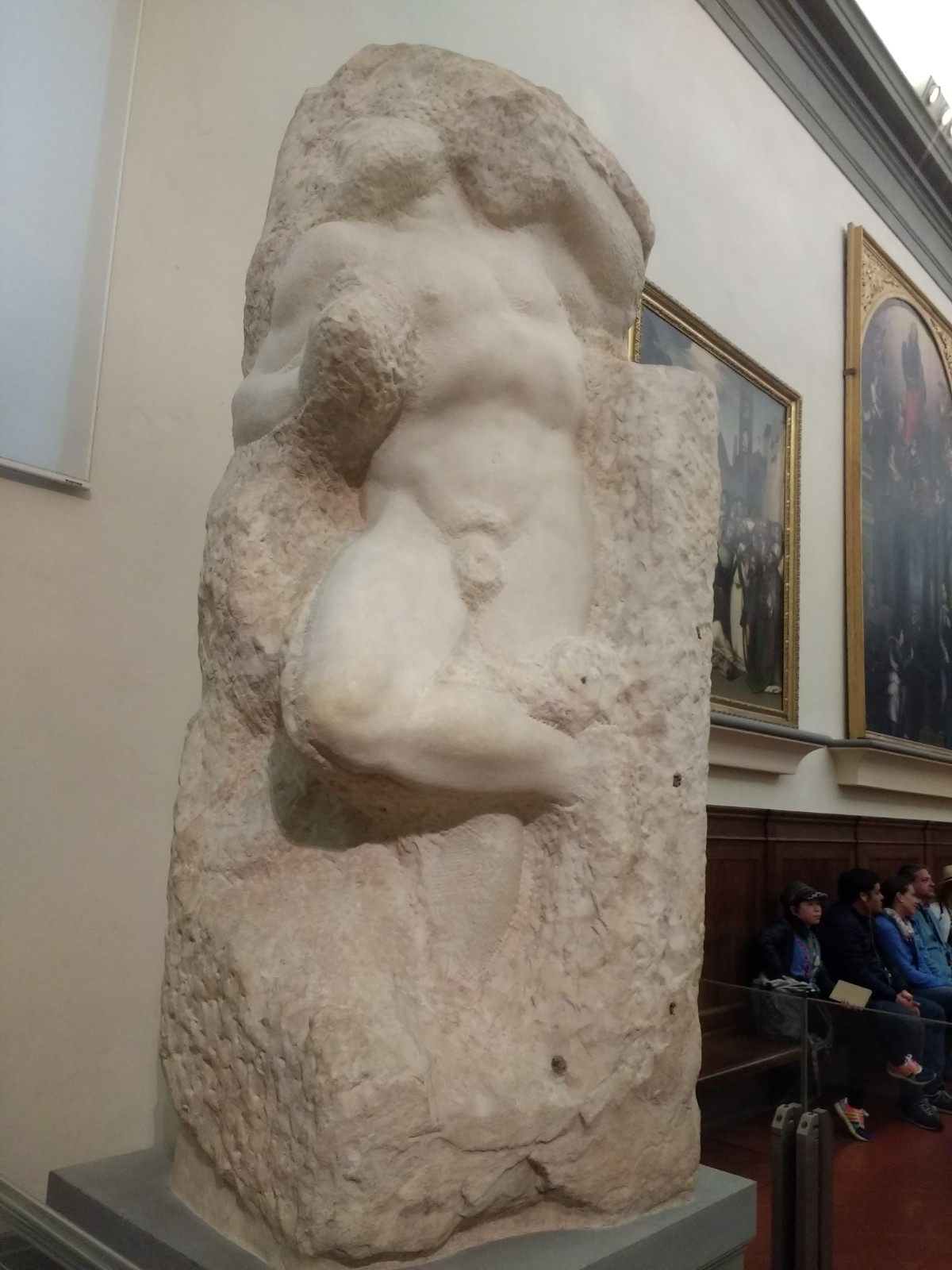
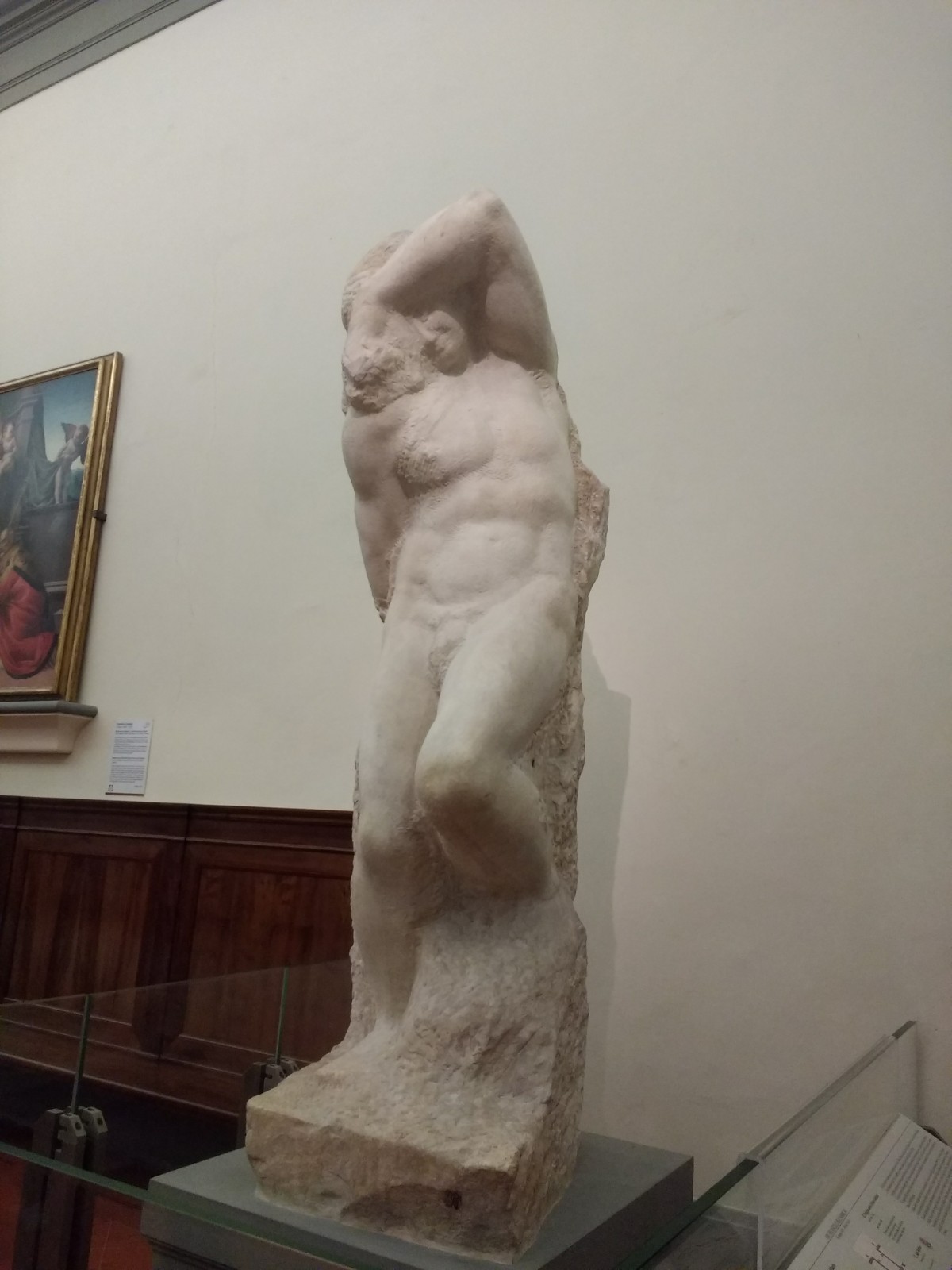
The energy in his work can be seen in a number of unfinished pieces dubbed ‘The Prisoners’.
The ‘Prisoners’ were designed for the tomb of Pope Julius II (he who commissioned the ceiling for the Sistine Chapel) but someone must have come up with a different idea, and they were not wanted after all.
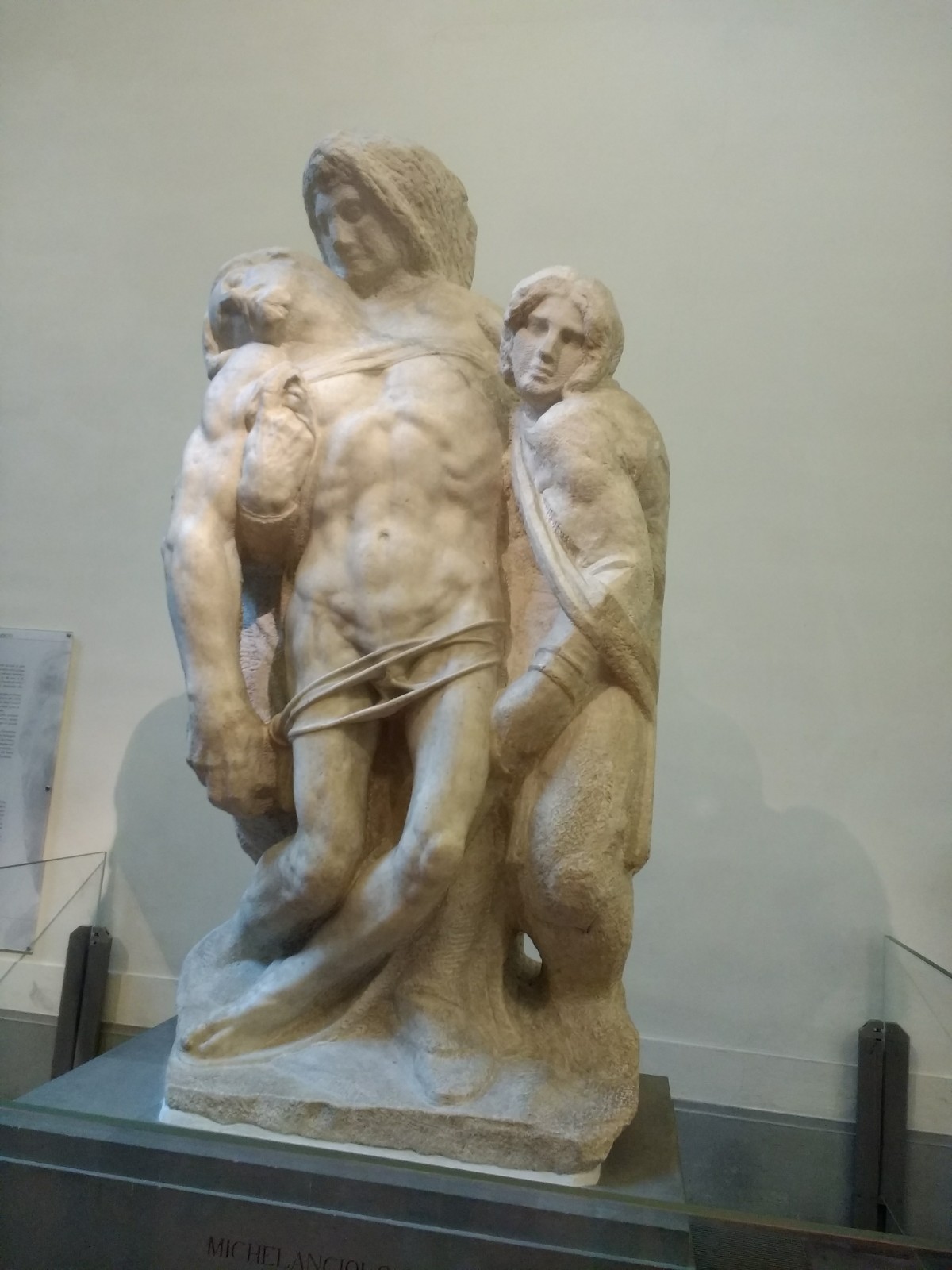
Unfinished Pieta by Michelangelo, or one of his followers.
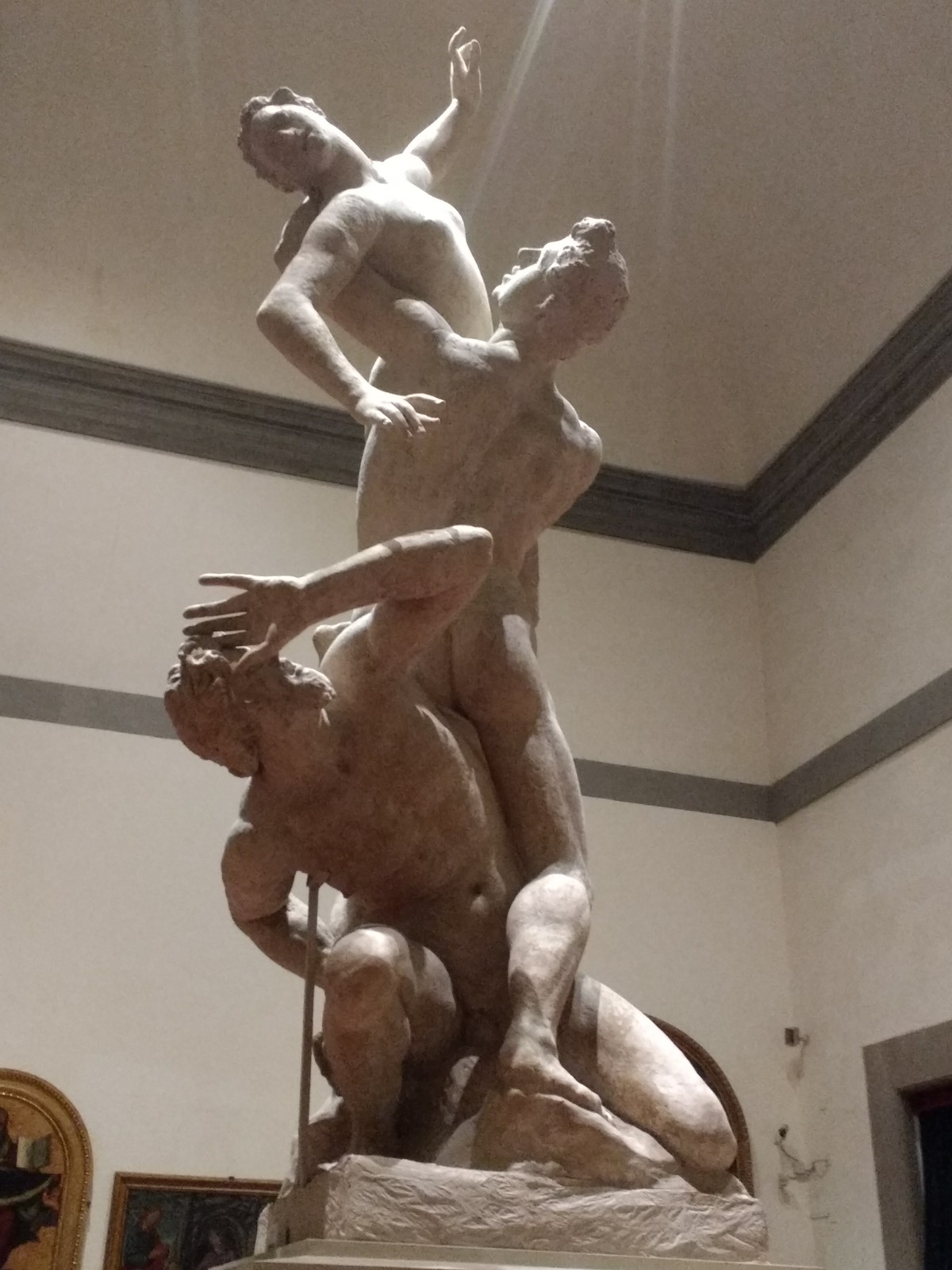
Plaster model of ‘The Rape of the Sabines’ by Giambologna
Also in the Museum is a hall of plaster statues, made by students of the Accademia, together with a couple of films explaining the different methods of making plaster casts.
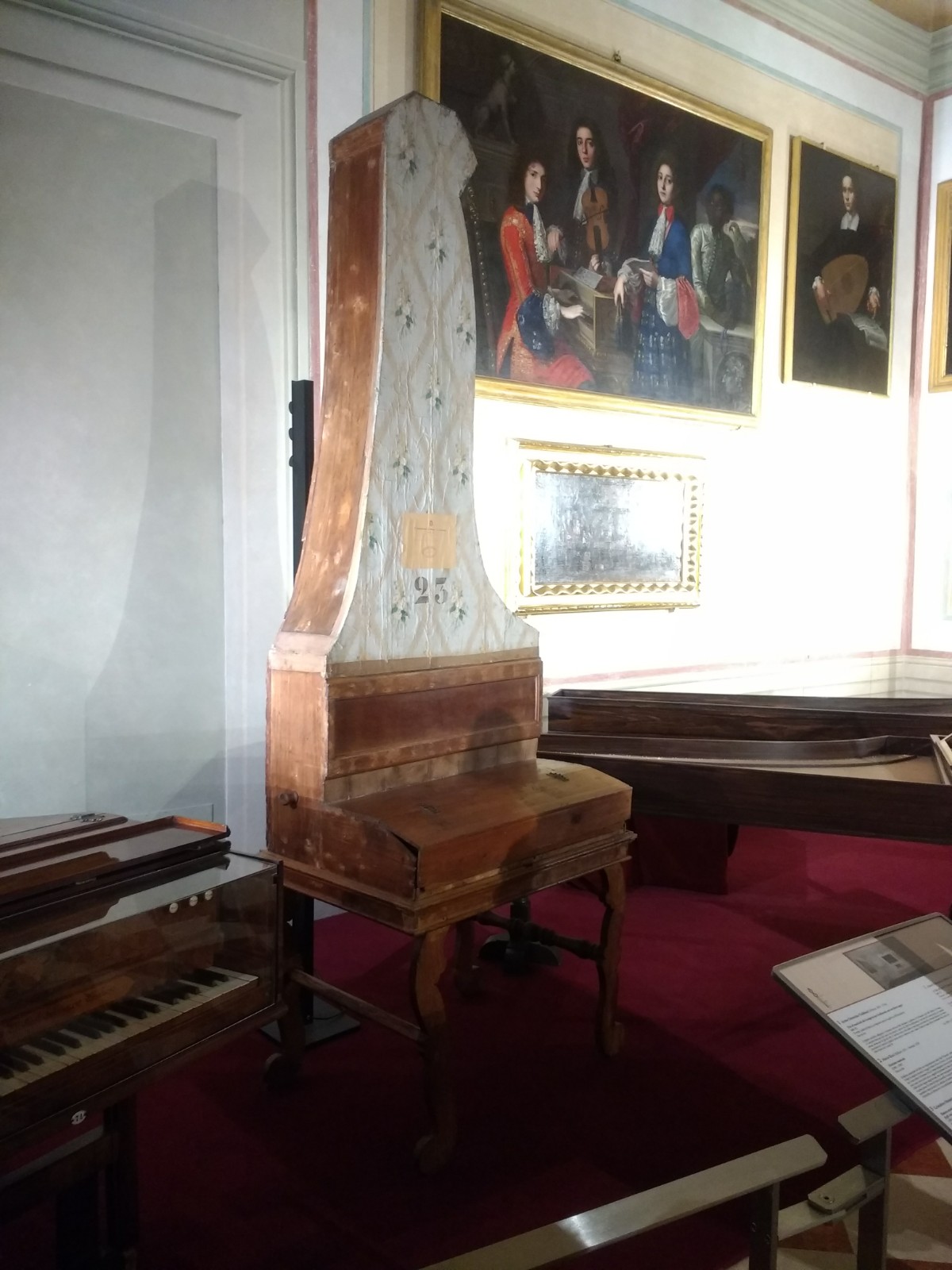
Music has a place in the Accademia too, with a collection of antique musical instruments, including the world’s first pianoforte.
World’s first pianoforte
Previous to the invention of the pianoforte, the harpsichord had been the instrument of choice, which worked by plucking strings. In a pianoforte, the strings are not plucked, but hammered. This means that each note can either be played softly (piano) or hard (forte).
While in the lengthy queue to get in, we got talking to a teacher with a group of Flemish sixth form students. The teacher has been bringing groups to Florence for 25 years, but he is now thinking of avoiding Florence in the future as the system for reserving tickets has deteriorated of recent and the cost of tickets for young people has increased so much that the trip is becoming non-viable. He commented that Florence is the worst Italian city for tourists in this respect. I wonder if Florence has got too popular for it’s own good, rather like Venice.
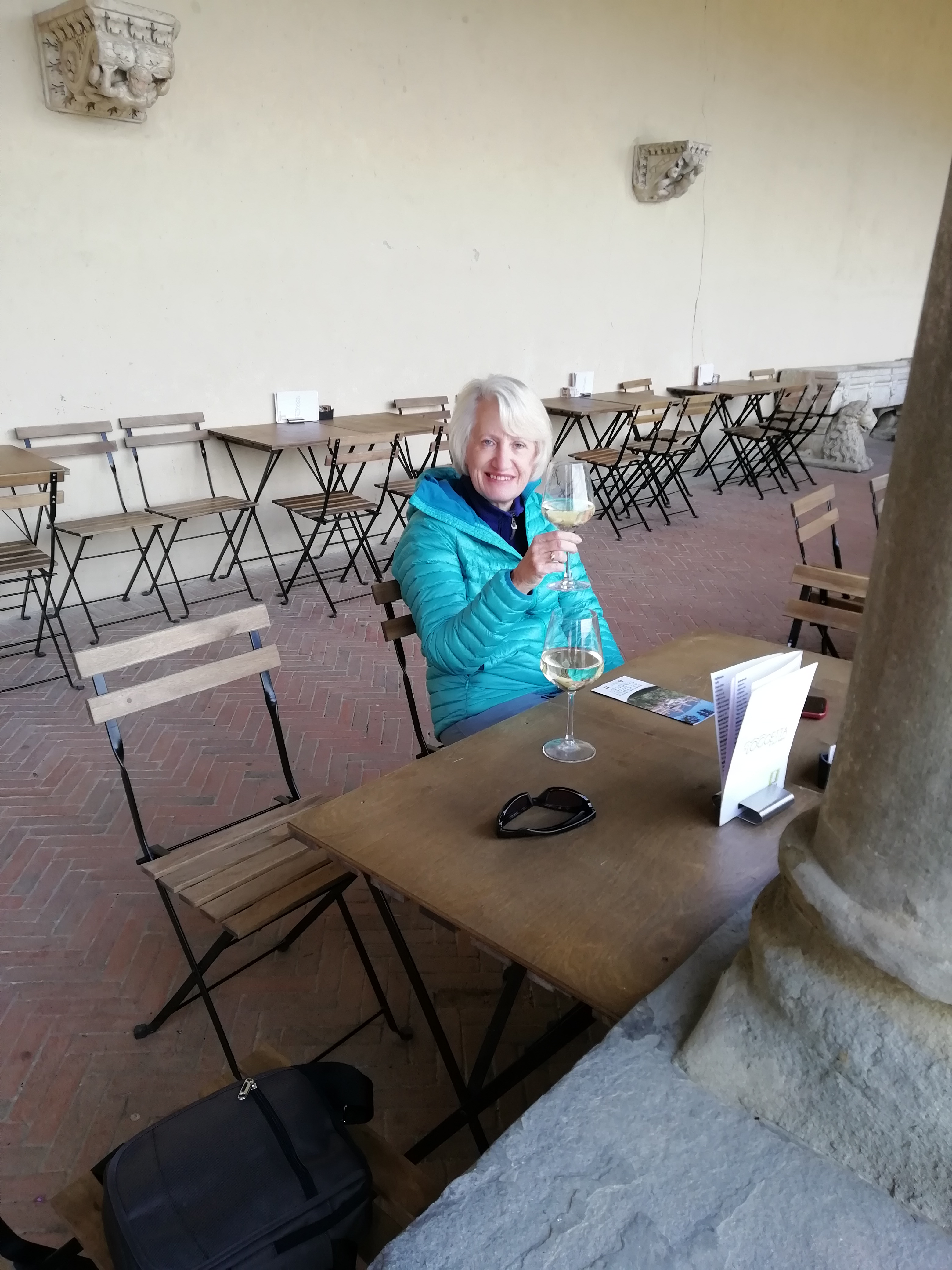
It being my birthday today (65) we plumped for a leisurely stroll around the Bardini Gardens, with lunch on a terrace overlooking Florence.
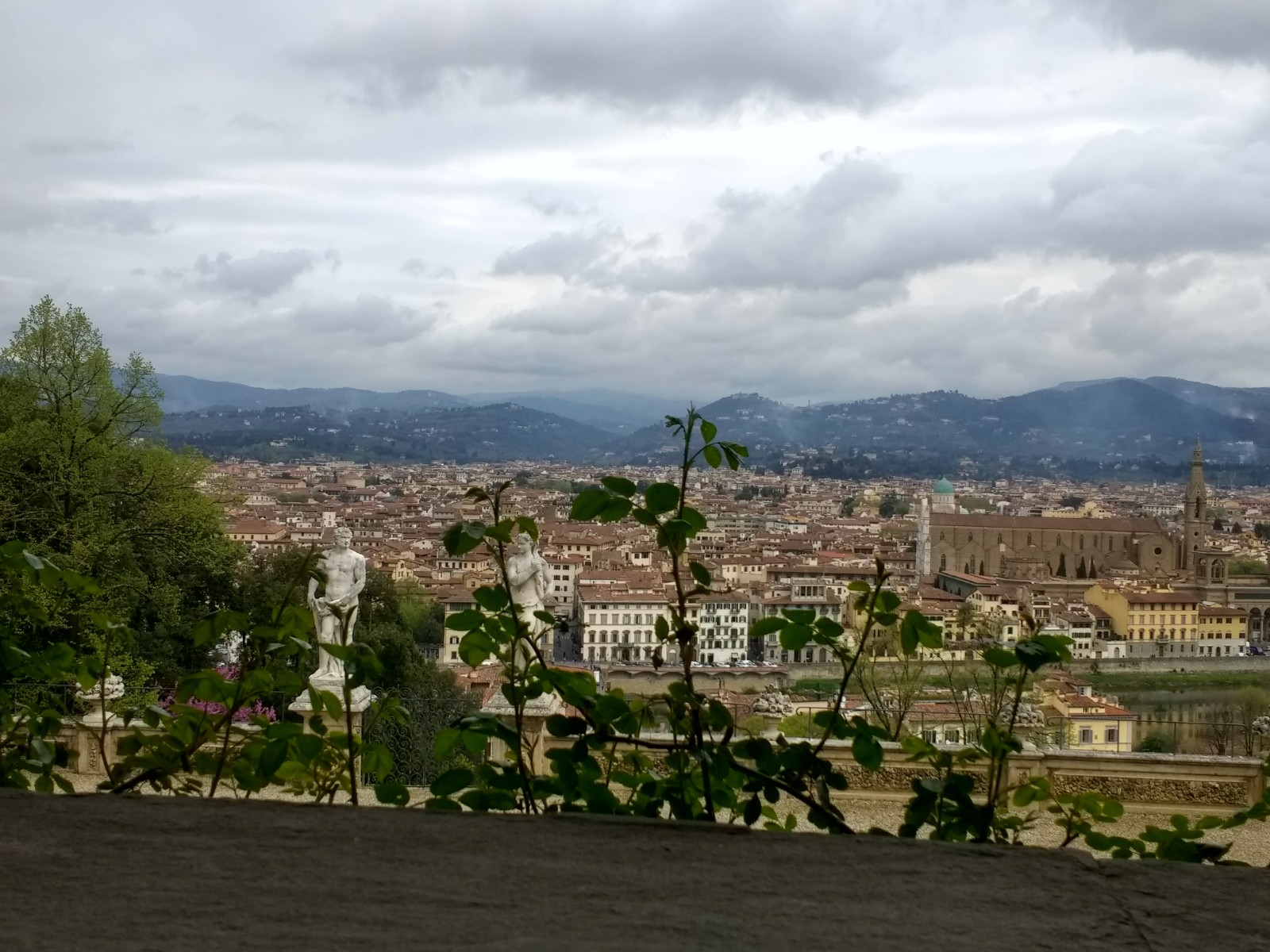
We started lunch with a glass of Prosecco.View from our lunch spot.
It continued to rain into the night, but has been fine today, if not overcast and cool (only one degree warmer than West Sussex, I notice).
Having come through the Boboli Gardens, which now have people working on them, presumably to prepare them for the influx of tourists at Easter, to get to the Bardini Gardens, you are immediately struck by how much neater and better tended they appear to be.
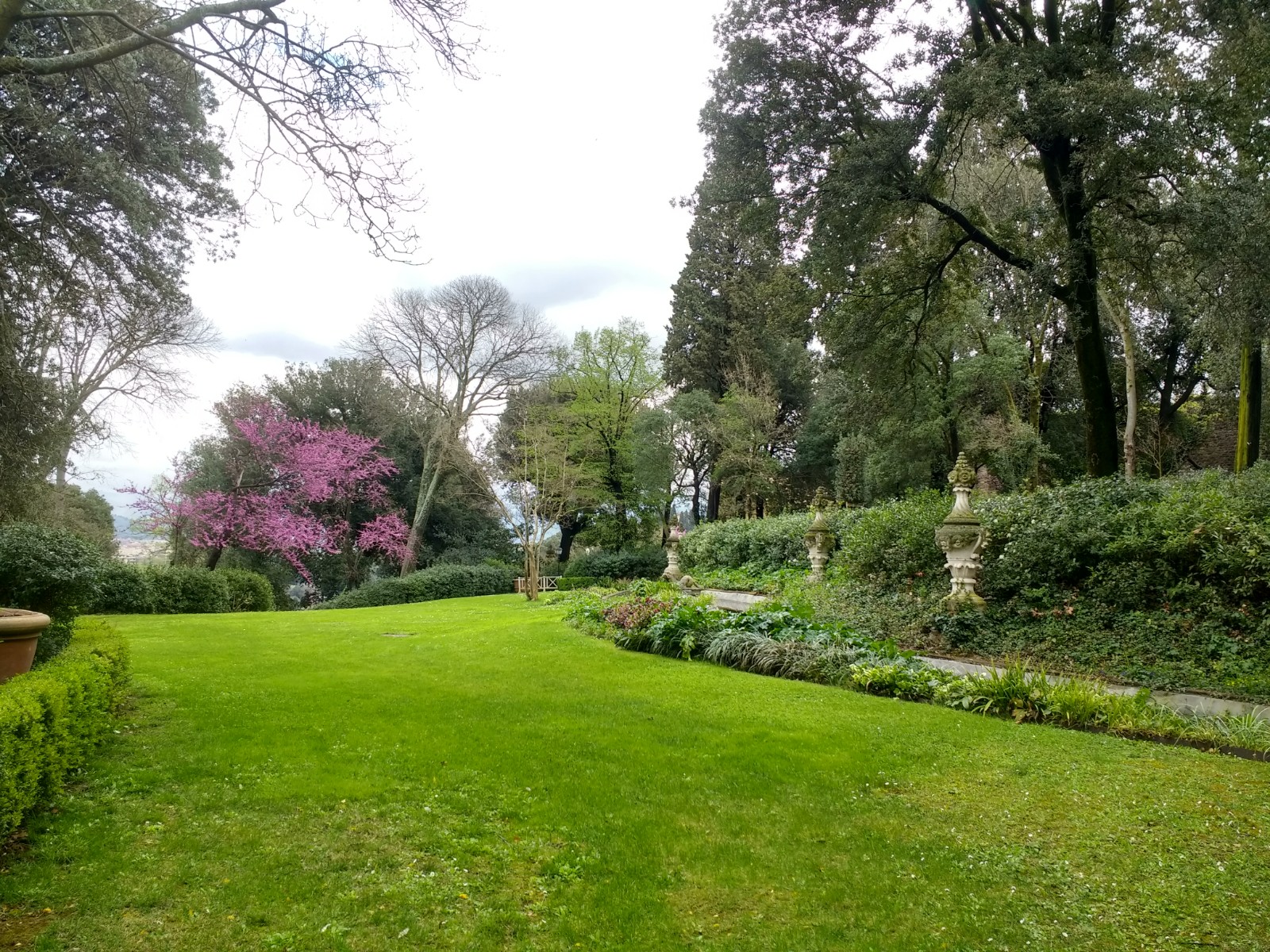
The flowering cherry trees were beautiful.
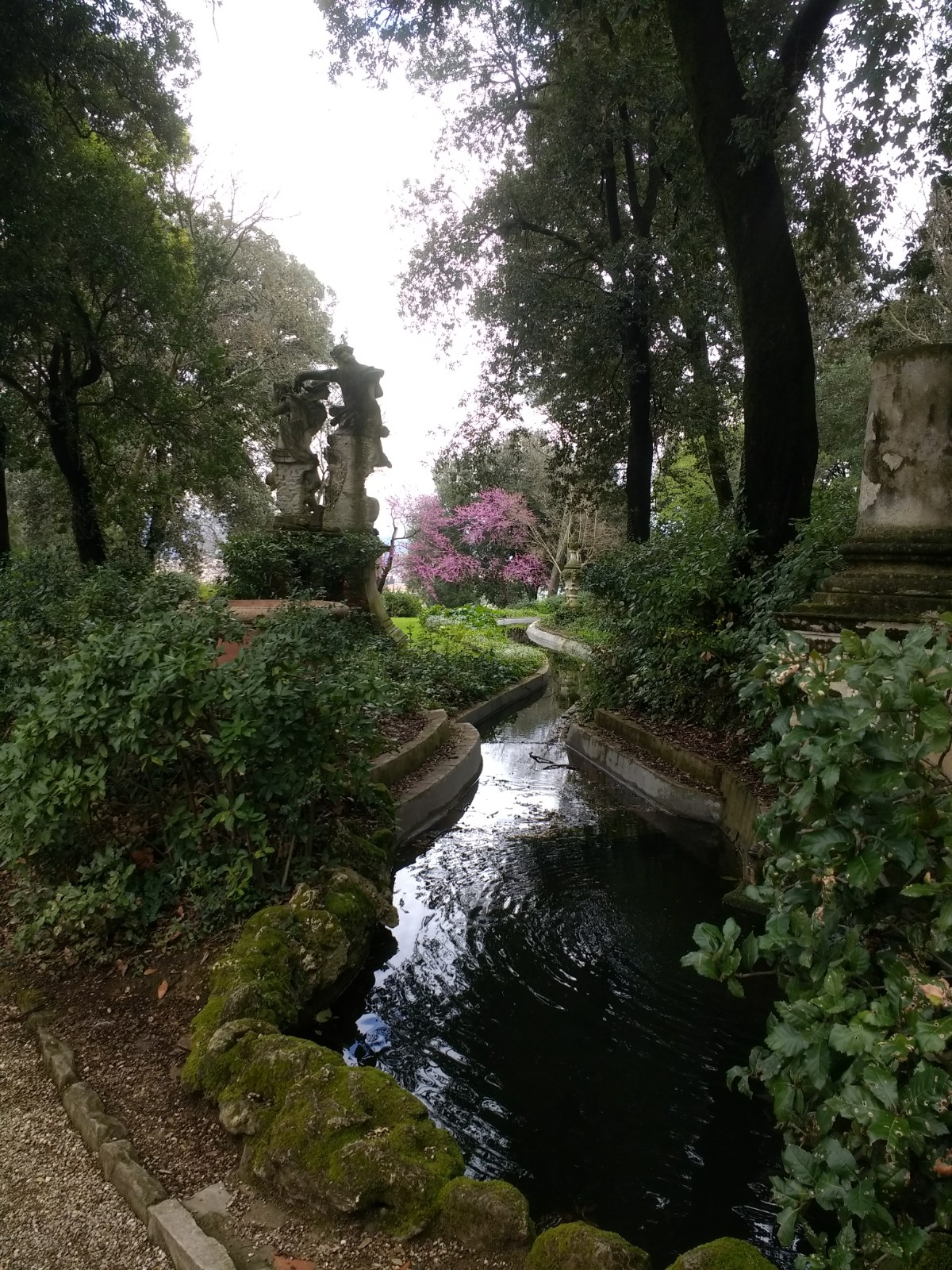
Dragon canal
The gardens were styled as an English Garden in the nineteenth century, but fell into neglect in the second half of the twentieth century. Eventually, they were bought by a bank, restored, and have only recently been opened to the public.
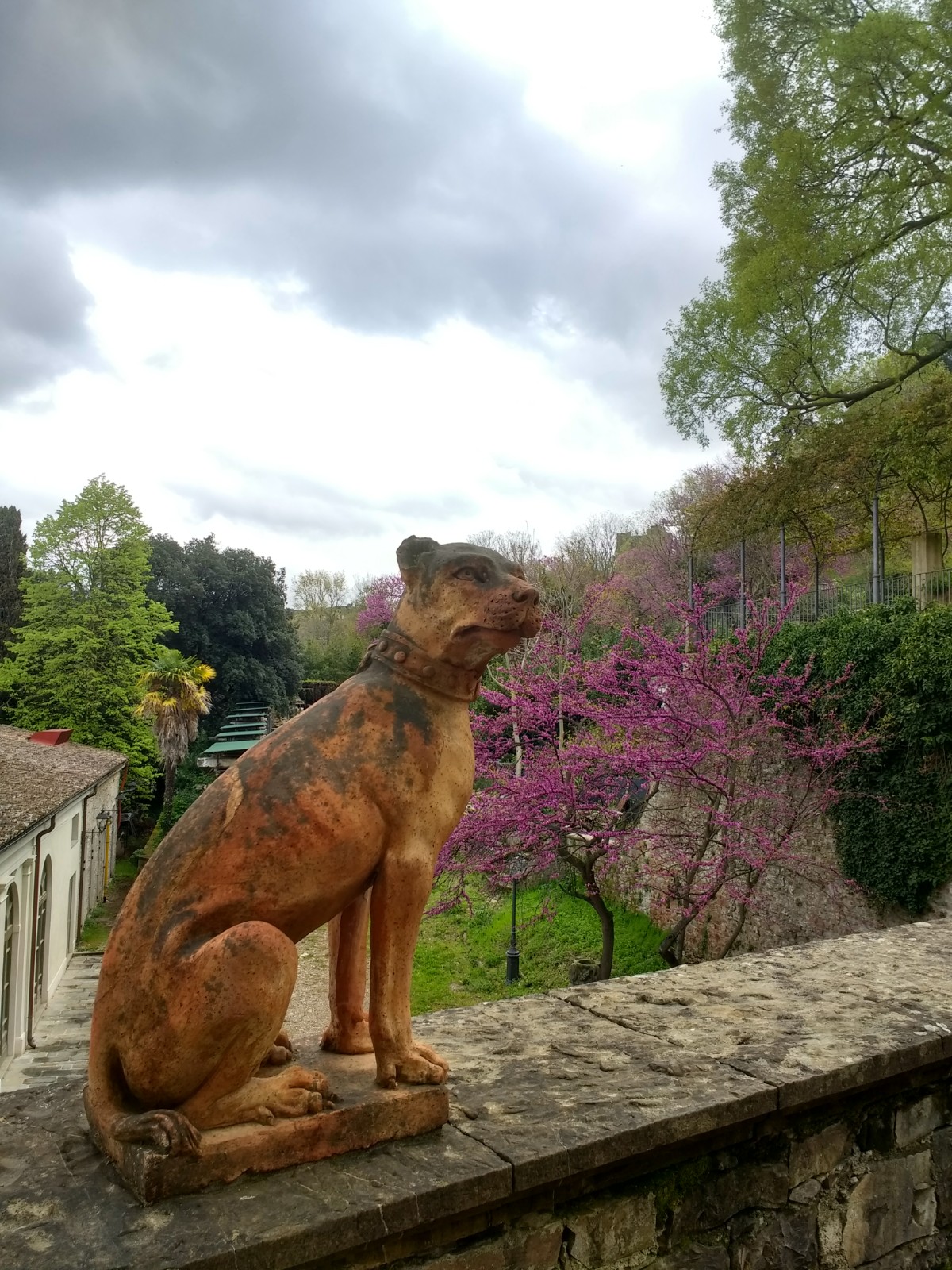
Looks like a dog, but the paws are very lion-like.
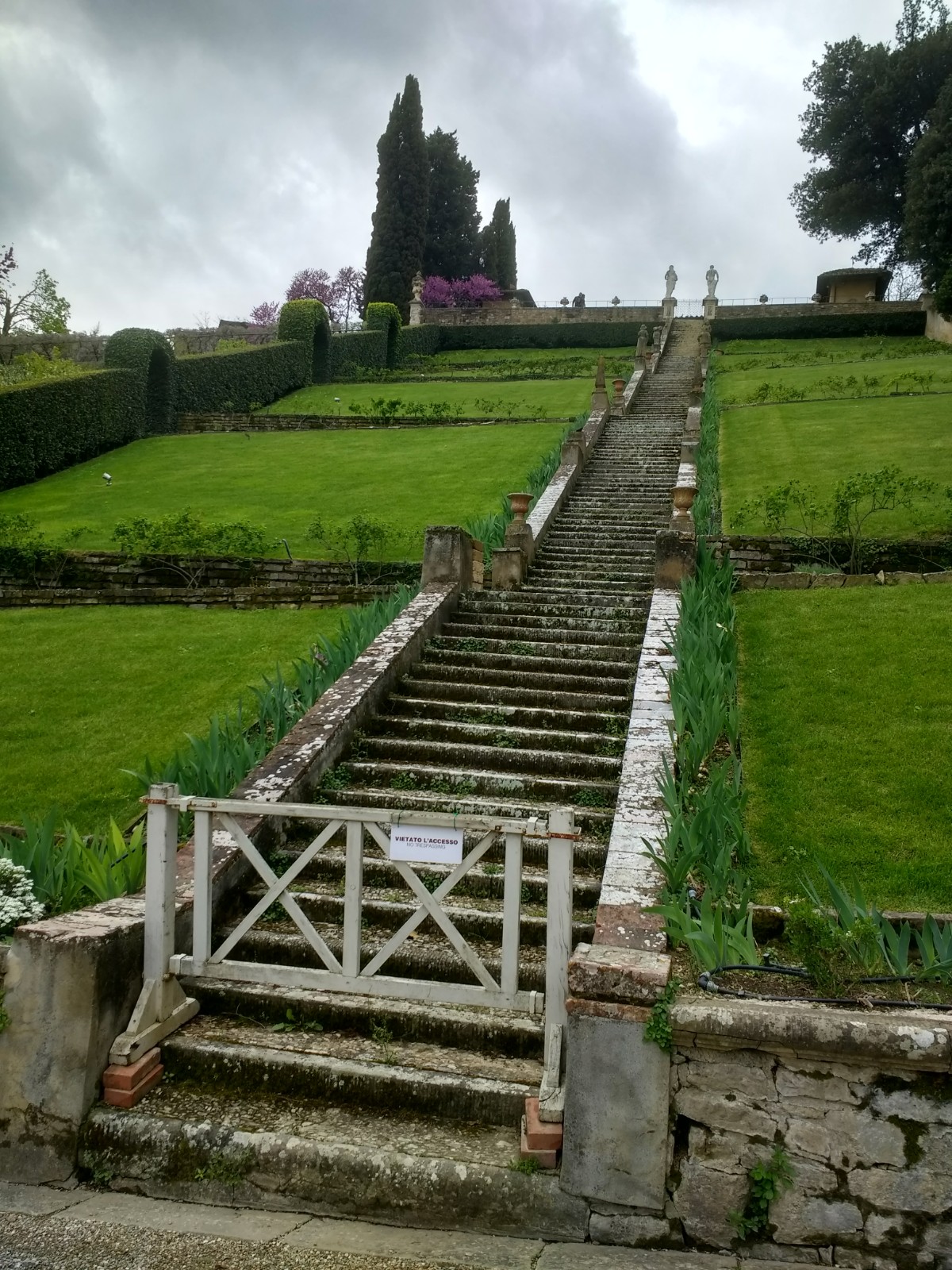
The site is terraced, and steep.
The camellias were out,of course, and the wisteria is just coming out, as well as the hydrangeas, so we will try and go back before we leave Florence in ten days’ time.
With Mark feeling a lot better today, we ventured off together to the Cathedral Museum which is well worth a visit.
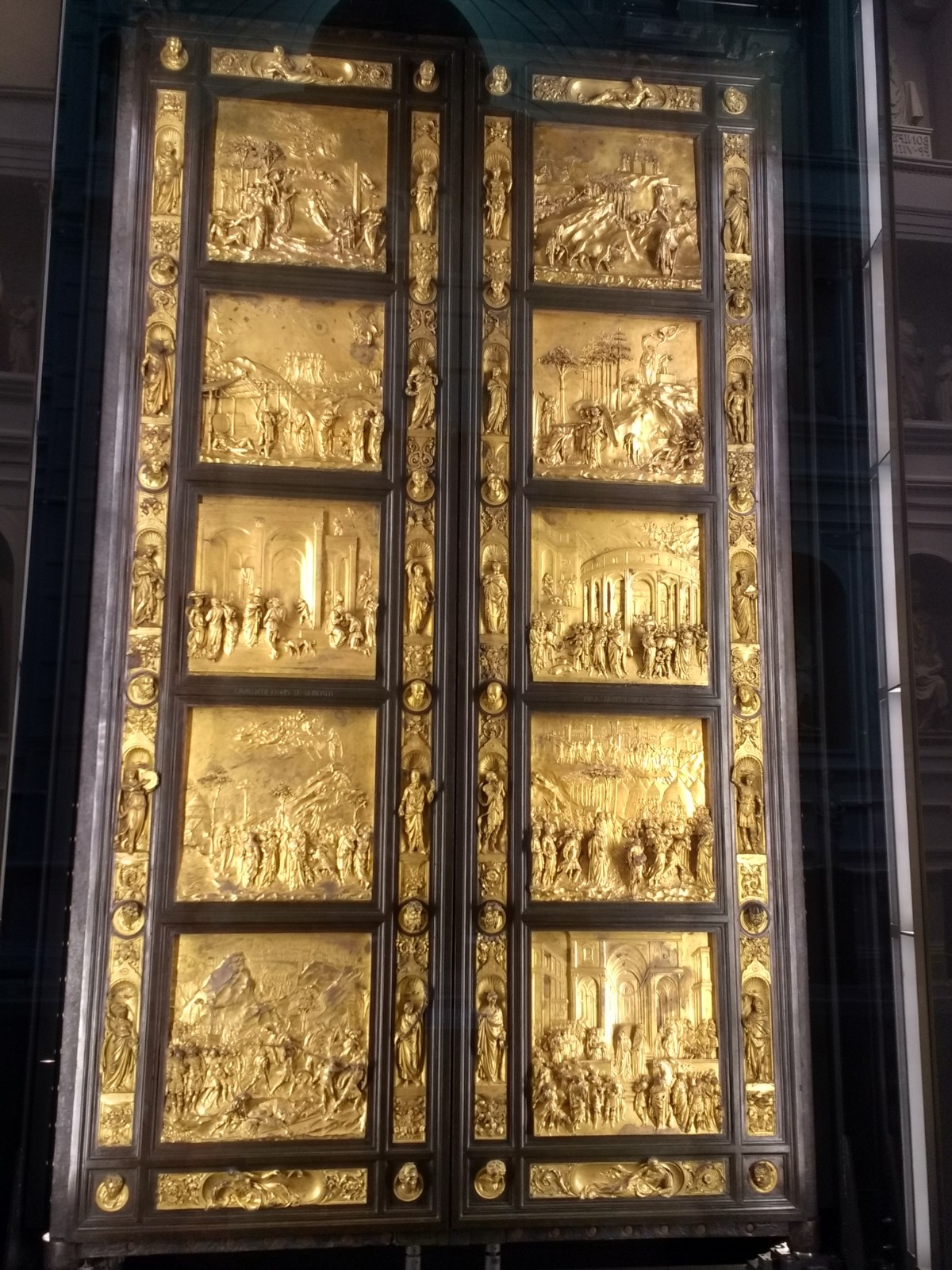
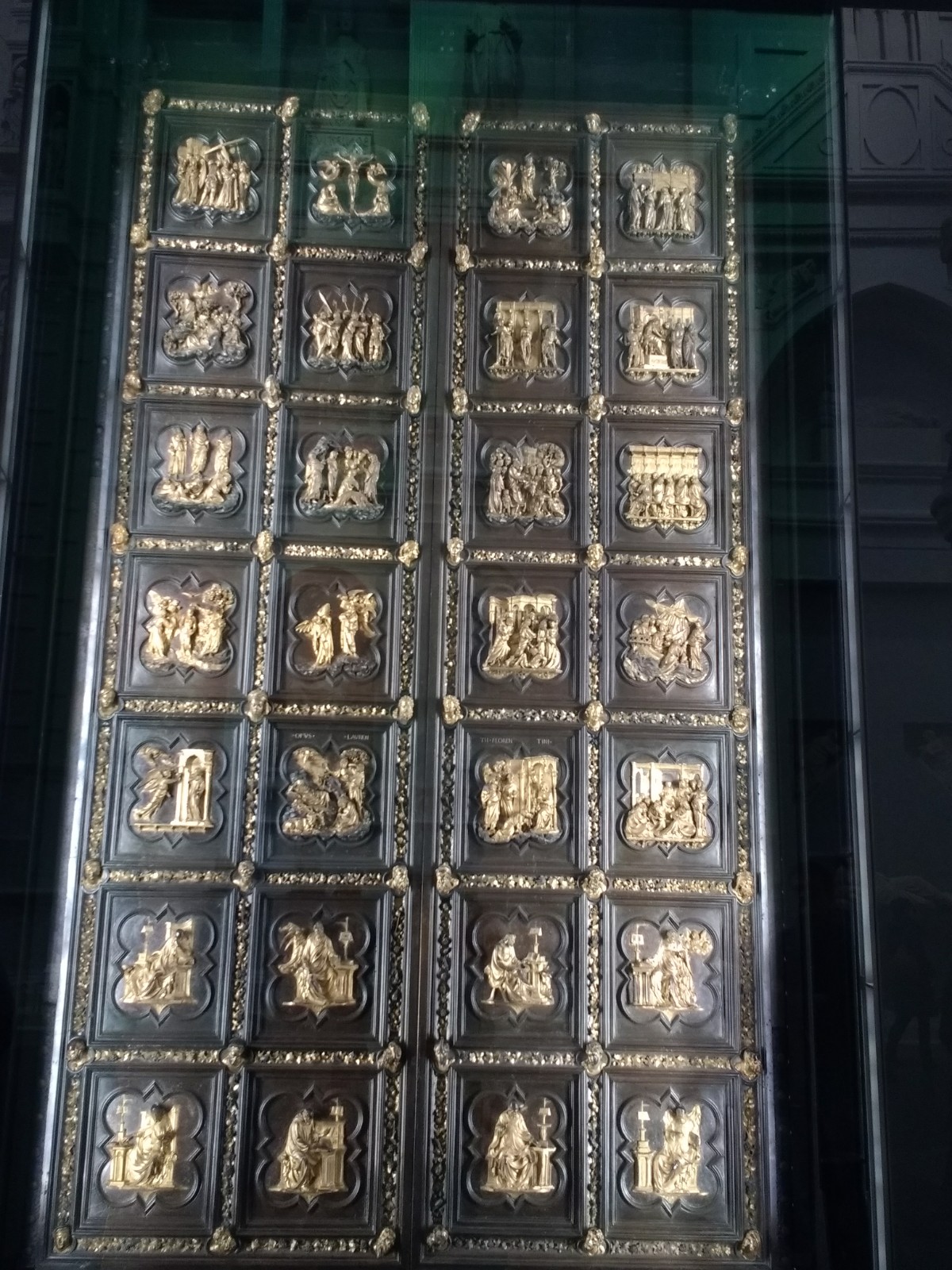
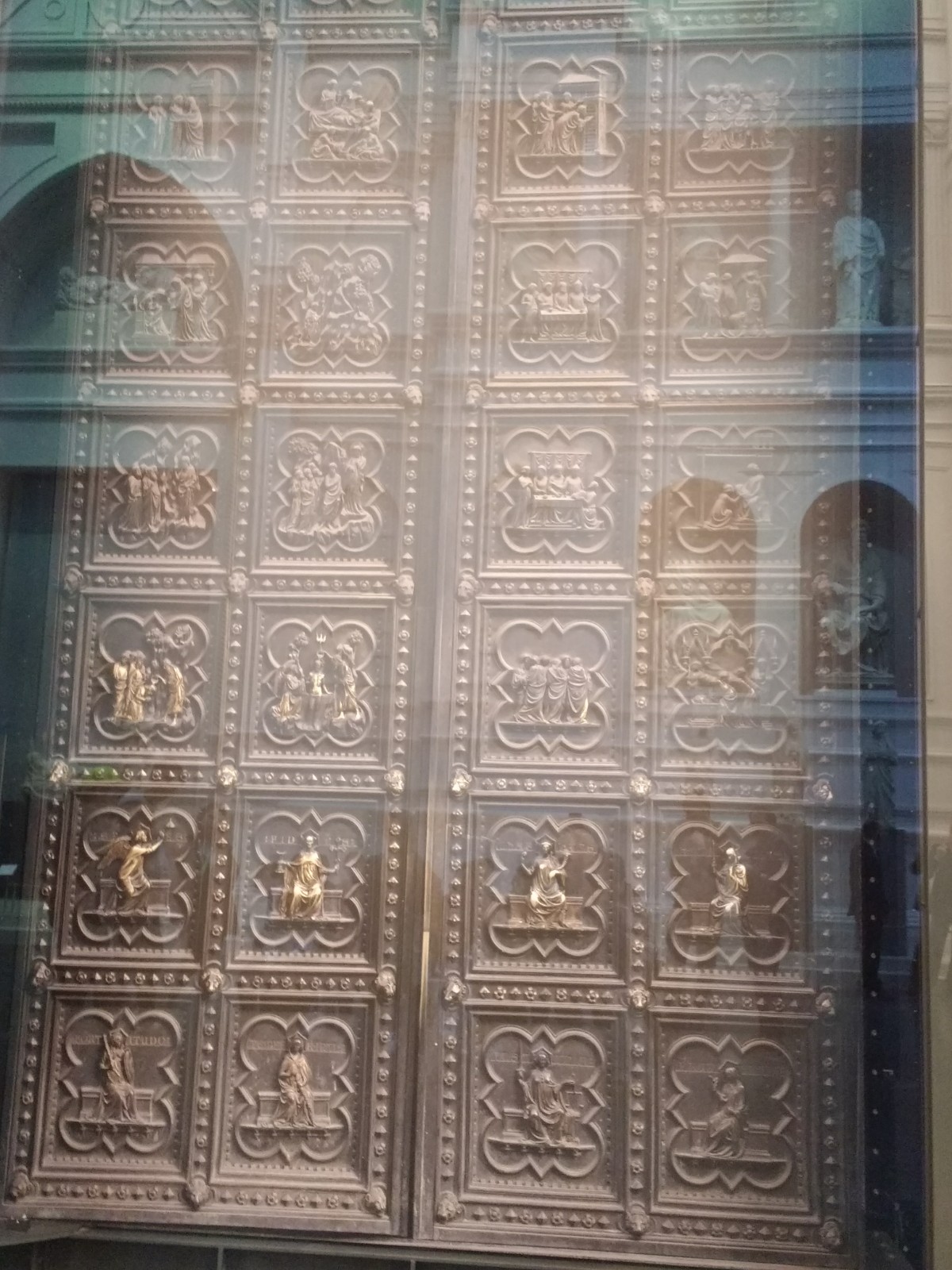
Together with the originals of two of the three baptistry doors (the third is undergoing restoration) there was an explanation of how Brunelleschi’s dome was constructed, and also original stone work from the Cathedral facade, which was replaced in the nineteenth century.
Original door with Old Testament stories (dubbed ‘Door of Paradise’ by Michelangelo) by Lorenzo Ghiberti, 1425-52
Second baptistry door showing stories of Christ, by Lorenzo Ghiberti, 1403-24
Photograph of third baptistry door showing scenes from the life of John the Baptist by Andrea Pisano 1330-36
By the time we got out, it was very late lunchtime (we had made a leisurely start to the day) and moreover, it was pouring with rain, so we dived in somewhere that was selling food and had a free table undercover. Our dry haven turned out to be a cafeteria-type place where the food is self-service and heated up in a microwave. It was edible and cheap, but not to be recommended, but as Mark pointed out the food would probably have been a lot better at 12 when it had been freshly cooked, than at 2.45, when we had it.
I have read somewhere that the Florentines get anxious when the weather turns wet, due to memories of the floods here in November 1966. (I was twelve at the time, but have no memory of them). Considered the worst flood here since 1557, 101 people died and millions of priceless works of art and rare books were damaged or destroyed.
Help arrived in Florence from many quarters (including Edinburgh, who are twinned with Florence, and loaned the Italian City a set of double-decker buses) but such was the devastation, it took Florence a long time to recover.
Among the casualties there were 6000 volumes of documents and 55 illuminated manuscripts from the archives of the Opera del Duomo (the Museum we have just visited).
The floodwaters, which also carried heating oil from ruptured central heating tanks, damaged the gates of Paradise on the Baptistry, and caused devastation in the Uffizi Gallery too.
We managed to get back to our apartment in a slight lull in the torrent, but as I am writing this it is coming down again in buckets (I wonder what the Italian idiom is? Perhaps someone can tell me).
Fifty-two years on, there are still items awaiting their turn at restoration. There was a positive outcome of the disaster though. Italy now has state-of-the-art laboratories to handle the restoration of works of art and there has been extensive research into the conservation of art treasures.


 Tortoise Travel