It’s another lovely day in Bologna, but it’s not set to last unfortunately. Sunday is due to be the third wet Sunday in a row, so we’ve earmarked that day to catch up with housework and homework.
For the past two days the air has been full of seeds, from plane trees we think (Mark says he remembers the same thing from his schooldays in South Africa) and they drift about just as snow does when it first starts (unfortunately it was my teacher who came up with this analogy, not me).
I think you can just see a few white specks. What you can’t see is that the air is full of them.
We’re enjoying the lessons, but our teachers are desperate for the class to gain fluency – just to be faster with the basics of, ‘Hello, my name is, I’m English/Dutch, I’m .. years old’ and ‘What’s your name, where are you from etc.’ We know it on paper, but sometimes it takes a while to remember which pronoun or verb to use. Perhaps Mark and I ought to go out separately this evening and see how many Italians we can chat up!
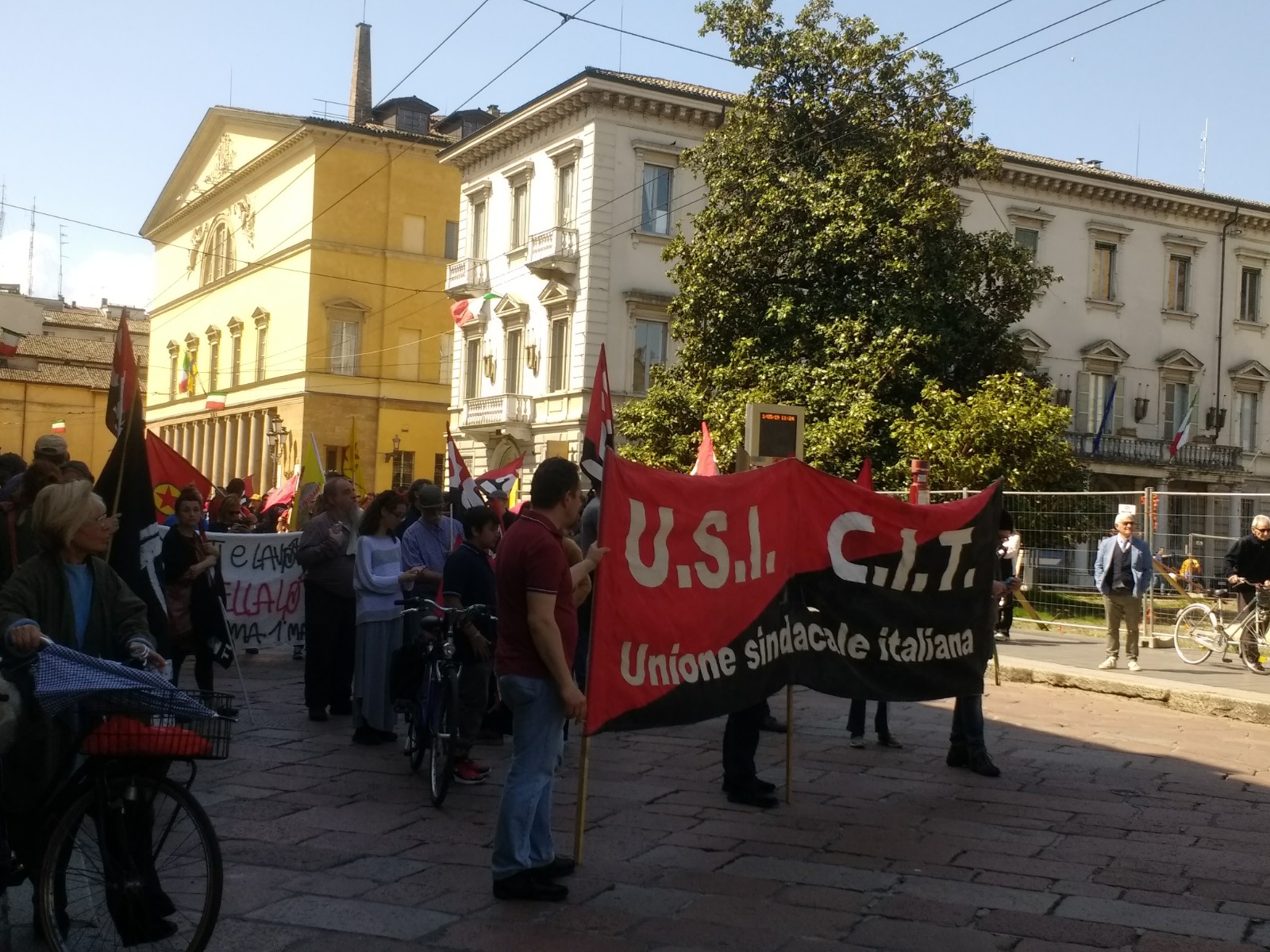
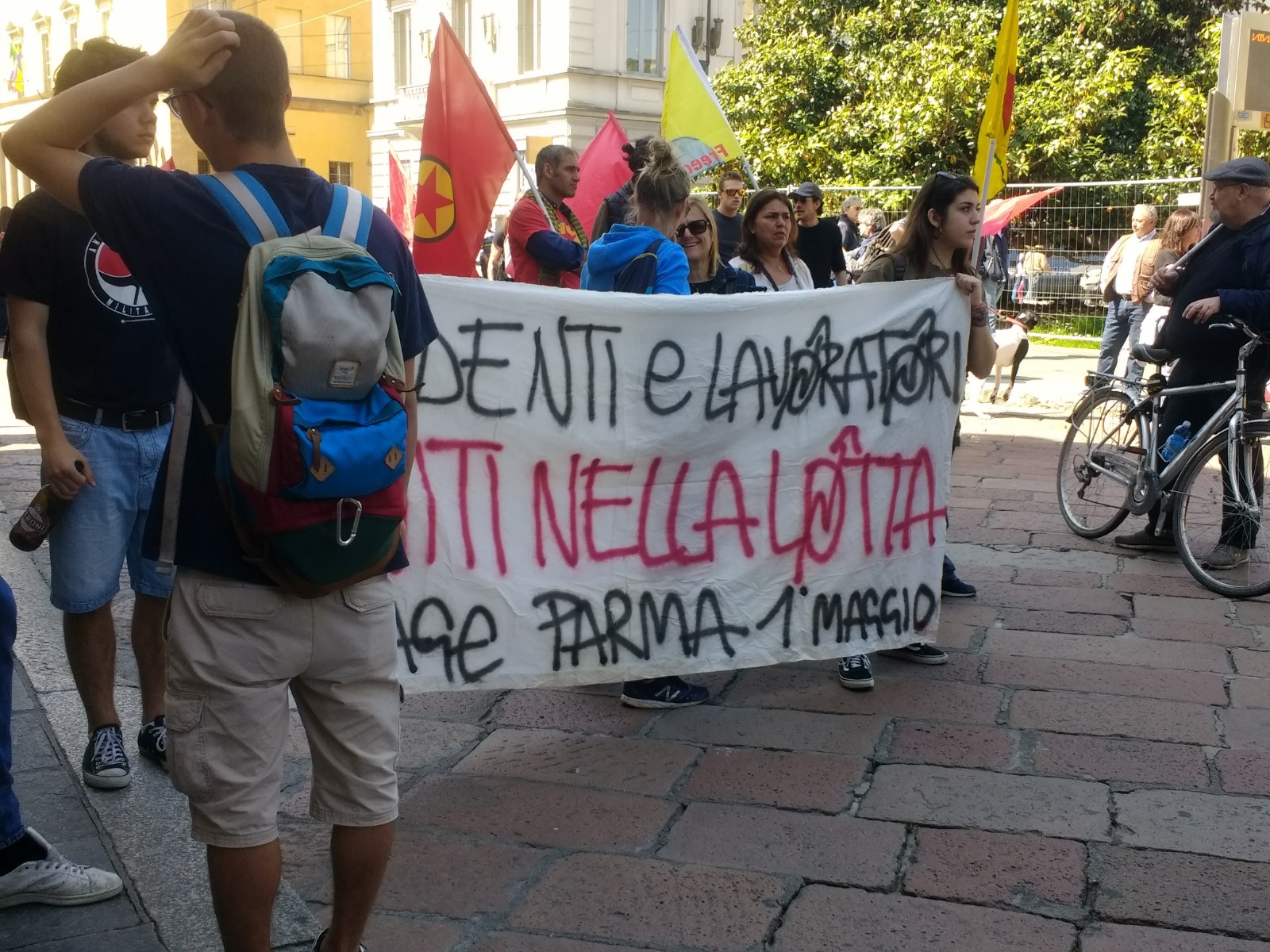
May 1st is Labour Day, and a holiday here in Italy. Traditionally, it is a day when workers celebrate their rights, but now most Italians celebrate by taking it easy and maybe having a picnic with family and friends.
Having a day off school, we decided to head off for the delights of Parma, an hour from Bologna by Treno Regionale. The regional trains are fairly slow, but inexpensive, and usually still comfortable, so comfortable that when we were returning from Parma at the end of the day, some tourists from Eastern Europe were concerned that they’d wandered into first class by mistake. The Frecciarossa trains are the really fast, smart trains but not too expensive, provided you book far enough ahead.
When we arrived at Bologna Station this morning, a large crowd of trade union representatives were gathering in the square outside with their various flags. We saw a corresponding gathering in Parma, but with a far fewer number of attendees.
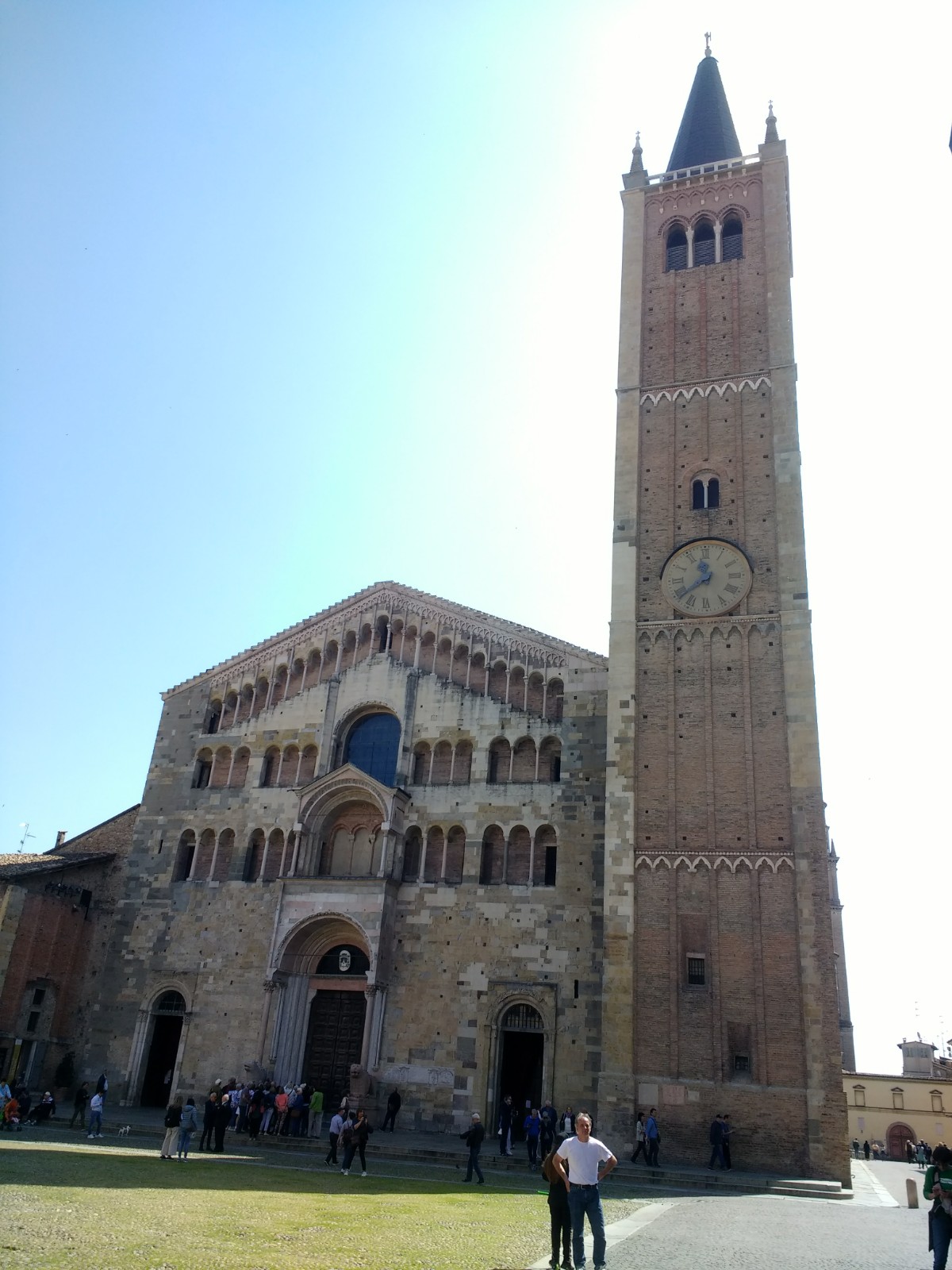
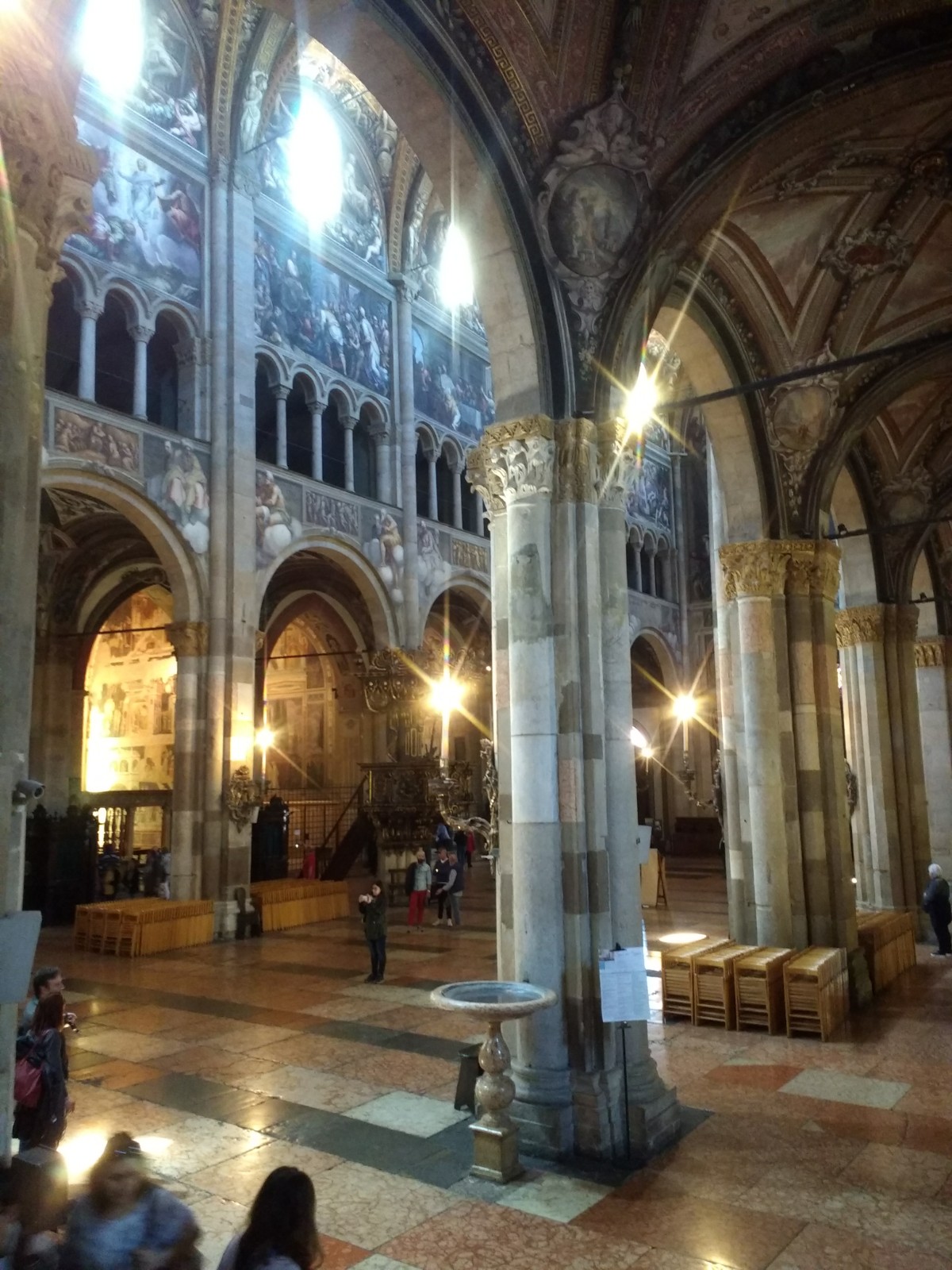
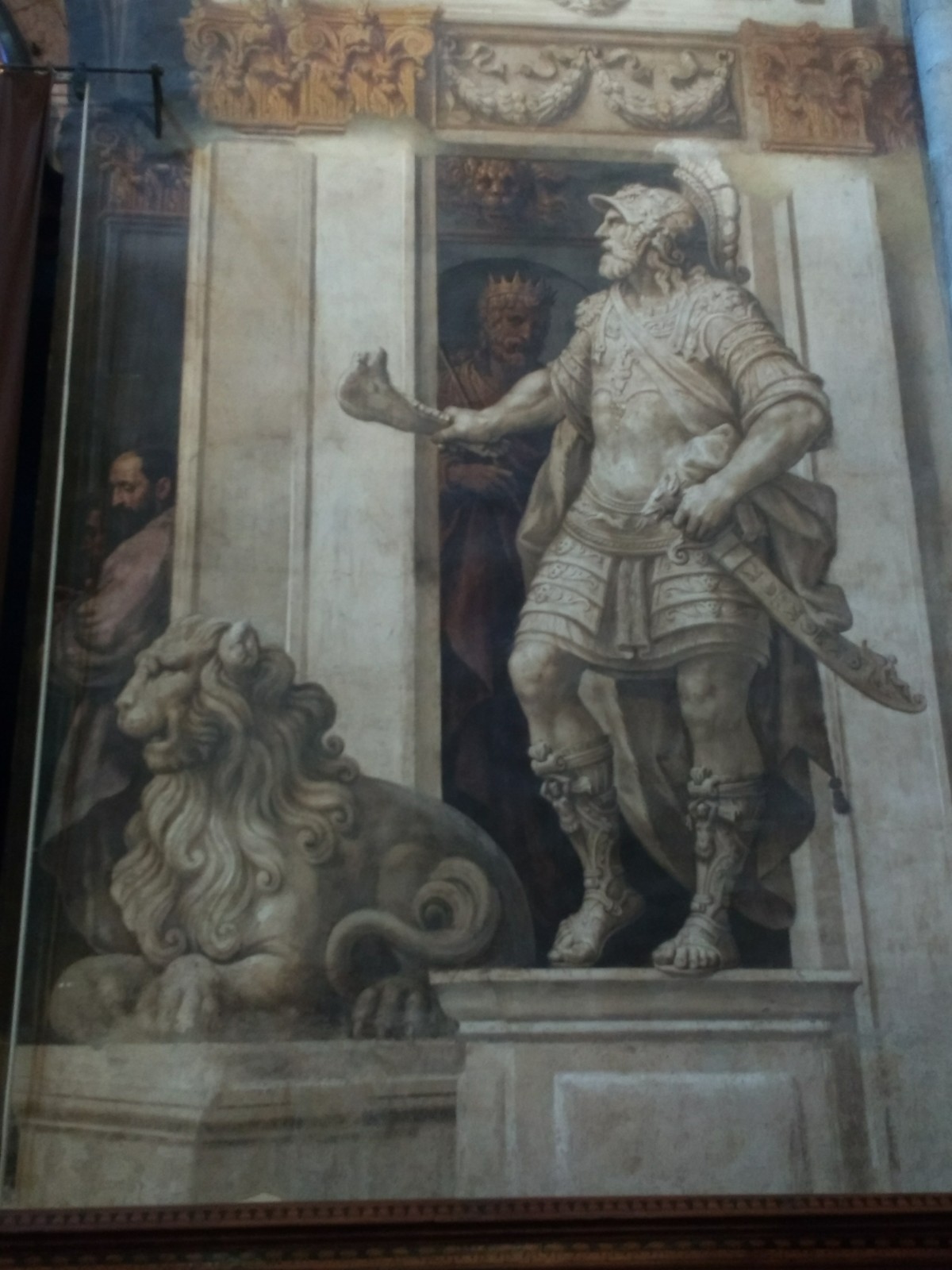
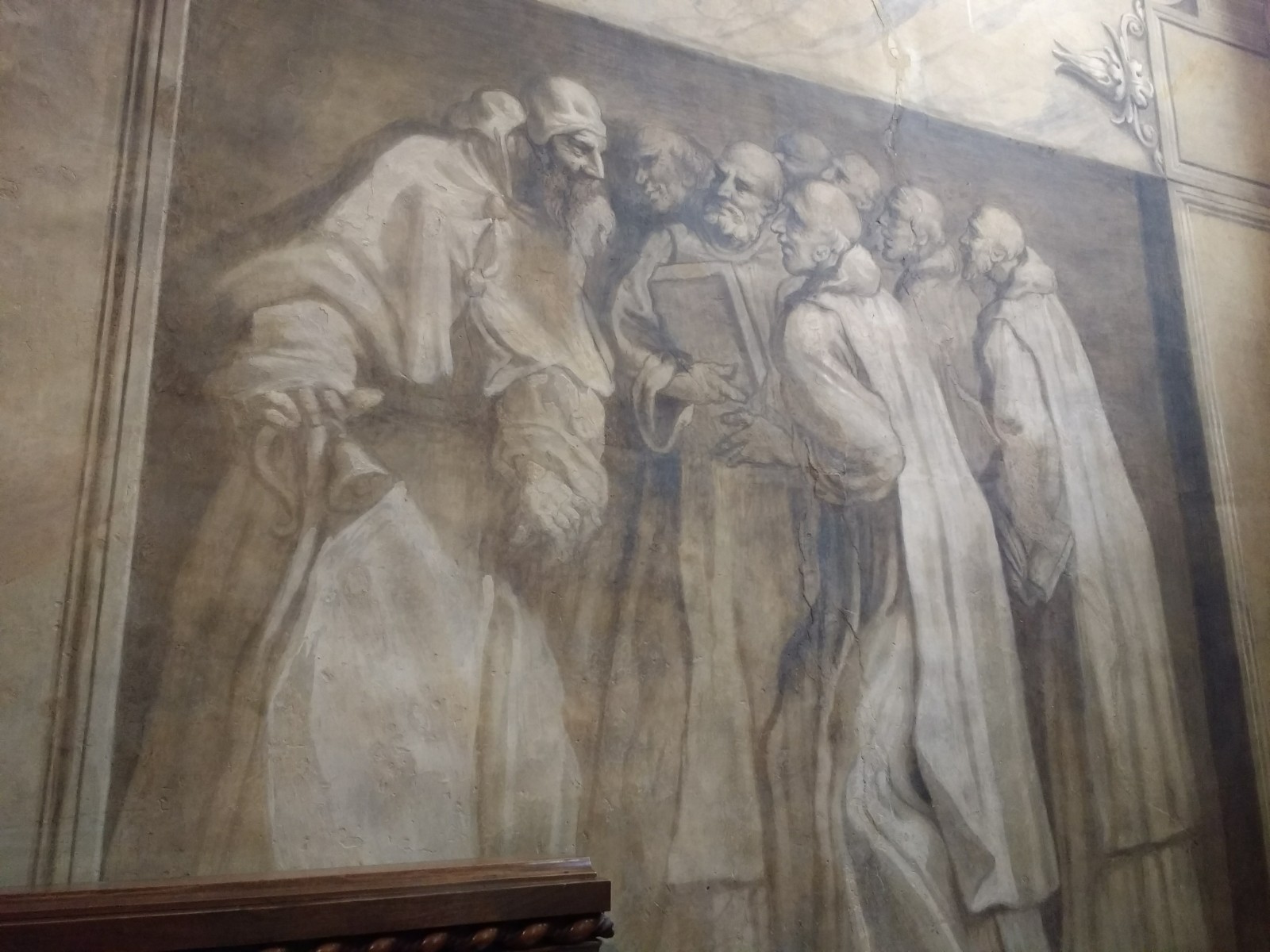
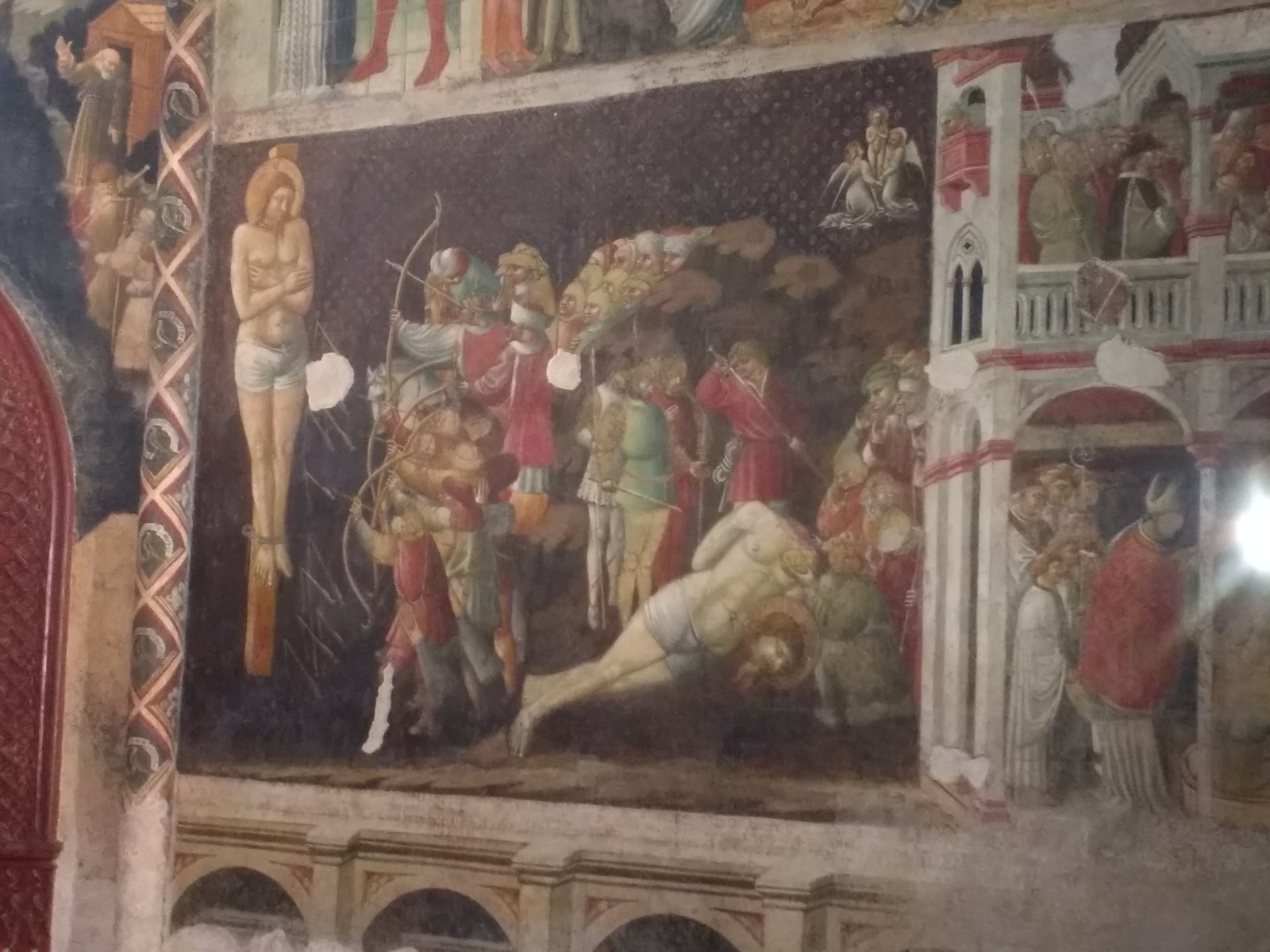
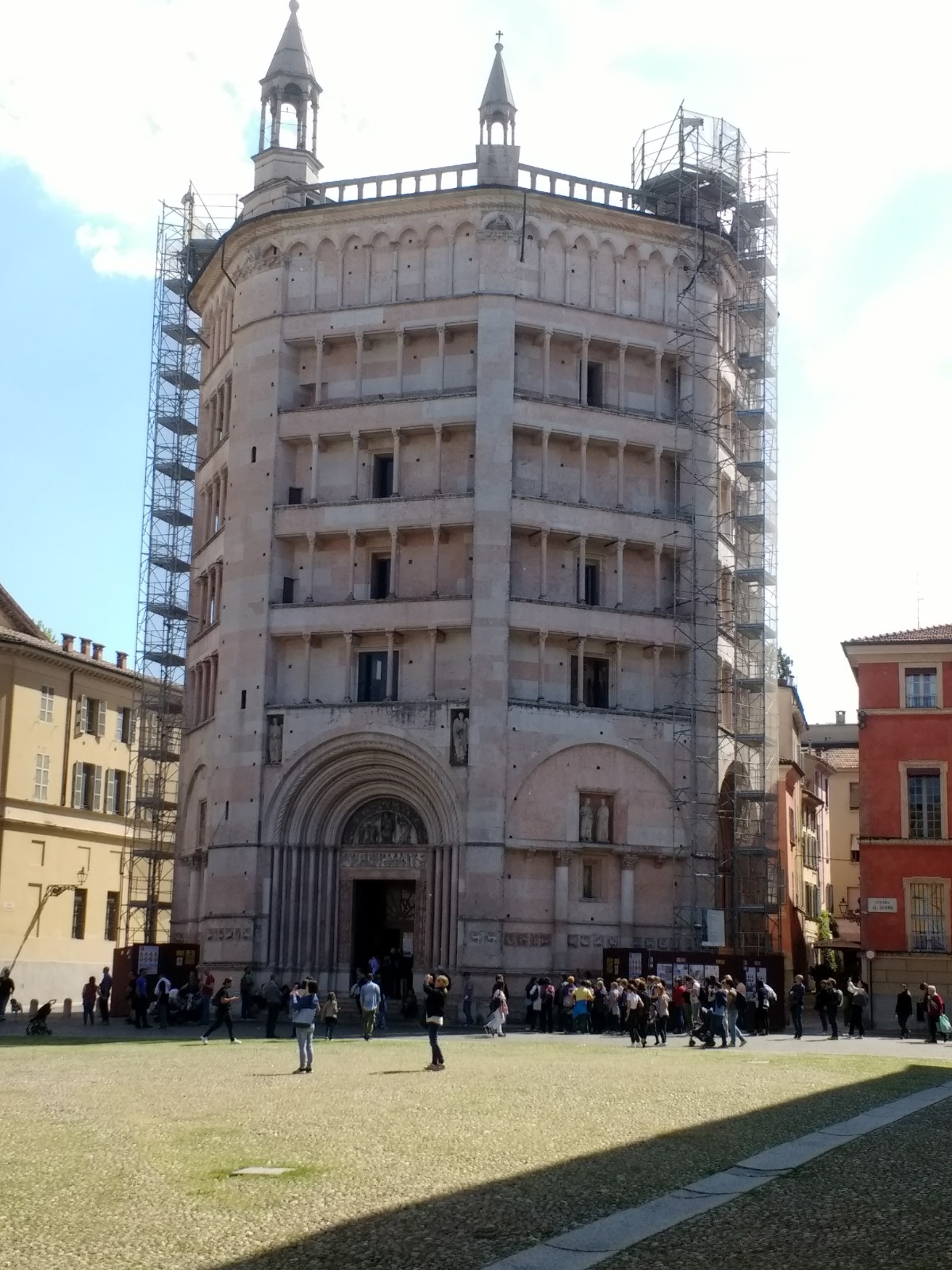
We liked Parma, although hard not to with the wonderful blue sky, and apart from stopping for food (we had to have Parma ham and Parmesan cheese) we just visited the Cathedral and Baptistery to see the wonderful frescoes.
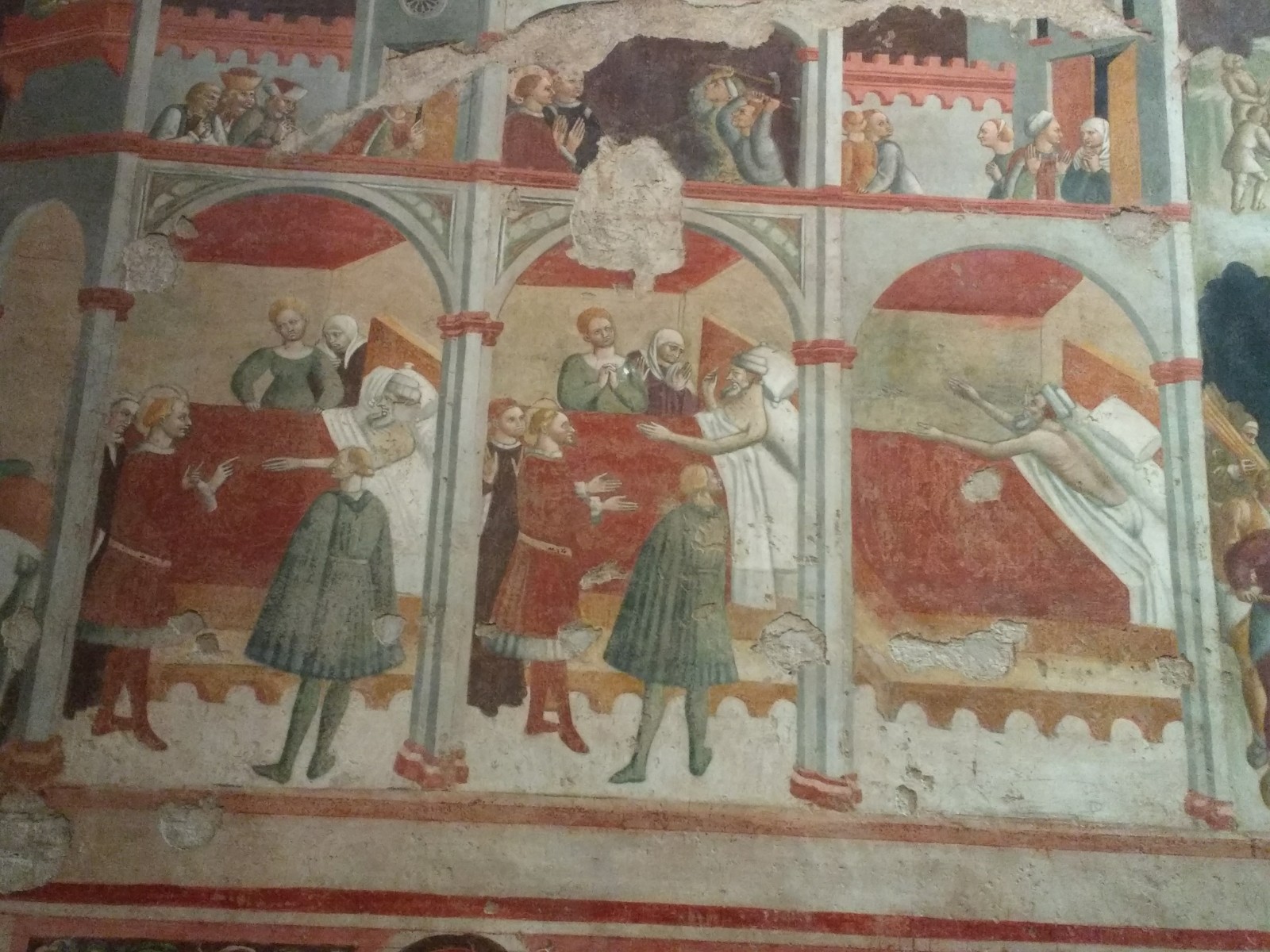
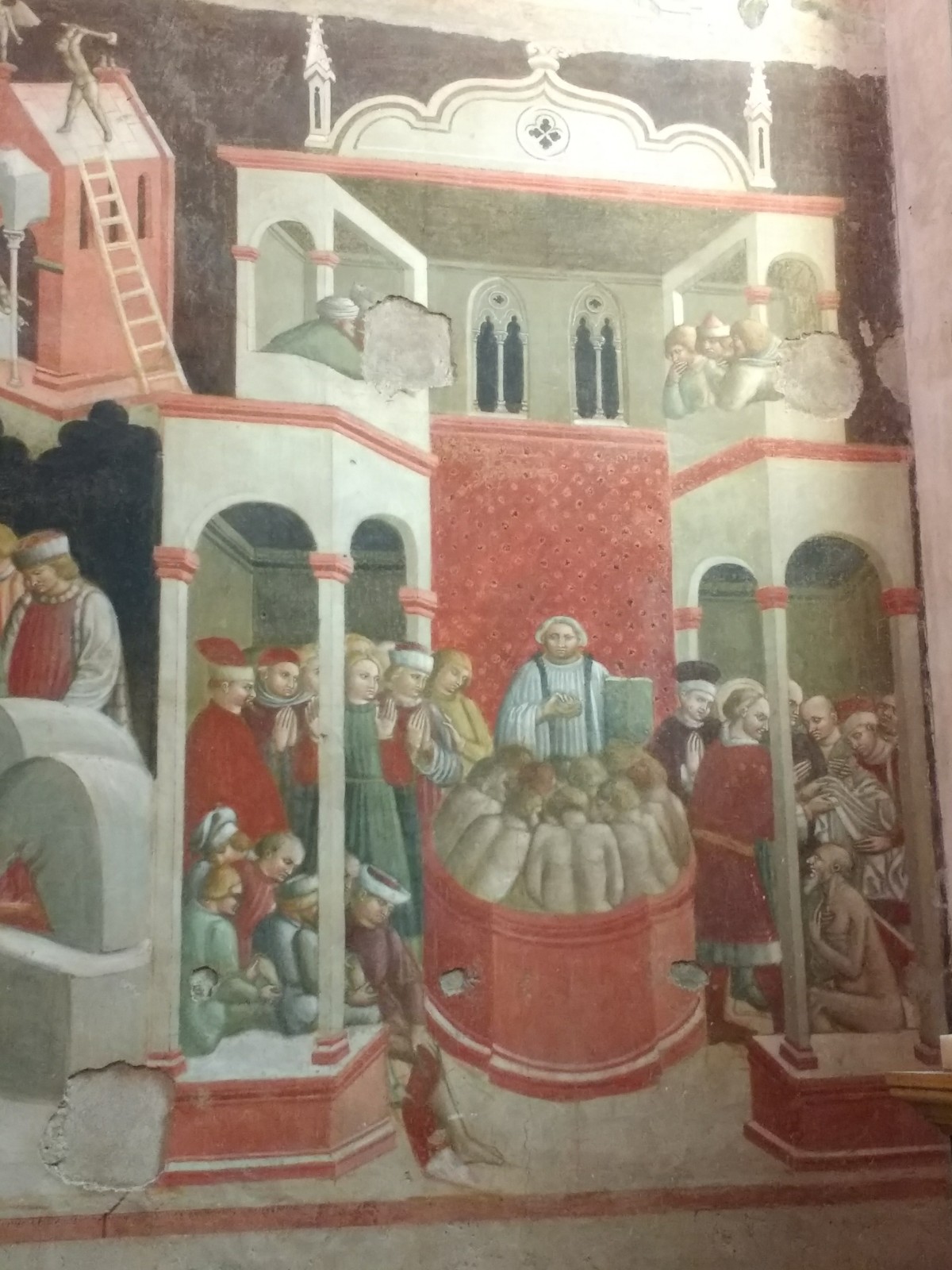
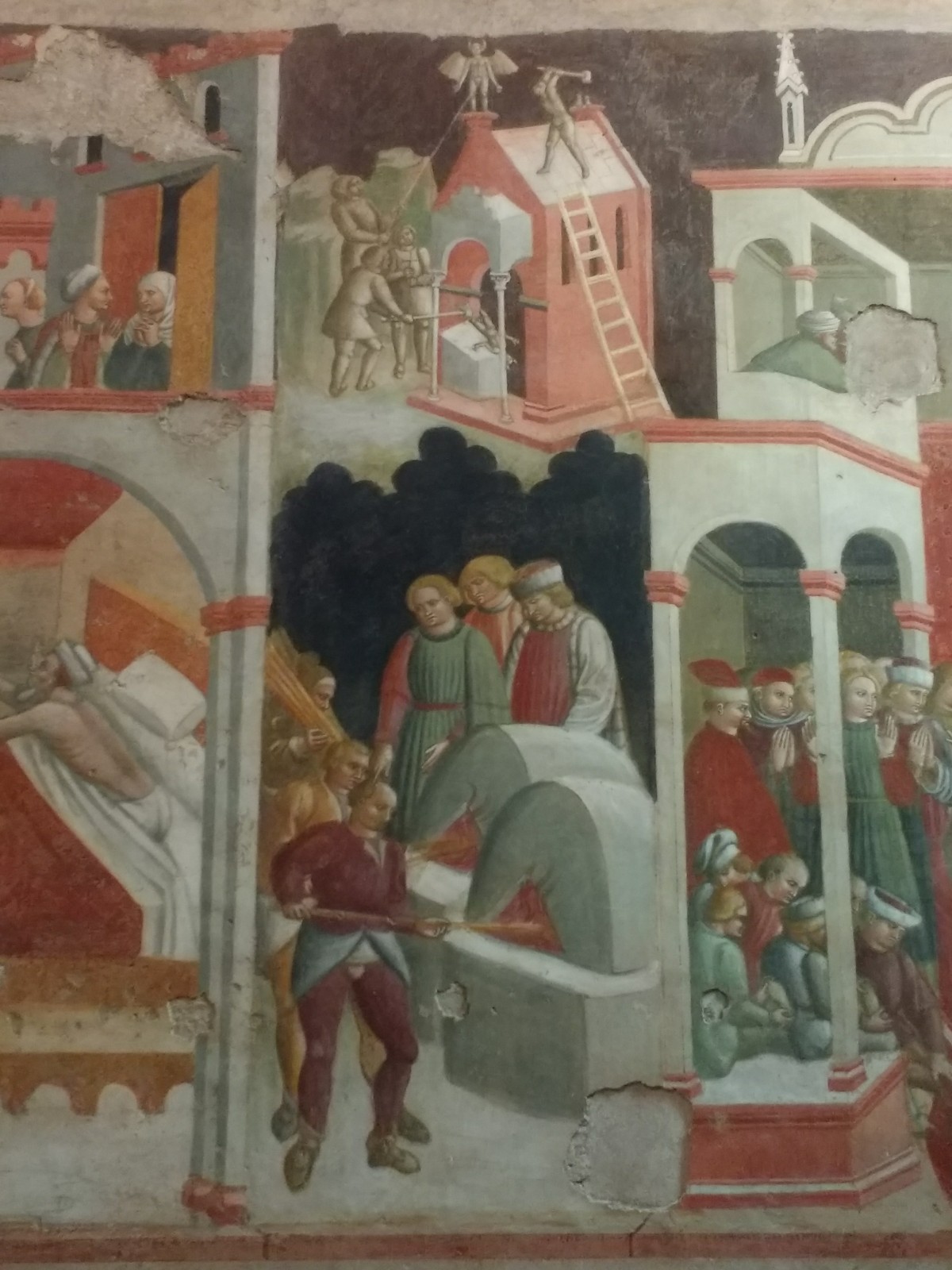
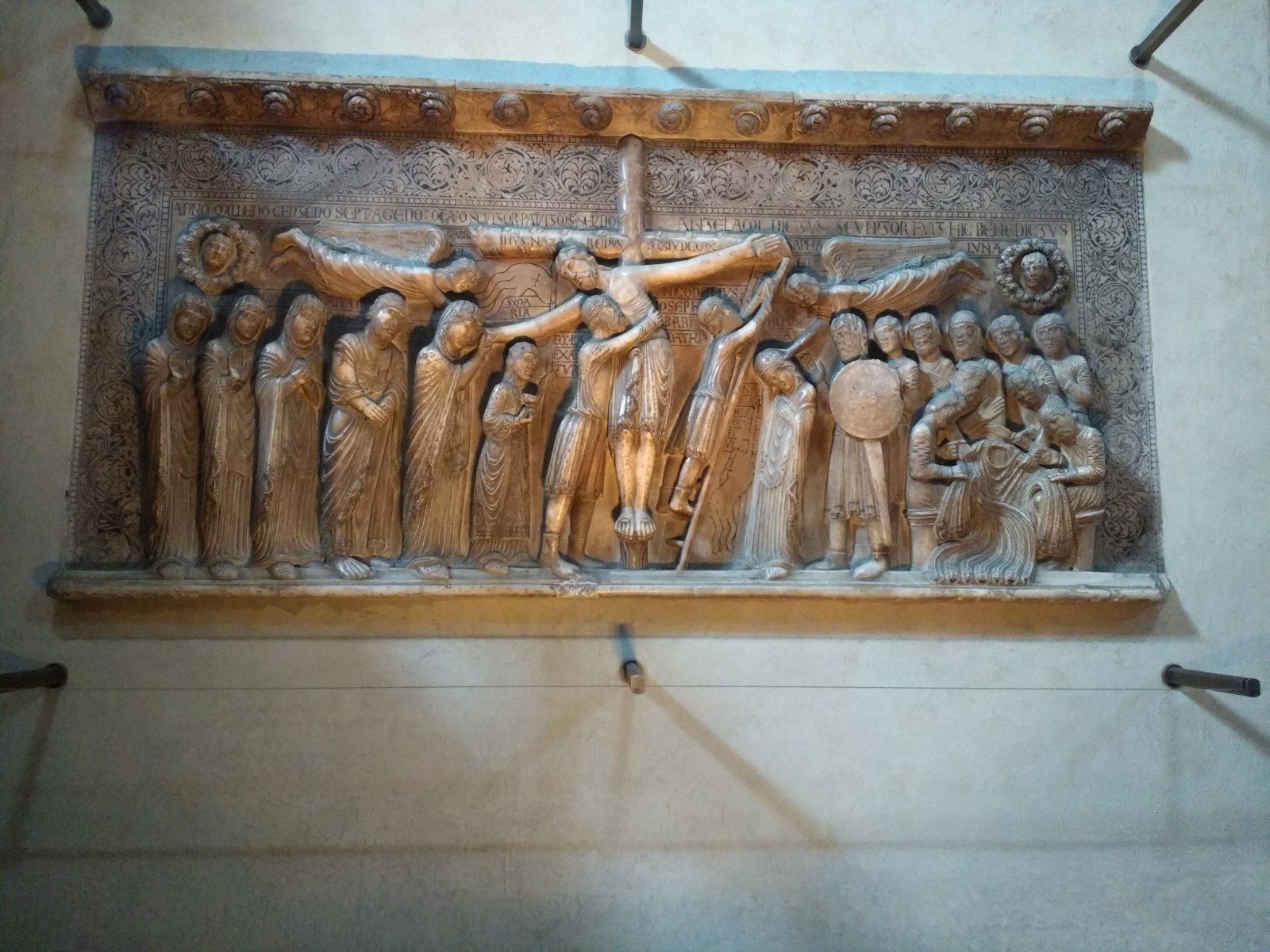
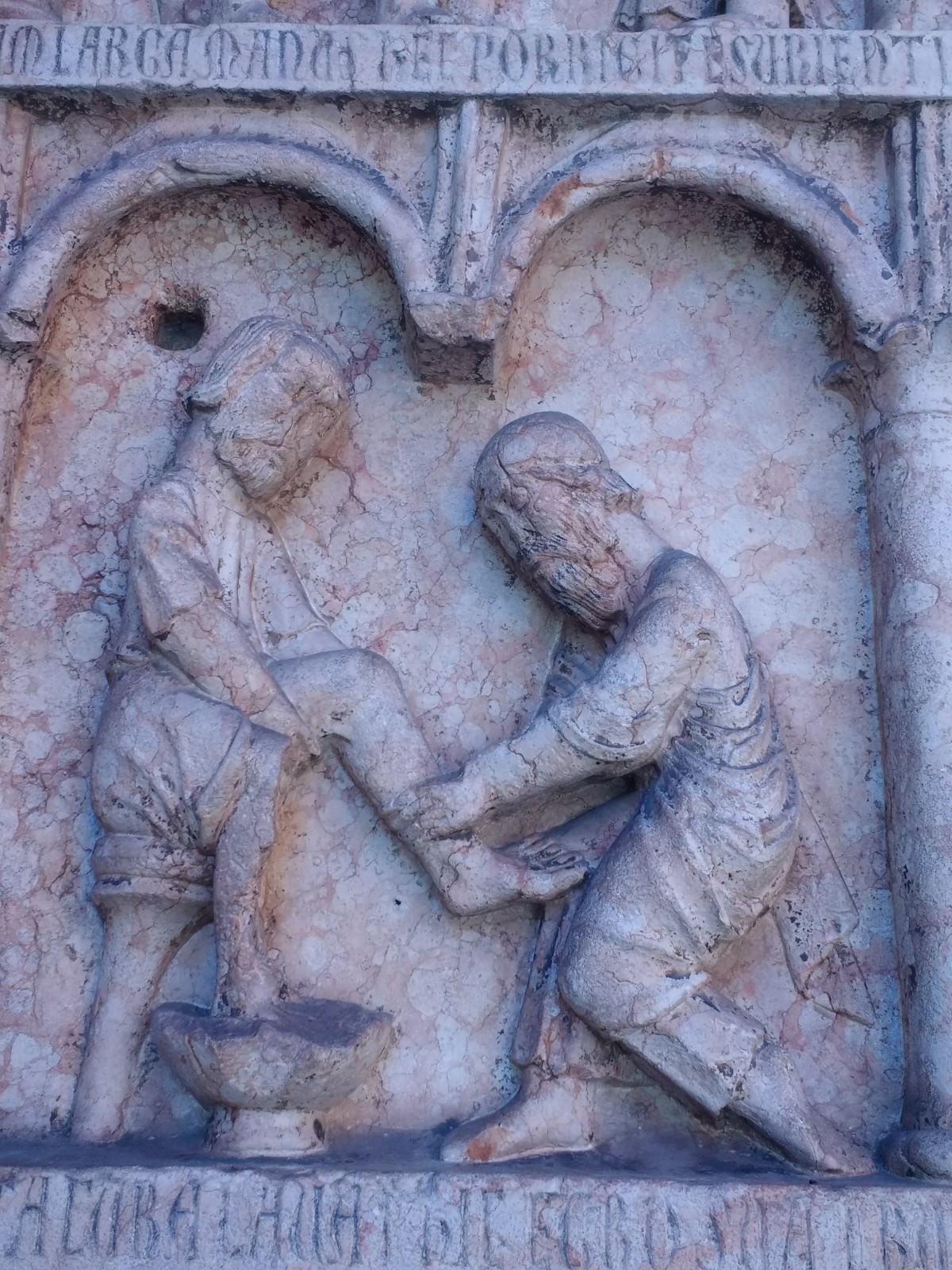
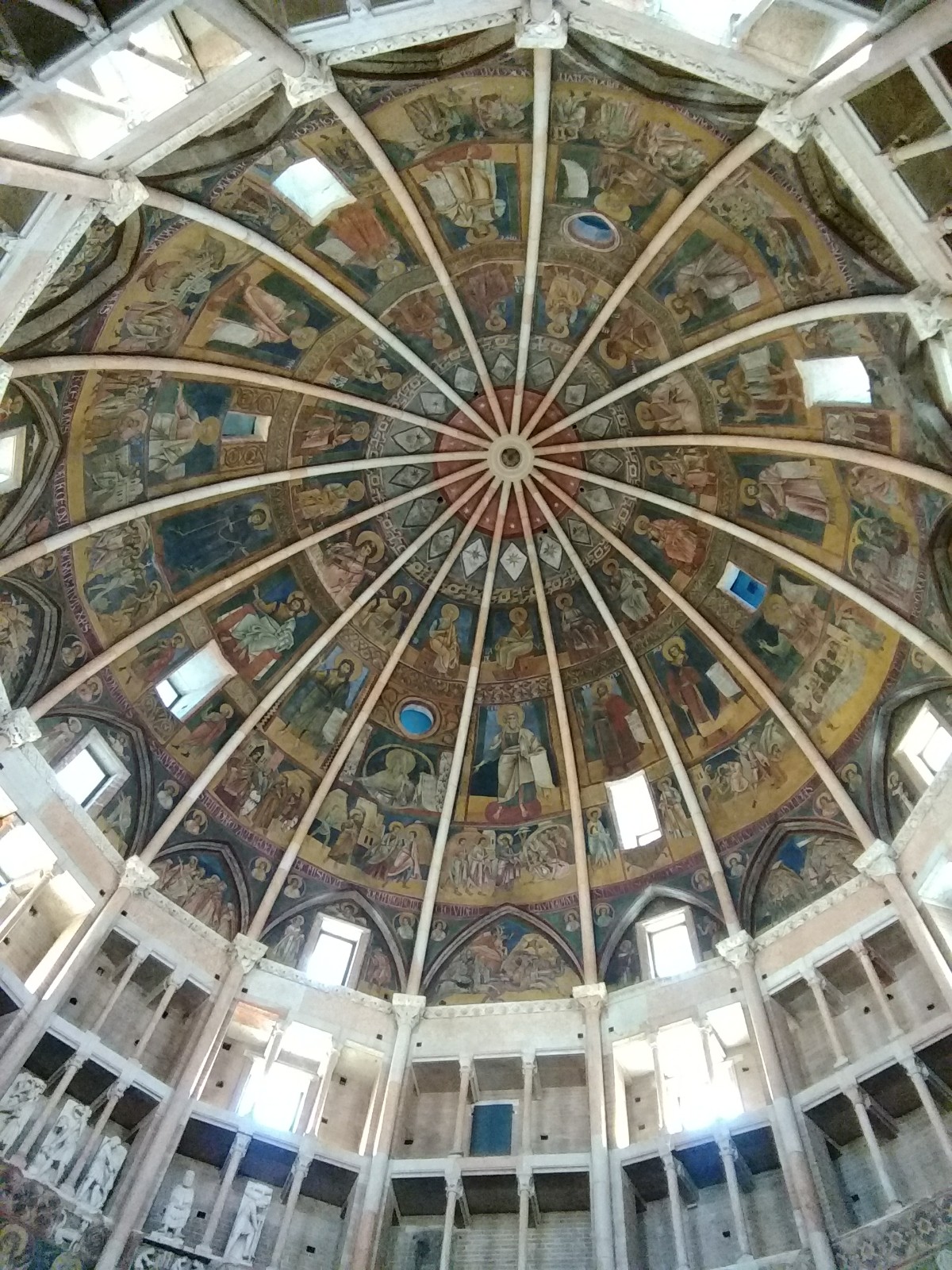
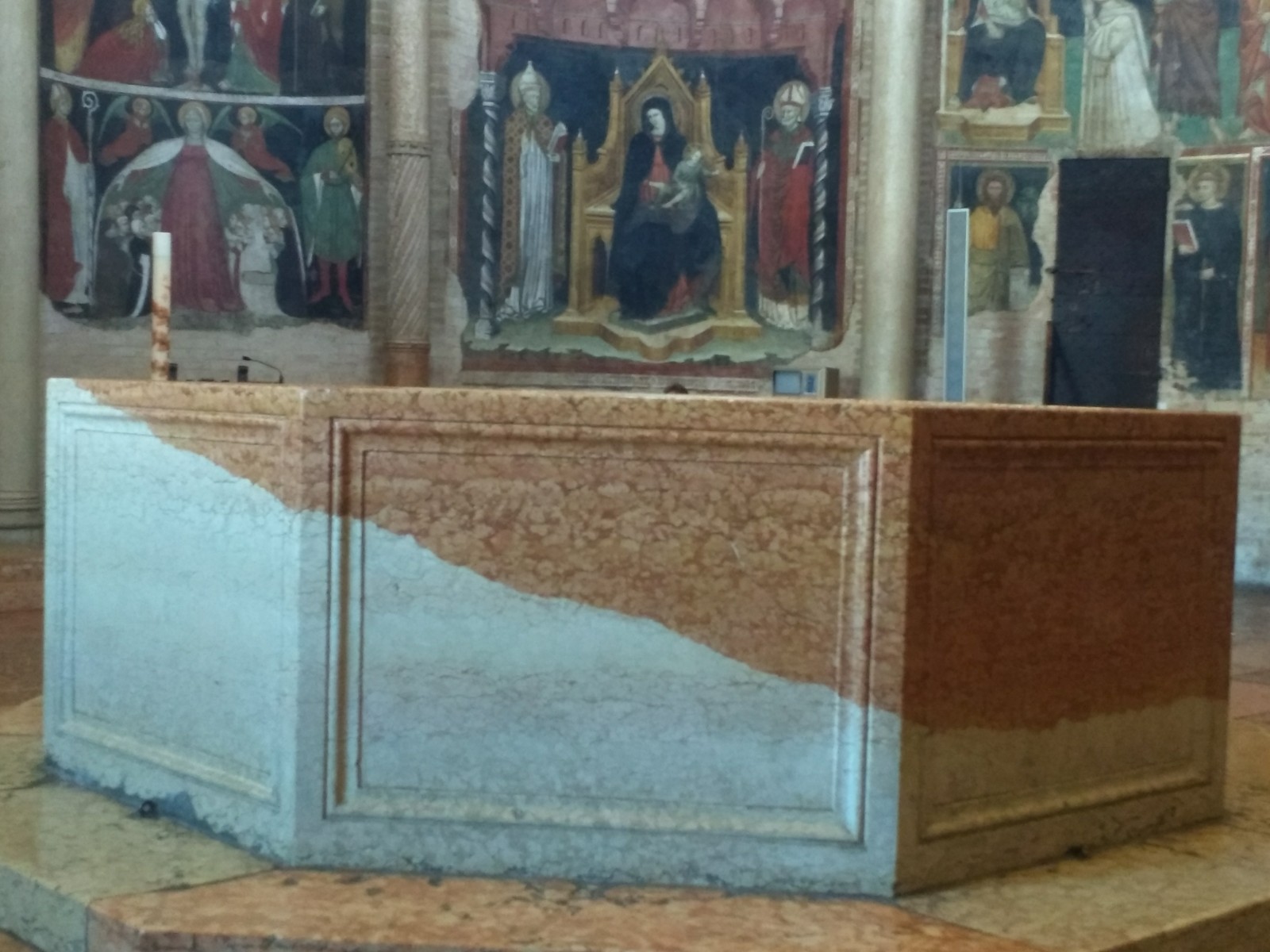
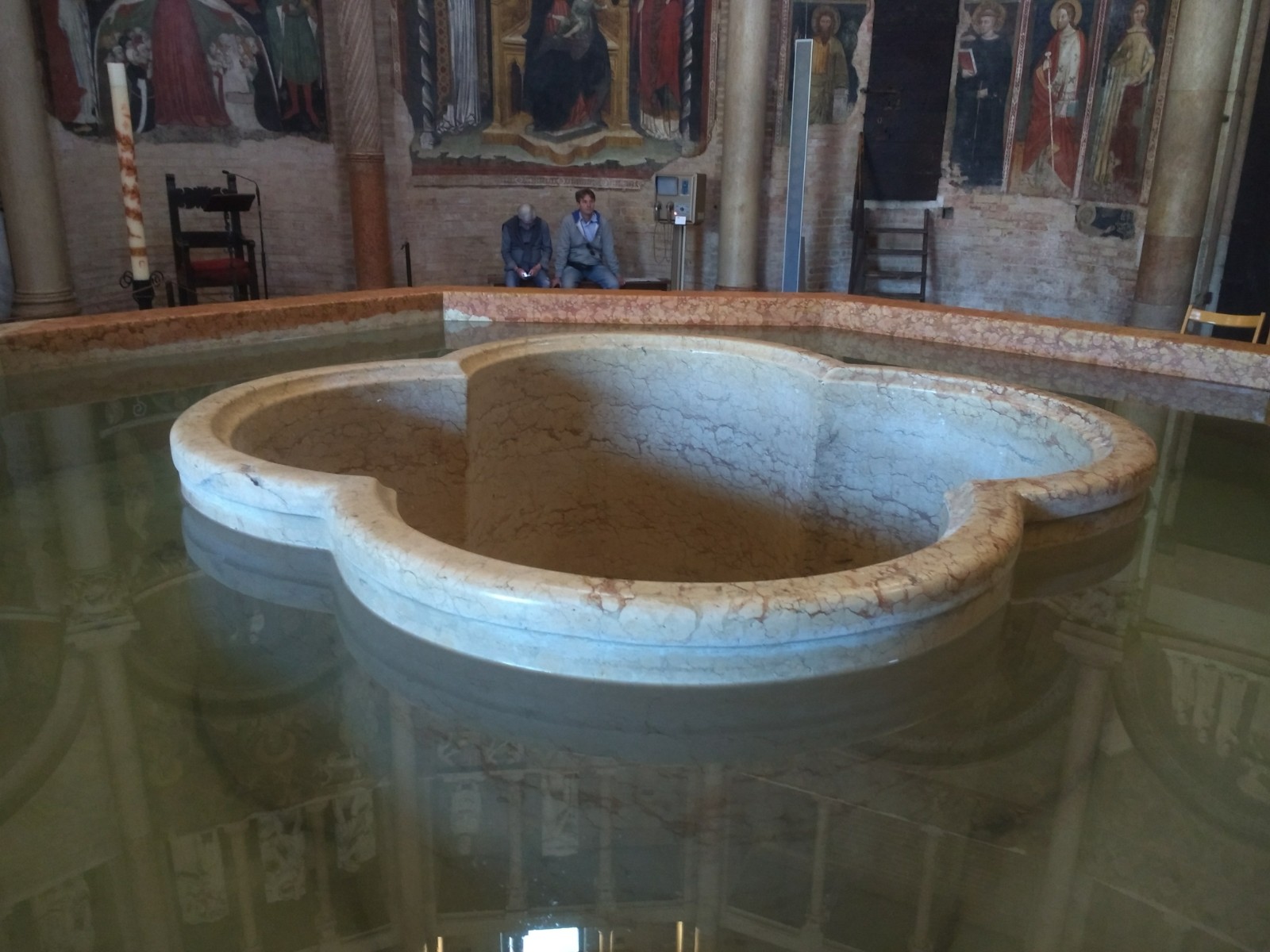
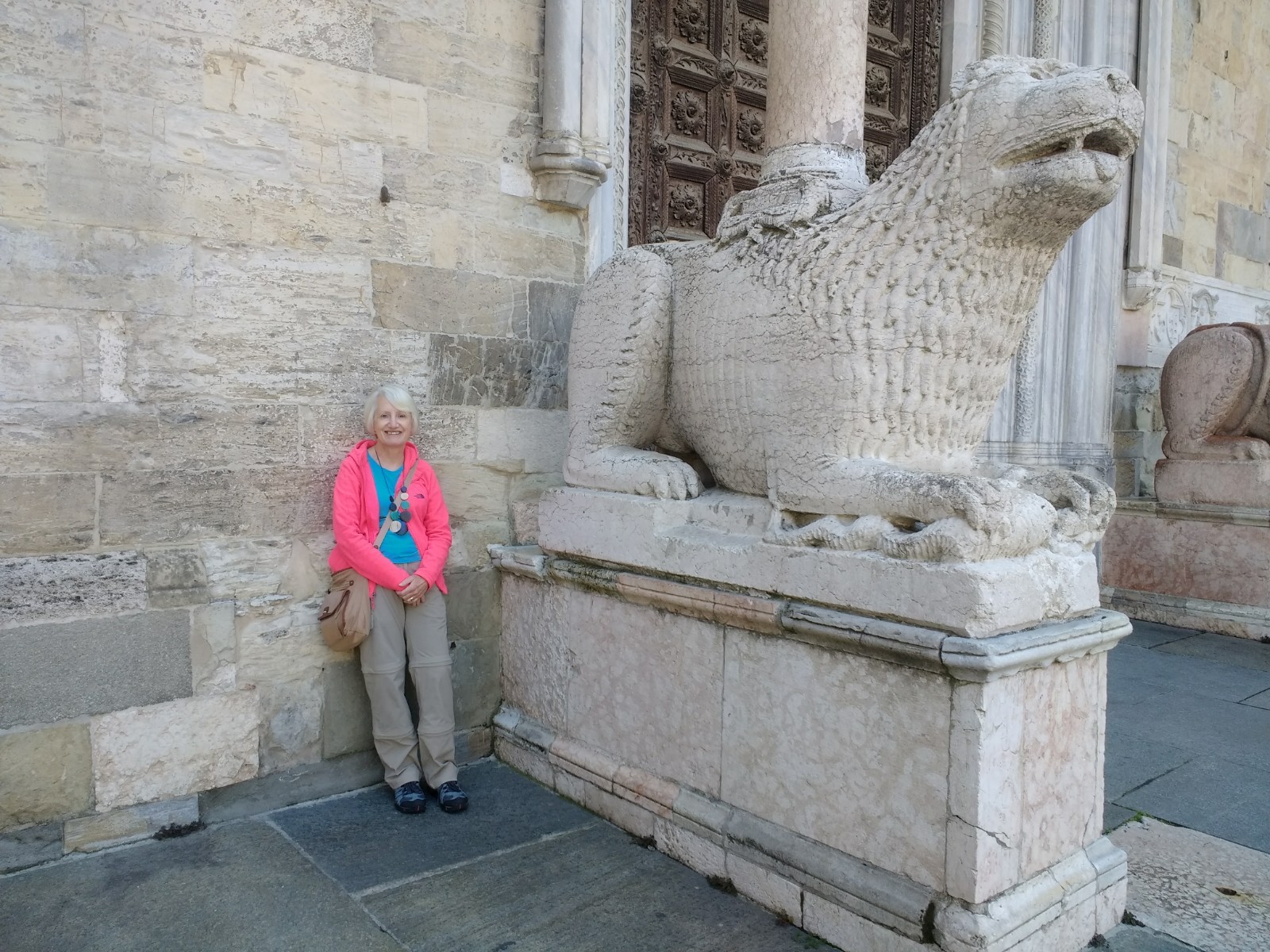
Parma Cathedral Inside the Cathedral The frescoes are mostly fifteenth century, and some are in monochrome.The guy on the left looks as though he is sharing a piece of gossip he has just come across.St Sebastian on the left being shot, and John the Baptist’s beheading on the right.This little trio of pictures looks like a cartoon and appears to tell a story, but I don’t know what it is.These men look as though they are in a communal bath.They’re either heating iron or cooking pizza.I loved this twelfth century carving. The angels look as if they’re crowd surfing.The roof of the Baptistery is having some work done to it at the moment.Carving on outside wall of BaptisteryInside the dome of the Baptistery, frescoed in the thirteenth century. The exterior of the building is octagonal, but inside there are sixteen sides.Double baptistery bath made from a solid block of beautiful two-tone marble from Verona. We estimated that the original slab would have measured 3.5 m x 3.5 m x 1 m. This is the reason it is called a ‘double’ baptismal bath. The priest would stand in the middle, keeping dry, but I am not sure how he got there, other than in a fairly ungainly manner.Me, outside the Cathedral
The weather, it seems, can be just as changeable in Italy as in the UK. On Saturday we enjoyed a hot, sunny day in the park. Couples were canoodling on the grass (people are more openly affectionate here) winter wear was abandoned and ice-creams were queued for.
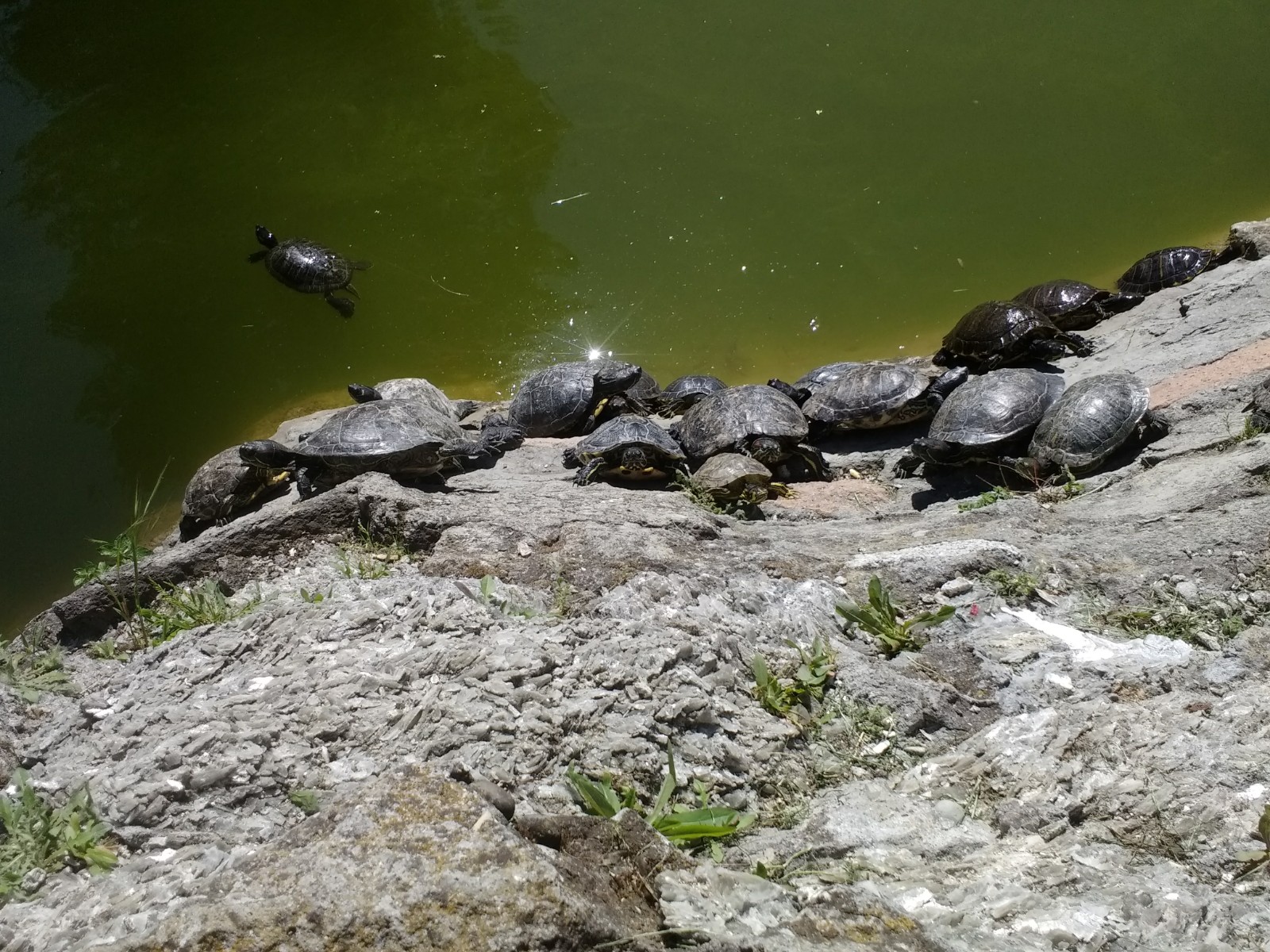
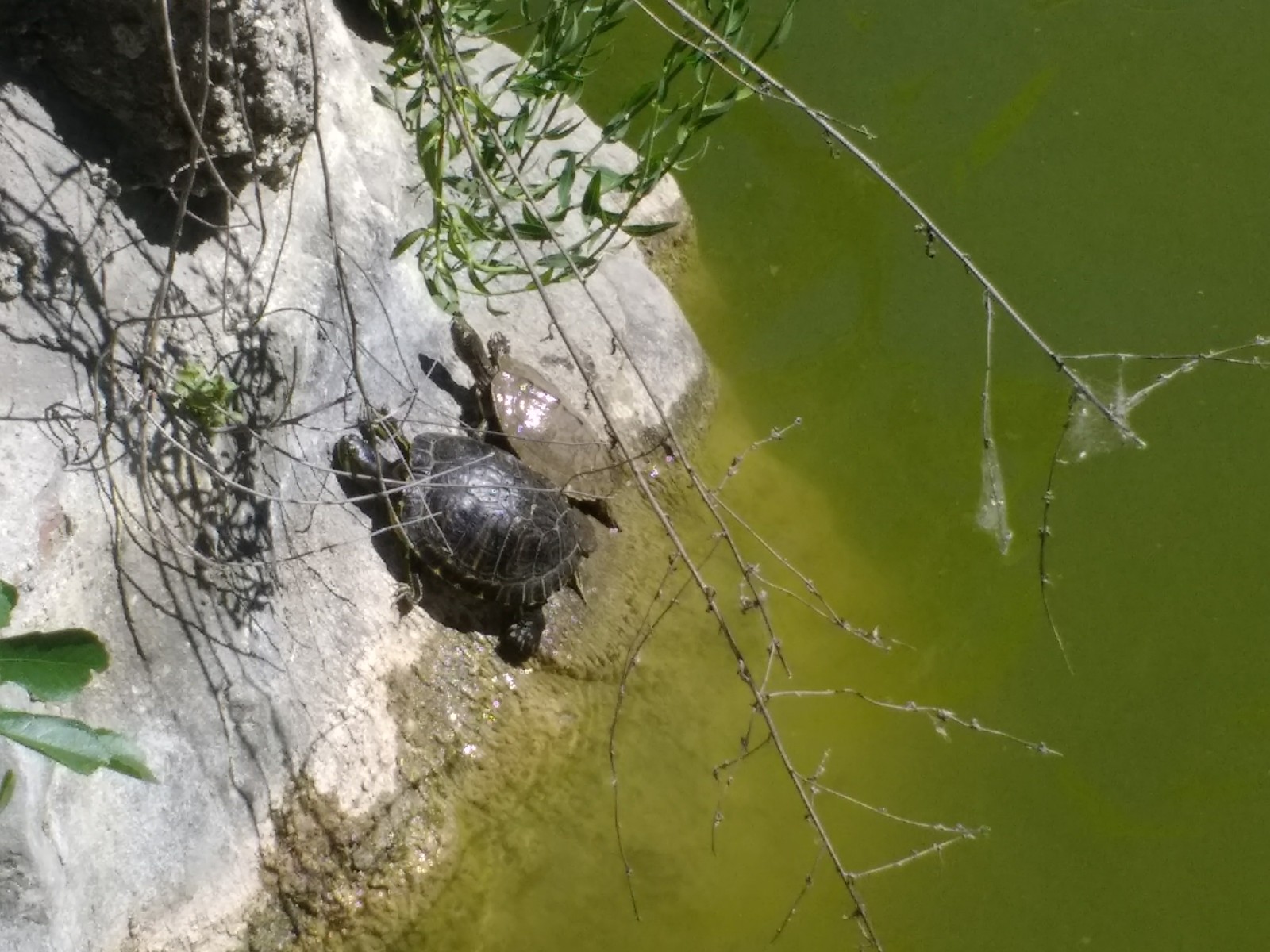
The humans weren’t the only ones enjoying the sunshine. These terrapins were climbing out of the lake to sun themselves. They tried clinging on to the steep rocky sides, while keeping one leg extended, and as much of their neck as they could manage.
It was difficult to cling on to the side for long, and every so often one would slide down the slope, have a little swim, then start the process of gaining dry land again.
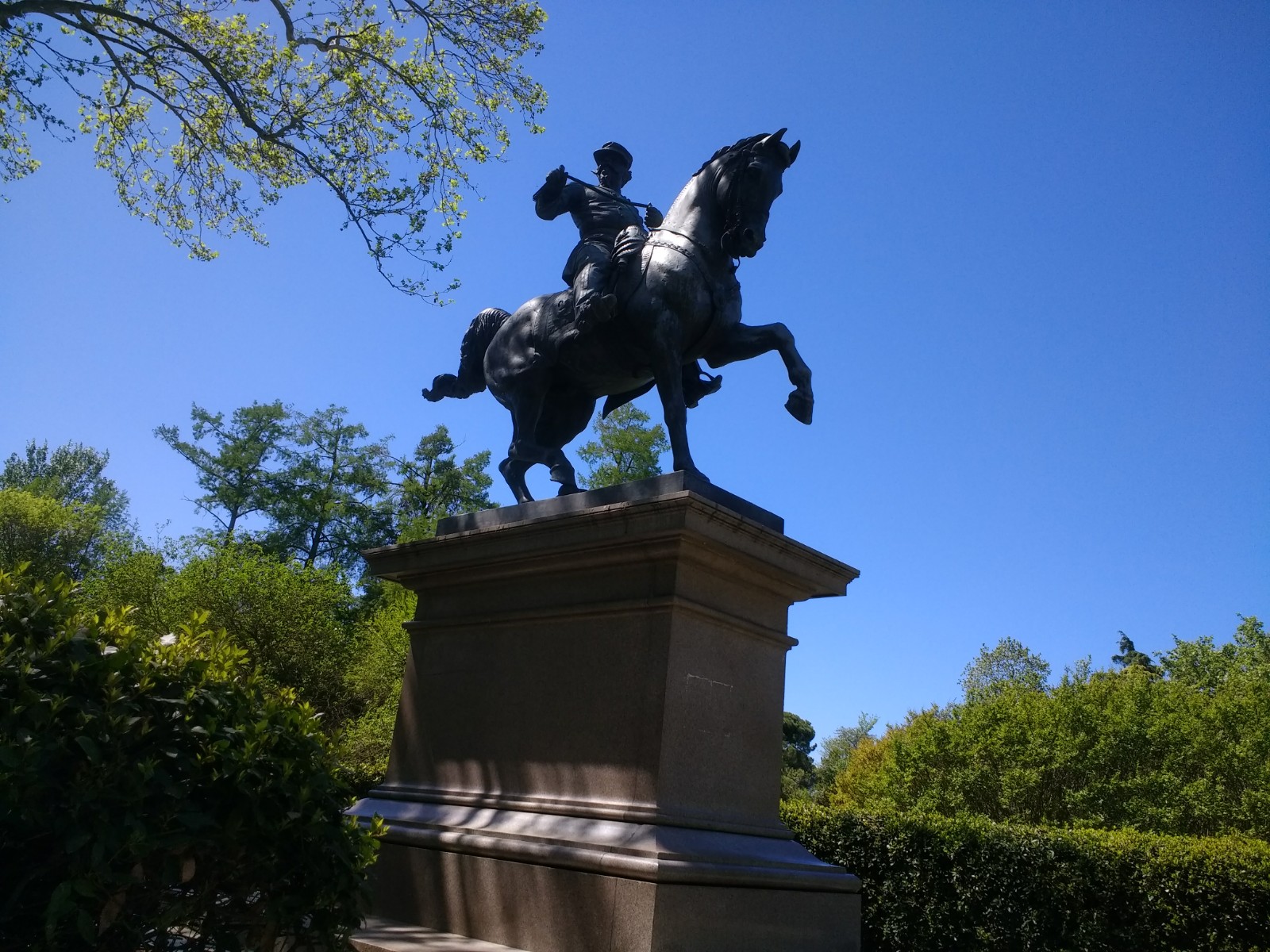
Just to show you the colour of the sky. This is a statue of Emanuel II, the first King of a united Italy.
Today, it’s back to winter. It was eight degrees c when we went off to our first Italian lesson today, and raining. The winter coat came out again (and gloves).
Mark and I are in the same class which means we can ask each something we don’t understand and check that we know what the homework is. Bizarrely, we are a very balanced group – three young ones (aged 19 or 20) plus three ‘oldies’ (us plus a German chap who is a year older). On the way home we realise we’re old enough to be the youngsters’ grandparents.
Our class is for beginners, which is good. Having done an online course, we have studied a lot of grammar, but are not too good at conversation.
It is interesting being on the other side of a desk. When I first started teaching, I taught English as a Foreign Language. Most of my students were young and were learning English to further their careers, whereas in our class everyone is learning Italian for leisure.
It seems that some things are the same though, as in problems with the photo-copier and getting the worksheets in a muddle.
Wishing to stretch our legs in the countryside, instead of on the hard city streets, we followed a marked trail yesterday taking us outside Bologna. The Italian Alpine Club, despite their name, mark, and maintain, walks all over Italy.
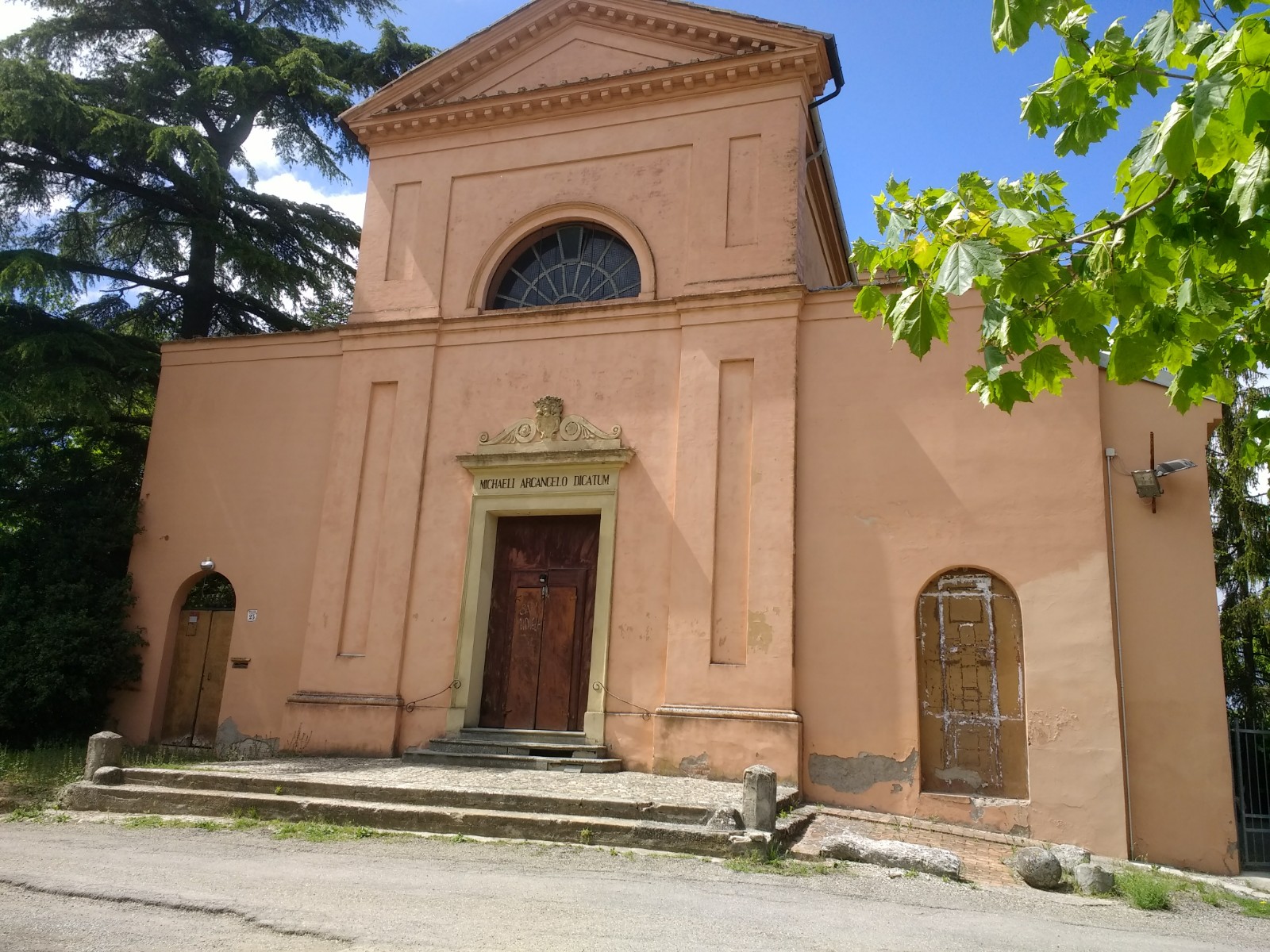
Our destination was a church called San Michele di Gaibola.
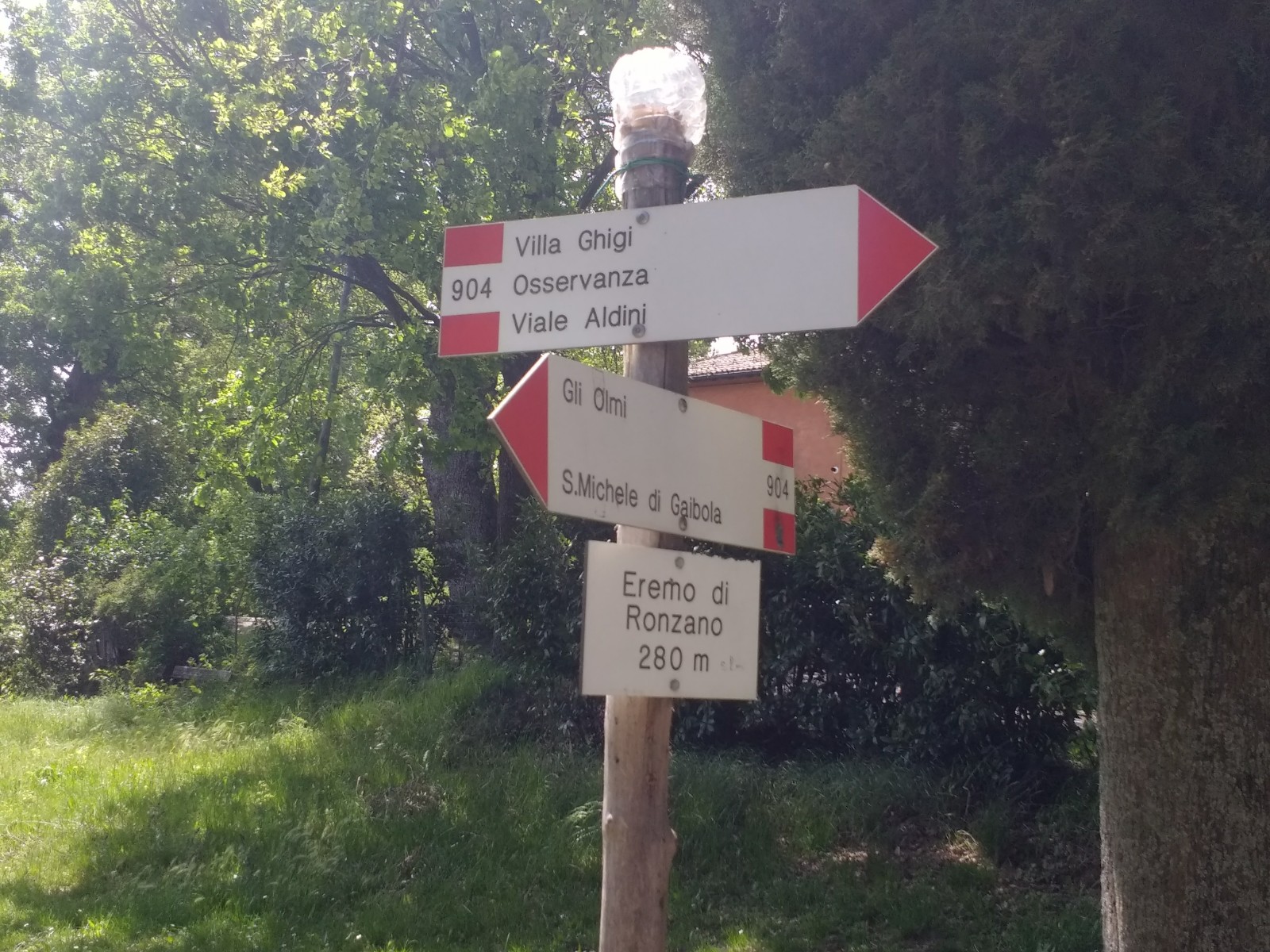
The walks are very well marked.
Starting on roads to get out of Bologna, we were soon led onto grassy paths.
Marked posts tell you that you’re on the right track.
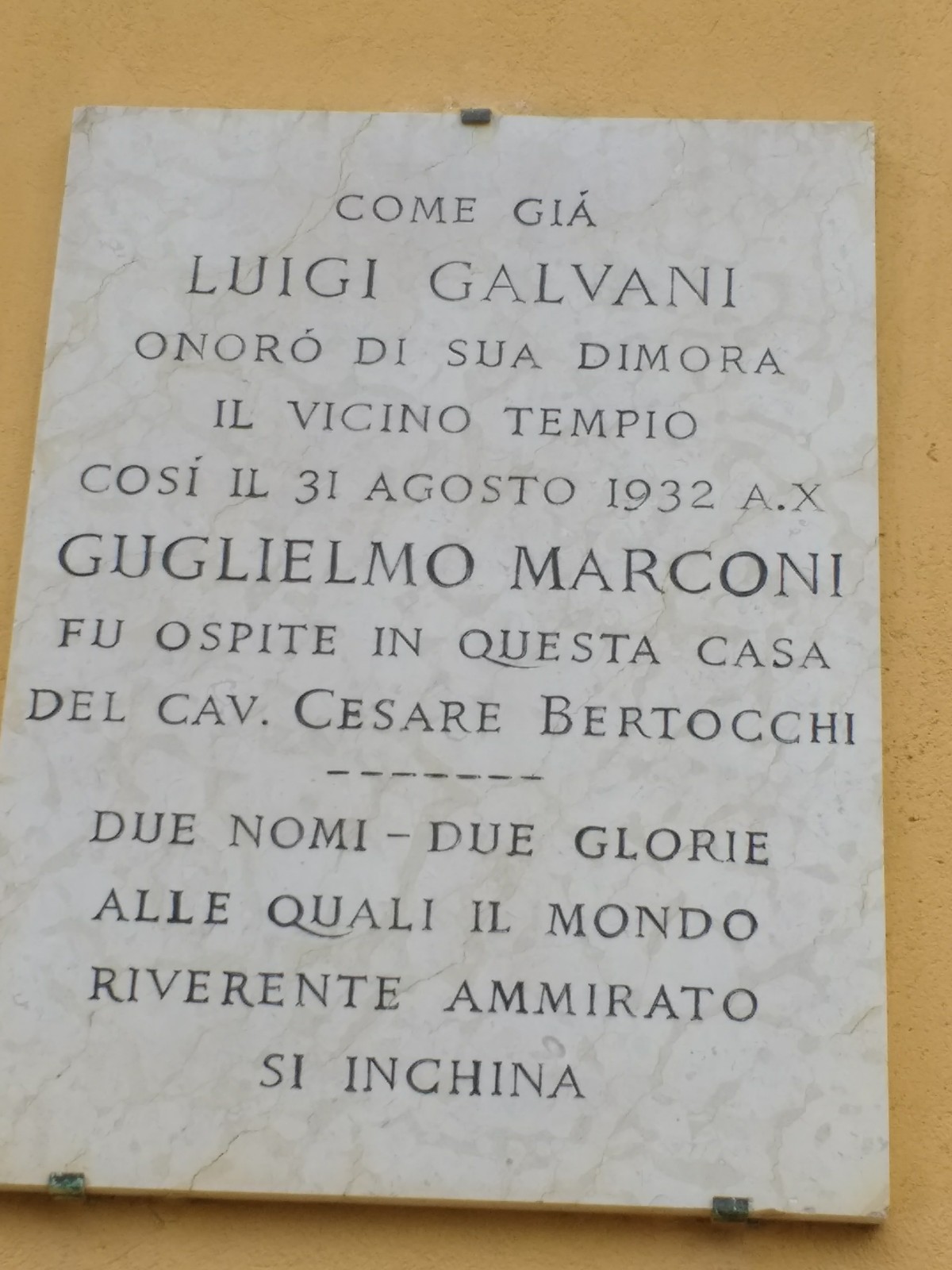
In one place, we passed a house with a stone inscription concerning Marconi, of radio fame, and Galvani, who conducted experiments with frogs in the eighteenth century, demonstrating electrical circuits in animals. Galvani comes from Bologna and much is made of him here.
Marconi was here (and Galvani lived nearby)
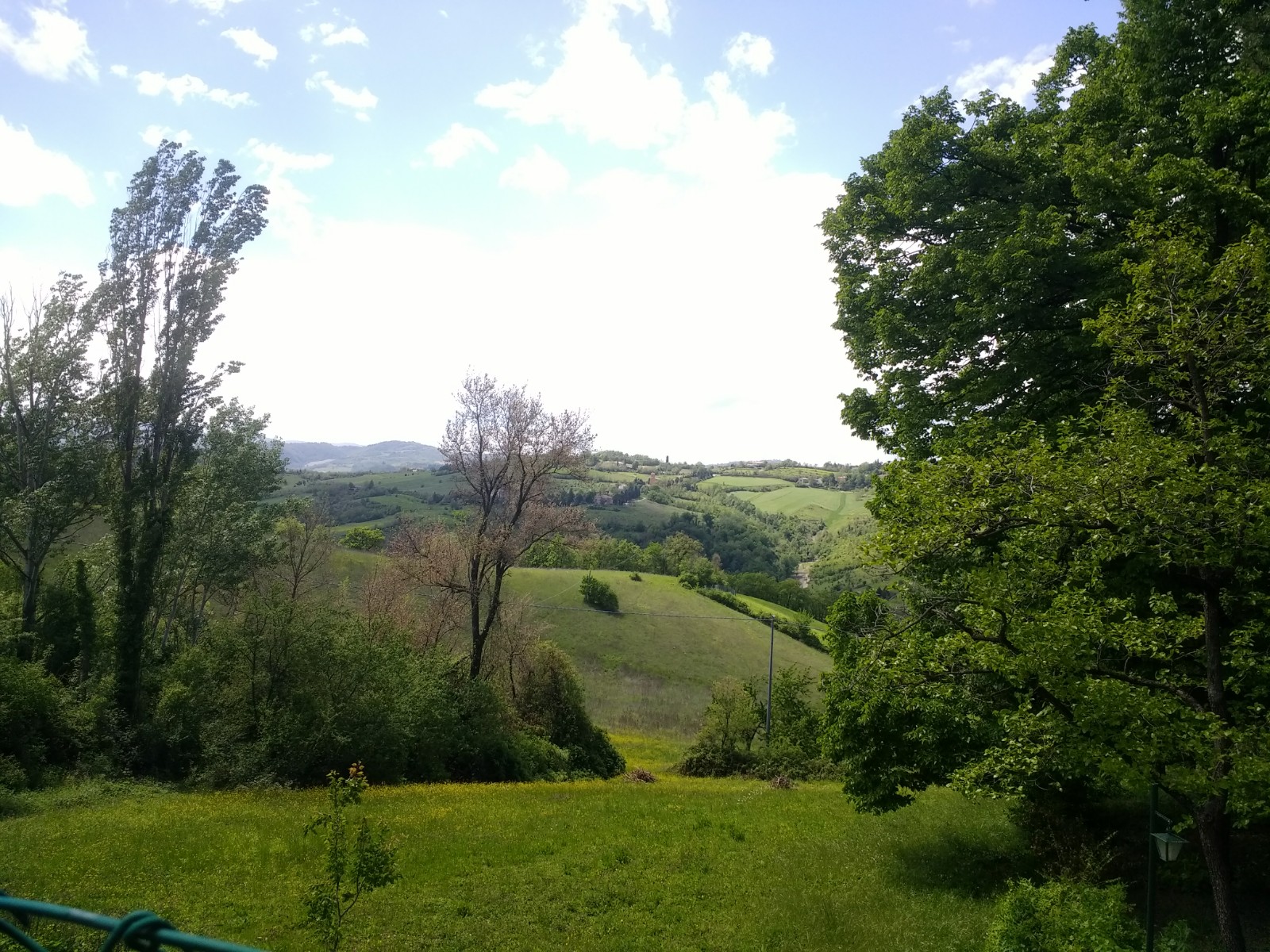
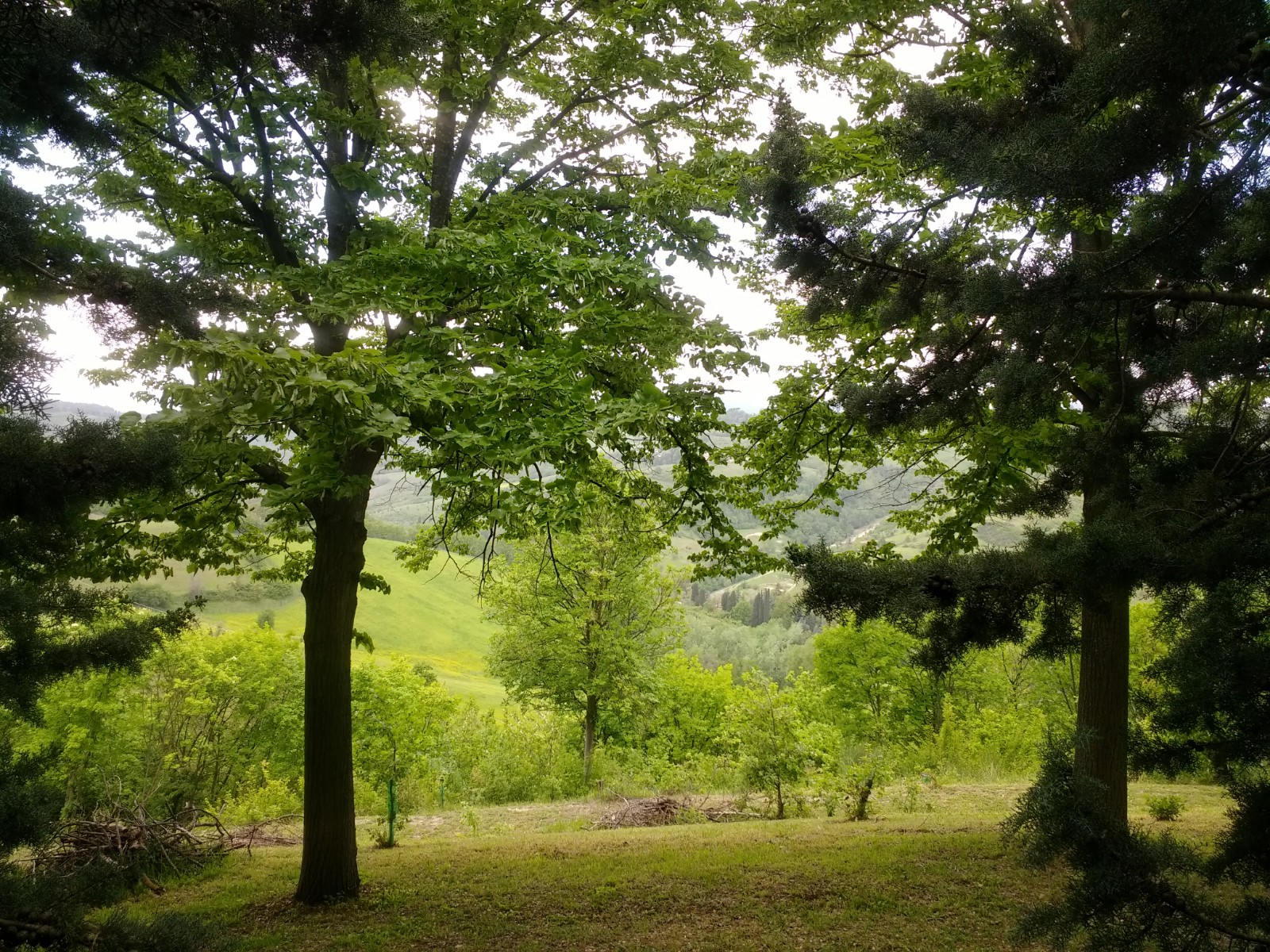
It’s good to get out of the city.The trees are all in leaf now.
San Michele di Gaibola
The walk was pleasant, but the end point a little disappointing, a rather sad and neglected-looking church which we couldn’t even go in.
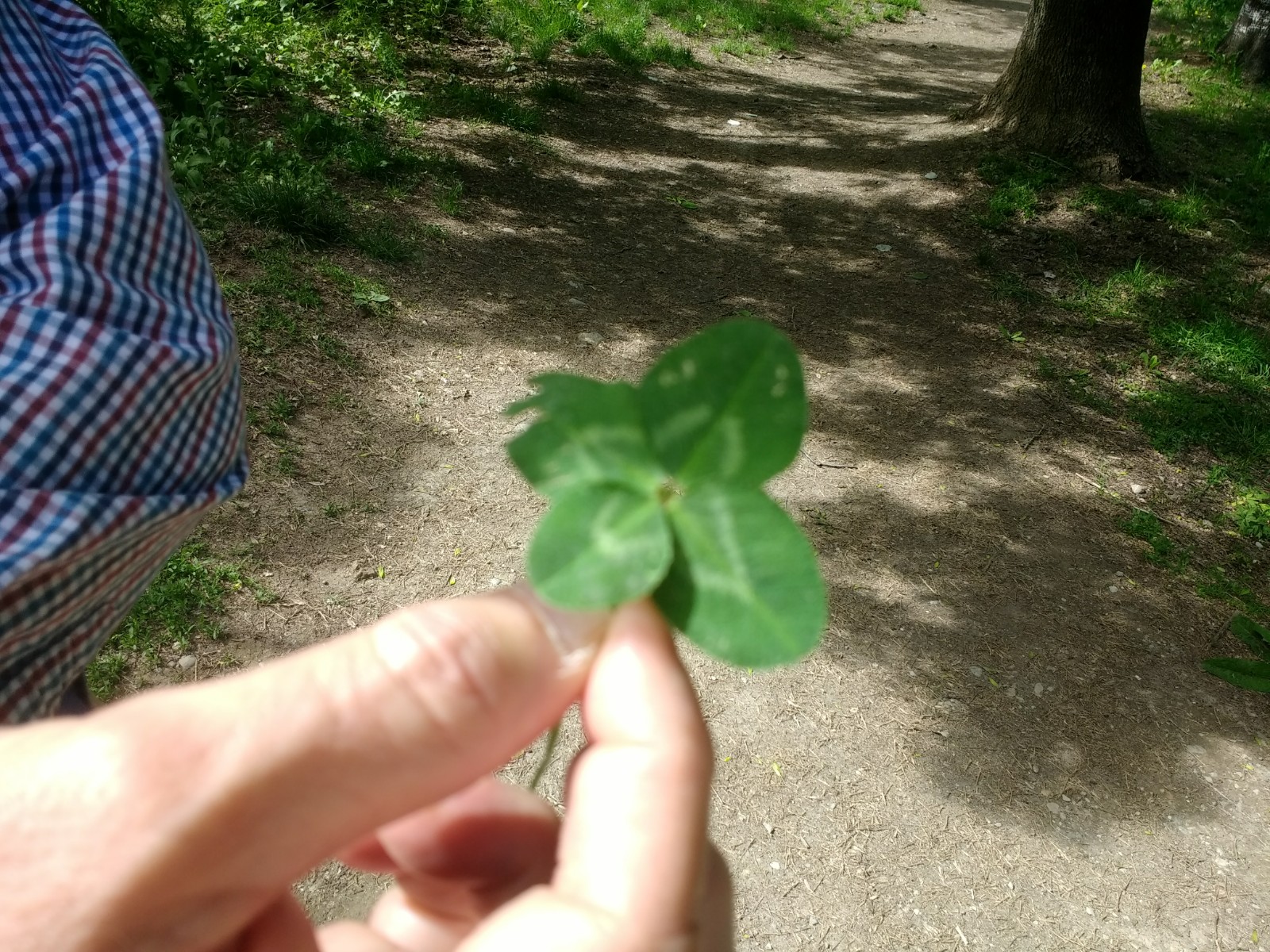
On the way back we met an Italian couple who had just picked a four-leafed clover. Generously, they presented it to us, saying it was for good luck.
The four-leafed clover. Neither of us had ever seen one before.
Unfortunately, half an hour later, Mark turned his ankle in some uneven ground. He managed to hobble home, despite it swelling up. However, after resting it overnight, he has managed to get round fine today.
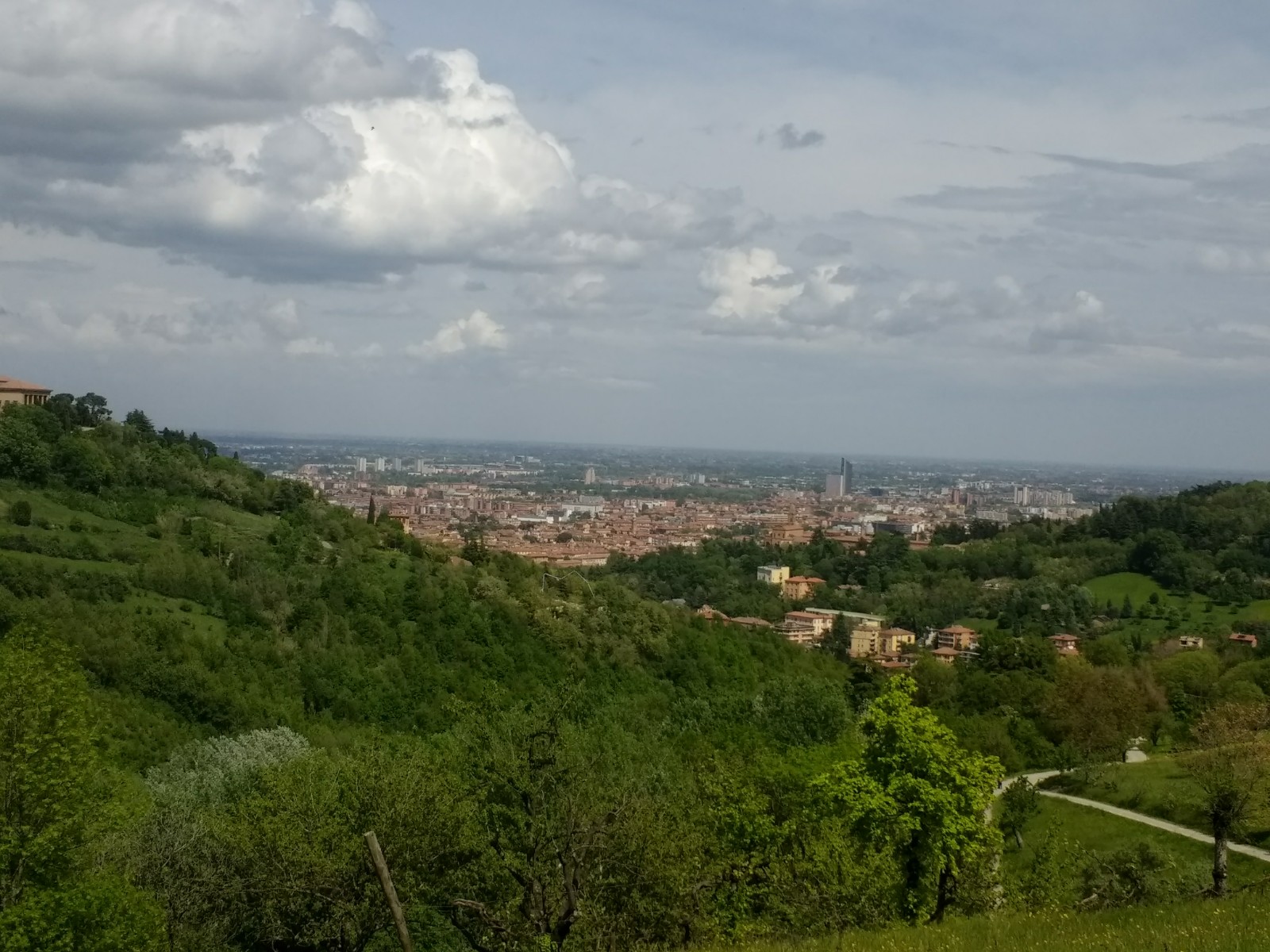
View of Bologna from the walk
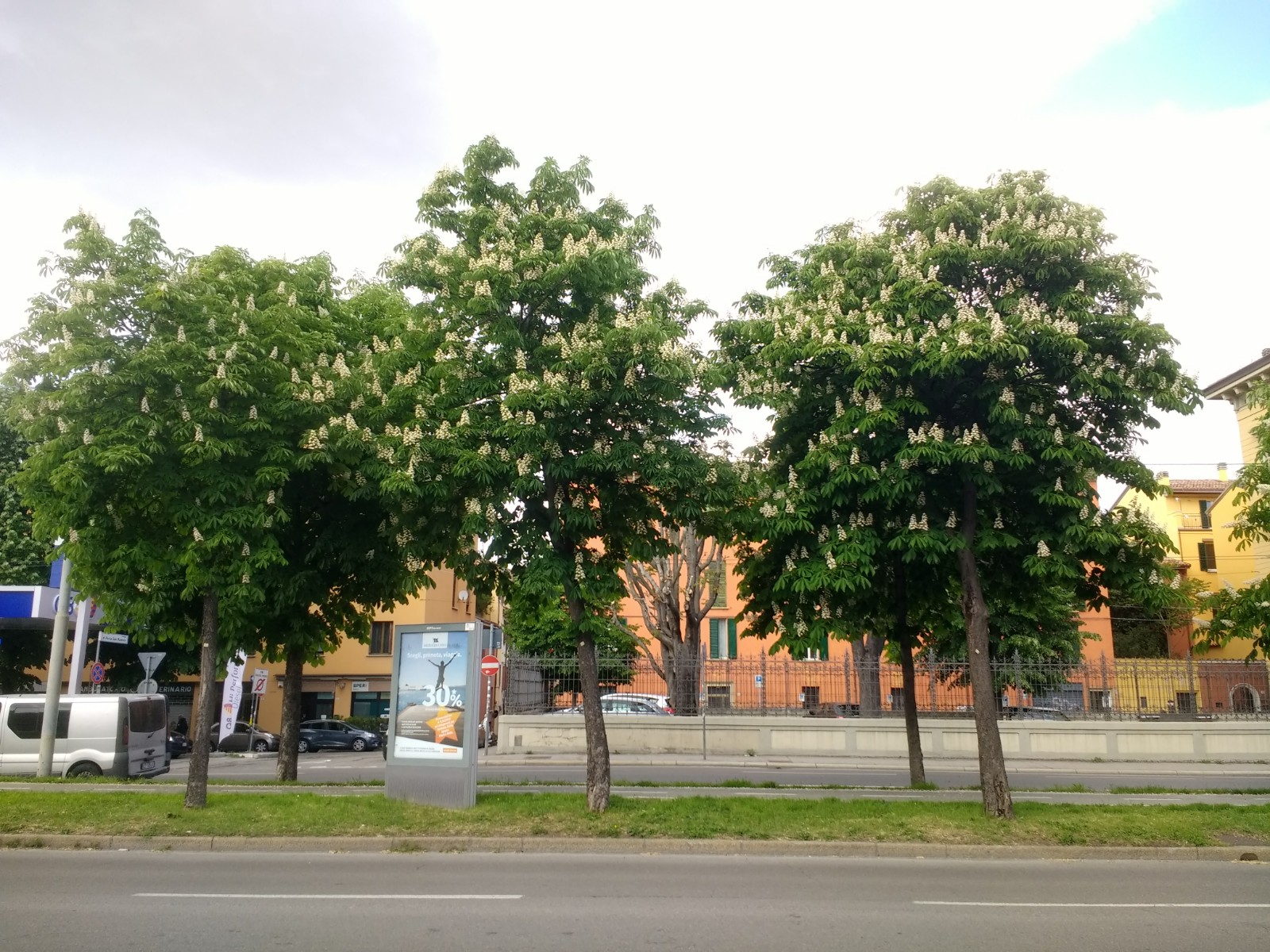
The horse chestnuts are all out. They’re probably about a month ahead of the ones in South-east England (unless you can tell me otherwise)
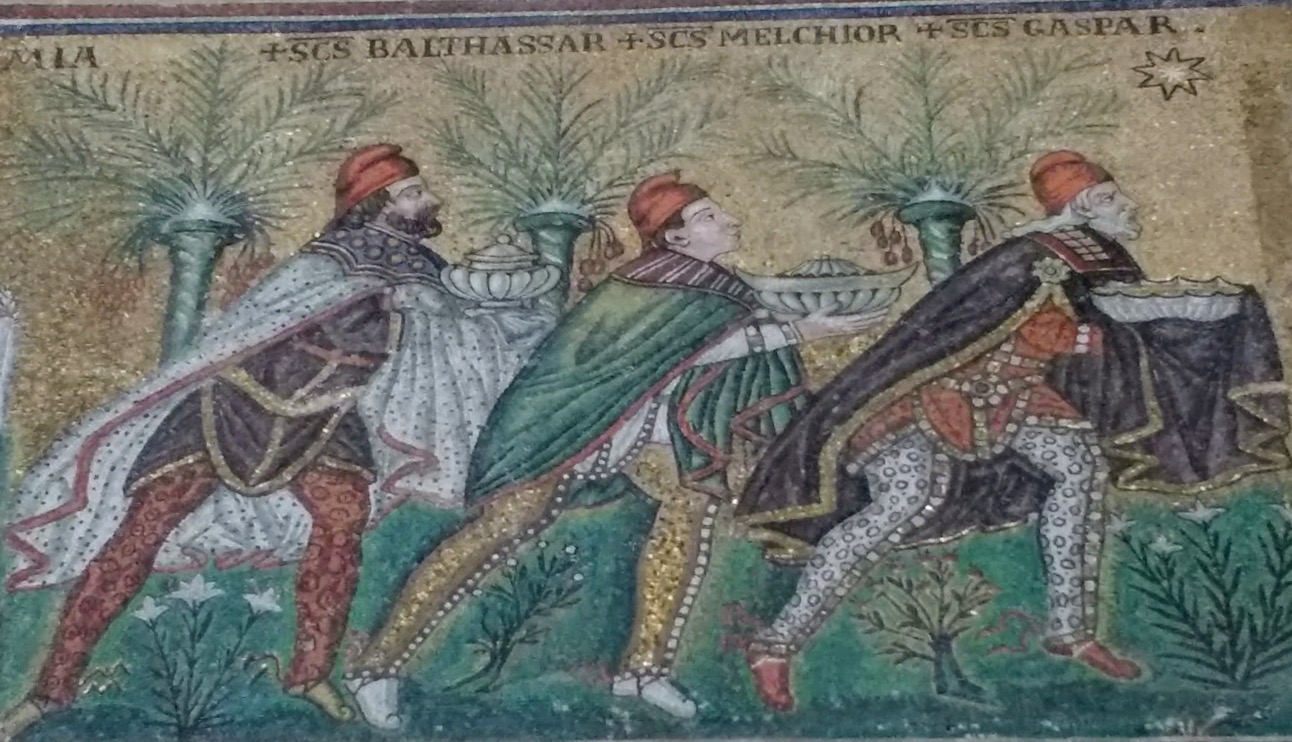
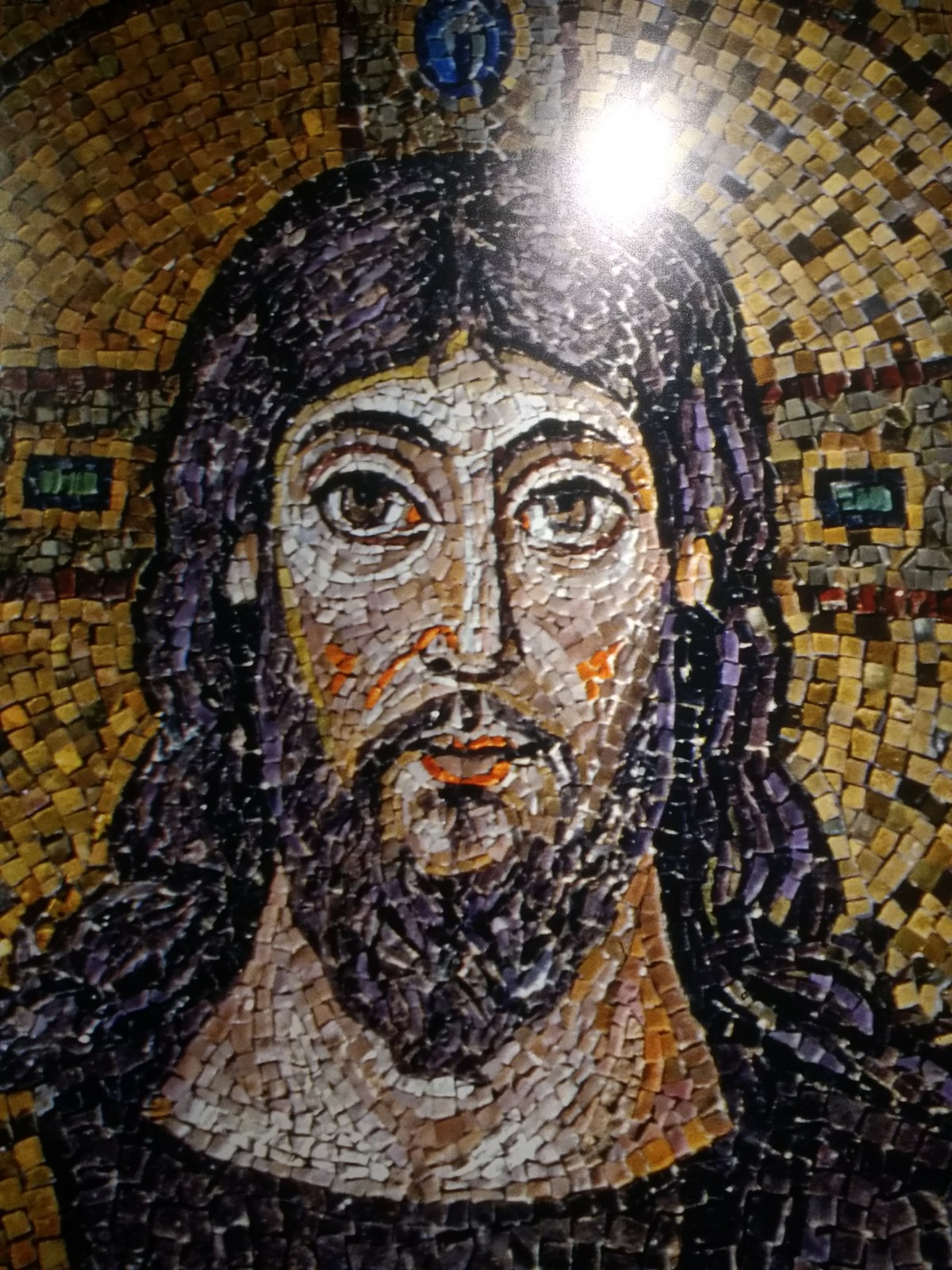
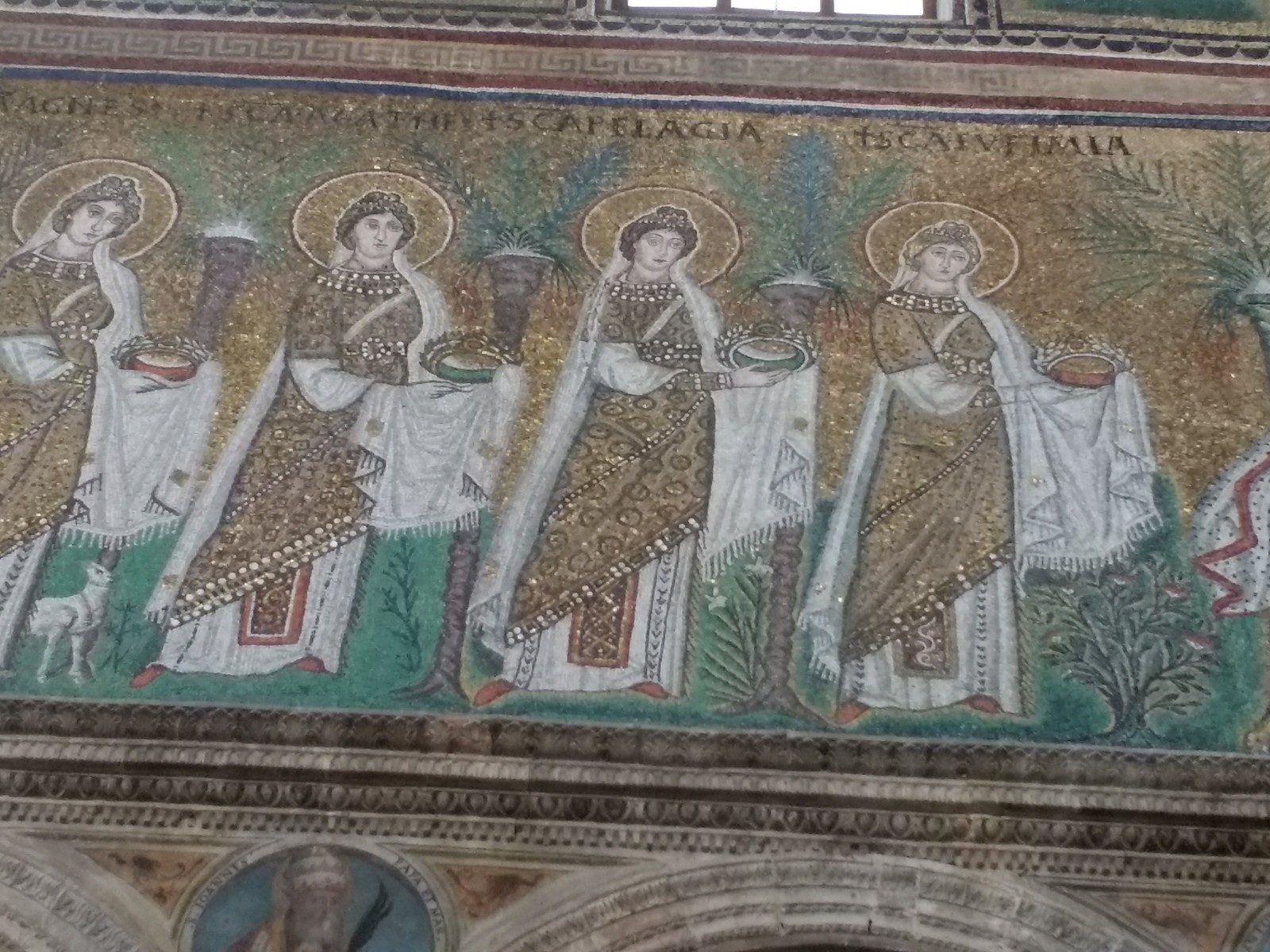
We’ve seen a number of mosaics on this trip, but the ones we saw in Ravenna yesterday are my favourites, so far.
The Three Kings in Sant’Apollinare Nuovo, Ravenna
The mosaics in Monreale Cathedral were beautiful of course, but the colours in the Ravenna mosaics are so bright, and are such beautiful colours (a lot of blue and green, which are my favourites).
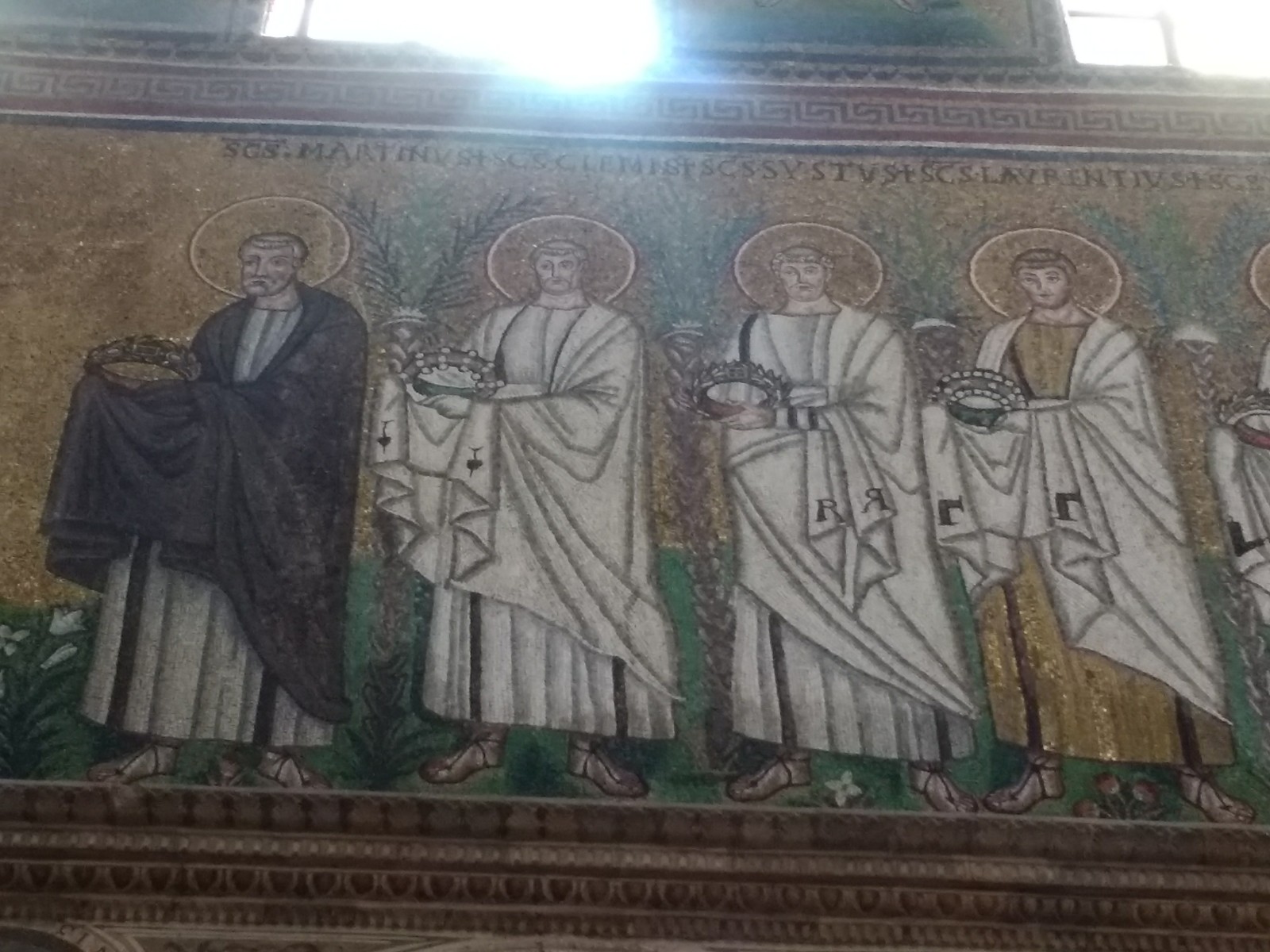
Male saints carrying holy relics, Sant’Apollinare. They are holding the relics in gloved hands, or pieces of cloth, as they shouldn’t be touched with bare skin.
I’ve been looking into the making of mosaics at this time (6th century, when Ravenna, for some 400 years, was the capital of the Western Roman Empire) and they were composed of coloured glass, which has the advantage of being lighter and brighter than stone or marble. The colour was obtained by adding metal oxide to ordinary glass during manufacture. For gold, gold leaf was sandwiched between two thin layers of glass.
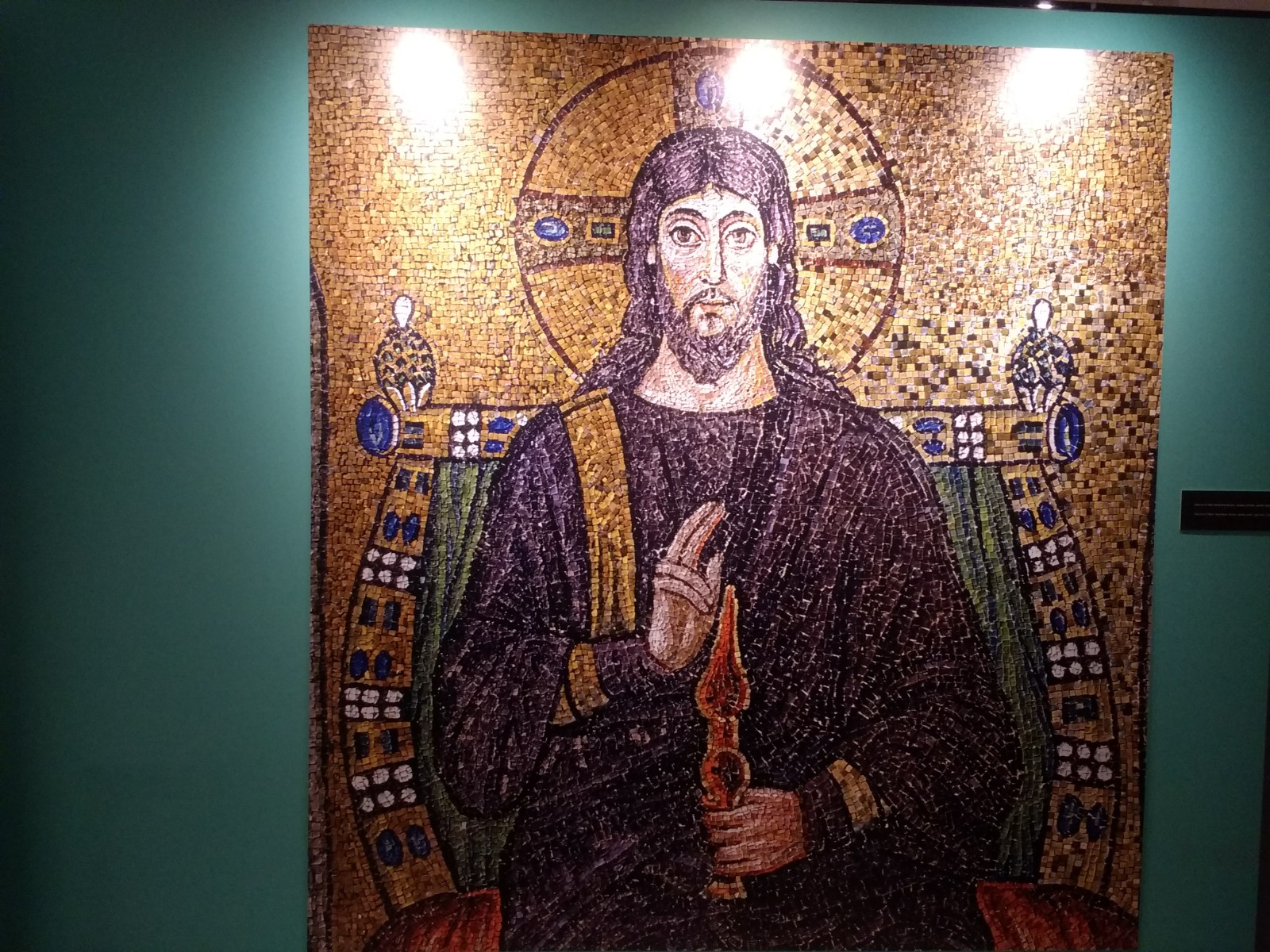
Christ, Sant’Apollinare. OK, this is a cheat. It’s a photograph of a photograph.When you look at the mosaic close-up, some of the colours look a little strange, like the orange pieces on Christ’s face, but looked at from a distance, it all works. It’s amazing how the mosaicists could work at close quarters on something that would be seen at a distance.Female Saints carrying holy relics, Sant’Apollinare
In all, we visited six sites at a very leisurely pace as they are all so close together, and the queues were non-existent, or minimal.
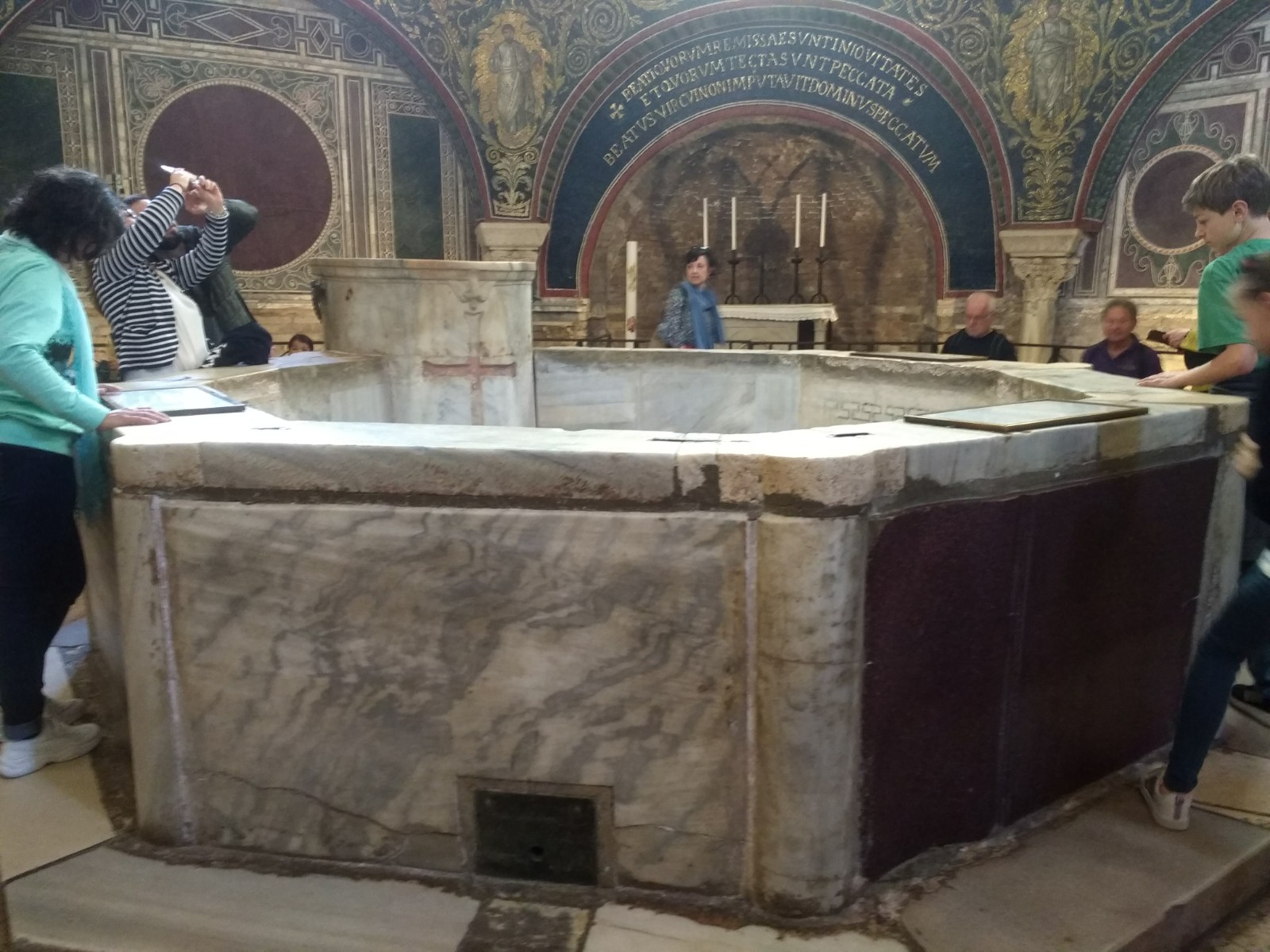
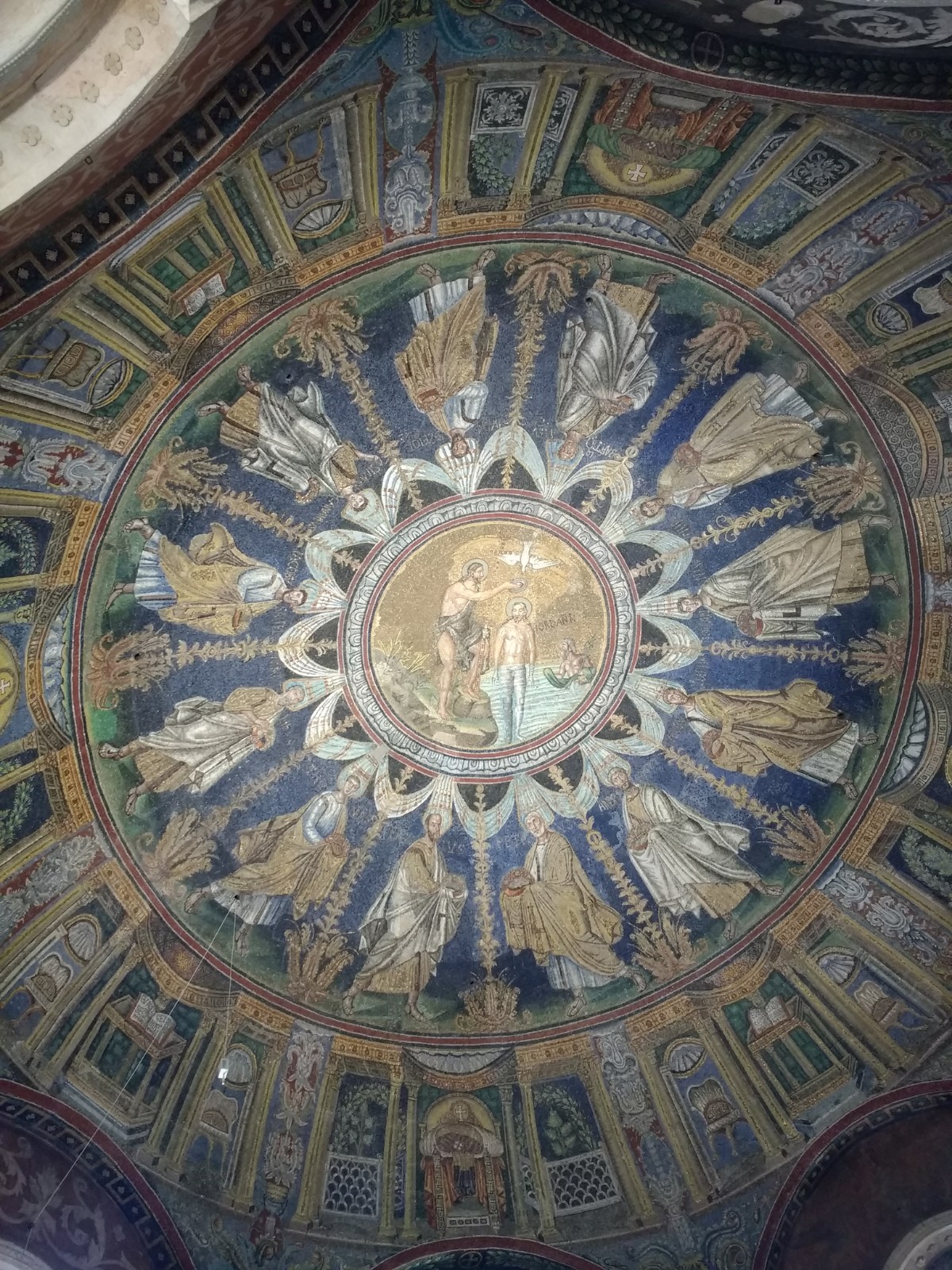
The second site was the Battistero Neoniano, next to the rather plain Duomo. The baptistry was built over the site of a Roman bathhouse.
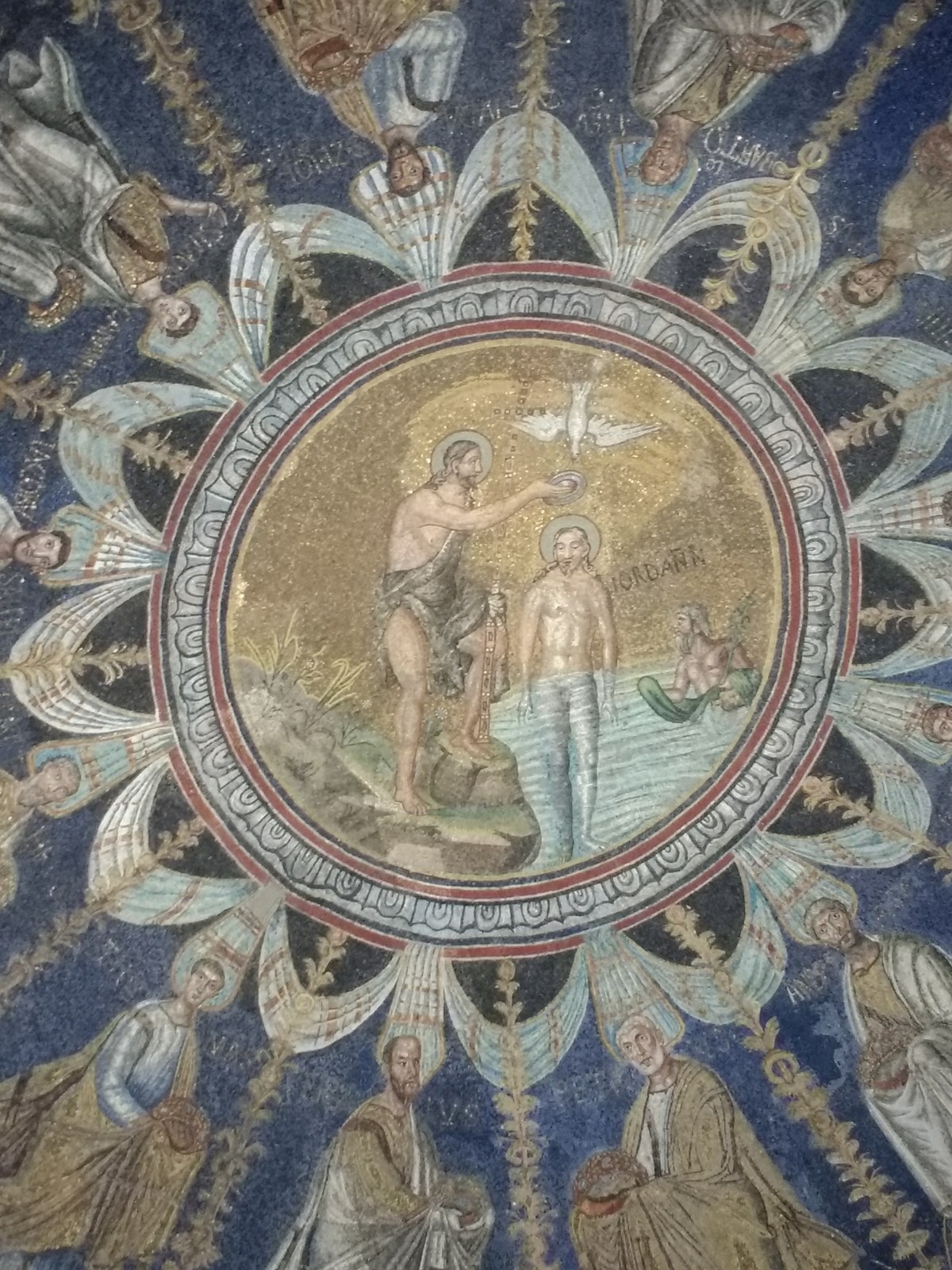
Baptismal bath for total immersion baptisms, Battistero Neoniano Ceiling, Battistero Neoniano In the centre of the ceiling is Christ’s baptism. The man on the right is a personification of the River Jordan
Our third stop was the church of San Vitale (born in Milan and buried alive in Ravenna).
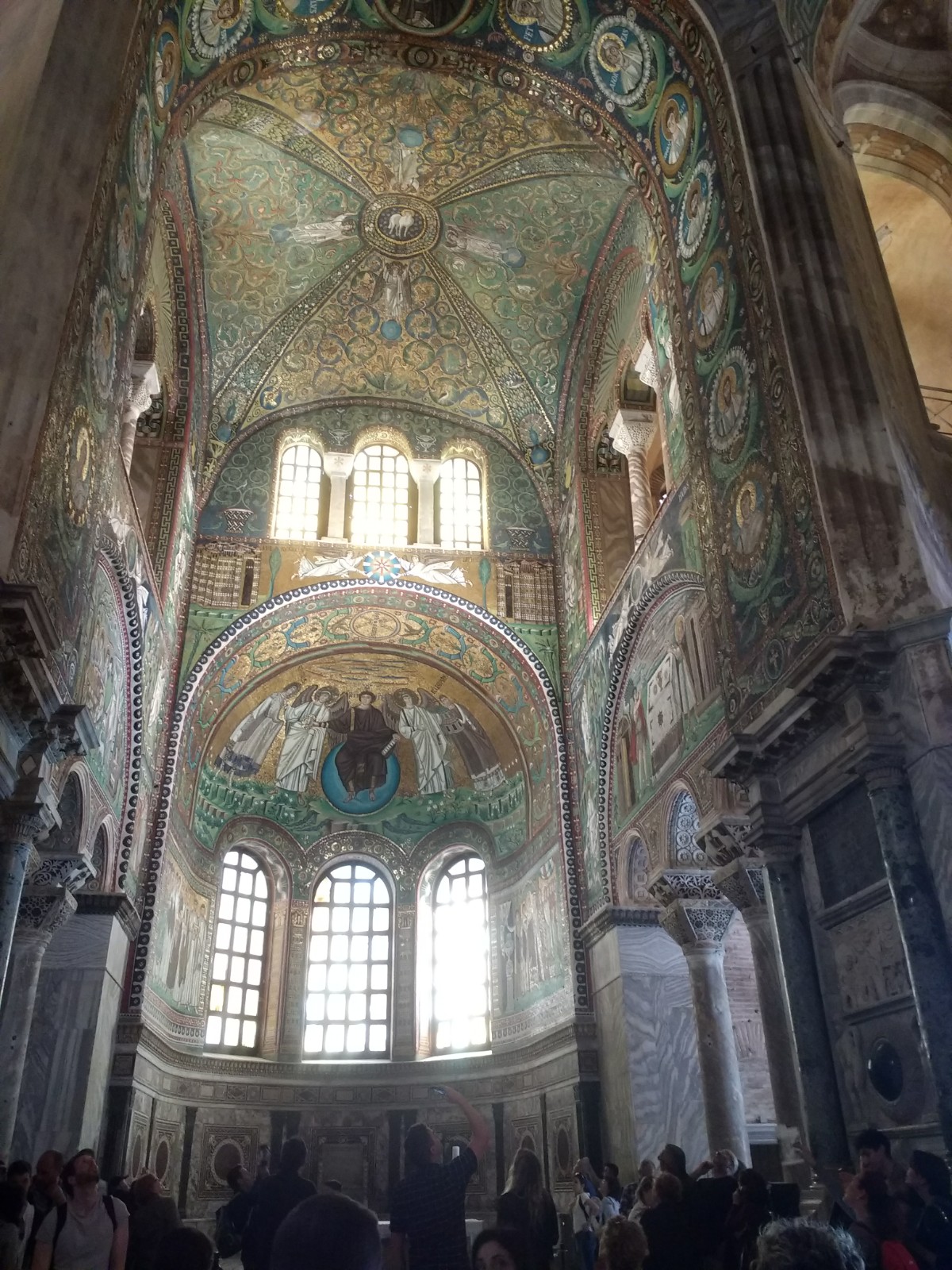
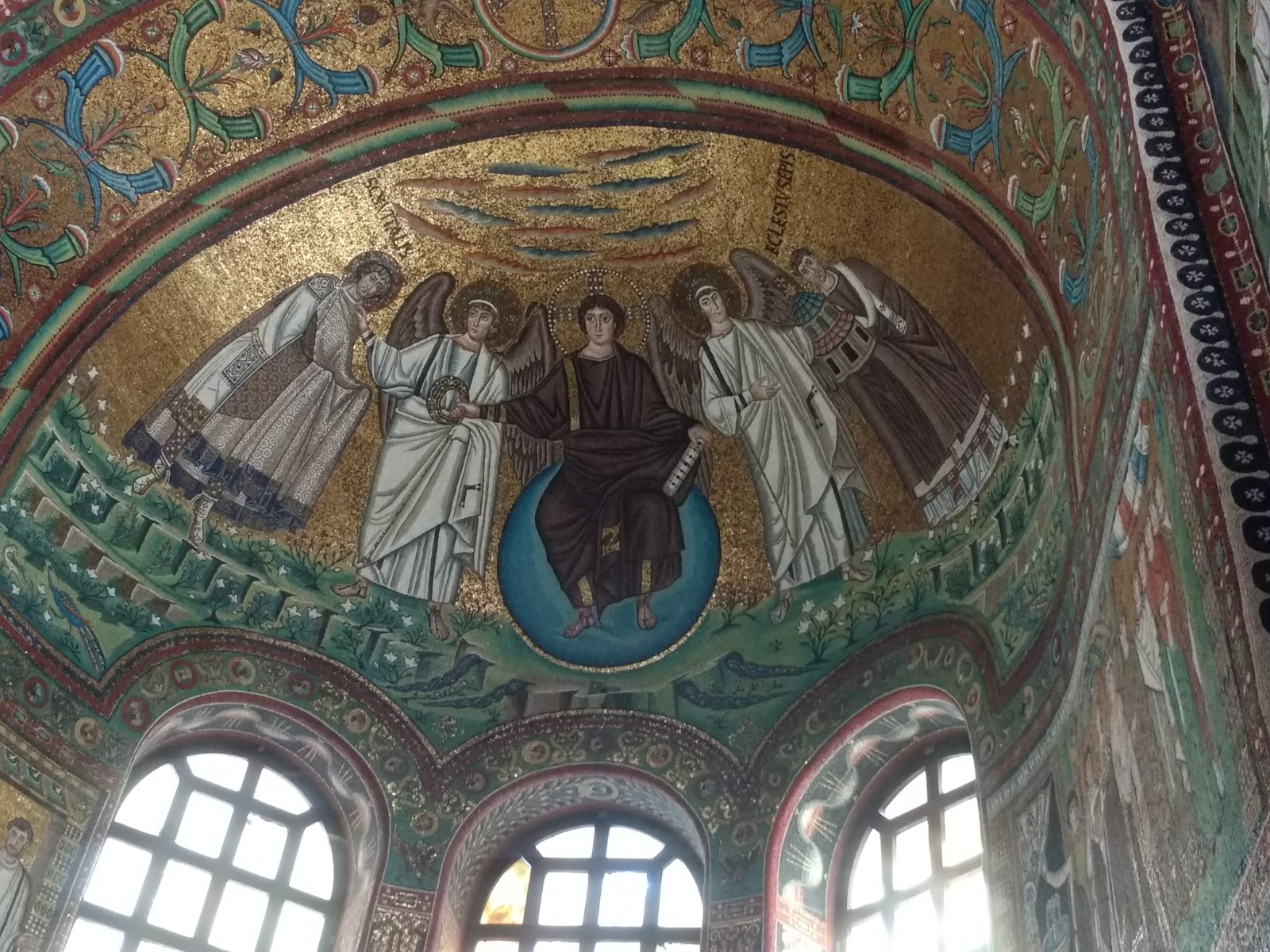
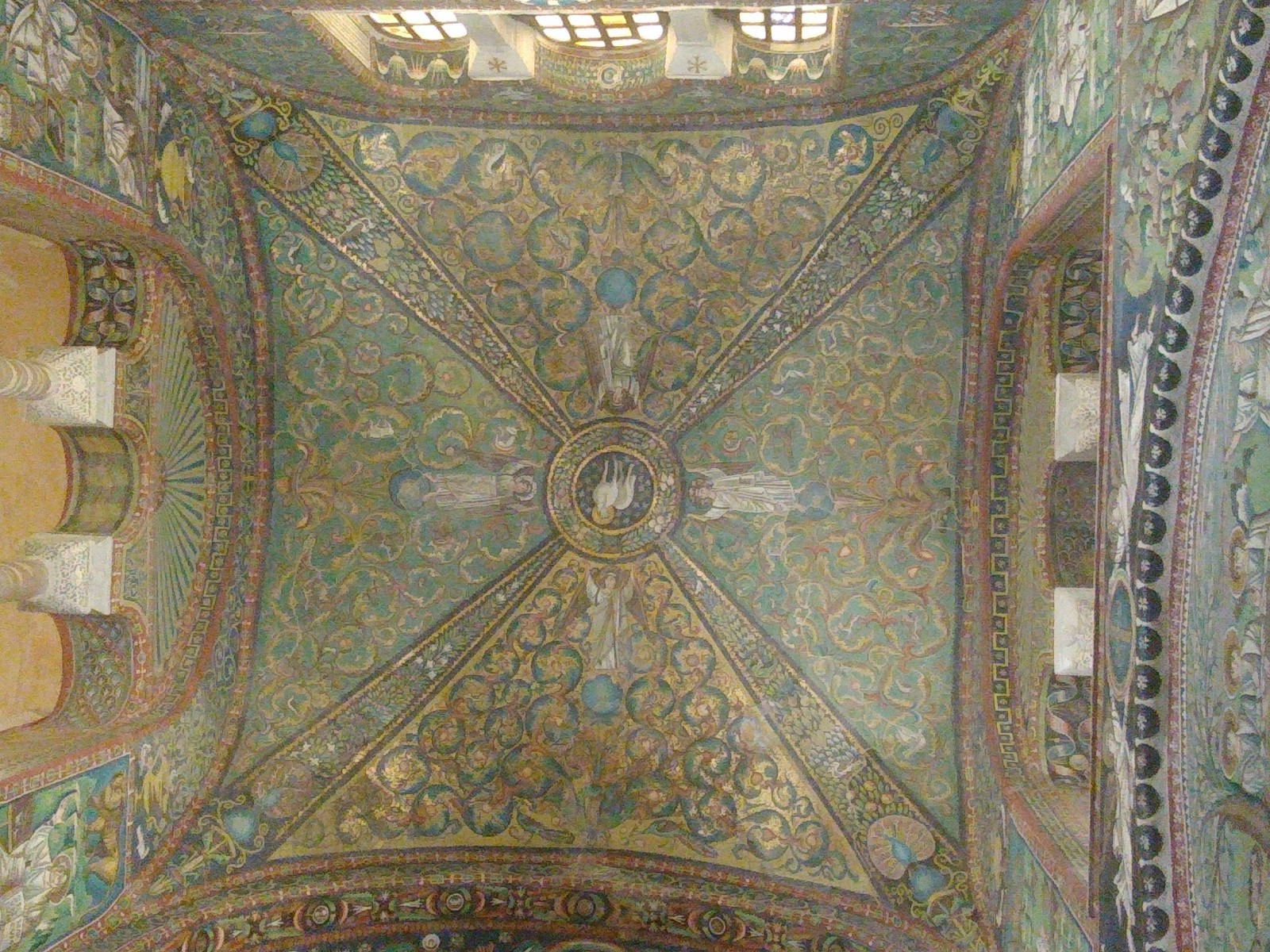
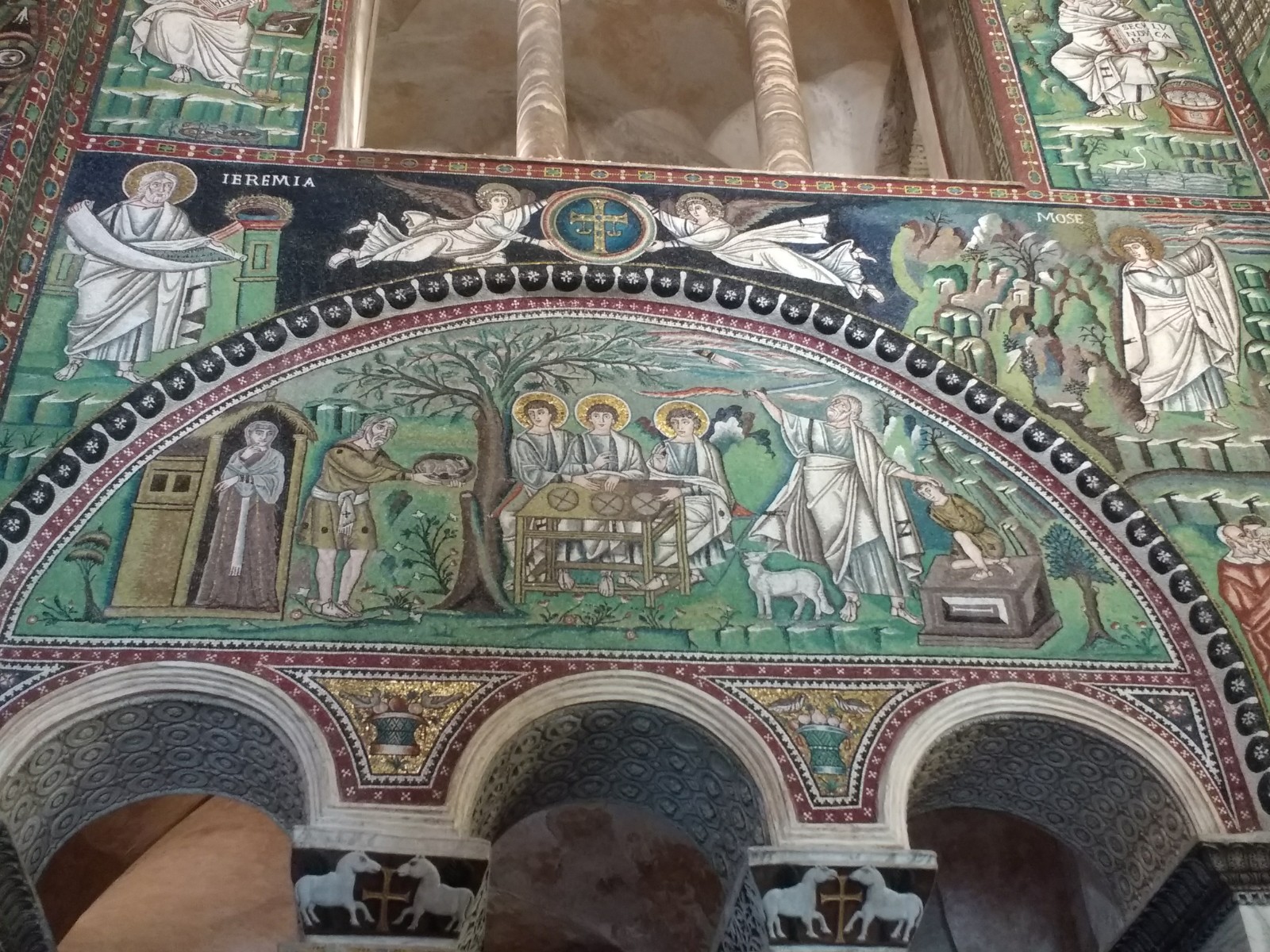
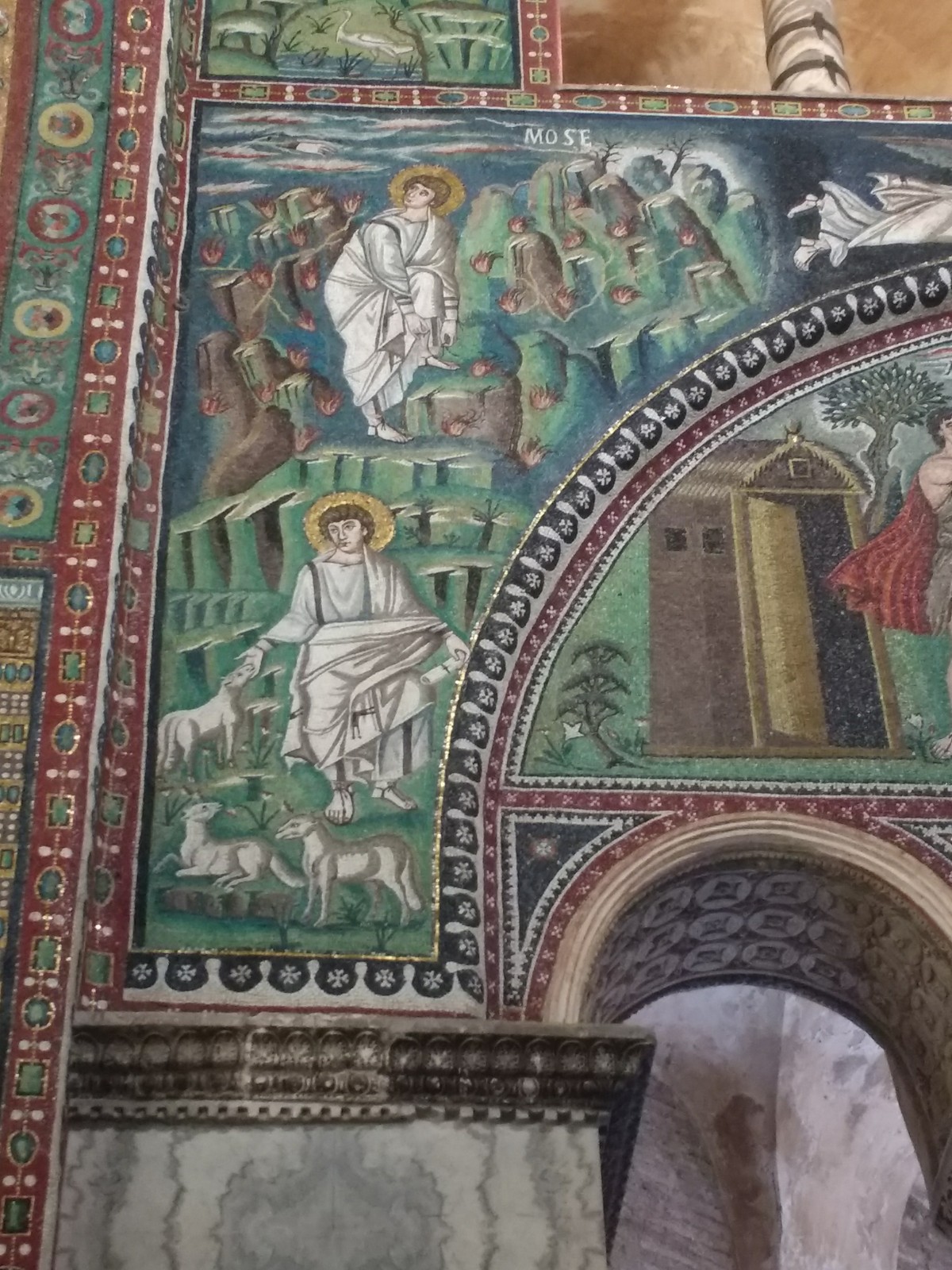
San VitaleChrist is offering San Vitale the martyr’s crownCeiling, San VitaleThe Sacrifice of IsaacMoses and the Burning Bush
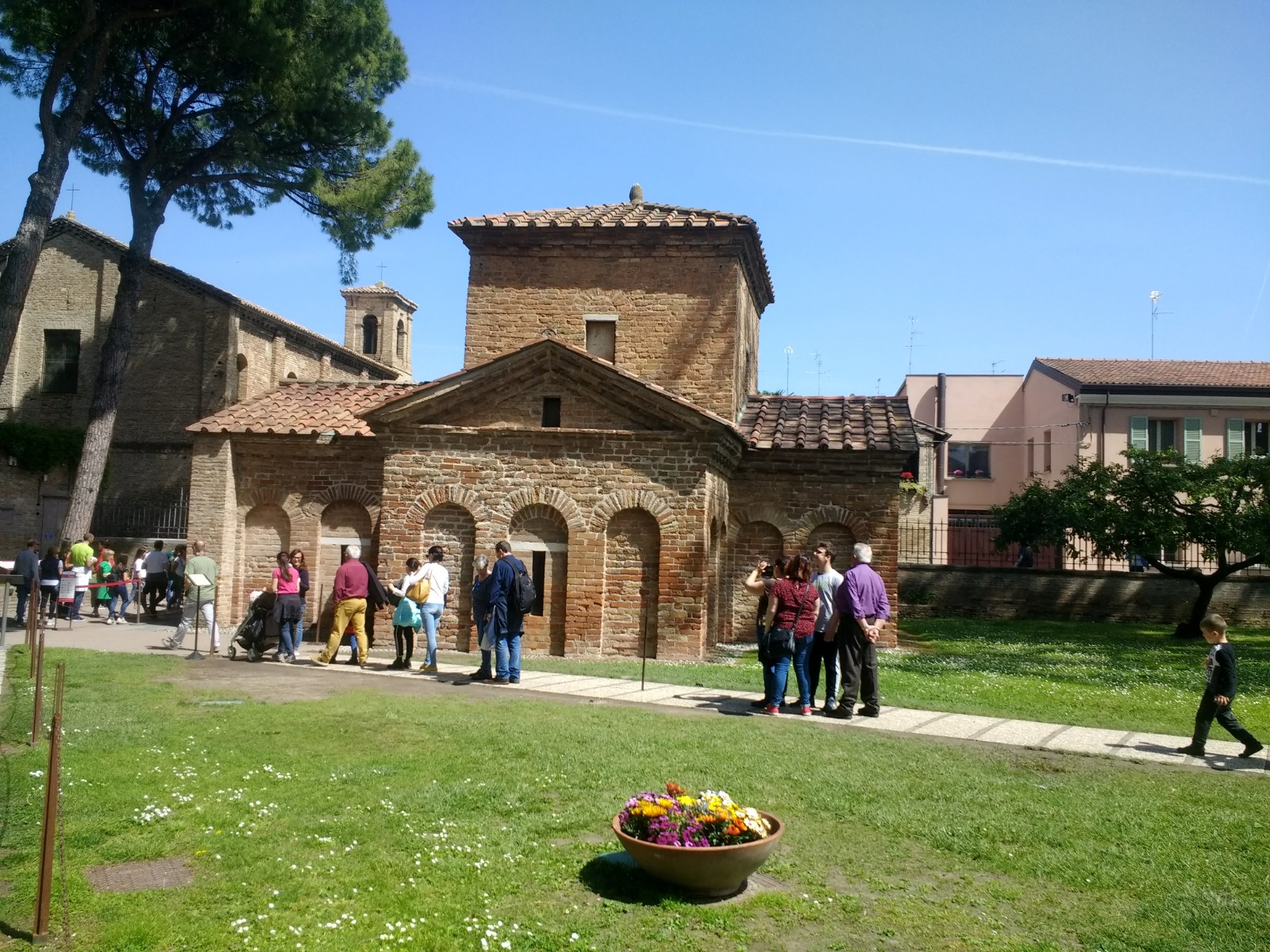
Next, we visited the Mausoleum of Galla Placidia, a Queen consort from the fifth century. Although this is her Mausoleum, Galla is buried in Rome, and not here.
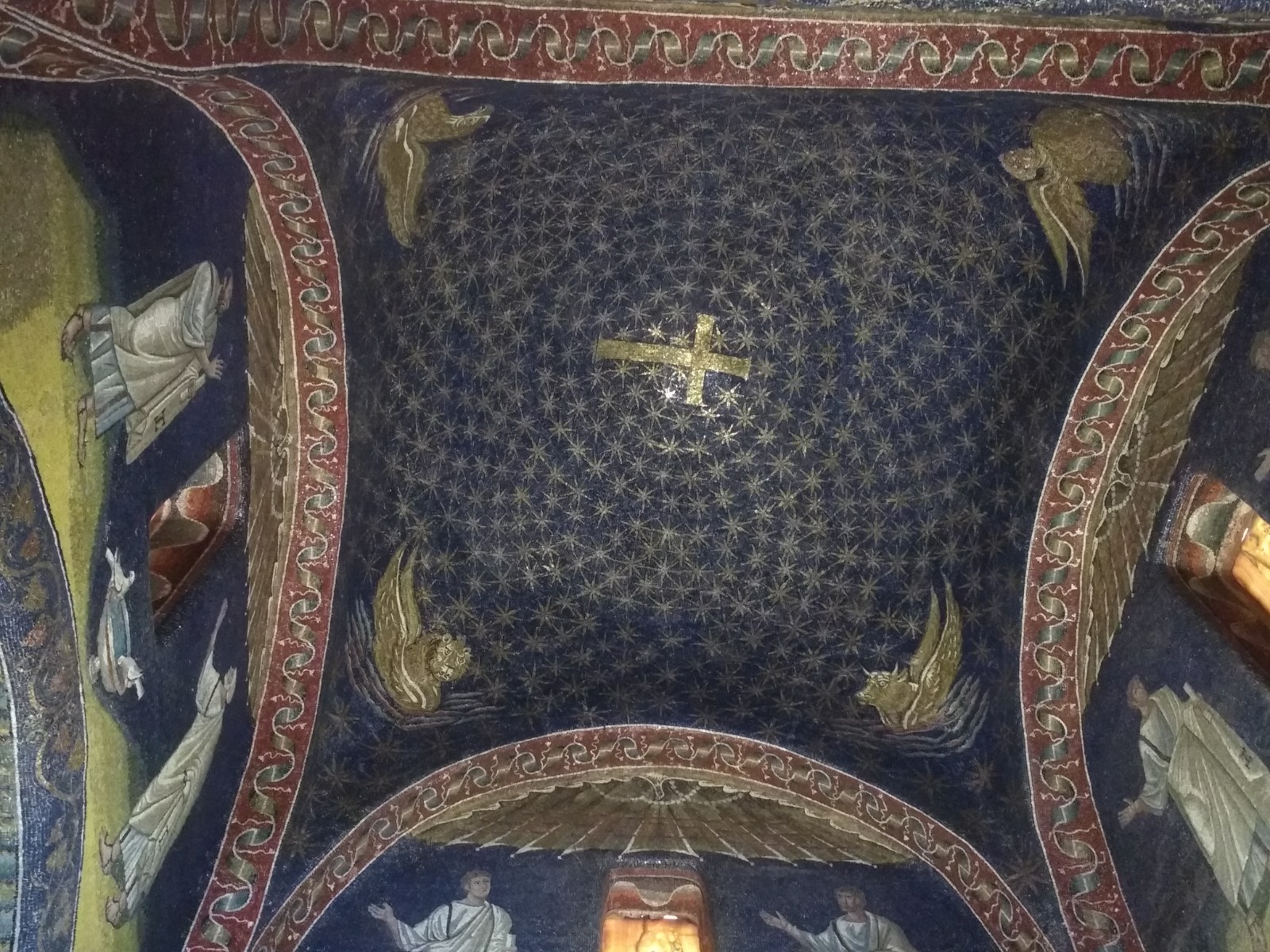
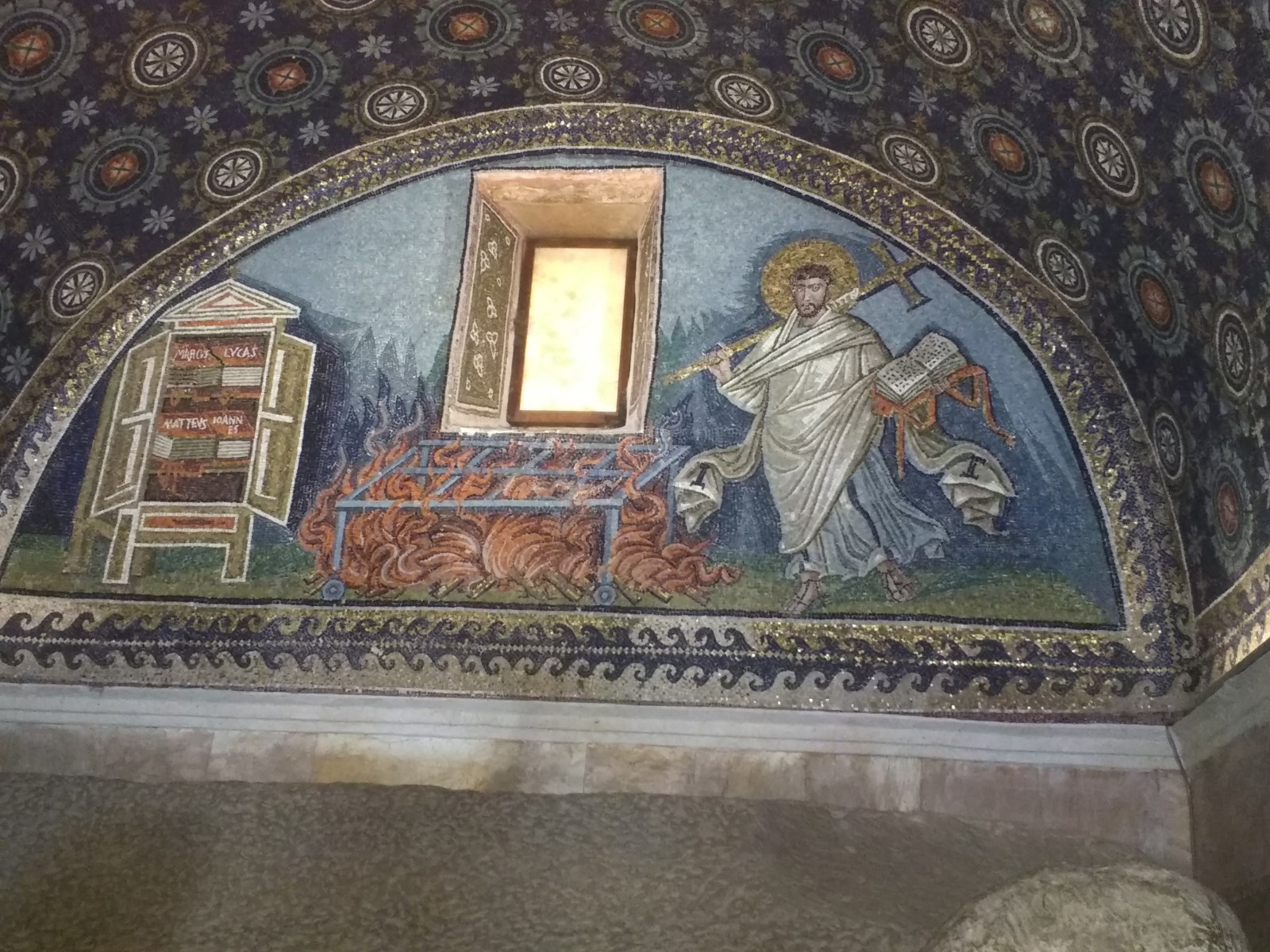
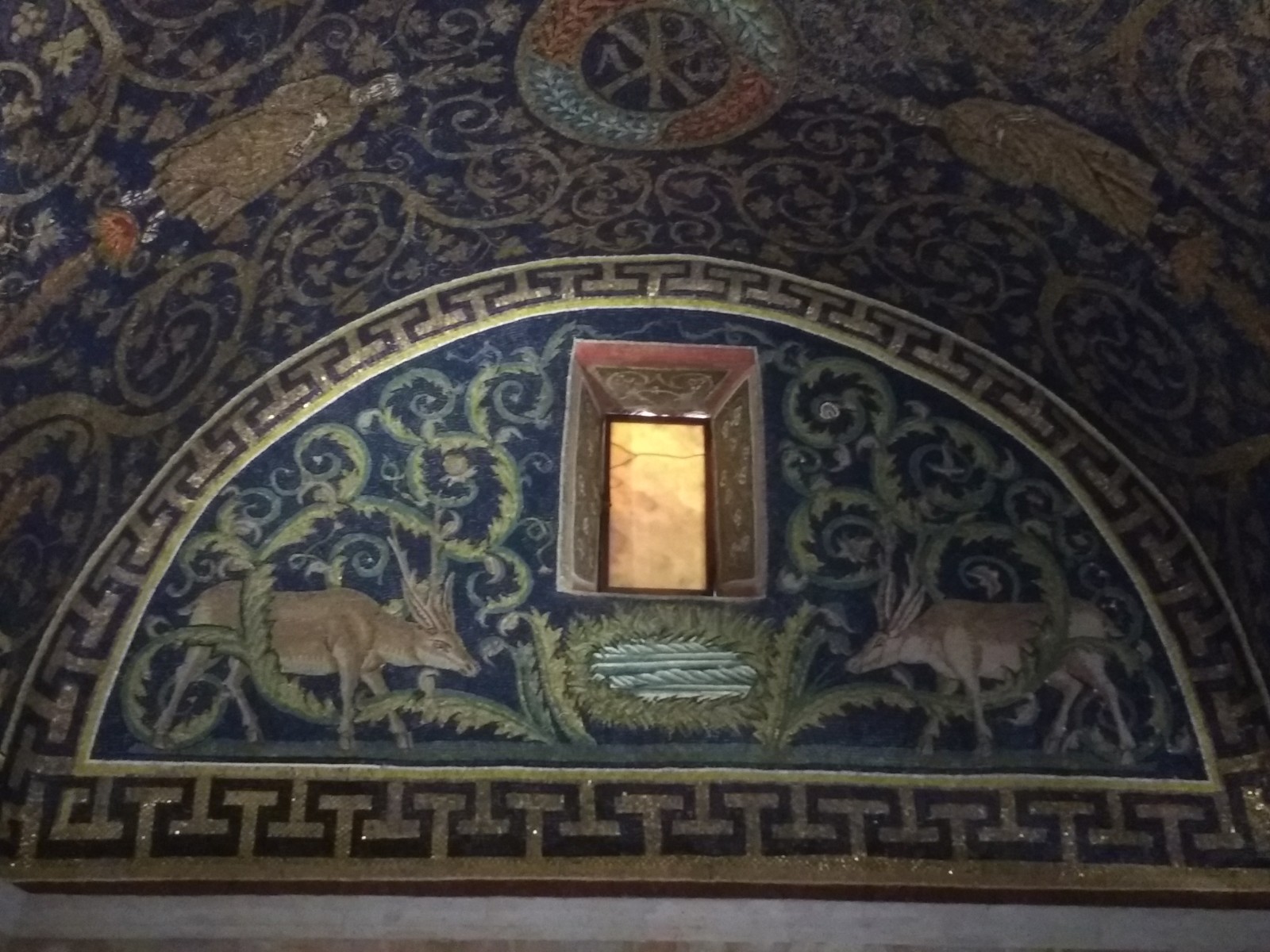
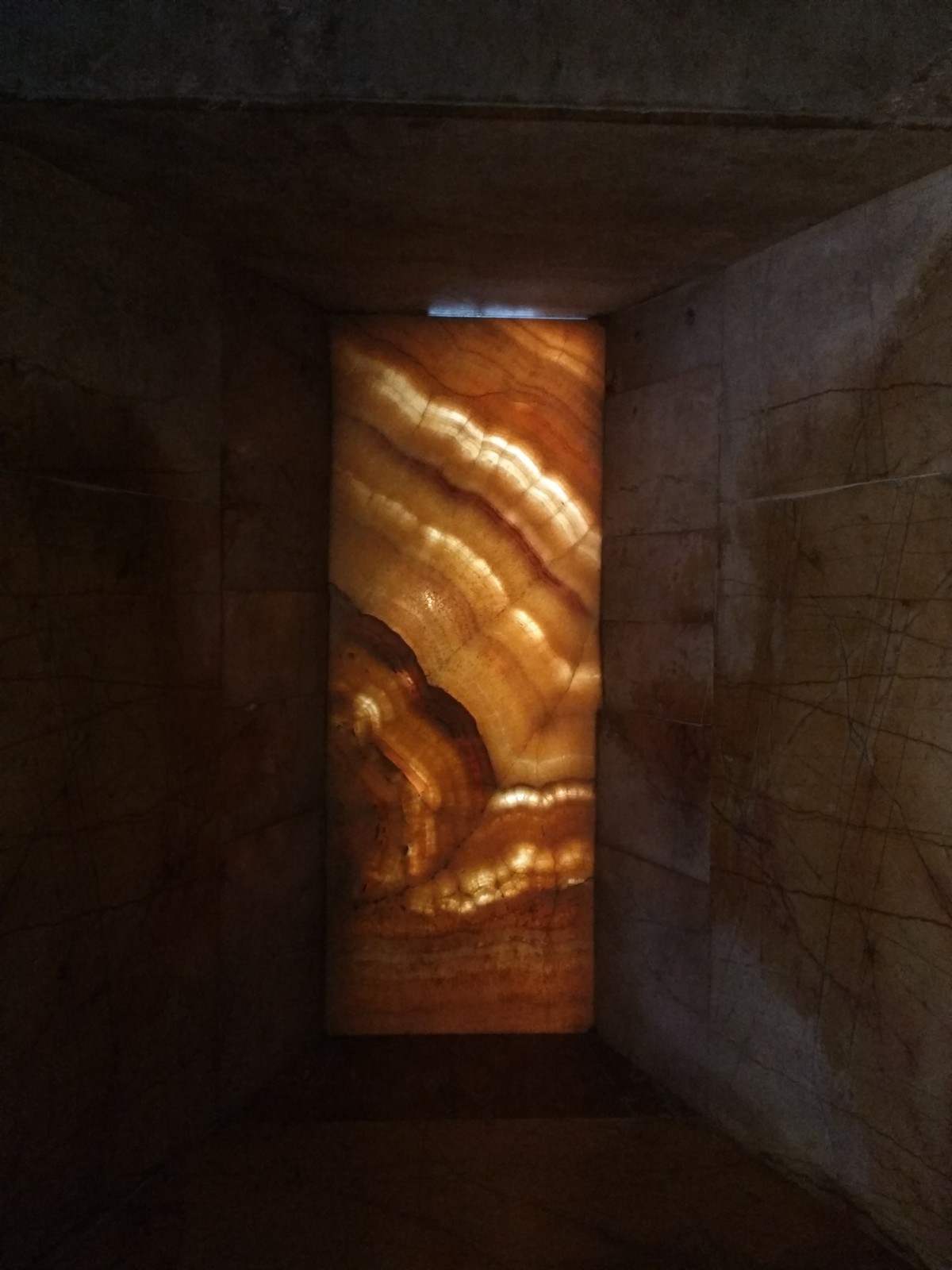
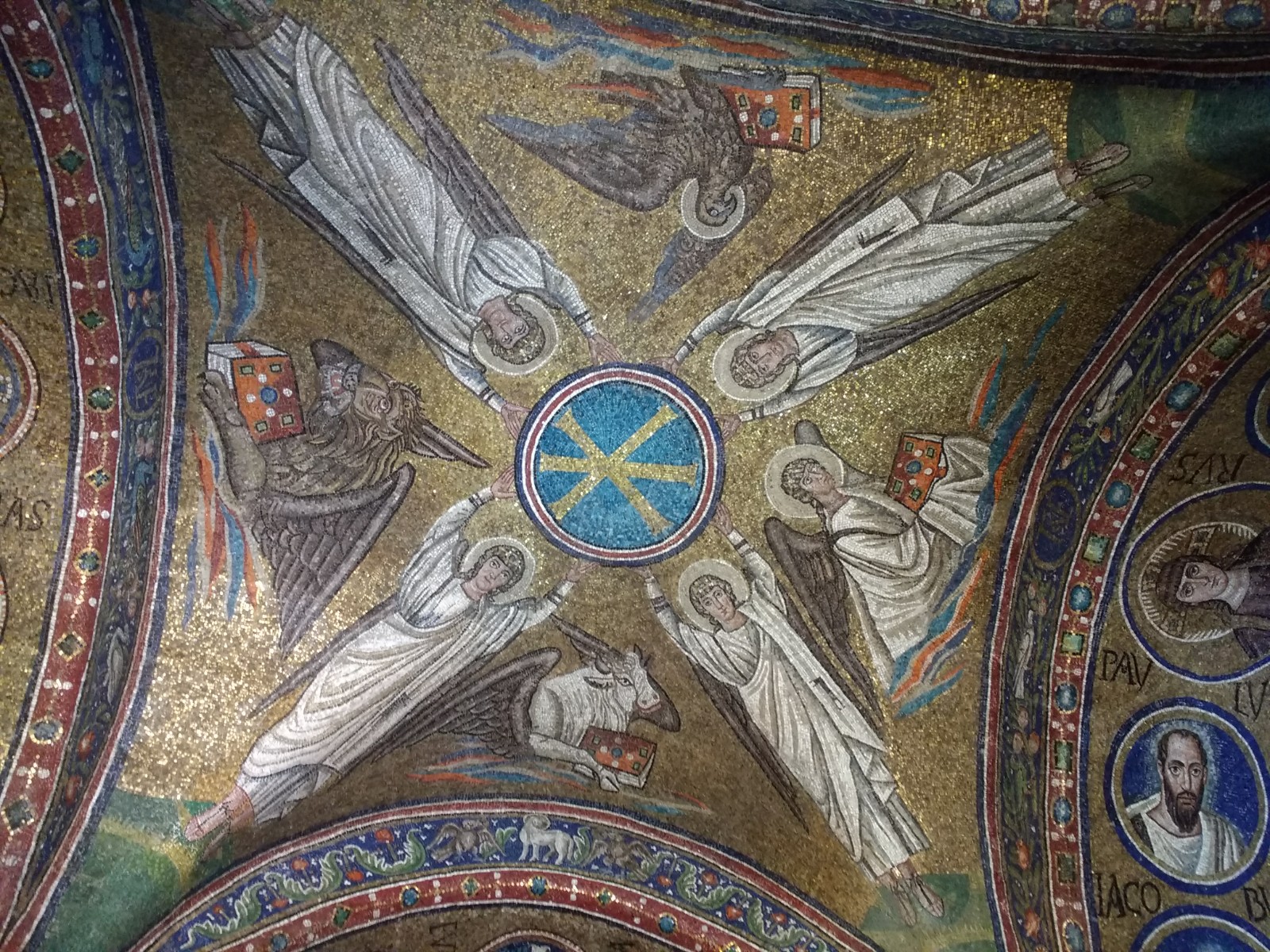
Mausoleum of Galla PlacidiaBeing a mausoleum, there have to be references to an afterlife. These are the four winged living beings, which, according to Revelations, announce the coming of the Saviour. From top left, going clockwise, they are the eagle, the man, the calf and the lion.St Lawrence (or San Lorenzo) walking towards his martyrdom. The legend goes that after lying on the bed of coals, Lawrence told his tormentors that one side was well done, and he should be turned over. Apparently, he is the patron saint of cooks and chefs. Was this decided by someone with a sense of humour?More mosaics, Mausoleum of Galla Placidia. The window is alabaster. Close-up of one of the beautiful alabaster windows
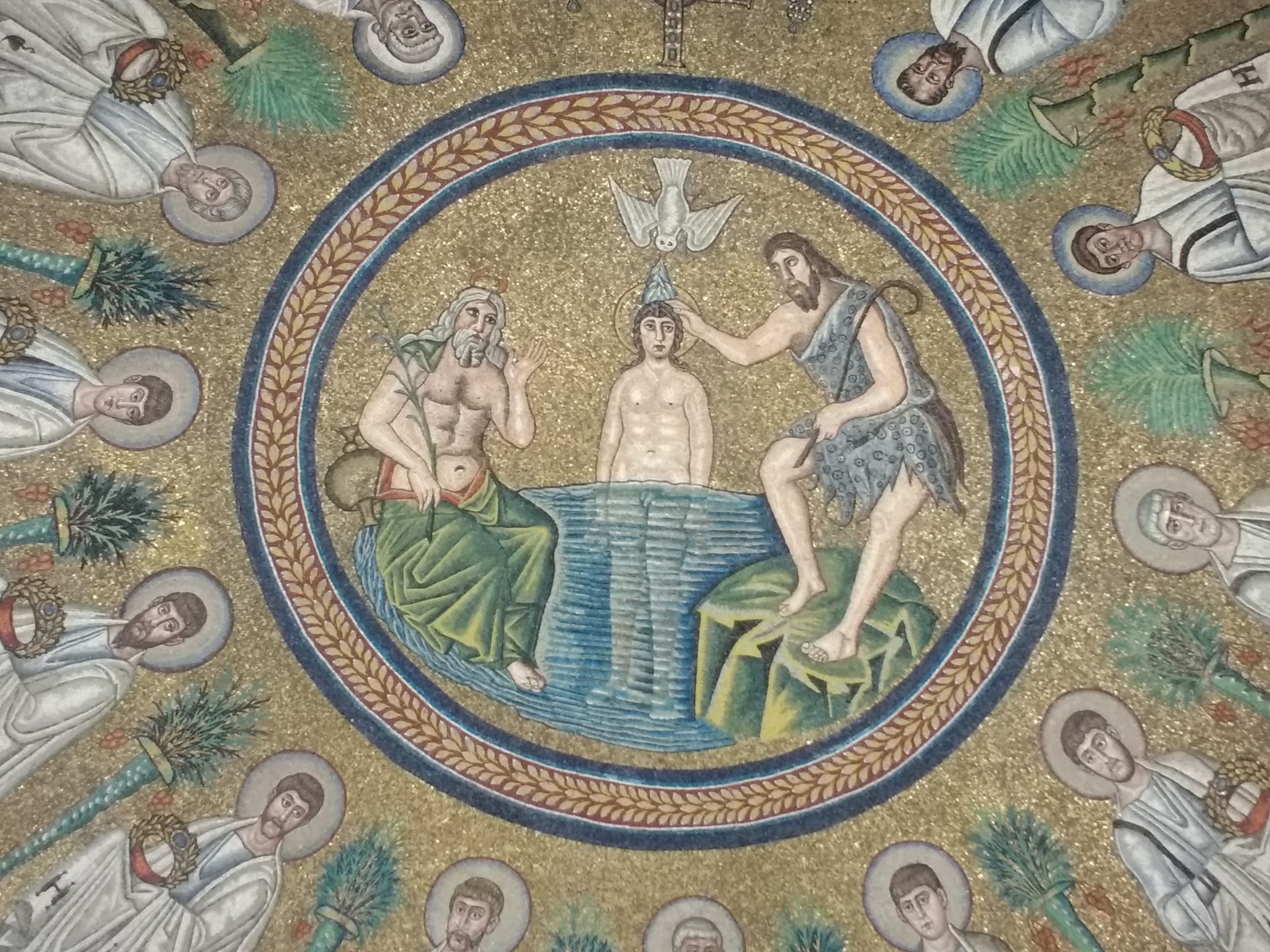
Next was our second baptistery, this time Battistero degli Ariani.
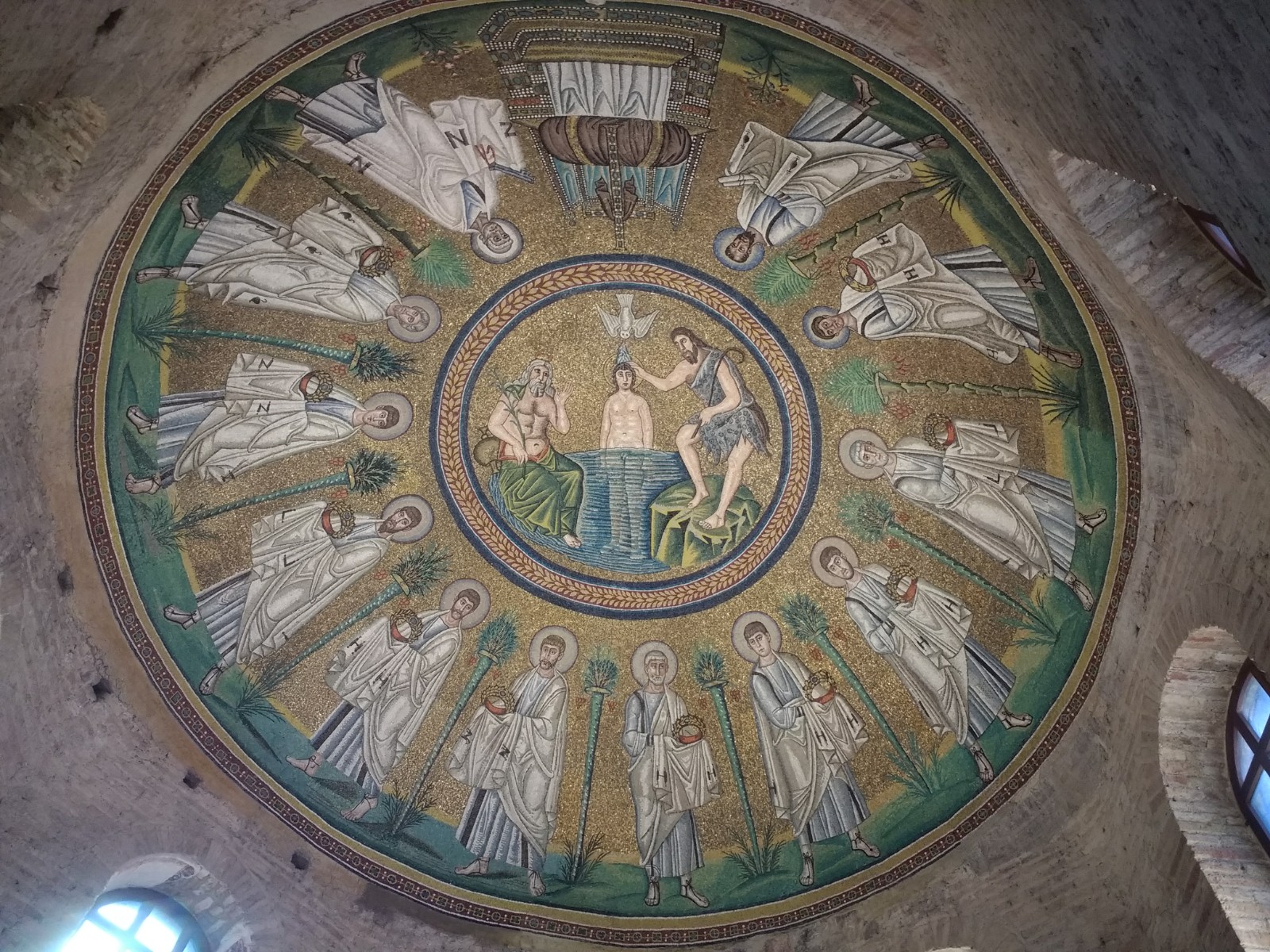
Ceiling, Battistero Degli ArianiChrist’s baptism, Battistero Degli Ariani
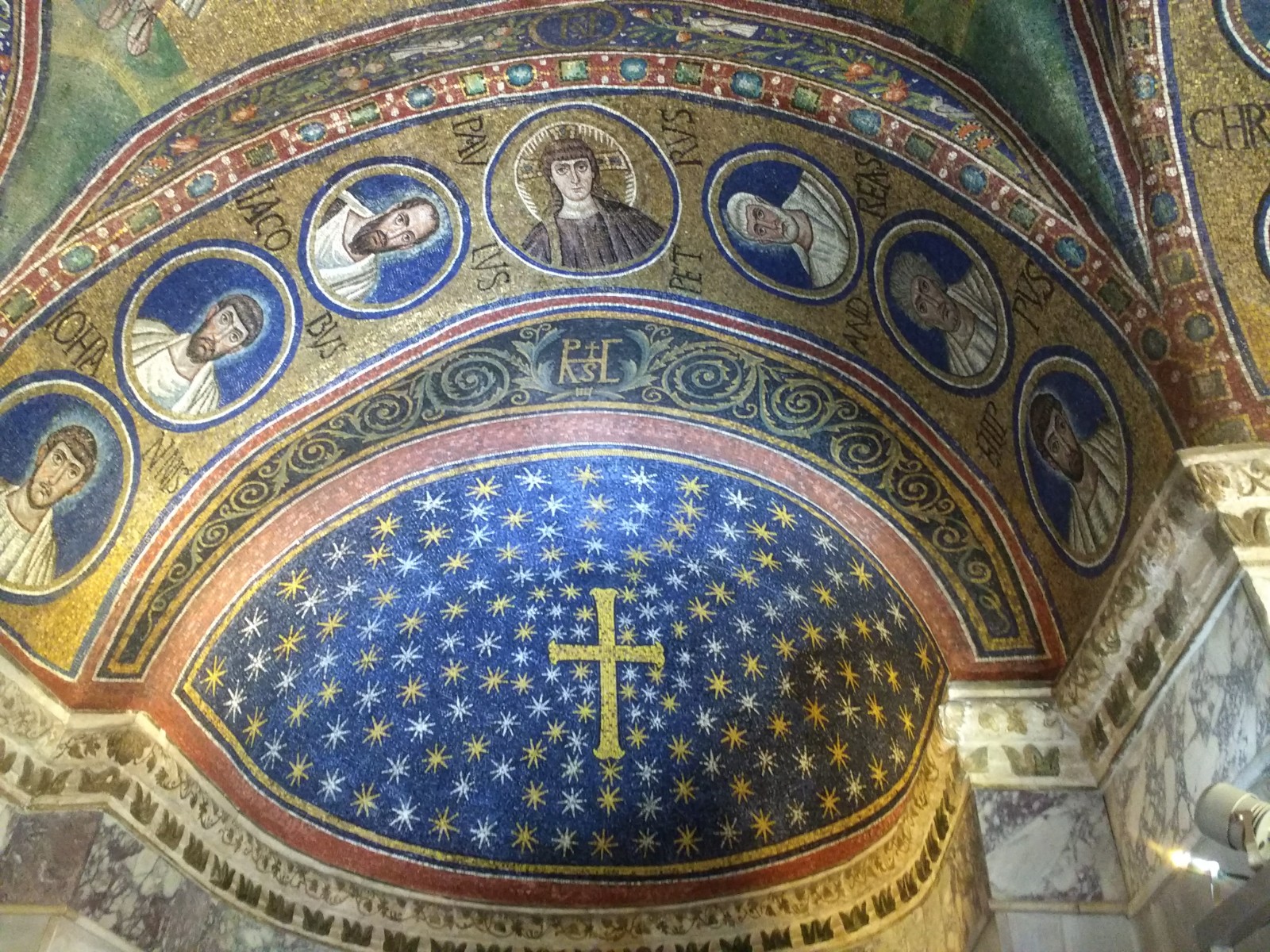
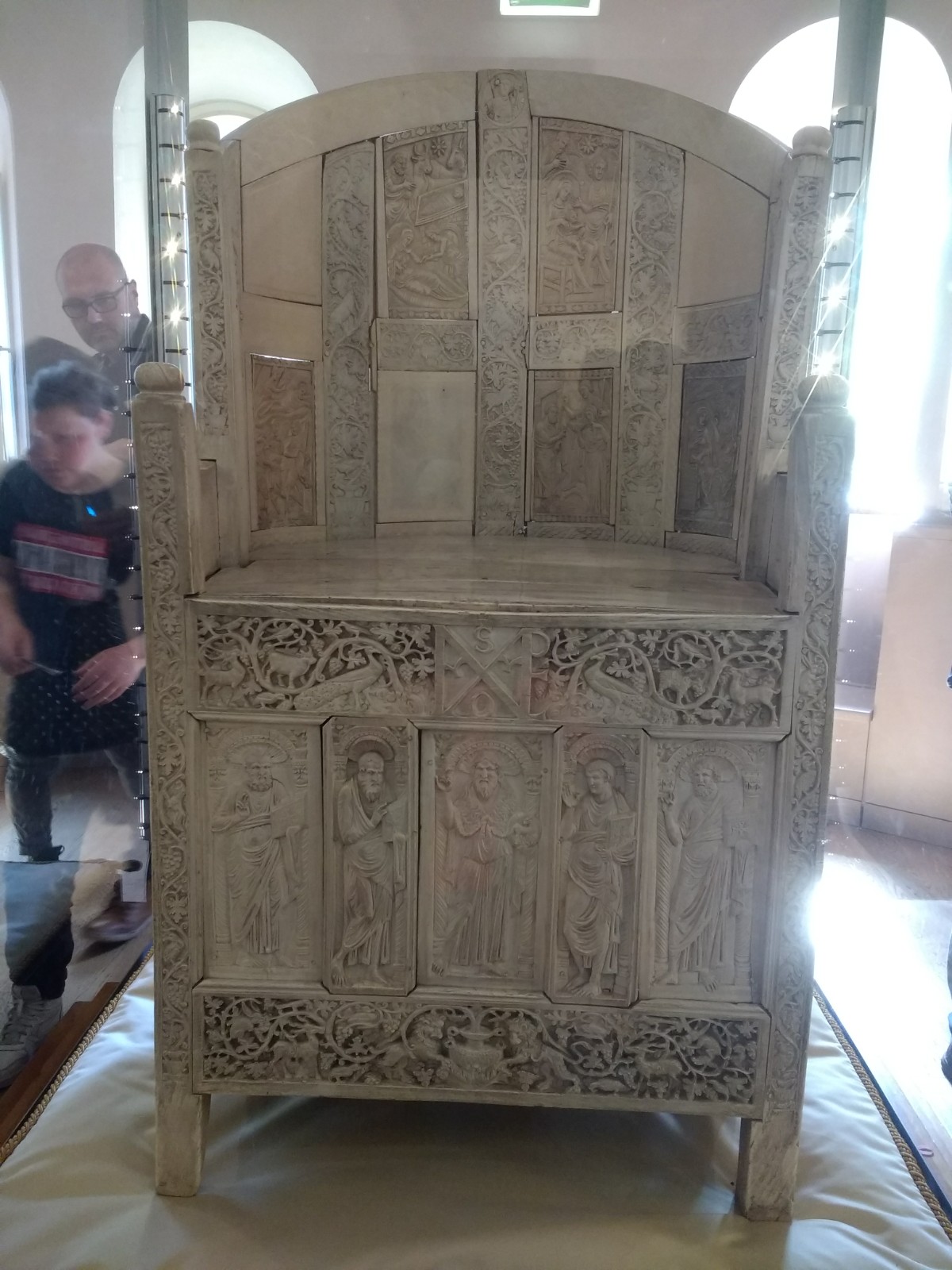
Our last stop for mosaics was the Archiepiscopal Museum with St Martin’s Church and one or two other exhibits.
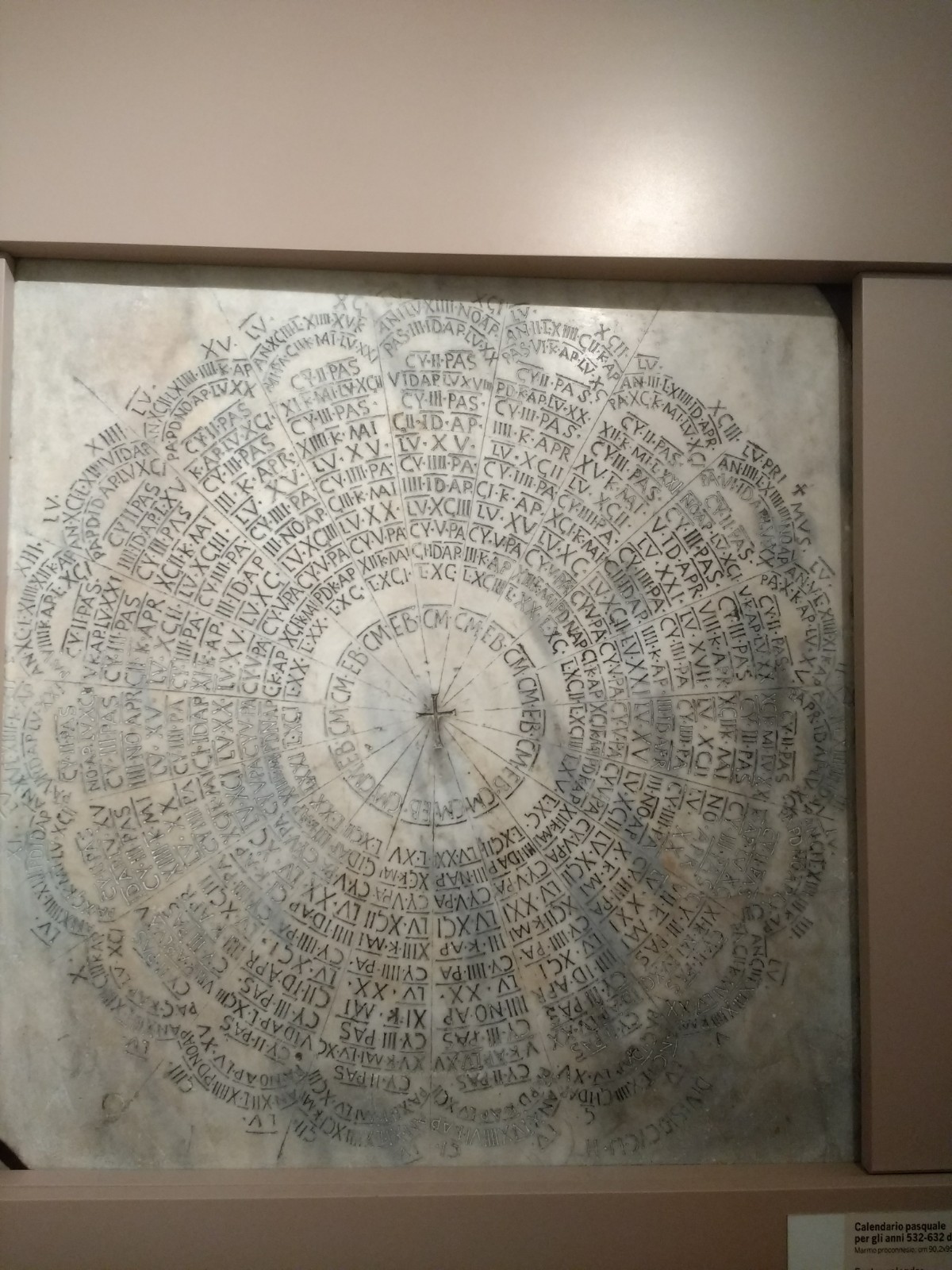
Ceiling, St Martin’s Church. There are those winged creatures again.Apse, St Martin’s ChurchIvory bishop’s throne, fifth century. I find it difficult to marvel at a thing like this, thinking of the poor elephants.Calendar for working out the date for Easter for the years 532-626
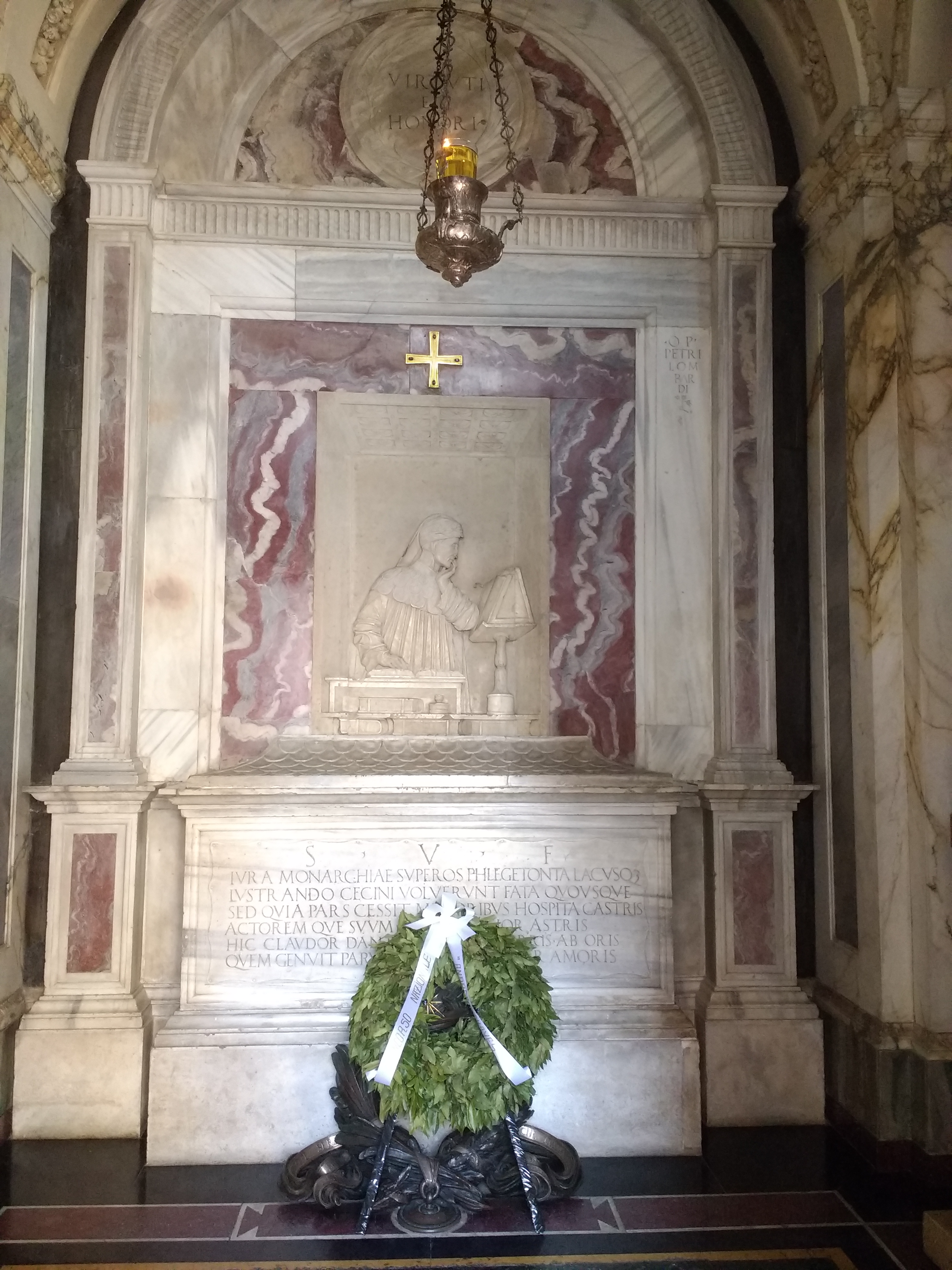
Our final stop was not to view mosaics, but to visit Dante’s tomb. This had the longest queue (I wonder if this had anything to do with it being the only free site).
Dante’s Tomb
After exile from Florence, Dante made his way to Ravenna where he died in 1321. The lamp is fed by oil given by the city of Florence – to make amends possibly.
We’ve now been travelling for over 13 weeks and we’ve been asking each other if this is what we thought our year of travelling in Italy would be.
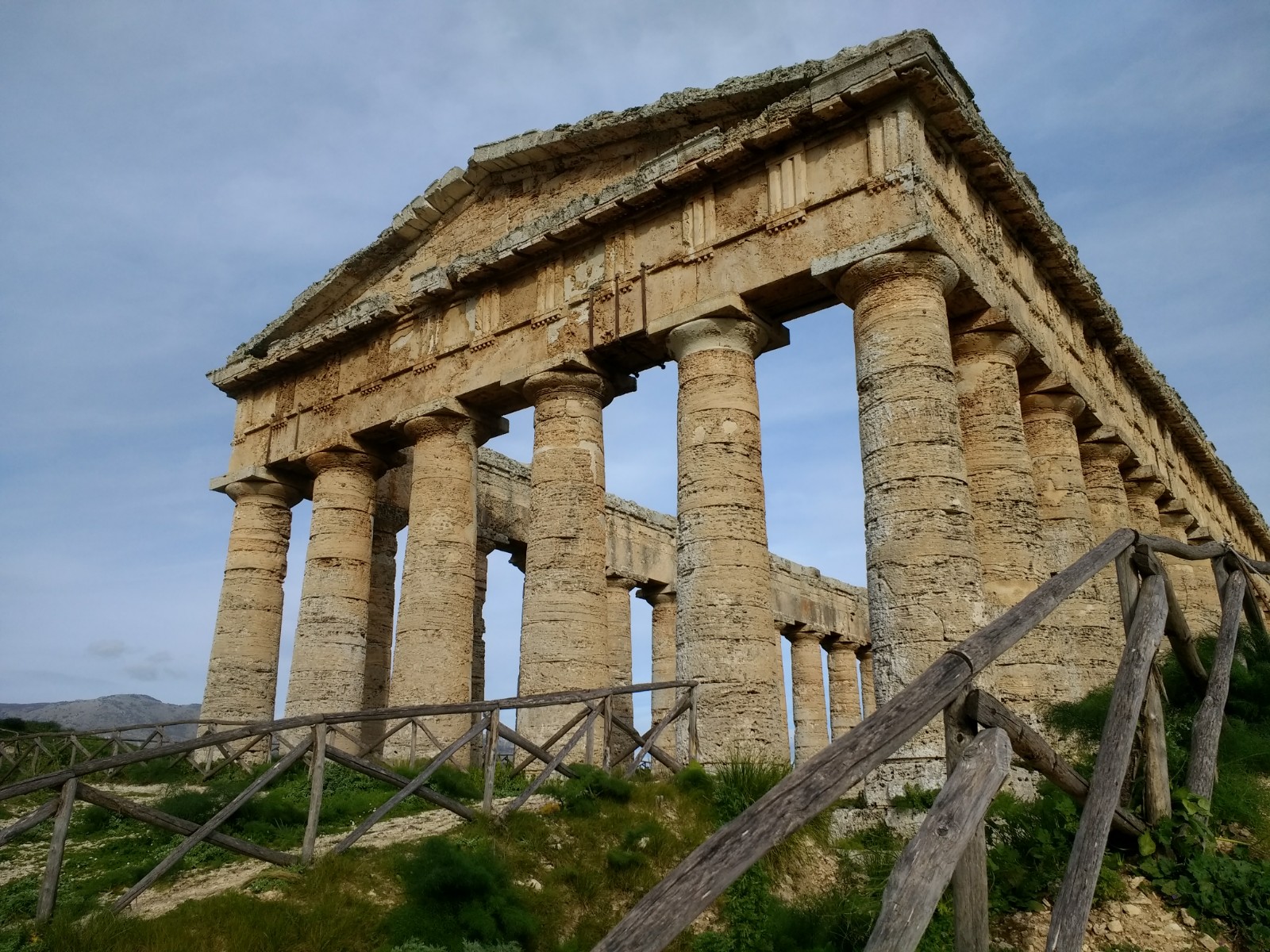
Greek Temple at Segesta in Sicily
The answer is no! I didn’t think our days would be so full, and I was concerned that away from friends, volunteering at Leith Hill Place, maintaining our house and garden, the Arts Society, local walks, researching my family tree and so on, I might be bored. I packed a sketch pad and pencils which have not been used (only space precluded me putting in cross-stitch projects as well).
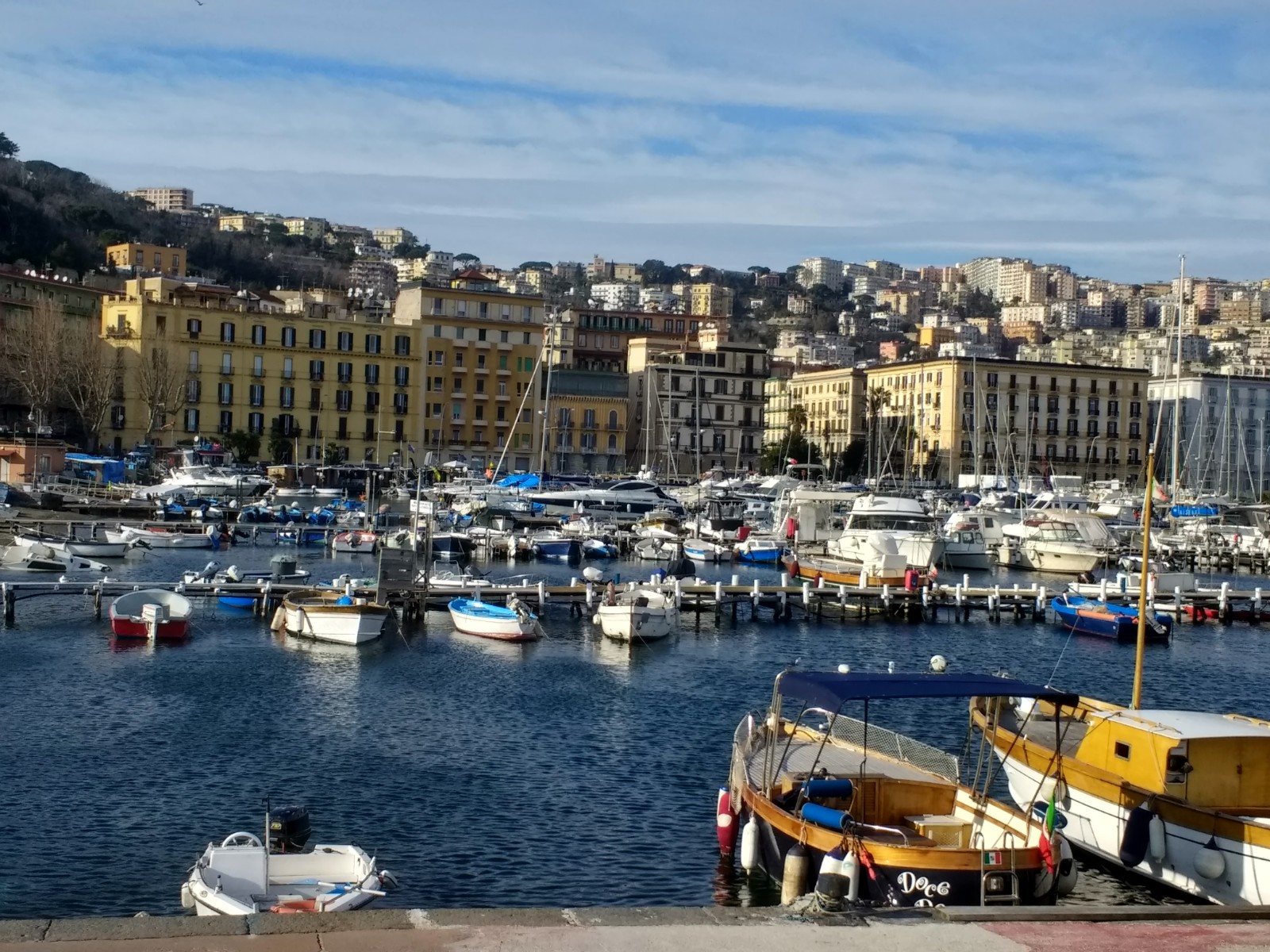
Marina in Naples
Although we’ve had lots of gloriously sunny days, it has been cooler than we imagined, and a couple of times the UK has been warmer (the Easter weekend being a case in point).
I didn’t know that keeping the blog would be so enjoyable. I’m finding that it’s a good way to stay in touch with friends and family too. (Hint: if you read the blog, but haven’t left a message, then please do, even if I don’t know you. If you prefer, you can e-mail me privately from the blog site).
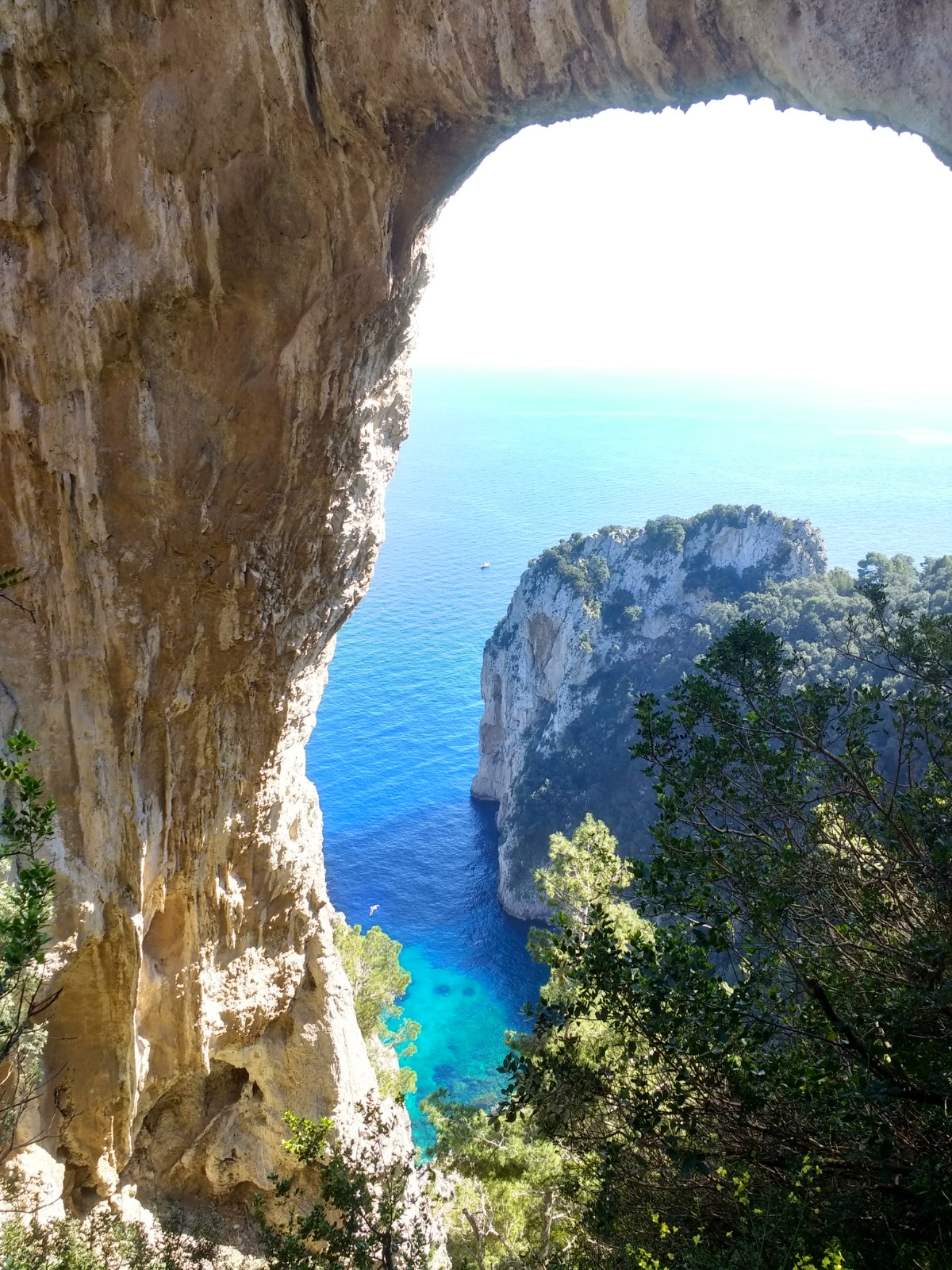
Arco Naturale, Capri
We’ve loved everywhere we’ve been, but of course we have some favourites. Mine is Capri, and if I won a lot of money on the lottery (difficult, as I’ve only ever once bought a ticket, I think) I’d buy a house there to use in April and May and again in September and October.
We really liked Naples too, despite the dirt and mayhem. If we were to go back to Naples, we’d choose a slightly classier area of town to stay in.
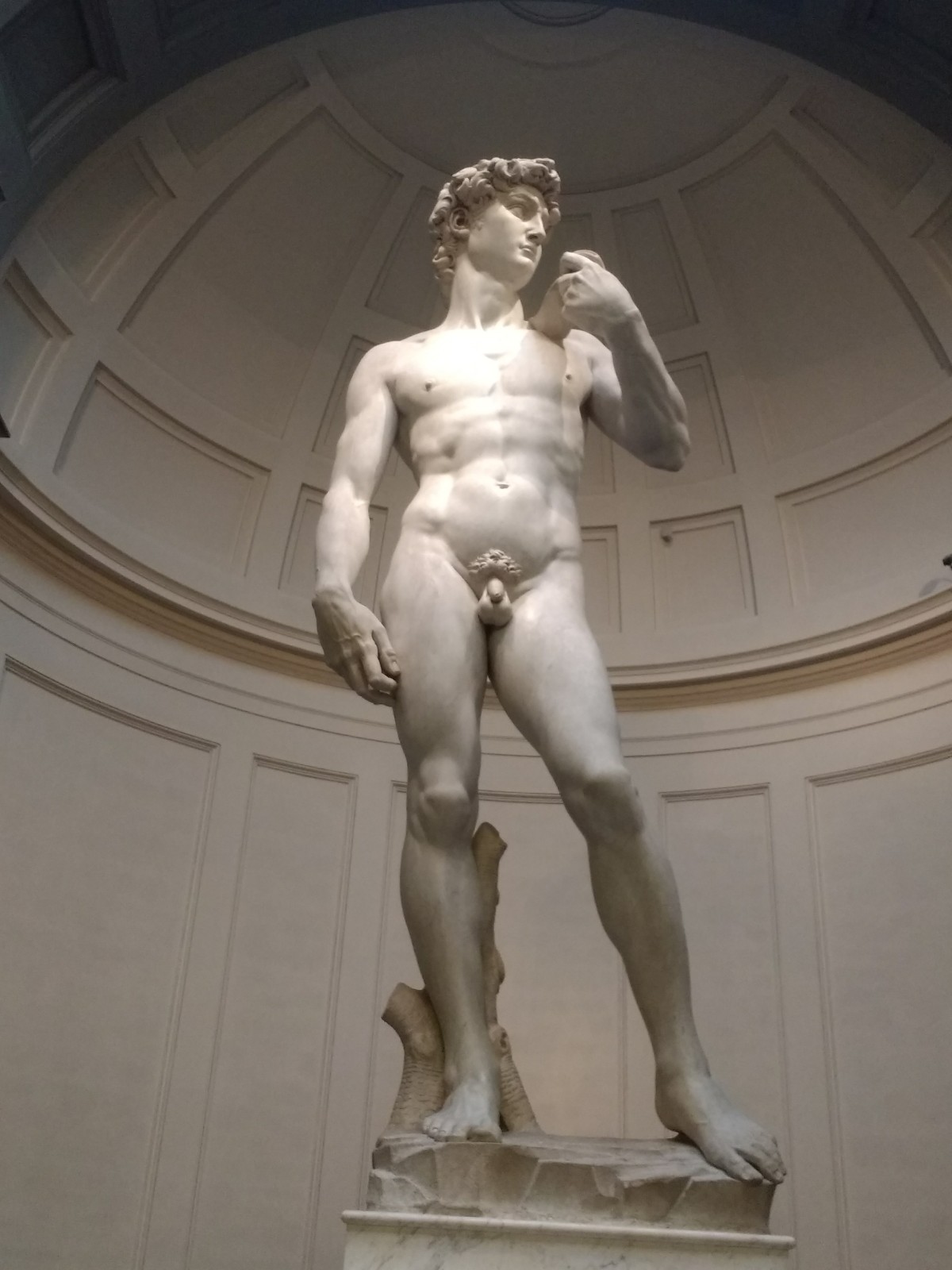
Michelangelo’s David
We have a long stay in Bologna, eight weeks in total, as we are starting a four-week course in Italian next week. Hopefully the little grey cells don’t find this too much of a challenge.
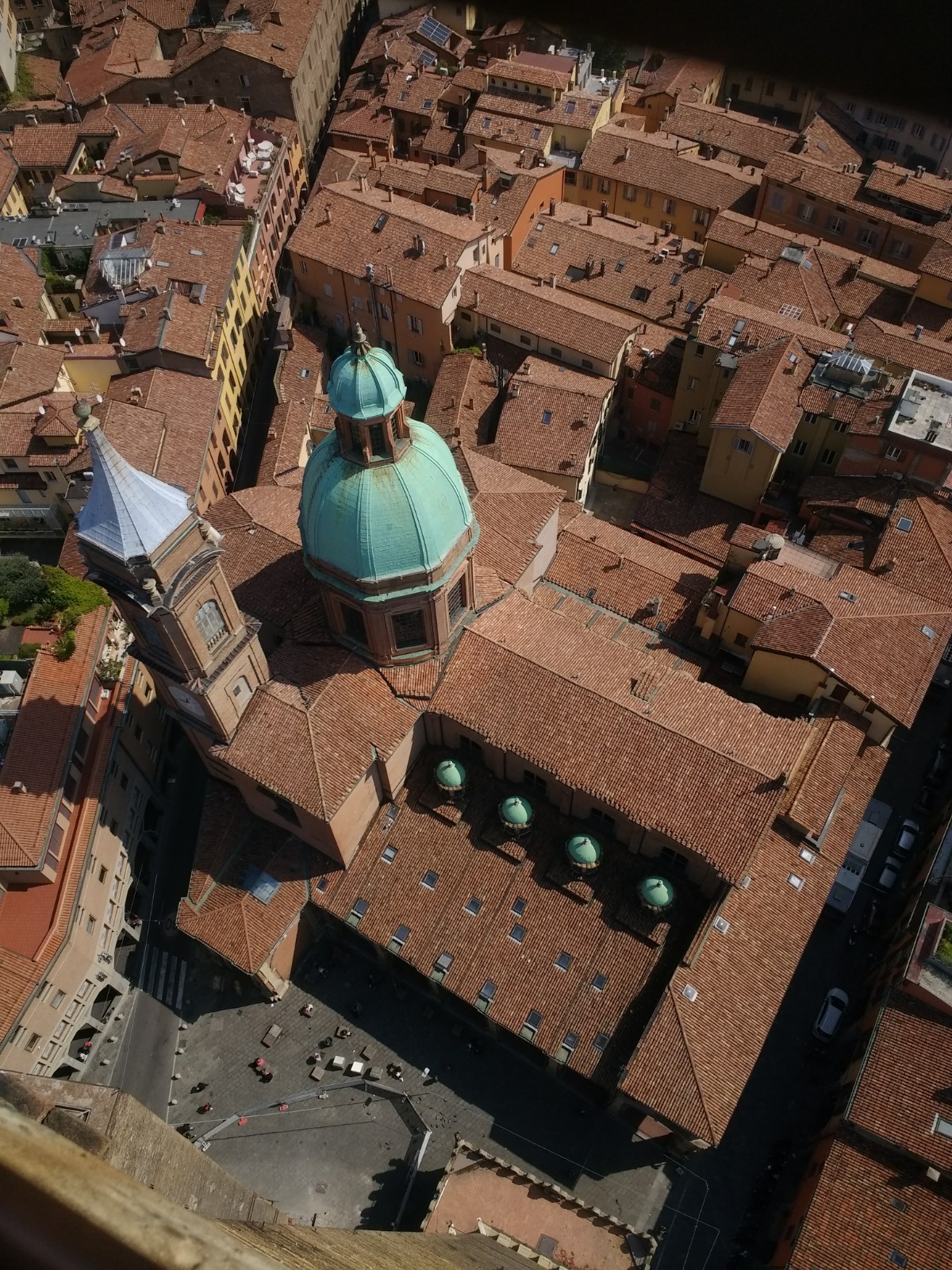
View of Bologna
After Bologna, we are going on to La Spezia (mainly to explore the Cinque Terre) and then Lake Garda. In August, we are returning to the UK for a month so that, apart from catching up with friends and family, I can visit the dentist (I lost part of a crown soon after we left the UK. It hasn’t given me any problems, but I’d rather my dentist took a look at it) and Mark can donate blood which he needs to from time to time. The Italian blood service won’t accept blood if you were in the UK during the ‘mad cow’ years.
In September we are thinking of returning to Italy, starting in Milan, to complete our year.
We are no nearer knowing what we will do after our year in Italy than we were back in January. Maybe more travelling if we can still keep within the budget, who knows?
Visiting the Archaeological Museum here today, we decided to start with the Egyptian section, but got no further through the Museum than that, as it was excellent (good job with our tickets we can come and go as many times as we like).
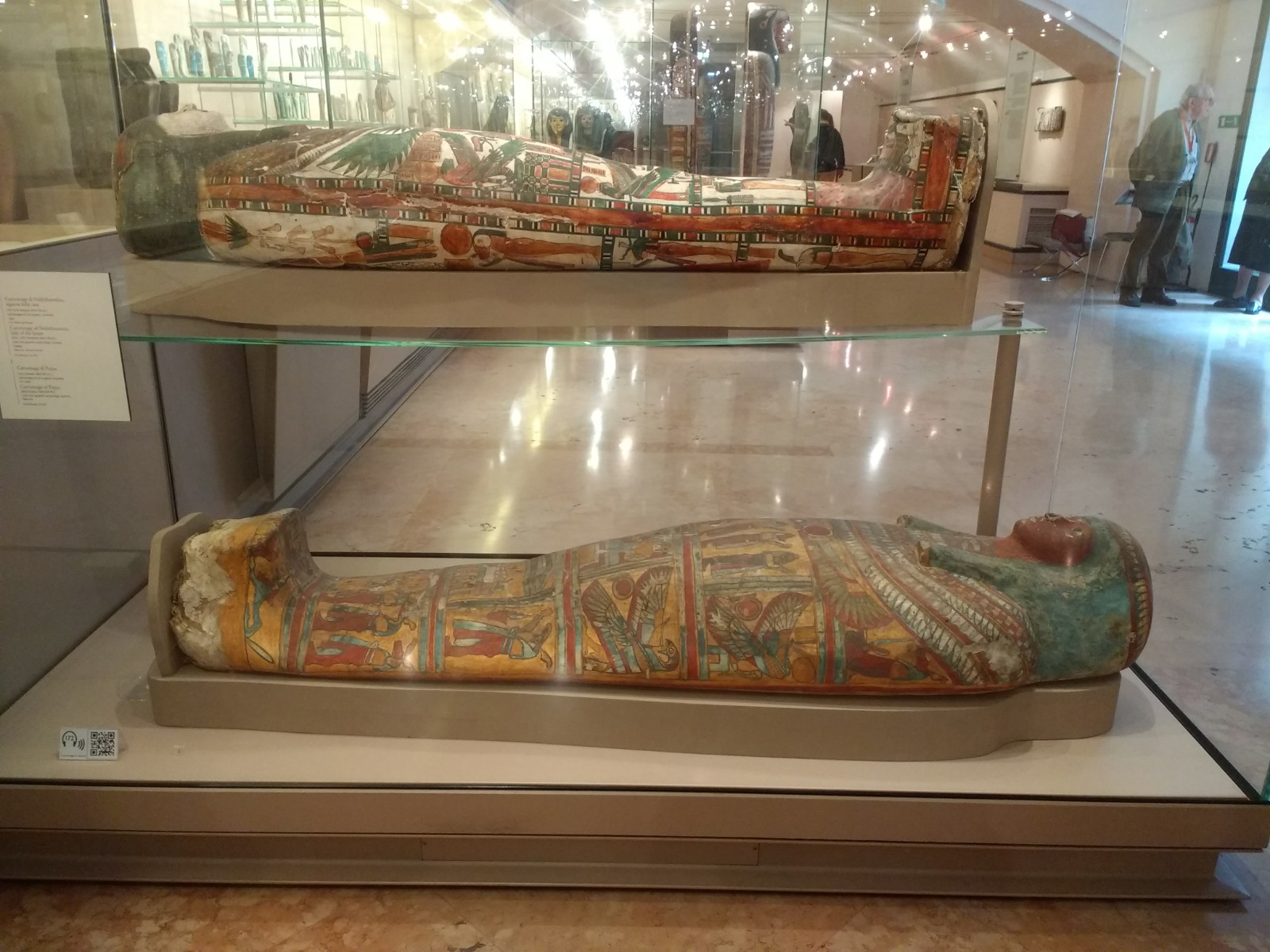
Top mummy, 8th – 10th century BC, Bottom mummy, 6th – 7th century BC
The exhibits were in such good condition, and the colours were so bright, that we wondered if they had been touched up, but they hadn’t.
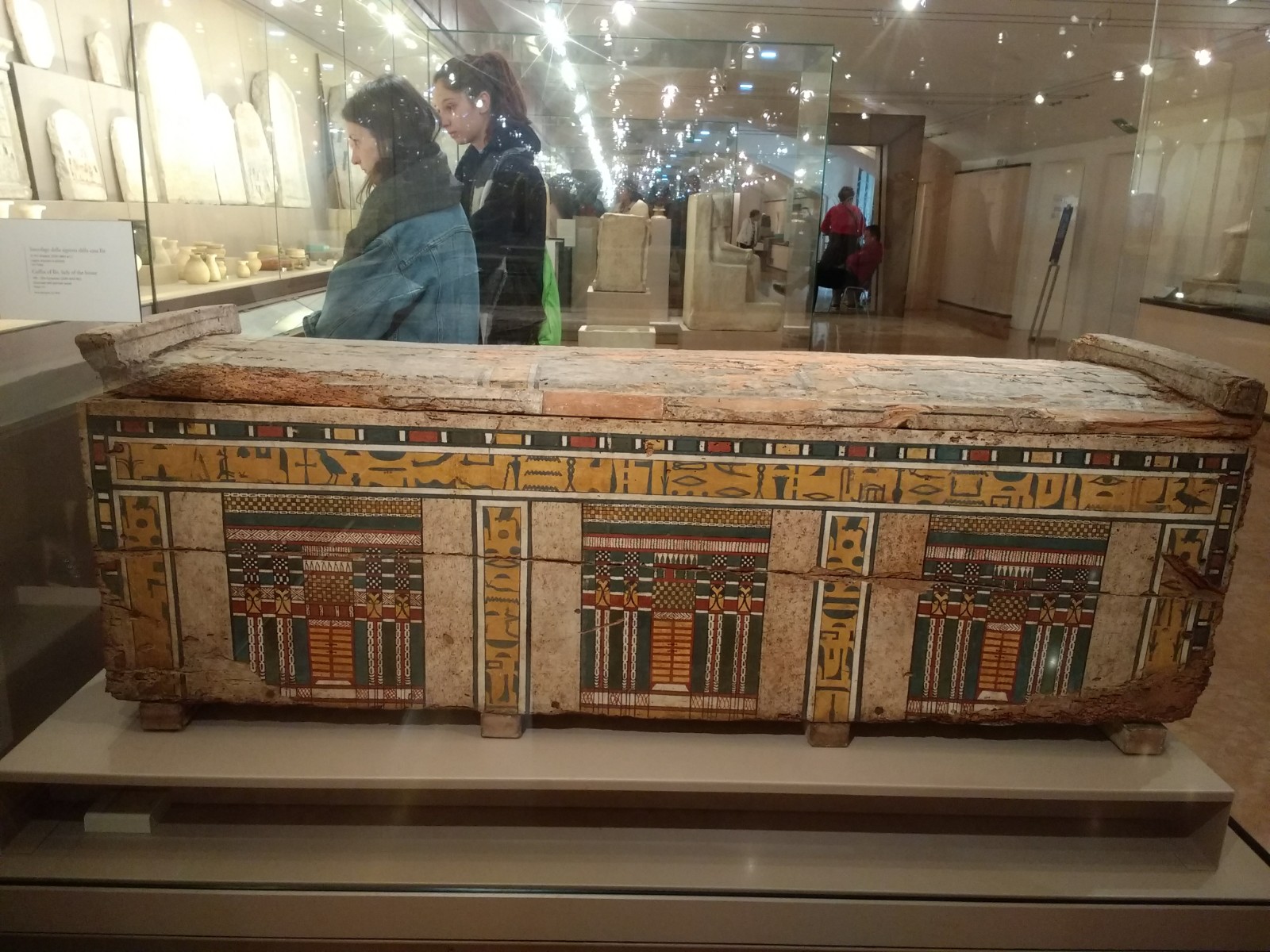
Sarcophagus (sorry, no date)
Most of the exhibits come from the collection of Pelagio Palagi, successful artist, architect and interior designer, who left them to the municipality on his death in 1861.
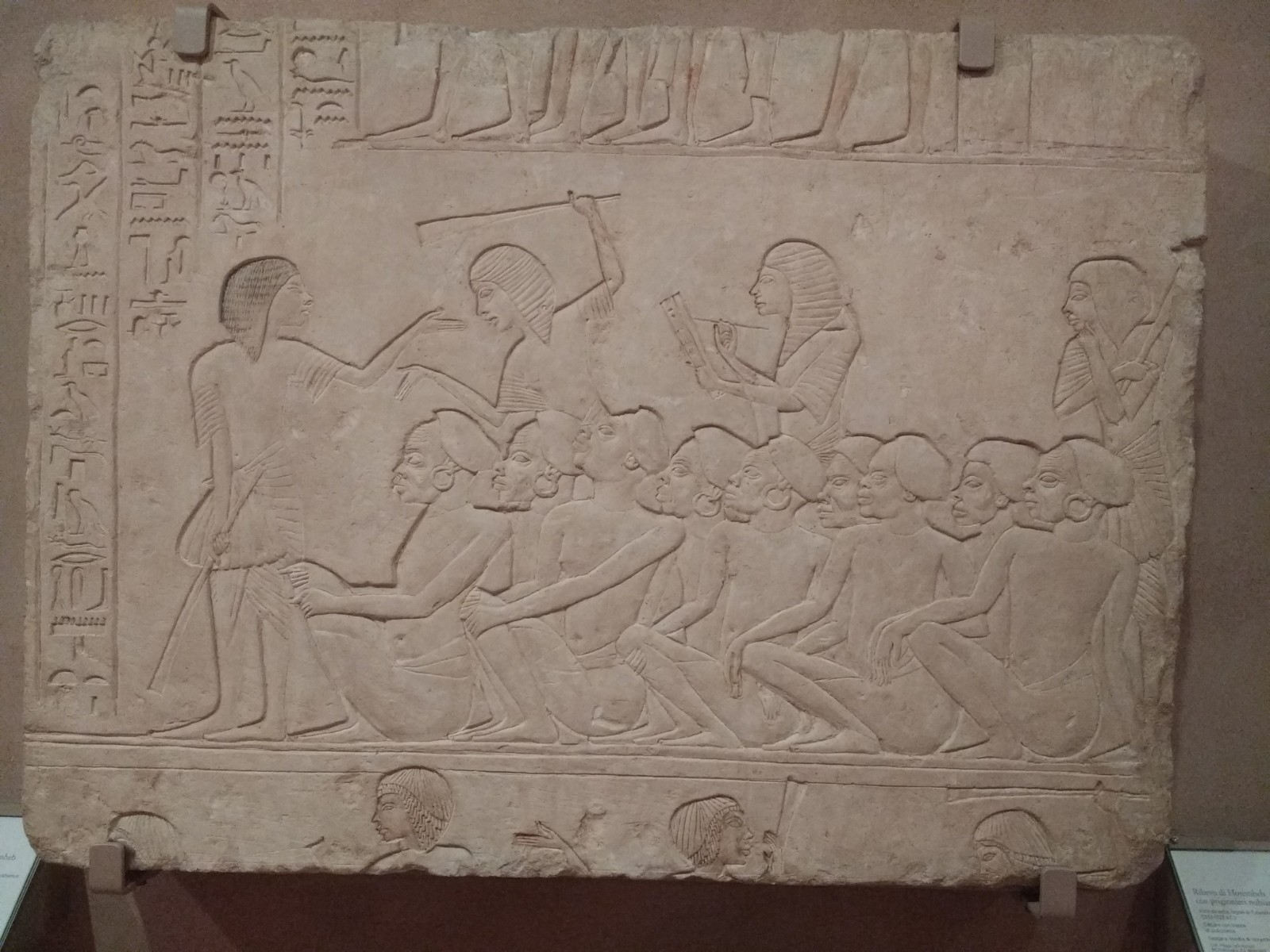
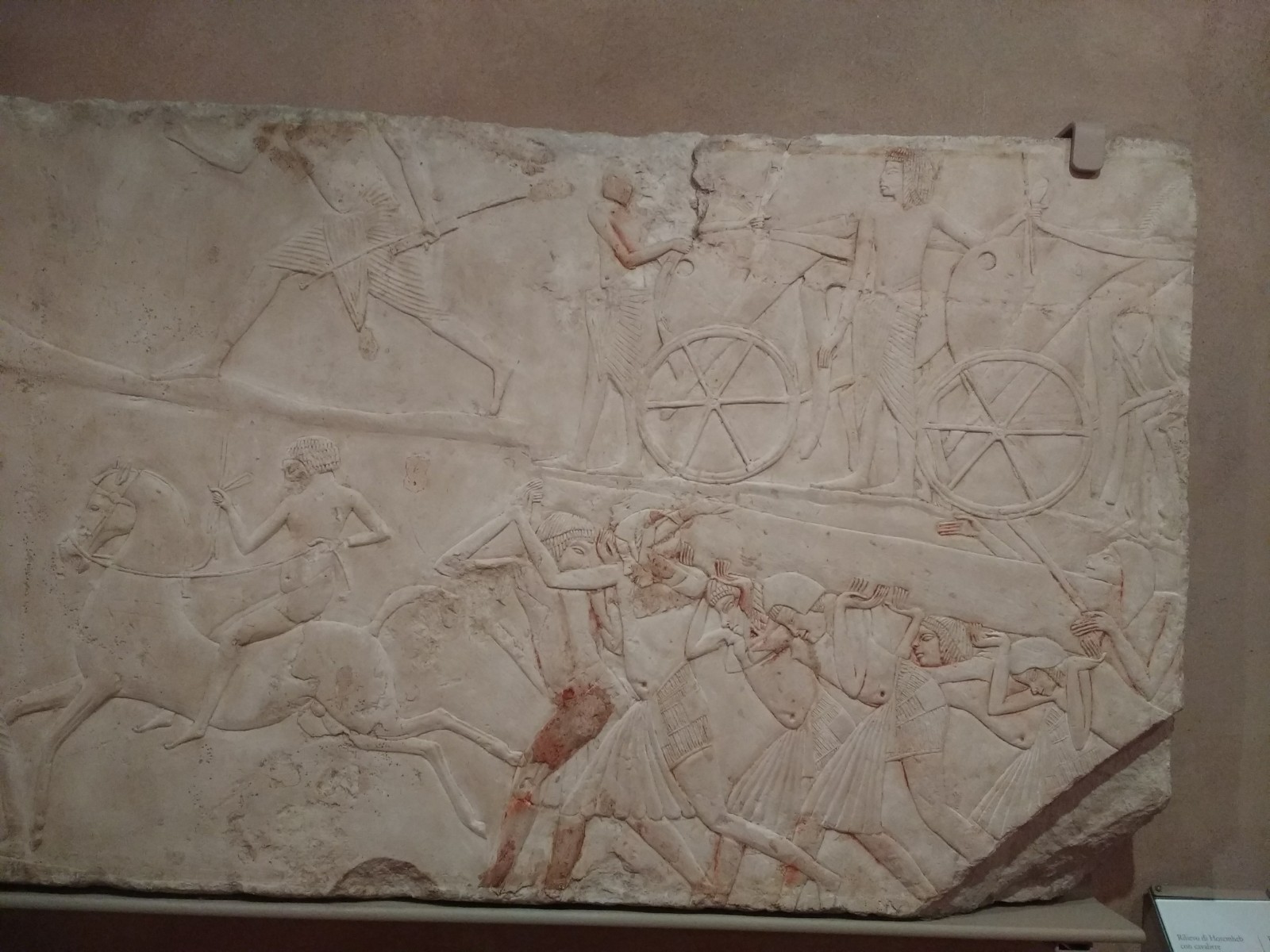
We were fascinated by relief panels from tombs, in particular two from the tomb of an individual named Horemheb from the fourteenth century BC. The images were so clear I wished I could take a wax rubbing, but as Mark said, that would probably get me arrested.
Relief on Horemheb’s tomb showing Nubian prisoners
The wheeled vehicle in the next panel intrigued us, thinking that wheels hadn’t been invented then, but I now know that Egyptians were first using wheels on carts from the sixteenth century BC, two hundred years before this panel.
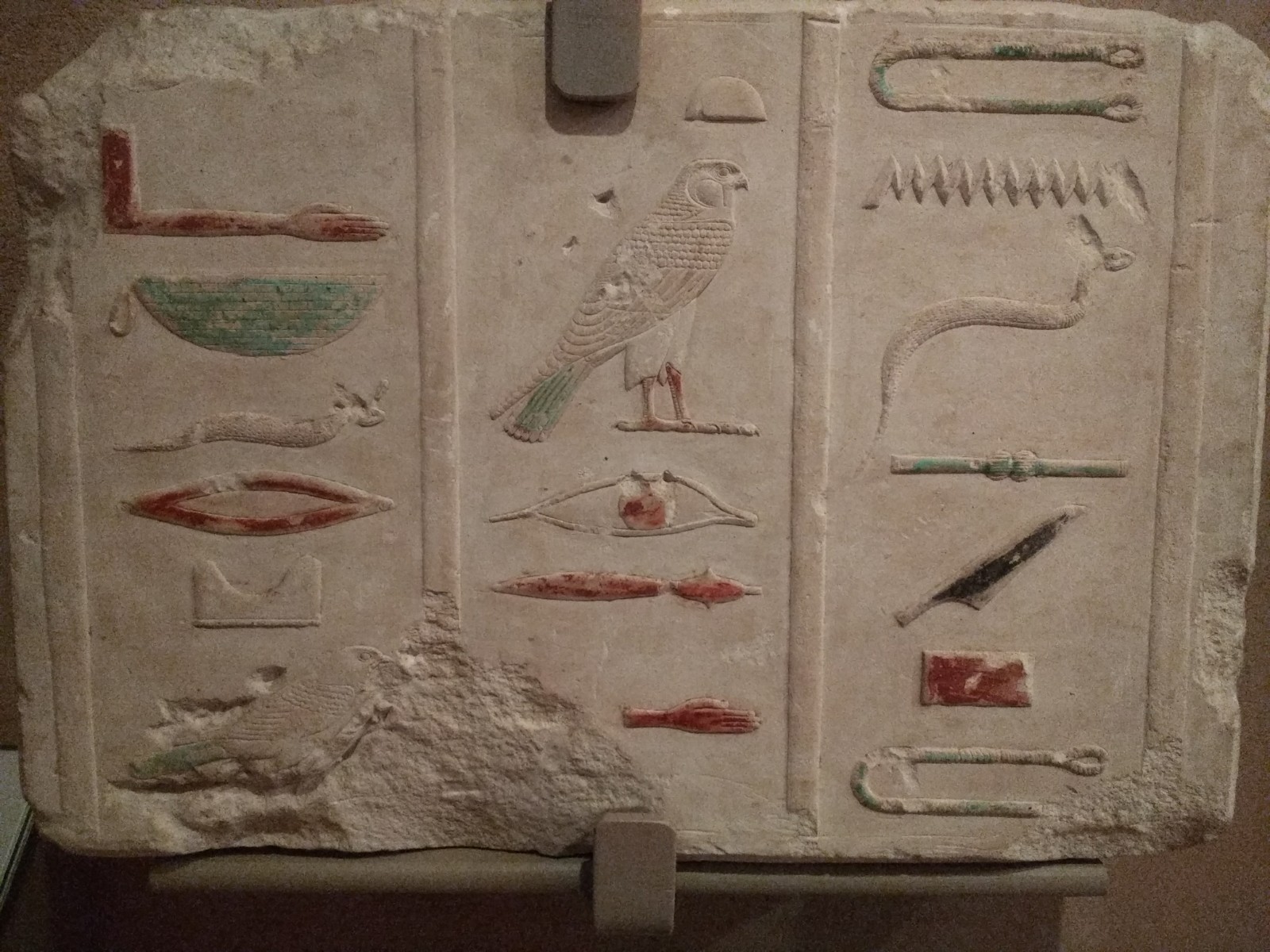
Relief on Horemheb’s tomb showing horse riders and wheeled vehicles. Relief with hieroglyphs spelling the name ‘Horiraa’
Lastly, we saw some cat mummies. This reminded me of the time I had a year 3 class and we were learning about Ancient Egypt. The video that we were watching had a talking cat mummy. This was before computer technology, so to make the cat’s mouth move, they put film of an actor’s mouth, blacked up, on top of the cat mummy’s body. The effect was scary (one little girl would only watch it with the TA at her side) as the lips, and teeth, were very uncat-like.
We are now determined to visit the British Museum when back in the UK. However good it is though, I am certain it won’t be as uncrowded as this one.
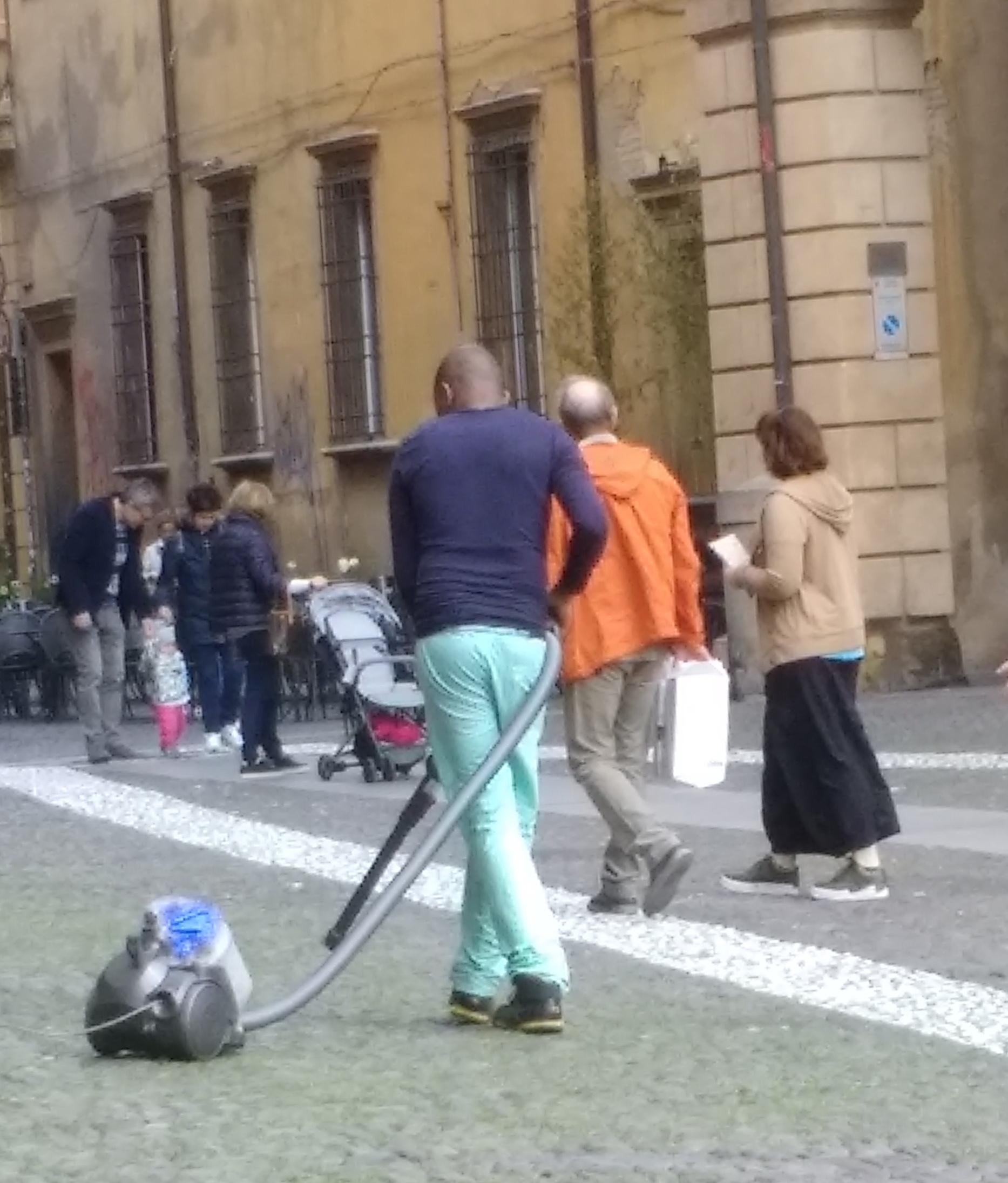
Before I go, something to make you chuckle.
I can only assume he was anxious to pick up all the fag ends from the night before so he could make the area in front of his restaurant as pristine as possible, but really? I don’t think the vacuum cleaner will last long.
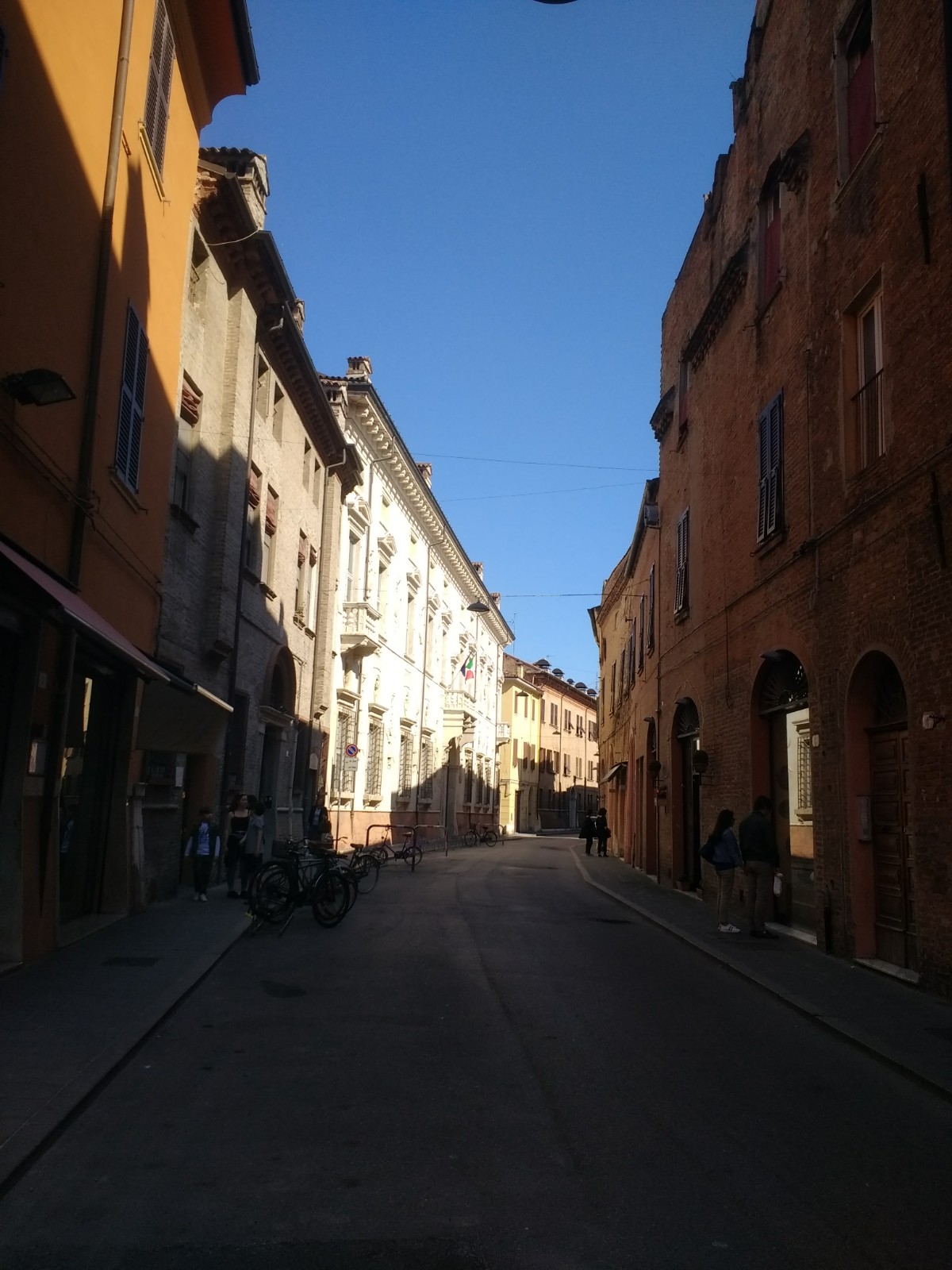
Walking down the tranquil streets of Ferrara, only a thirty-minute train ride from Bologna, one can easily forget the pictures beamed onto our television screens seven years ago in the aftermath of the earthquakes in the Emilia-Romagna region.
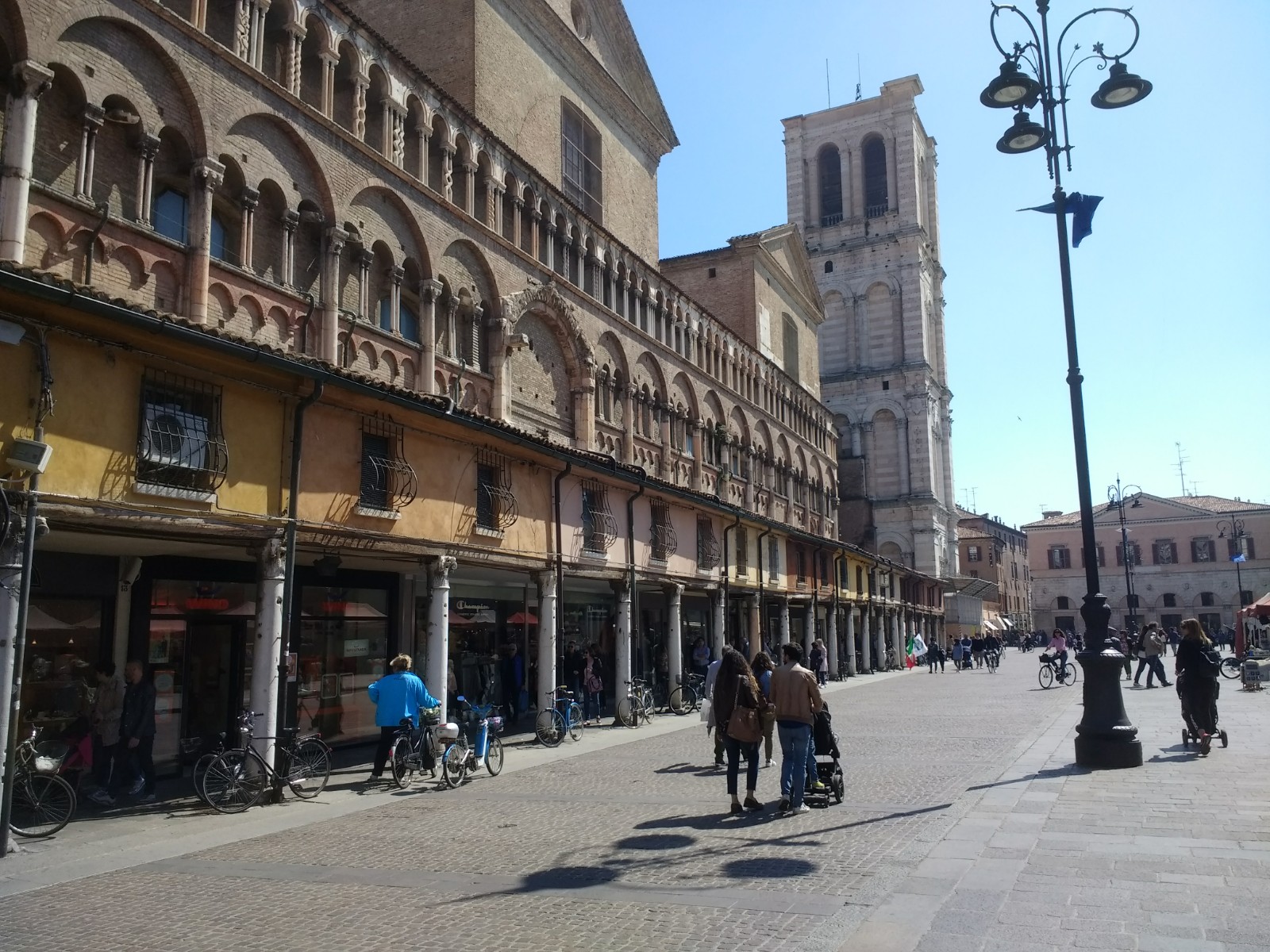
A street in Ferrara
The city of Ferrara is flat, bicycles are numerous and many of the streets car-free. On a sunny April Saturday, the mood was relaxed and carefree.
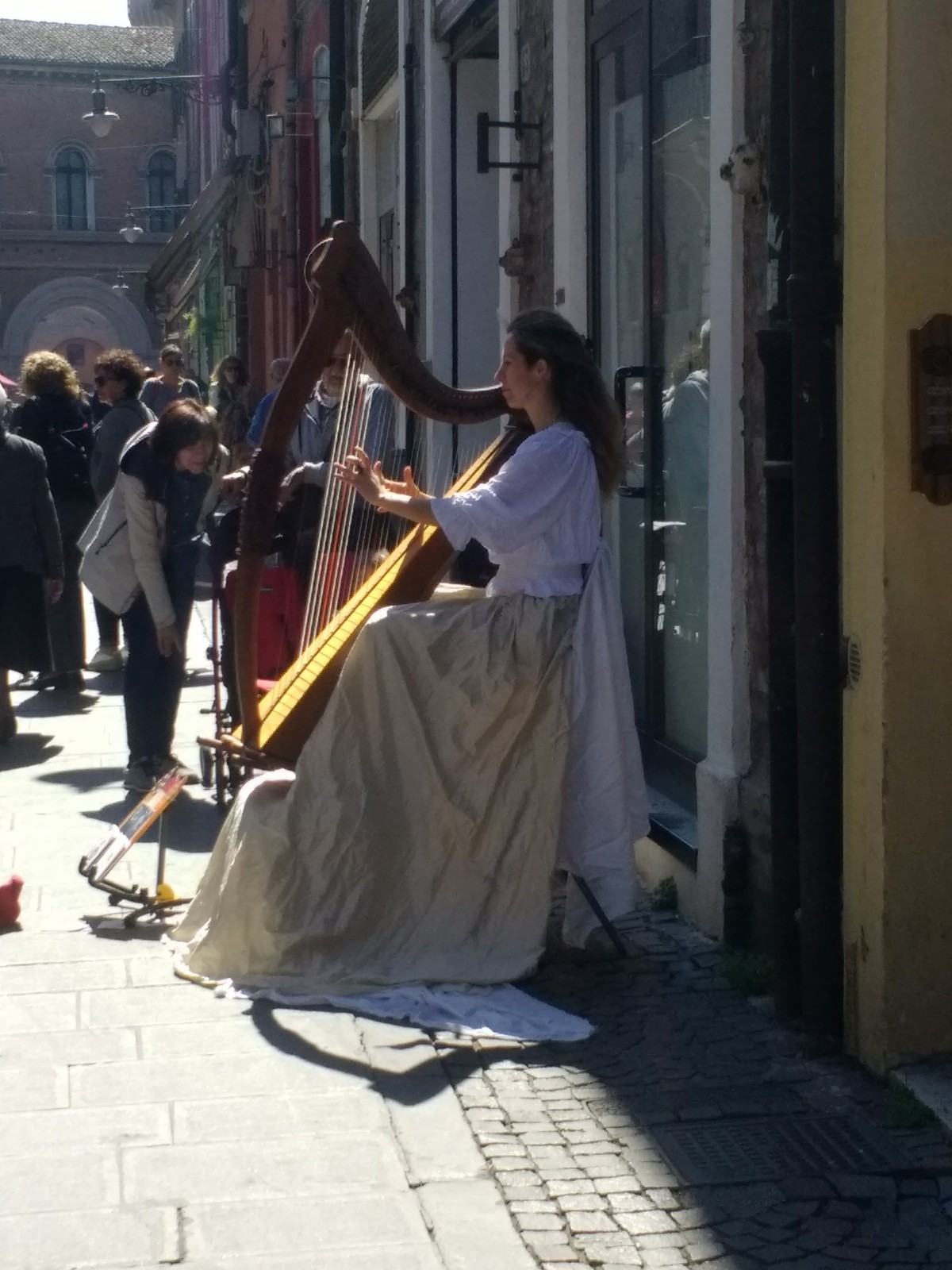
A more highbrow kind of busker in Ferrara
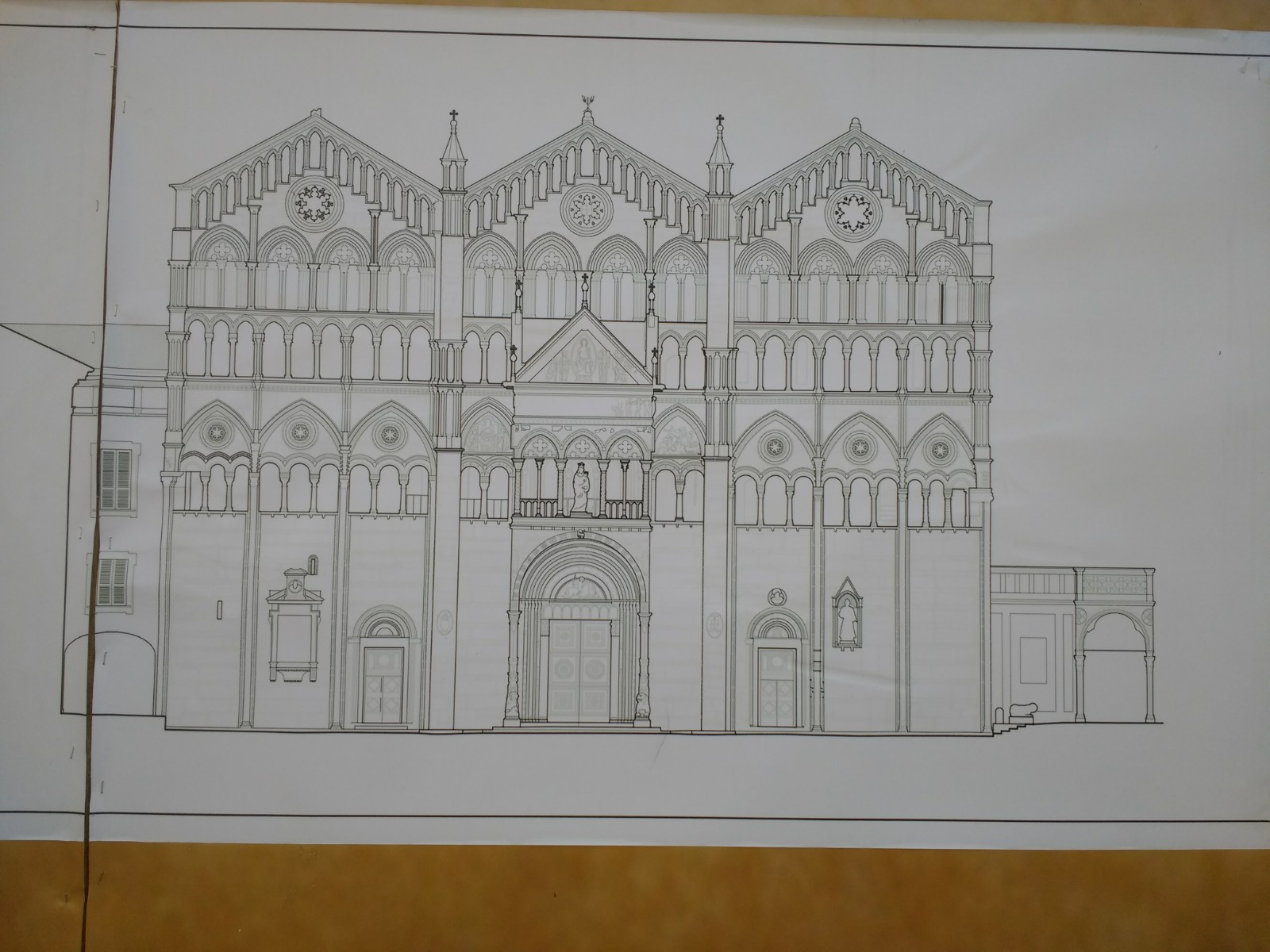
Thinking we would make the Cathedral our first stop, we were surprised to discover it closed. It seems that restorative work following the 2012 quake has now reached a crucial stage, and the space inside is unavailable to worshippers and visitors until September this year.
For now the Cathedral is covered by a curtain, but we have a picture of how it normally looks.There has been a parade of shops running along one wall of the Cathedral since medieval times.
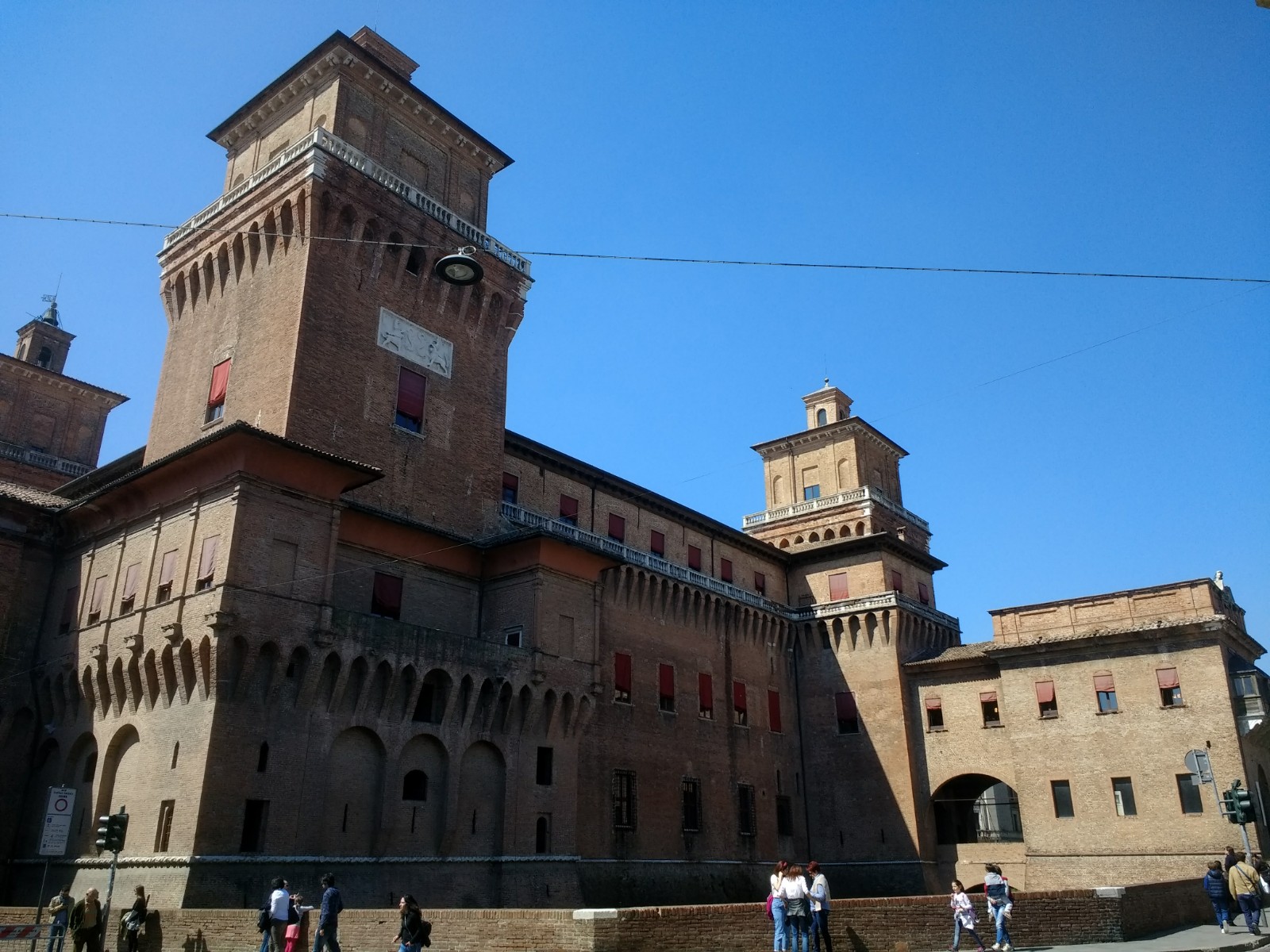
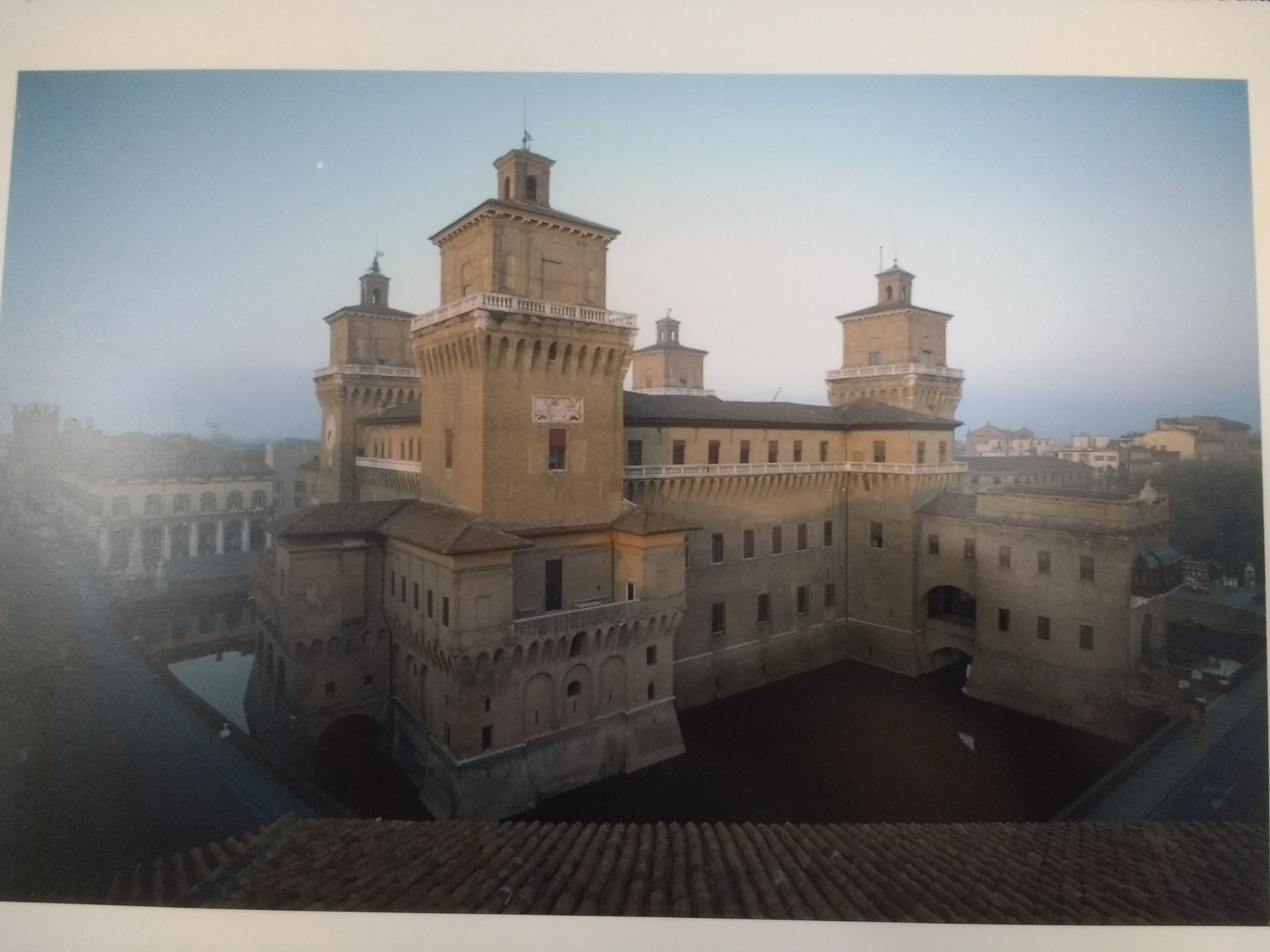
We next visited Castello Estense, a moated medieval castle built by the Este family, the same family that owned Villa d’Este outside Rome, which we visited in September.
Castello EstenseA more complete picture of the castle
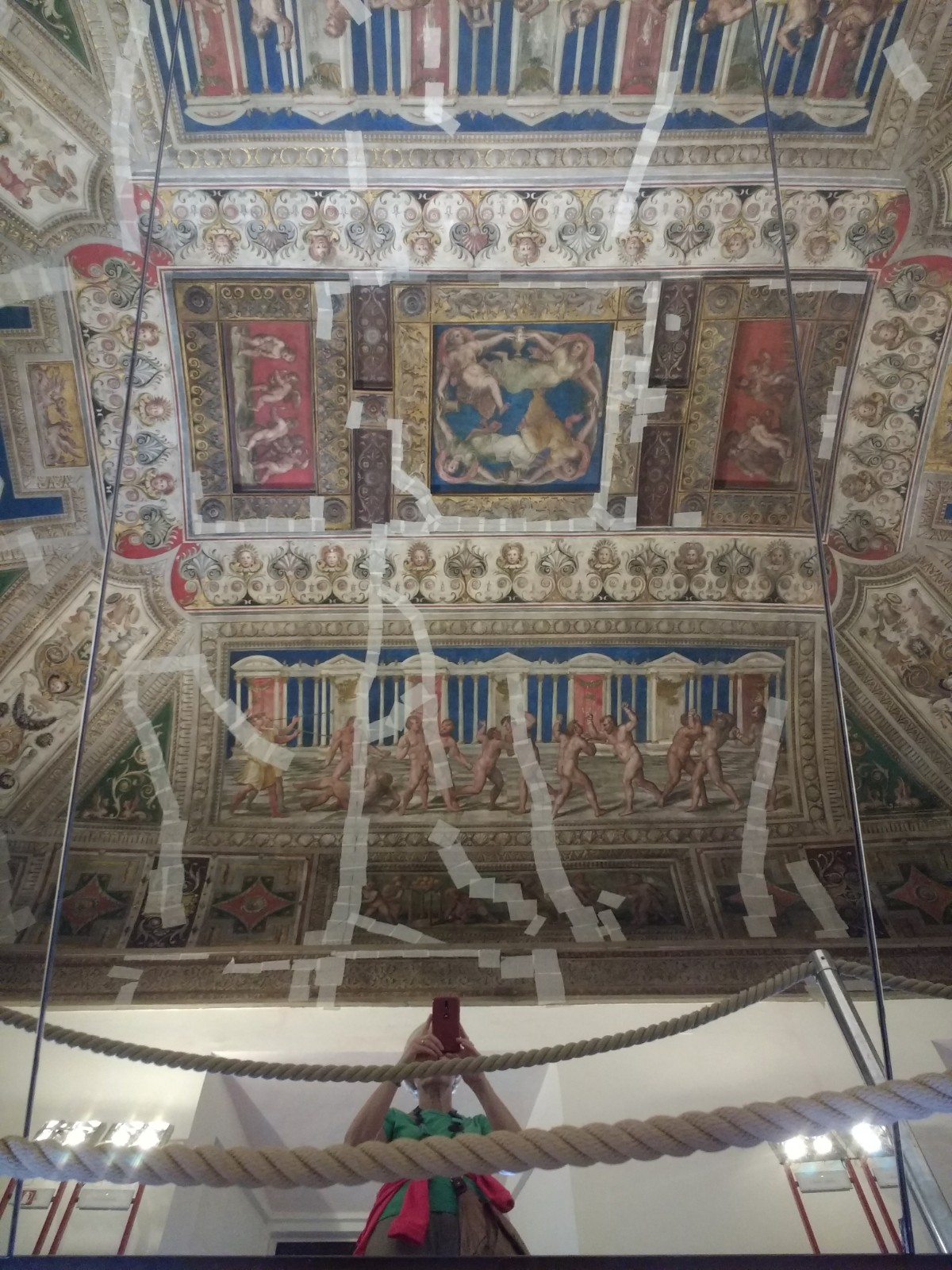
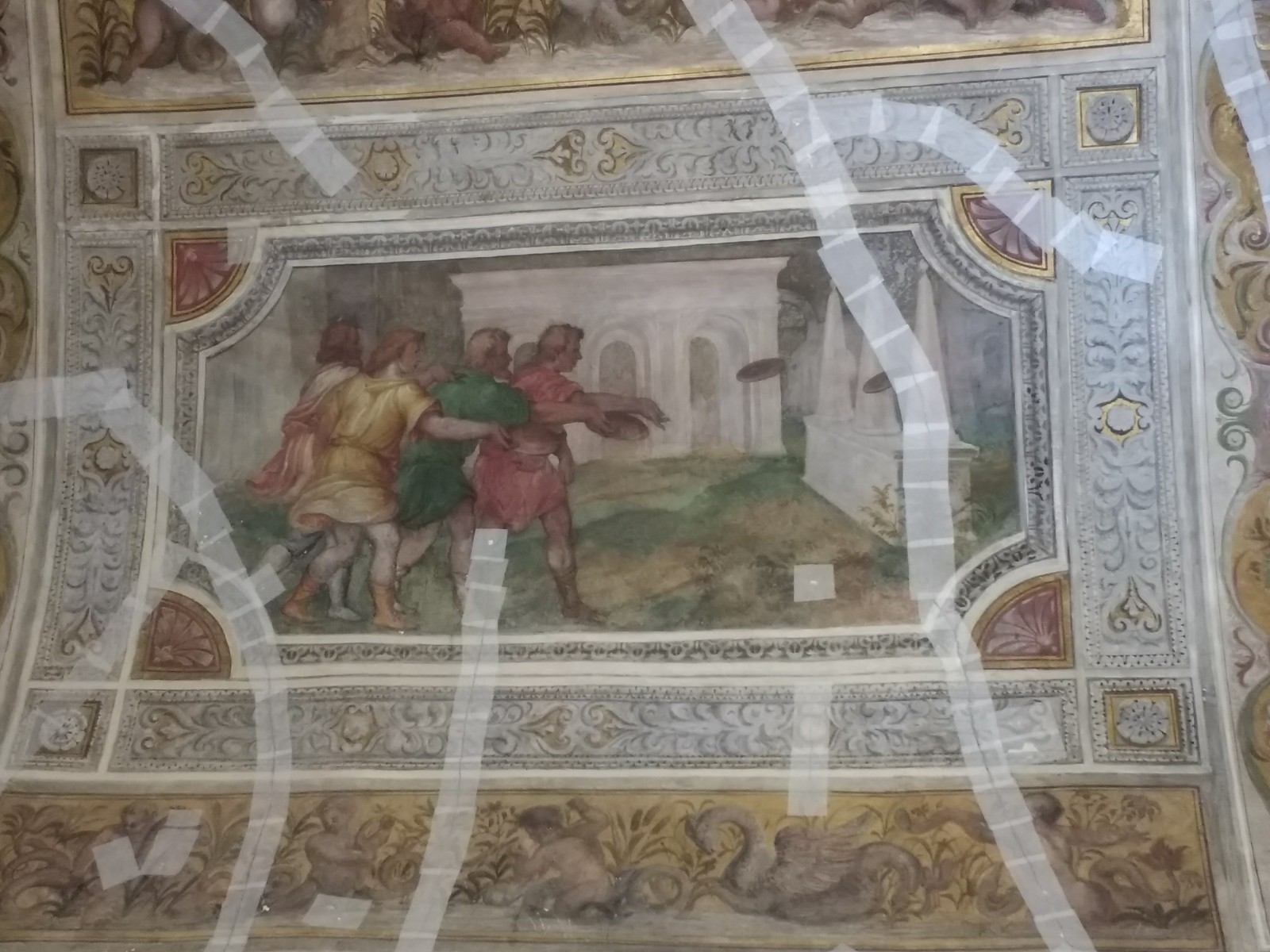
One striking feature of the castle are its many beautiful ceilings, despite what looks like masking tape crisscrossing them.
Mirrors at ground level mean that you don’t hurt your neck in looking at the ceilings.
Of course, this is not masking tape, but ‘washi’ paper and is part of the restoration work following the earthquake. However, I could find no explanation as to what this process entails.
This picture, part of a series showing sporting activities, shows people throwing a discus.
Two quakes, measuring 6.1 and 5.8 on the Richter scale occurred just nine days apart in May 2012. In Ferrara alone seven people died, five thousand people were made homeless and hundreds of structures of historical significance were damaged or destroyed. Approximately 300,000 wheels of Grana Padana and Parmigiana Reggiano cheeses, with an estimated value of €200 million, were destroyed.
The region is not one where seismic events on this scale are expected, the last occasion the earth shook with similar force being back in 1570 (a result of which was a change of course for the River Po).
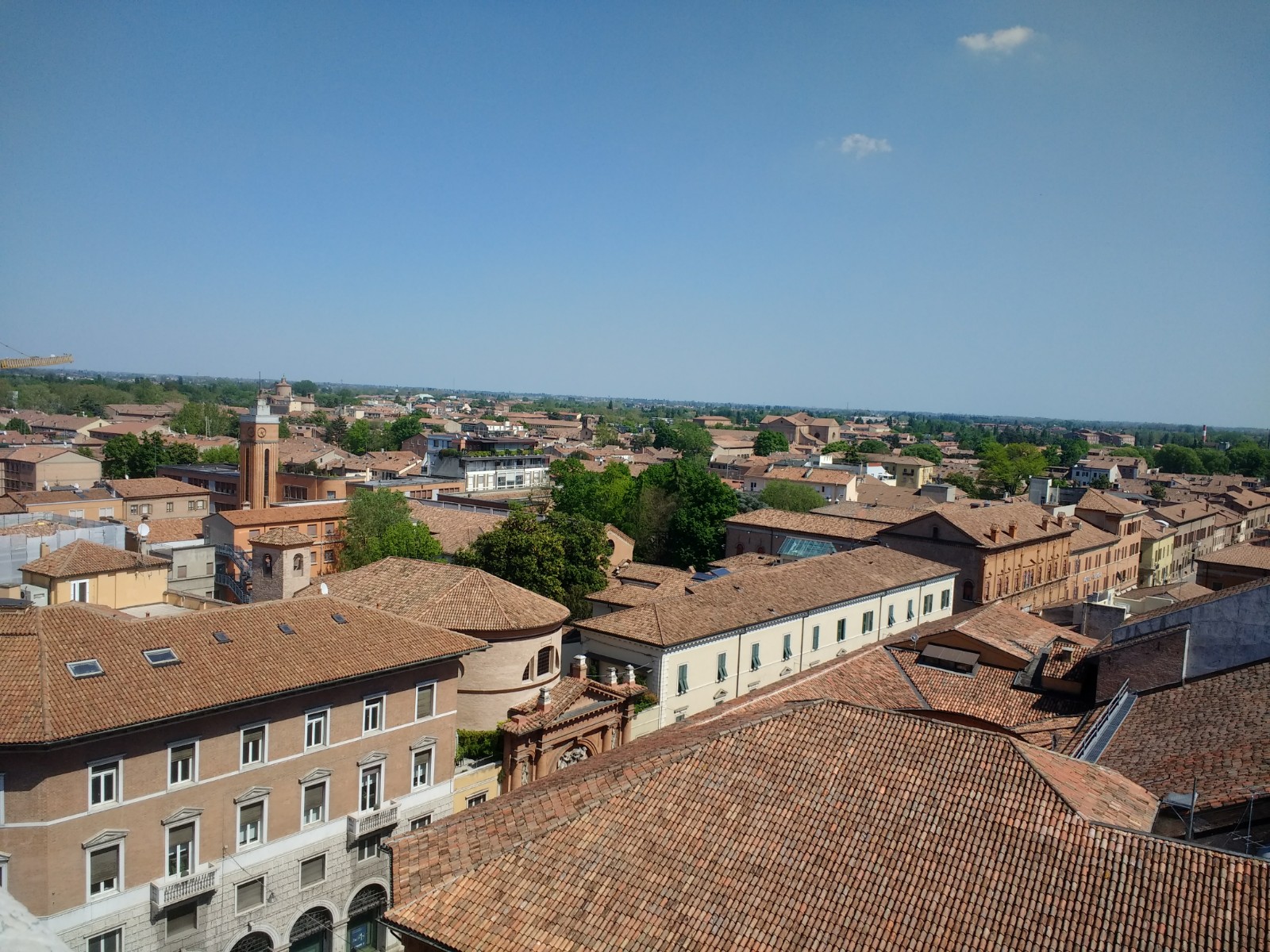
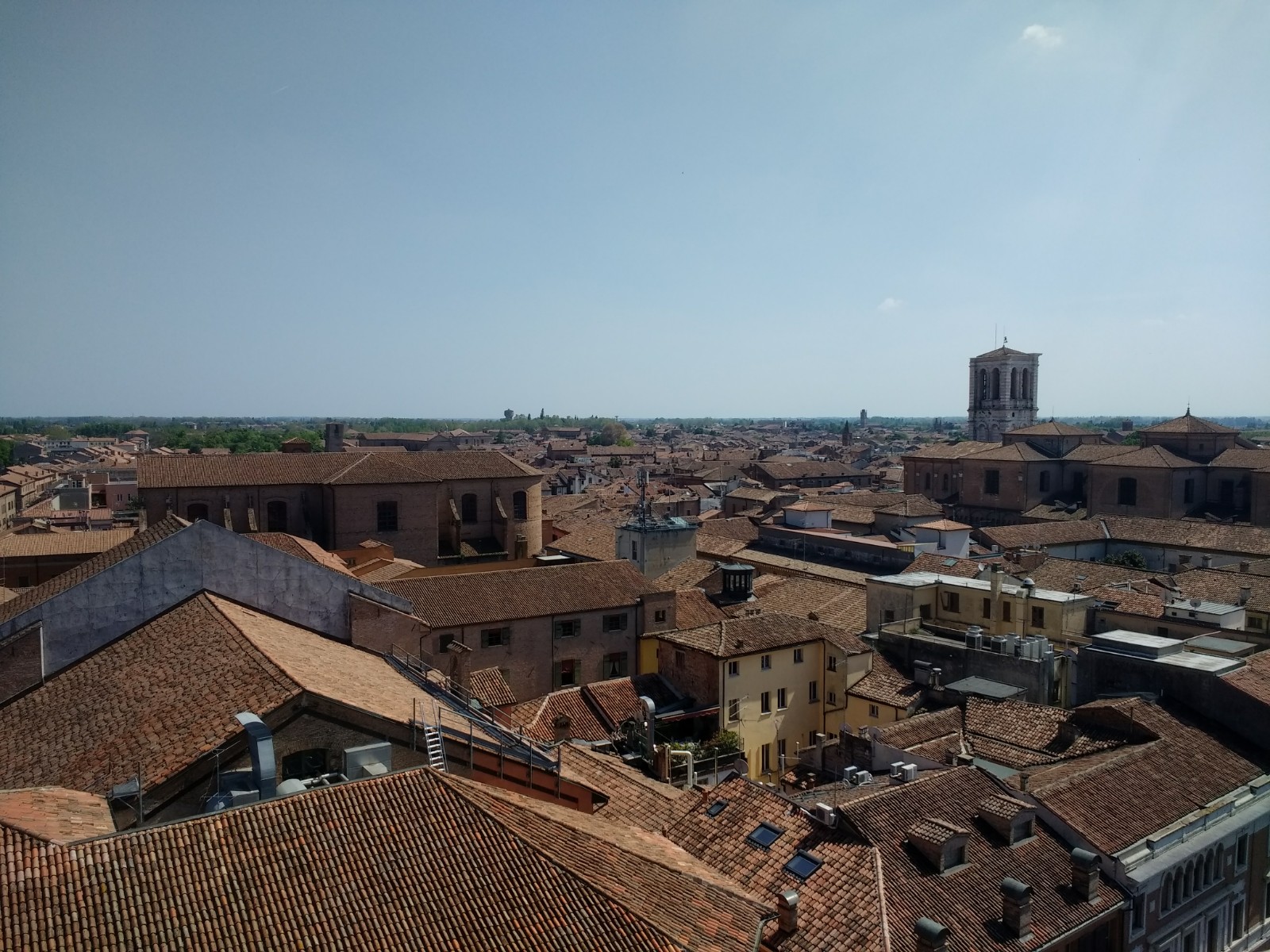
View from the Castle Another view of Ferrara. The bell tower of the Cathedral can be seen on the right.
On display at the Castello Estense are eye-witness accounts of the 1570 quake. Apparently the seism prompted the design of the first buildings to withstand earthquakes.
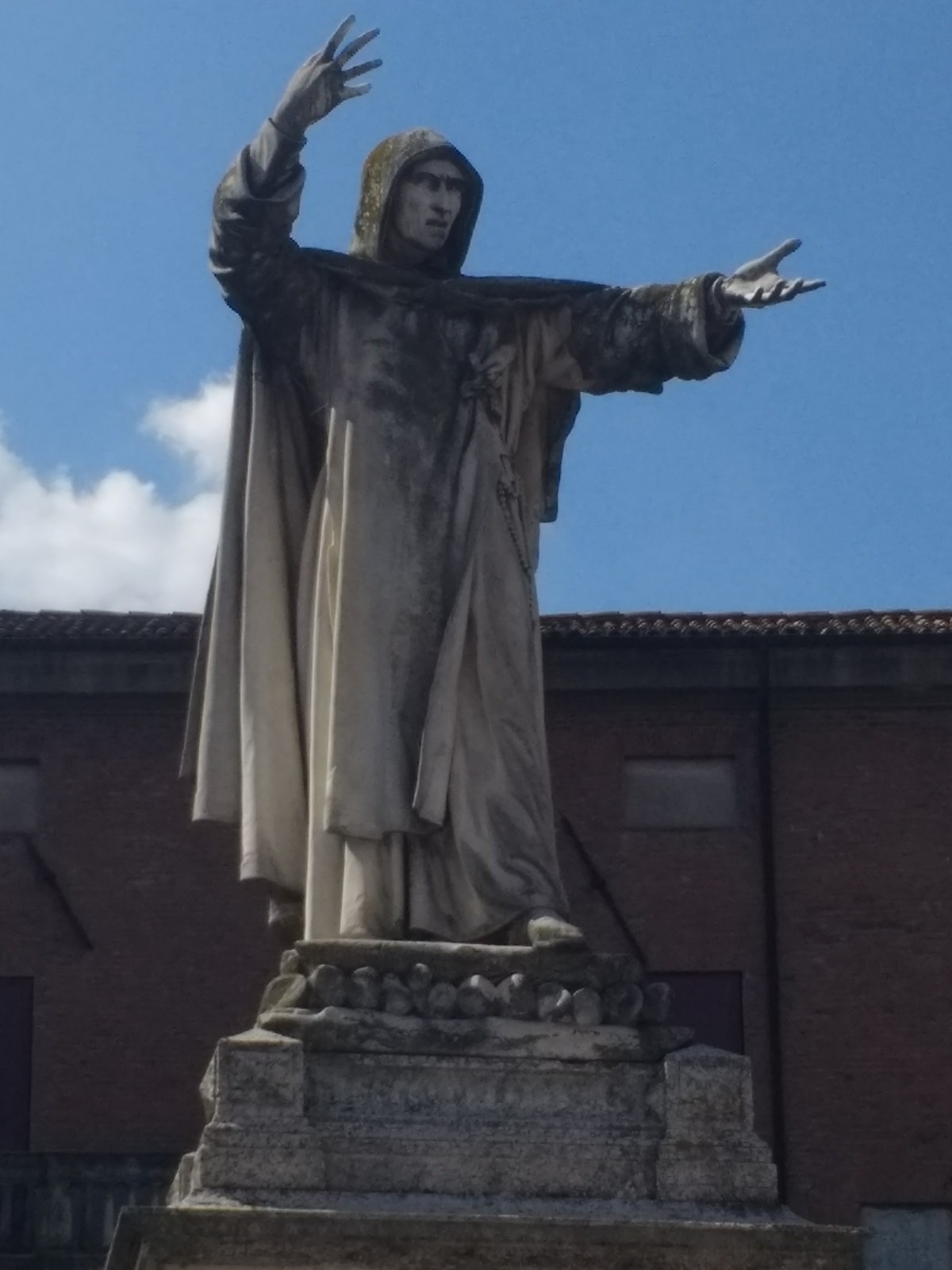
Savonarola, Dominican friar and ruler of Florence until his execution, was born in Ferrara. He has a white face on this statue and looks quite deranged.
When Bologna first received university students in 1088 there were no halls of residence or lecture halls. Instead the sons of the wealthy (women were initially admitted too, but this later changed) would stay in the homes of doctors, lawyers and other learned members of the community, and be taught by them. Among many others, Thomas a Beckett was sent to Bologna University to study law, by the Archbishop of Canterbury, in the twelfth century.
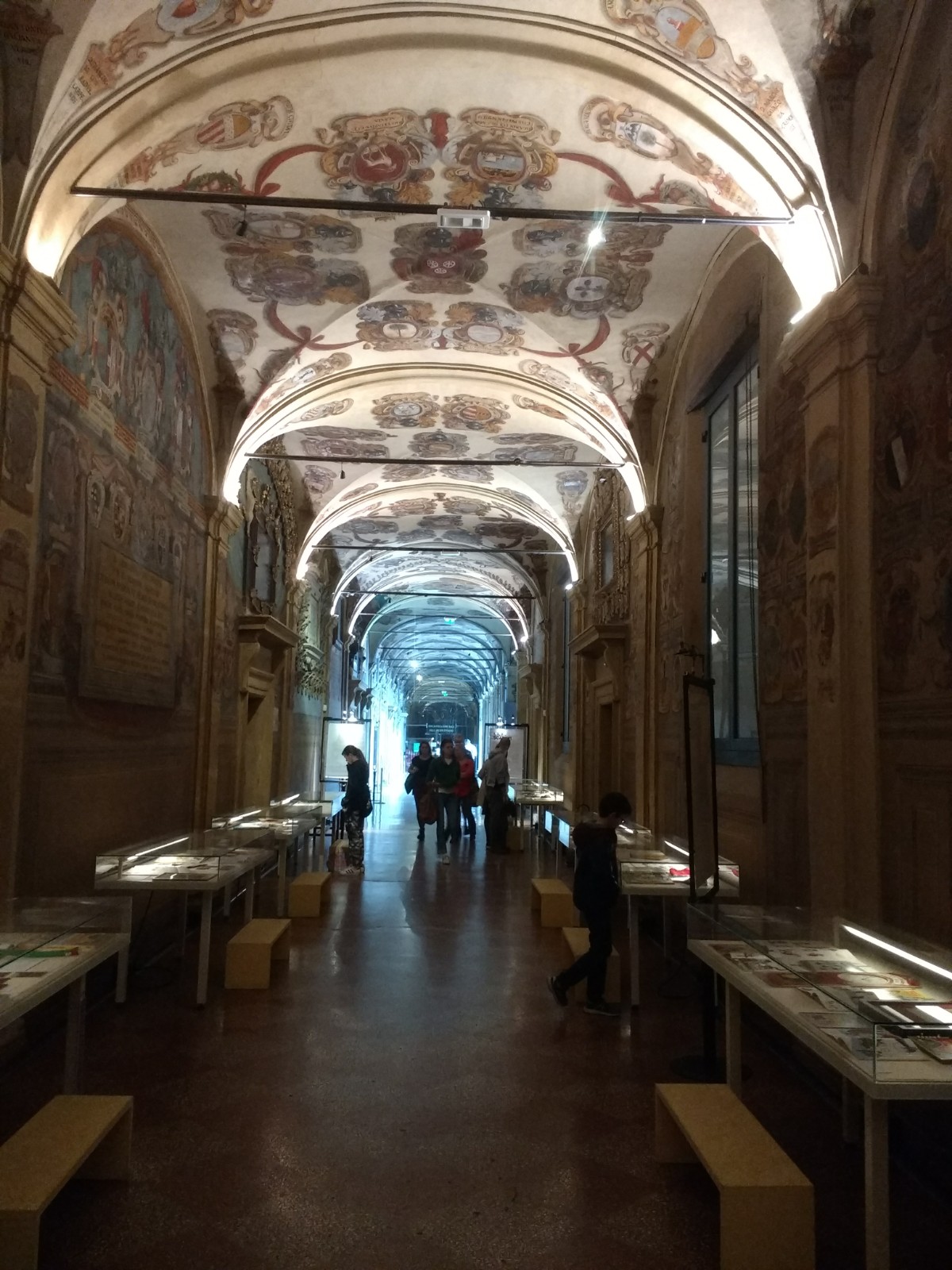
The first university building in Bologna was the Archiginnasio Palace, dating from the mid-sixteenth century, for the teaching of law, arts and medicine.
Archiginnasio Palace
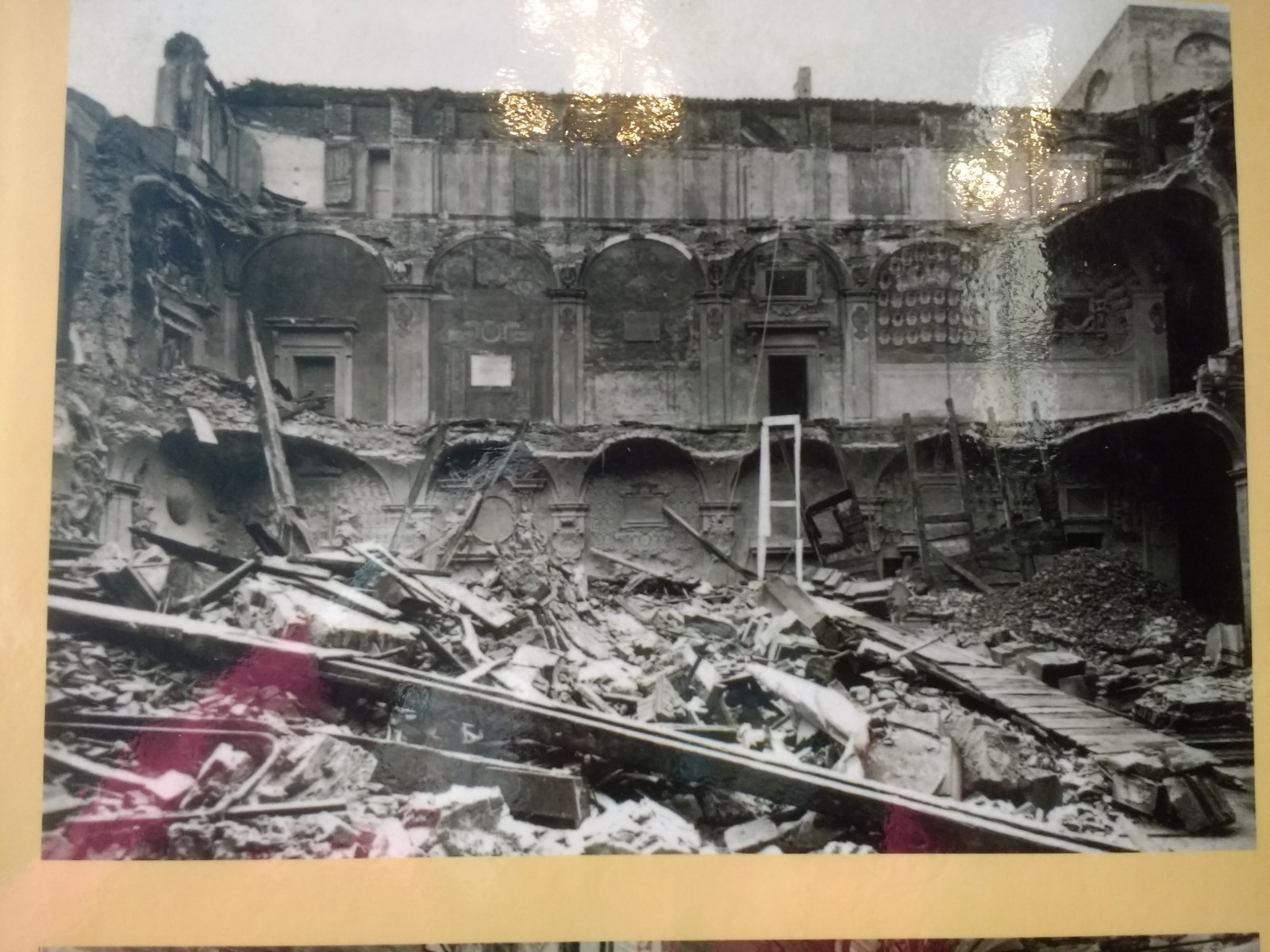
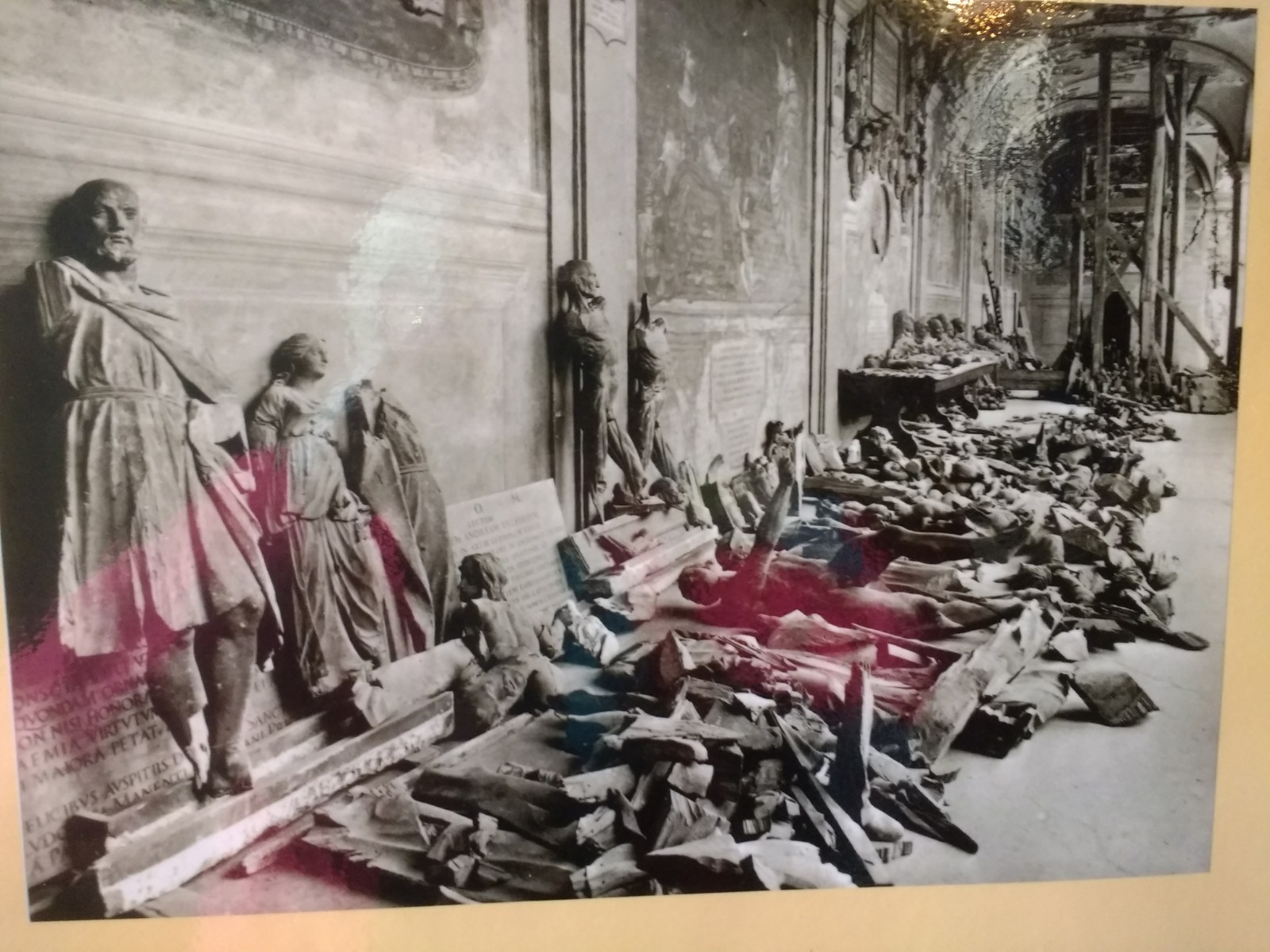
Although the building suffered much damage in the Second World War, it was re-built, using all the surviving materials, and is open to visitors today.
Damage after the air raid Incredibly, a number of statues survived and were used in the re-building.
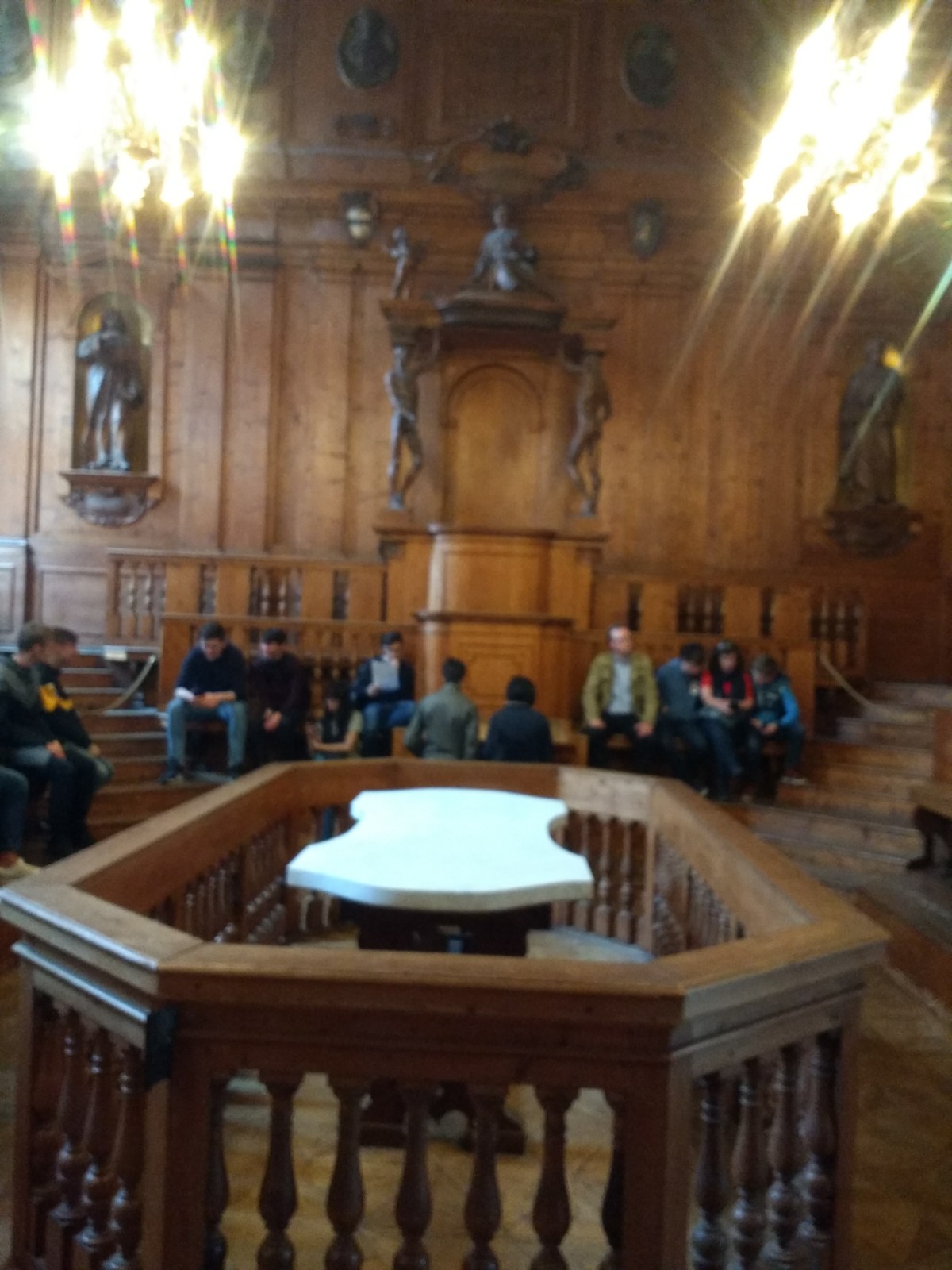
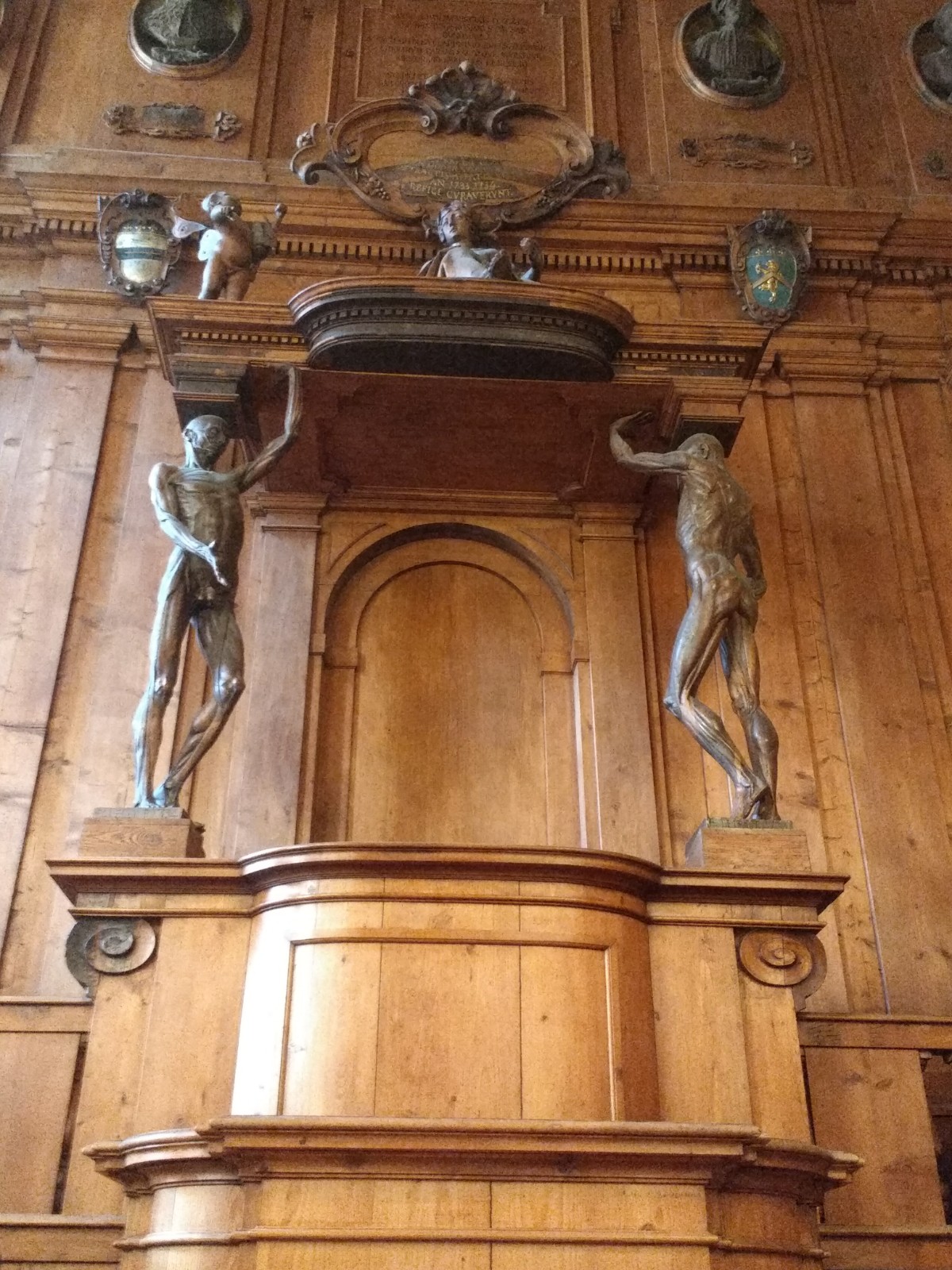
The Anatomical Theatre was created in the Palace in 1636. Here corpses of prisoners and prostitutes were dissected for the medical students.
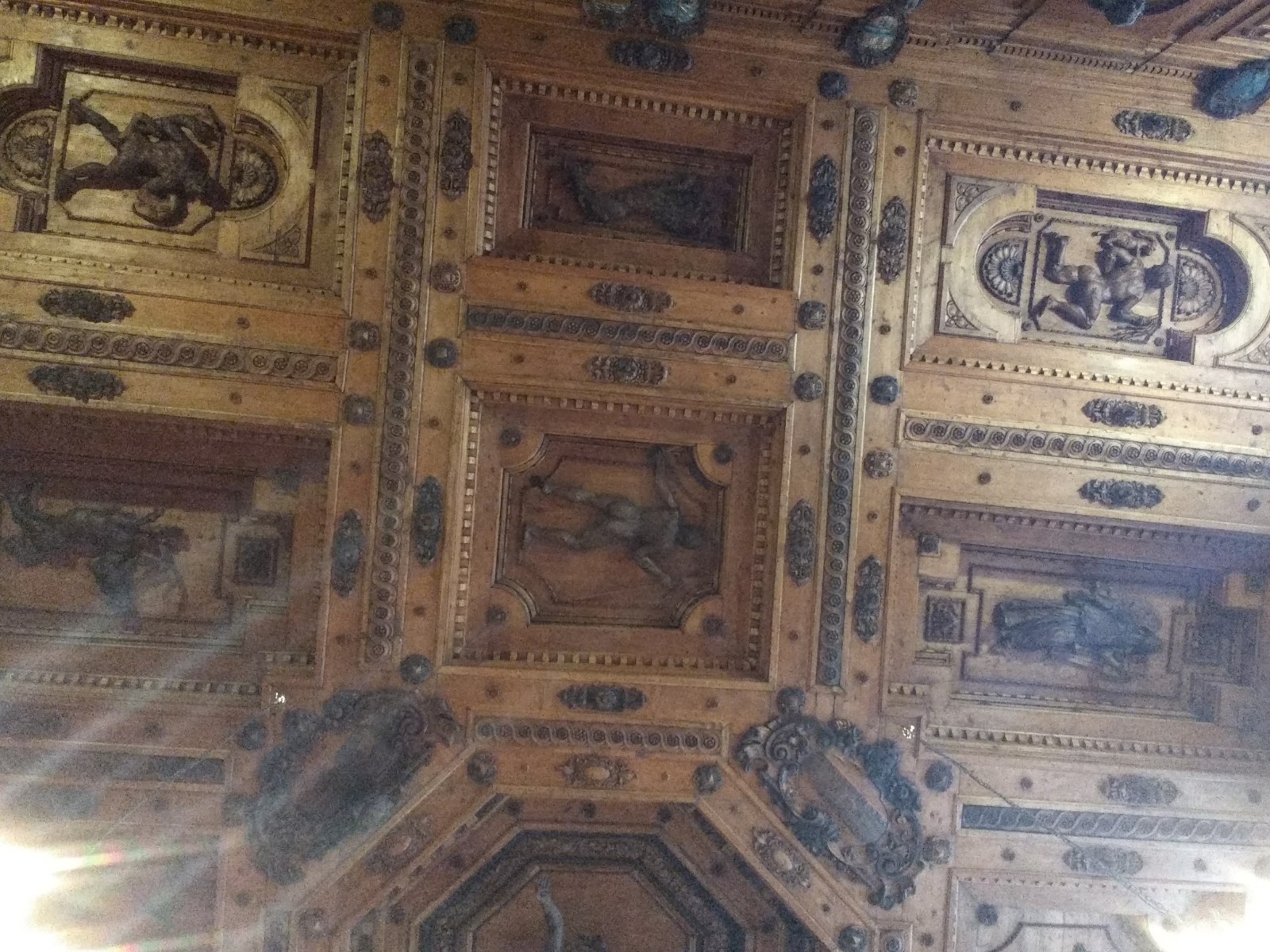
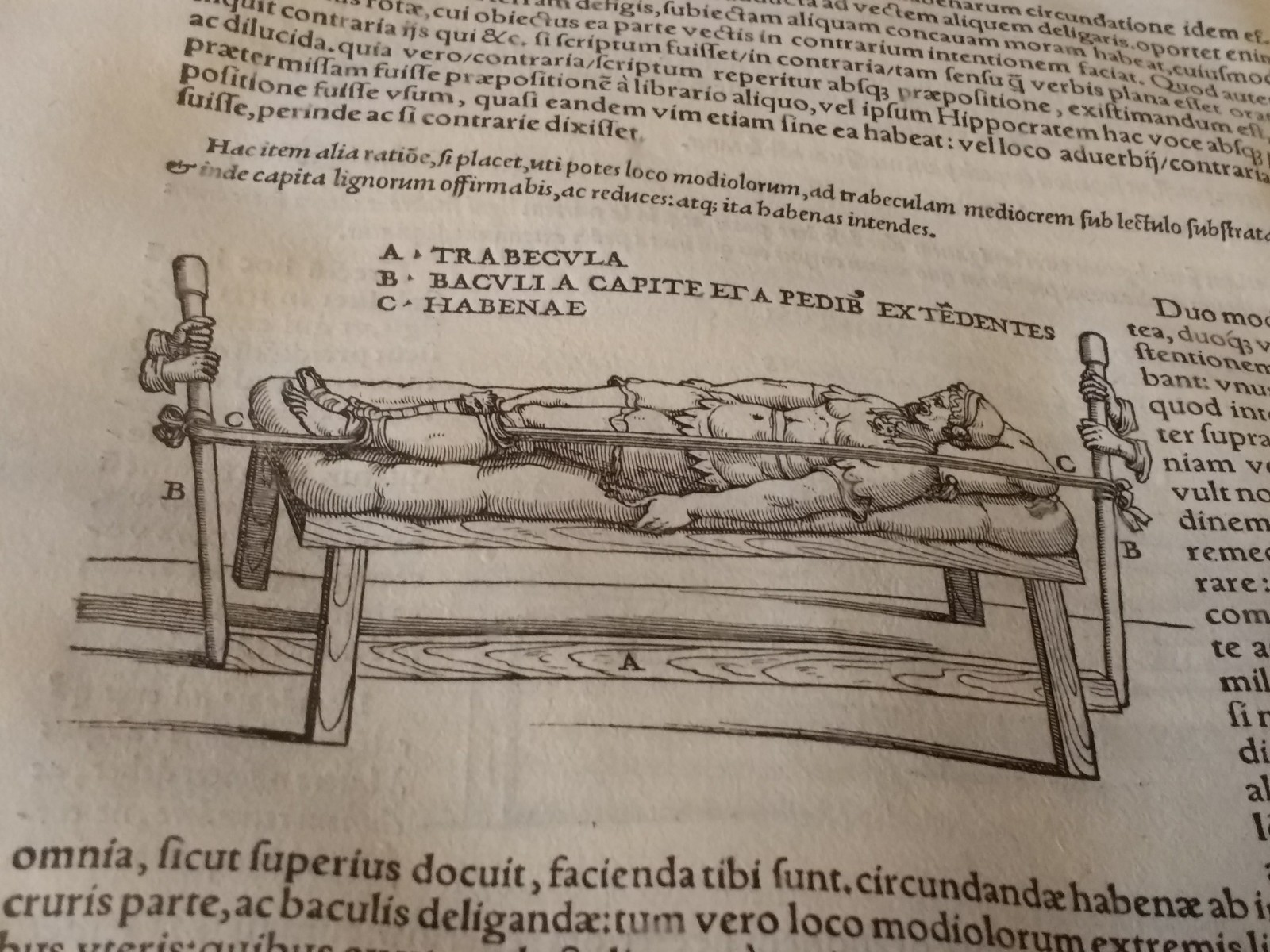
The dissecting table in the middle of the theatre. The corpses were dissected by ‘demonstrators’.The lecturer taught from this rather magnificent ‘throne’. On either side of his chair are the ‘spellati’ (skinned) statues based on drawings by Ercolano Lelli, a famous wax modeller. The ceiling of the Anatomical Theatre This seventeenth century book was on display, showing the care of fractured limbs. The book was owned by Giovanni Girolamo Sbaraglia (1641-1710) professor of medicine at Bologna University.
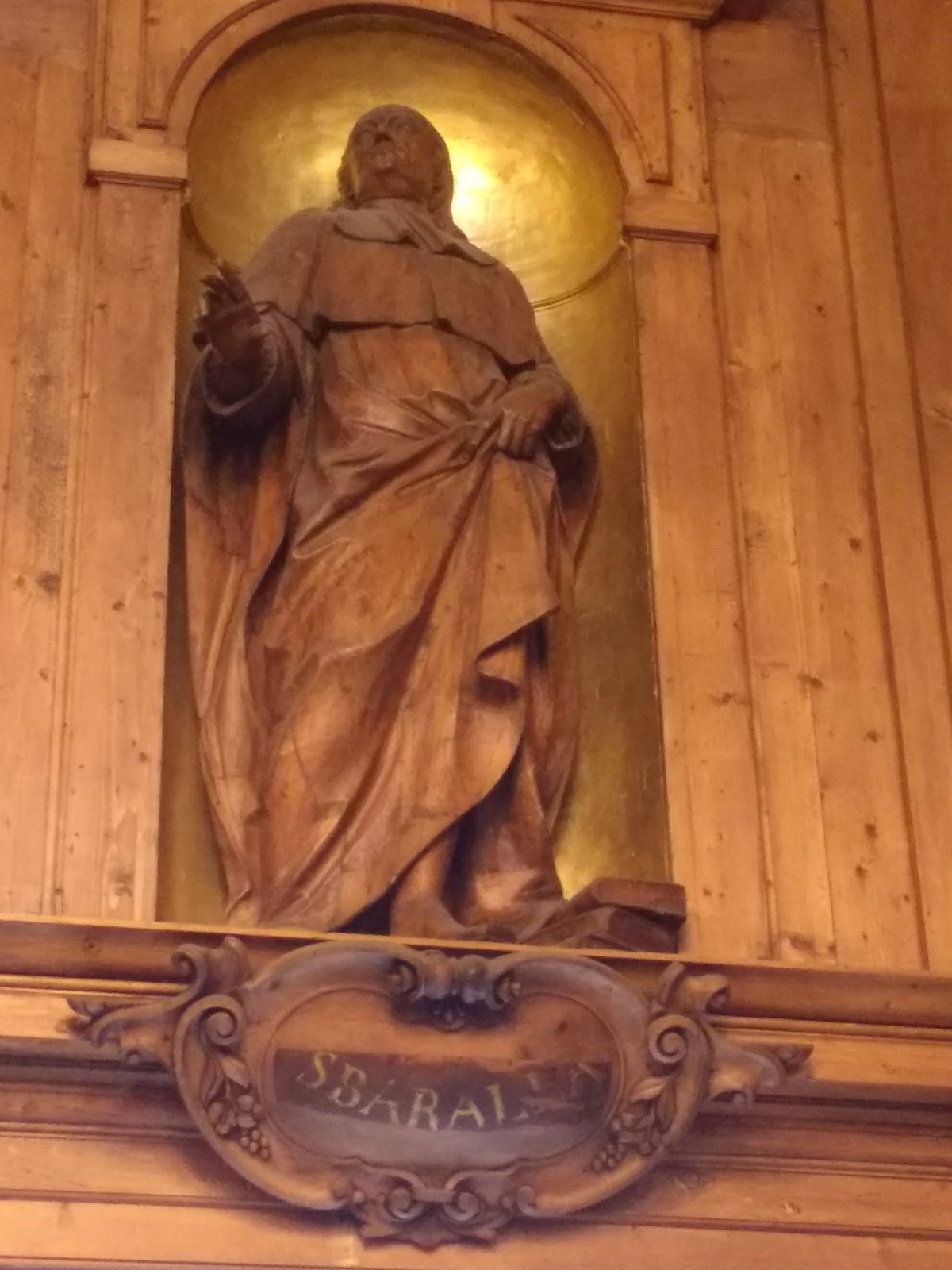
Sbaraglia, the owner of the medical book
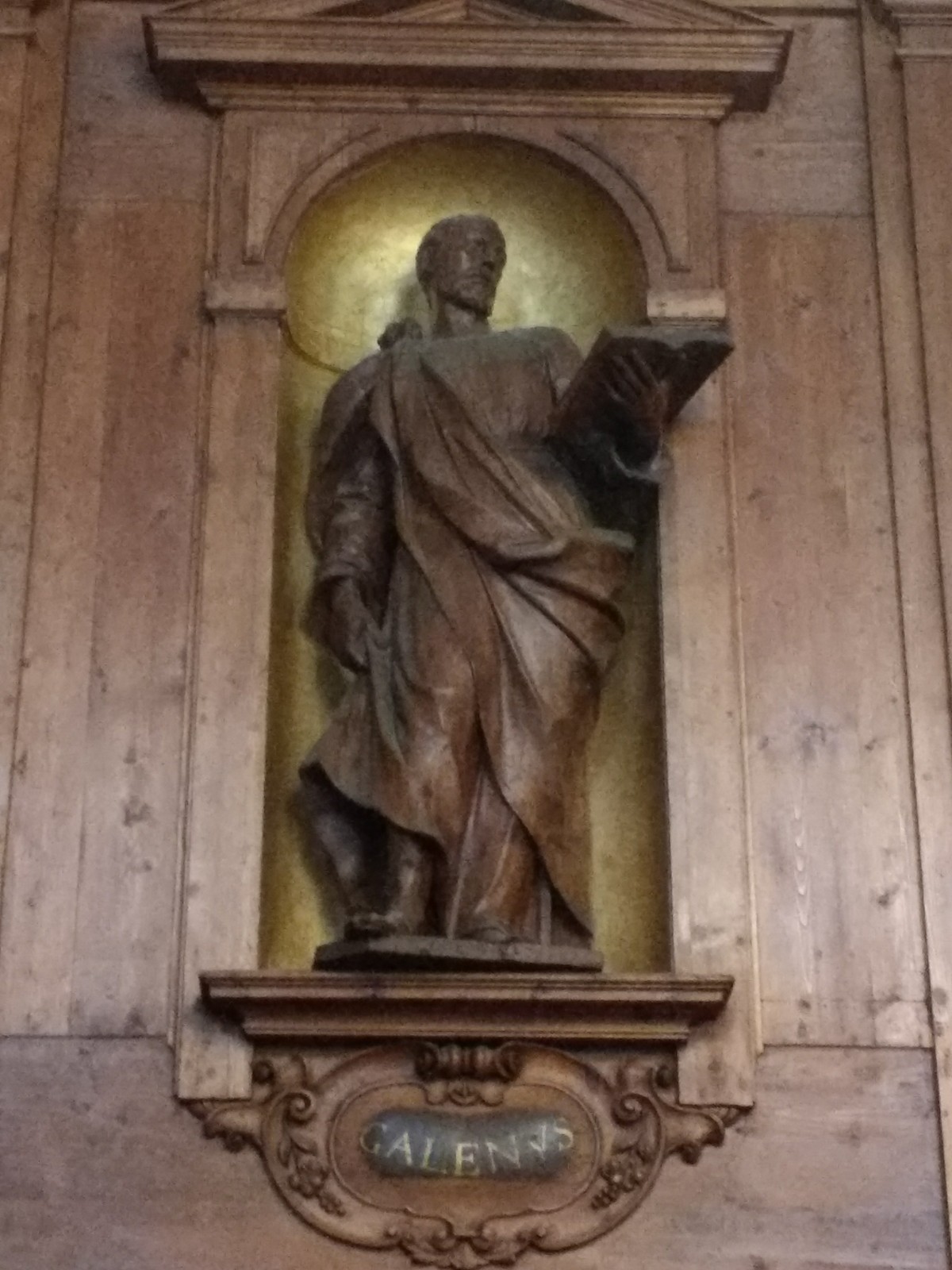
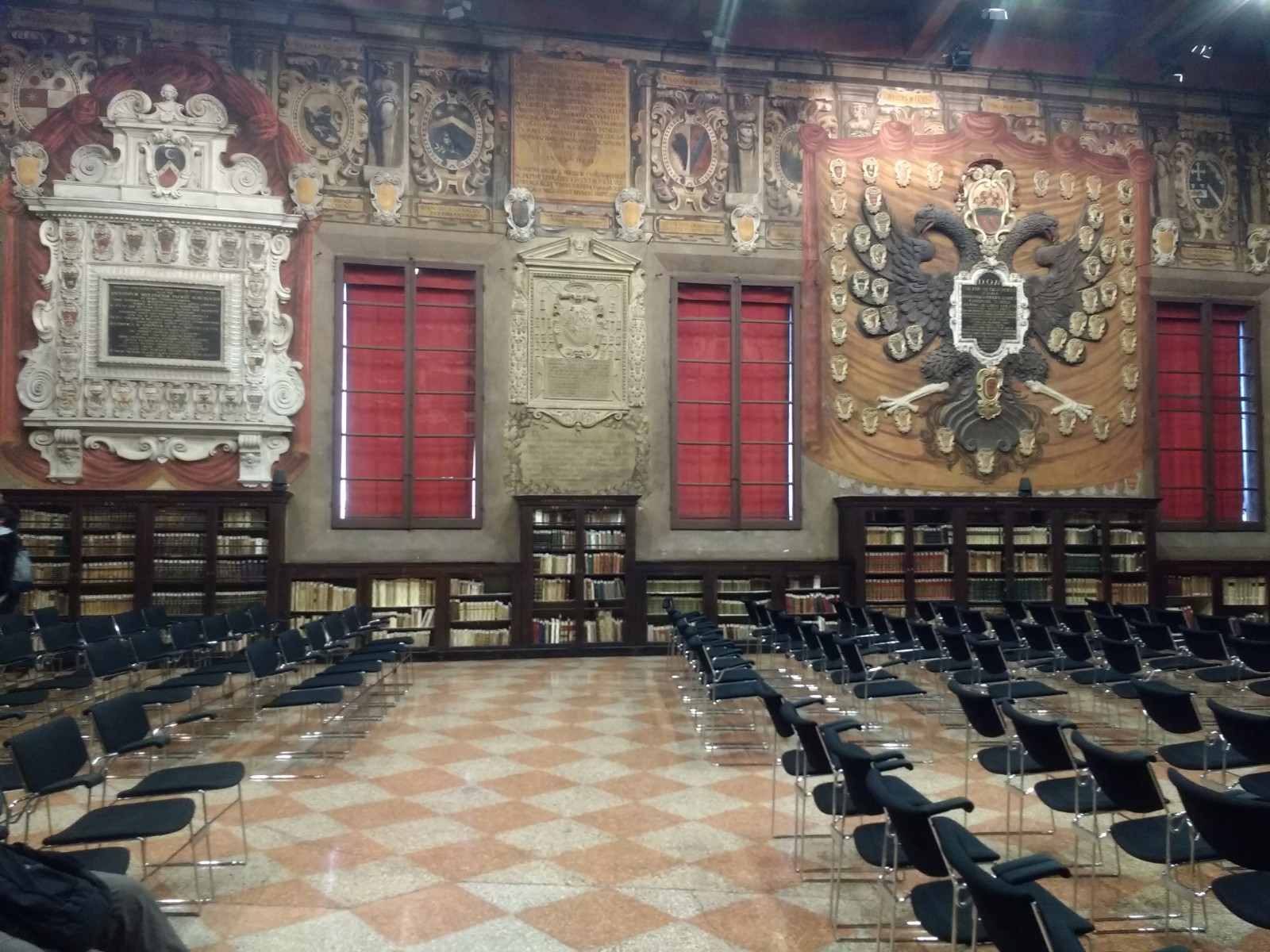
Galen (129-200) ‘The most important physician of antiquity’.Stabat Mater Hall, formerly a lecture hall for law students.This space, now used as a book deposit, was formerly divided into ten student classrooms.
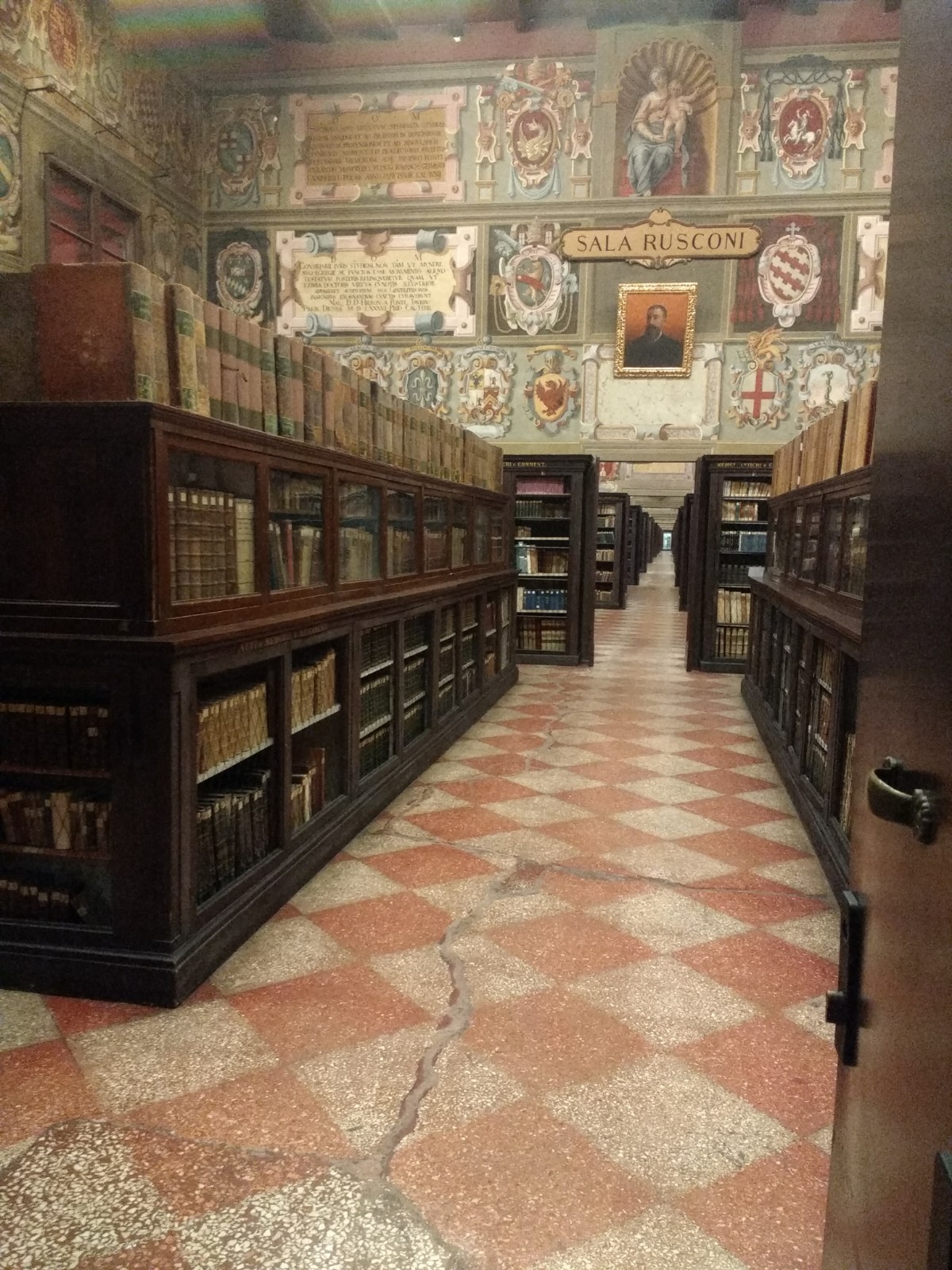
The Archiginnasio Palace ceased to be part of the university in 1803. It is now the Bologna Civic Library, and is used for its vast collection of antique and rare books.
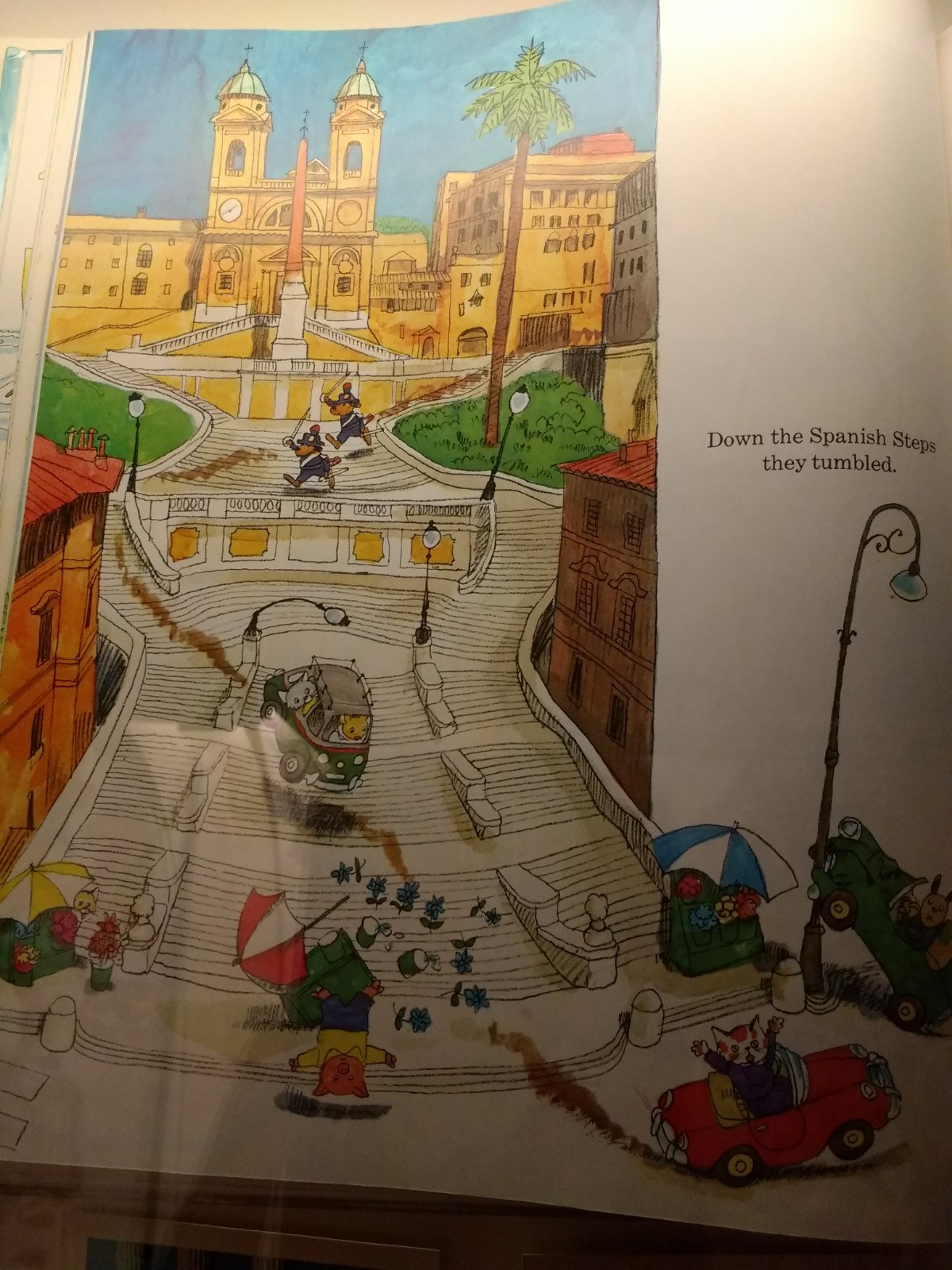
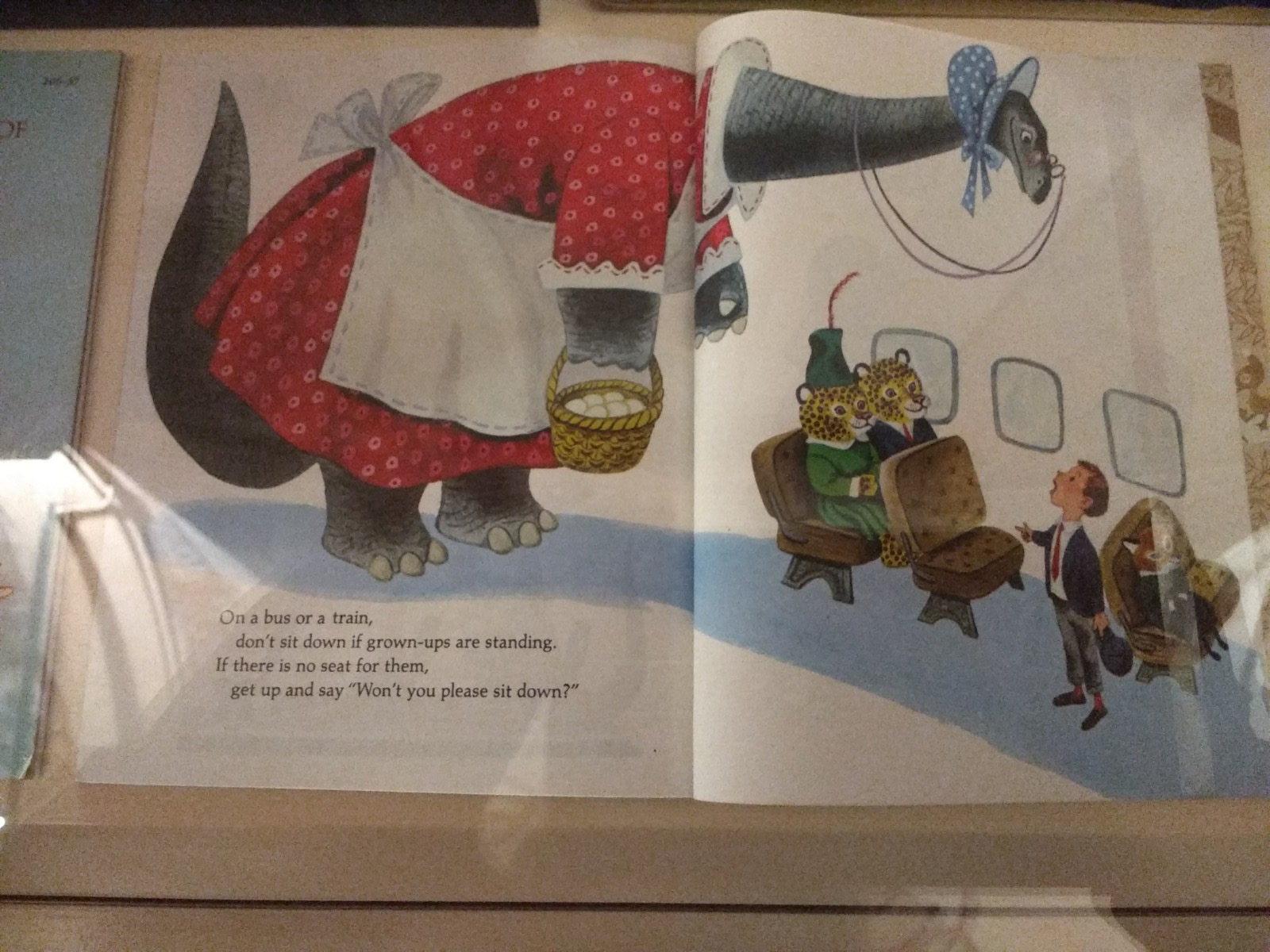
Also in the Palace today, we visited an exhibition to mark the centenary of the birth of Richard Scarry, children’s book illustrator. It was delightful to view some of his very familiar artwork.
From ‘Around the World.’ Yes, I remember this. When I was a child, children gave up their seats for adults, but it often seems that now children are given priority. (I know I risk sounding like an old git).
Bologna is known as ‘the red’ in recognition of its left-wing politics, ‘the fat’ for its food culture and ‘the learned’ having, the Bolognese boast, the oldest continuously-used university in the world.
‘The Red’ could equally apply to the red roofs of the city centre.
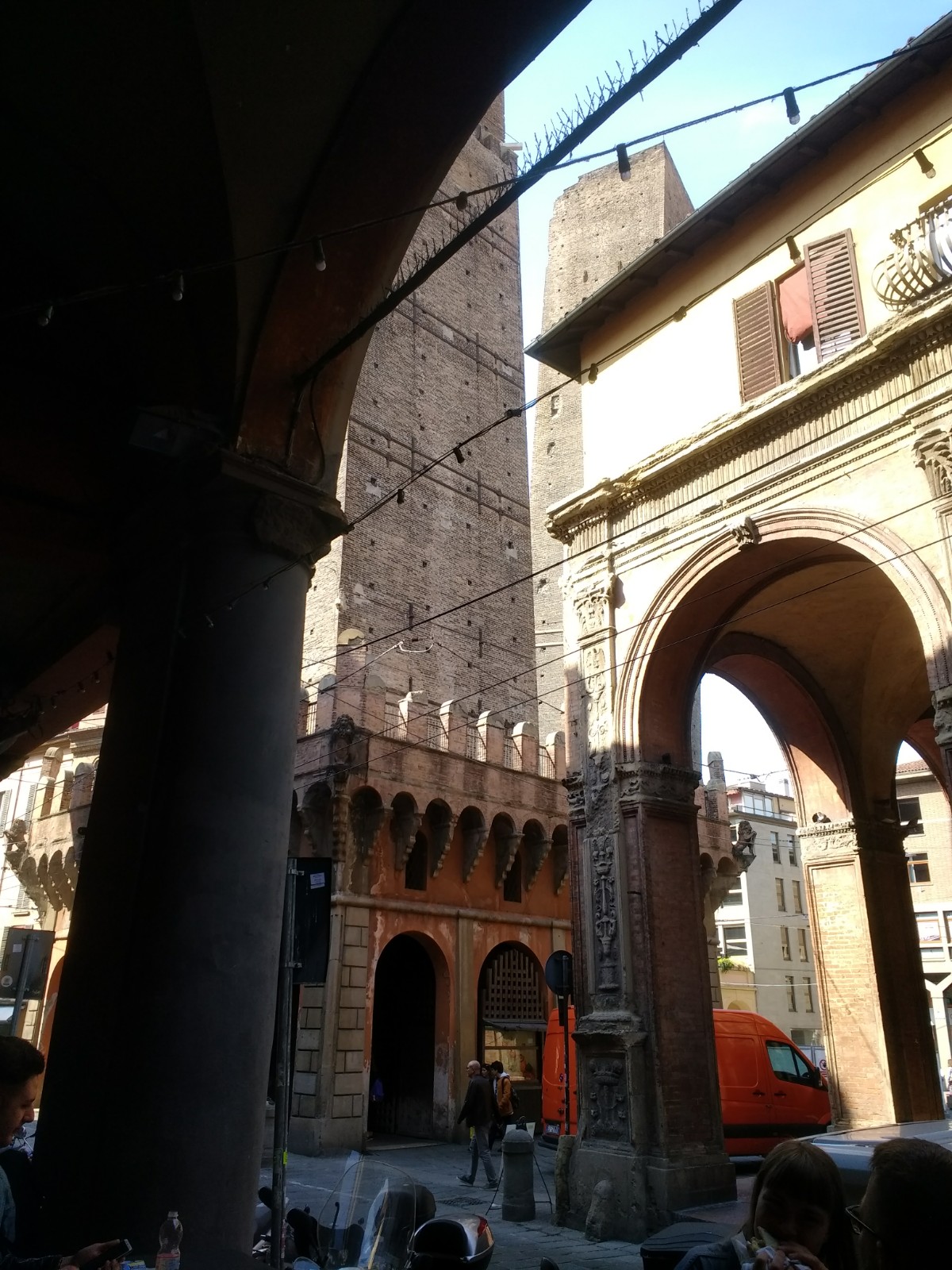
Pictures of Bologna often include images of its two towers.
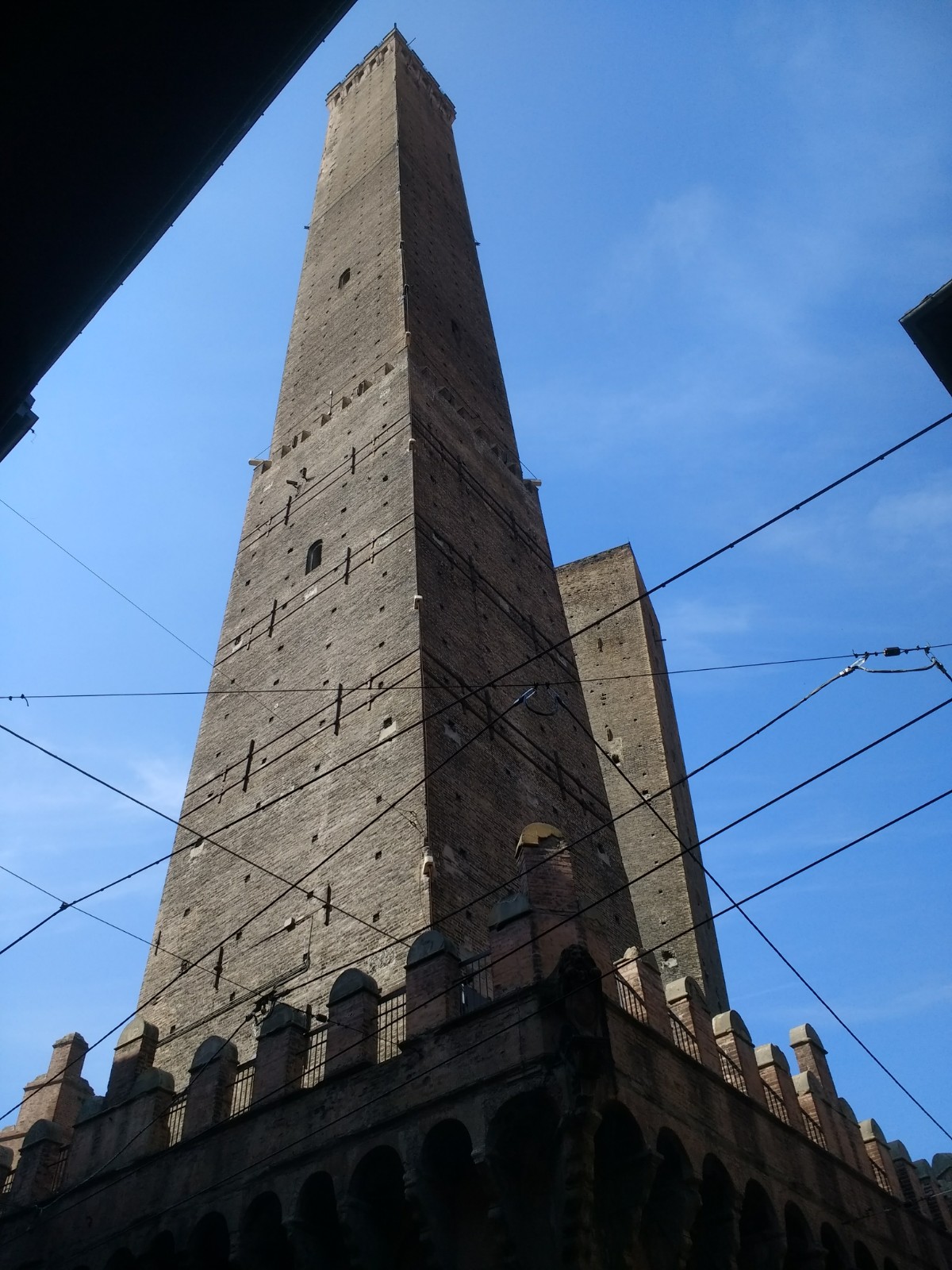
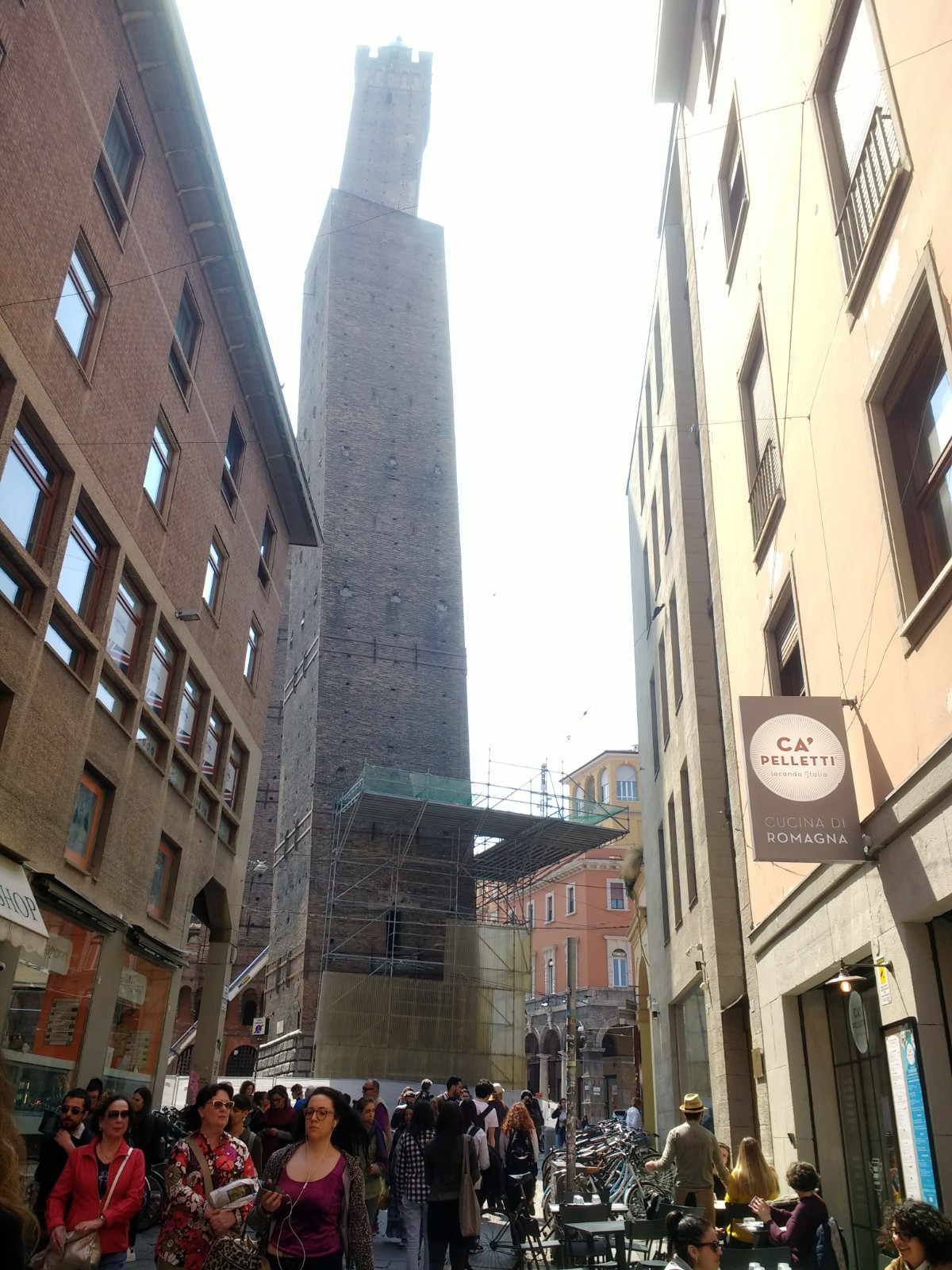
The Two Towers
By the end of the twelfth century there were over 200 such towers in Bologna, but today only 20 remain, including the Asinelli Tower, just under 100 metres in height, and the shorter Garisenda Tower, just 48 metres tall.
The taller tower seems to be leaning here, but in fact the shorter of the two has the biggest lean.
Built by wealthy families for defence, the towers soon showed a propensity to lean, so much so, that the Garisenda Tower was shortened by twelve metres in the fourteenth century, in an attempt to put a stop to the sideways movement.
Today the Garisenda Tower’s lean is 4.0 degrees (beating Pisa’s Leaning Tower by 0.1 degree) but is it not open to the public.
Garisenda Tower on the right.
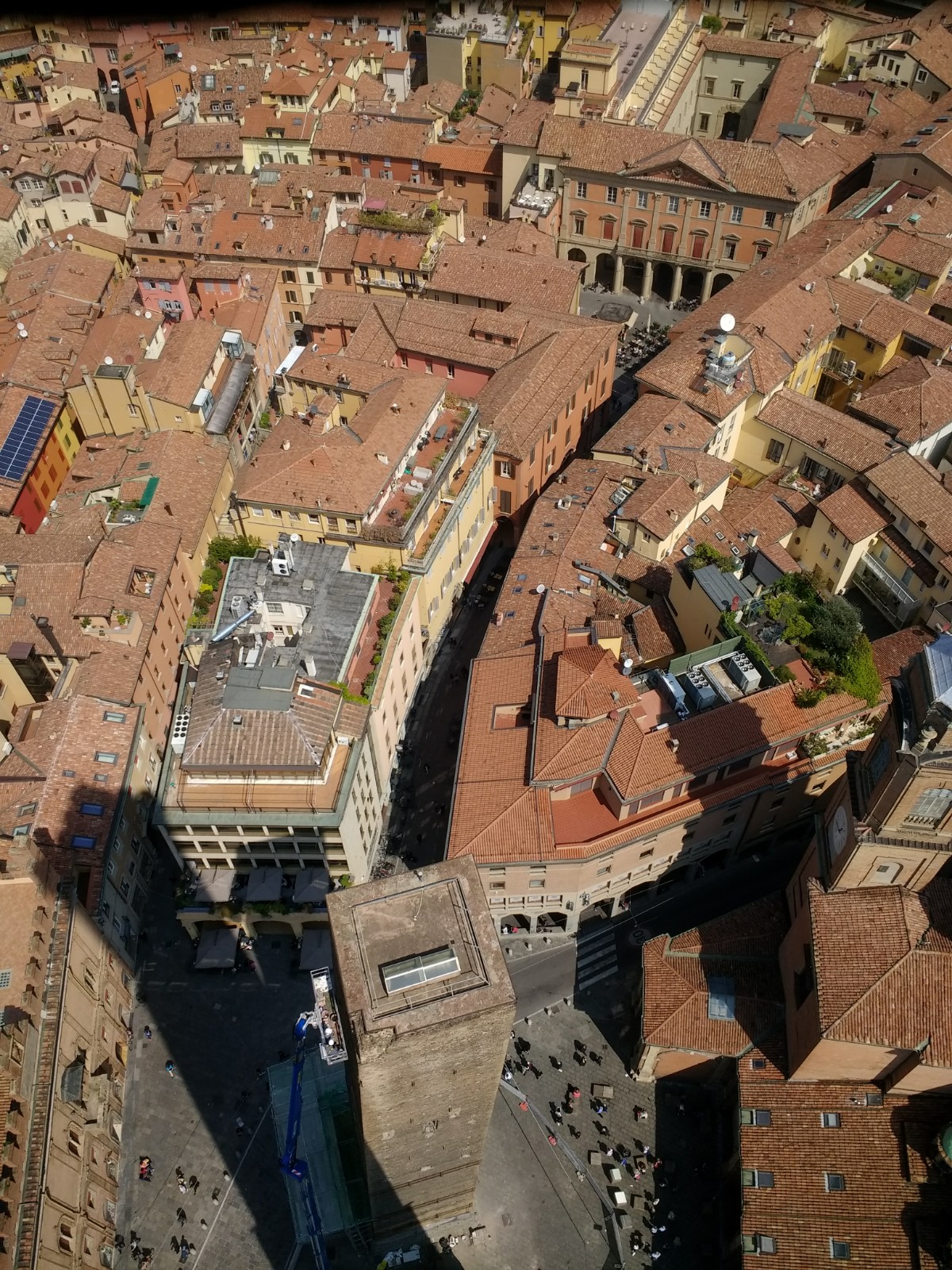
We climbed all 498 steps to the top of Asinelli Tower today (which itself leans 1.3 degrees off centre) and looked out from the top.
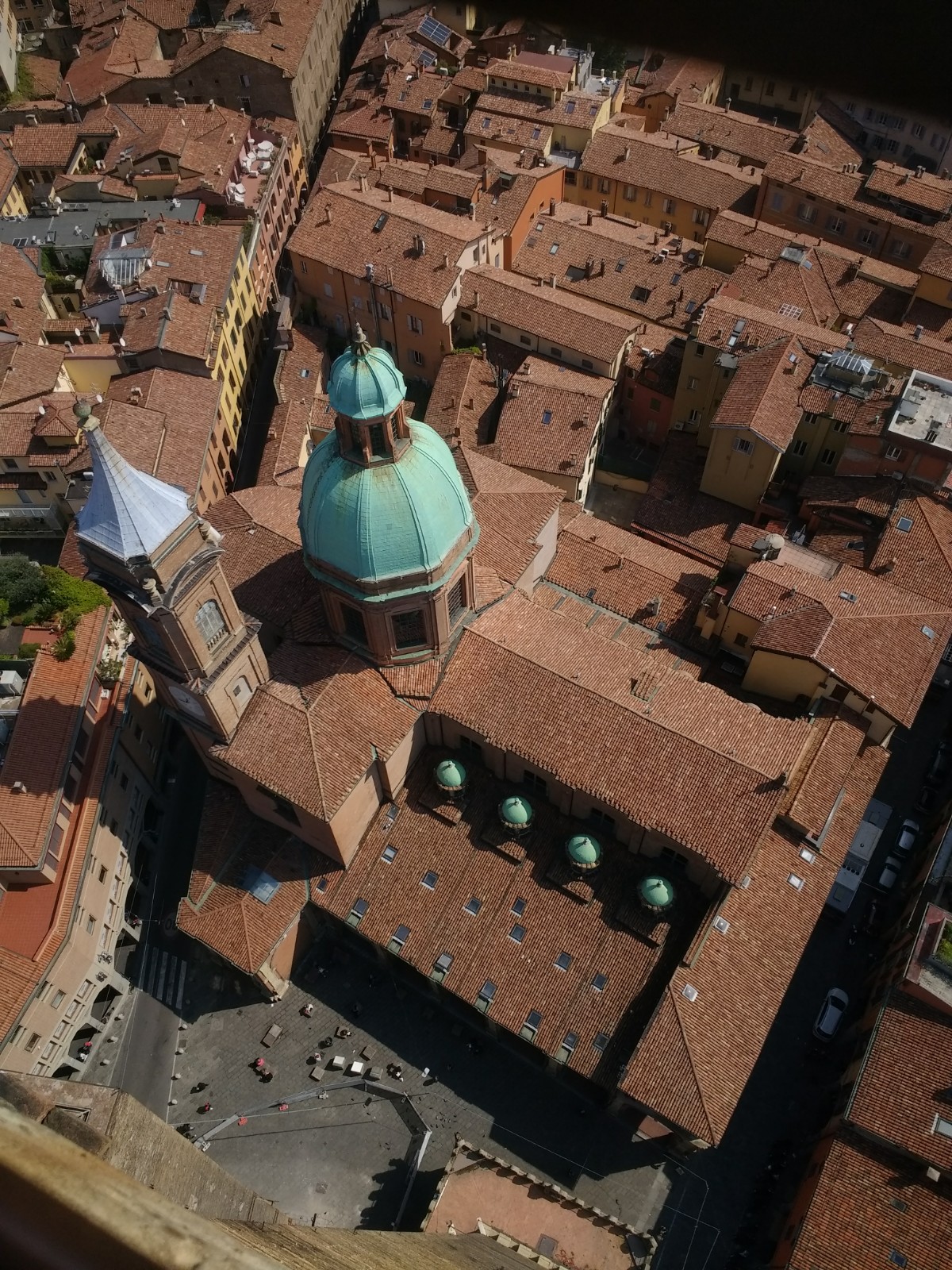
View from the top. Workmen can be seen inspecting Garisenda Tower (in the foreground) in a cherry picker. Looks an easier way to get up than climb all those stairs.
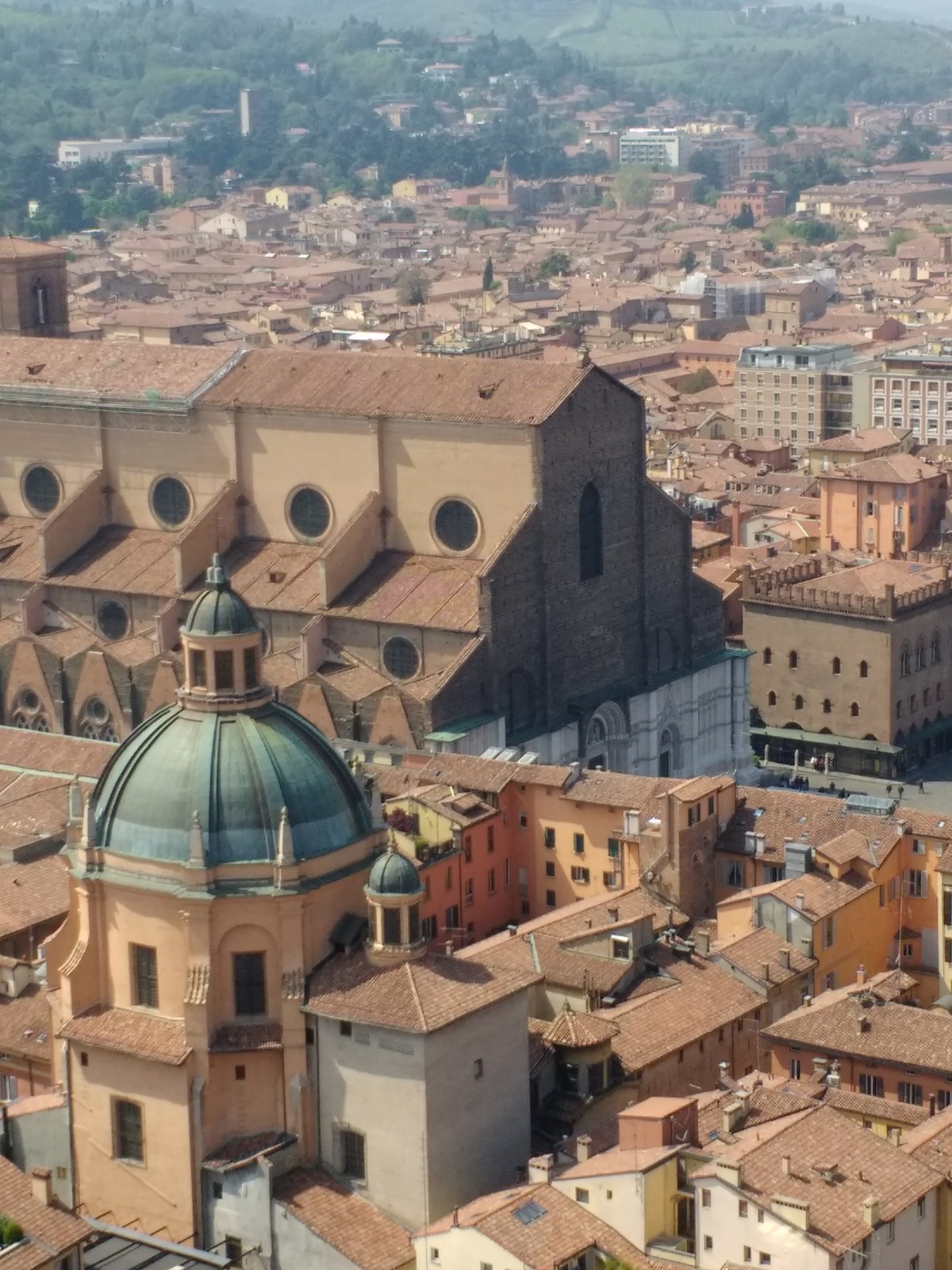
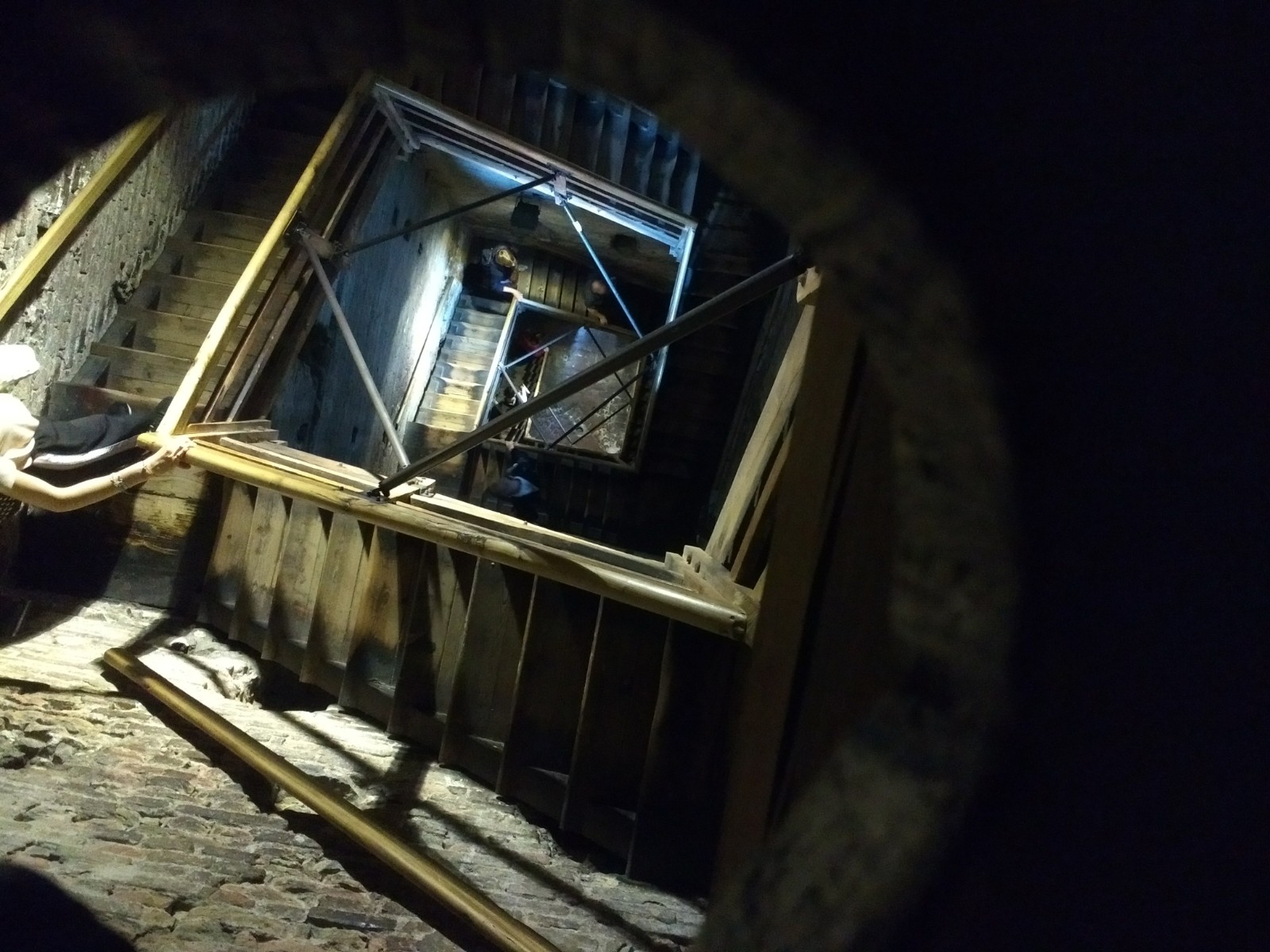
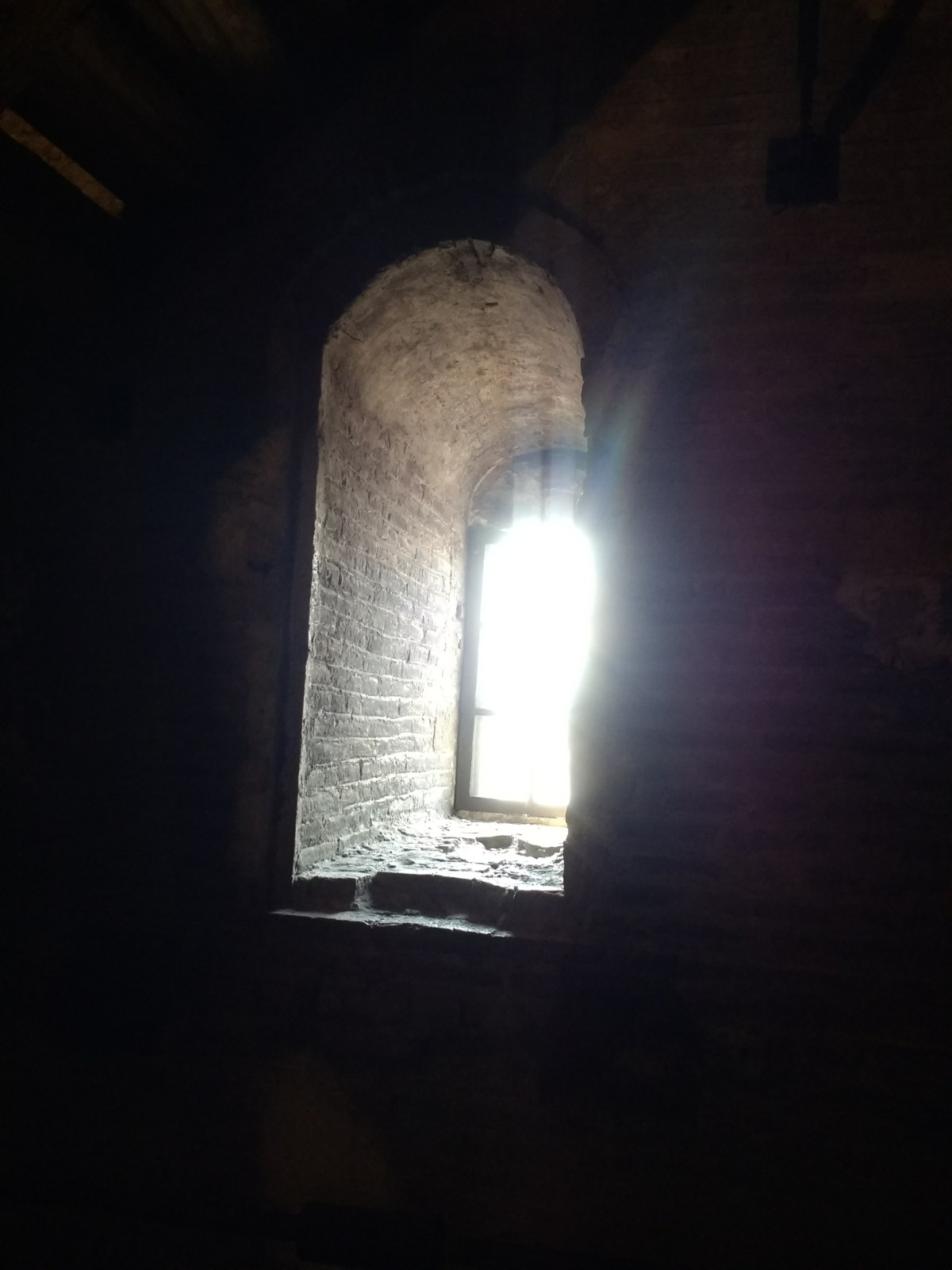
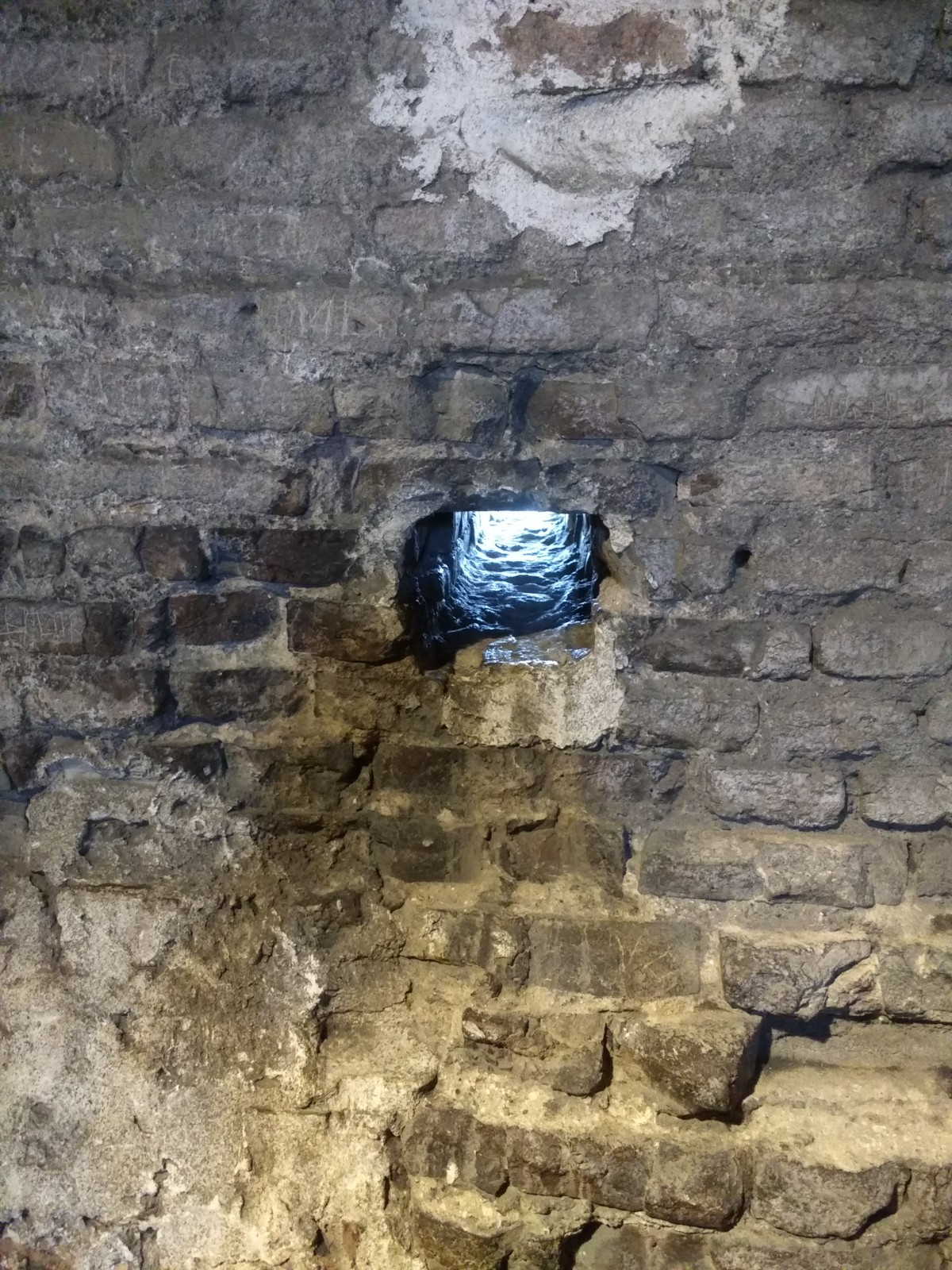
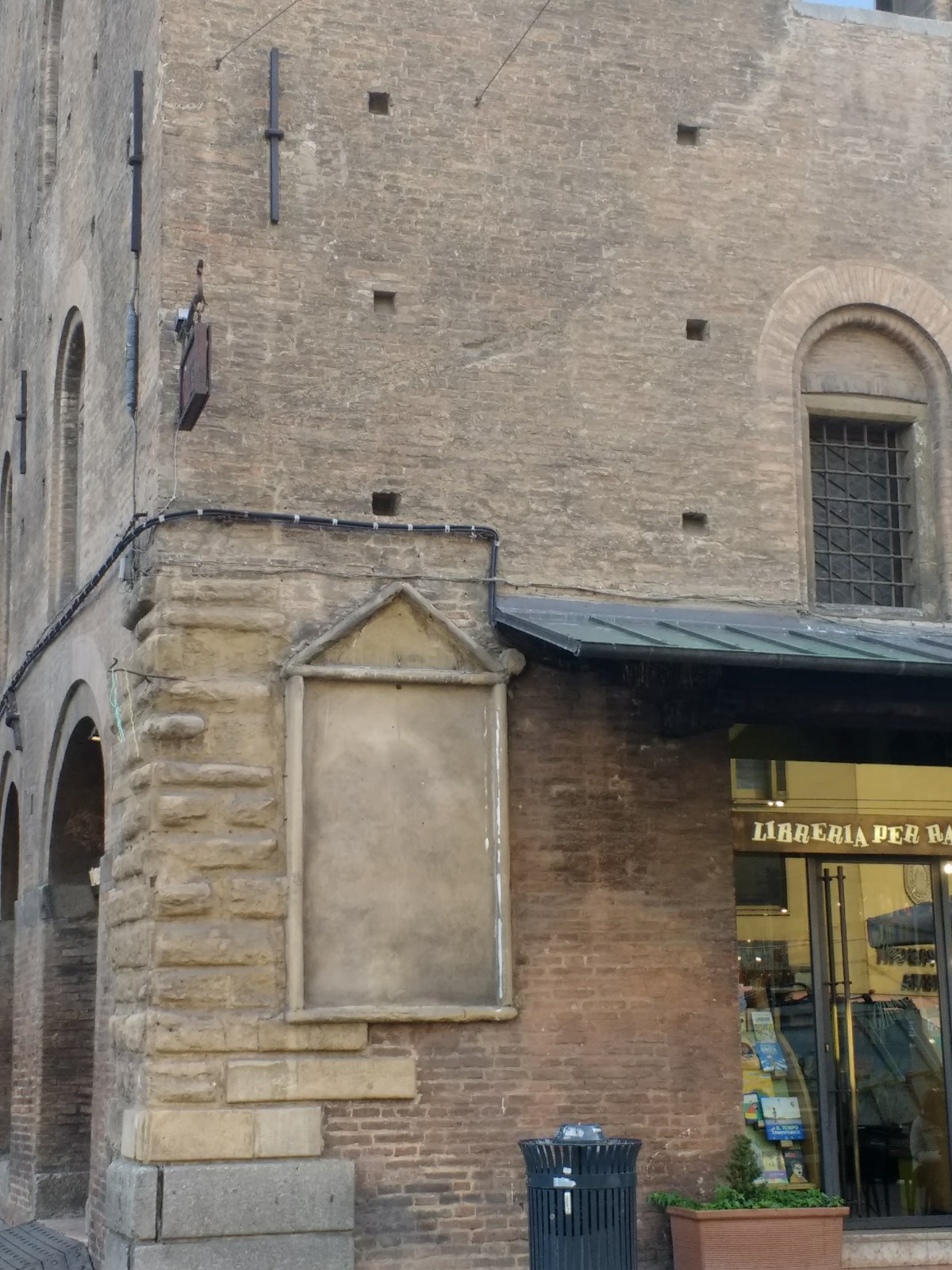
The church with the unfinished facade (the upper half having bare brick) is San Petronio Basilica. Set in a huge square, it looks important enough to be Bologna’s cathedral, but it isn’t. View of the steps on the way down. The walls were thicker towards the base. They were about two and a half metres thick at this point. A feature of a lot of old buildings here are holes which are visible on the outside. I’ve read that these were for scaffolding when the buildings were under construction.‘Holes’ in the masonry of another old building in Bologna, but these seem to be backed by another row of bricks. The holes in the Asinelli Tower are open. Convenient for the pigeons.

 Tortoise Travel