Axel Munthe and his House

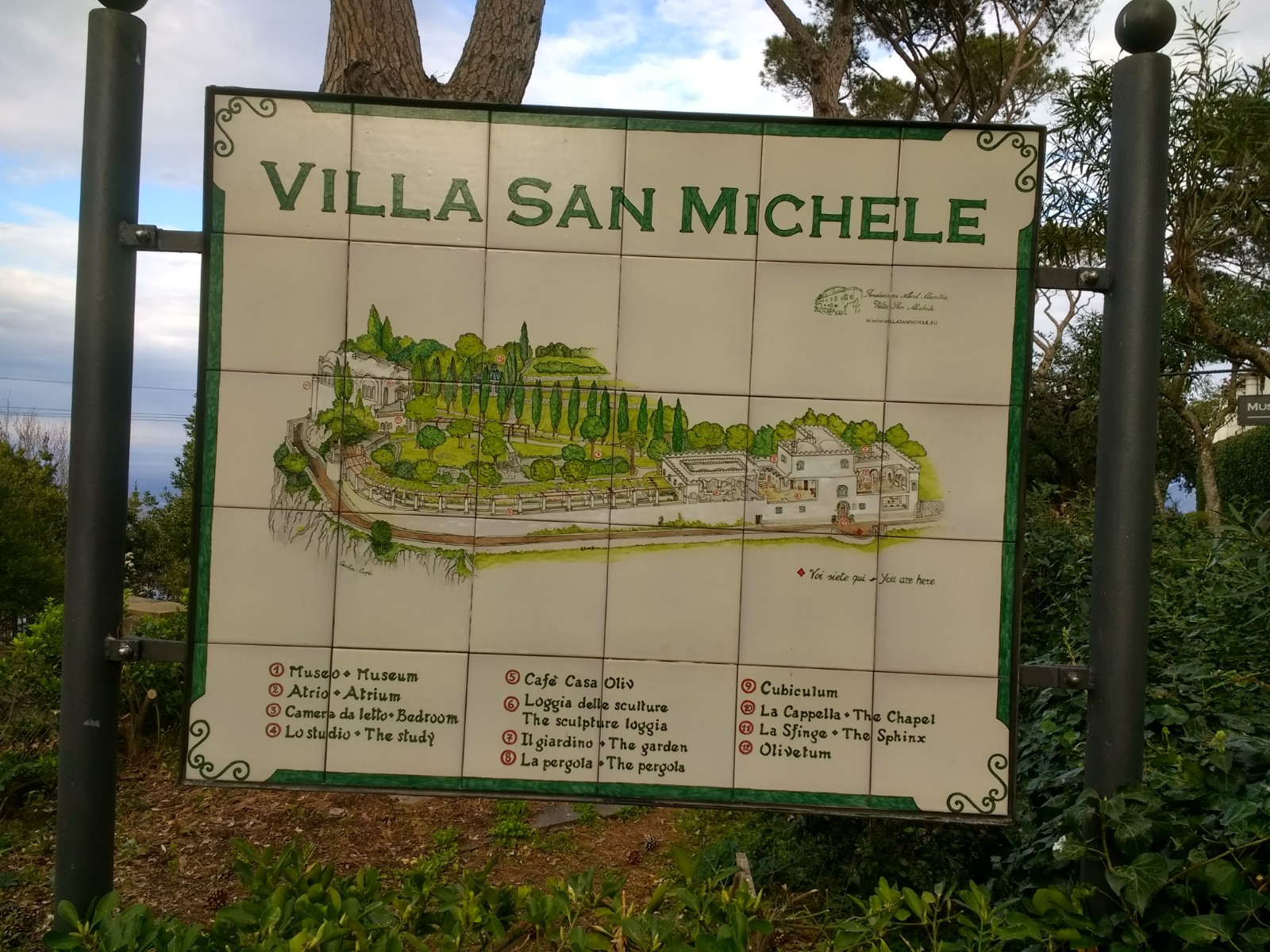
Yesterday we climbed all 921 steps up to Anacapri for a second time, to have lunch, and also visit San Michele, home of Axel Munthe.
Axel Munthe, Swedish doctor and psychiatrist, fell in love with Capri while travelling in Italy as a young man in 1876.
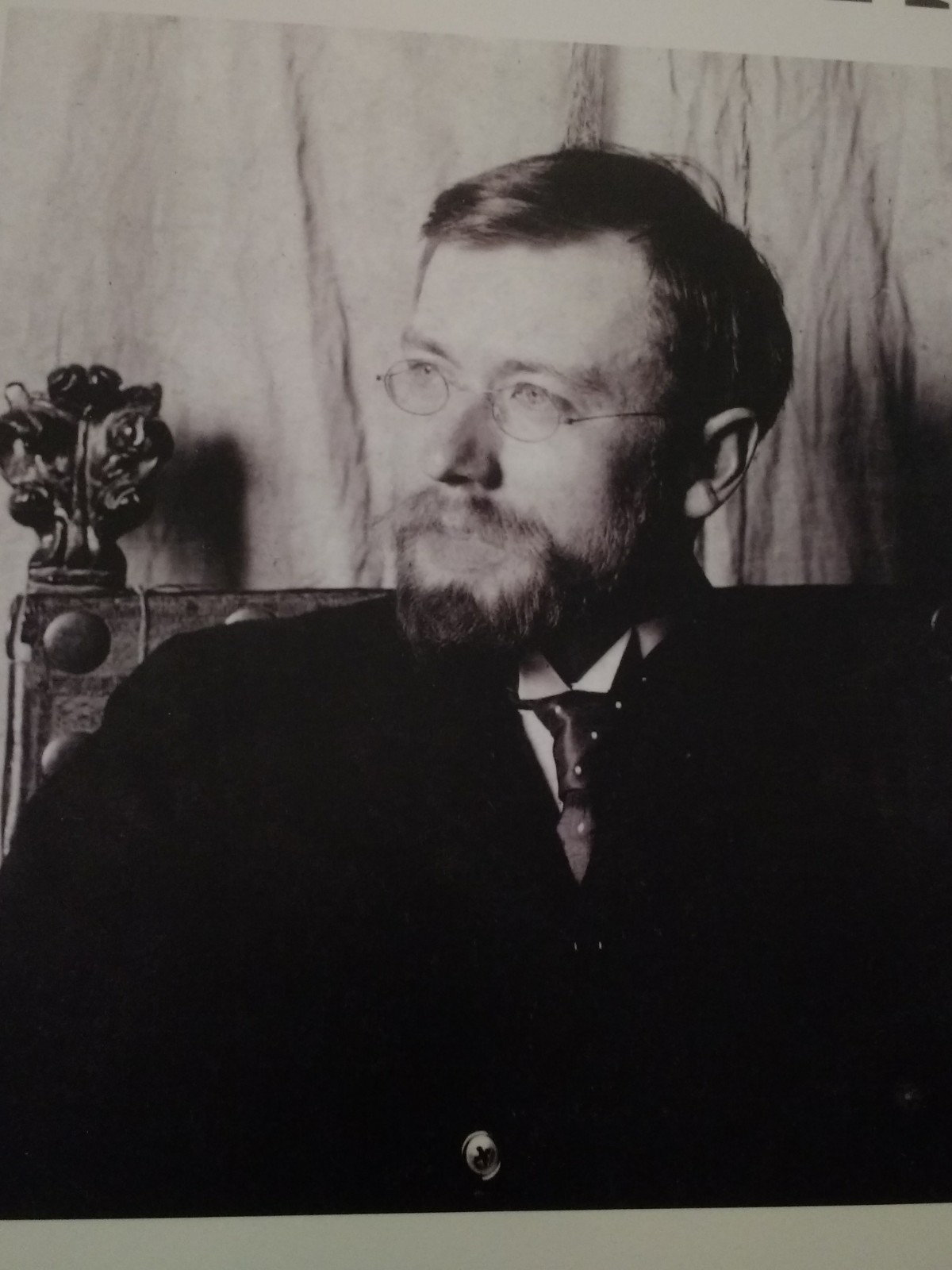
Axel Munthe

At the top of the steps that rise to Anacapri (Scala Felicia) he came across a delapidated chapel, dedicated to Archangel Michael, and knew he had to have it.
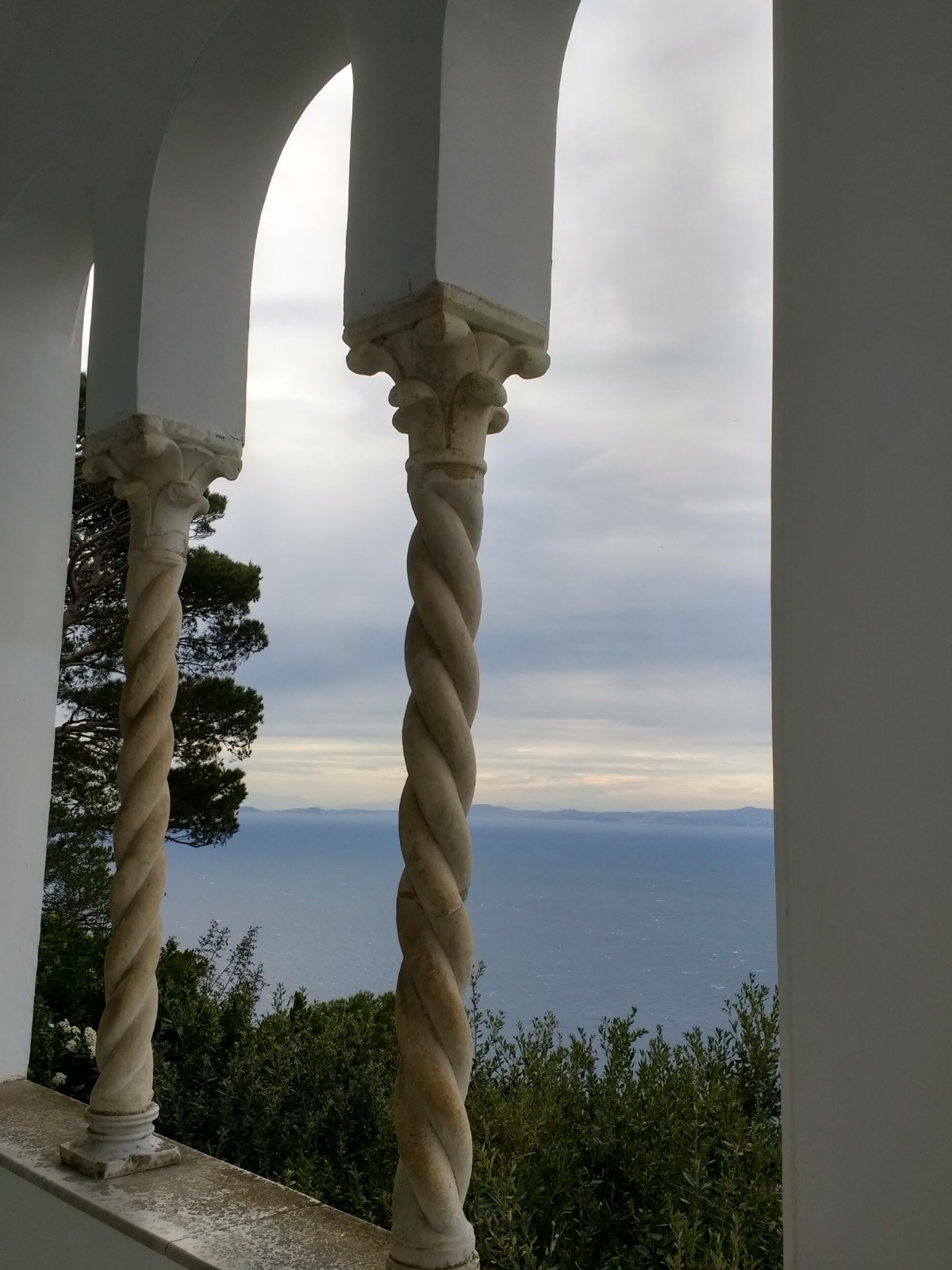
Looking out from San Michele towards the mainland.

Munthe bought a practice in Rome and worked there to earn enough money to turn San Michele into a home. It eventually became not just a place to live, but a place he could tend patients (he was one of the first to use hypnosis as a therapy) and where people could stay to aid their recovery.
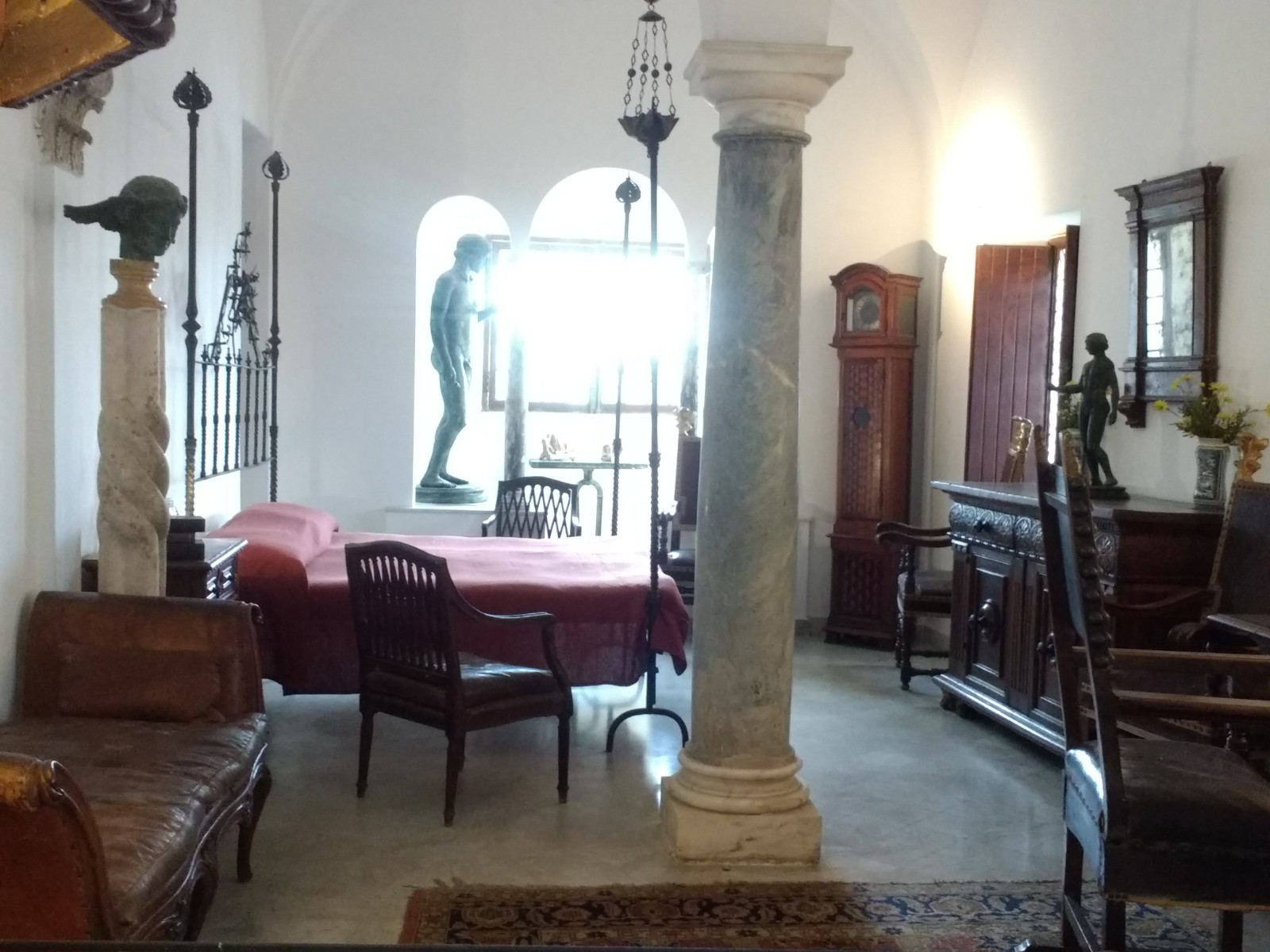
Bedroom at San Michele. The wrought-iron bed is fifteenth century and from Sicily. It is described as ‘probably’ being a camp bed. Not one to pop into your rucksack obviously.

Among Munthe’s patients was Queen Victoria of Sweden. Queen Victoria stayed so frequently that there were rumours about their relationship.
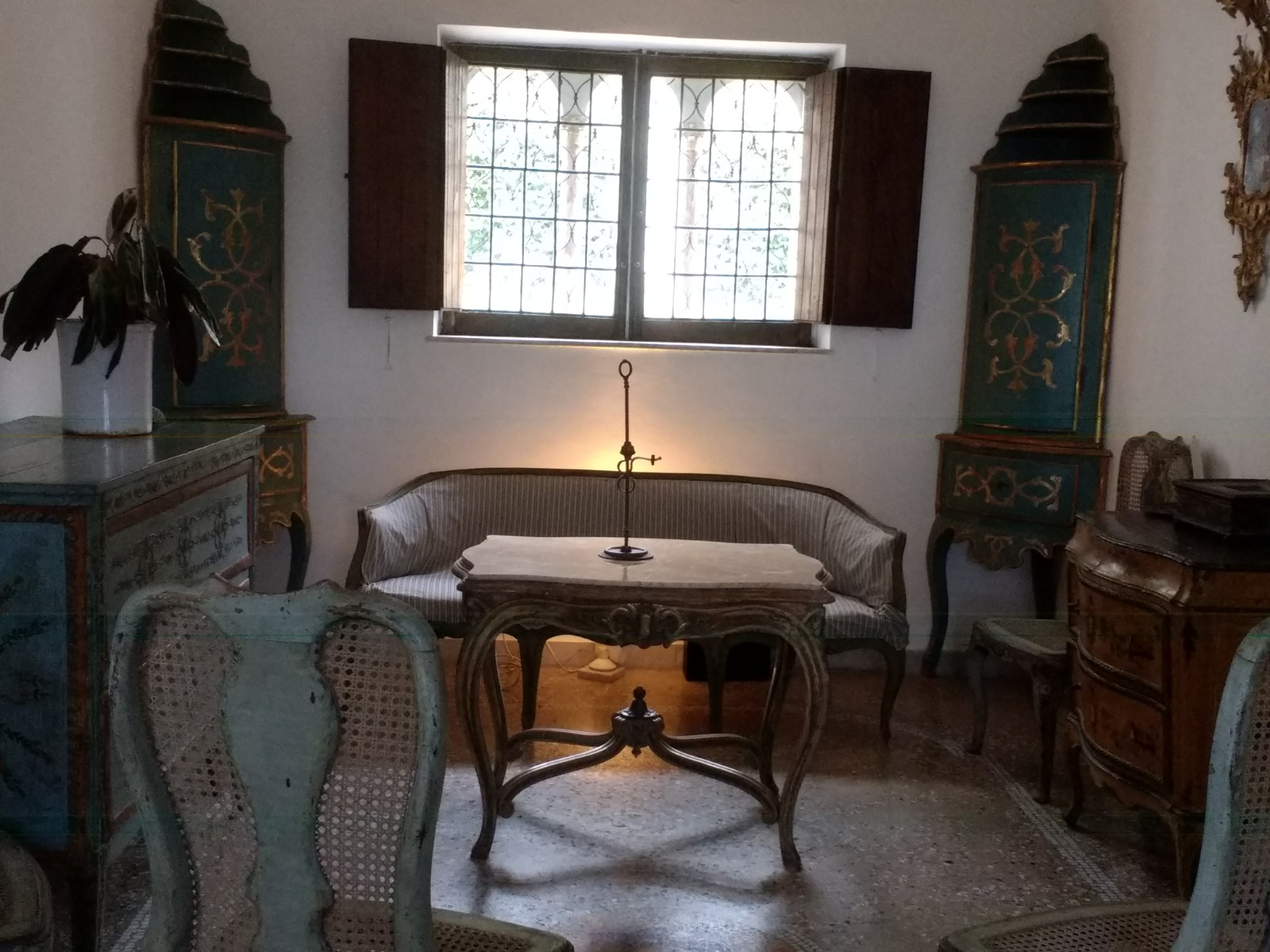
French salon at San Michele

Sadly for Munthe, the intense sunlight at San Michele proved problematic for his eyes, and in 1907 he went to live in a former defence tower, in a shadier part of the island, leaving San Michele to tenants. While there, he wrote the story of his time on Capri, ‘The Story of San Michele’. Published in 1929, it became a worldwide best-seller.
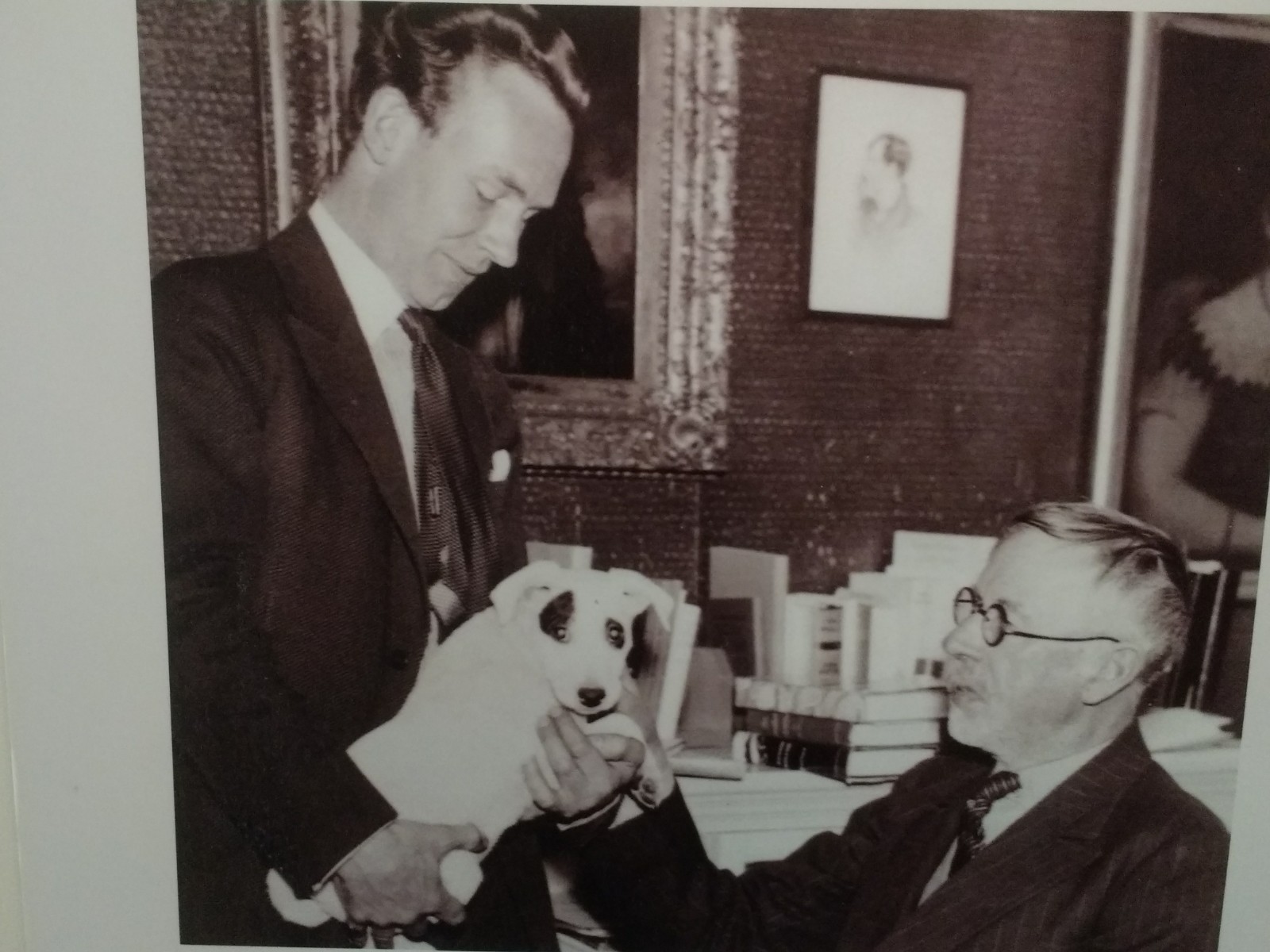
Munthe (on right) with John Murray, his publisher, in 1937. ‘The Story of San Michele’ was first written in English, but has since been published in more than forty other languages.

In 1943, Munthe left Capri for good and spent the last few years of his life at the Royal Palace in Stockholm as a guest of Carl Gustav V.
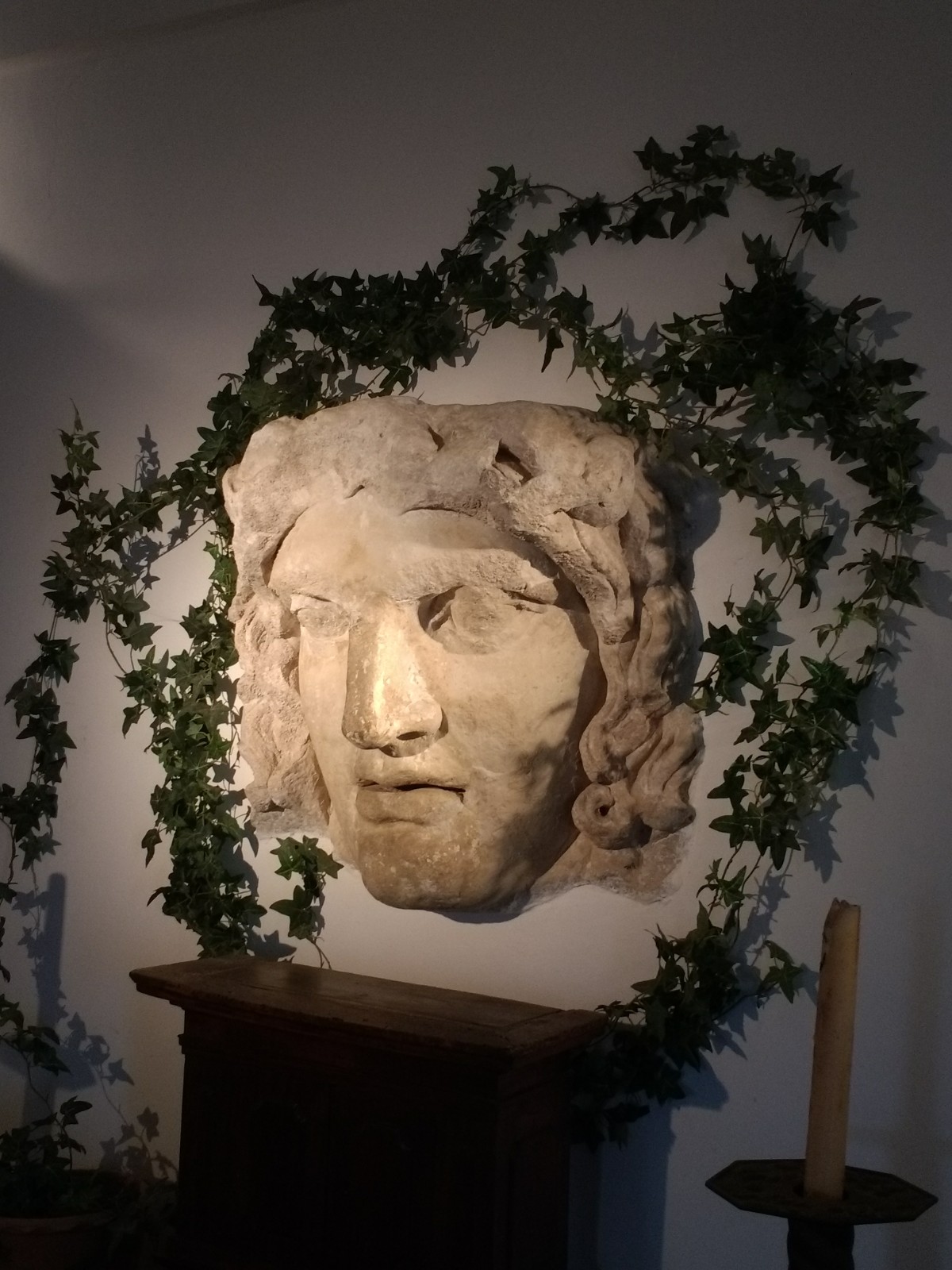
Roman copy of a Greek carving of Medusa. The Villa has an eclectic mix of artefacts from all ages.

On his death, Munthe left San Michele to the Swedish State, and Torre Damecuta, the former defence tower where he had been living, to the Italian State. Another property he owned, Barbarossa Castle, is now the Capri Bird Observatory, fitting, as in his life time, Munthe, an animal lover, had been a keen campaigner to stop the trapping of migratory birds.

Munthe and his dogs.

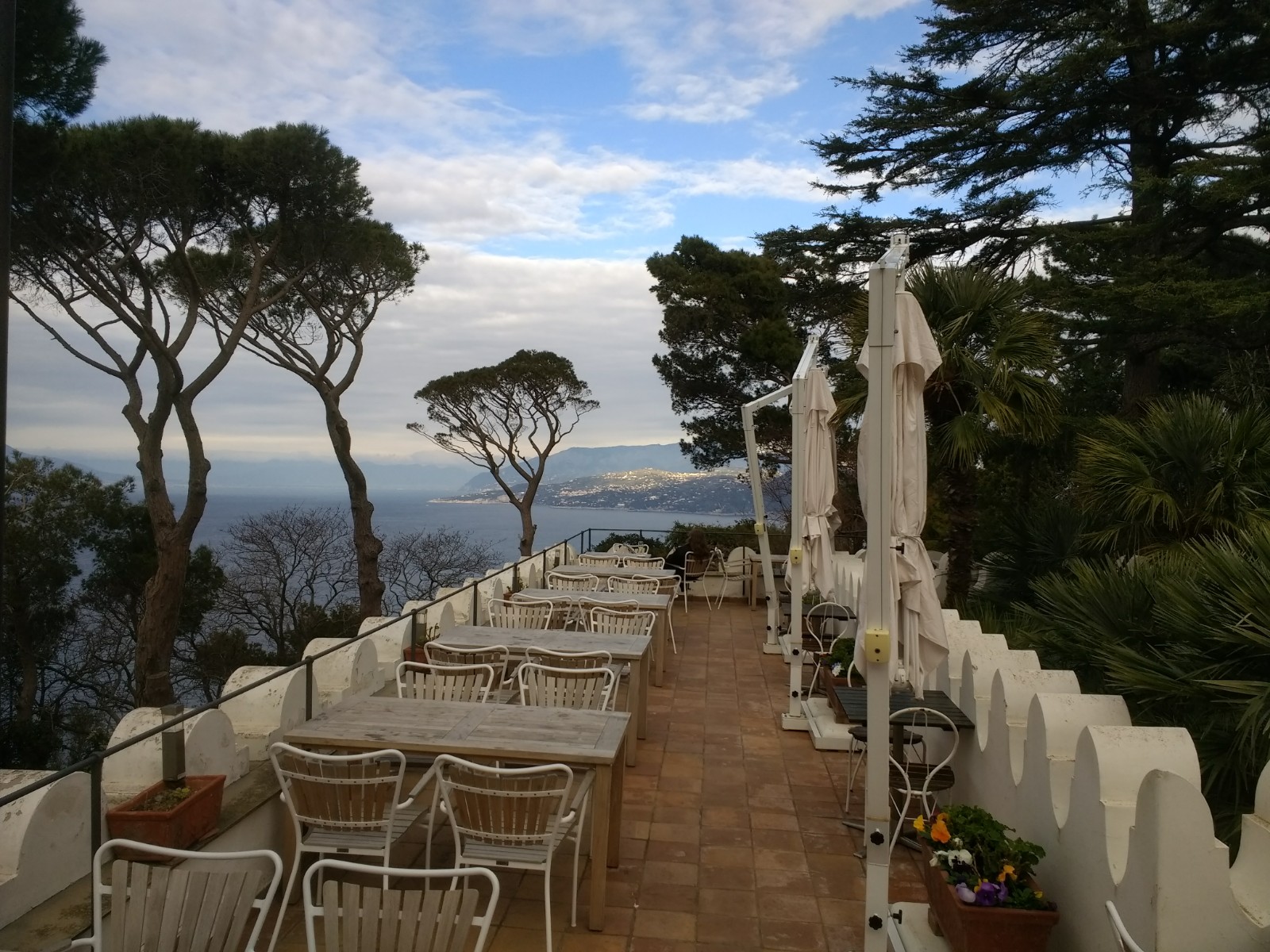
Cafe terrace at San Michele. We’ve promised ourselves lunch here before we leave – an incentive to climb all those steps again.
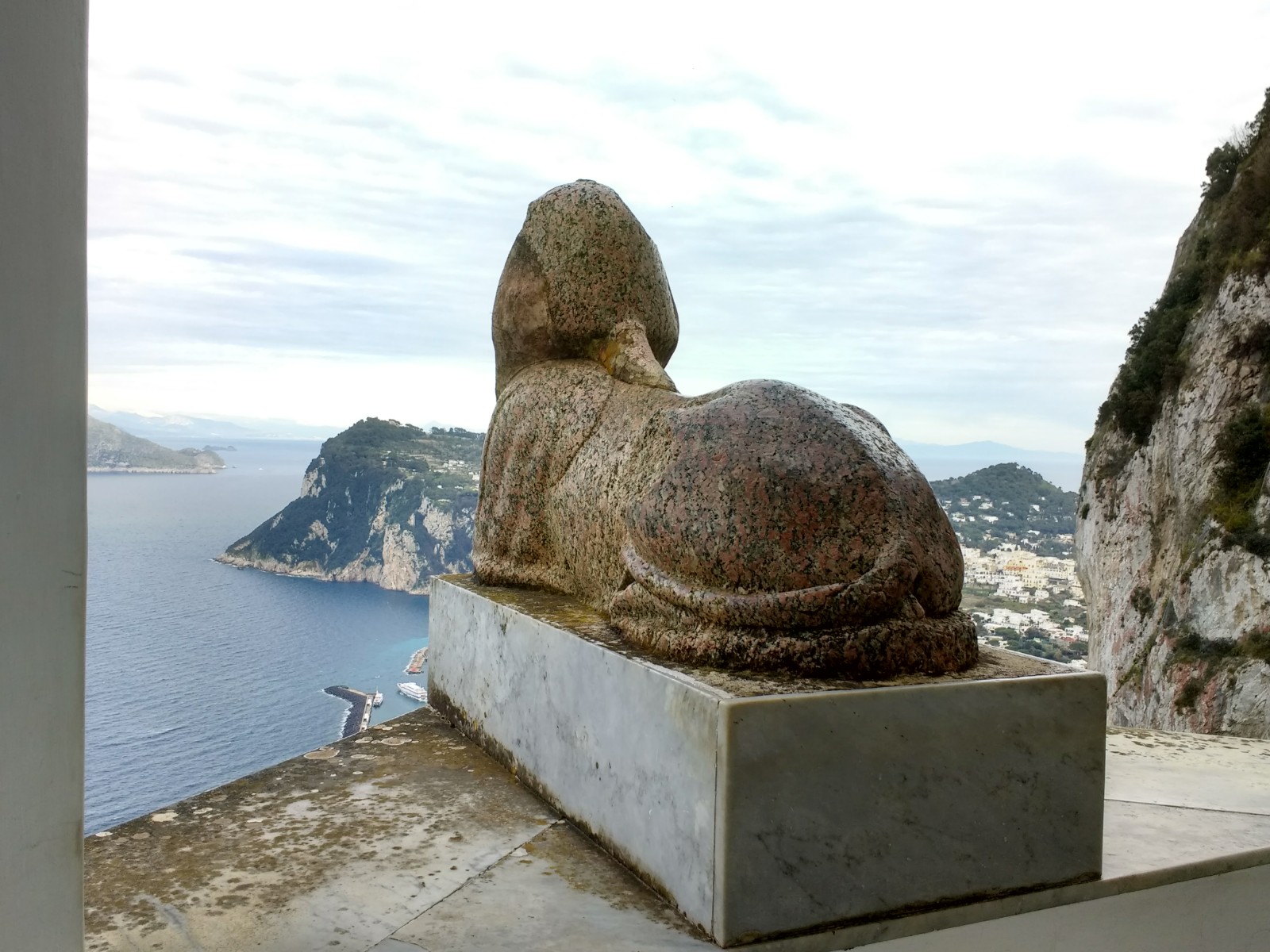
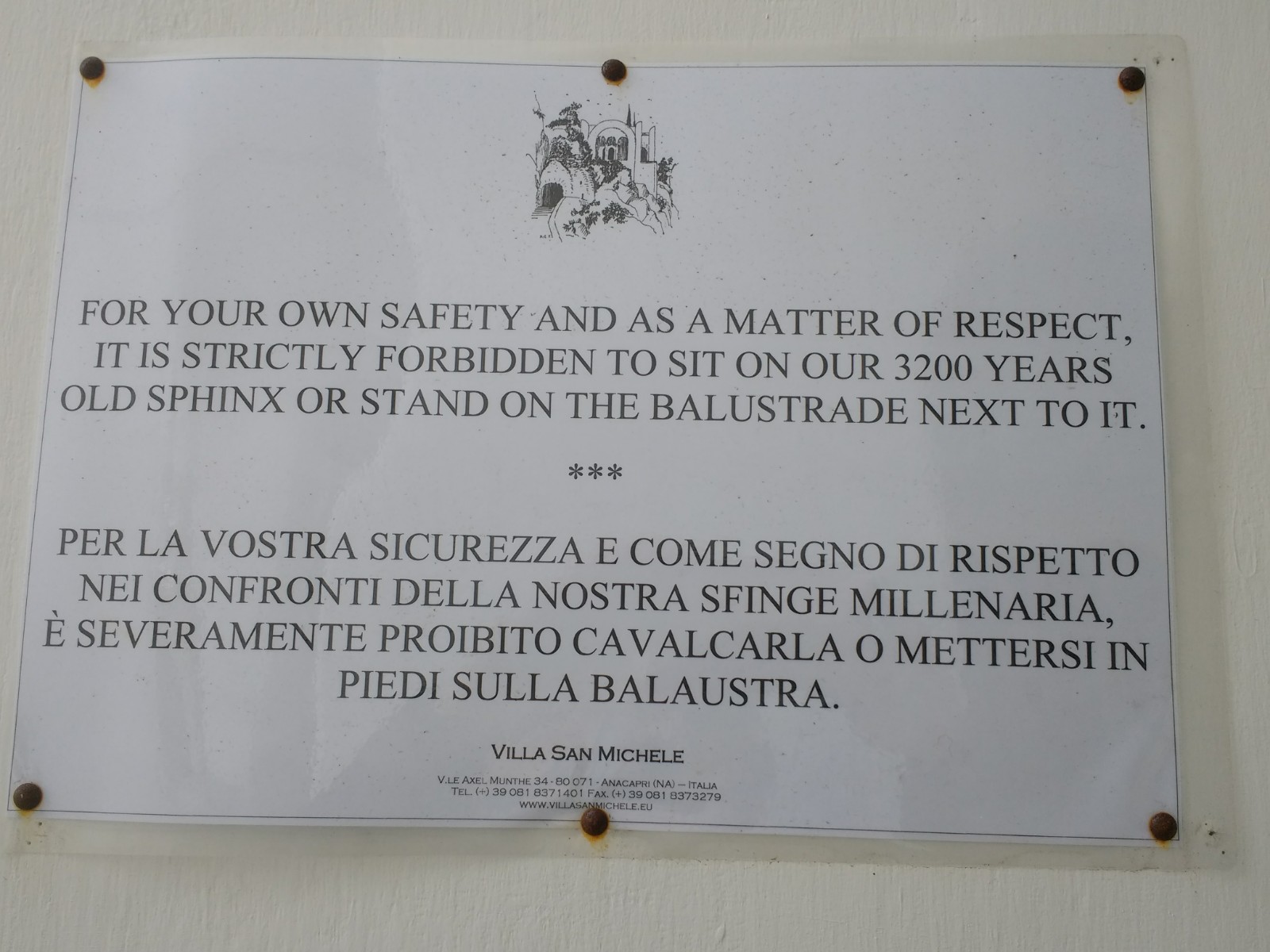
Genuine ancient Egyptian Sphinx. There is a sheer drop the other side. The following is a picture of a notice that the owners of San Michele, sadly, needed to put into place.

Notice by the sphinx

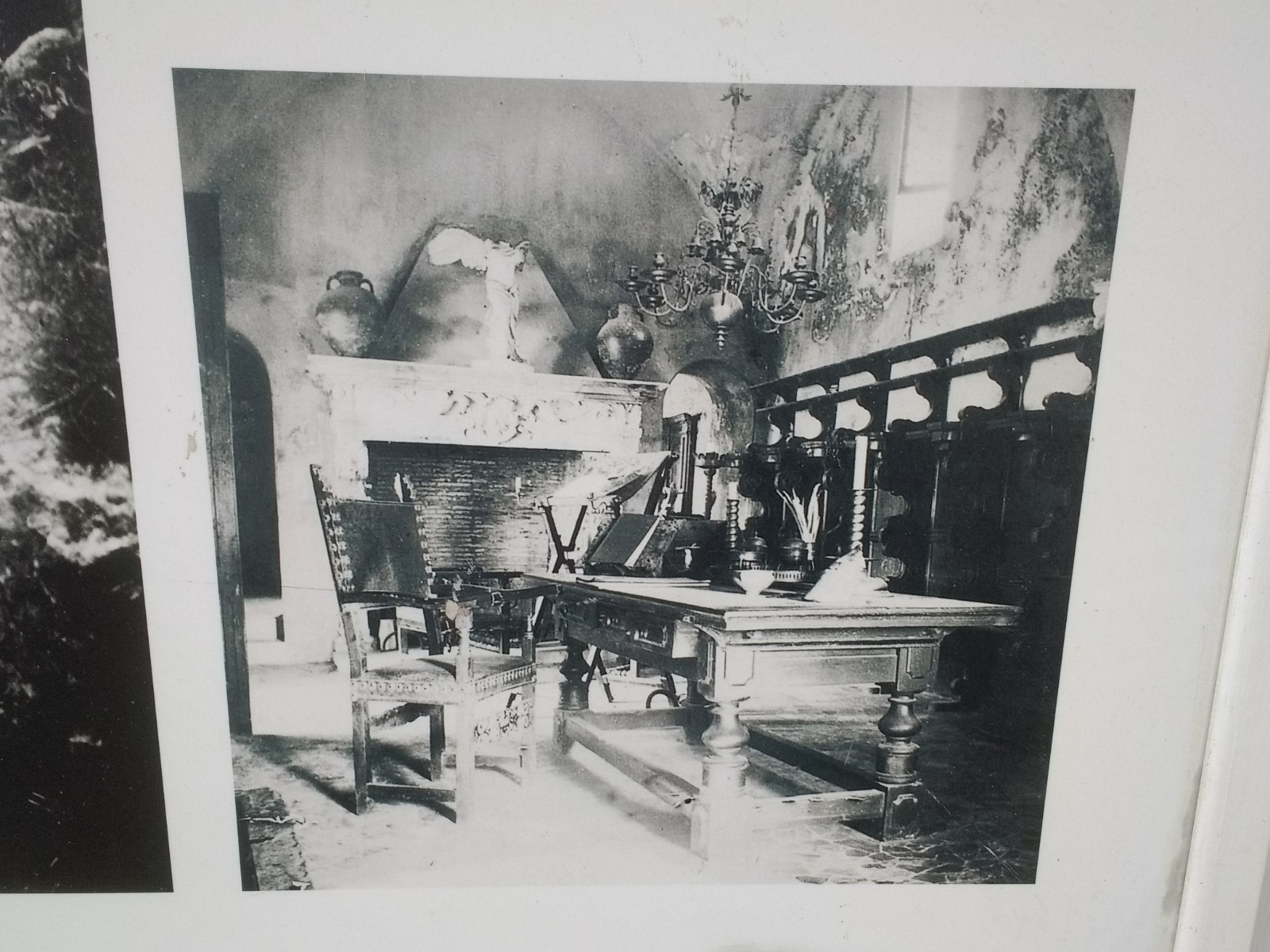
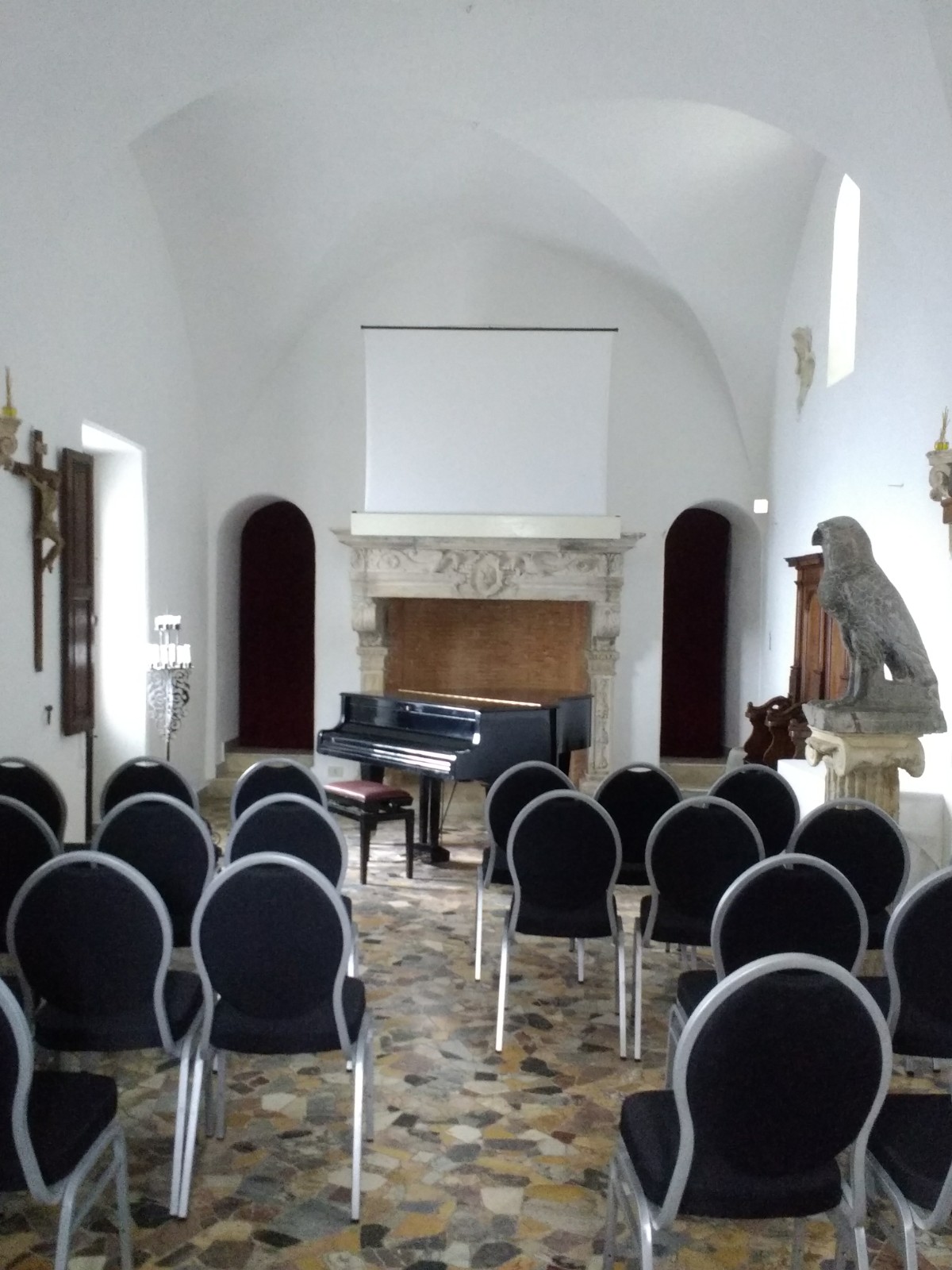
The chapel used as a library.

Munthe also used the chapel for concerts. Concerts are still held here every summer.


St Joseph’s Day In Capri Town

Today is Saint Joseph’s Day (Wikipedia describes him as the ‘legal’ father of Christ) and by default, Father’s Day. Joseph is credited for saving Sicily from famine. Apparently, the island was suffering from drought and the people promised to hold a feast in his honour if their prayers for rain were answered. The rain did come and since then St Joseph has been remembered on March 19.

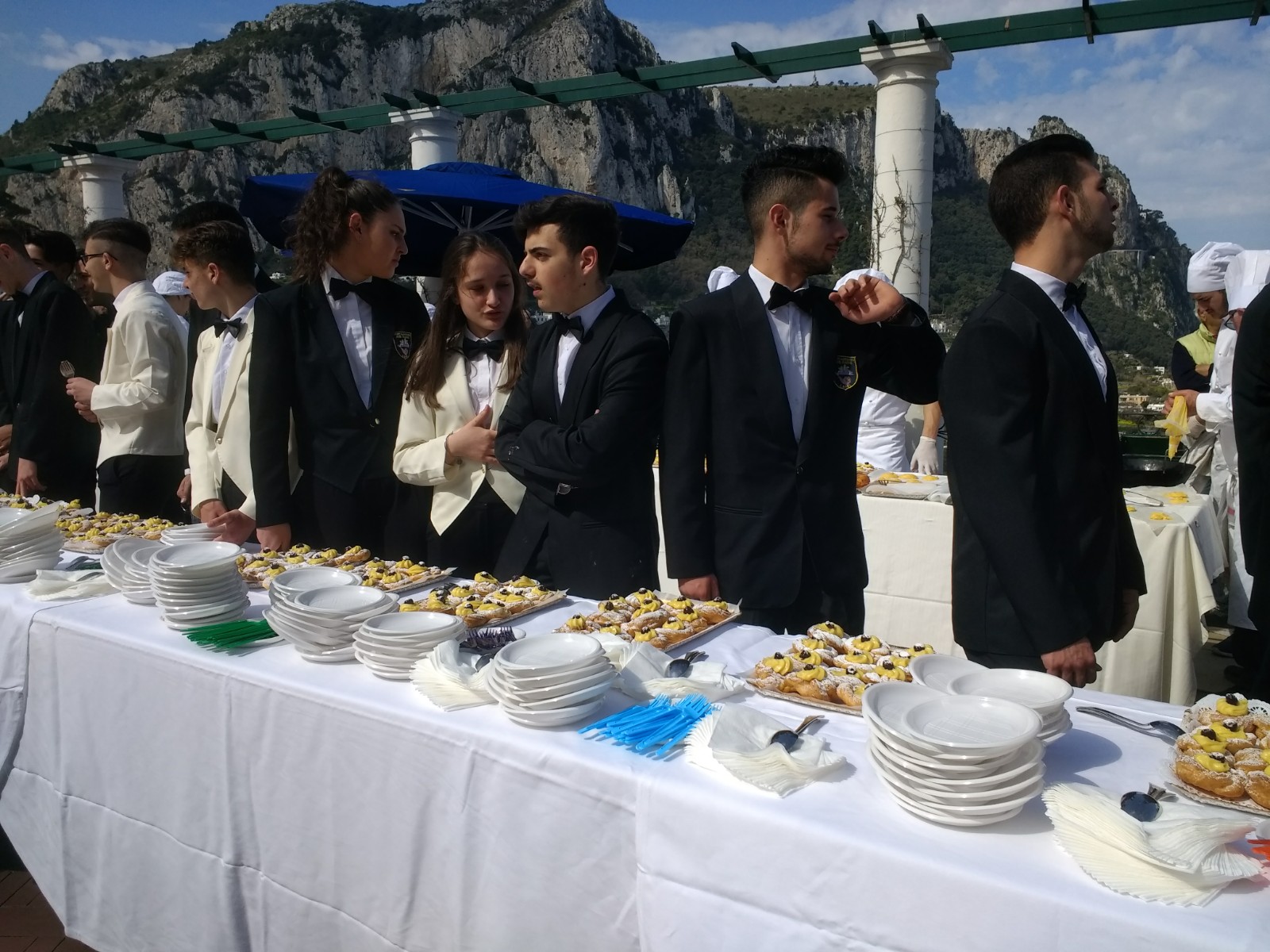
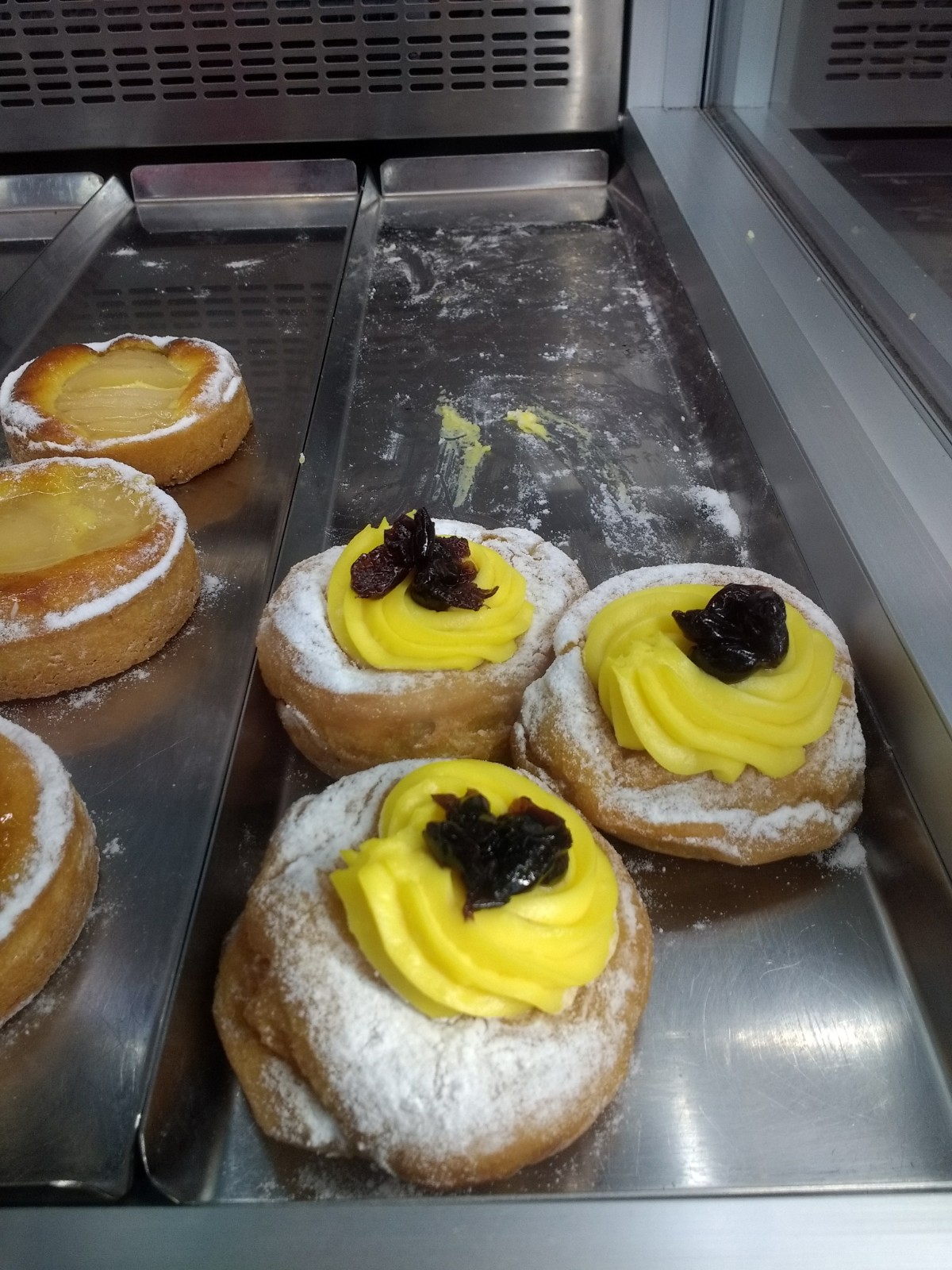
It was fava beans that saved Sicily from starvation and there a dish called Maccu, with fava beans as an ingredient, is prepared on this day. Here in Capri, the celebratory foodstuff is much sweeter. Zeppole are made from fried dough, which are filled with lemon cream, and topped with a cherry.

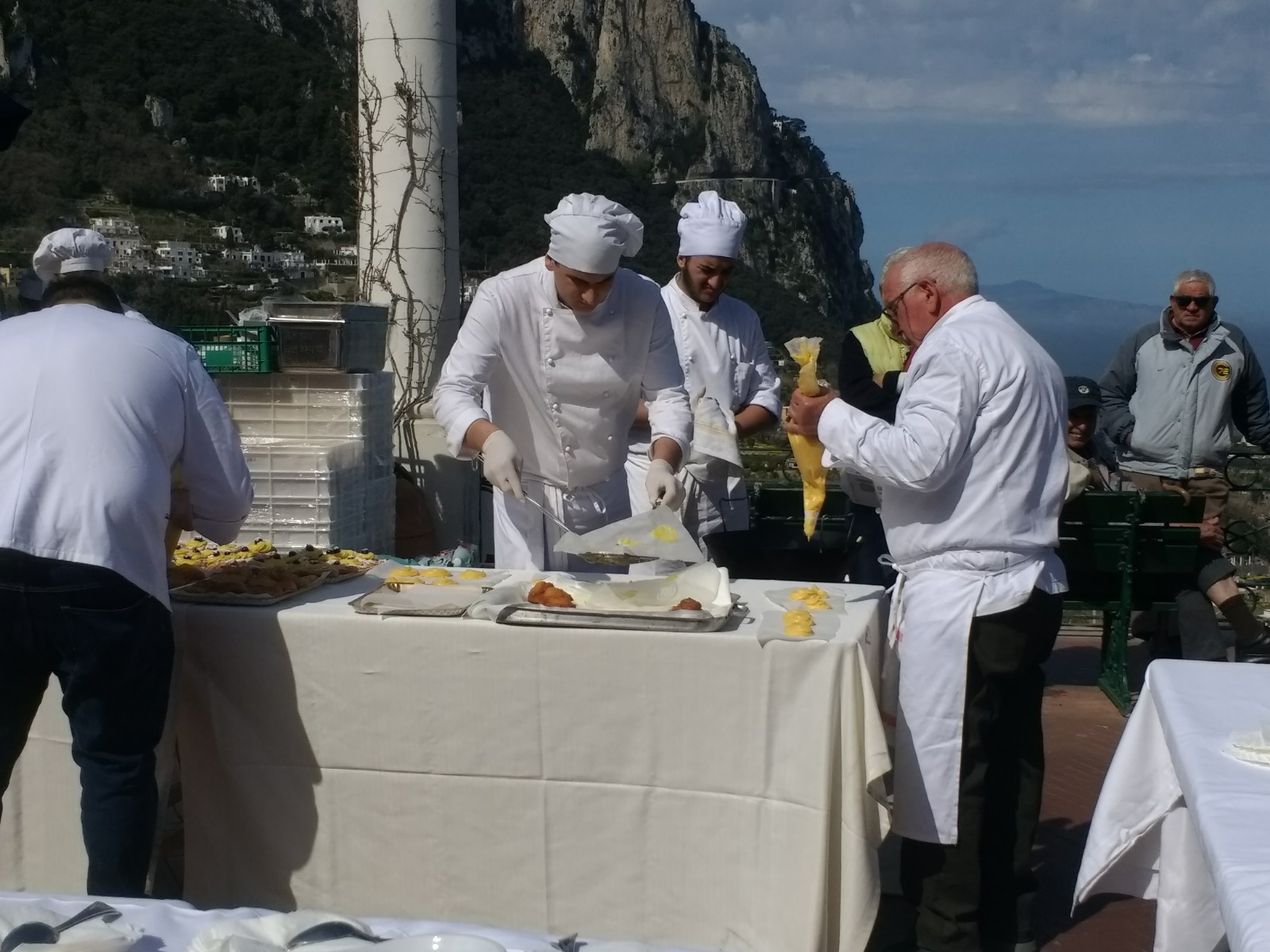
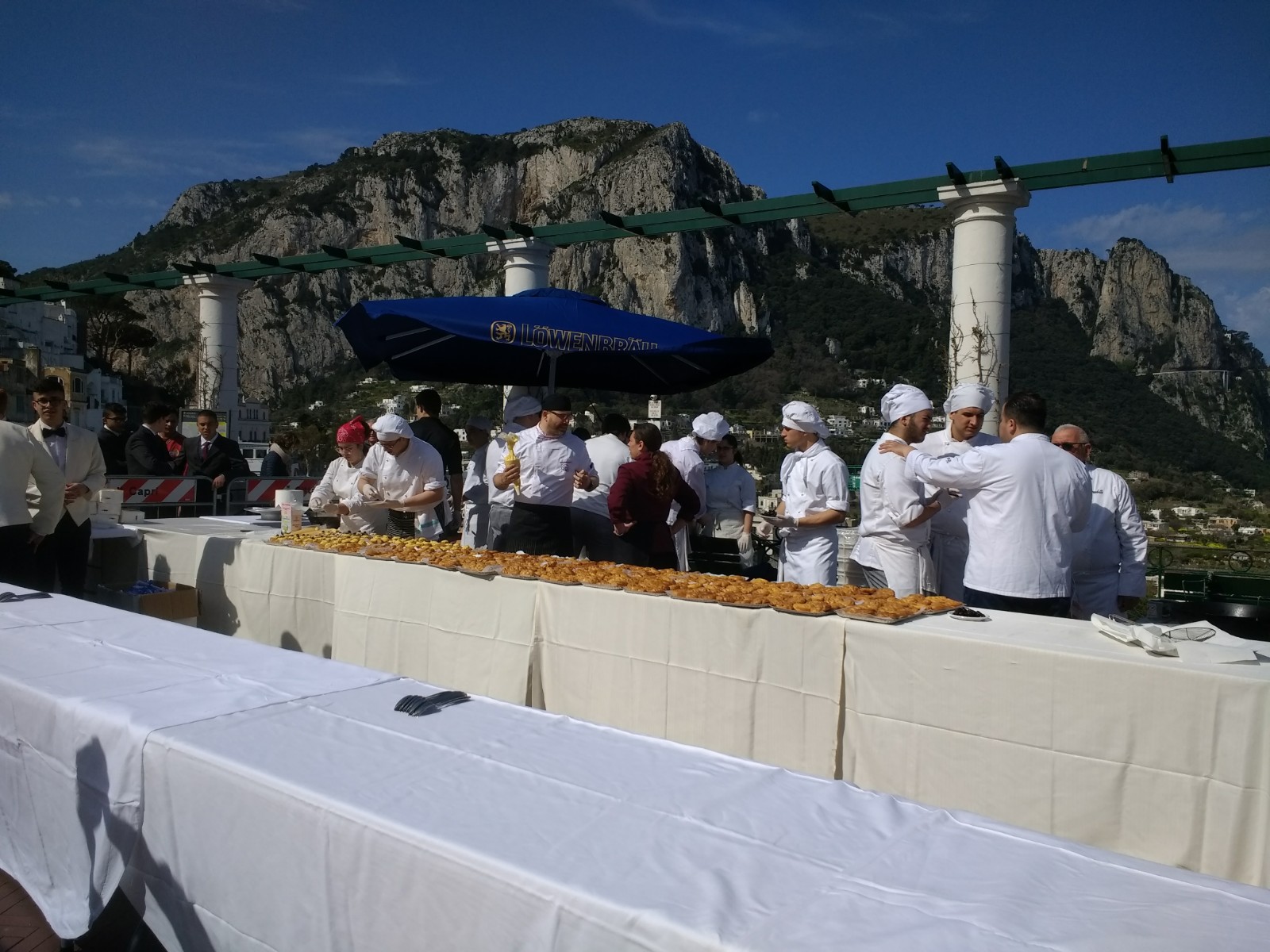
Students studying catering and hotel management from The Axel Munte School in Anacapri were brought to the town square today to prepare and serve zeppole to the local people (traditionally, it was the poor who would be fed).

Preparing the zeppole
What’s the expression about too many cooks?

The zeppole could not be served before everyone had made a speech.

The zeppole looked delicious, but the crowd of people, all wanting a free cake was large (no orderly queue here – it was every person for himself) so we decided to leave.

Later, in a cafe.

We got our zeppole later, with a cup of tea. It was delicious.

They were getting ready for Fathers’ Day in Naples before we left, but no sign of it here on Capri.

Stepping Out

It was the Ancient Greeks who first carved steps out of the steep cliffs to connect the two settlements of Capri and Anacapri (which means ‘above Capri’).

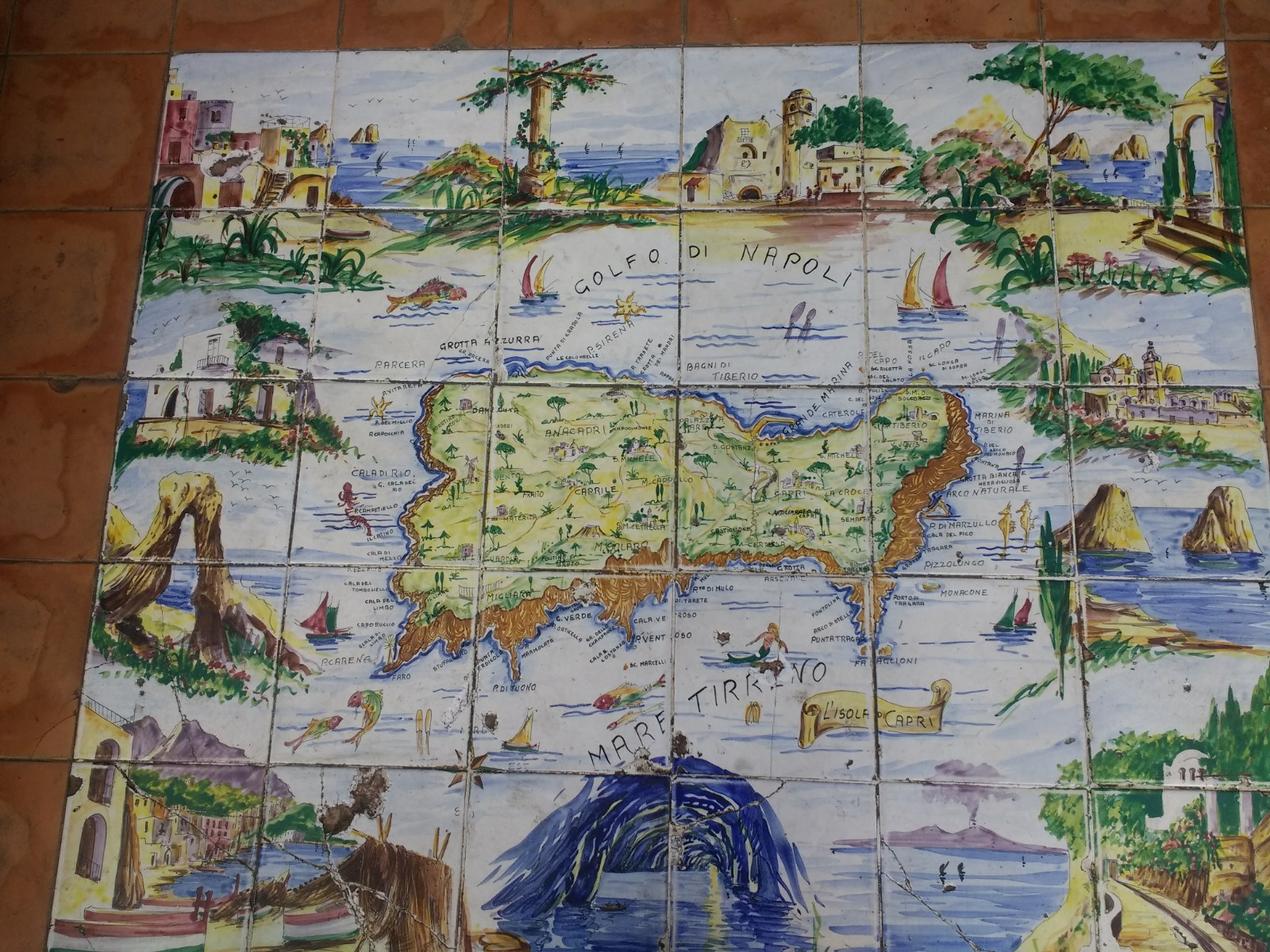
Anacapri is on the left side of this map, Capri on the right.

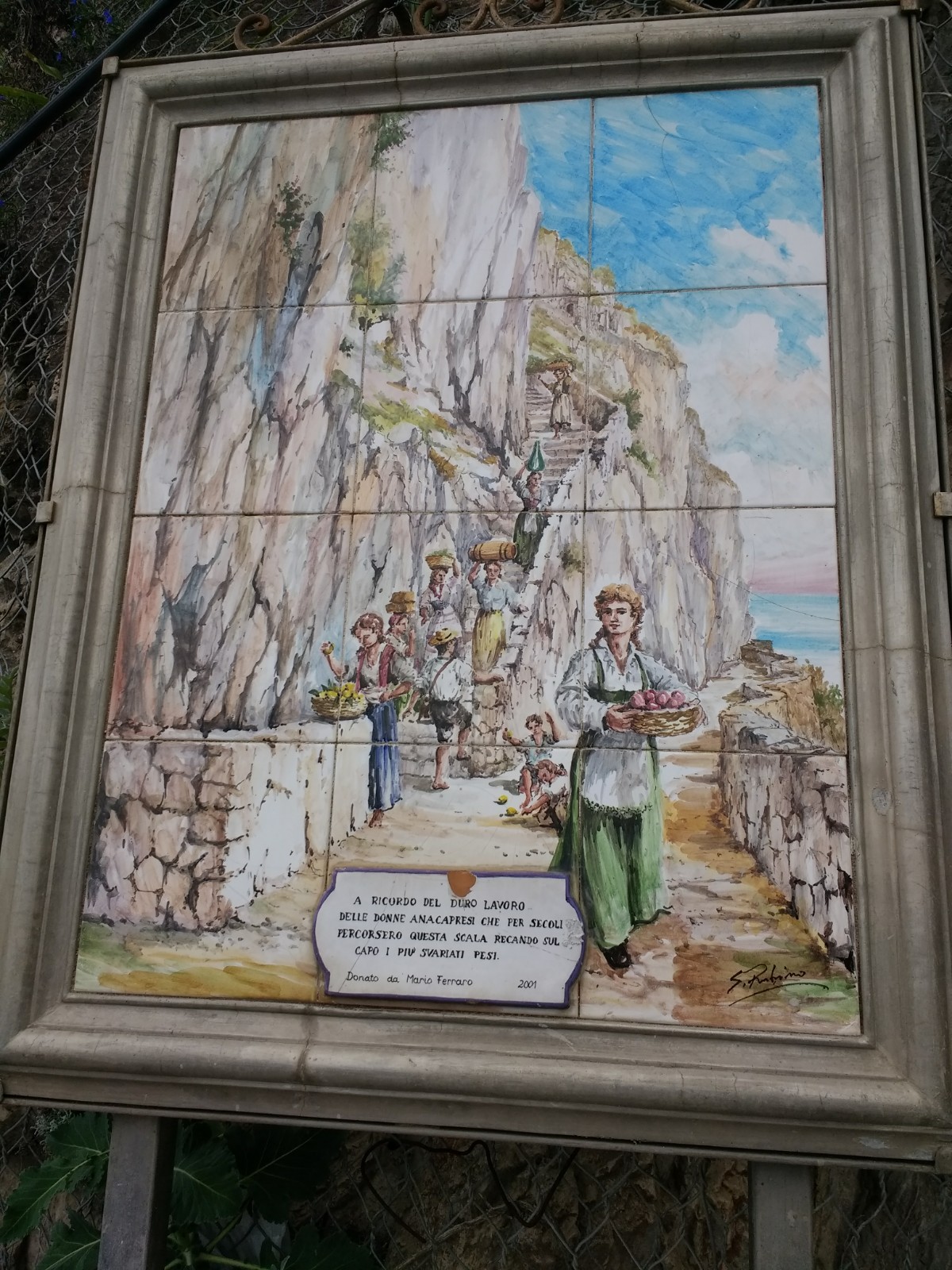
These have been restored many times over the centuries up until the most recent time, in 1998. Apparently, it used to be a normal part of daily life for women in Anacapri to walk down all 921 of these steps, laden with produce to sell, to the port of Marina Grande.

Women on their way down to the port

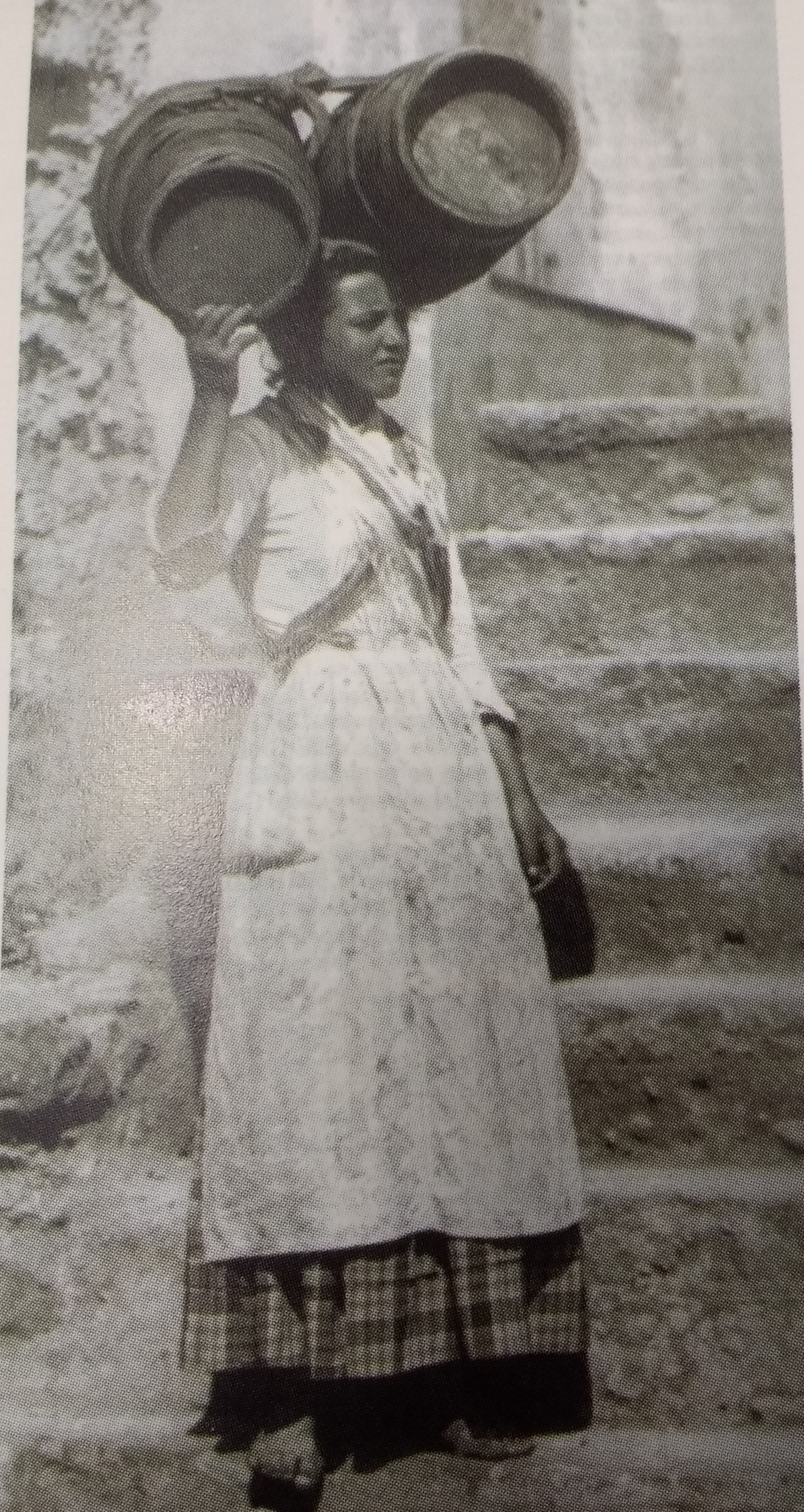
On the way back up to Anacapri they would carry fresh water. There is a photograph in my guide book, dating from about 1920, of a woman on the steps, barefooted, with two wooden barrels. The barrels are tied together and she has them resting on her head, one either side.

Barefoot woman carrying barrels of water.

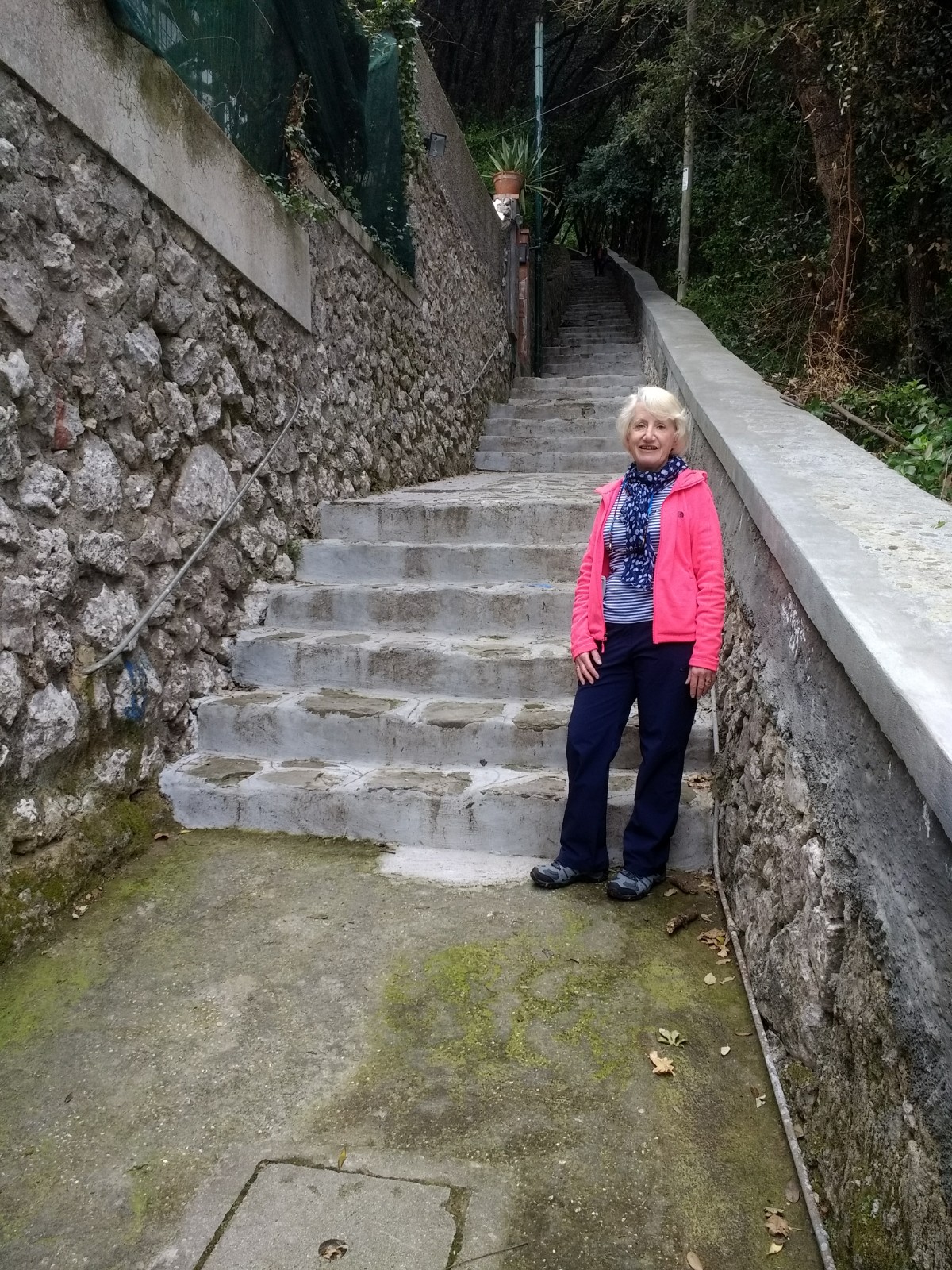
This afternoon we walked up all these steps to Anacapri, but I am ashamed to say, I was not carrying two barrels of water on my head.

On my way up.

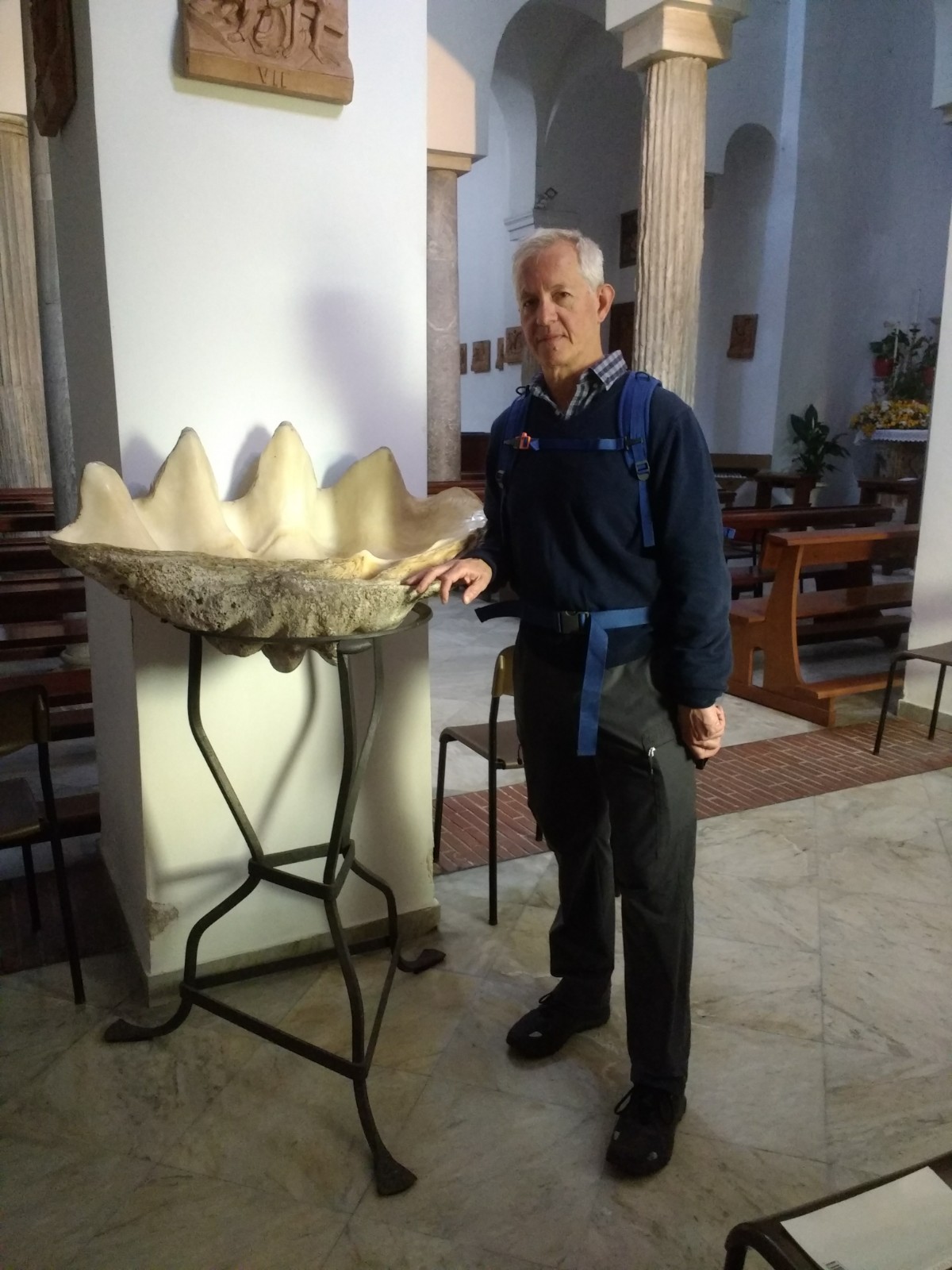
We soon passed one of the oldest churches on the island dedicated to San Costanzo, patron saint of Capri.

There was a pair of enormous shells in the church, holding the holy water.

The church originally had twelve columns of cipolin marble, but three were removed and taken to the Royal palace at Caserta, to be replaced with columns of granite. I wonder how the congregation viewed this at the time. They could have felt proud or disgusted, it’s difficult to say. I think I know what people would say if something similar were to happen today.

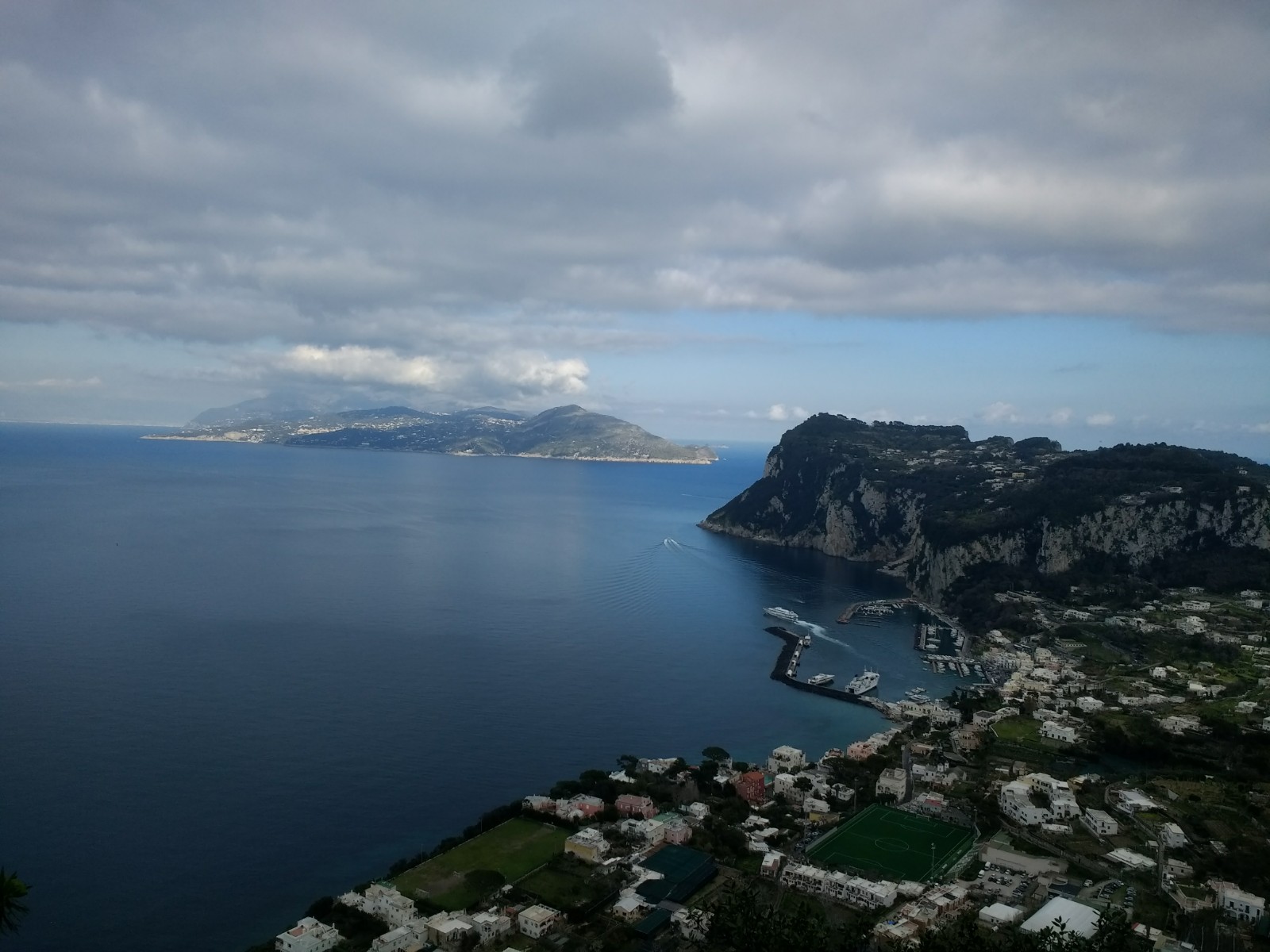
The view from up high. The port of Marina Grande, where the walk started, can be seen at the bottom. The town of Sorrento is on the mainland, across the water.

The Gardens of Augustus, Capri

So yesterday we landed in Capri where we will be until tomorrow week, when we’re off to Florence. This is quite a culture shock after Naples. Where Naples is large, noisy, shambolic, full of life (and all the detritus that goes with life) Capri is small (just 10.2 square km) quiet (although a lot of hotels and shops only open later this month) organised and clean.

Today we walked up to the Gardens of Augustus, created in the early twentieth century by the German industrialist, Friedrich Alfred Krupp, who had a house here. Originally called the Krupp Gardens, they were re-named after the First World War by the town authorities, to pay homage to the Roman emperor, who favoured the island, building temples and villas, creating a garden and putting in an aqueduct here.

Gardens of Augustus

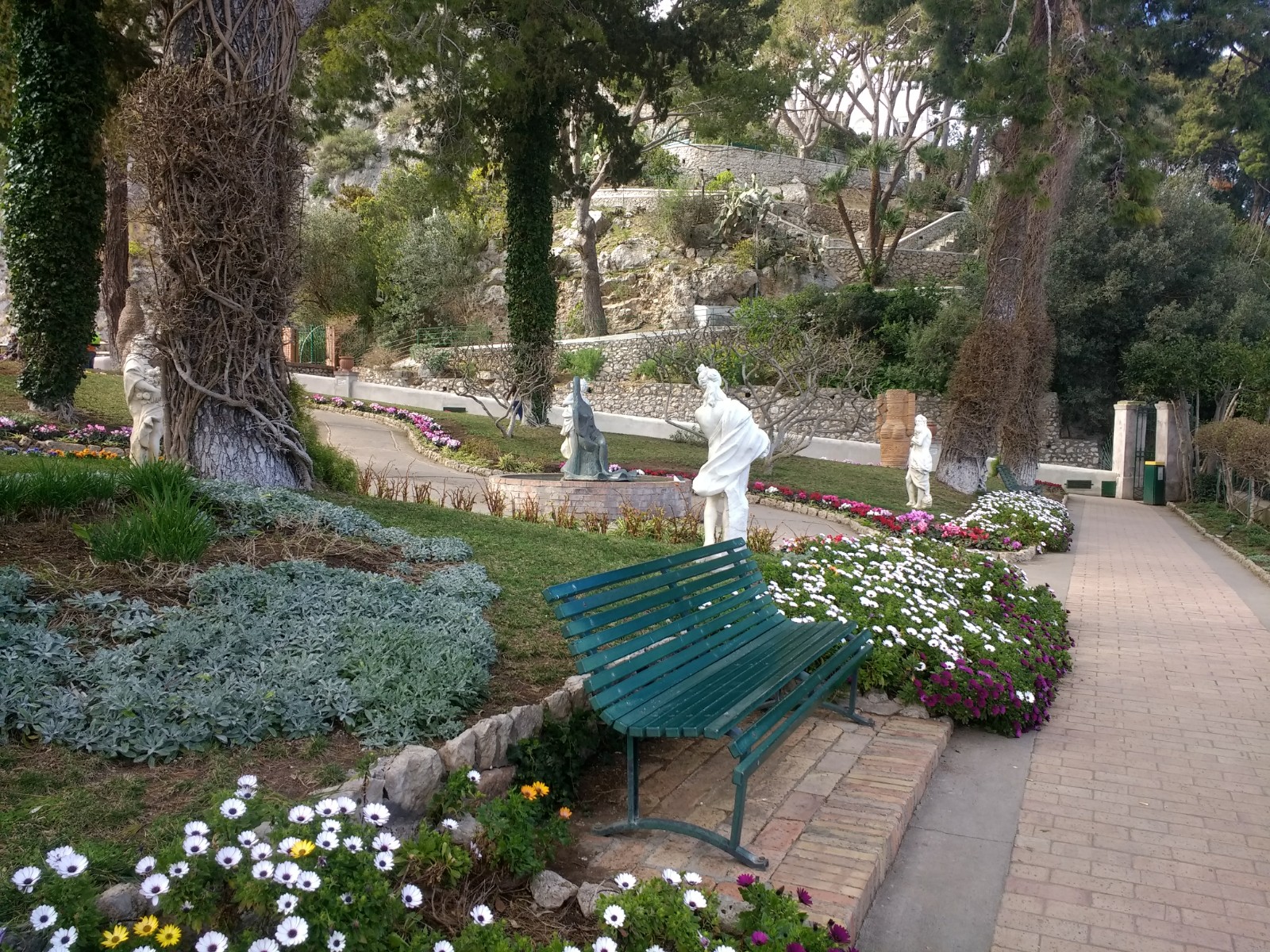
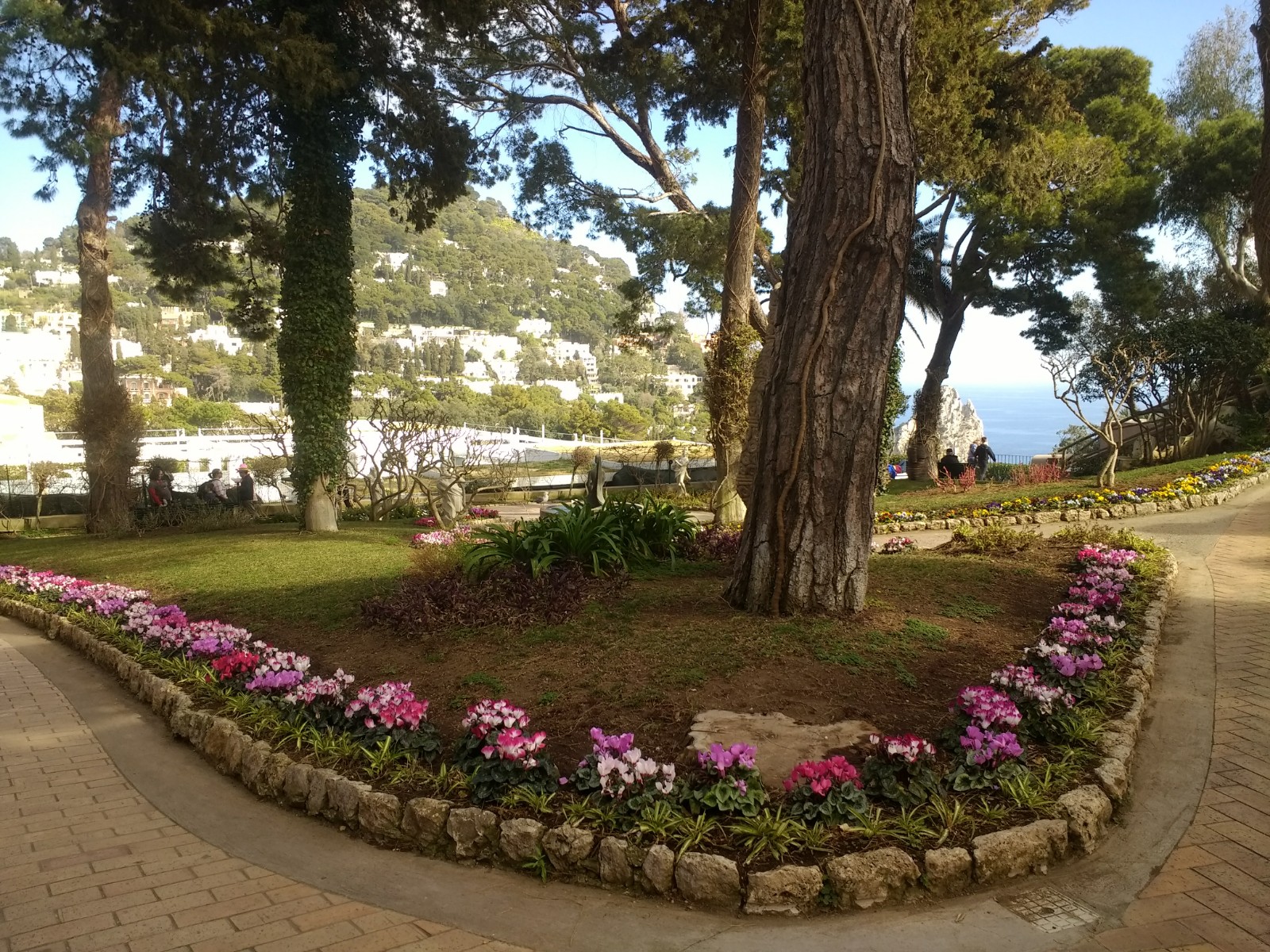
The gardens are the most manicured I can remember seeing in Italy. It was strange seeing so many flowers out when the trees are only just starting to come into blossom.

Krupp was keen that the gardens should be open to the public, which they are, for just one euro.

Tidy beds in the gardens.

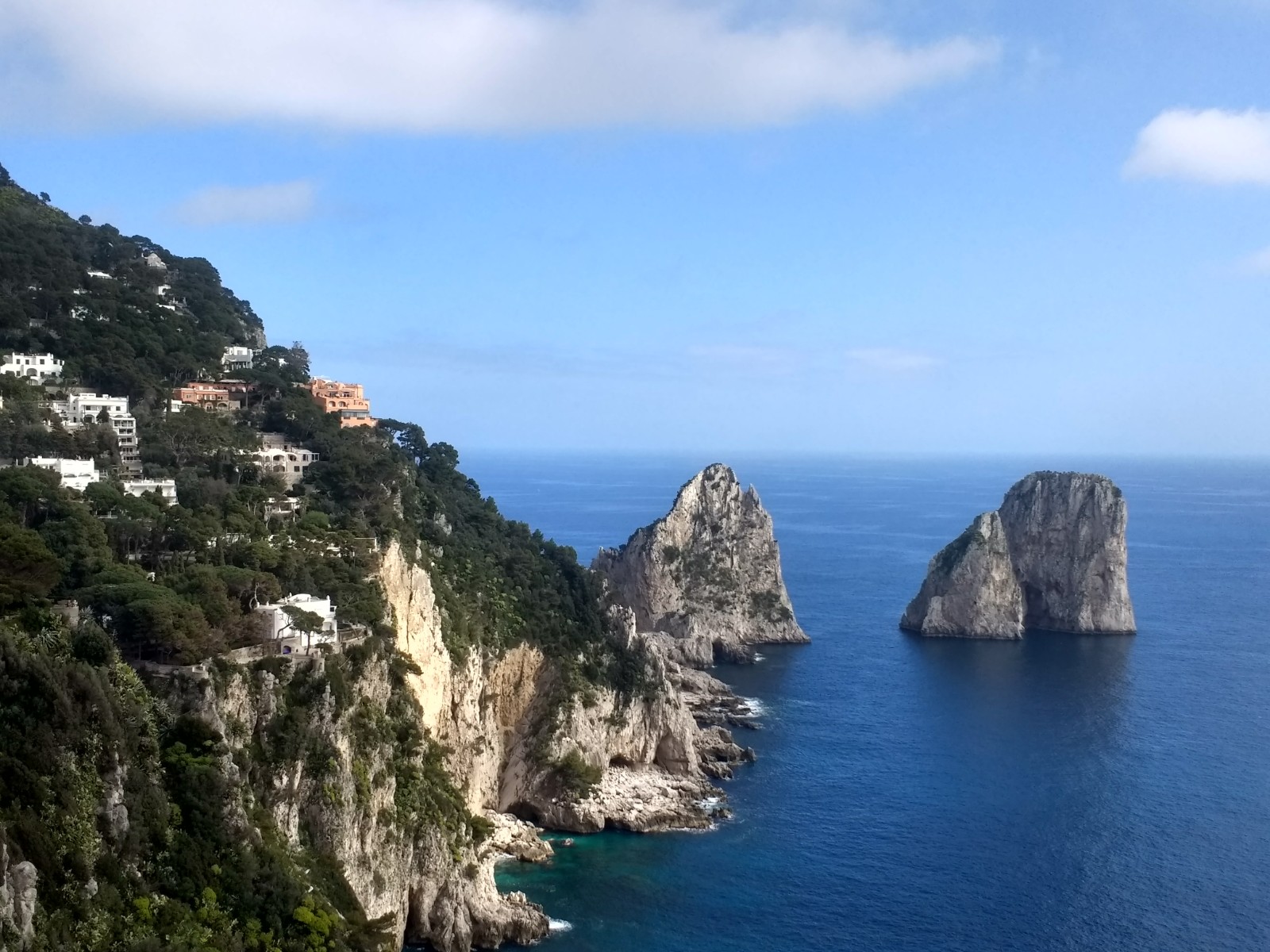
There are fabulous views from the gardens looking down to the rocky coast.

These are known as the Faraglioni, or rock stacks. From left to right they are named Stella, Mezzo and Scopello.

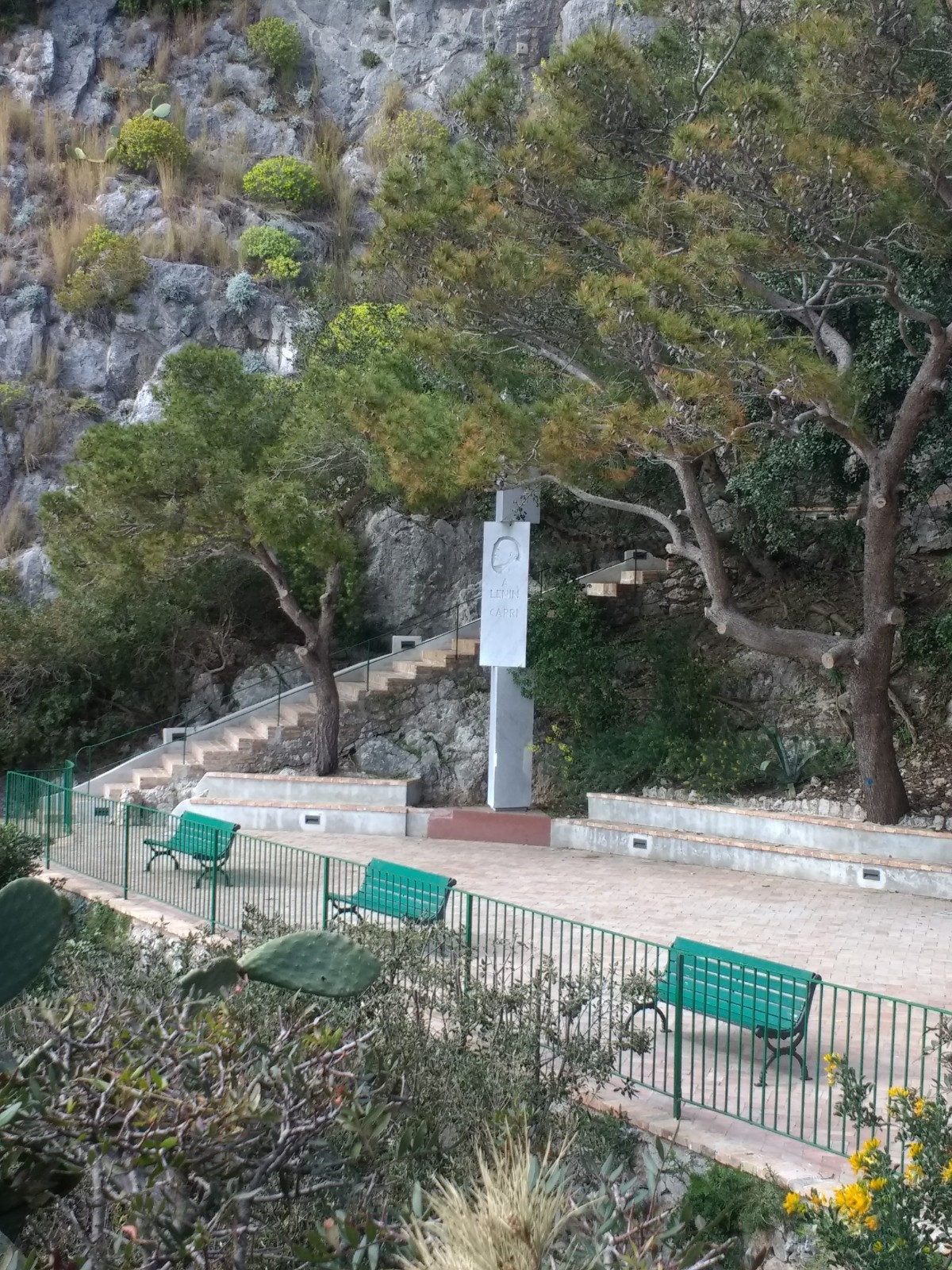
It is strange that in this fairly exclusive idyll, we should come across a statue of Lenin, but apparently he was a guest of Maxim Gorky, who had a house on Capri, in 1908.

Lenin statue

Krupp had a steep path built to connect the gardens with Marina Piccolo, the smaller of the two ports here, where he used to keep his boat. The path, still known as Via Krupp (it has not had a change of name forced upon it) is supposedly stunning, but has been closed for a few years as, built of limestone (Capri is not volcanic) it is prone to rock falls.

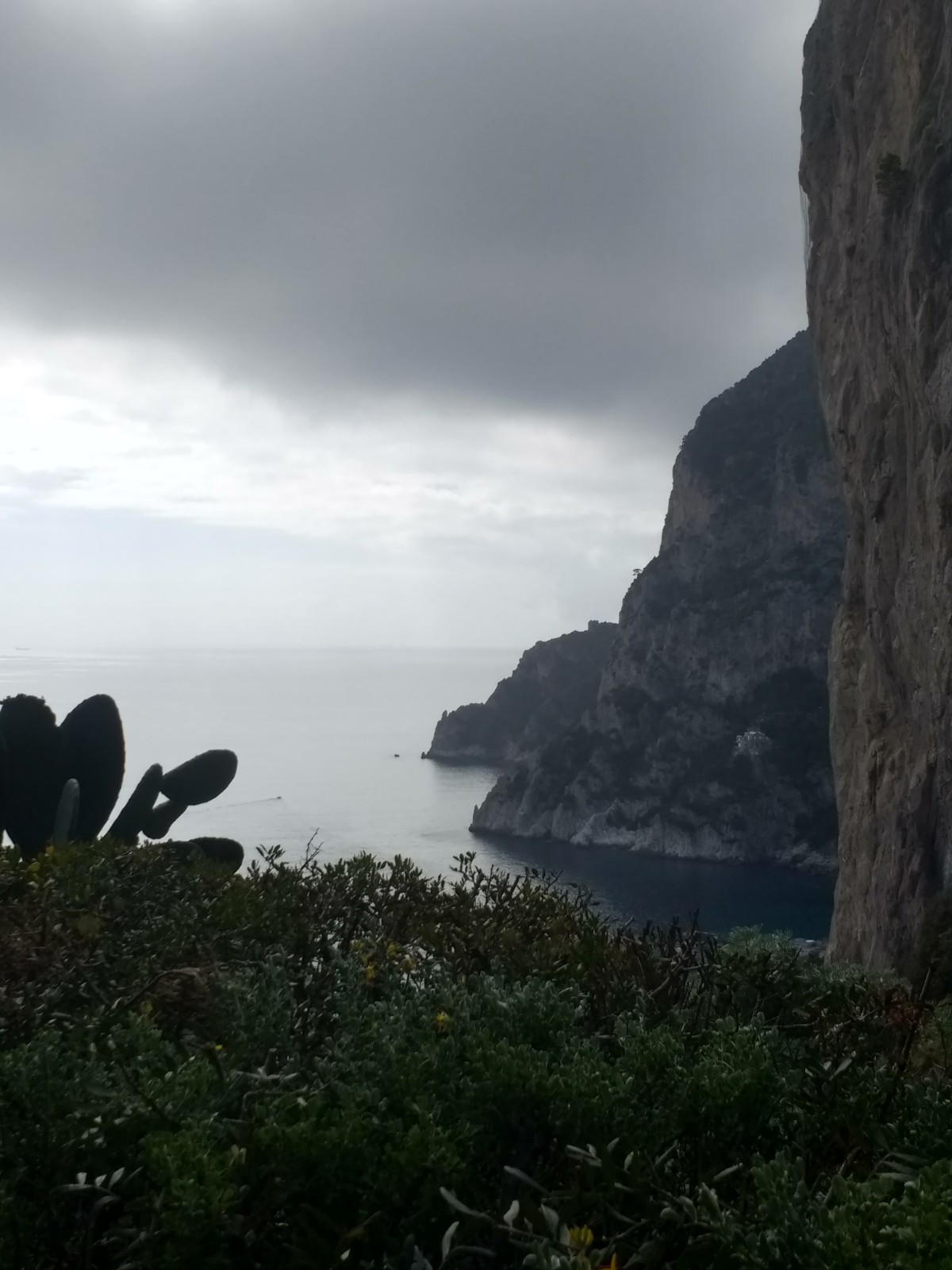
Another view down

A Walk To Posillipo

This is our last day in Naples (we are off to Capri for ten days tomorrow) and we decided to take the underground train to Mergellina, on the north side of the city, and walk to Posillipo, on the northern edge of the Bay of Naples.

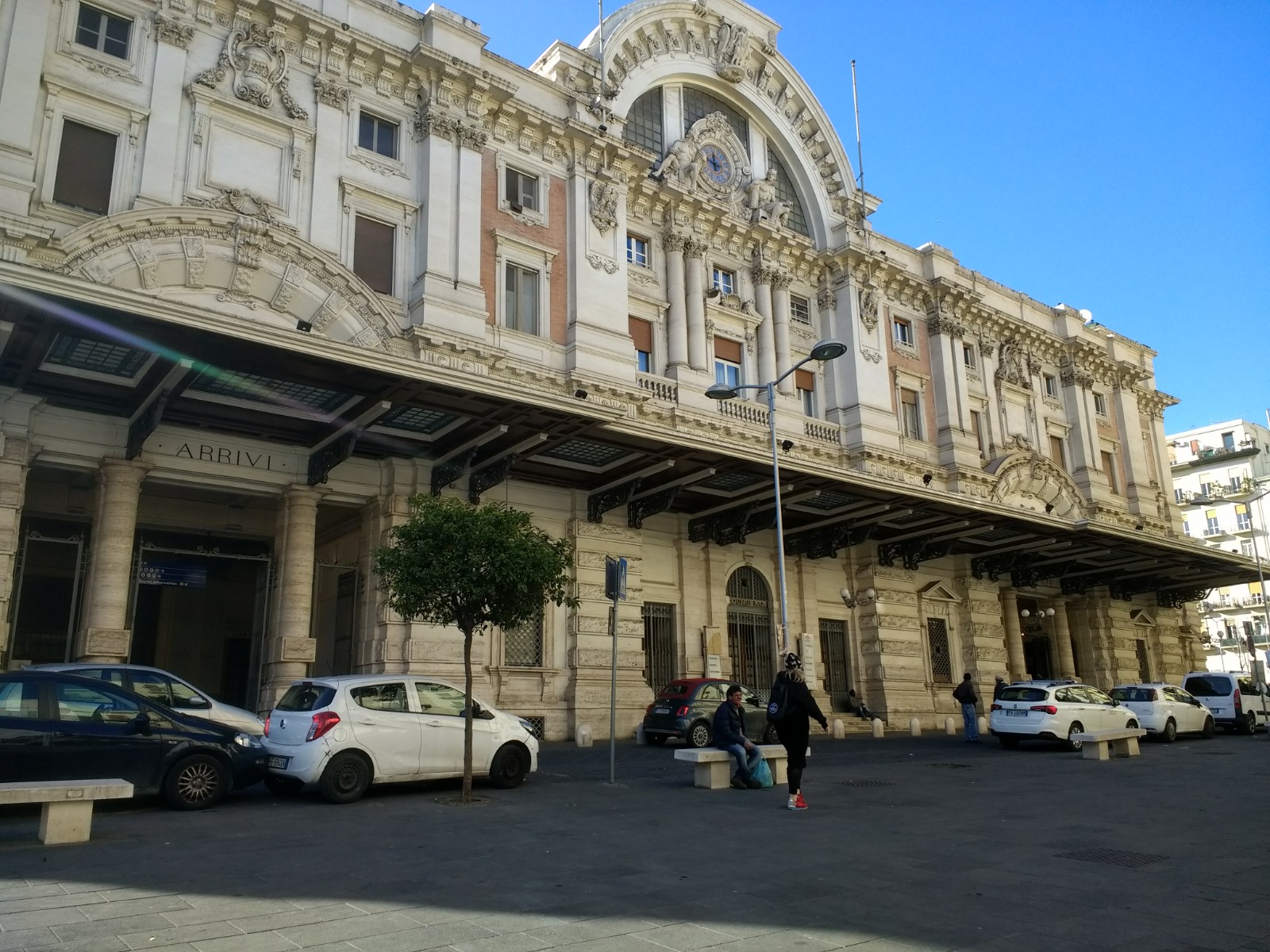
Mergellina Station, opened in 1925 with five platforms, now has only two which are operating. It is still a lovely looking building.

Mergellina Station
Mergellina Station close up
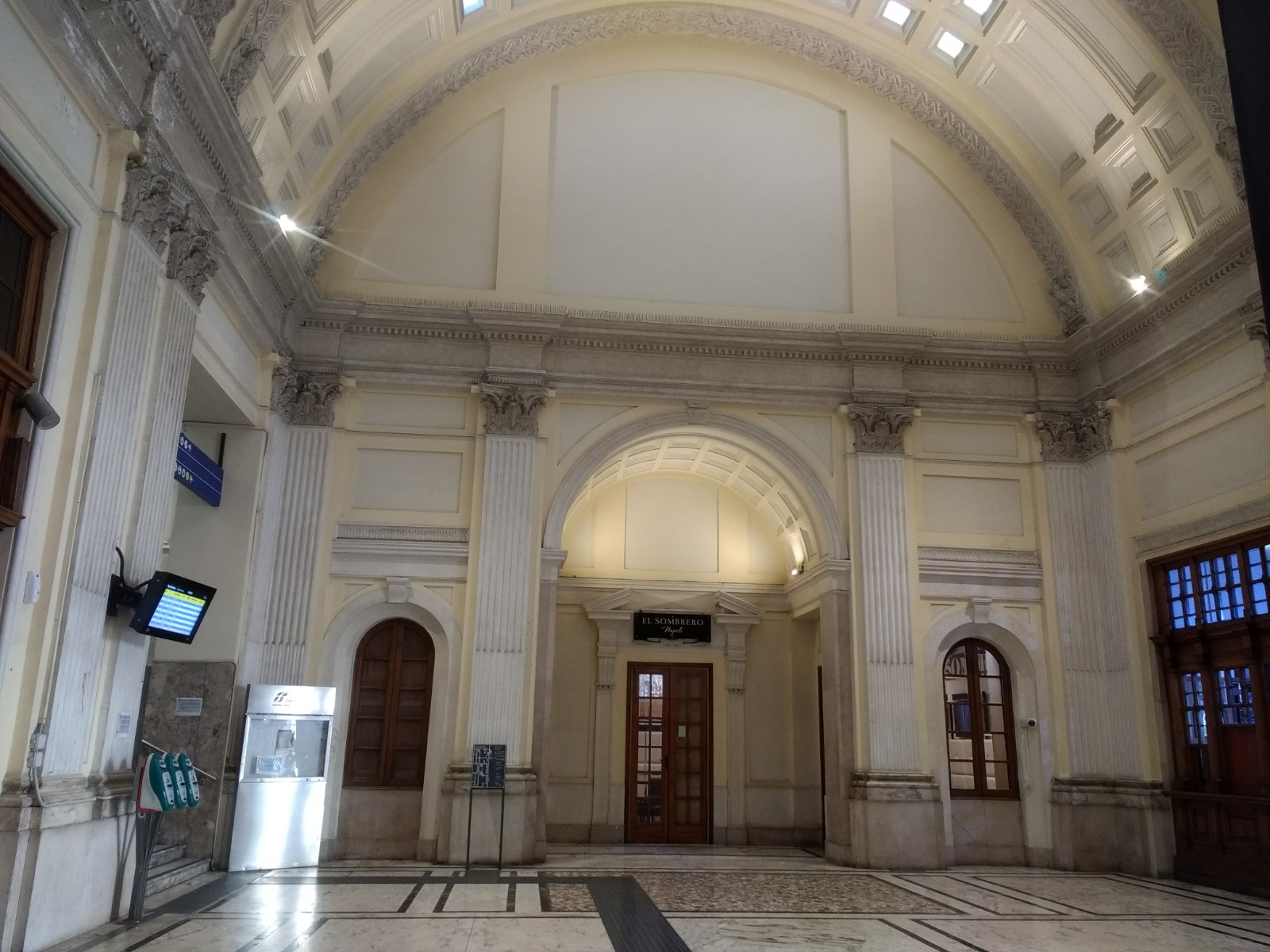
Inside the station. Even at going-home time the vast halls were uncrowded.
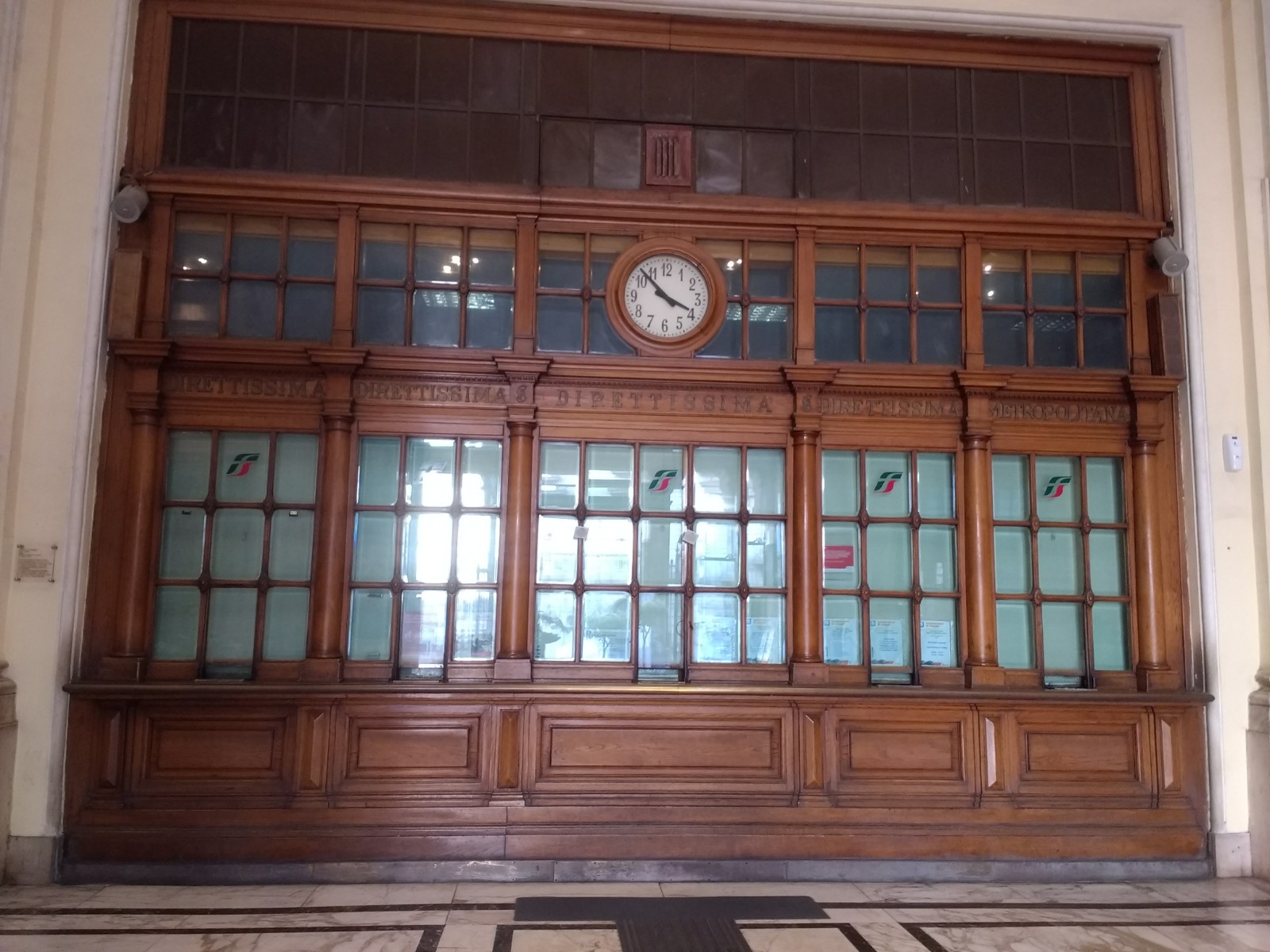
The ticket desks. The station is now unmanned, so sadly these are no longer in use, but luckily, have not been taken down.

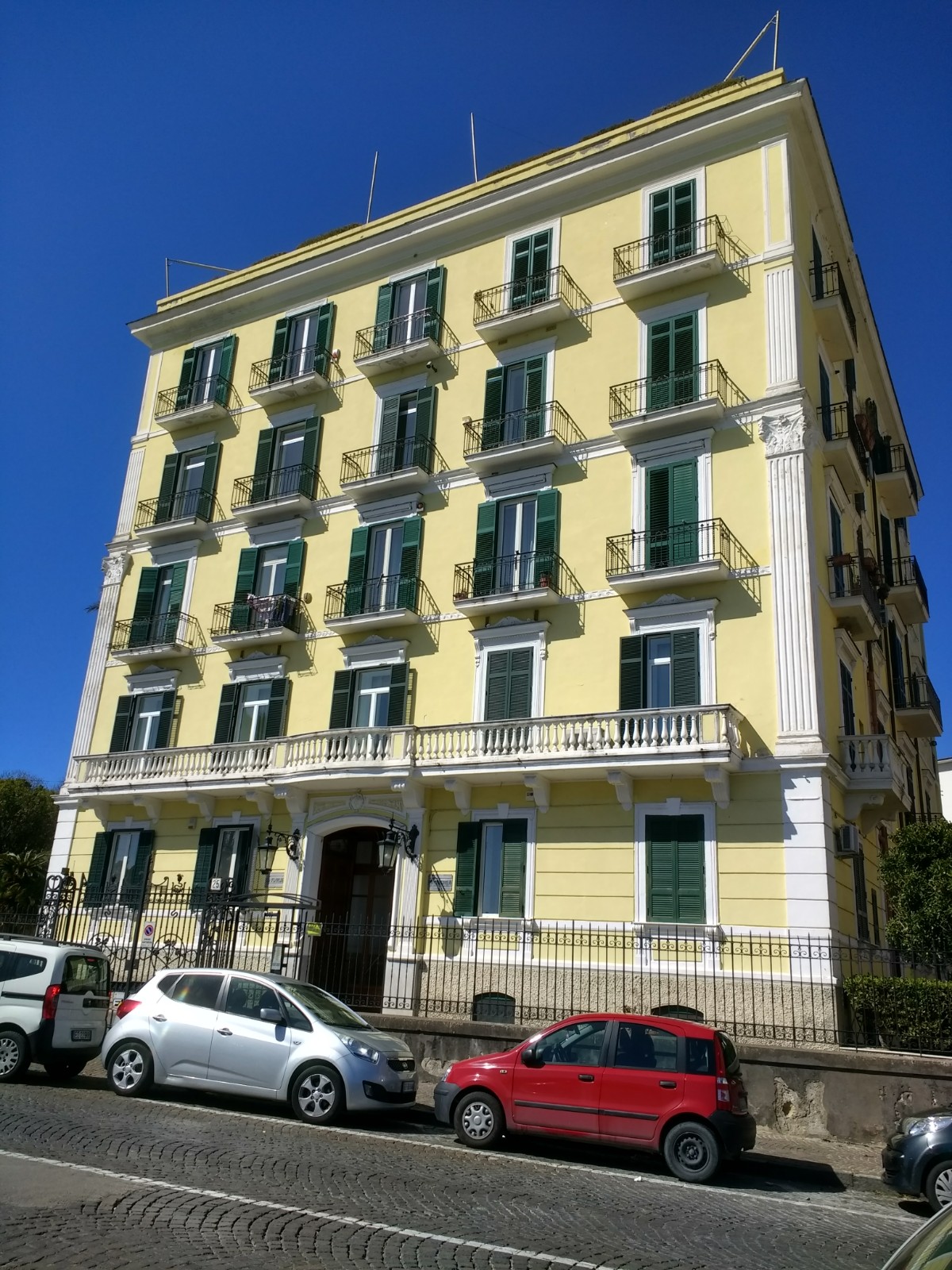
The area around Mergellina was very upmarket with some smart-looking apartment blocks, but like so much of Naples, one block back, and the buildings are more delapidated.

Smarter apartment block around Mergellina

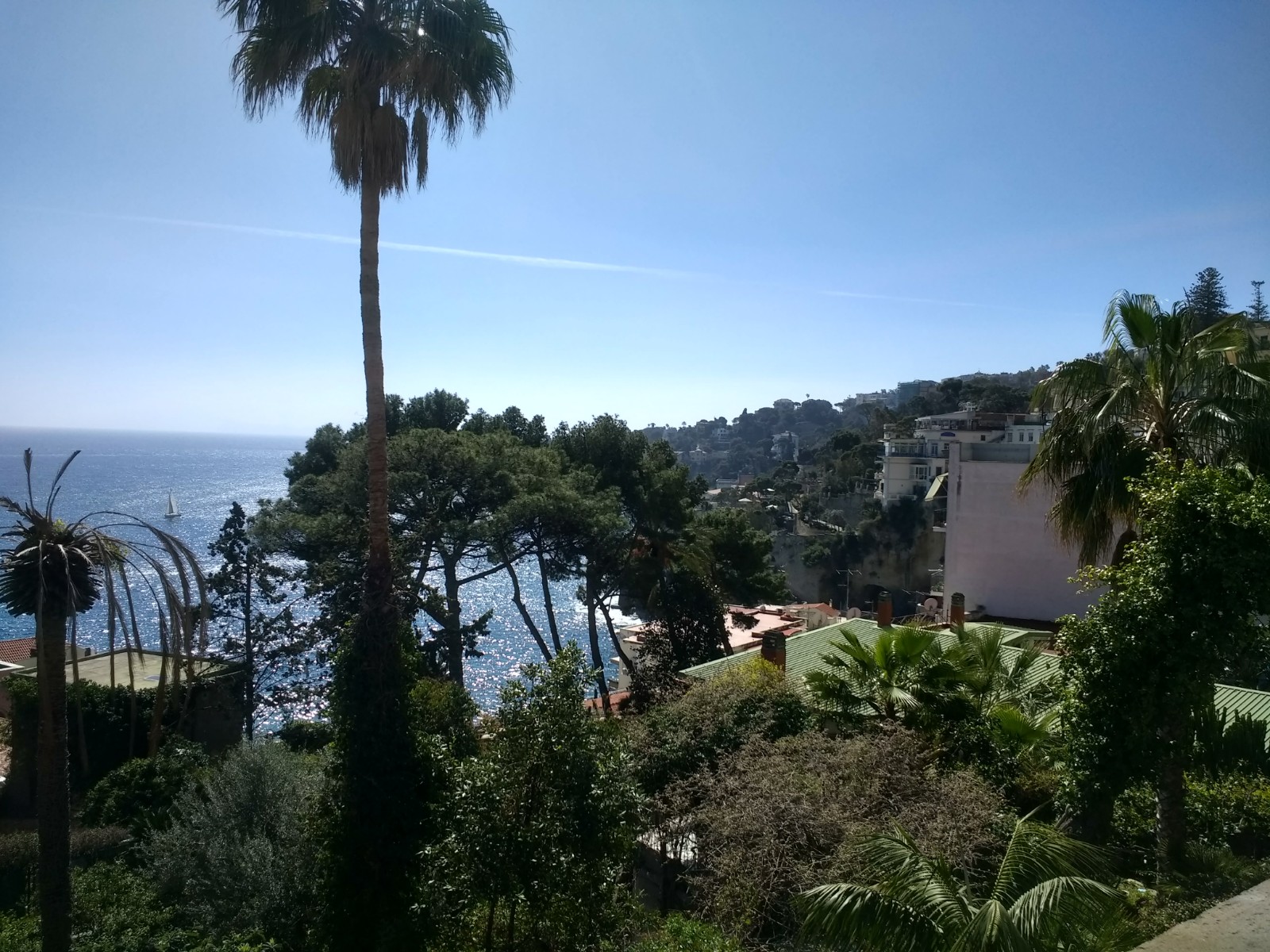
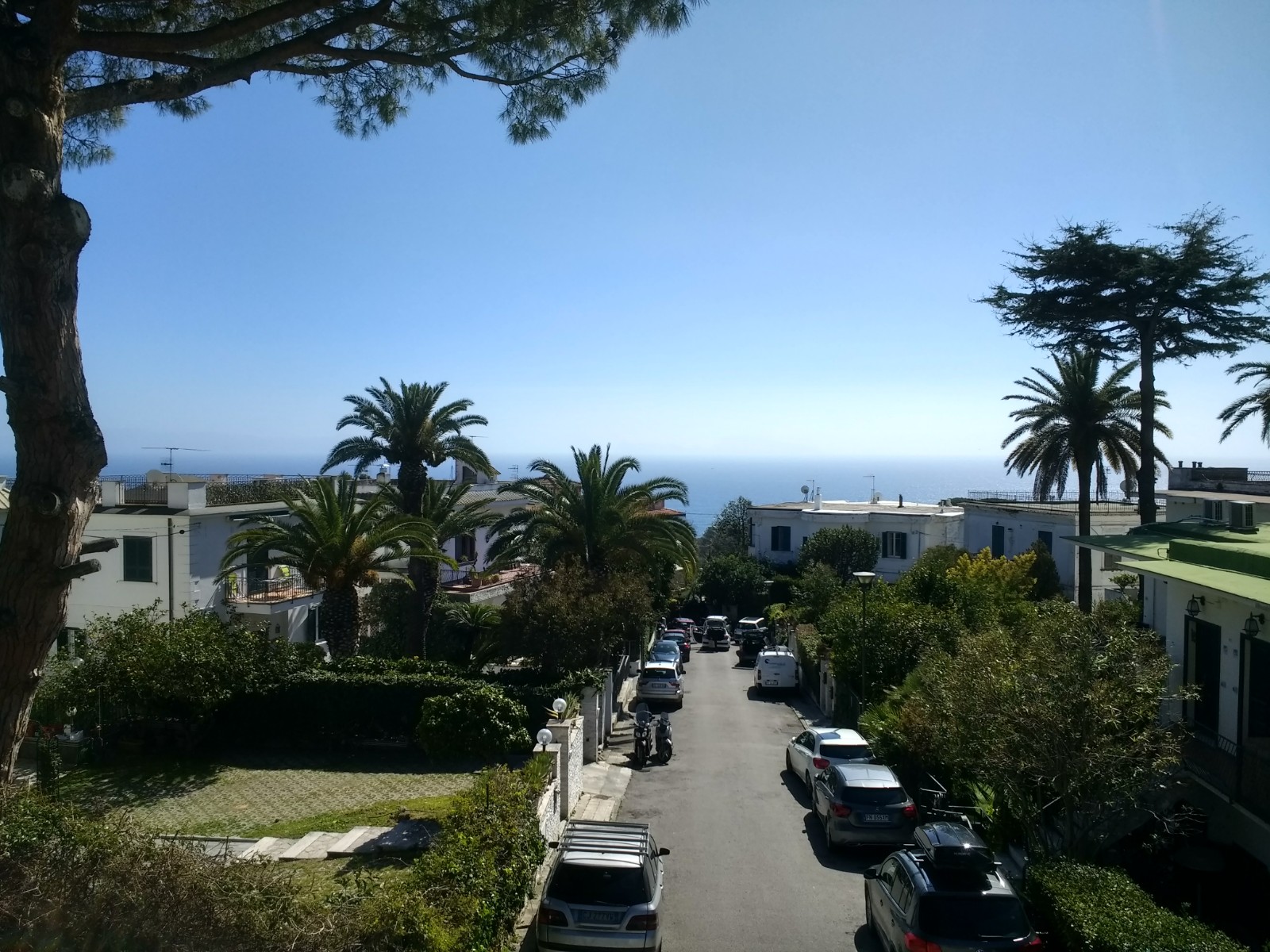
Our coastal walk started with views of the coast, but then the road veered away, the coastal strip given over to private beaches and developments of up-market housing.

On the way to Posillipo


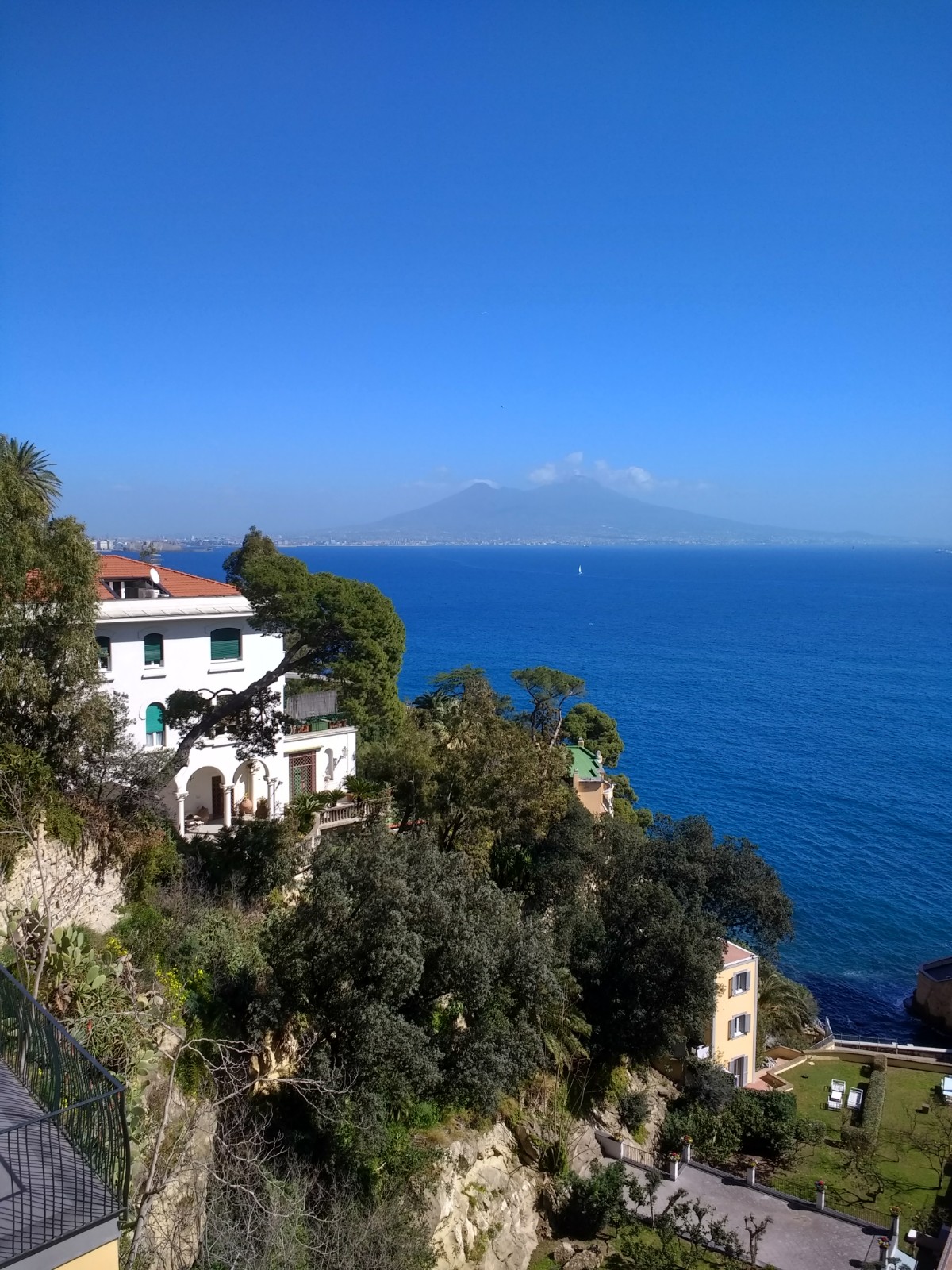
View from the coast road with Vesuvius through the haze.

Looking down onto a private development.

Once in Posillipo, we made our way uphill to Parco Virgiliano, clean, but not manicured, with good views of the coast, to eat our picnic lunch.

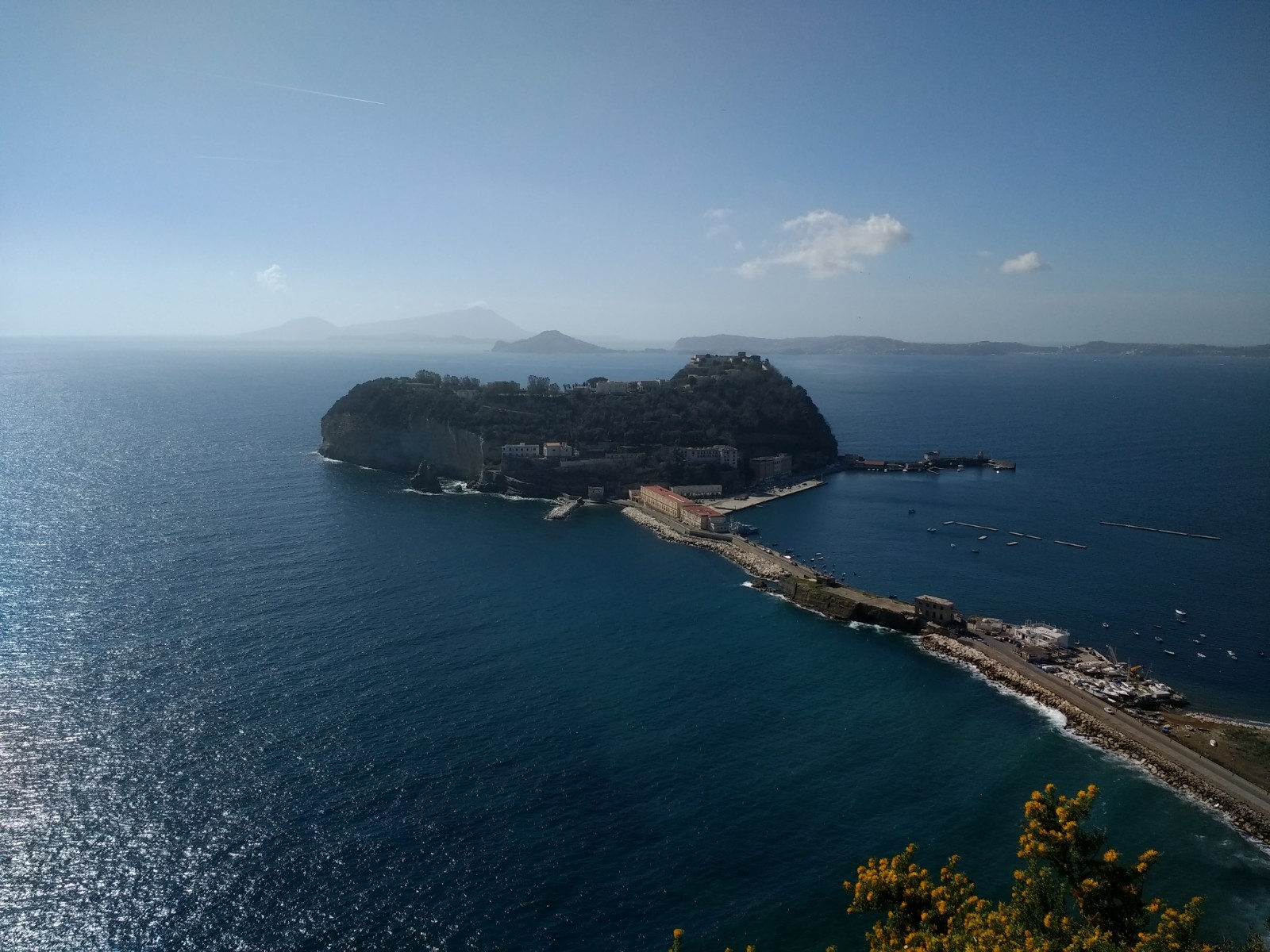
View of Nisida, a volcanic islet, now joined to the mainland by a stone bridge. During the Second World War Nisida was occupied by the British army and used as a prison.

As it had been a bit of a trudge, and I was a tad footsore, we got the bus back to Mergellina. The bus being crowded, we had to stand, but with more people boarding at each stop, all wanting the same destination, we eventually all had to breathe in so the doors could close.

PS This was written on Friday, but only posted today. News of Capri in the next post.

Moved by a Statue

Having passed the Chapel of San Severo many times and seen the long queues of people waiting to glimpse San Martino’s statue of The Veiled Christ, we set off early this morning, bought our tickets as soon as the office opened, and walked straight in.

No photo’s were allowed which is just as well as it can be very annoying having your view blocked by incessant snappers (I am guilty of this too).

The marble statue is of Christ, after his death on the cross, laid on a bed, covered only by a shroud. San Martino, the sculptor, manages to convey the thinness and transparency of the shroud despite carving out of such a hard material. The muscles and tendons in Christ’s arms and legs are seen through the wrapping, as well as a vein in his forehead, still swollen with pulsating blood.

The body, though emaciated, is clearly that of a young man, a man cut off in his prime, and made me think of so many other young men who also meet their demise while young, through conflict or mis-adventure.

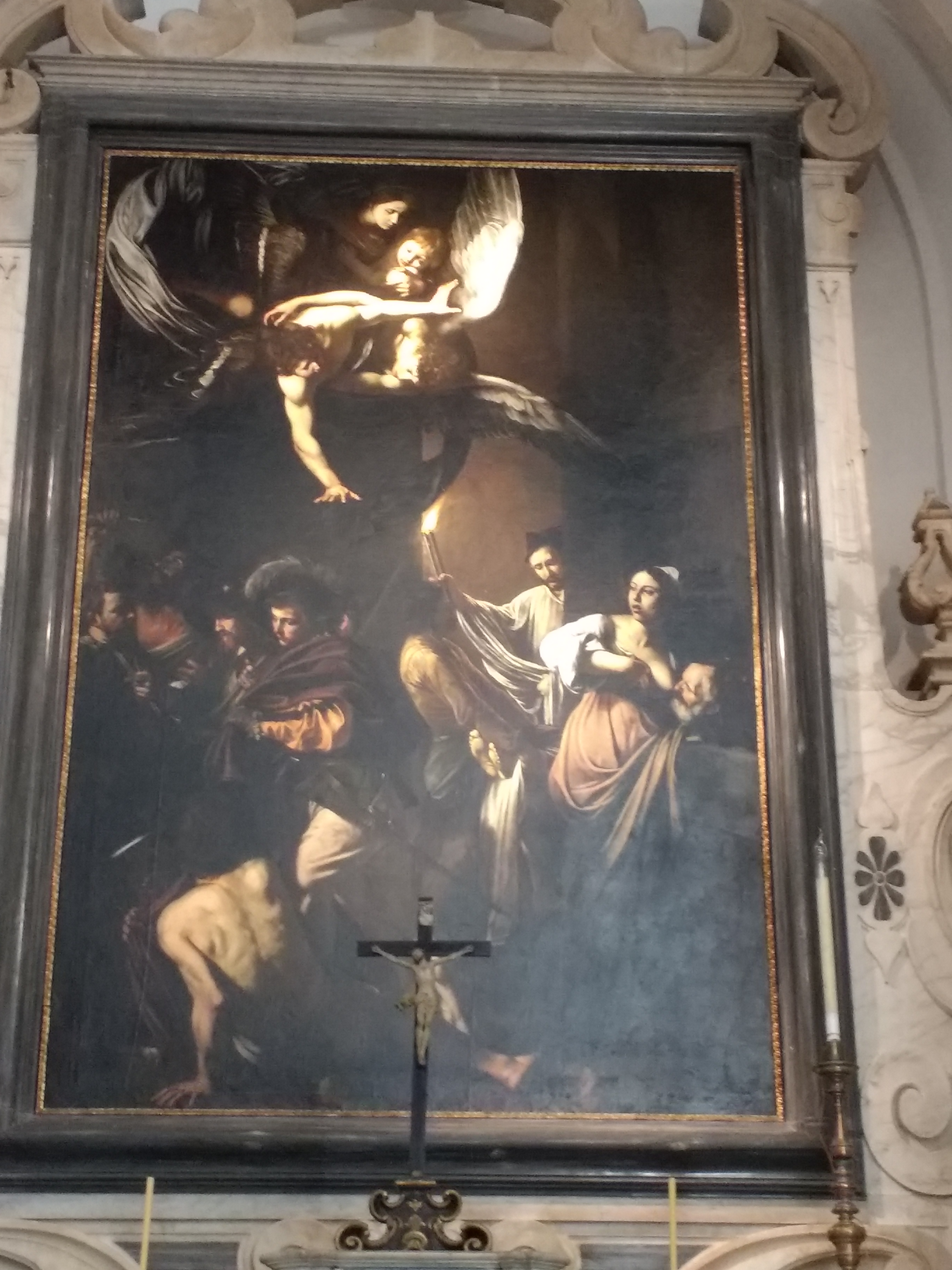
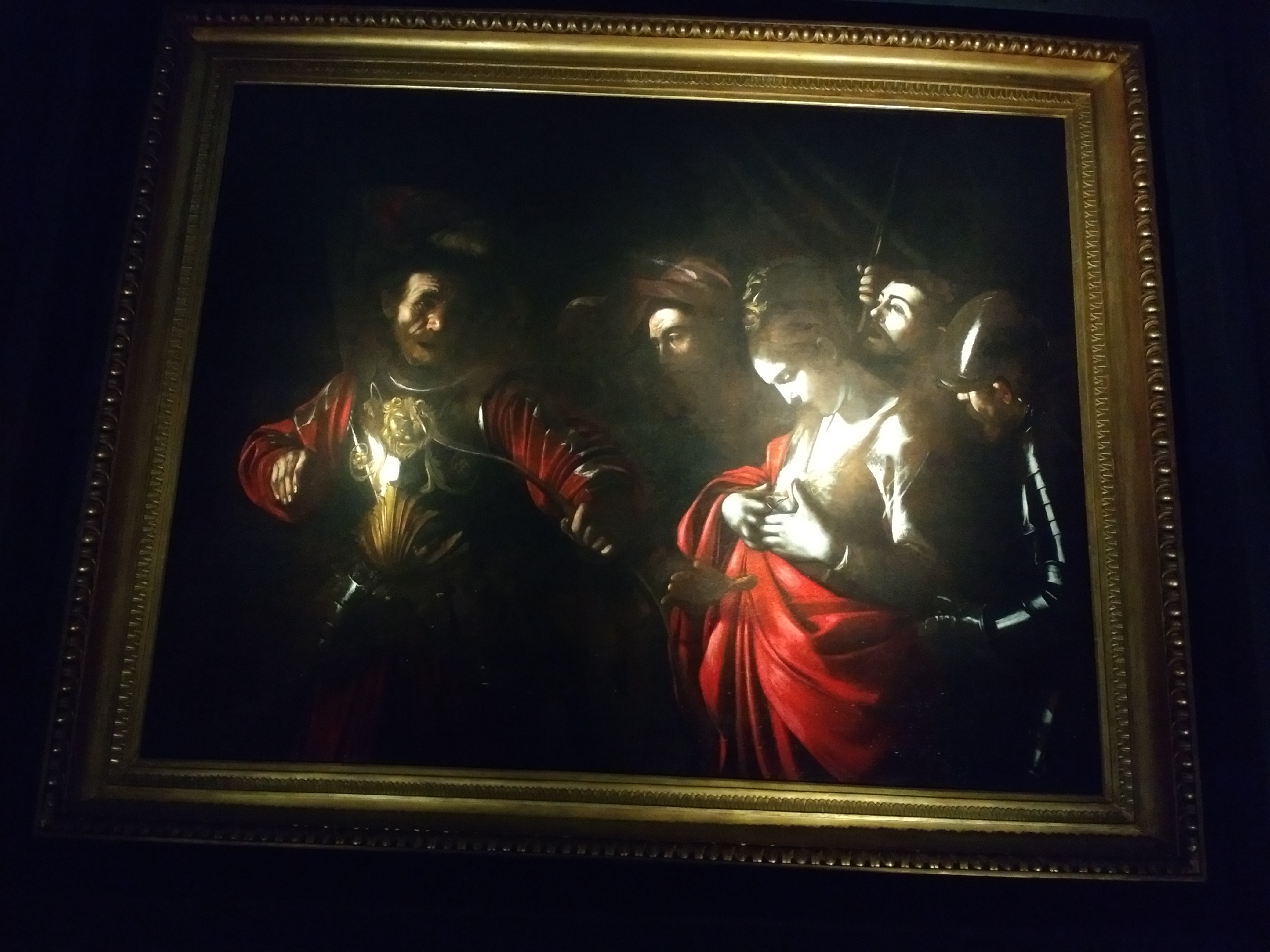
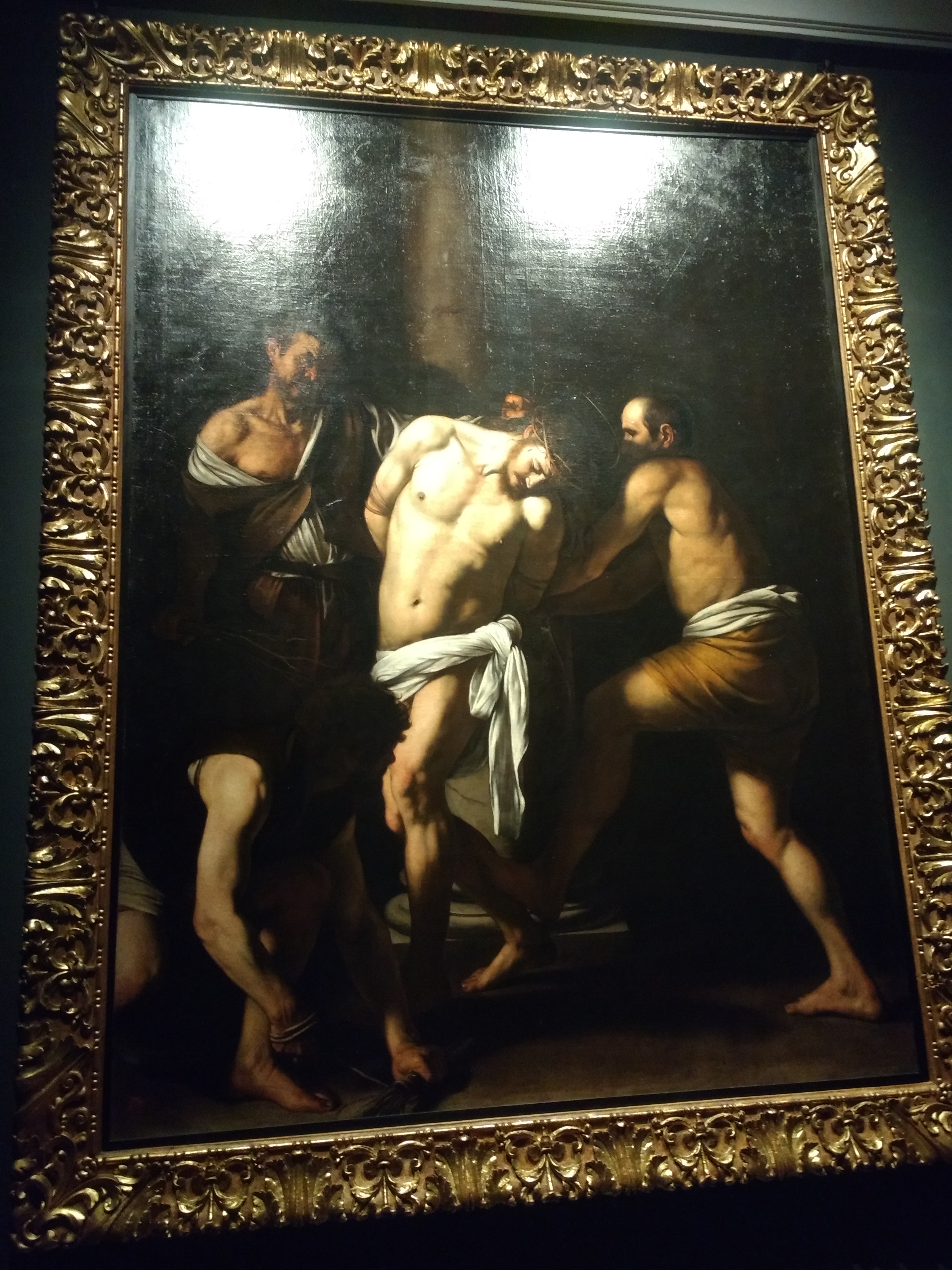
We followed this moving experience by searching out the Caravaggio paintings in Naples.

The Seven Acts of Mercy

If you have ever seen any of the ‘Italy Unpacked’ BBC series with Andrew Graham-Dixon and Giorgio Locatelli, you might have heard Andrew, a Caravaggio expert, rave about the artist.

Caravaggio is known for his wonderful treatment of light in a picture, unmatched I think, by any other artist.

Martyrdom of Saint Ursula
The Flagellation of Christ


I have only recently come to be interested in Caravaggio, but luckily for us he was a prolific painter, although he died young, and most of his work can be seen in galleries or churches.

Naples, City of Blood

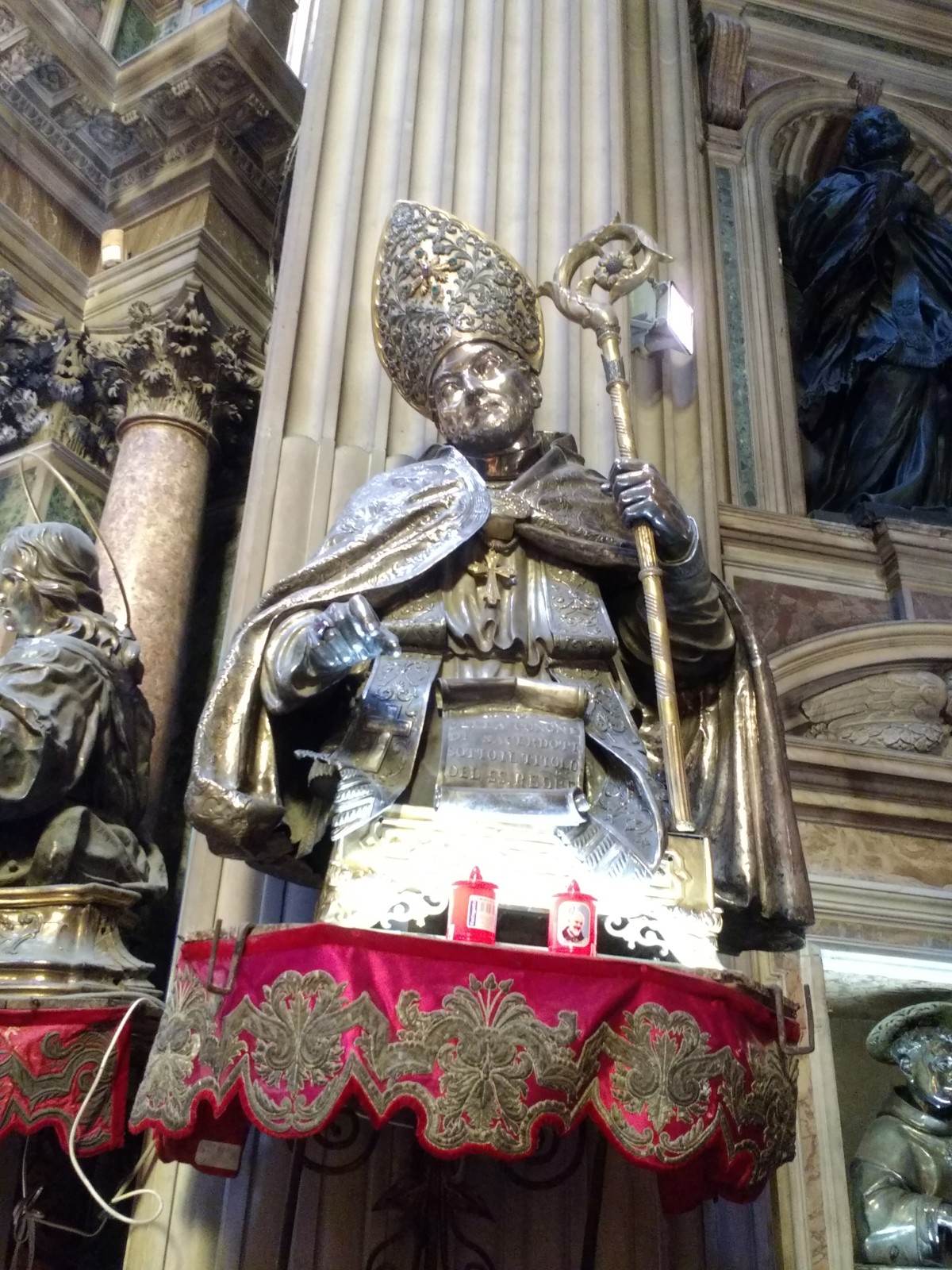
Naples, not doing things by halves, has not one, but over fifty official saints, the principal one being San Gennaro, or Saint Januarius, to whom the Duomo in Naples is dedicated.

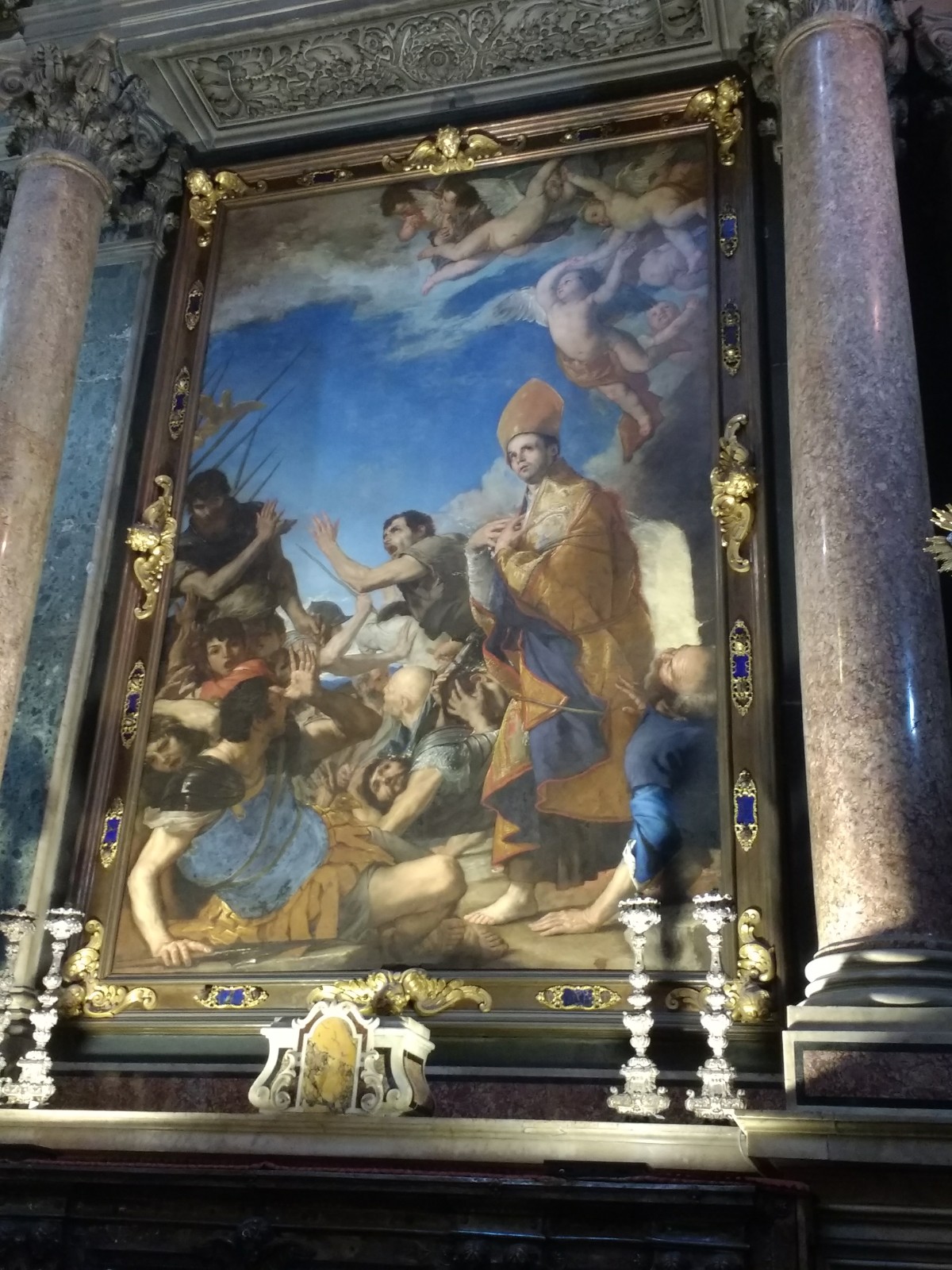
San Gennaro

Gennaro was born in the third century during a time that Christians were commonly persecuted. He was imprisoned and sentenced to be thrown to the lions, but popular legend has it that the lions, instead of jumping on Gennaro, knelt at his feet after he had blessed them.

This painting shows an alternative version of how Gennaro defied death and is entitled, ‘San Gennaro exits the furnace unscathed’.

Unfortunately for Gennaro, instead of having his death sentence commuted, he was executed. Two flasks of his blood were allegedly collected by a woman in the crowd to keep as a relic.

The first record of a phenomenon known as ‘liquefaction’ dates from 1389 when blood in the two containers is said to have changed from dried matter to one of a liquid.

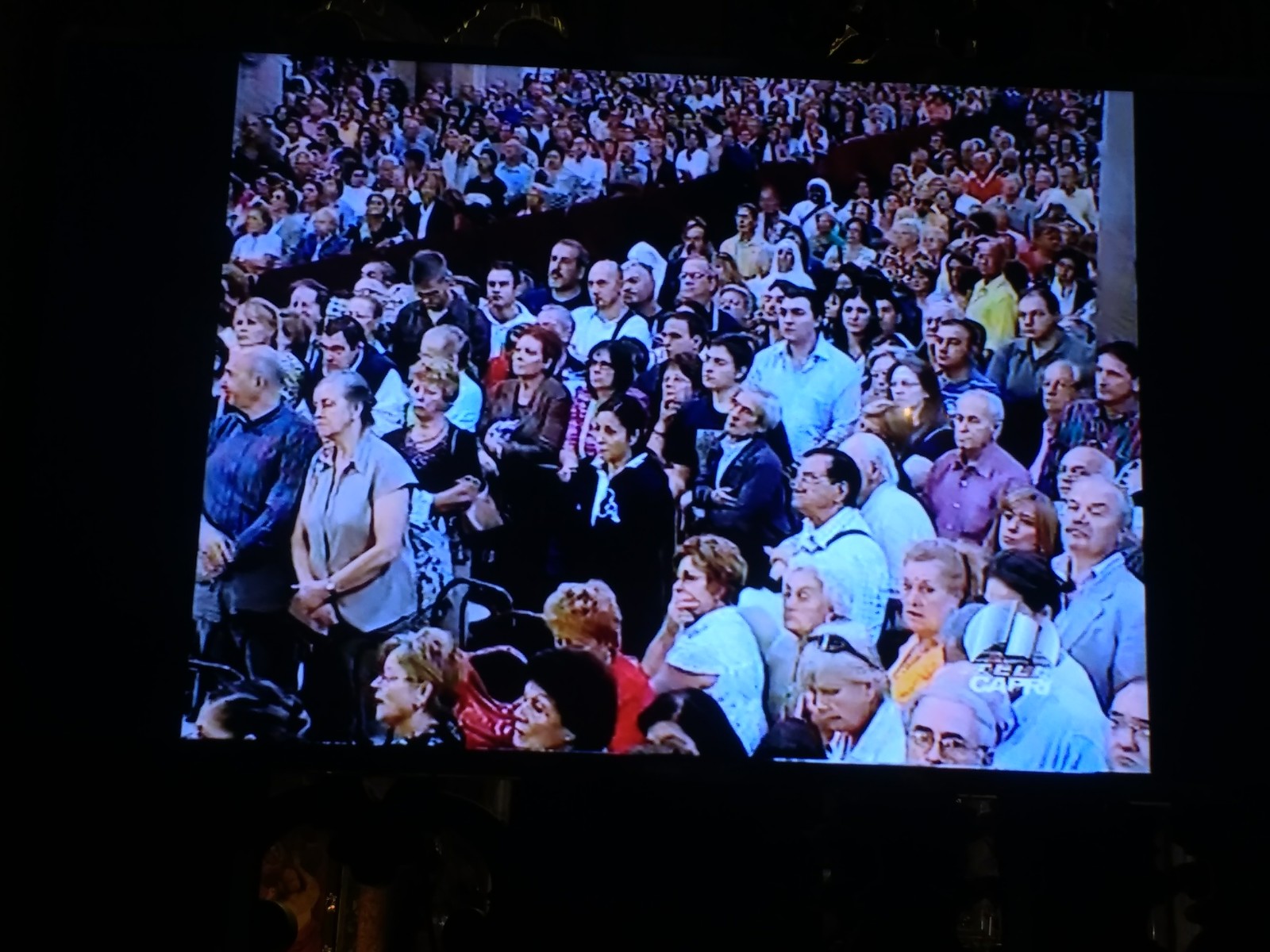
Today people throng to the Duomo in Naples to bear witness to this event three times a year: 19 September for San Gennaro’s Day, 16 December, to remember the eruption of Vesuvius in 1631 when the lava flow stopped in front of Gennaro’s relics (bones and blood) and also on the Saturday before the first Sunday in May when the reunification of his relics (the bones and blood had previously been separated) is celebrated.

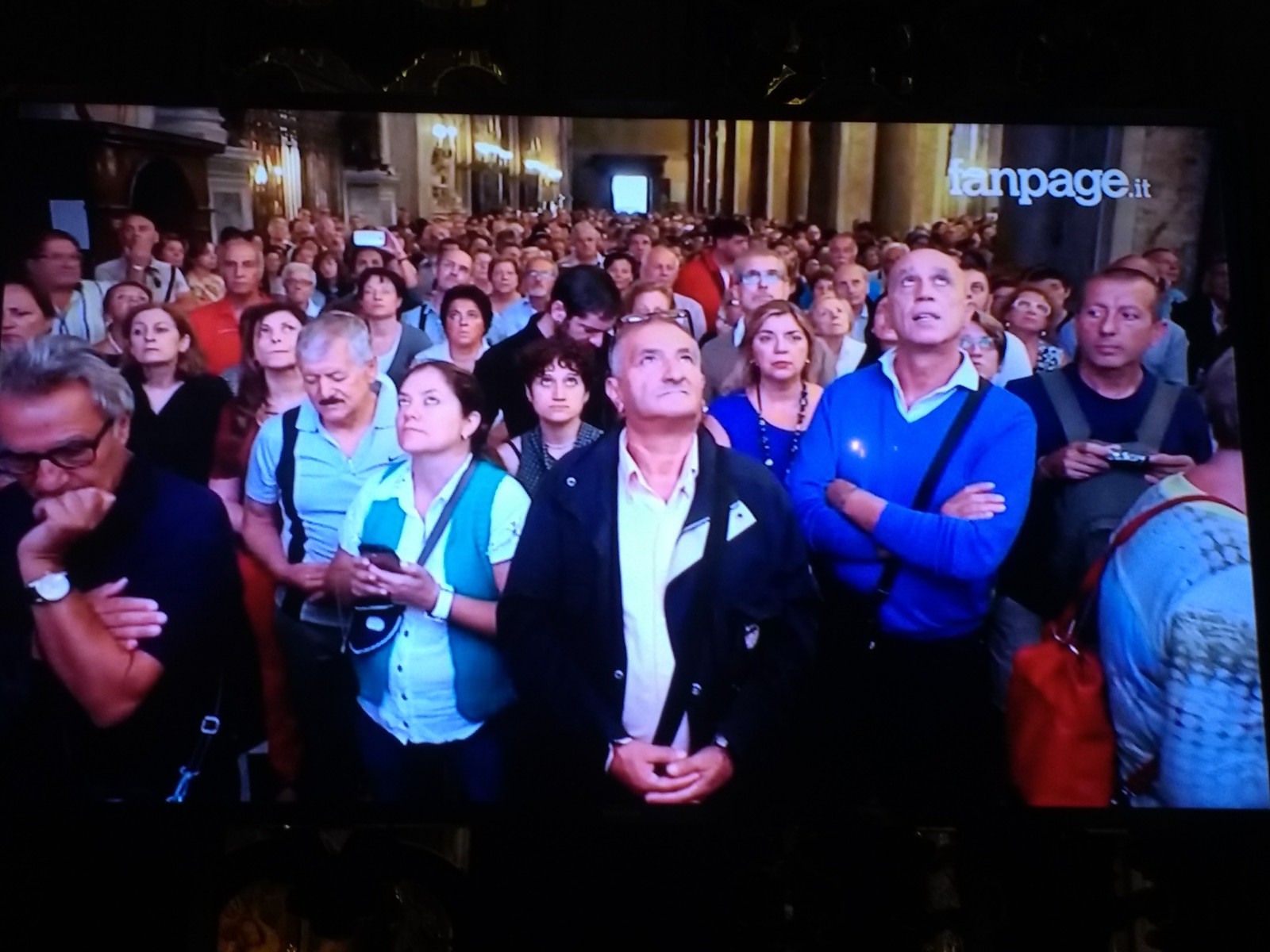
Inside the Duomo waiting to witness the liquifying of the blood.

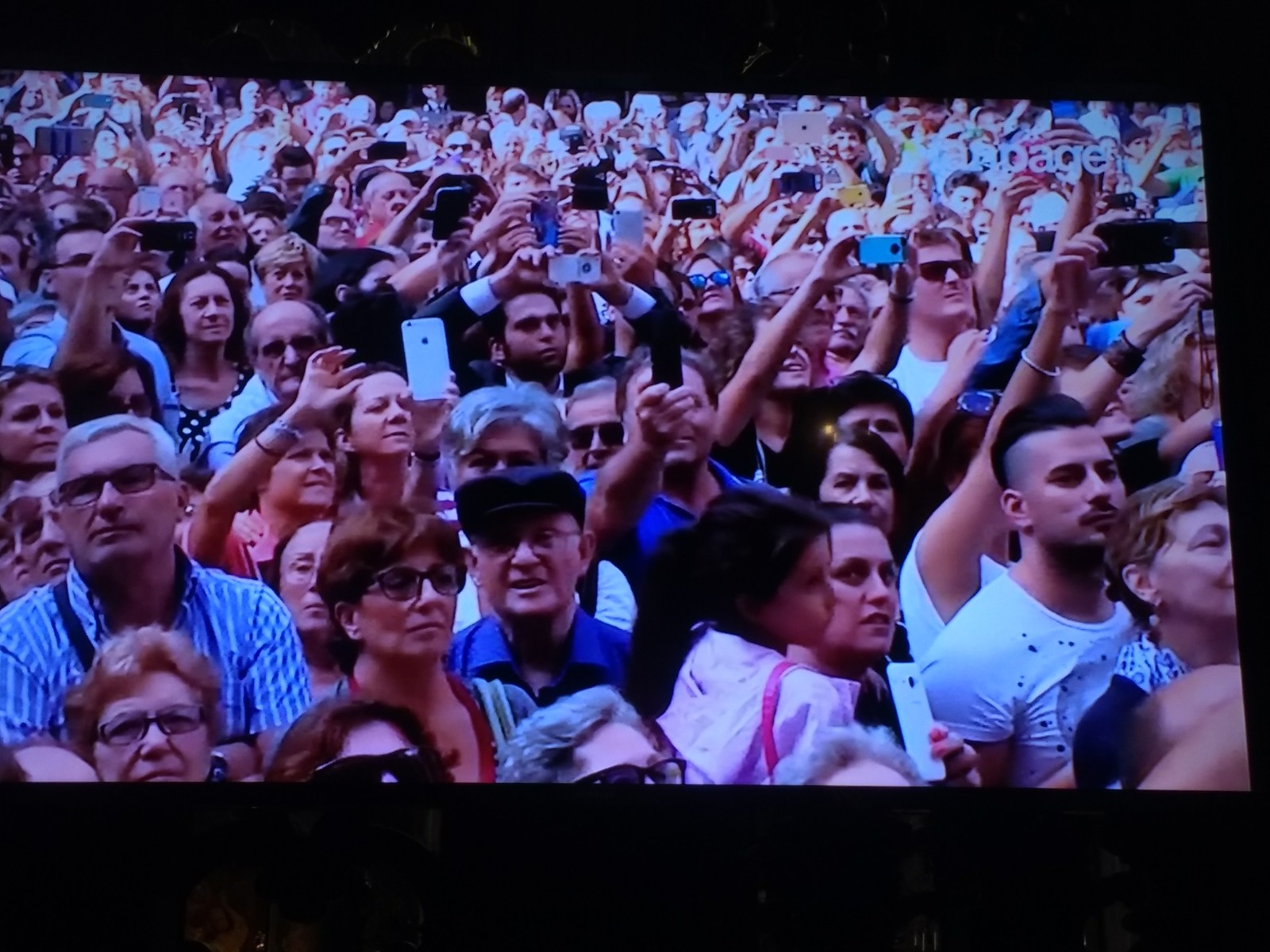
Crowds waiting outside.

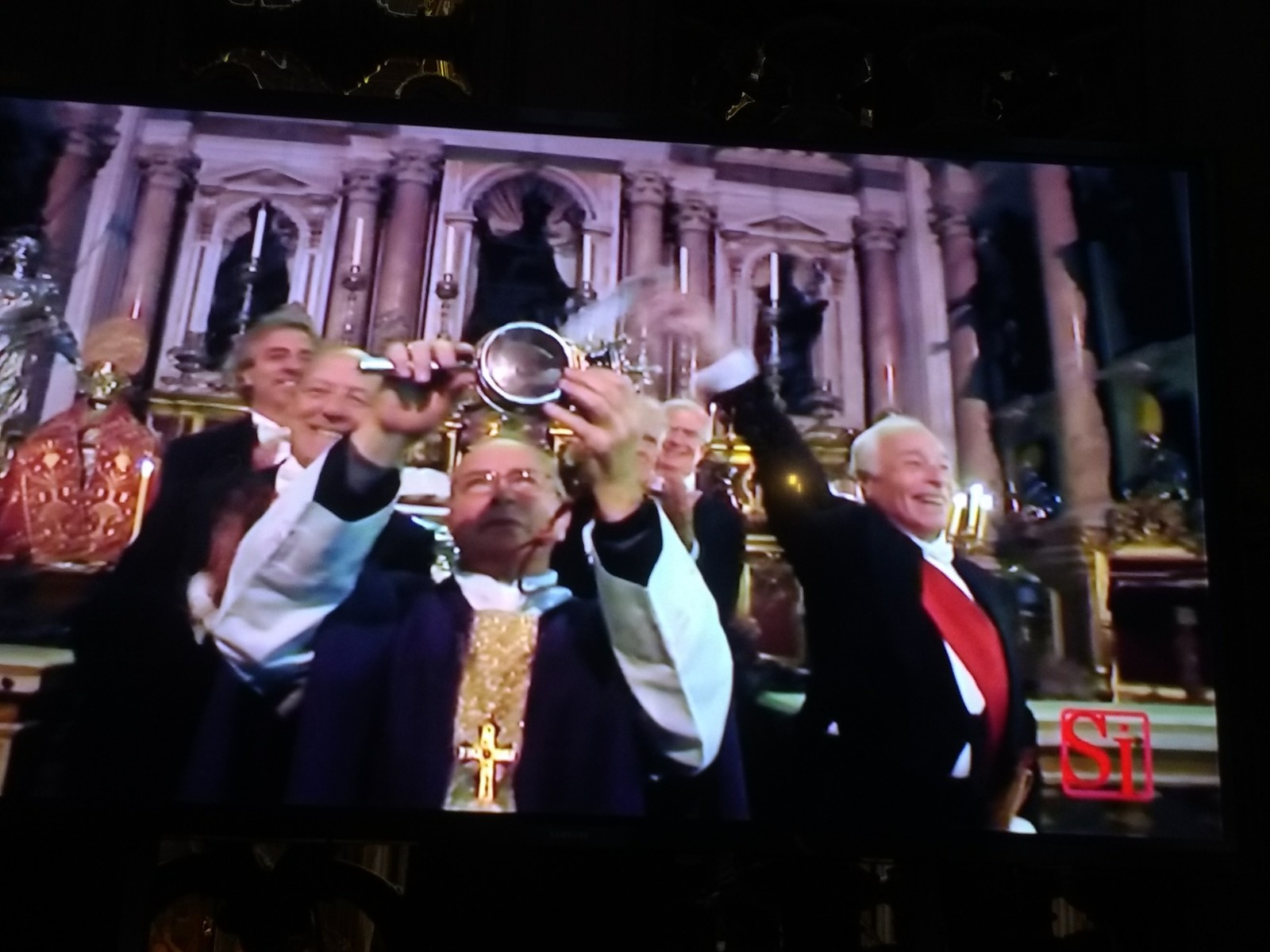
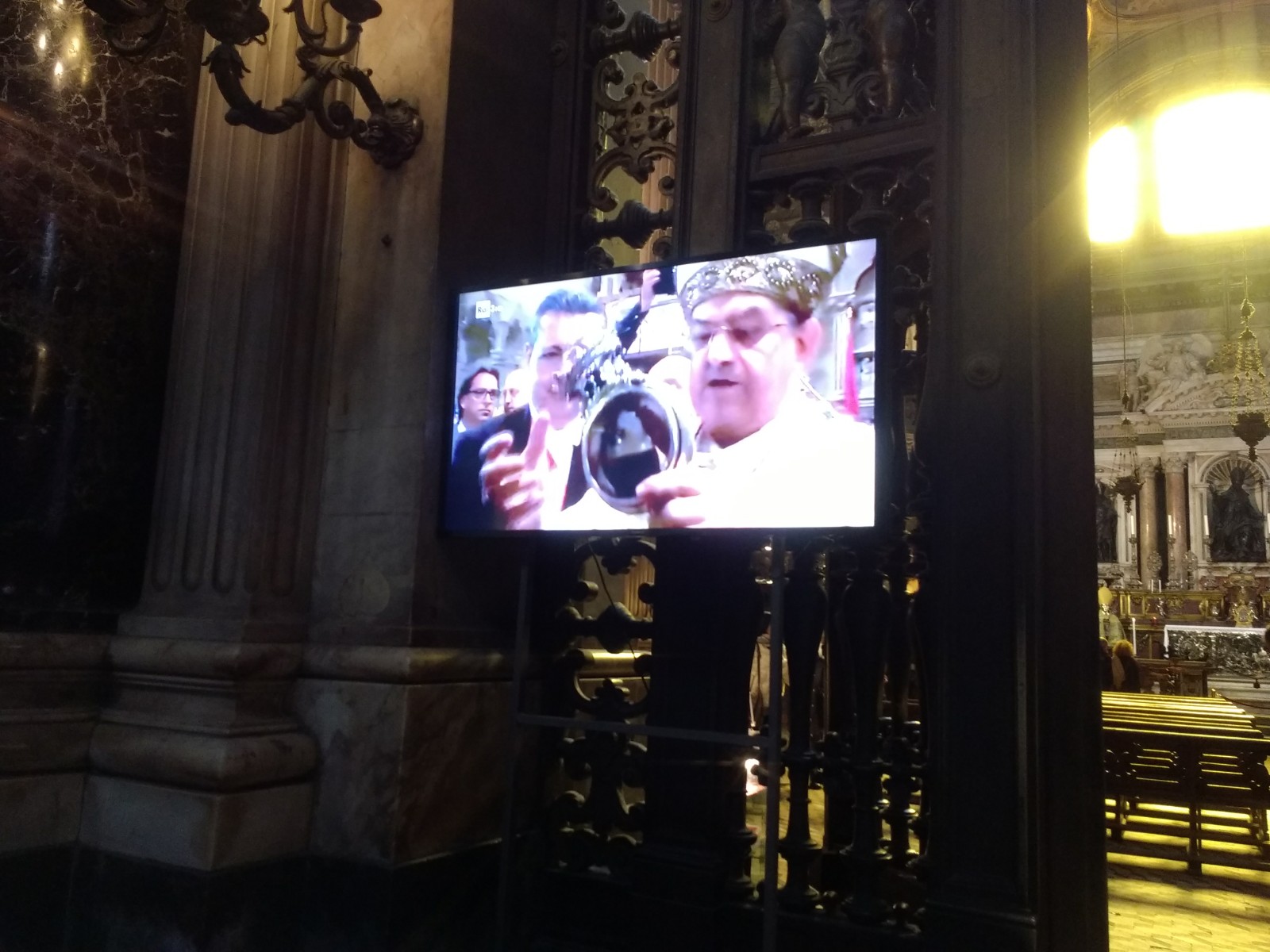
During the service one of two small amphoules (today they are kept in a bank vault) is held up to show the contents are solid. After prayers, the amphoule is held up again and tilted to show that the contents have liquified.

Showing the blood on turning into a liquid.

To ensure that the whole congregation can be in no doubt that this change has happened, a white handkerchief is waved and the news is broadcast to the residents of Naples as a whole with a 21-gun salute from the thirteenth century Castel Nuovo.

A white handkerchief is waved.

Everybody wants to record the event.
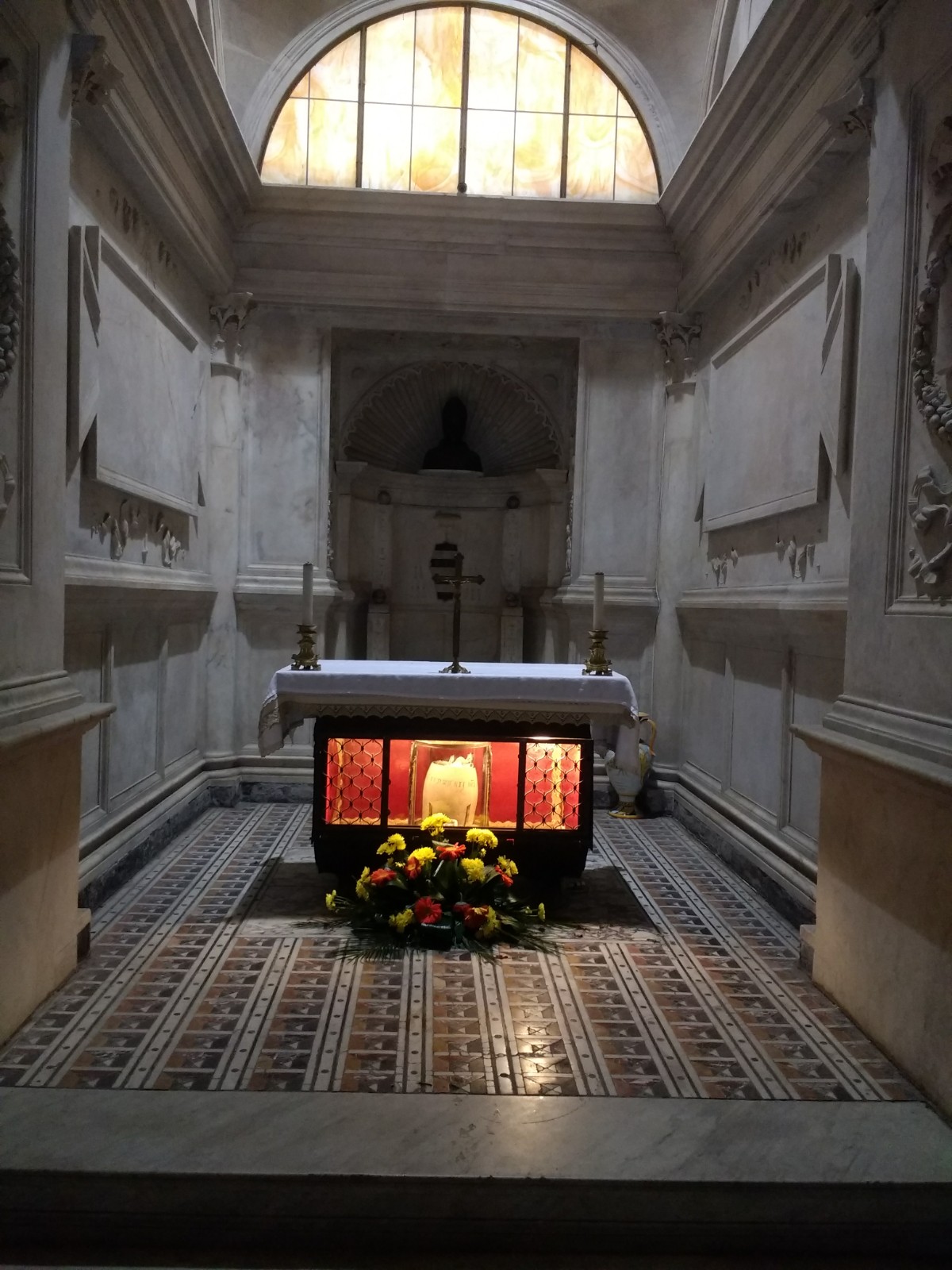
The bones of San Gennaro’s skull inside an open casket called a ‘bust’.


Occasions when Gennaro’s blood has failed to liquify are seen as portents of doom. In recent times there have been two such occasions, in 1973, when Naples endured an outbreak of cholera, and in 1980, when 3,000 people were killed in an earthquake which devastated much of southern Italy.


This story of liquidfying blood is the reason that Naples is sometimes known as the ‘City of Blood’. However, it seems that Gennaro is not alone. This phenomenon is reported to have occurred to other people in the past, mostly in Campania, the region of Italy we are now in.

Money Matters

When Mark first broached the subject of travelling for a year it sounded like a never-to-be-attained luxury. After all, that was what the fictional Fleur Forsyth did with her millionaire father. How were we ever to afford it?

We made a decision to see if we could live on £3000 a month.

How are we doing?

Looking at the first four weeks of our trip, when we were travelling round Sicily (I know it’s not quite a month) we spent £3140.81.

A breakdown of the figures:

Accommodation £1069.60
Entrances (museums etc) £ 453.21
Groceries £ 298.18
Meals out (includes coffee, drinks & ice-cream) £ 650.18
Travel (includes car hire & train to Naples) £ 507.71
Other £ 11.93
UK expenses (storage, mobile phones, Microsoft, vpn) £ 150.00

We thought that Sicily would come out on the high side due to the fact that we stayed in six different locations and therefore could not take advantage of long-stay discounts. We hired a car for eleven days in Sicily, which we are not likely to do again, and ate out fairly frequently, as short stays made it more difficult to organise meals.

The accommodation varied enormously in value. Our fabulous accommodation in Palermo (two bedrooms, two bathrooms) was not the most expensive. Our accommodation in Trapani was the cheapest, but also the least pleasant (only one window which looked out into a dark courtyard). (Incidentally, we found this place on Bookings.com, rather than Airbnb, but we can’t complain. It never made itself out to be anything that it wasn’t). The most expensive apartment we had was our second least favoured. Again, it was described accurately.

We have learned that it is not always easy to judge accommodation from its write-up. We now look more carefully at the photographs to judge how light an apartment is. Where are the windows, and what do they overlook. We also read the reviews carefully. Any mention of soft beds, noisy neighbours, dirt or non-communicative landlords and the apartment is rejected.

Each month will be different, we know. Naples is looking cheaper, but more of this when we have actually left. Some places will come out as being more expensive due to where they are, and the time of year.

We will see how we get on. If we can live within our budget and still have a good time, we may never come home. If the budgeting works out badly, Mark and I may have to come up with a two-person routine and busk on the streets of London!

Tunnels Underfoot

Padding the city streets of the world over, you have a certain confidence in their solidarity, in their ability to keep you up. It seems that not all the ground is as solid as it would seem.

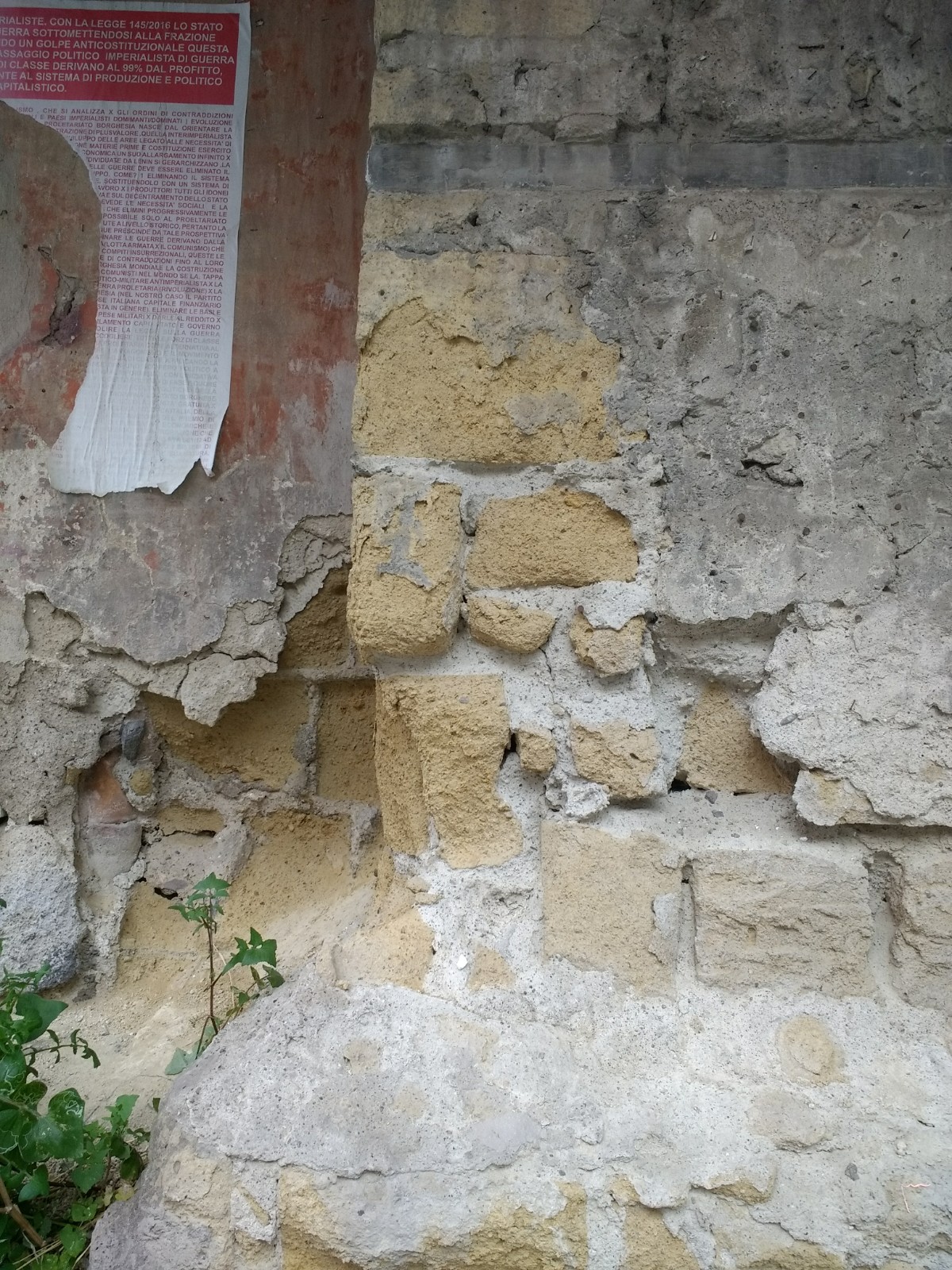
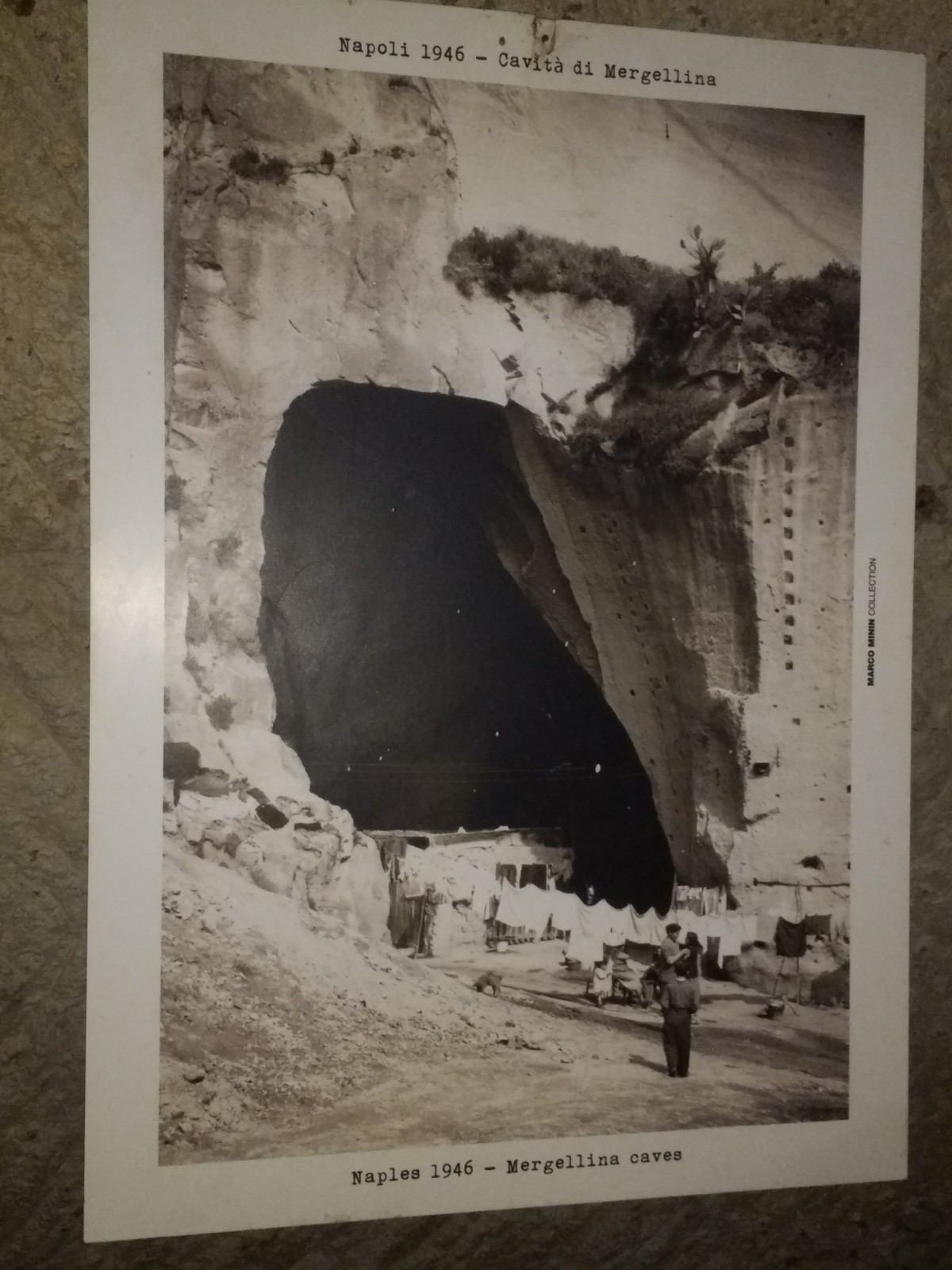
As far back as the Ancient Greeks, the rock on which Naples stands was discovered to be easy to dig out and so caverns were dug underground for the storage of water. The rock, ‘tuff’, composed from hardened ash and lava, was also found to be a durable building material.

The yellow bricks of tuff.

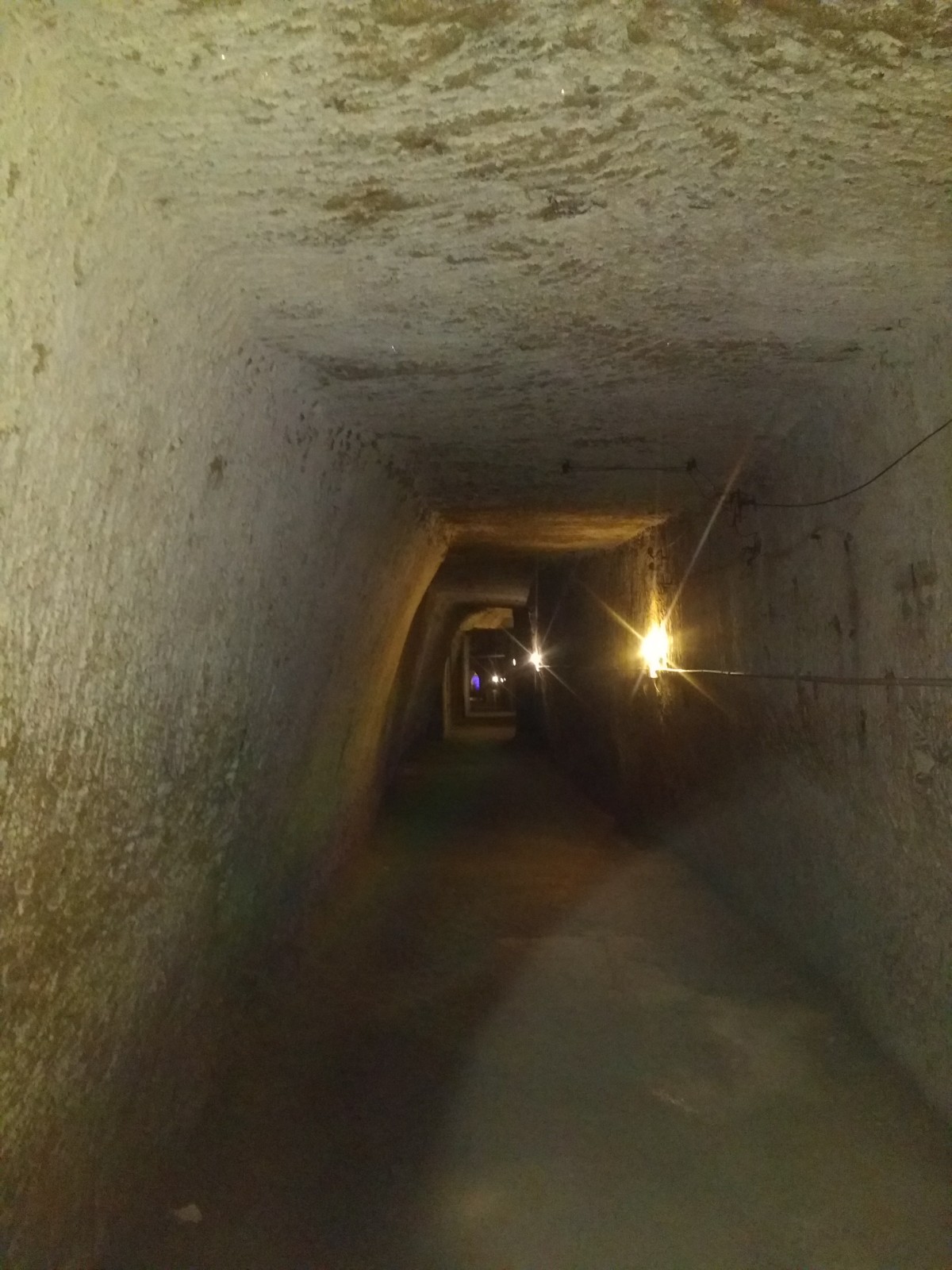
In 1853, Ferdinand II of the Two Sicilies, fearing for his safety following a series of revolutionary riots, ordered for the construction of a tunnel to connect the army barracks and the royal palace (Palazzo Reale) so that soldiers could move quickly, and secretly, to the King’s aid if the need arose.

Fortunately for the architect chosen, hollows below the two buildings already existed (to extract tuff and create water cisterns) so he had a small start. The project was completed in three years, but as Italy was unified a few years after that, the royal escape system did not have much of an opportunity for a trial run.

Part of the Royal Rescue Route

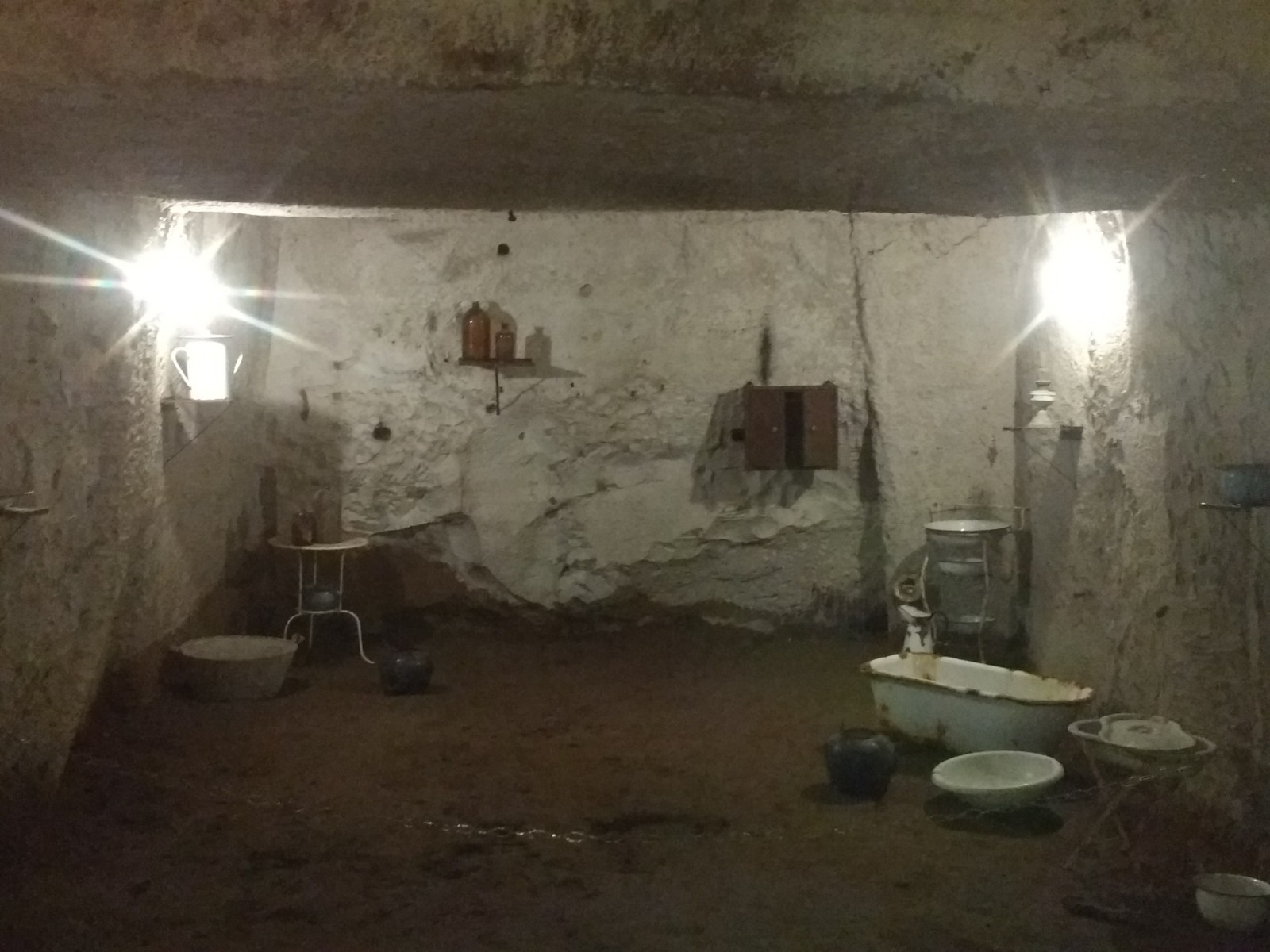
In the Second World War, the tunnels were used as air-raid shelters and also to house people whose homes had been destroyed in the bombing.

Although the tunnels were poorly ventilated, they were far removed from all the chaos and danger above ground and children could play in safety.

A home in the tunnels
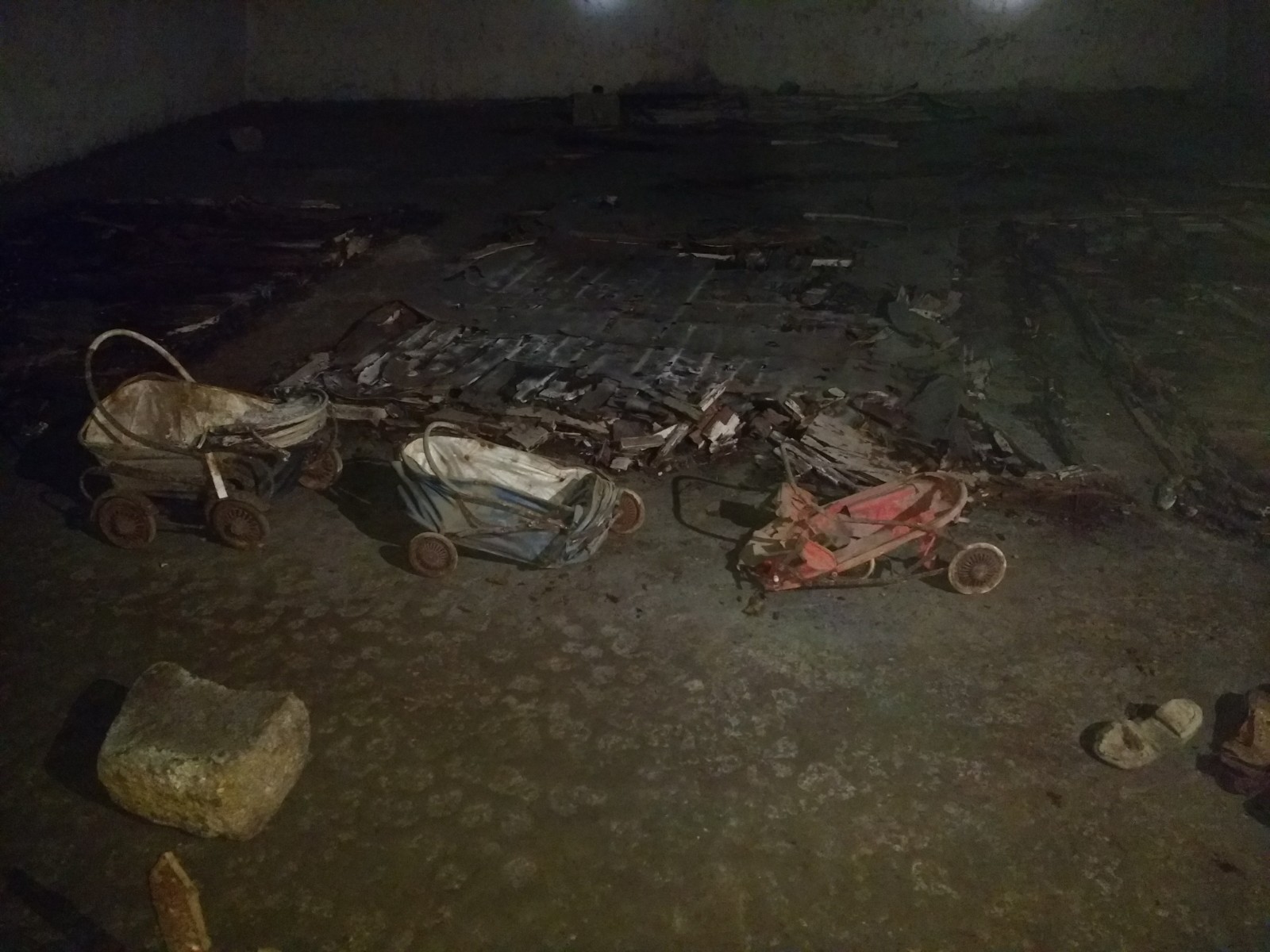
Dolls’ prams found in the tunnels
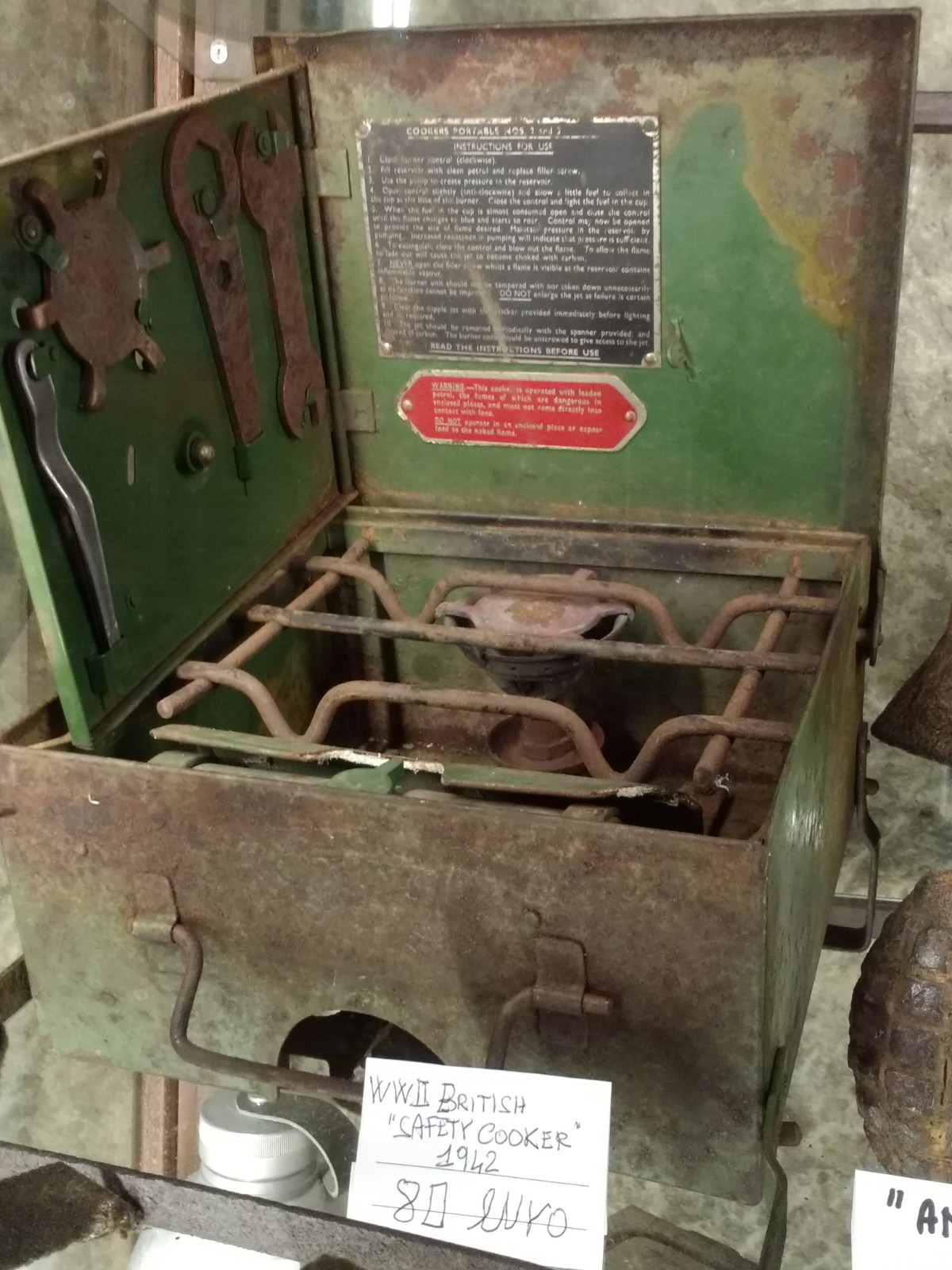
It was forbidden to cook in the tunnels, but this rule was commonly flouted.

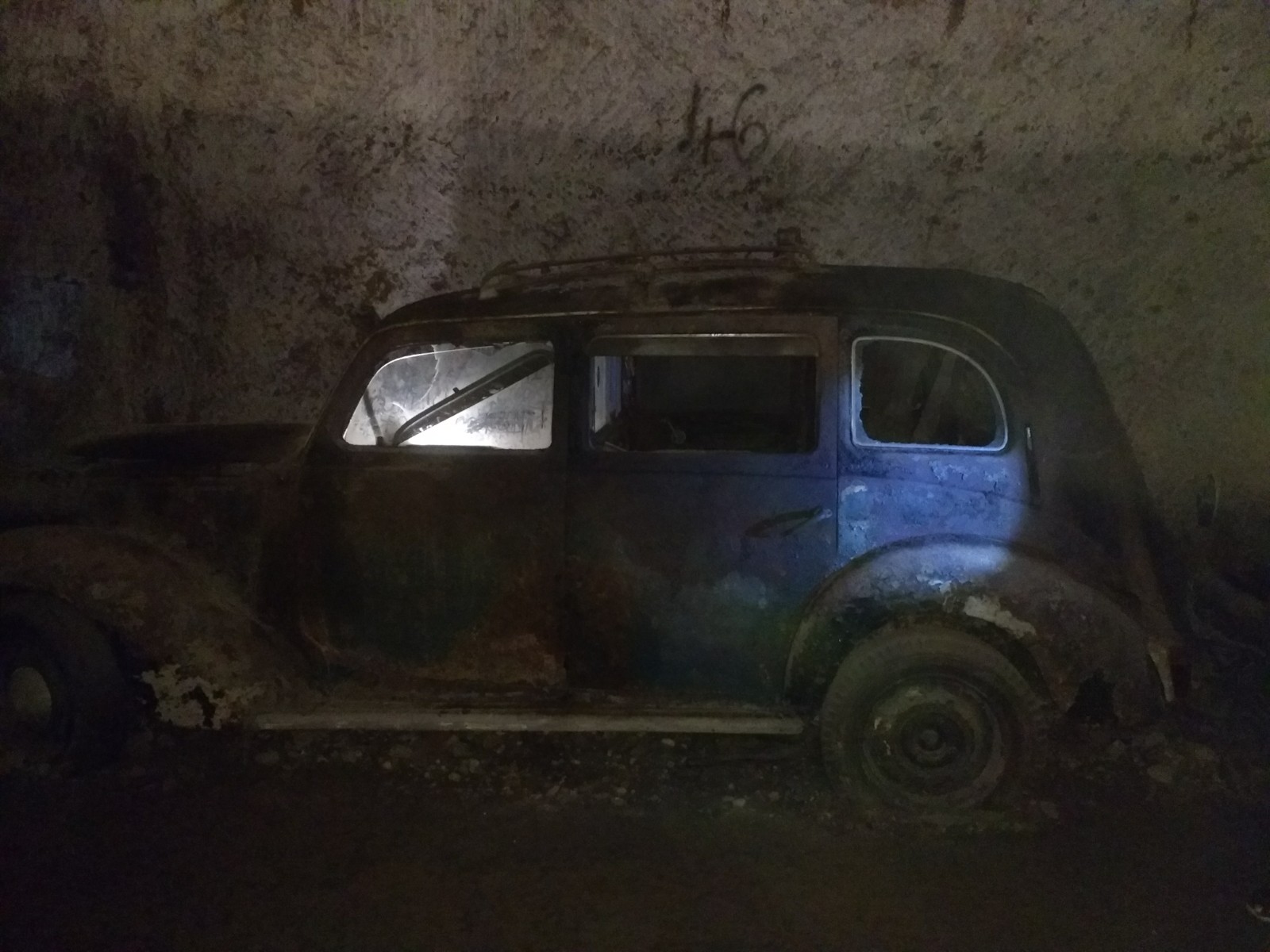
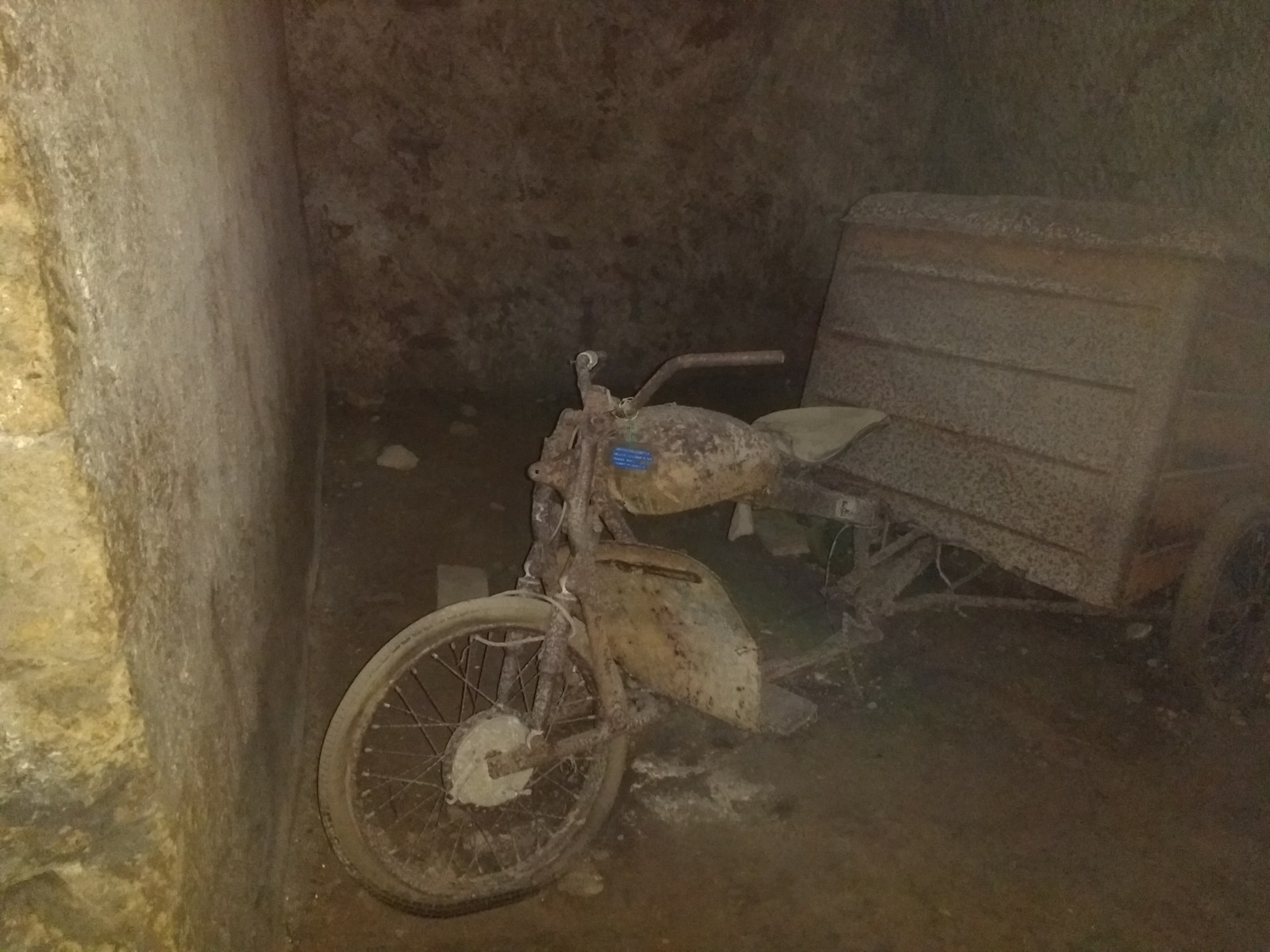
Following the Second World War, cars impounded by the police for breaking regulations, were taken to the tunnels.

This taxi was taken by the police as the indicator was manual (it raised and lowered) rather than flashed, as was required.
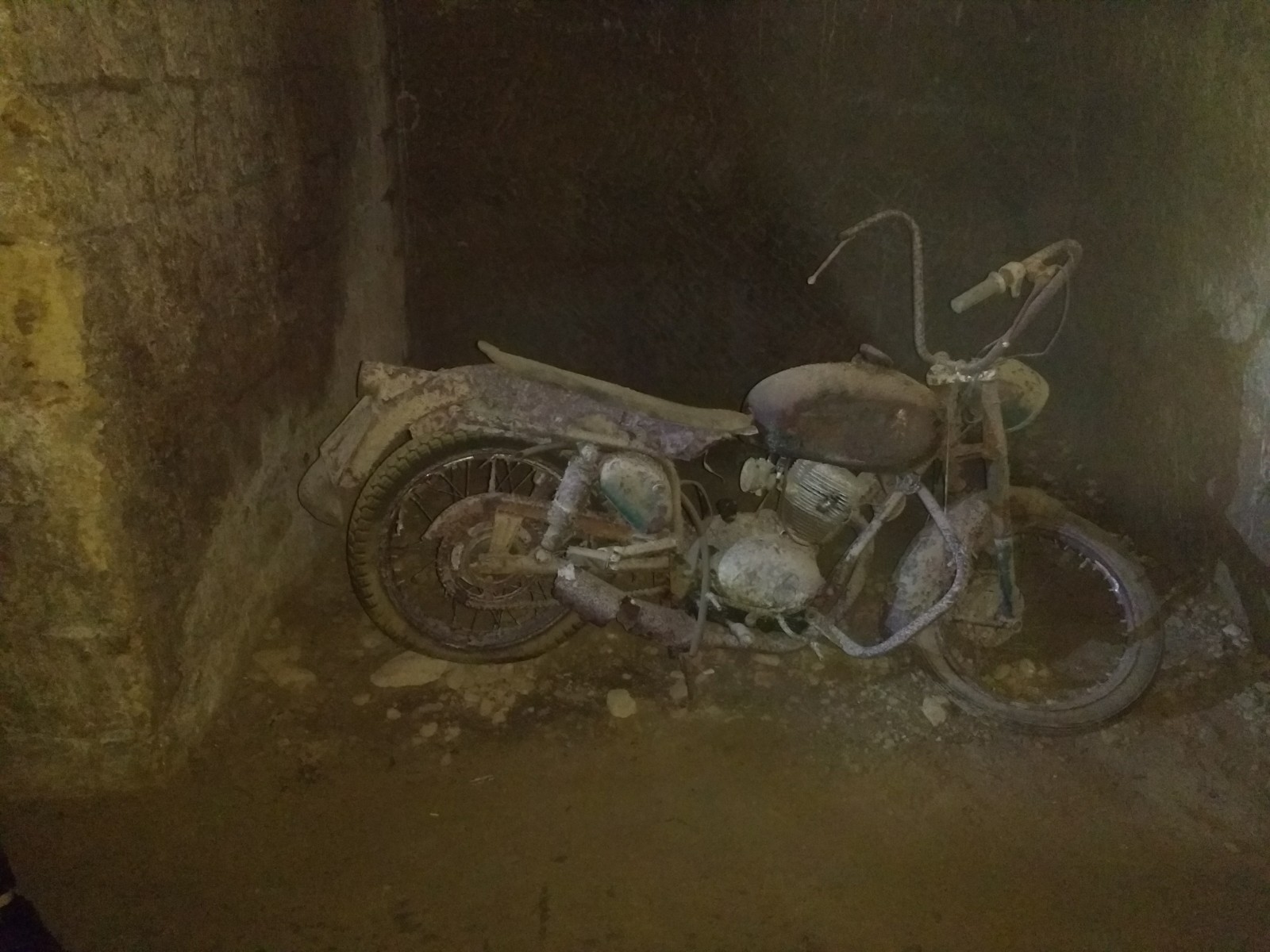
This bike was taken off the road for being a fake, in this case, a fake Harley Davidson.

This bike had been cobbled together with bits and pieces, and did not meet the approval of the police.

The tunnels were fast becoming a depositary for everyone’s rubbish, but fortunately for us a team of volunteers banded together in 2005 to clear the tunnels out. This they achieved in just five years and the tunnels were opened to the public in 2010.

Another interesting artefact discovered …

Aurelio Padovani

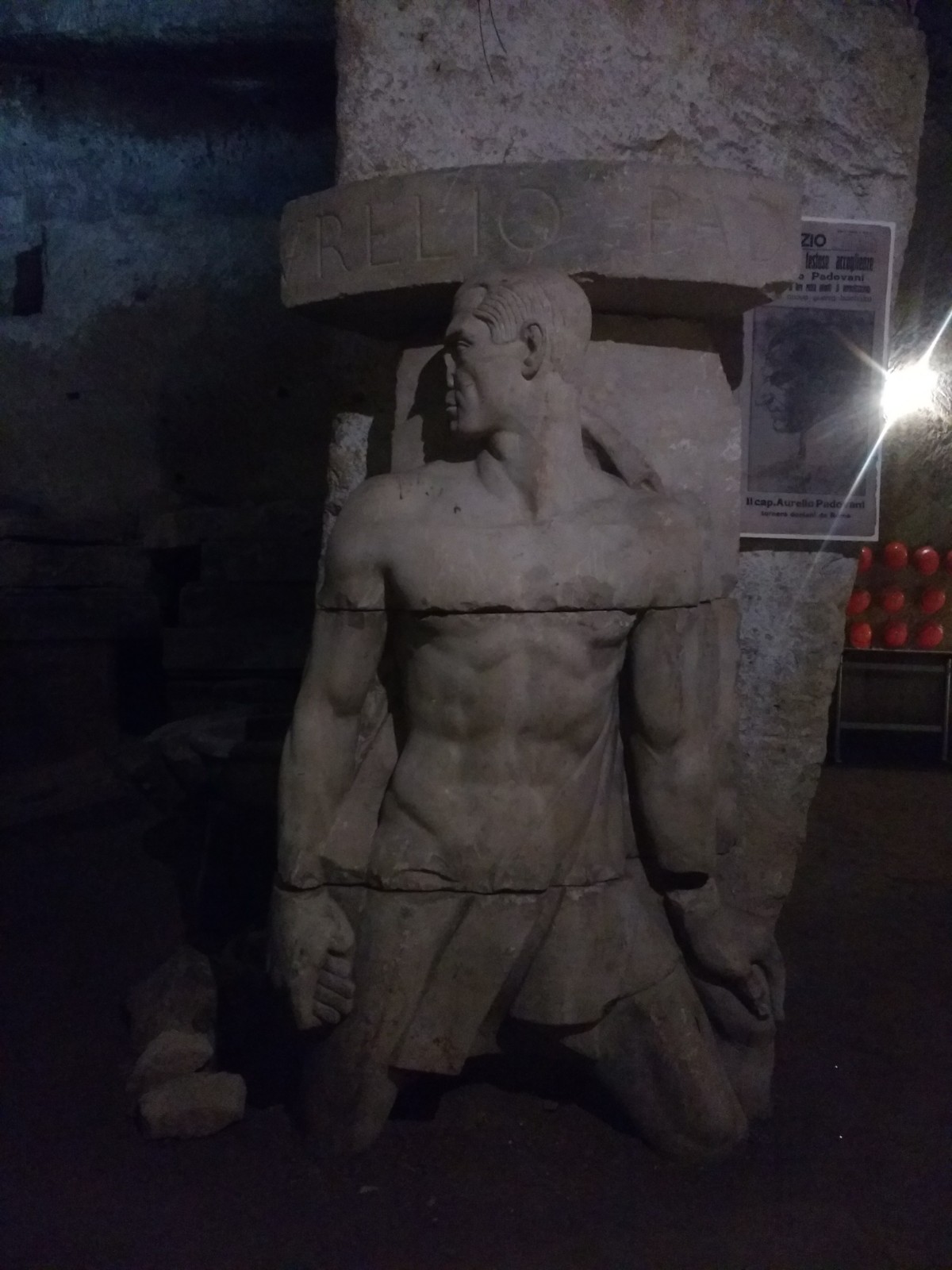
Aurelio Padovani was the founder of the Neapolitan Fascist Party who fell out of favour with Mussolini. Suspicion still surrounds his death. While celebrating his name day in 1926, he stood on a balcony, to wave to his supporters, when the balcony collapsed killing Padovani and eight others.

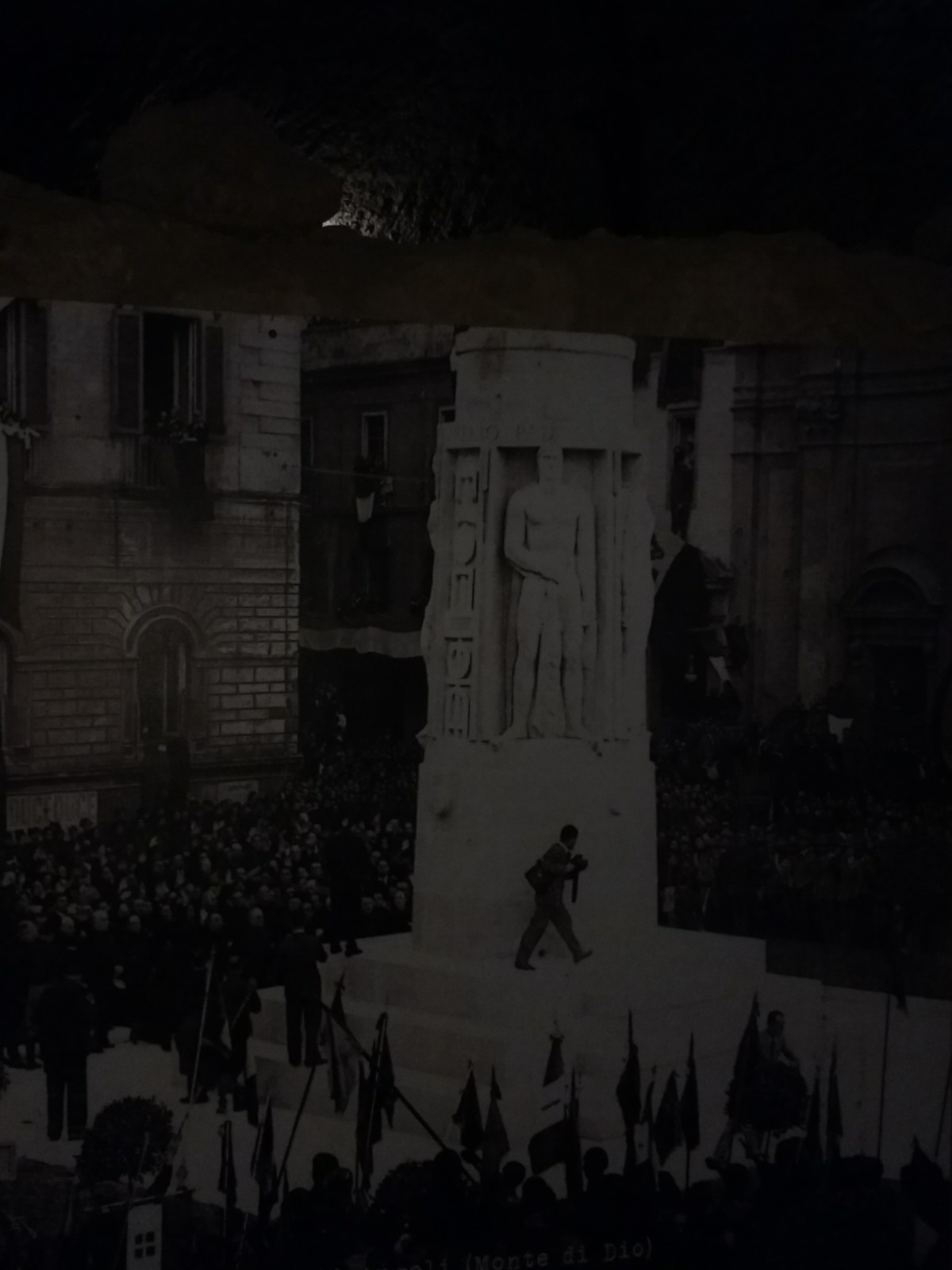
In 1934 a square in Naples was re-named in Padovani’s honour and a huge monument was erected bearing his name.

Monument to Aurelio Padovani

After World War II, the Fascists being out of favour, the square reverted to its former name and the monument was dismantled, the pieces finding their way into the tunnels.

Our fascinating tour was in the Galleria Borbonica, near Palazzo Reale.

Views from Vesuvius

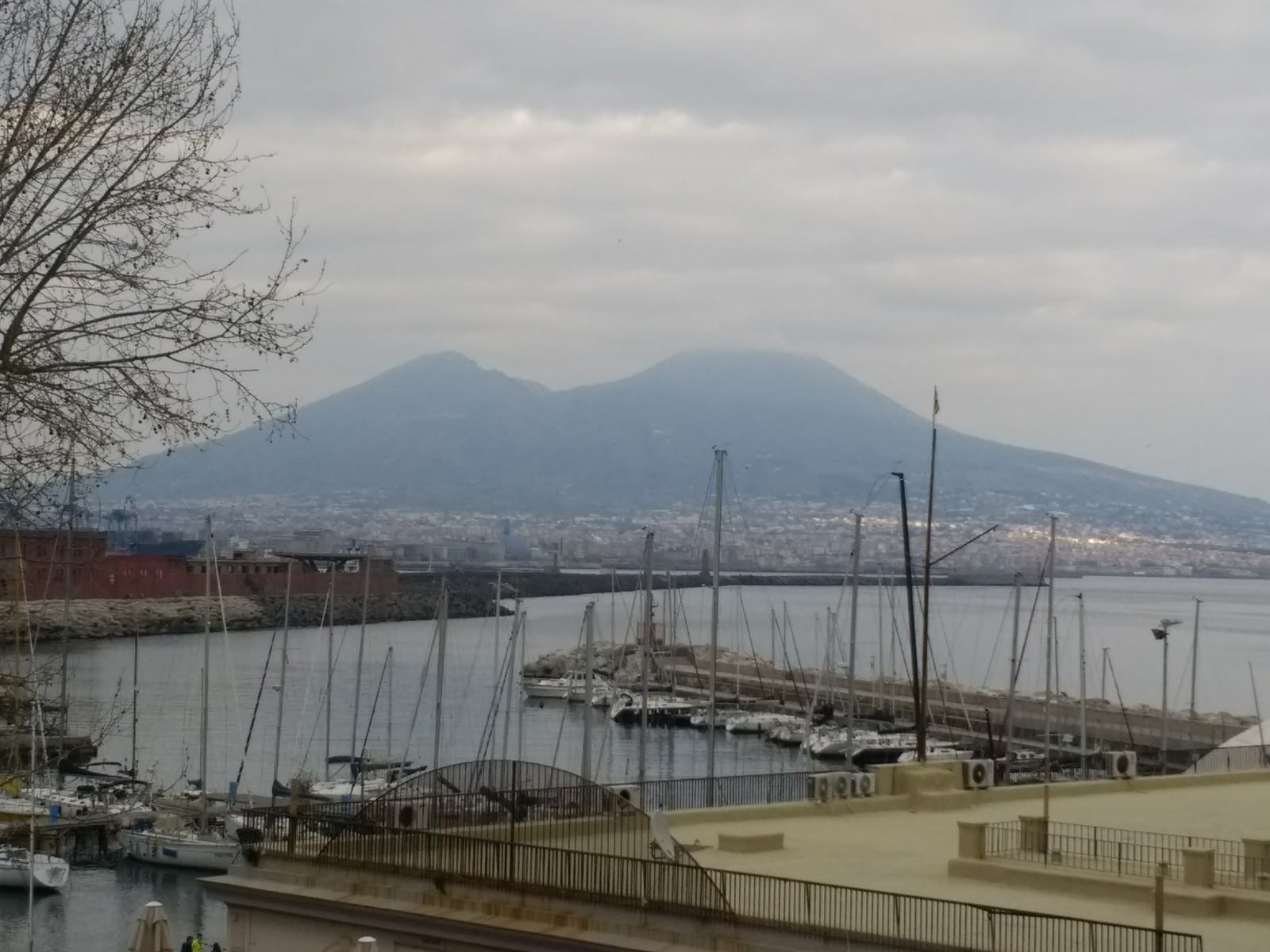
Mount Vesuvius from Naples. Vesuvius is the flat-topped mound on the right. The mound to the left is Mount Somma and is not an active volcano.

Contrary to its benign appearance, Vesuvius is regarded as a very dangerous volcano, partly due to the number of people settled nearby and also because vulcanologists believe that a major eruption is now overdue.

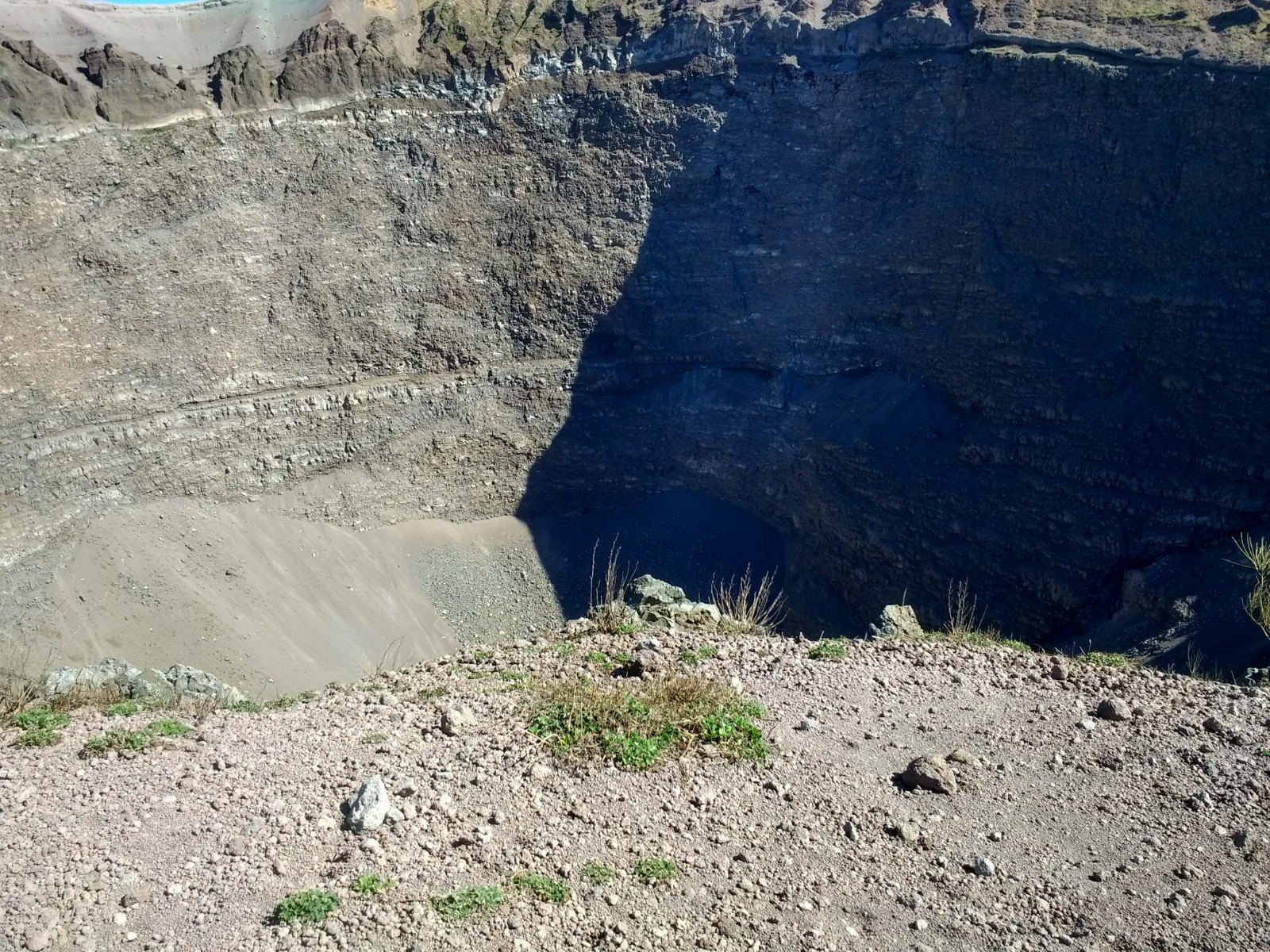
Looking into the crater of Vesuvius. No red-hot bubbling lava here.
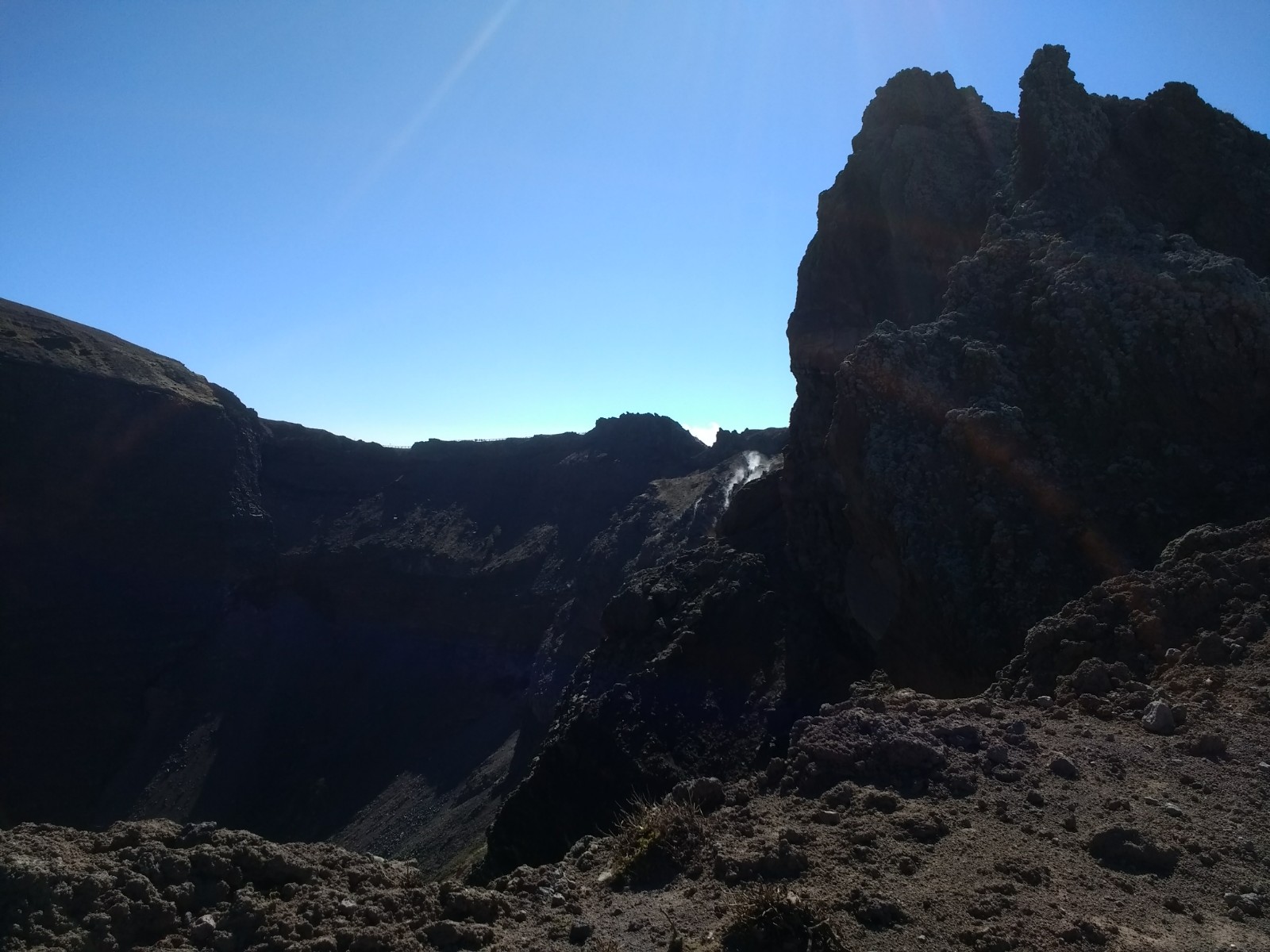
A small cloud of sulphur can be seen on the right, rising from the floor of the crater.

Between the two large eruptions of 1631 and 1944, there were small eruptions roughly every 15 years, but there has been not a peep since 1944.

Apparently, the bigger the build up of gas below the crust, the greater the likelihood of a huge explosive event. However, the good news is that Vesuvius is being very closely monitored, and scientists believe that they will have between two and three weeks’ notice of such an incident. Time enough to move people out of the area.

Fortunately for us, there have been no indications of any forthcoming disturbance, so we were able to walk round the rim today in perfect safety.

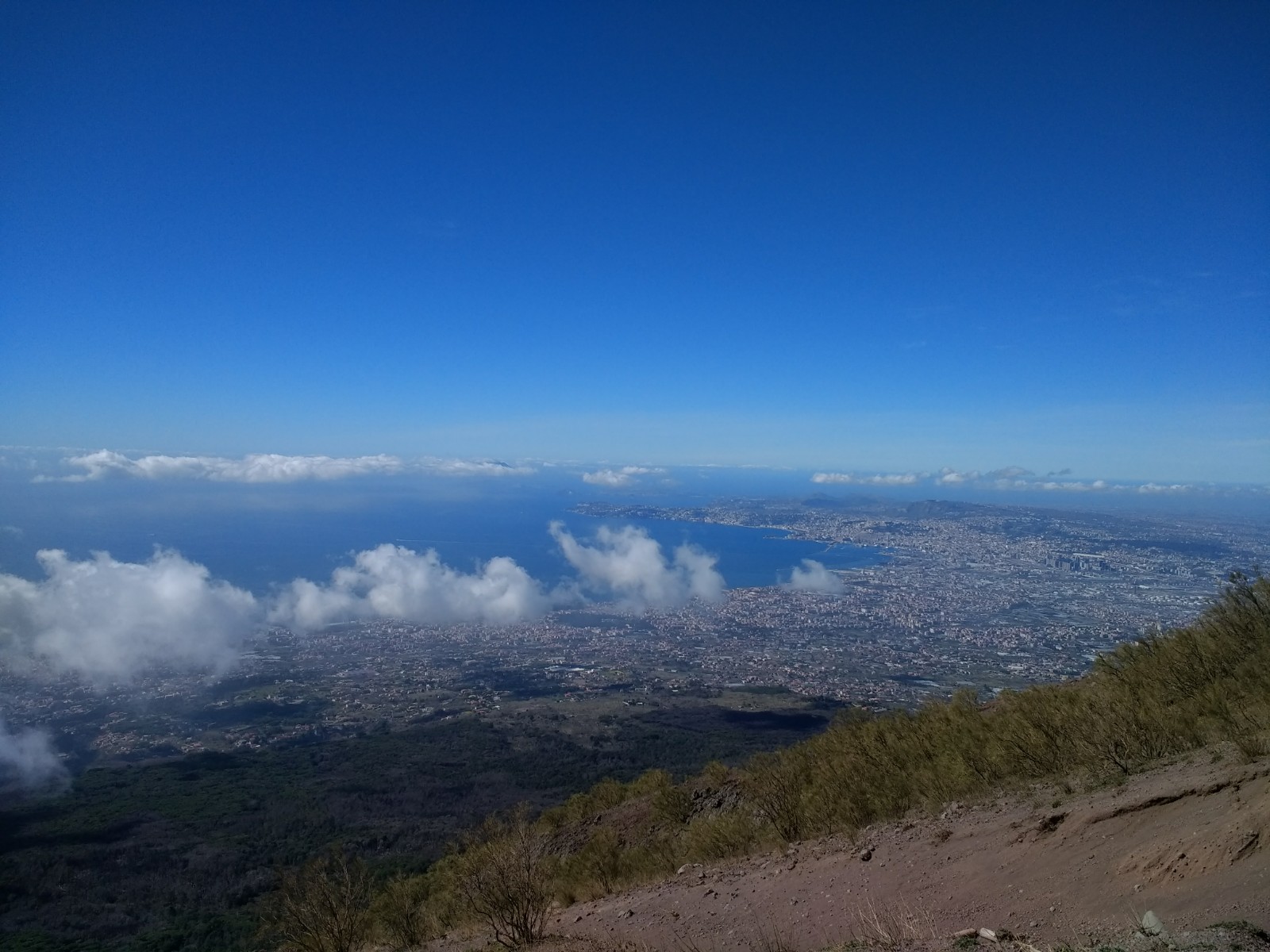
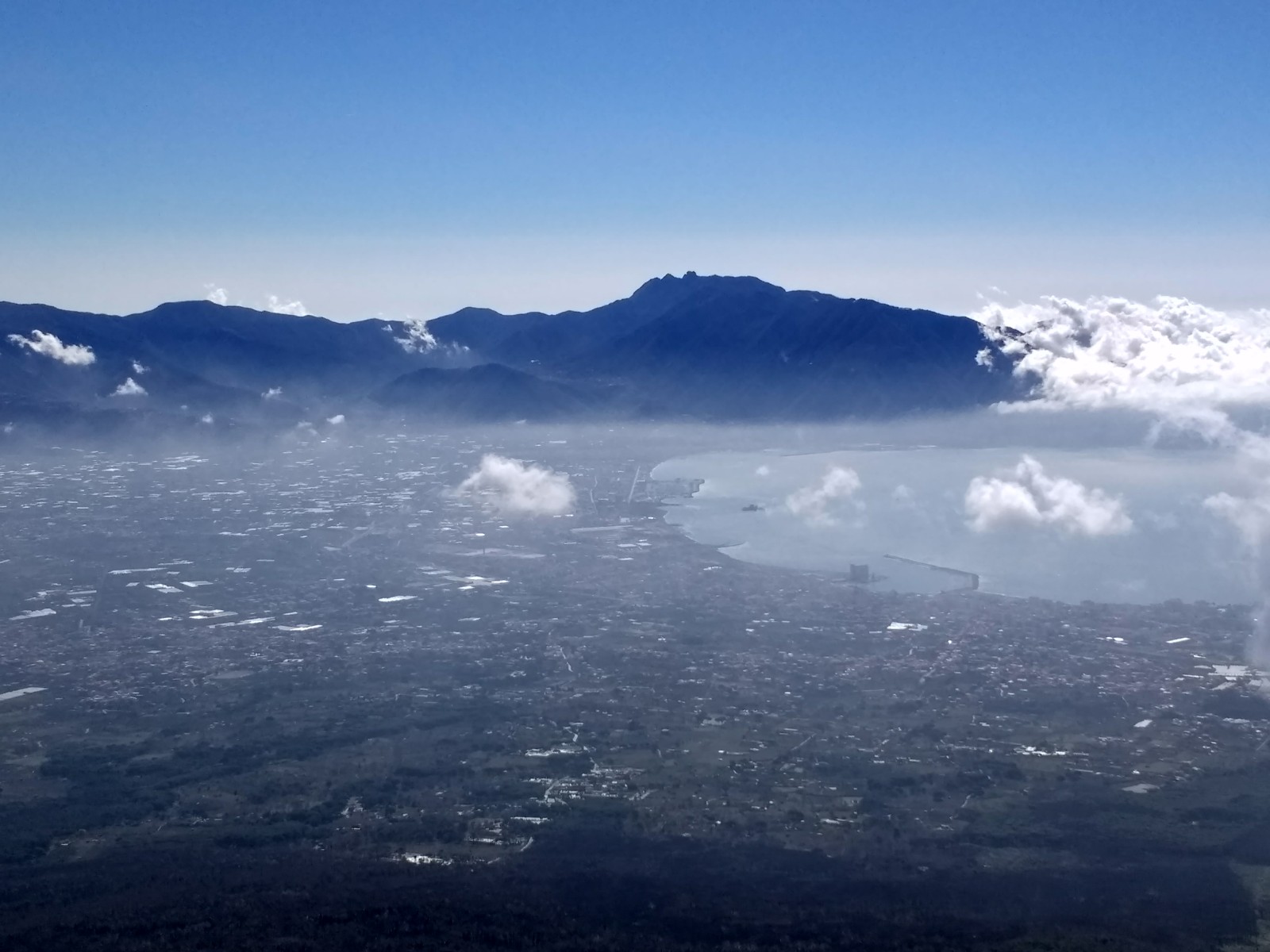
From Vesuvius looking across the Bay of Naples.
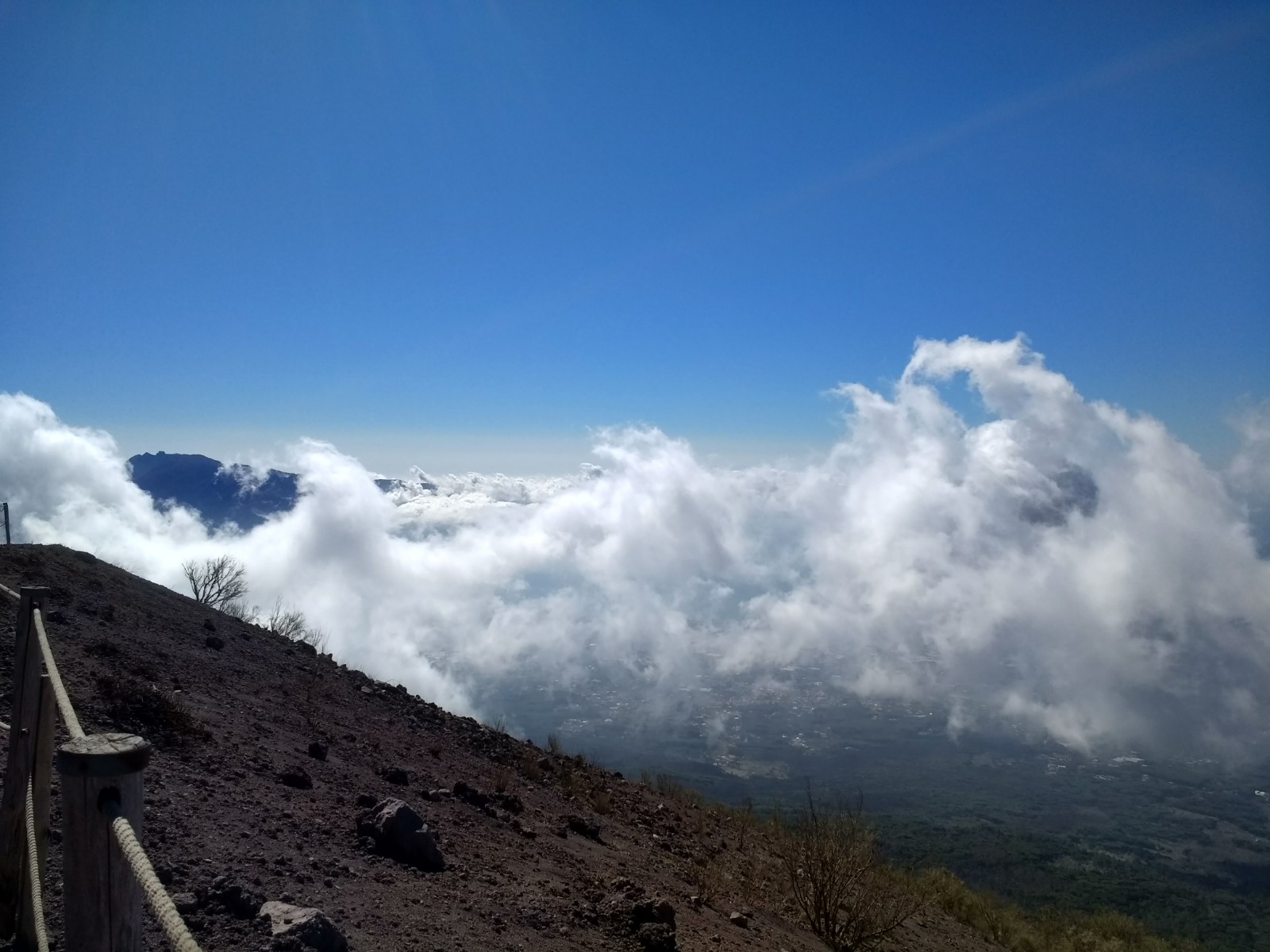
From Vesuvius looking down. These are not clouds of sulphur, but cumulus clouds.
Having got the little Circumversuviana train as far as Ercolano (the modern town of Herculaneum) we then caught a bus (€10 return) to the car park on Mount Versuvius. A further €10 allowed us to walk up to the crater (half an hour’s steep climb).
The shiny rectangles on the ground are not areas of water, but polytunnels.
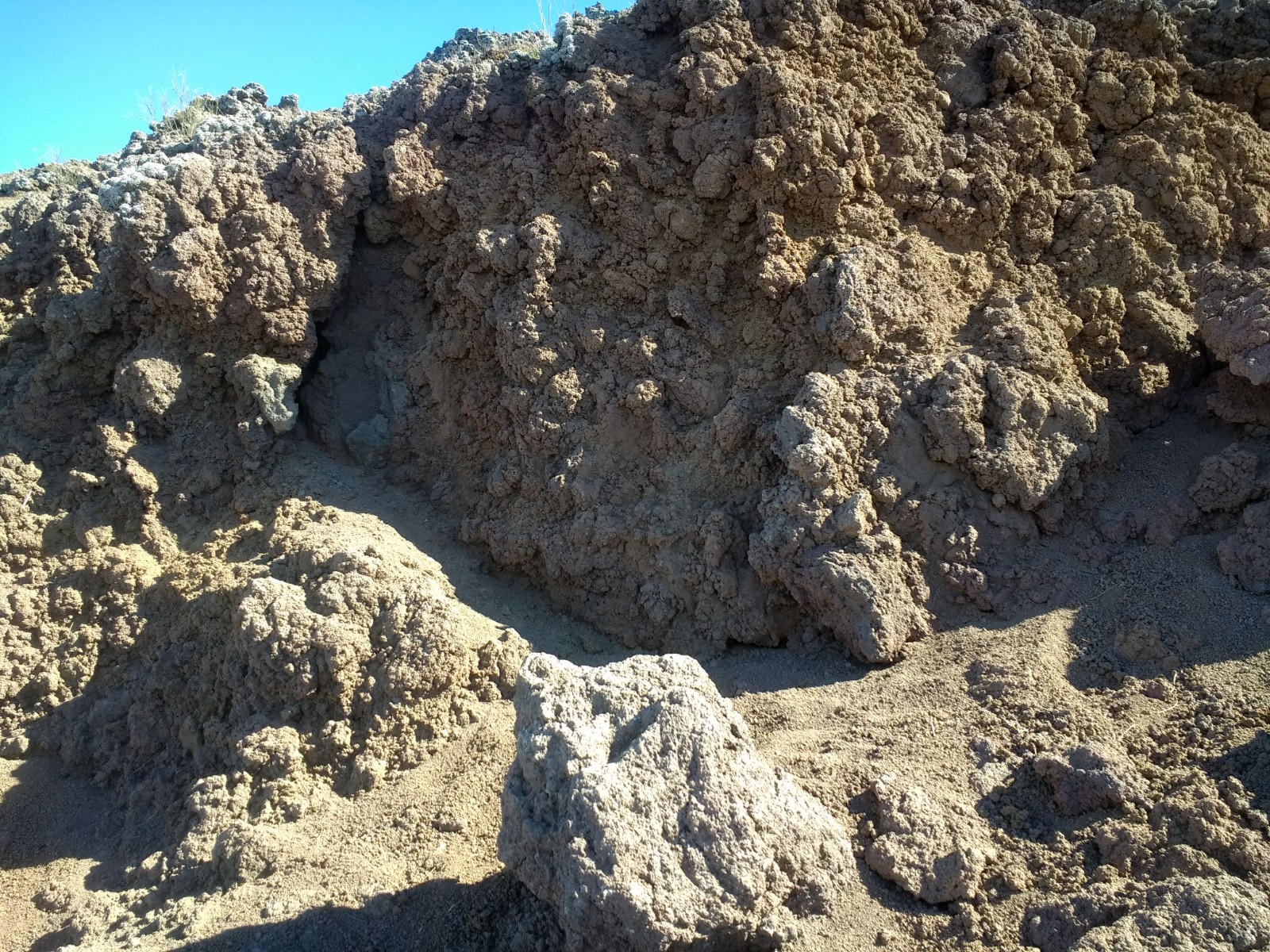
Dried lava from an old flow.

We’re really pleased we managed to do this today. Reading forums on Trip Adviser, a number of people seem to have got to the car park with the bus from Ercolano, for the path to the crater to be closed due to weather conditions.

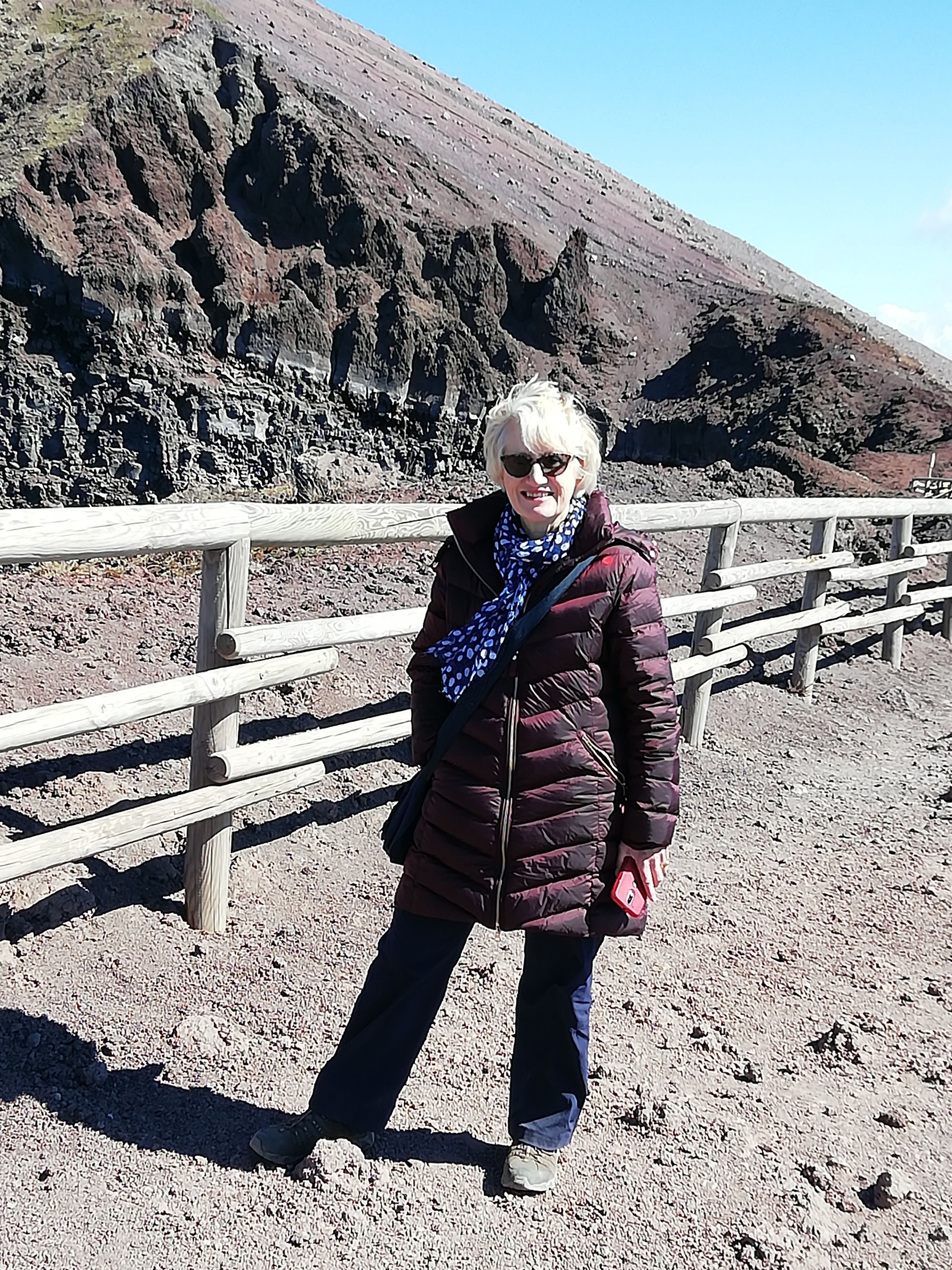
Me. Made it!