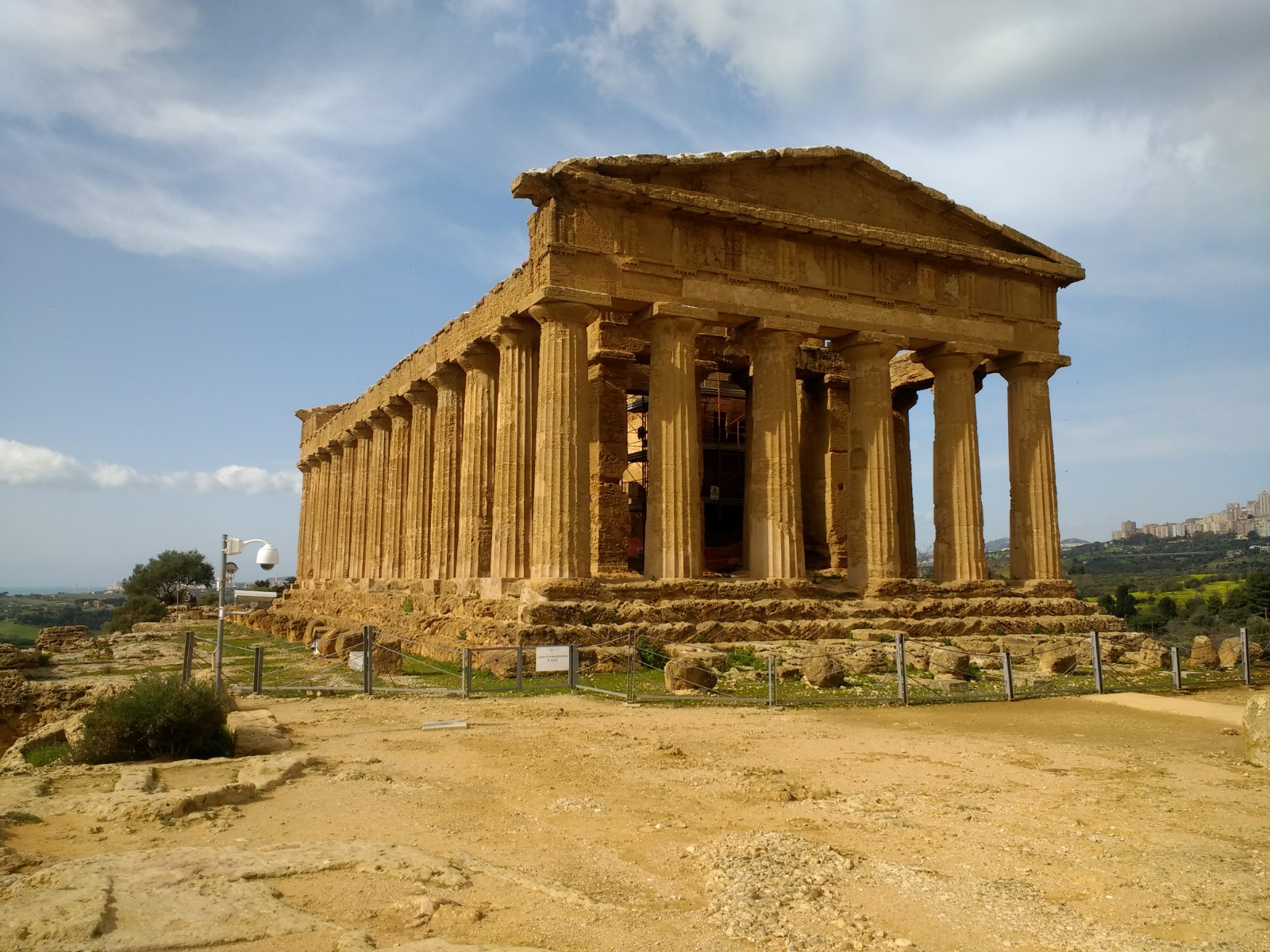
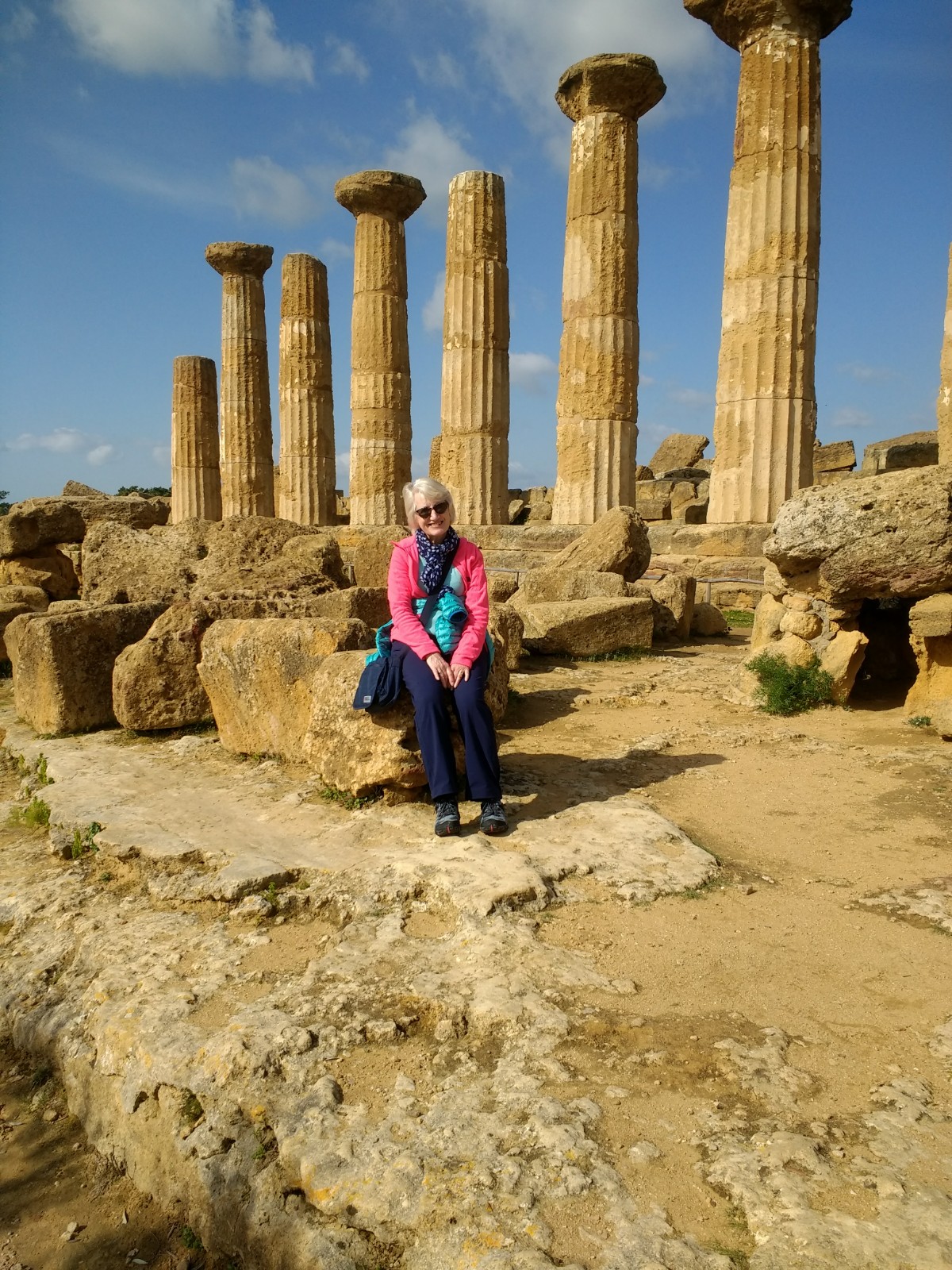
The sun shone down on us today which made our walk through the Archeological Park in Agrigento feel quite spring-like (or high summer in the UK).
Temple, Agrigento Enjoying the ruins
To be perfectly honest, one Greek ruin looks a lot like another (unless you have a degree in Ancient History which neither of us do) but the weather was good and the views were superb.
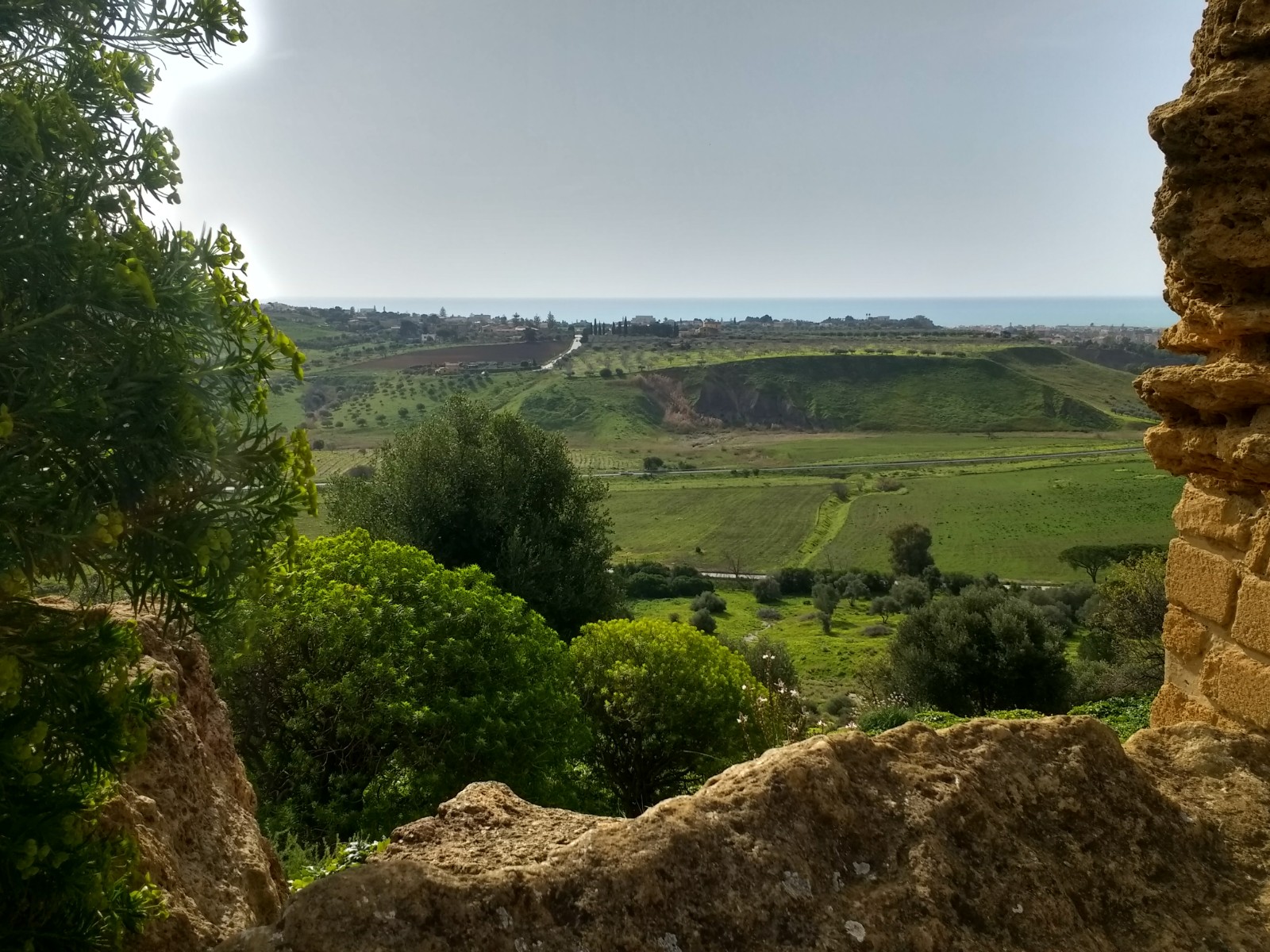
View to the coast from the fortifications
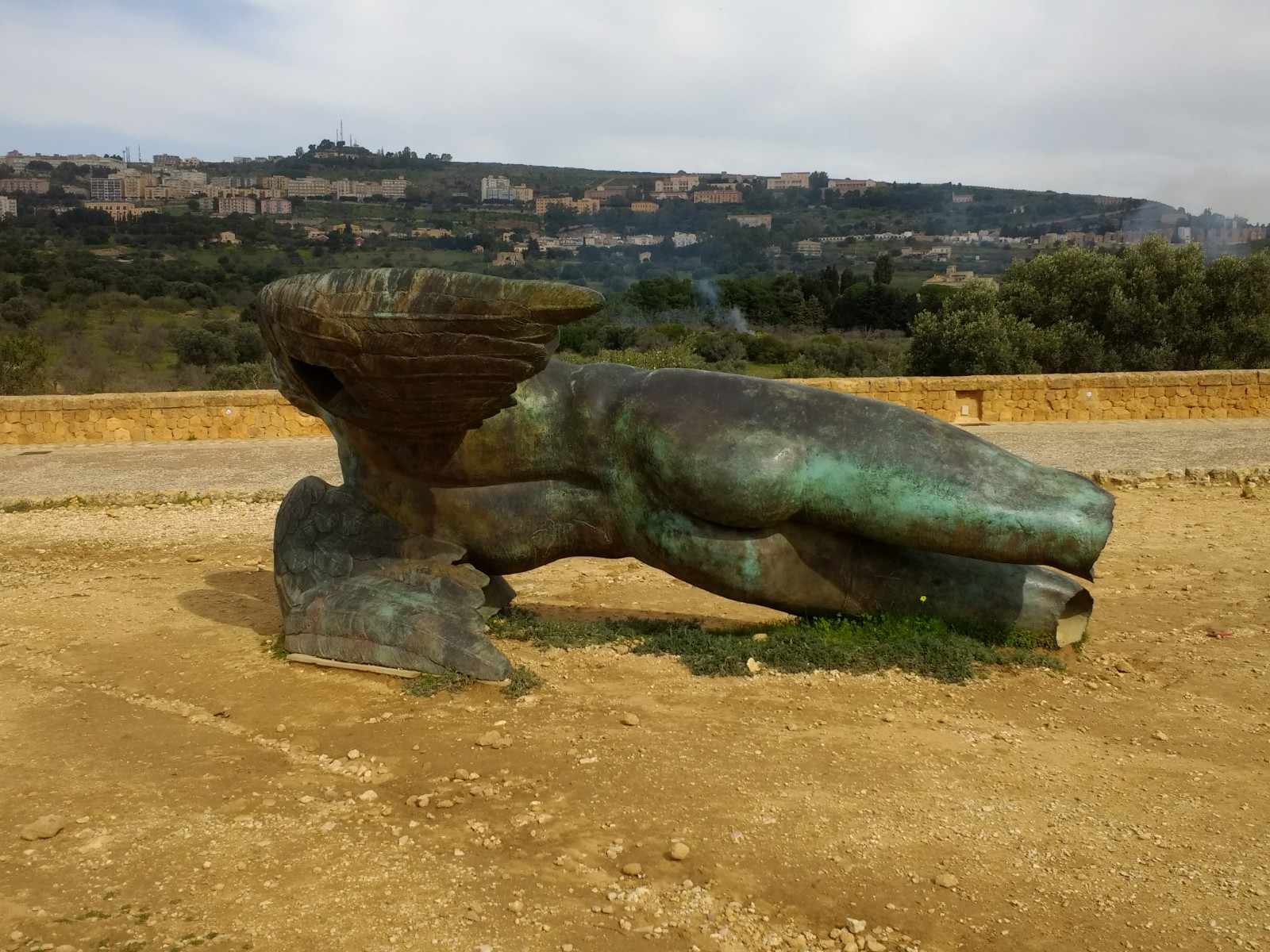
Icarus says, “The sun wasn’t there yesterday.”
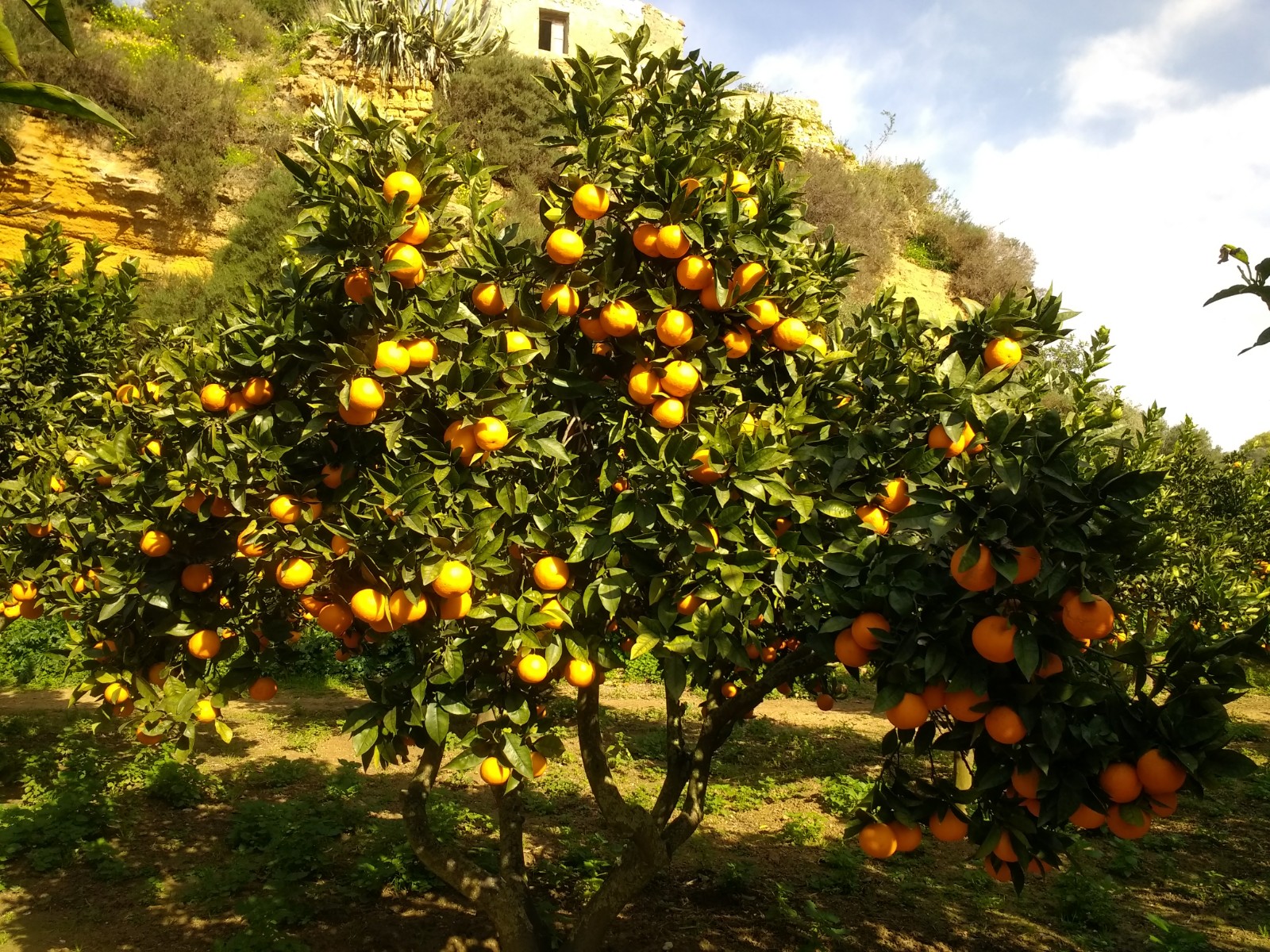
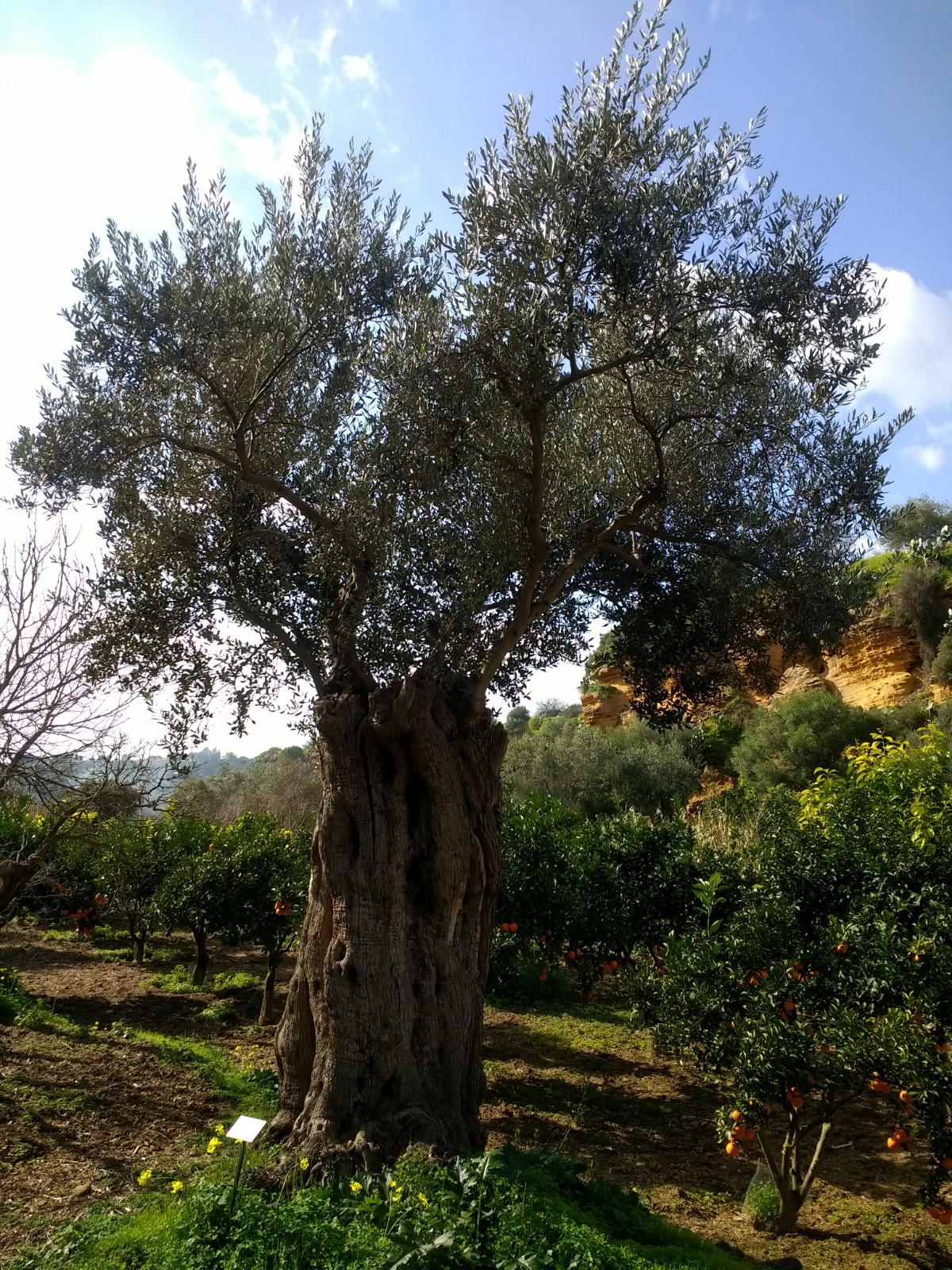
Being National Trust members, we were allowed in free to the gardens inside the Archeological Park, but maintained by the Fondo Ambiente Italiano (the ‘National Trust for Italy’). The Gardens are mostly given over to the cultivation of fruit trees.
Orange trees, Giardino Della Kolymbethra
They say olive trees improve as they mature. How nice if that worked for me too.
The gentleman at the entry gate was insistent that we would need to visit the Archeological Museum by car (although it was shown in the middle of the Park on our map). We did as we were advised, but when we got there the car park was closed. No wonder there weren’t many visitors.
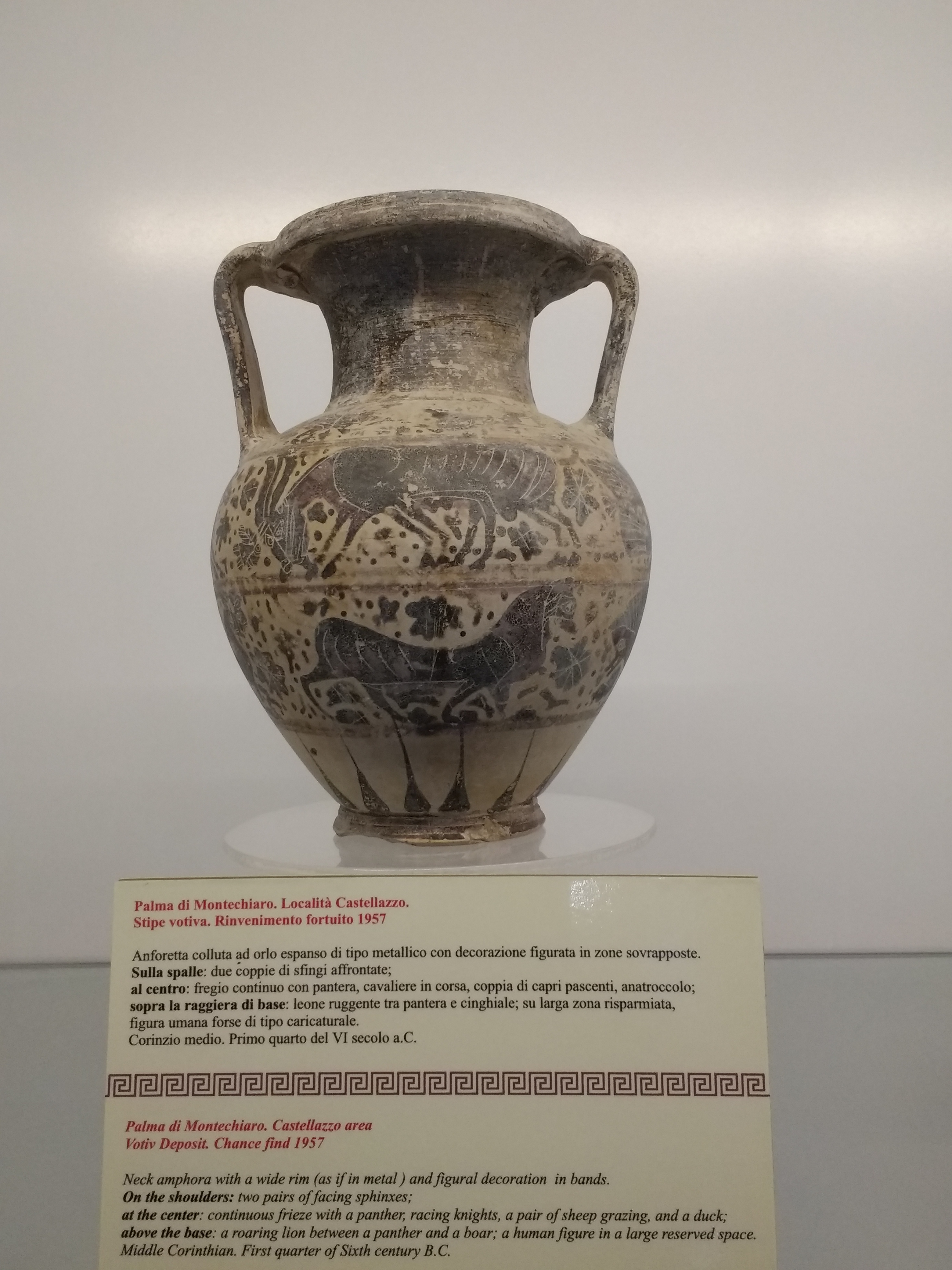
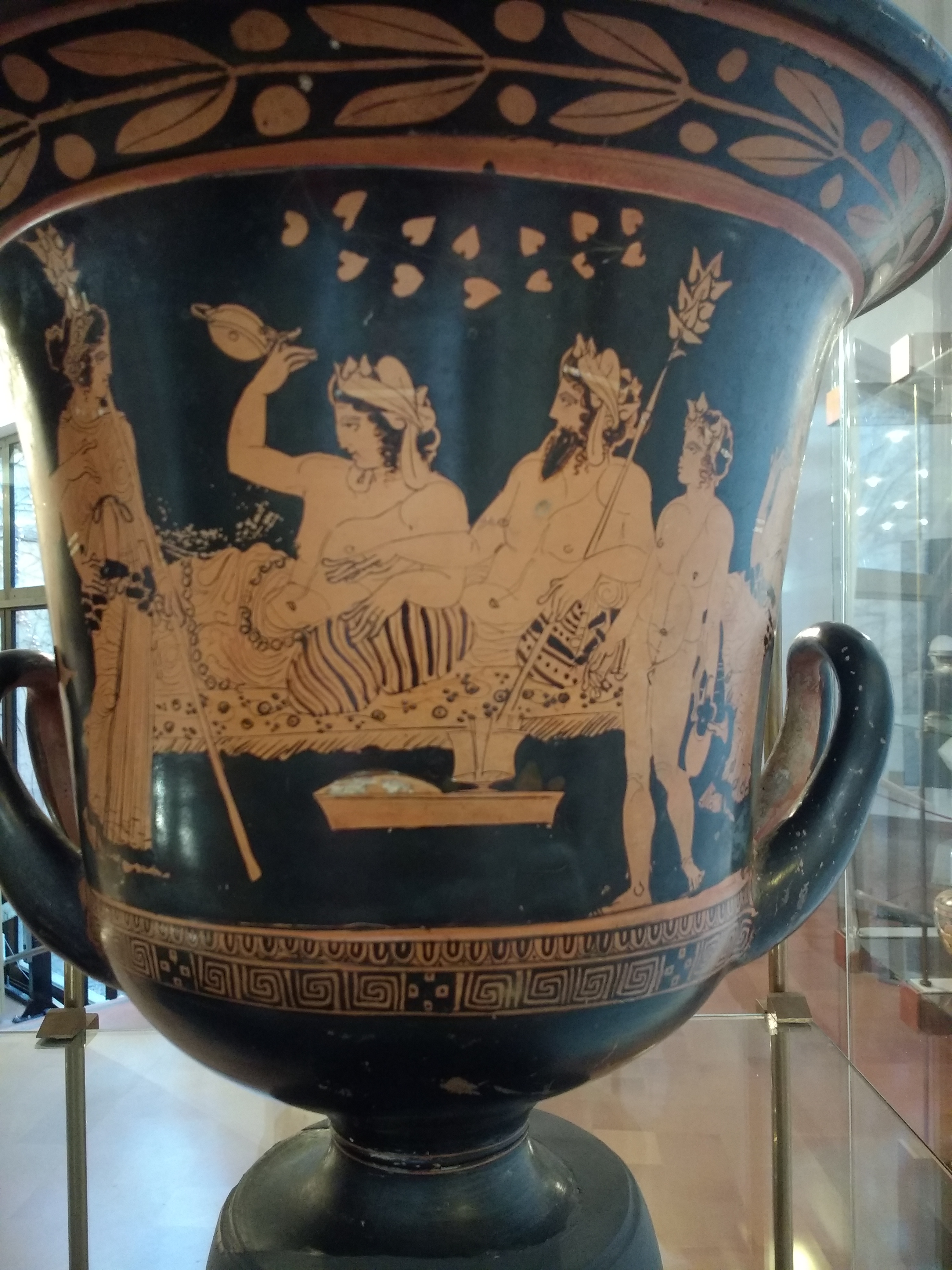
It was no surprise that the Museum should have a number of Greek pots, but they were mostly in fantastic condition. The art work, even on the very early pots, was exquisite.
Sixth century BC
Fifth Century BC
One of the glories of staying in a hotel, as we are here, is that you have to eat out. Last night we felt sorry for a very cold looking young man handing out flyers for a newly opened establishment. Fortunately though, the food wasn’t a disappointment. Mark had scaloppina alla Marsala and I had tuna encrusted with couscous. I am afraid we’re not incredibly adventurous. We are not red wine drinkers either and usually plump for the house white which we always find very good in Italy.
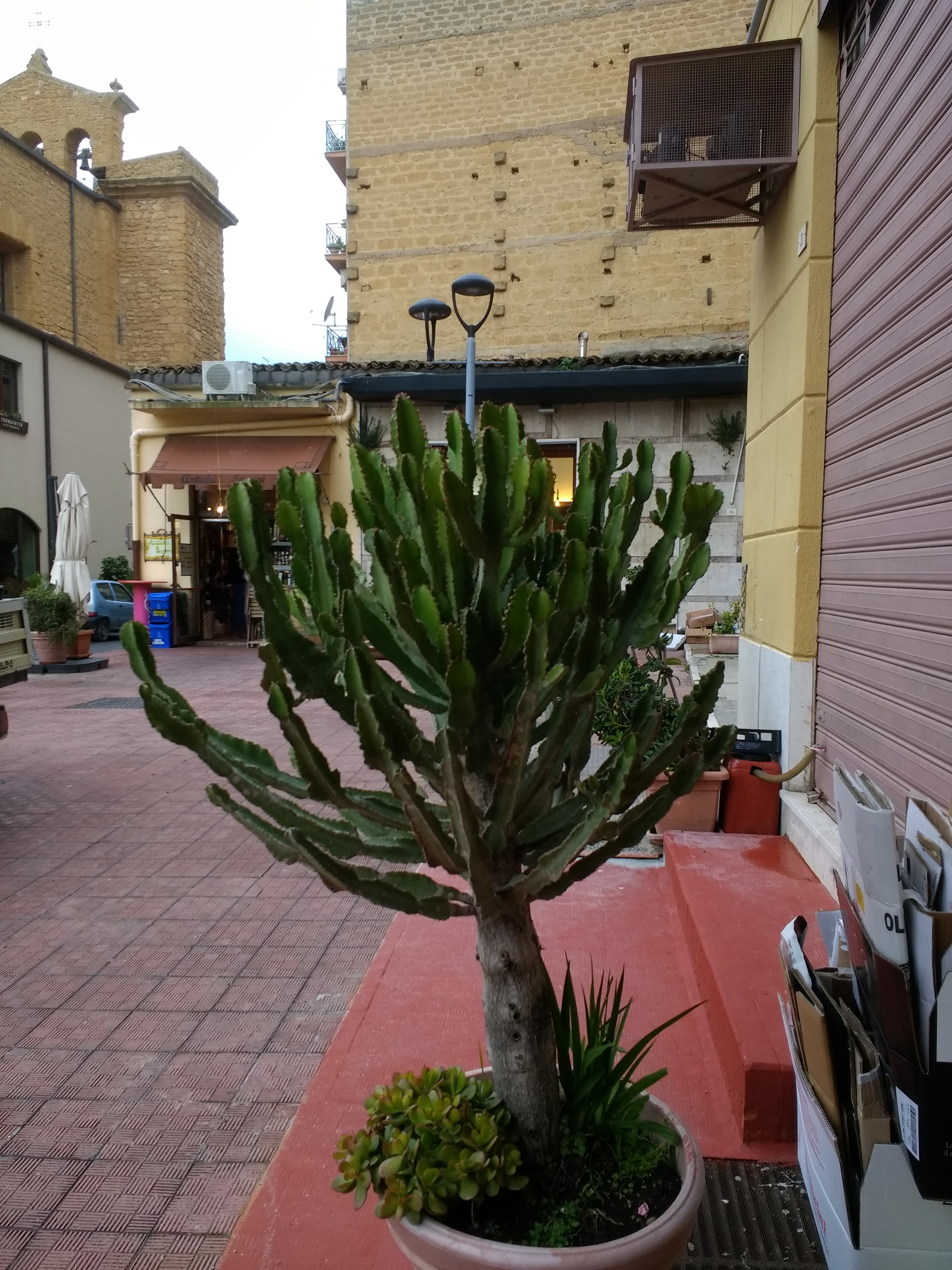
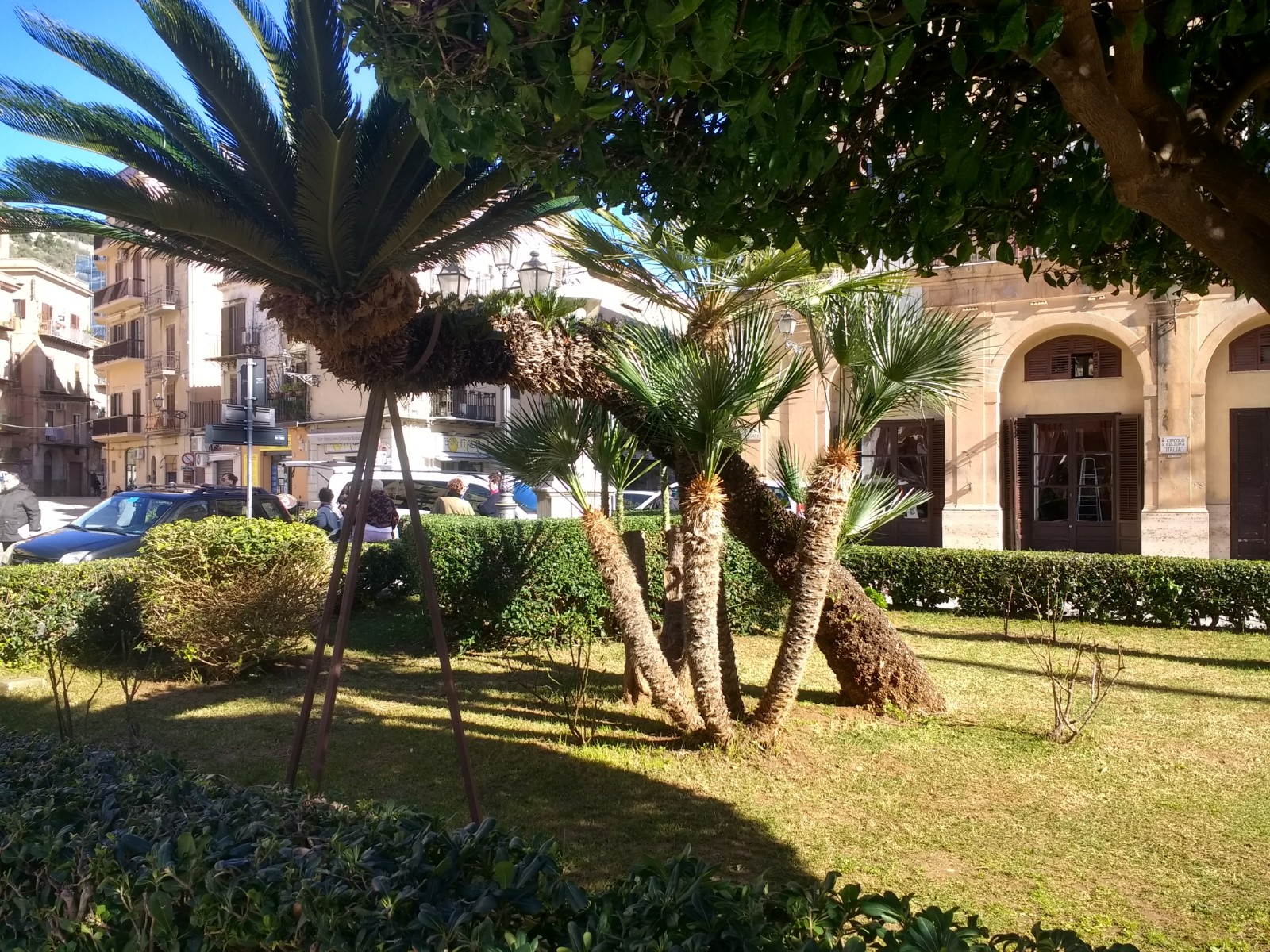
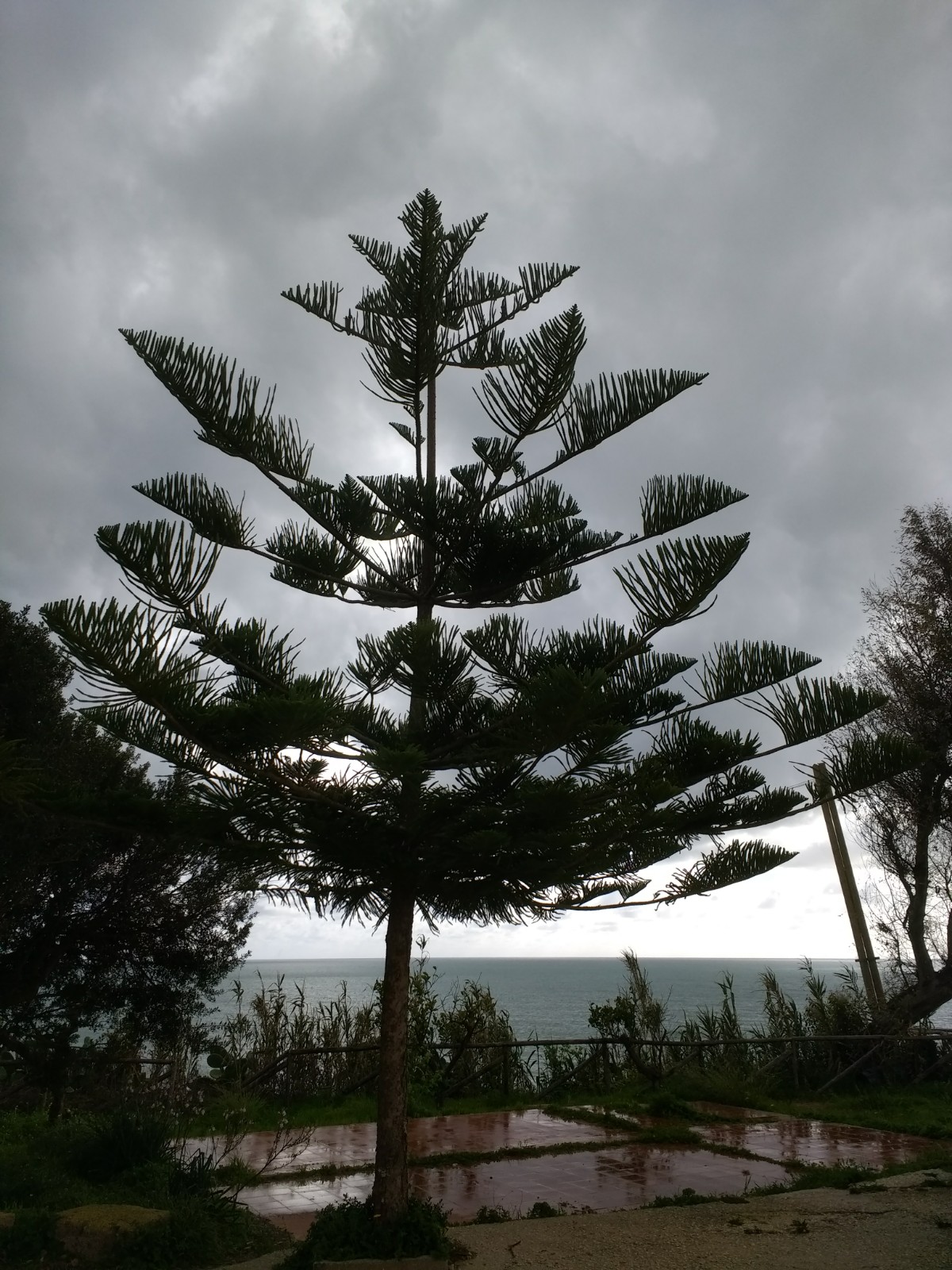
We have moved on to Agrigento and the cold, wet and windy weather has come with us. It feels so much like the weather we get in the UK that I am constantly surprised at all the exotic vegetation. I am talking of palm trees, cacti and birds of paradise plants. I suppose the difference between here and home is that the temperature in Sicily never gets low enough to damage them. All the same, you do worry for all the oranges and lemons that you see on the trees at this time of year. Strange that they should should be ready for harvesting in the middle of winter when most fruit is ready at the end of summer.
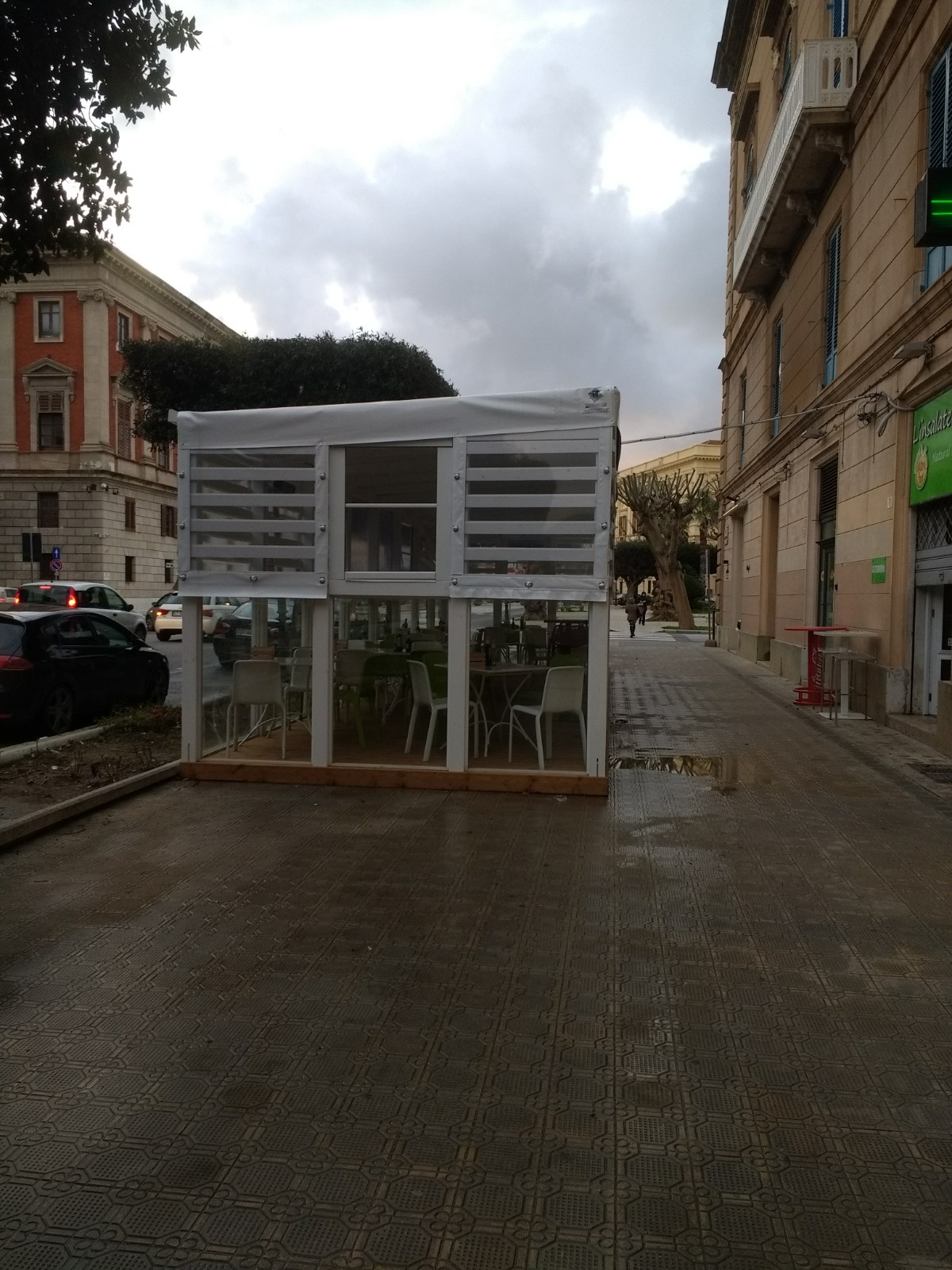
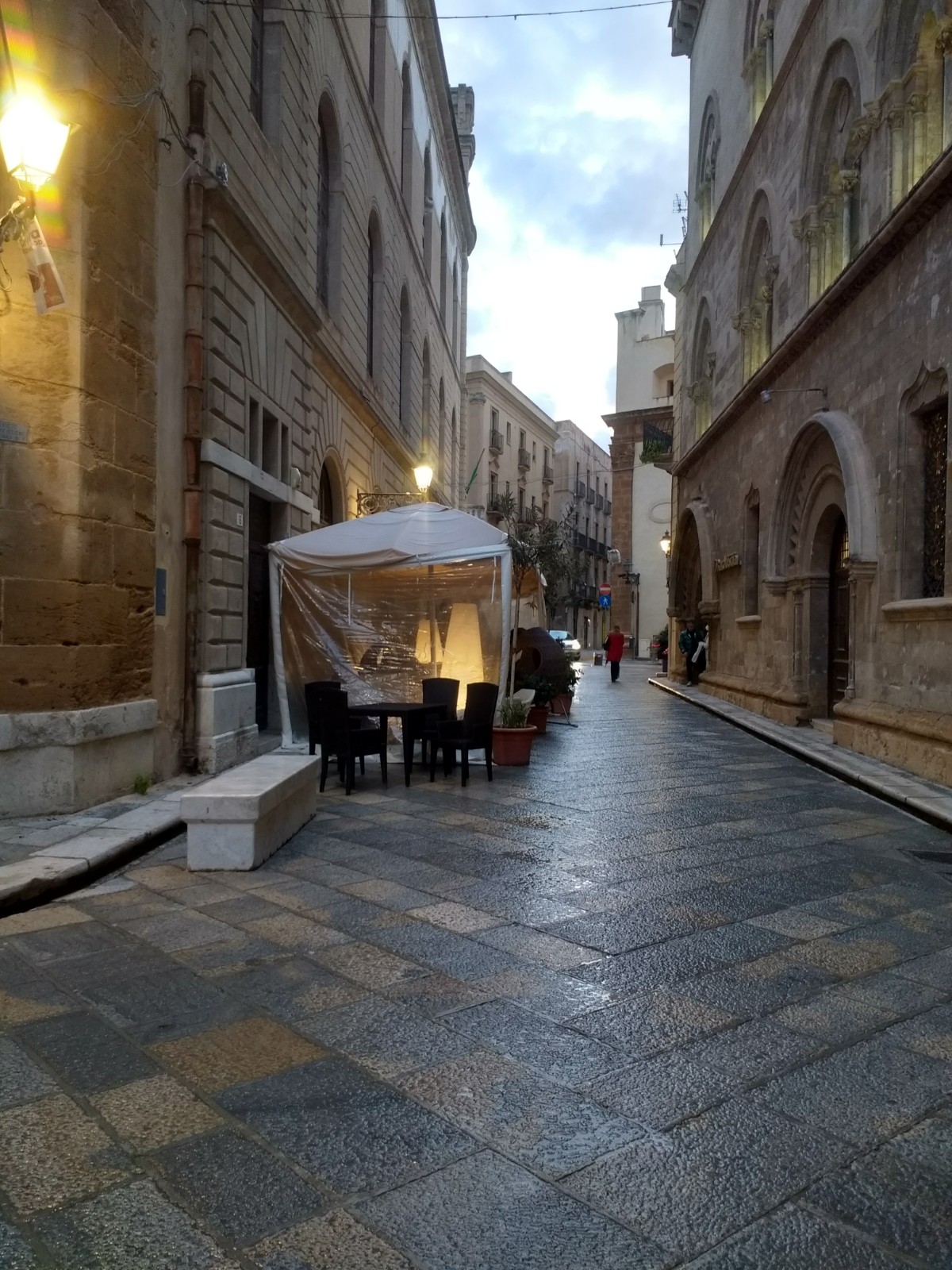
Despite the low temperatures, every restaurant seems to have an annex on the pavement, enclosed in plastic, and furnished with a patio heater or two. I’ve come to the conclusion that these are to enable people who want to smoke, and a lot of people do, to eat and puff away at the same time.
Al Fresco Dining, TrapaniMore Al Fresco Dining. I worry about the diners if the wind continues to blow.
Being the first Sunday in the month yesterday our entry into the Archeological Park at Selinunte was free. This might have attracted a few more visitors than there would otherwise have been, but not hordes. After a downpour, the sun came out.
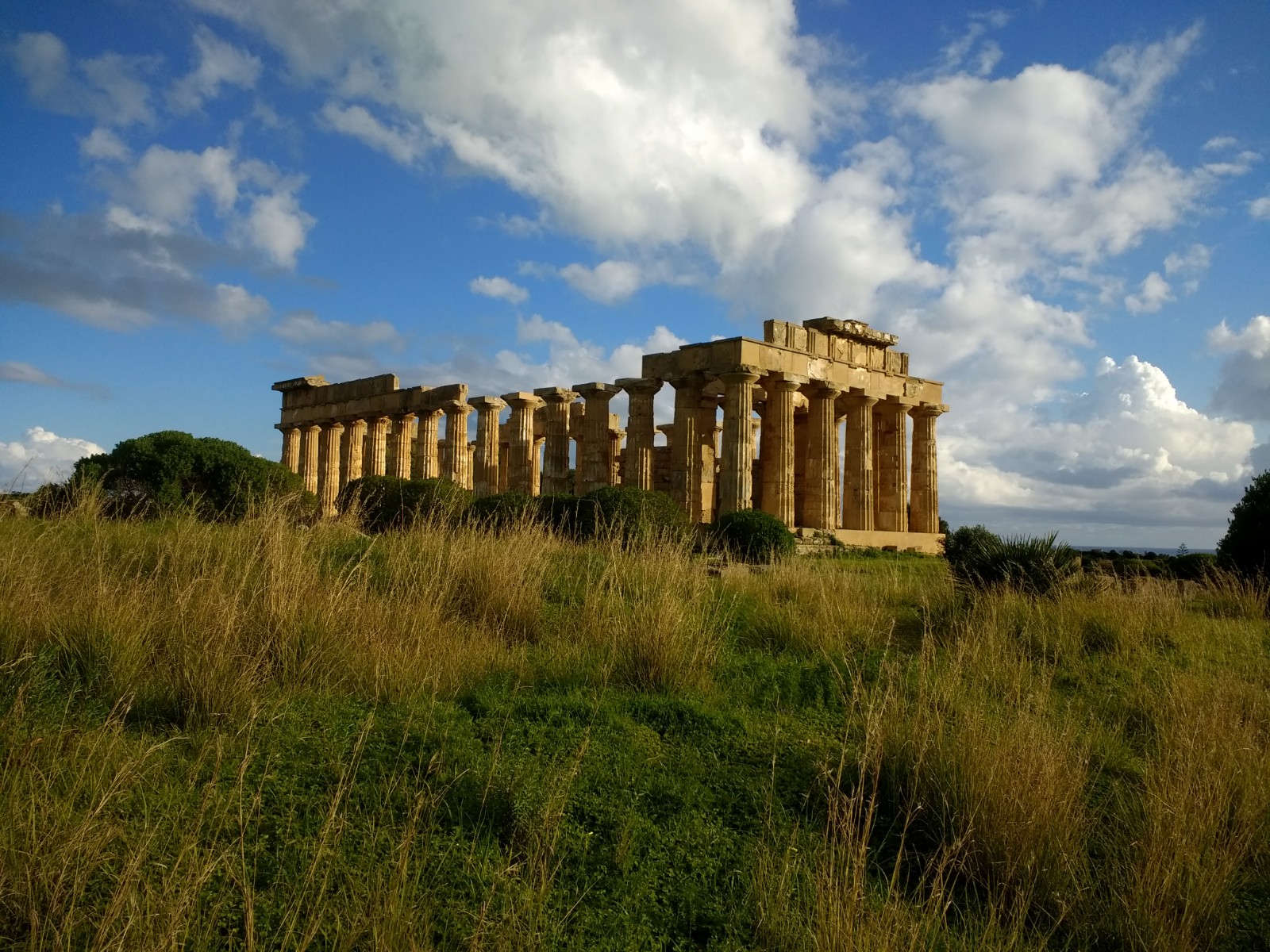
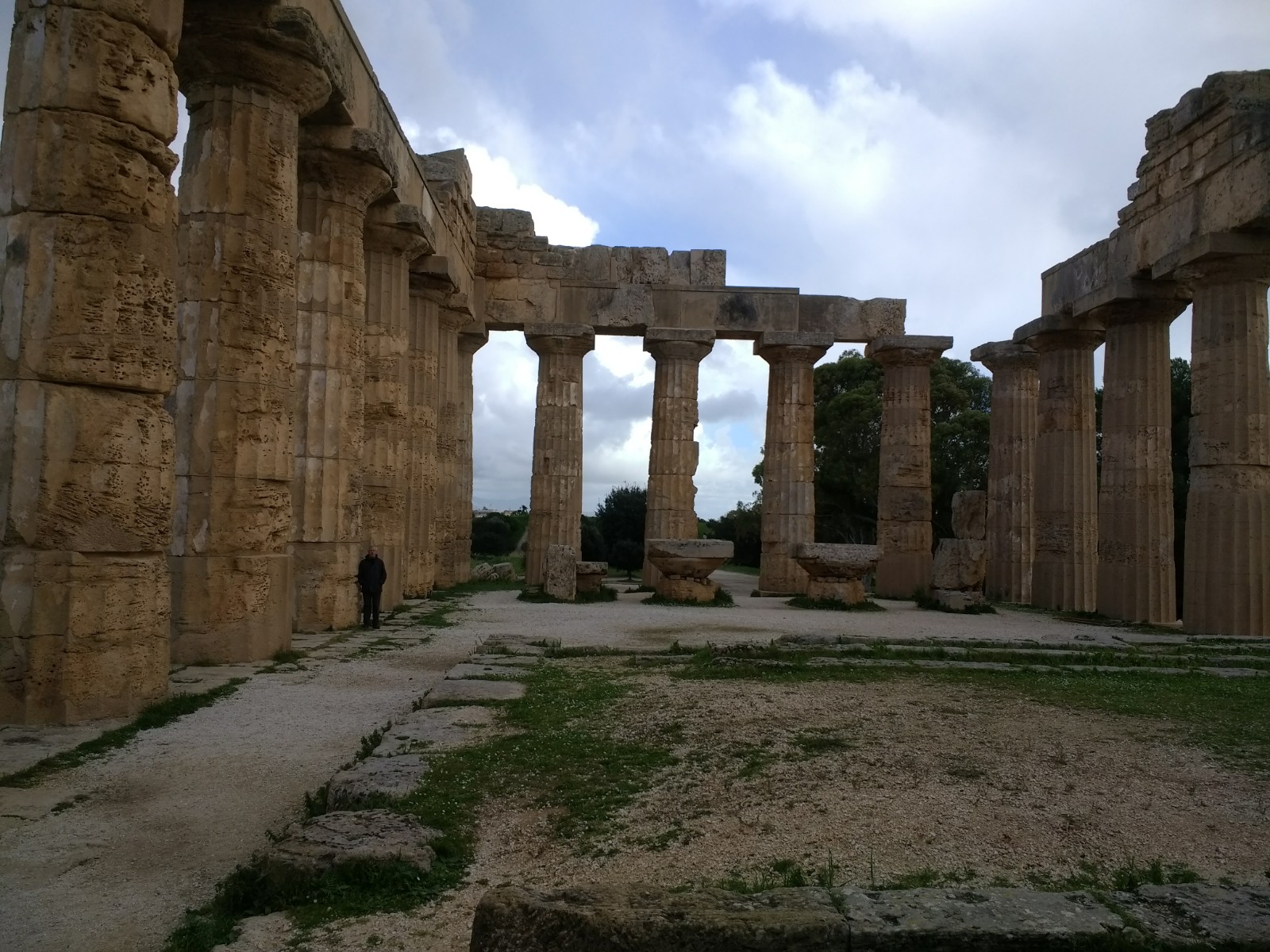
There are many temples at Selinunte, but only one, possibly dedicated to Hera, has been rebuilt.
Re-built Temple at Selinunte
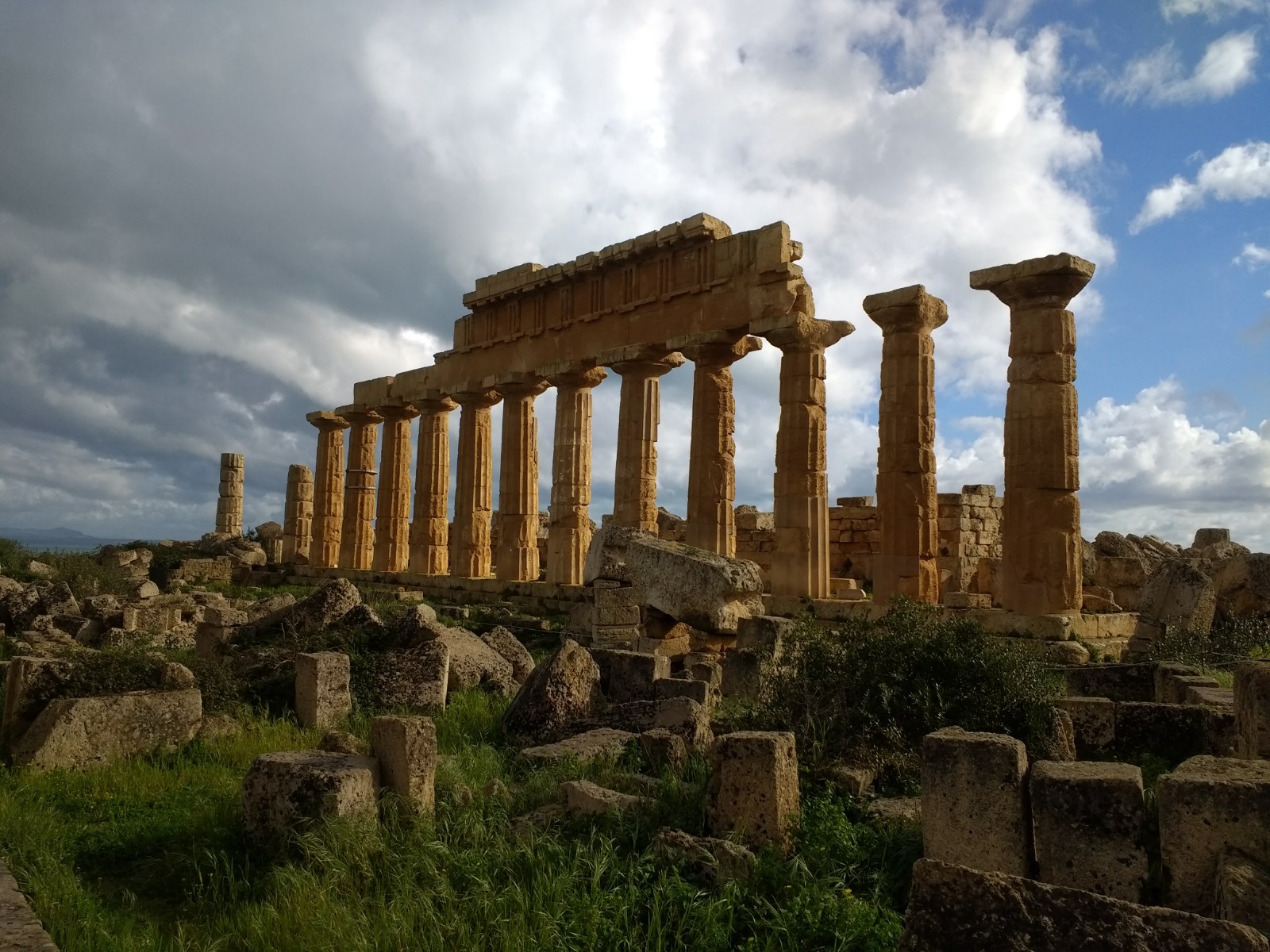
It seems that the temples here were partly destroyed during disputes with Carthage, and then further collapse came about with an earthquake in medieval times.
Mark is standing on the left to give some idea of scale!
Temple Remains, Selinunte
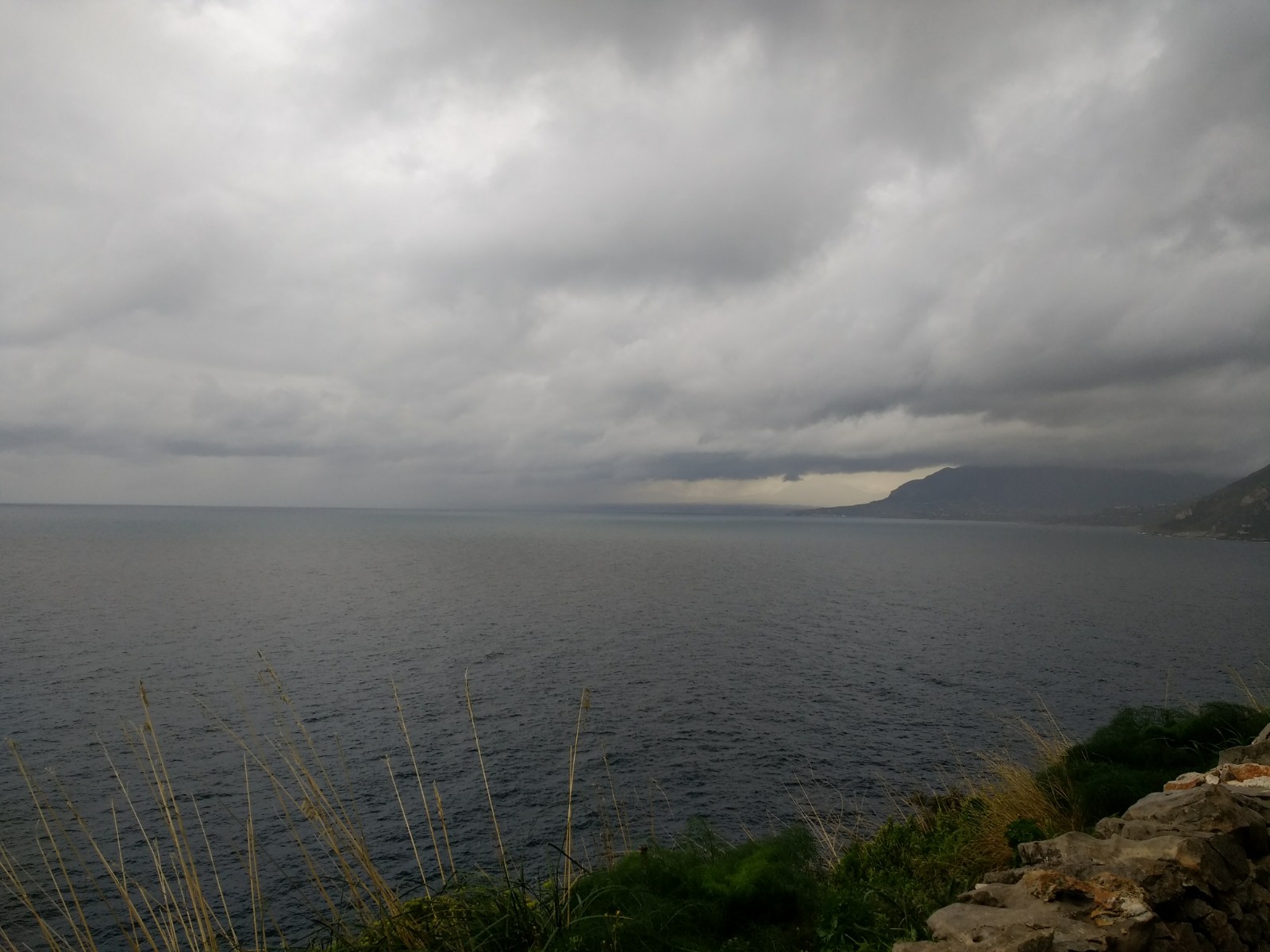
The rain returned this morning with a vengeance and having driven to Zingaro Nature Reserve for a walk, we instead decided to head back to Trapani, and stop off at San Vito di Capo for lunch. We took a few photos first.
View from Zingaro Nature Reserve
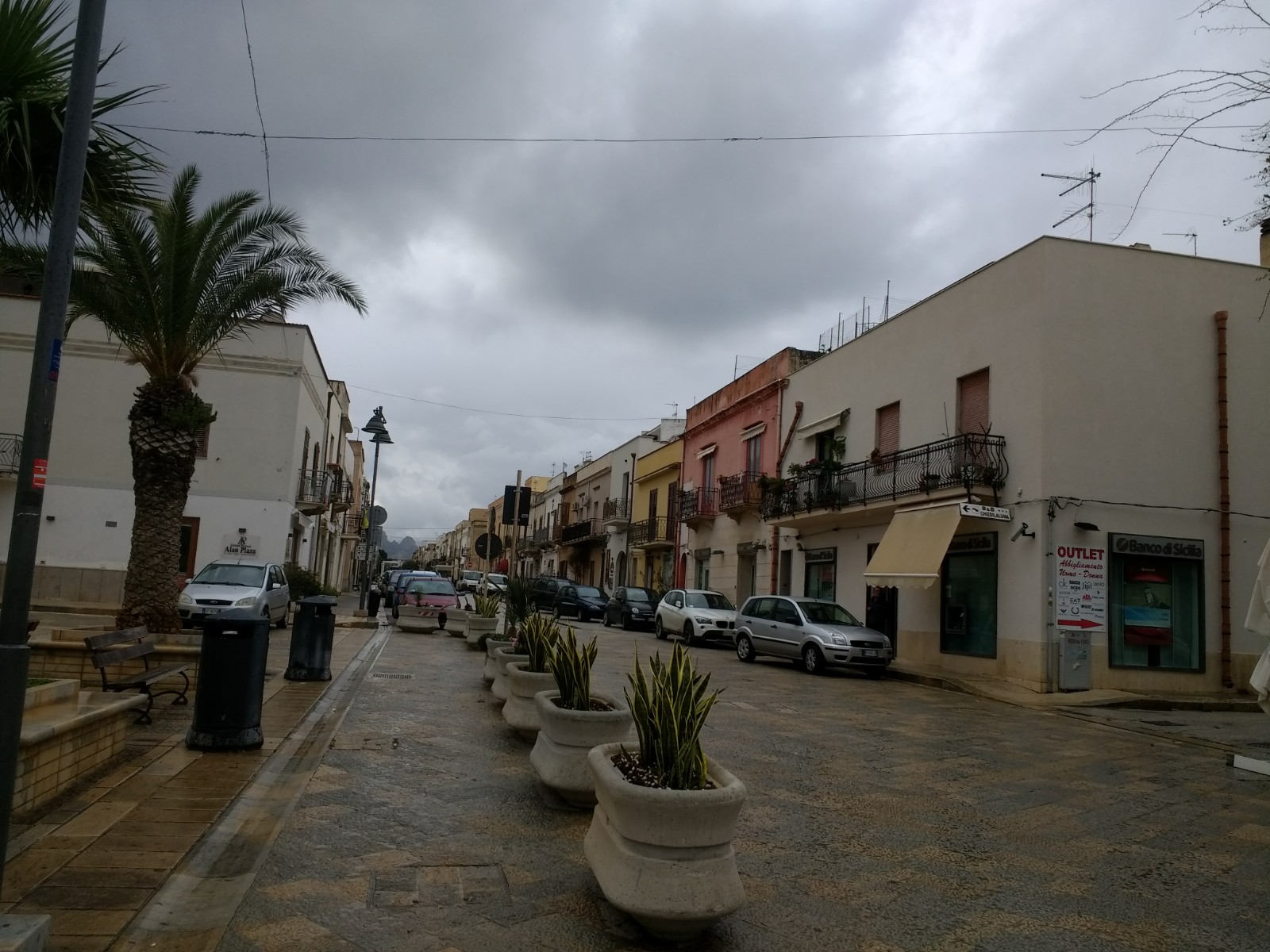
San Vito di Capo is a very attractive seaside town with low-rise houses, many painted in pale pastel colours, with wrought-iron balconies.
San Vito di Capo
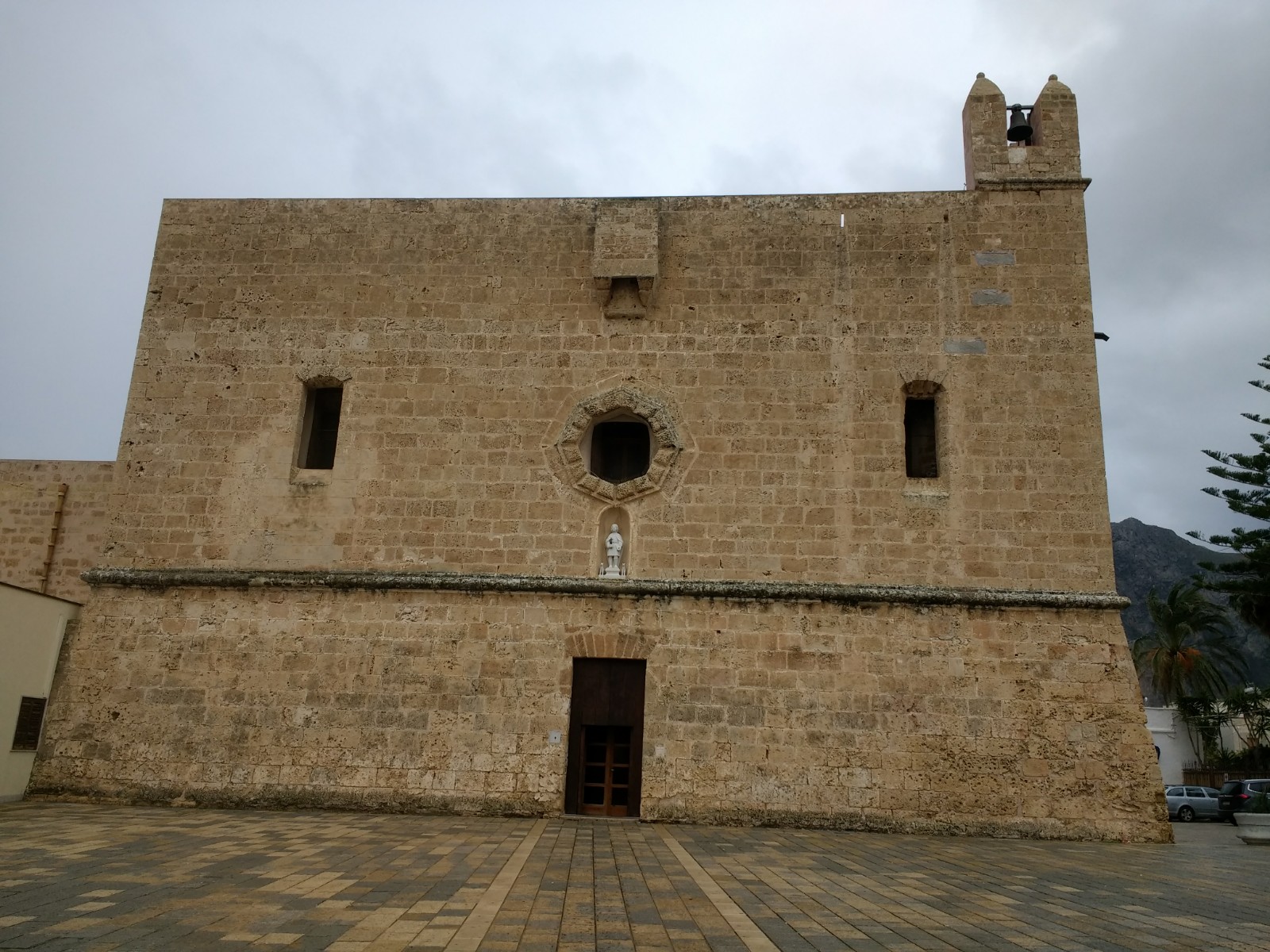
The main building in the square, Santuario di San Vito, started out as a Saracen fortress, but is now a church.
Santuario di San Vito
San Vito (St Vitus in English) was born in Sicily and martyred by the Romans. He is the patron saint of dancers and his name has, of course, been appropriated to identify a disease of the central nervous system.
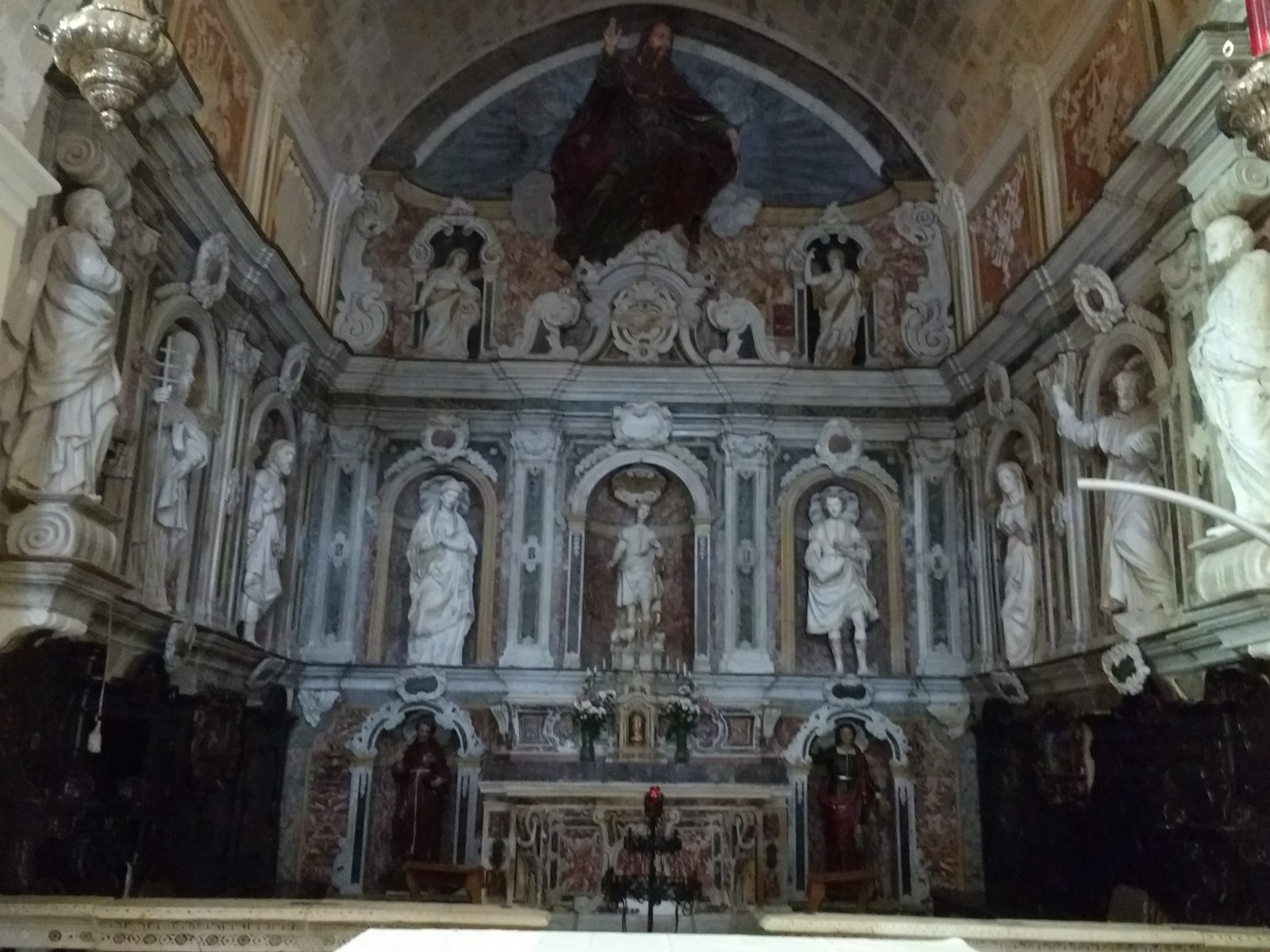
After the exterior, the inside of the church comes as a little of a surprise.
Inside Santuario di San Vito di Capo
We tried a Sicilian speciality after lunch – cannoli. They are fried pastry tubes filled with ricotta cheese. They were delicious, but we are warned to only eat them when they are freshly filled.
The flat-roofed pale-plastered buildings, looking as if they were covered with a thin layer of dust, remind us both of the Middle East. The wind is still fierce and although the BBC tempt us out with promises of temperatures in the high teens, it continues to feel wintry and people remain bundled up.
Balconied Streets in Marsala
This was true when we approached Marsala today, home of the dessert wine. The centre, sixteenth century, is attractive with narrow, balconied streets. The Cathedral is, surprisingly, dedicated to Thomas a Becket, or St Thomas of Canterbury as he is known here. This was at the request of Joan of England, daughter of Henry II (yes, the one who had Thomas murdered) and wife of William II of Sicily, who was a Norman. There is a painting of the murder scene, not in a prominent position, as one might expect, but above the organ.
The Capture of Thomas a Becket
Behind the Cathedral is a museum housing eight sixteenth century Flemish tapestries which depict the fight for control of Jerusalem between the Romans and the Jews in 66AD. The tapestries are huge and intricate. We listened to explanations of the scenes in English, but used our phones to remind ourselves of the complexities of tapestry making. Tapestries are sewn from the back following a picture or ‘cartoon’. The cartoon is often painted in reverse, so when the tapestry is turned over the picture will be the ‘right way round’. If the cartoon was not painted in reverse, the sewers would often use a mirror to reverse it. Apparently, clever workers could transpose the image in their heads so then it would be orientated correctly when turned the other way.
The prize exhibit of the Archeological Museum, along a scruffy sea-front (rather like an out-of-season English seaside town) is the remains of a warship dating from the first Punic war (between Ancient Carthage and Rome) in the third century BC. Images show a long vessel, with bow and stern that ‘curl over’, a skimpy sail and a lot of oarsmen. Together with the wreck, only discovered in 1969, are amphorae, bones of animals and even marijuana stems, which it is assumed, were chewed by the oarsmen.
Yesterday we visited the tiny, but pretty village of Scopello. Looking for cappuccini, we found the owner of the only open bar plaiting and weaving flat lengths of grass to form a waste-paper basket. His work was perfectly neat, but slow, and I wonder if he can sell his finished goods for enough money to compensate for the time taken.
Tuna factory and sea stacks at Scopello
We later drove on to Segesta, to see the first of the Greek ruins we are planning to see on the island. There were only a few tourists around so we could get shots of the temple without people in the picture – so different from the Parthenon when we visited Athens one June.
The Temple at Segesta
The Greek remains on Sicily apparently rival those in Greece. The temple at Segesta was abandoned before completion. At the base of each pillar, on the ‘outside’ aspect are horizontal knobs. These are thought to be necessary to aid the raising of additional stones and would have been chiselled away at the end of construction. The temple was built for worship, but it is not known what or who. On a high ridge, it strikes me it could be a perfect lookout.
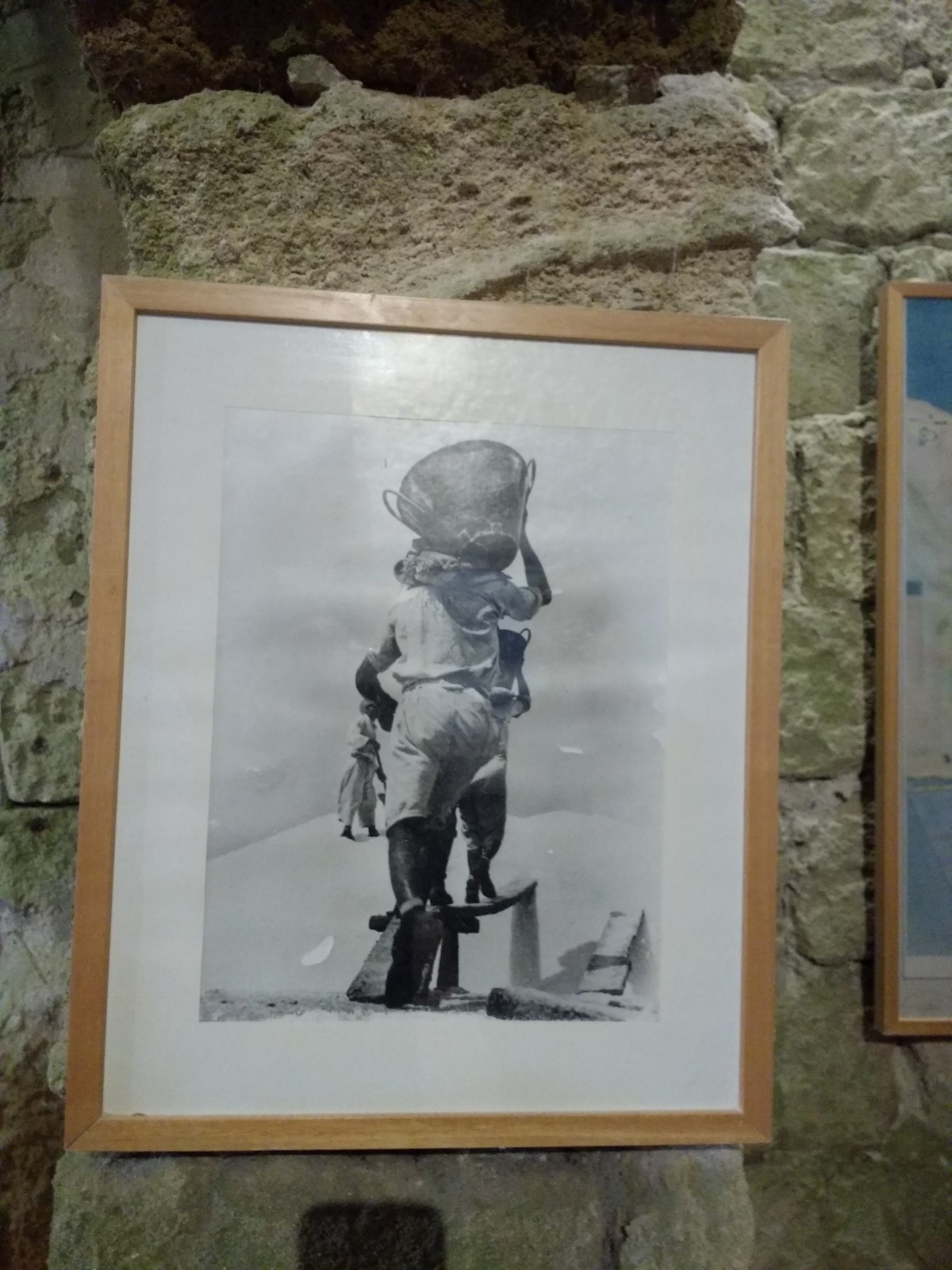
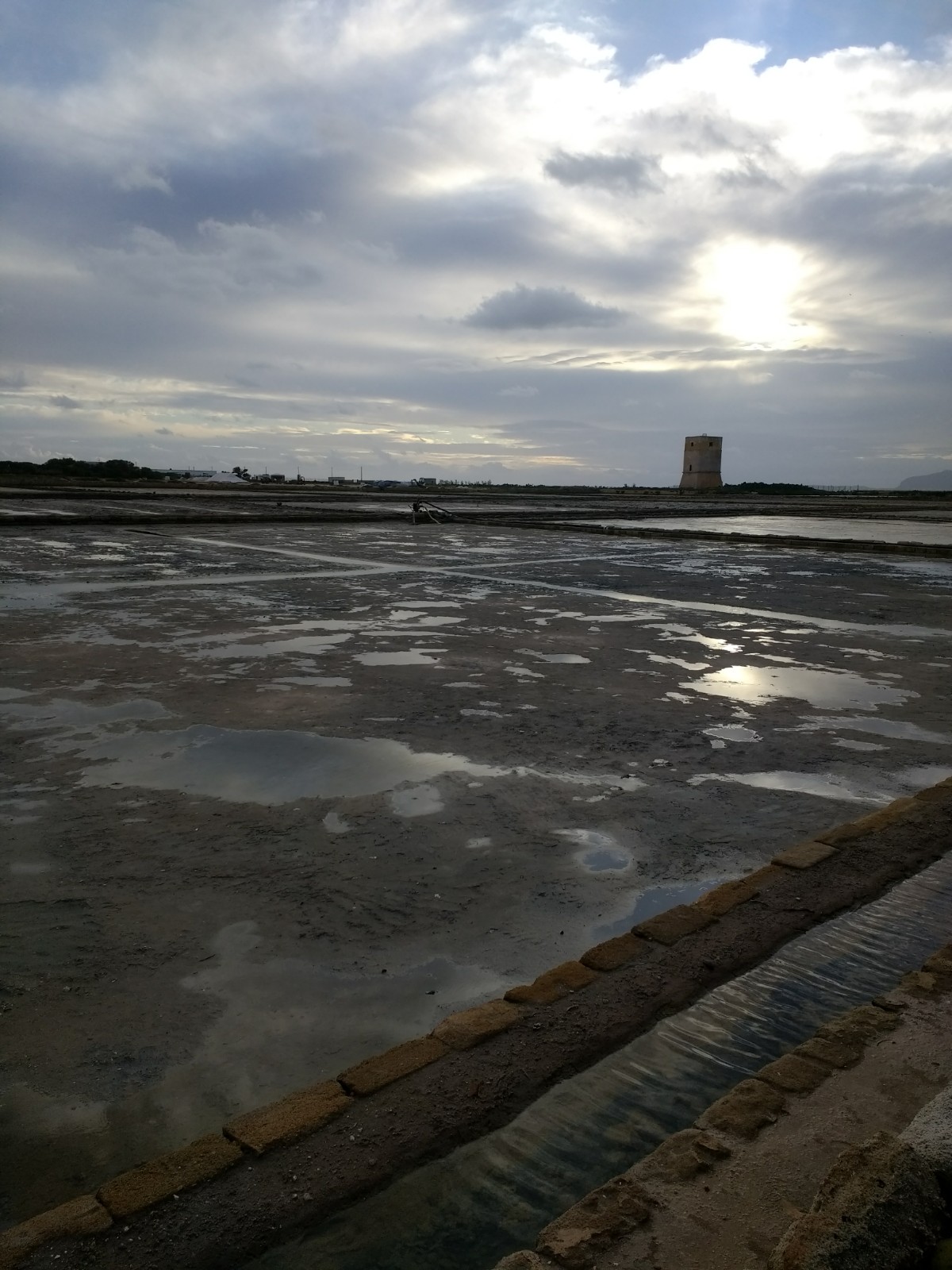
The wind here, which today is ‘fresh’ according to the BBC, but ‘brass monkeys’ in our parlance, is we learned at the Salt Museum yesterday, a constant feature all year round. People have harvested salt from the sea on the coastal plans between here and Marsala since the Phoenicians (800BC) and until recently this was all done by hand (during the hottest months of the year). High temperatures and wind are needed to vaporise the water.
Each bucket weighed thirty kilos
Once again we had our own personal tour. Our guide, whose grandfather worked his way up from handing out drinks of water to the workers all the way to becoming the owner, made the visit extremely interesting. According to our guide, salt was taxed in Italy, but not Sicily, until 45 years ago. This led to people smuggling salt from Sicily to the mainland.
Salt pans round Trapani which will be used later in the year
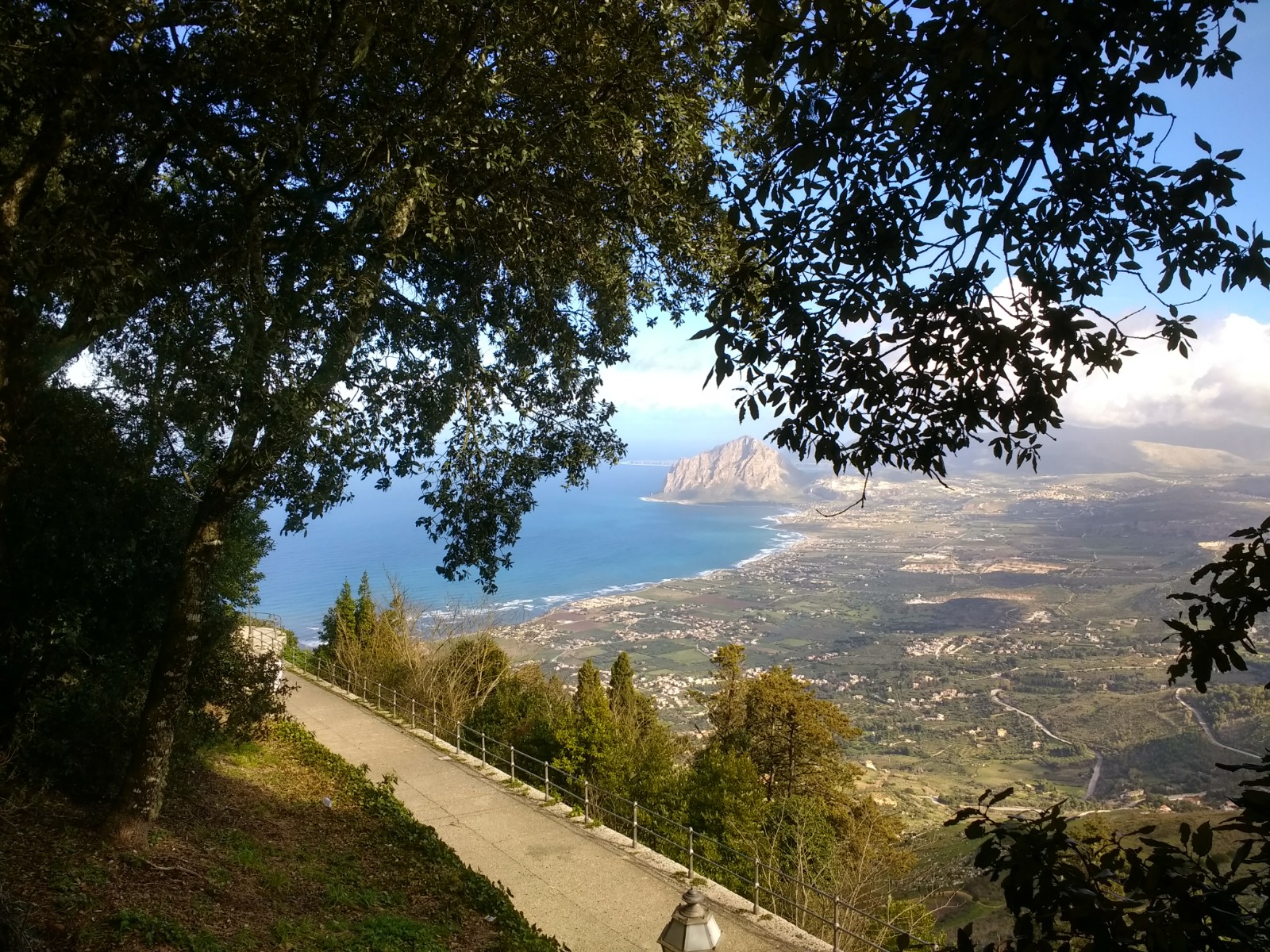
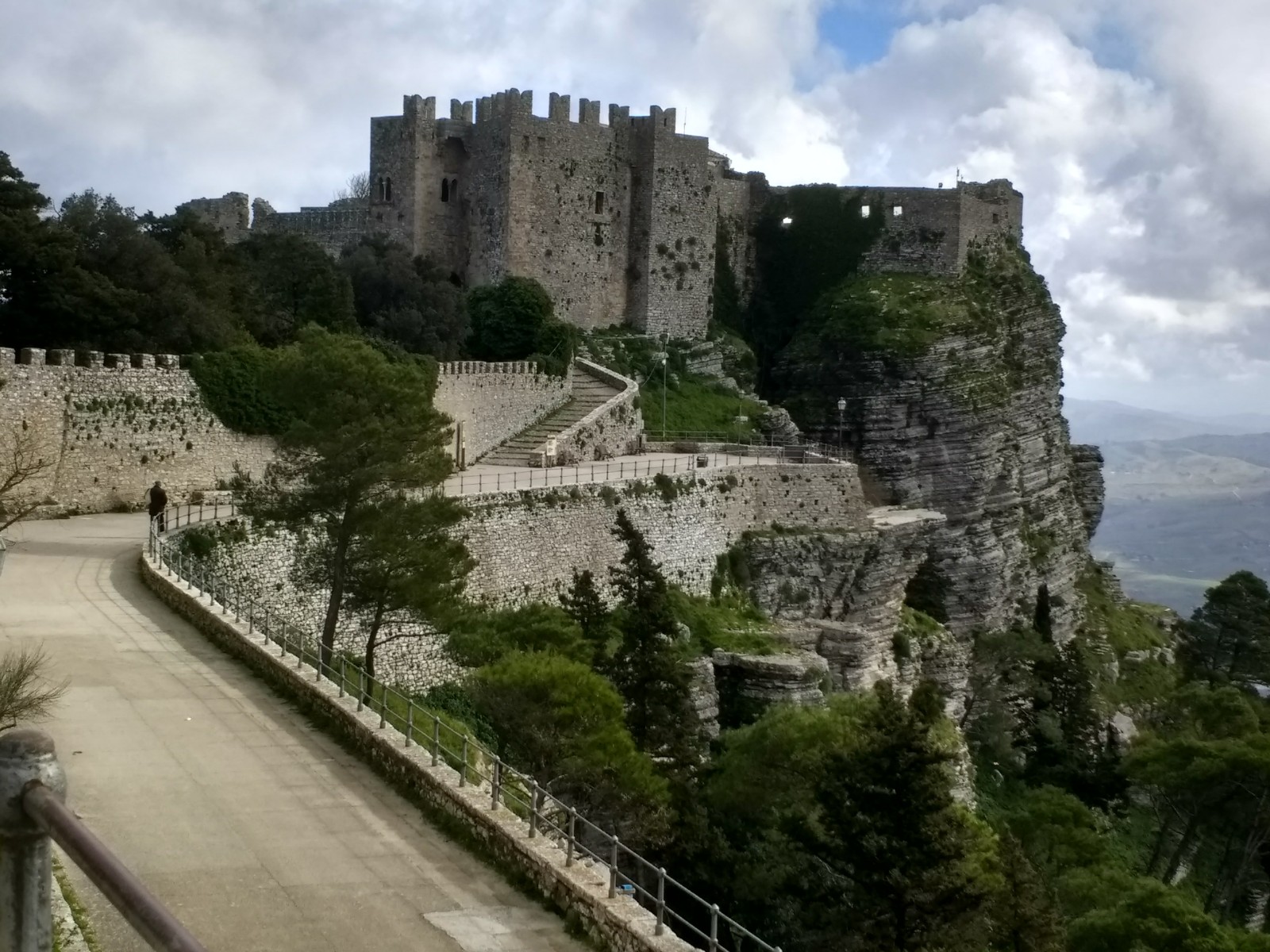
We had a view of the salt pans from Erice, a village perched on top of a lonely mountain, reached by following a long road of hairpin bends (there is a cable car, but it is closed at this time of year for maintenance).
View from Erice
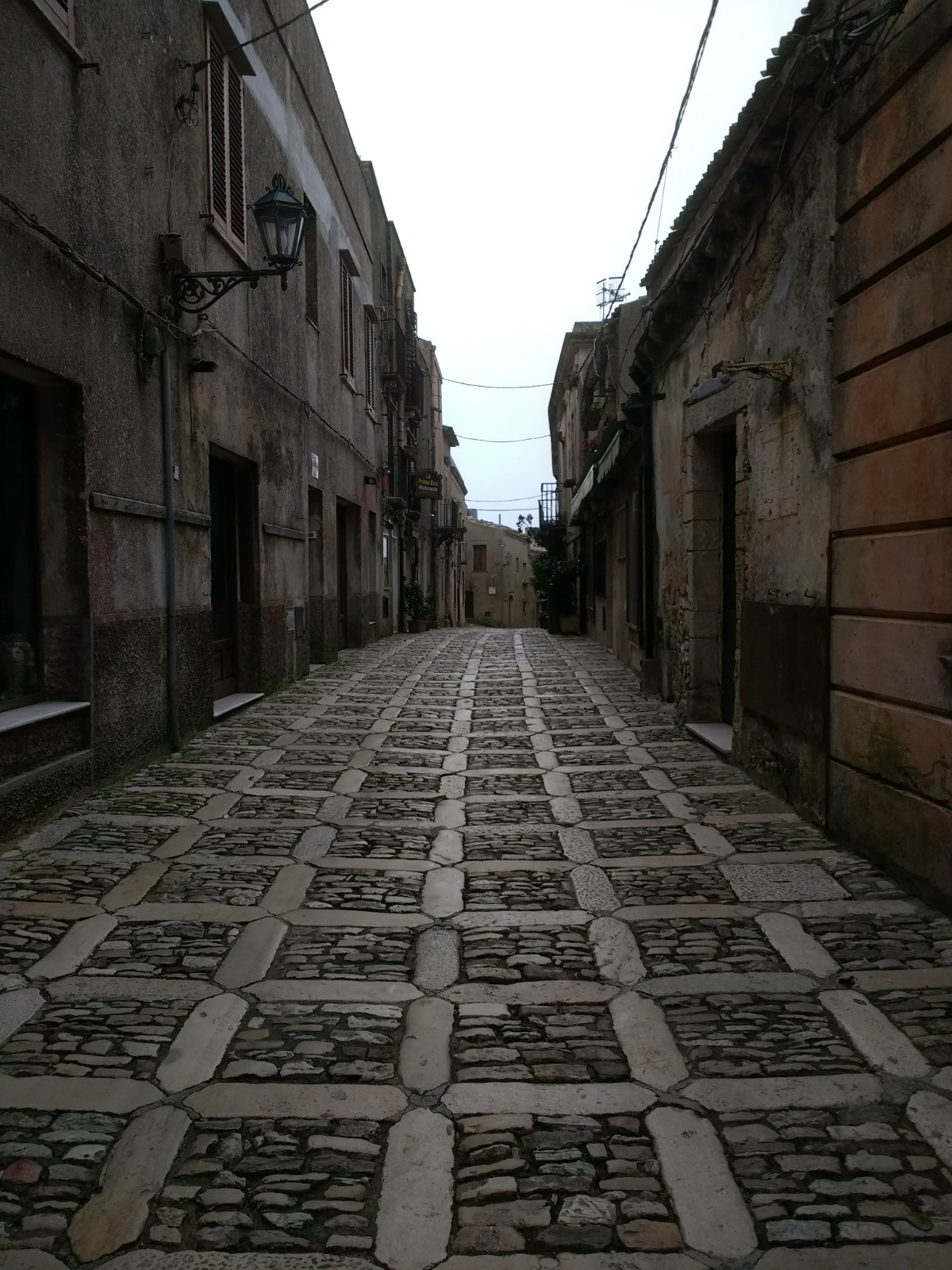
Inhabited since the time of the Greeks, but only re-named ‘Erice’ by Mussolini, what you see now dates from medieval times. Bustling in the summer, but virtually deserted today, it was still good to wander round and take in the views.
Cobblestone pavement, Erice
Twelfth century Castello Di Venere, built on the site of an ancient temple
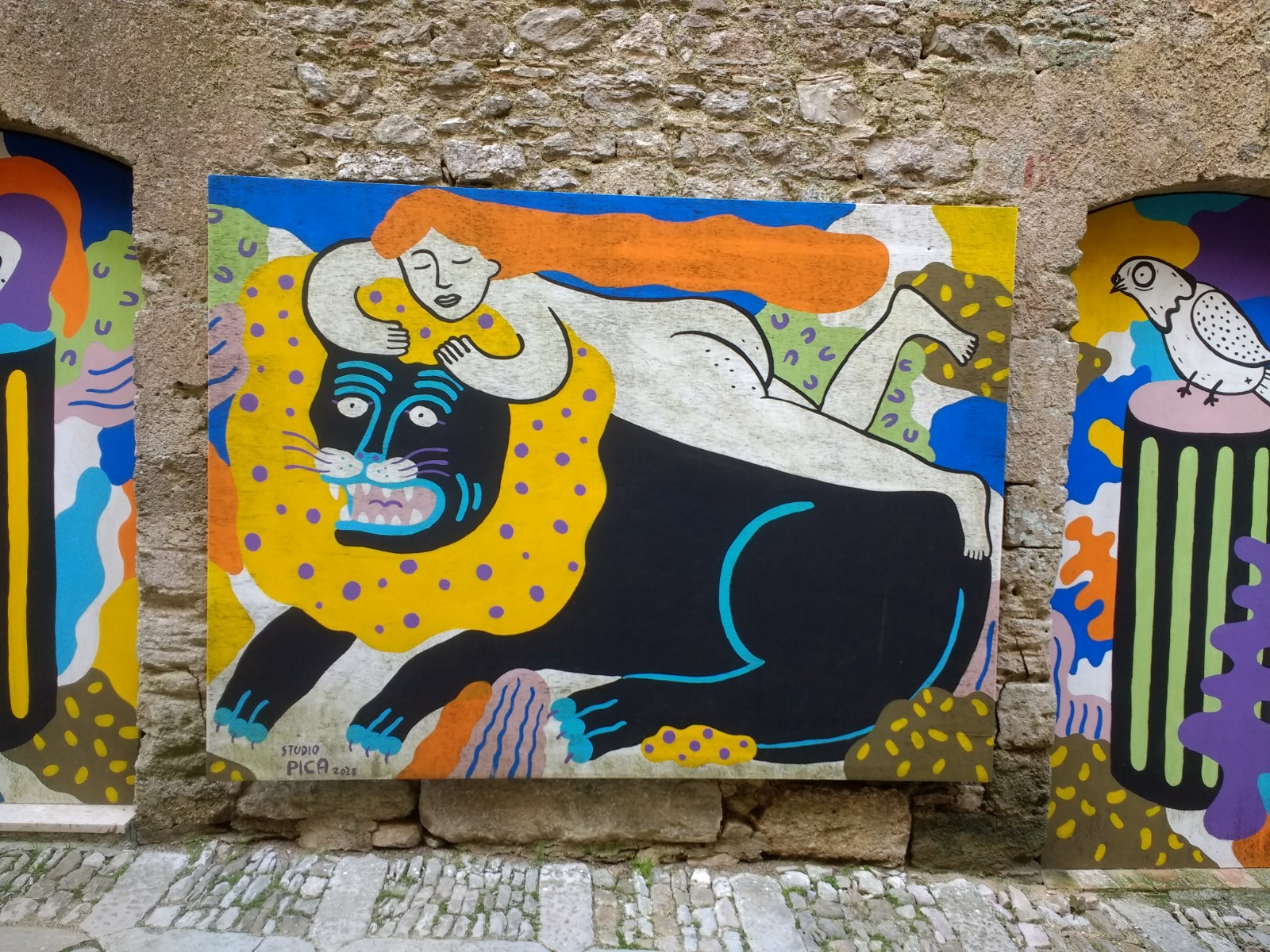
Street art in Erice
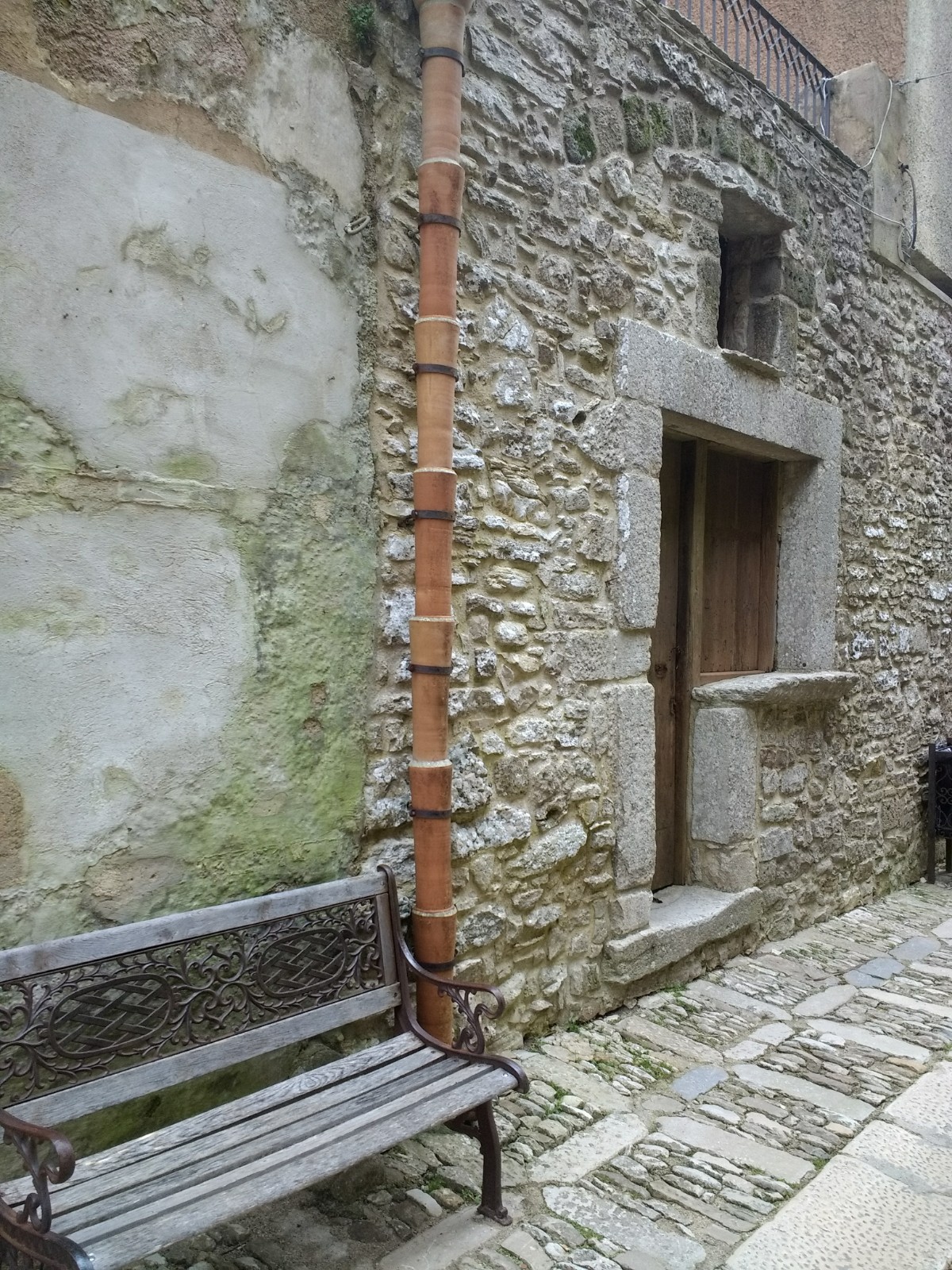
And finally,
Mark really likes these drainpipes! They are like the plastic ones you see on building sites, but these are made of terracotta.
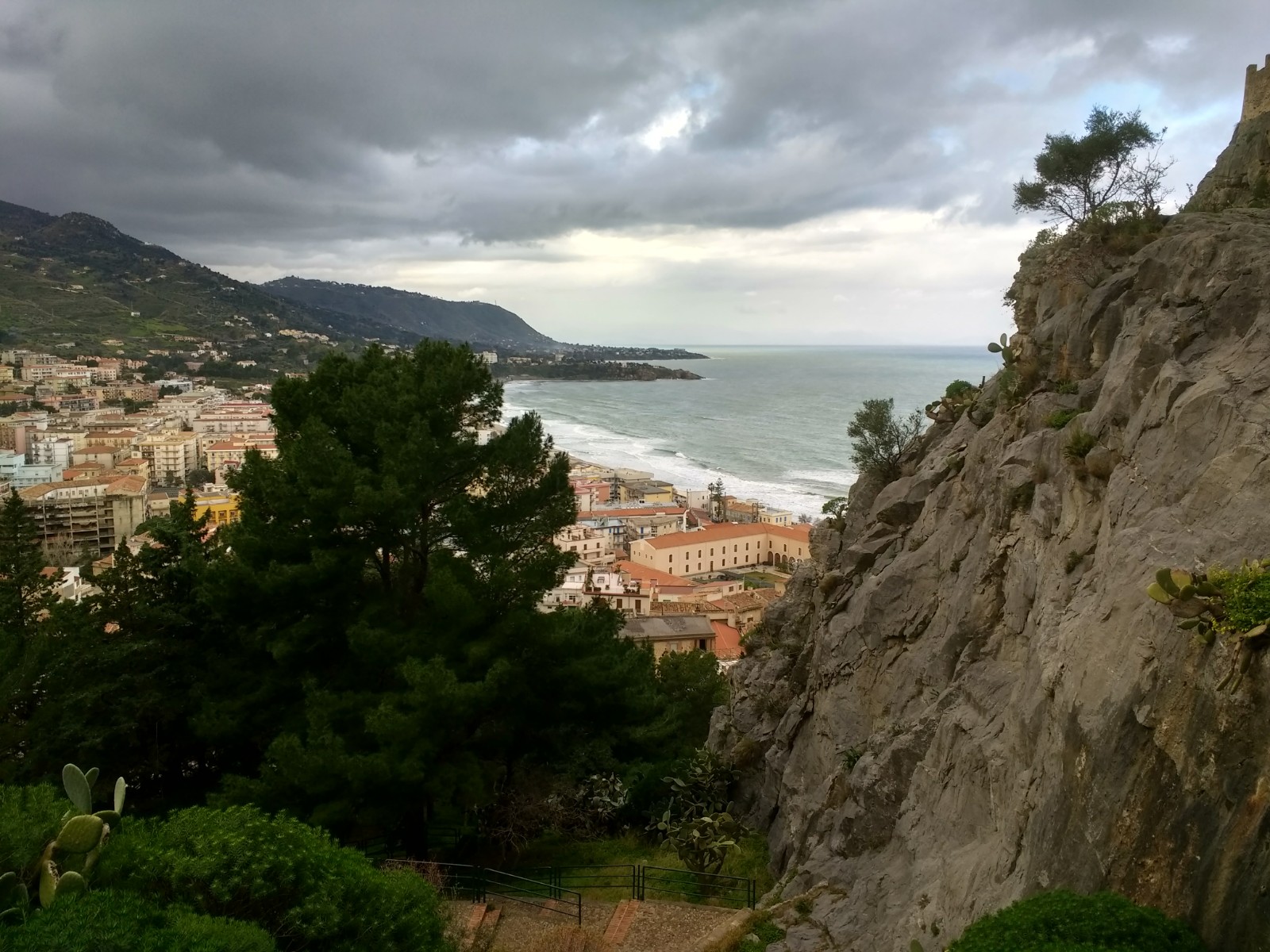
The rain came on while we were halfway up La Rocca in Cefalu, but luckily I got a photograph in first.
Cefalu from La Rocca
I’ve never found the Italians to be all that hot on health and safety and so was surprised when a chap at the bottom counted people up, then down again. Mind you the cobbles were lethal in the wet, so that is possibly why.
The view of Cefalu is much more attractive than that of Palermo. In the decades after the Second World War many beautiful nineteenth century villas were torn down in Palermo to make way for ugly, boxy, grey tower blocks. One piece of good news is that money seized from the Mafia is now being spent to re-generate the city.
While in Cefalu, we also popped into the Cathedral. After having been to Monreale, I felt we were visiting a poor relation. There are not as many mosaics and far fewer tourists.
Cefalu Cathedral
I am actually writing this from our apartment in Trapani where we moved this morning. The apartment is rather grim after our wonderful place in Palermo (which I’d recommend for the accommodation and its location if you like the same things as we do). However we’re telling ourselves that this wouldn’t be an ‘adventure’ if we were using five star hotels all the way, would it? And besides, what do you expect for €30 a night? We think it’s a good excuse to have a few meals out.
Before I leave talking about Palermo, I must tell you about the puppets. Now I’m a bit of a puppet fan, so try and see them wherever I can. The show (Cartuccio Puppets) was in Italian, but if you have a vague idea of the history of Sicily, you can easily follow the action. It is all swashbuckling stuff with sword fights and strutting around in armour. Each puppet is manipulated, as far as I could see, with three rods, one to each of the arms, and the third to the head. The puppeteers are able to move the puppets very subtly, giving them a wonderful lifelike appearance.
Well, I will finish with a painting of ‘Vucciria’ by Renato Guttuso.
‘Vucciria’ by Renato Guttuso now in Palazzo Chiaramonte, Palermo
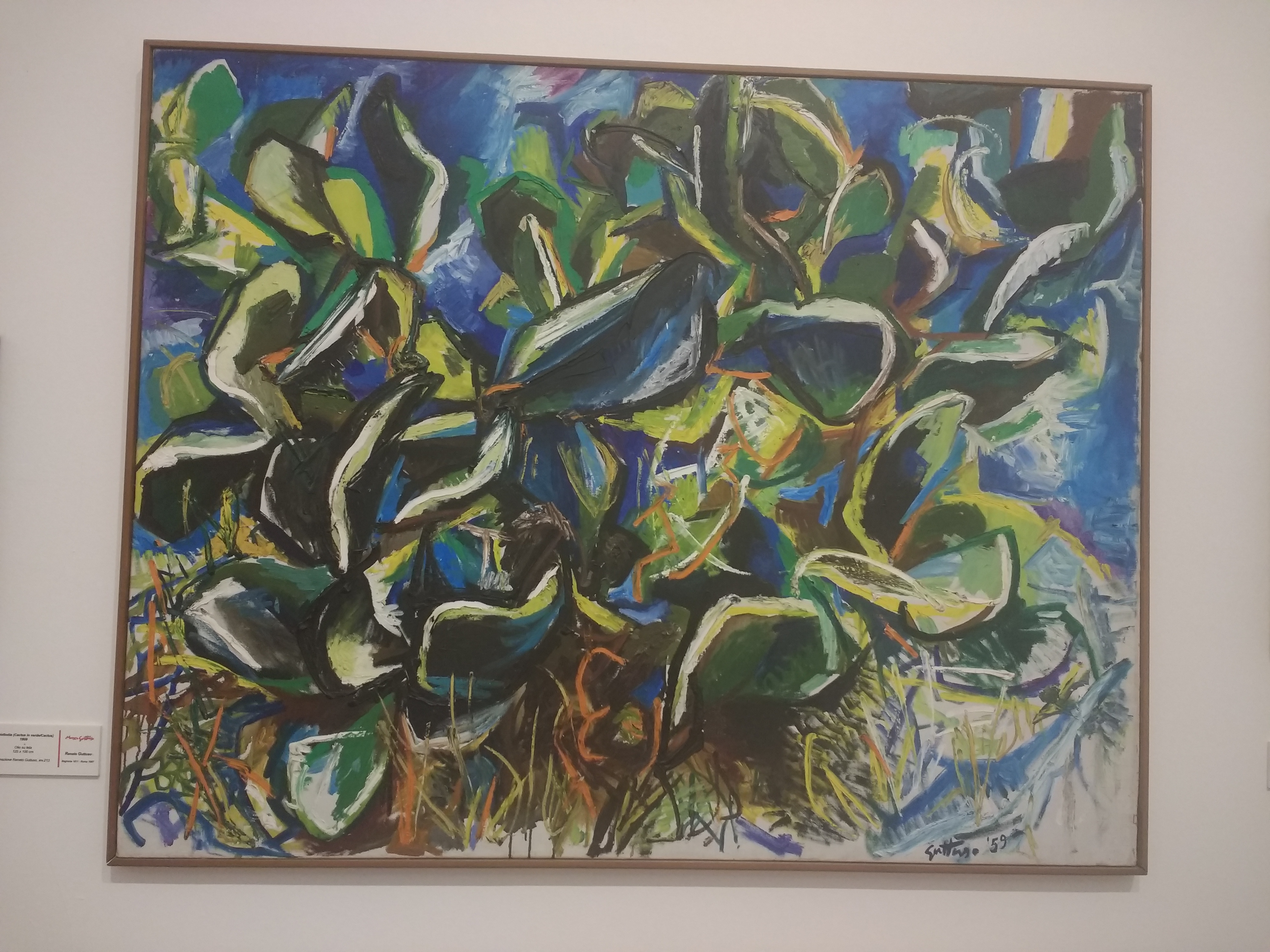
Sadly, the market is now a shadow of its former self, but if you are interested in the artist, you can see more of his work at Villa Cattolica in Bagheria.
‘Cactus in Verde’ by Renato Guttuso in Villa Cattolica, Bagheria
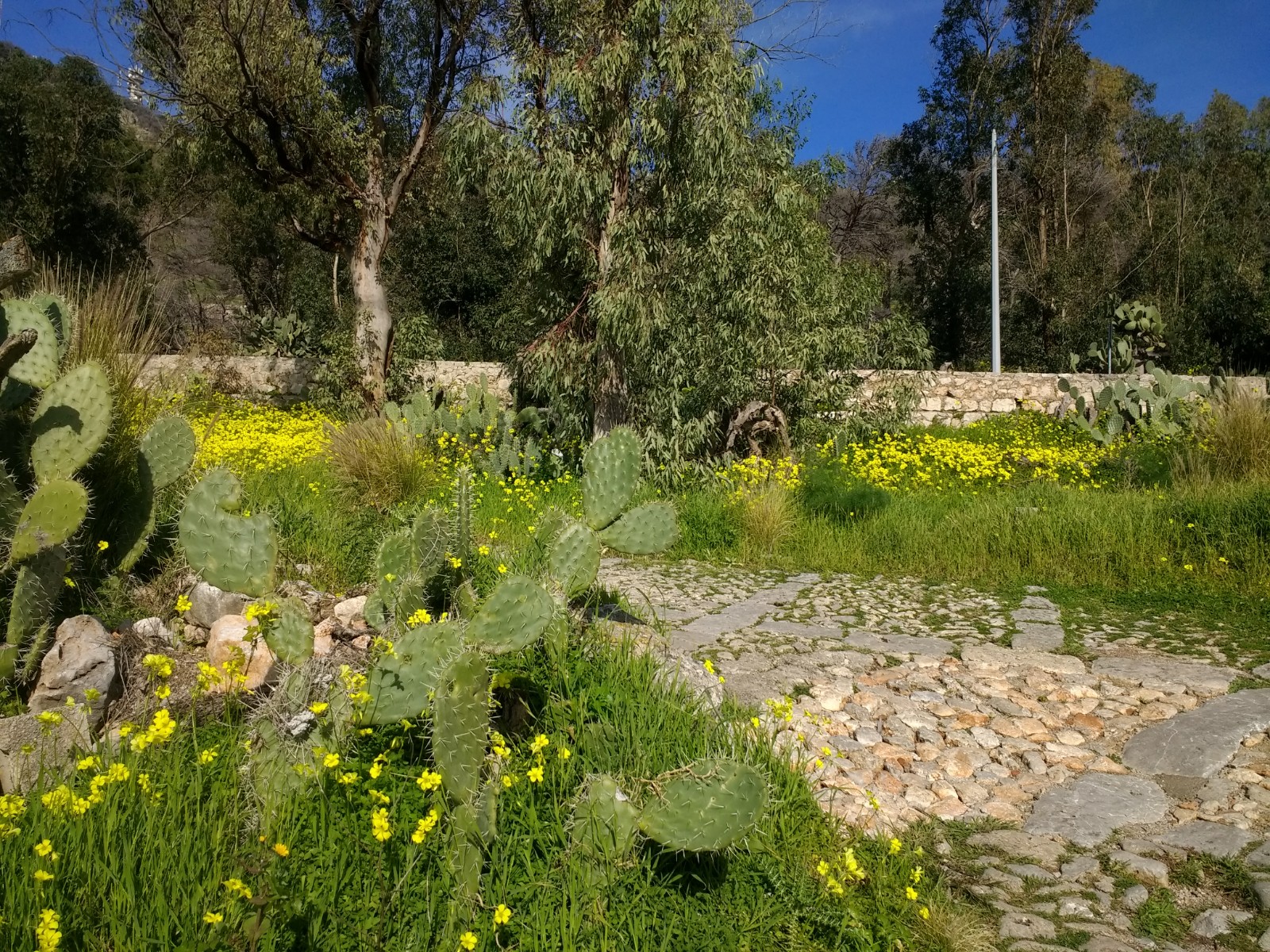
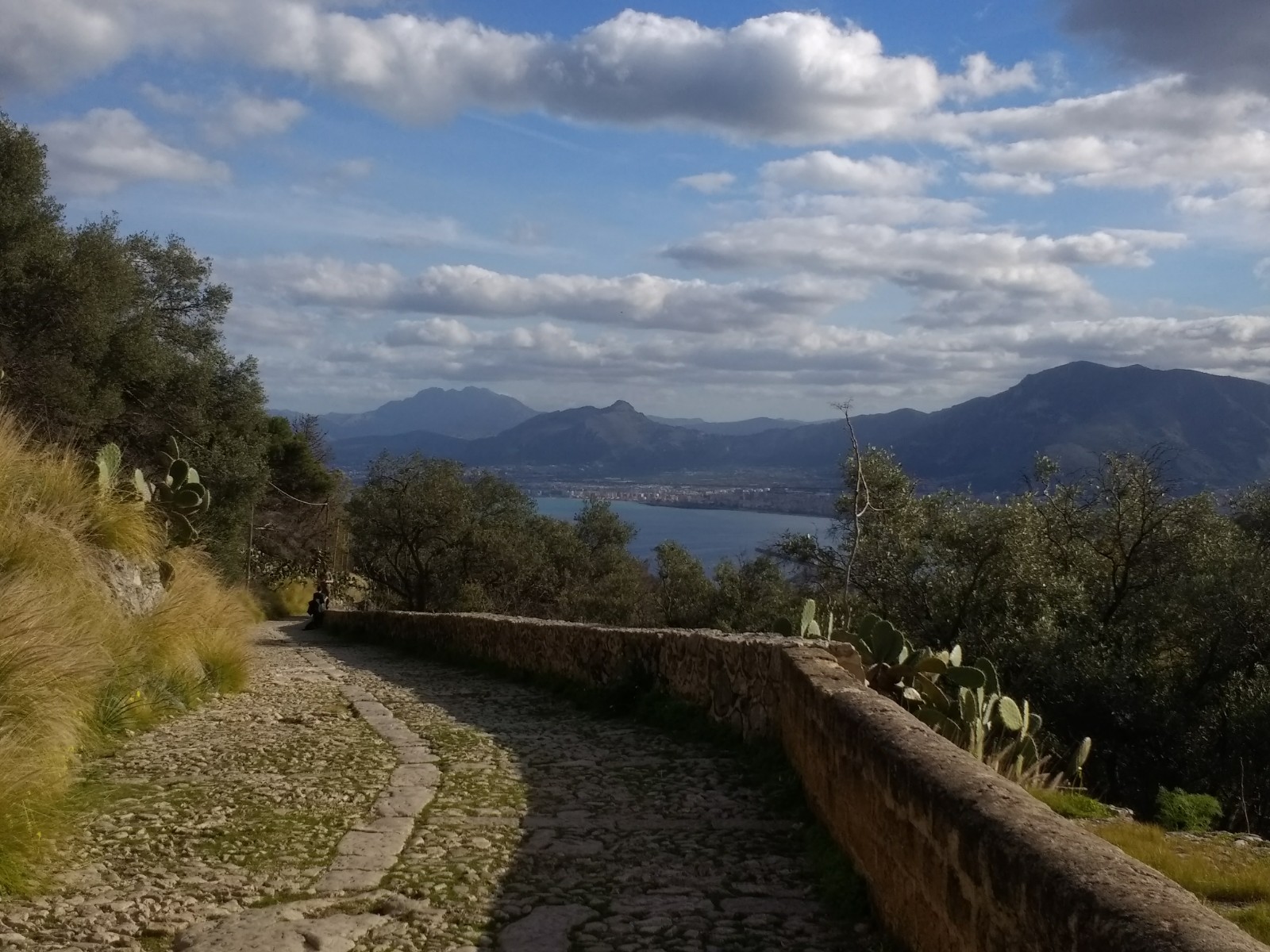
The sun has shone on us the last two days. Yesterday we walked up Monte Pellegrino in our T-shirts while the locals, still wrapped up in hats and coats, watched us incredulously. Near the top of the hill is a shrine to Santa Rosalia, patron saint of Palermo. The story goes that she lived alone in a cave on Mount Pellegrino to better worship God. During the plague of 1624, almost five centuries after her death, she appeared to some of the populous telling them to collect her bones and carry them round the city. This was done, and the plague left Palermo. Since this time she has remained a much-loved and popular saint despite a British geologist in the nineteenth century declaring the bones to be those of a goat. There is a festival in her honour every July, and in September there is a tradition of walking up to her shrine, some people barefoot and others on their knees (this is a cobbled path).
The path on the way upWonderful views on the way down
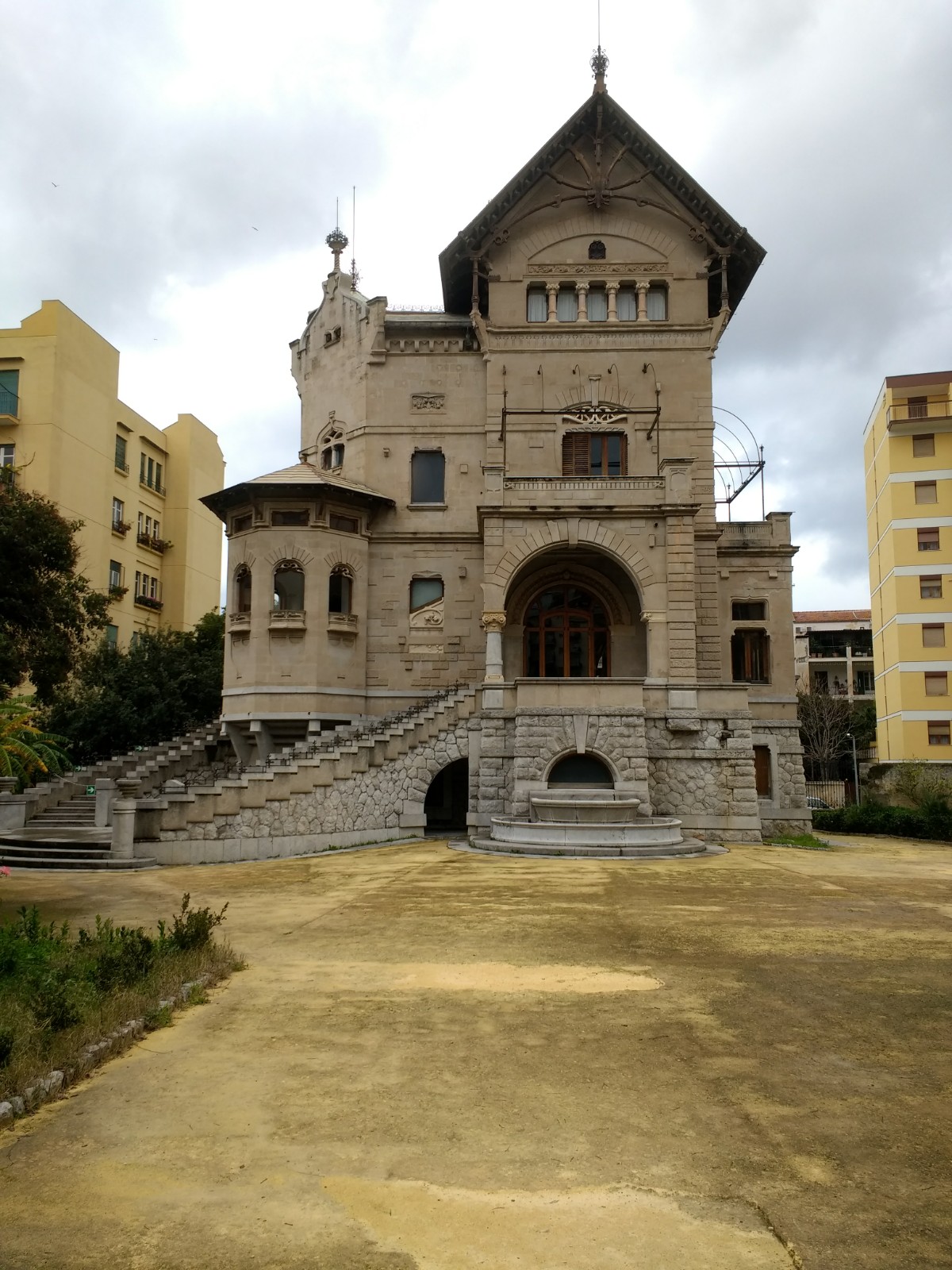
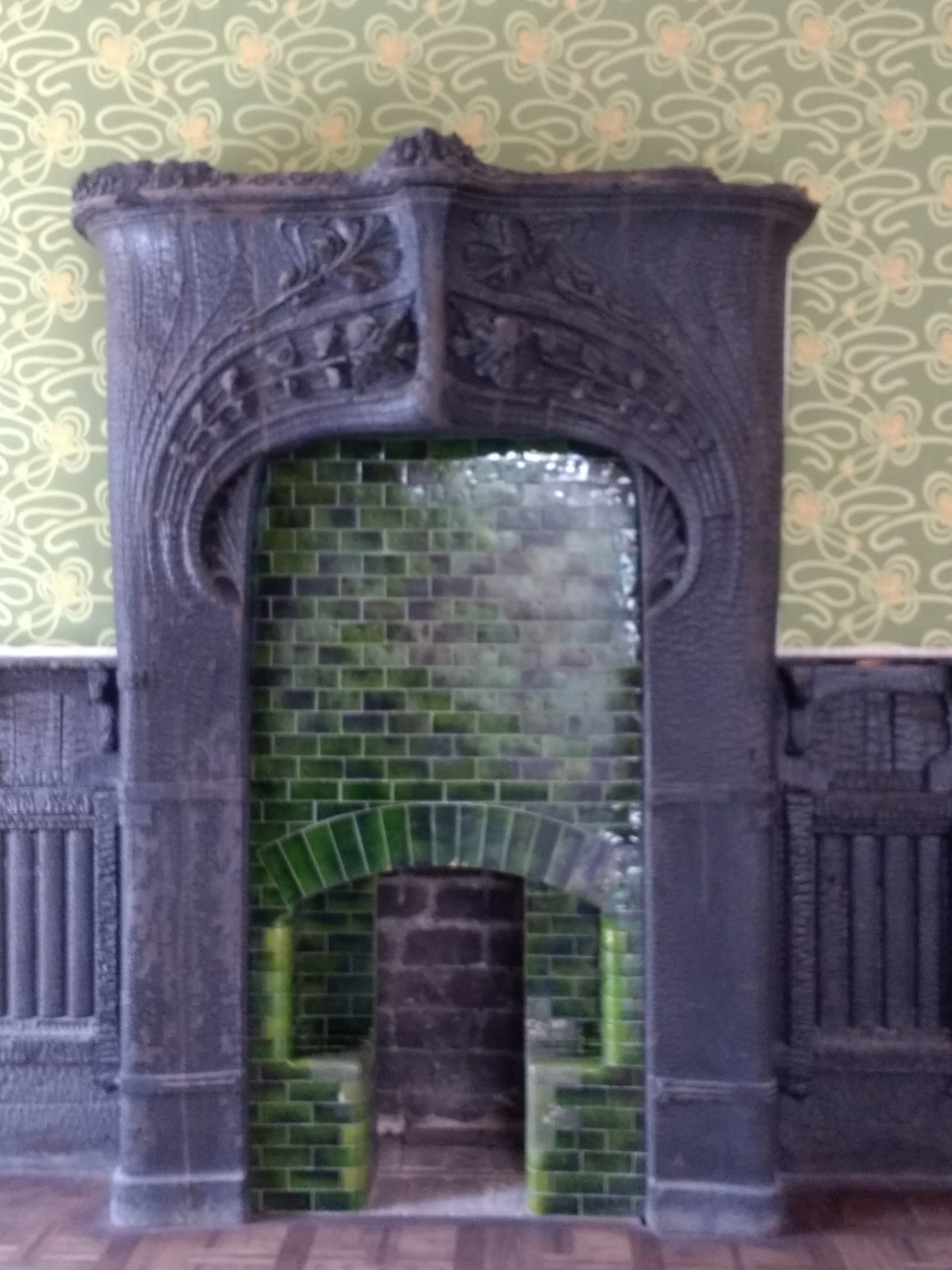
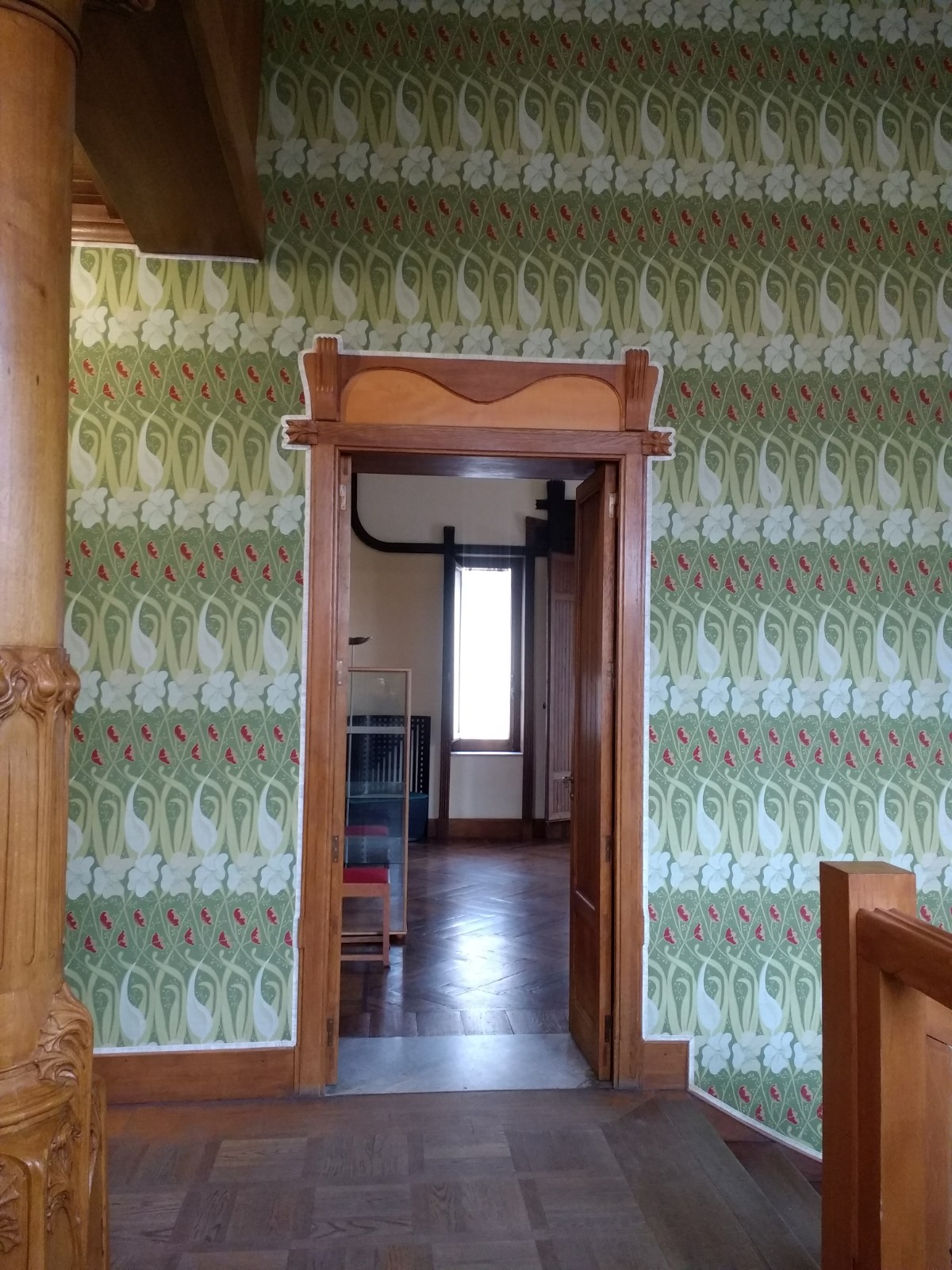
On Saturday we visited visited a superb art nouveau house, Villino Florio, which I found mentioned in the in-flight magazine on the way over. Owned by UNESCO, the building is free to enter. Devastated by fire in 1962, it has now been restored.
To me, the exterior looked Disney-esque, but apparently is in the Italian Liberty style.
The original oak of the fireplace was blackened in the fire.
Inside the villa
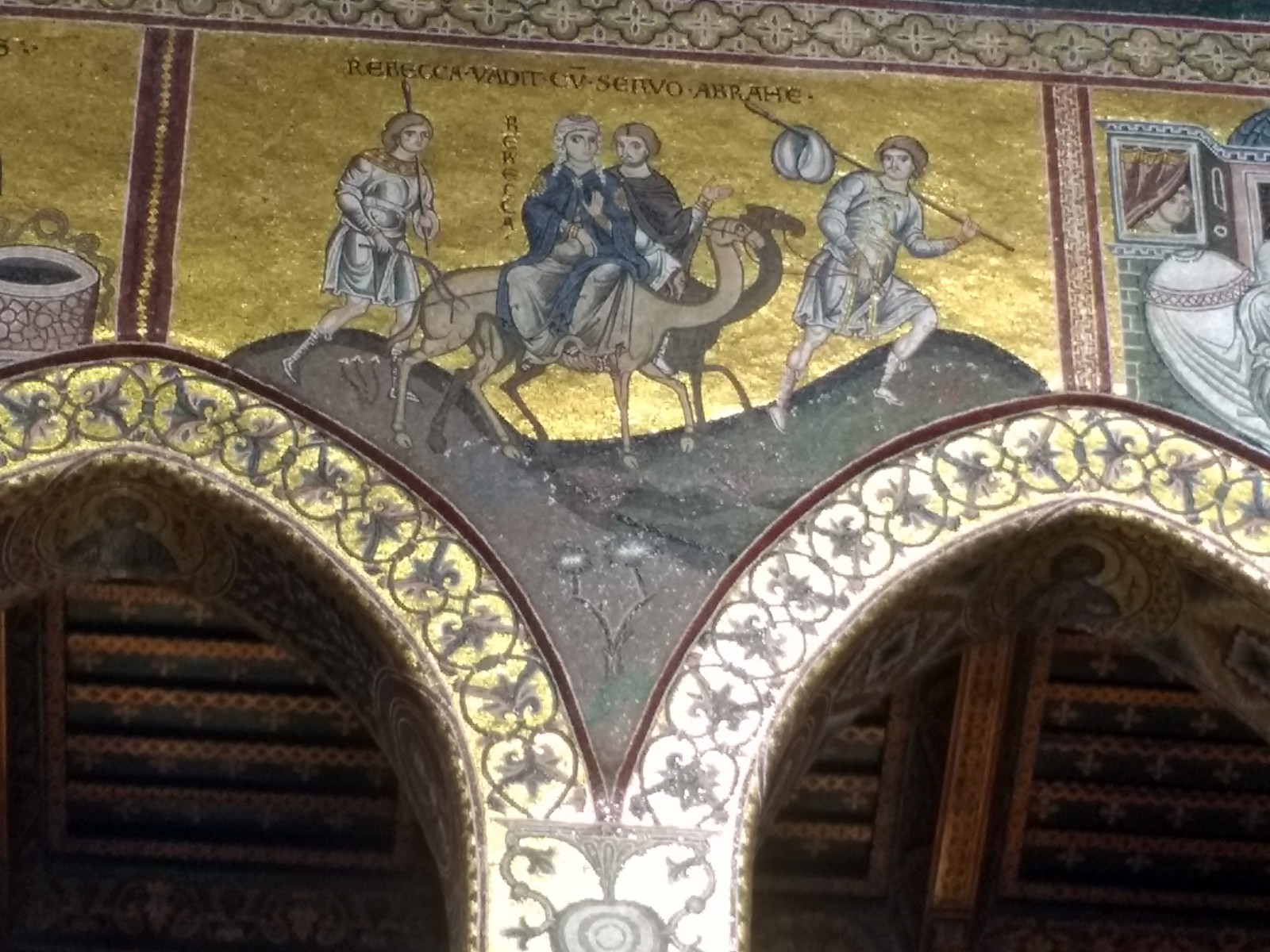
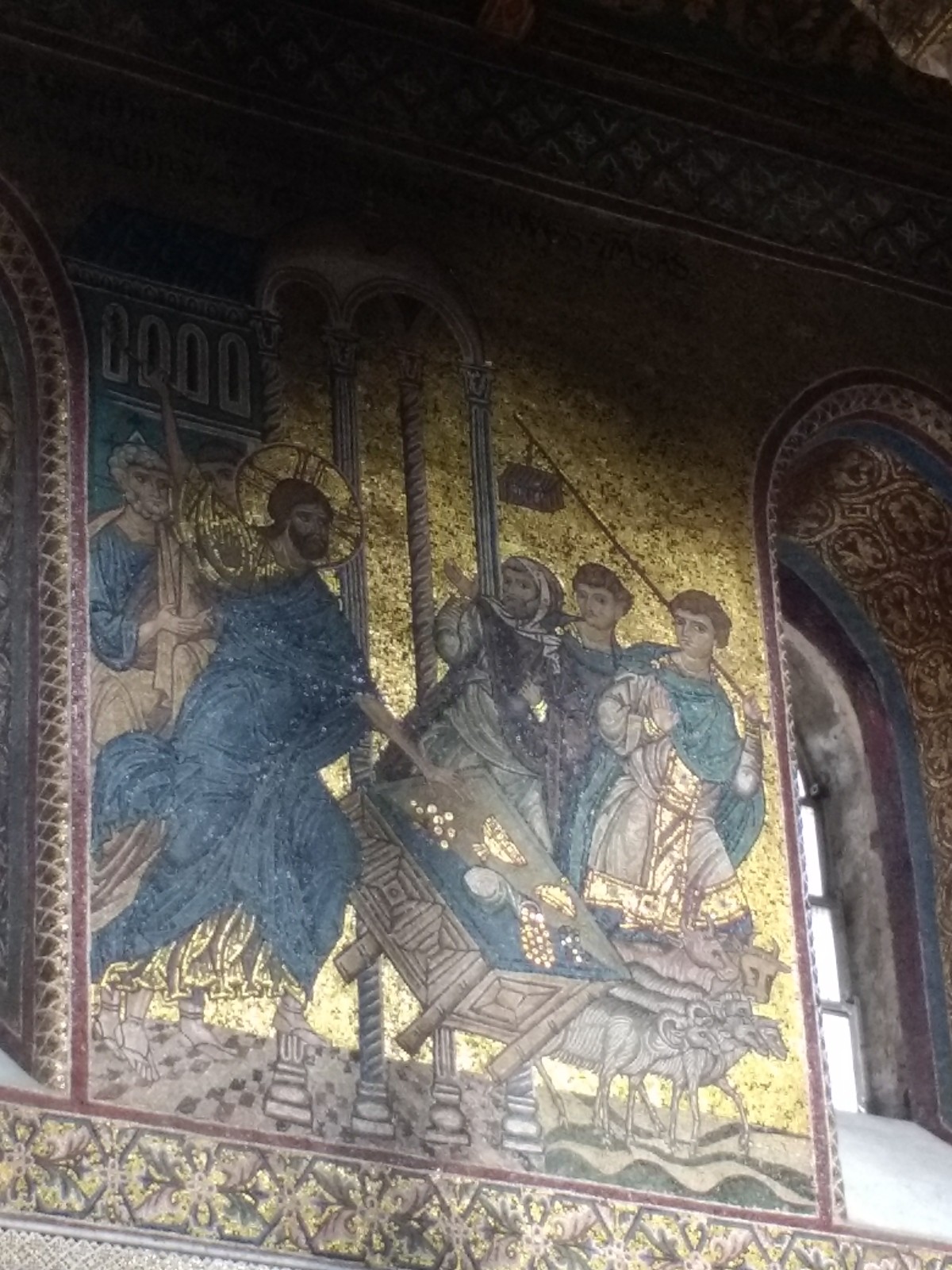
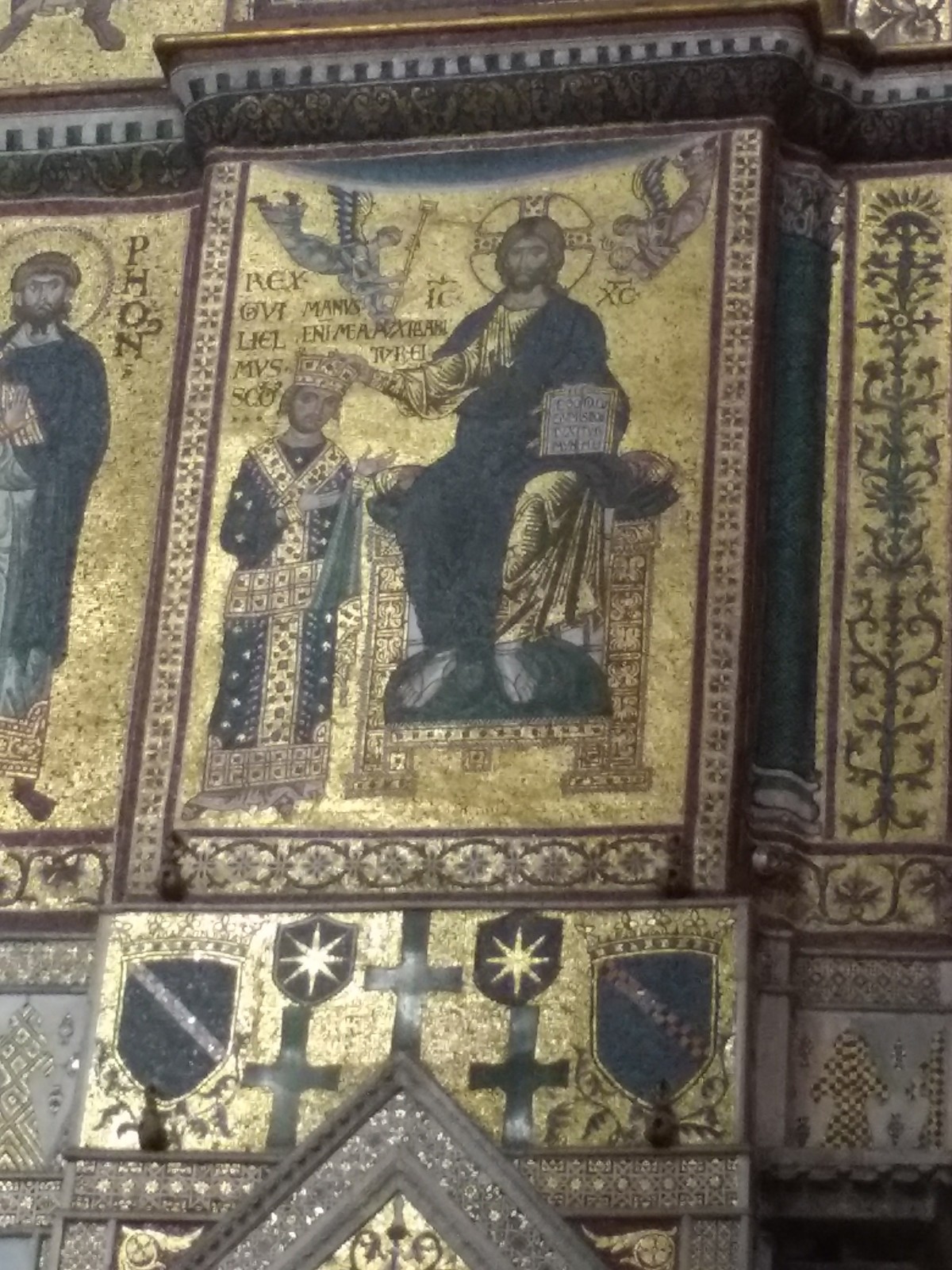
The third of our free outings took us back to Monreale Cathedral this morning to see the wonderful mosaics again (a lot of the smaller churches charge a small admission).
This time I was armed with a map of the mosaics so I knew exactly what I was looking at and I was also brave enough to take some photos (not easy as they are so high on the wall).
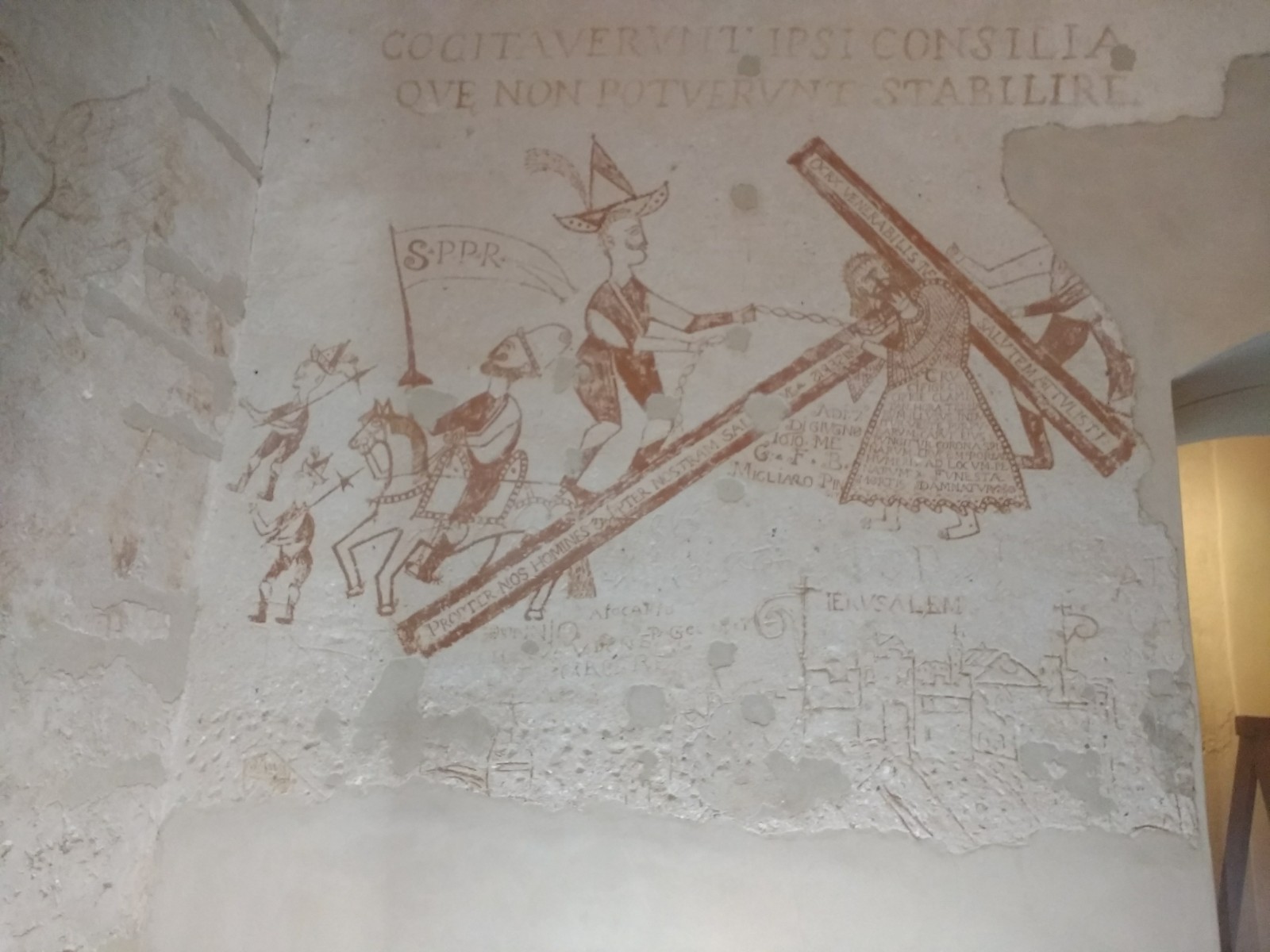
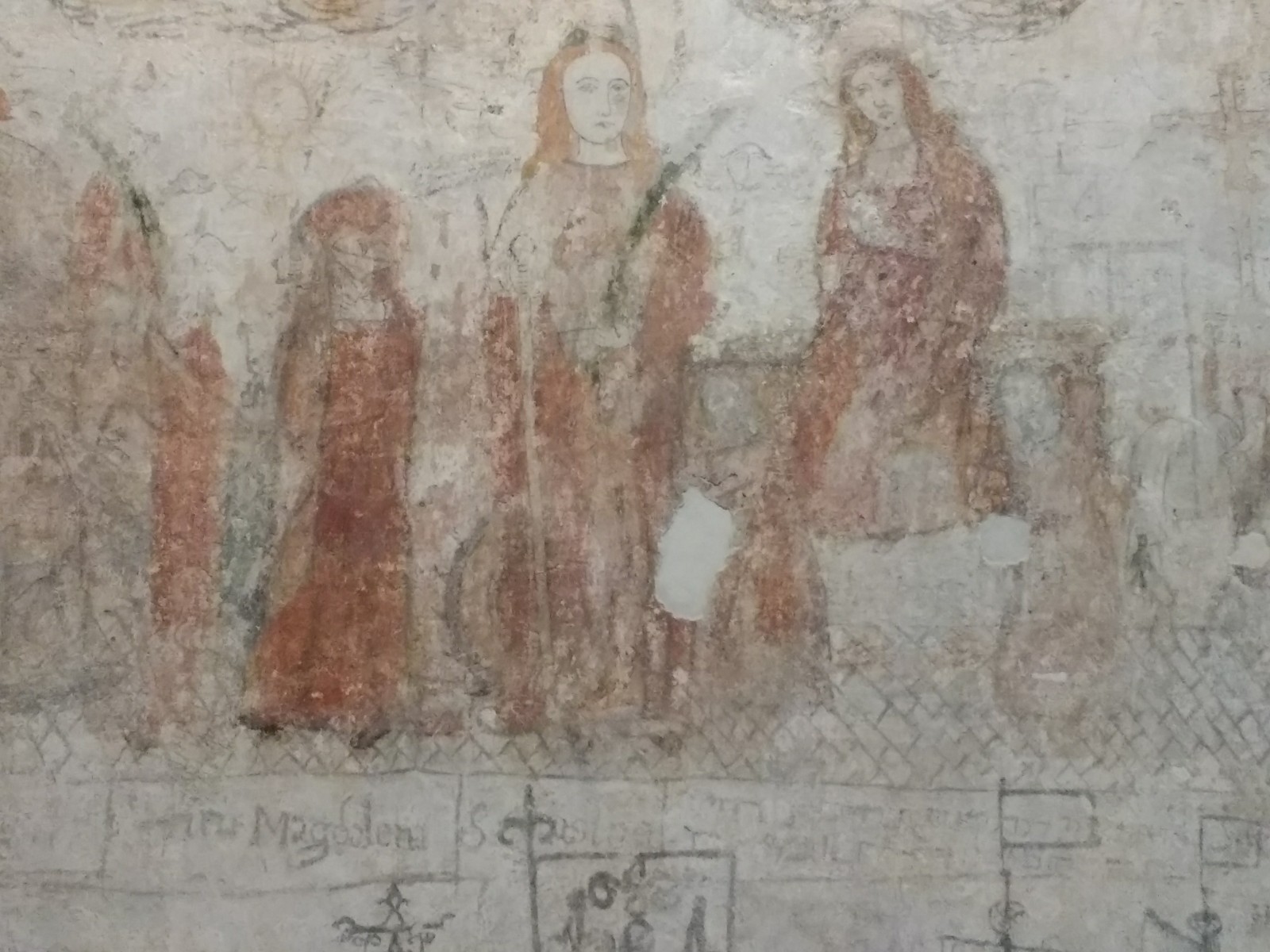
One of the bonuses of travelling at this time of year is the lack of fellow tourists which occasionally means getting your own private tour. This happened when we visited the ‘Inquistador Museum’ (Palazzo Chiaramonte) which is part of the University of Palermo.
The building was used to incarcerate non-Christians at the time of the Spanish Inquisition and now images drawn by the prisoners on their cell walls are on display. As the inquisition ended the inquisitors hastily plastered over the graffiti in an effort to hide evidence of what had happened (they burnt the written evidence) which unwittingly preserved the images until their discovery in 2005.
In this picture it is Inquisitors who crucified Jesus, rather than the Romans.
These images were drawn by female prisoners. The guards provided women with different coloured inks to decorate their work.
The weather has gone downhill since we arrived and we are having very ‘English’ weather (though I know it is not as cold as back home) and it is also wet. The Palermitani are bundled up in coats, hats and scarves which is not surprising as we both have warm coats and are wearing thermal leggings under our thin walking trousers. I asked our guide yesterday if this weather was typical for the time of year and apparently it is not. It was twenty degrees here on Christmas Eve.
With the weather being what it is, I felt sorry for the proprietor of a new Pizza Restaurant which opened below our apartment yesterday, complete with outside seating. We have booked a table for tonight (inside) hoping that any glitches that happened on their opening night will have been ironed out by now.
The graffiti I talked about above was shown on an episode of Sicily Unpacked we found on YouTube (thanks, Jill). We have sorted out how to receive iPlayer and have also watched ‘Sicily, Wonder of the Mediterranean’ presented by Michael Scott.
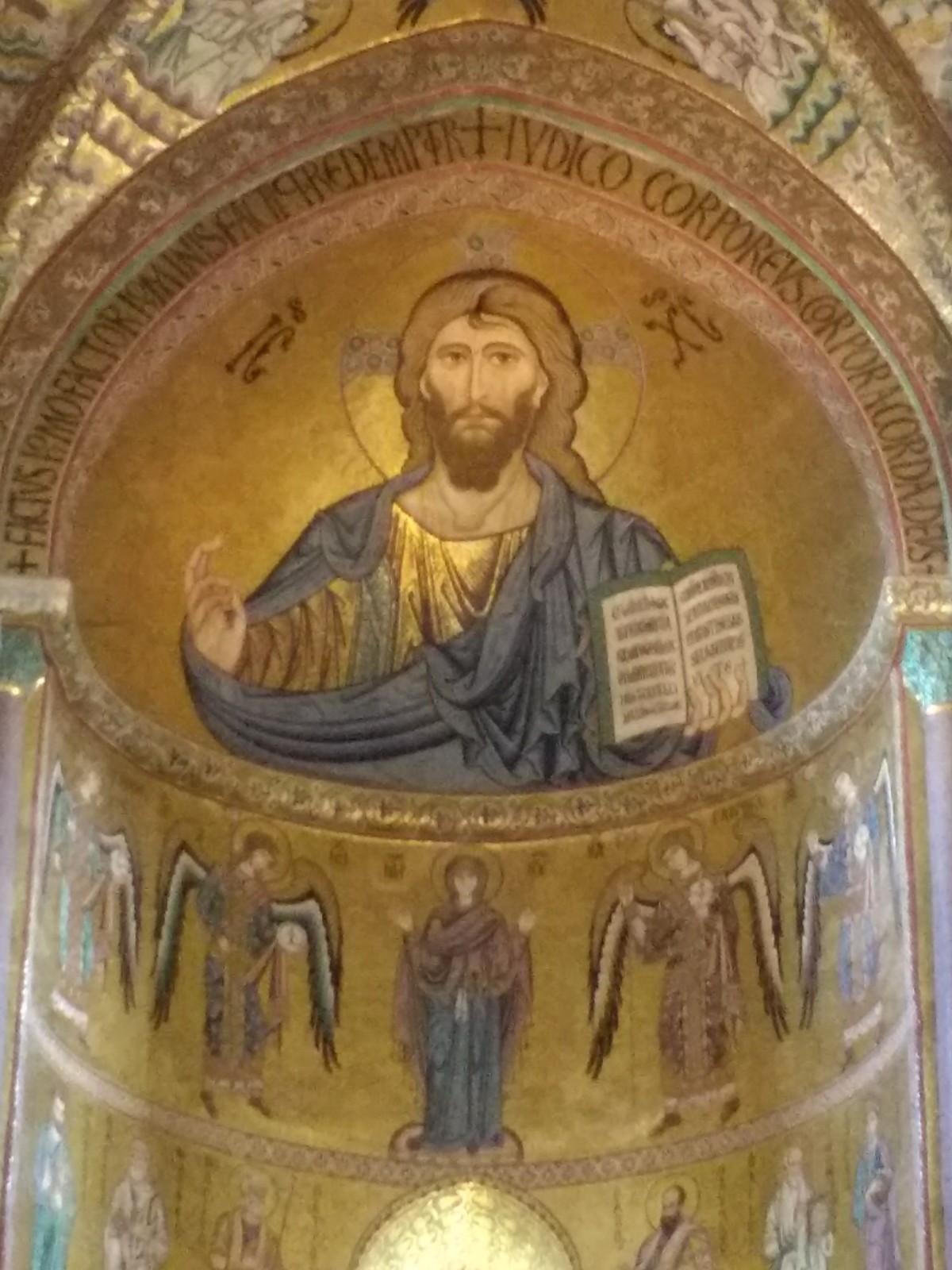
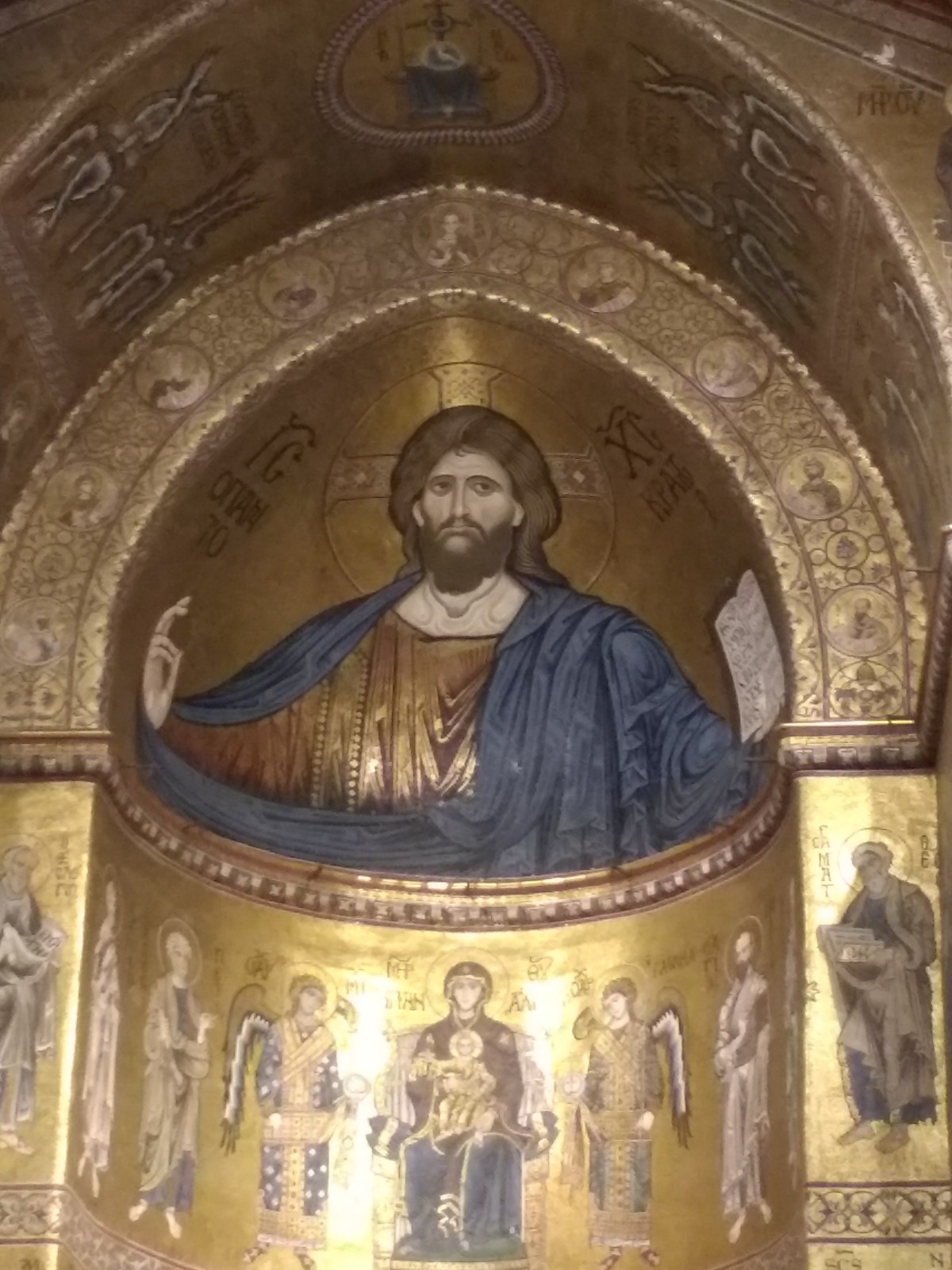
Monreale was a short bus ride from here yesterday. The Cathedral there, built to rival Cappella Palatina, which we saw on Sunday, certainly does. Every inch of the interior is covered with biblical scenes in the most amazing detail. Thinking I would not be able to do the mosaics justice, I only took one picture.
Apse, Monreale Cathedral
I’m now thinking that it doesn’t matter if there are better photographs to be found on the web. The point is that this is my record, and is there to remind me of what I’ve seen (my memory needs all the help it can get these days).
As you can see, they didn’t hold back from using gold. The whole building was apparently completed in four years. Not only is it amazing that all the building and decorations were finished in this short time, but also where did the money come from?
Within the Cathedral are the sarcophagi of Williams I and II (of Sicily) the second and third kings of Sicily respectively. William I was given the nickname ‘the bad’ while his son was known as ‘the good’ for no legitimate reason in either case according to Wikipedia. Seems a tad unfair. To add insult to injury ‘the bad’ William has a porphyry sarcophagus which, although a lovely stone, looks a tad dull next to ‘the good’ William’s white marble sarcophagus.
The bus to Monreale, and back to Palermo, both left slap bang on time and only cost €1.40 each way. I am impressed.
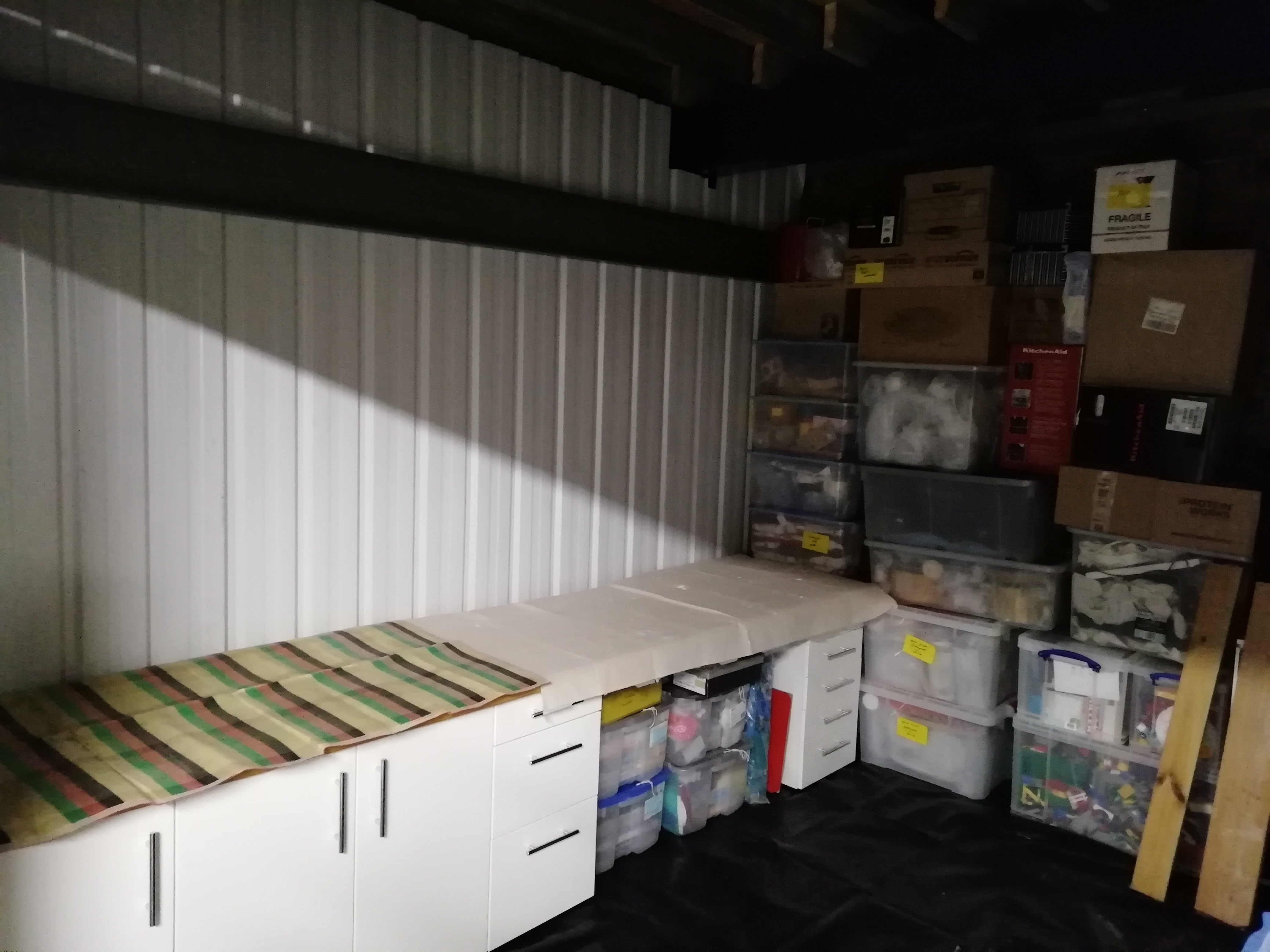
9 January Our storage unit with the desk unit from the study and some of our boxes.
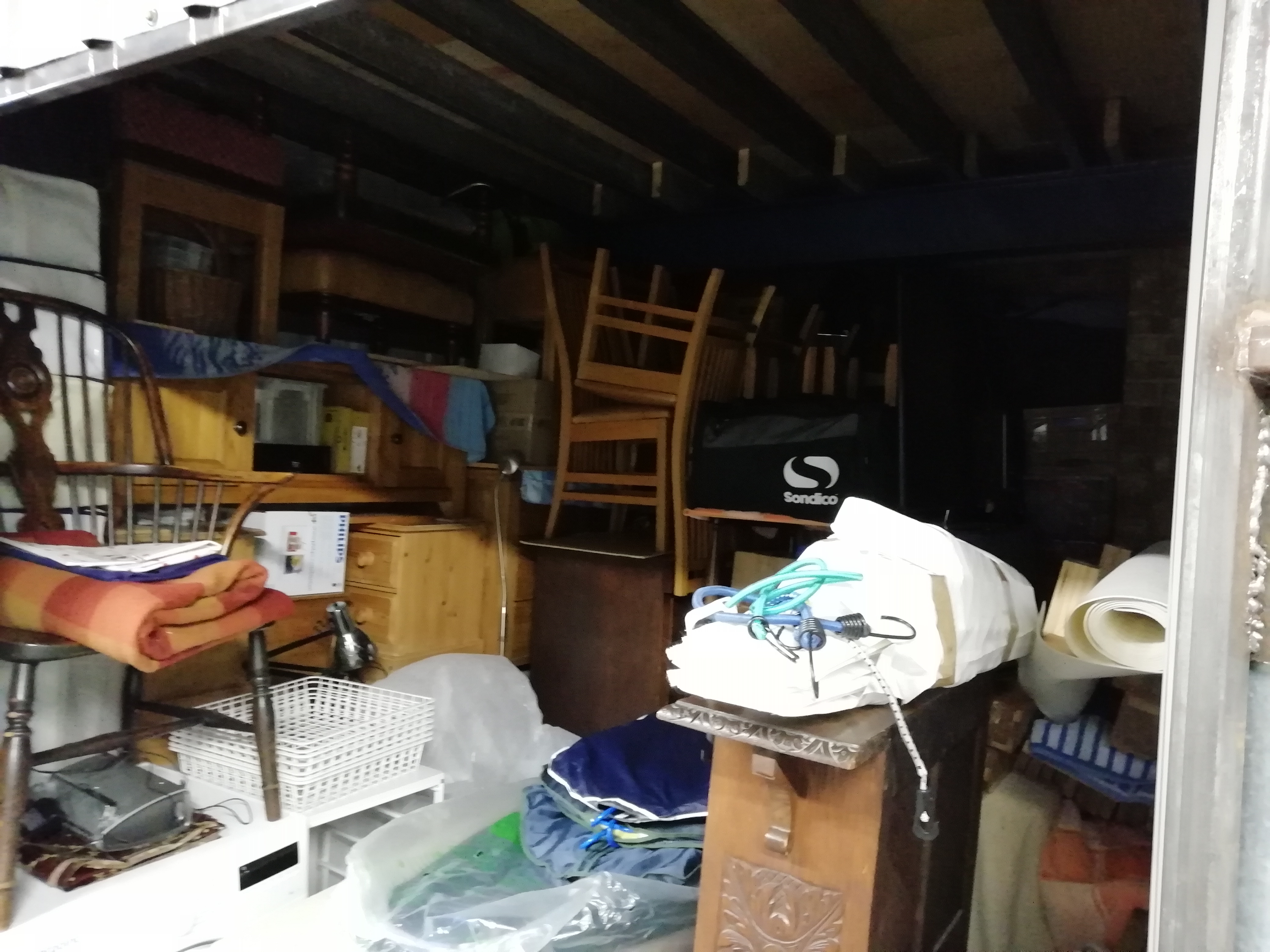
13 January After our ‘man and van’ helped us to add all our furniture. The desk unit now has three ‘stories’ of furniture standing on it and has been completely buried.
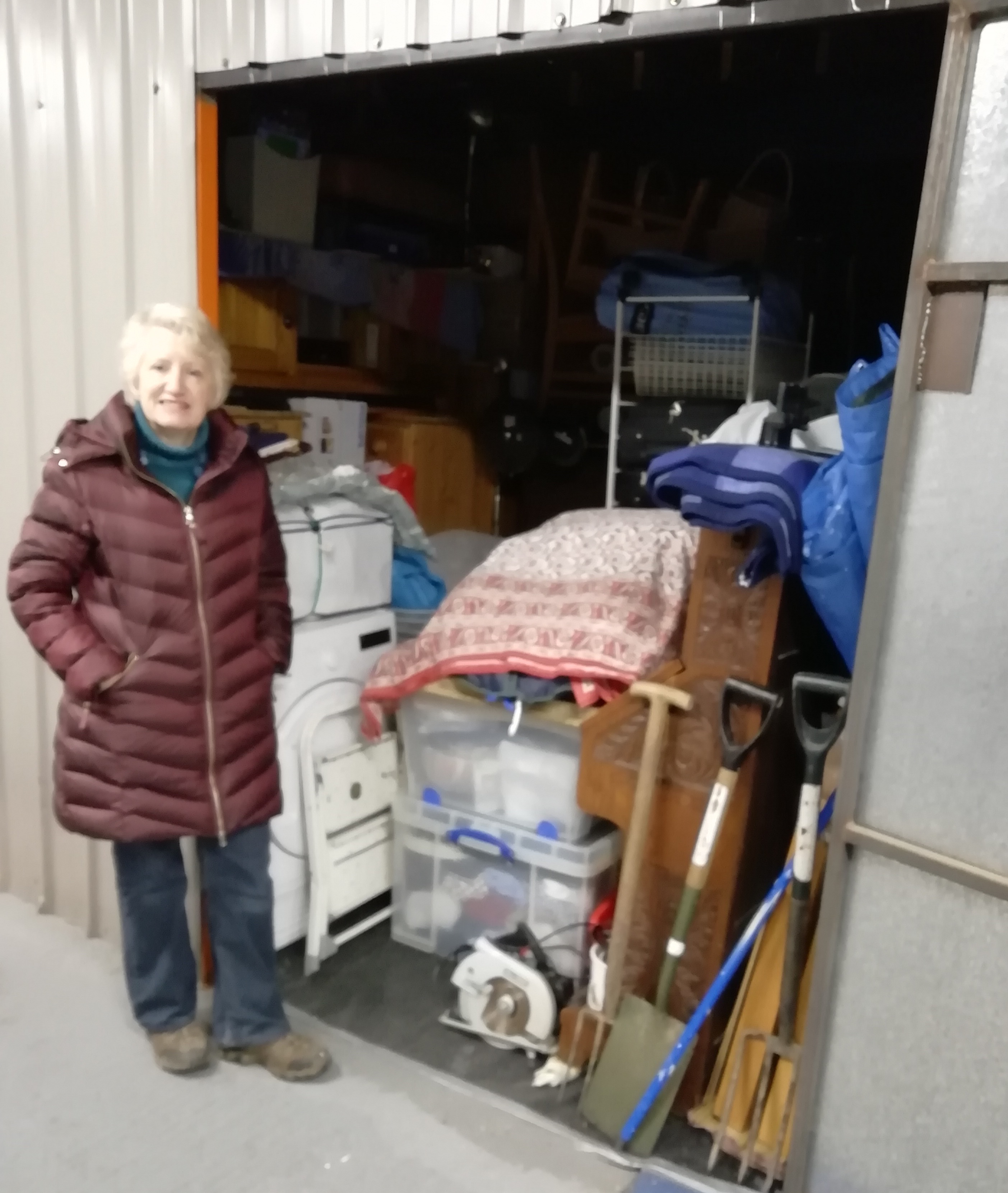
17 January After final additions and yet more ‘jiggling’. I think we might have left something out though – we still seem to have a little space!





 Tortoise Travel