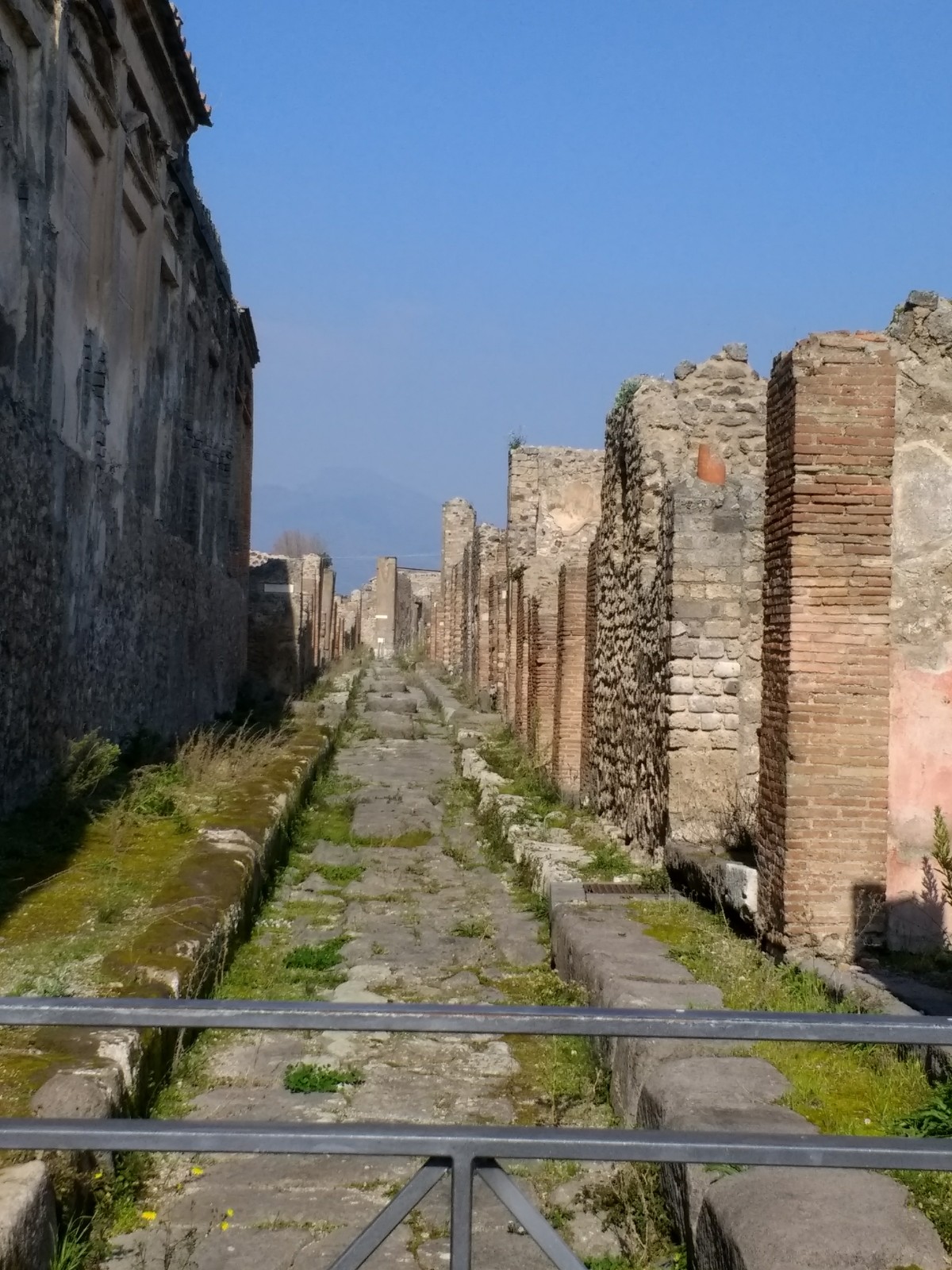
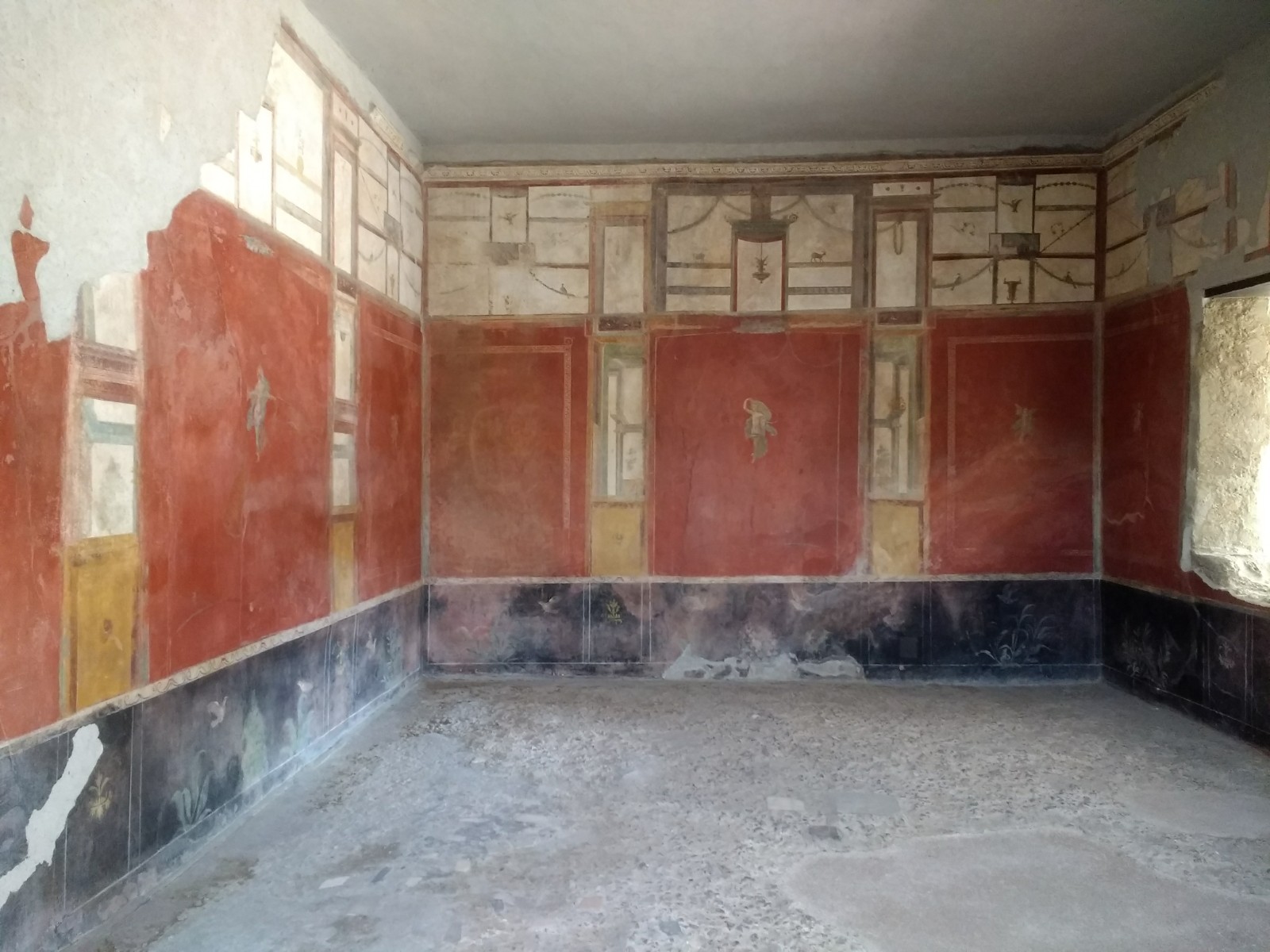
Despite a large number of tour groups in Pompeii yesterday it was still possible to find quiet side roads to wander down and marvel at the completeness of the ruins. Cart-rutted streets are lined with brick-built houses, some with courtyards, gardens, frescoes and mosaic floors.
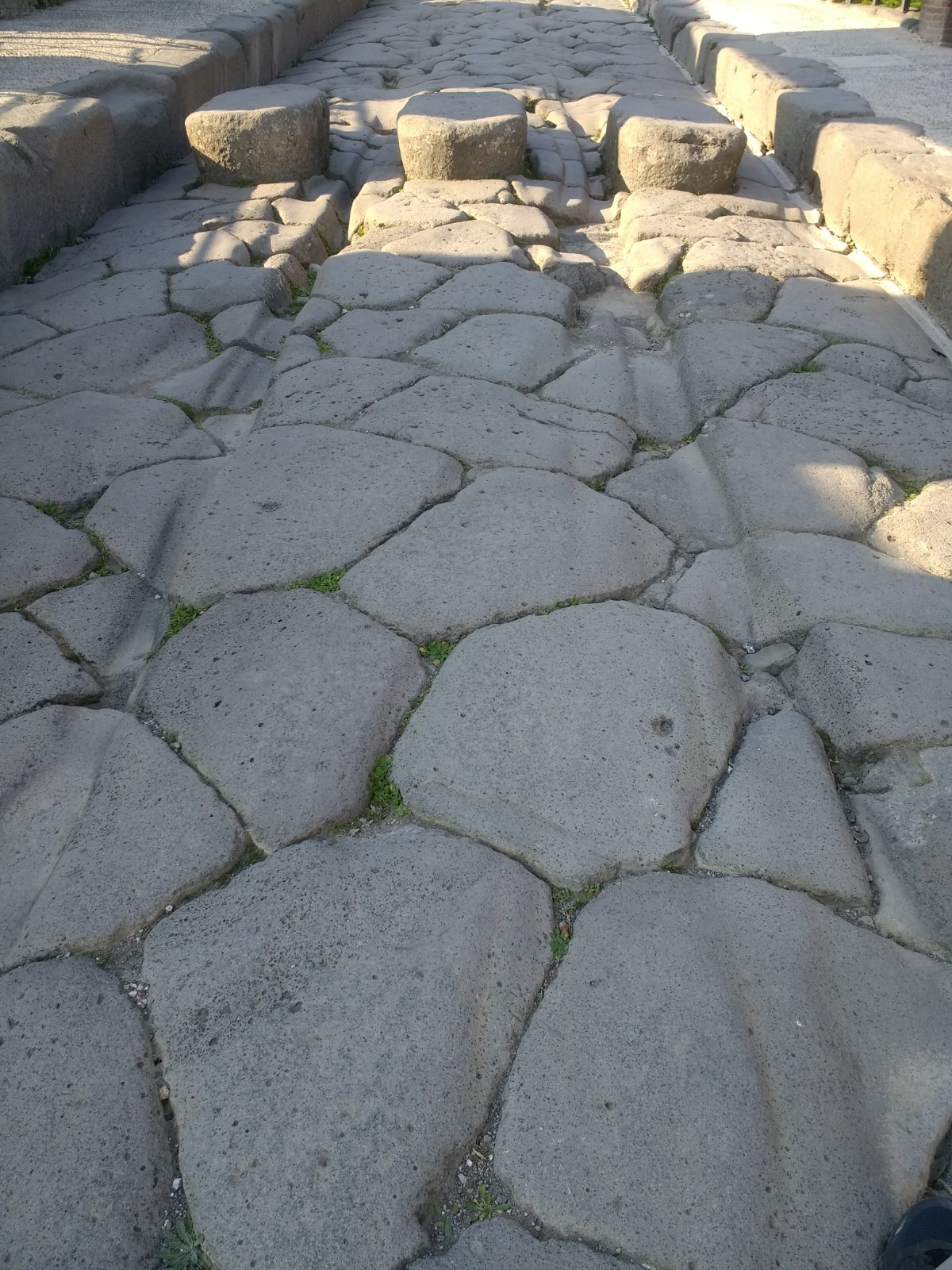
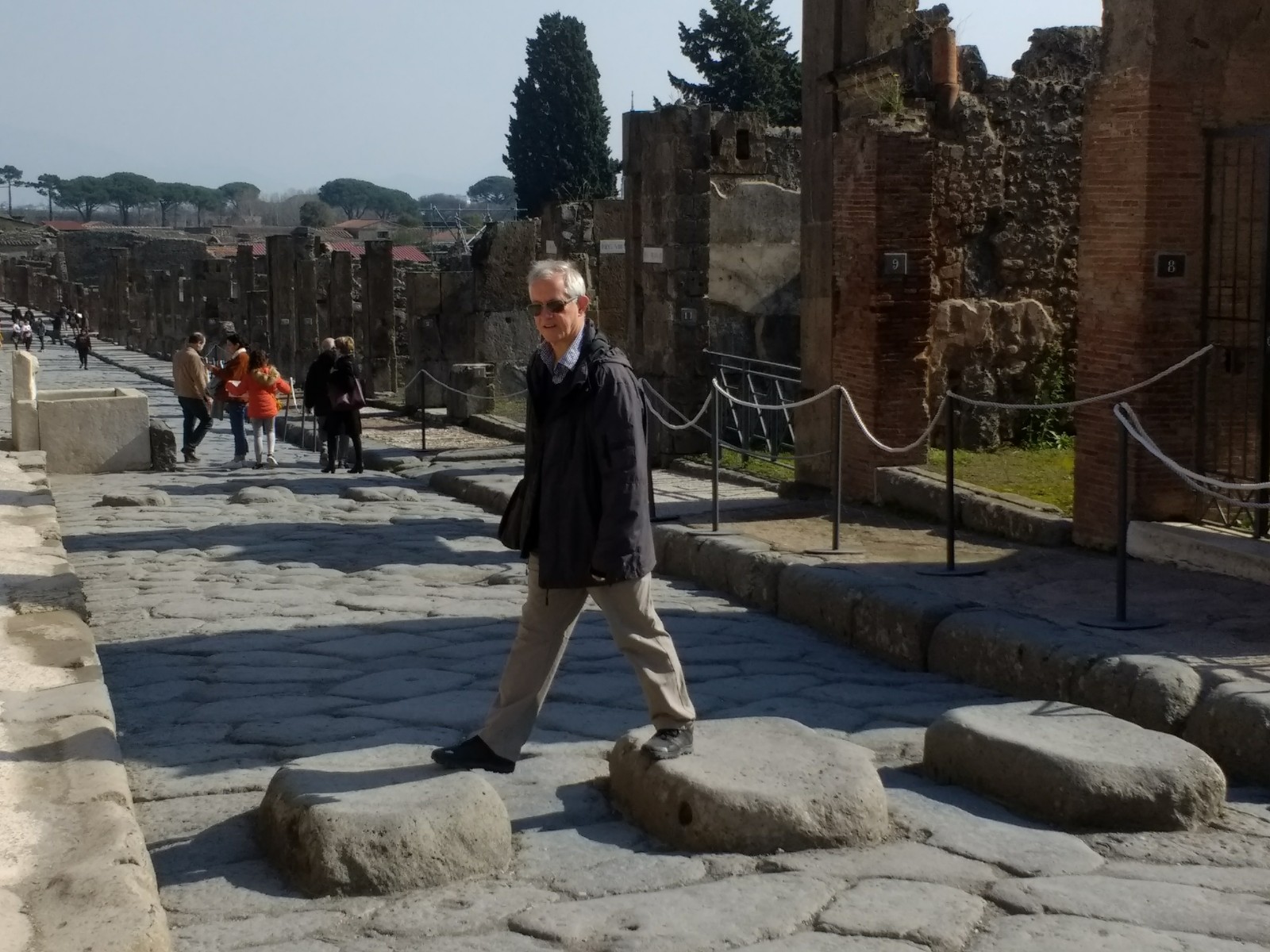
A very quiet street in Pompeii. A lot of work is still being done to open up more areas to the public.The ruts caused by carts. It is thought all the streets were all one-way.A good way to stop your sandals getting wet and mucky.A room with frescoesPart of the laundry
When we were confronted with the plaster casts of people who met their death in Pompeii, I was reminded that this was not just a town where one day people just decided to pack their bags and leave, but this is where a disaster occurred, and these were ordinary people who, for one reason or another, failed to escape (it seems that most inhabitants did manage to get away).
This is an uncomfortable thought and I wonder, if some disaster were to occur in my home town, how I would feel, if 2,000 years hence, people walked around pointing out features, “This was a house lived in by two people called Anne and Mark. We know from remains Anne was right-handed and dyed her hair. This was where they showered every day.” To me, it feels intrusive.
Gloomy thoughts aside, we will return to Pompeii while we are still in Naples, as our tickets allow us a second visit and we possibly won’t be back in this neck of the woods anytime soon. We plan to do more research first and decide what else we particularly want to see.
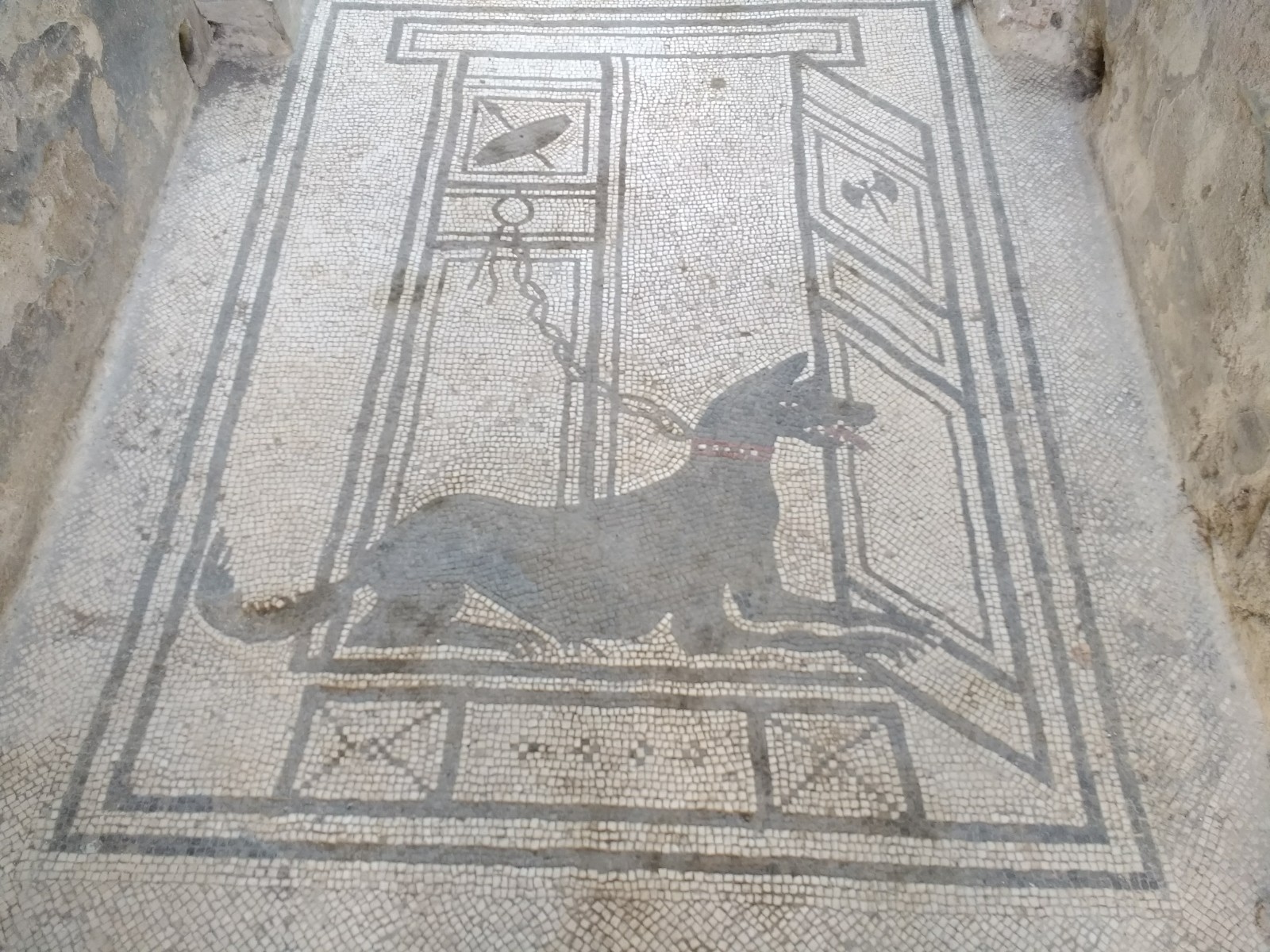
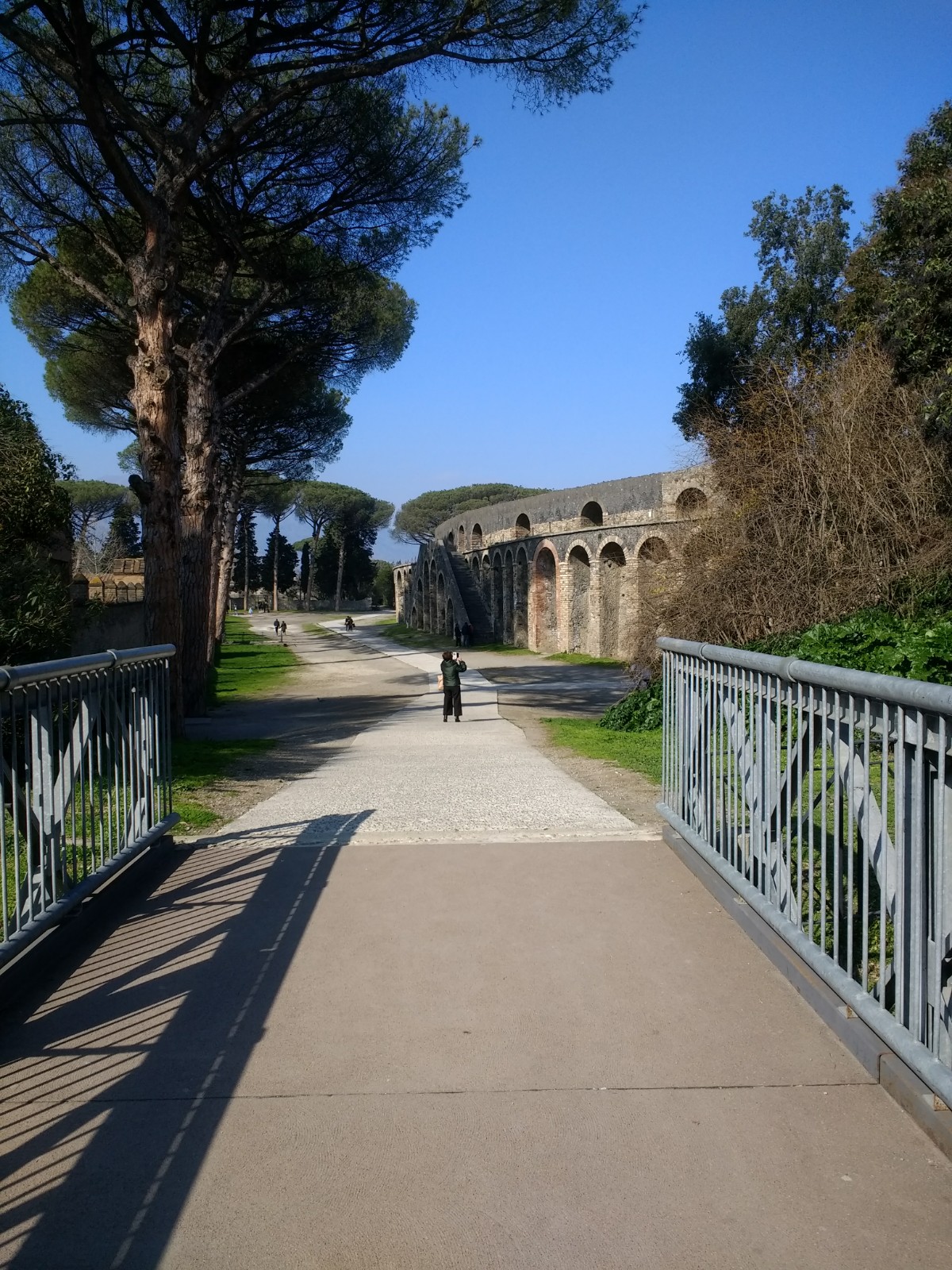
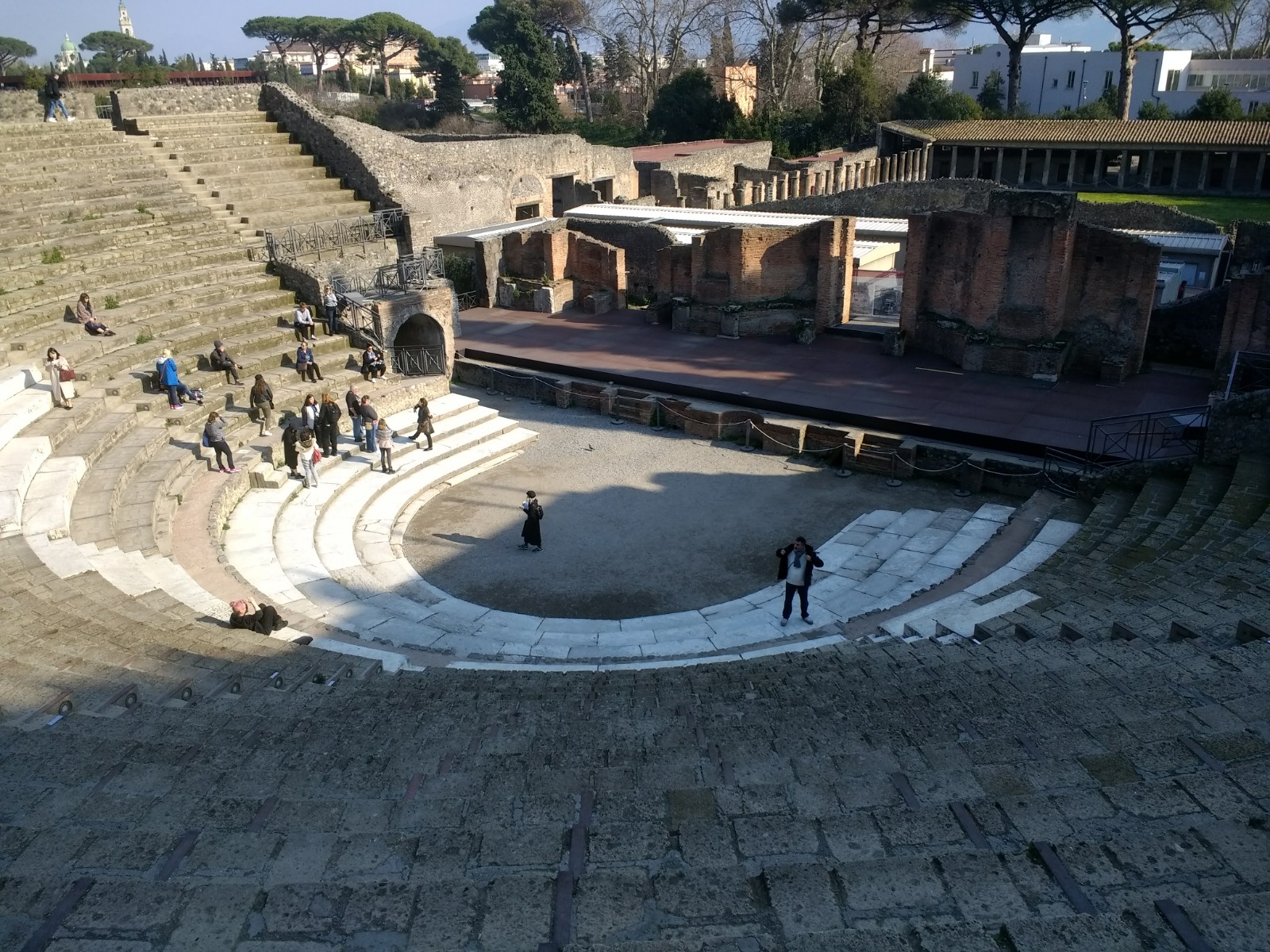
‘Beware of the Dog’ sign at the entrance to a house. I think our dog would have been frightened of this one.Dining room, but lounging only allowed.Entrance to the gym. The lines under their feet, which look like skipping ropes, are intended to be their shadows.In the granaryOn the way to the Amphitheater, the oldest in the Roman world. The ‘big’ theatre. There was also a ‘little theatre’.
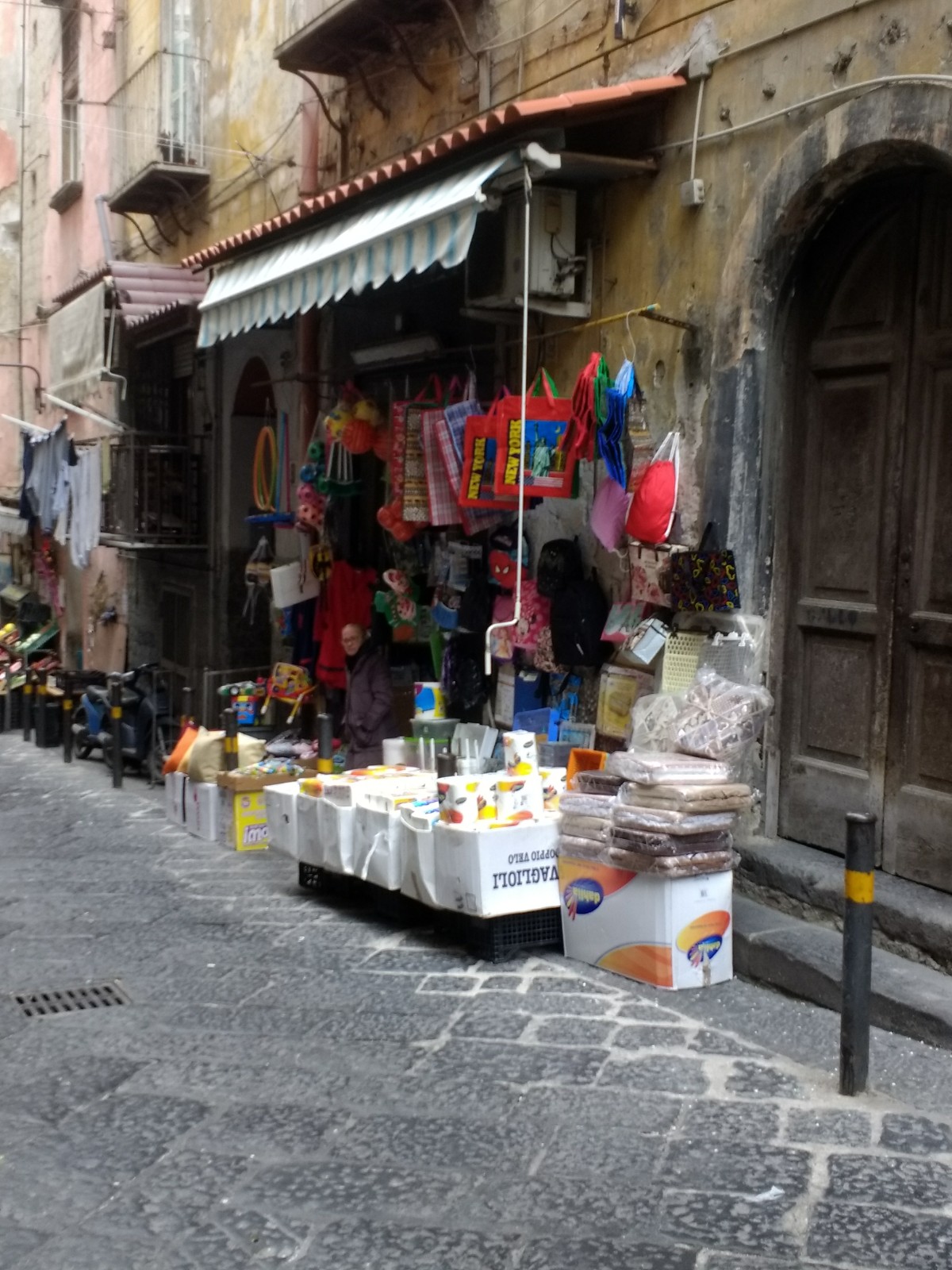
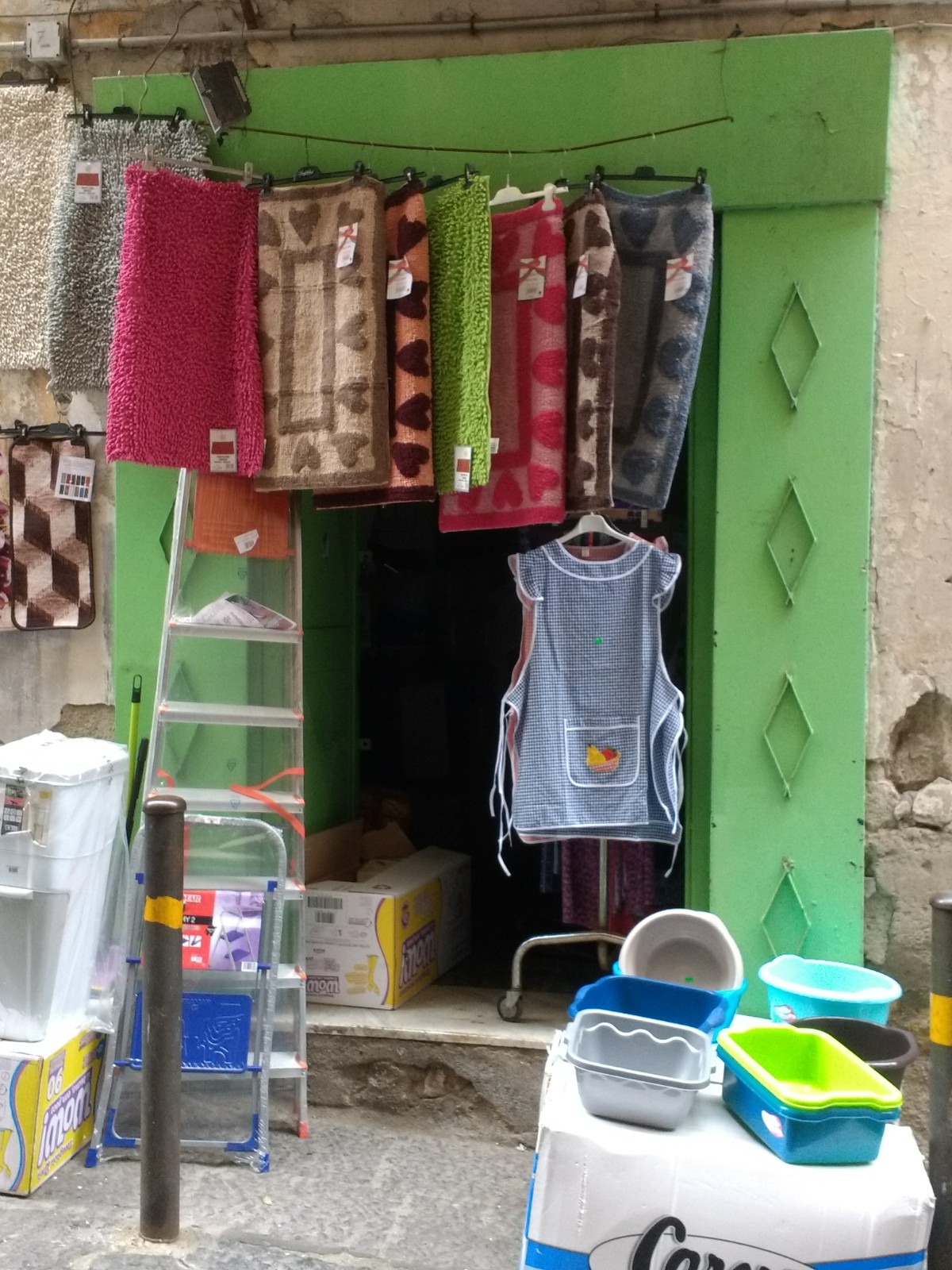
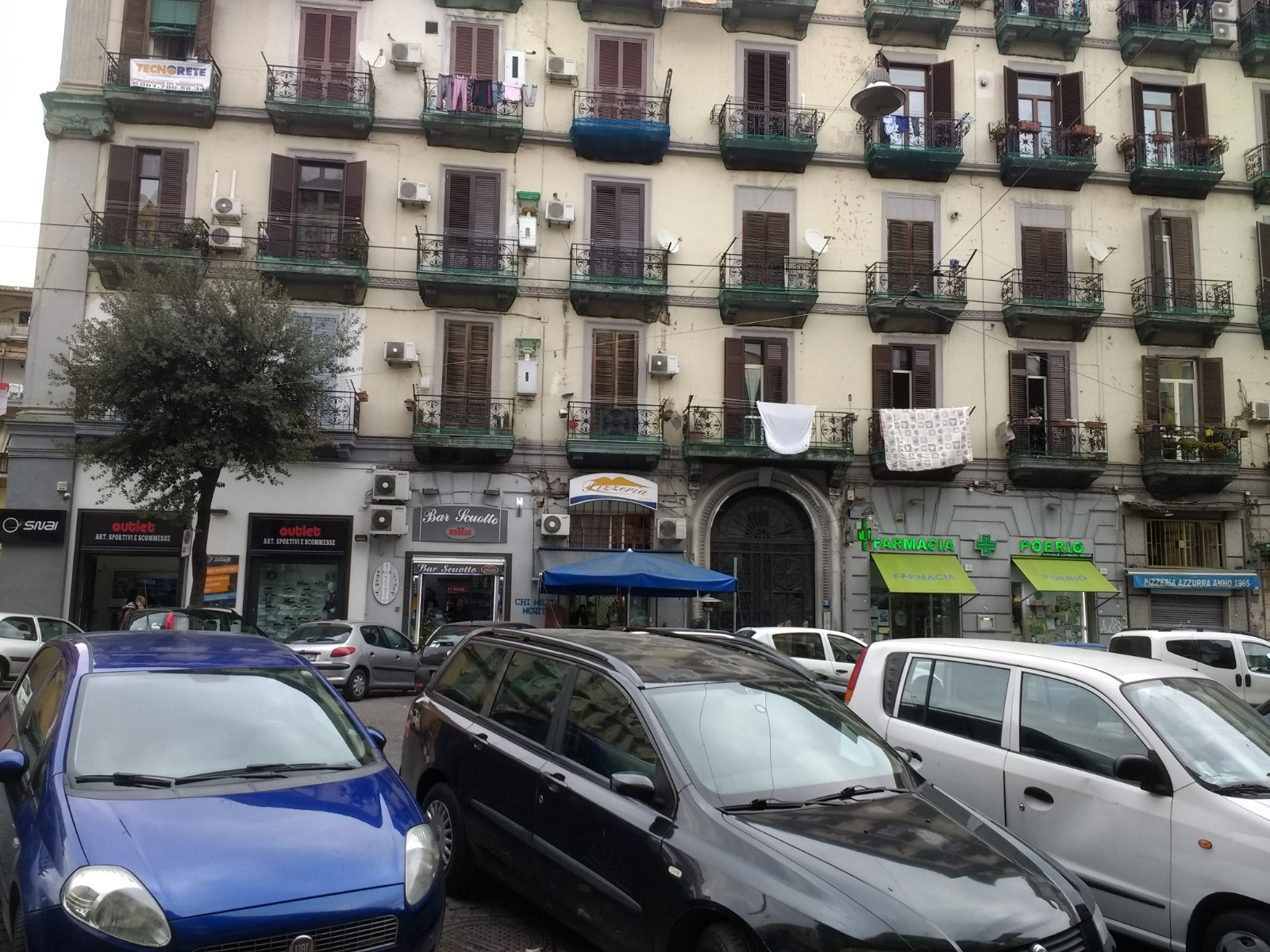
The streets round about us are medieval in their squalor as well as their layout. Dog excrement is everywhere. We watched a Mary Beard documentary about Pompeii last night, and she drew a comparison between shops in Roman times and shops in modern-day Naples. Like the shops in Pompeii, the shops round here have their wares hanging down and spread out in front, there not being much space inside.
Shop, NaplesAnother shop, Naples
An historian Mary was talking to remarked that today the streets of Naples are cleaner than the ones in Roman times. Mary disputed this. At least the Romans put stepping stones across the roads so people could avoid the dung left by animals. (I wonder how the Romans coped with their rubbish).
We now realise, though, that we are living in a poorer part of town. Today we visited the Palazzo Reale, one of the palaces built by the Spanish when they ruled Naples. The streets around there are wider and cleaner, the buildings are in better condition and the pavements are laid with two colours of stone, as opposed to one.
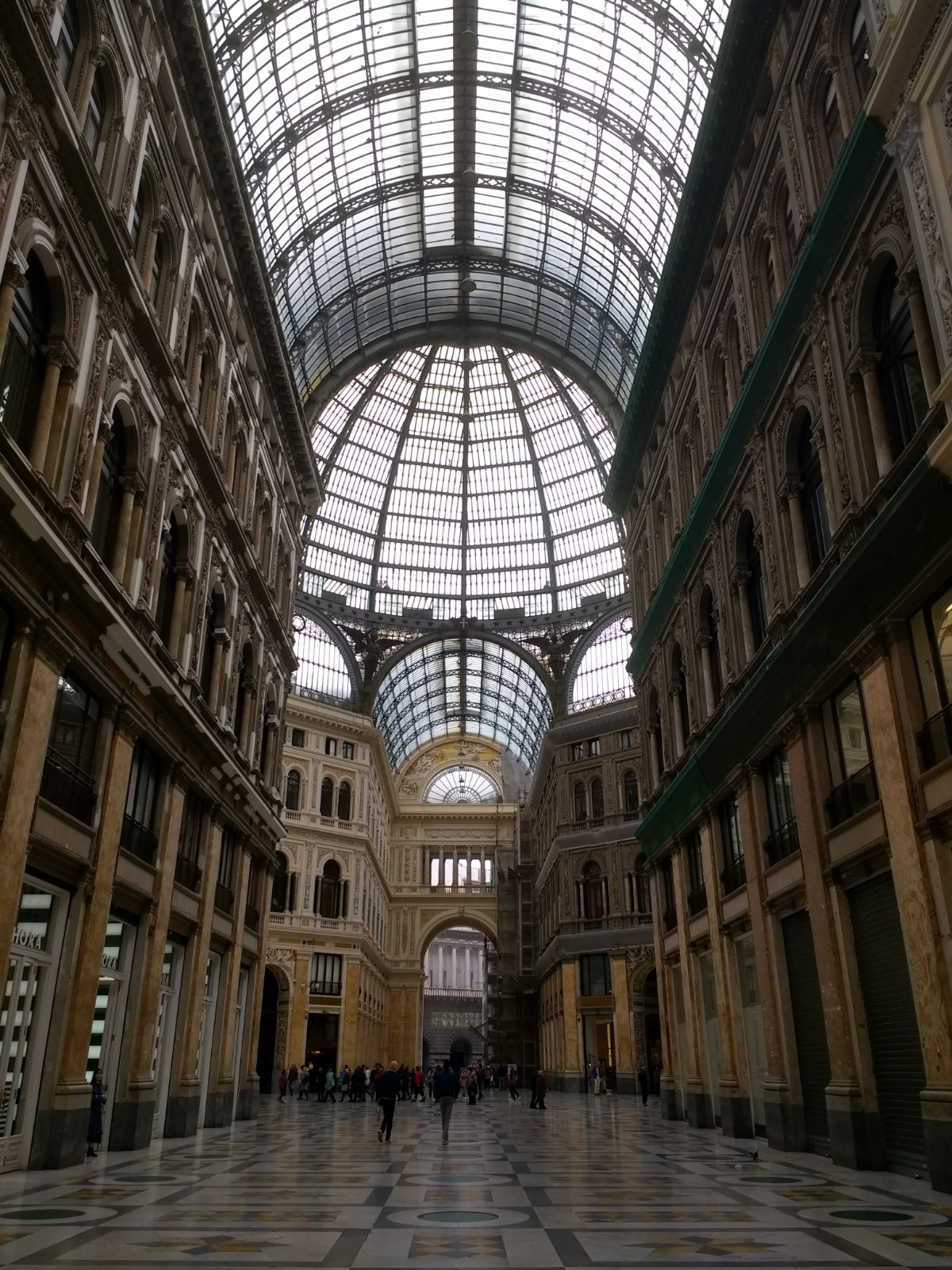
Residents keep their washing on their balconies, rather than stringing it across the street, near Palazzo Reale.Galleria Umberto, upmarket shopping mall. I am surprised Dubai hasn’t copied this.
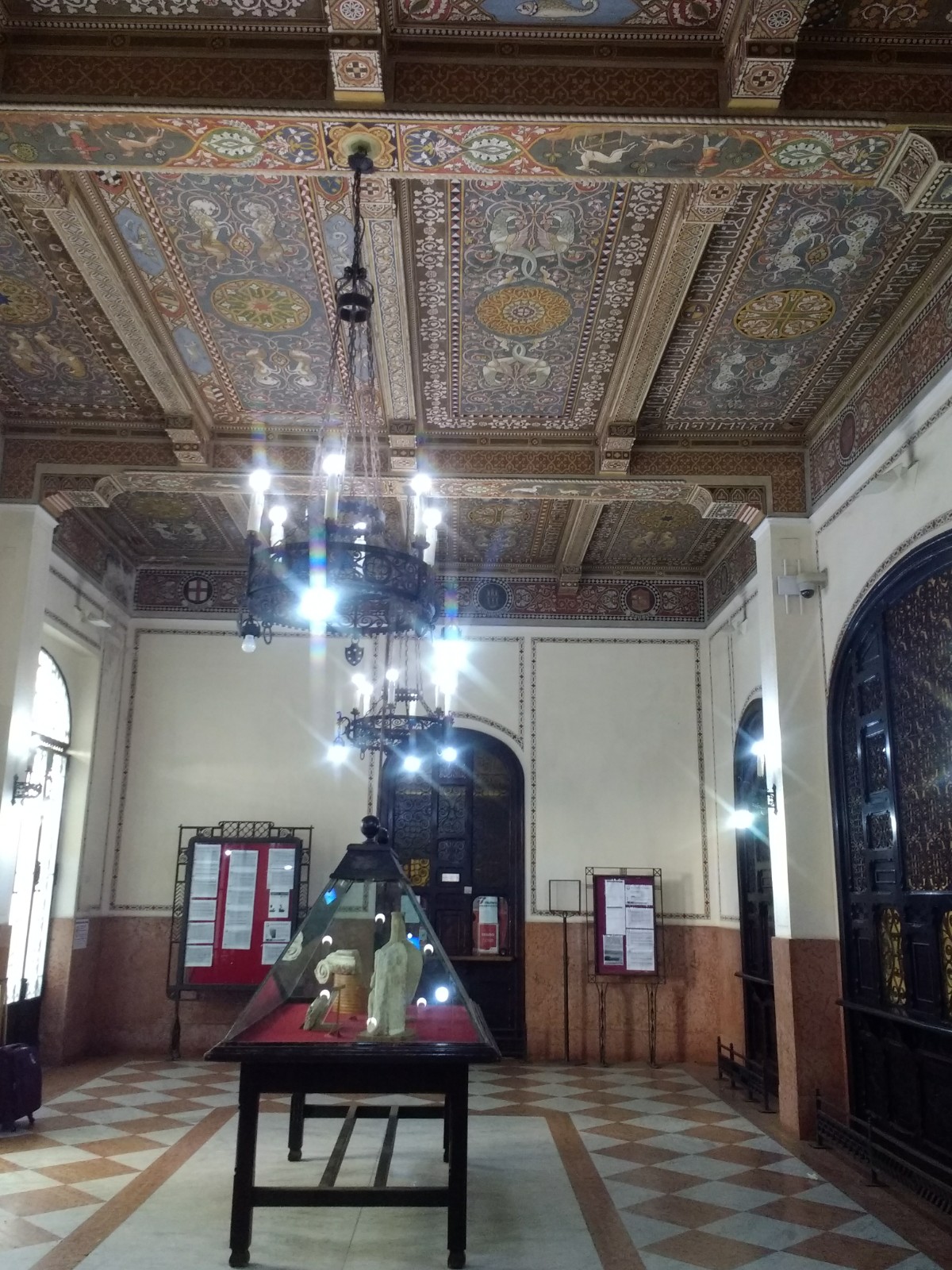
The Palazzo Reale is huge and we wandered through the rooms looking at the frescoed ceilings and wall hangings, as we were directed to by the audio guide.
Staircase, Palazzo Reale
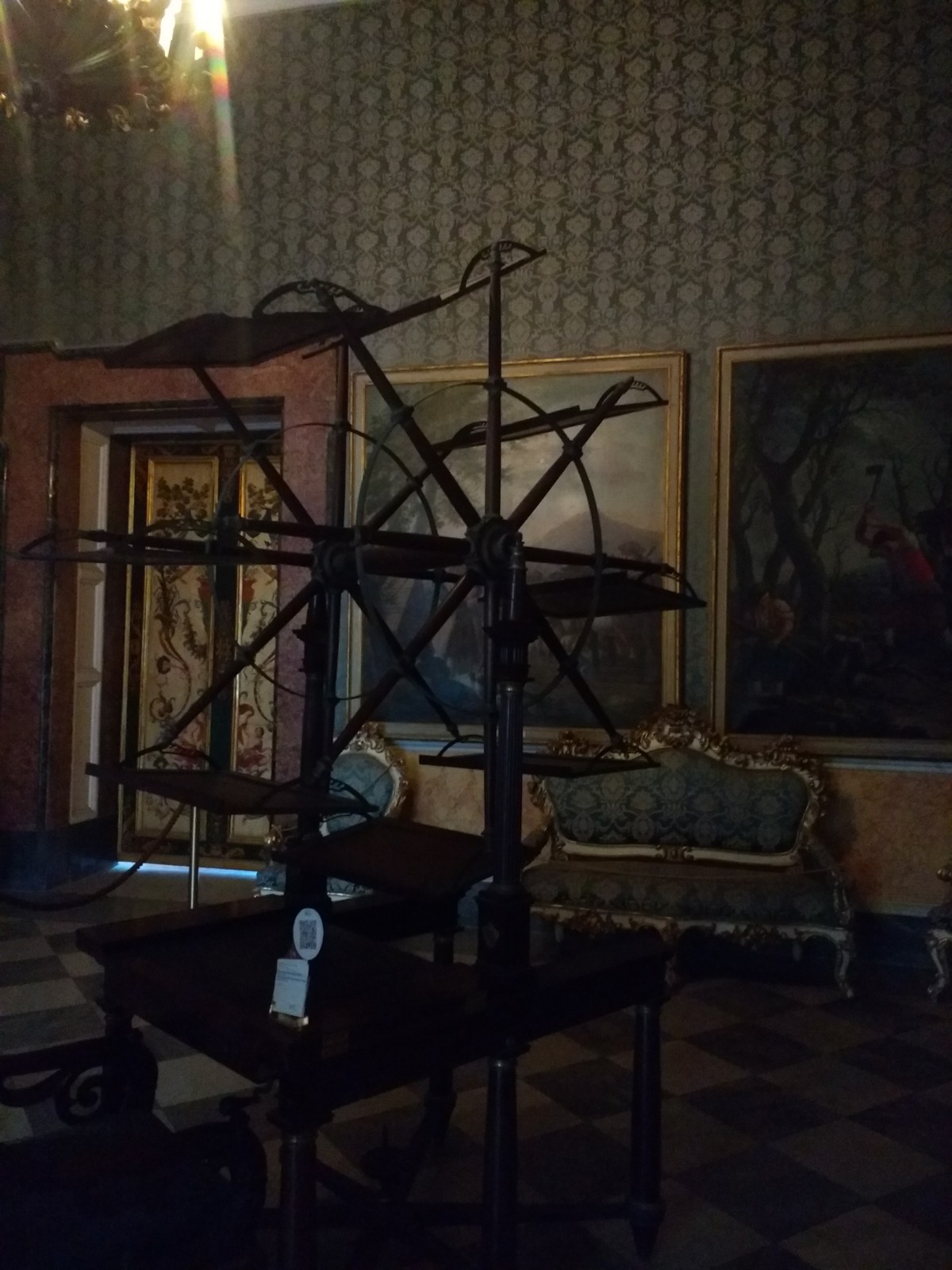
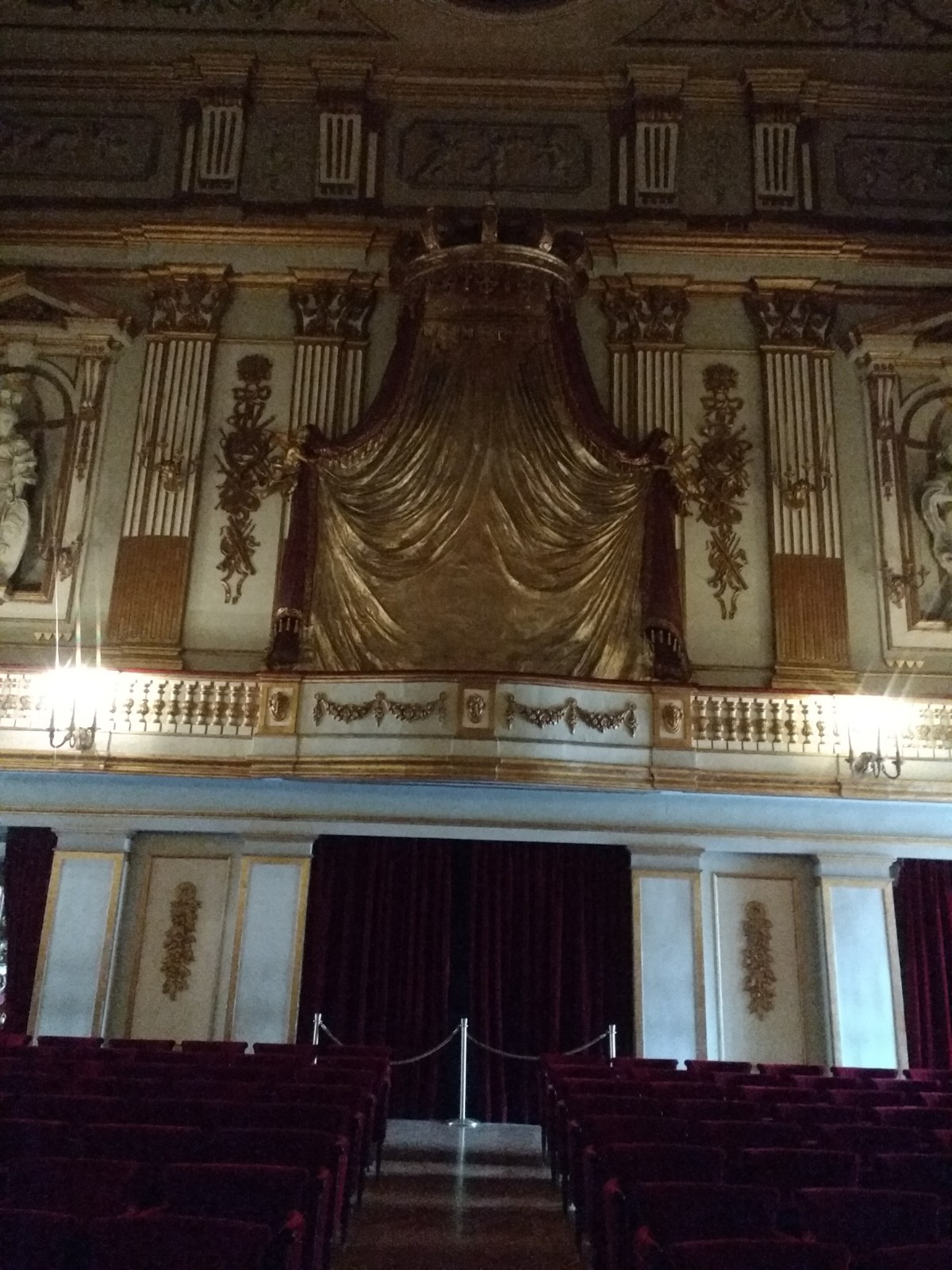
A couple of unusual things stand out.
A revolving document stand allowing a reader to peruse up to eight volumes without leaving his or her seat. The canopy, above the royal box in the Court theatre, is made of papier-mâché.
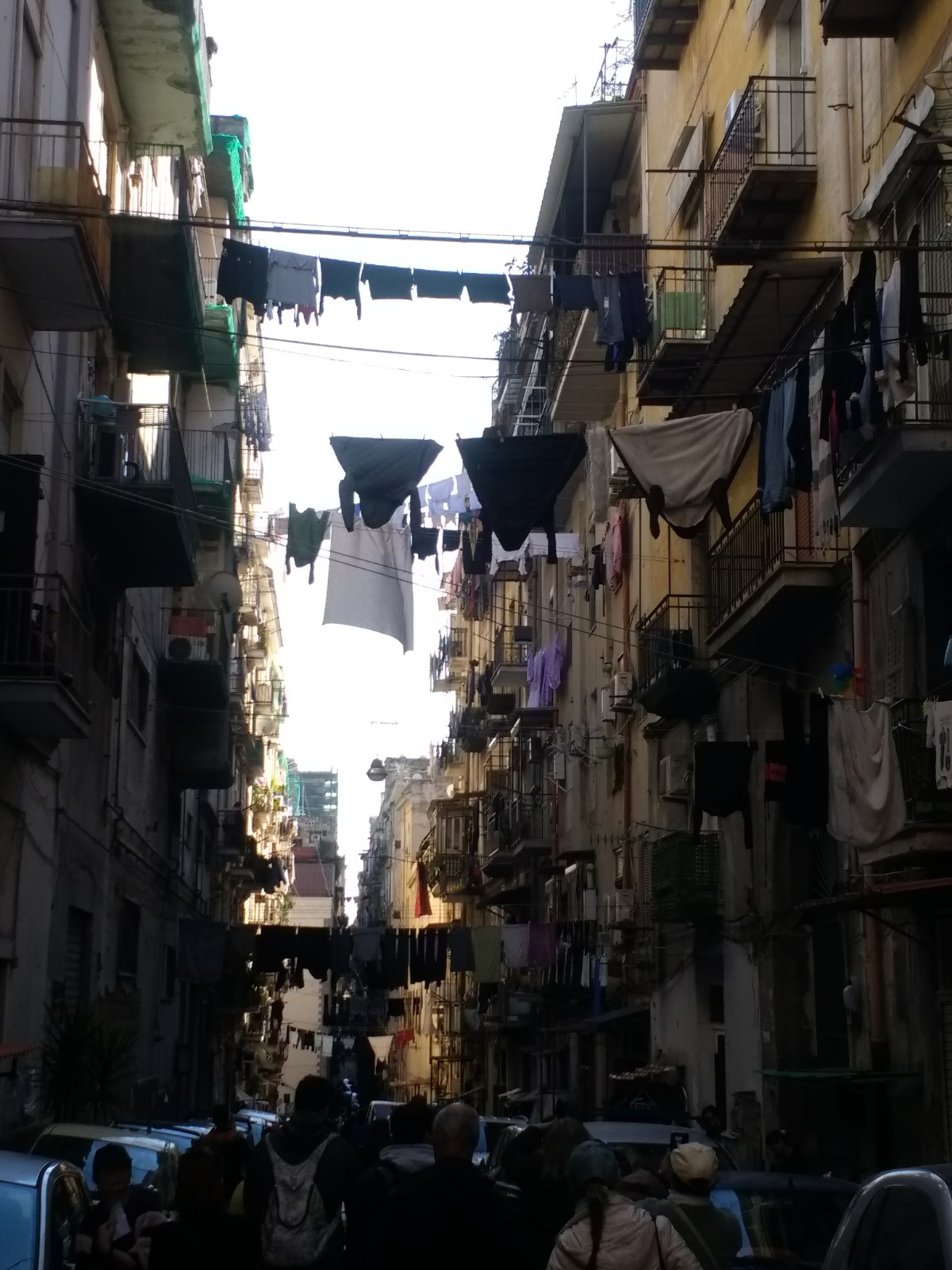
The picture we had of Naples, of narrow streets with washing strung across, was in front us as we took a walk around the old part of the city this morning.
We also walked down roads so narrow that you could have taken your opposite neighbours washing in if it rained – handy.
Naples teems with life – it’s said that Neopolitans live life on the streets and if you can catch a glimpse inside a typical home you can see why. Here, in the old city, everyone lives in apartment blocks. Through the open doors of ground floor flats you can see a single room with sink, washing machine, stove, fridge, chairs and tv. The people have very little space. The doors, like stable doors, open in two sections and means people inside can stand and chat to people outside while containing small children and animals.
This weekend marks the beginning of Carnevale, which seems to be an excuse to have some fun before the start of Lent. Lots of children were out in fancy dress (a lot of shop-bought costumes representing Disney characters). I read that it is a time when children are allowed to play little tricks on grown-ups, but the most I saw them do was to throw confetti around or use the cans that spray out streamers.
Understandably, scooters are popular here, petrol ones driven by adults and electric ones driven by seemingly anybody. I saw several children, no older than 11 or 12, riding electric scooters (apparently they are termed as ‘electric bicycles’) with another child on the back. This is quite alarming when you consider they are capable of travelling at 20 mph.
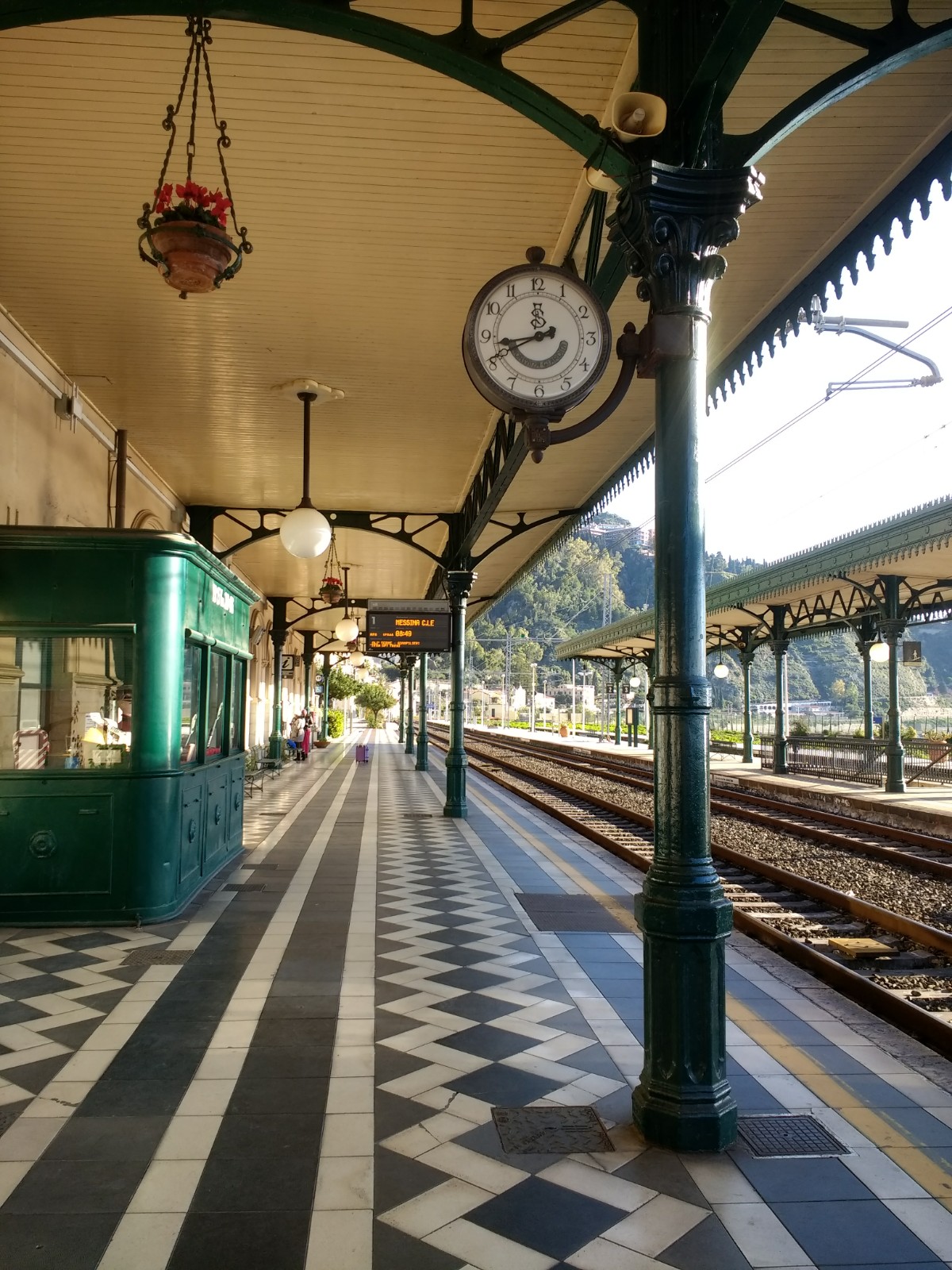
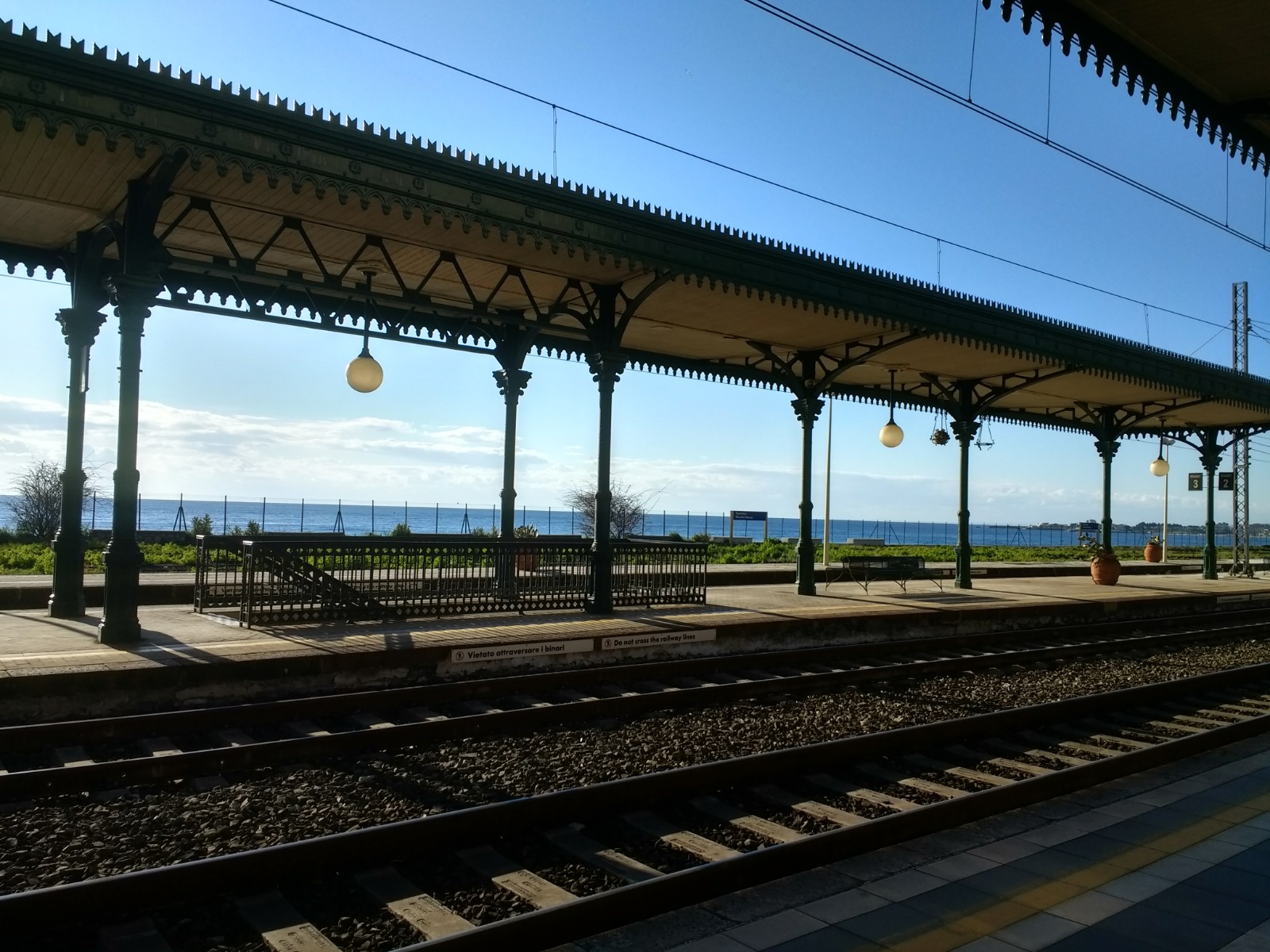
If your train is going to be delayed 50 minutes, there are not many more beautiful stations to have to wait in than Taormina.
The Ticket HallPlatformView of the sea from the platform
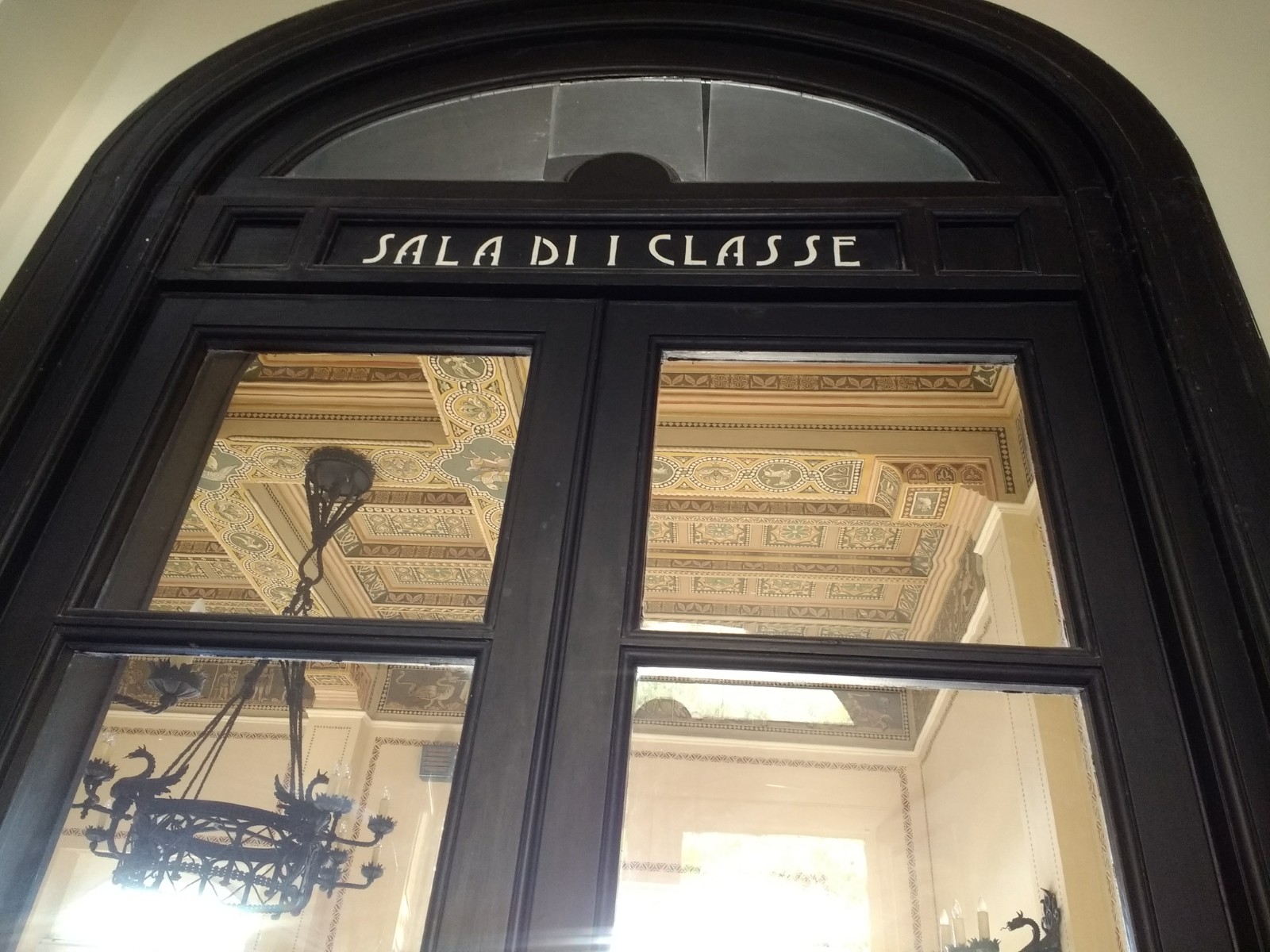
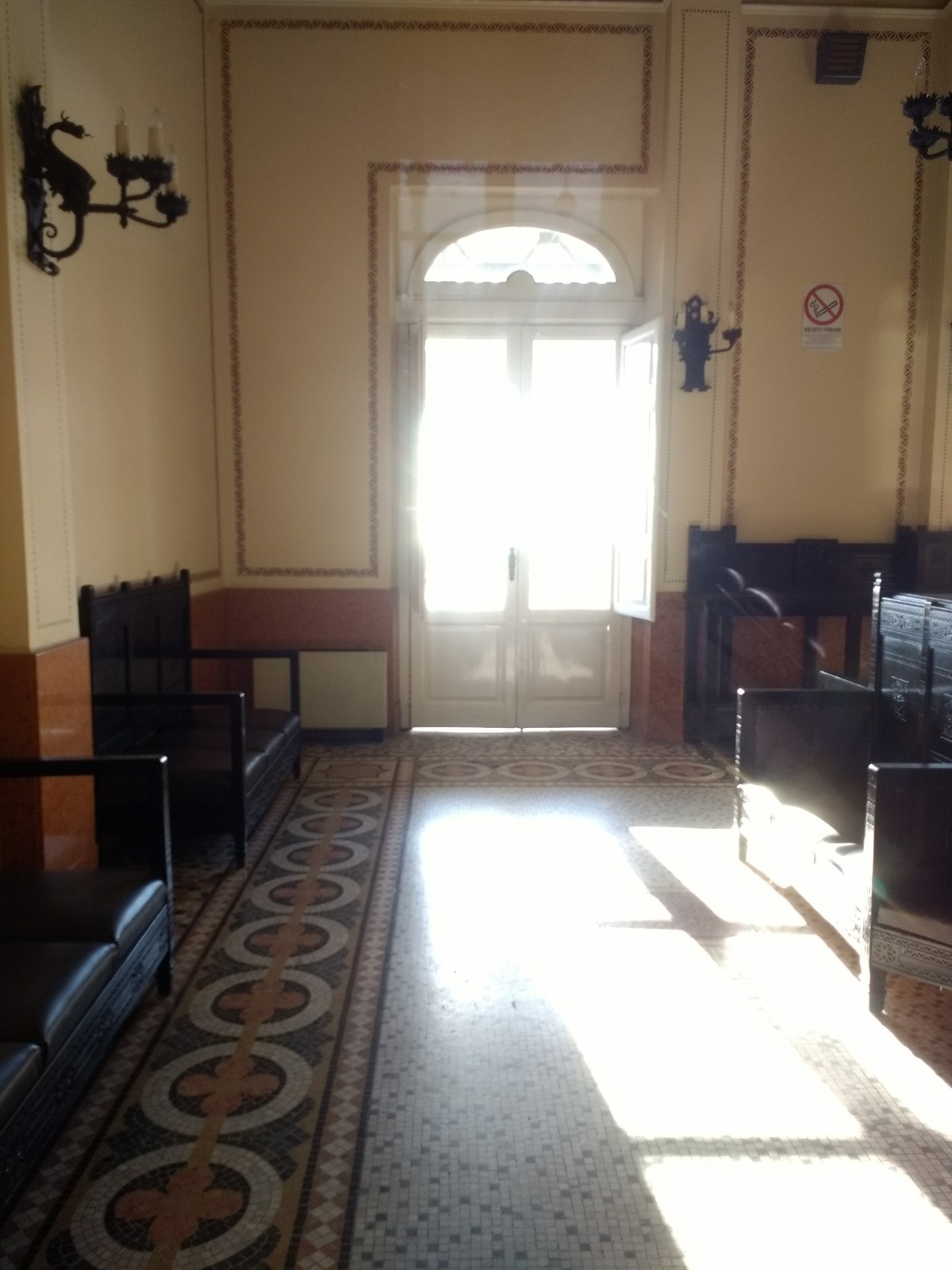
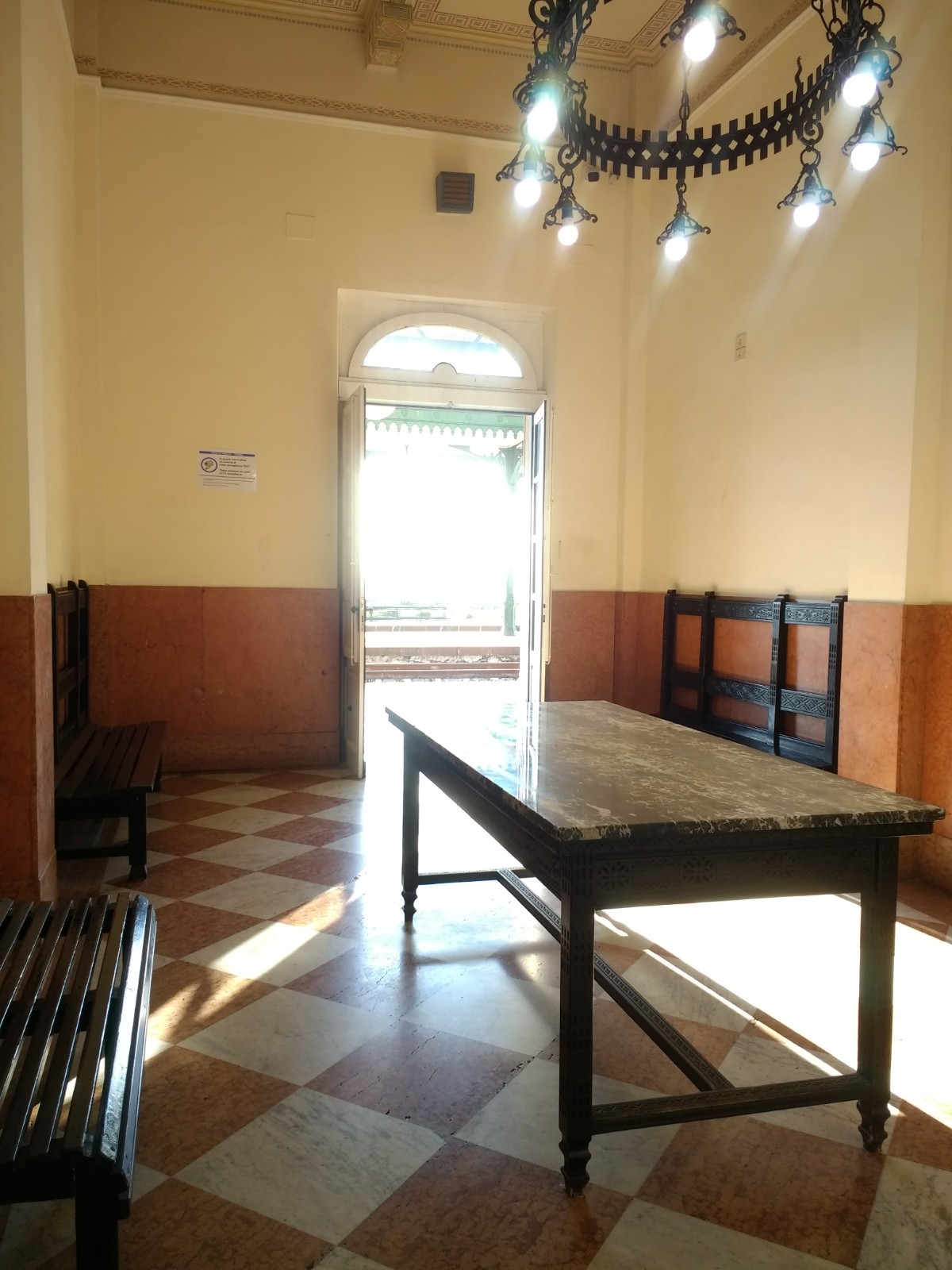
There were waiting rooms for first, second and third class, each decorated and furnished as appropriate for its rank, all open apart from the first class saloon.
First class waiting room Second class waiting roomThird class waiting room
We are on our way now and have just arrived in Messina where the train is being loaded onto a boat to make the crossing to mainland Italy.
In the days when ladies of independent means could wander around Europe, find an idyllic spot to settle down in and spend their time establishing a garden, Florence Trevelyan Trevelyan (given her surname twice so that she would keep one of them on marriage) travelled with a cousin, settled in Taormina, married the local doctor and created not one, but two gardens (all after having a brief affair with the married and future Edward VII).
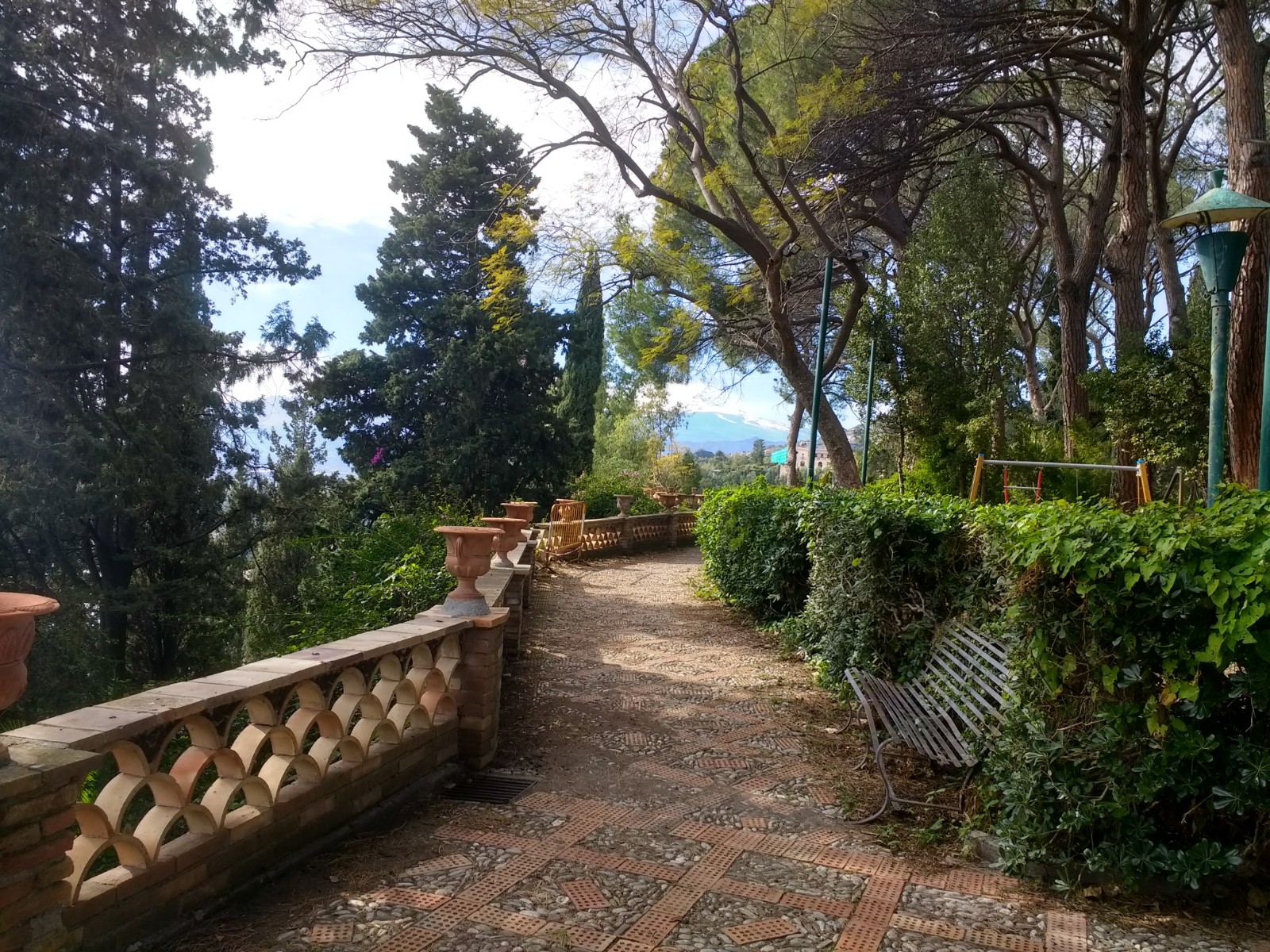
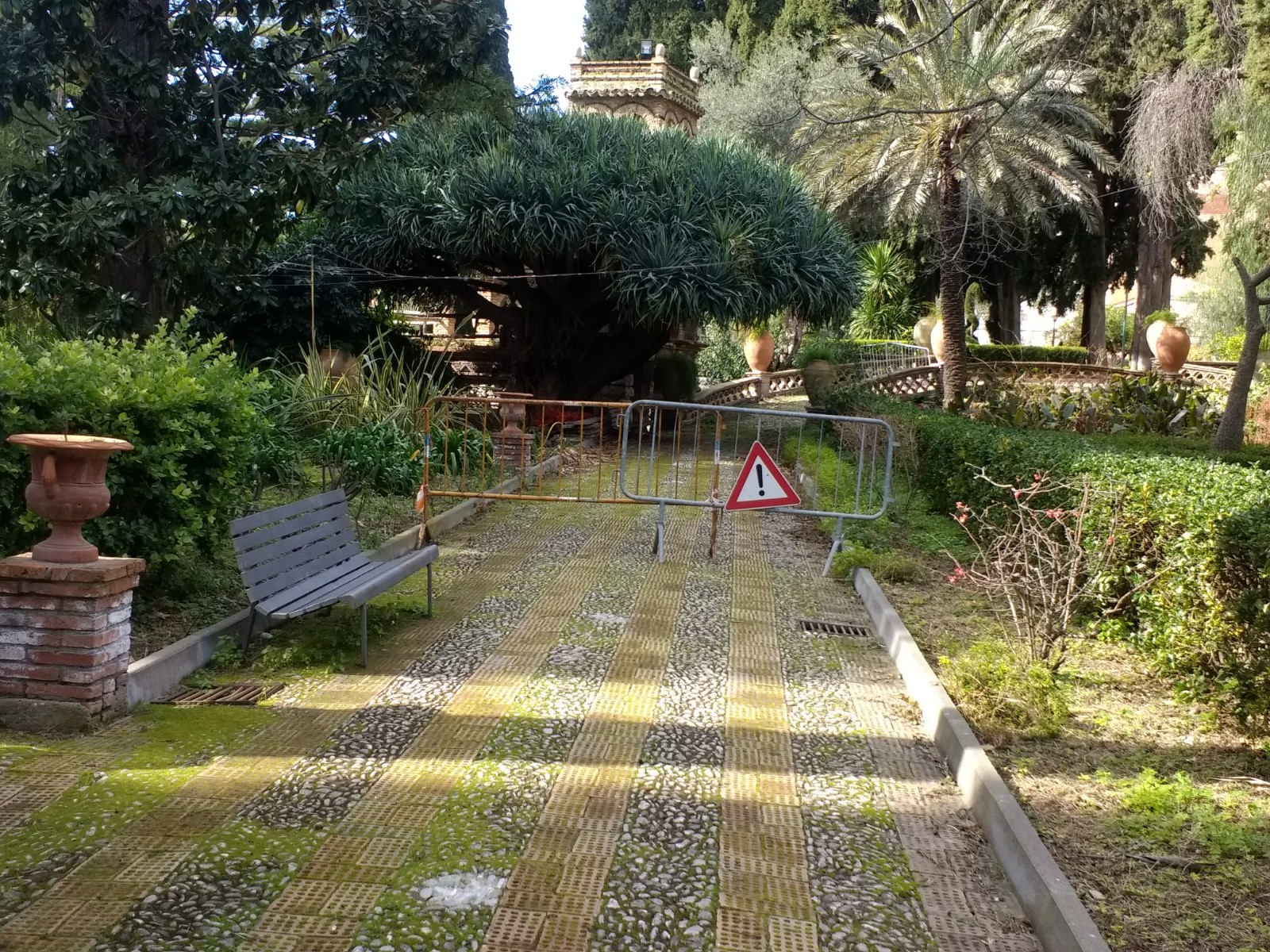
Public Gardens, Taormina
One of these gardens opened to the public after Florence’s death and is lovely, but could be made even lovelier, especially when we learn that it is the second most visited tourist attraction in Taormina after the Greek Theatre.
The gardens could be given a good tidy up.
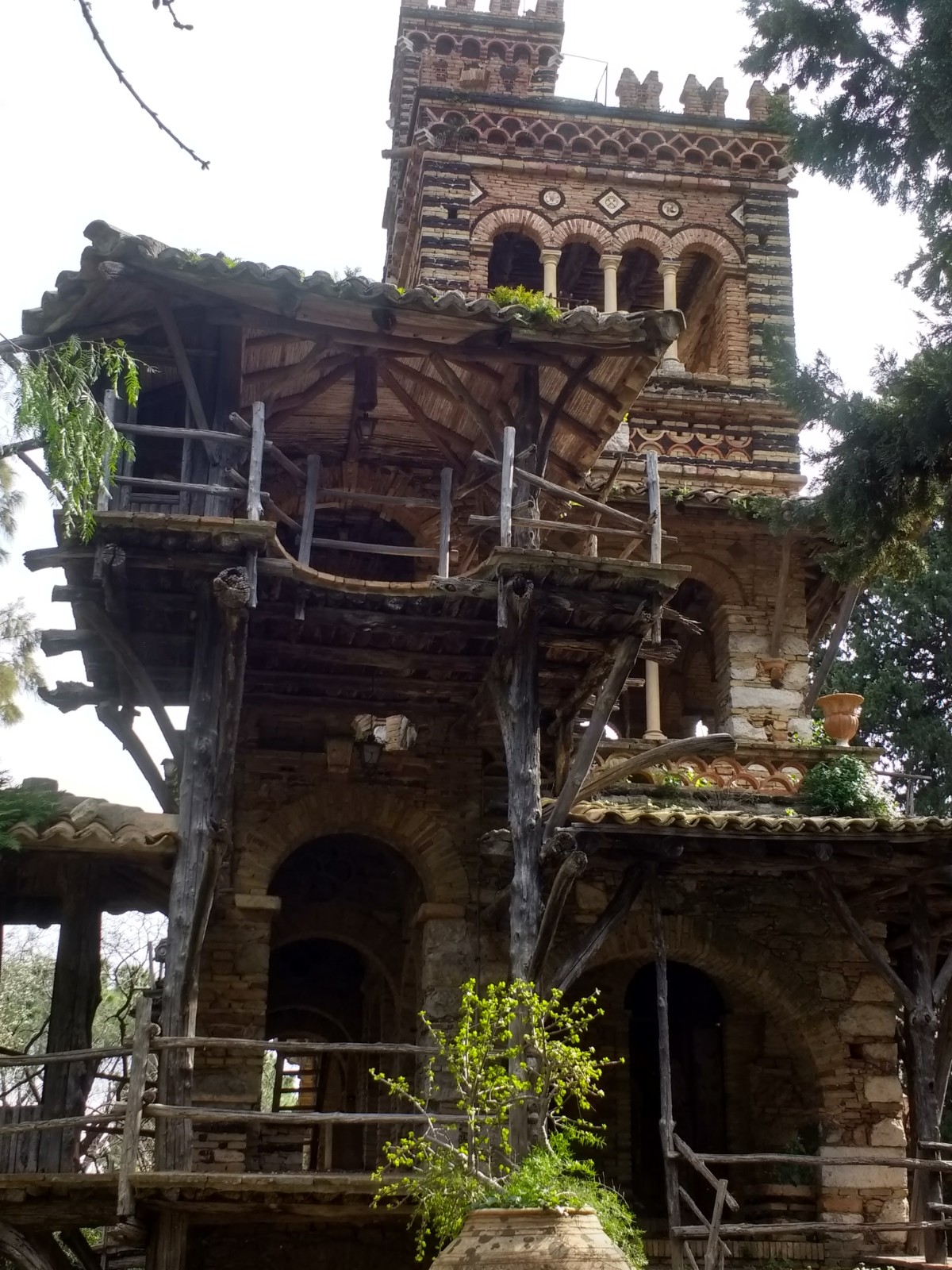
The gardens became well known for a series of ‘follies’ that Florence designed herself and are built out of stone, cloth, pipes and anything else she could get hold of.
One of Florence’s follies
The garden has had many famous visitors, including Oscar Wilde, on his release from prison.
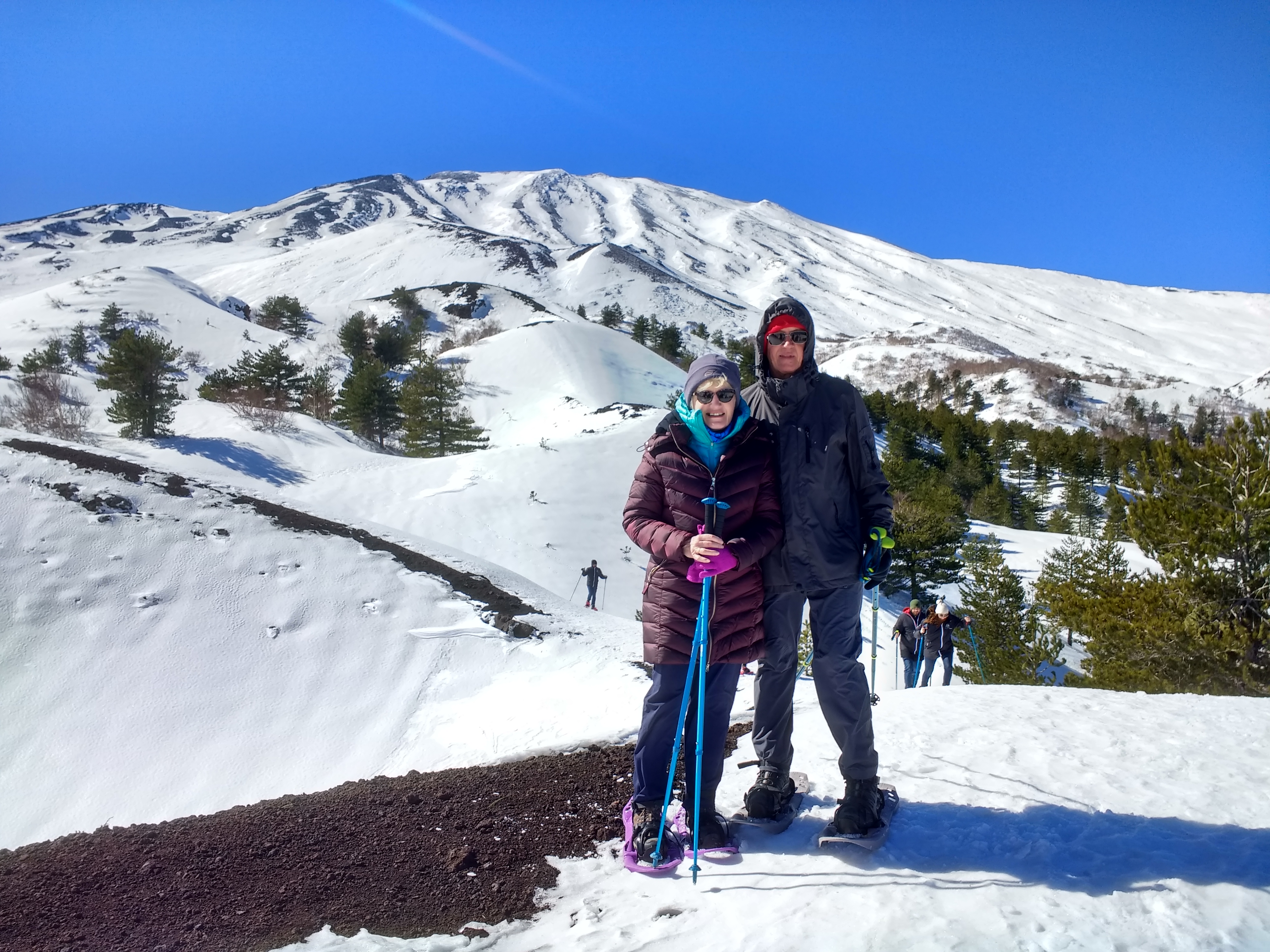
We had a more energetic day yesterday, joining a group trip to Etna where we learned all about volcanoes and had a walk wearing snowshoes (that was the exhausting bit).
Us, complete with snowshoes
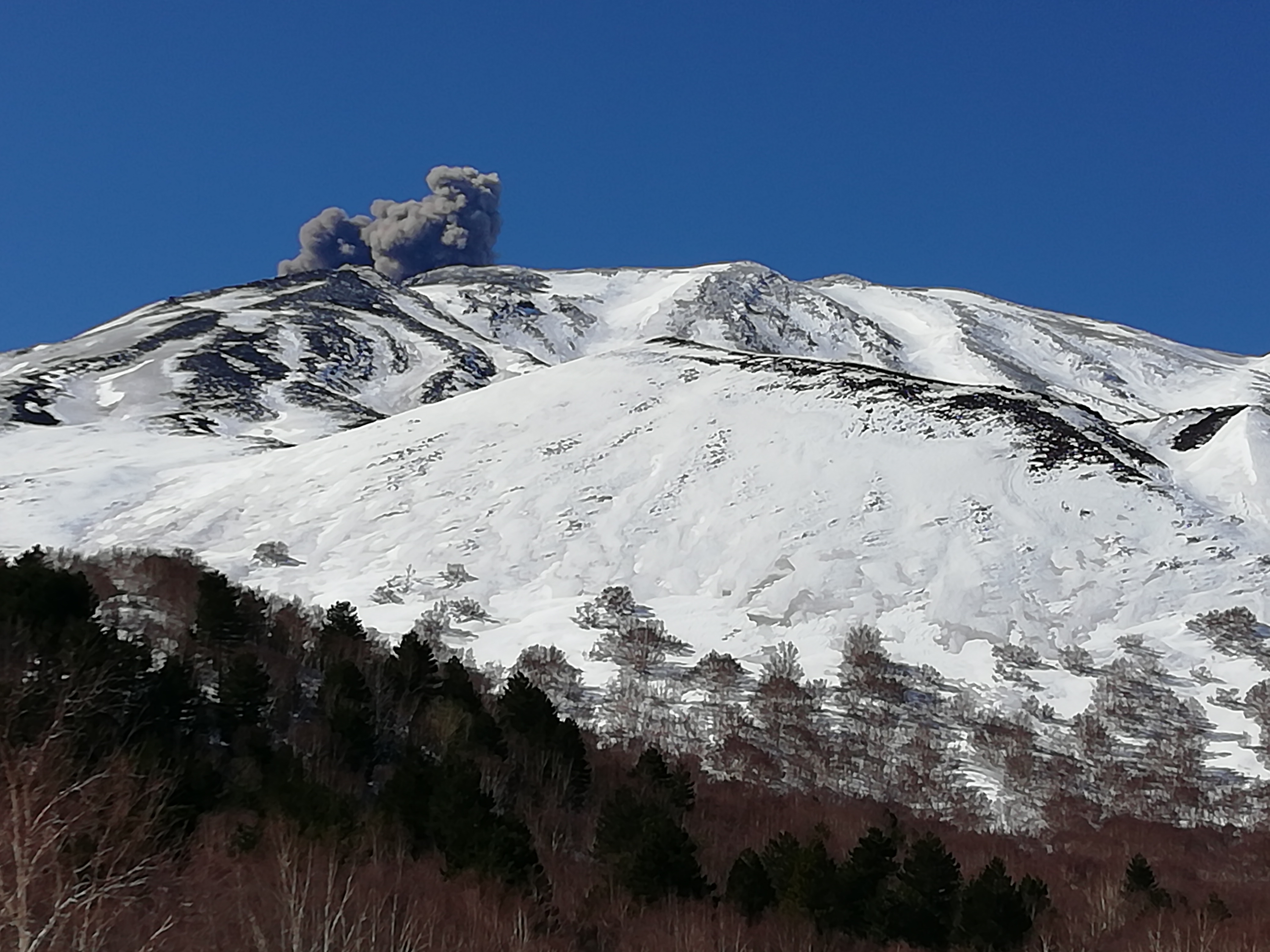
The views were stunning and Etna was kind enough to blow off a little while we were watching.
A cloud of ash
Apparently, no flames are visible as the walls of the crater are so high.
Our guide, a keen volcanologist, was certainly bent on teaching us as much as he could in a short space of time. I am afraid I lost a little interest at one point when we were all standing on a ridge, in a gale, while he was scrabbling around in an old lava flow to find small rocks containing the different crystals found therein.
Etna is looked upon benignly here (one name for her is ‘Big Mama’) as she supports the local economy bringing in tourism, fertilising the soil (the lava is very rich in minerals) and watering the summer crops with melted snow.
We’ve now come to the end our four-week sojourn in Sicily and what a diverse number of things we have seen and done. I think we need a holiday to get over it all!
According to the BBC, the wind conditions in Sicily can be summed up as either a ‘gentle breeze’ or a ‘moderate breeze’, the second of the two suggesting a day when you might go for a sail.
Perhaps the weather department, holed up in a cosy office in Basingstoke, have a pre-conceived idea of the weather far away in the Mediterranean. Today’s ‘moderate breeze’ felt ‘gale force’ to us in the village of Castelmola, about a 50-minute-walk from where we are staying in Taormina.
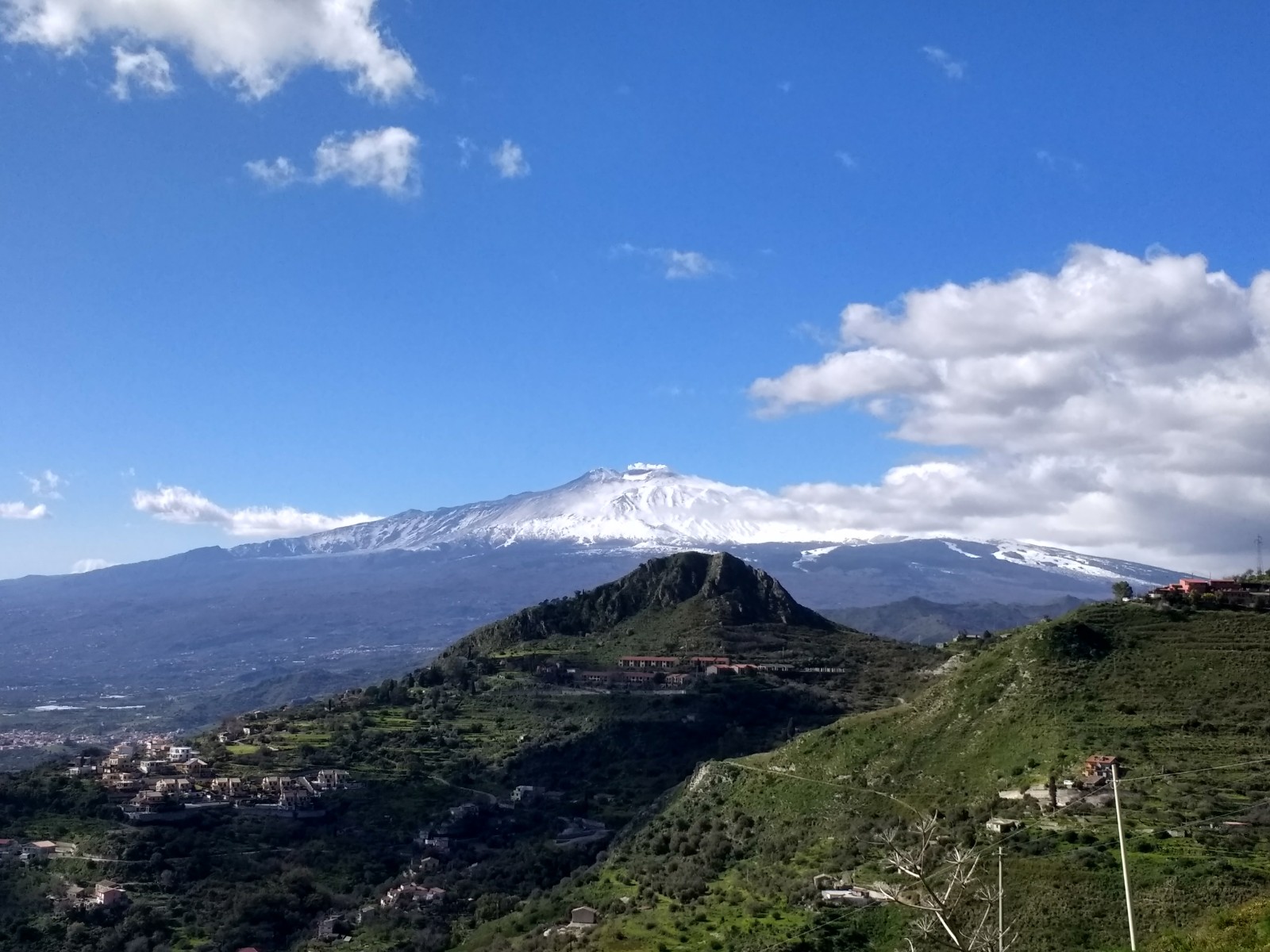
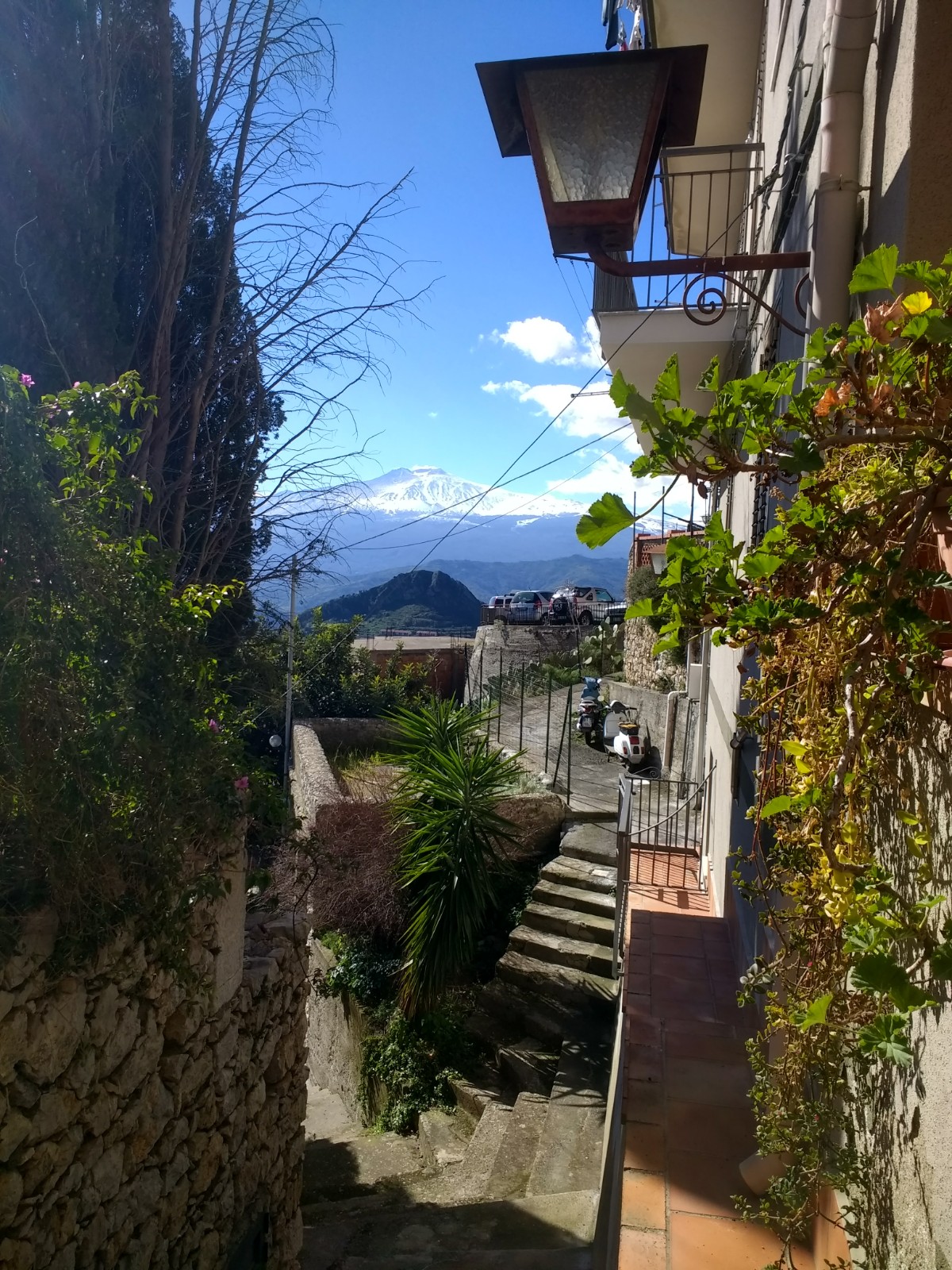
View of Etna from the path up to Castelmola
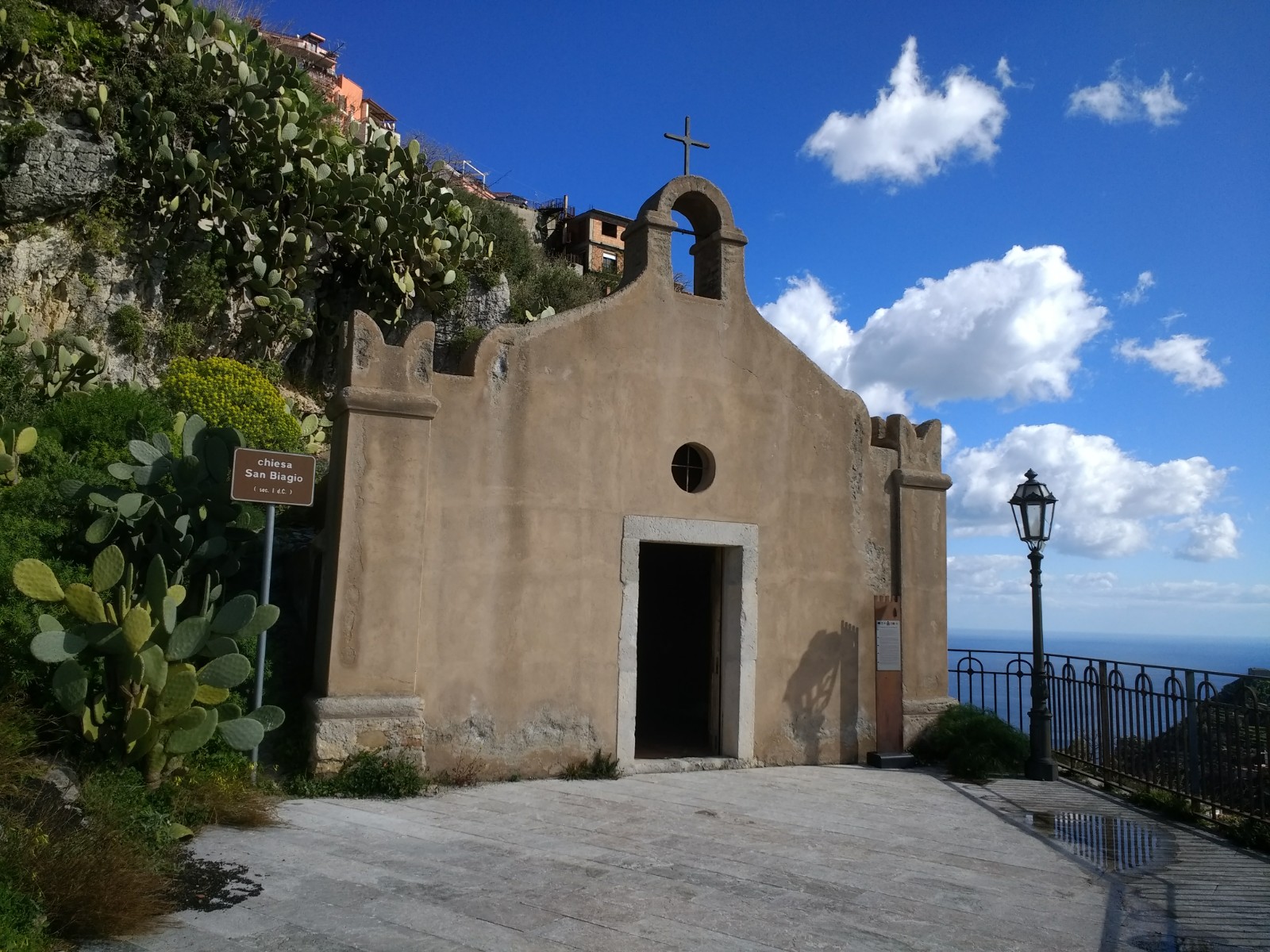
MarkAn unassuming little chapel halfway up the path. It is dedicated to St Biagio who brought Christianity to Taormina and was the first church built in Castelmola.Castelmola
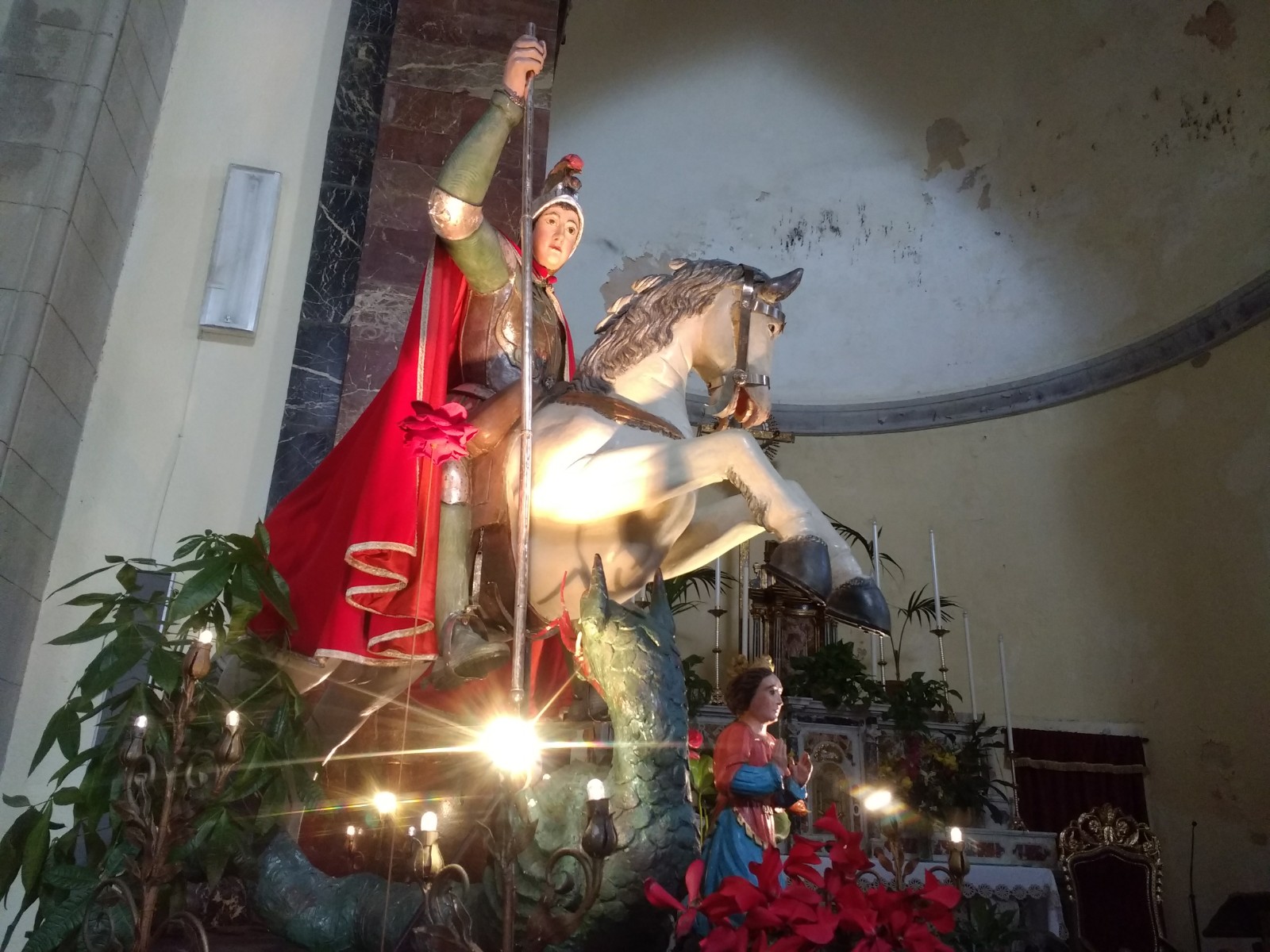
St George and the Dragon, Duomo, Castelmola It’s amazing how even small villages all have a duomo.
It was a lovely walk though, up what had once been a mule path, with views of Etna across the valley. We had lunch in a taverna filled with symbols of a part of the male anatomy, an oddity started by the present proprietor’s grandfather.
View of Etna from Castelnova
After lunch we came across a lady who was battling up the road to return to her car, but was defeated by the wind. Mark was a gentleman and ran after her scarf which prompted a flood of Italian from her before she realised we didn’t understand her.
Not much English is spoken in Sicily which is good as we are forced to use our (limited) Italian.
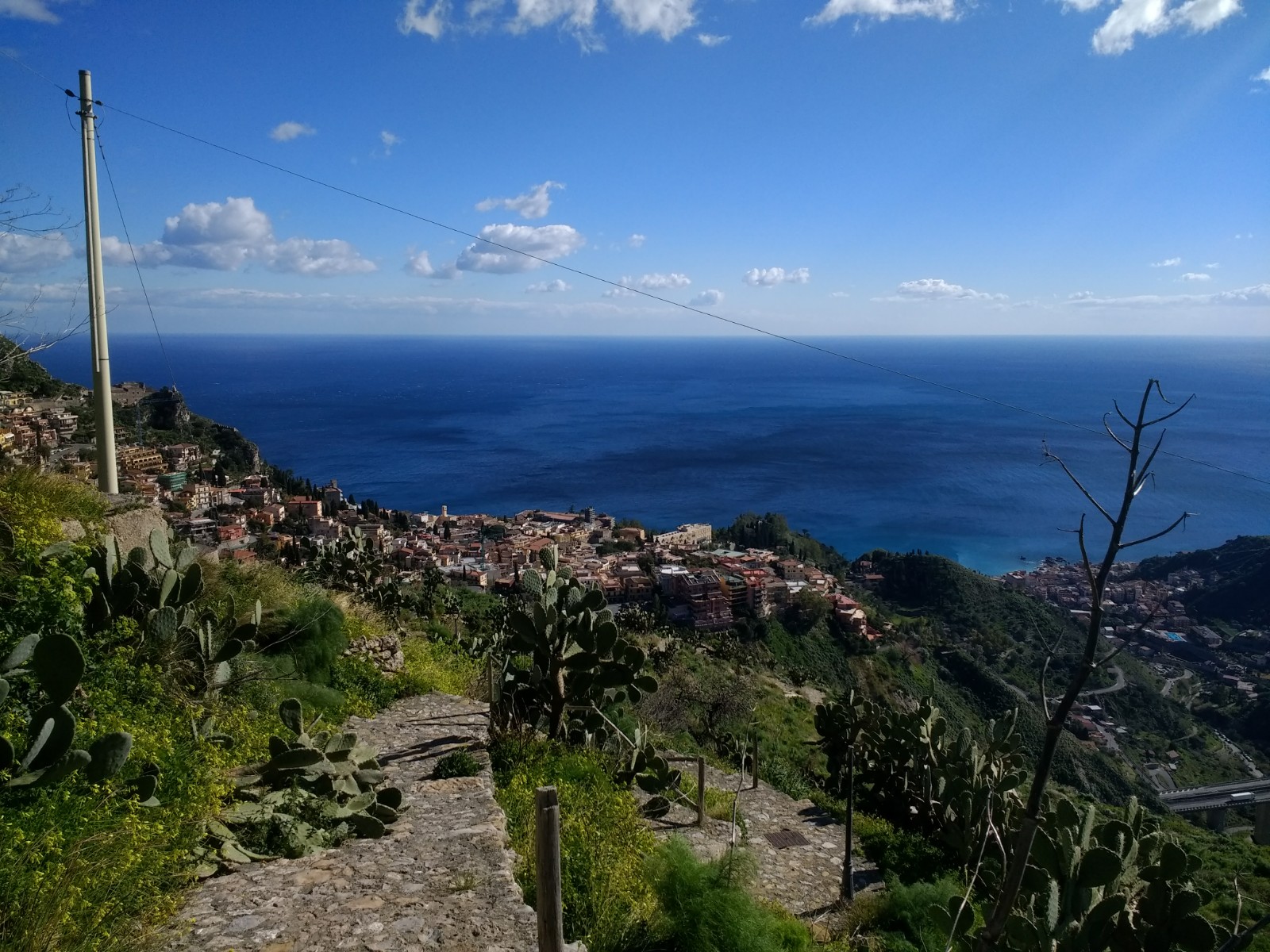
Walking down from Castelmola with Taormina in view
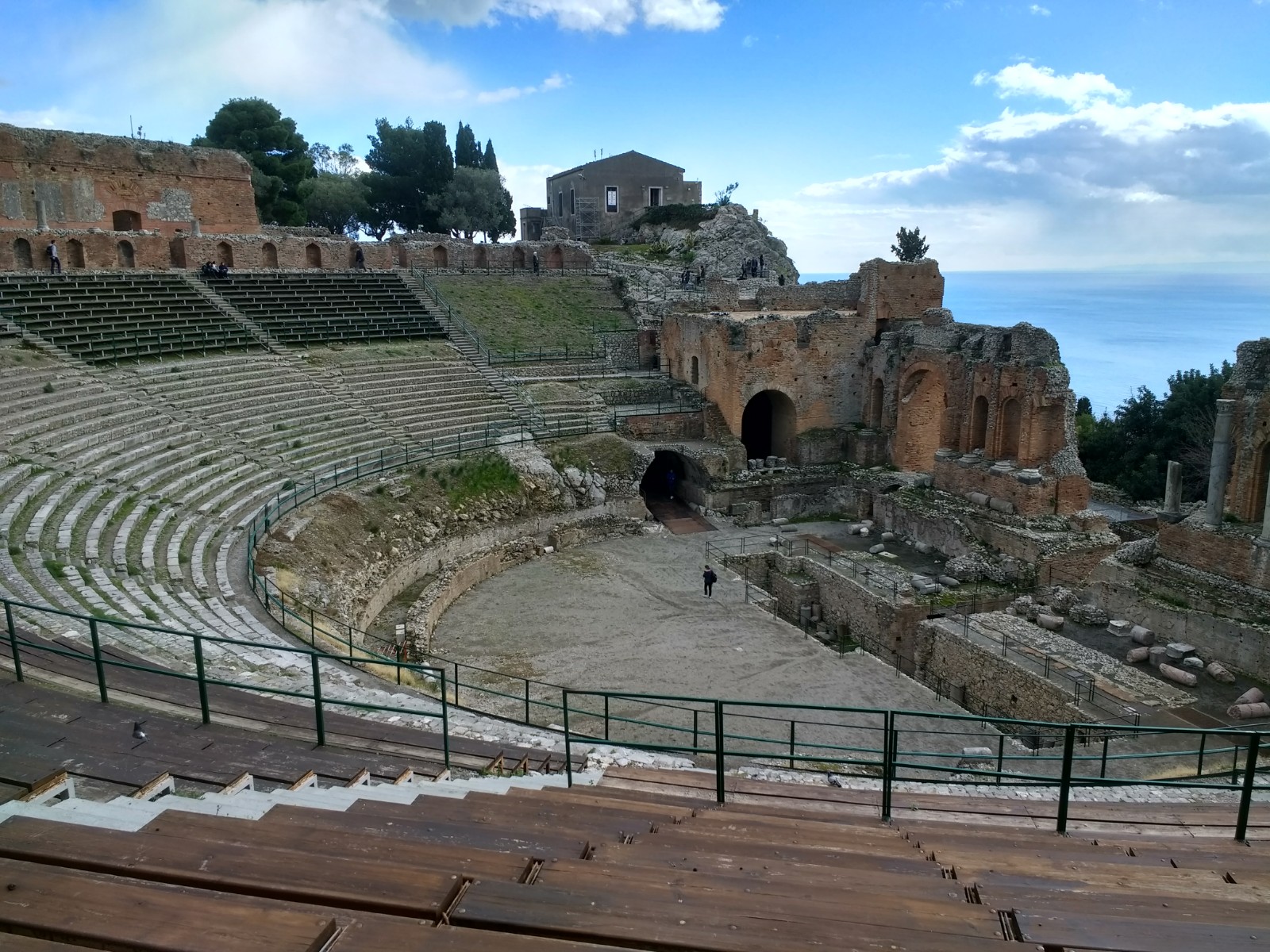
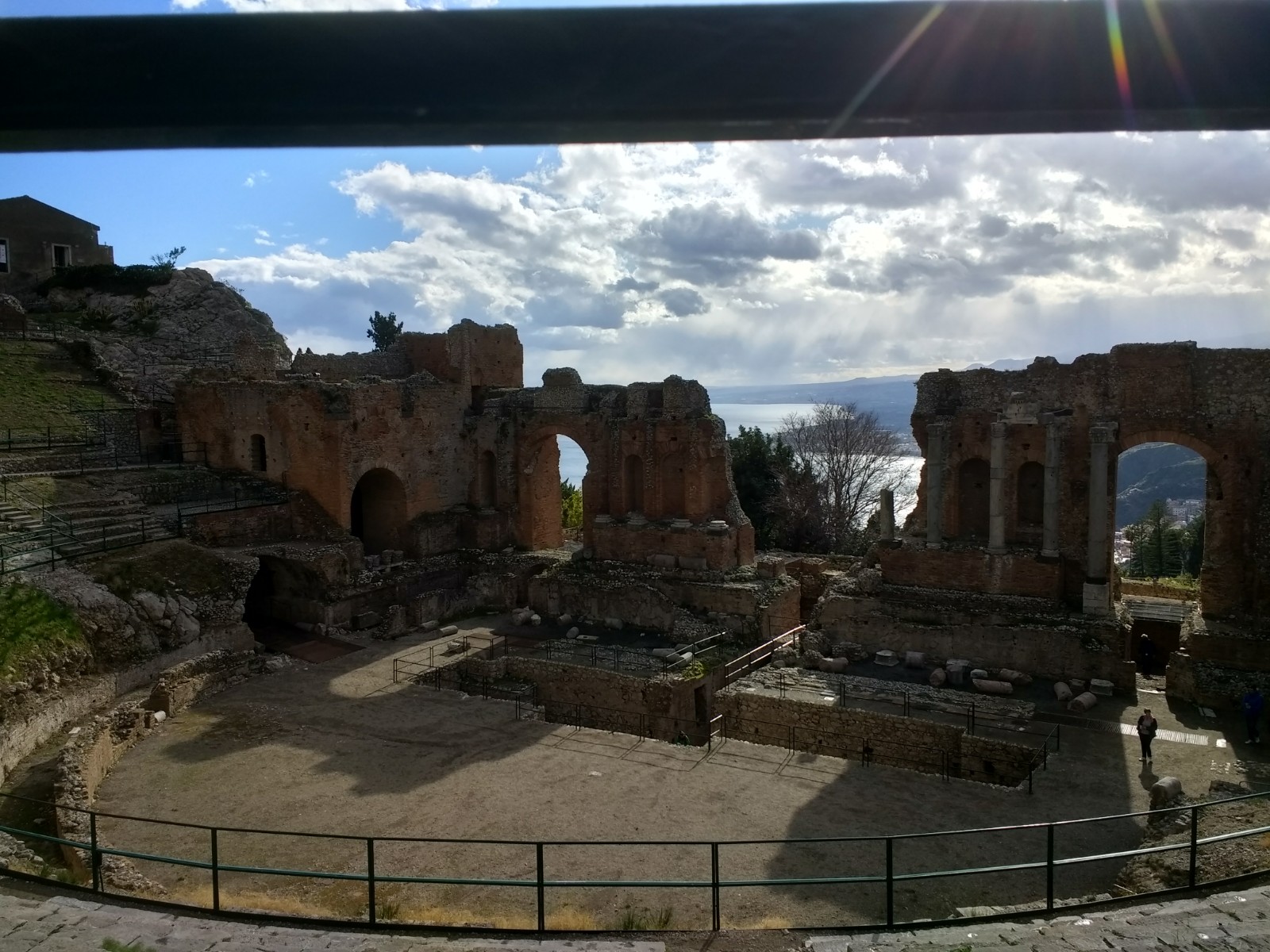
Taormina’s main claim to fame is its ‘Greek’ theatre on a high promentary overlooking the sea.
Greek Theatre, Taormina
To call it a ‘Greek’ theatre is not strictly accurate, as the structure that you see today is mainly Roman. It is in a stunning location and it must be marvellous to attend one of the performances that is put on in the summer. Andrea Bocelli is due to sing here in August.
If the performance isn’t up to much, you can always look at the view.
The apartment we are staying in has the advantage of a washing line outside our bedroom window. One load of washing dried while were out and I have a second load to put out now.
This is a real boon to us as, since Palermo, we have had to dry washing inside ‘Chinese laundry’ style draped on any available rail, hanger or on our elastic line strung between whatever hooks/knobs we could find.
On our walk back from Castelmola we were afraid we might find our washing had blown away, leaving Mark without any shirts at all, apart from what he was wearing.
Sitting outside a cafe having breakfast this morning it was almost too hot in the sun (and I was wearing a t-shirt). This is not something we do very often, but we’d run out of cereal. A popular Sicilian breakfast is brioche and granita (similar to Sorbet, I think, but crunchier) but cappuccino and croissant (which very confusingly is ‘cornetto’ in Italian) did nicely for me.
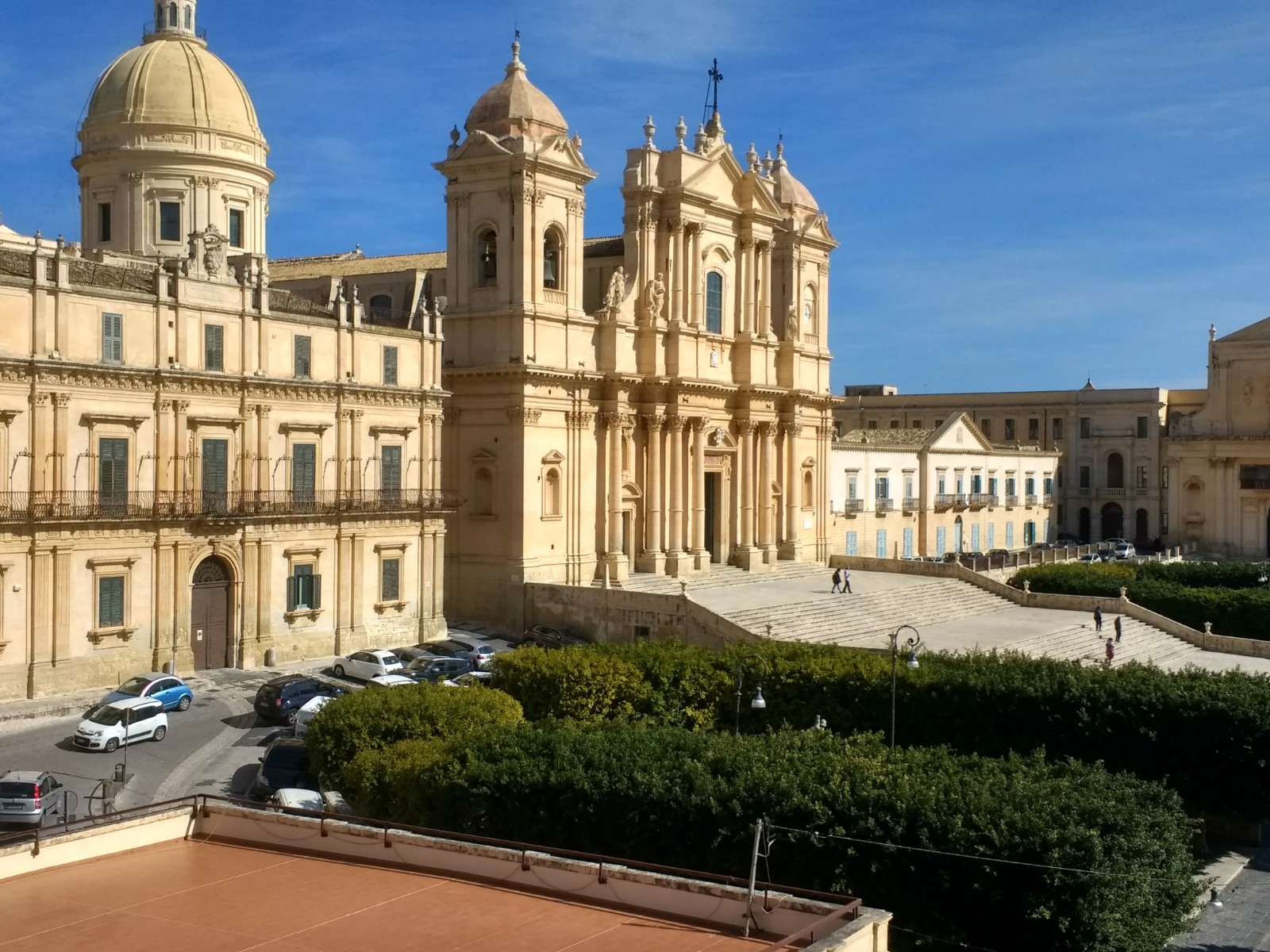
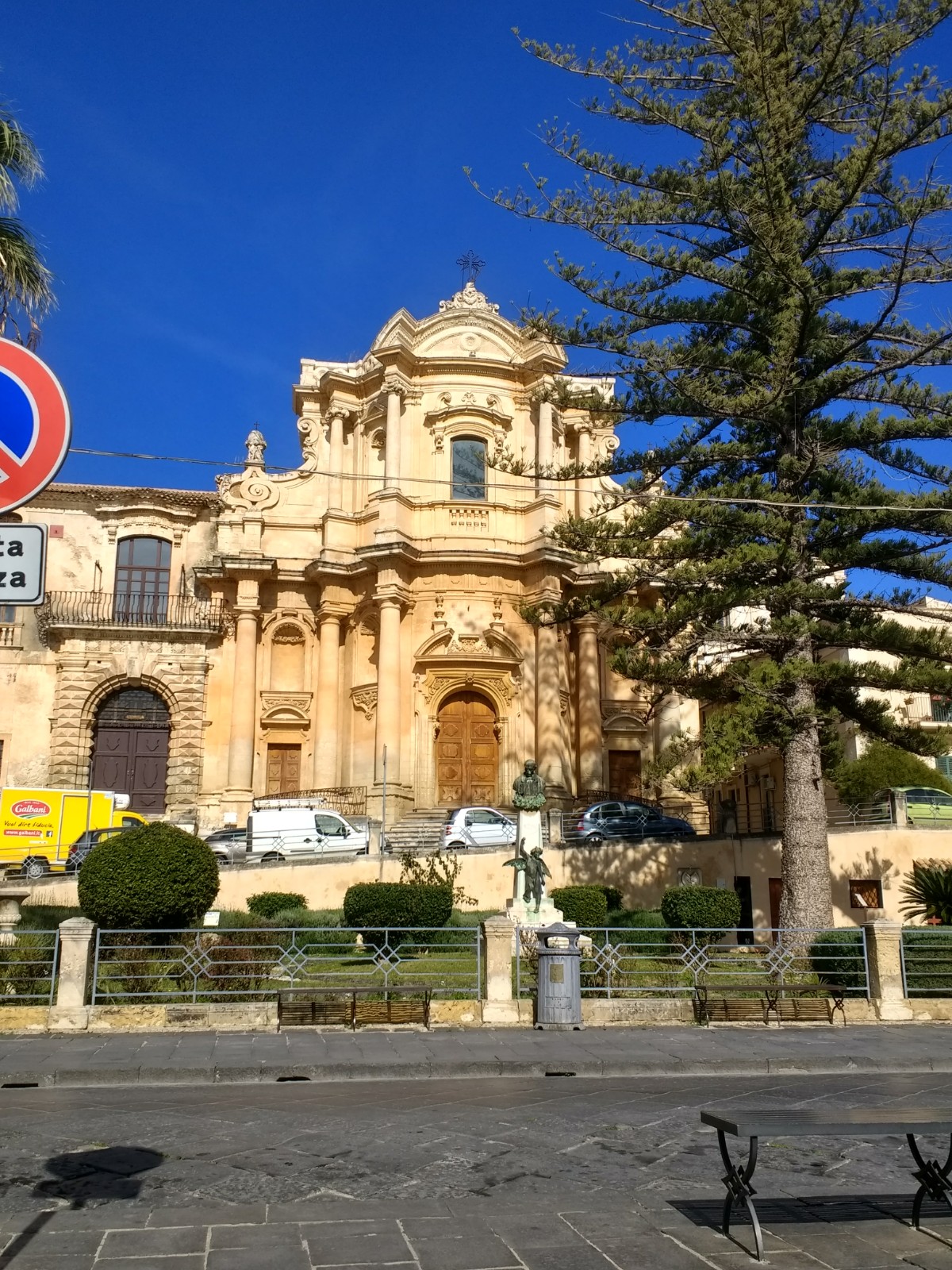
We went off to Noto today, on a single-carriage narrow-gauge train. Noto is one of three towns in the south-east of Sicily which were destroyed by an earthquake in 1693. They were re-built in the eighteenth century in a style known ‘Sicilian Baroque’ out of a soft honey-yellow limestone which could easily be carved.
Noto CathedralChiesa di San Domenico
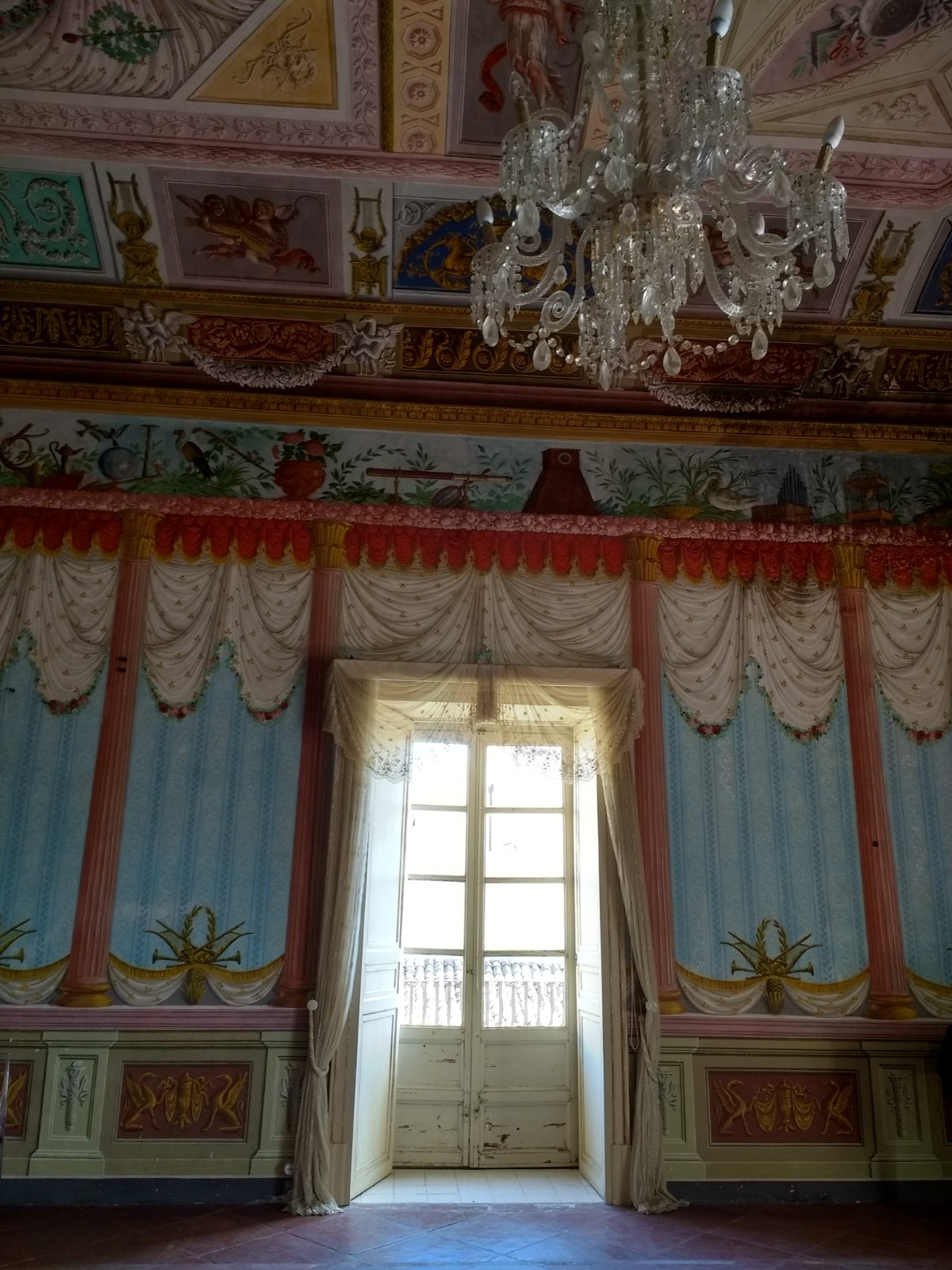
When we arrived in Noto we were taken aback by the lack of crowds and the number of notices in restaurants and shops saying they were, ‘Chiusi per ferie’ (Closed for the holidays). The lack of activity rather made us feel we were walking around a film set. However, we wandered into some churches, through the streets and eventually into a Palazzo, part of which was opened to the public in 2004 when the last owner passed away.
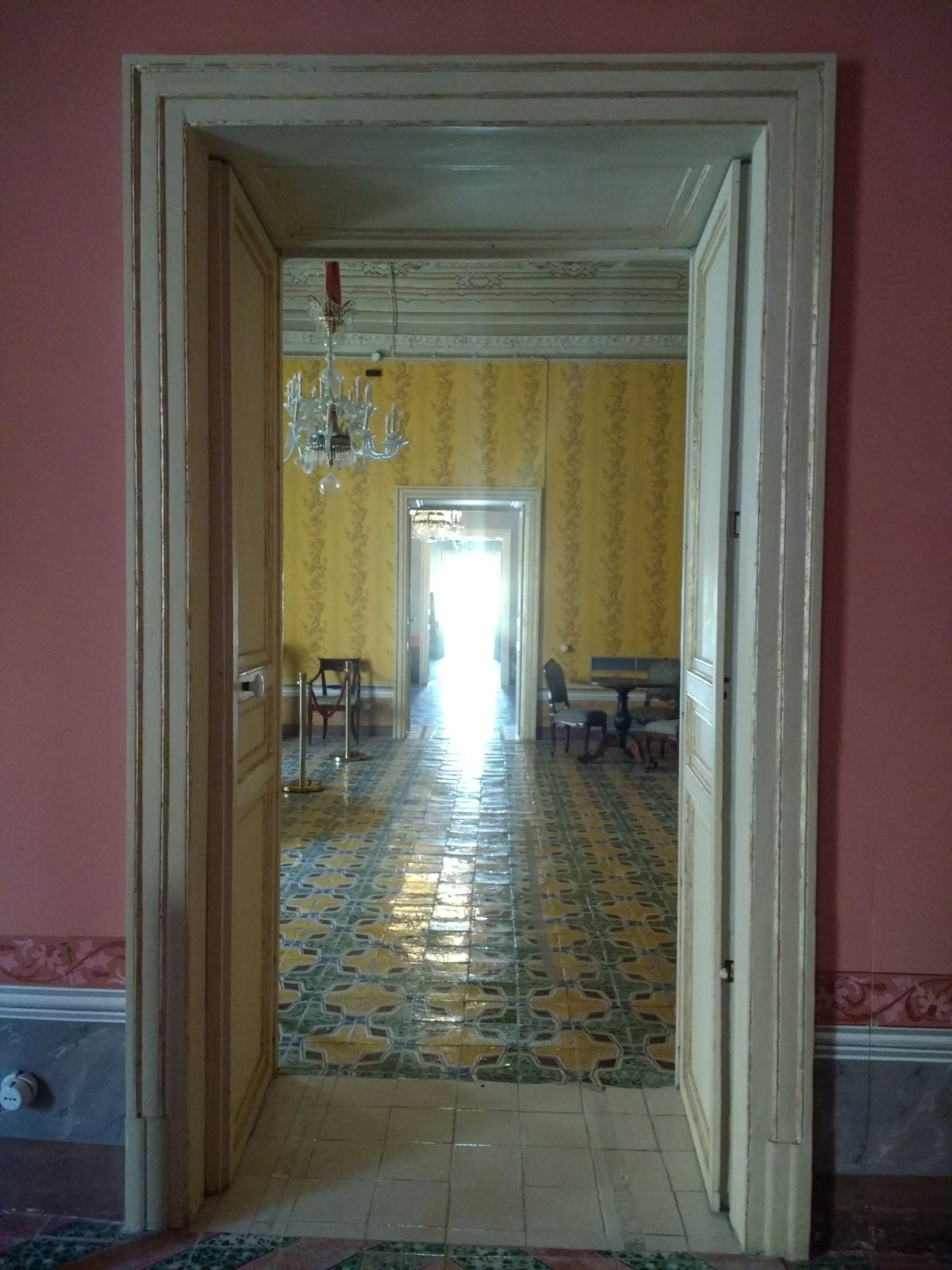
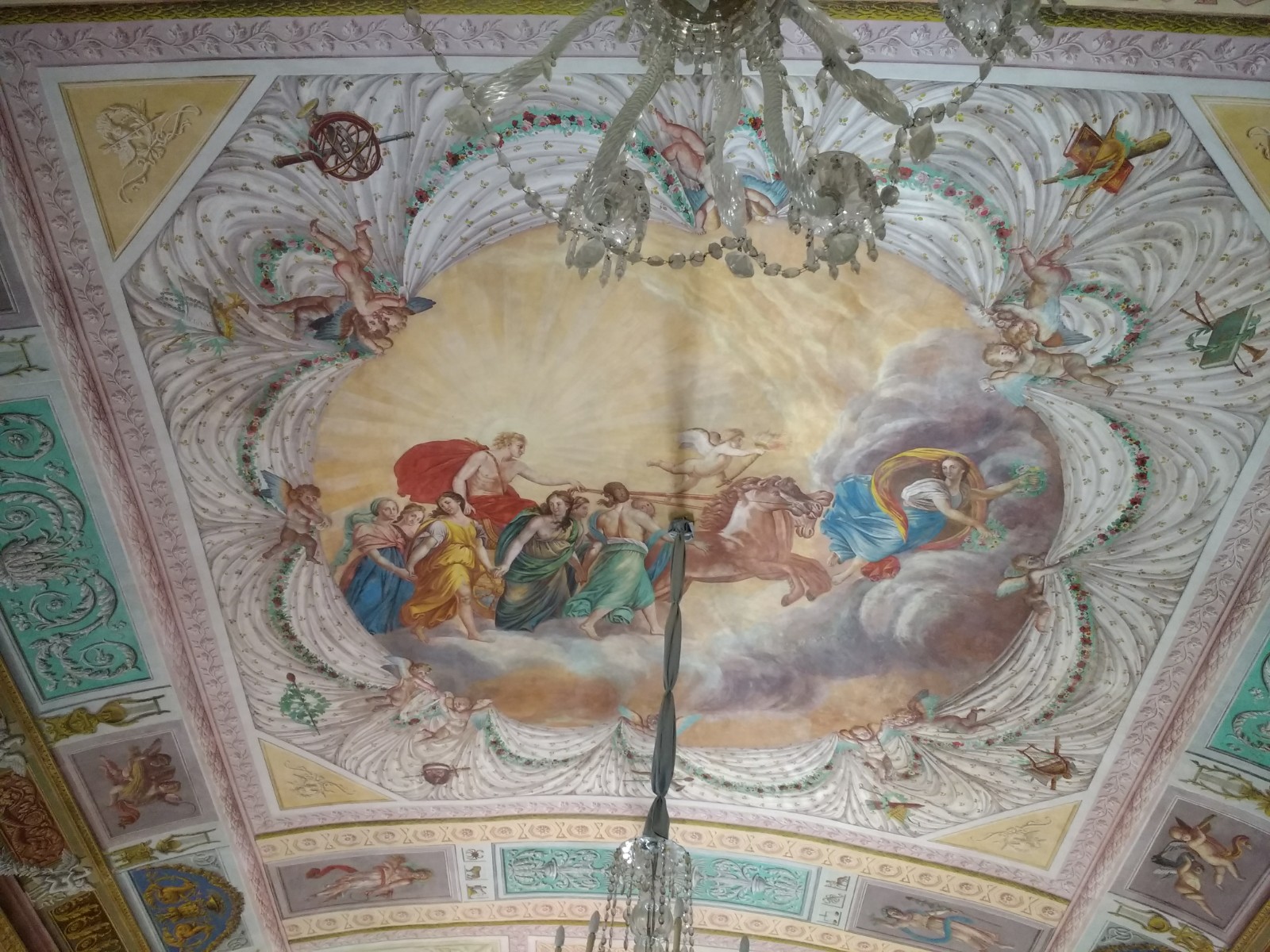
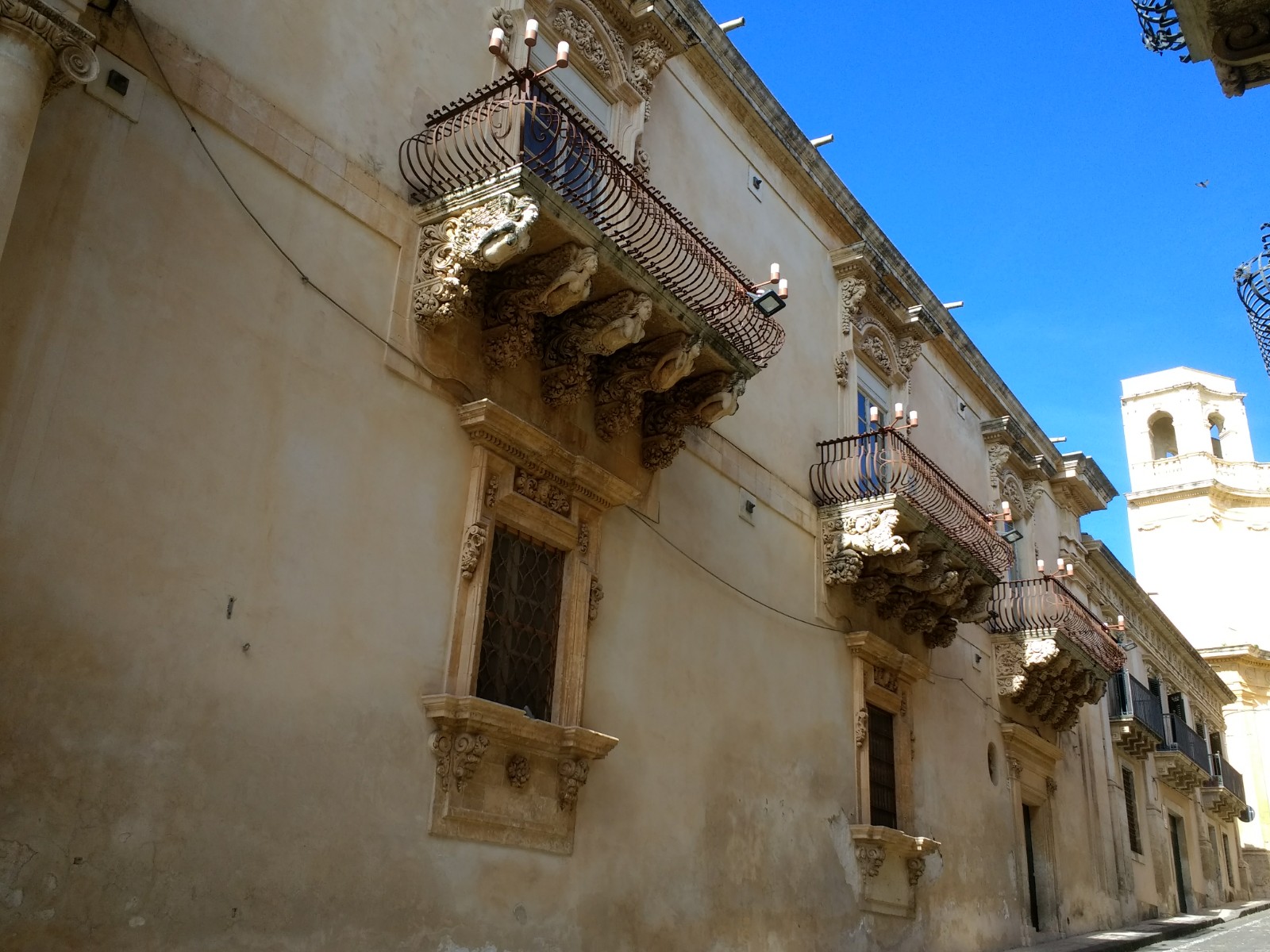
Painted walls at the Palazzo Nicolaci di Villadorata Faded grandeur at Palazzo NicolaciBallroom ceiling, Palazzo NicolaciBalconies, Palazzo Nicolaci
Walking around, you could see how grand the Palazzo had once been, but now it looked rather ‘lived in’. The walls, painted to look like marble, were chipped, which rather gave the game away. The tiled floors had traces of adhesive where carpets must have been laid on top at some stage. I was longing for a heritage organisation, like the National Trust, to take it over and bring it back to its former glory, but sadly I don’t think there is the money in Italy, let alone in Sicily, to do that.
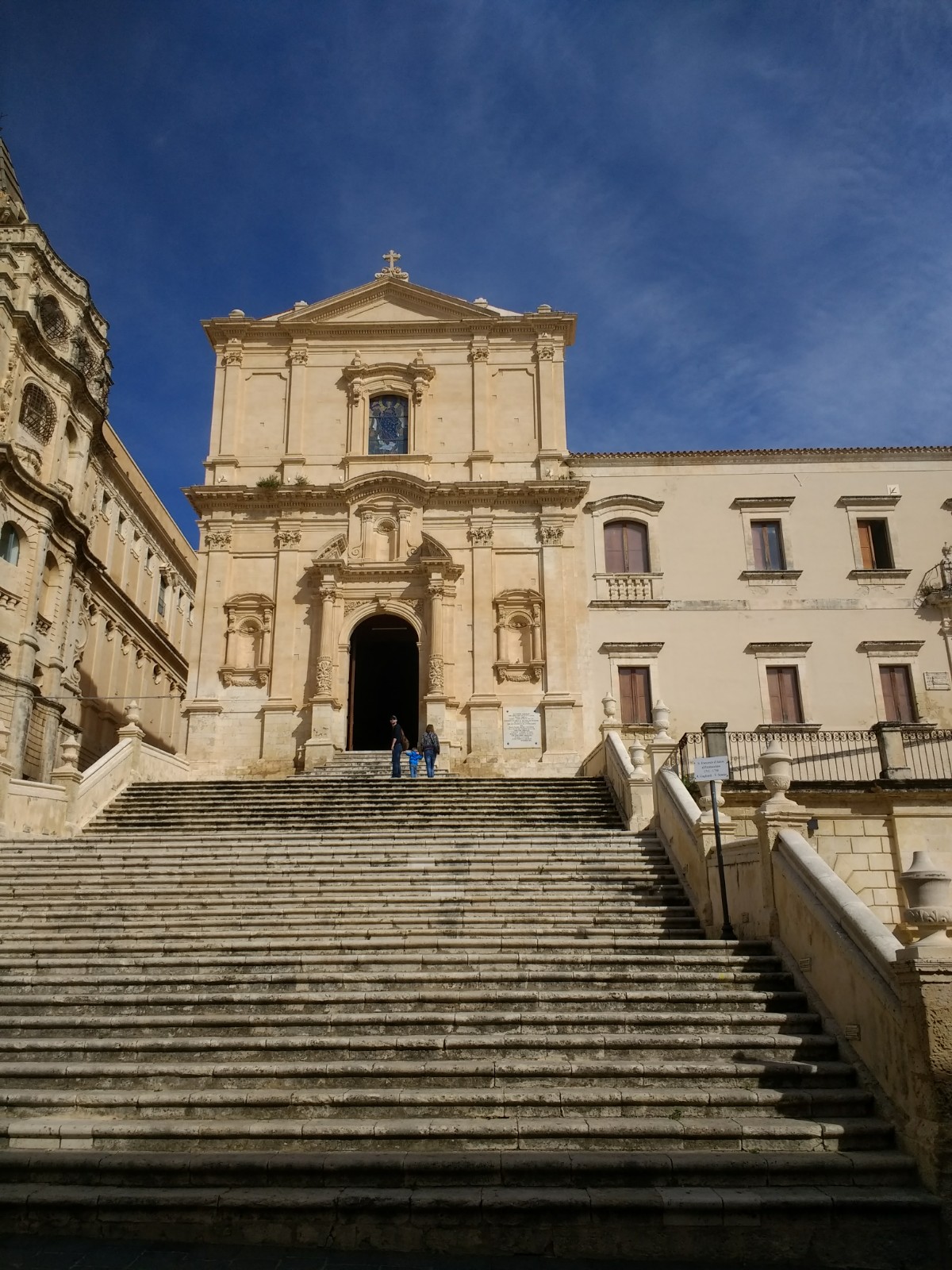
Chiesa di San Francesco
Ice-cream in Noto has the reputation for being the best in the world, but sadly both establishments particularly recommended were closed, so that is a claim we will just have to test on a subsequent visit to Sicily. For us, the best ice-cream in Italy remains at a gelateria in Rome we were staying near last year.
A word about the train – we nearly didn’t get to Noto today. The departure board at Siracusa wasn’t working, so Mark asked the man in the ticket office which platform the train for Noto left from. In reply he showed two fingers, not to make a rude gesture, but to denote platform two. We trotted over to platform two.
As the time come for our train to leave, we were still waiting at an empty platform. Another station employee (not the morose gentleman selling tickets) spotted us and asked where we were going. We told him, and he indicated that we were on the wrong platform and we would have to return from where we had come. We returned via the underpass. When we emerged, he indicated a platform which we had not spotted before, also called ‘two’, but with the additional word ‘ovest’ (west) complete with a waiting train.
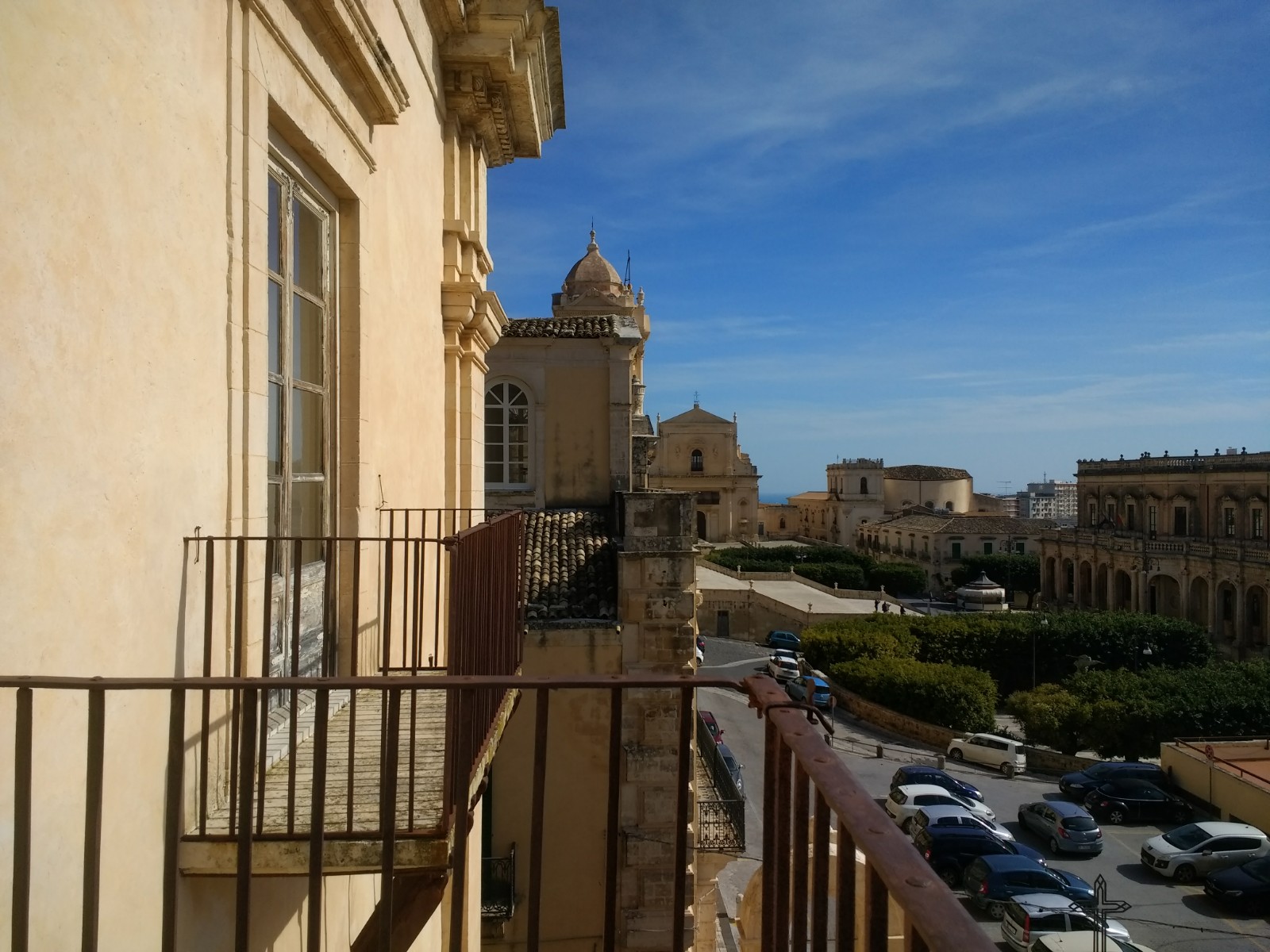
View from a balcony at Palazzo Nicolaci. You can just see the sea.
When we came back to Noto station, we were expecting to buy our return tickets from the machine in the usual way, but the waiting areas and ticket office were all closed (This was before 4pm when it seems that most Sicilians like to be horizontal). We thought there was nothing for it but to buy our tickets on the train.
As we explained to the guard on the train that we had been unable to buy our tickets because the station was closed, he seemed rather unhappy, but not with us. Perhaps the station should have been open. The guard (who also checks tickets) did not issue us with tickets, as we had been expecting, so we got a free ride home. We have found that a lot of time in Italy if a problem is perceived as being too difficult to deal with, nothing is done about it.
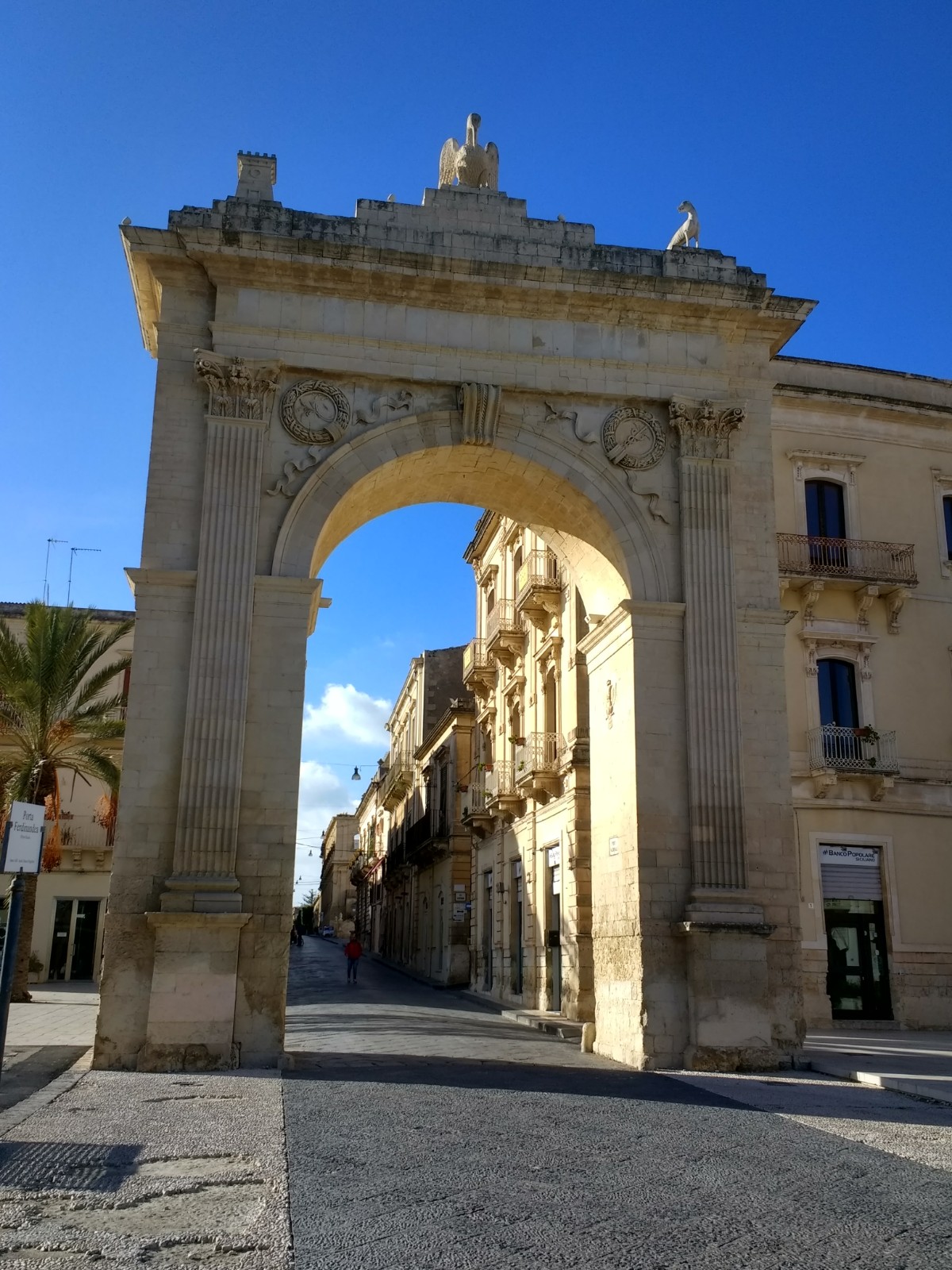
Porto Ferdinandea, Noto
Finally, thank you so much for all your comments on the blog. Please do keep them coming as, for me, they are what keeps the blog alive.
Coupled with superb weather today there were only a few other people at what is a top tourist site. I wouldn’t have chosen to come to Sicily at this time of year, but there are definite advantages. It was warm enough for us to be in shirtsleeves although the Italians were still in their coats.
The open-top hop on/off bus took us to the Archeological Park. We were the only takers and the driver made an unscheduled five-minute stop halfway along as he had a rendezvous with his sweetheart. We wondered if she would be there again an hour later on his next circuit.
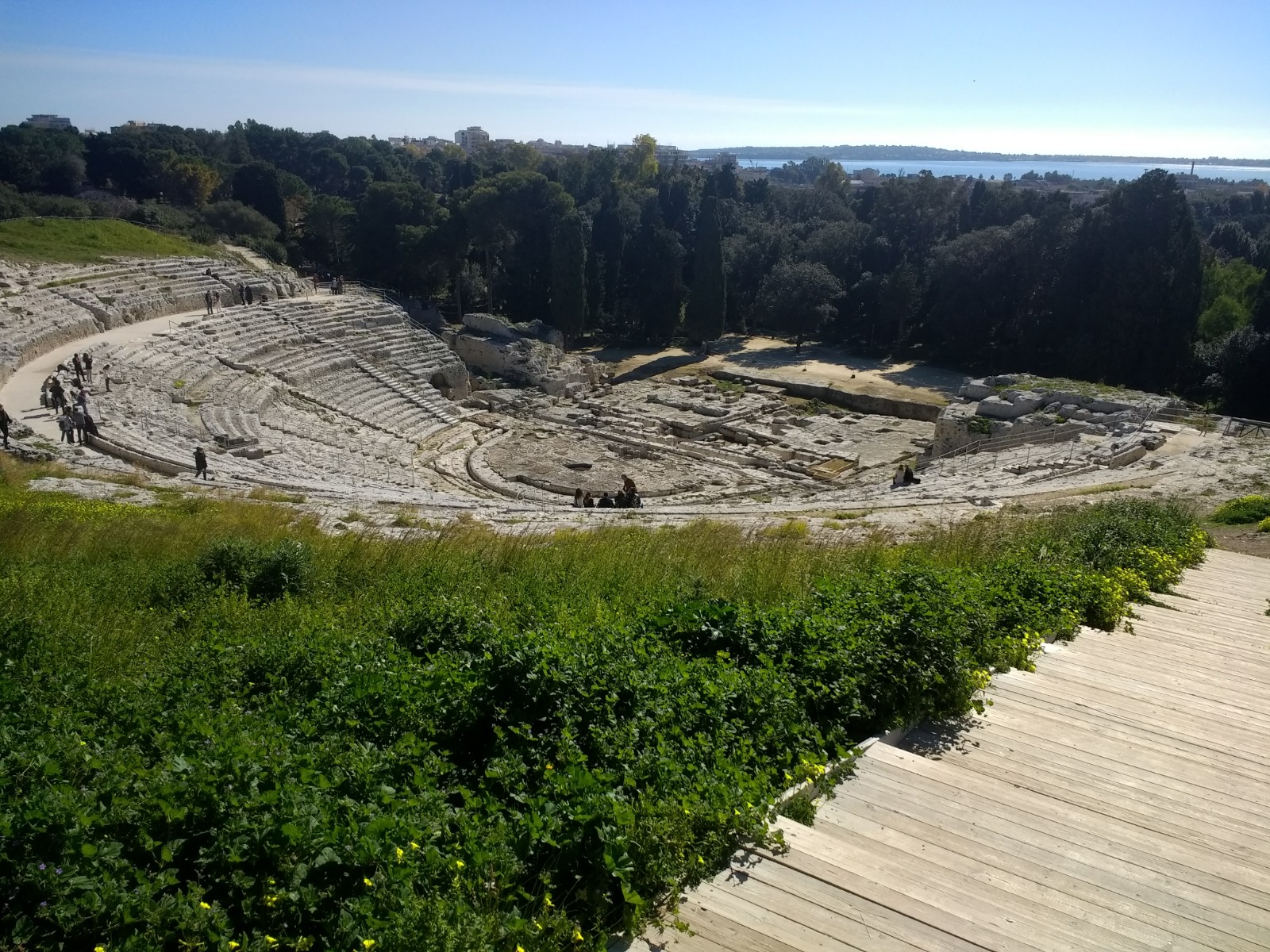
Most impressive at the Archeological Park was the Greek Theatre built in the fifth century BC. It had 67 rows of seating and held 15,000 people before the time of amplification. Of course, the Greeks were masters of acoustics, but if I had been sitting in the cheap seats, I think I would have been glad of an ear trumpet as well as opera glasses.
Greek Theatre, Siracusa I have taken the photograph from where we reckon the ‘cheap seats’ would have been. A lot of stone has been removed by later incomers.
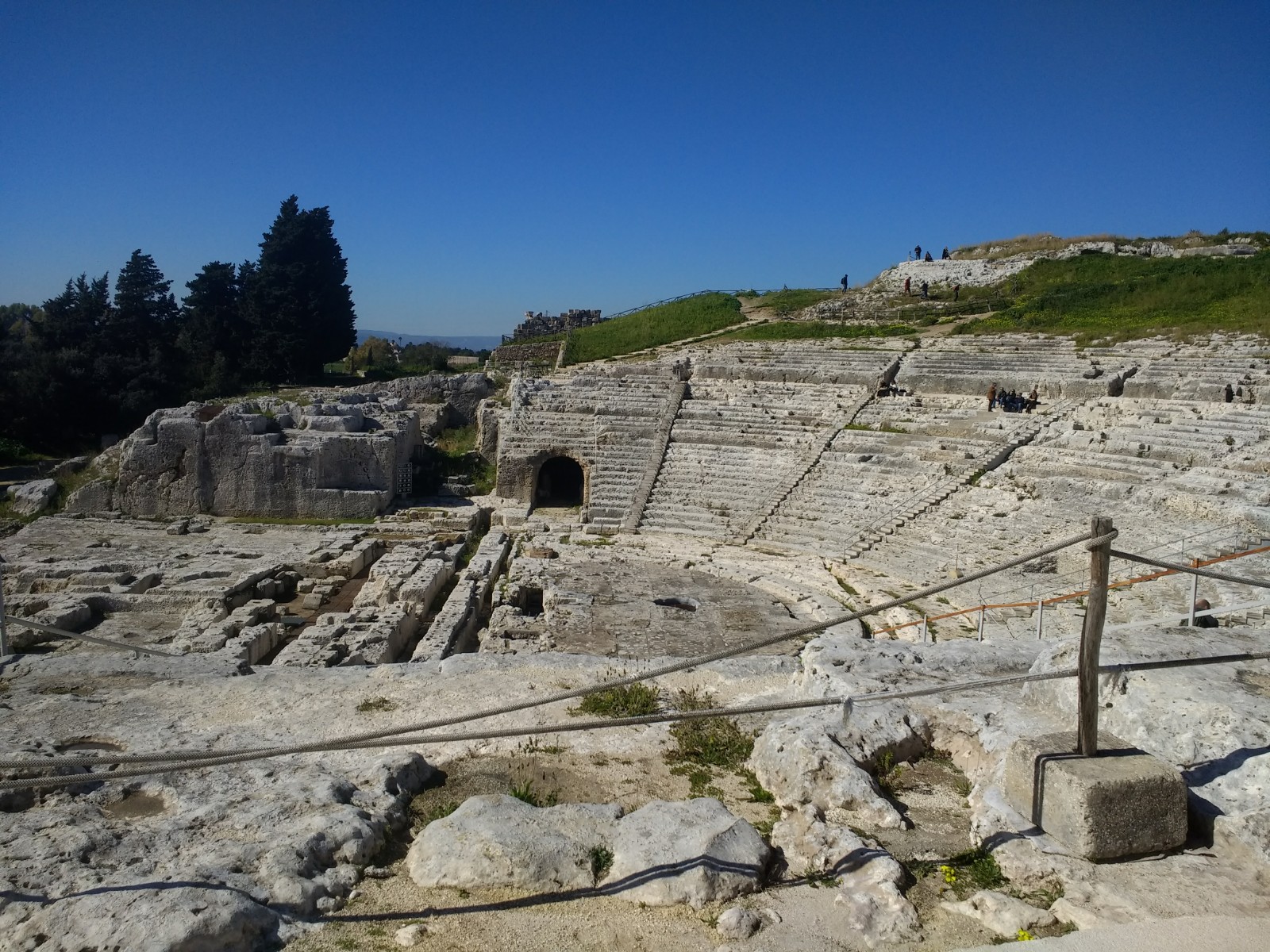
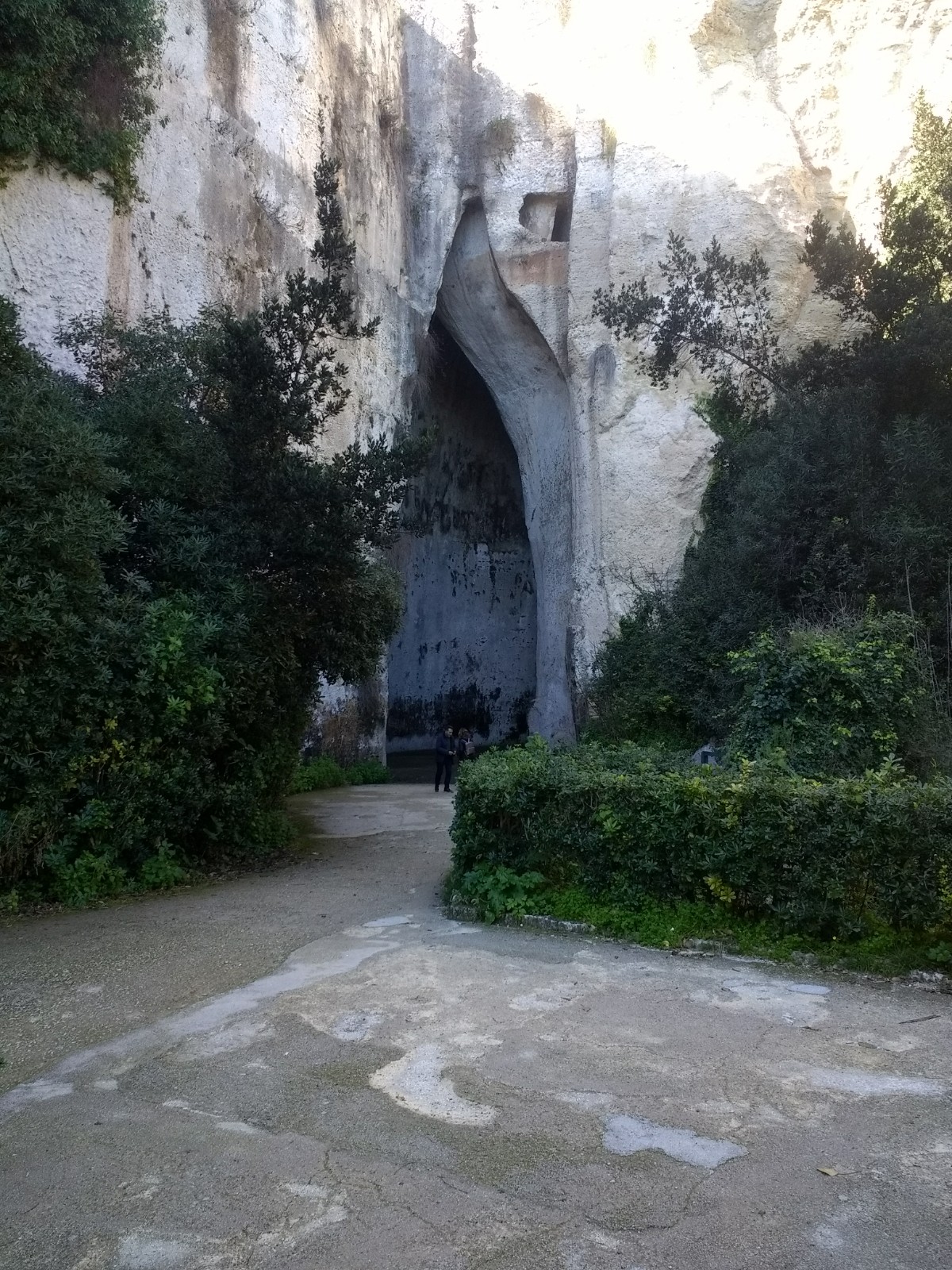
As well as the Roman Amphitheater we saw an opening in a rock face known as ‘The Ear of Dionysus’. When you hear the name ‘Dionysus’ don’t think ‘soppy Greek god of wine’ as I did. Dionysus was a tyrant from the fifth century BC who made Siracusa one of the most powerful Greek colonies. He is supposed to have listened to captured prisoners’ talk in order to learn the enemies’ secrets.
Roman Amphitheater Ear of Dionysus
The driver of the hop on/off bus failed to make a return appearance which meant a (short) walk back to Ortigia.
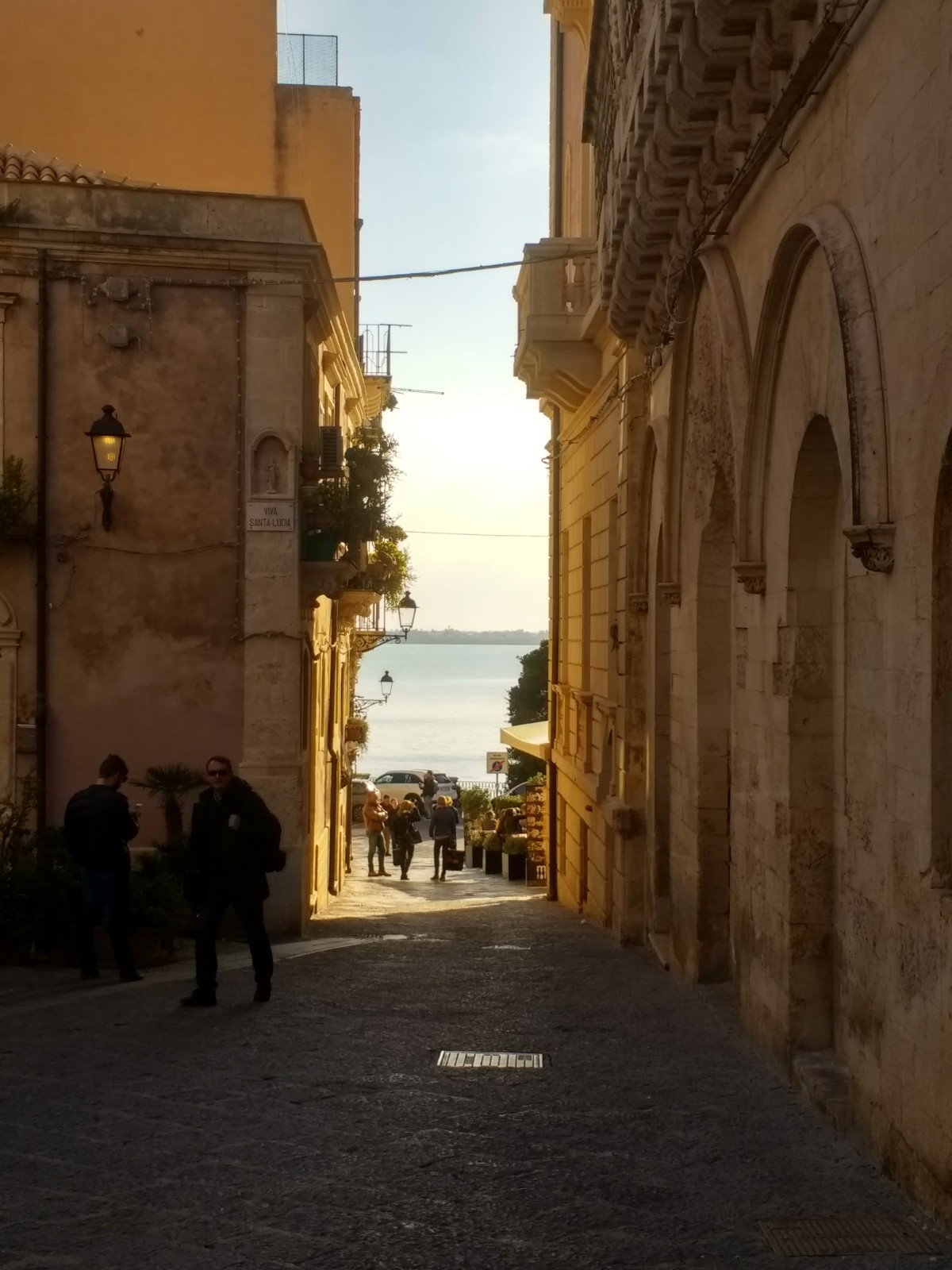
The sun brought everyone out today and newly arrived on the island of Ortigia, the old part of Siracusa, we have been in a holiday mood. For the find time since arriving in Sicily three weeks ago, people have been sitting outside restaurants, not in the clear plastic pods, but genuinely outside, in the open air.
Ortigia
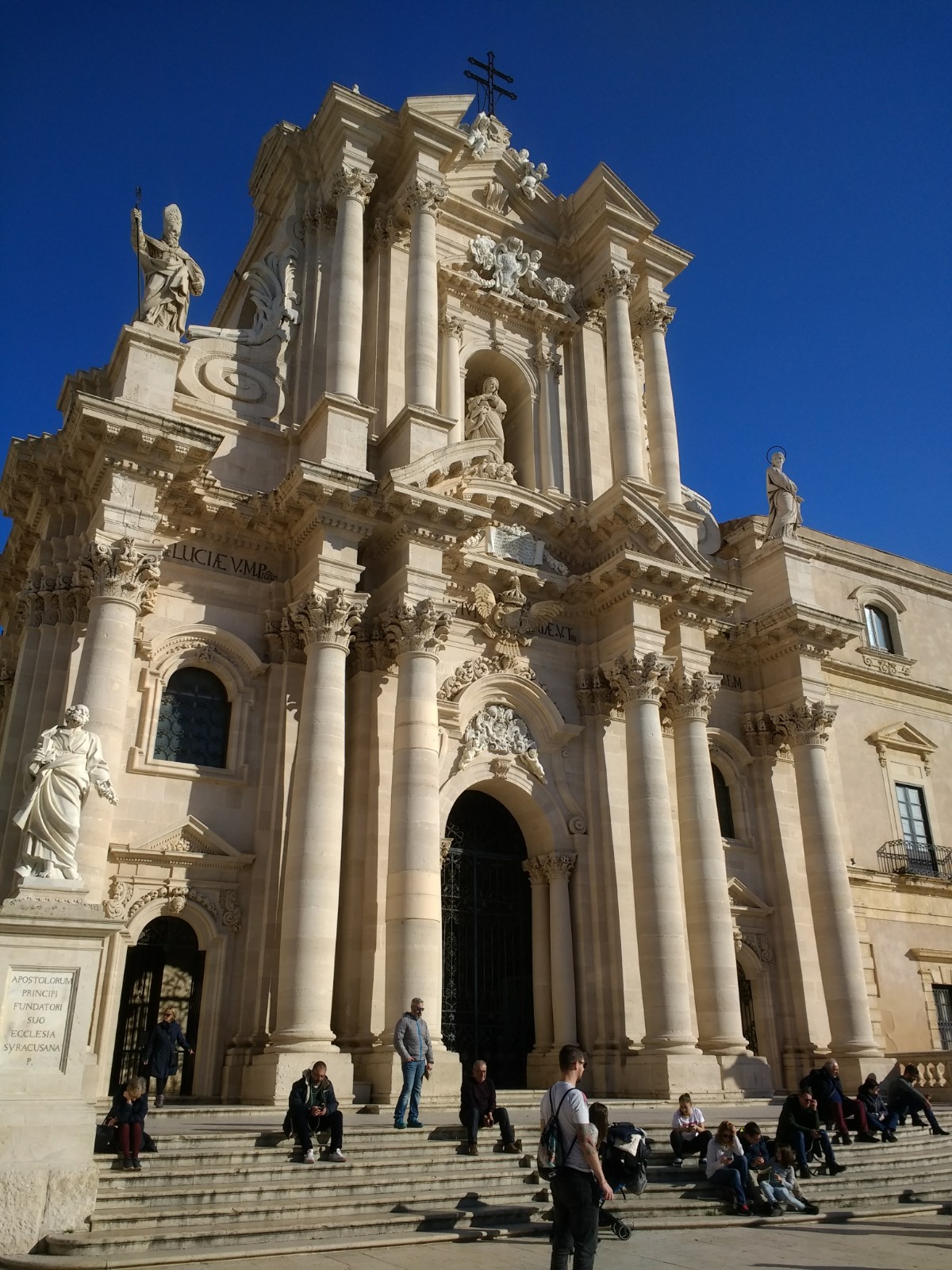
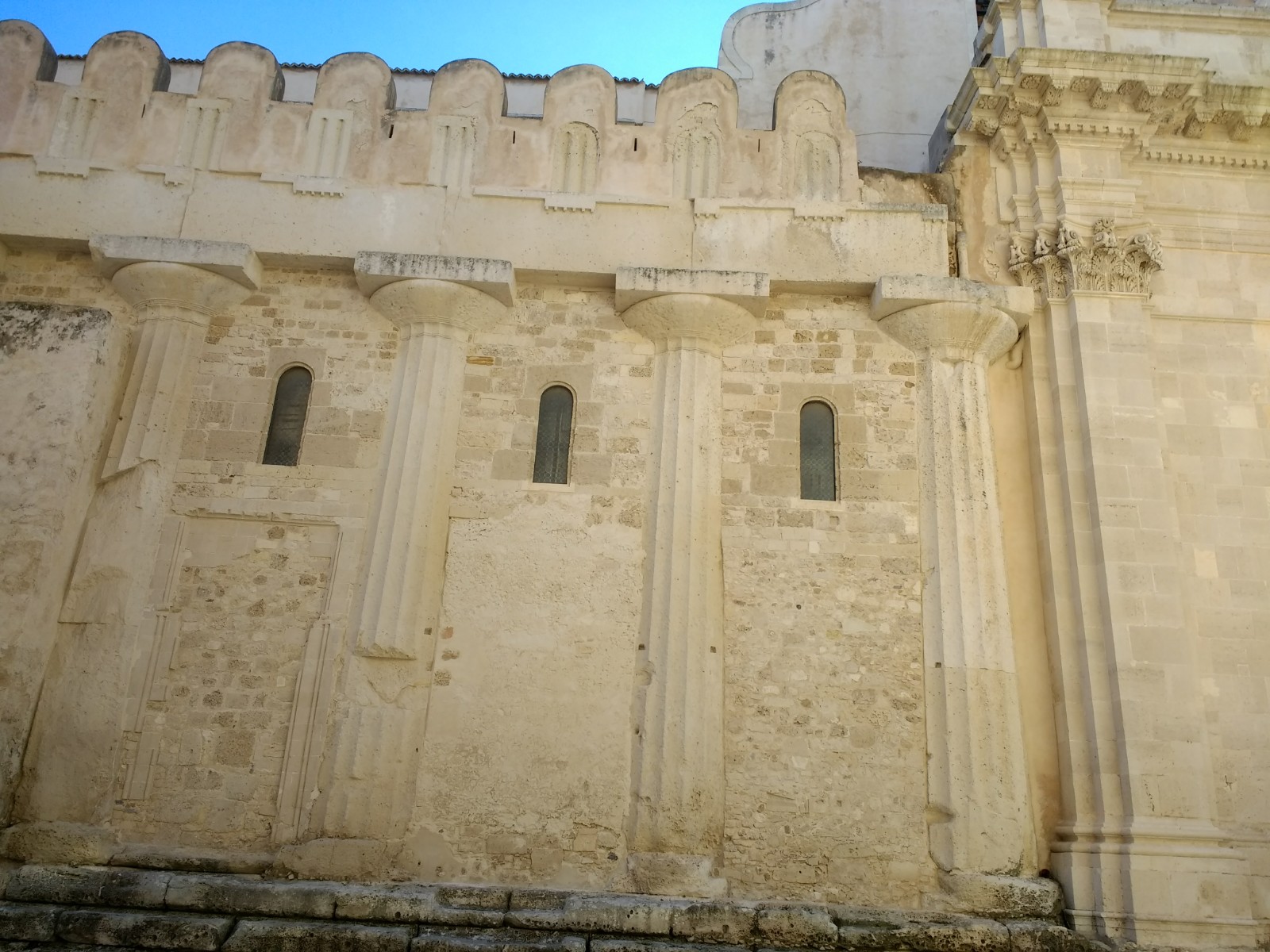
Ortigia is full of narrow medieval streets, ideal for wandering through. This we did and came to Siracusa Cathedral, built around a fifth century BC temple to Athena. When a Christian place of worship was wanted, the distance between the pillars was filled in.
The front of Siracusa CathedralThe fifth century BC pillars inside the Cathedral
We also visited Santa Lucia alla Badia and saw Caravaggio’s Burial of St Lucy, who was born in Saracusa and martyed on the spot of the present-day church. St Lucy is the patron saint of Saracusa and there is much celebration on December 13 each year when a silver statue of her (and one of her bones) is paraded through the streets.
Having lived in Sweden for two years (a long time ago) I knew of a St Lucy, but was it the same one? It seems that the tradition of the saint was taken to Scandinavia by missionaries spreading Christianity, but there a different part of her story is celebrated, one that fits in nicely with the celebration of light in the middle of the dark north European winter. There, a girl wearing a white dress and a crown of candles on her head, hands out baked goods in memory of the saint taking food to Christians hiding in the catacombs (wearing candles on her head to leave her hands free).
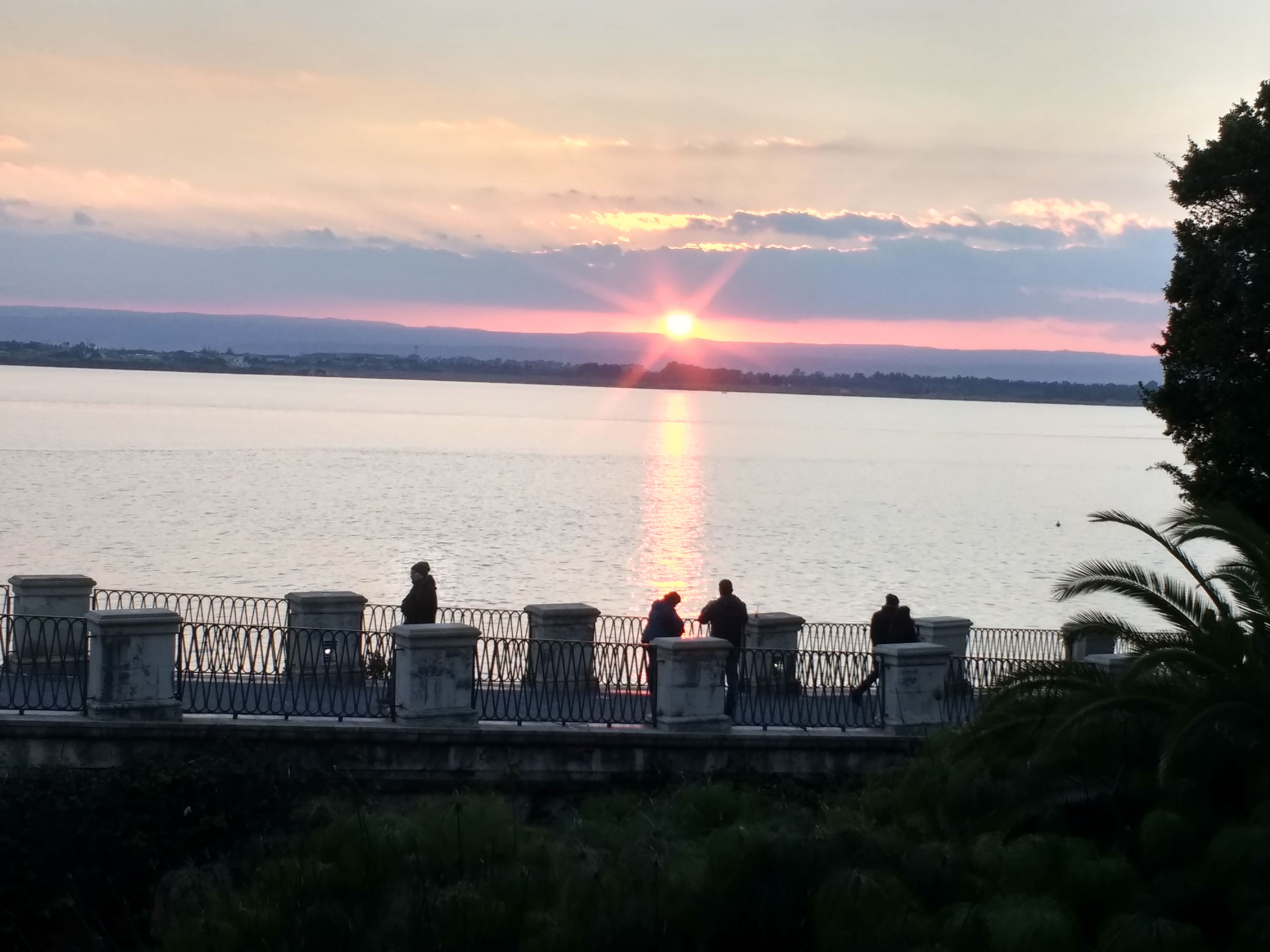
Still enjoying the outdoors, we finished our perambulation with a drink watching a view of the sunset. I briefly forgot that this is February and it was only half past five.
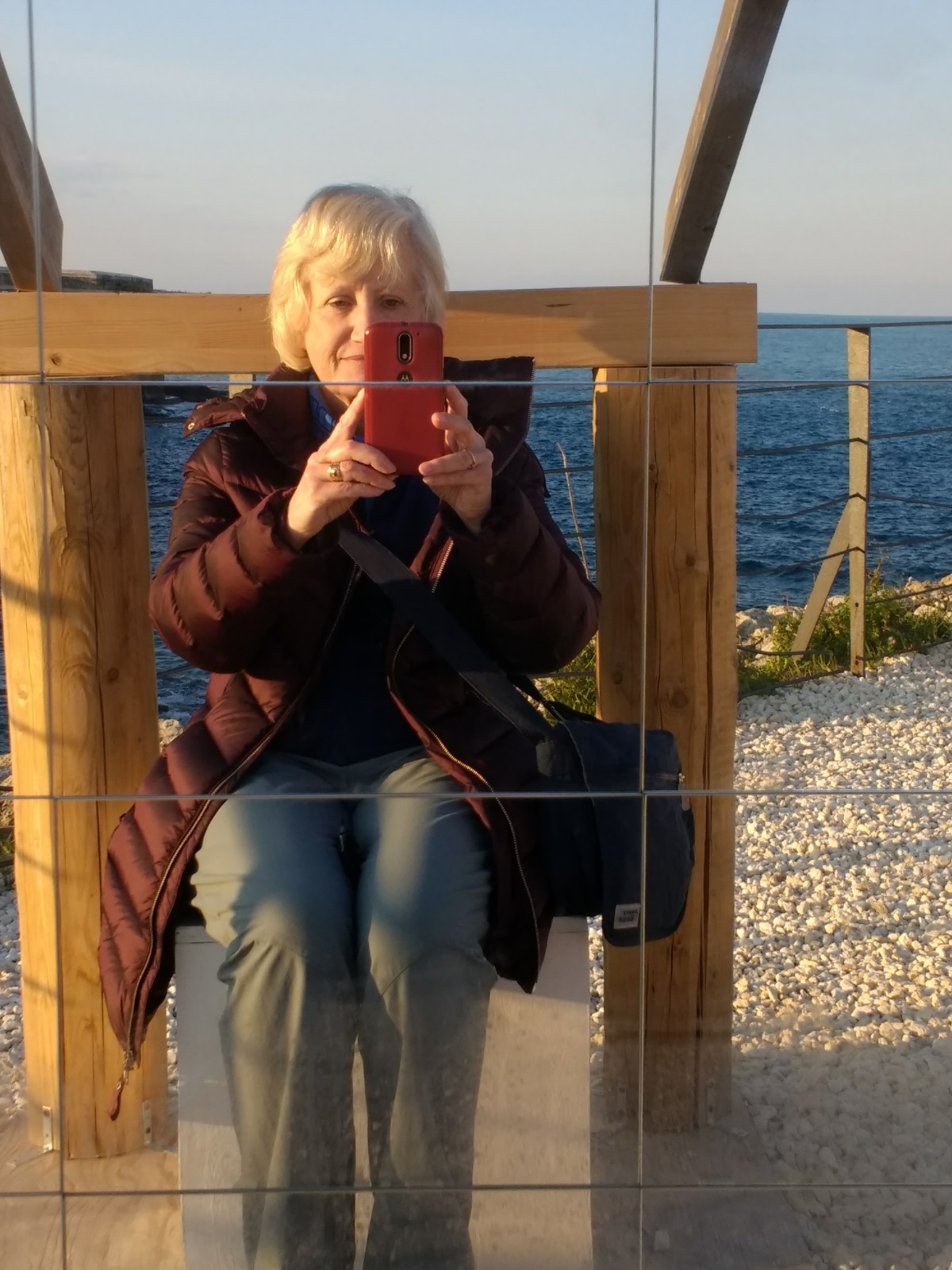
SunsetA Selfie Mirror (Perhaps I ought to buy a stick).
We gave up the hire car today as we can travel the rest of the way round Sicily by train. When we took the car eleven days ago we were asked if we wanted to rent snow chains at a cost of €7 a day. We thought, “Really, in Sicily?” Like a lot of things here, it is difficult to find out what the law actually says, but I have read that you should have snow chains in your boot if you travel between 15 November and 15 April. Elsewhere I’ve read you only need snow chains if it snows. If you don’t comply, the police can carry out on-the-spot fines. We didn’t take up Avis’ offer, nor were we stopped.
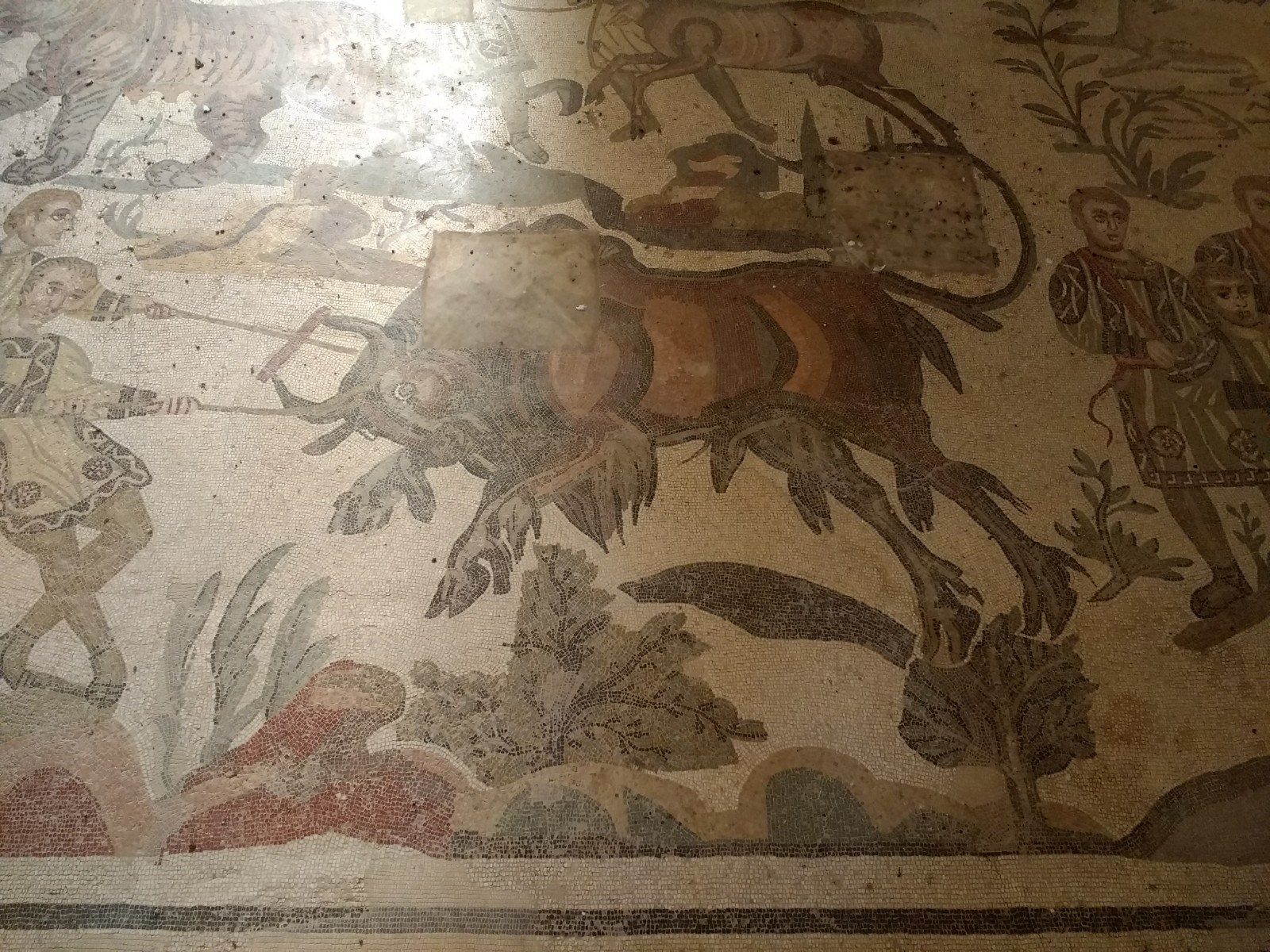
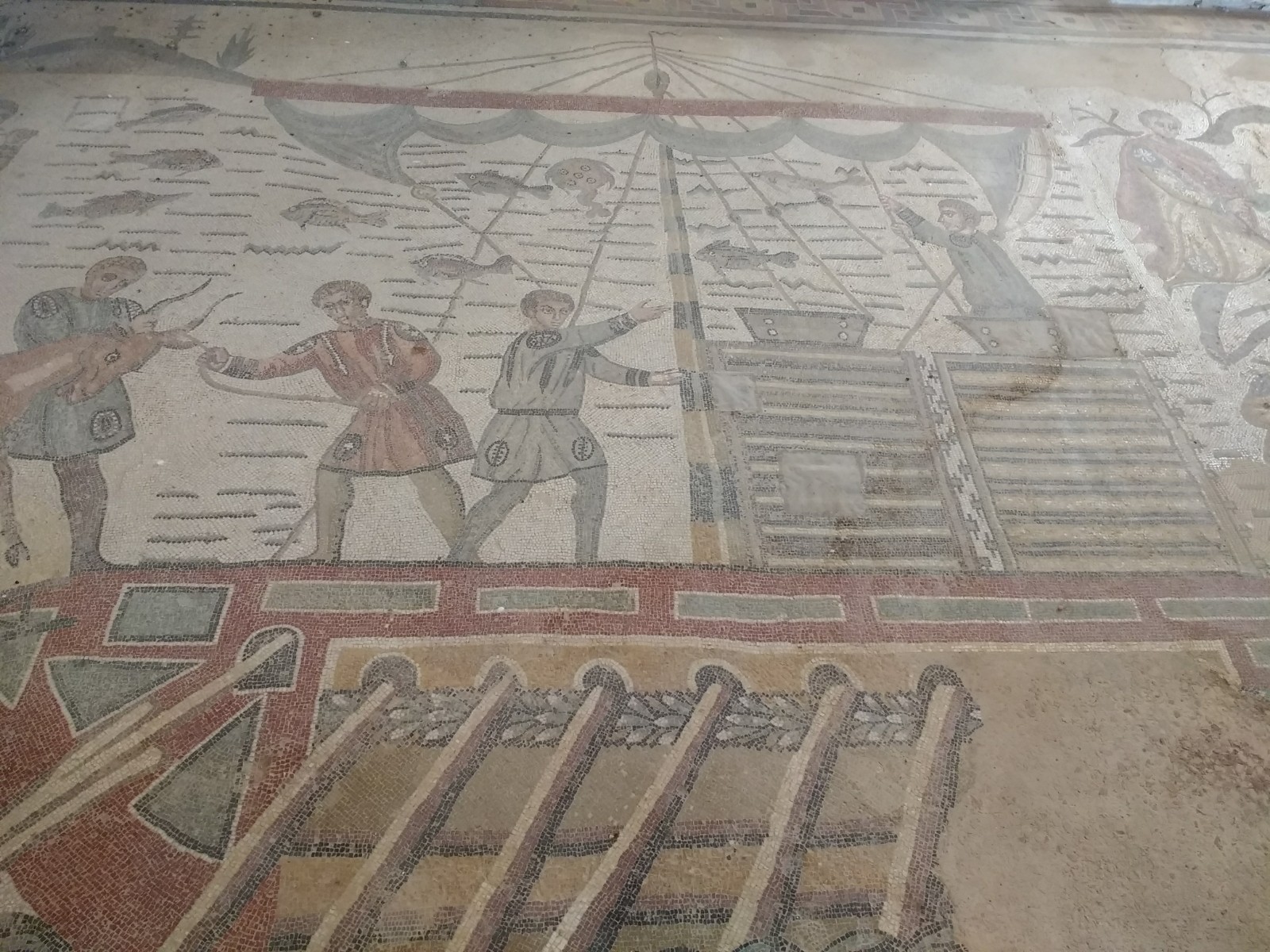
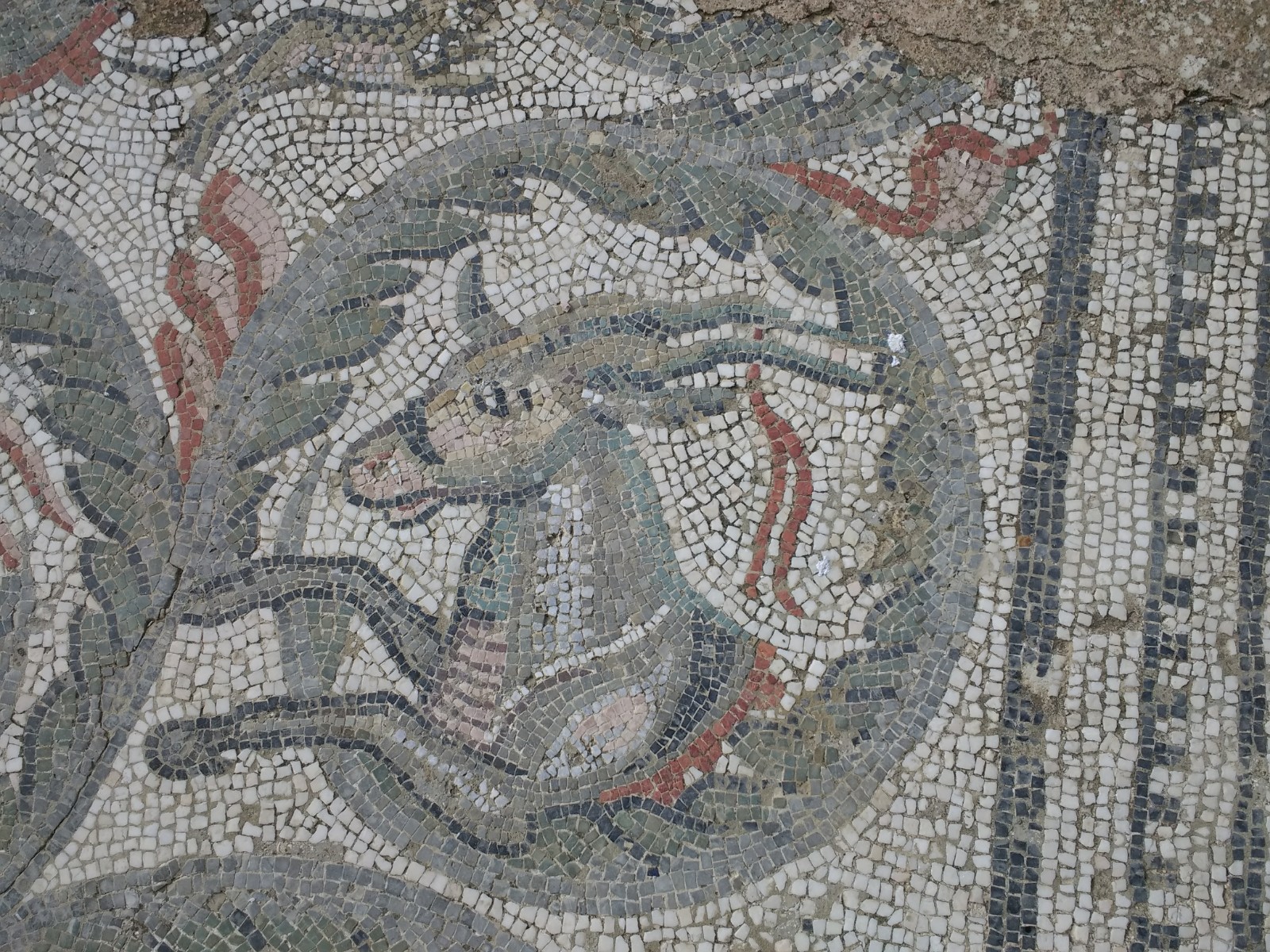
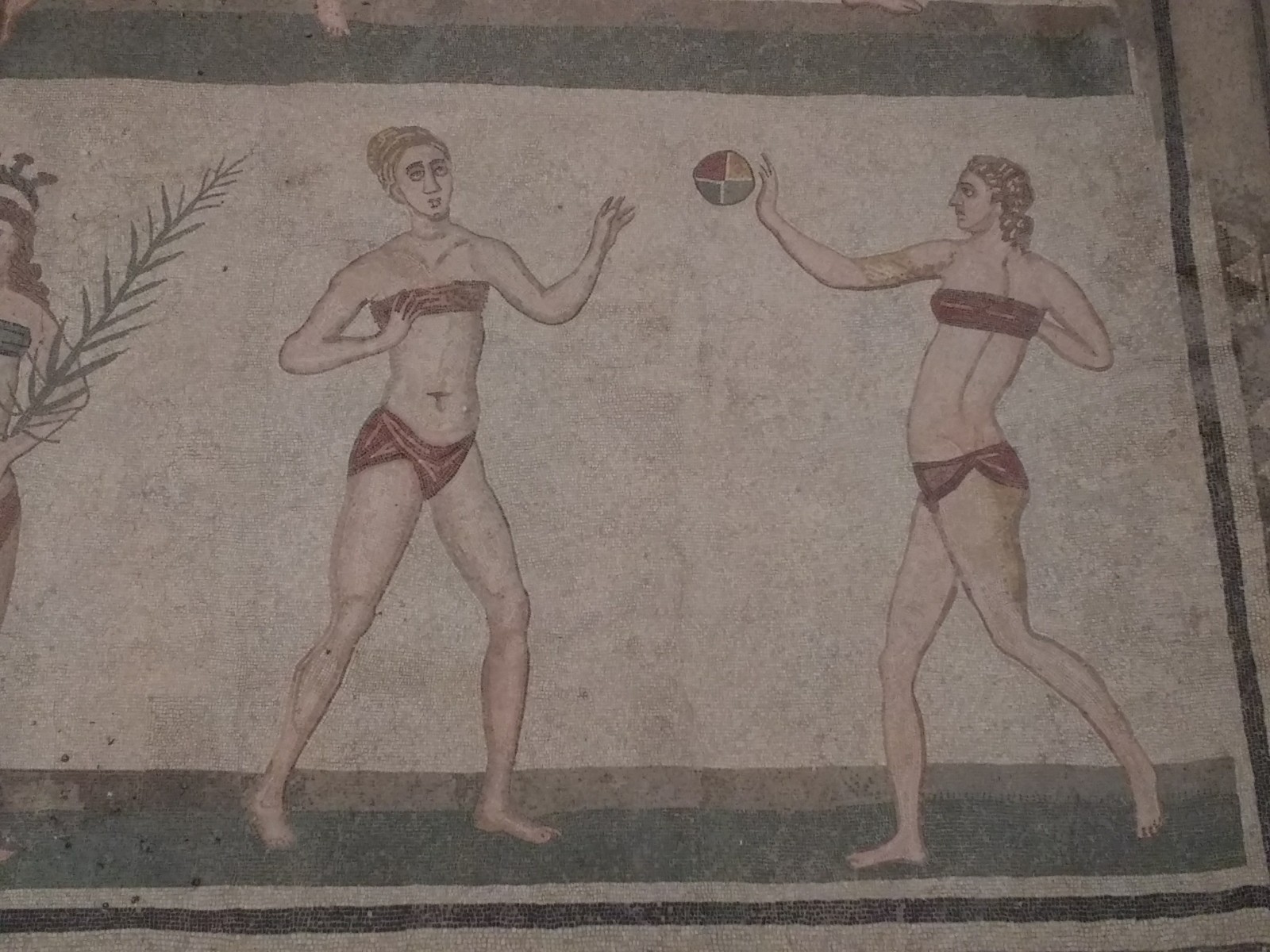
Briefly, I must tell you that yesterday we visited the wonderful mosaics at Villa Romano dei Casale in Piazza Amerina. In truth, they didn’t look as good as when I’d seen them on TV (both Sicily Unpacked and Wonders of the Mediterranean) but this is unsurprising when you think of the lighting and cameras that the BBC have at their disposal. The number and complexity of the mosaics, though, is breathtaking.
Catching a BuffaloLoading animals onto a boatAn antelope Playing with a ball (nicknamed ‘The Bikini Girls’)
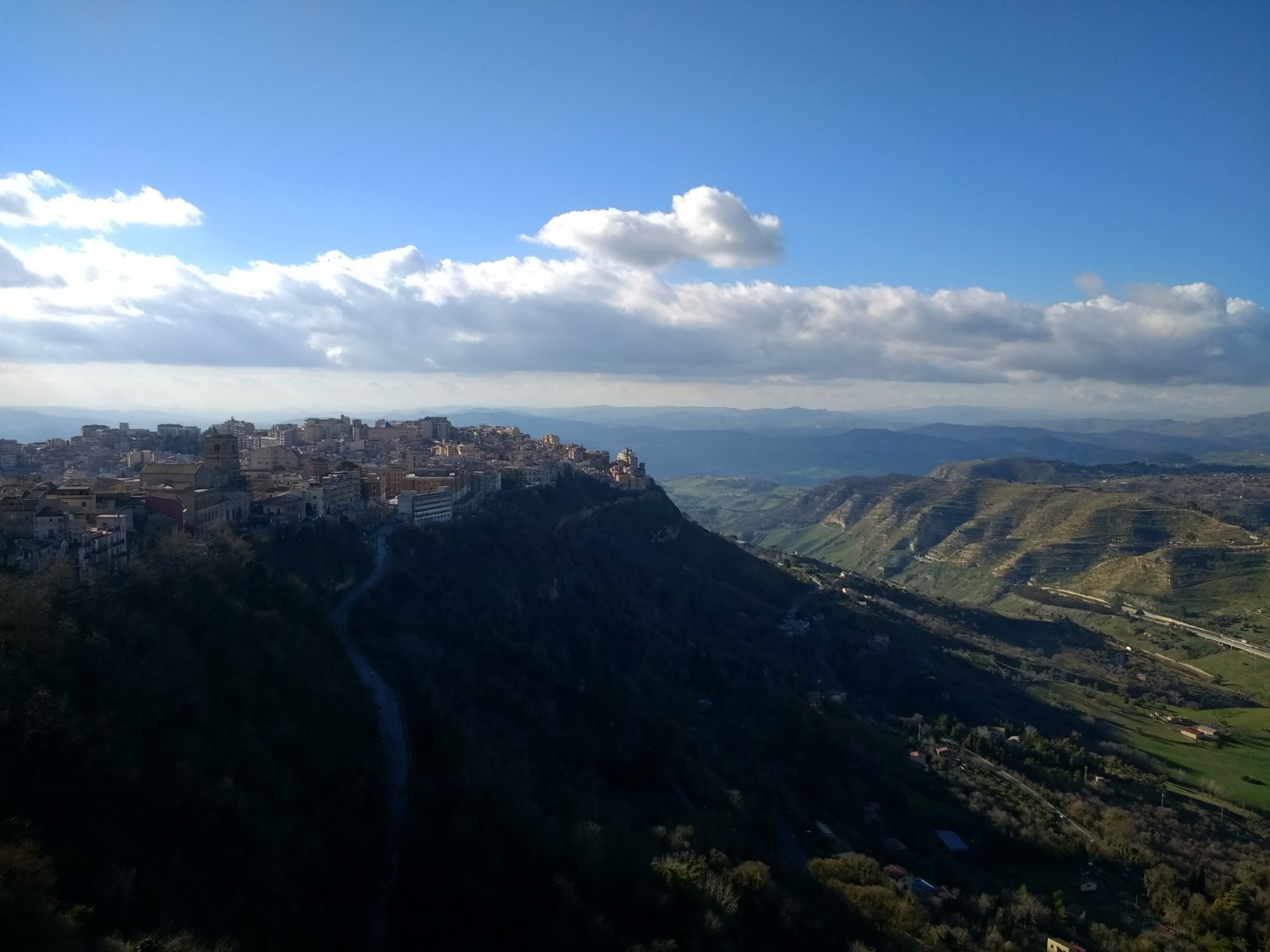
The sun has shone all day in Enna, fourth stop on our Sicily tour. Built on a rocky crag a little over 3000 feet above sea level, Enna is Sicily’s highest town and has views in every direction. On clear days, I am told, you can see the sea, Mount Etna etc, but unfortunately today was not one of them. The castle, whose origins go back to the first century BC, proved so impregnable that the Romans could only capture it by first passing through its sewers.
View of Enna from the castle
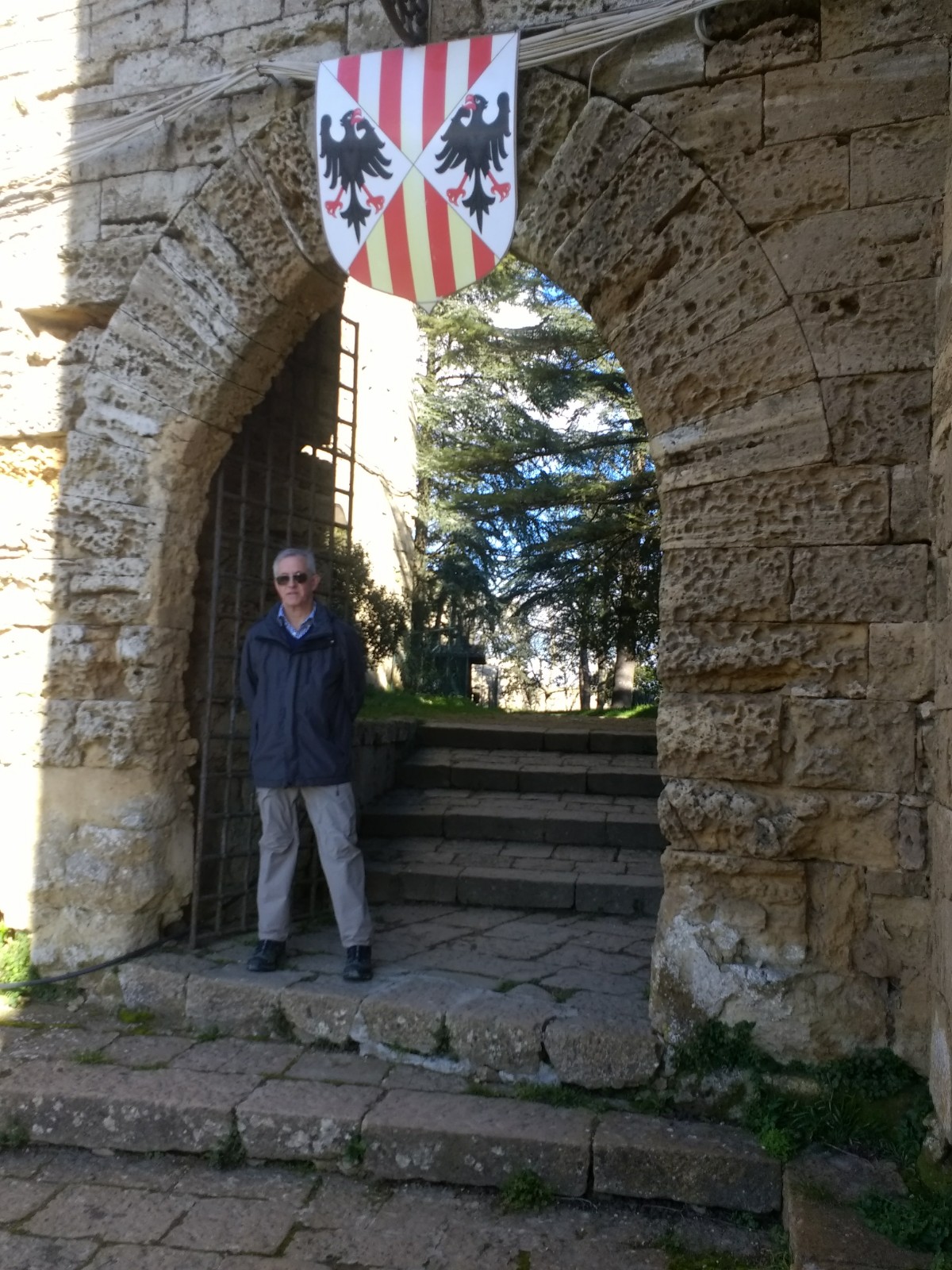
Mark, Castello di Lombardia, Enna
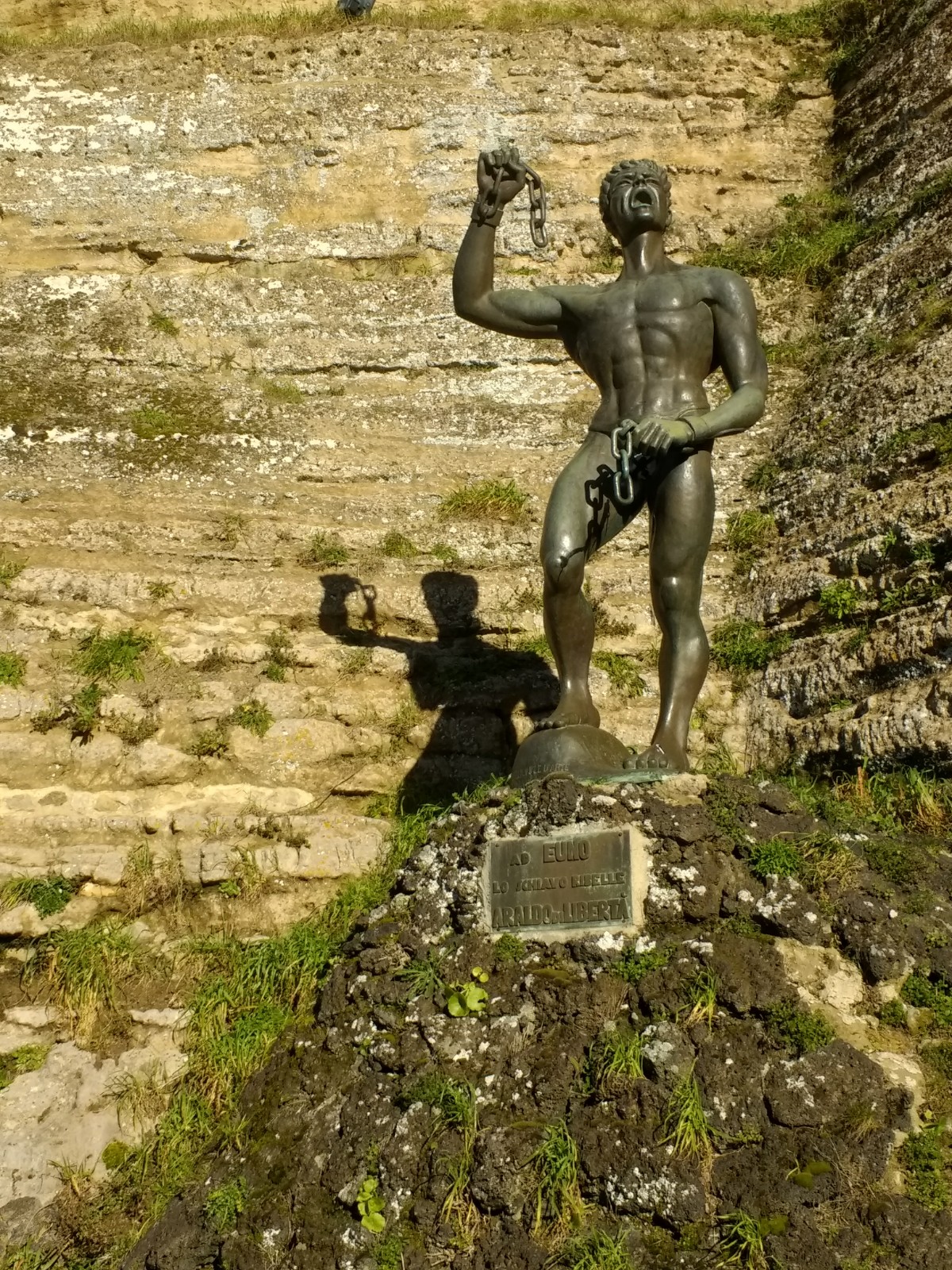
A person of note from Enna was a slave named Eunus, originally from Syria, but owned by a Greek in the second century BC. Eunus became the leader of a huge slave uprising which managed to capture the city. After crowning himself king, he set about building a state independent of Rome, minting his own coins (a coin bearing the name King Antiochus, the name that Eunus assumed, has recently been found). After holding out against Roman forces for several years, Eunus was captured, but died in captivity before punishment could be meted out.
Eunus
Having eaten out again last night, we are cooking in tonight. We ate well again in Agricento, and inexpensively, the bill coming to 38 euros for one pasta dish (me) lamb chops and roast potatoes (Mark) two enormous glasses of very good house white and a bottle of fizzy water. On arriving, we were each given a glass of prosecco and when we asked for the bill, a glass each of Limoncello. On Tuesday evening we were both handed glasses of an almond-flavoured dessert wine at the end of our meal. I always like feeling you are getting something for nothing, but I know the cost is built in somehow.
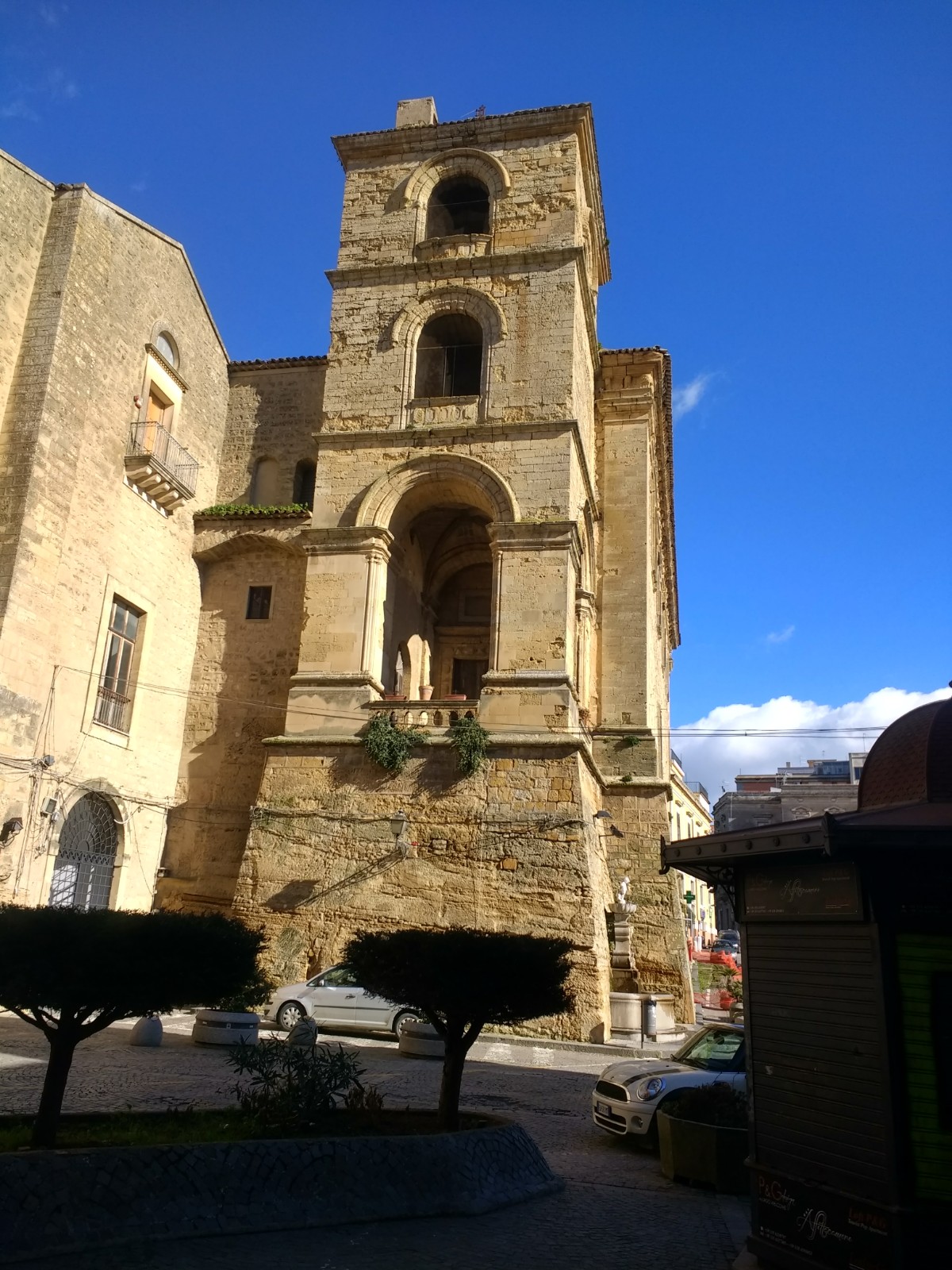
Chiesa S Francesco d’Assissi which we can see from our very central apartment


 Tortoise Travel