A Visit to Villa Pignatelli

The streets were full of people selling small bunches of mimosa today for International Women’s Day.
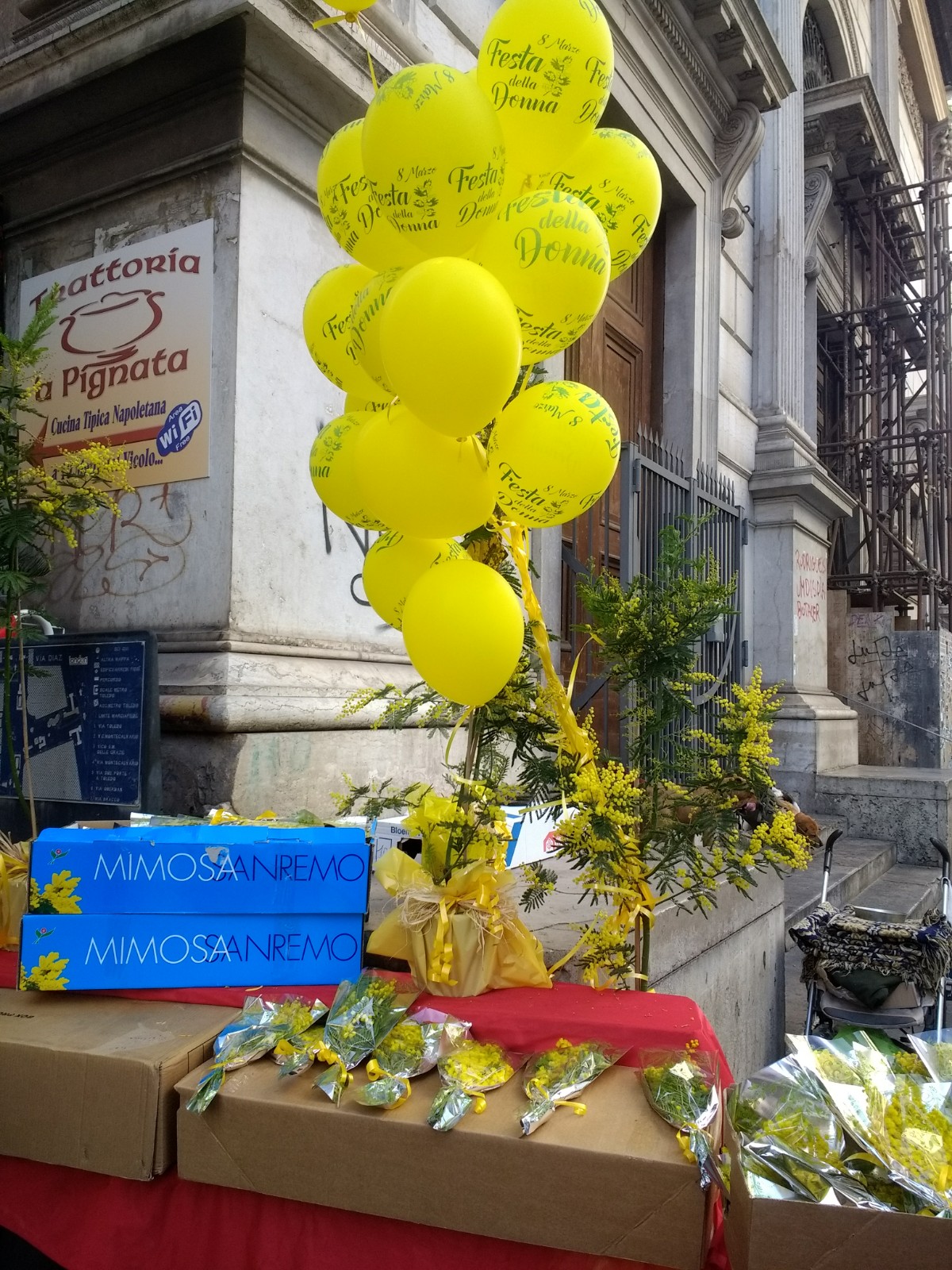
Mimosa on the streets of Naples

If you want to take a break near the Palazzo Reale in Naples, head to the cafe in the Teatro San Carlo (we had an excellent guided tour of the theatre last week). The surroundings are refined, the seating, in sumptuous leather sofas, is very comfortable, if not worn, and the cappuccino, only €1.50 a cup (the average here is about €2 – 3.00 a cup). Best of all, we had a pianist at a grand piano playing soothing music. A proper oasis of calm after the busy, noisy and crowded streets outside.

Tempted as we were to stay in the cafe listening to the music, we stirred ourselves to continue with our plans for the day.

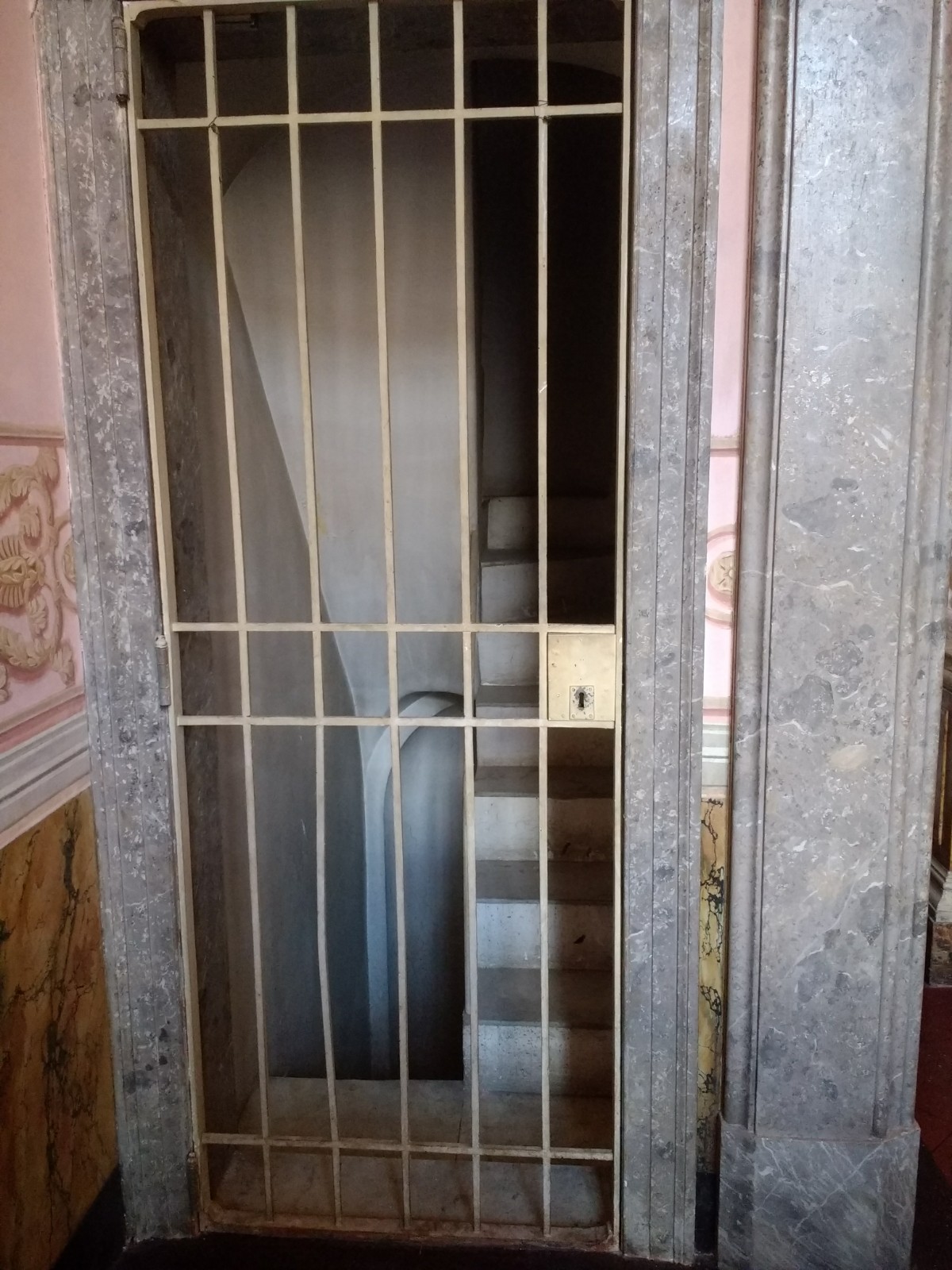
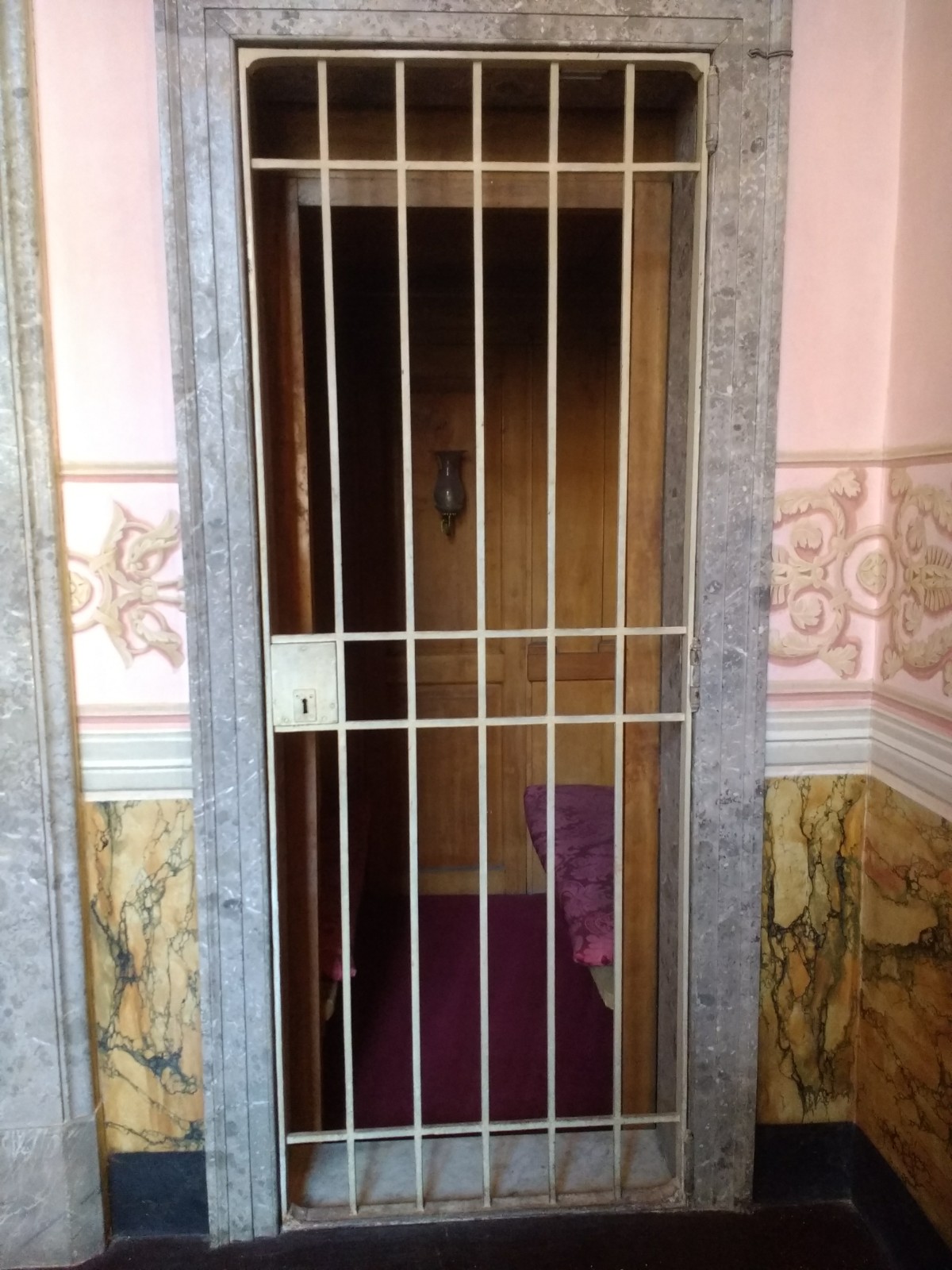
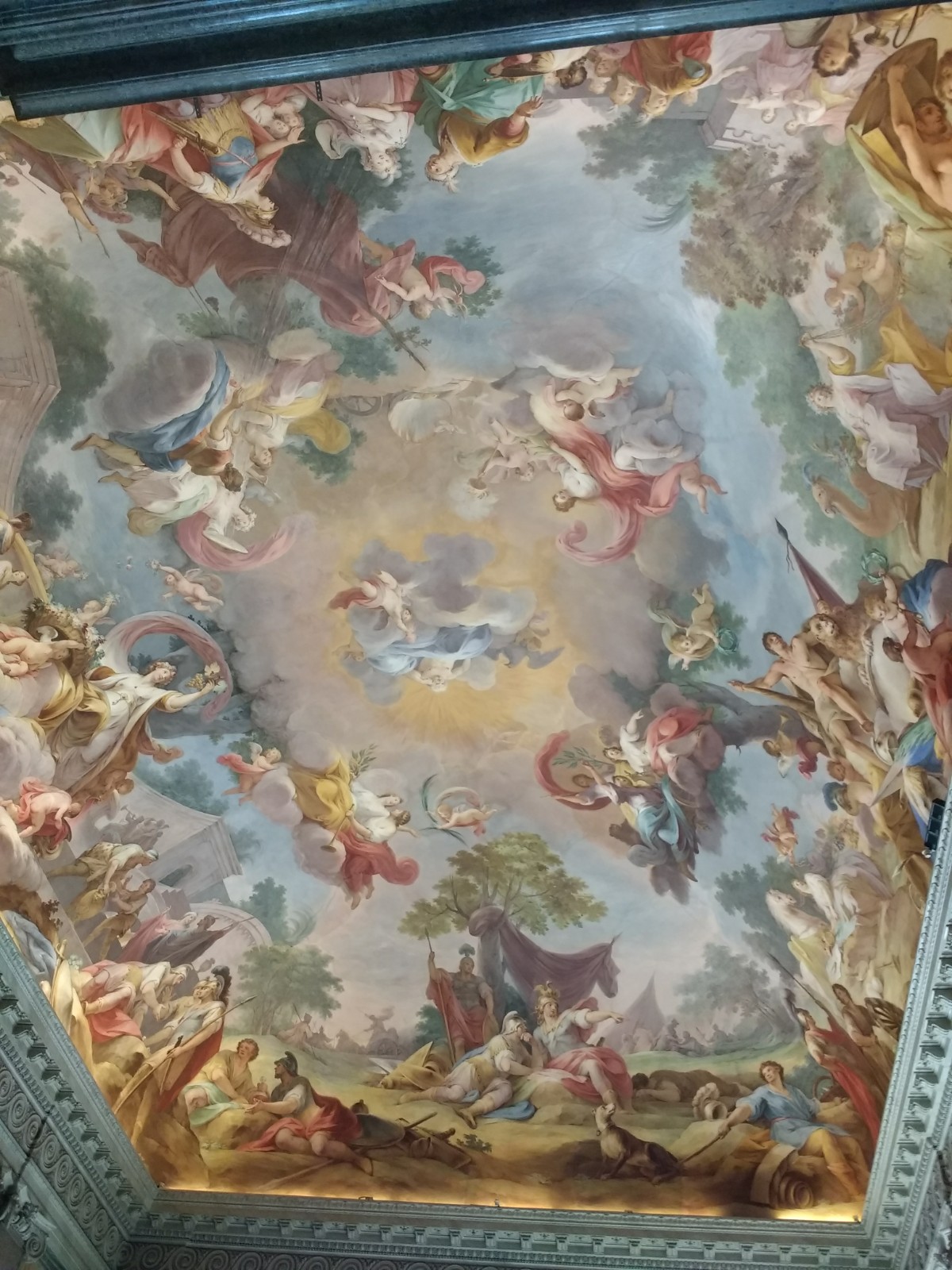
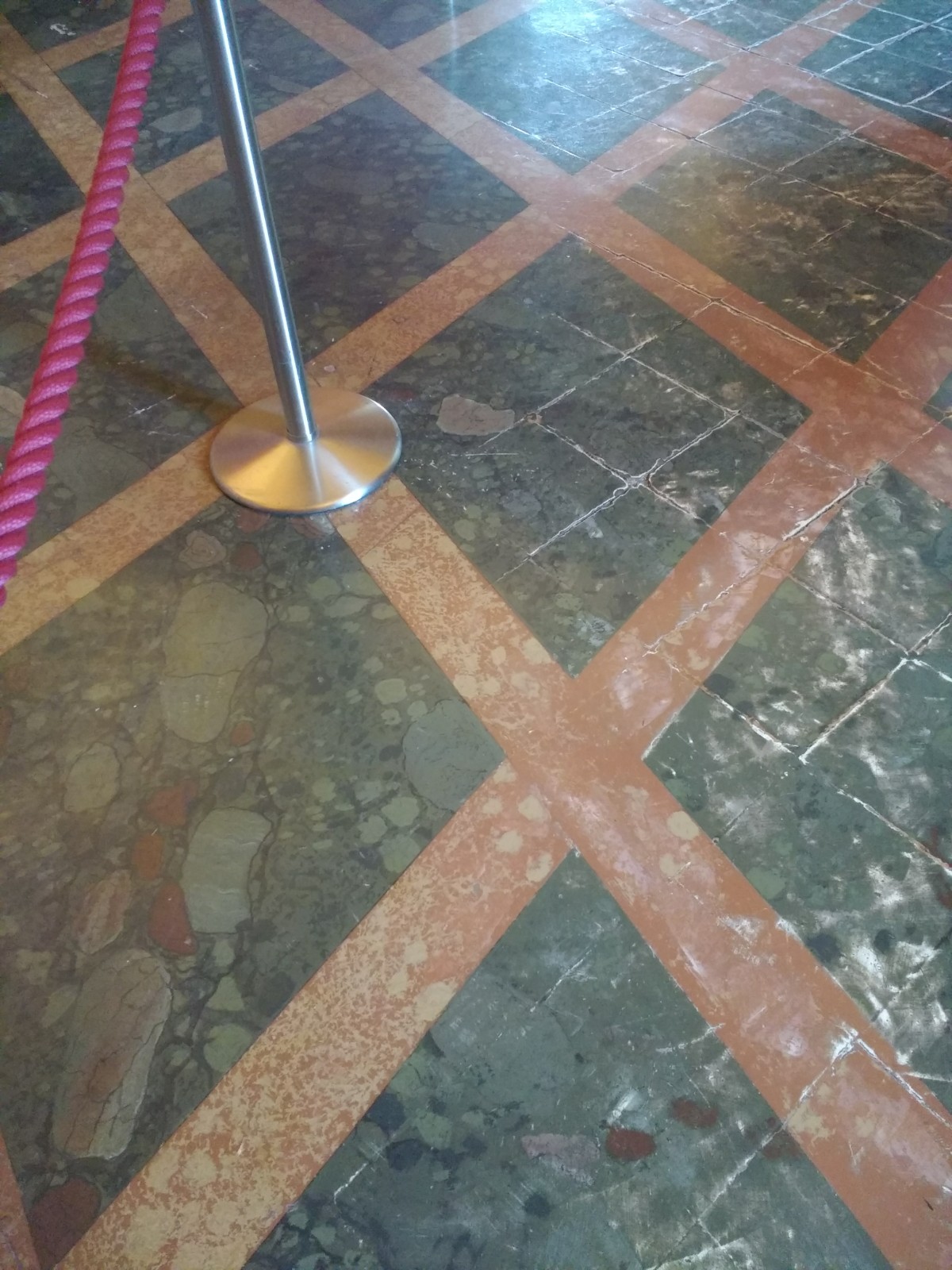
Villa Pignatelli is a nineteenth century grand house first built for Sir Ferdinand Richard Acton, son of Sir John Acton, a former prime minister of Naples, and was left to the state by the last owner in the 1950’s.
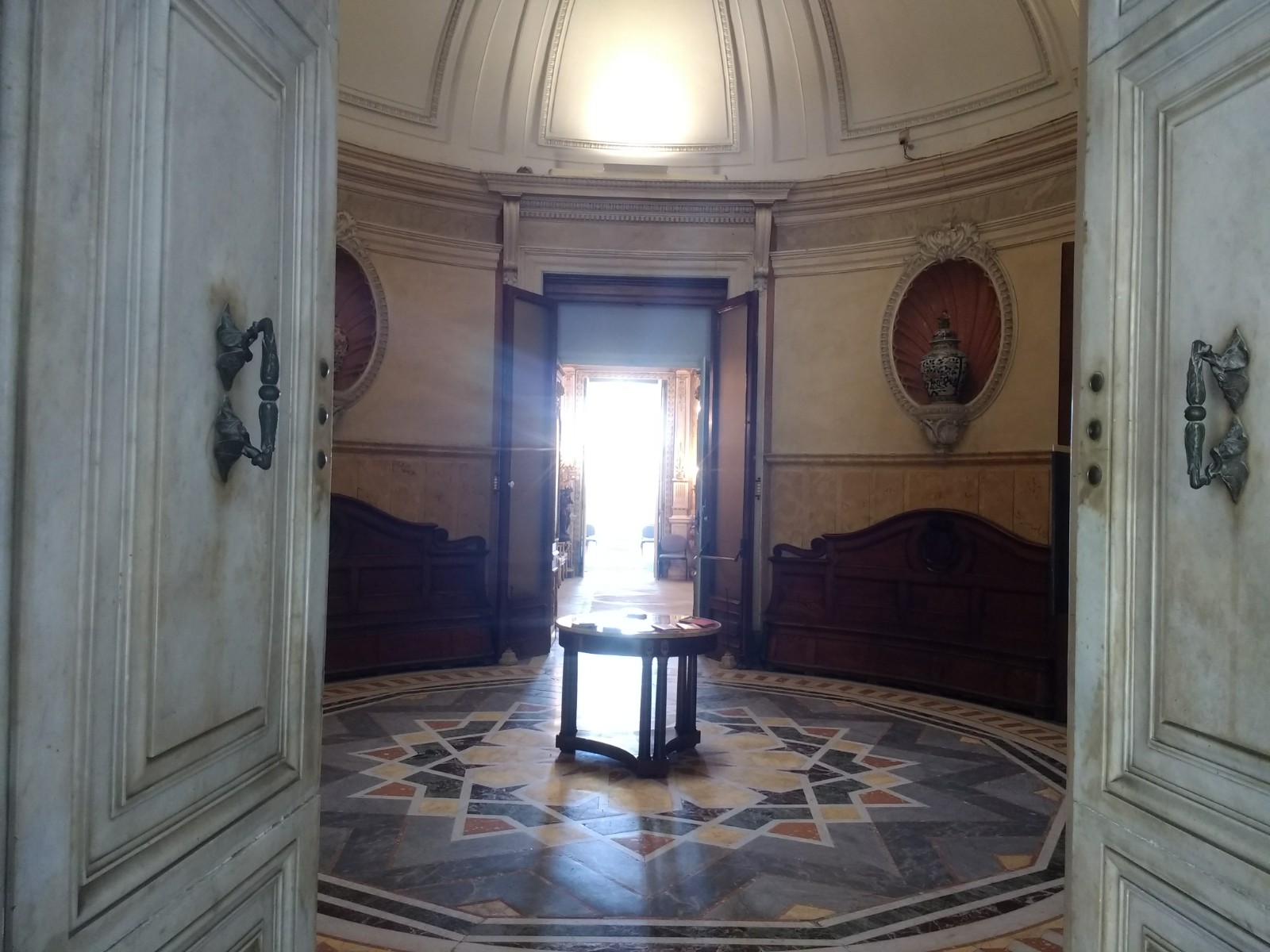
Entrance
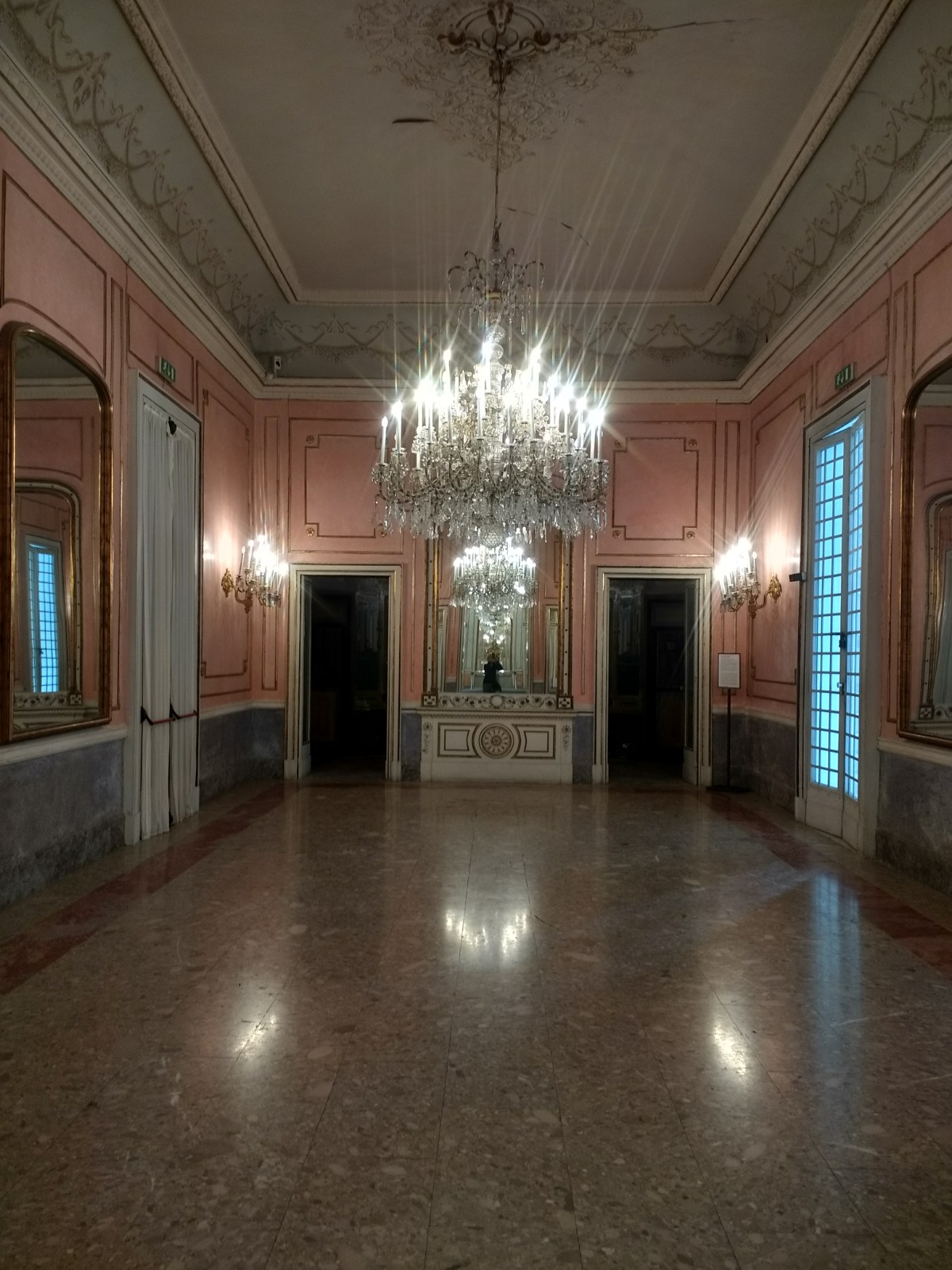
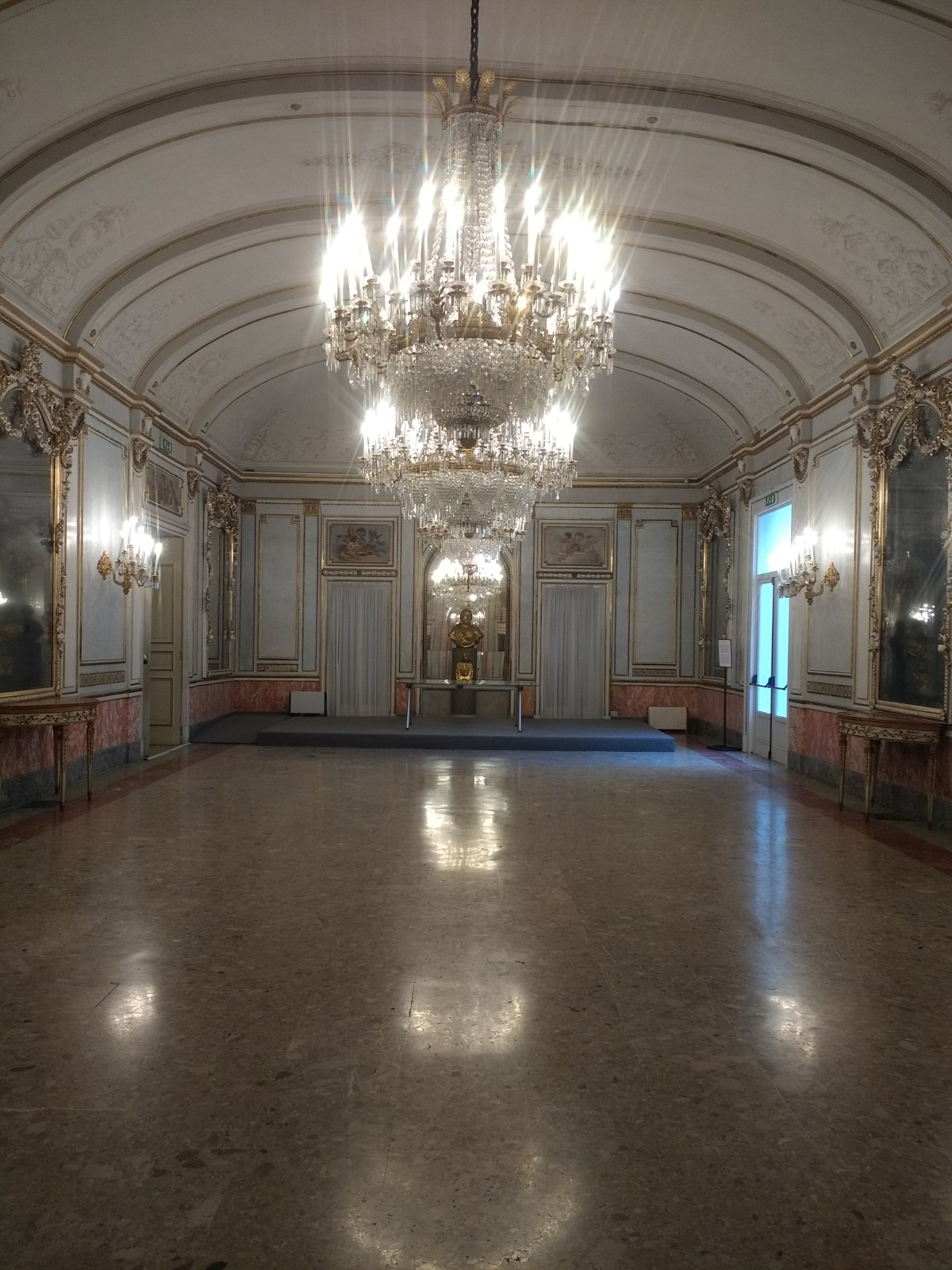
Ballroom
Room off the ballroom ‘for the orchestra players’ with ‘pink wax walls’ .
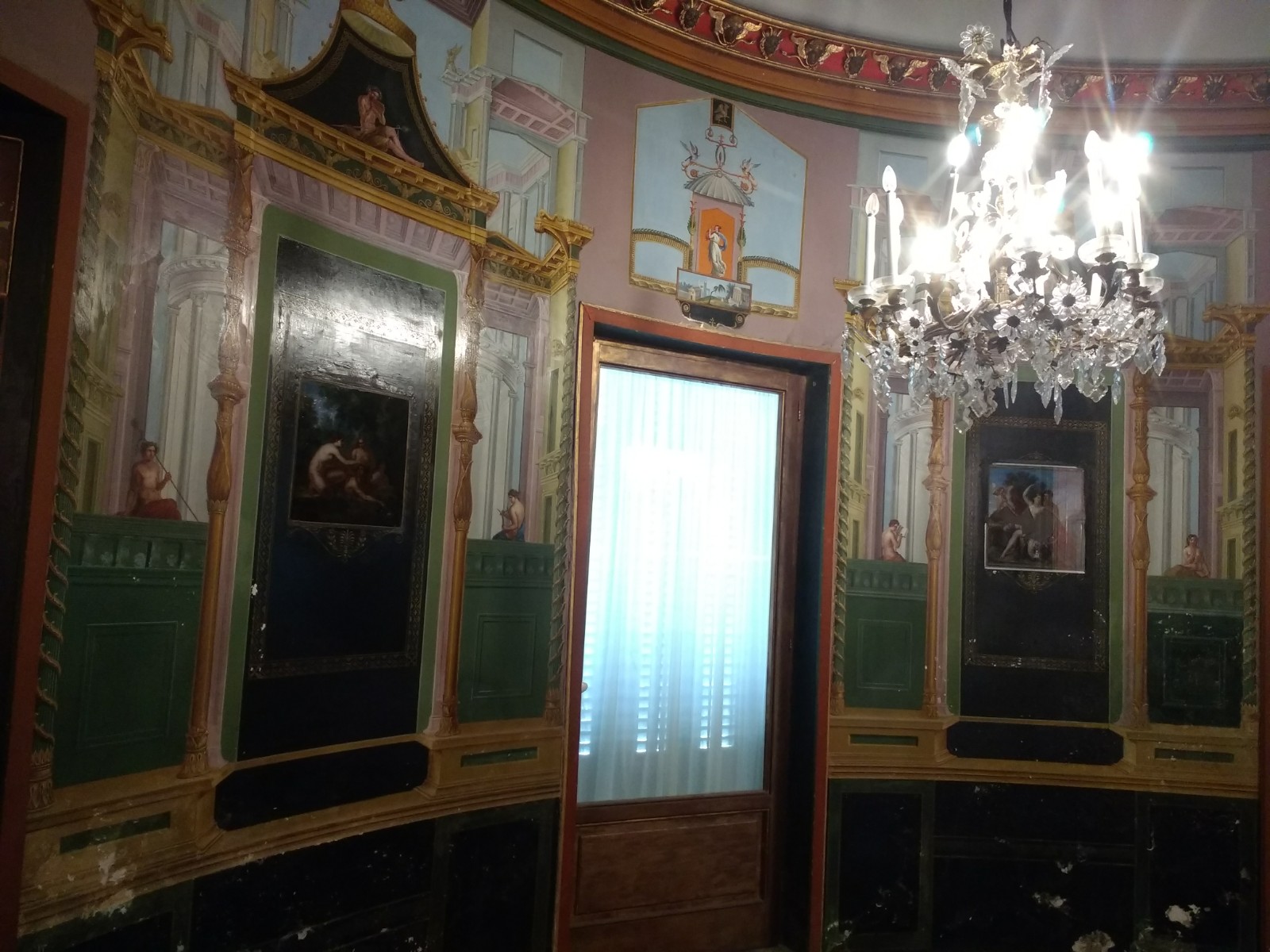
The Pompeian Room was for guests to ‘arrange their hair and clothes’ when there were parties. A great idea, but not so convenient when you had to go through the room for the orchestra players to get there. The decorations in this room were inspired by finds in Pompeii and were all the rage in the mid-nineteenth century.

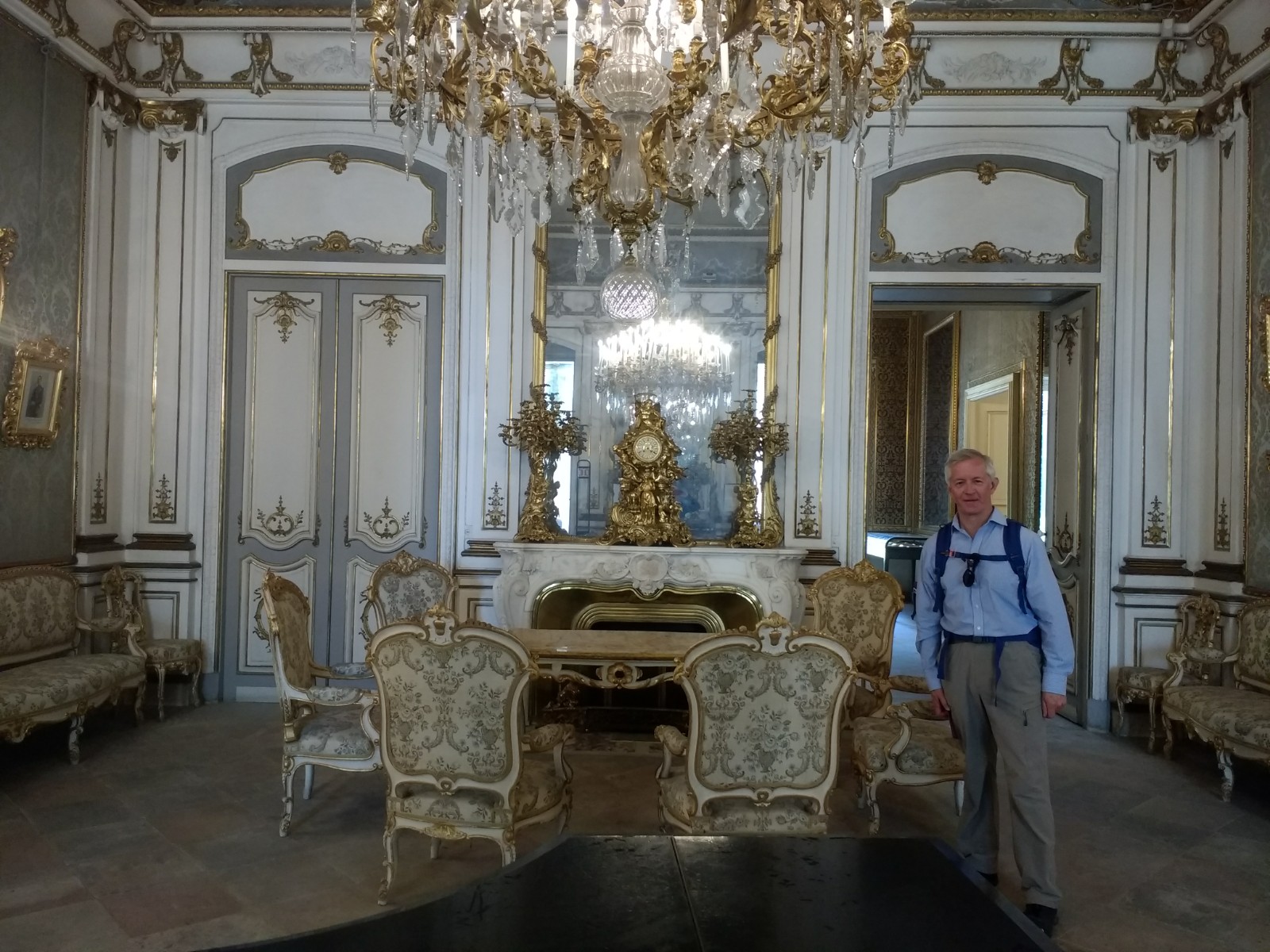
The Blue Room

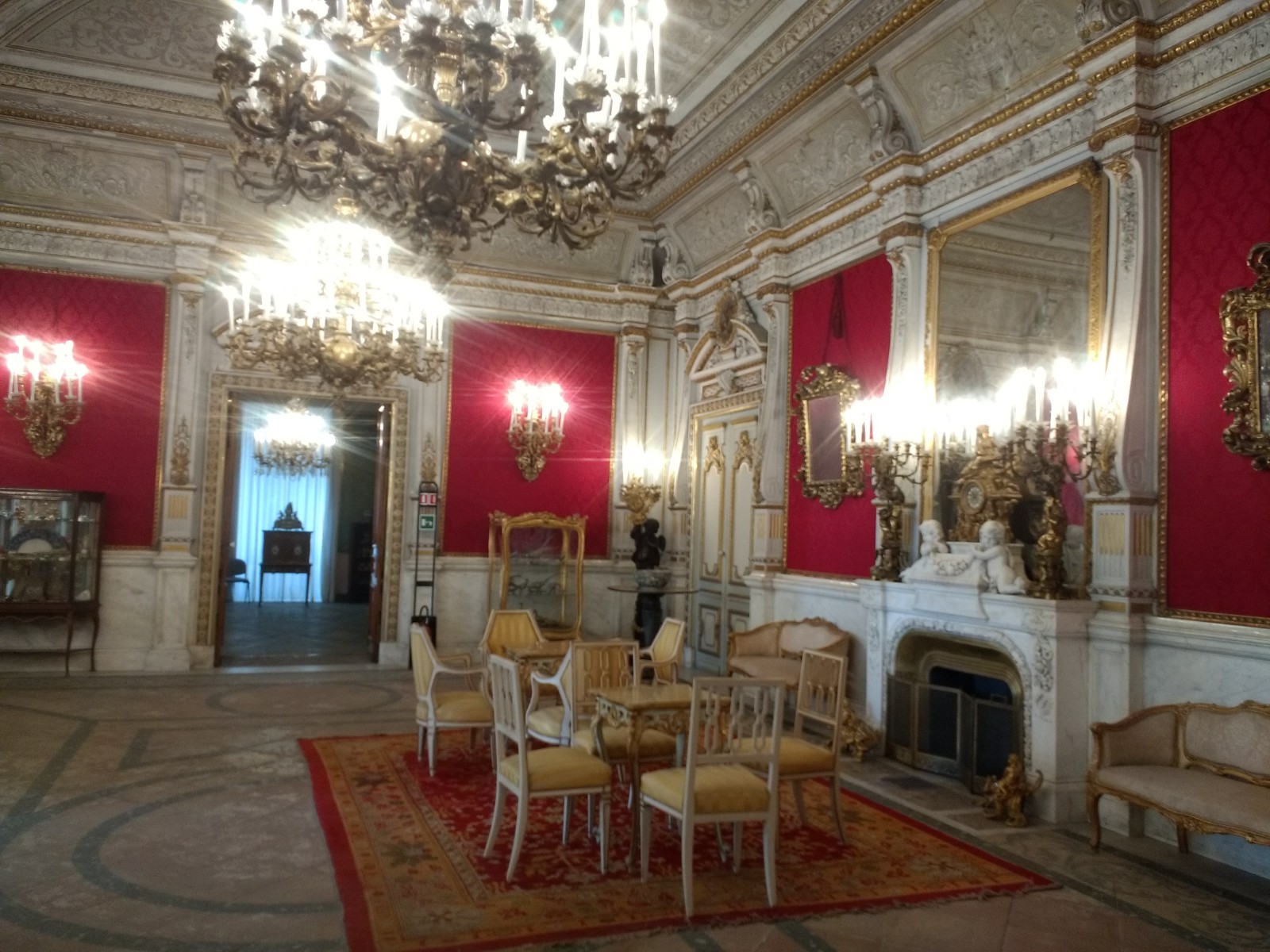
The Red Room
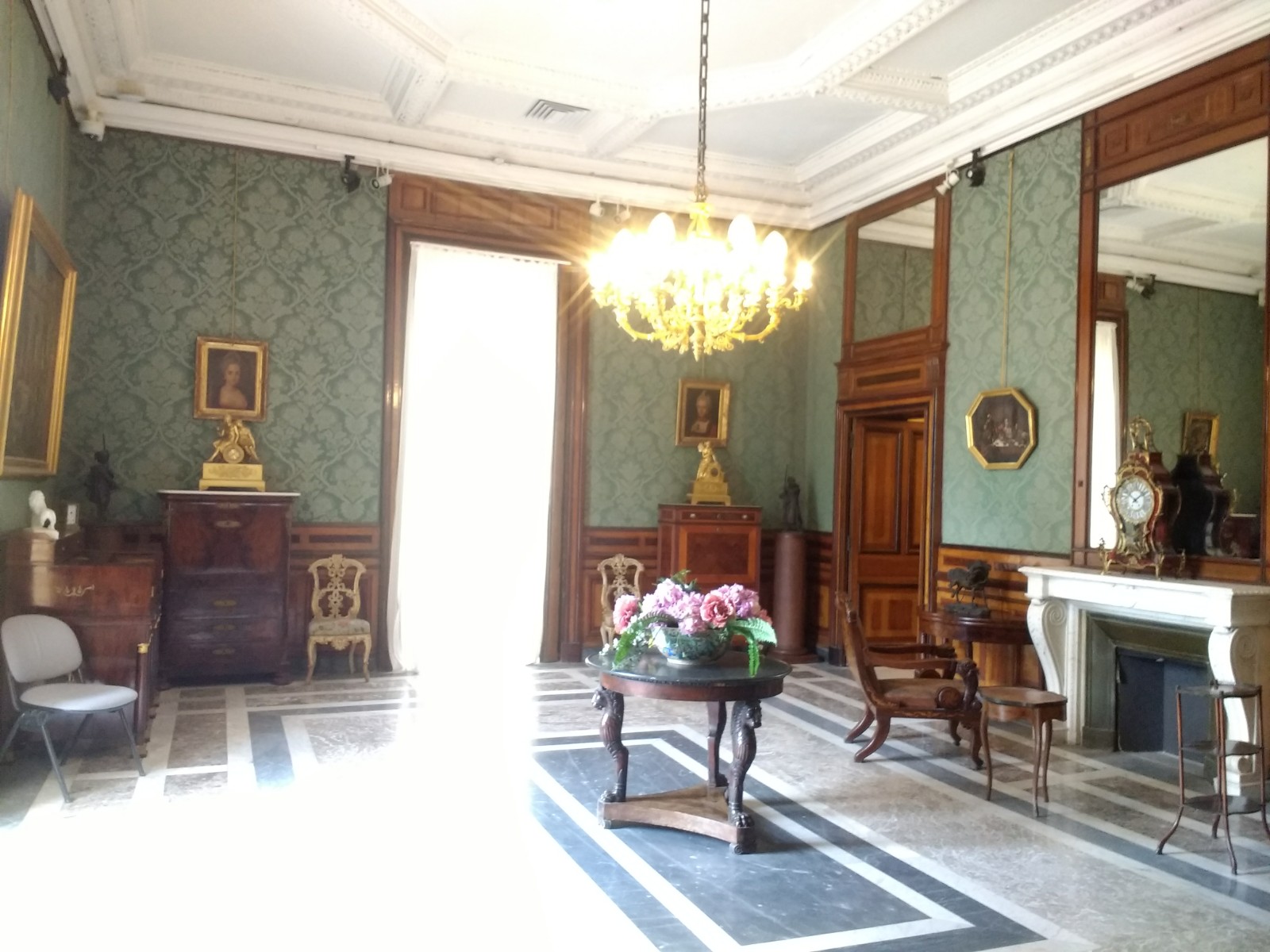
You’ve guessed it – The Green Room
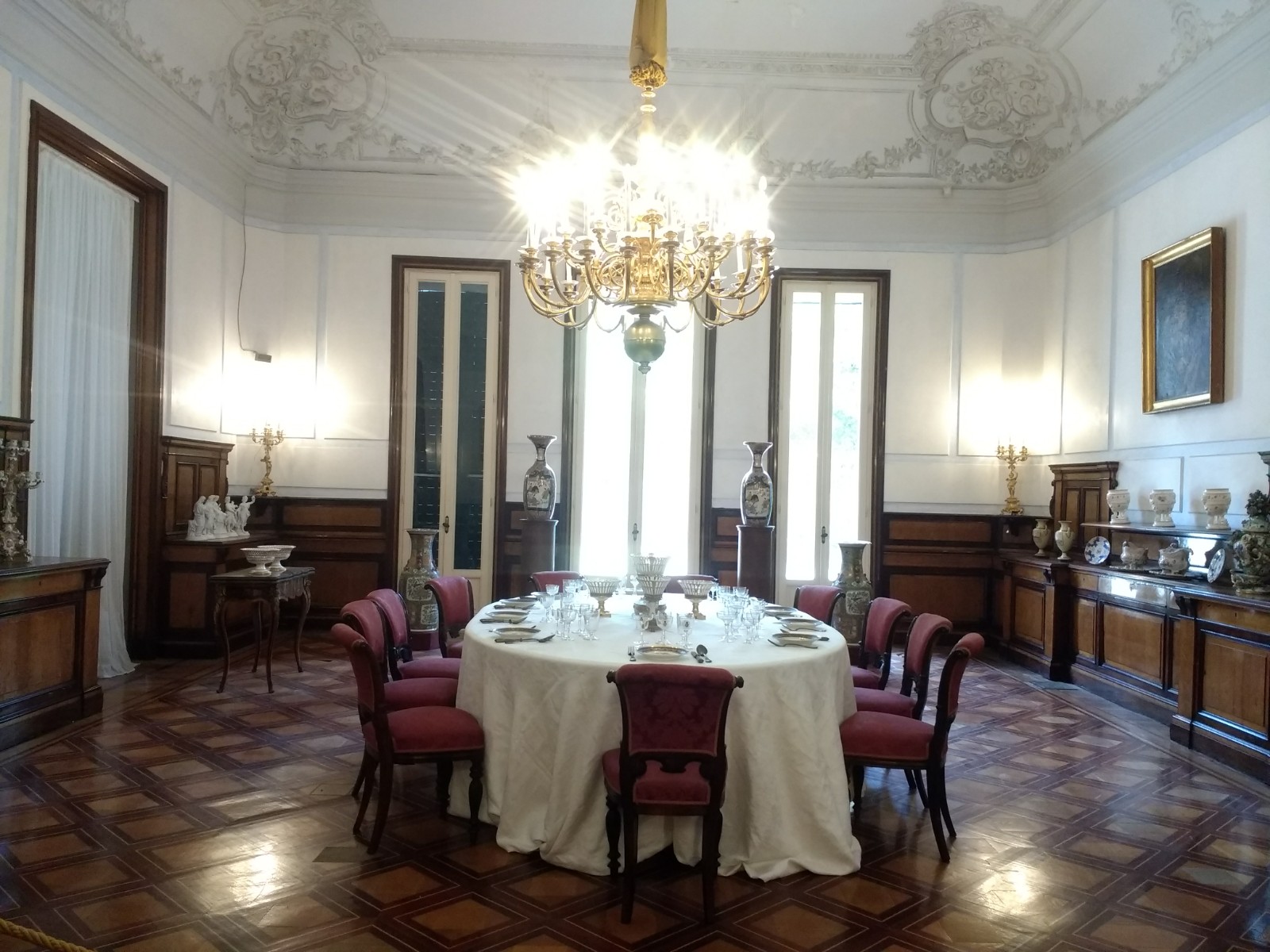
The Dining Room

In the dining room, each place was laid with a knife, a fork, and a spoon, which makes your choice of cutlery pretty simple. However, we saw examples of menus with several courses. What was one supposed to do? Keep back the cutlery when your plate was taken away at the end of one course, so you could use it for the next?

The choice of glassware was more complex. Each person had six glasses. What were they all for? I’m guessing champagne, white wine, red wine, dessert wine, port and water.
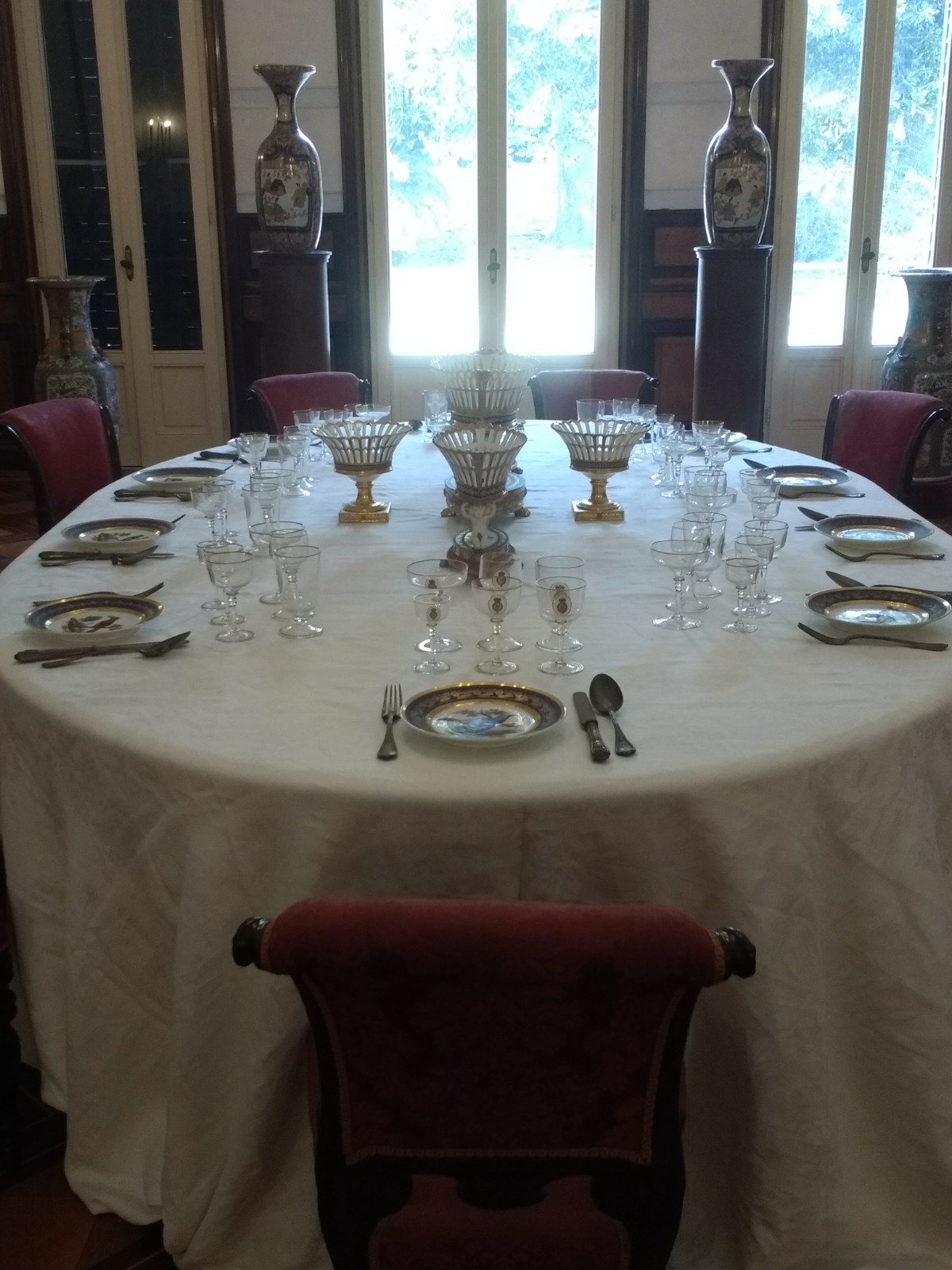
The Place Settings (My grandmother would have horrified at the state of the silver. It really needed a good polish).
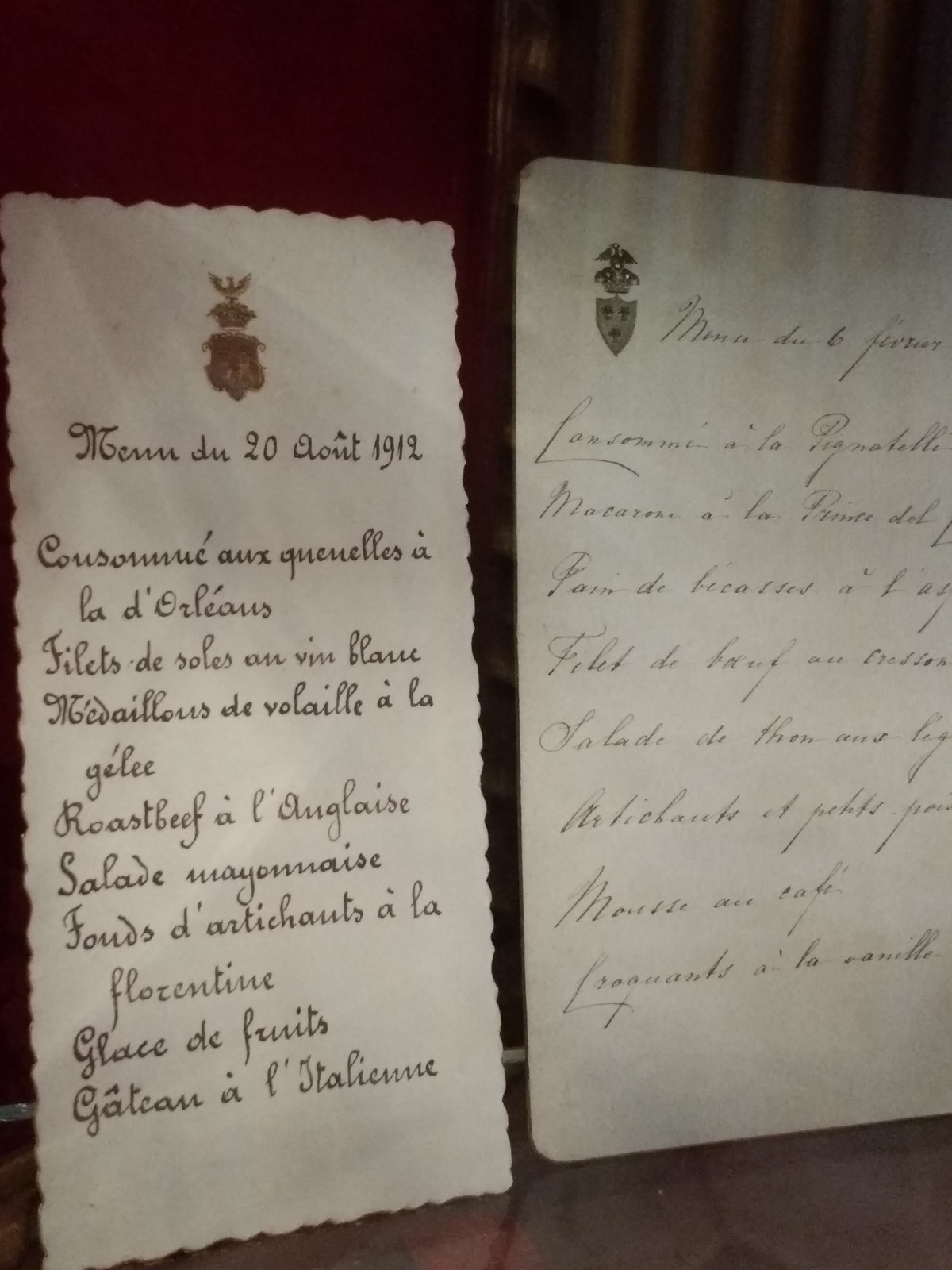
Example menus. See ‘Roastbeef a l’Anglaise’ on the first menu. Why do we always get ribbed for our English food? On another menu I saw, ‘Salad d’oeuf a l’Anglaise’. Now I didn’t realise that was an English speciality.


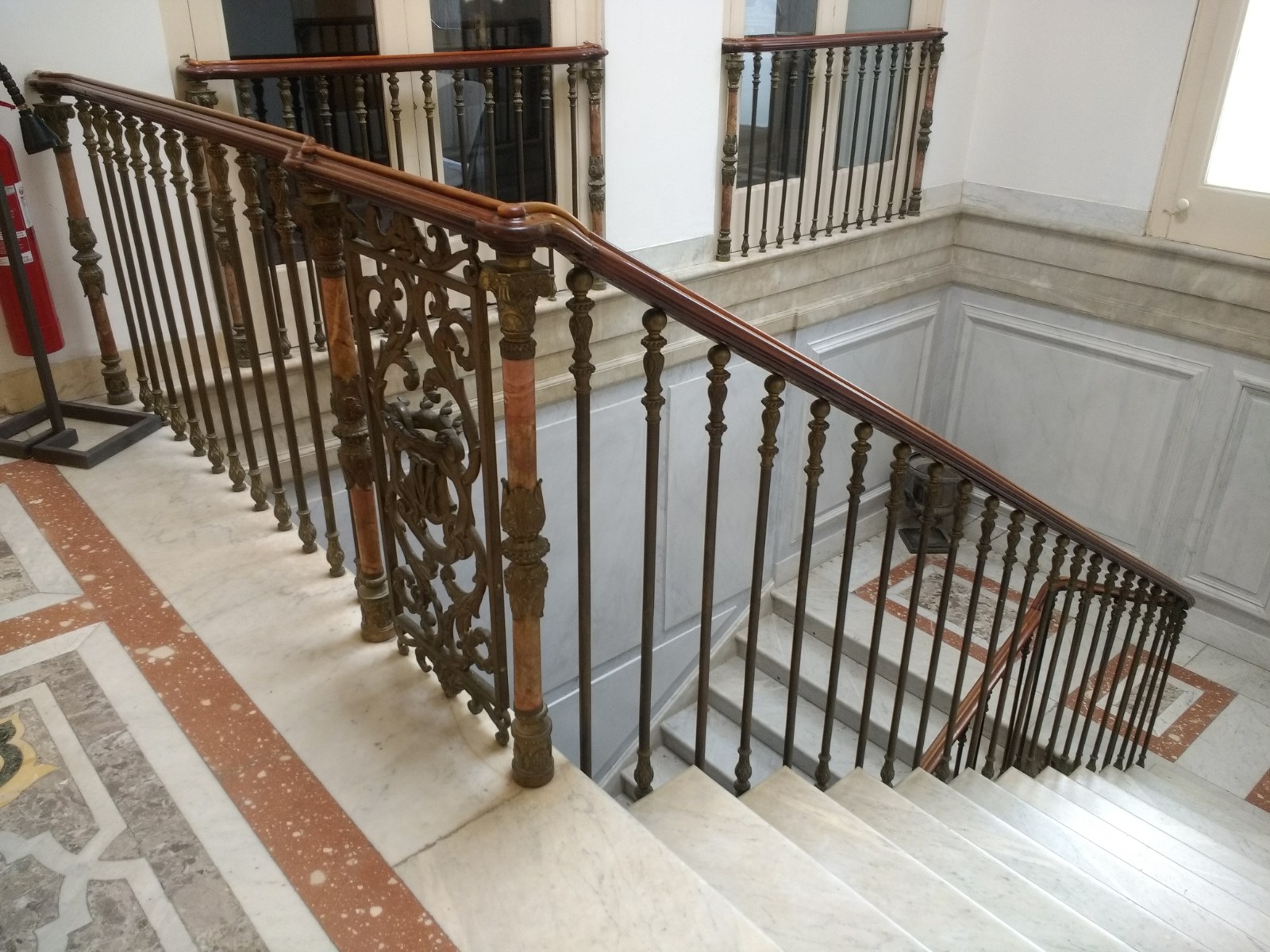
The stairs were surprisingly under-stated given the grandness of the rest of the house.


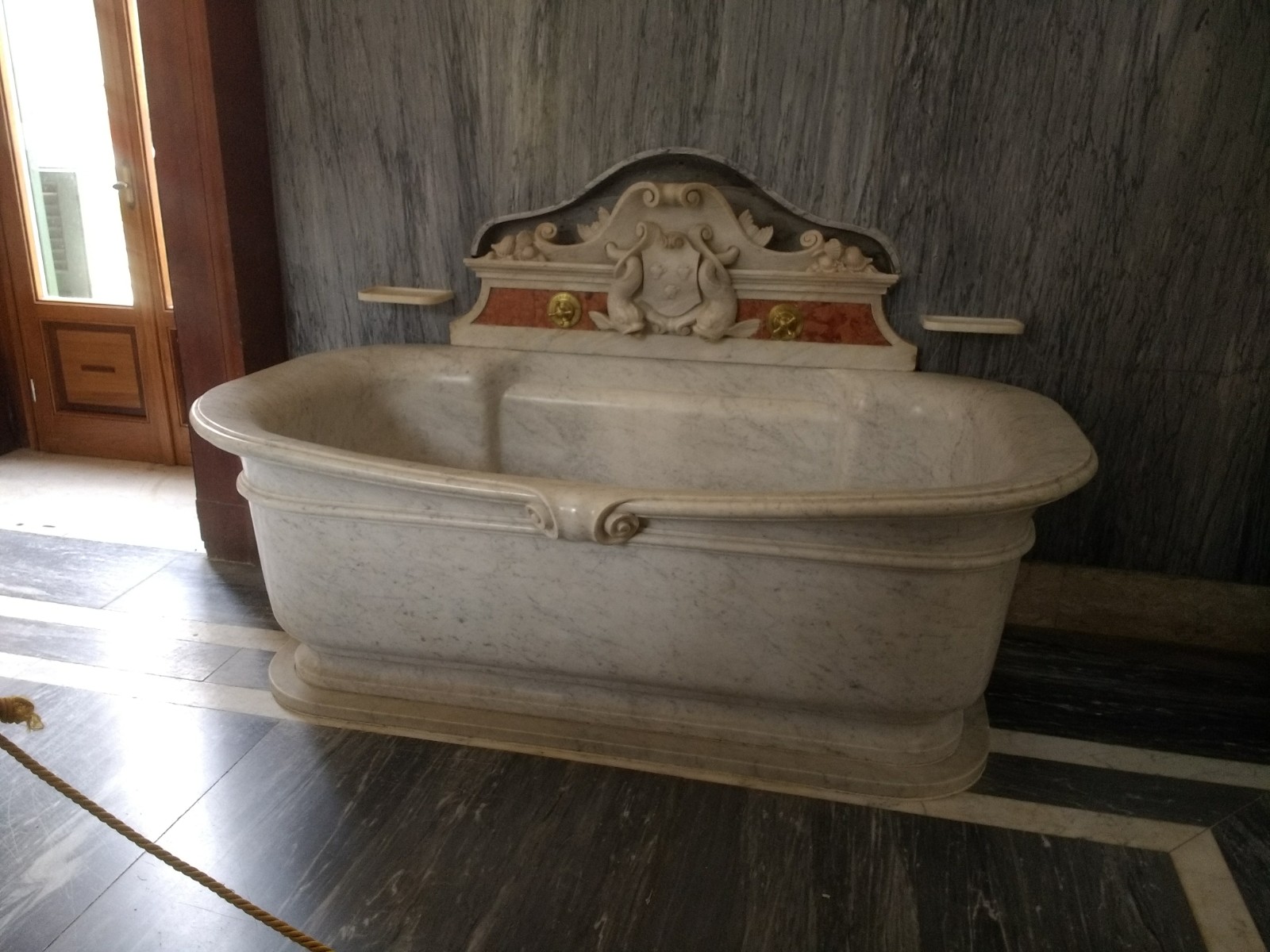
This bath was huge. You can see the gold taps. The water came out of the fishes’ mouths.

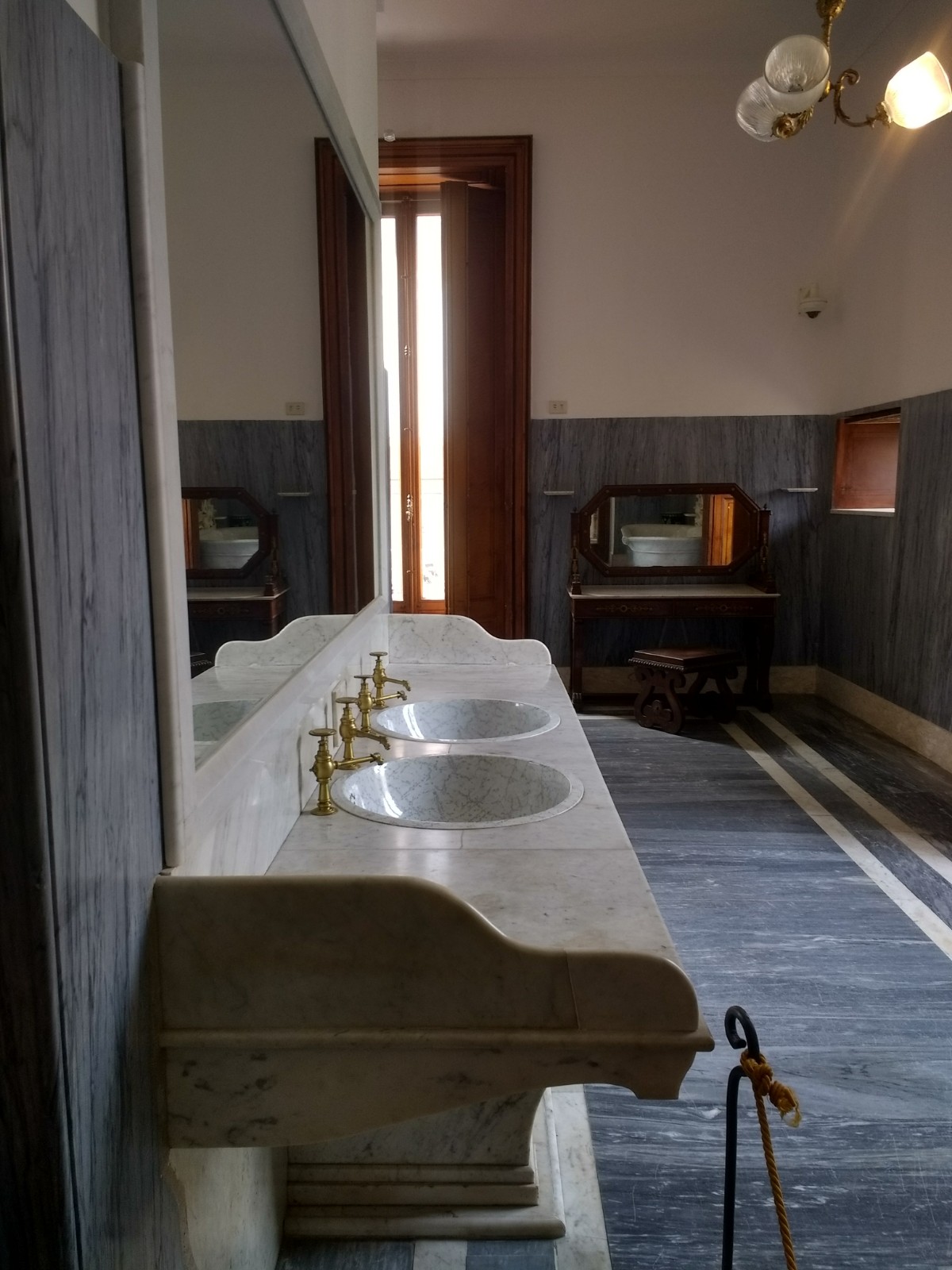
His and her basins in the bathroom.

Our tour of the grand rooms ended here, there being no bedrooms to see, but we did go outside to the ‘English Garden’.
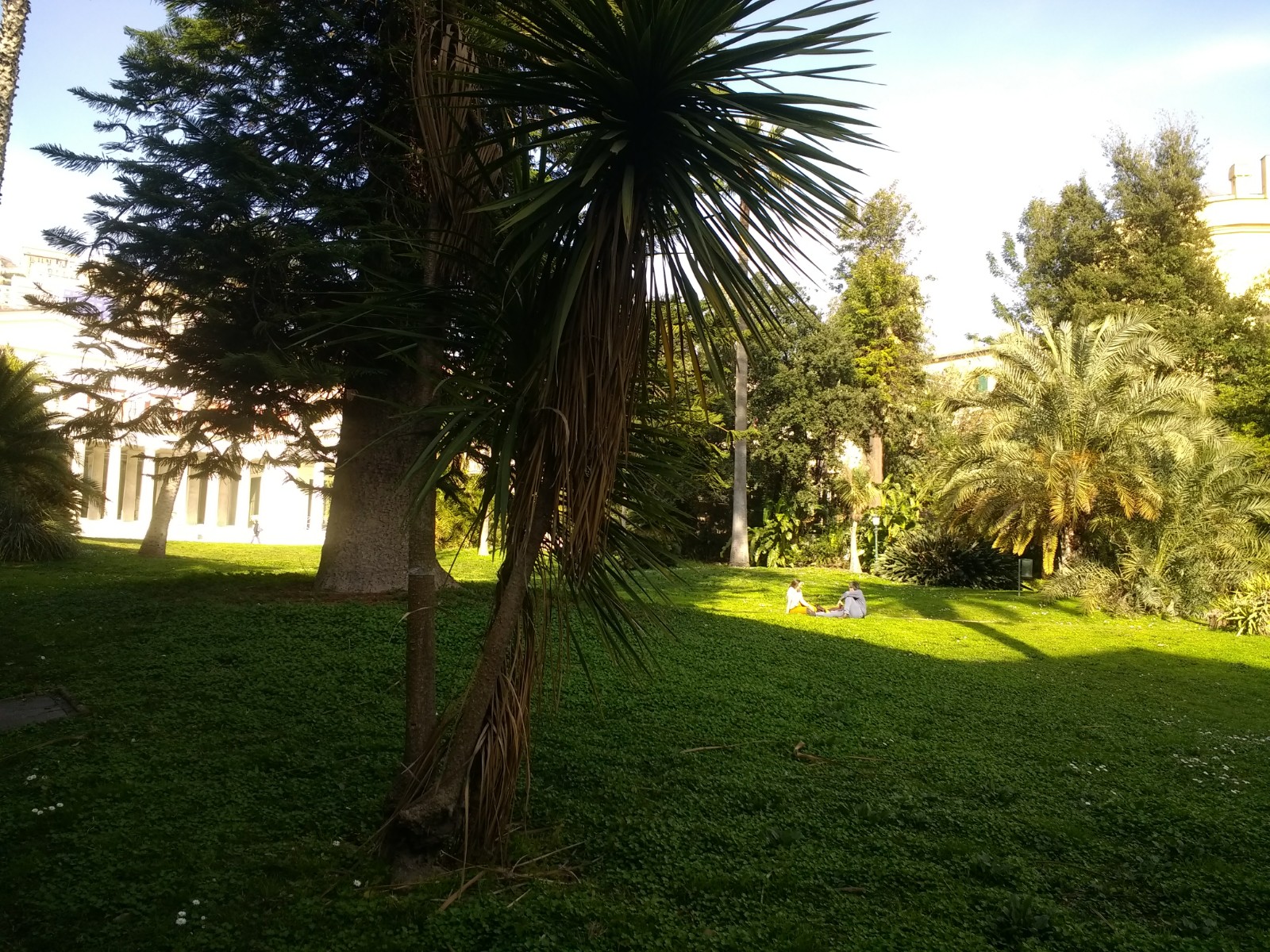
Lovely palm trees – I wonder if the garden designer had ever been to England. We also saw a banana tree.

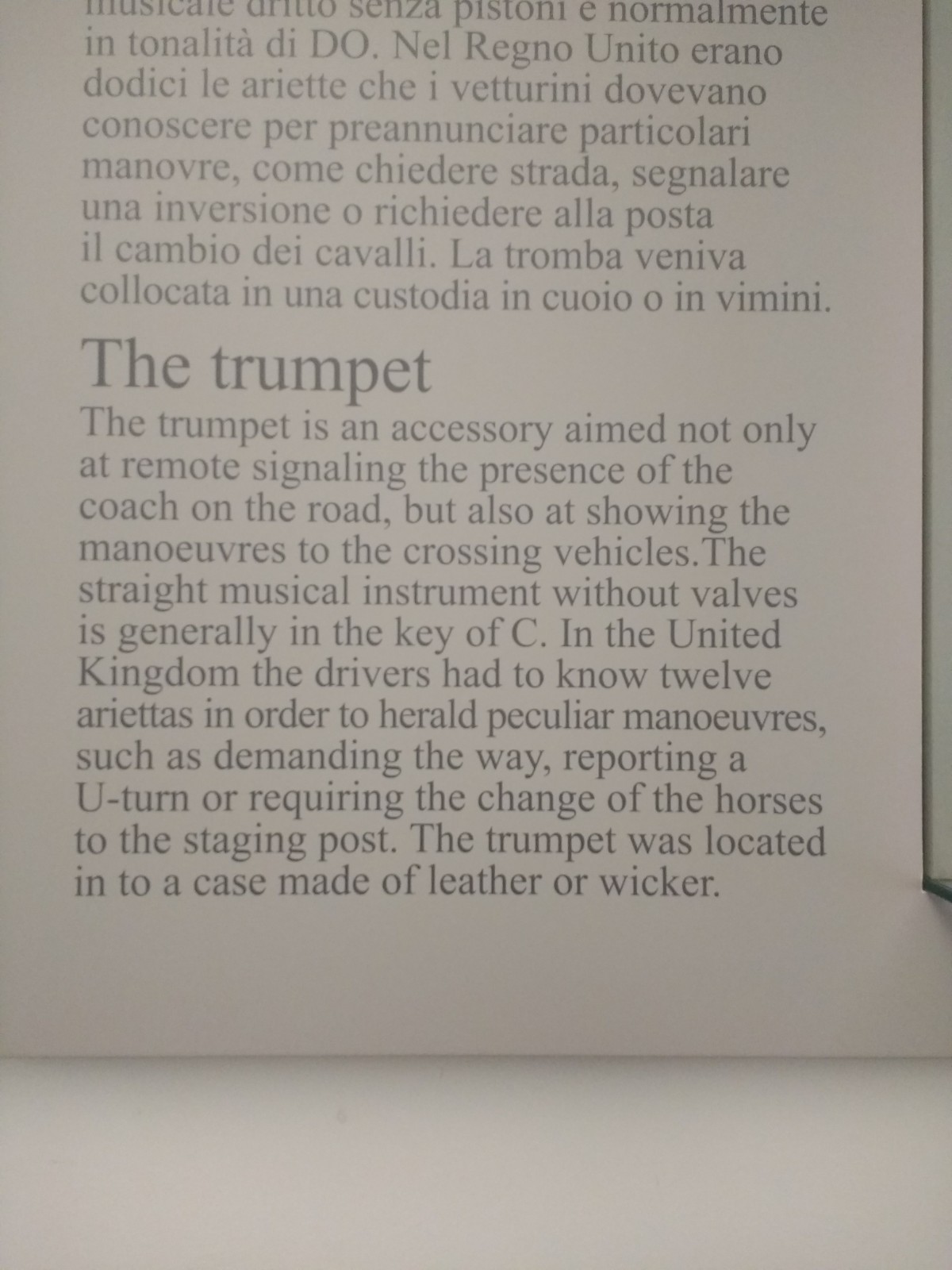
In the grounds we visited a large collection of horse-drawn carriages. No pictures of these I am afraid, but I was intrigued by the following notice next to a display of what looked like hunting horns.
Coast Road to Amalfi

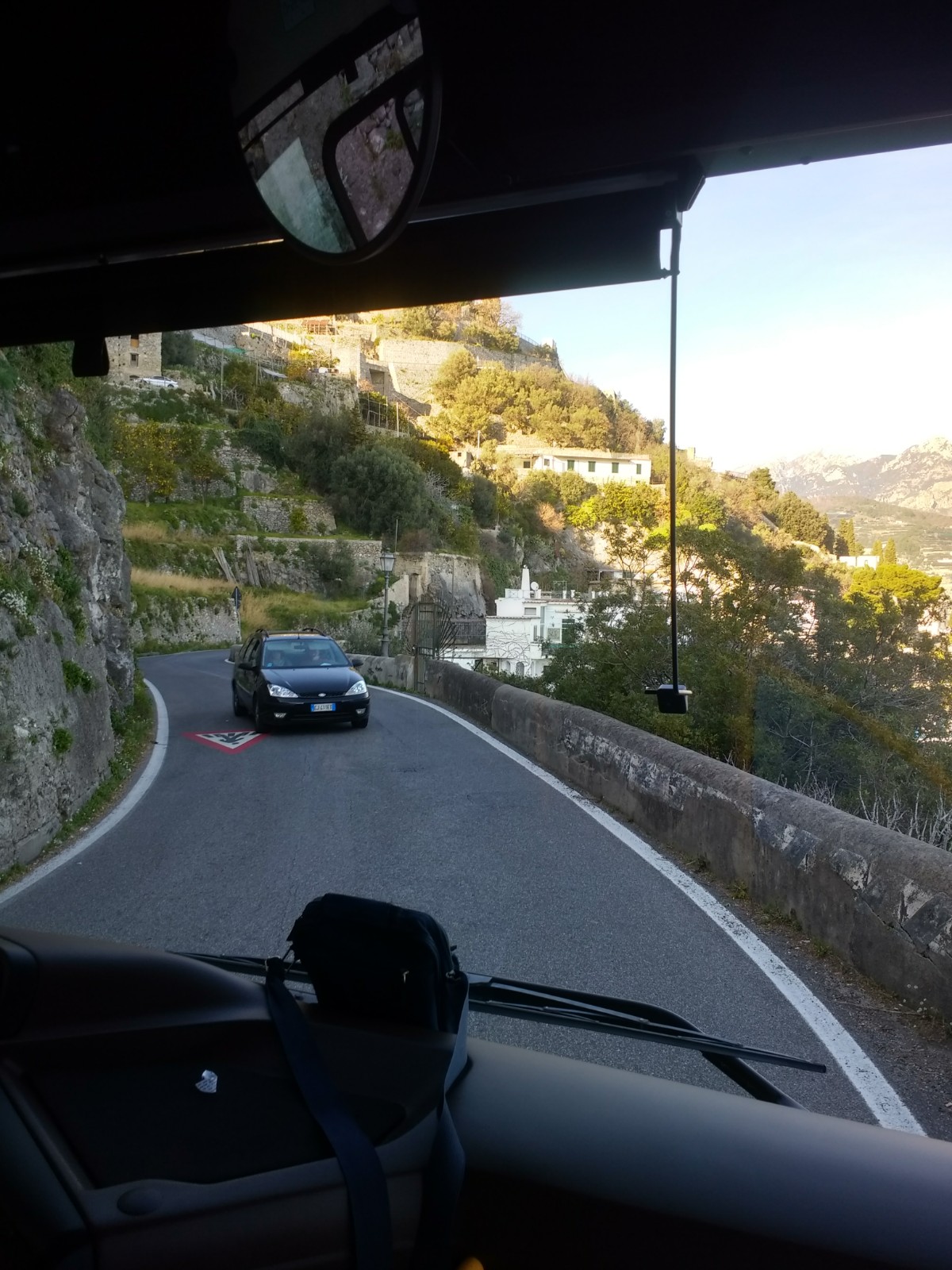
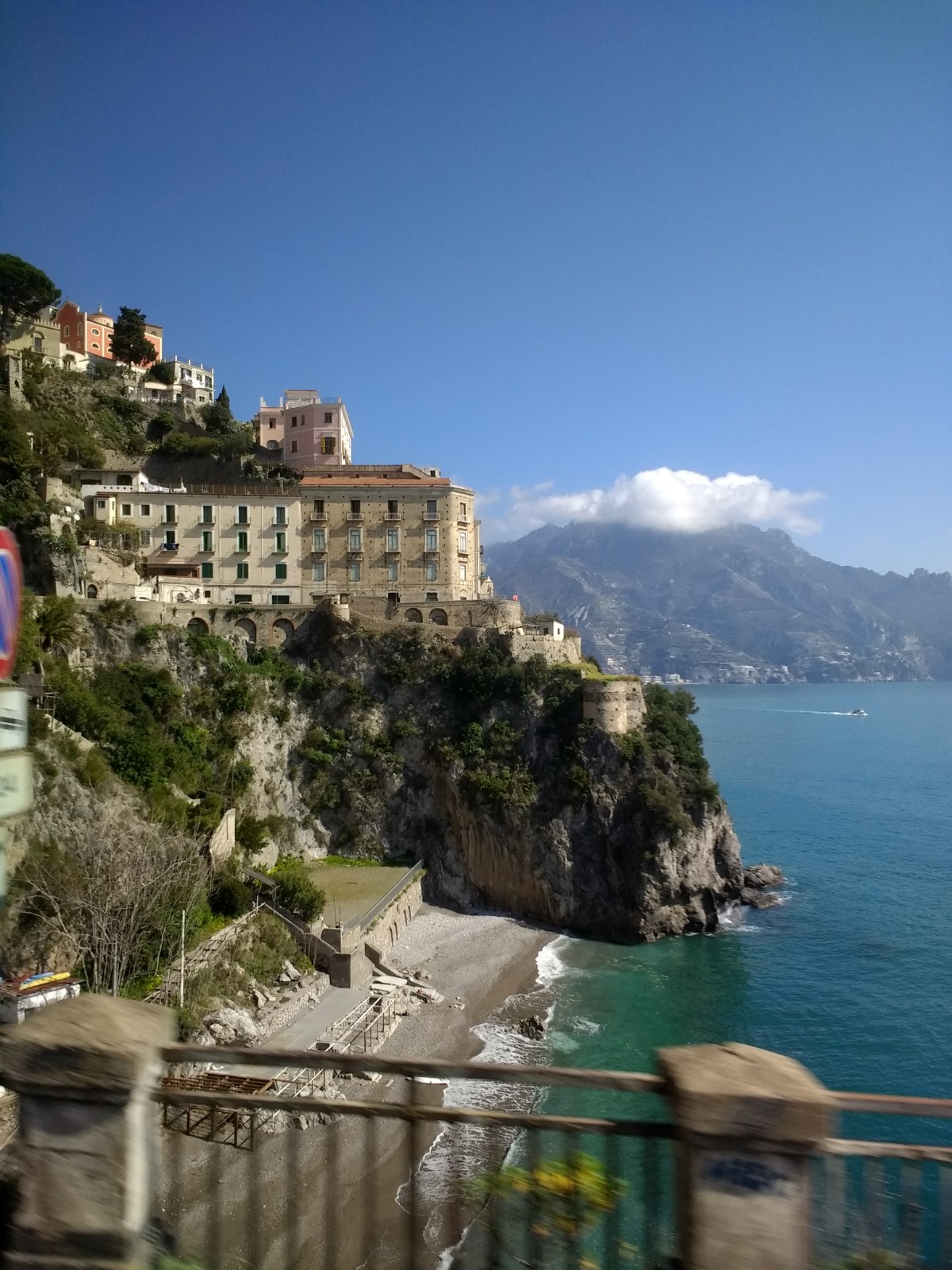
Rather than rent a jaunty little open-top number to drive along the Amalfi coast, we chose to sit back and enjoy the view from a bus from Salerno yesterday. This was the cheap option and avoided any concerns Mark may have had with the Italian drivers on a long, narrow stretch of road with many hairpin bends.

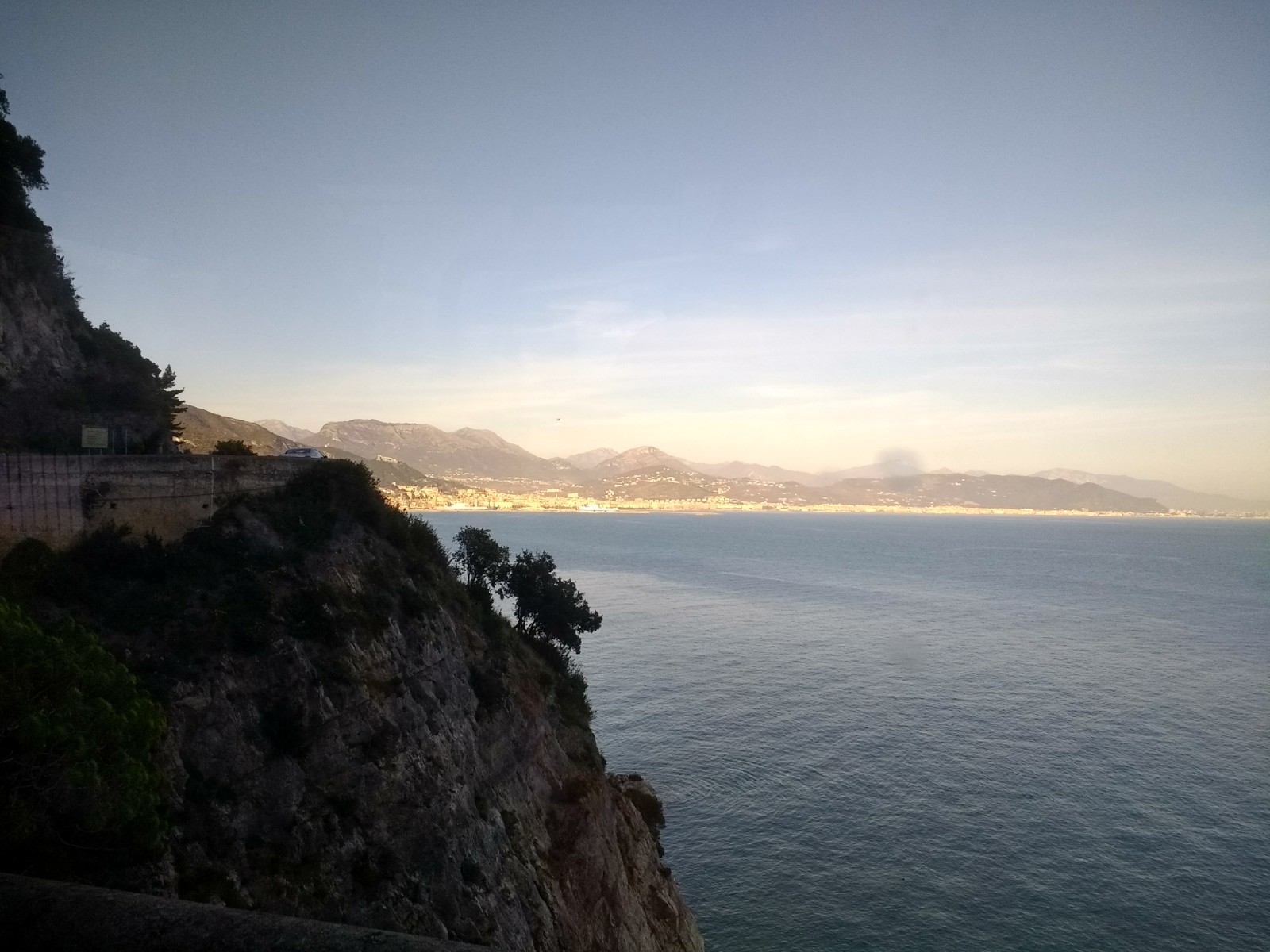
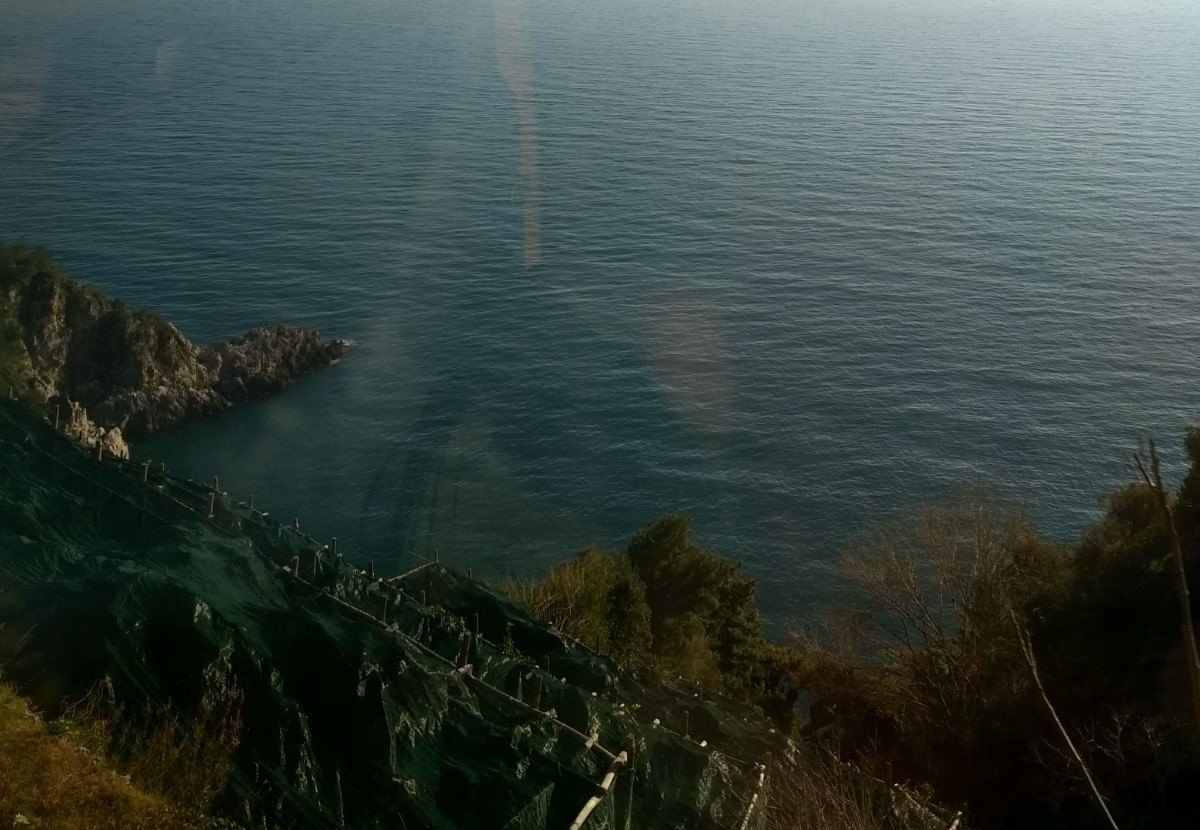
The views were good, but it was a challenge to capture the scenery.

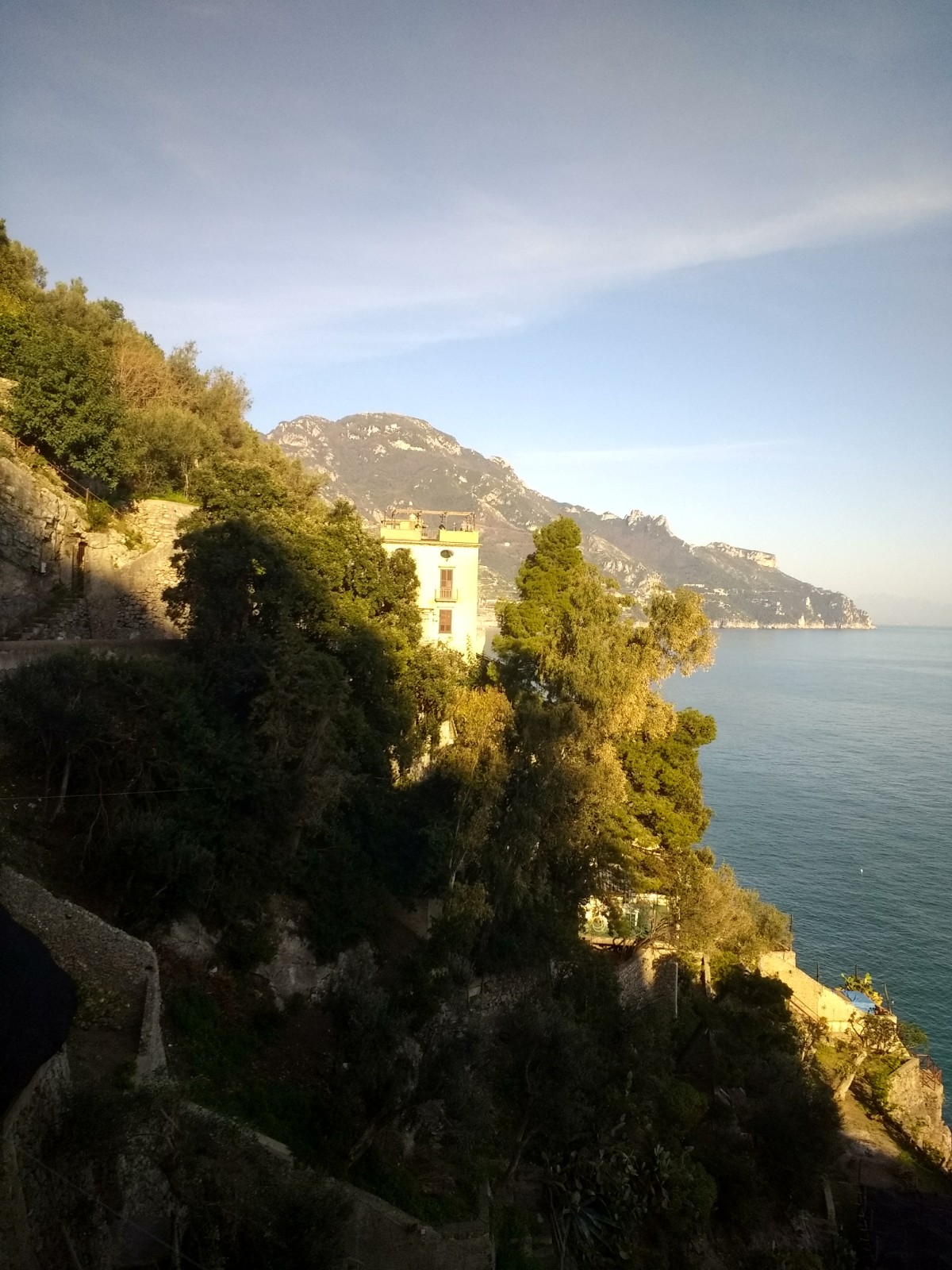
Dramatic views from the bus.

Houses perched on the cliffs must have fabulous views.
Just as in Sorrento, many houses built high up have numerous steps, often cut into the rock face, leading down to a stretch of beach.
Trees clinging onto the rock face.
Lemons are grown all the way along the Amalfi coast in steep terraces. Protected under sheaths of netting until late spring, they are clearly much prized. The lemon trees flower in May, which must be a lovely time to be here, and the fruit is picked between February and October.
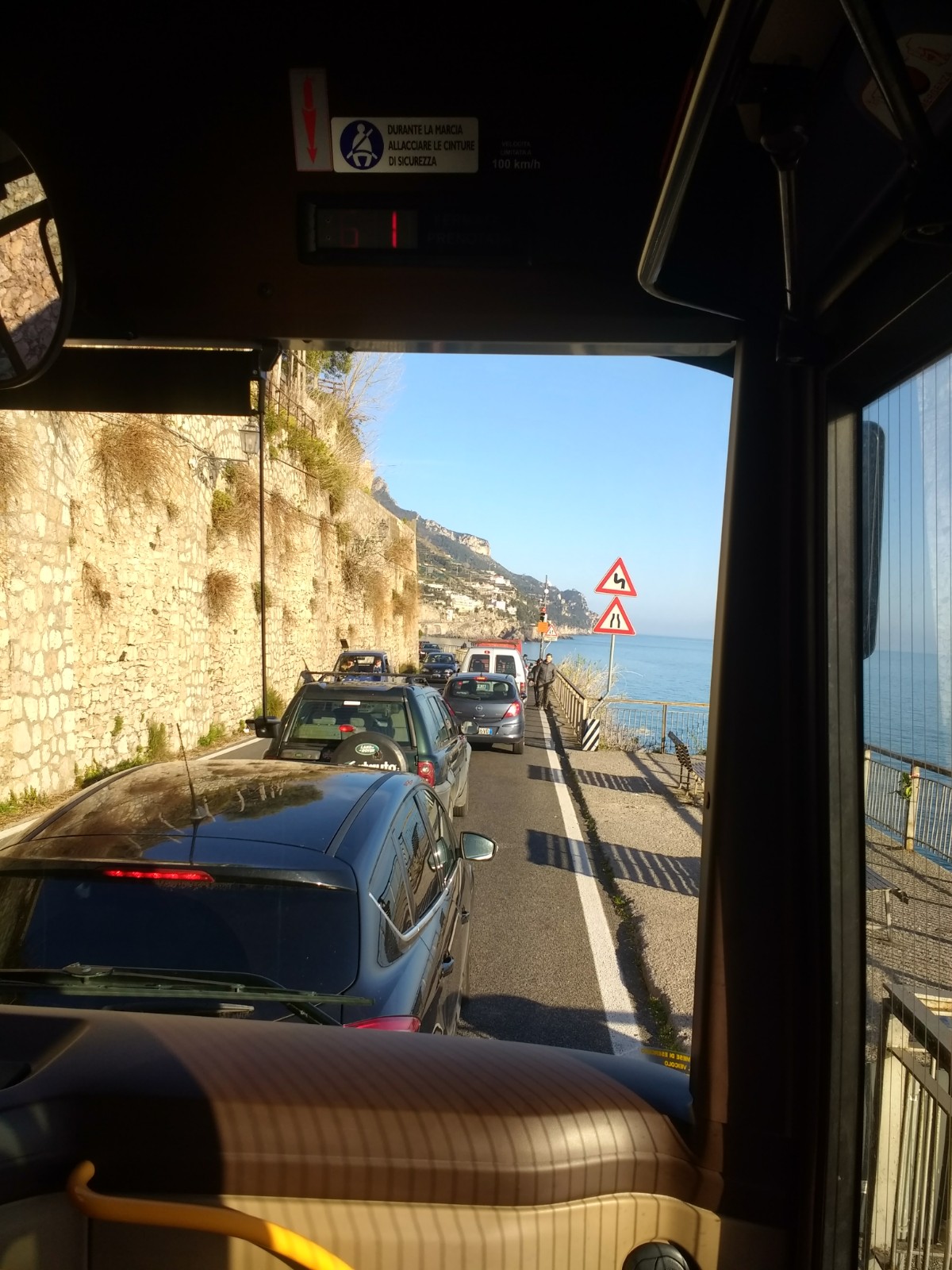
The narrow coast road.
These were the only traffic lights we came across. When going round bends, the driver sounded his horn as a warning.
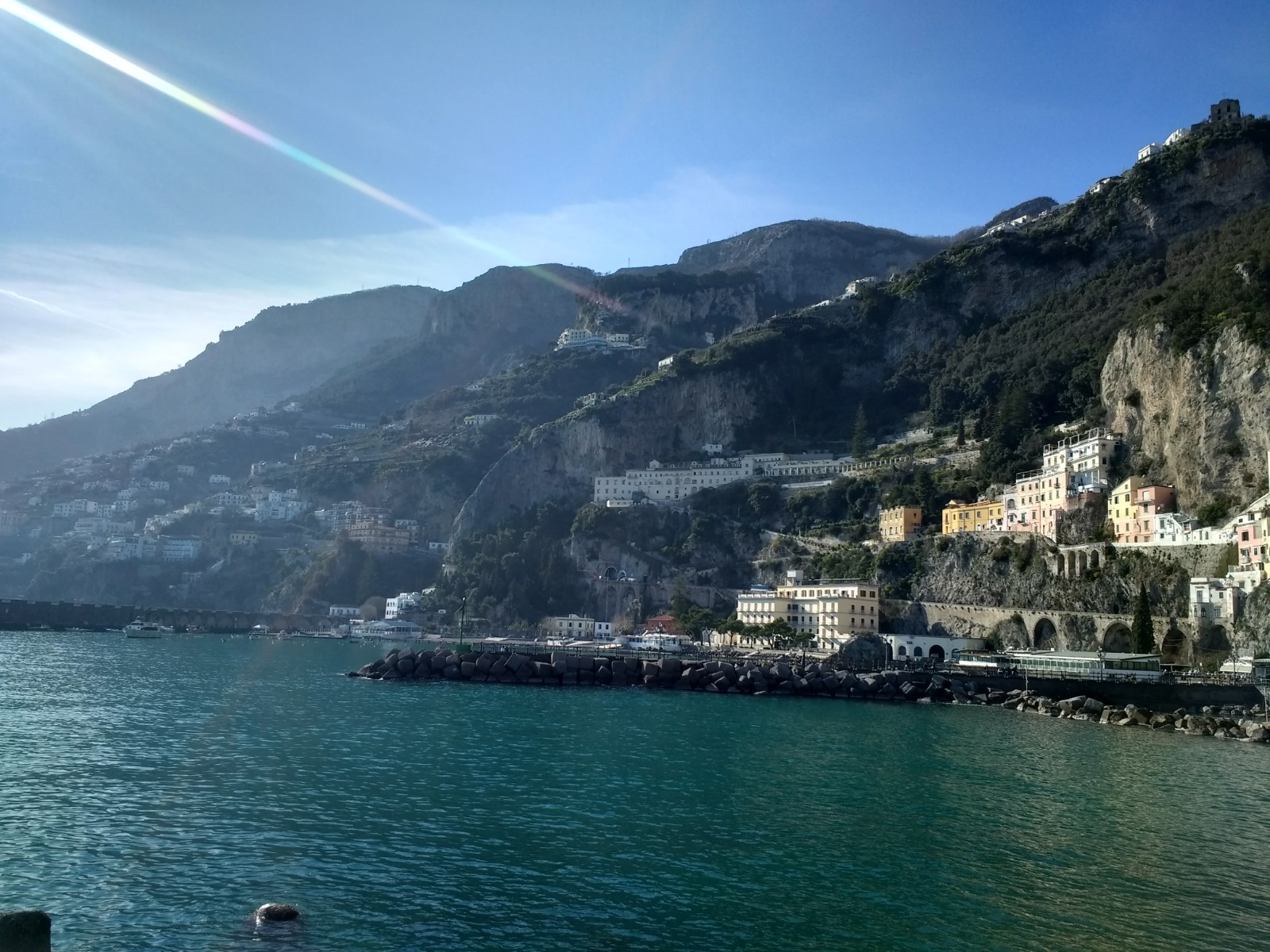
Coming into Amalfi. Even the pot plants, hydrangeas in this case, were protected.

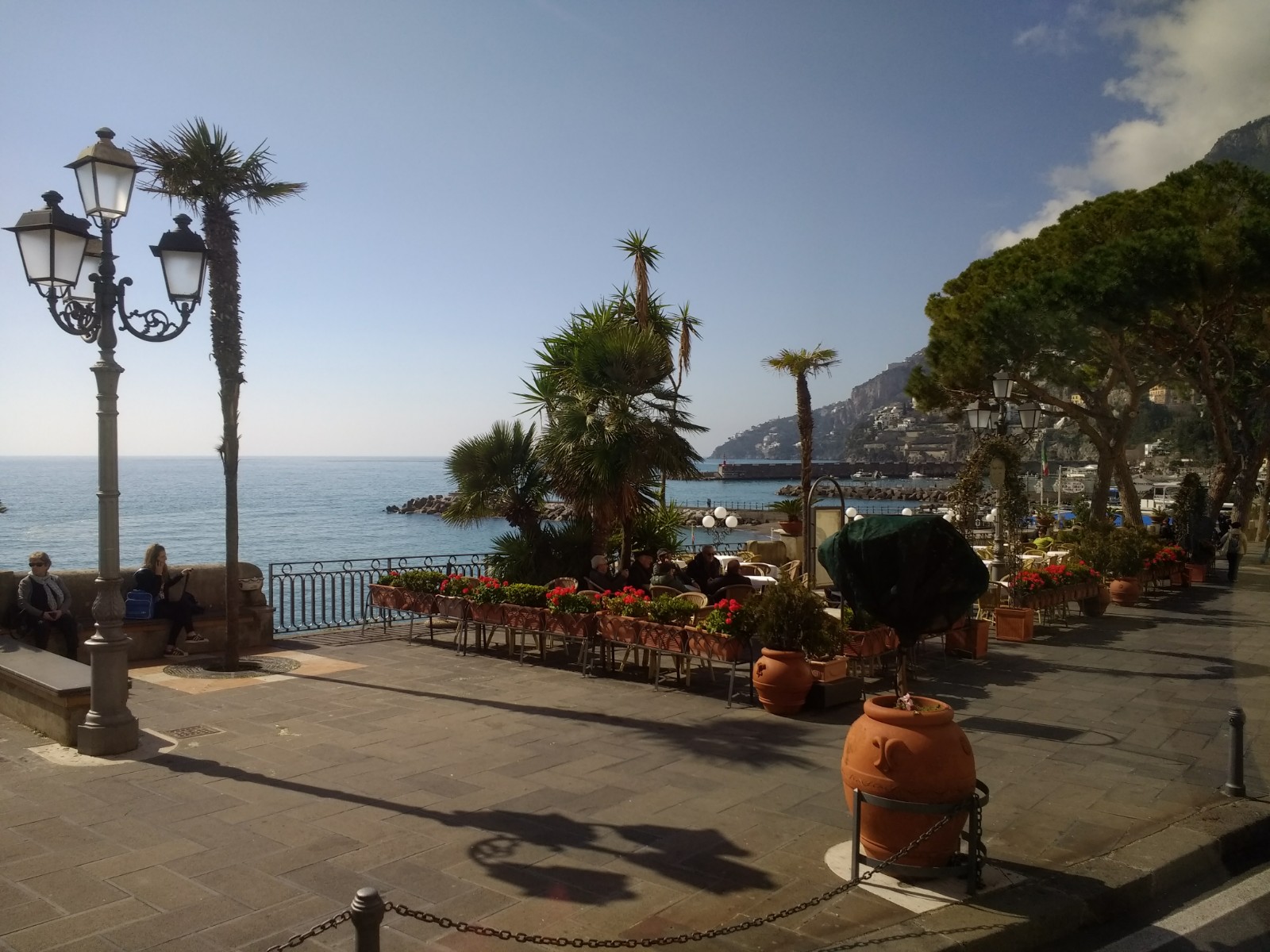
With the sunny skies and the warmest temperatures we have had since we left the UK, we had a lovely, lazy saunter round the town, a delicious lunch of fresh fish and, of course, gelato, before heading back to the bus.

We saw no sign of anything to mark the first day of Lent, other than a lot of children, who had been given the day off school.

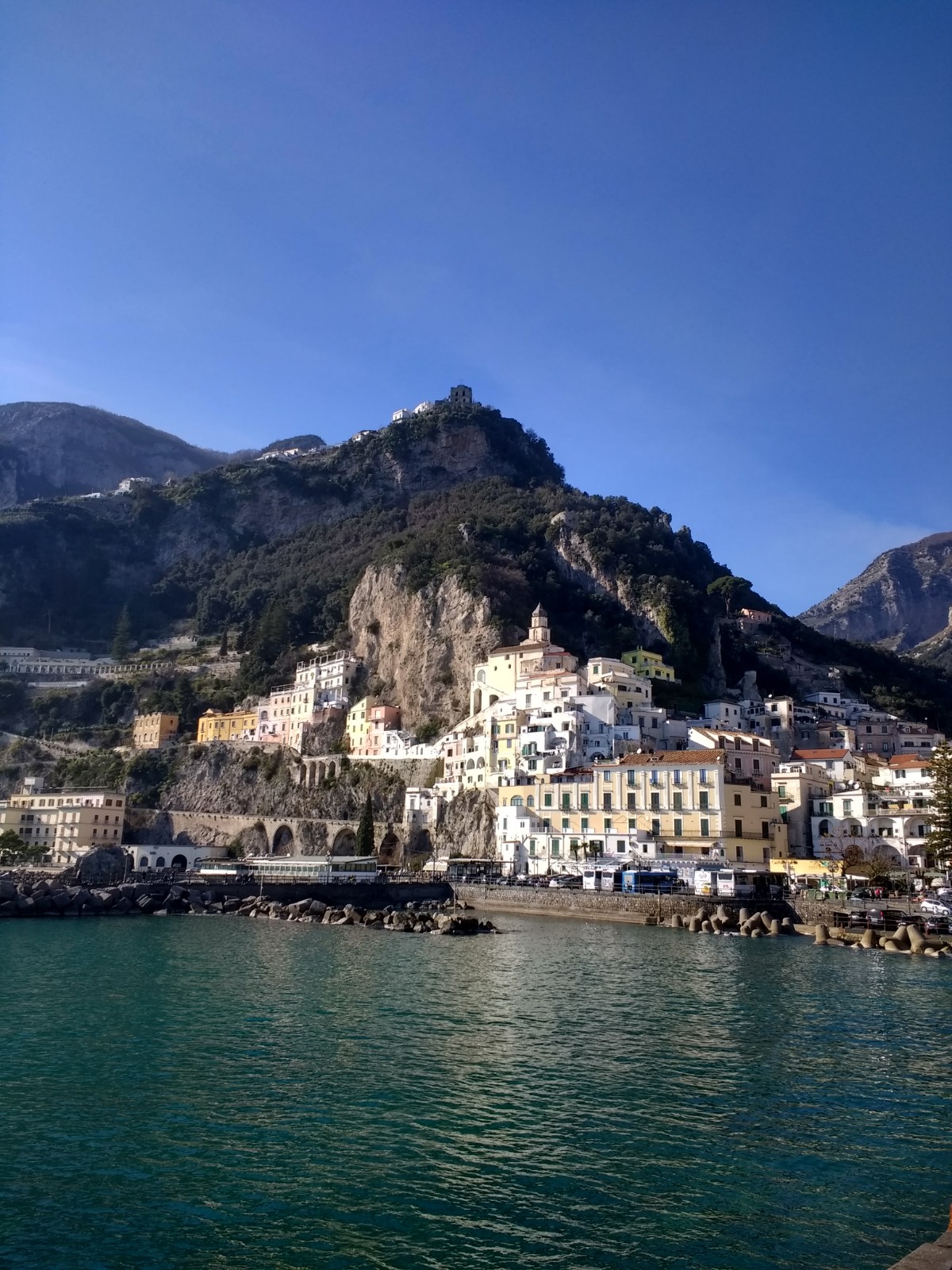
Amalfi
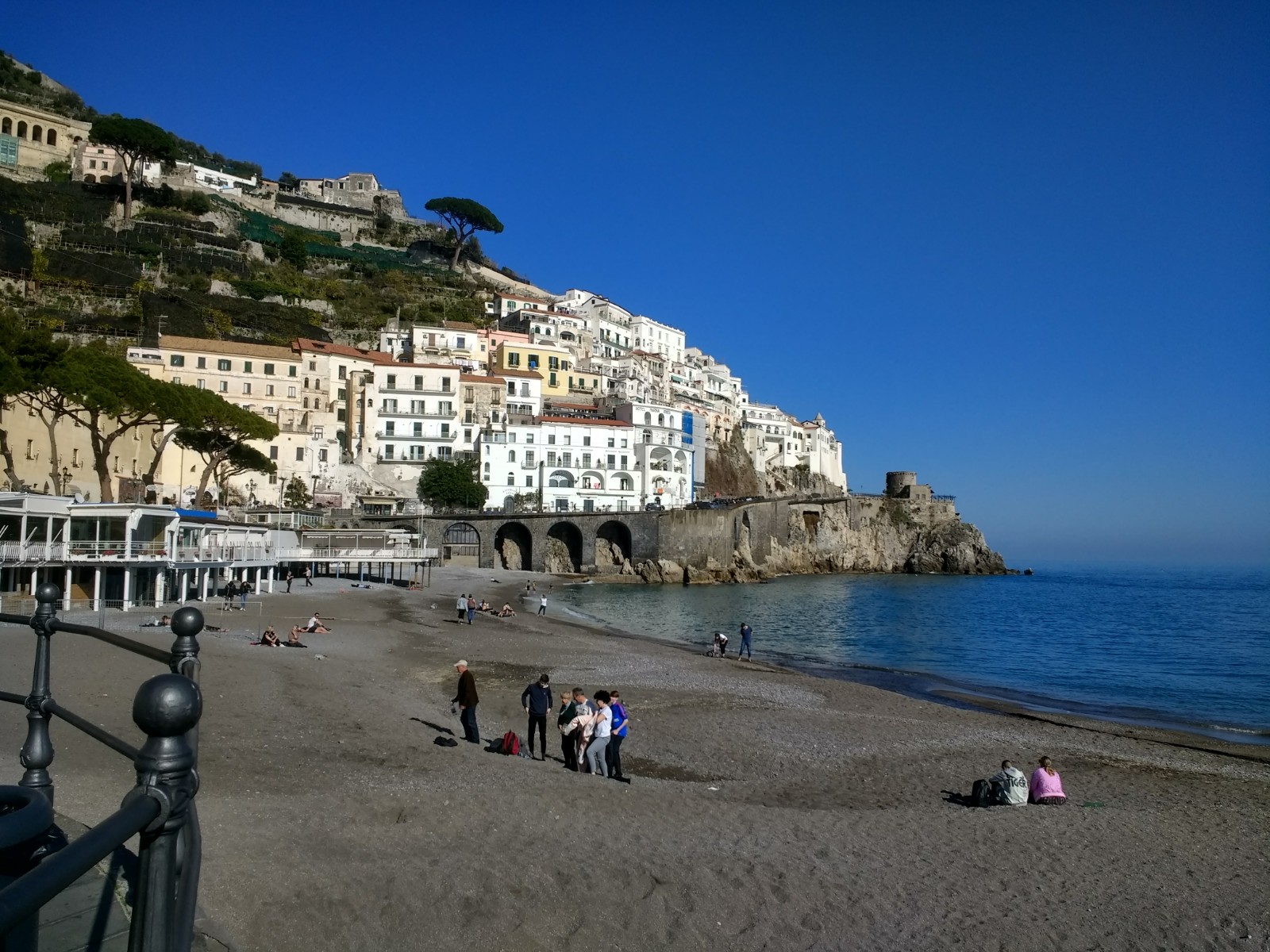
Dark volcanic sand on Amalfi beach. There were a few sunbathers, but I think they were tourists. Although it was about 18 degrees centigrade, a lot of the locals were still in their winter coats and woolly hats.
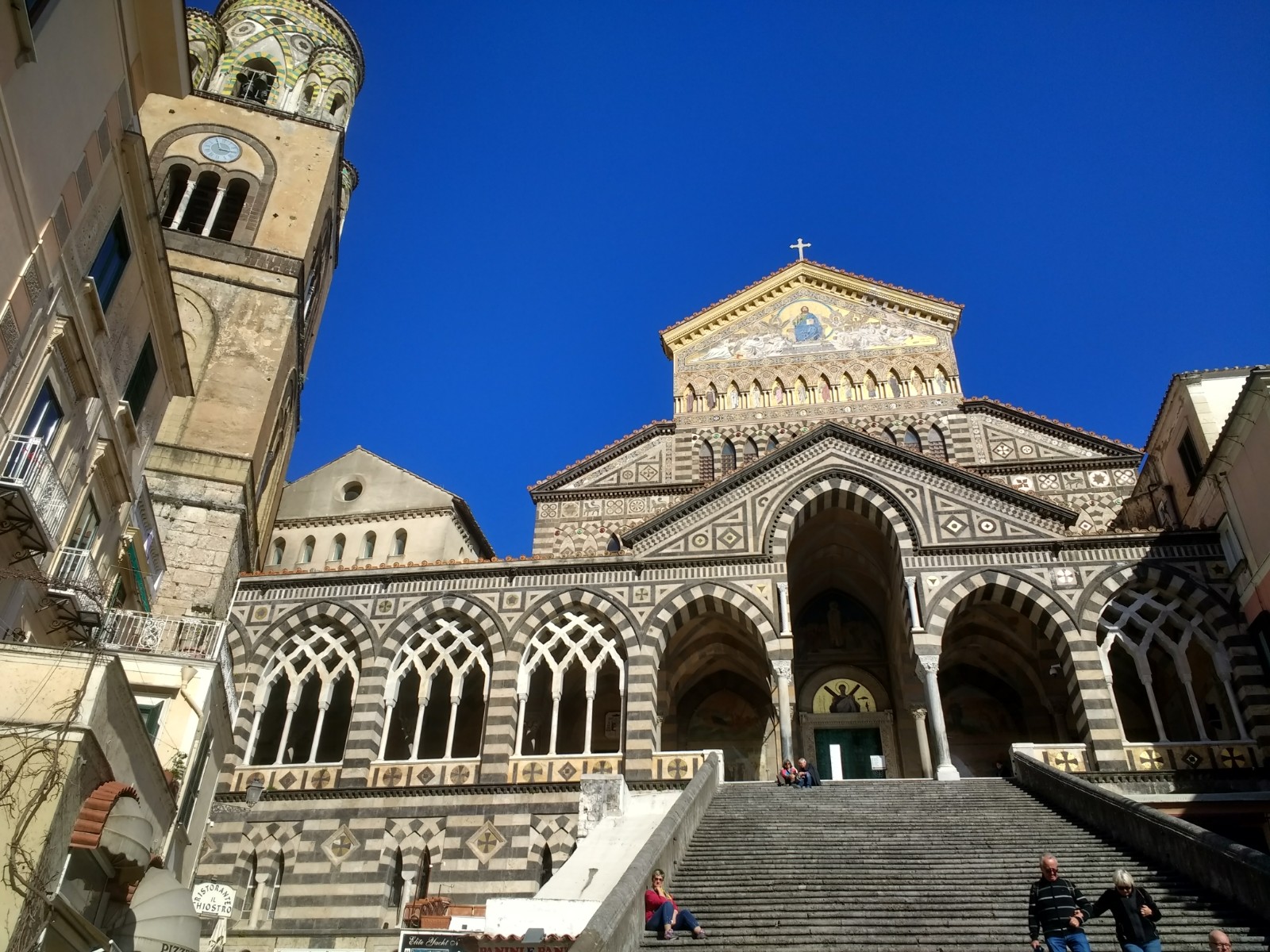
St Andrew’s Cathedral in Amalfi
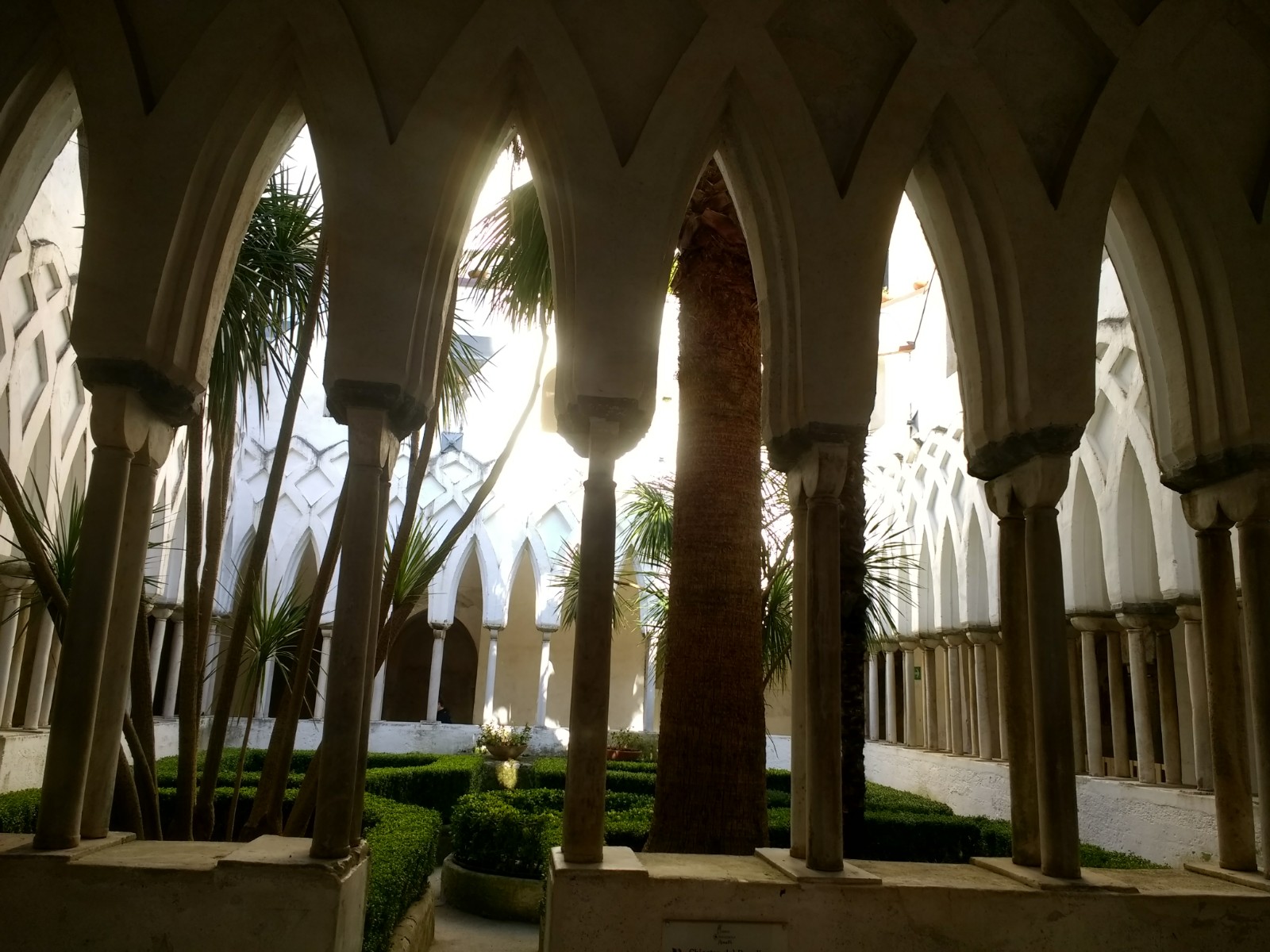
The Cathedral’s Cloisters
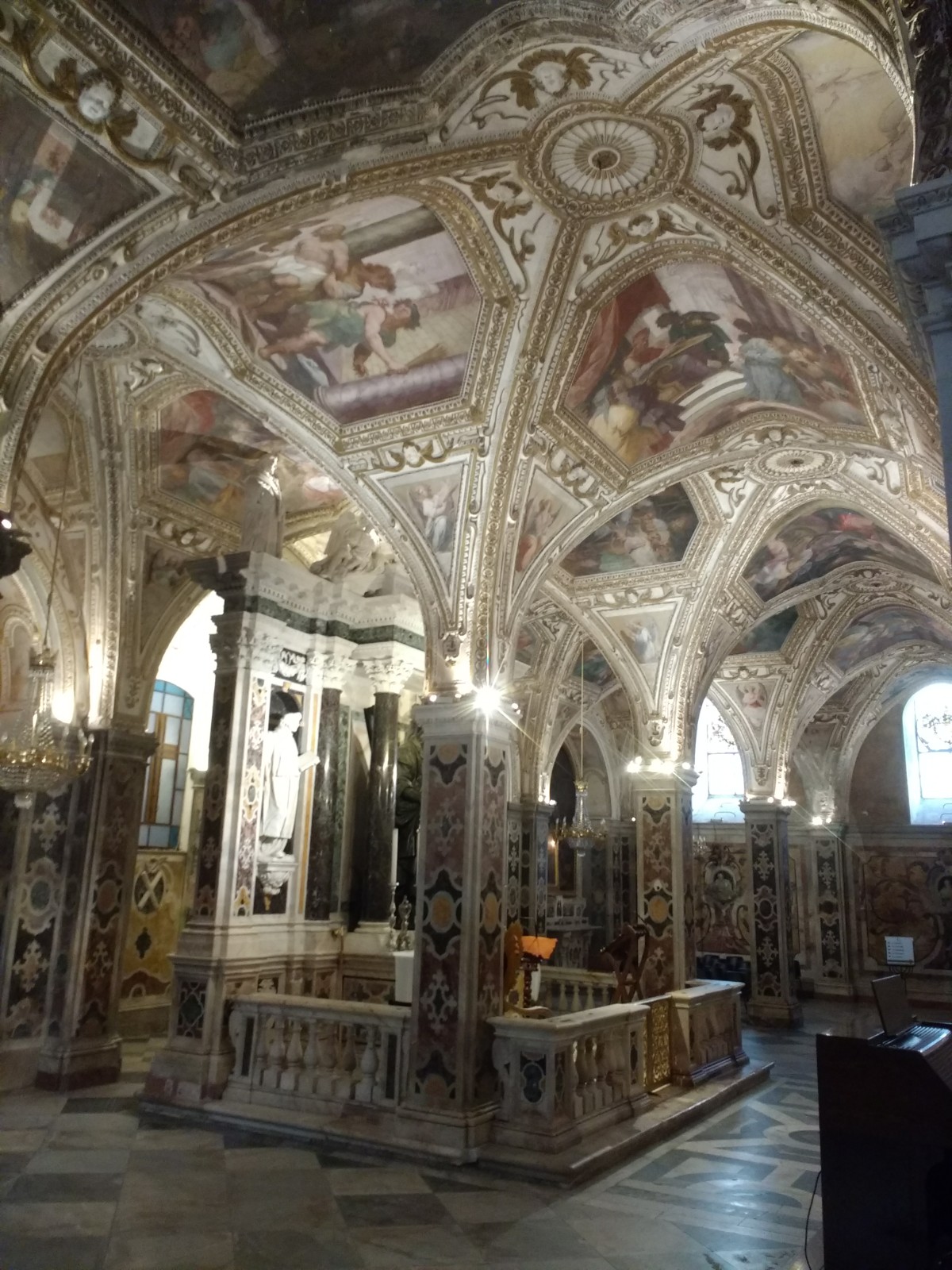
The Cathedral crypt. St Andrew was crucified in Greece, but his body was recovered during the fourth crusade, and is now housed in this crypt.

More fireworks were let off on the street last night – on Ash Wednesday! Just another sign of the random nature of life here. Neither of us went out to look as we were tucked up in bed, exhausted after our long day.

No pancakes, but a parade – Martedo Grasso In Naples

We won’t know until the start of Lent tomorrow whether some of the behaviour we’ve recently witnessed in the streets around us is due to the Carnevale, or is just part of the madness that is Naples.

In the last week or so the neighbourhood has been treated to boxes of fireworks being casually let off in the street late at night. The most surreal part of this is that people, and cars, pass by without a second glance, while we watch from our balcony, mesmerised.

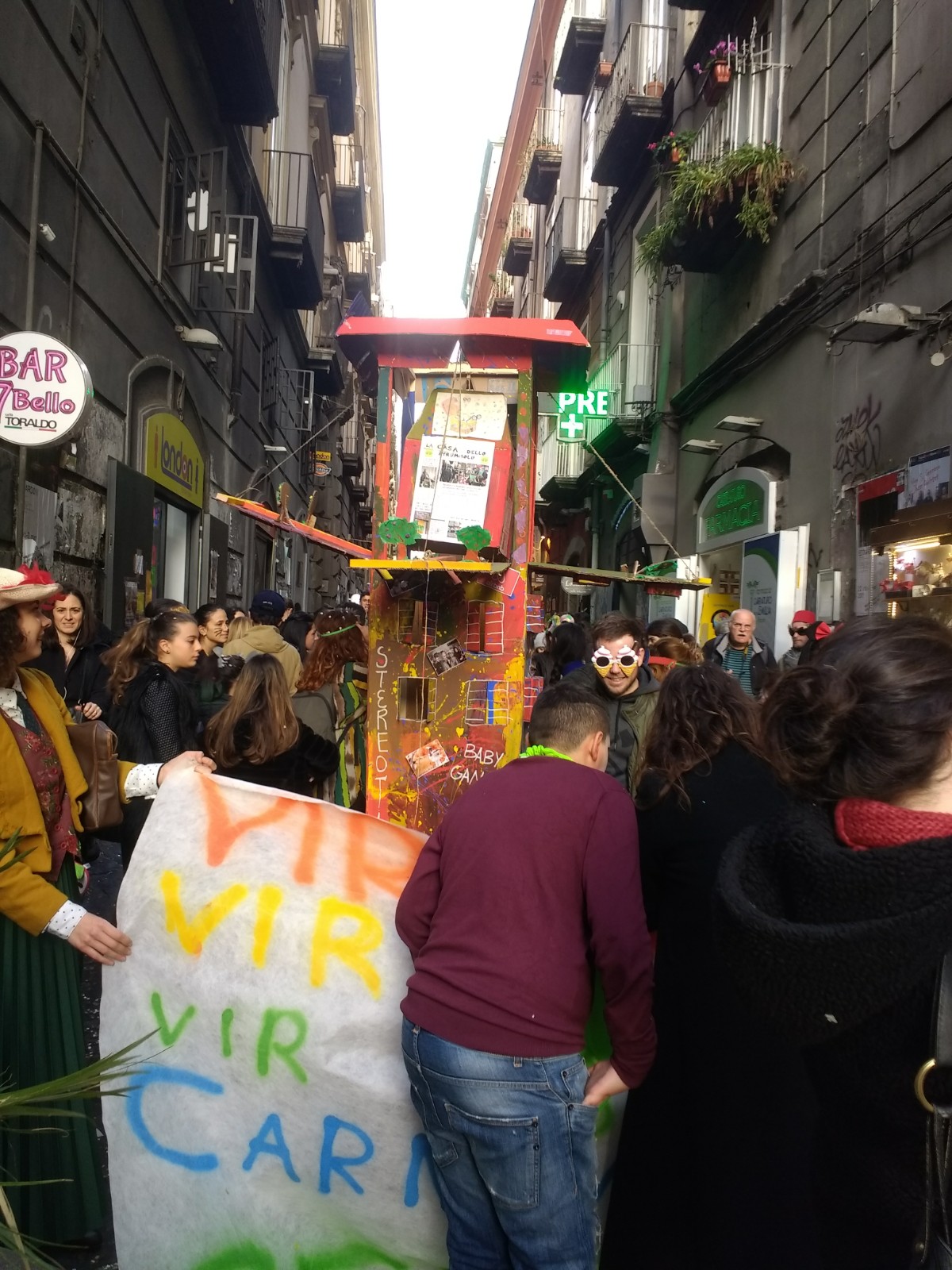
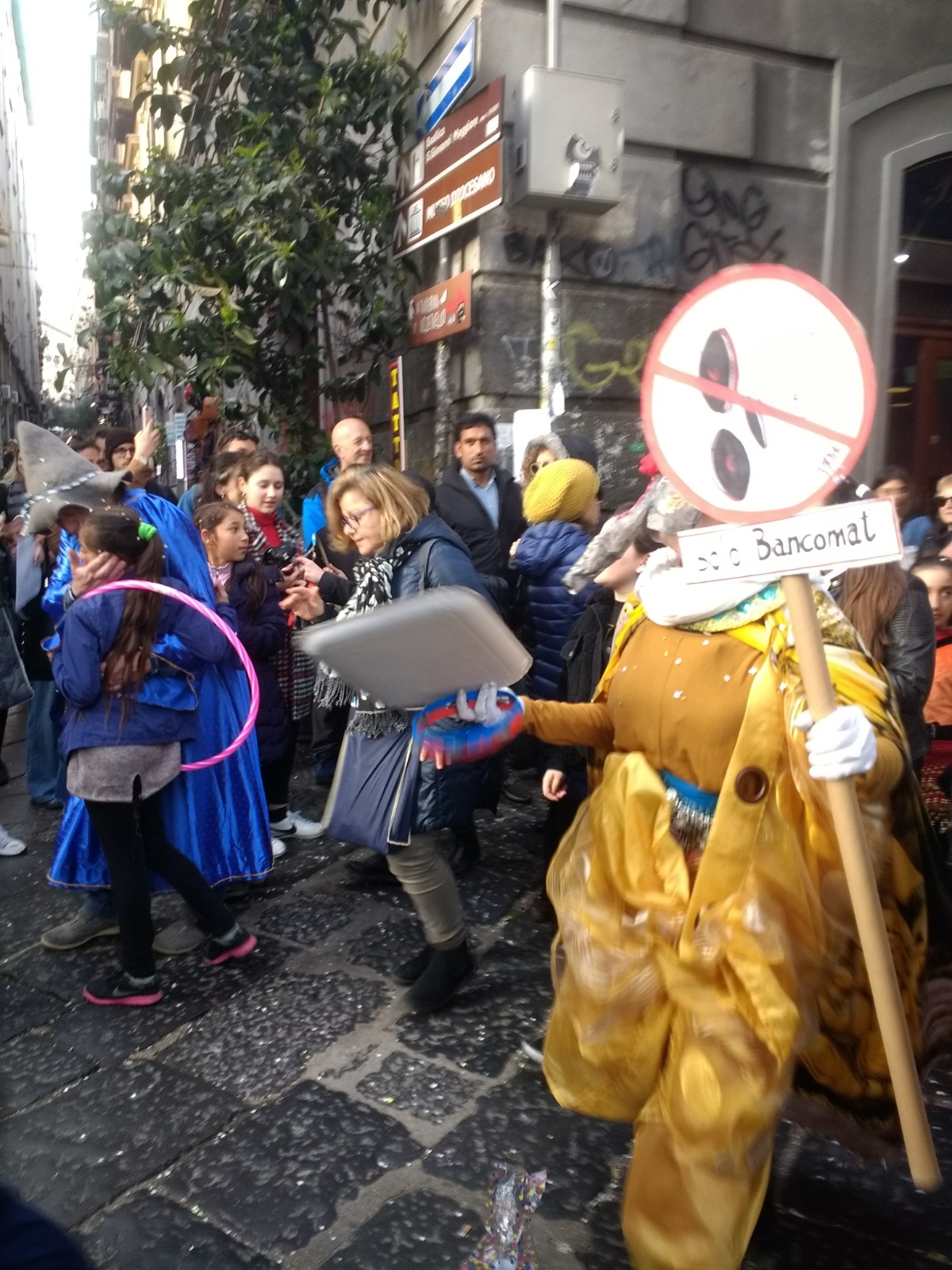
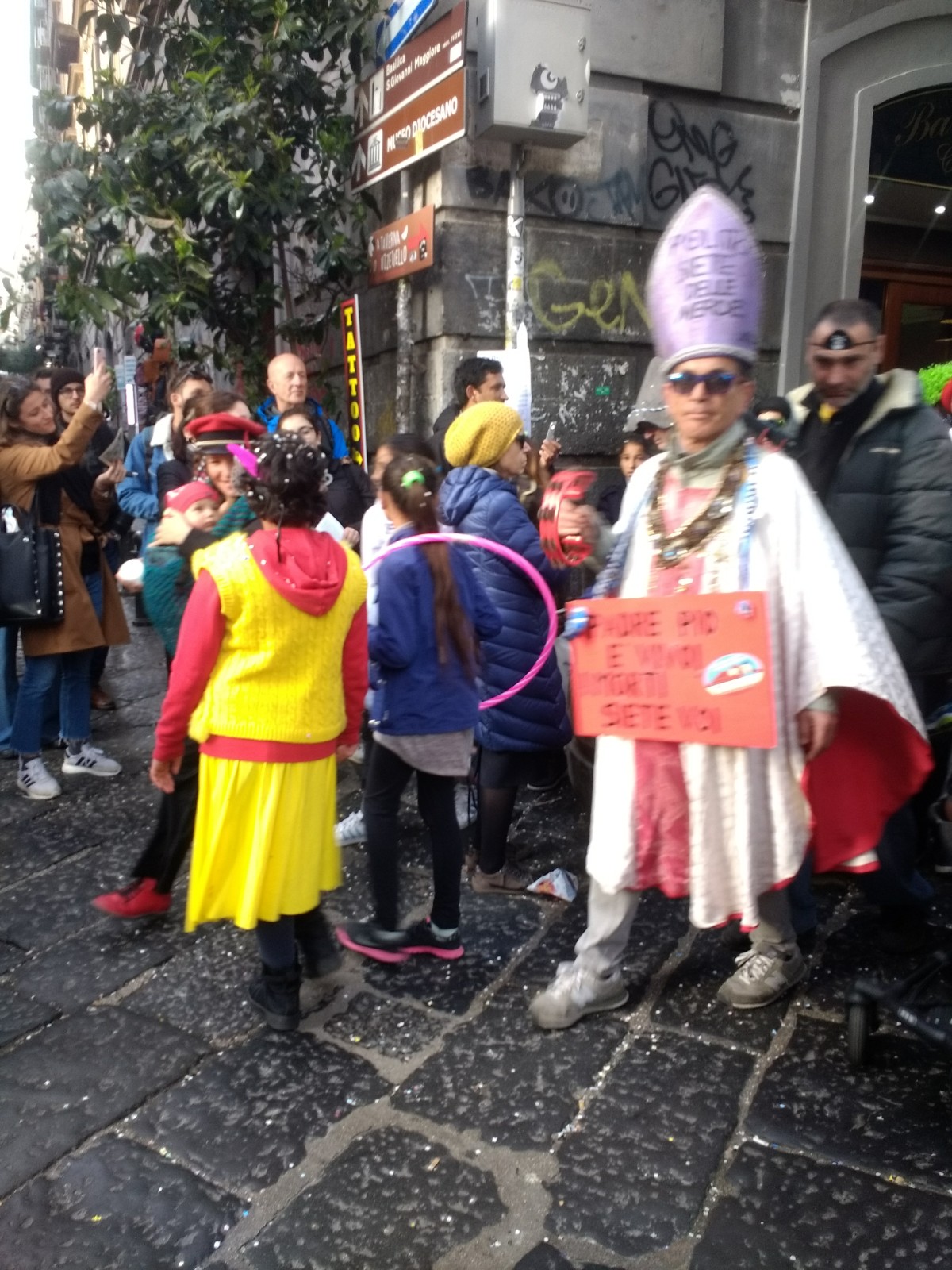
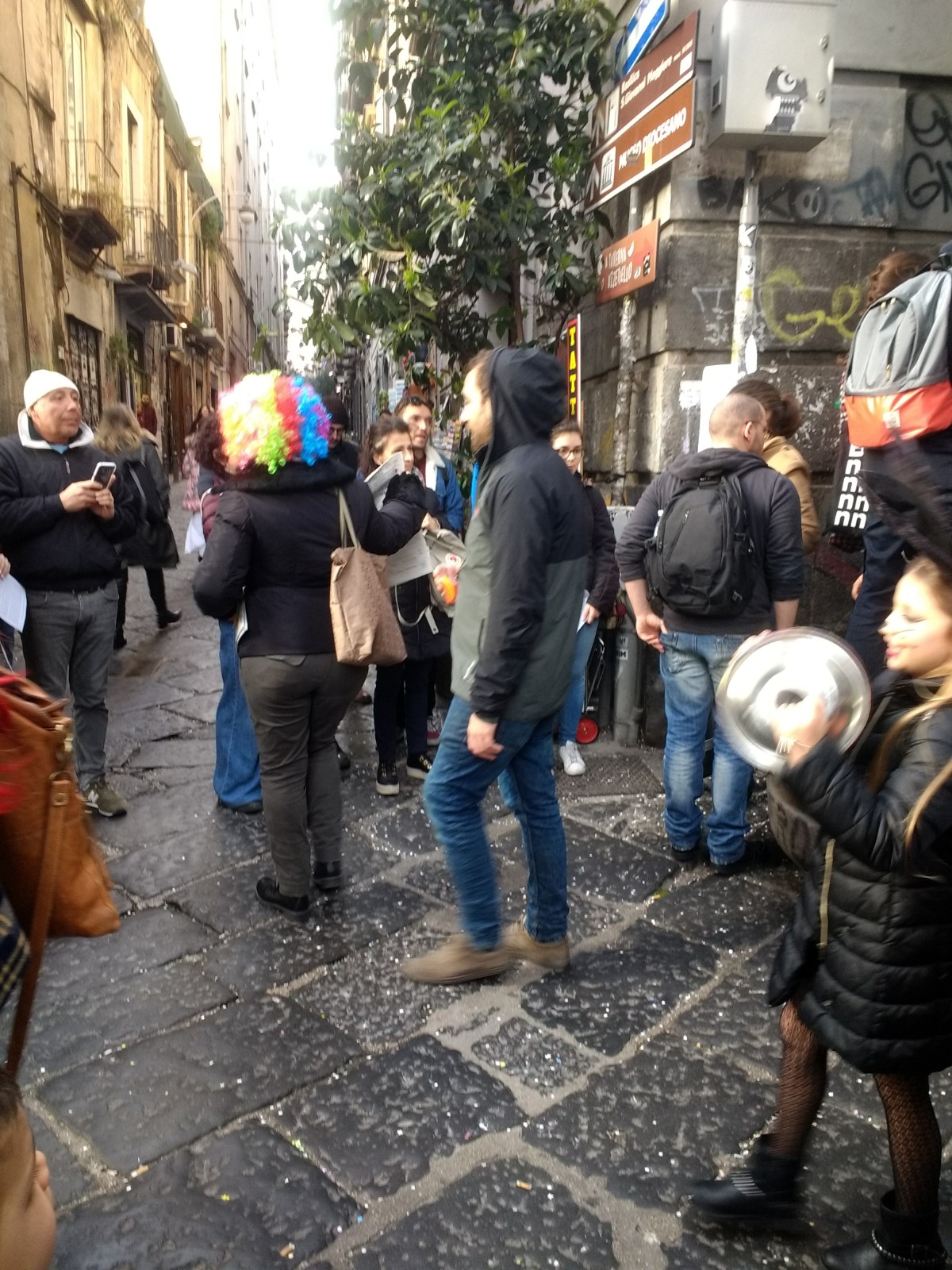
Today we bumped into our first parade, albeit one that was chaotic and disorganised.

Waiting for the parade to assemble.
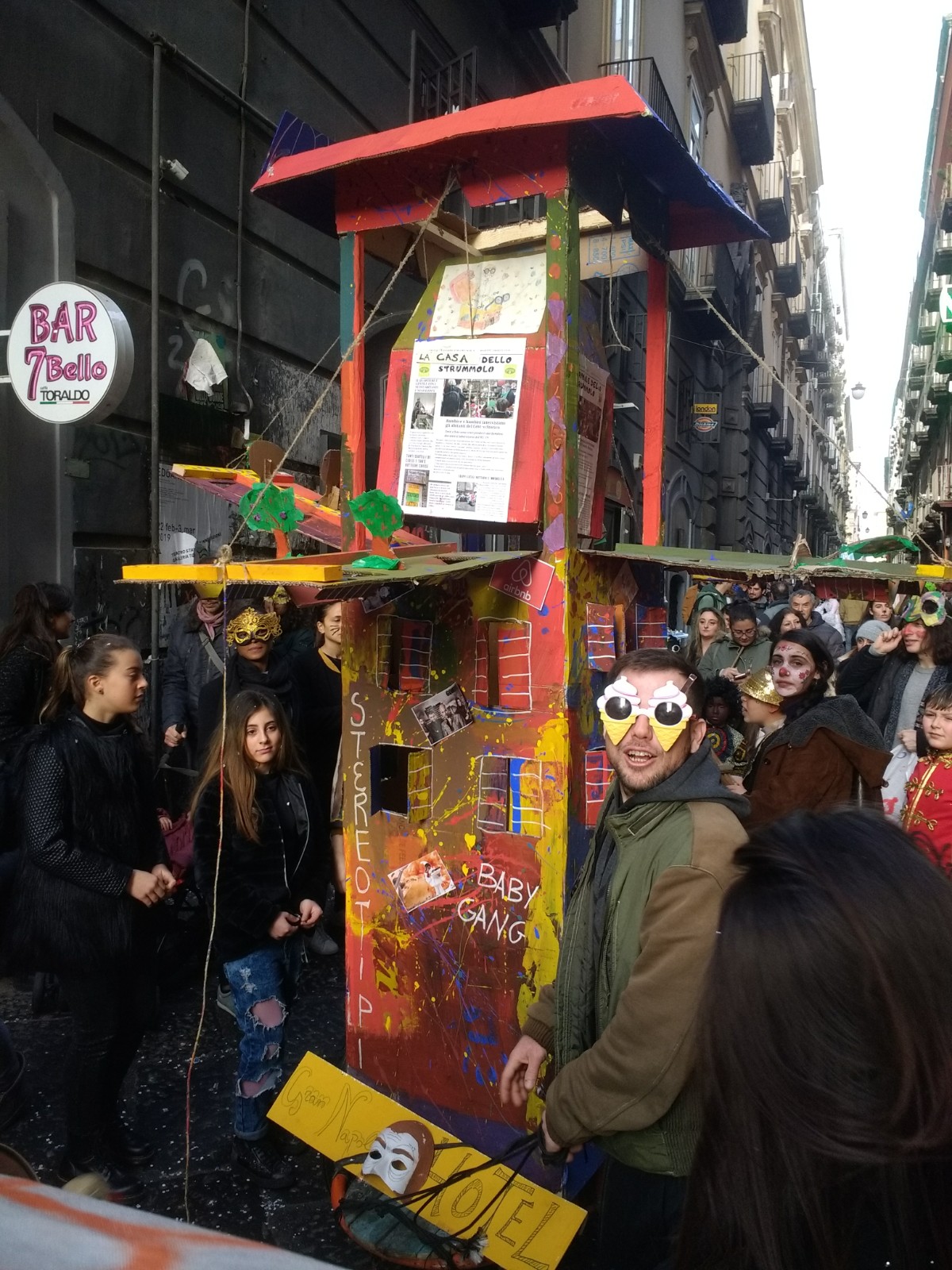
What the floats lacked in style,

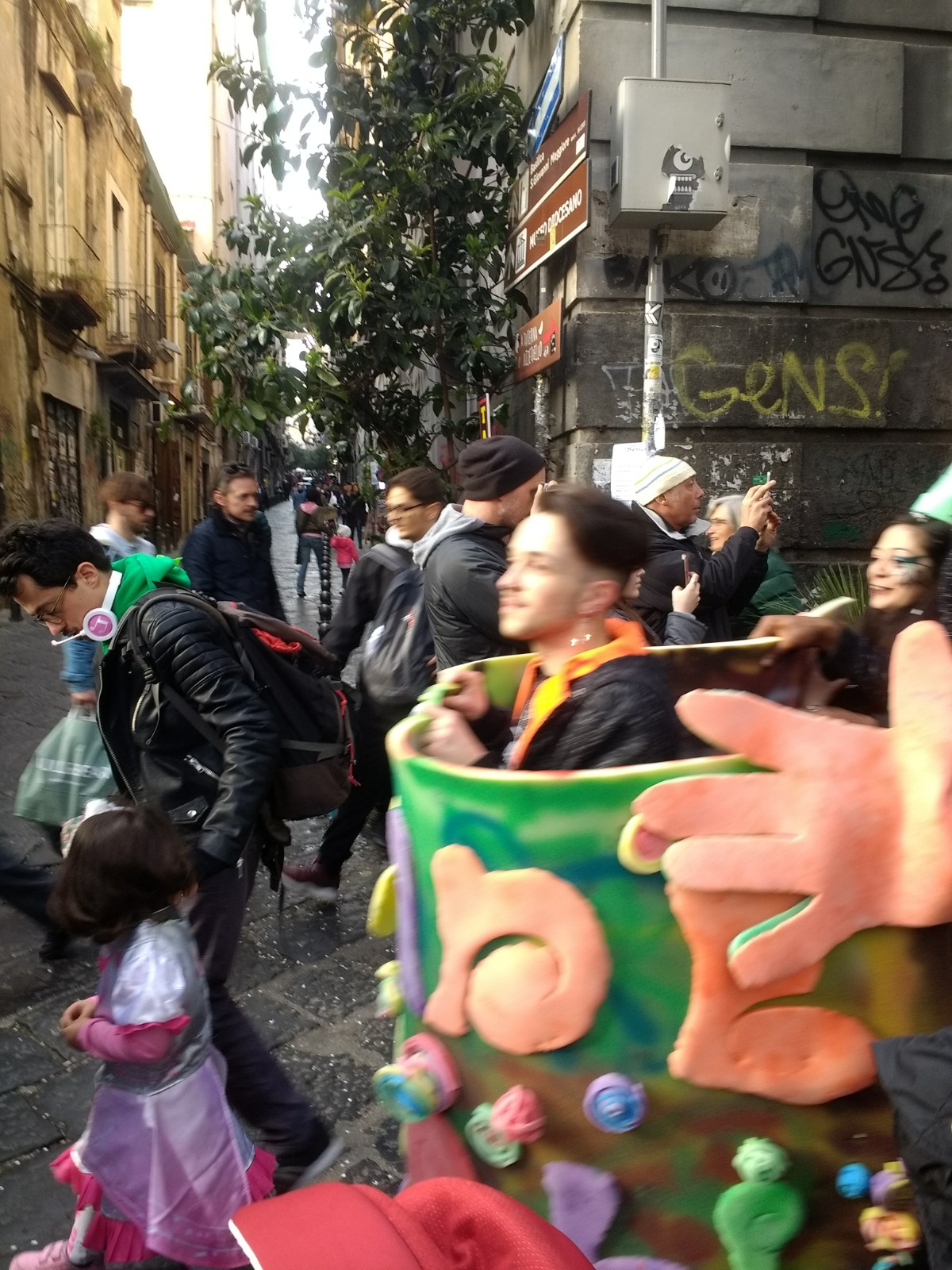
was made up for in enthusiasm.
I wonder if this lady is making a political point. Italy, as a society, is very dependent on cash.
I’ve seen the Pope wearing sunglasses, but not trainers.
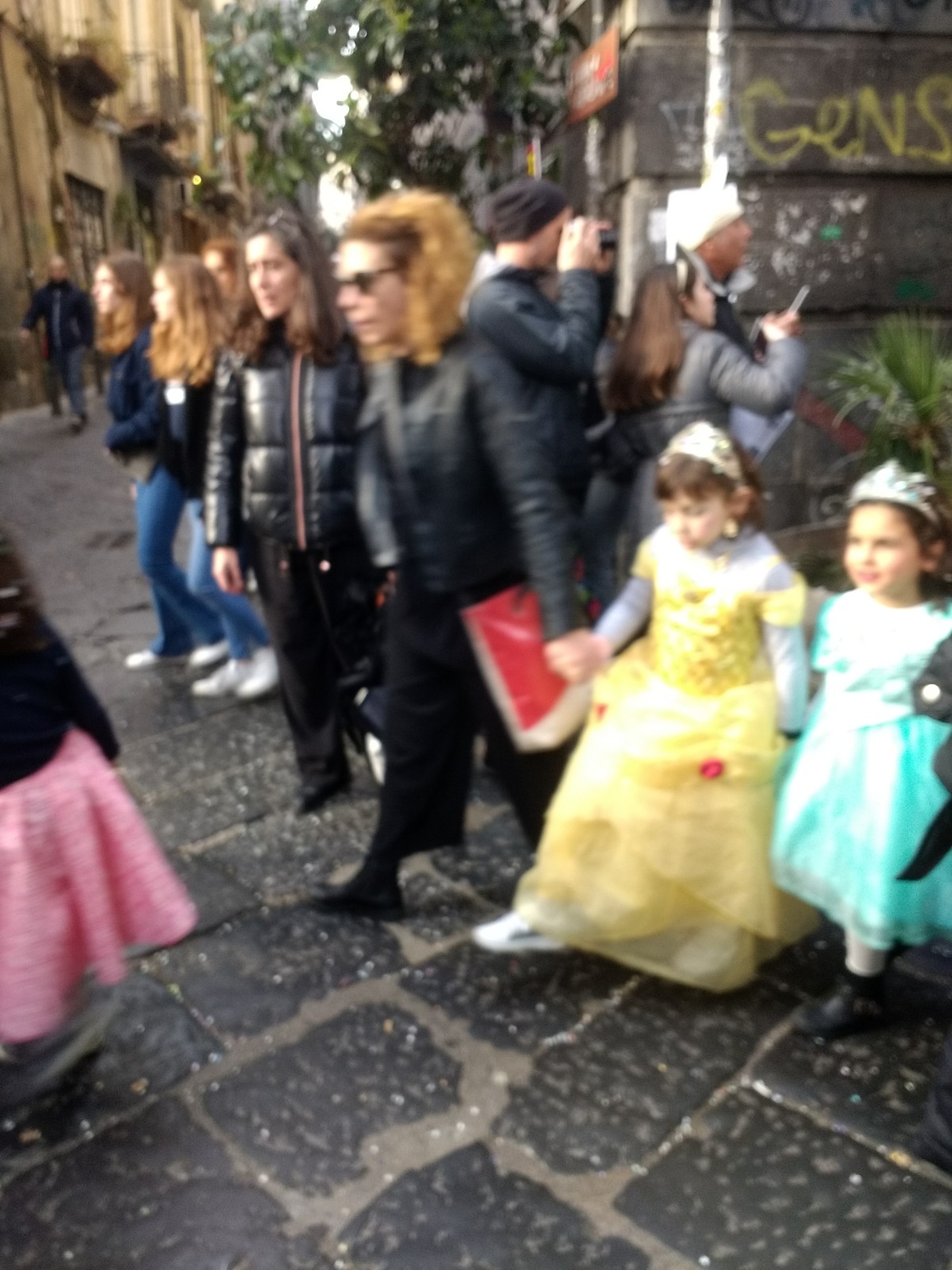
Wear your favourite princess outfit.
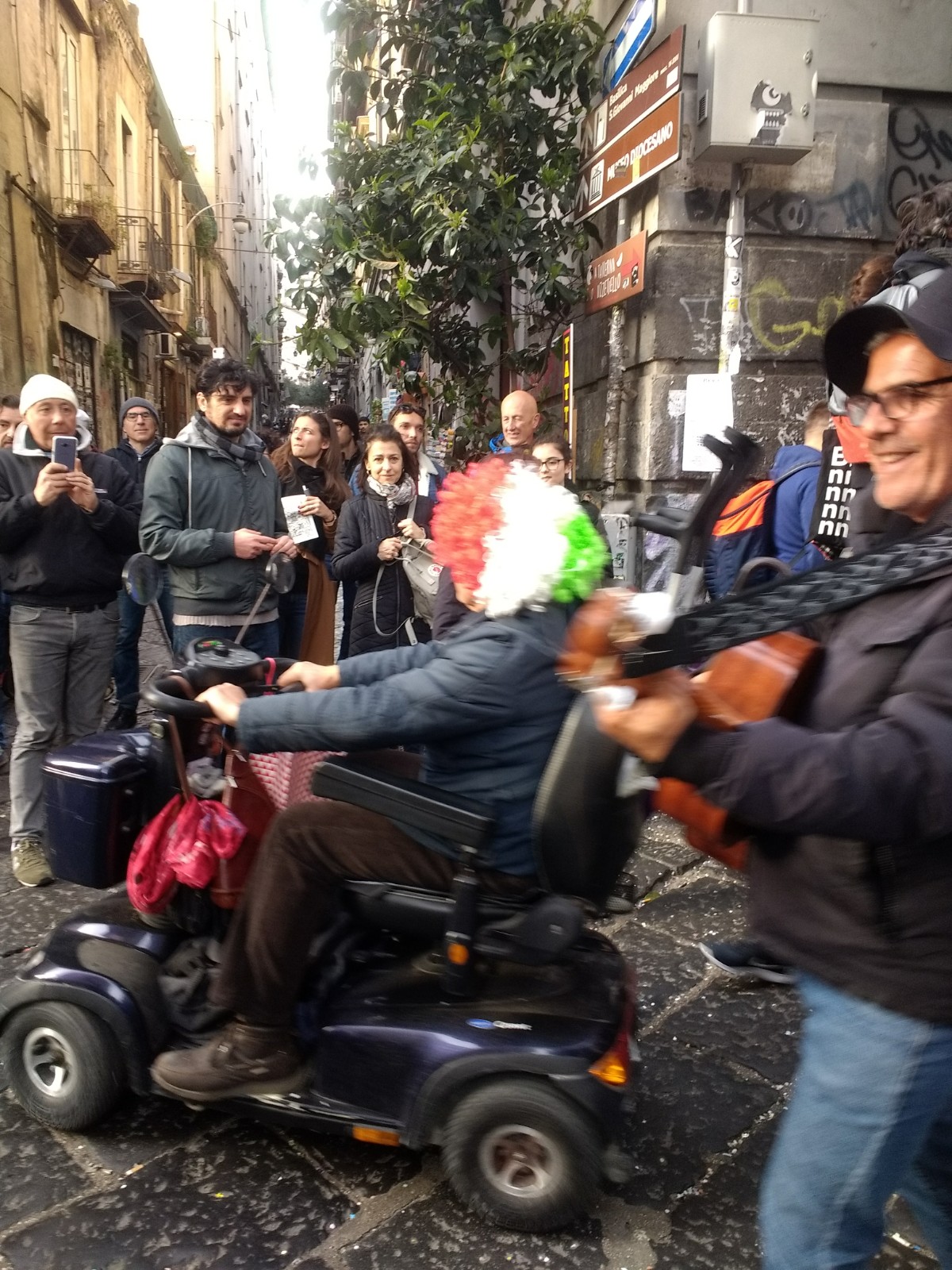
Grab a wig, a guitar,

or a pair of cymbals, and join in.

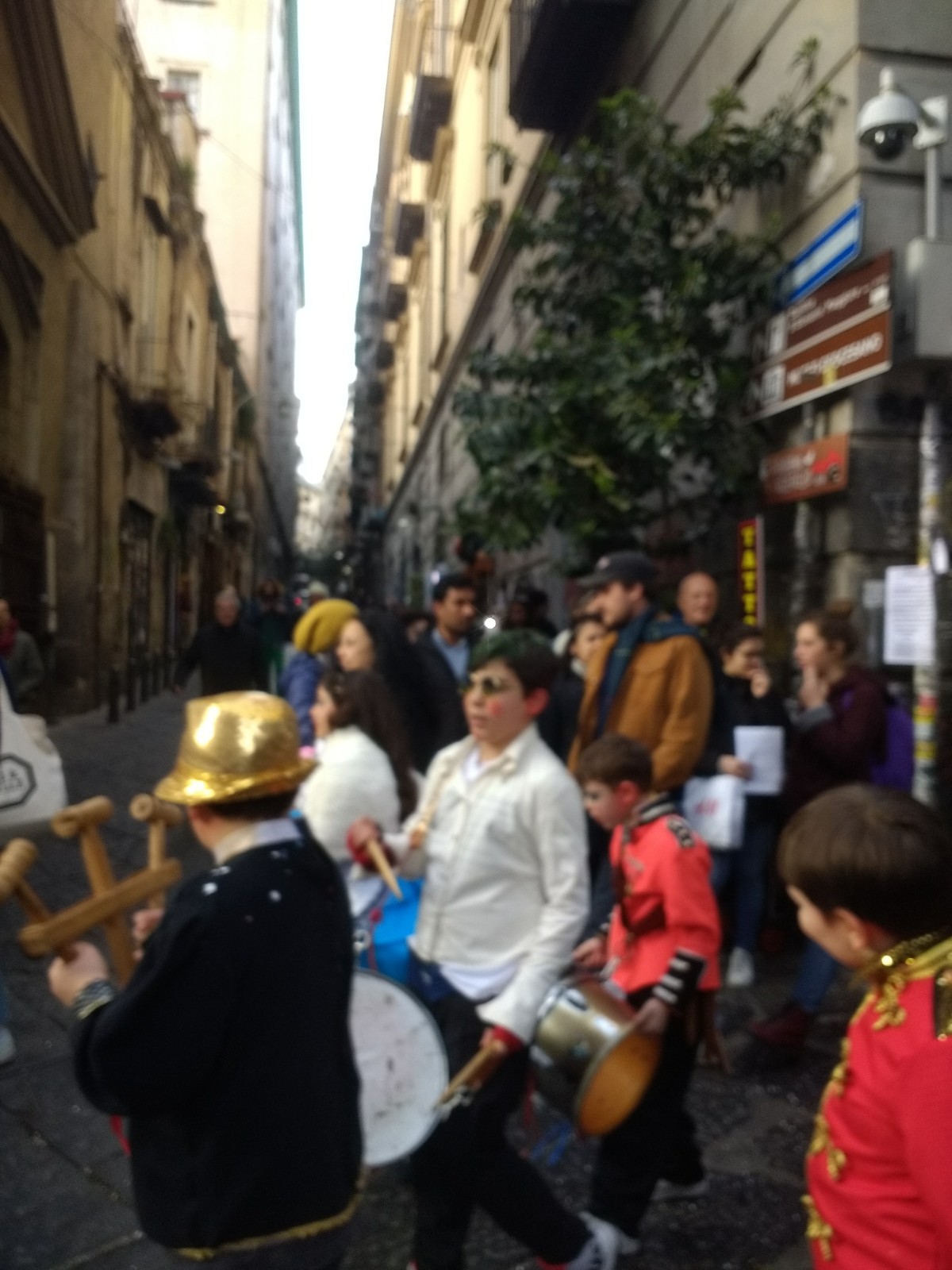
The idea seemed to be to make a noise, rather than play a tune.

Children’s fancy dress outfits are now being sold off cheaply, as they will not be needed in Lent. The confetti though, littering the cobbled streets, will continue to be evident for a good while to come.

Holiday Feeling in Sorrento

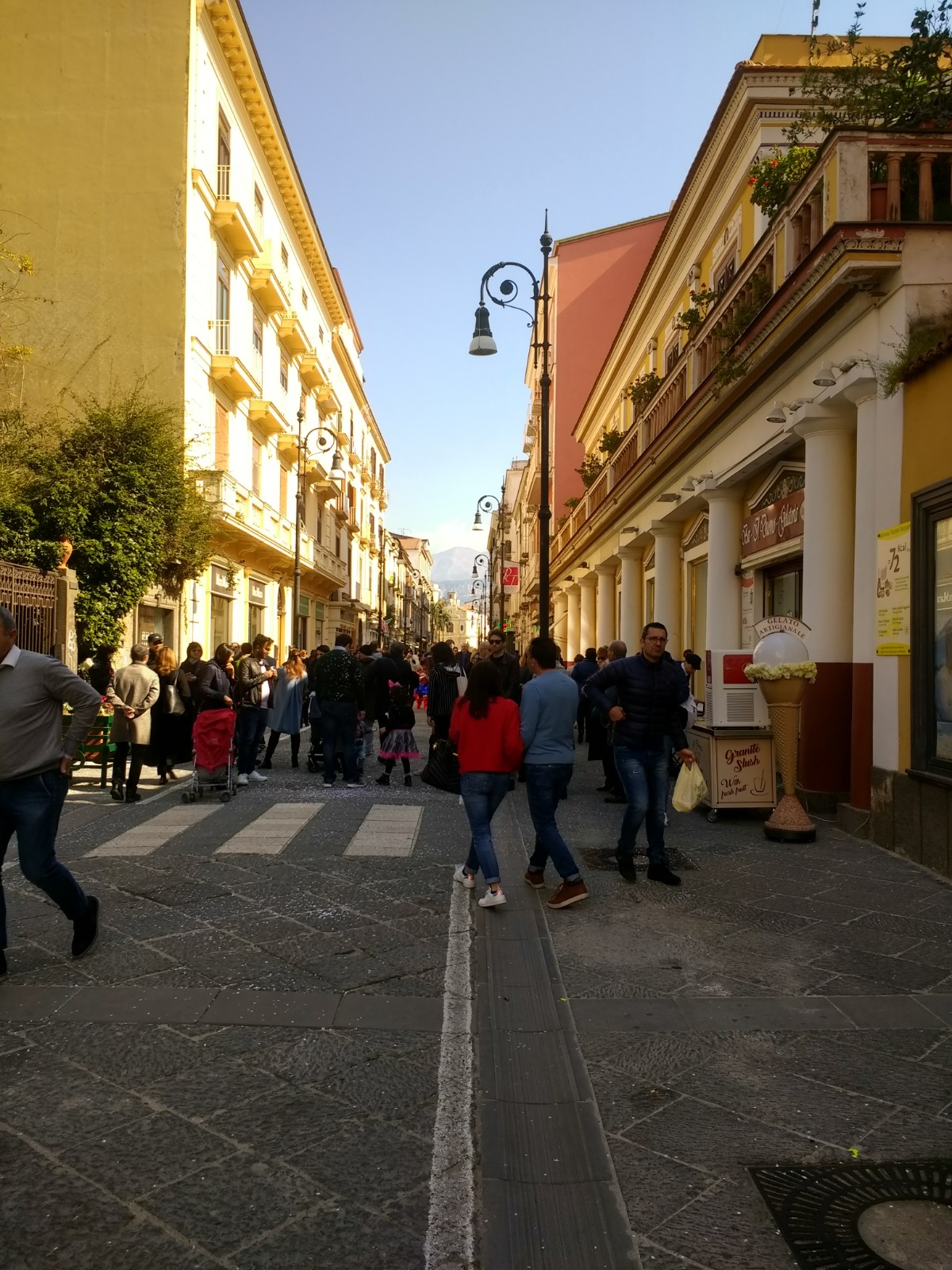
Crowded streets, children in fancy dress and sunshine made for a holiday atmosphere in Sorrento yesterday. Very small children dressed as Minnie Mouse and dinosaurs, oblivious to the the fact they were presenting an entirely different persona, were wheeled in push-chairs, while older children, in Spider-Man, Cinderella and other gender-specific outfits, dropped handfuls of confetti on the cobbled streets. I would love to take pictures of the children, but it doesn’t seem right, even with their parents’ permission. It would be a different thing if they were taking part in a procession, but so far we’ve not caught one.

A festive feel in Sorrento

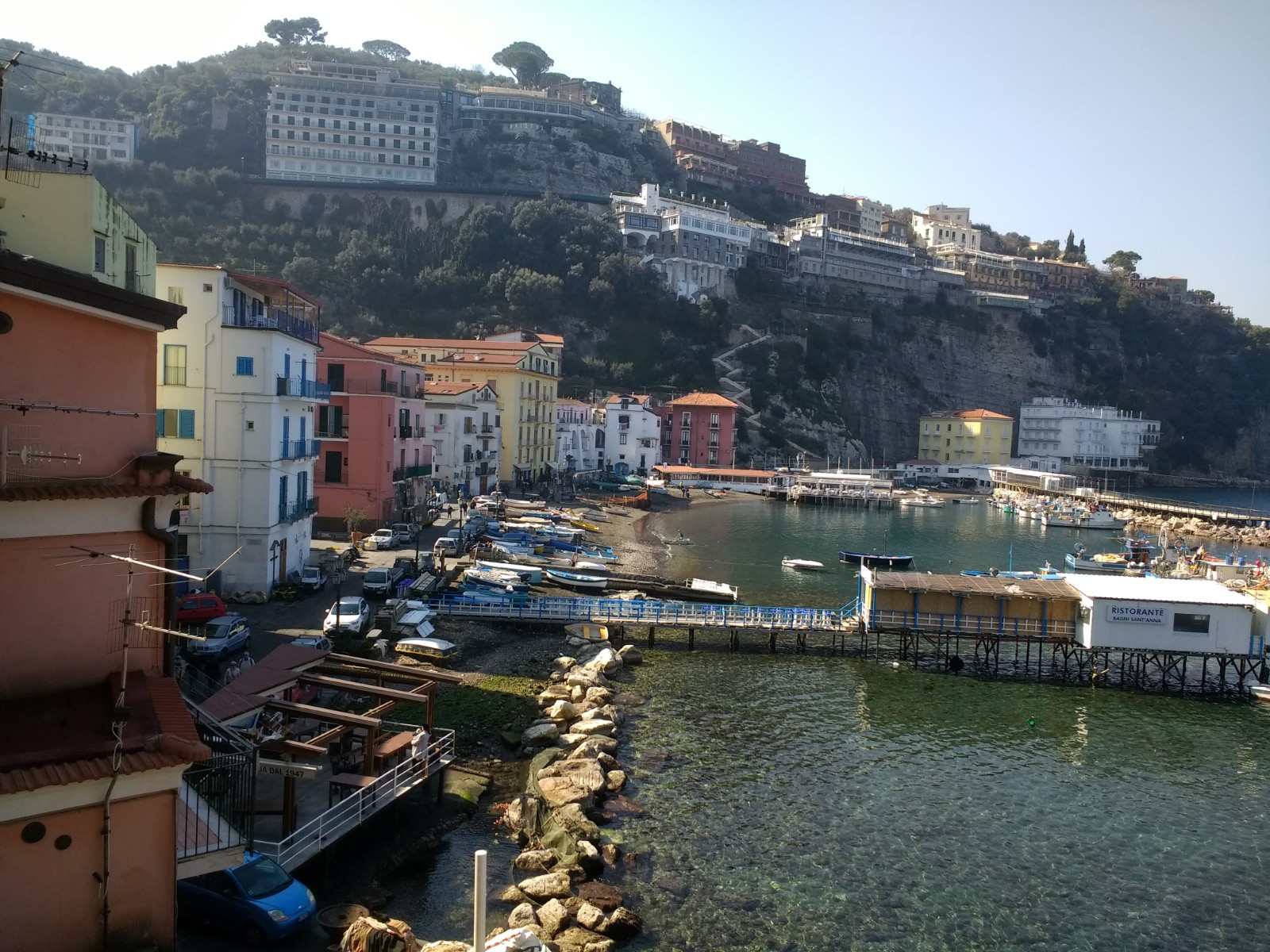
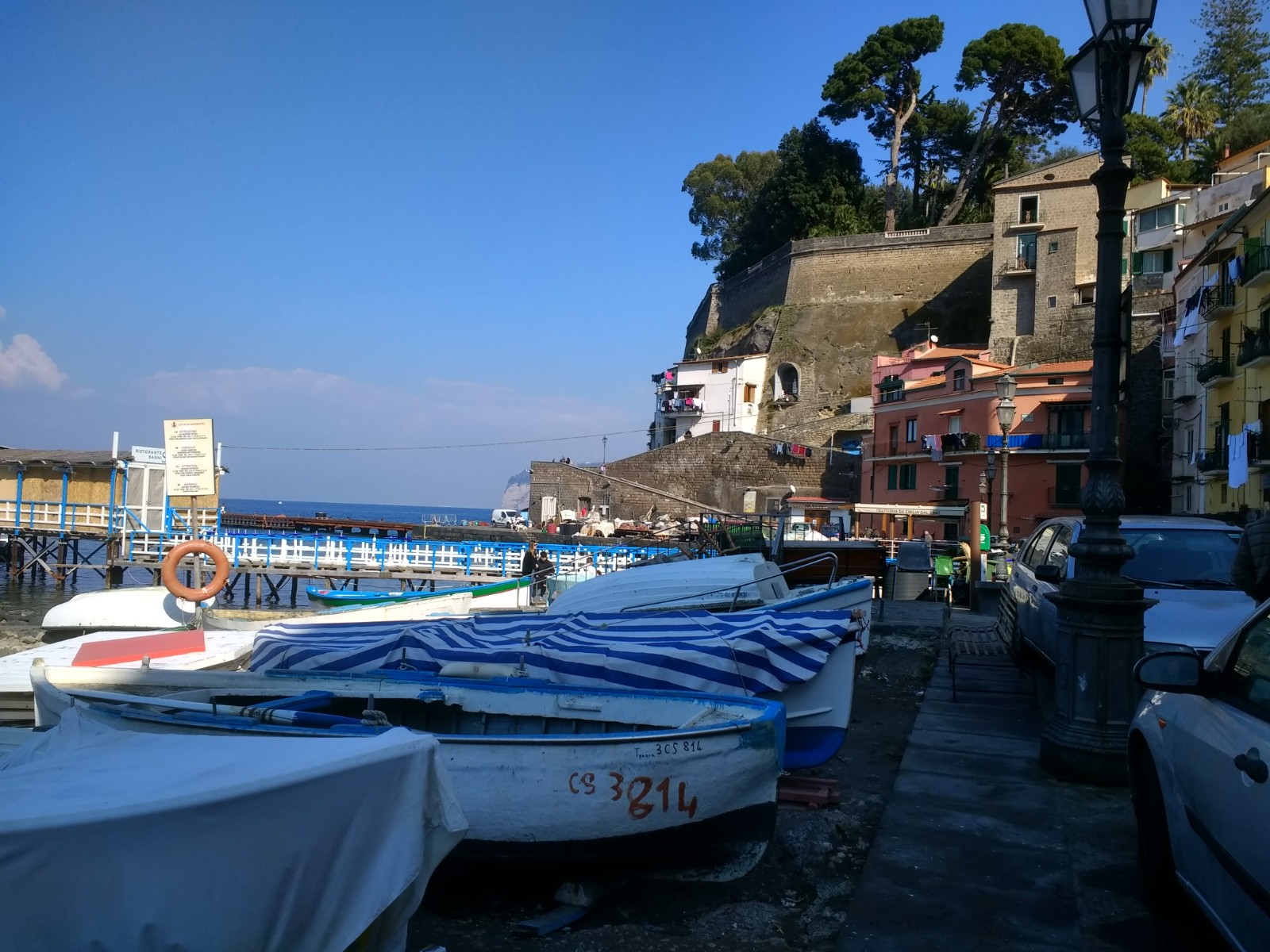
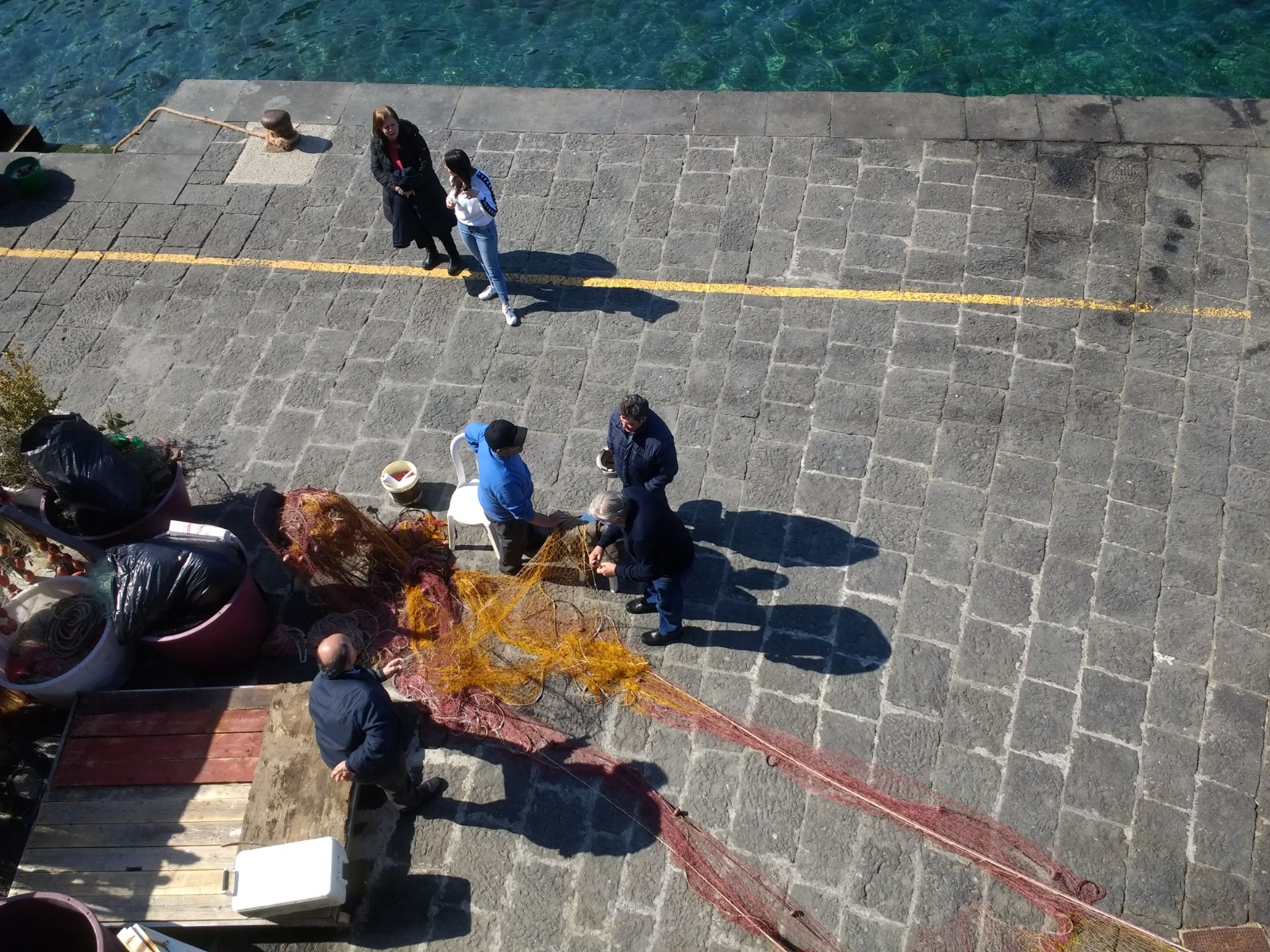
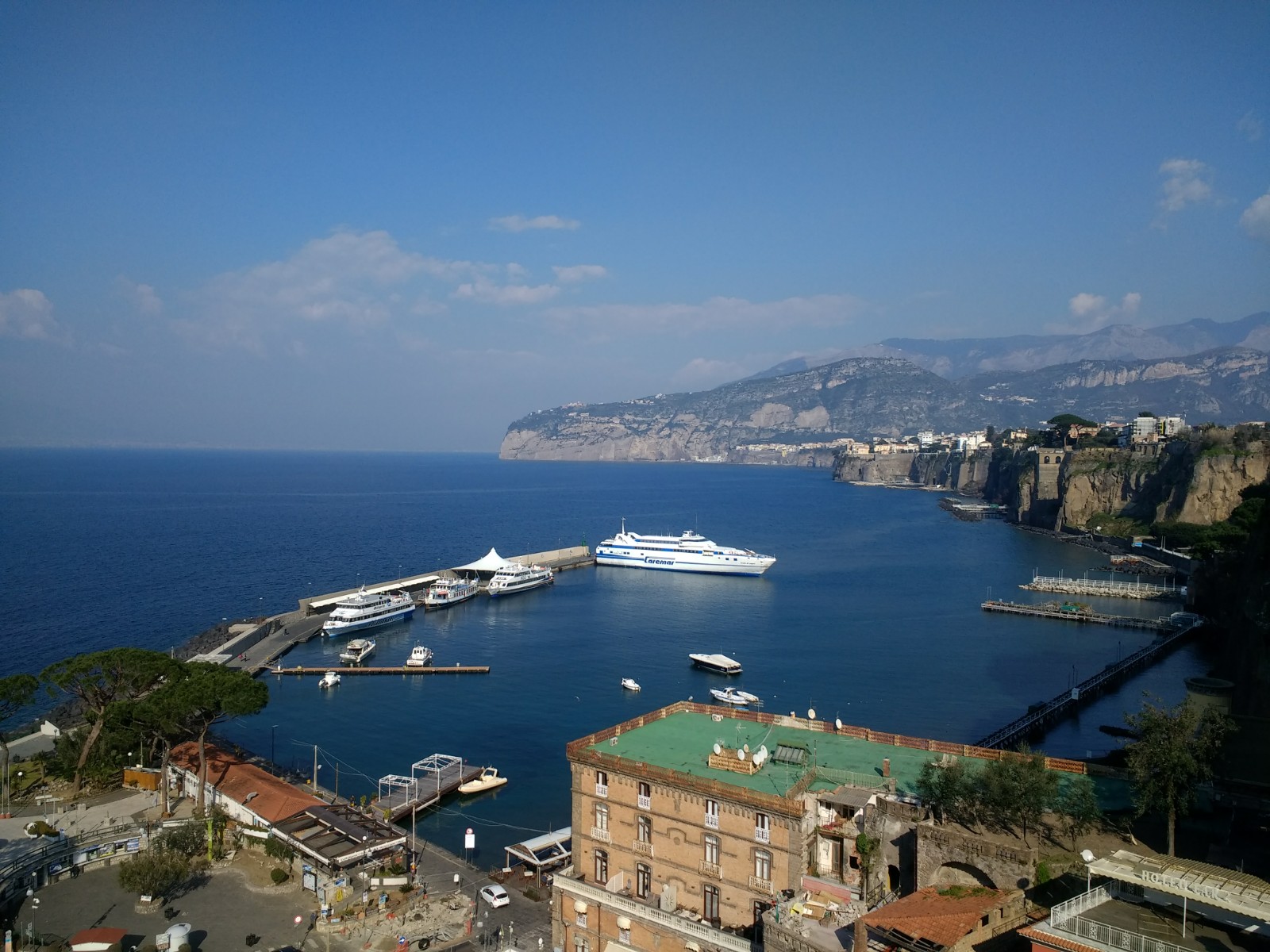
Sorrento is a town in two halves – the upper half, with its hotels, restaurants and shops, is smart and genteel, whereas the bottom half, on the shore, feels authenticity local, where you see work being done and has no illusions of grandeur.

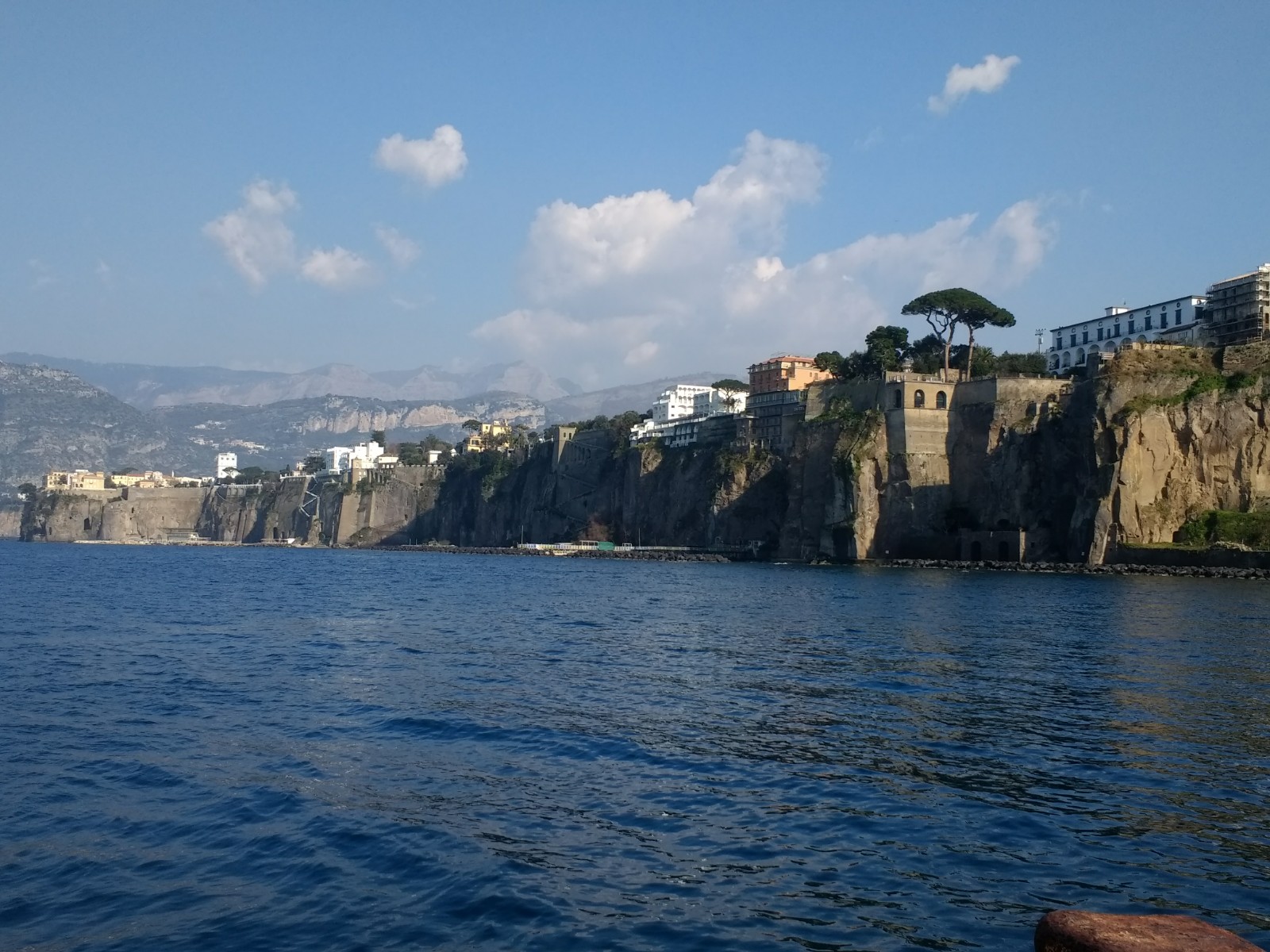
The harbour in Sorrento with hotels on the cliff-tops. Some of the hotels have steps cut into the rock leading to a private patch of shingle.
A relaxed feel in the harbour. Washing can be seen hanging from the windows on the right.
Mending nets
View of the cliffs from the harbour
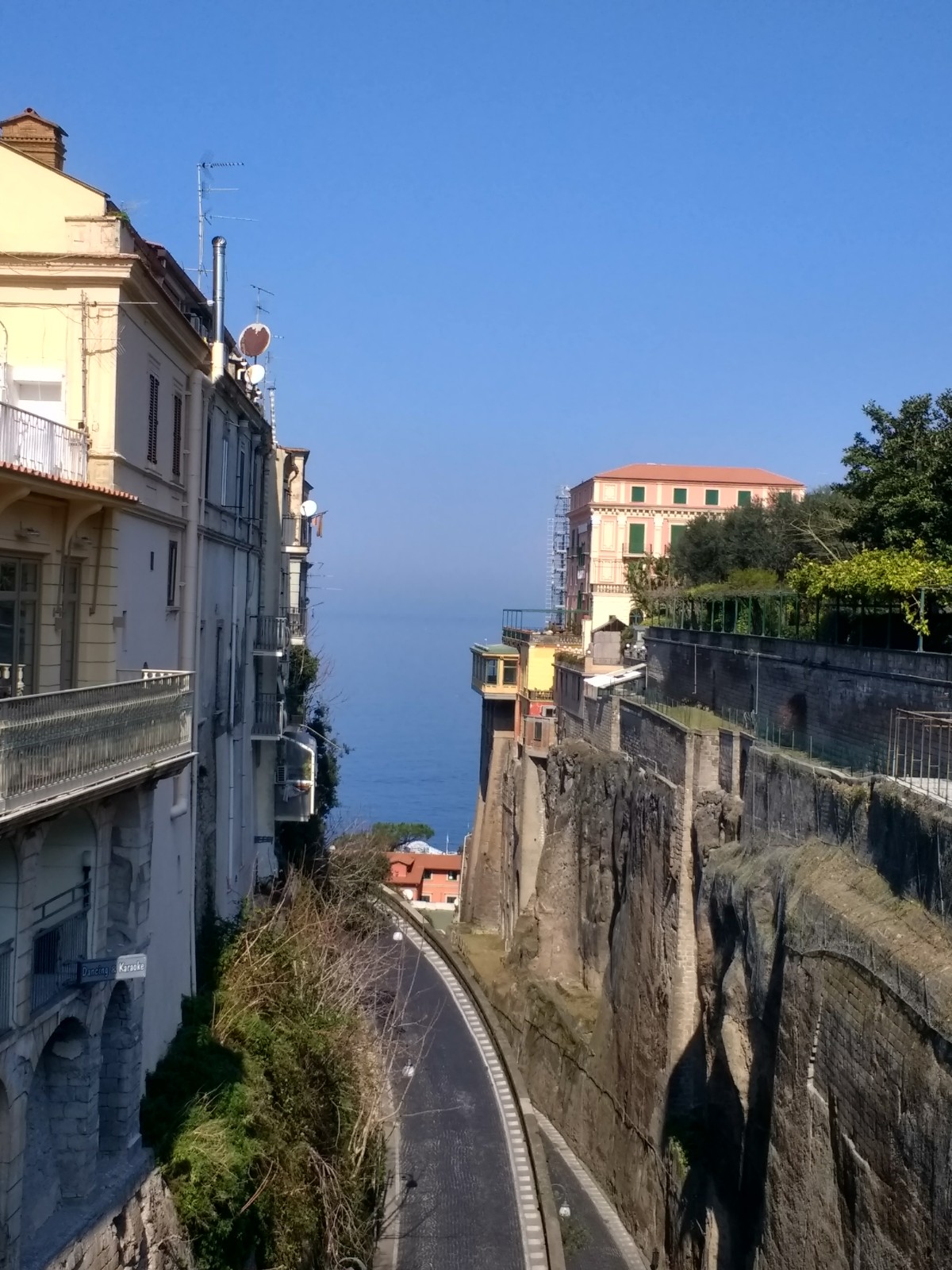
At the top of the gorge, looking down

Looking down to the ferry terminal
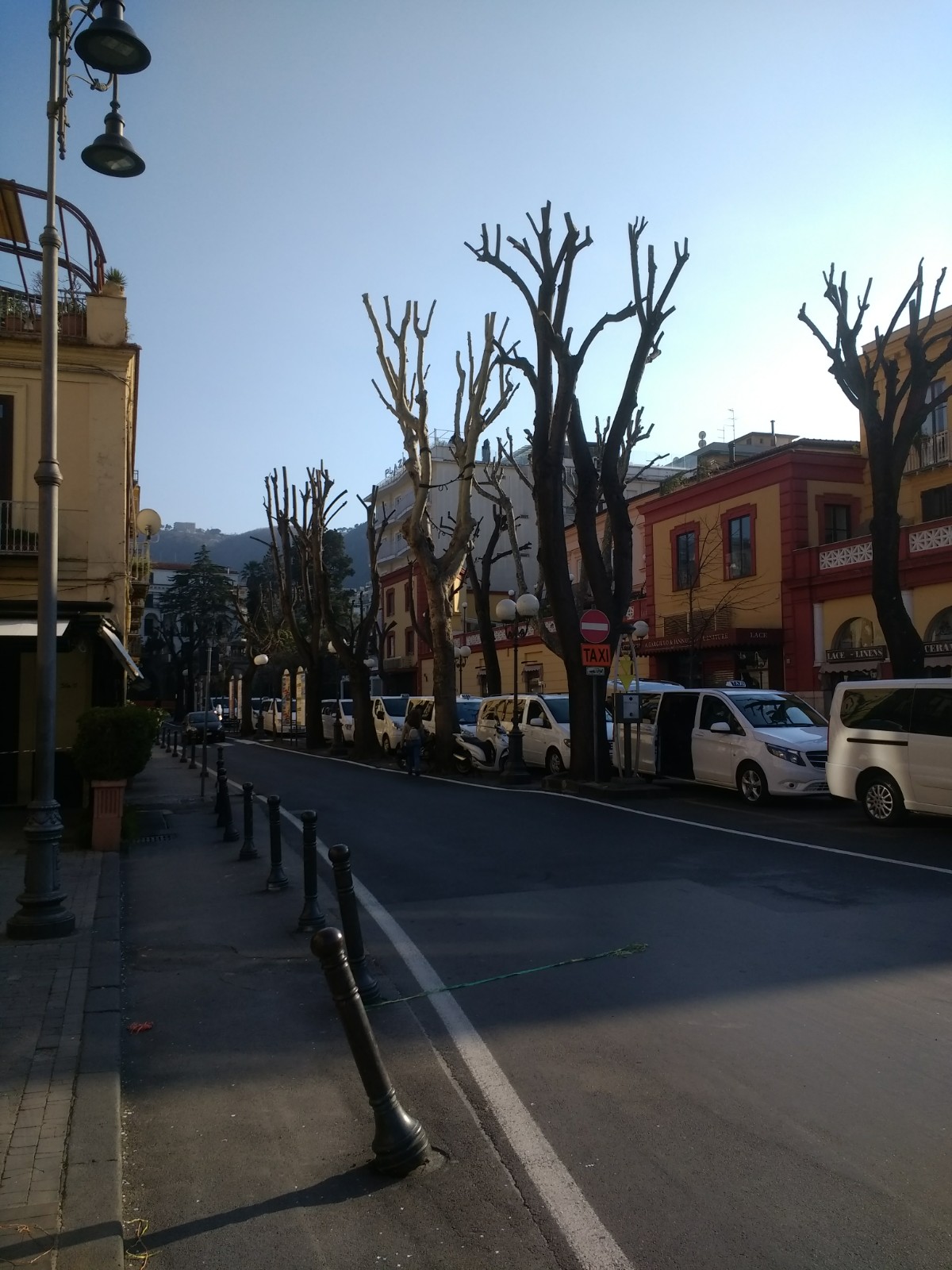
Everywhere we’ve been in the south of Italy we’ve seen severely pollarded trees, which look incongruous against the dazzling blue sky.

We forgot that it was the first Sunday in the month, a day when museums all over Italy let everyone in free. The Circumetnea train we took from Naples, and which passes both Pompeii and Herculaneum, was absolutely packed, largely with Italians.
We must remember this money-saving tip, particularly next month as we shall be in much-more-expensive Florence, and will need to watch our pennies, or better still, cents.
Two Theatres and a Garden

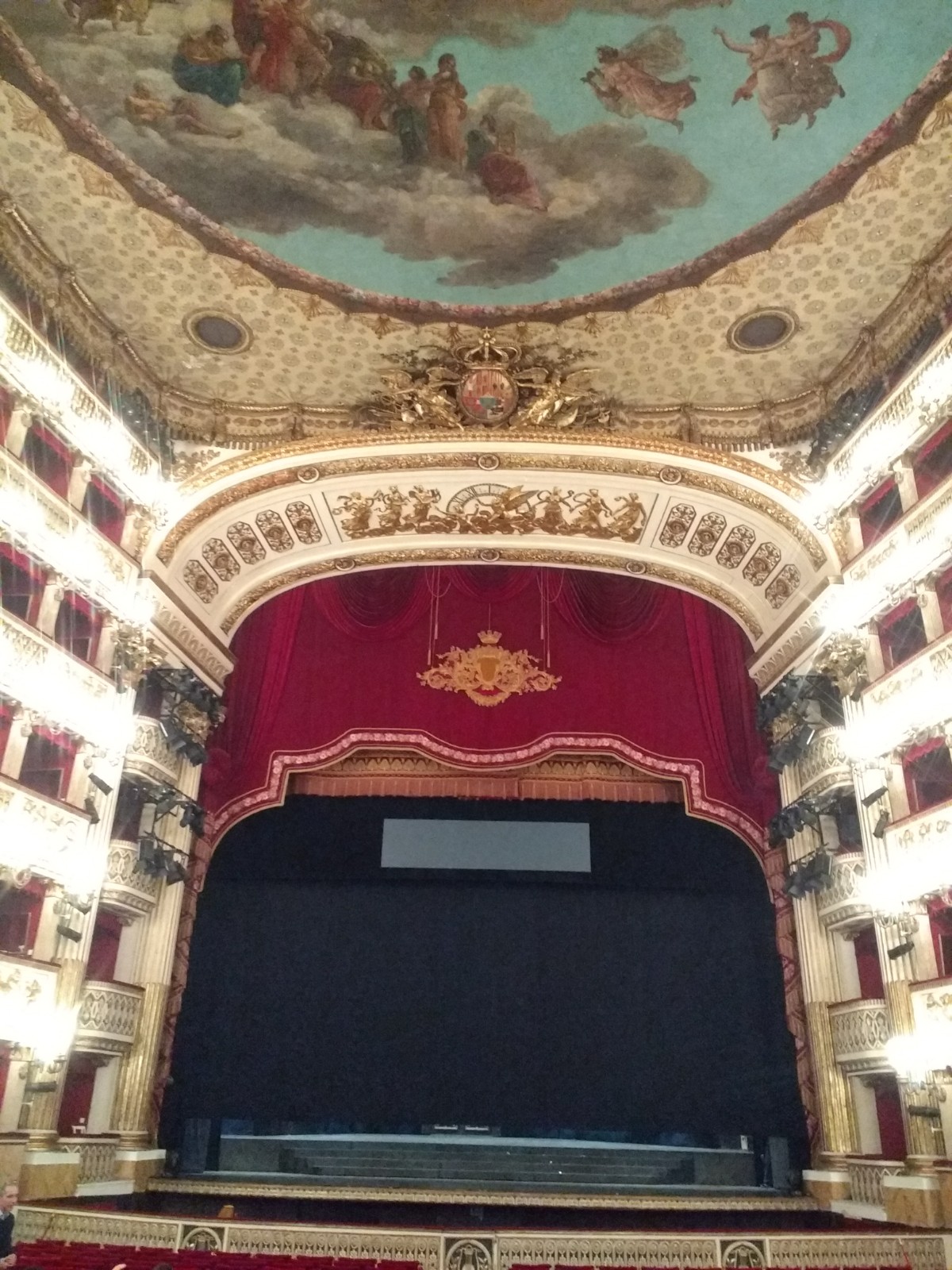
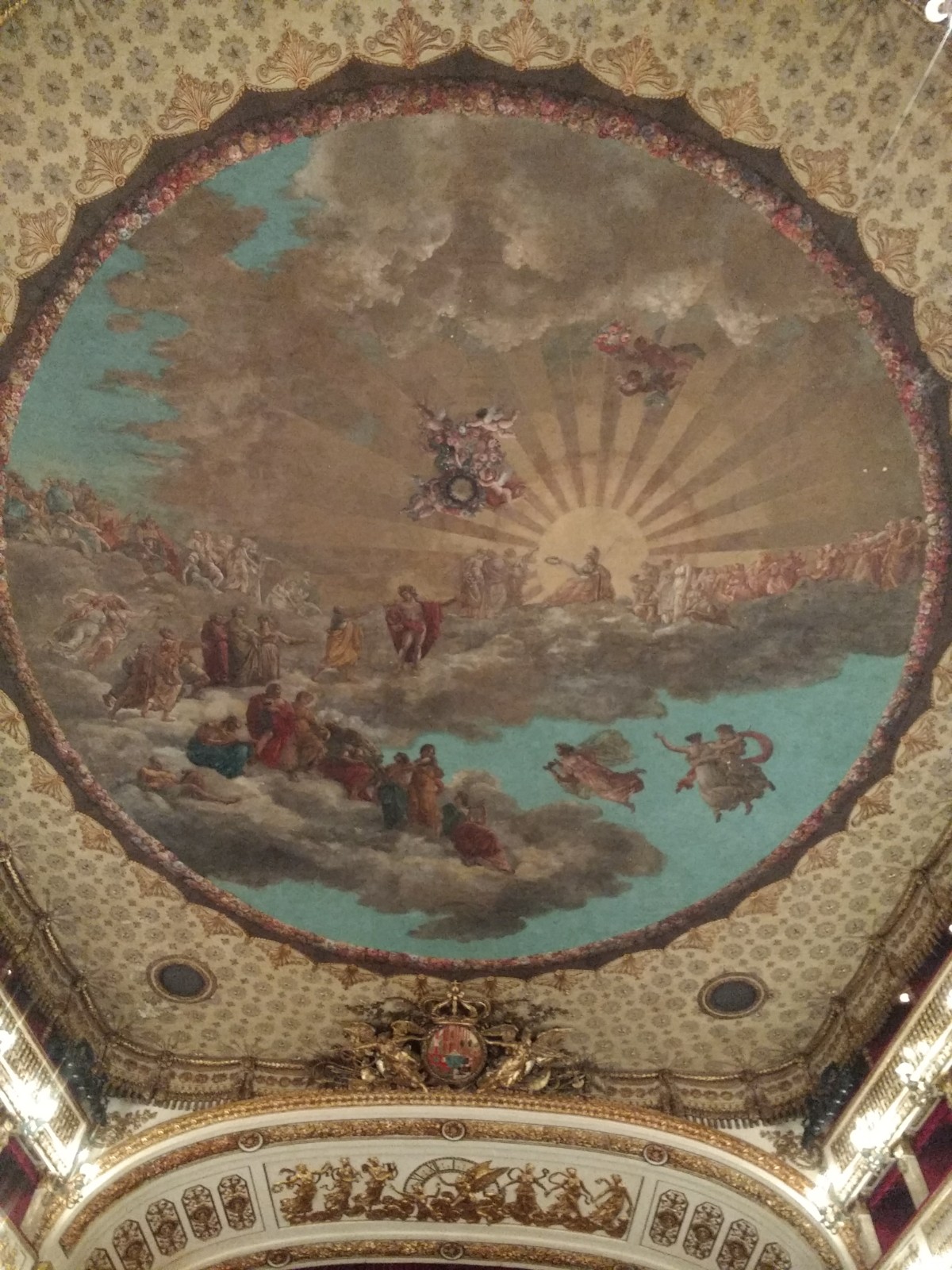
Until air-conditioning was installed in Teatro San Carlo in Naples, the opera season only ran from November to May, as the other months were too hot. Visiting the theatre last week, we joined a guided tour.
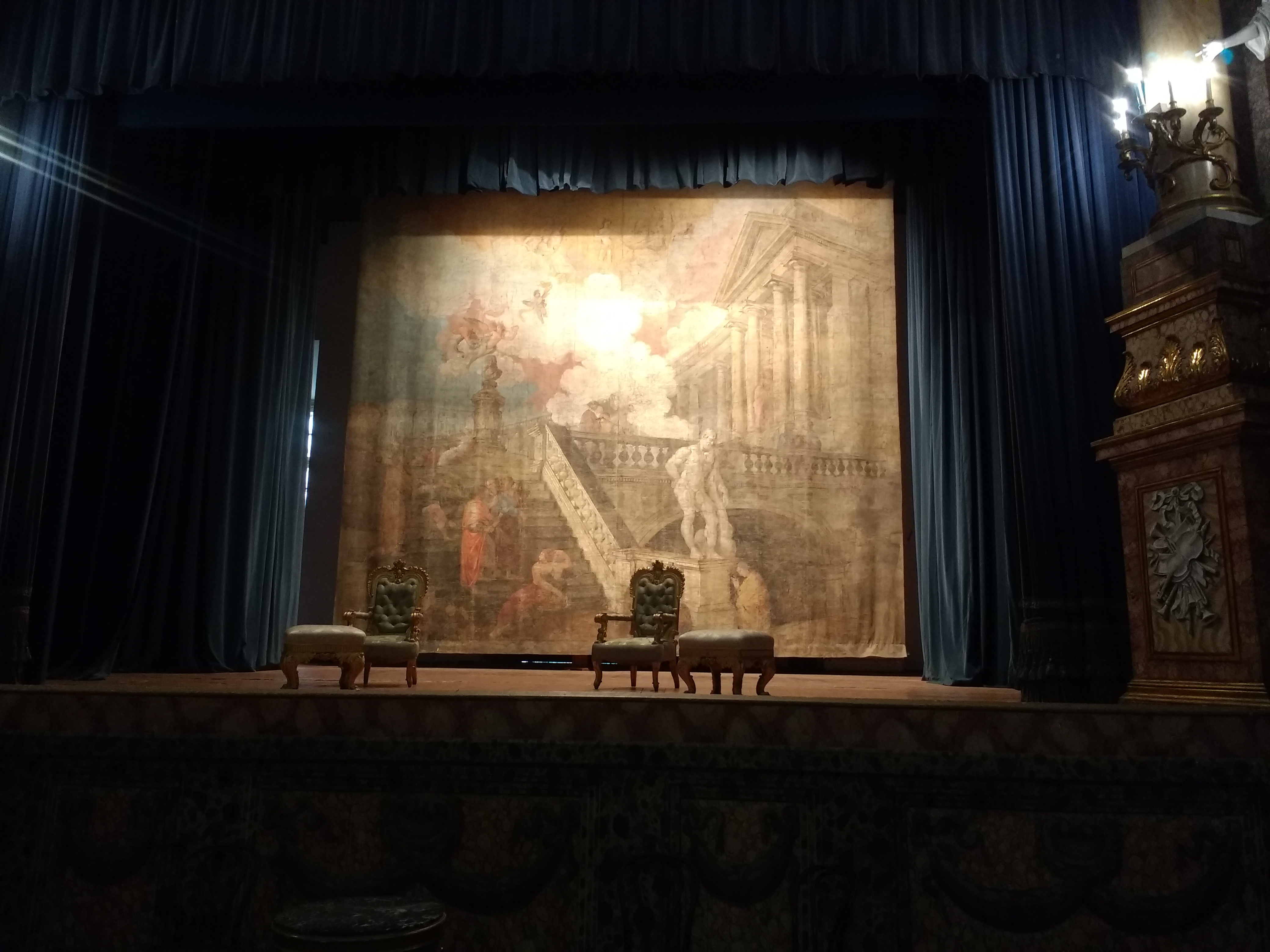
Stage, Teatro San Carlo
Ceiling, Teatro San Carlo

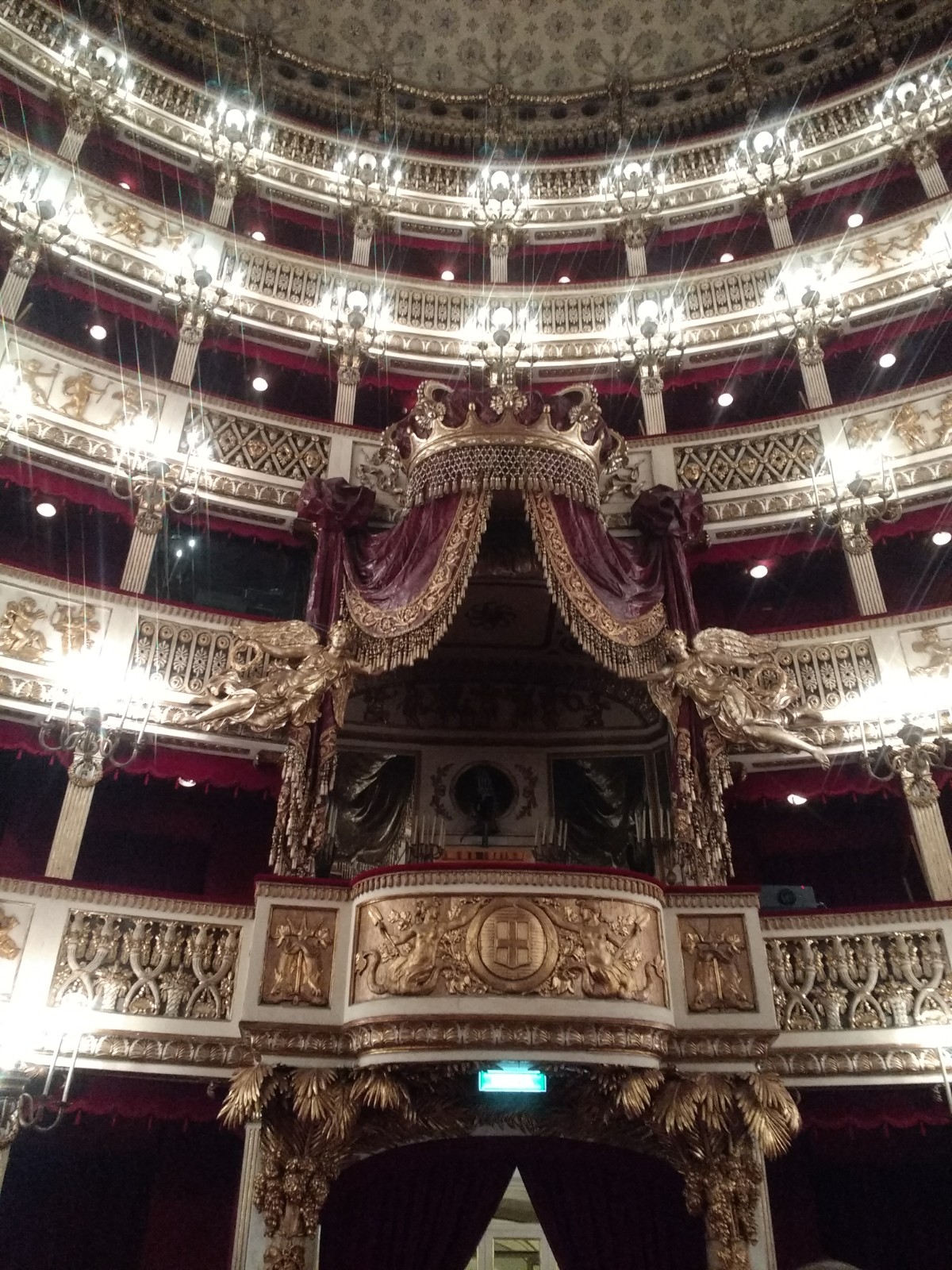
The theatre was commissioned by Charles III of Naples (the one who left to become King of Spain) in 1737, and was restored after a fire by his son, Ferdinand IV. Ferdinand, suspicious of the number ‘17’, had the numbering on the boxes he passed, on the way to his own, changed, to read, ‘15, 16, 16 bis (meaning for the second time) 18.

Why Italians are suspicious of the number ‘17’. XVII is an anagram of the Latin word VIXI meaning ‘I have lived’. The use of the past tense, suggesting death, was considered unlucky.

Royal box, Teatro San Carlo

Clock above the stage at Teatro San Carlo. The numbers rotate and the hour hand (the hand of the angel) stays put. It is little slow as I took this picture at 12.15.

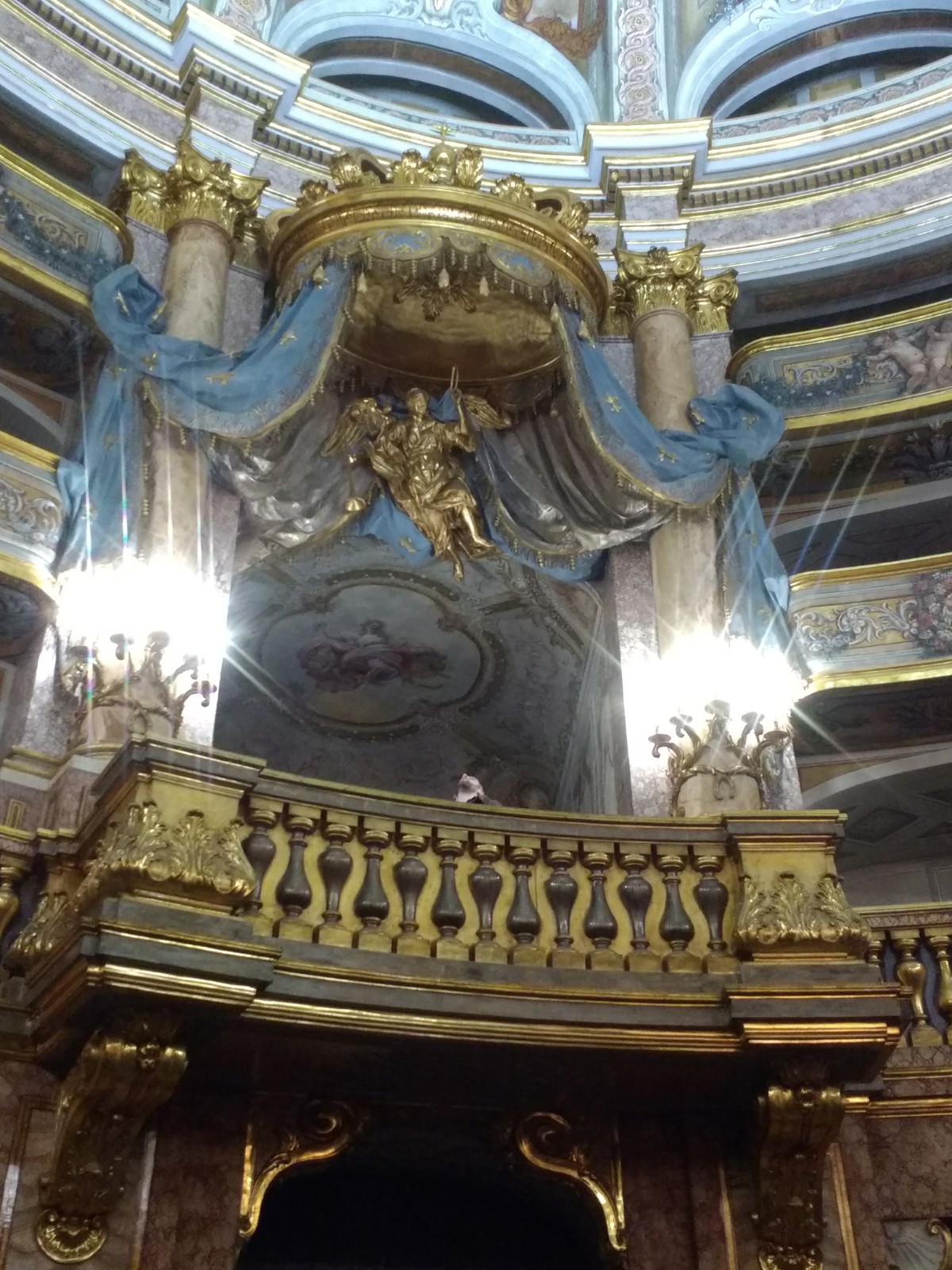
When a theatre was considered for the Royal Palace of Caserta, the designer, Vantitelli, produced a scaled-down copy of Teatro San Carlo.

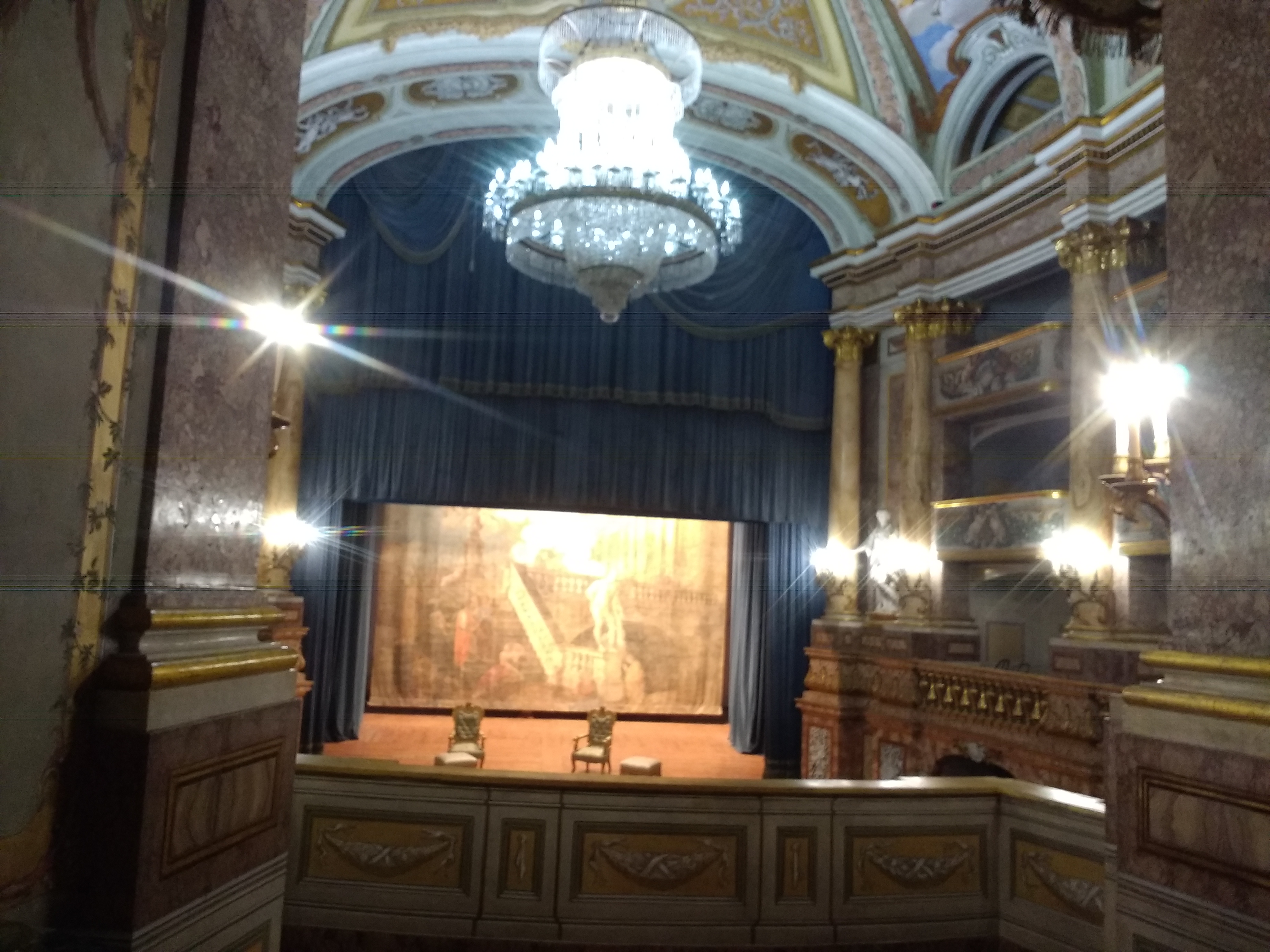
Royal box, Court Theatre, Caserta Palace. The decorations in both theatres (including the canopy above the boxes) is made of papier-mâché. It was very time-consuming to produce all the decorative features in this way, but papier-mâché is more beneficial acoustically.
View of the stage from the Royal Box, Court Theatre, Caserta Palace

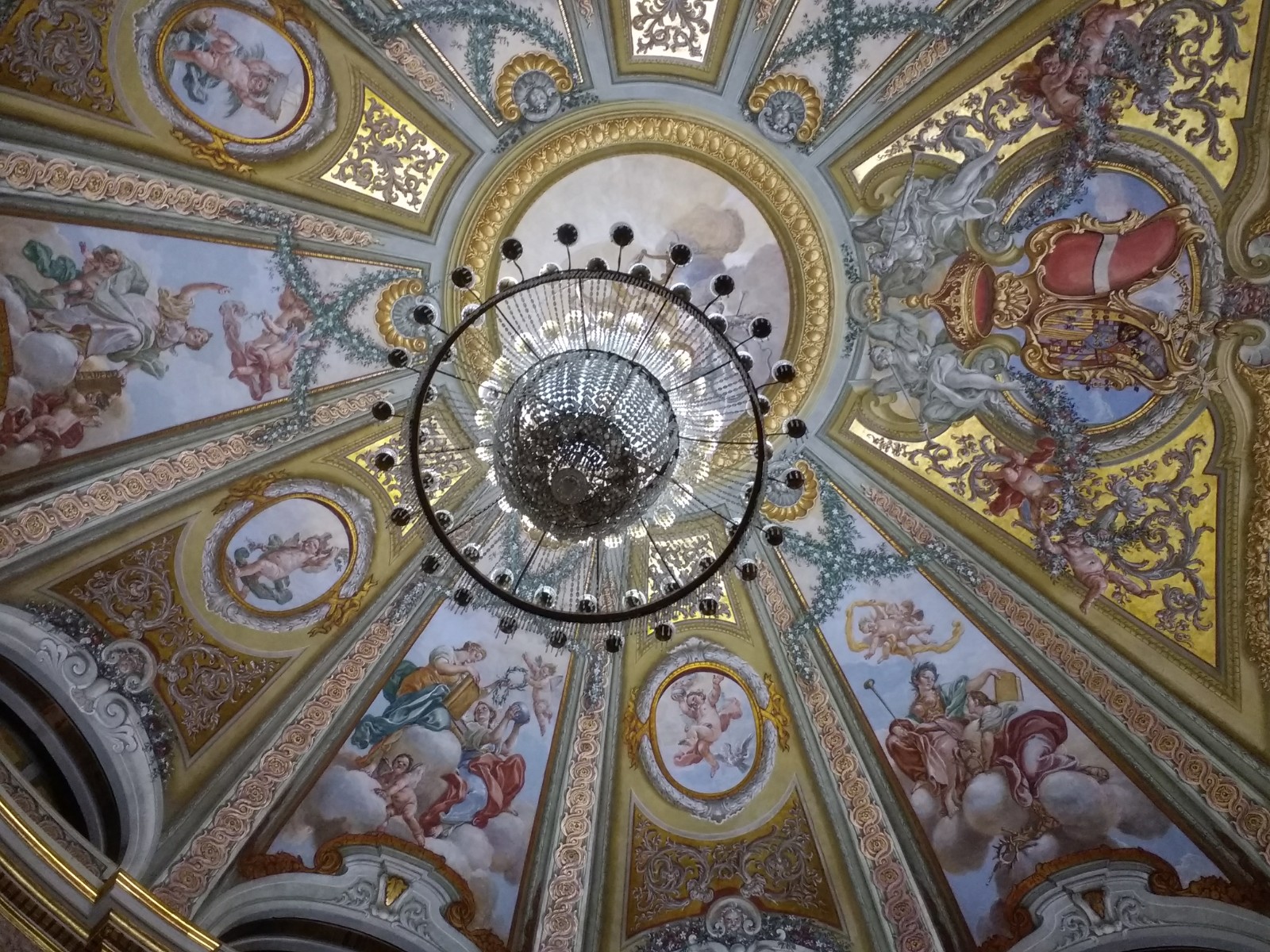
Ceiling, Court Theatre, Caserta Palace
Behind the scenery (an original design) is a huge window as this allowed the gardens at Caserta to be used as the backdrop for daytime productions.
Tom Cruise, who was at Caserta for part of the filming for Mission Impossible III, contributed to the restoration of the scenery.

We were glad to be able to see the theatre at Caserta when we visited today, and also pleased that the formal garden was open, the wind having dropped. The English garden though (we are thinking manicured lawn and flowers) was closed for reasons of ‘safety’.

The formal garden is spectacular for its size, rather than for its colour or creation of varied vistas.

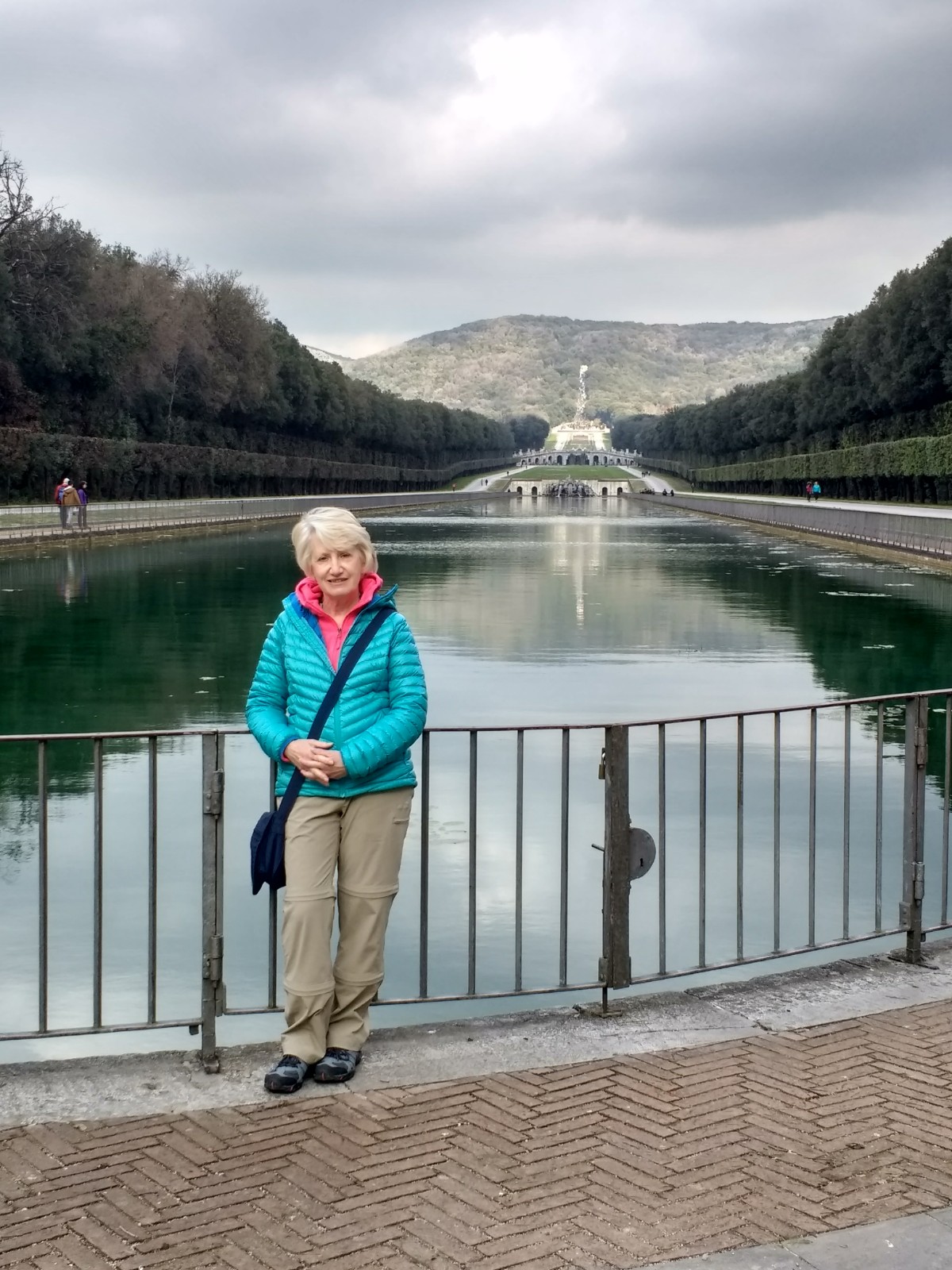
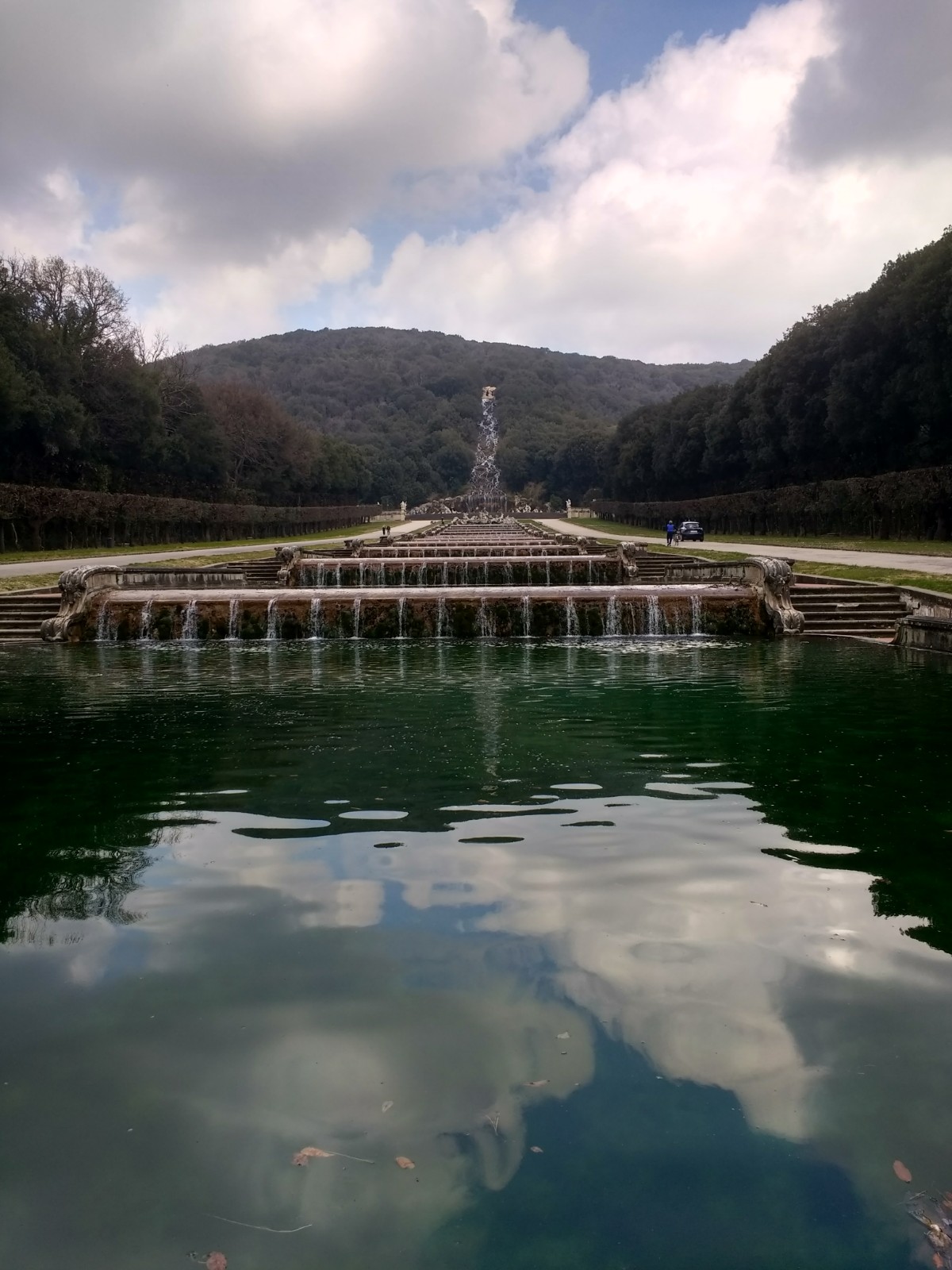
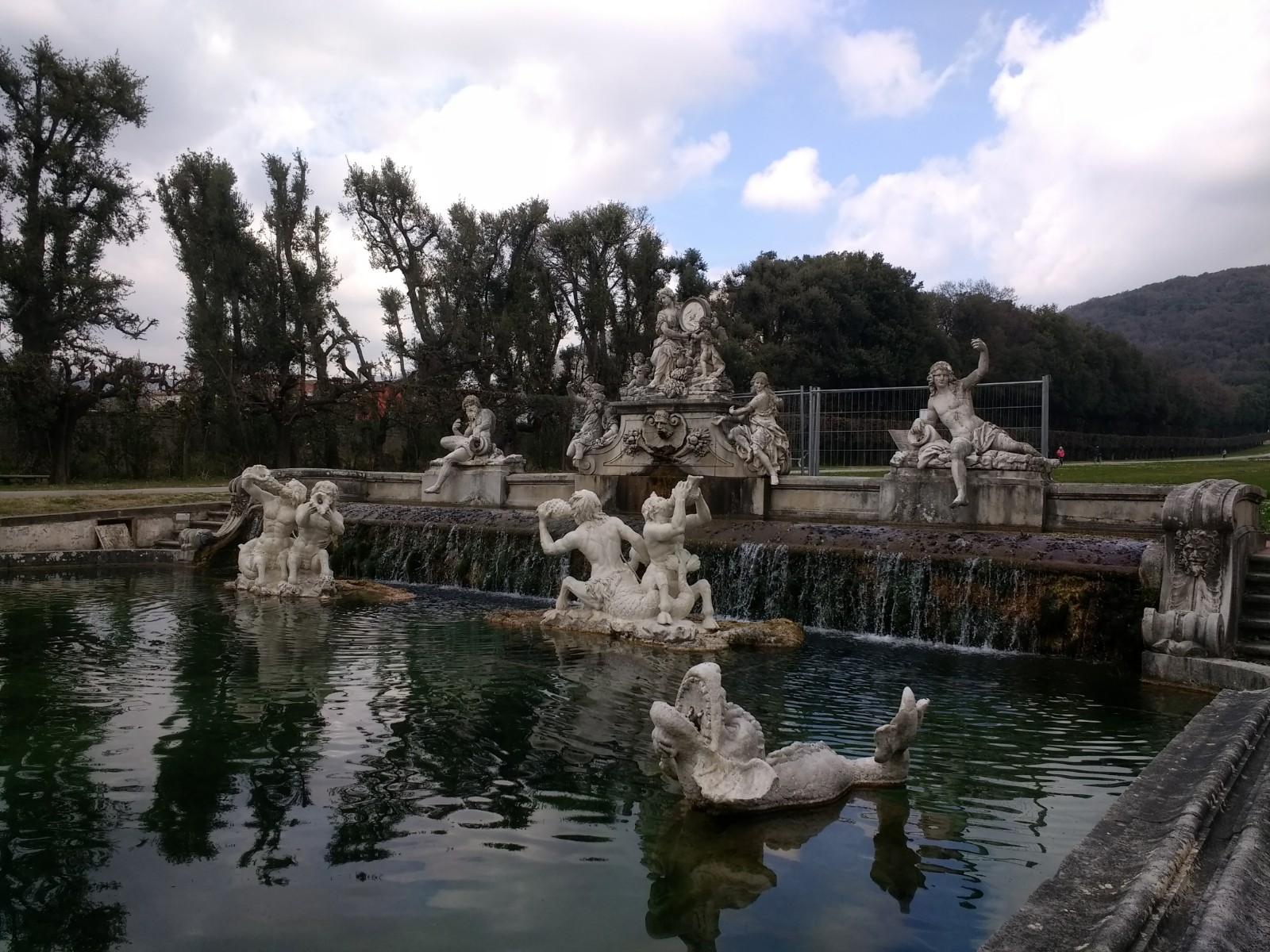
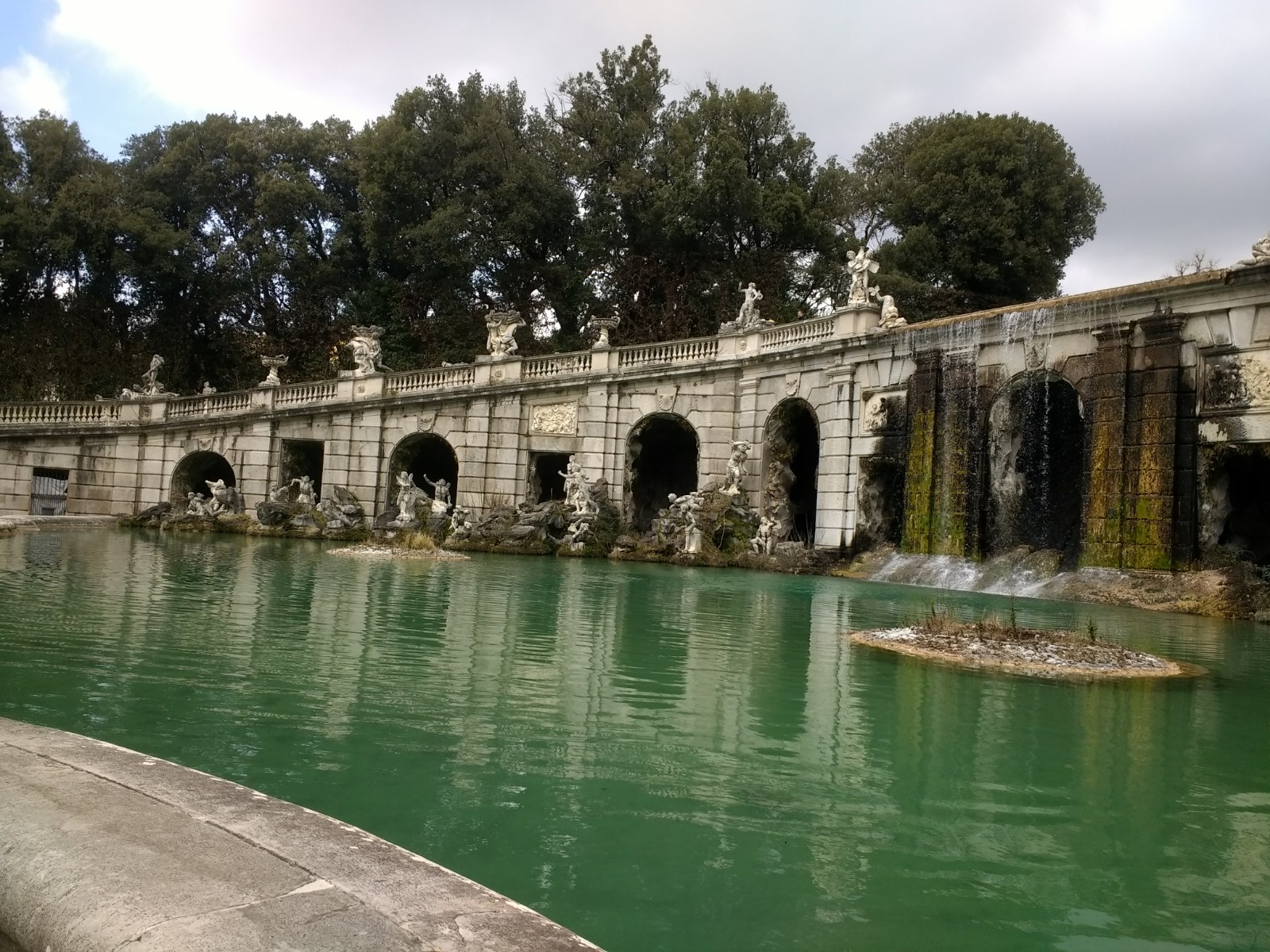
Modelled on the gardens at Versailles, there is a two-kilometre stretch of water and statues up to a cascade.

You can just see the cascade in the distance.
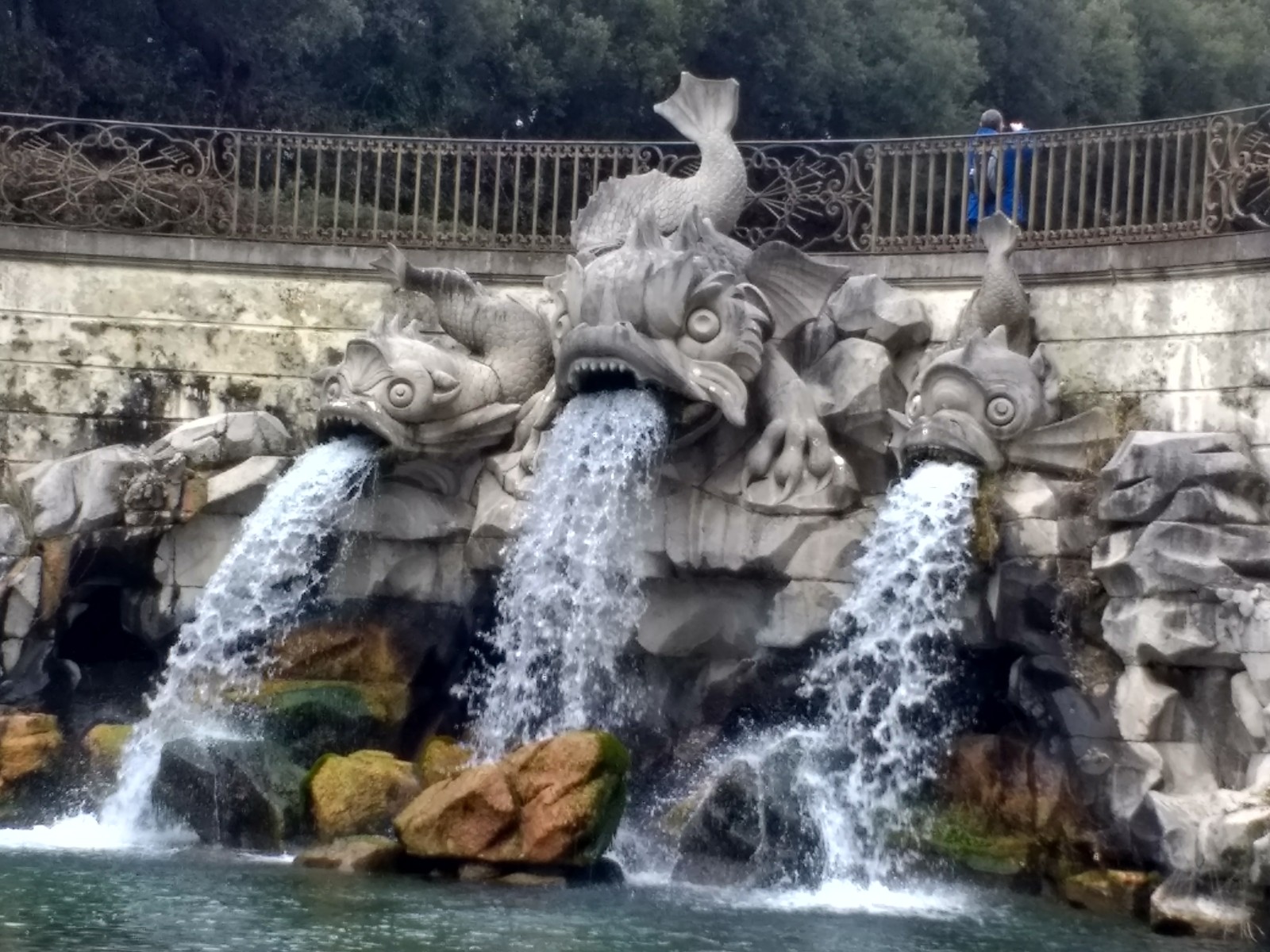
‘Dolphin’ fountain

Getting closer

Closer still
Nearly at the end
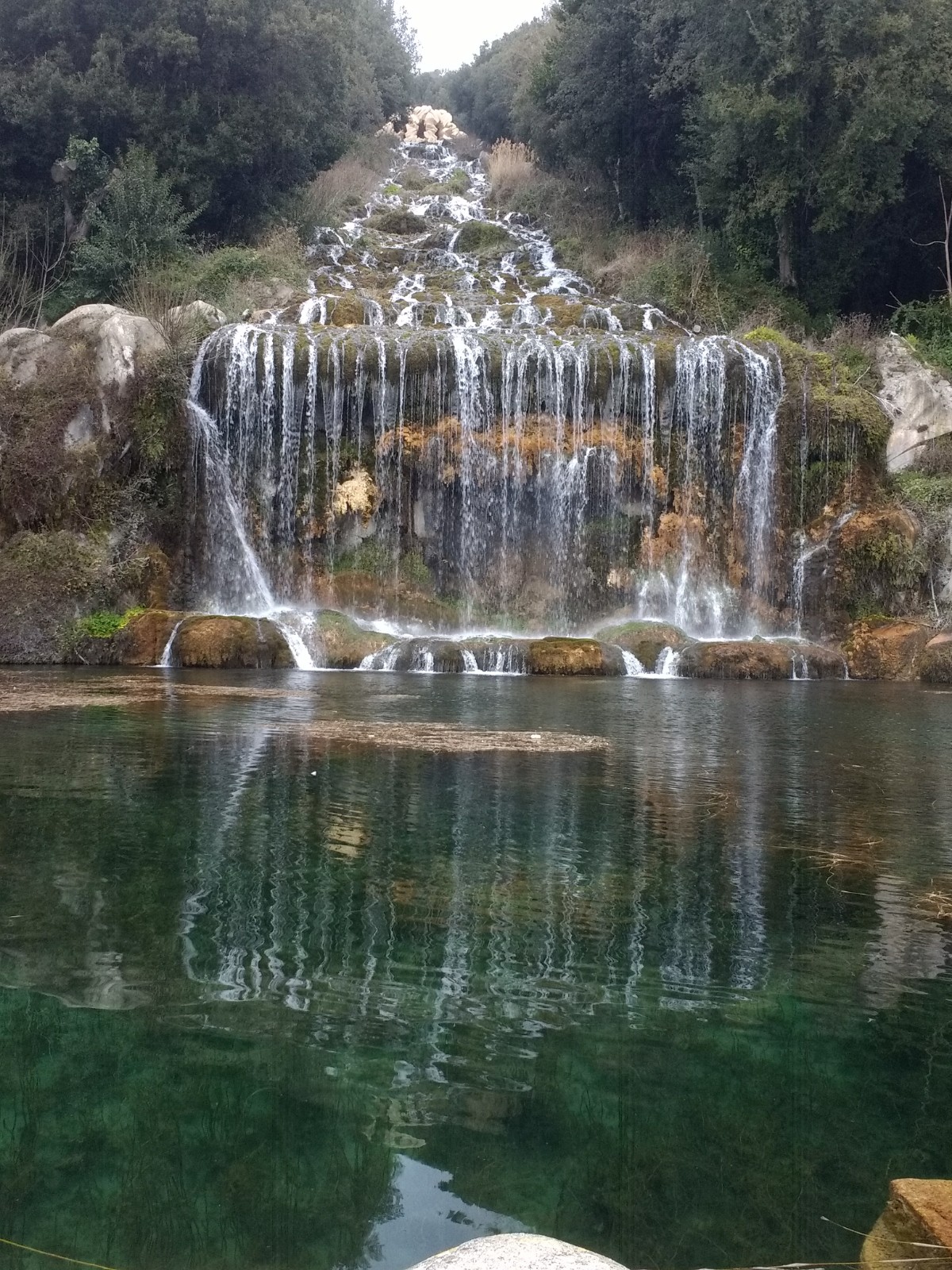
The veil-like waterfall you are rewarded with after two kilometres.

A poste-script to the above

A little Italian is a dangerous thing …

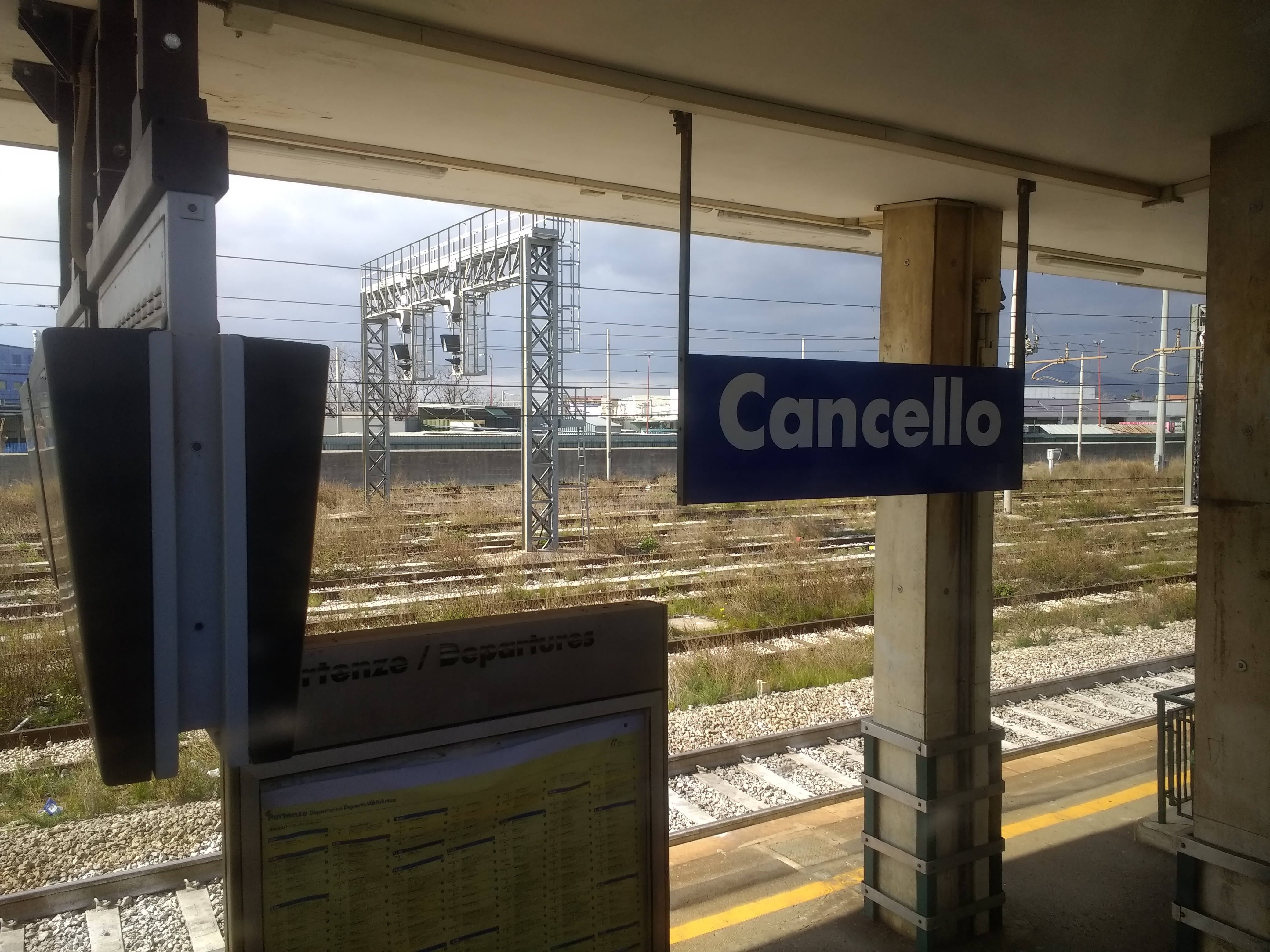
After our visit to the Palace, we got to the platform for the Naples train, where a train was waiting, with minutes to spare. We both looked up at the train indication board. Our train was top of the list, but what was this? We both noticed the word, ‘Cancello.’

‘Oh, no,’ we said, ‘Our train’s been cancelled.’ (The Italian word for ‘cancel’ being something similar to the English).

Then I noticed the word, ‘Via,’ before ‘Cancello’.

‘There’s not a place called ‘Cancello, is there?’ I wondered.

‘Scusi, Signor,’ I said in my best Italian as I approached a gentleman standing in the open doorway of the carriage, ‘Napoli?’

‘Si,’ he shrugged and we hopped on the train.

Cancello Station

(Now I am home, I have looked up the correct Italian. If the train had been cancelled, I think the word ‘cancellato’ would have been used, and not ‘cancello’).

A View From Castel Sant’Elmo

Despite the cold and wind while we have been in Naples, almost every day has been really sunny, wonderful for photographs and also for two UK-based nomads, happy to lose their winter pallor. However, shots of views have not been the best due to an ever-present haze.

Sensing it was clearer today, we decided to head up to Castel Sant’Elmo, just above Museo Nazionale di San Martino, which we visited last week. Then, we climbed the steep hill, but today we took a funicular train (€1.10 one way. Where can you go for £1 in the UK? I suspect nowhere).

The attractive facade of the top station. The line was opened in 1891.

As we came out of the station, and were trying to follow the directions to Castel Sant’Elmo on Mark’s phone, a gentleman came up and spoke to us. “Inglese?” he asked, and turning to Mark, “You look Italiano, it’s a complement.” We put it down to the silver hair and sunglasses.

The gentleman, called Giovanni, then started telling us that he had a cameo factory, and we were welcome to take a look. It was hard to say no, but actually it was fascinating. Naples, he told us, is a centre for cameos made from shells. His factory was started by his grandfather, continued by his father and now he and his three brothers work there. (We saw the photographs of the different generations on the wall).

Any of three different shells are used for cameos, mother-of-pearl being the best. Part of a particular shell is chosen for the layers of colour and is cut out. The section is smoothed to make a flat area which can be worked on, and is then temporarily stuck to the end of a wooden stick with wax. A picture is drawn on the shell with pencil, and parts are cut away with special cutting tools. Giovanni told us he then hands his work to one of his brothers, ‘the jeweller’, to be made up into a piece of jewellery. After a quick glance at the prices, we said our thanks, and were on our way.

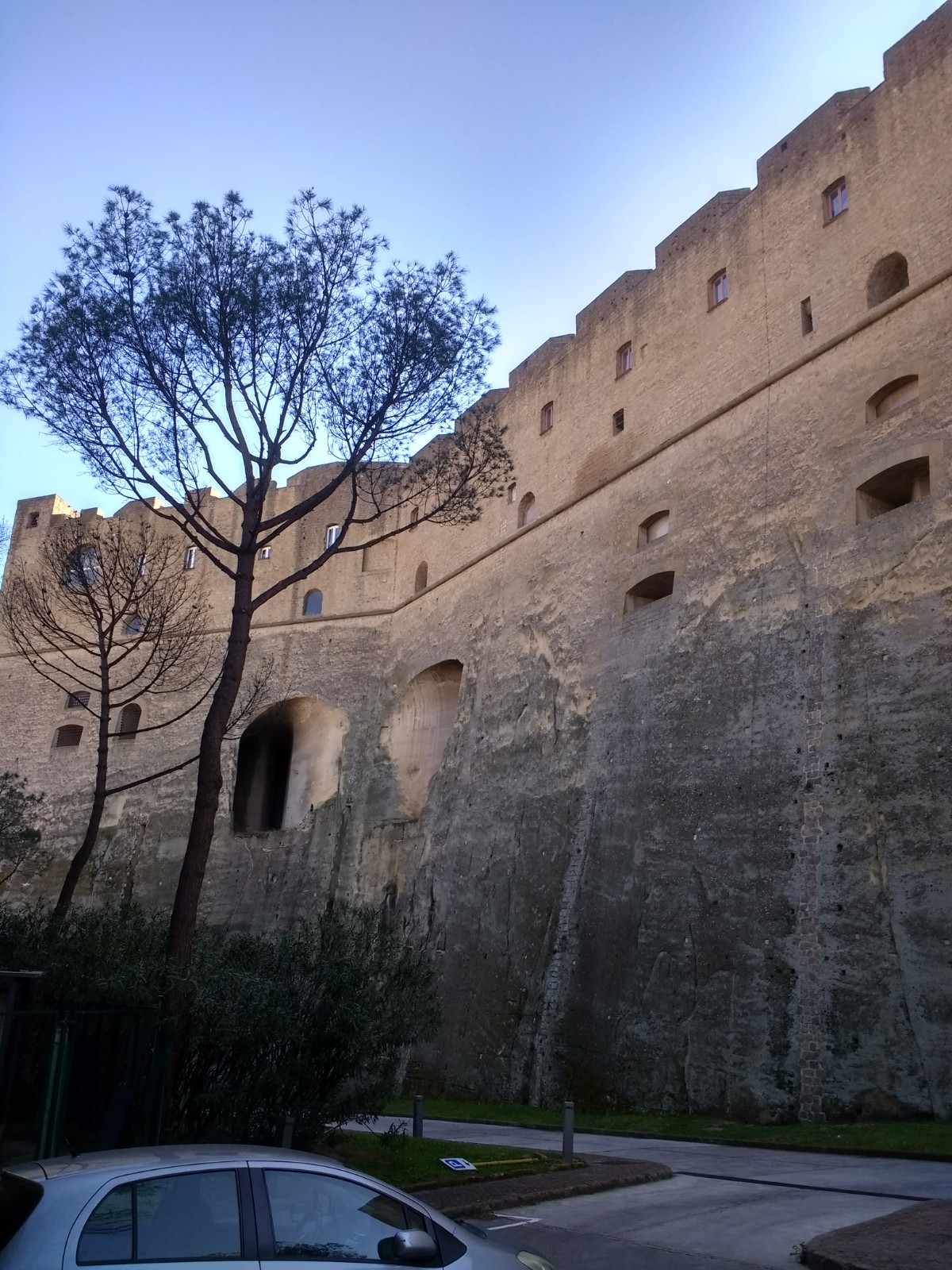
In times gone by Naples was known as the ‘city with seven castles’ being the only city to have seven castles within its boundary. Castel Sant’Elmo is medieval.

Castel Sant’Elmo is imposing and looks pretty impregnable. The first difficulty would be climbing that steep hill!

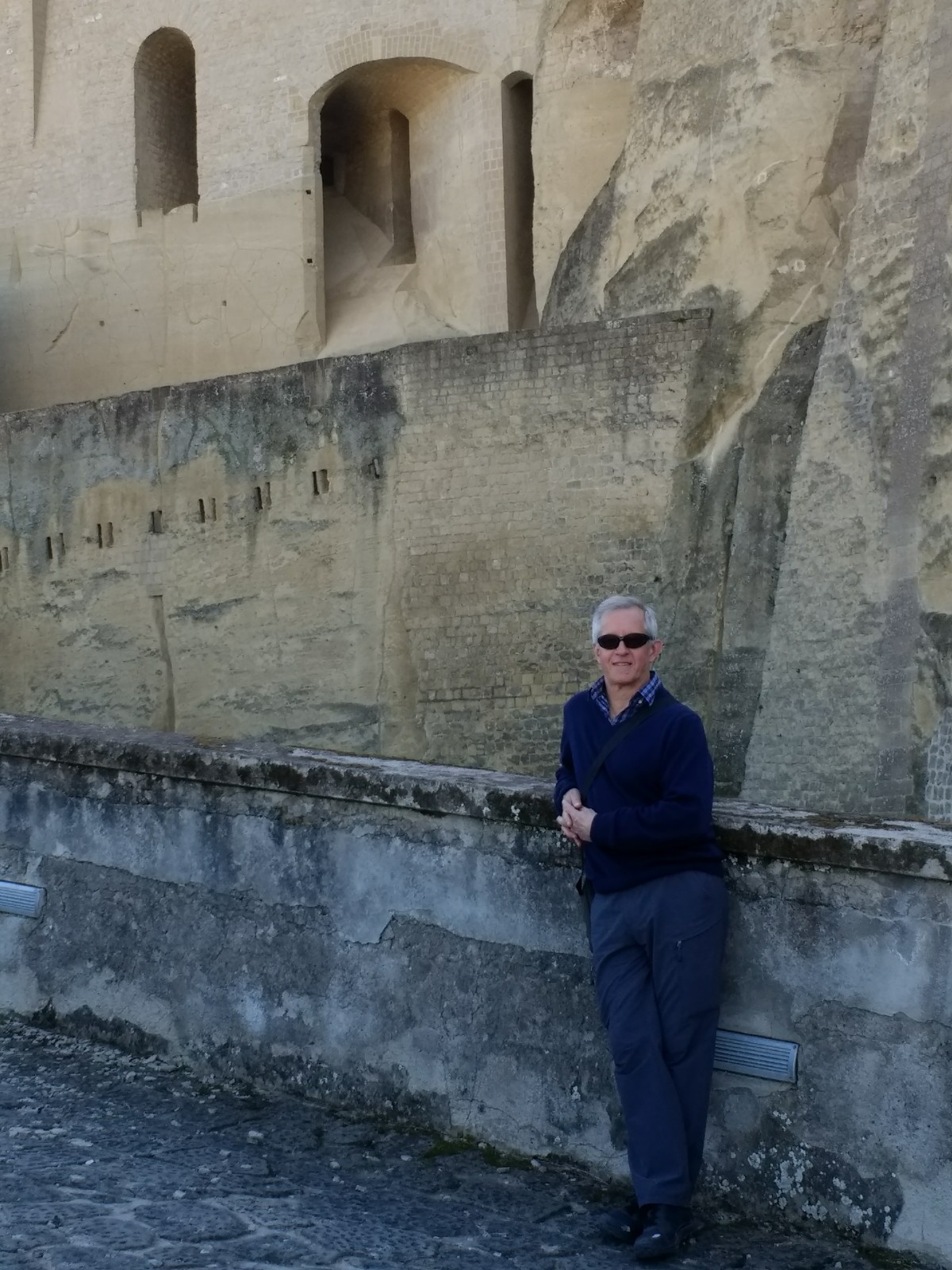
I think Giovanni’s comment might have gone to Mark’s head and I am not going to be able to stop him posing now.

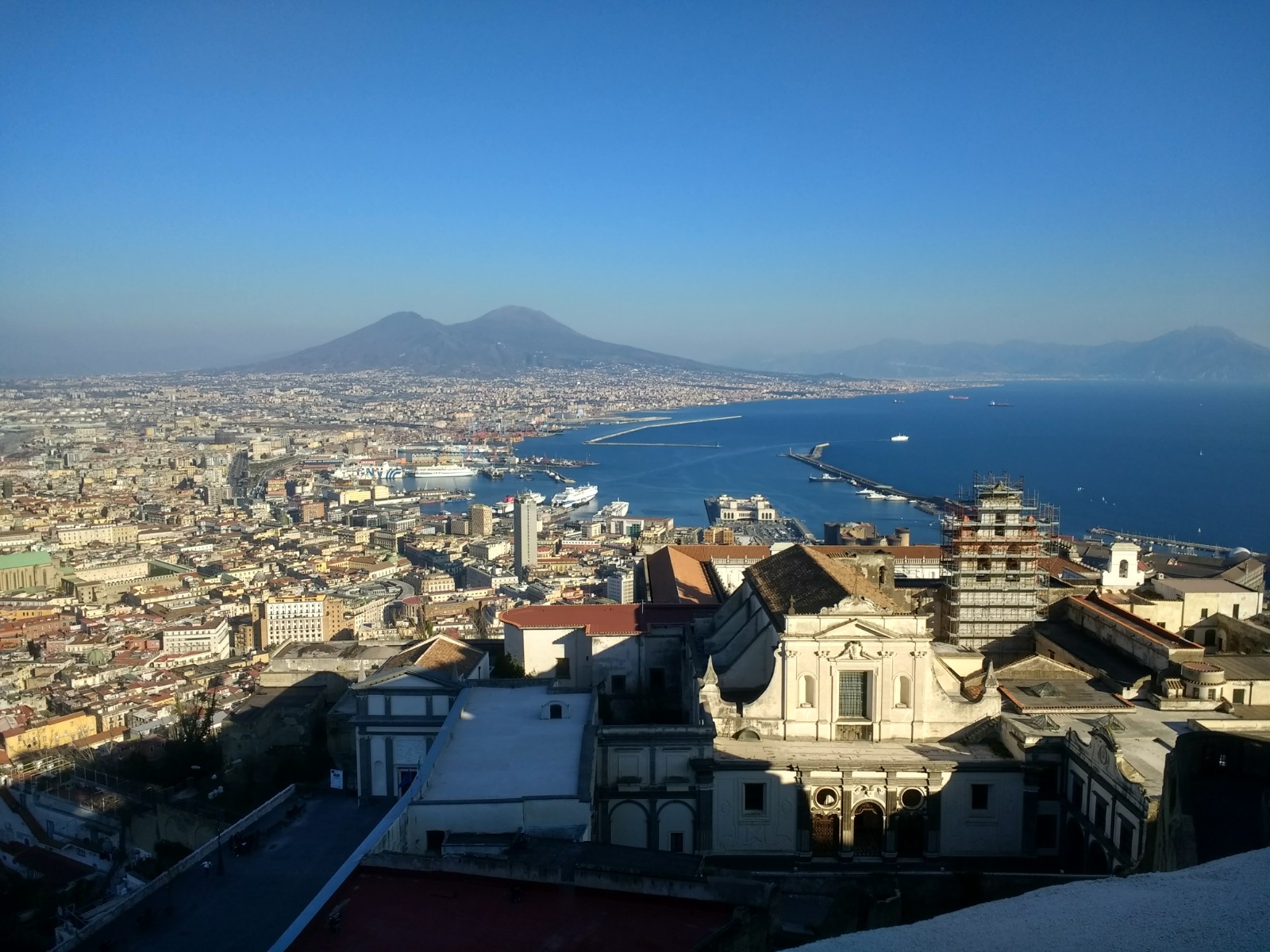
It was not completely clear at the top, but the views were still good. Vesuvius is straight ahead (the taller mound, on the right).

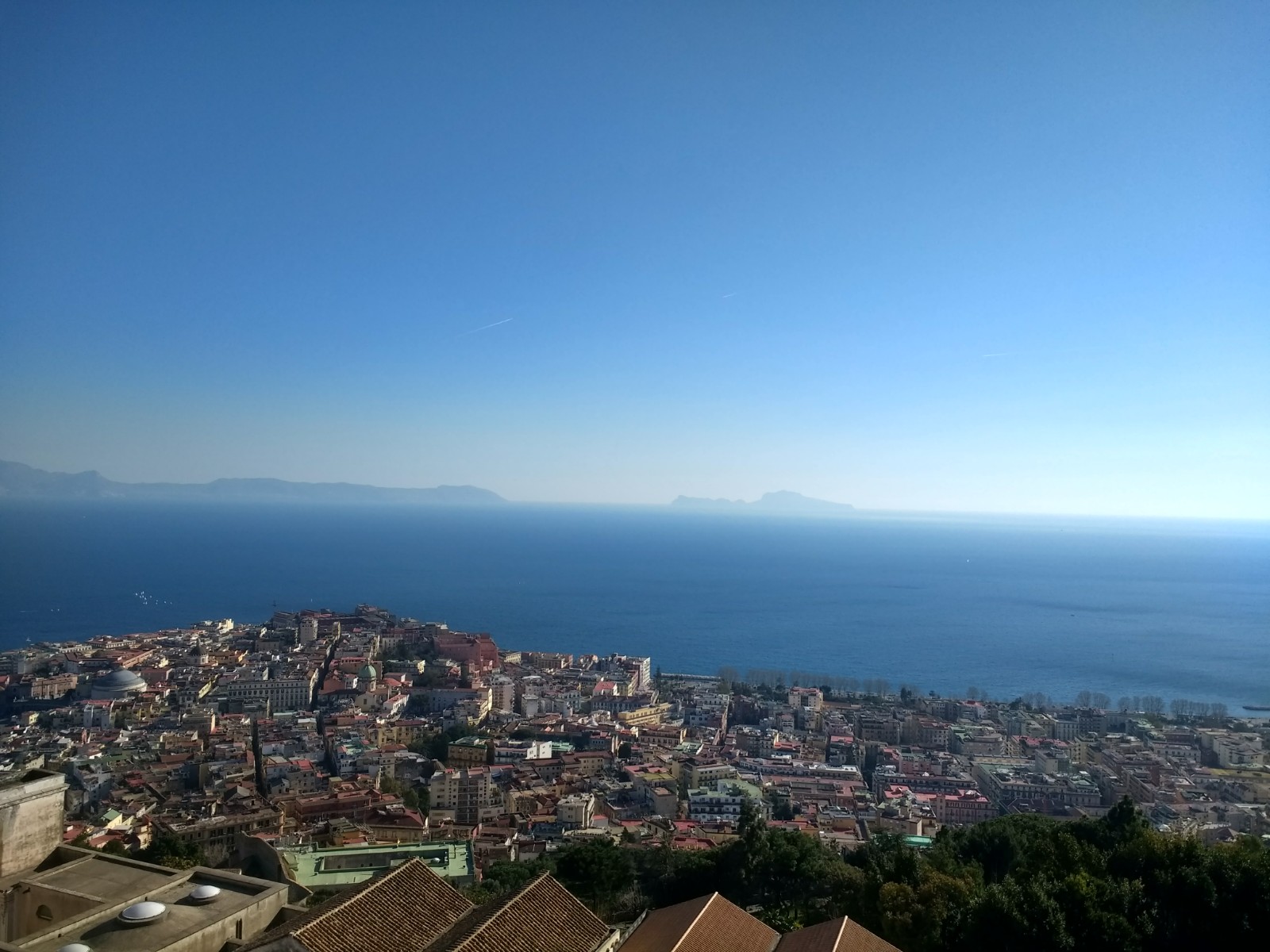
The small island straight ahead is Capri, where we are heading in mid-March.

Preserved, In Herculaneum

Back in 79AD the inhabitants of Pompeii, Herculaneum and surrounding area were unaware that they were living in the shadow of a volcano. Vesuvius hadn’t erupted for centuries and was just a benign backdrop to their daily lives. When Vesuvius did start spewing out her insides, the wind first carried pumice and ash over Pompeii, where roofs and houses soon collapsed under the weight. The ash that was later dropped on Herculaneum, together with a sea of mud, buried the town to a depth of fifty to sixty feet without incurring the same volume of damage as Pompeii suffered. What the ash and mud buried, it conserved. Wooden rafters, wooden furniture and statues have all been found in Herculaneum.

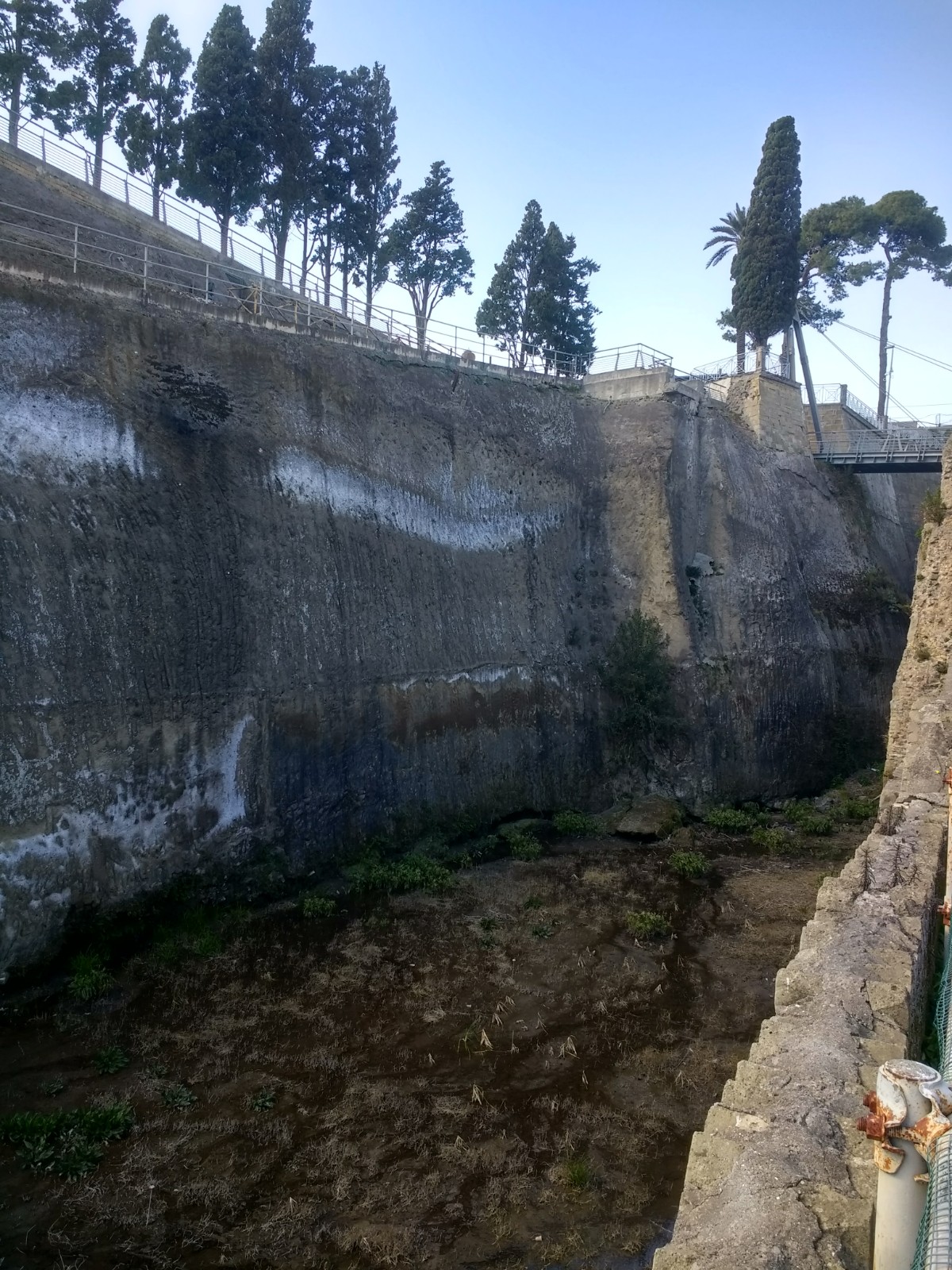
An unexcavated wall of mud and ash at Herculaneum. Only one quarter of the ancient city has been unearthed to date. The remainder lies beneath the modern city of Ercolano.

Apart from being better preserved, Herculaneum is smaller than Pompeii, and much less crowded, which made our visit today very pleasant.

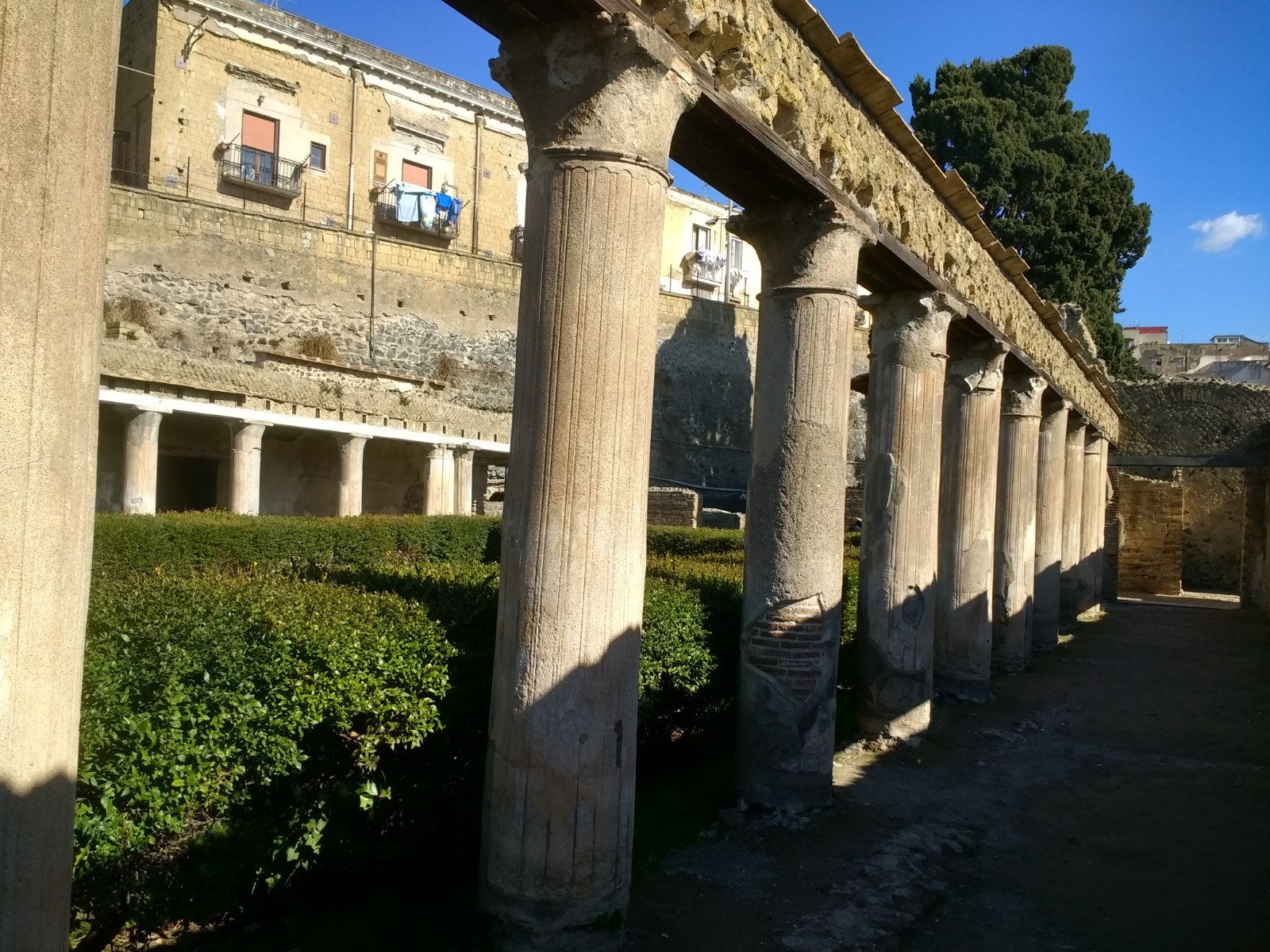
Garden in Herculaneum. The modern city is slap bang next to the ruins as is evident from the washing.
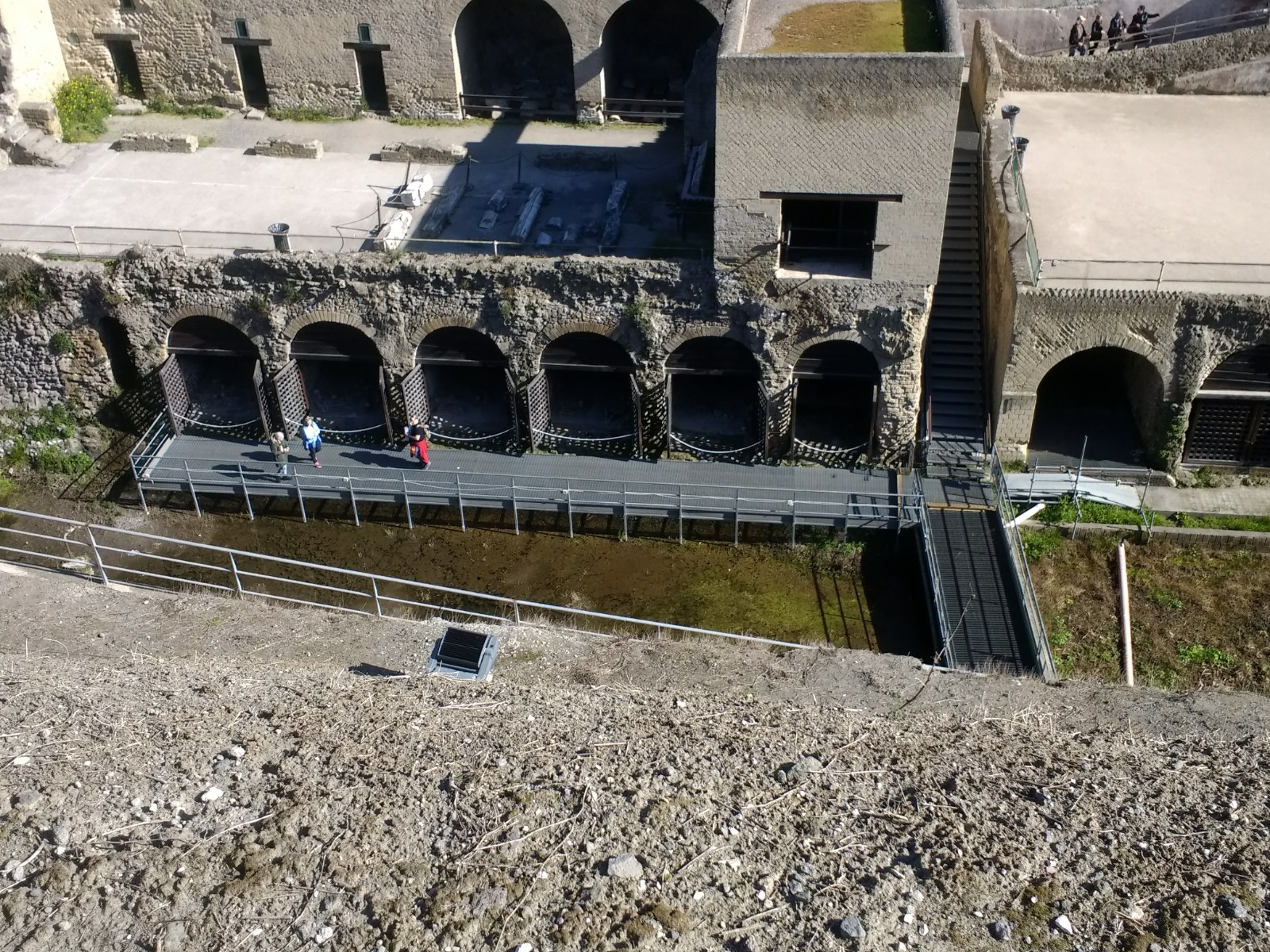
Warehouses and ancient beach. Back in 79AD, Herculaneum was on the coast (It is now 500 metres away). In 1980 about 300 skeletons, of people attempting to save themselves from the disaster, were found in the warehouses. Most residents, though, did escape.
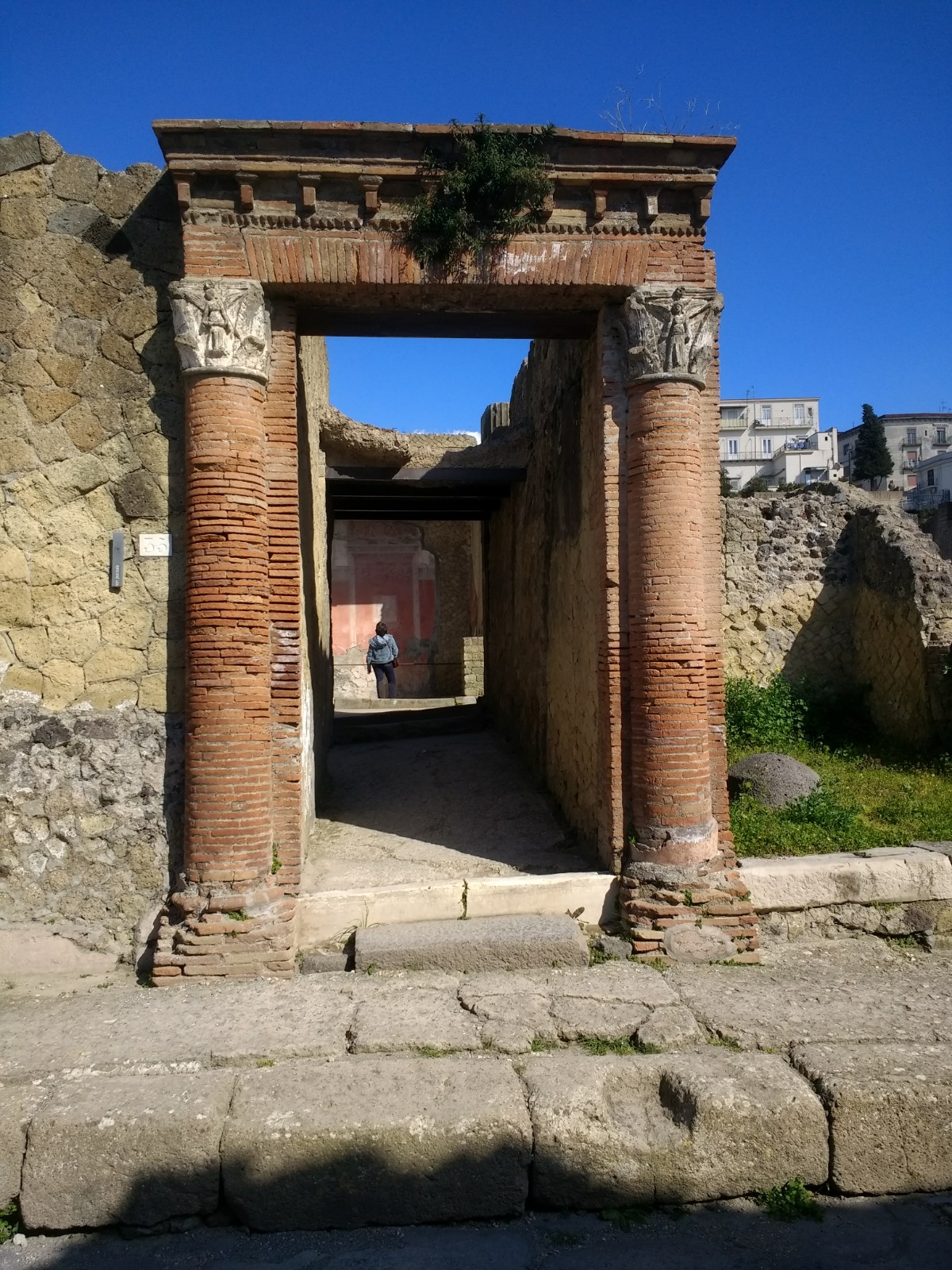
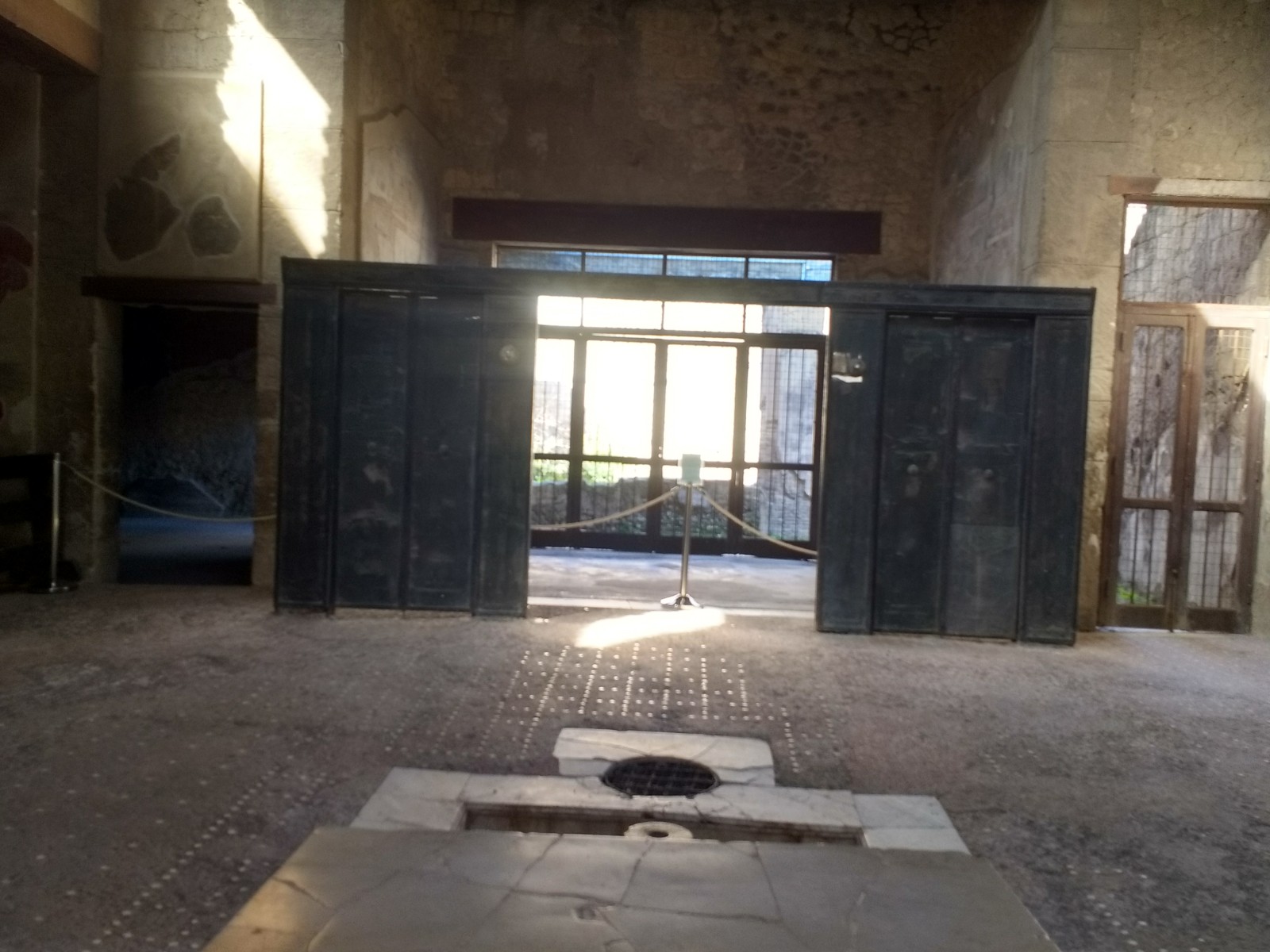
House entrance
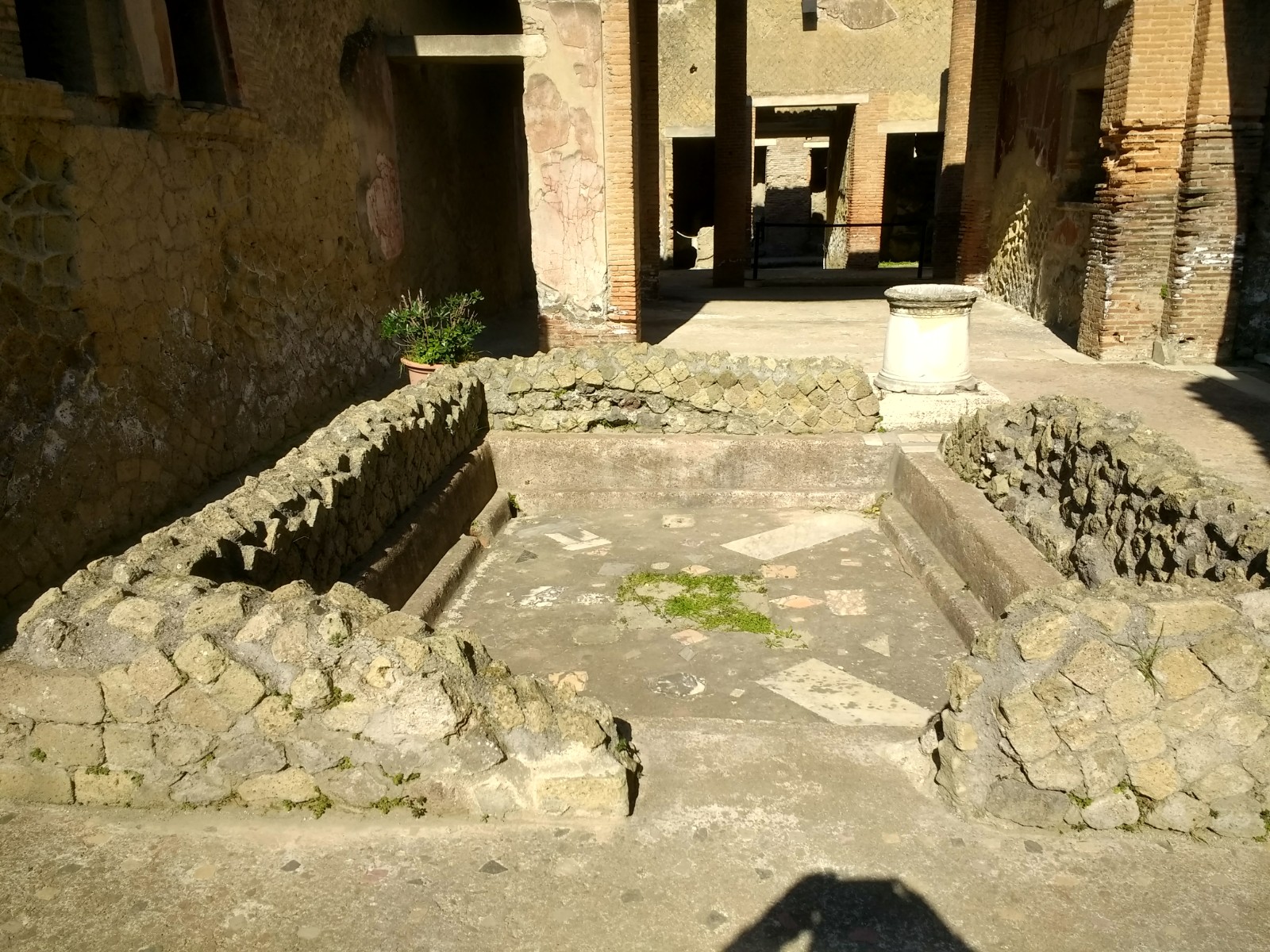
Impluvium (rainwater pool). A lot of people In Herculaneum did not need an impluvium, though, as water was piped into their homes. Herculaneum was a more affluent town than Pompeii.

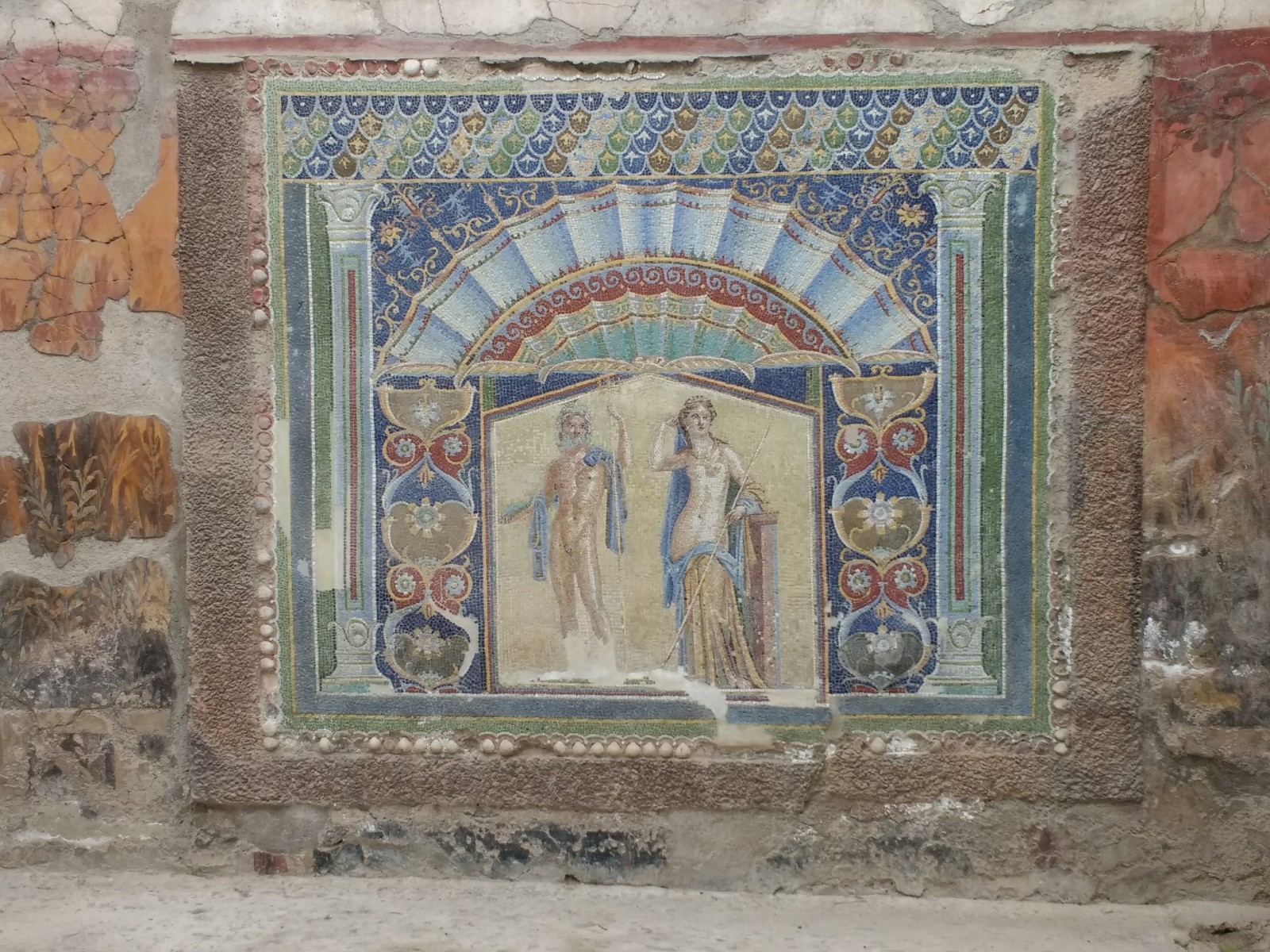
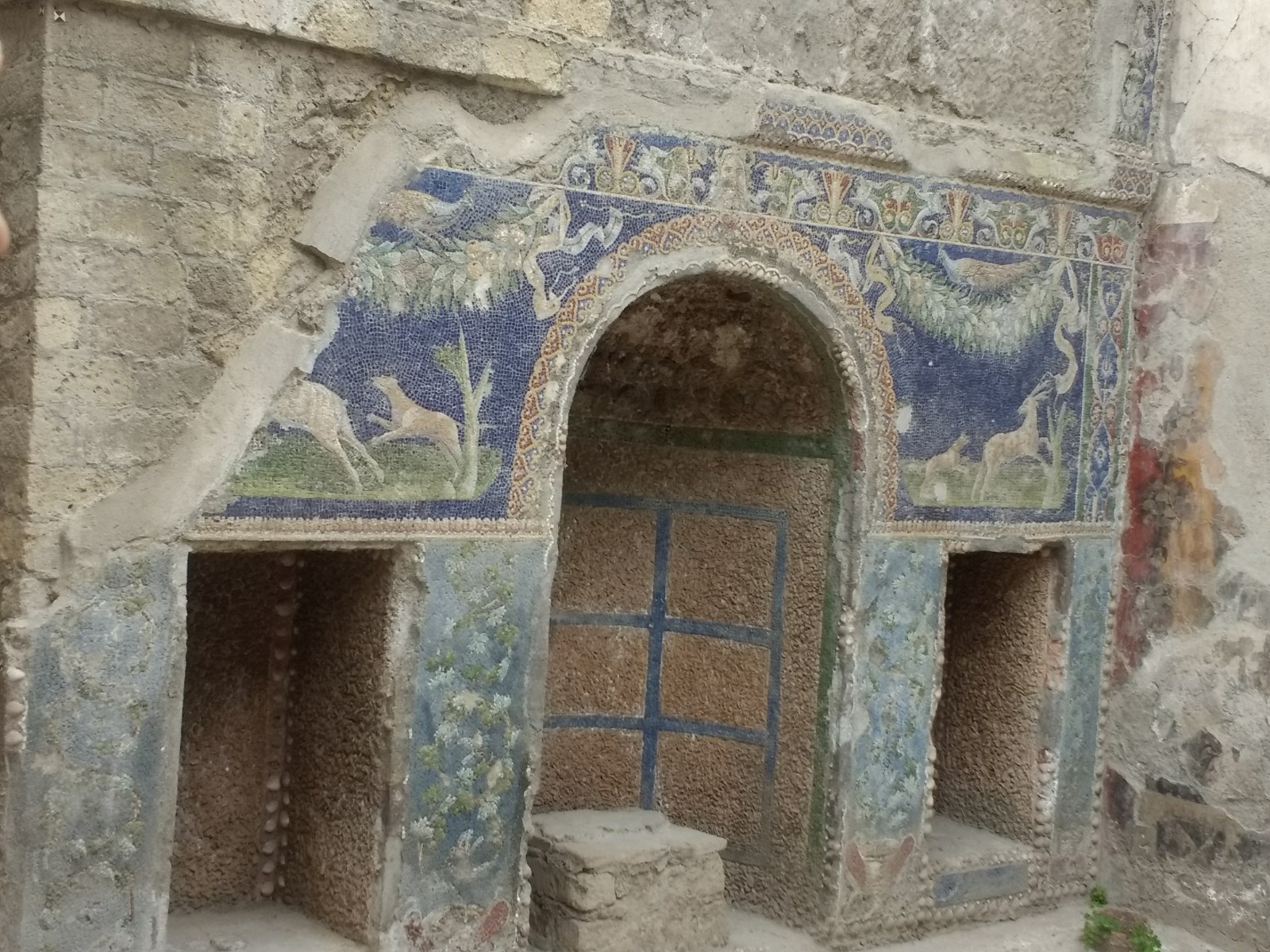
Mosaic
Another mosaic
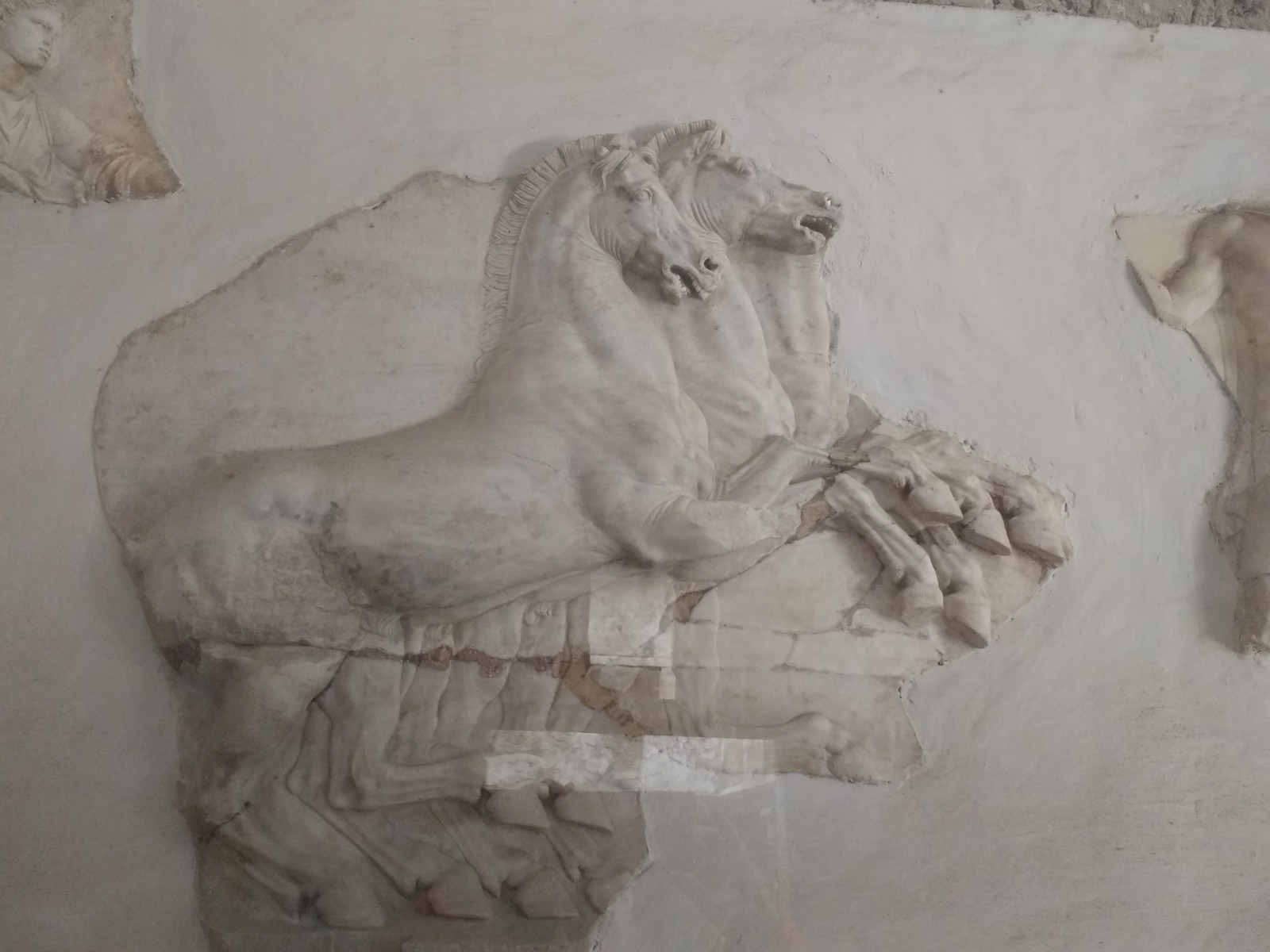
Part of a frieze
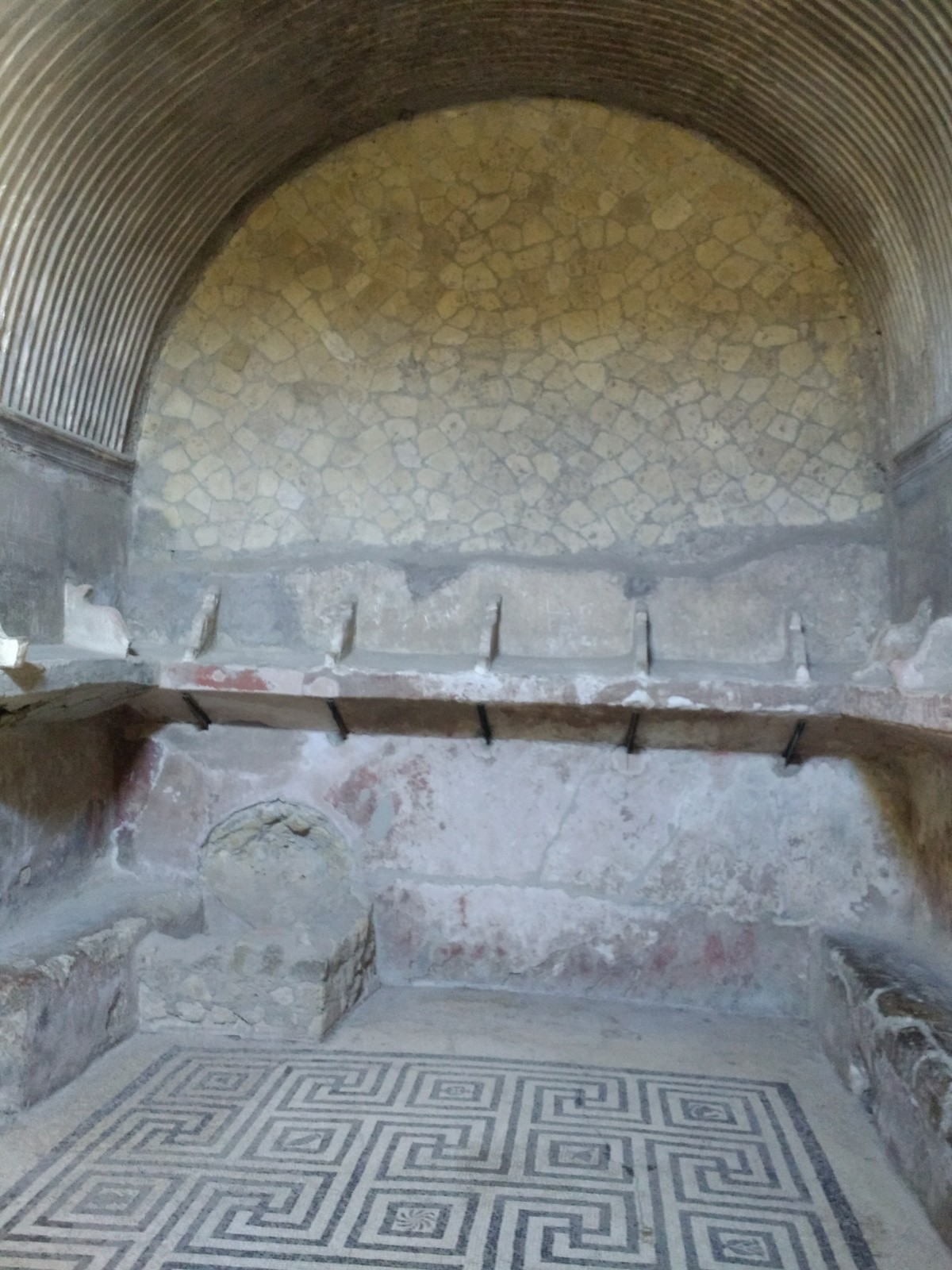
Ladies’ changing room in the bath house. The niches on the walls are for the women to store their clothes.
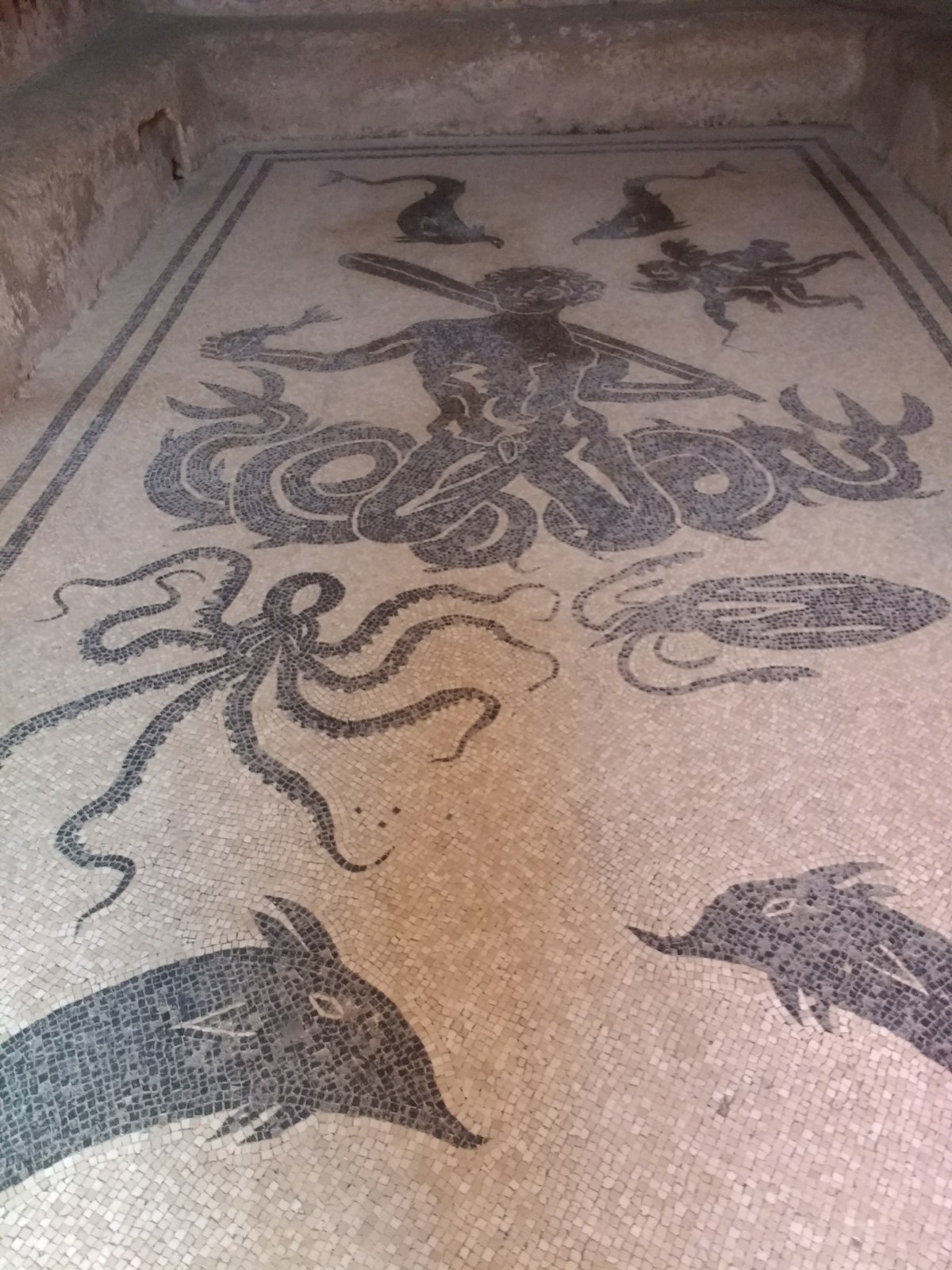
Mosaic in ladies’ bath house
These wooden sliding doors, affording a little more privacy in the dining room, have survived, complete with brass handles.
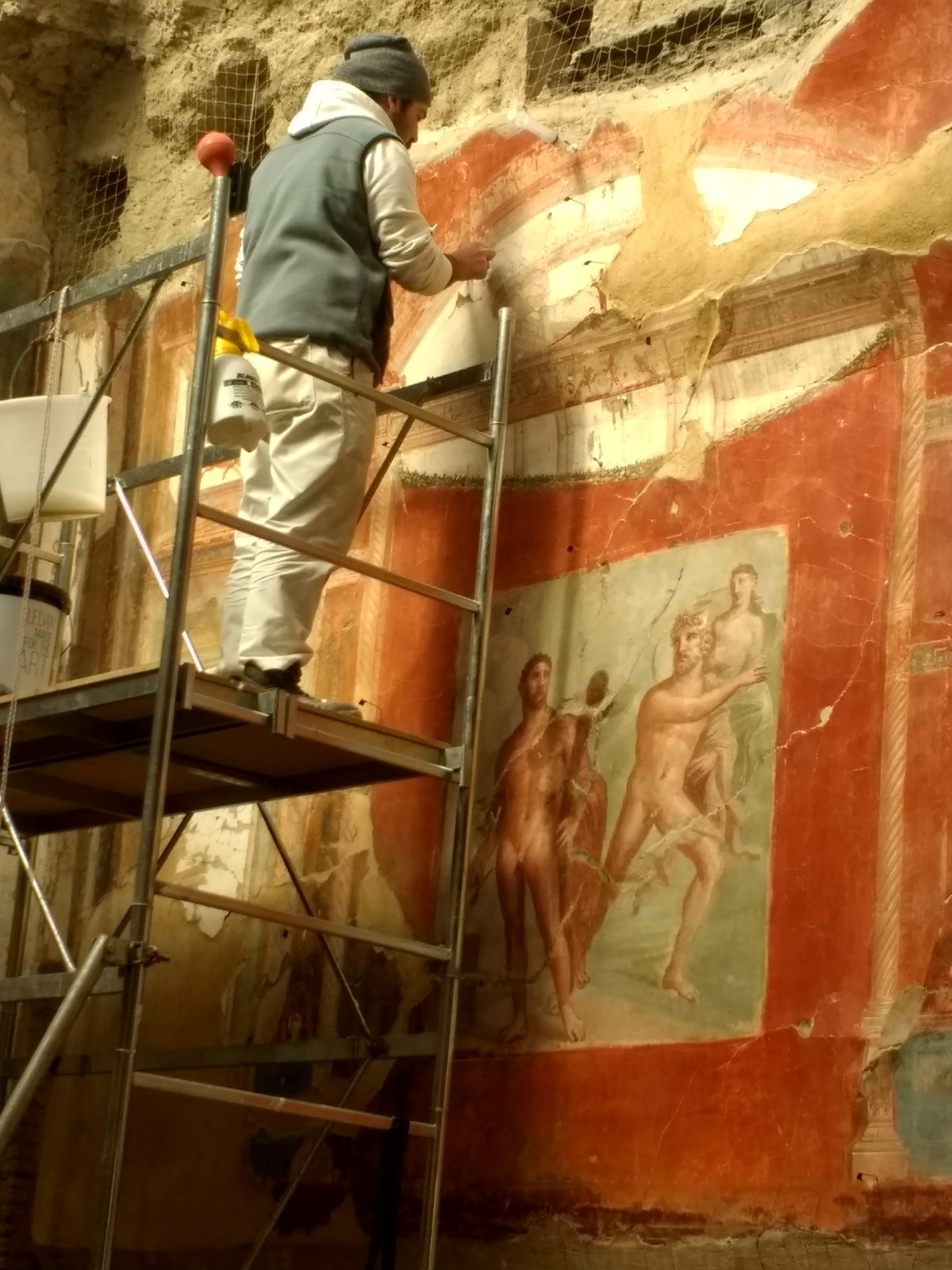
Conservation in progress
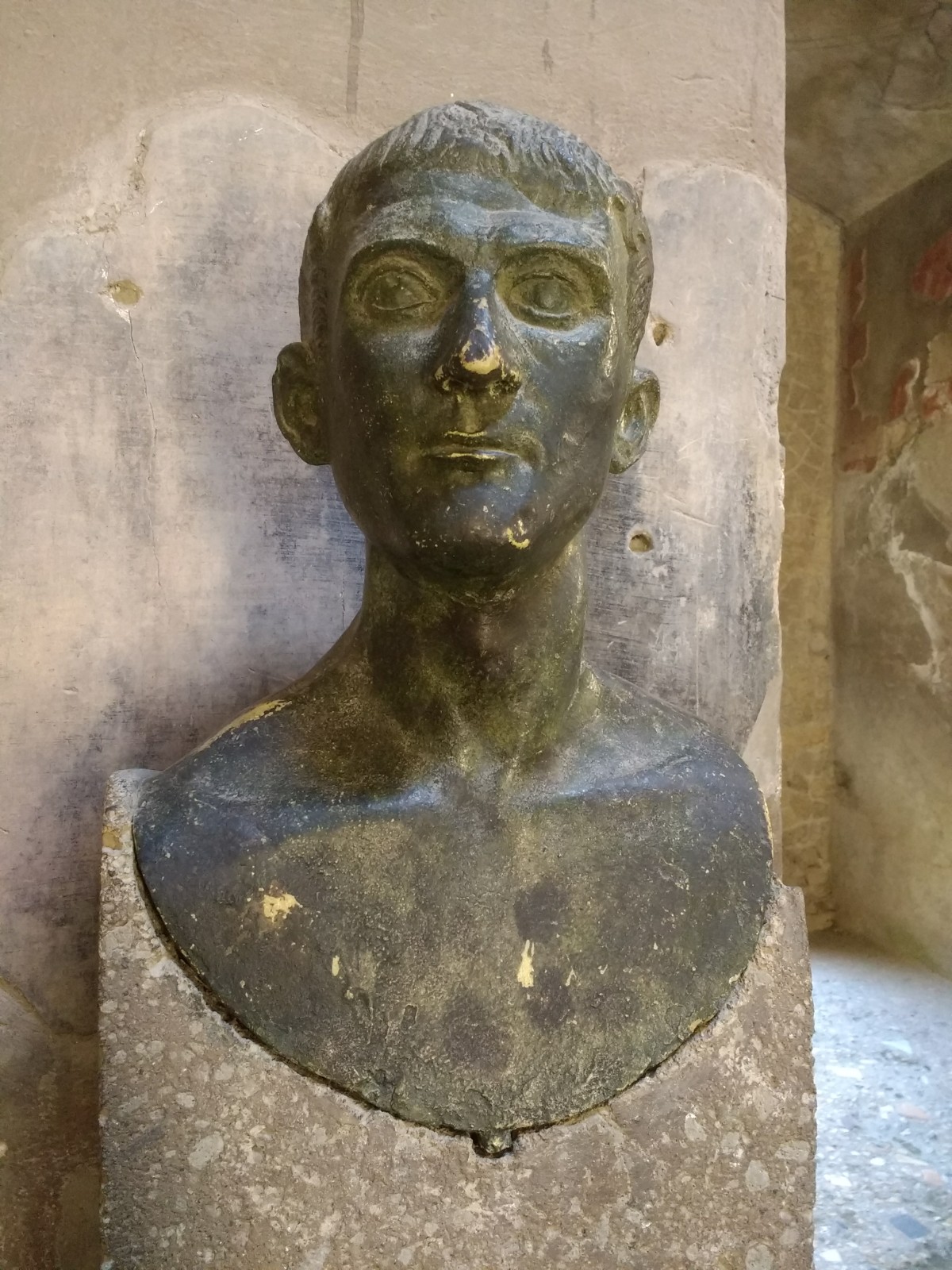
Bronze statue


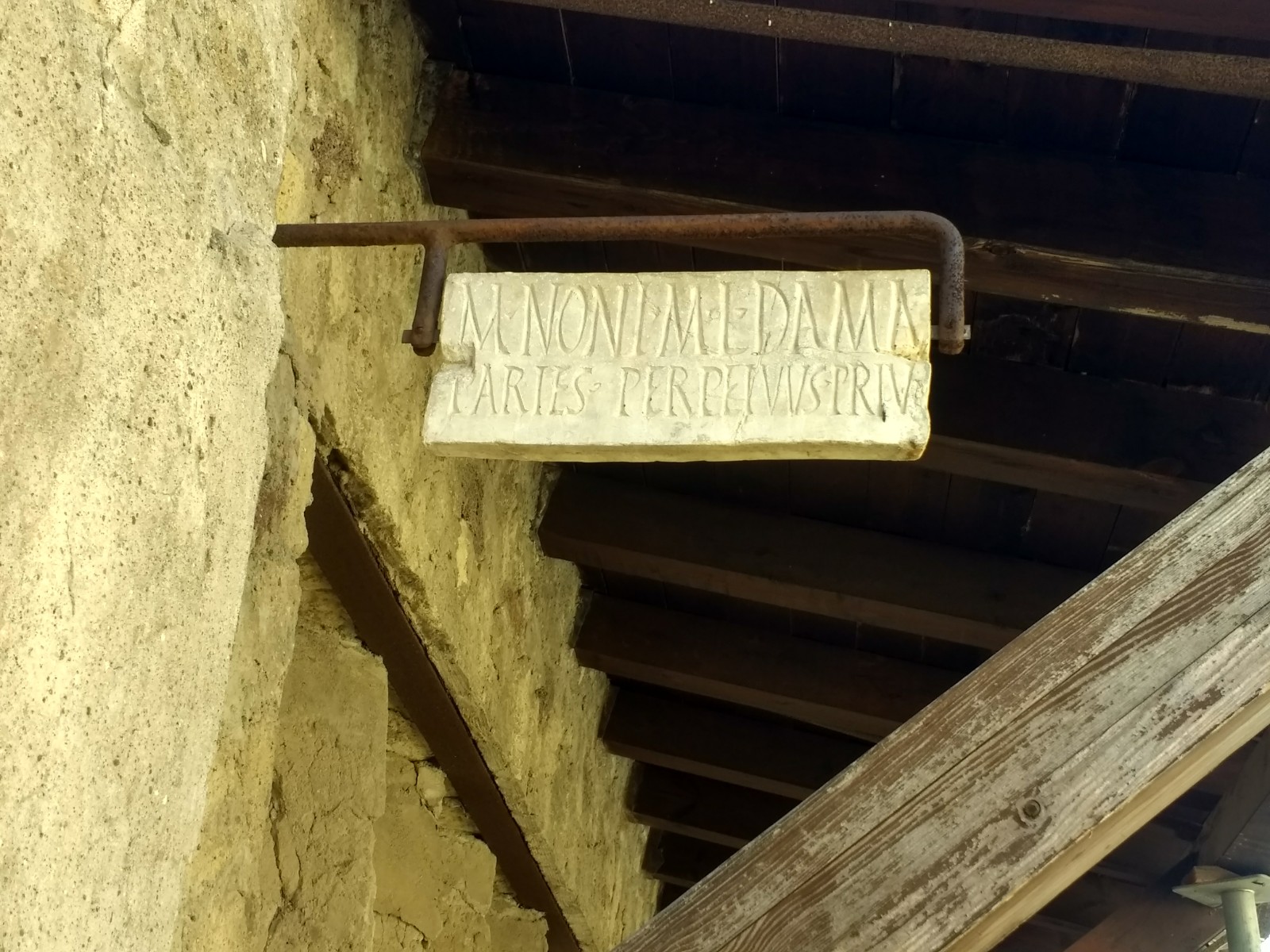
A house sign with the name of the inhabitant. This man was a former slave who became a citizen.

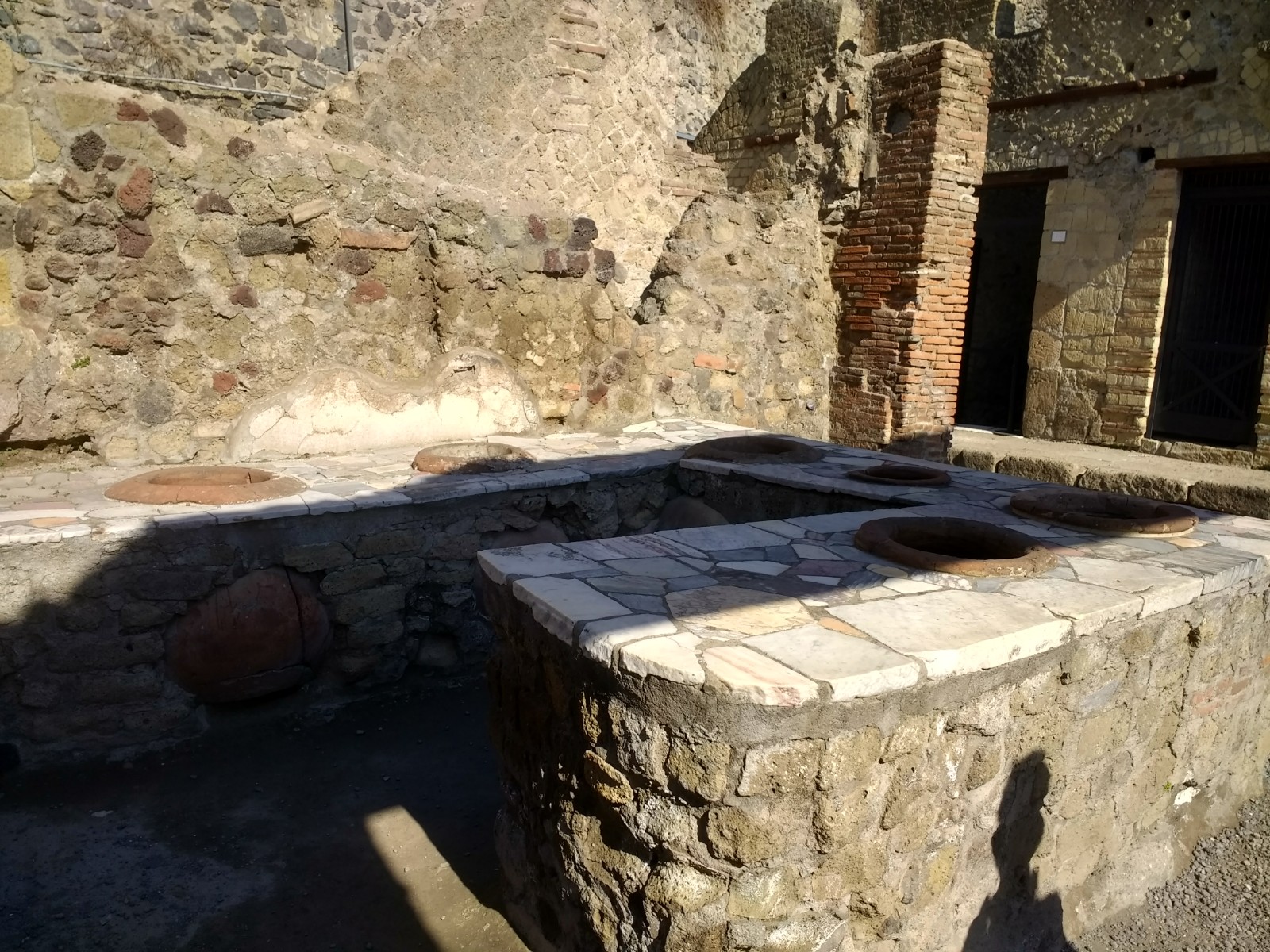
Thermopolium. A place where poor people who had houses with no cooking facilities could come and buy ready-cooked food.
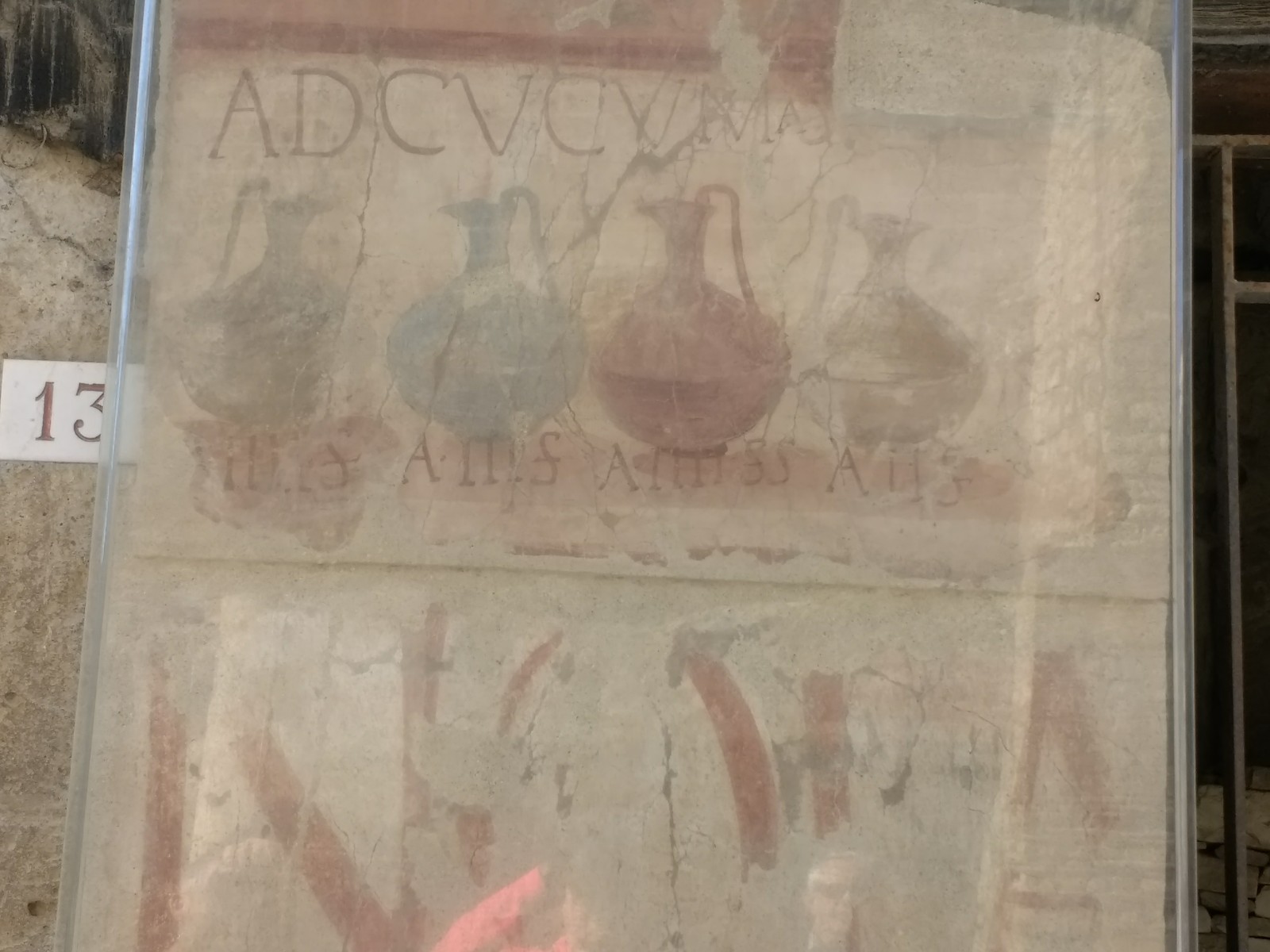
Wine menu outside a shop.

The Charm of Caserta

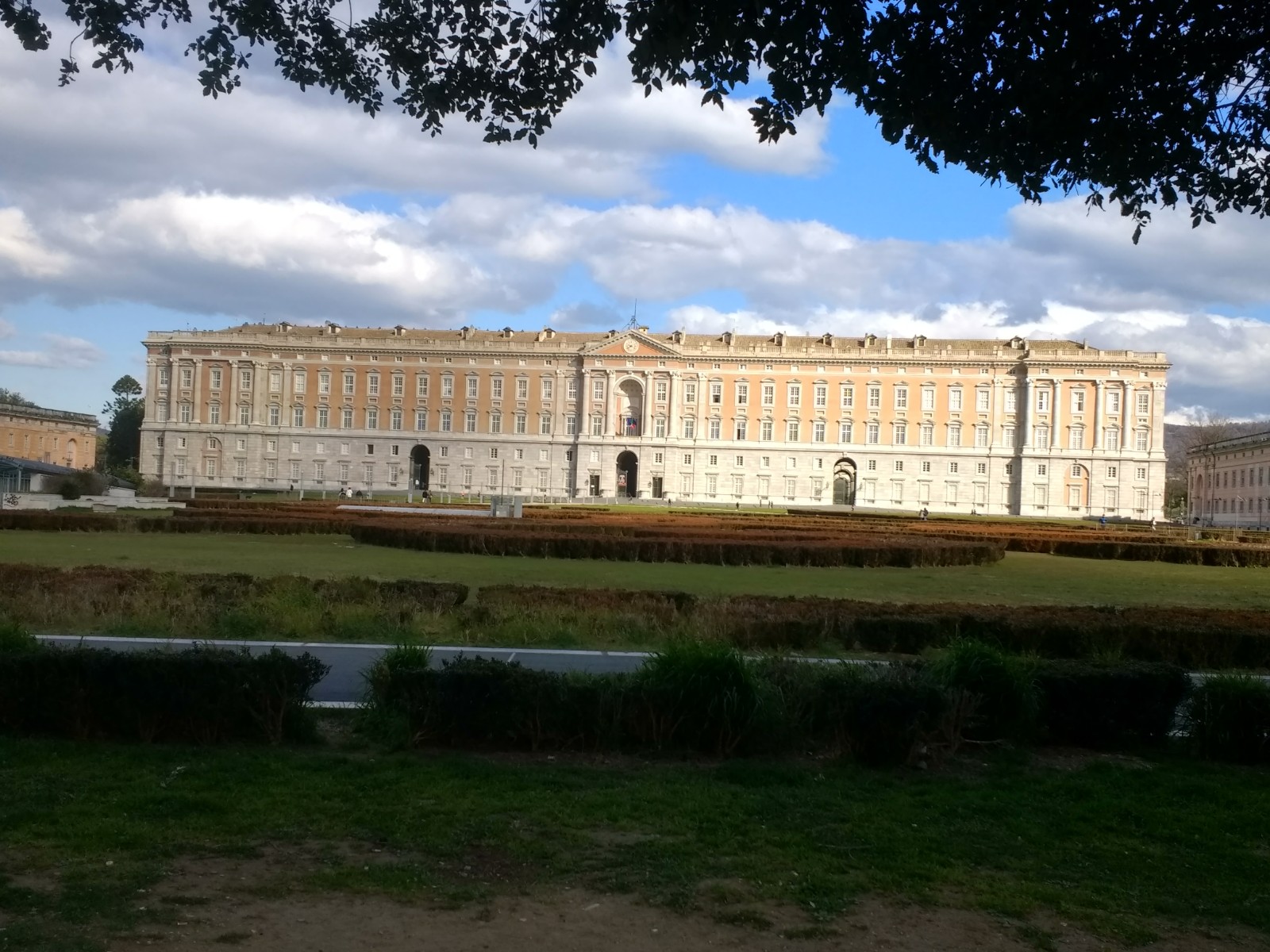
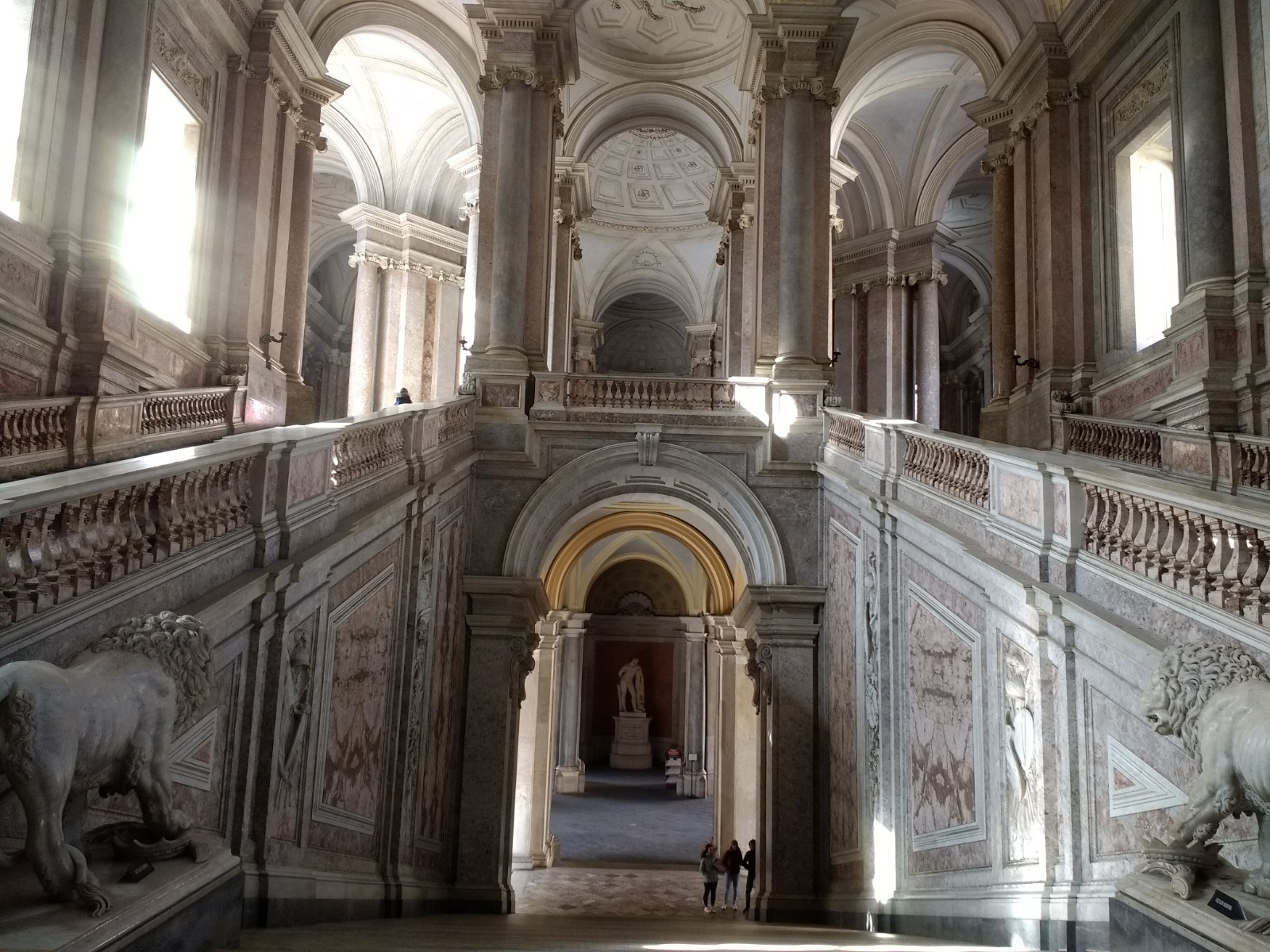
The scale of the royal palace of Caserta is jaw-dropping, the monumental staircase being the most stupendous feature.

Caserta Palace
Monumental staircase

The Palace was built for Charles VII of Naples (one of the Spanish lot) in the mid-eighteenth century, who abdicated in favour of his son, Ferdinand (to take up the Spanish throne when his father died) before he had even spent one night in it.

Paranoid about security and keen to put a little distance between himself and the dirt and crowds of Naples, Charles chose Caserta as the ideal location as it is both away from the coast (and the threat of invasion from the sea) and twenty kilometres distant from the city.

The Palace was designed to rival Versailles – in opulence, it fails, but in terms of size, it wins. In fact, in terms of volume, Caserta is the largest palace in the world. Whether this is a worthwhile aspiration to have for your palace, is debatable.

A huge avenue between Caserta and Naples was designed, but never built.

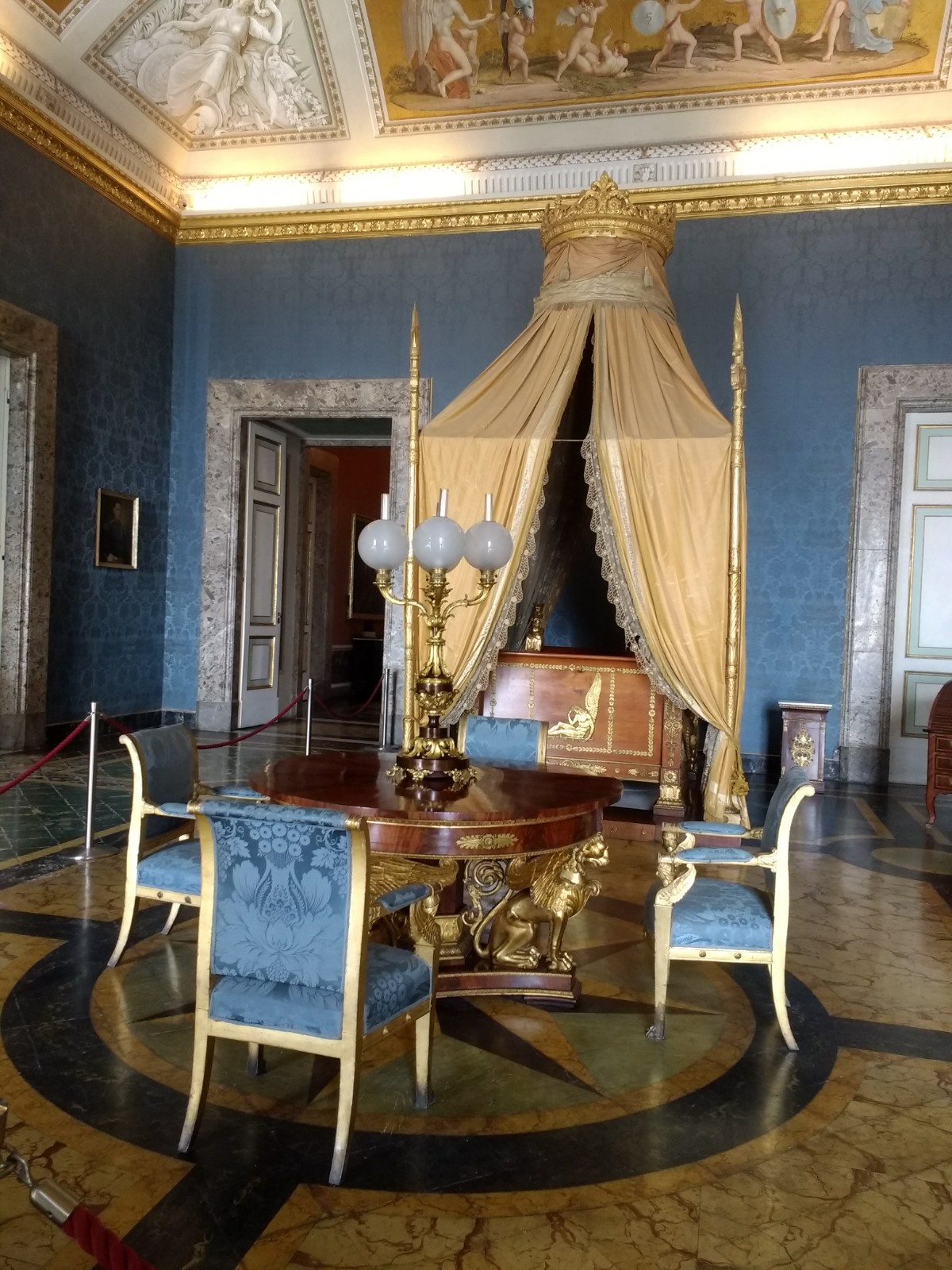
The bedroom of Francis II, the last king of ‘The Two Sicilies’ (Sicily and Naples) before Italy was unified in 1861.
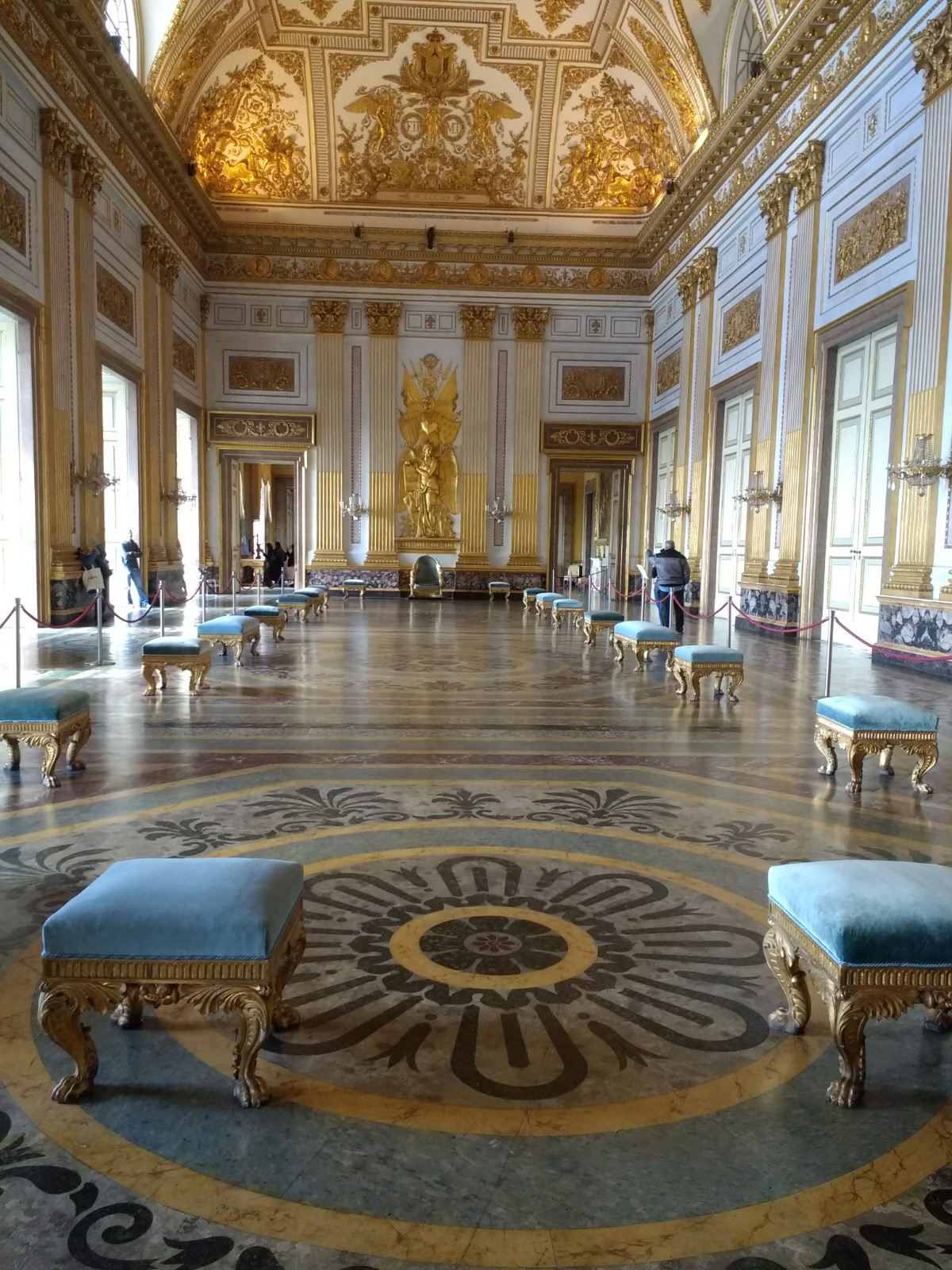
The Throne Room
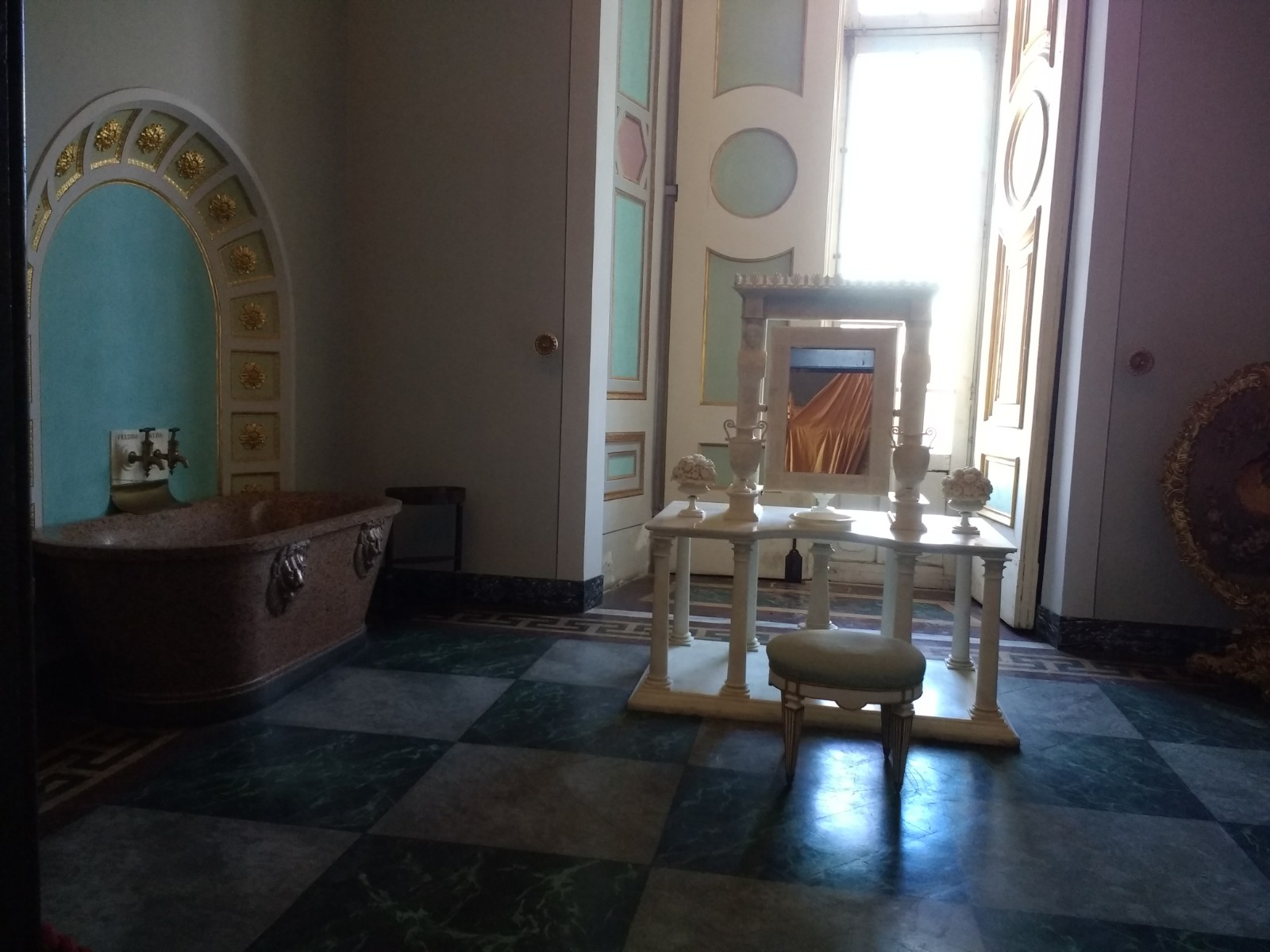
Bathroom of Queen Maria Carolina, wife of Ferdinand, and sister of Marie Antoinette.
The bathroom also had a bidet, allegedly the world’s first. This was described in a palace inventory as ‘a guitar-shaped object of unknown use’.

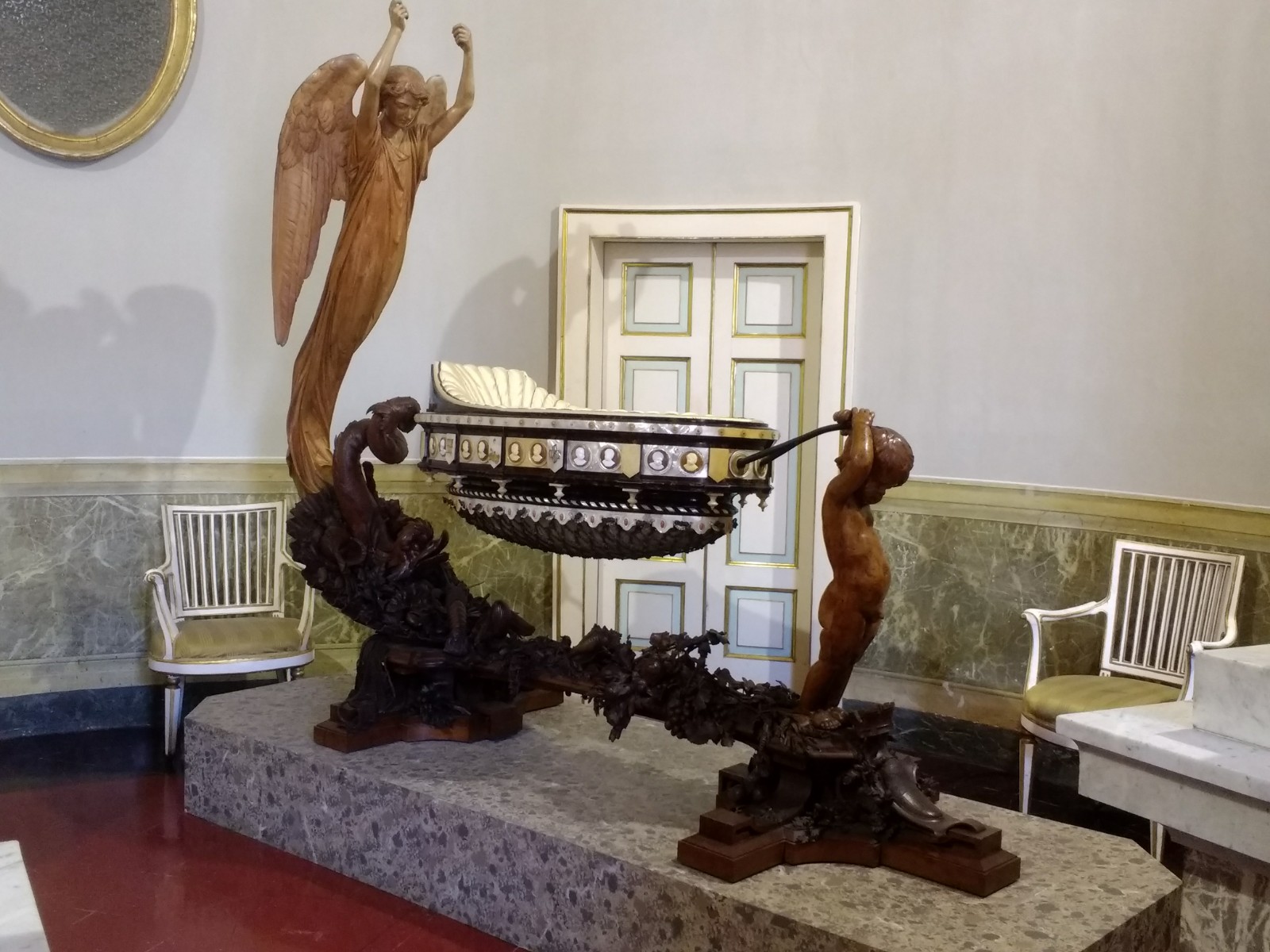
Cradle for the future King Vittorio Emanuele III, the third King of a unified Italy. The cradle was made in just 35 days.
The back stairs were not so impressive.
A lift for a king (I can understand this being an attractive alternative to those monumental stairs).

Two of the features that Caserta is especially known for, the gardens (including ‘An English Garden’) and a Court Theatre, were not open yesterday – the garden, due to the wind, and the theatre, as it is only open at the weekends. We will be back.

Ceiling
We were impressed with all the ‘marble’ floors until we saw damage like this on the visitors’ routes. A number of the floors are in fact painted, but very well. There has been no attempt to protect them.
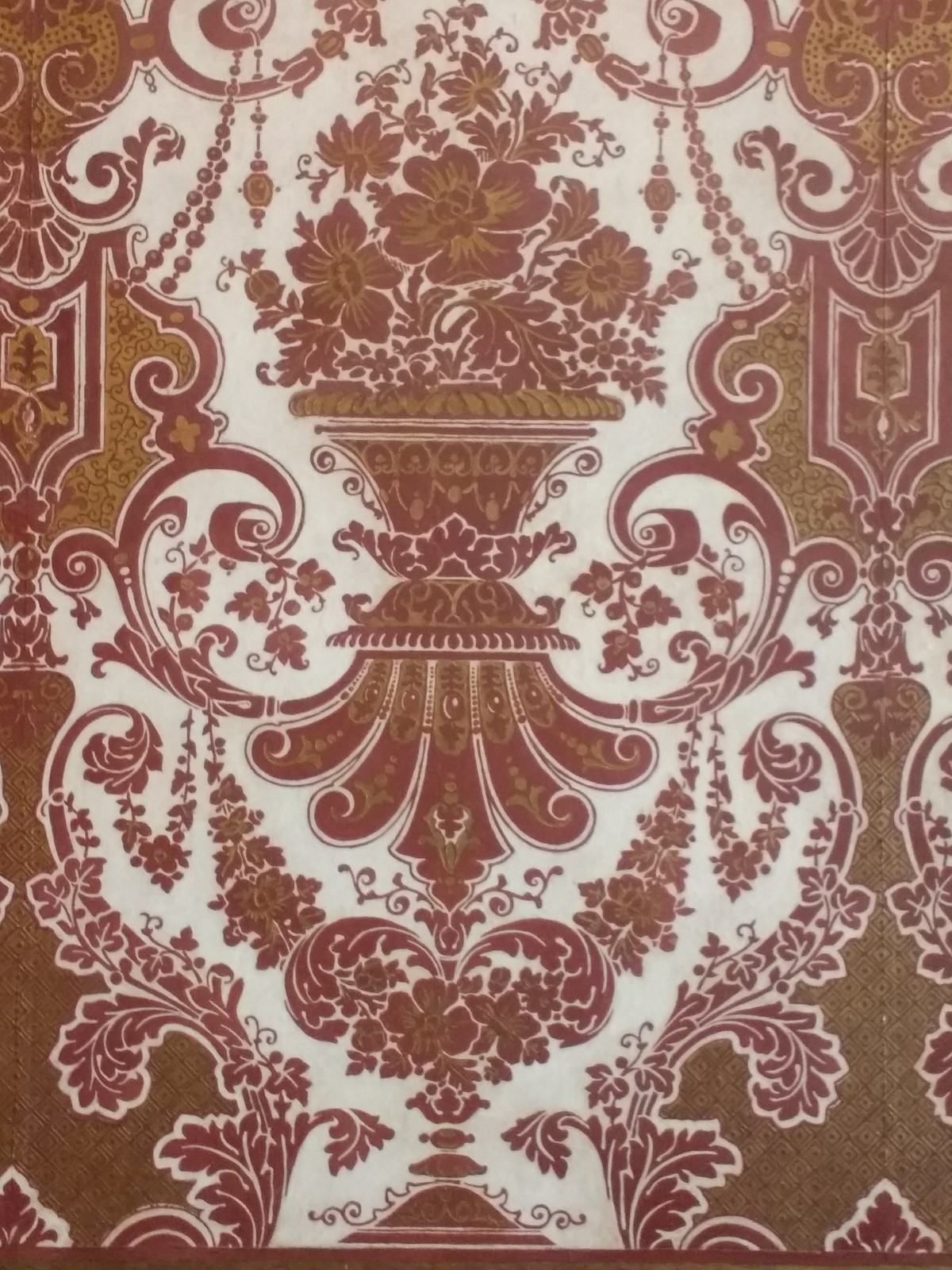
Wallpaper, painted and decorated with gold
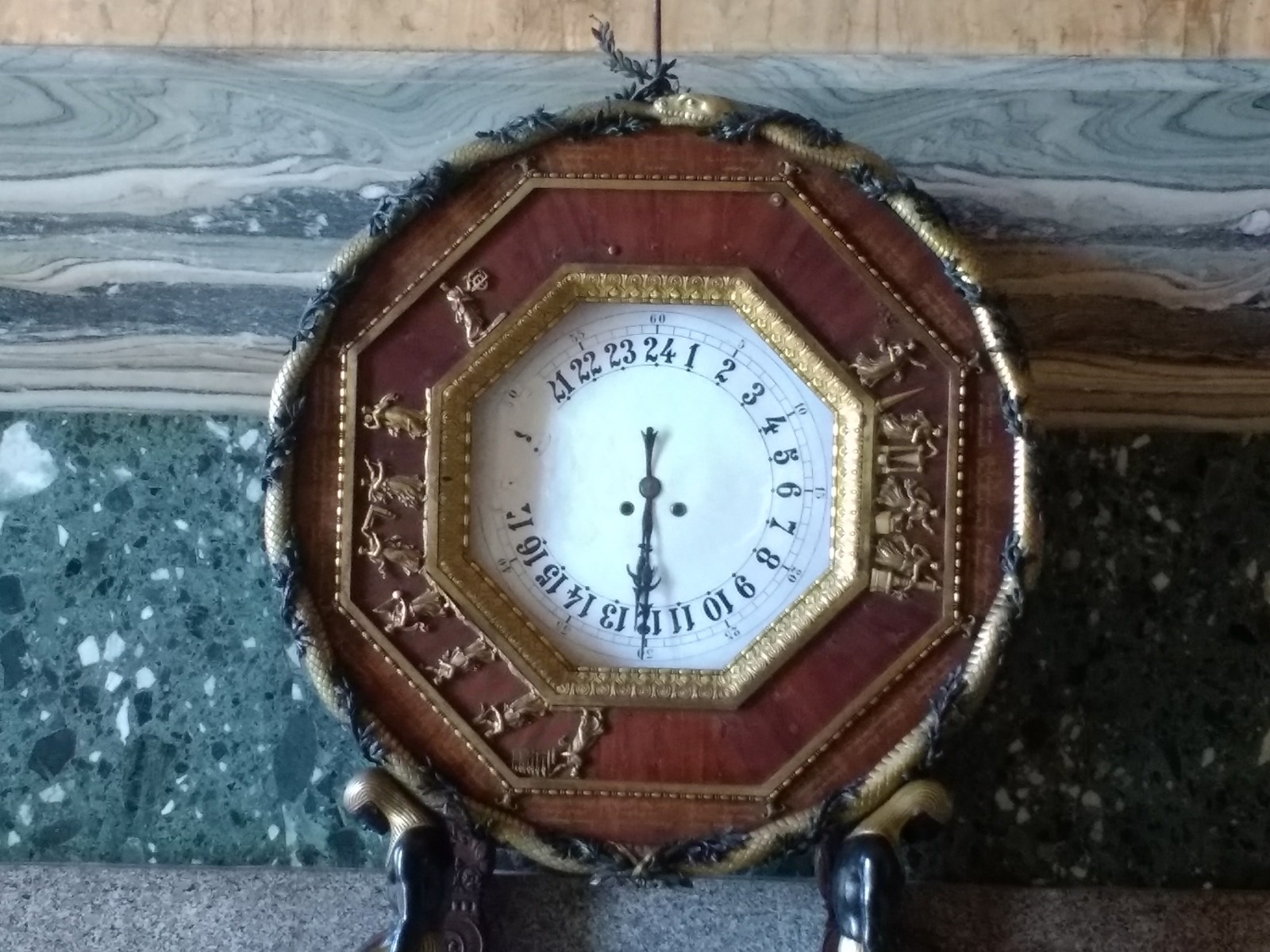
24 hour clock
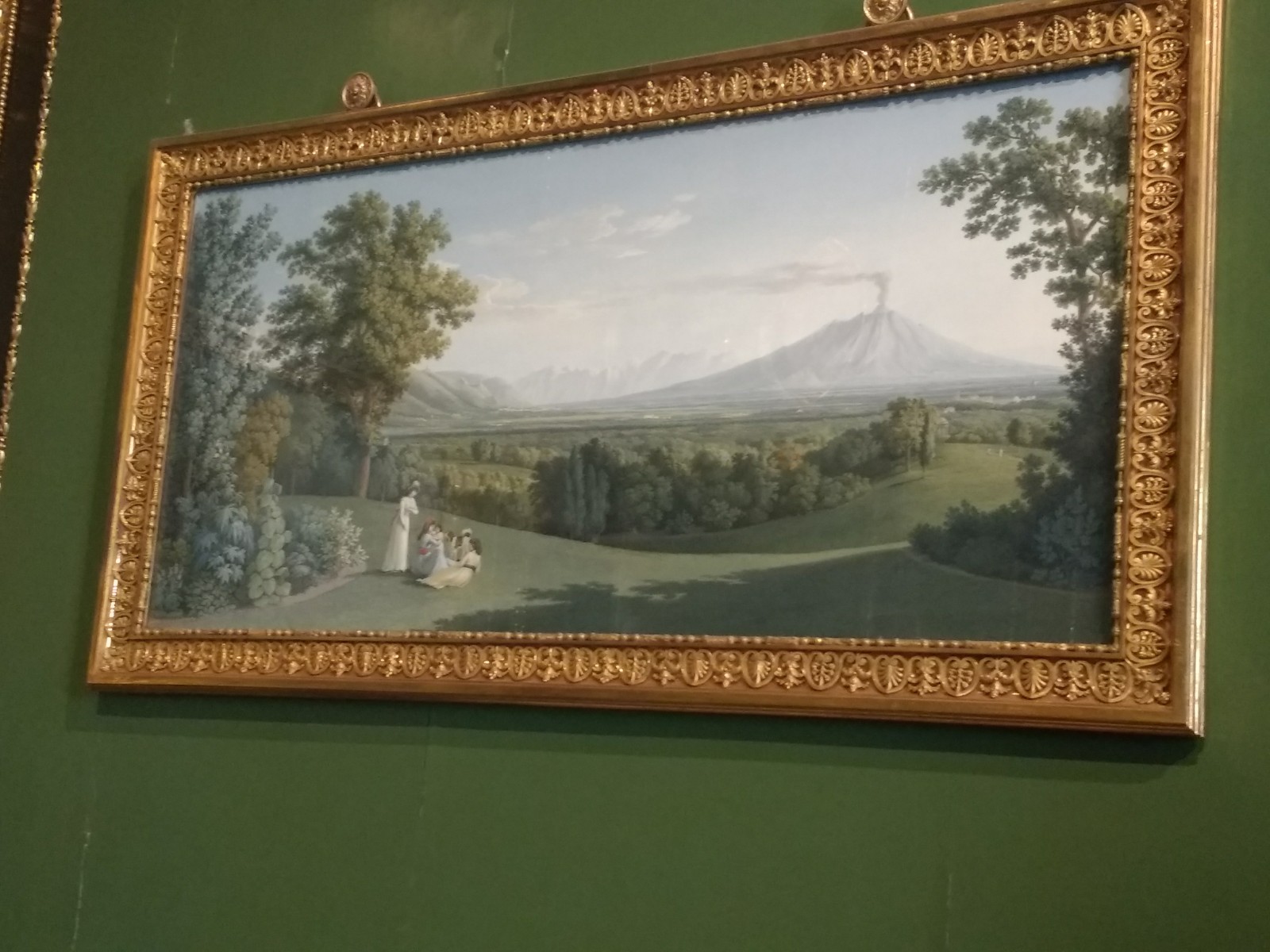
Painting of The English Gardens. I think those people had better watch out – I don’t like the look of Vesuvius.

Out of the Wind on an Underground Tour

What do Neapolitans do when the wind blows at 70 mph? The answer is they stick their washing out to dry just the same as any other day. More than one person came home at the end of yesterday to find an item of their laundry missing. I know because on our perambulations we saw at least one sheet and a few items of clothing littering the pavements.

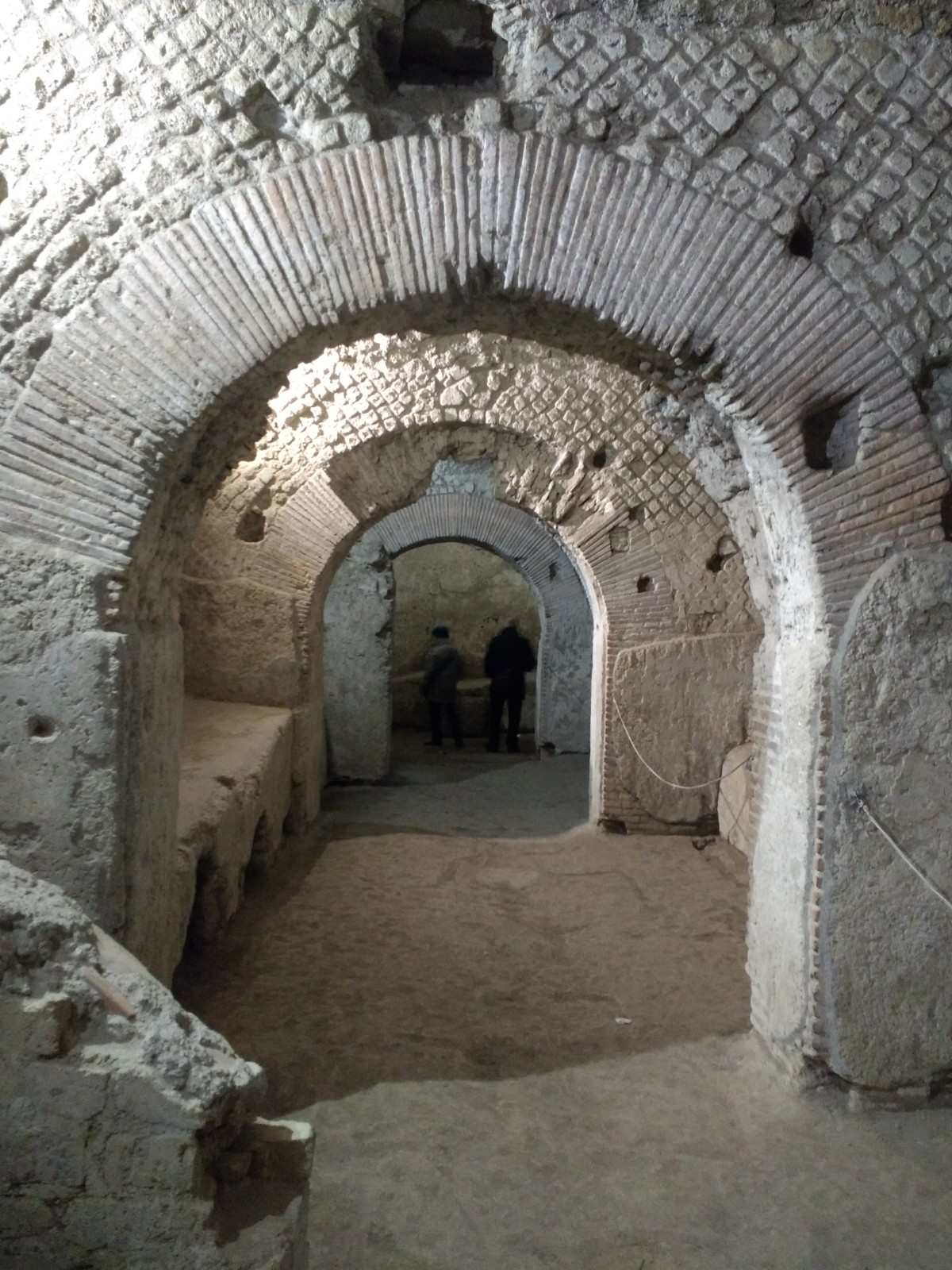
To escape the wind, we took a tour below ground where Roman remains have been found. From a seventeenth century church we climbed down through Mediaeval remains to the remnants of a market place from the third century BC, which was abandoned when, after three days of rain, a local hill sent a river of mud down to bury it. Fortunately, no human bones have been found as the mud slide is thought to have happened at night, when everyone was at home.

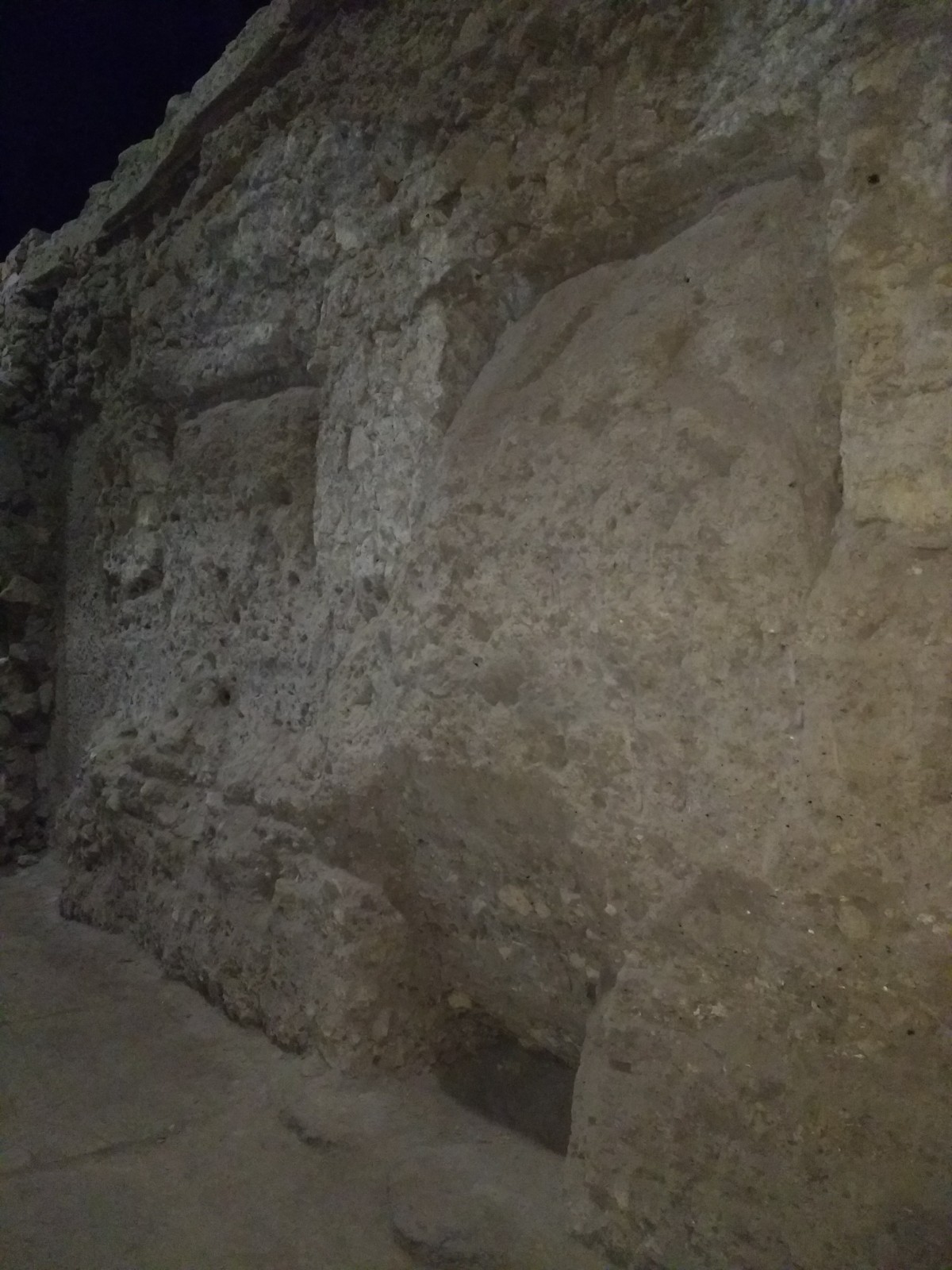
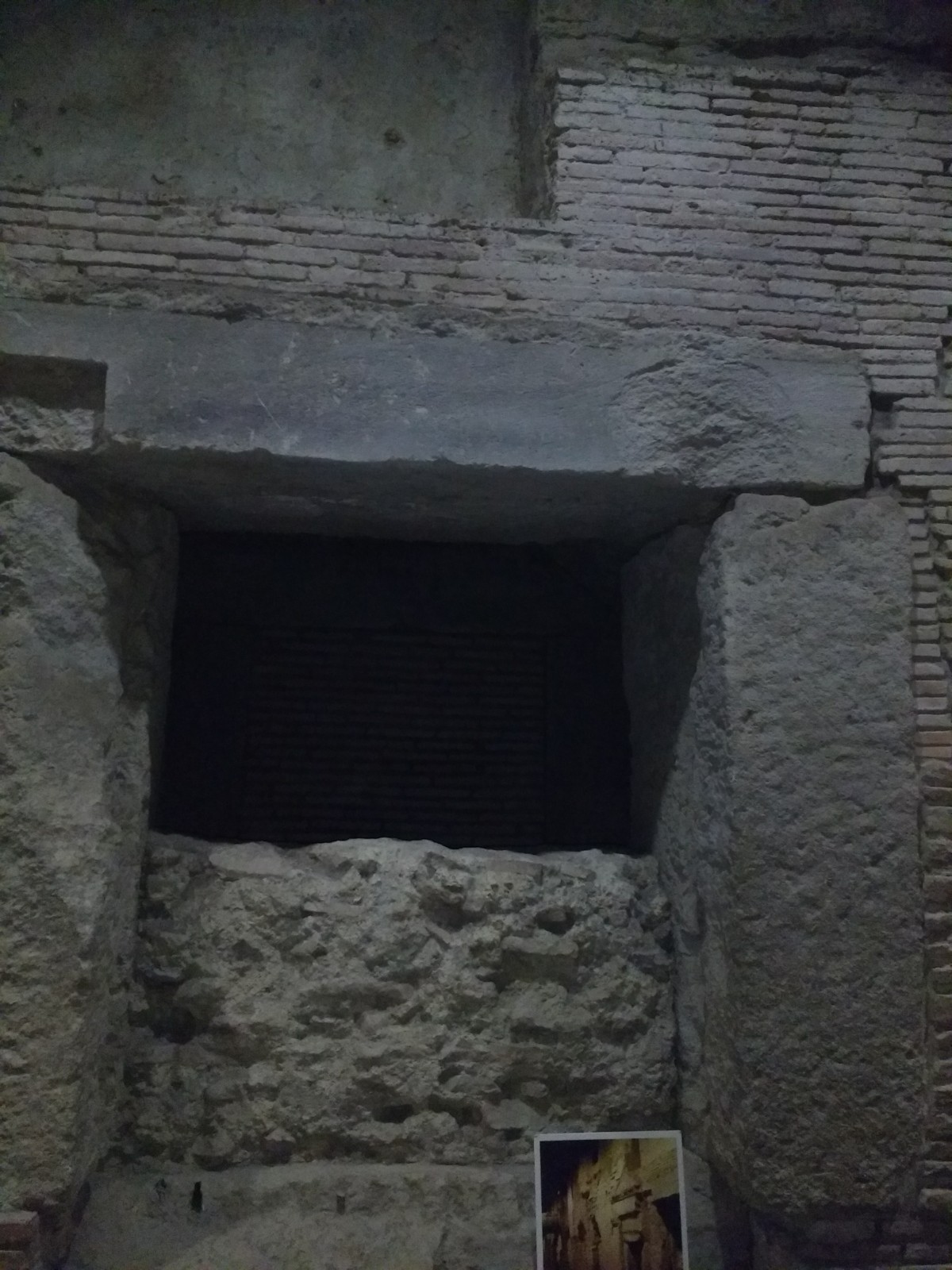
The mudrock can been seen between these doorways. Archaeologists have yet to excavate this area.
When the Romans came they made use of stones (in this case for a lintel) that the Greeks had left behind.
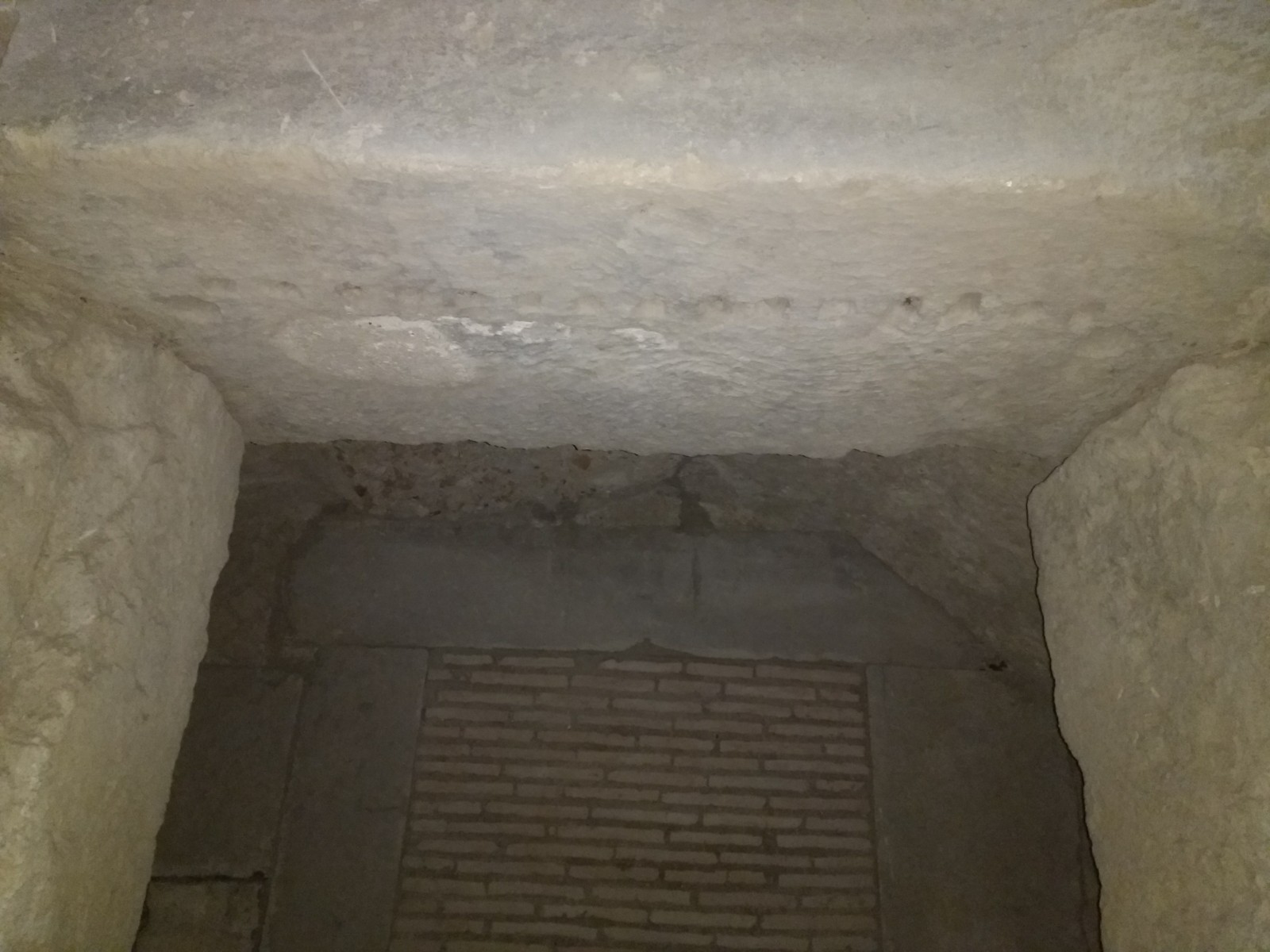
This was a hole in the wall where the Romans paid their taxes. You can just see holes in the horizontal stone at the top where iron bars would have been fitted to prevent ciizens from grabbing the collected dosh.
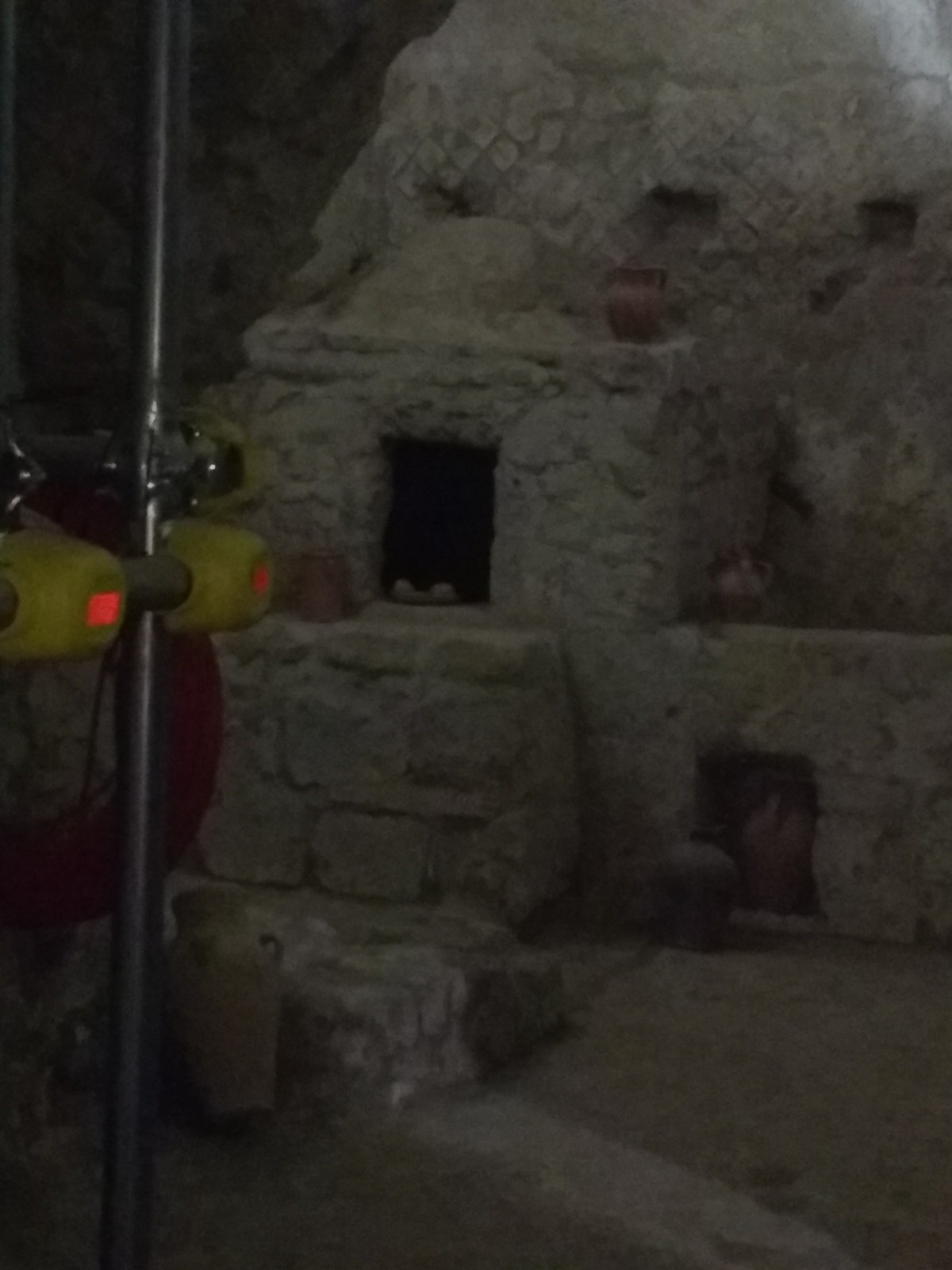
A wood-fired oven, similar to ones used in pizzerias today, can be seen at the back of this bakery (on the left).
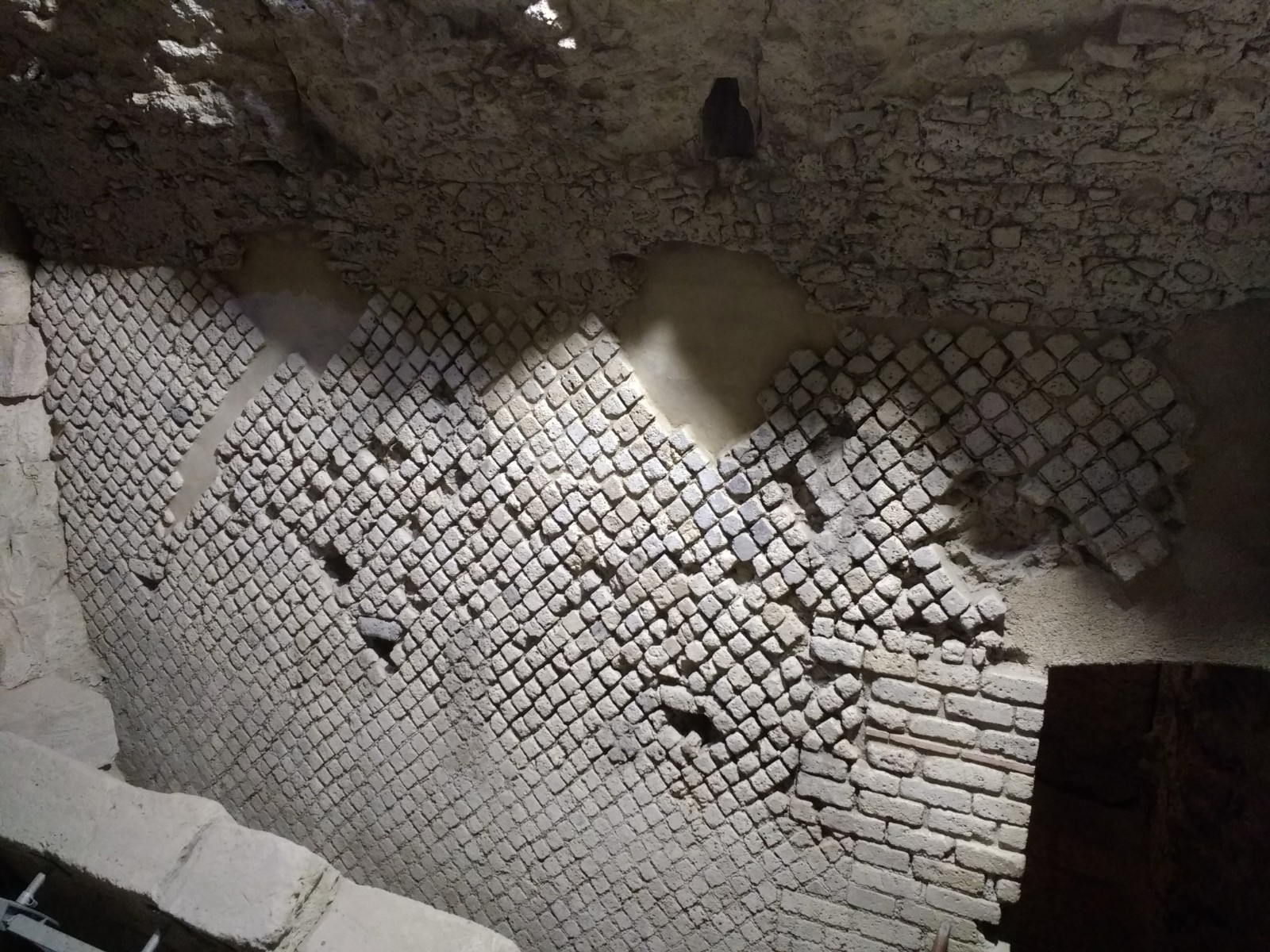
This shows an inexpensive building technique. The diamond-shaped bricks are made of ‘tuff’ (volcanic ash) and are laid on top of Roman cement. Apparently walls made in this way are more earthquake resistant (they obviously didn’t see the mud slide coming).
This arch leads to a covered area with shops.
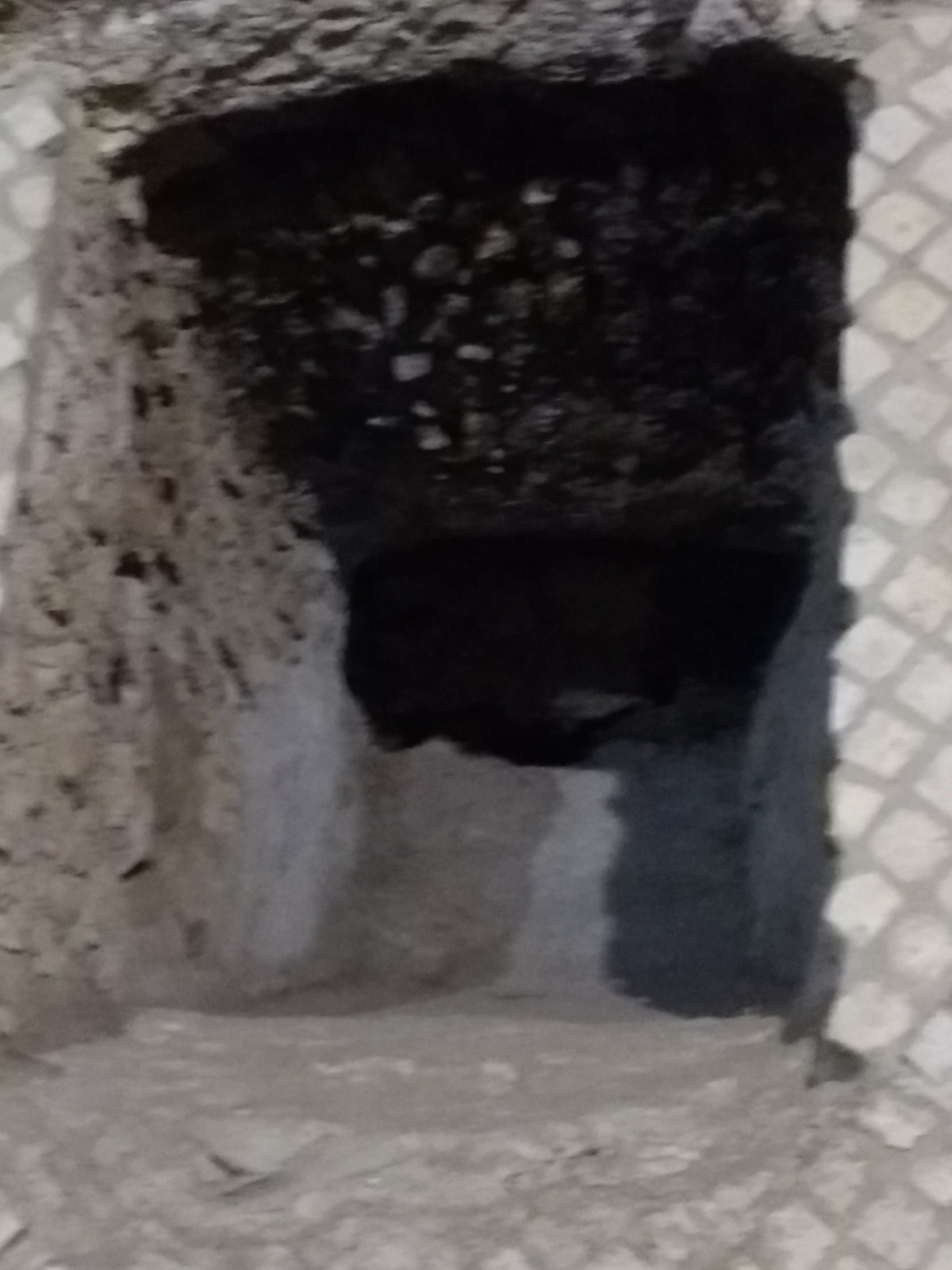
A vent to draw fresh air into the covered market area

As a postscript on the wind yesterday – the wind was in gusts, rather than a consistent blow, but caused damage to a number of the badly maintained buildings here, causing large lumps of plaster to crash down on the streets below.

Cold Weather Forecast For Naples

Thinking the weather was becoming more spring-like, I washed my winter coat yesterday prior to putting it away. However it seems I was premature as it is forecast to be three degrees centigrade here at midday tomorrow (but 12 for the same time in West Sussex). It’s all a bit topsy turvy. The Neopolitans have kept all their layers on through the milder days. I clearly have a lot to learn.

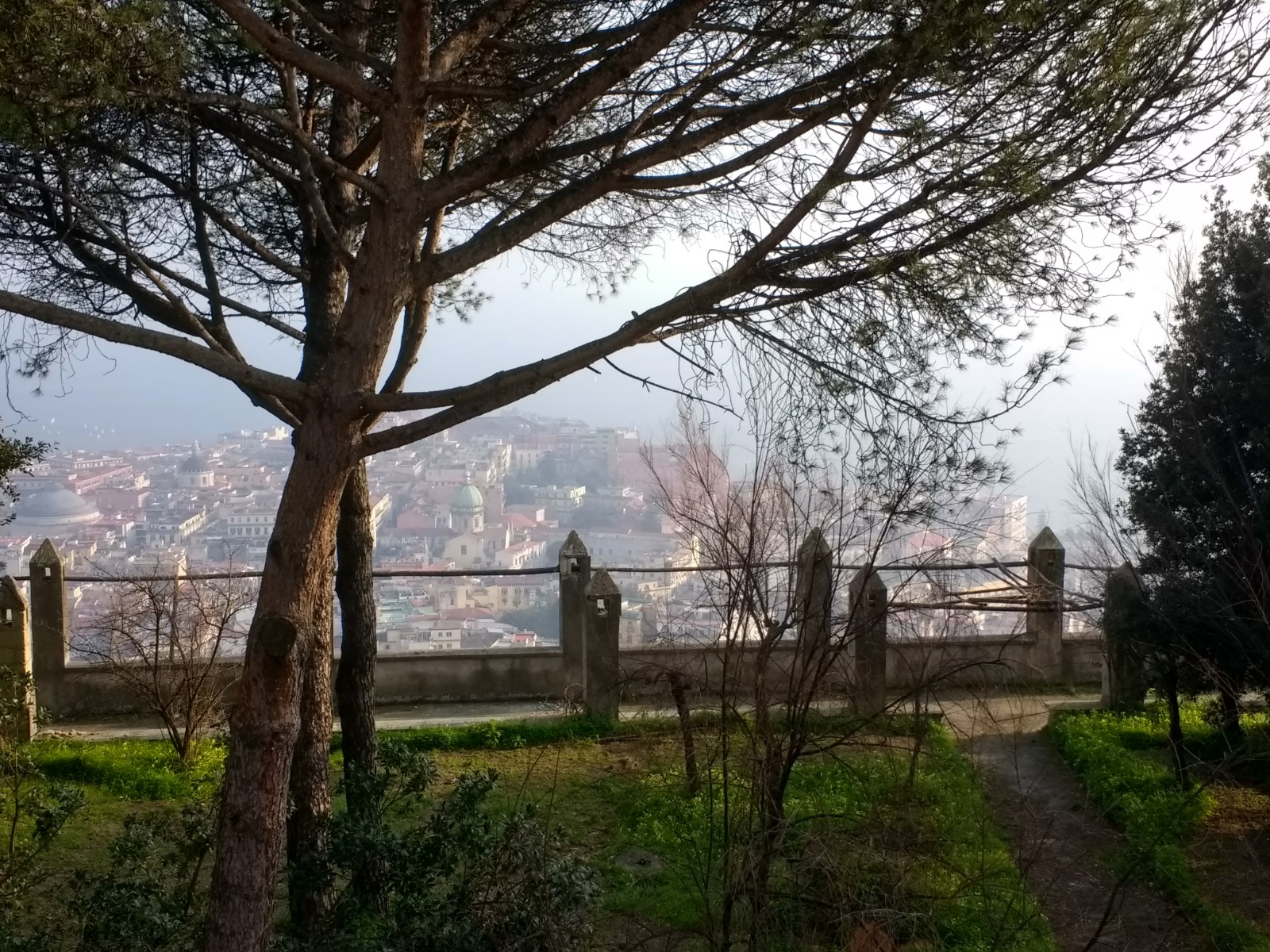
Walking up to through the Spanish Quarter and climbing the steps to the Museum of San Martino would be good warming exercise on a chilly day. The museum is housed in a beautiful former monastery dating from 1368 and has a terrace with what would be, on a clear day, wonderful views of the Bay of Naples. Today it was very hazy.

View from the top. The sea is beyond the built-up area you can see.

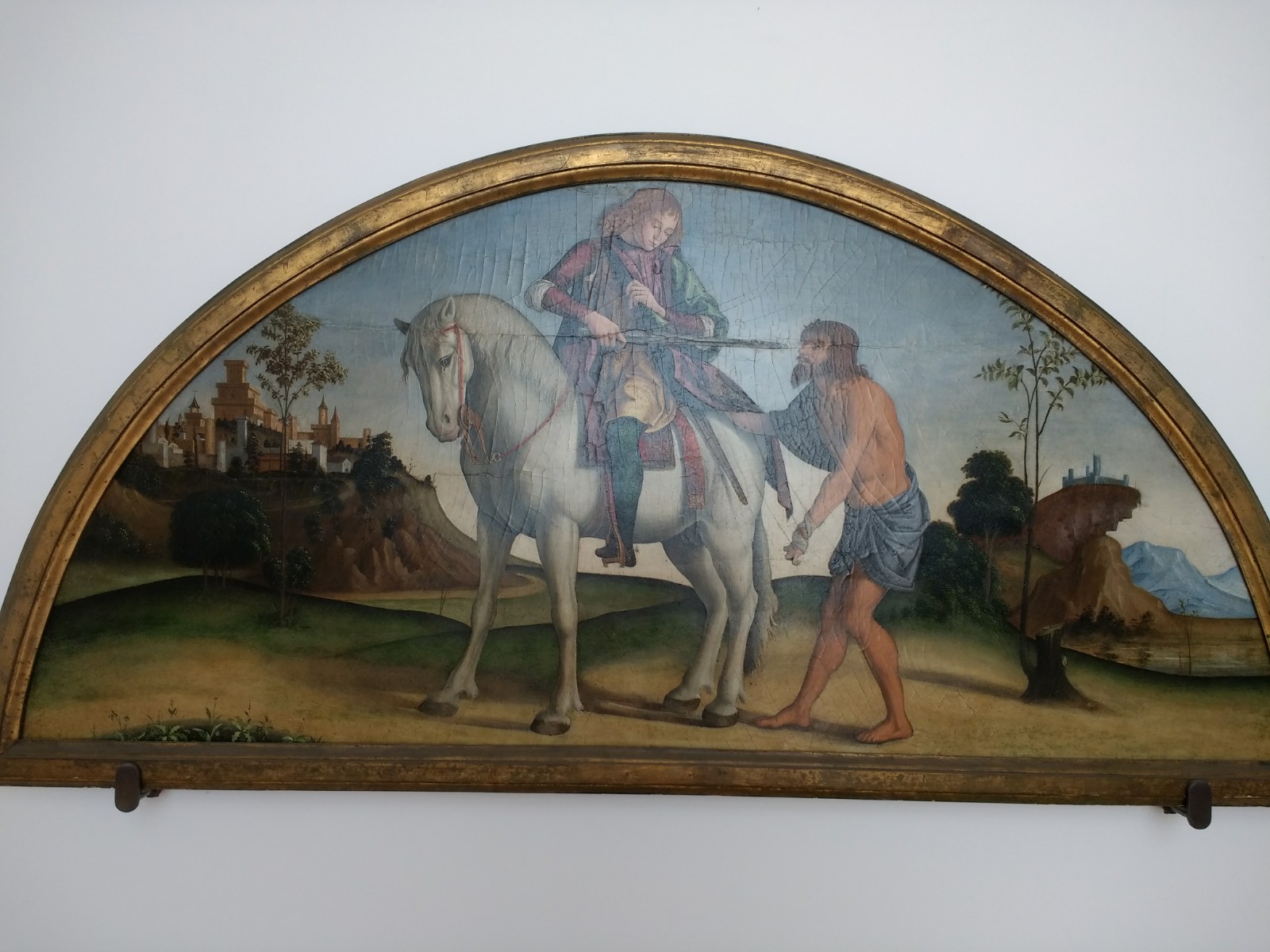
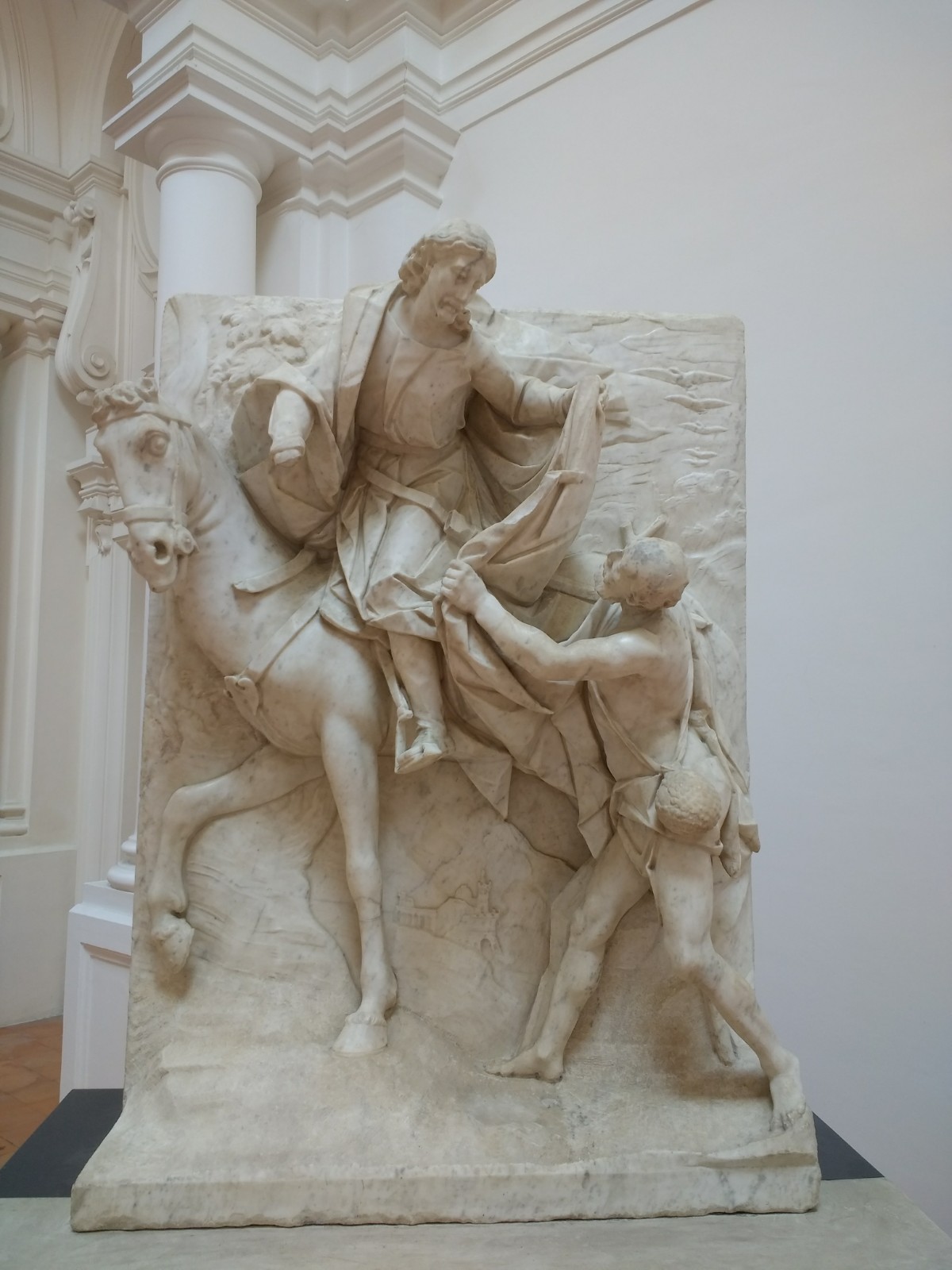
St Martin, whom the museum is named after, was a Roman soldier. When he met a man who was so poor he had no clothes, Martin took his sword and cut his cloak into two, giving the pauper one piece. The story goes that Martin had a dream that night in which Jesus was saying that Martin had clothed him.

St Martin divides his cloak.

St Martin

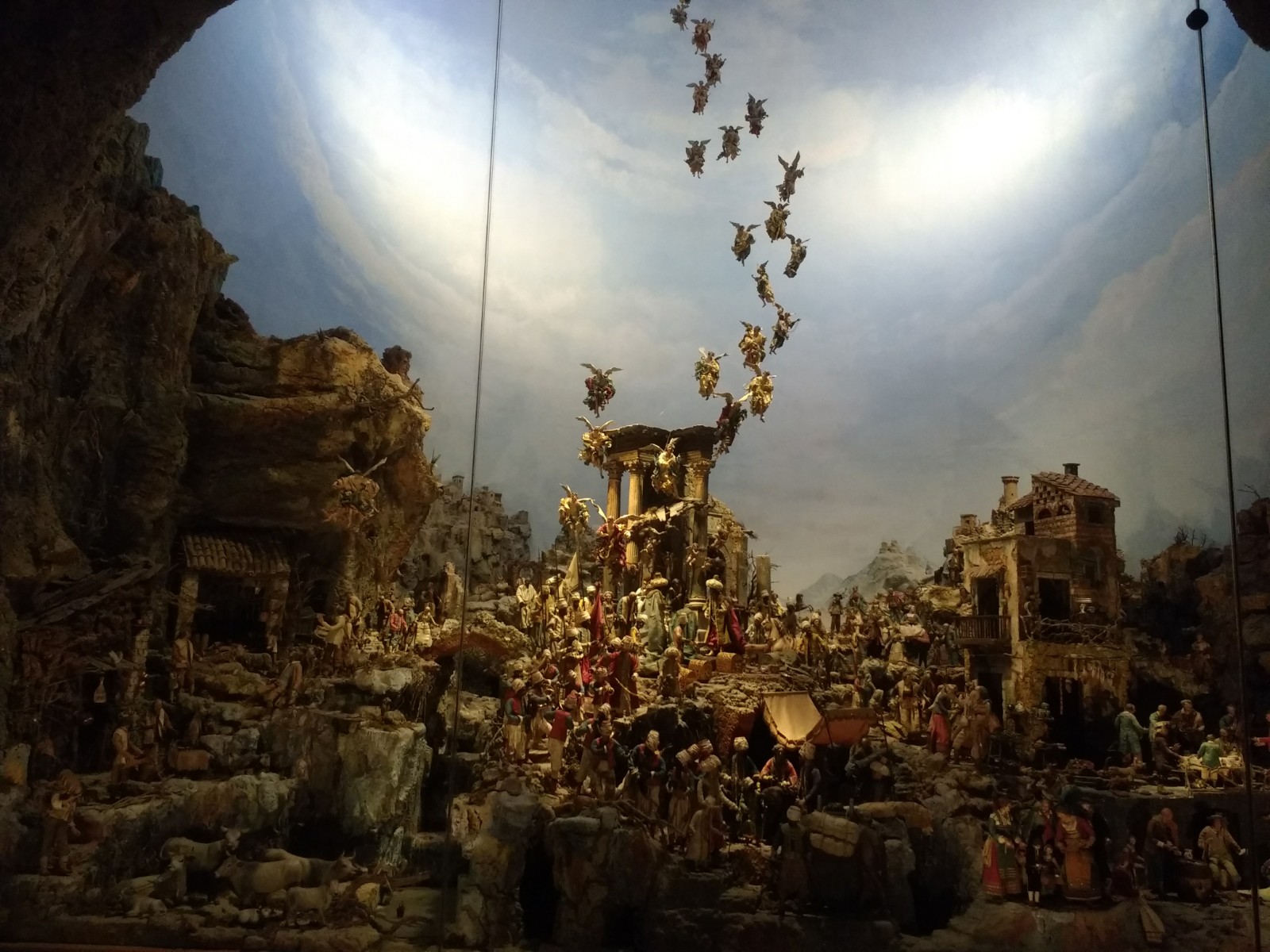
The museum is well-known for its examples of nativity scenes. These are very popular in Naples and can be seen all over the city coming up to Christmas. They are not the simple scenes we may know with Joseph, Mary, baby Jesus, a few shepherds, the three kings and a handful of animals, but include individuals you would find in any settlement such as a blacksmith, a butcher, a shopkeeper and so on. The scene could be set in any period of history and antique nativities provide an insight into fashion, housing etc. Ordinary folk often make their own nativity sets.

Large nativity scene at Museo Nazionale di San Martino, Naples
This set has 160 characters, 80 animals, 28 angels and over 400 miniature objects.
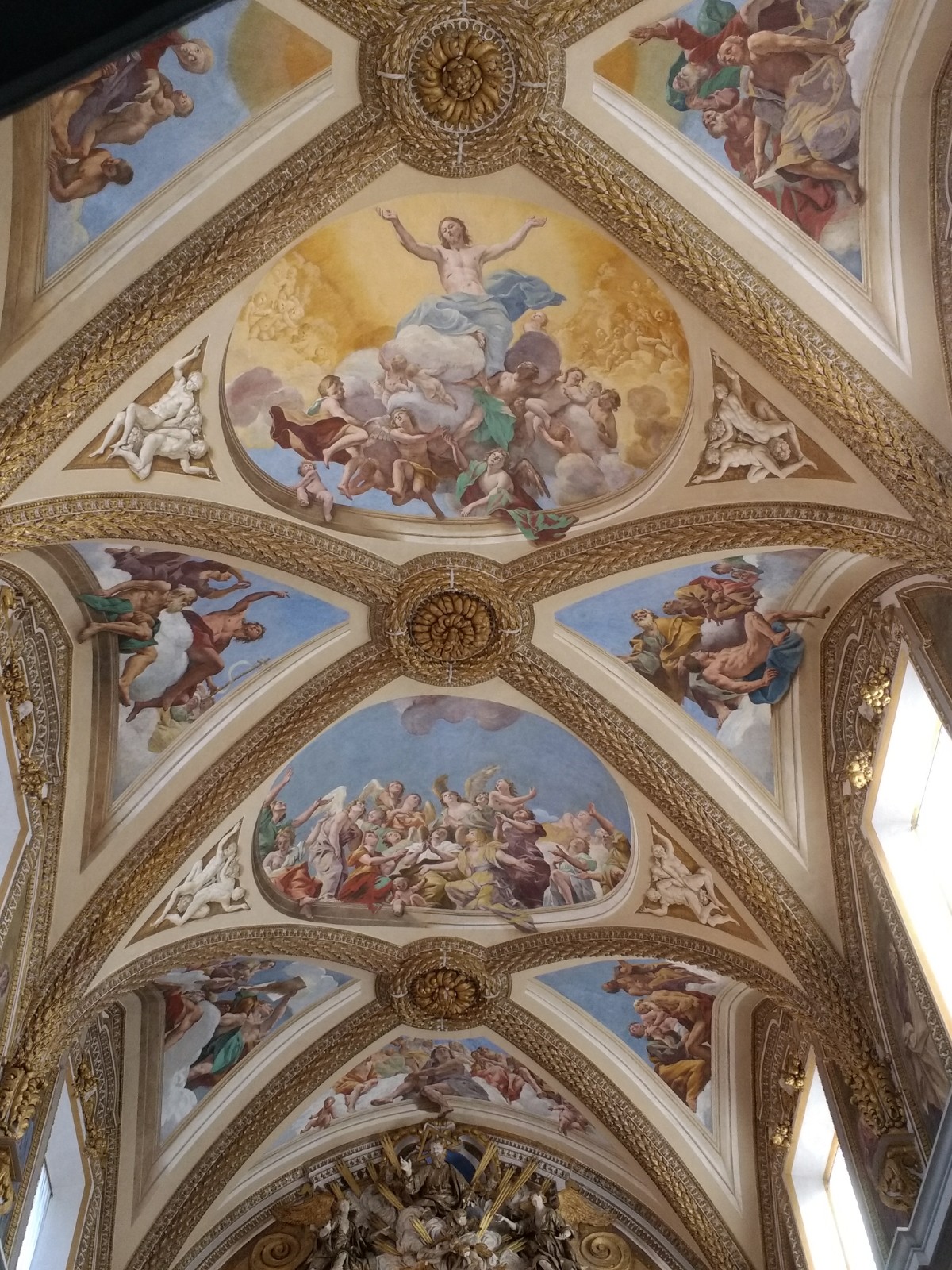
Ceiling of the chapel at the former monastery

Cloisters of the former monastery

I wonder if anyone, outside the US, has heard of Rick Steves. An American himself, he owns a travel company which helps other Americans travel in Europe. Of particular interest to us are audio tours he has recorded that can be downloaded free and listened to via a mobile phone. We discovered him only last year and followed a number of tours he has done set in Rome.

We used one of his tours yesterday when we visited the Archeological Museum here in Naples. We just homed in on artefacts that have been taken from Pompeii to be displayed in a safe environment.

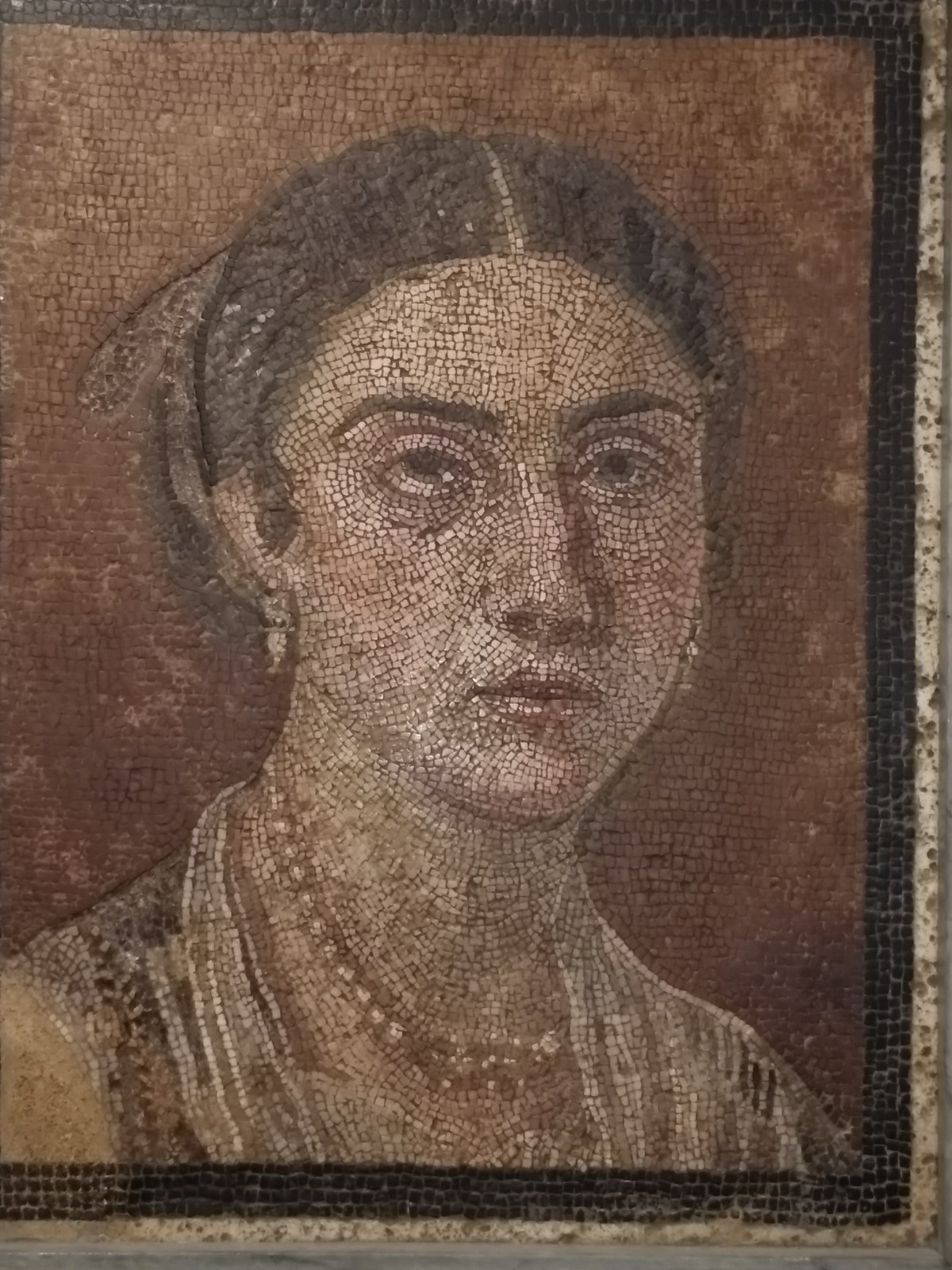
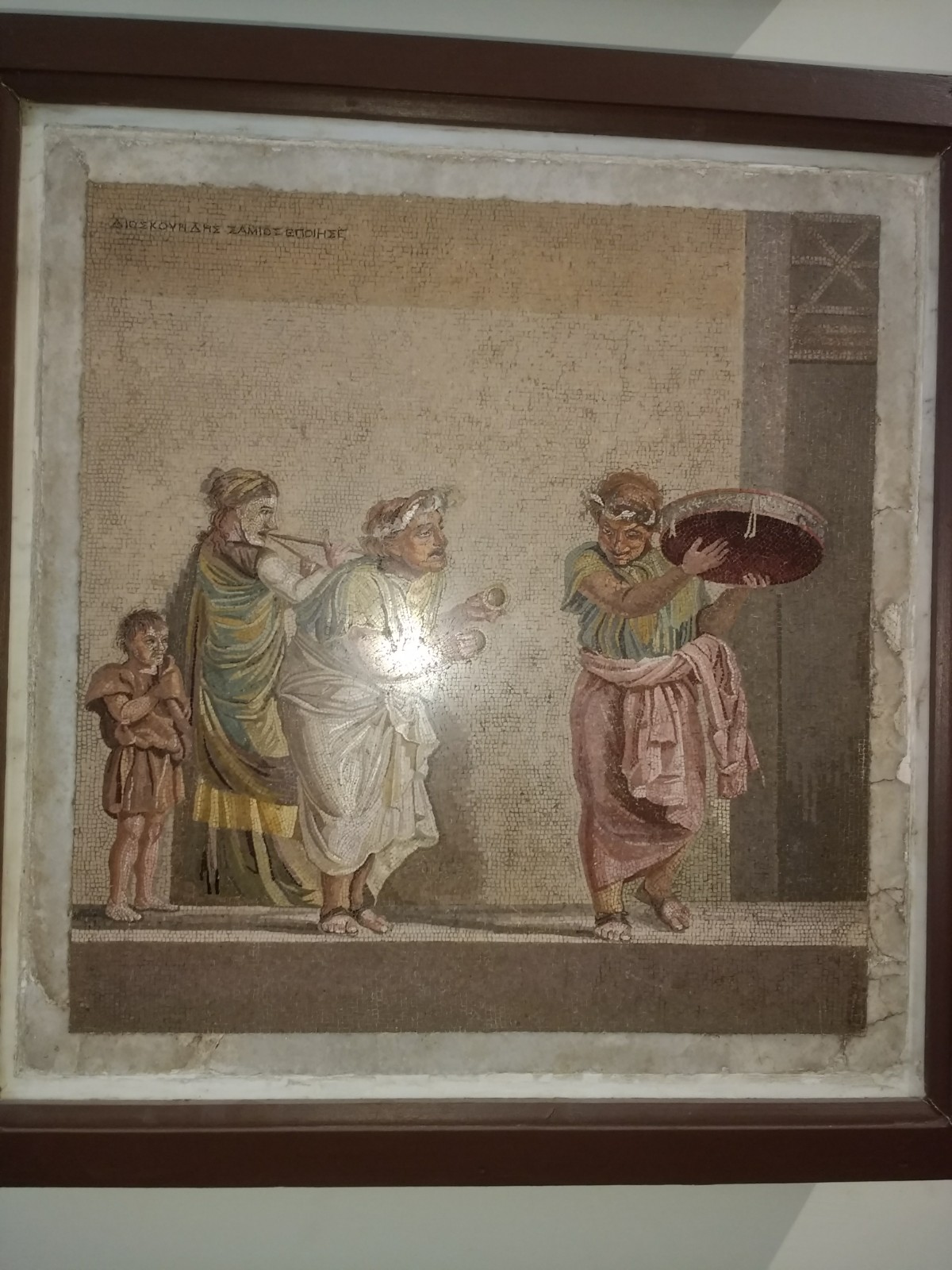
Of particular interest to us were the mosaics, most of which are made from incredibly tiny pieces, so much so that at first glance they look like paintings.

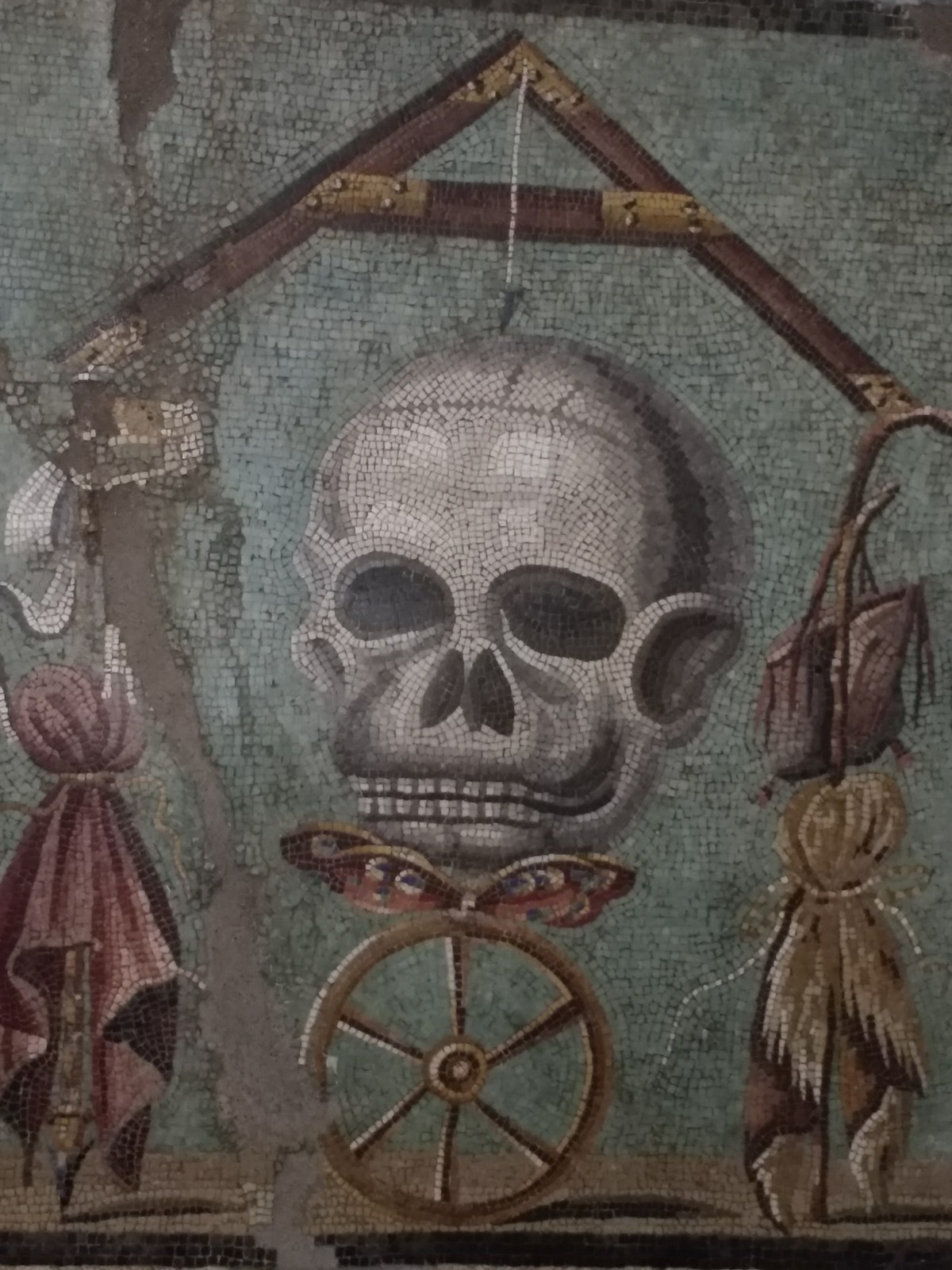
Mosaic from Pompeii
Mosaic from Pompeii
The artist has left his signature at the top of this picture.

Better dig my hat and gloves out from the bottom of my suitcase!