My husband, Mark, and I have just sold our house and are taking a year out to have an adventure before we settle down to retirement. We decided on a journey through Italy as it has the perfect combination of good weather, interesting history, great wine and wonderful ice-cream! As we will be starting our journey in January, we are beginning in the very south of the country.
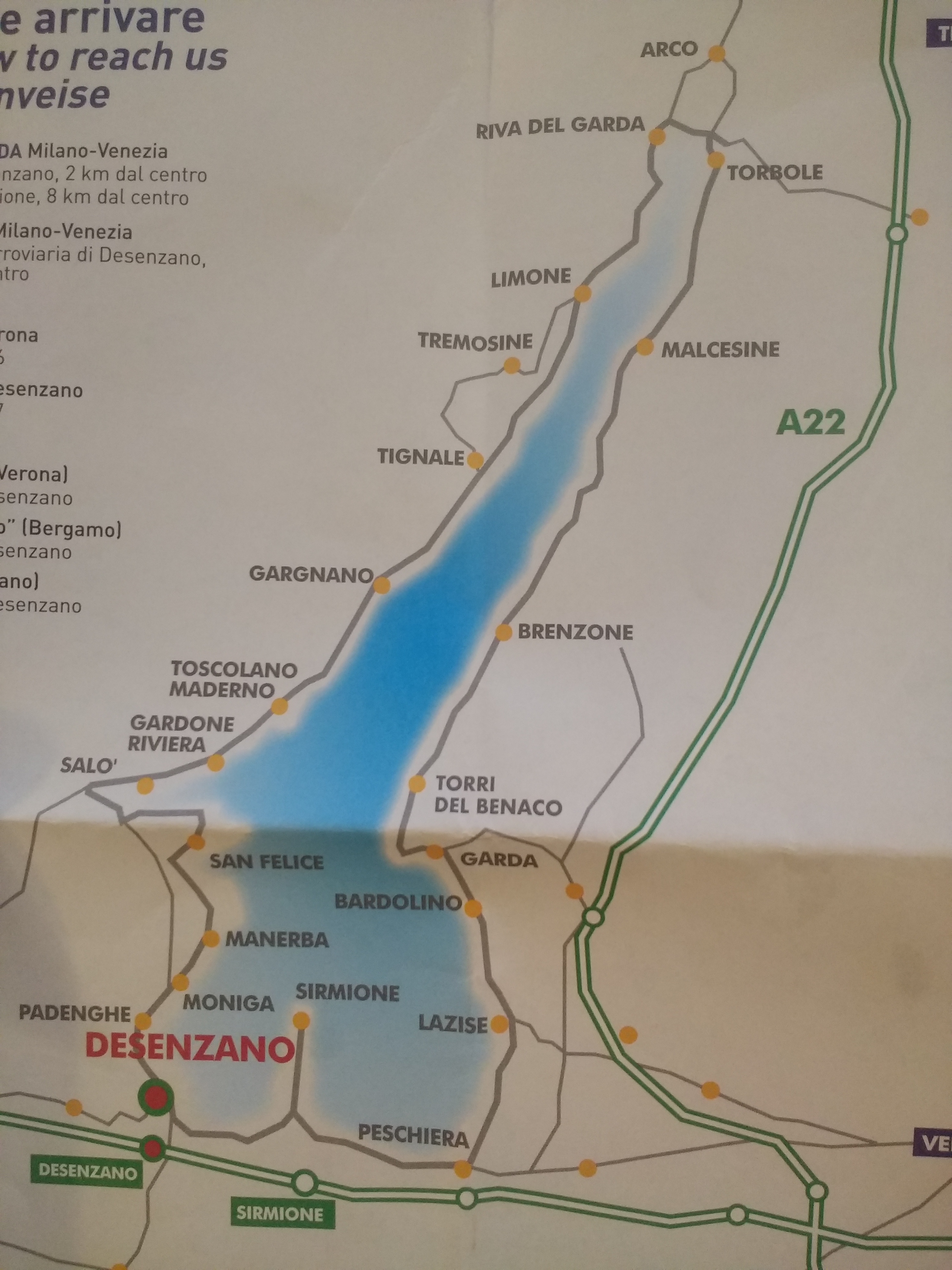
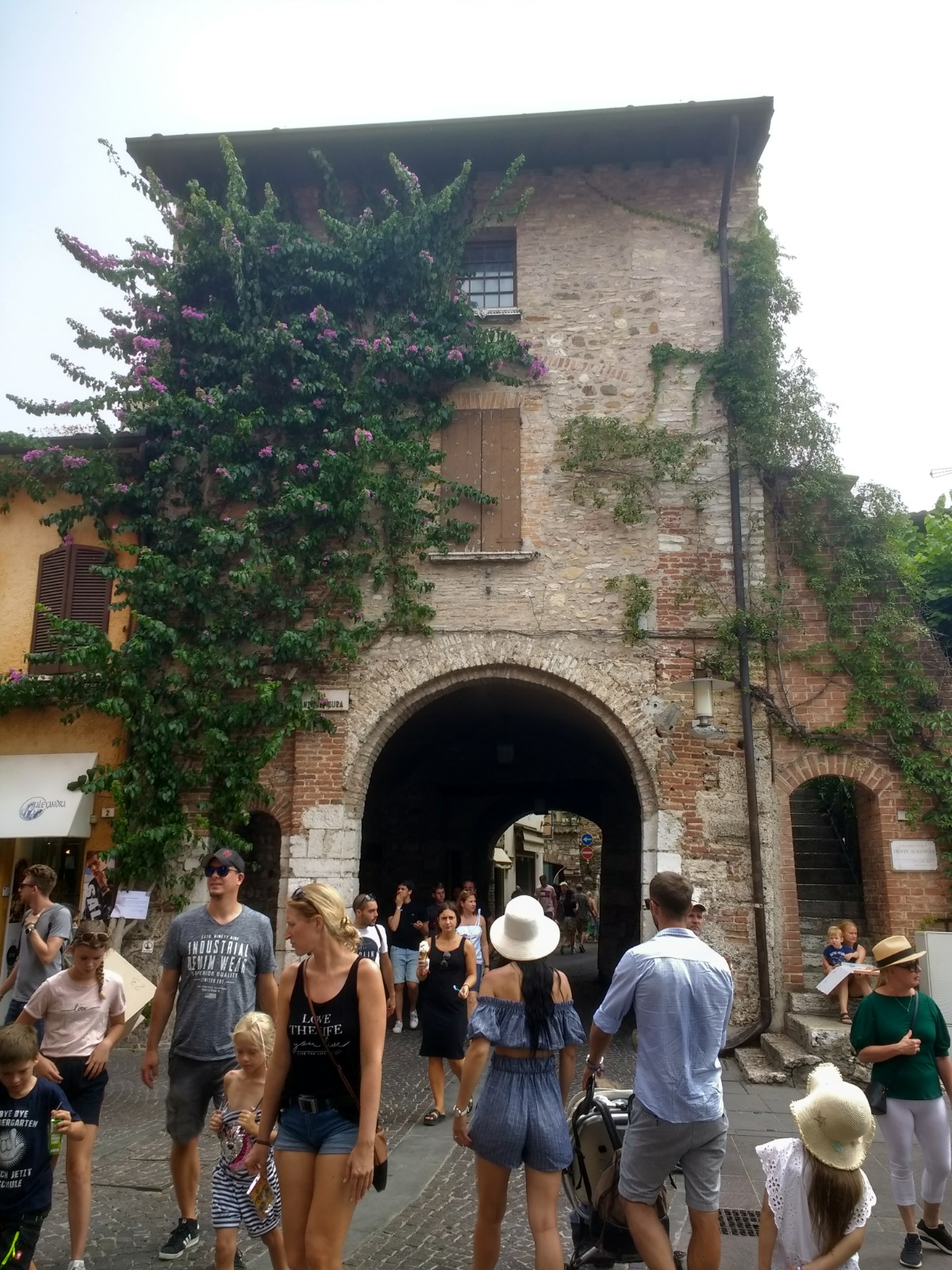
Sirmione, occupying a narrow peninsula jutting into the southern end of Lake Garda, is probably the most popular of the lakeside towns, and it was certainly packed last week.
Sirmione
Mind you, this is the height of the summer holidays for most countries in mainland Europe, while most English and Welsh schoolchildren have yet to start their summer breaks.
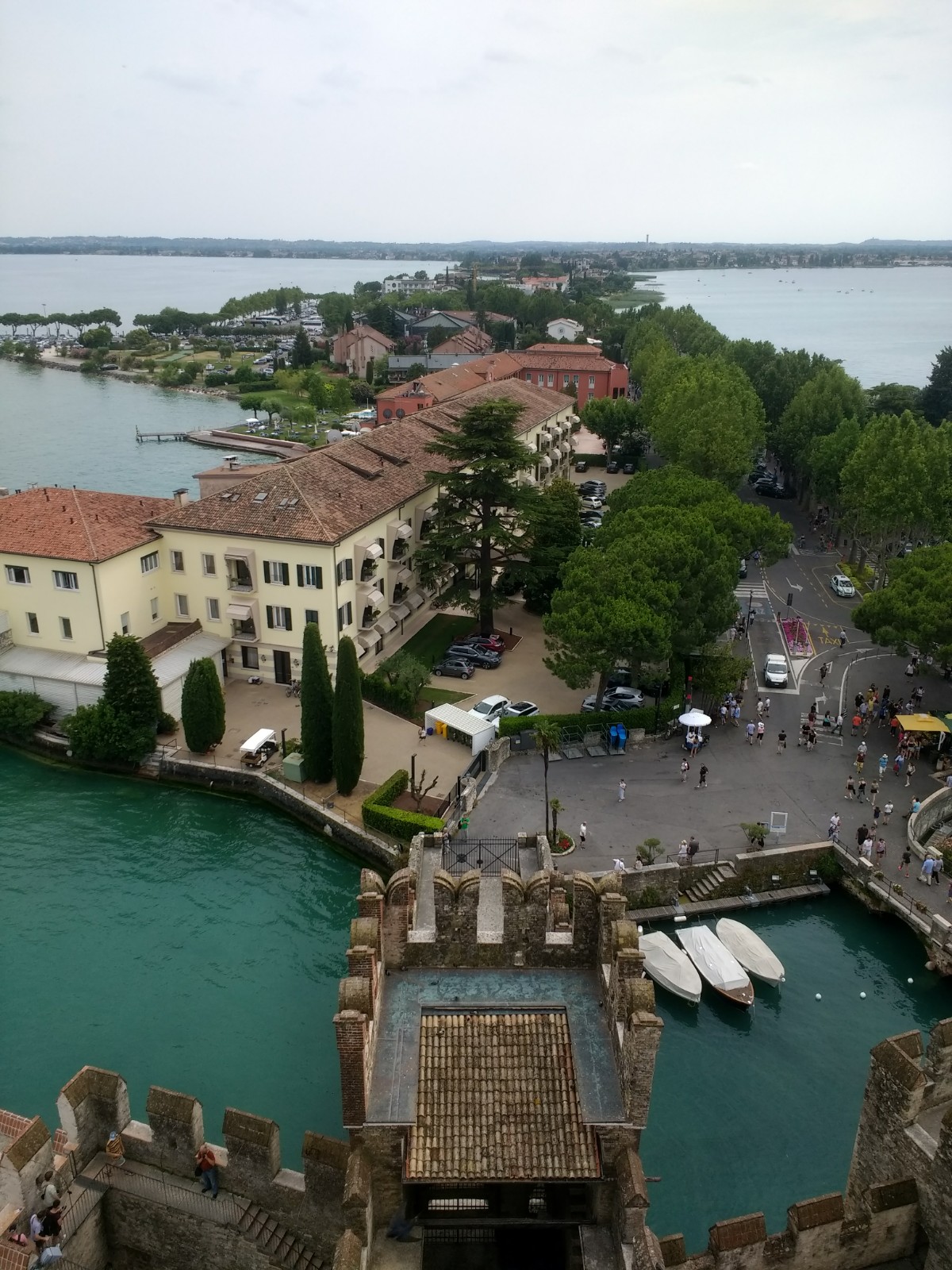
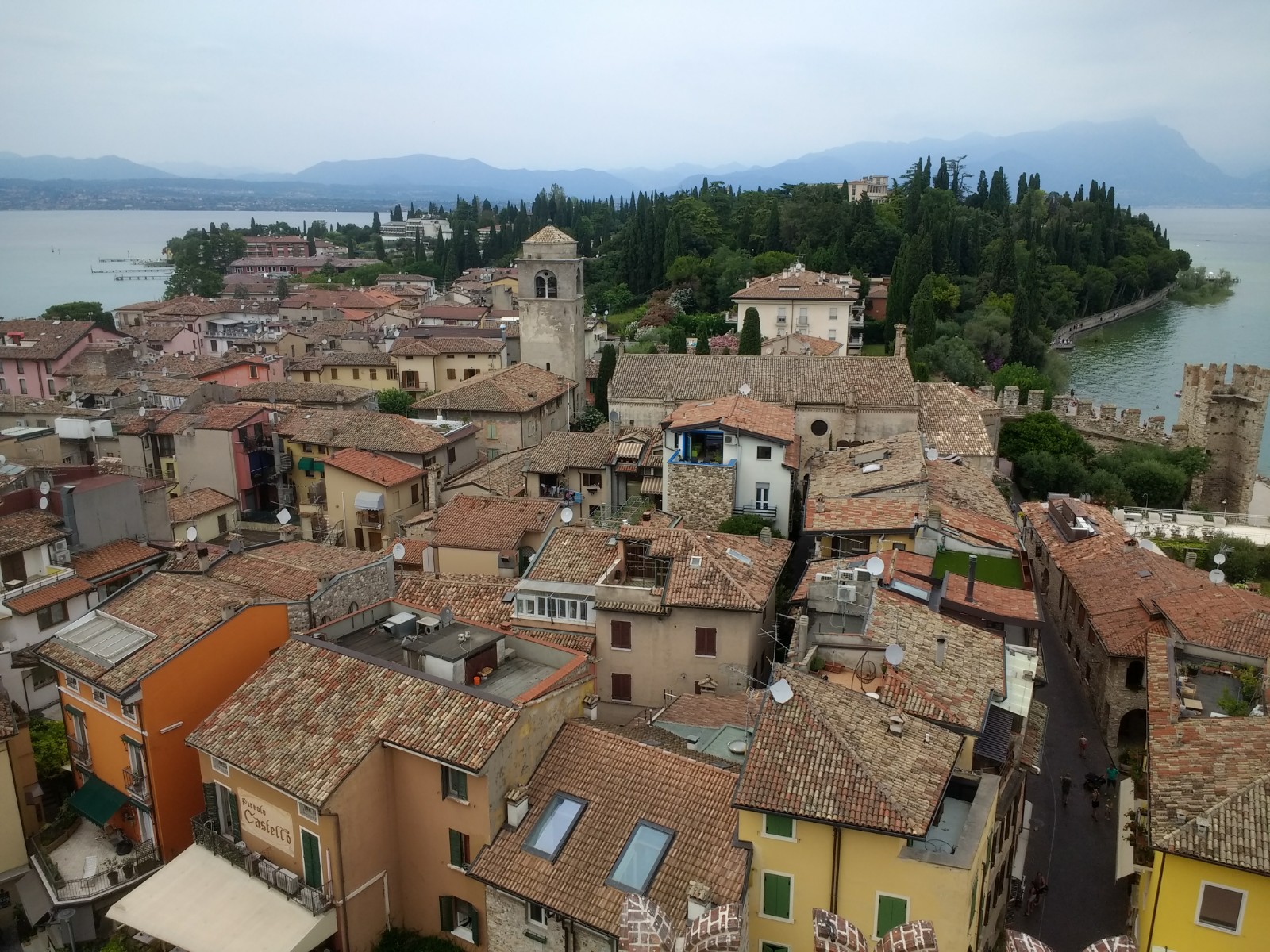
View of the peninsula looking towards the mainland.
From the castle we had good views of the town.
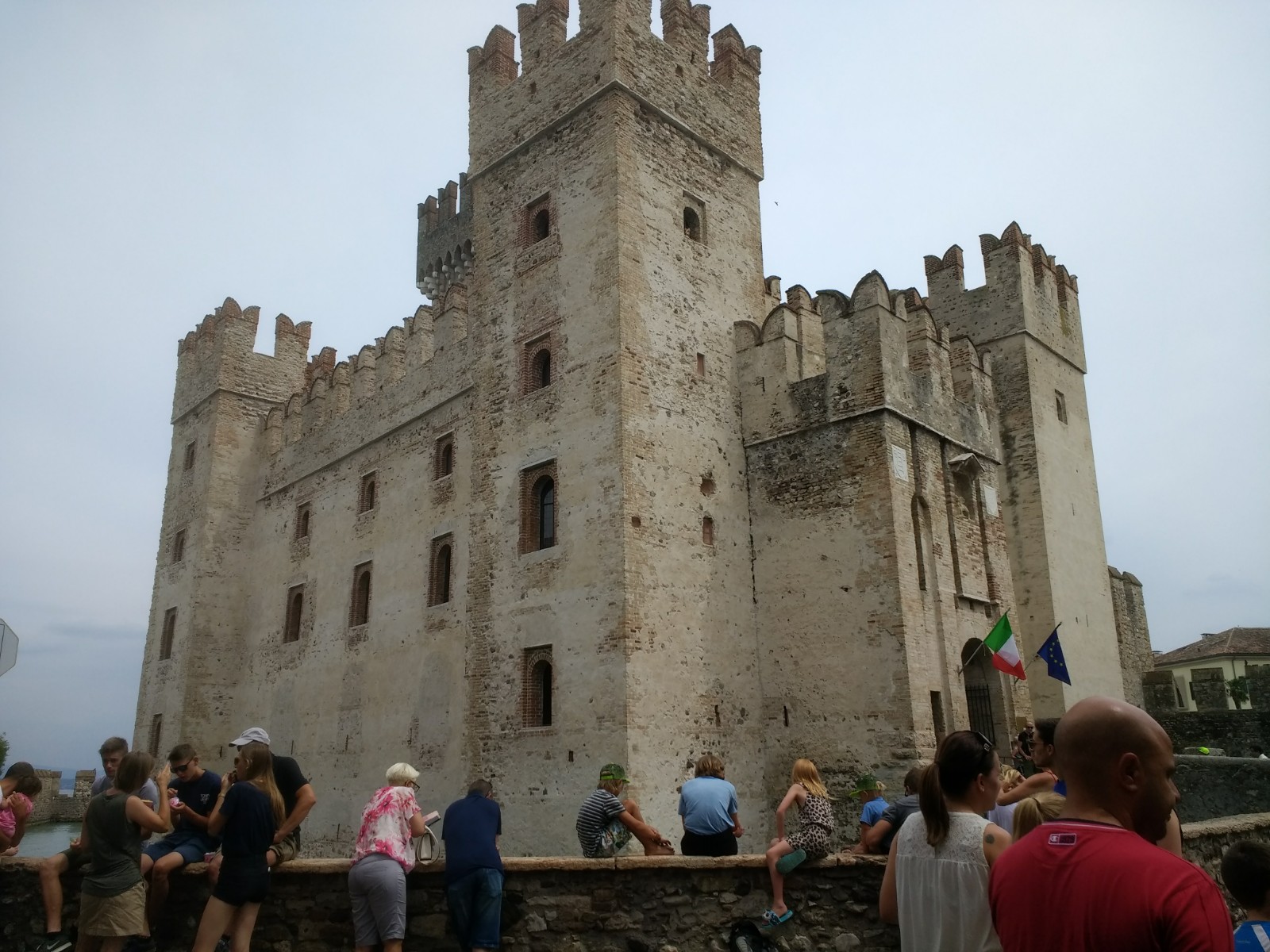
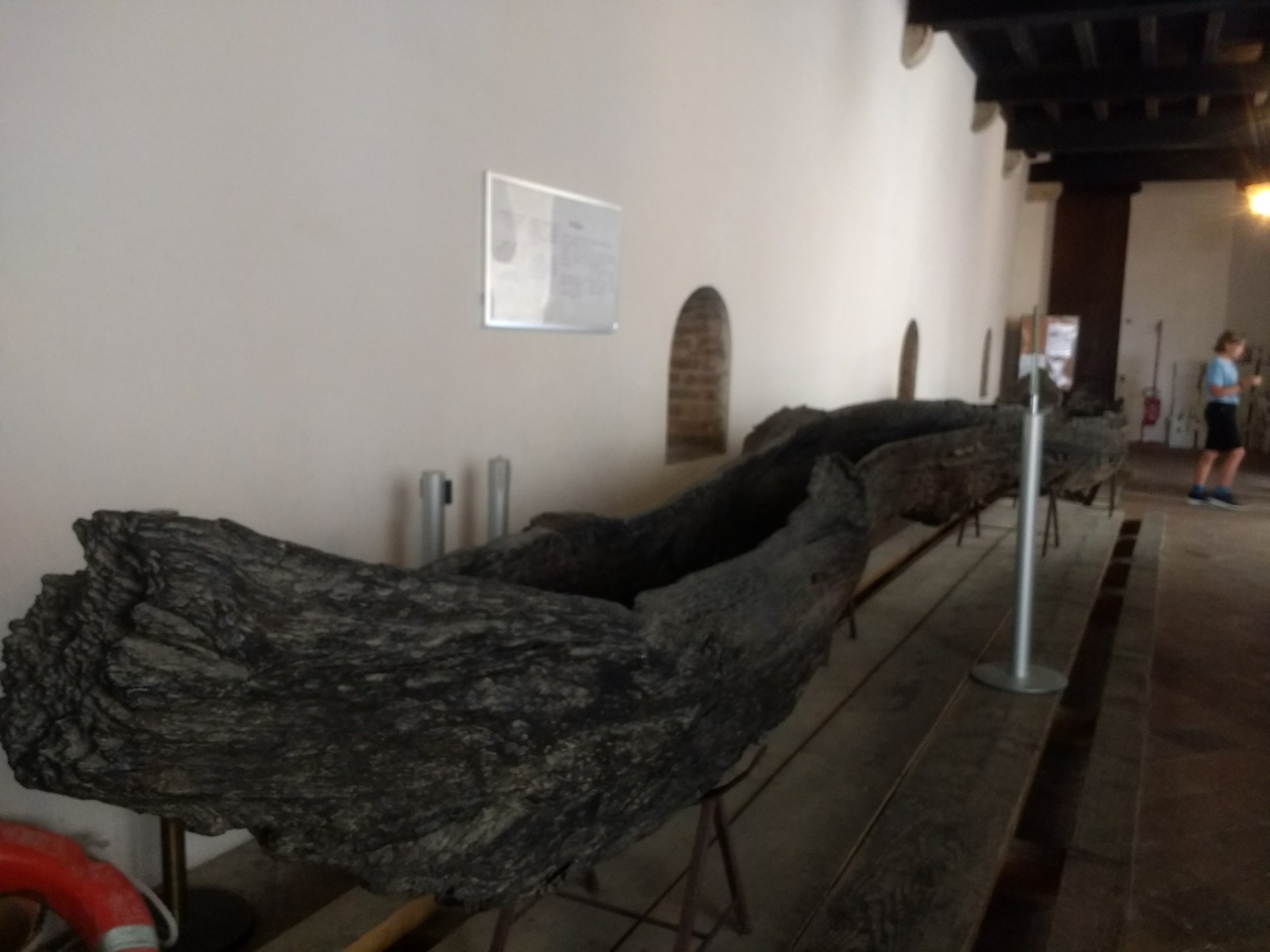
Castle, Sirmione Looking towards the mountains on the other side of the lake.Inside the castle were two pirogues. They are medieval boats, excavated in oak logs, which were found in a nearby river in the 1990’s. They were used to carry people and goods along the river. Apparently rivers regained importance here after the roads that the Romans had built went to ruin. It wasn’t just in Britain that happened then!
From the castle a fifteen-minute walk takes you to the tip of the peninsula and the ruins of a Roman villa. We failed to get there, but may visit another time.
Further along the lake is the town of Lazise (both Sirmione and Lazise can be reached by ferry from Desenzano). Visiting at the weekend, we expected to find the town busy, but I would describe it as bustling, rather than heaving.
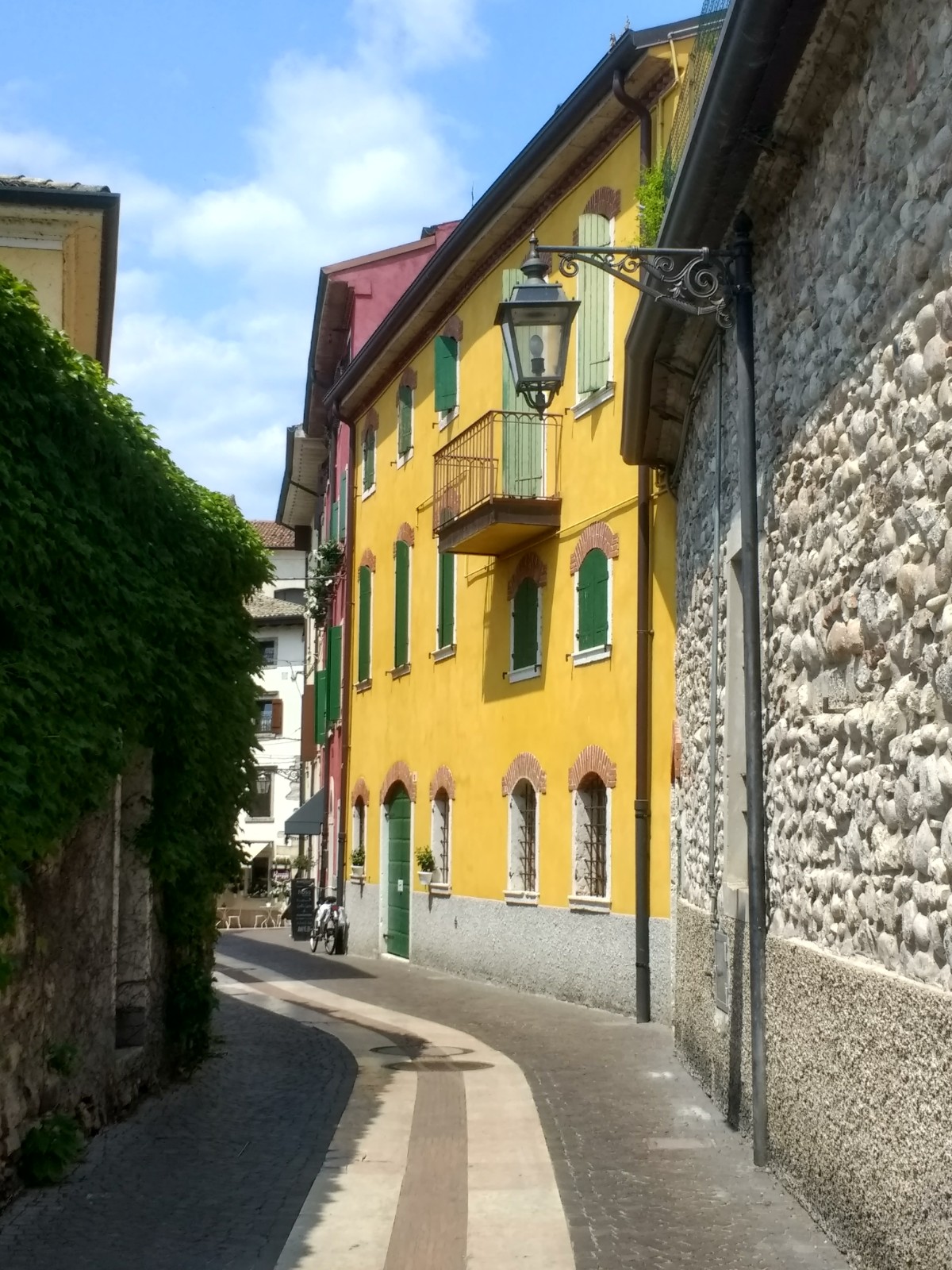
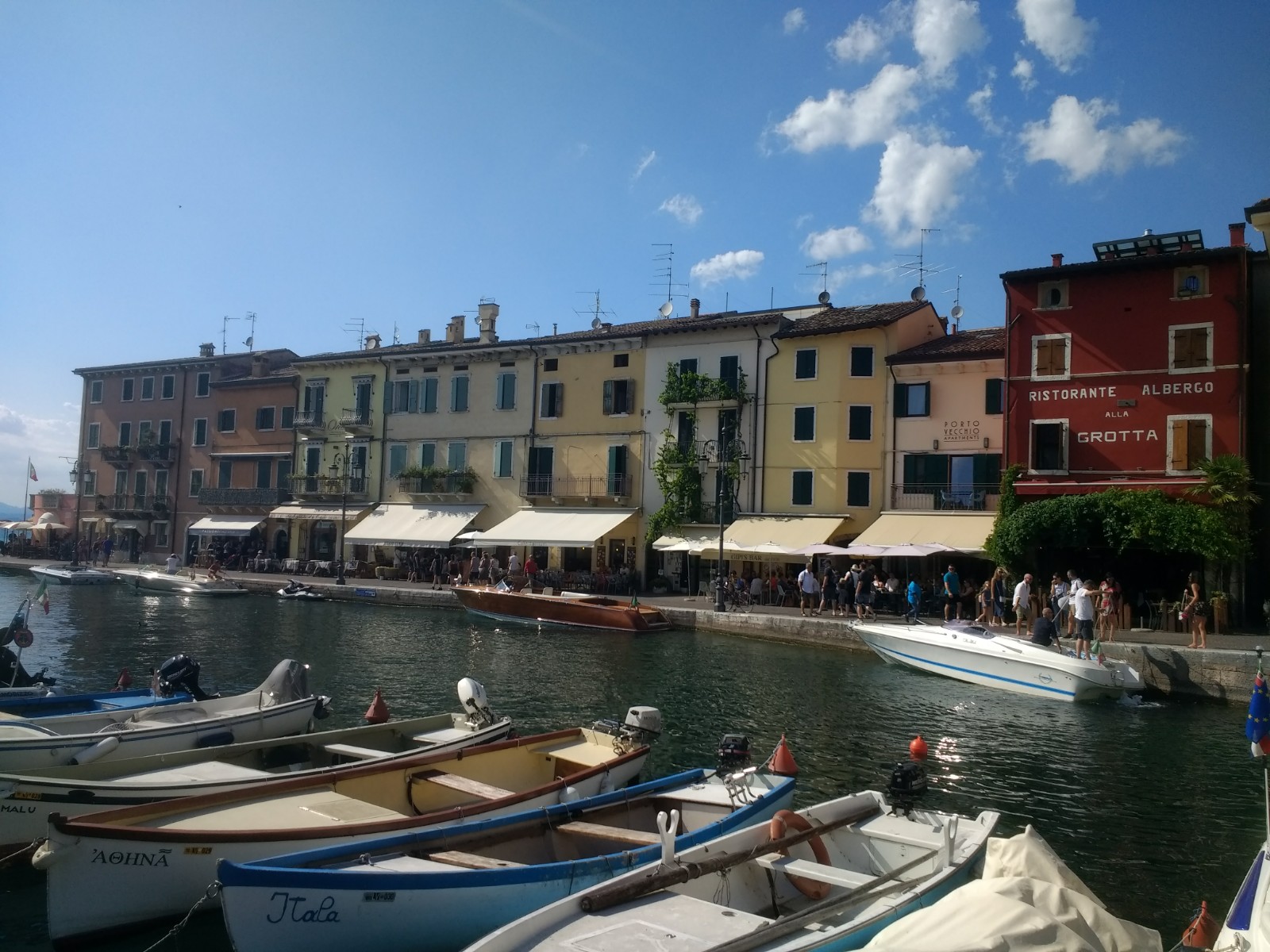
Quiet street, Lazise Fishing boats in the very attractive harbour
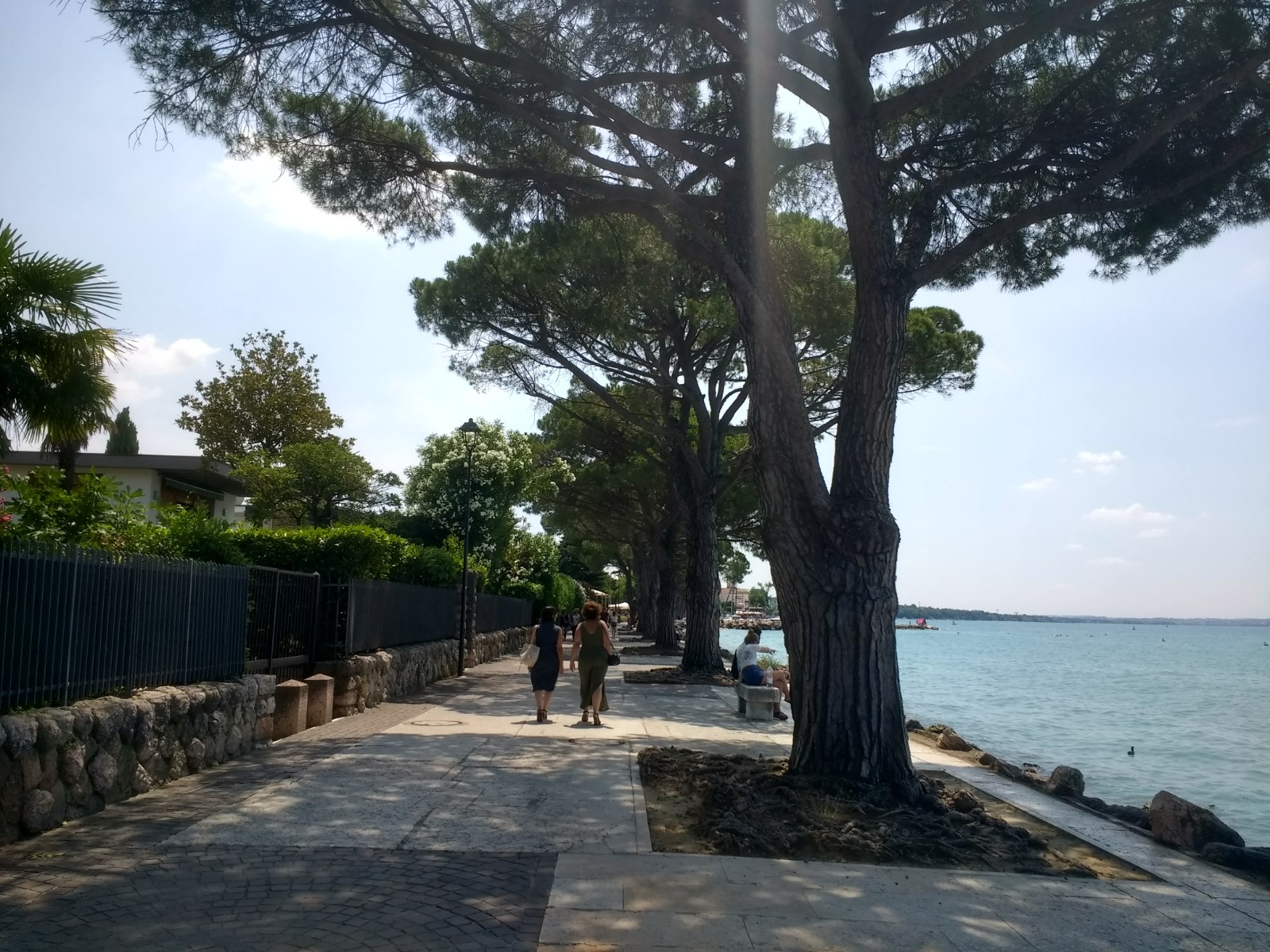
We didn’t do much else other than stroll the pretty streets and walk along the promenade. We’ve learned that from here one can walk all the way to Garda in two hours, all along the side of the lake.
If it hadn’t been for wanting to get hold of a Lombardy card for entry into museums round here, we might not have visited Brescia. Walking from the train station we found the town dull, but the piazzas and streets did improve as we walked further towards the old part of the city.
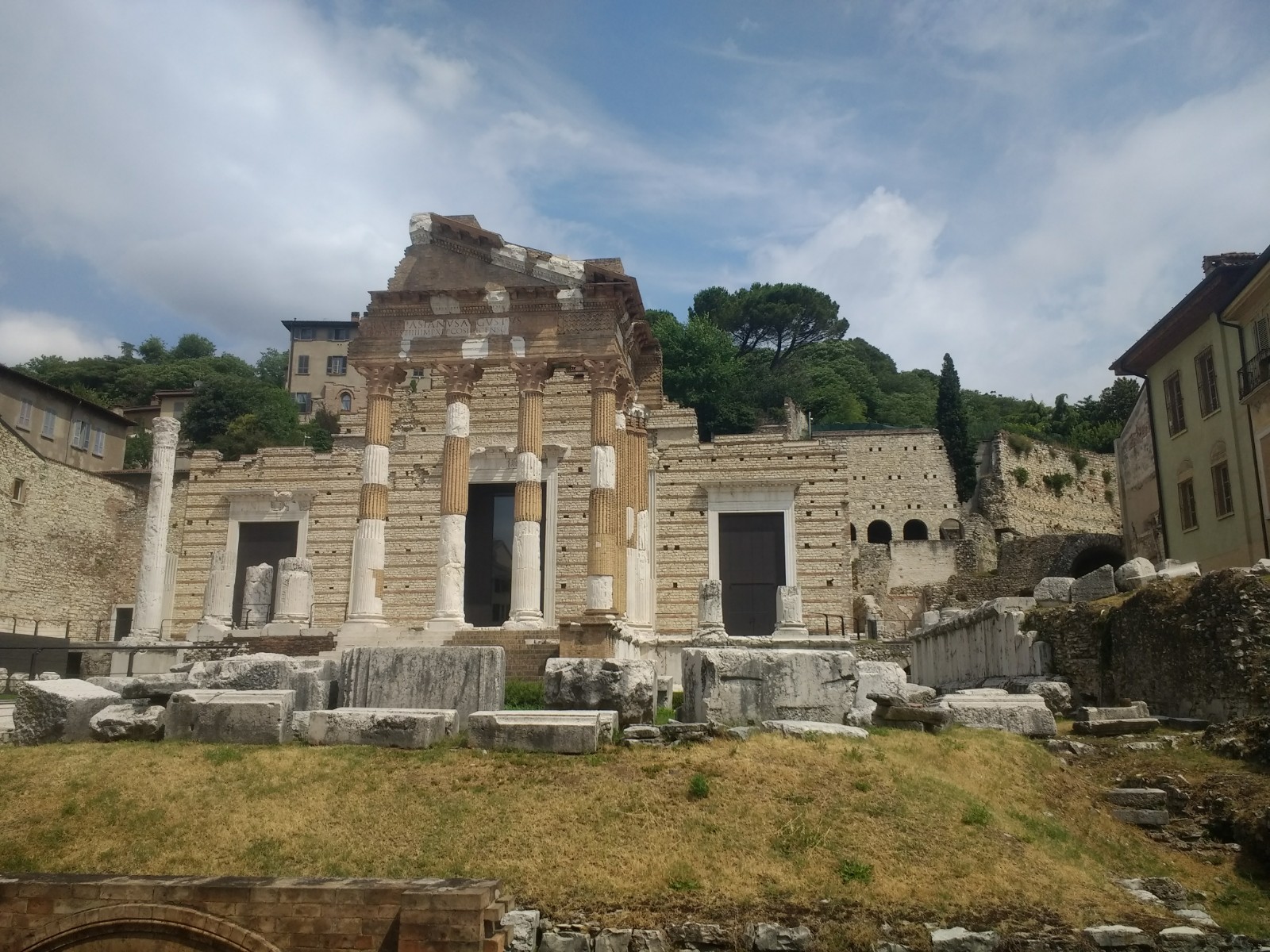
Roman Remains, Brescia
The museum of Santa Giulia, the main museum in the region, awarded ‘outstanding’ by the Rough Guide, was empty apart from us and the abundant numbers of staff always present in the museums we have been to in Italy. (Not content with watching you from afar, they sometimes follow you from room to room, up and down stairs).
Some museums (particularly the ‘house museums) have been excellent, but often exhibits are displayed with either too little explanation, or a huge block of writing which means nothing (Italians call this ‘fried air’). Do the curators ever wonder why there aren’t more visitors?
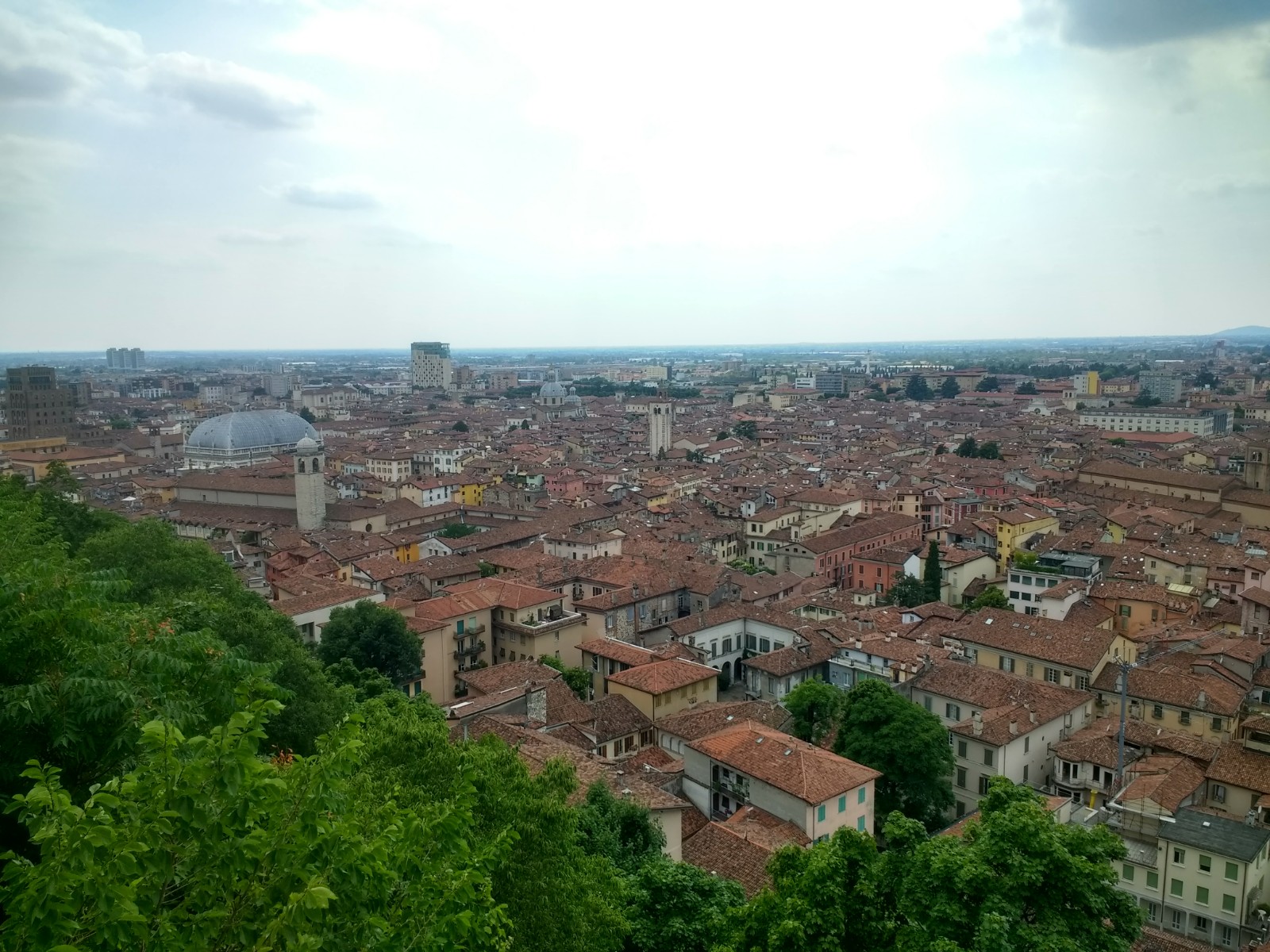
A walk up to the Castle afterwards awarded good views of the city.
View of Brescia from the castle
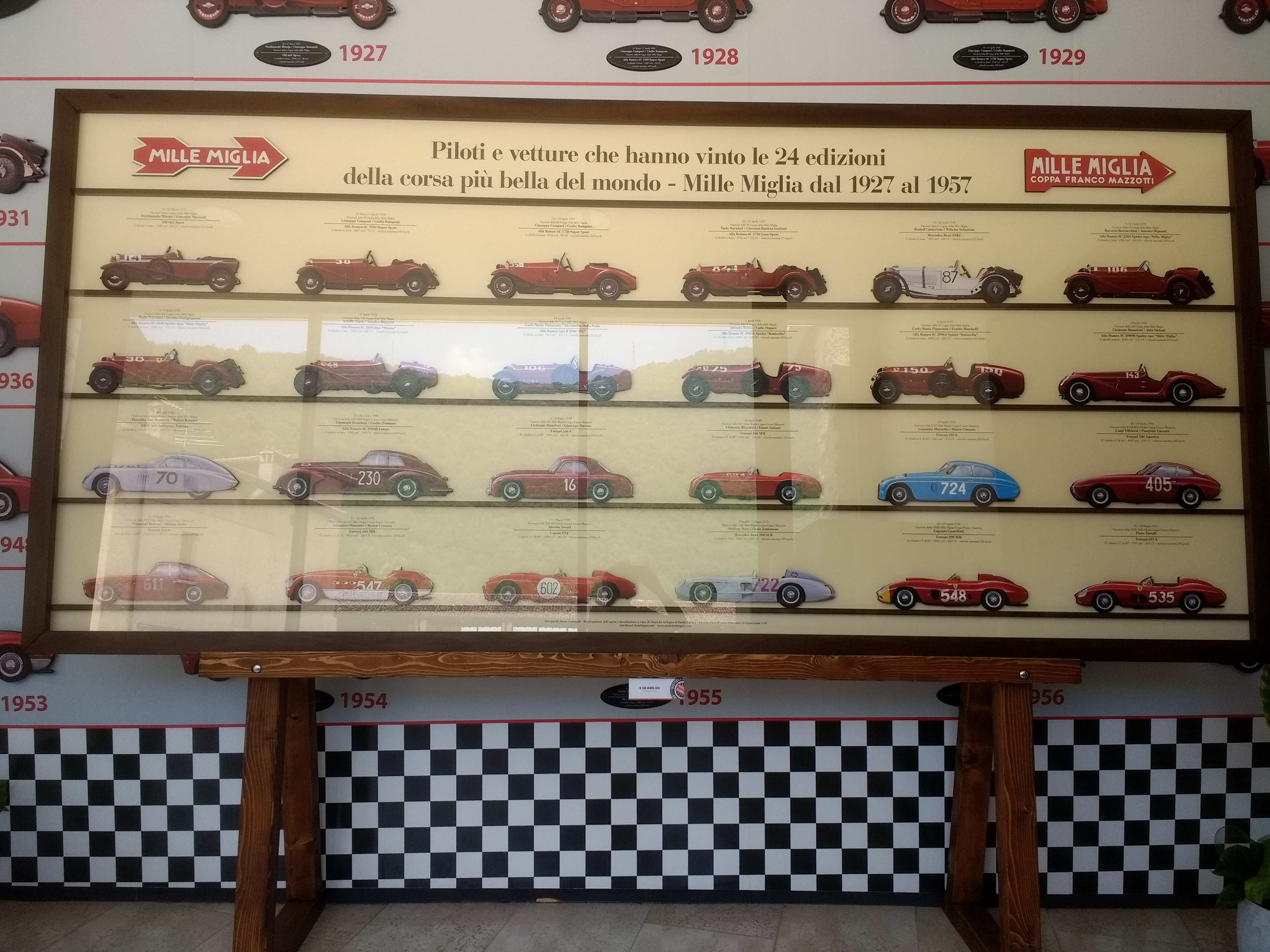
Brescia is the home of the Mille Miglia, the historic car race I wrote about from Bologna. We couldn’t be so close and not visit the museum, which is what we did yesterday.
The museum, in contrast to the city museum, was excellent and even I, who knows little about cars, and understands less, found it fascinating. There is a display of cars that have participated in the race and lots of interesting facts. Included in your ticket is a tablet on which you can find short videos about what you are seeing.
Unfortunately for my blog, photos were not allowed (I don’t know why as there is nothing to stop you taking pictures of the cars out on the roads).
I know this isn’t much, but it is the only photo I got before I saw the sign telling me that photos were not allowed.
Interesting fact no 1: During the Second World War, due to a shortage of petrol, distilled beetroot was added to petrol by unscrupulous suppliers. This led to the creation of petrol pumps with a glass ‘pipe’ so consumers could check on the purity of the fuel as they were filling up.
Interesting fact no 2: Stirling Moss holds the record for completing the Mille Miglia circuit in the fastest time (in 1955). He is the only winner of the Mille Miglia still alive.
As gripping as the museum was, I’m afraid I can’t recall any more, but I did achieve 5 out of 10 in the quiz at the end, which I was pretty pleased with.
By the time we came to leave, we were the only visitors. There had been a family ahead of us, but they passed through pretty quickly.
Desenzano del Garda is the final stop on this leg of our tour of Italy as we return ‘home’ for five weeks in August. (By ‘home’ I mean the UK, as having sold our house in January, we have no home). Apart from, of course, seeing friends and family, I am looking forward to cooler temperatures, tea (over-priced here and very little selection) local walks (we’ve had wonderfully challenging walks, but have struggled to find any other kind) and hearing English around me. There is certainly a lot we will miss – the sunshine and blue skies, reasonably-priced meals out, cappuccino (much creamier than back home) gelato and being able to buy a glass of good wine for €4 (and you are always served what would be a ‘large’ glass back in the UK).
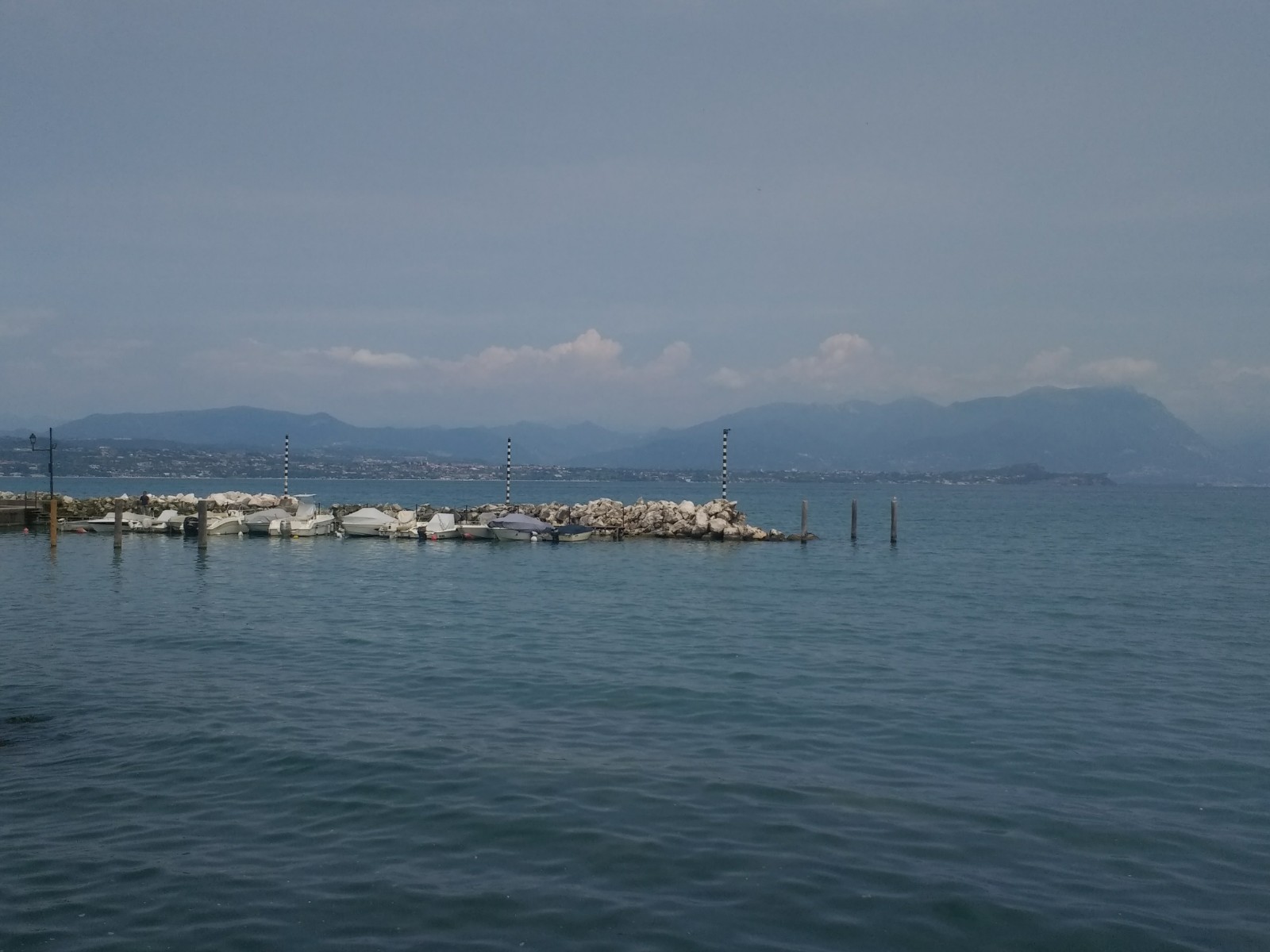
Lake Garda It was rather a hazy day when I took this, but I have always found the combination of water and mountains stunning.
Our Airbnb accommodation is not a holiday apartment, but a home someone haas moved out of for a few weeks. With all the owner’s personal knick-knacks and treasured possessions around I feel as if we are trespassers, I think I prefer staying in less personal space. On the plus side, the owner was so horrified that we didn’t have a car, that she has given us the use of hers for our first two weeks, when she is away. This is a real bonus as we are more remote than we had realised – 45 minutes’ walk from the train station and Desenzano centre.
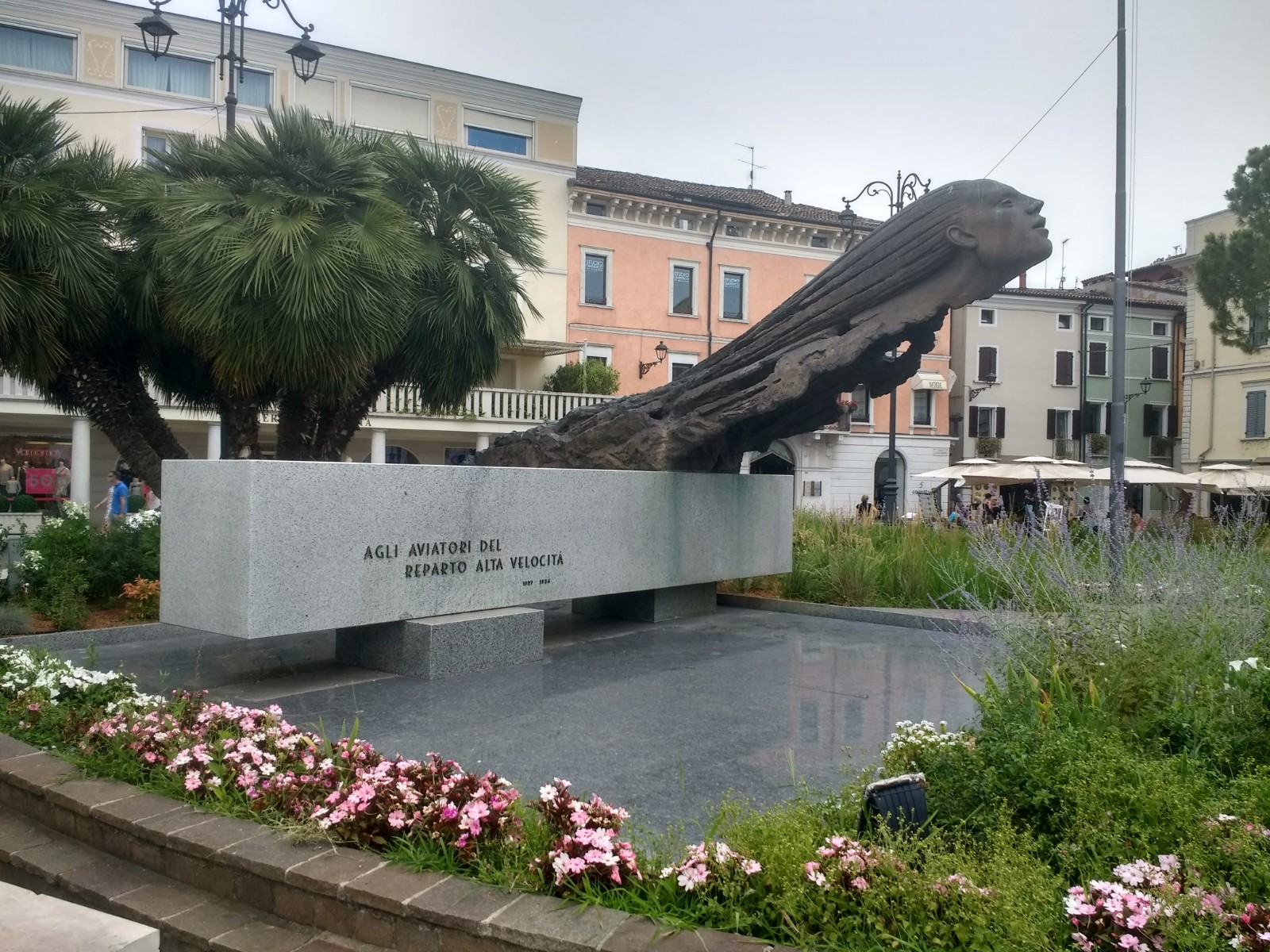
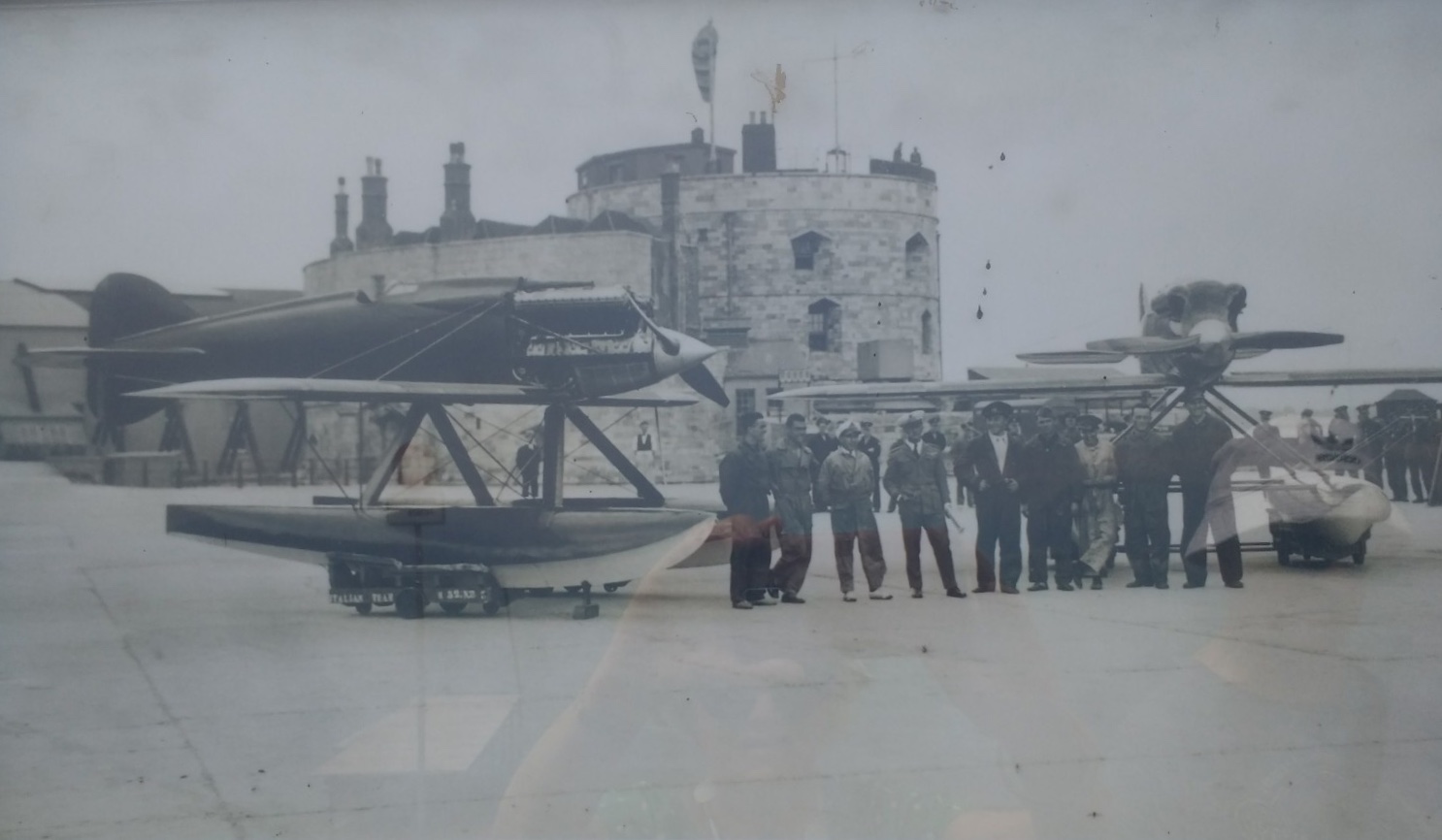
Desenzano is rightly proud of the part it has played in the history of aviation. Between 1913 and 1931 the Schneider trophy for seaplanes was contested around the world and won three times by Italy. The contest came to an end in 1931 following three consecutive wins by the British (in 1927, 1929 and 1931) as under the trophy rules the first country to win three times within five years would permanently win the trophy. (It is now on display in the Science Museum in London).
A memorial to the pilots who flew at high speeds
On the occasion of the last race, in 1931, the Italian entry had engine problems and failed to start, but later went on to set two new world records, in flights over Lake Garda. In April 1933 the aircraft flew at 424 mph, only to break it eighteen months later flying a speed of 440 mph. This remains the fastest speed ever attained by a piston-engined seaplane
The seaplane that Francesco Agello broke the record with in 1934
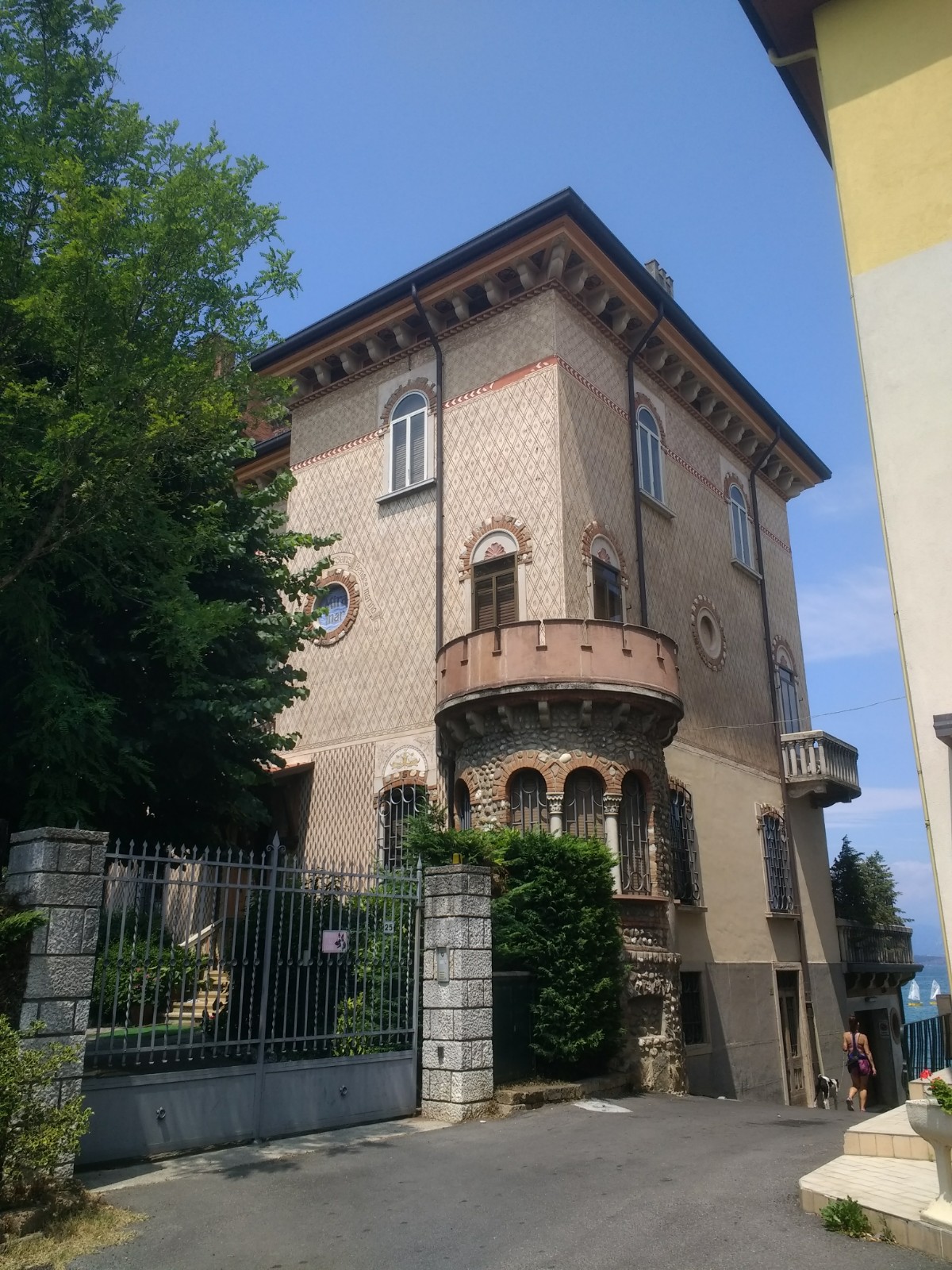
I have the impression that this time was a bit of a heyday for Desenzano and have seen several houses built in Italian Liberty style.
If this isn’t of interest to you, then skip it. This is largely for me as I wanted to make a list of the walks we had done. First, a word about the walks in the Cinque Terre area in general.
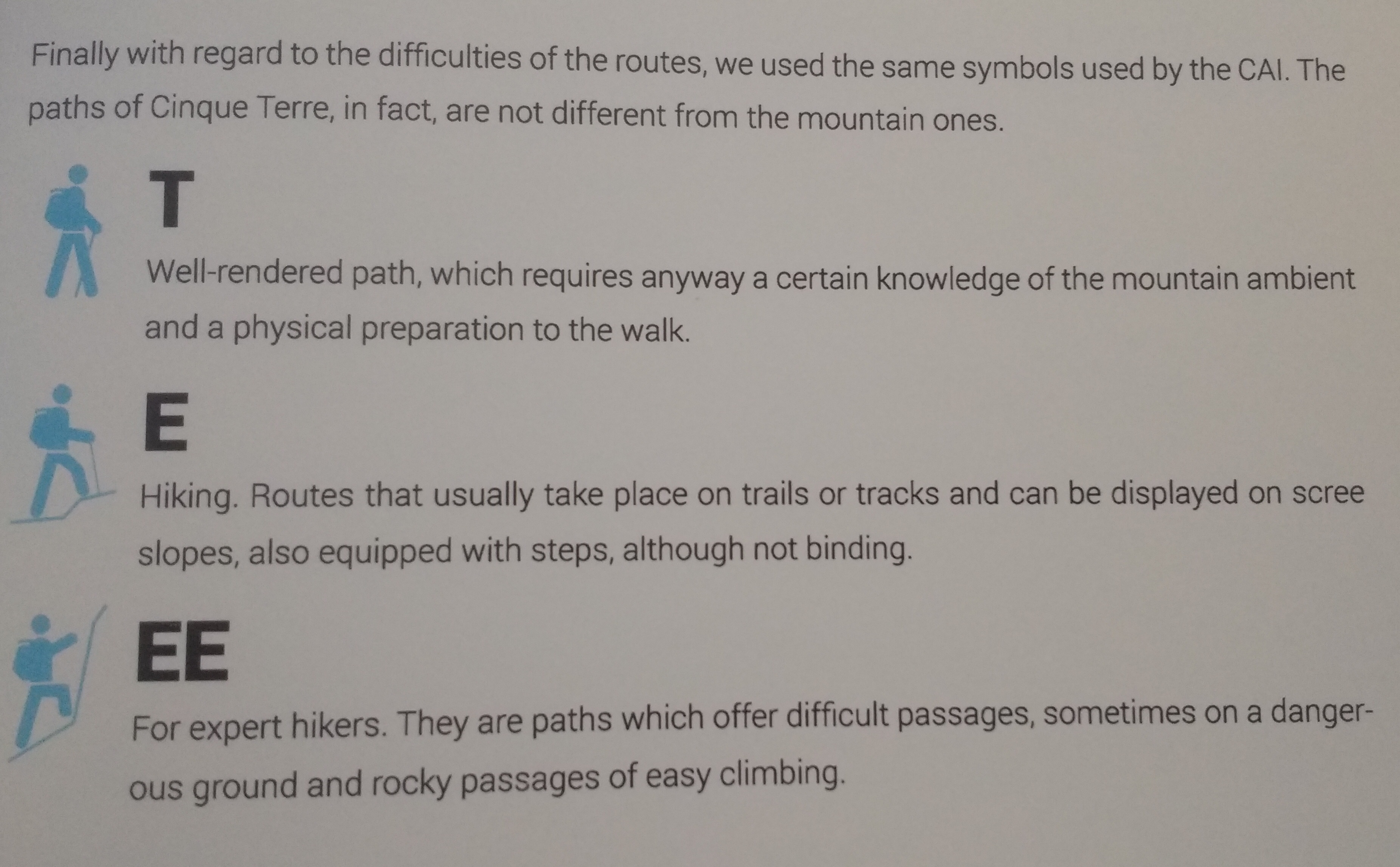
First, they are tough. These are the grades used by the CAI (Club Alpino Italiano).
From ‘Footpaths Guidebook of Cinque Terre’ by Luciano Bonati
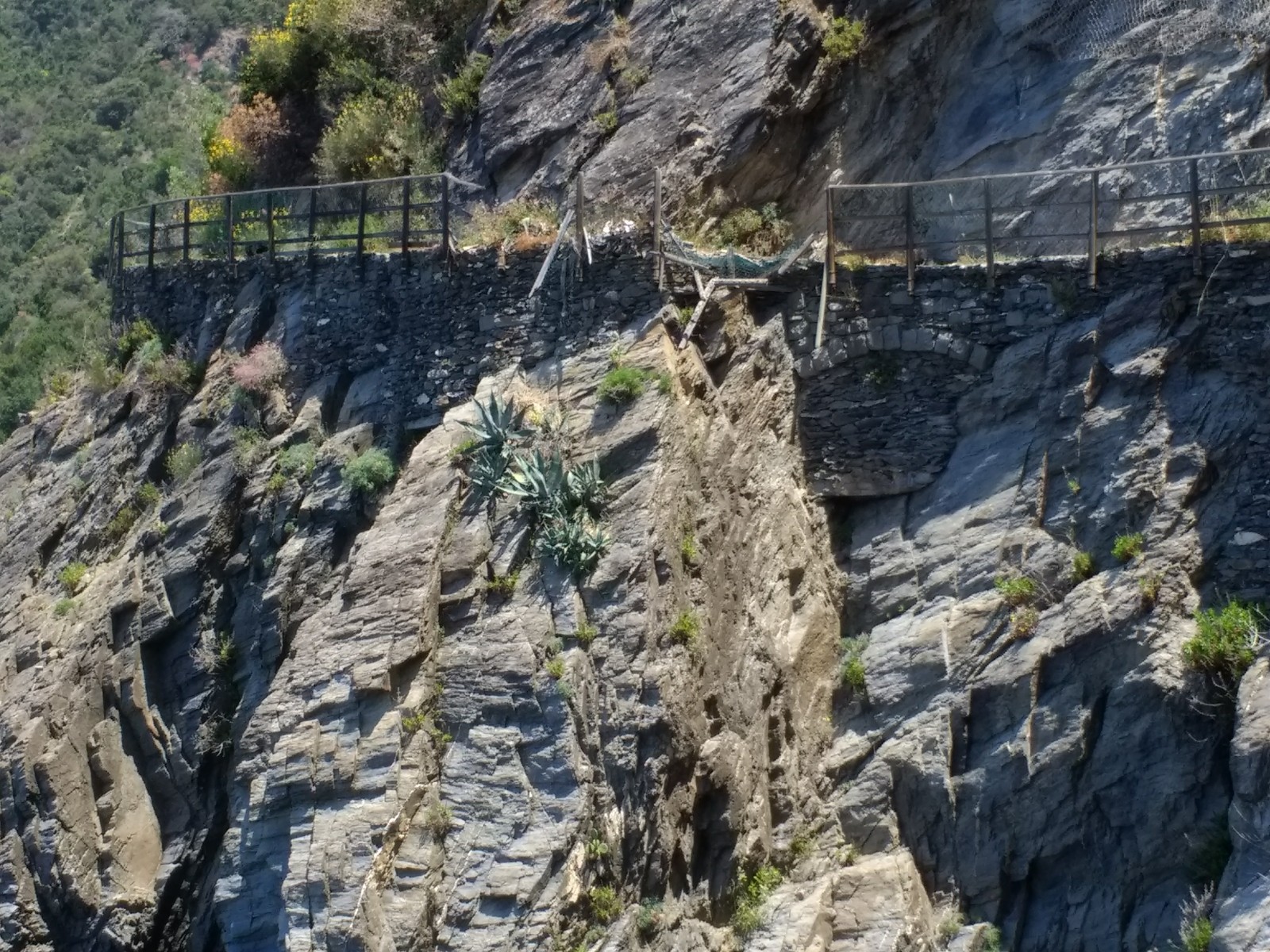
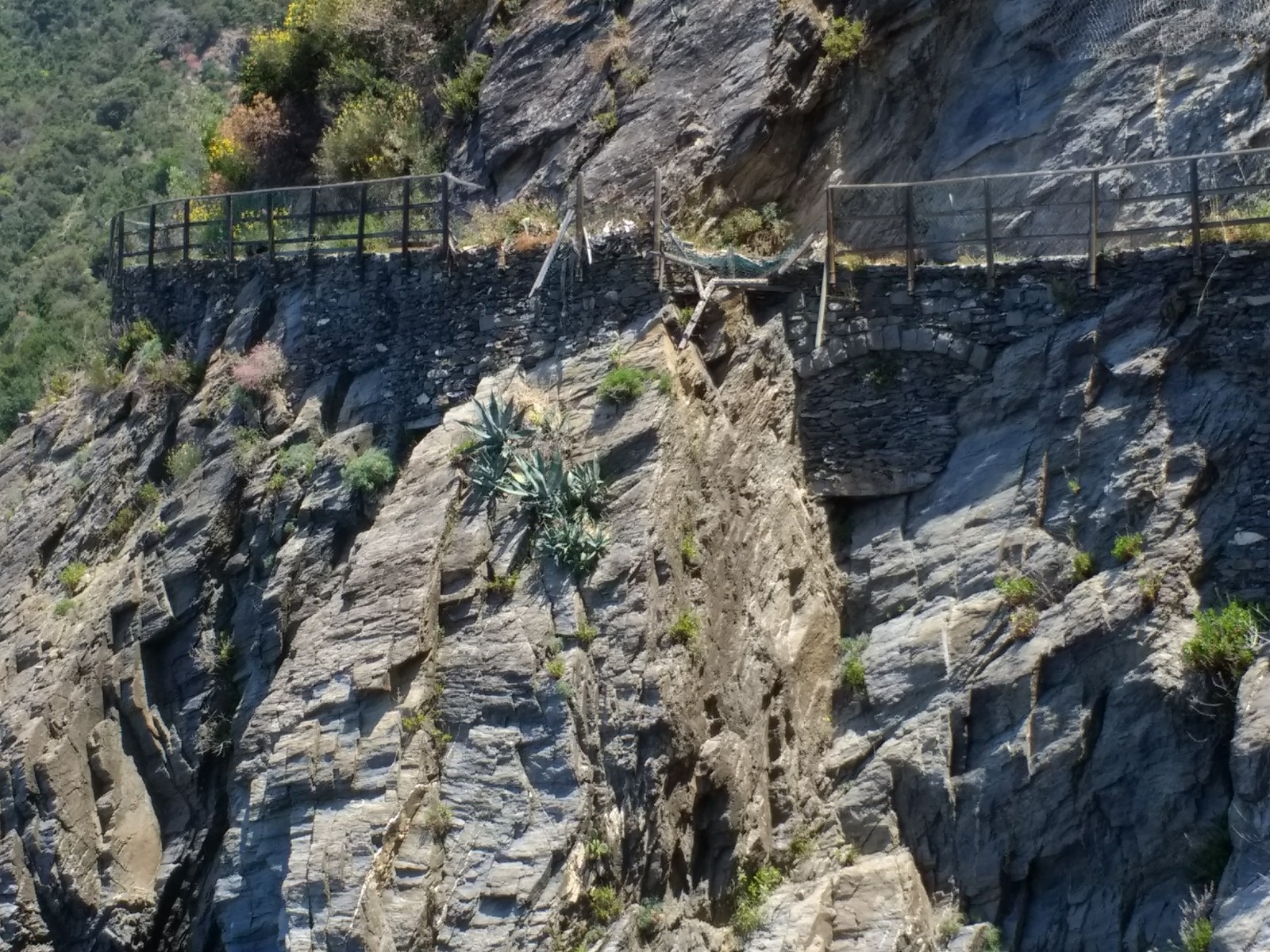
There are only a couple of walks in the area with the lowest rating (T) and one of them (Riomaggiore to Manarola) has been closed since 2012 due to a landslide. According to the Cinque Terre website, the path from Riomaggiore to Manarola, and the path from Manarola to Corniglia, are expected to re-open in April 2021. However, no work on the two paths has been carried out to date, and there is no sign of any work starting in the immediate future, but we will see.
Part of the damaged path in June 2019
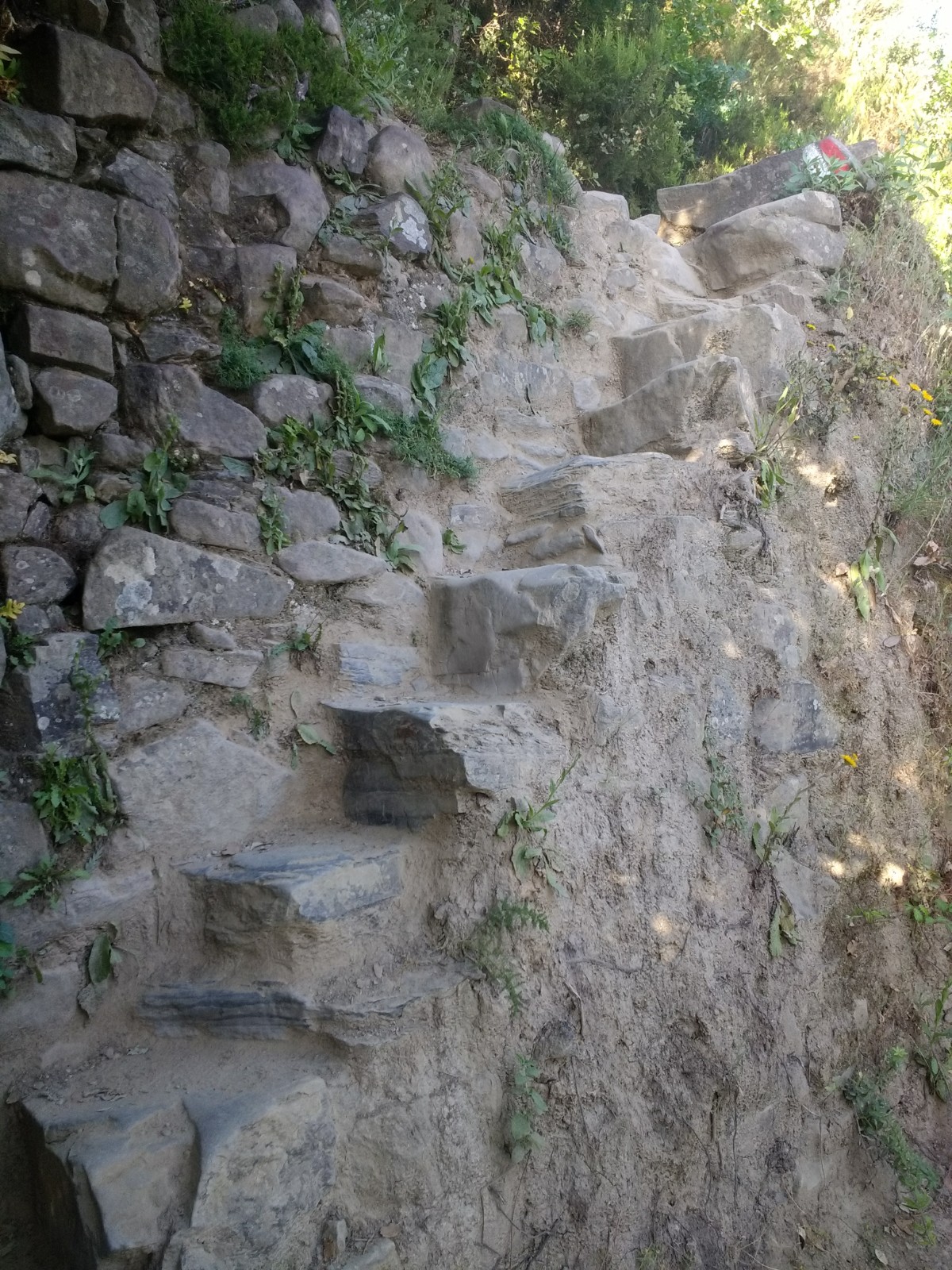
Most of the walks we have done have been rated E. All these walks have uphill and downhill sections and are mostly along rocky paths with sections of steps, that have either been built or are created using the rocks that are naturally there (occasionally we have needed to use our hands to help scramble down as the steps can be huge).
The paths overlooking the coast often have narrow sections with steep drops on the seaward side.
Not all the paths are well-maintained. We have sometimes wished for a machete so we could cut our way through thick undergrowth.
That being said, we have loved all the walking here, and would happily repeat most of the trails we have taken.
Apologies for only providing approximate times – I wish now that I had made a note of how long each walk took. I have given no distances either. We didn’t find distances very helpful – one mile on the flat is not the same as one mile up or down a rocky path!
These are the walks we have done:
Walk 1: Biassa to Riomaggiore
We took a bus from La Spezia to Biassa, but then failed to find the trail to our next point, Telegrafo, so instead walked along the road up to Telegrafo.
View from a very welcome cafe at Telegrafo.
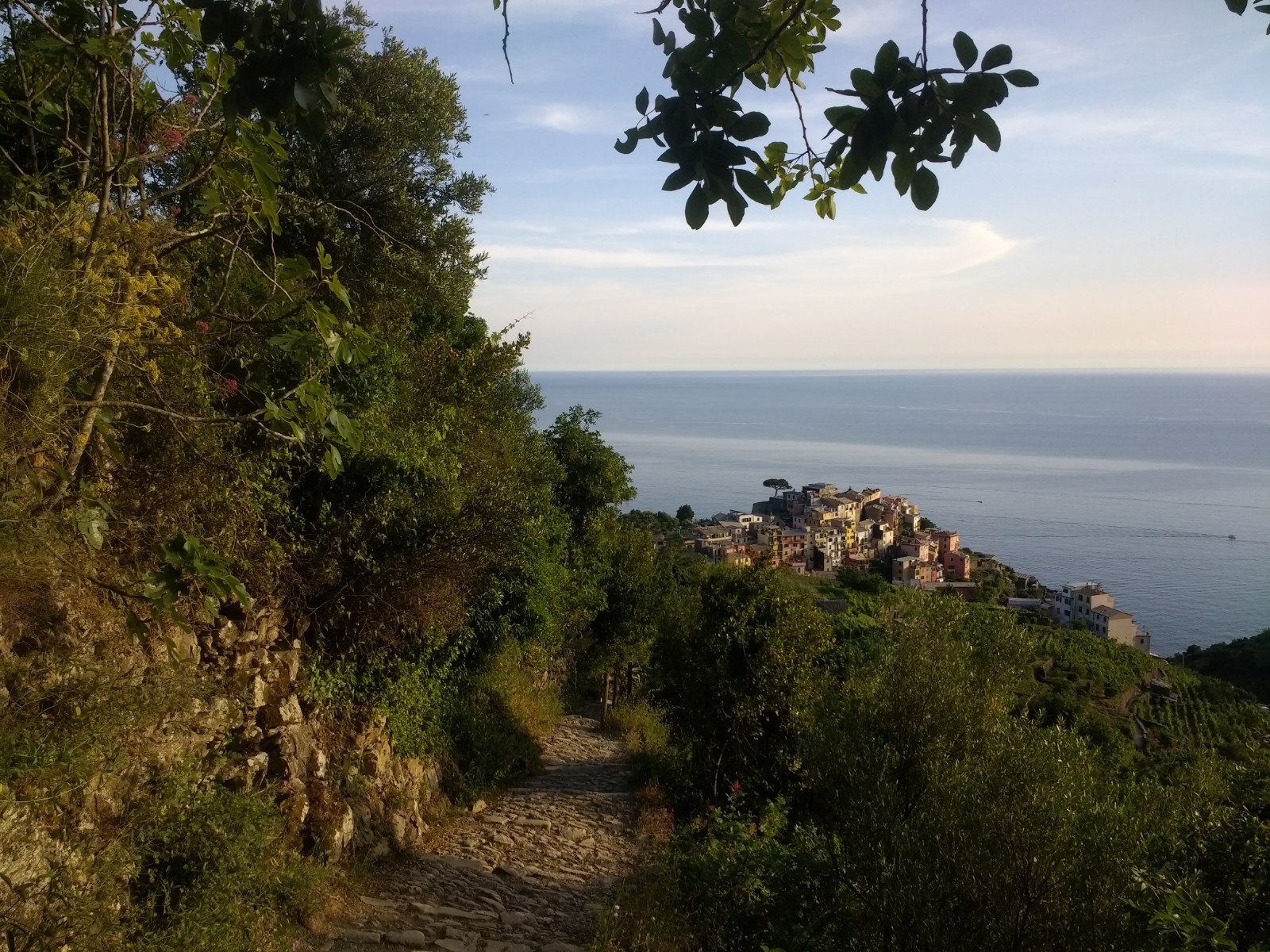
From Telegrafo, the path meanders down between the cultivated terraces. When we did the walk in June, all the wild flowers were out and the sea views were spectacular.
We remember the walk taking about 3-4 hours including our stop in Telegrafo. We were definitely in Riomaggiore in time for a lovely lunch in a harbour-side restaurant.
Walk 2: Biassa to Manarola
The second time we started from Biassa we did find the trail to Telegrafo (537) however we nearly turned back several times as the undergrowth clearly hadn’t been cut back for several years. We decided that if we did this walk again, we would take the road to Telegrafo, as we did in our first walk.
From Telegrafo, we took our only T-rated path, the AV5T, to Monte Galera, then the 585 to the hamlet of Volastra. We found a bar/restaurant at Volastra, but the waitress didn’t seem overly impressed with our measly order of two bottles of water. (When we stopped here a second time on a different day, she was also very unfriendly). This is unusual and most people serving in restaurants and bars have been delightful.
From Volastra, there are a lot of steps down to Manarola. After a while you are presented with a choice of two paths, the Panoramic path, hugging the coast with wonderful views and steep drops to the sea, or a gentler slope which winds its way to the higher end of the village. We took the challenging Panoramic path which was great to do once, but we thought that if we did the walk again, we would take the gentler route.
This was a longer walk consisting of a good four hours of walking.
Walk 3: Campiglia to Portovenere
Campiglia is another little village a bus-ride from La Spezia. There is a lovely bar in Campiglia selling the usual drinks plus wonderful focaccia and the staff will make up panini to take away. From the outside seating area, there are splendid views across the bay.
The walk down to Portovenere was very enjoyable taking about two and a half hours, but very rocky and steep in places. We found a couple of spots we could rest en-route.
Walk 4: Biassa to Portovenere via Campiglia
The next time we walked to Portovenere, we decided to increase the challenge by starting in Biassa. This was not a good idea as the path was overgrown, in bad condition and had no view.
Walk 5: Lerici to Tellaro
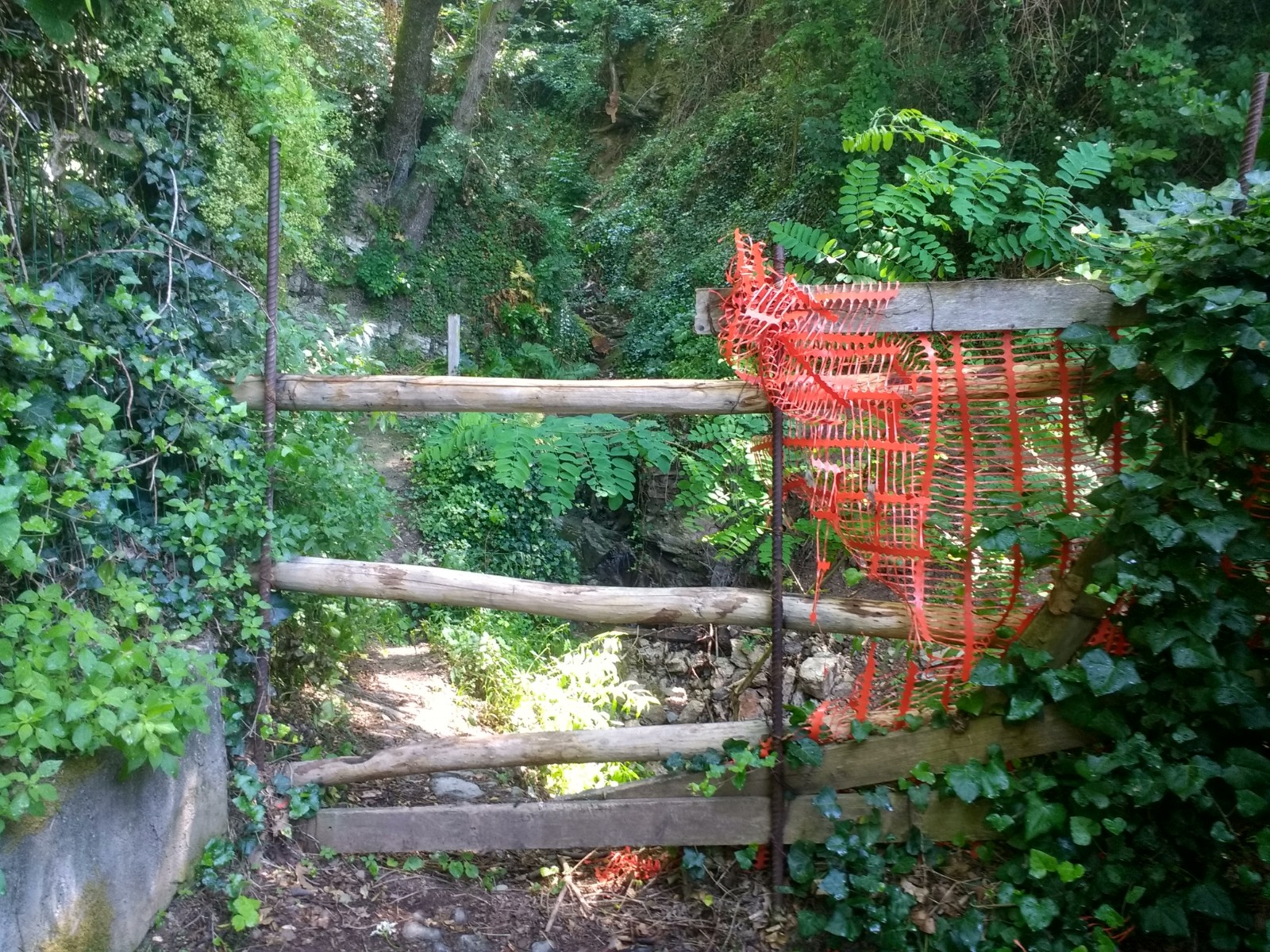
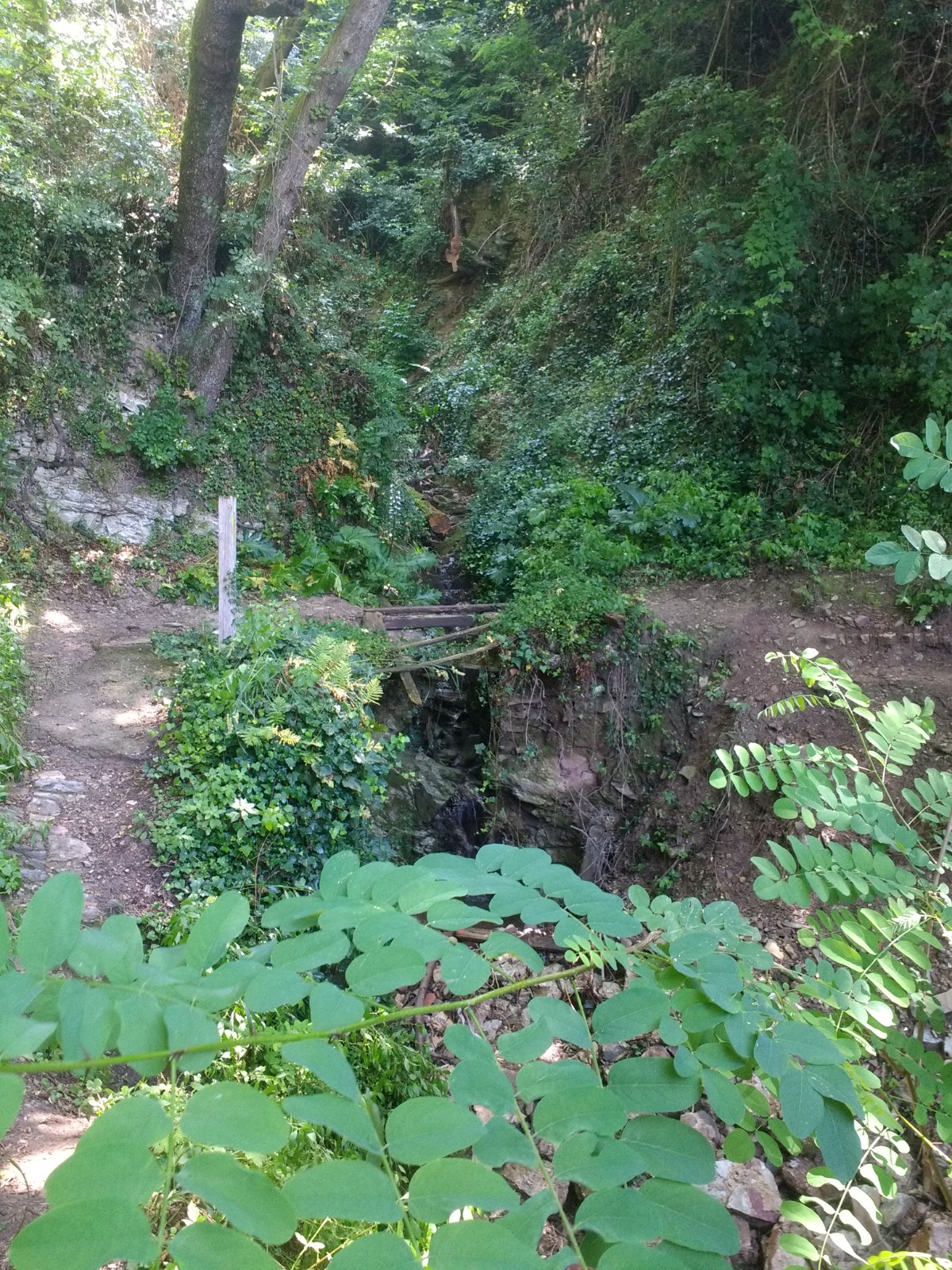
This looked like an easy walk on the map, but halfway along the path had been blocked.
The cause of the problem – a broken bridge
We could have either turned back at this point (we didn’t know what other hazards lay ahead) or go on. We went on and the rest of the path was OK, but not great. We decided we wouldn’t do the walk again.
To add insult to injury, when we reached the small resort of Tellaro, we had to hunt to find a gelateria, and when we did, the ice-cream was not up to the usual standard. Tip: if you see the locals eating pre-packaged big name ice-cream, the local gelateria should be avoided.
Walk 6: Manarola to Corniglia
We started this walk at 6pm on a hot summer’s evening which was definitely not a good move. We opted to take the less strenuous route up to Volastra, at the higher end of Manarola, but it still seemed steep, never-ending, and was exhausting. Looking back we should have turned back at Volastra and returned to Manarola the way we had come. I have discovered there are buses from Manarola to Volastra if you want to give yourself an easier time.
From Volastra, the path is fairly flat before descending to Corniglia. From the village of Corniglia there are 377 brick-built steps down to the station, but there is a little bus running the route if you prefer.
The walk took about two and a half hours not including stops.
Walk 7: Corniglia to Monterosso
This is the only section that we needed to buy the Cinque Terre trekking card for (€7.50 for one day) and is made up of two sections – Corniglia to Vernazza and Vernazza to Monterosso. The sections take about two hours each and involve a lot of uphill and downhill. We found the first section easier and better-maintained. These two walks were the busiest we have done in the Cinque Terre area by far, but were not so crowded they were off-putting. Everyone walking the routes seemed equal to the task and at no point were we walking at the back of a slow-moving queue.
Walk 8: Riomaggiore circular
Wanting one final, but not too demanding walk today, we walked on the SVA from Riomaggiore up to the Sanctuary of the Madonna di Montenero.
The Sanctuary
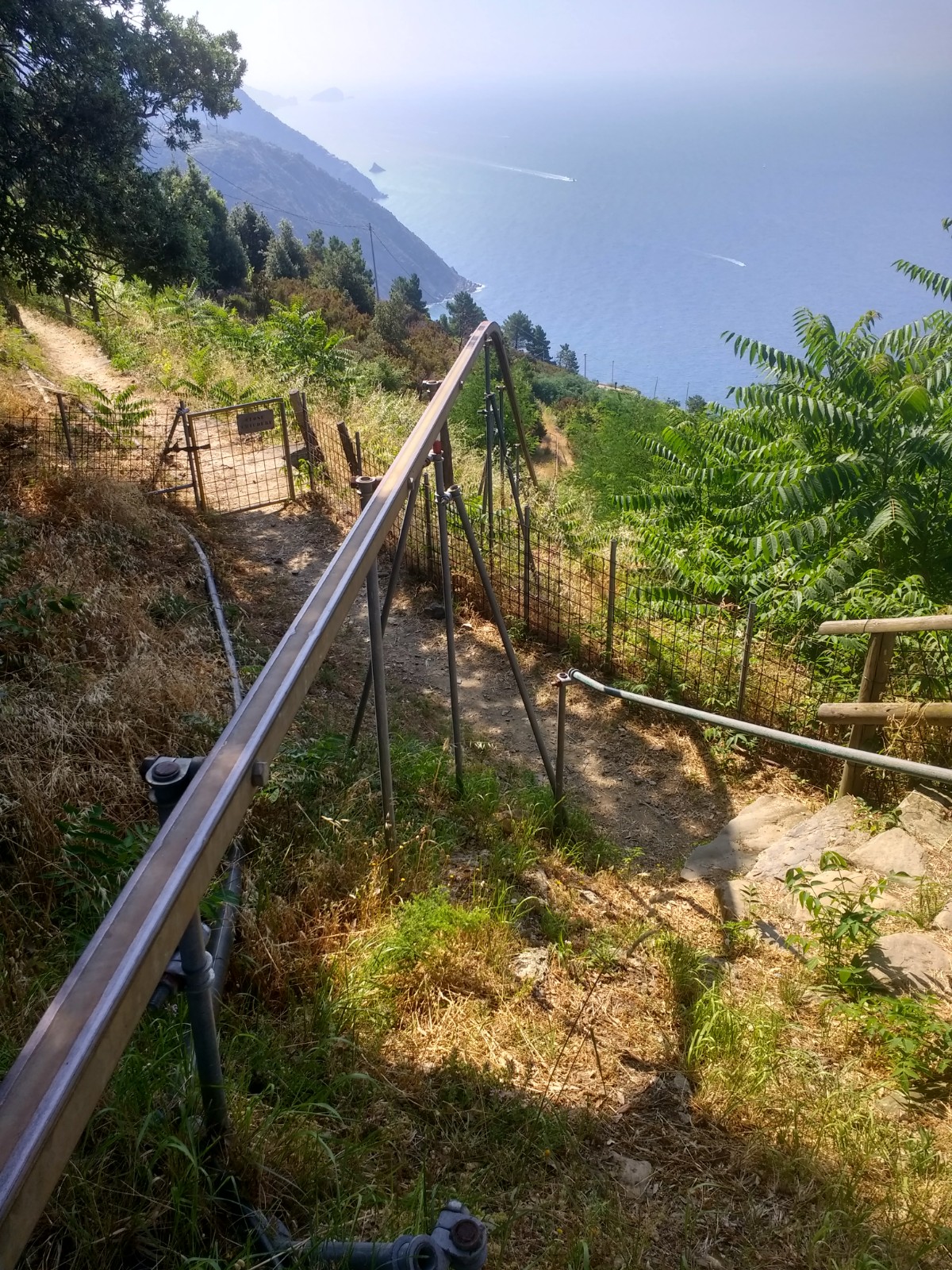
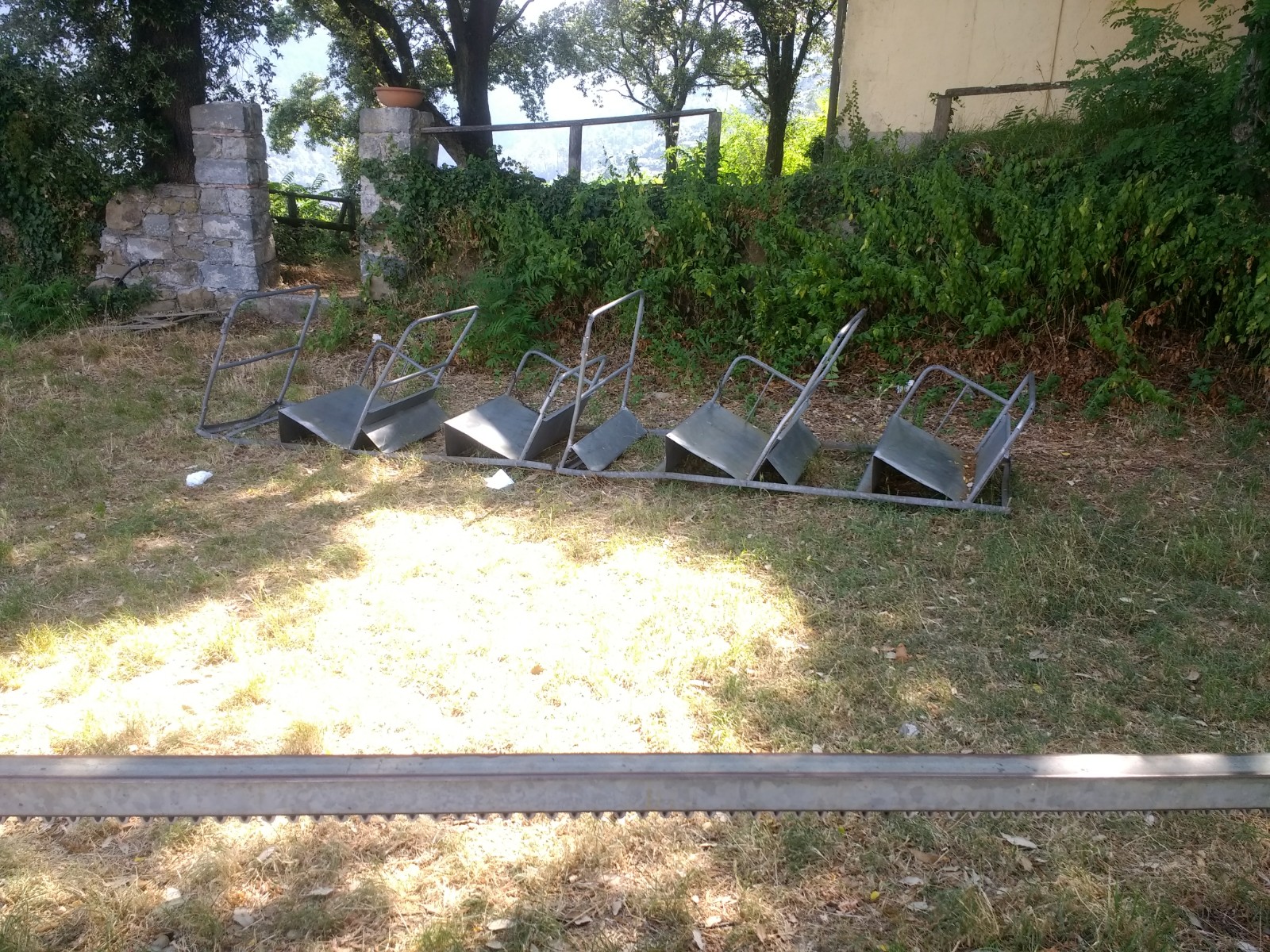
From the sanctuary there is a rail for a funicular railway. I can’t believe anyone would have wanted a ride on it, but we found this abandoned seating. The sanctuary cannot be reached by road.
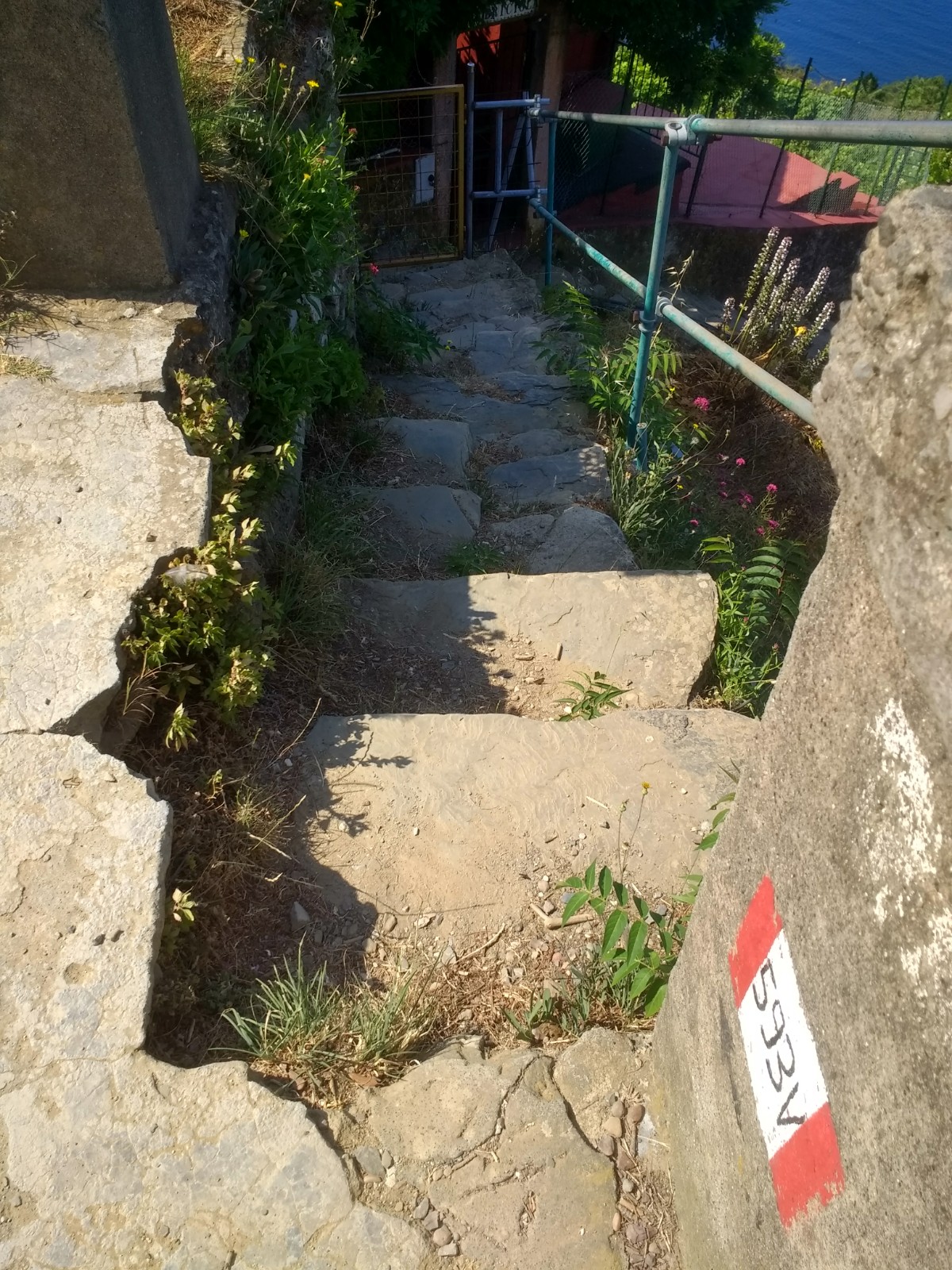
From the Sanctuary we came down a steeper, more direct route back to the village which was fine,
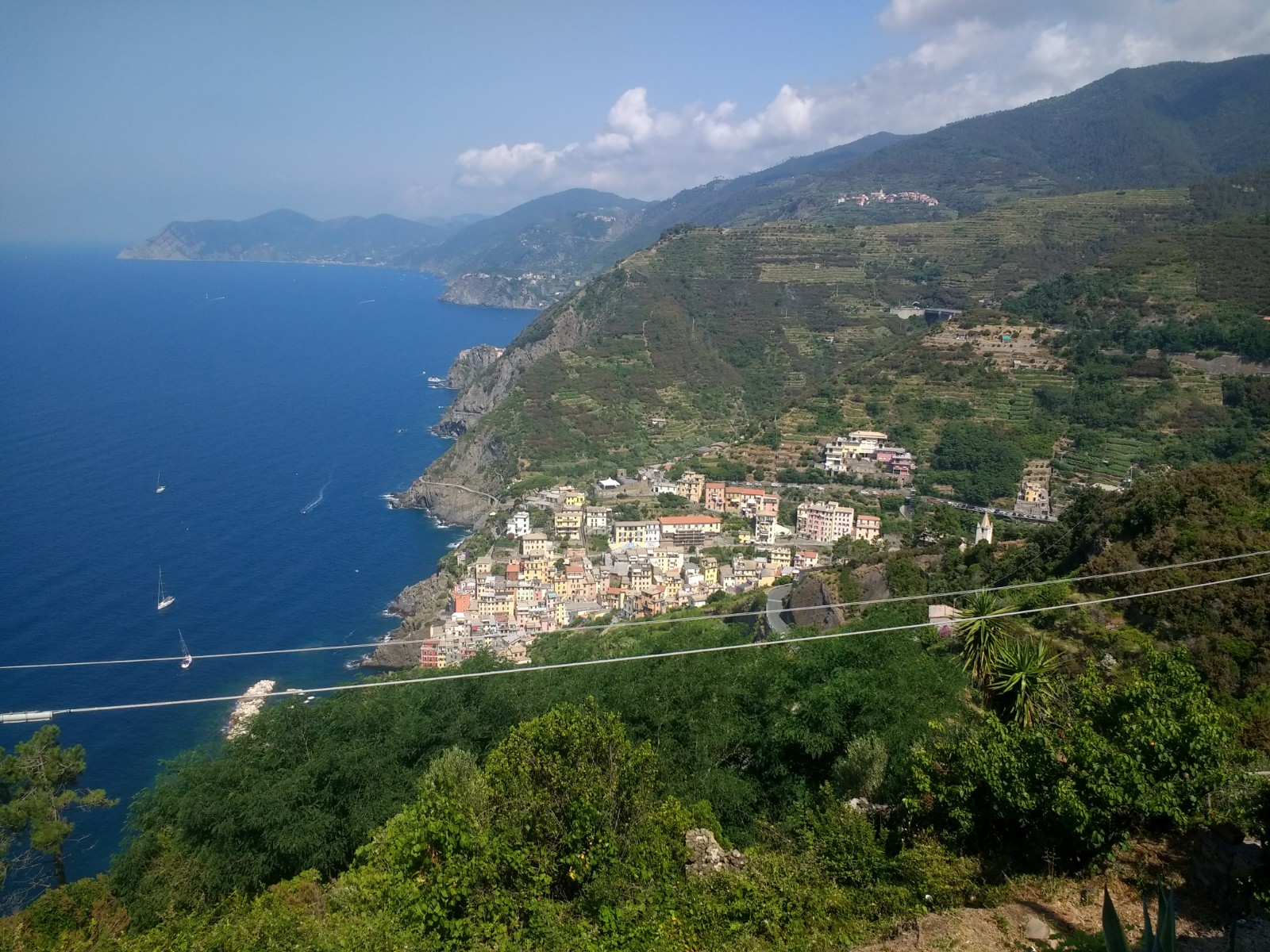
and what’s more there was a lovely cafe once we were most of the way down.
This was our view of Riomaggiore from the cafe.
The walking time was about 1 and a half hours and we decided this was a walk we would repeat if we were coming back to the area.
Despite the heat, we were determined to walk the only two paths that are still open between the Cinque Terre villages, and so made an early start yesterday.
The settlement of Corniglia was our starting point, but choosing not to climb the 377 steps up from the train station, we instead took the little bus (included in our one-day Cinque Terre trekking card). A quick cup of coffee, and we were on the trail by 9.
Leaving Corniglia
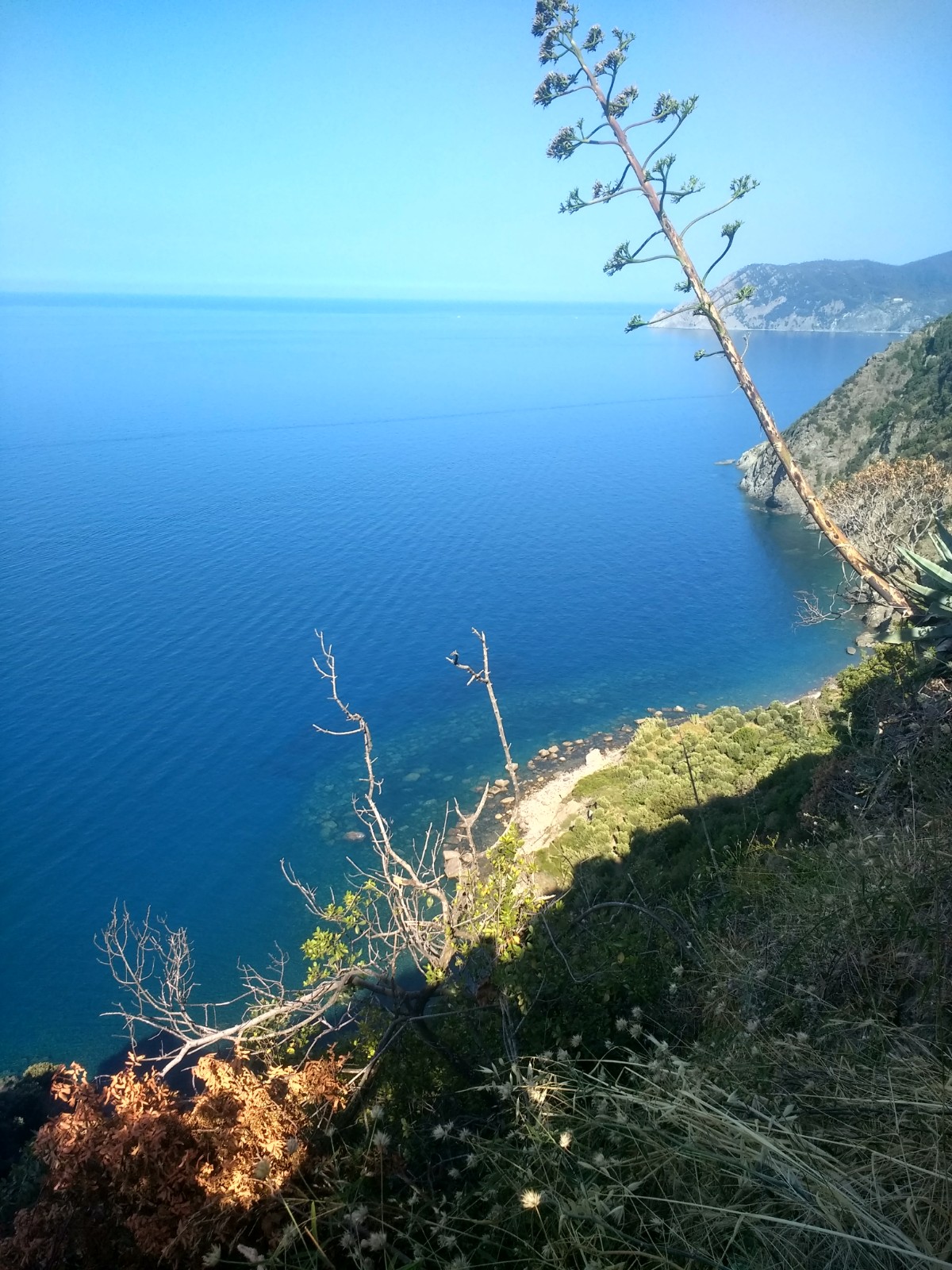
The trail was well-maintained and the huge steps, commonplace on the higher paths, were absent. The views were superb.
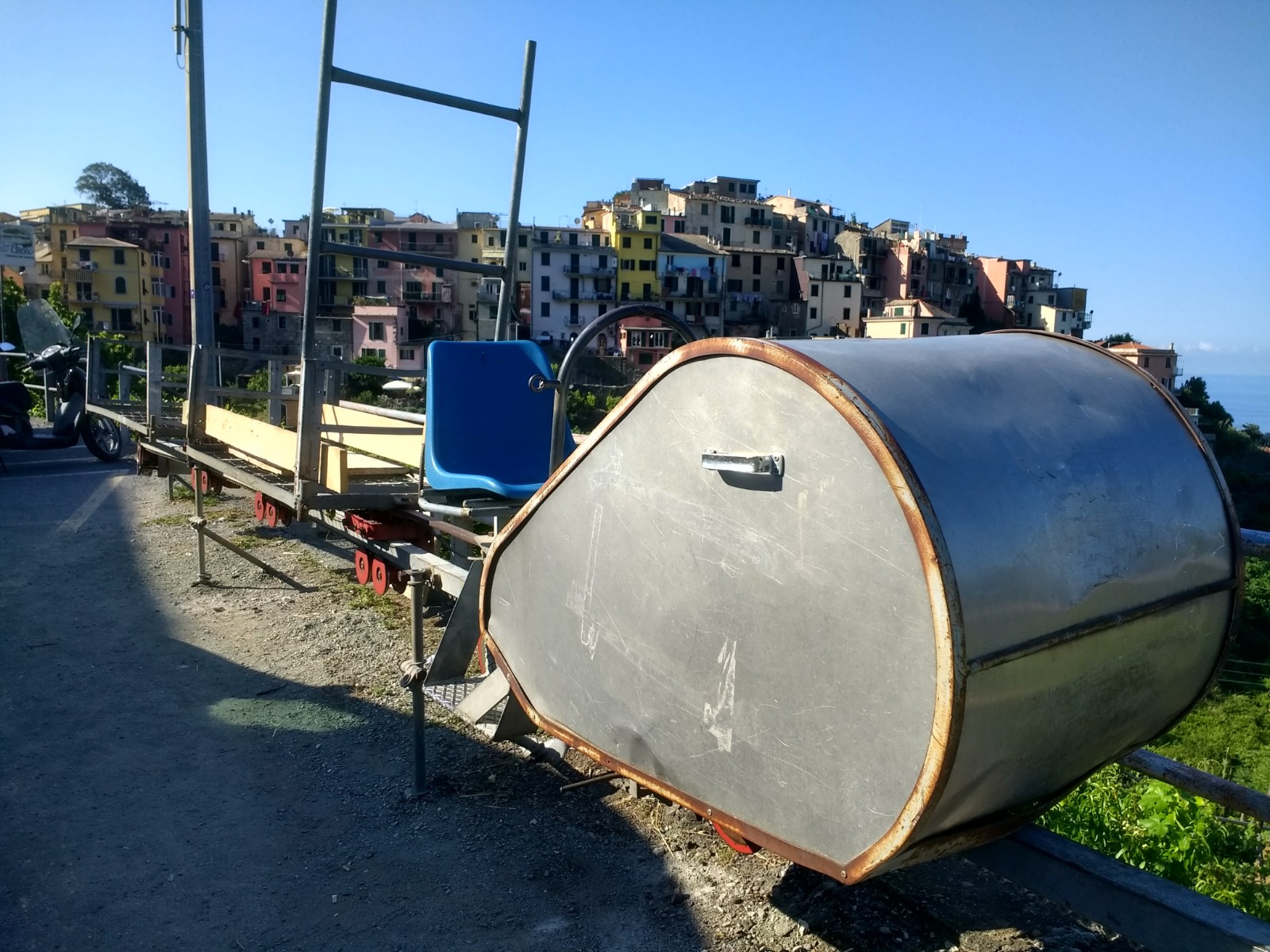
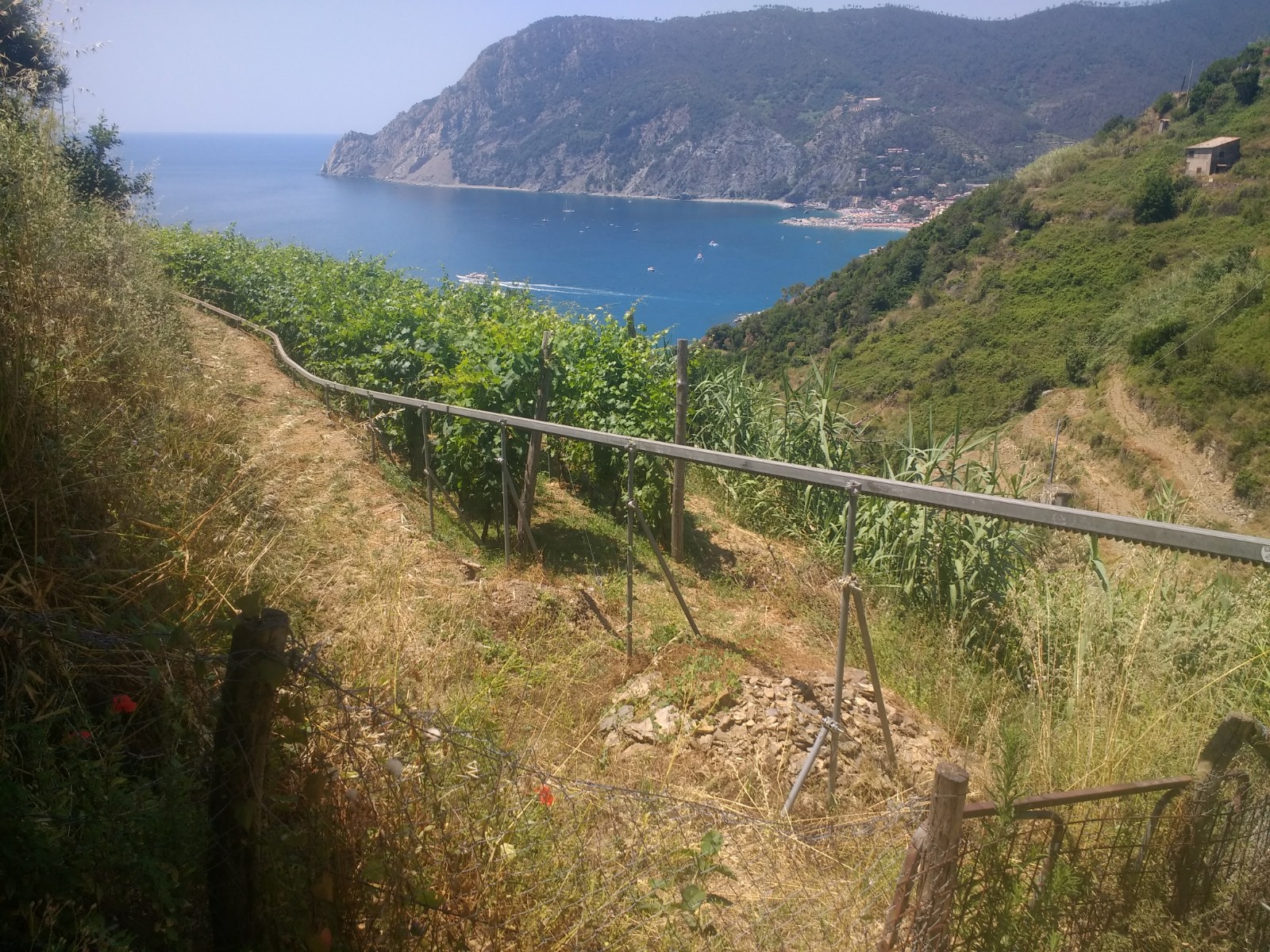
View of the coast towards VernazzaOne of the little trains, with a makeshift seat for the operator, that run through the vineyards and olive groves here.You wouldn’t catch me on one of these. Some of the slopes are quite vertiginous.We walked some of the way with some really friendly Americans. One of them took this photo. Although not great (too much shadow) it answers a question anyone had about whether we are still together or not!Vernazza was a welcome sight. Although only mid-morning, I was ravenous.Coming down through the narrow Vernazza streets.
After a sandwich and cold drink, we decided to continue along the path to Monterosso. We had thought we might leave it to a second day, but as the trail to Vernazza has been in such good condition, and not too strenuous, we thought we’d continue (no need to buy a Cinque Terre trekking card another day either).
View of Vernazza with its beach and harbour.
Although the trail was supposed to be longer (taking two hours instead of the 1 and a half hours we’d just done) we’d been led to believe the path was more on the flat and, therefore, easier. Oh dear, don’t believe everything you read. There seemed considerably more up and down, and the path wasn’t in such great condition. Maybe it was just that it was hotter, and I wasn’t as fresh.
We made it though. First view of Monterosso.Monterosso
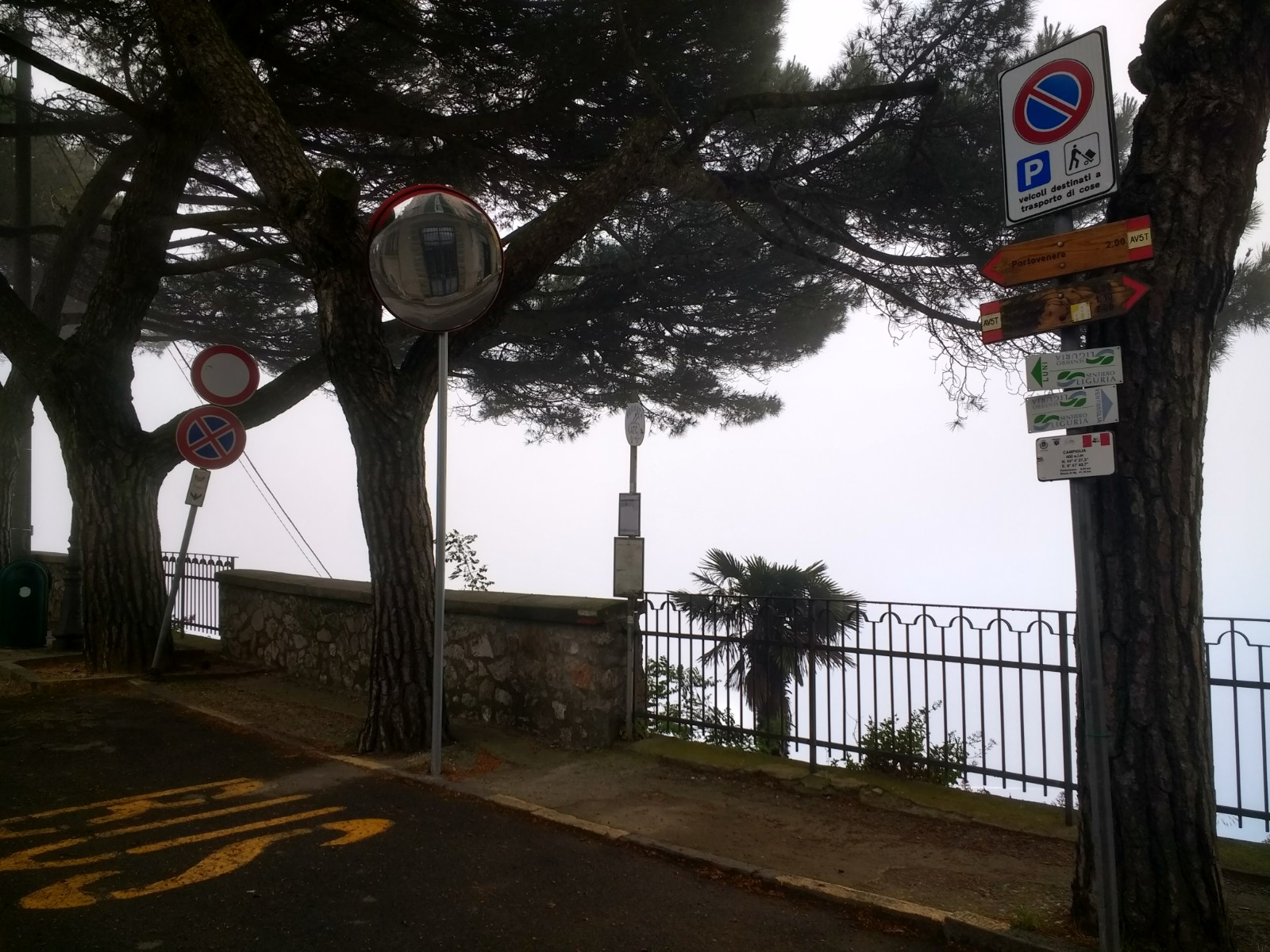
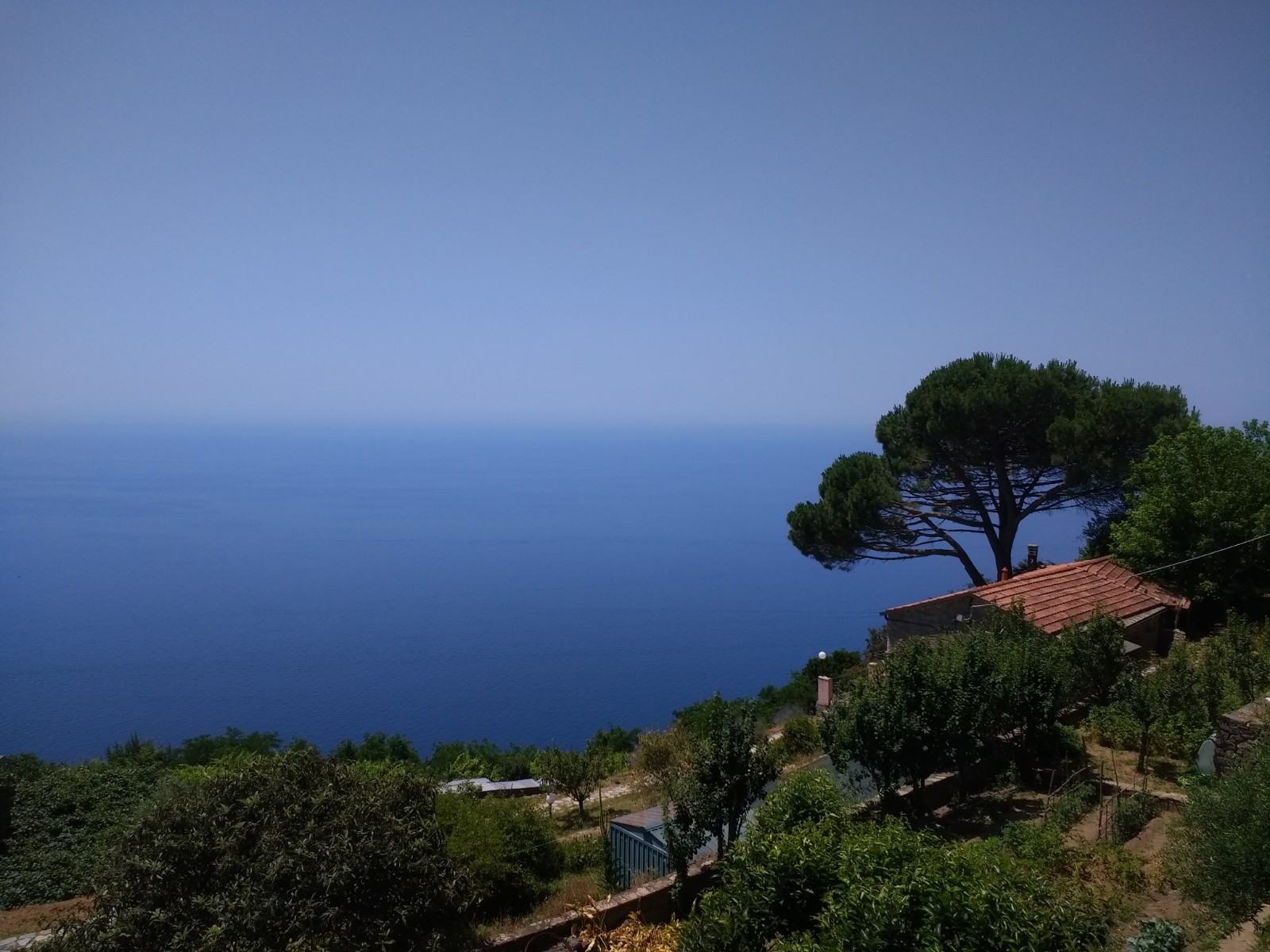
We’re following our exertions yesterday with a rest day, and earlier took a picnic to Campiglia, a small village near here. We first went to Campiglia after a night of heavy rain three weeks ago and had no view due to the low cloud.
What was out there? We could only see mist a few weeks ago.The view today – this is what we couldn’t see before.
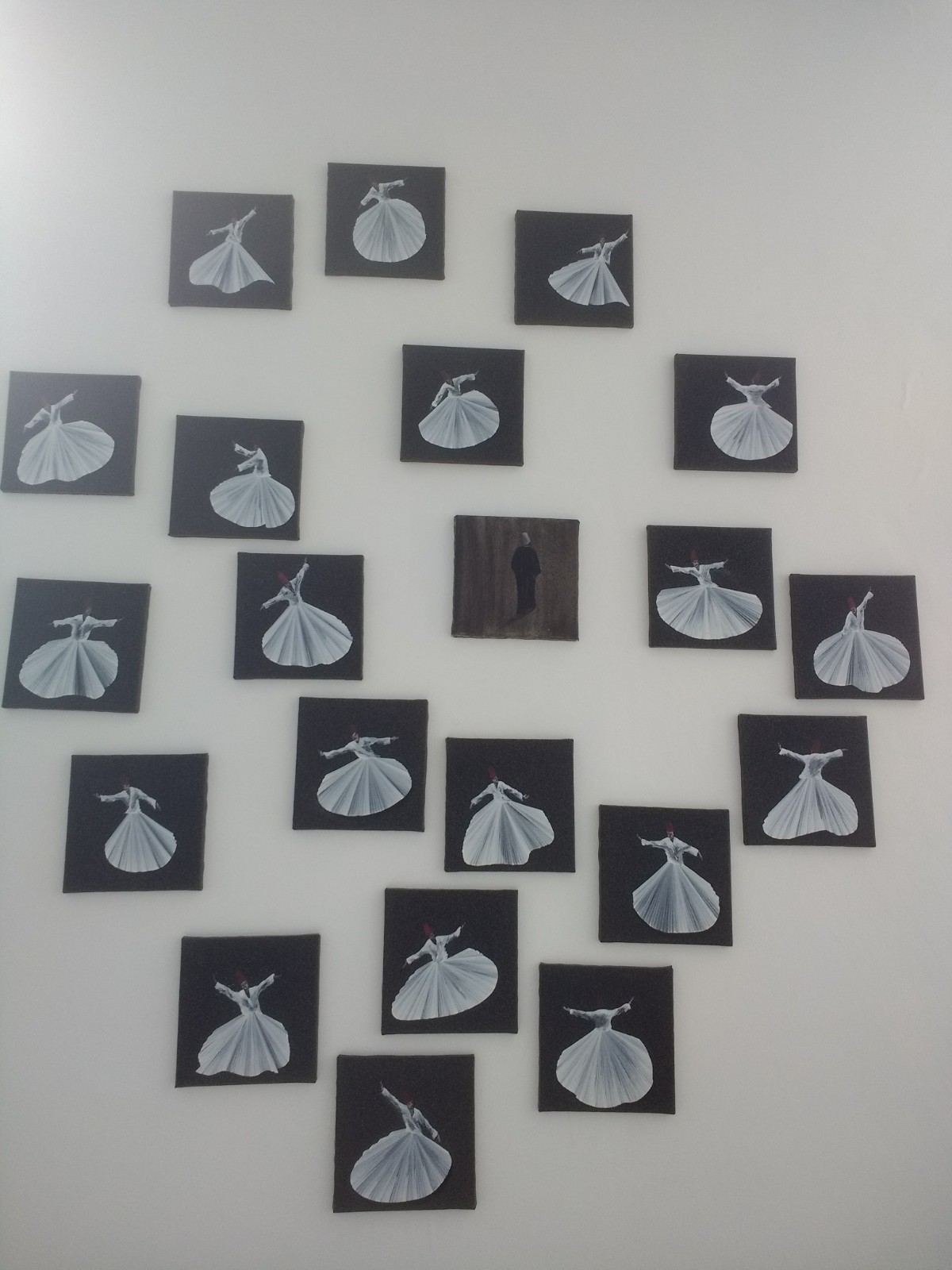
An air-conditioned art gallery is very alluring in the afternoon heat and so it was that we made our way to CAMeC (Centro Arte Moderna e Contemporanea) yesterday.
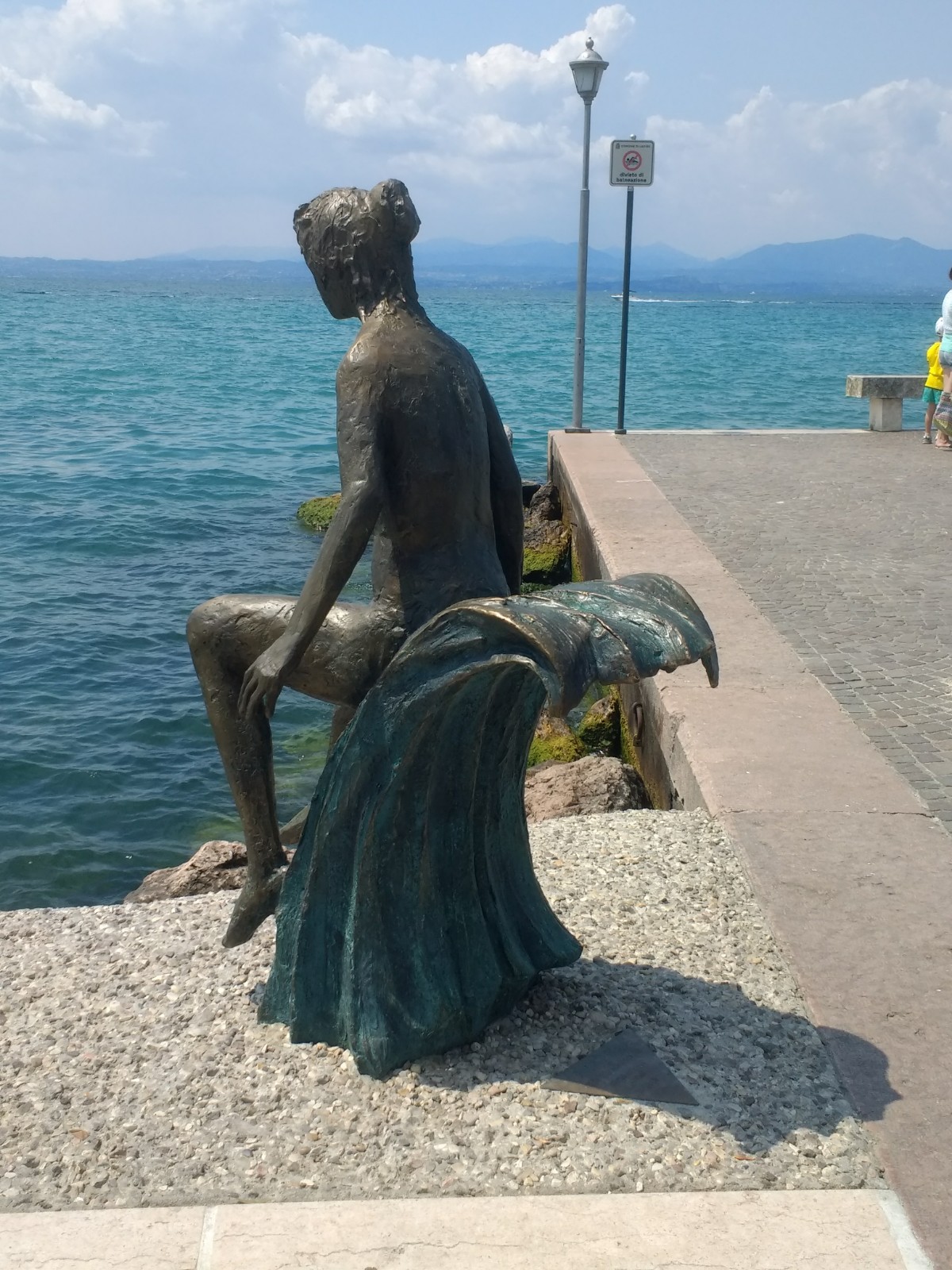
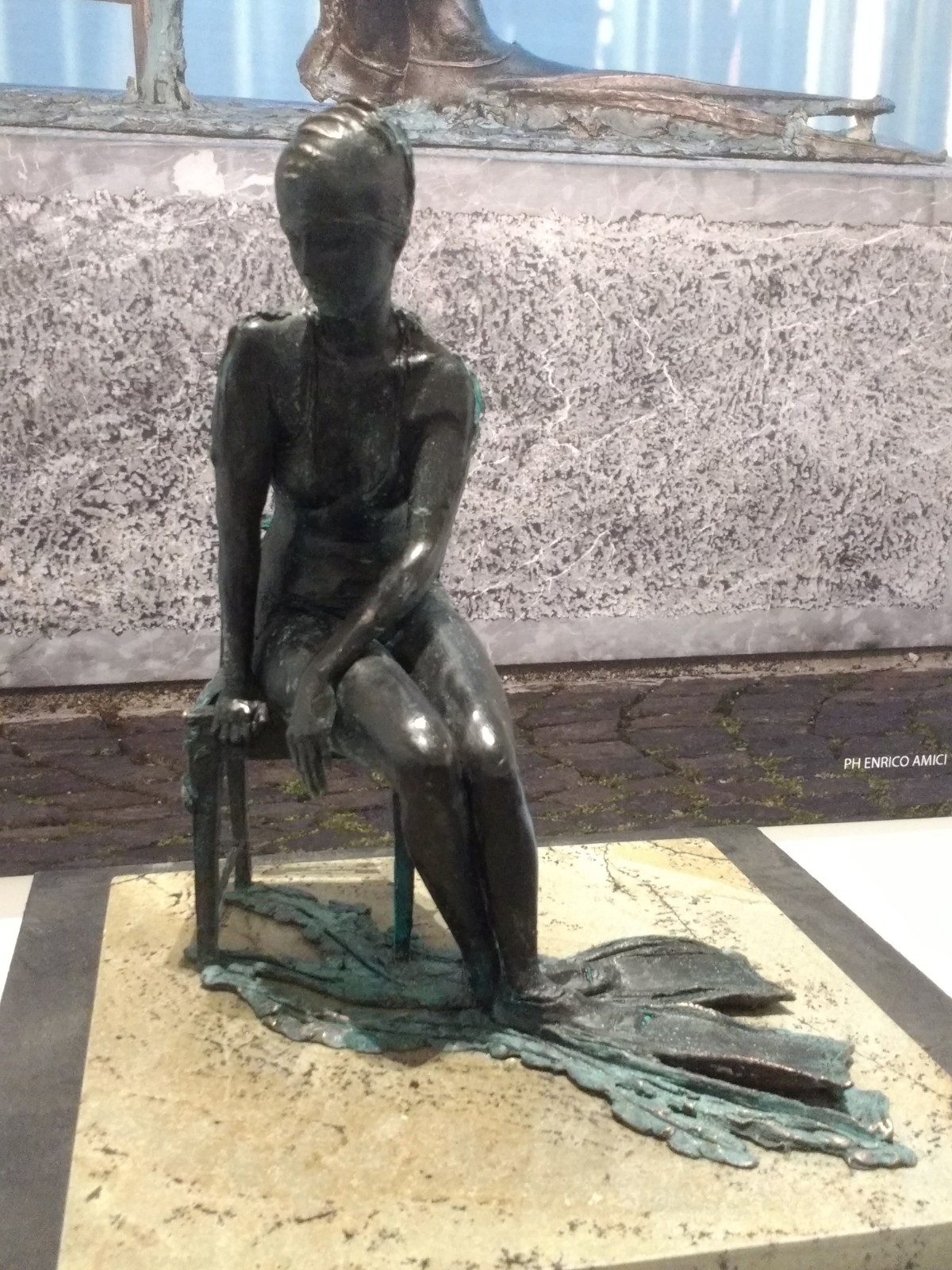
The first of two artists with exhibitions was a Russian artist, Aidyn Zeinalov, whose ‘Siren of the Gulf’ we had already seen on the promenade.
A copy of the one on the waterfront.
The artist donated the bronze to La Spezia, where he has spent much of his time, last year.
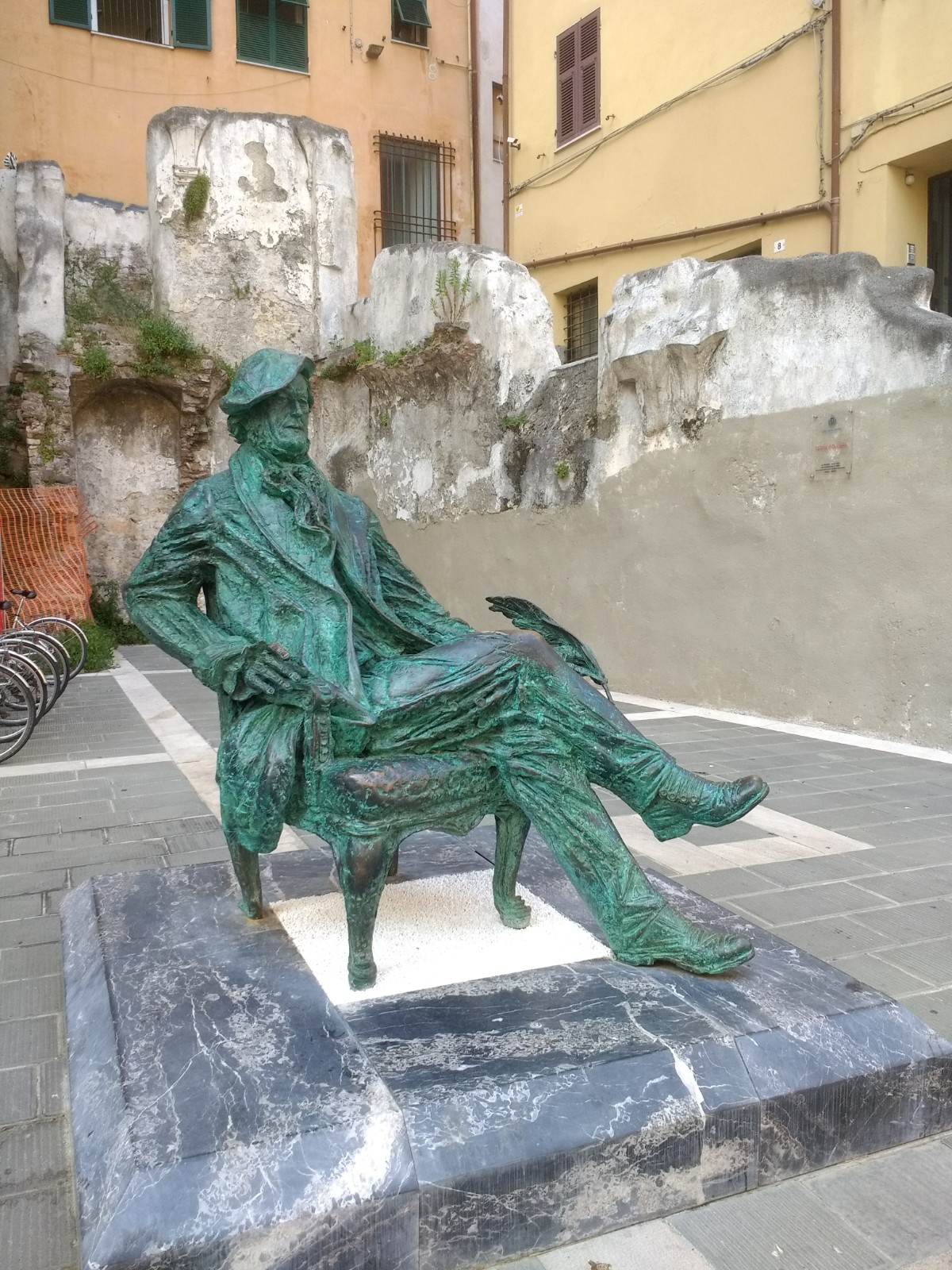
Elsewhere in the town is Zeinalov’s bronze of Richard Wagner, who stayed in the town in the summer of 1853.
Wagner
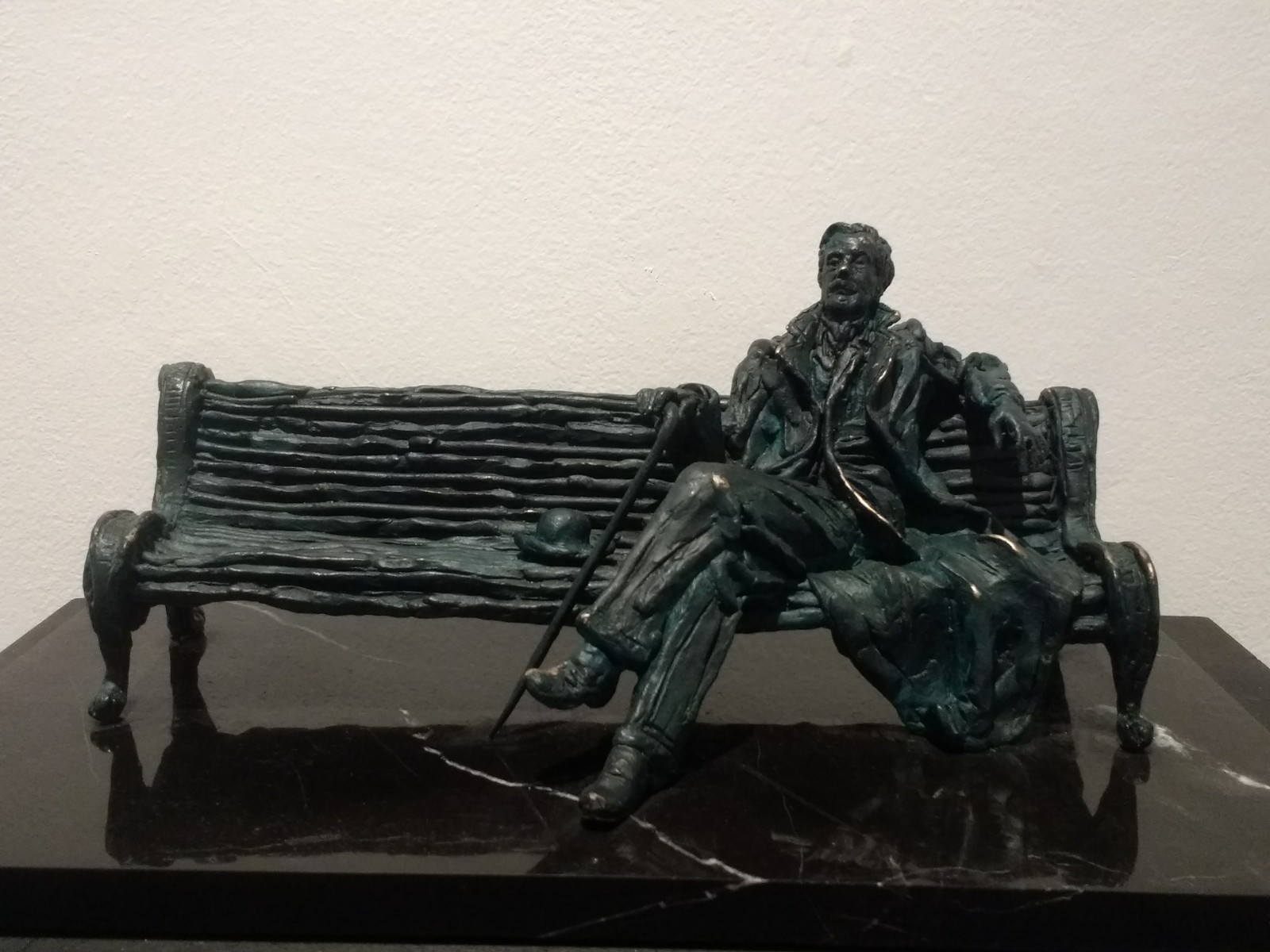
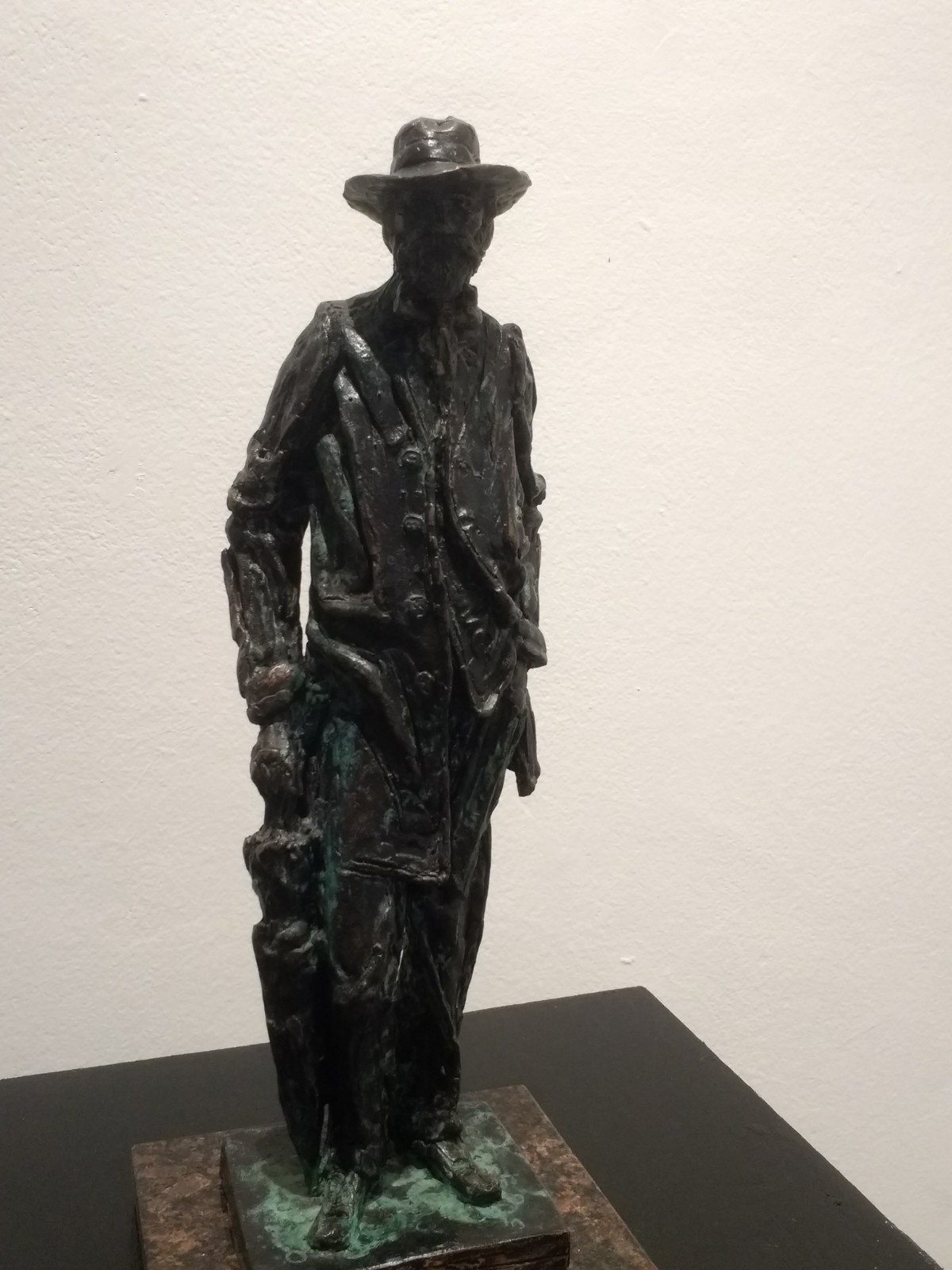
There were also two bronzes of Italian composers, Puccini, who was born in Lucca, a place one could visit from here, and Verdi, born halfway between here and Milan.
PucciniVerdi
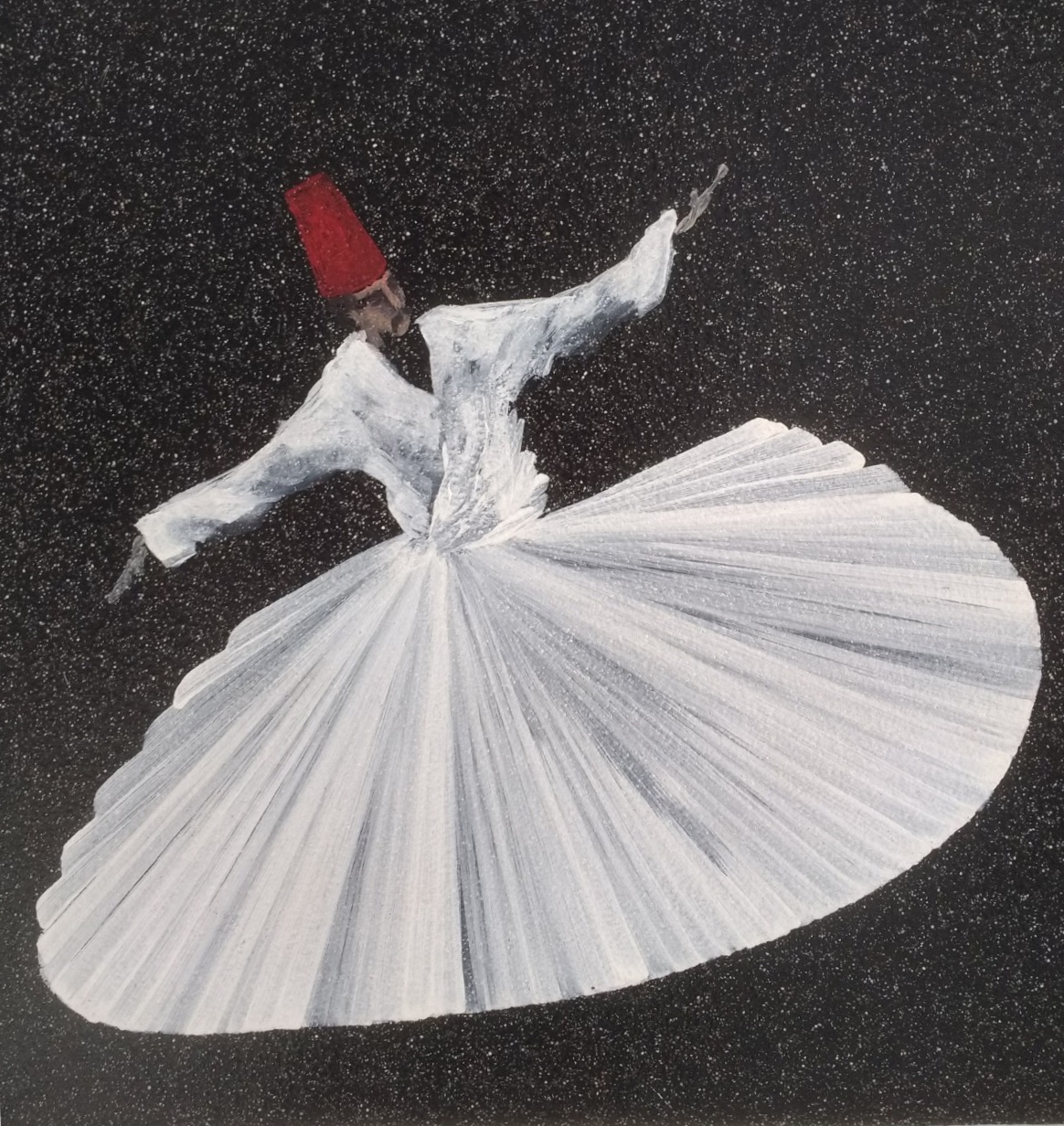
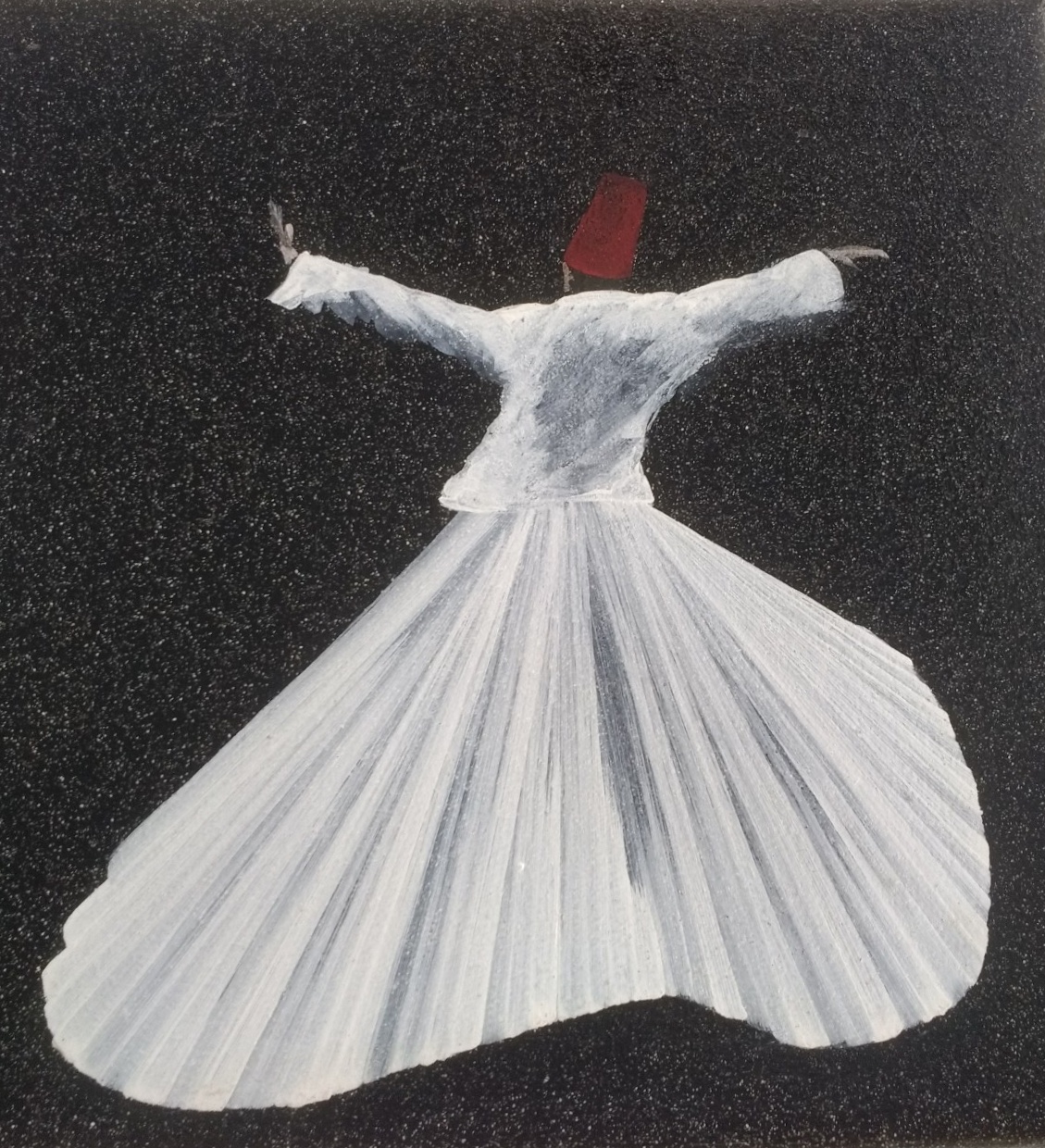
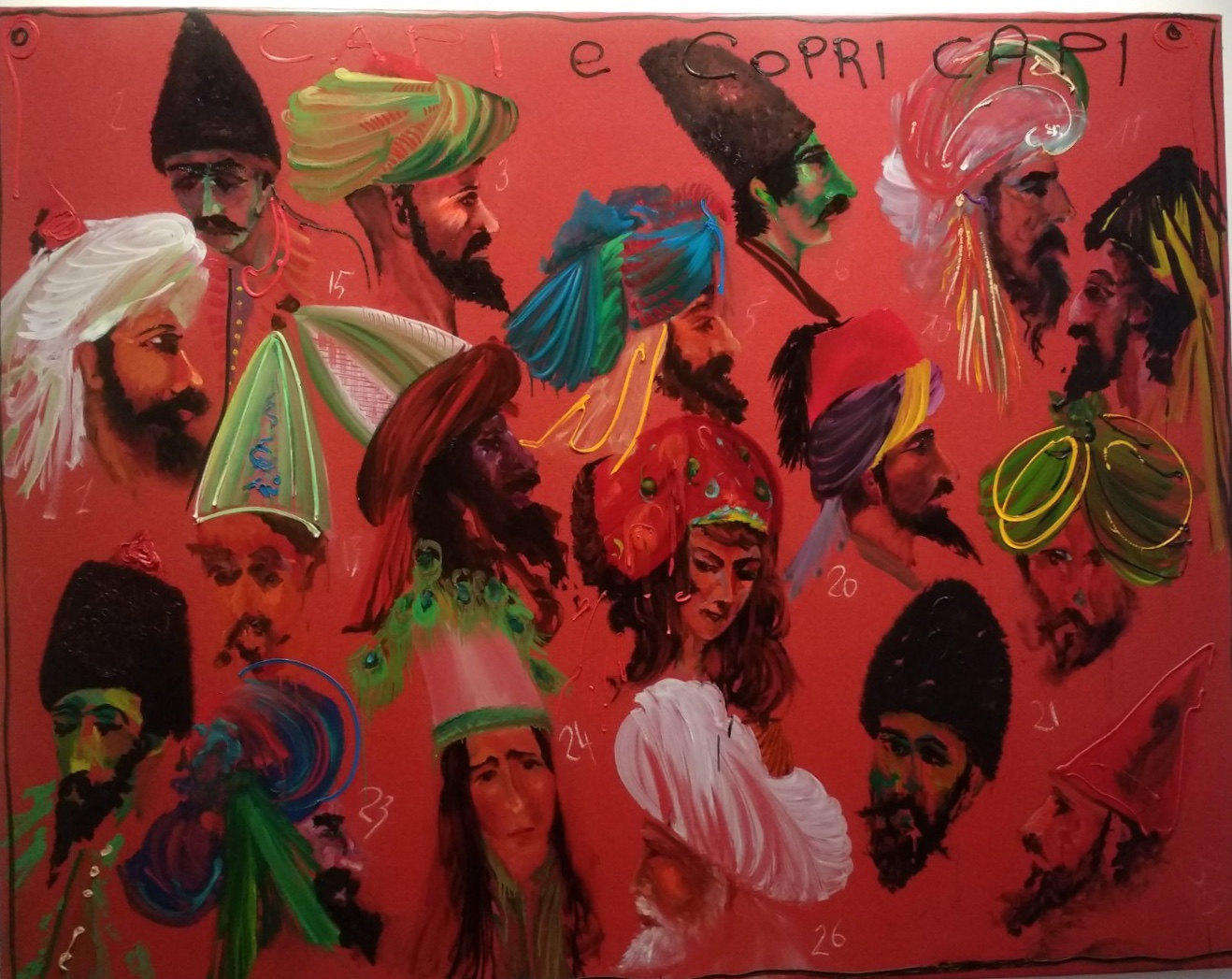
The second artist whose work we saw was an Italian sculptor and painter called Aldo Mondino (1938-2005).
Travels in North Africa and the Middle East inspired much of his work.
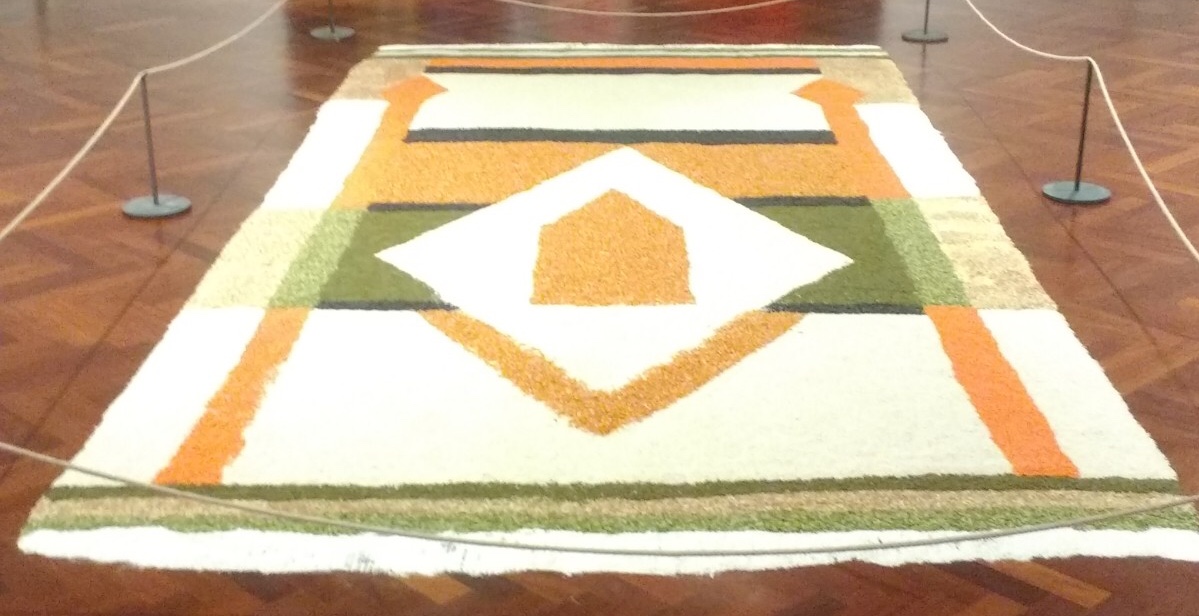
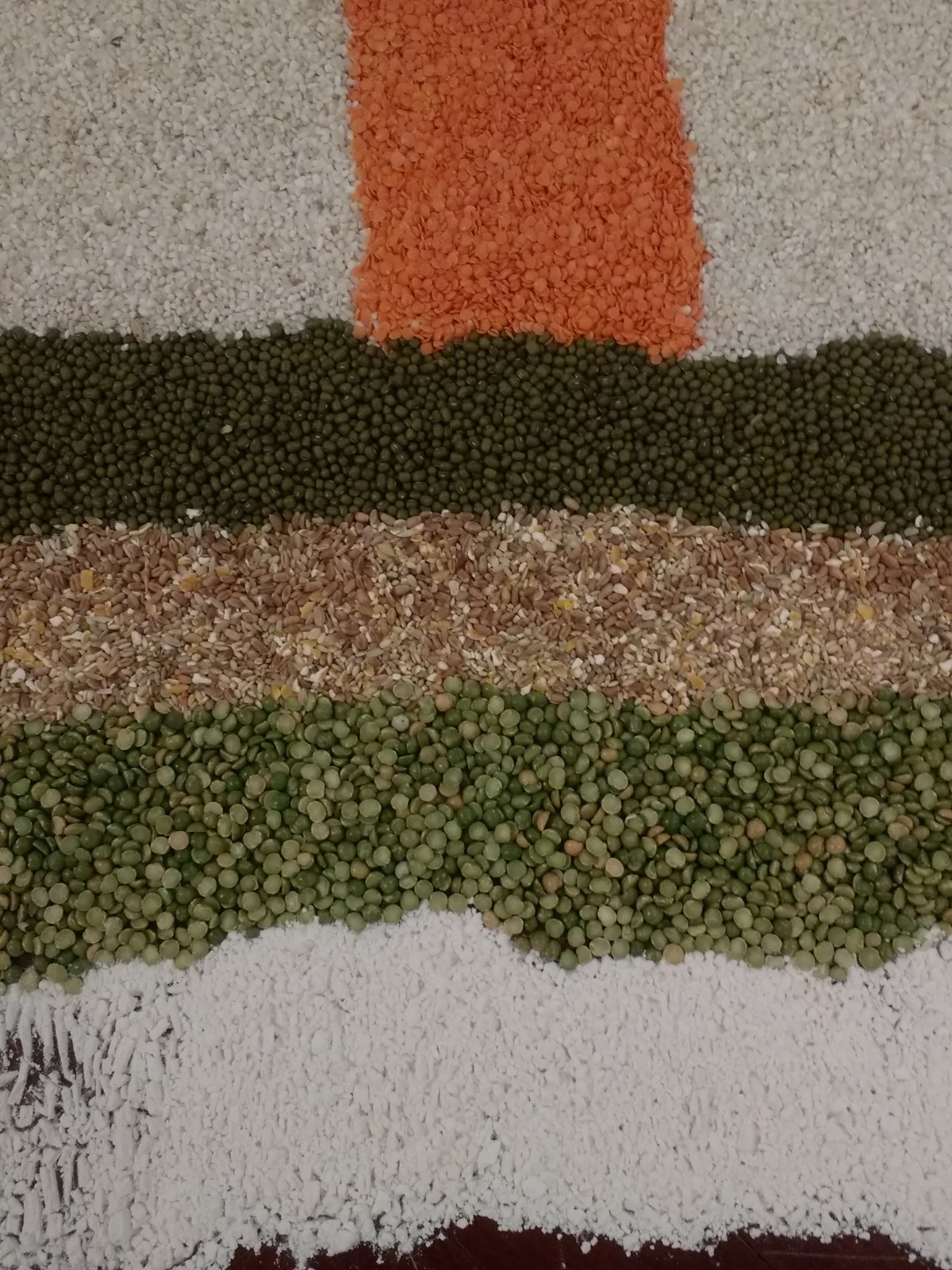
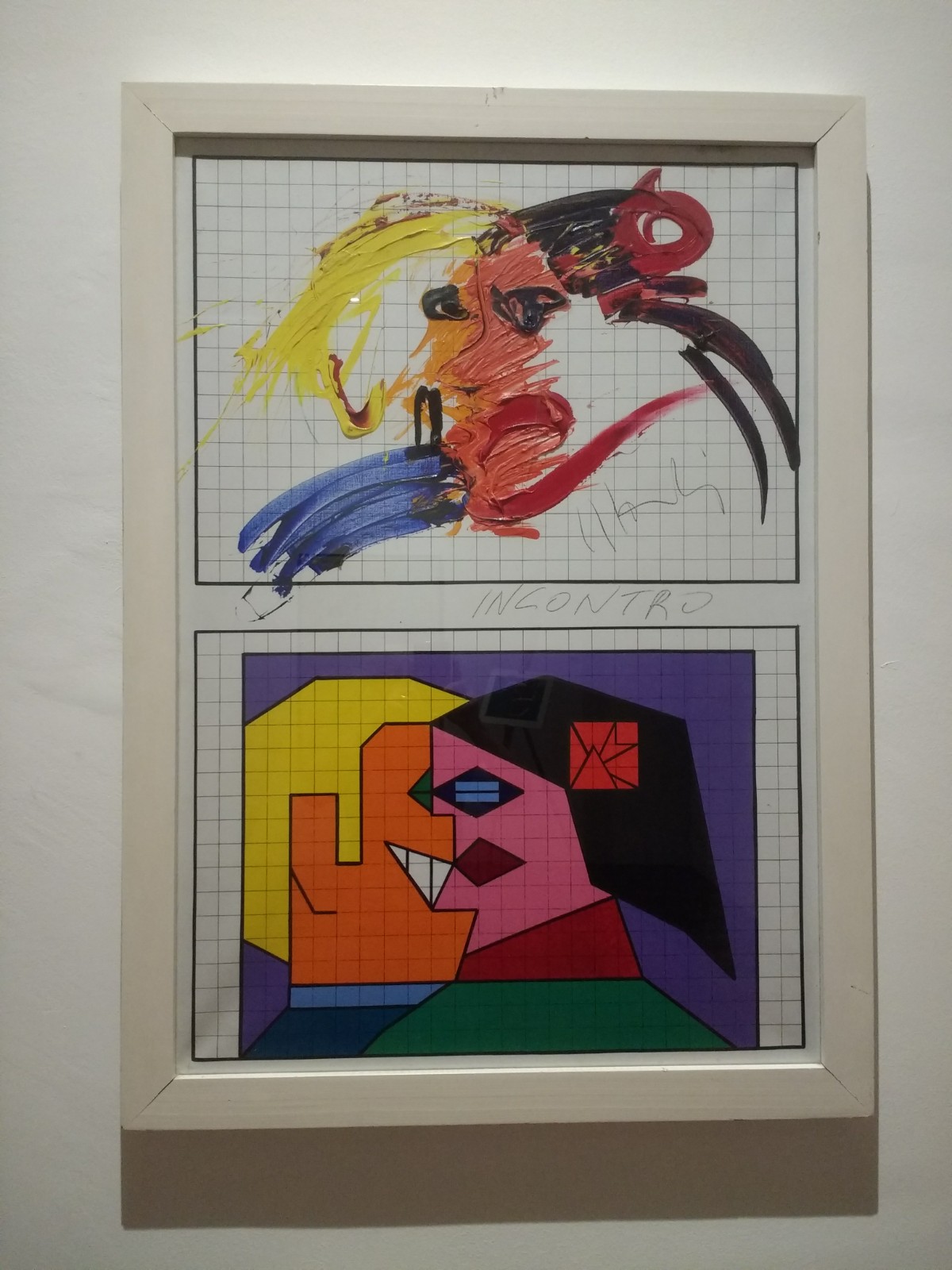
This series of pictures is simply called ‘Dervishes’ . The artist really conveys the movement in the dance.A closer view of three of the pictures. The brushstrokes are so light and so exact – no room for mistakes!‘Capi e Capricapi’ (Clothes and Hats)Mondino had a series of pieces inspired by carpets in the Middle East. This one, composed of seeds, must, we feel, have been stuck together, but we could see no evidence of this.Close up of the seed ‘carpet’I was less impressed with pictures he produced on squared paper. Mondino has repeated the same subject in the higher of the two pictures, but has not used the constraints of the squares.
Longing for a sea breeze in the present heat, we took a boat ride yesterday on a hop on/off ferry from La Spezia along the Cinque Terre coast.
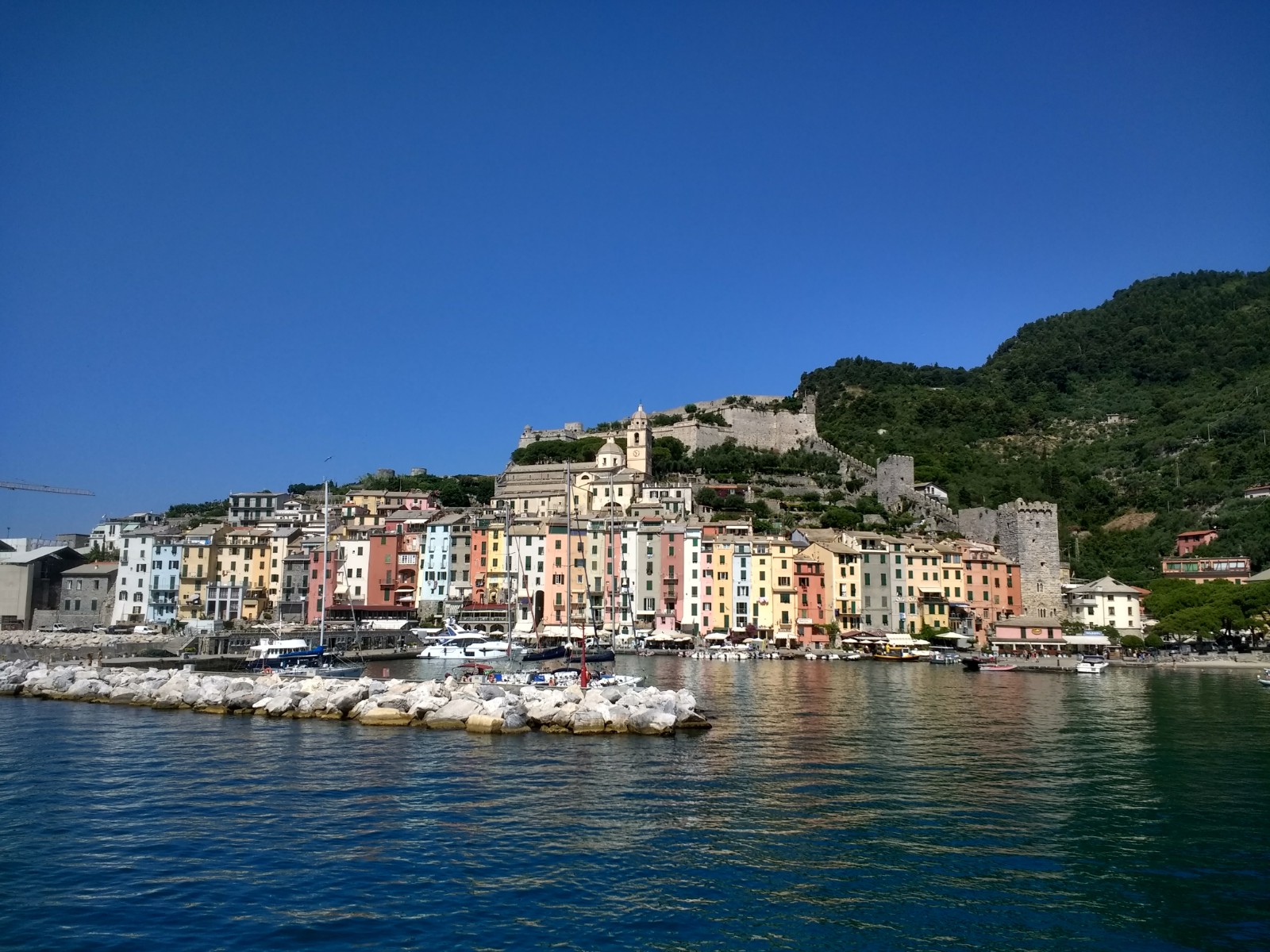
We first went past Portovenere, dubbed the ‘sixth terre’.
The houses look like brightly-covered books, kept upright by the grey bookends on either side.Ask you come round the headland, there is a good view of the Church of San Pietro.
After Portovenere, we passed several tiny settlements, some of which can only be accessed by hundreds of steps from the nearest road. Many of the houses might only be used in summer, but imagine returning home after a supermarket shop!
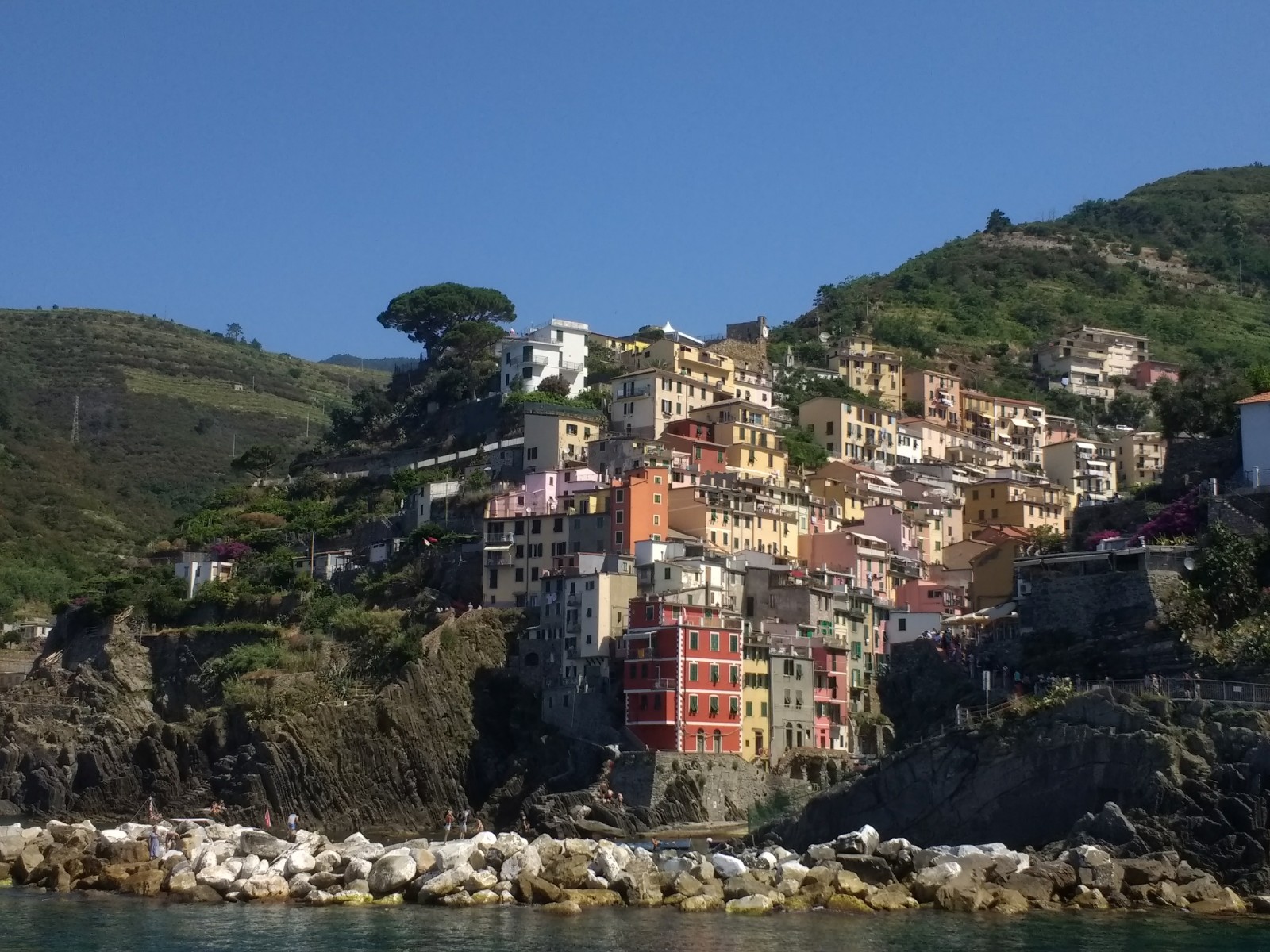
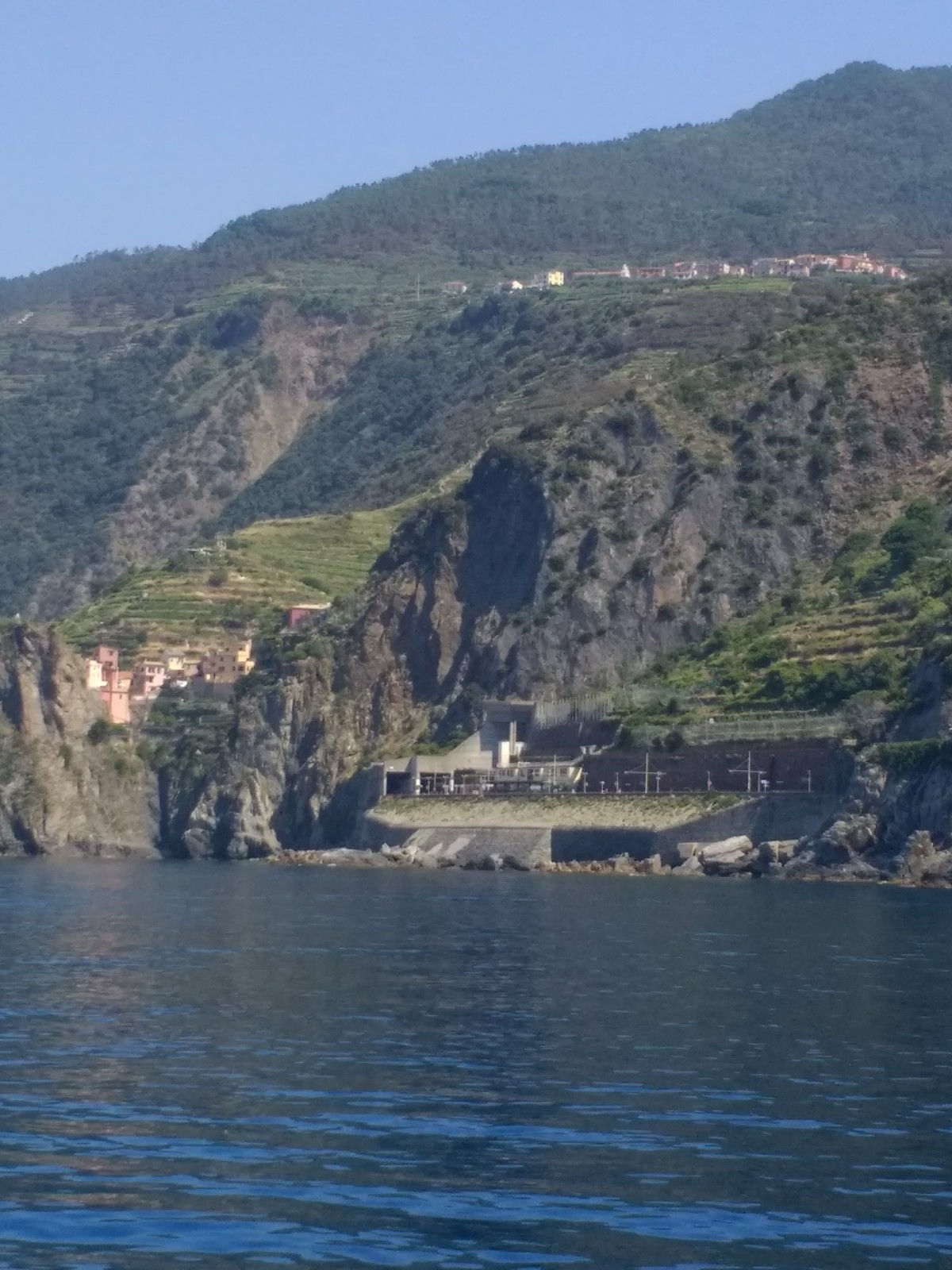
The first stop was Riomaggiore, I think the prettiest of the ‘Terre’ from the sea.The next village was Manarola. You can just see the figure of a man standing on the tiny quay.
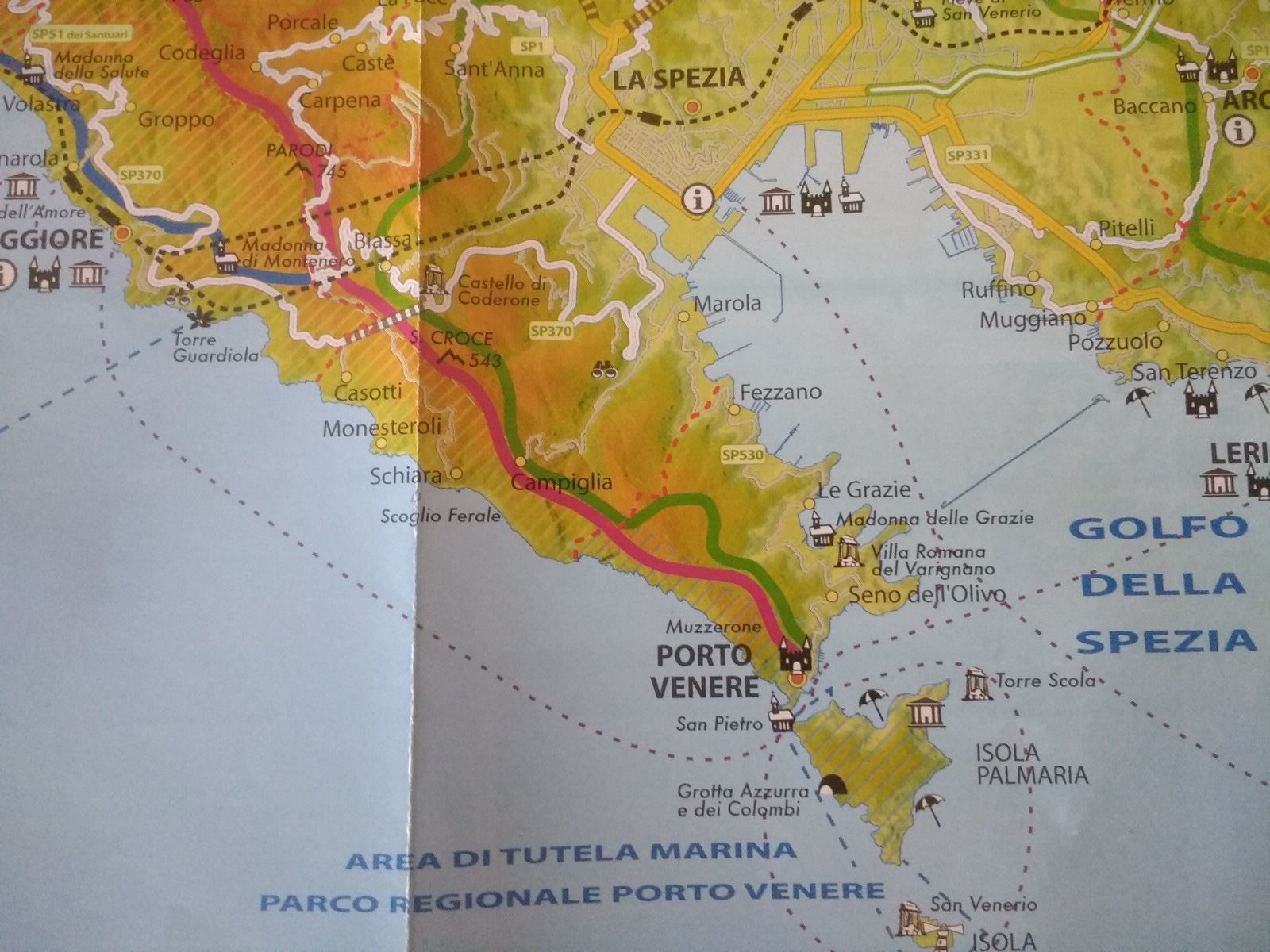
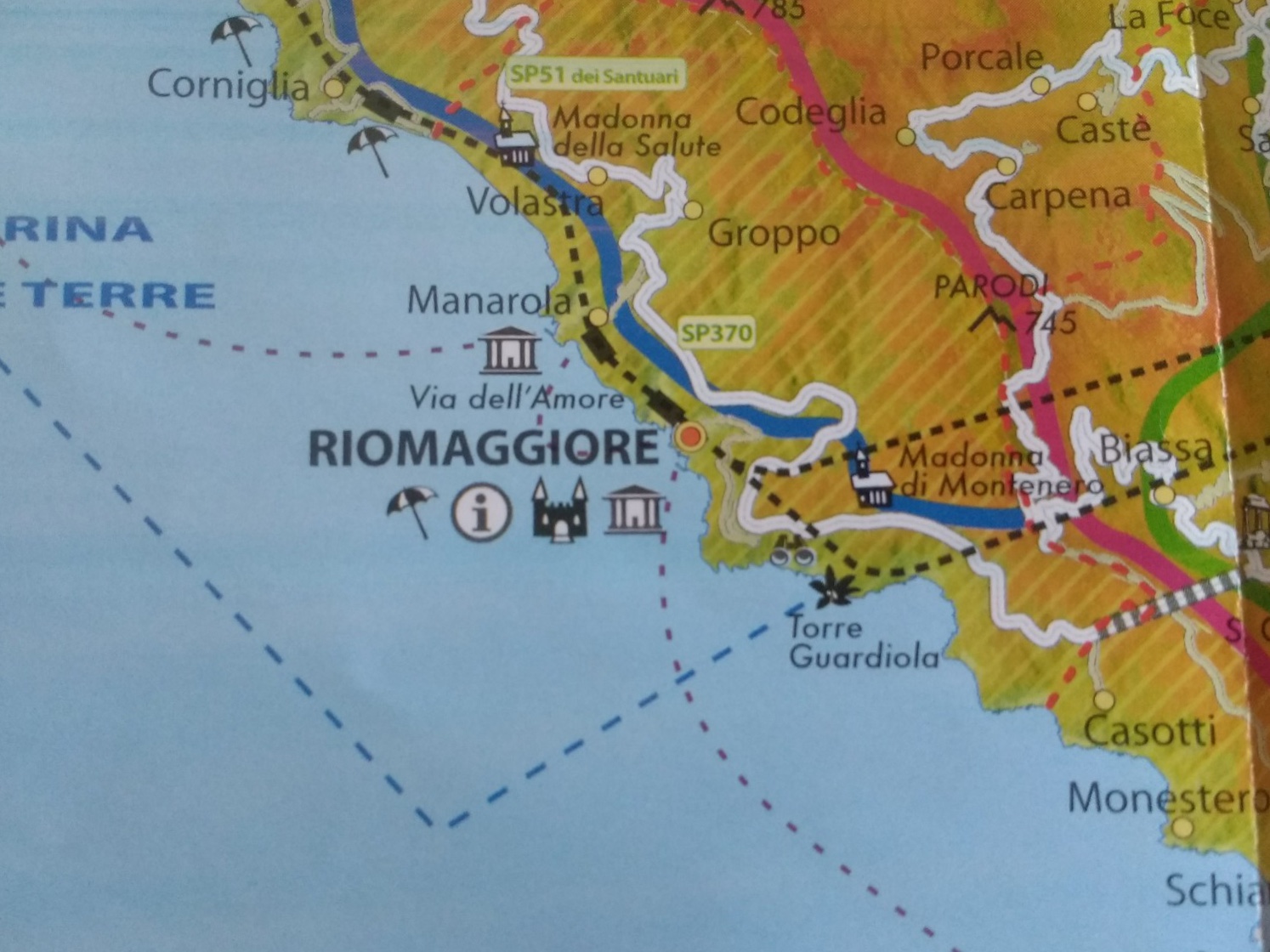
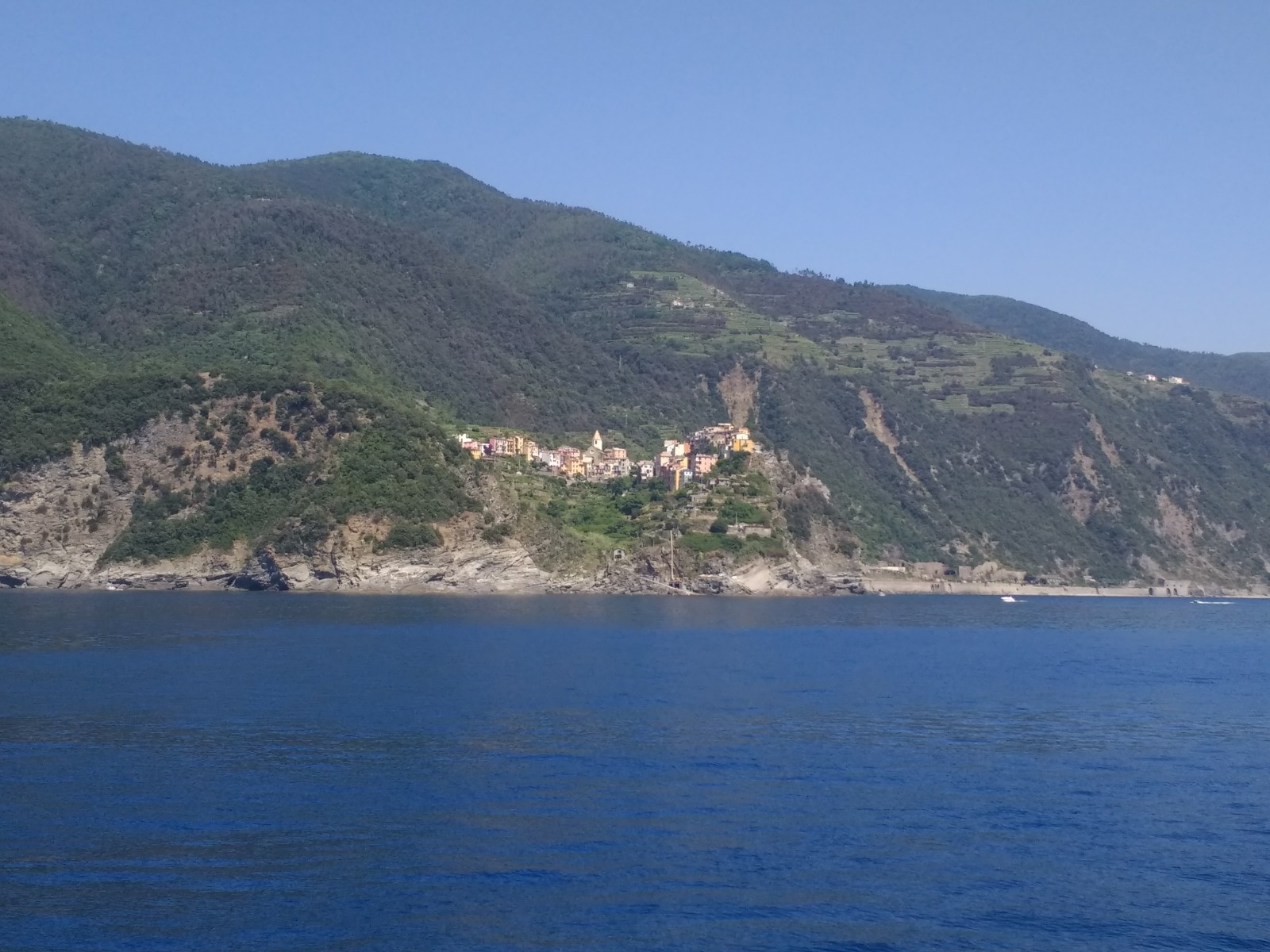
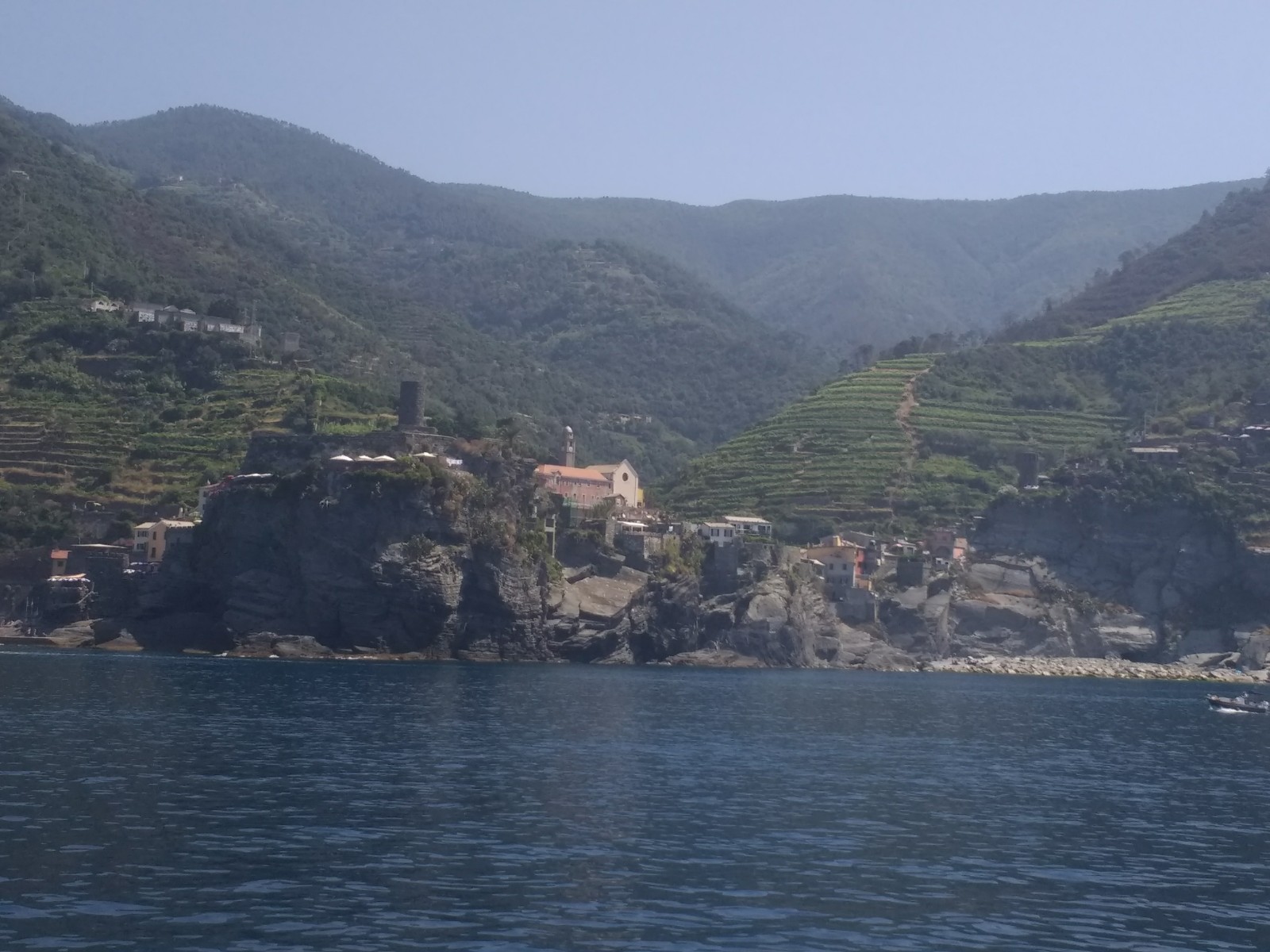
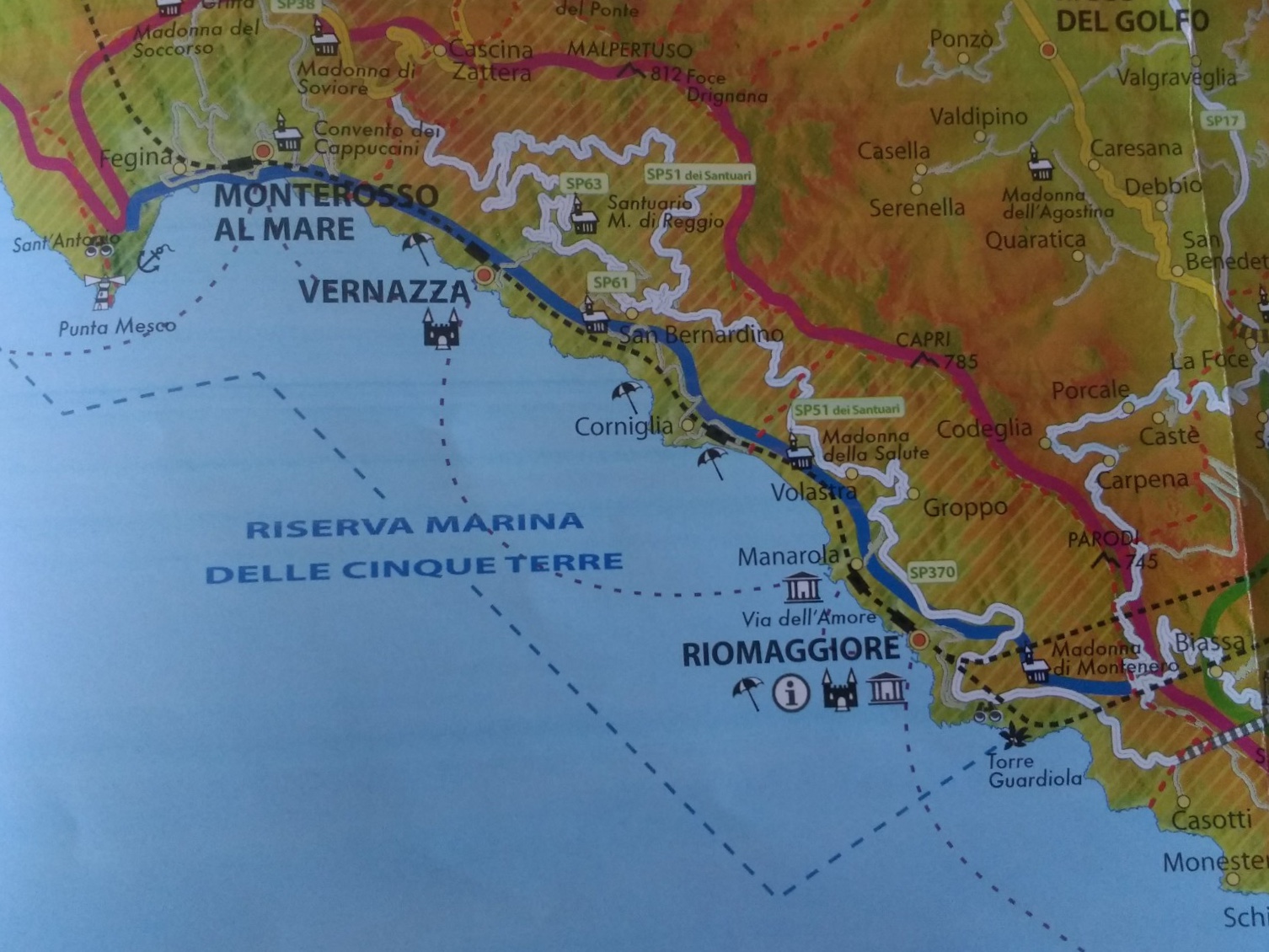
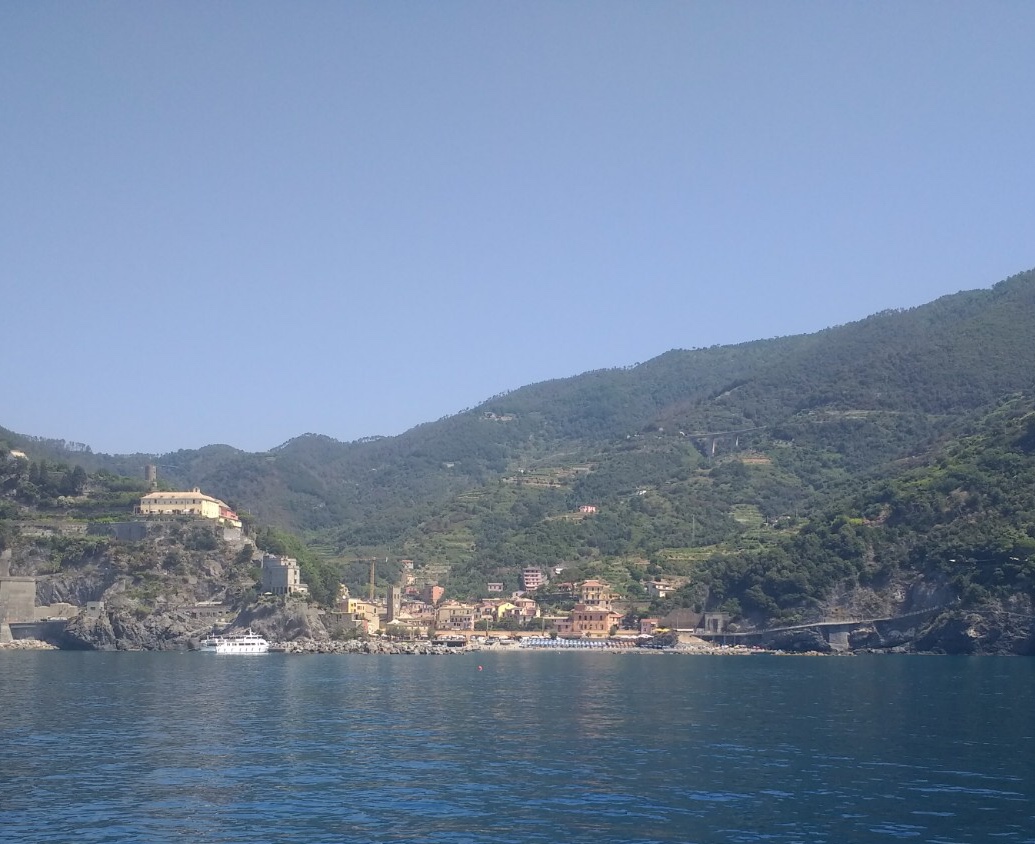
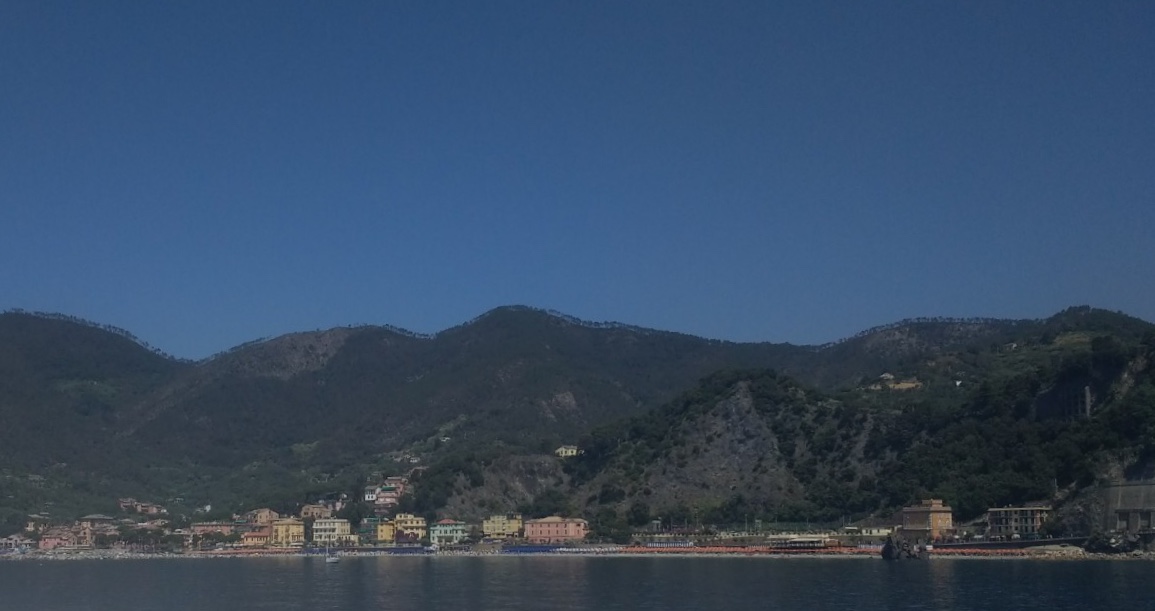
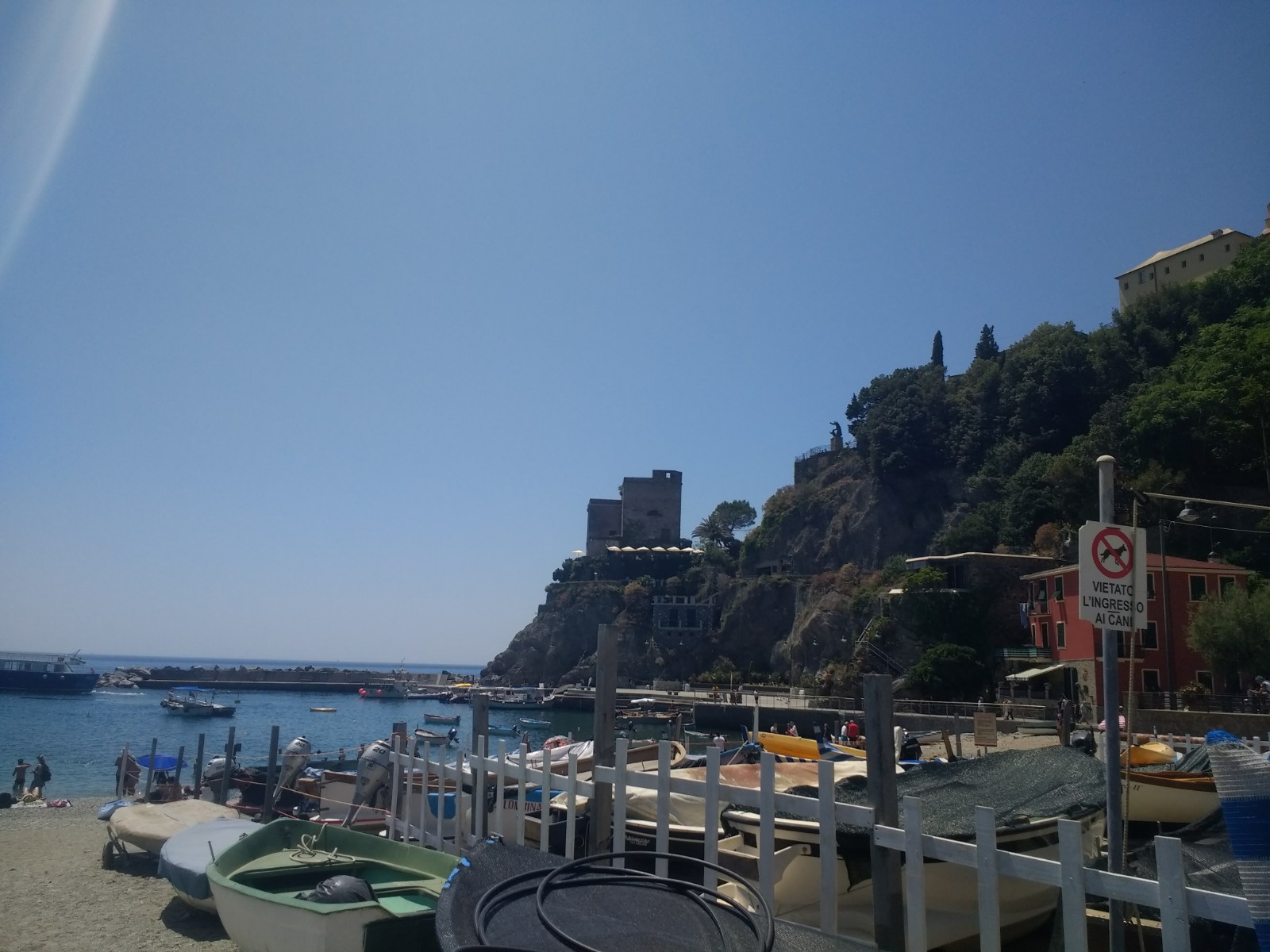
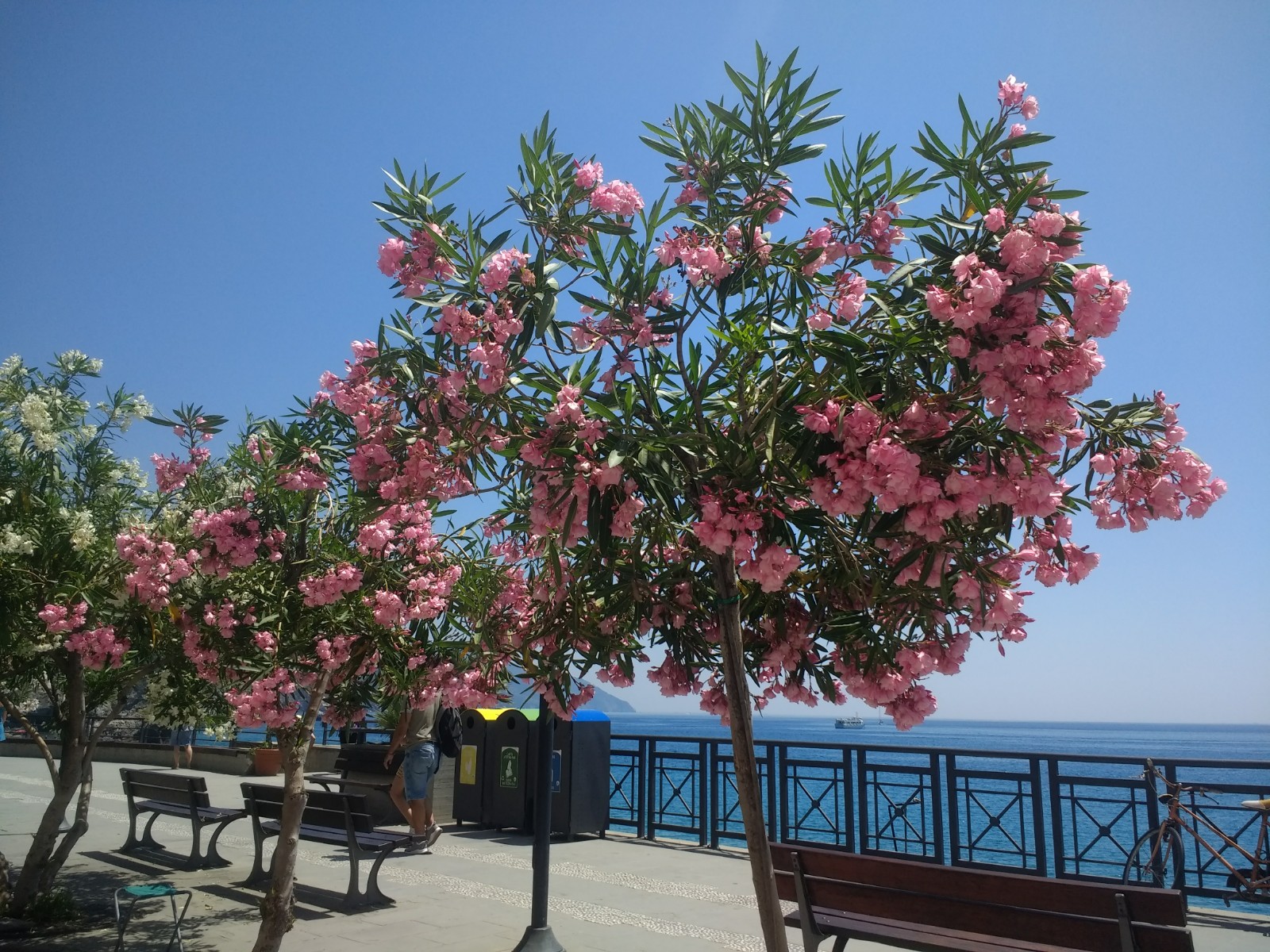
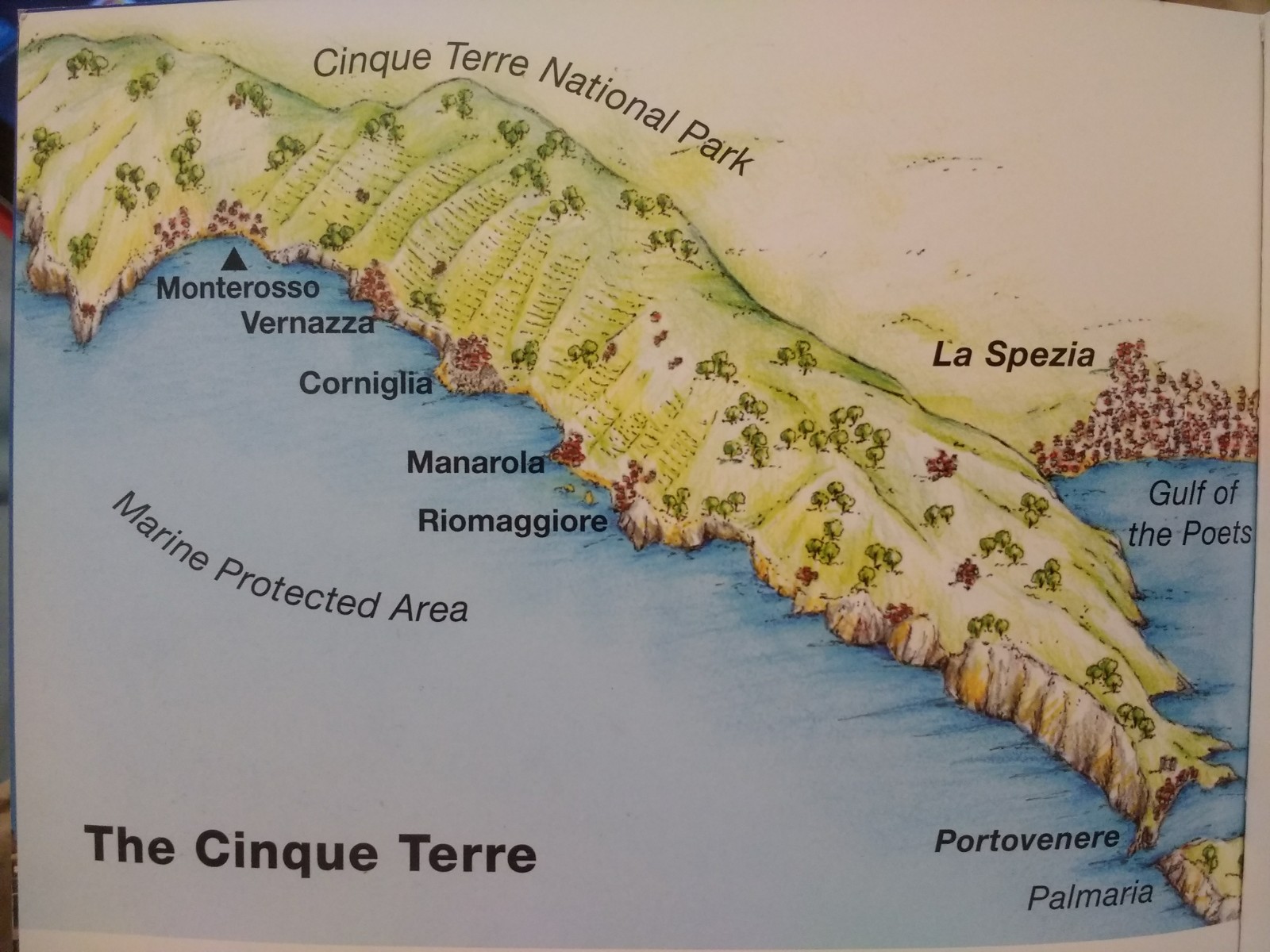
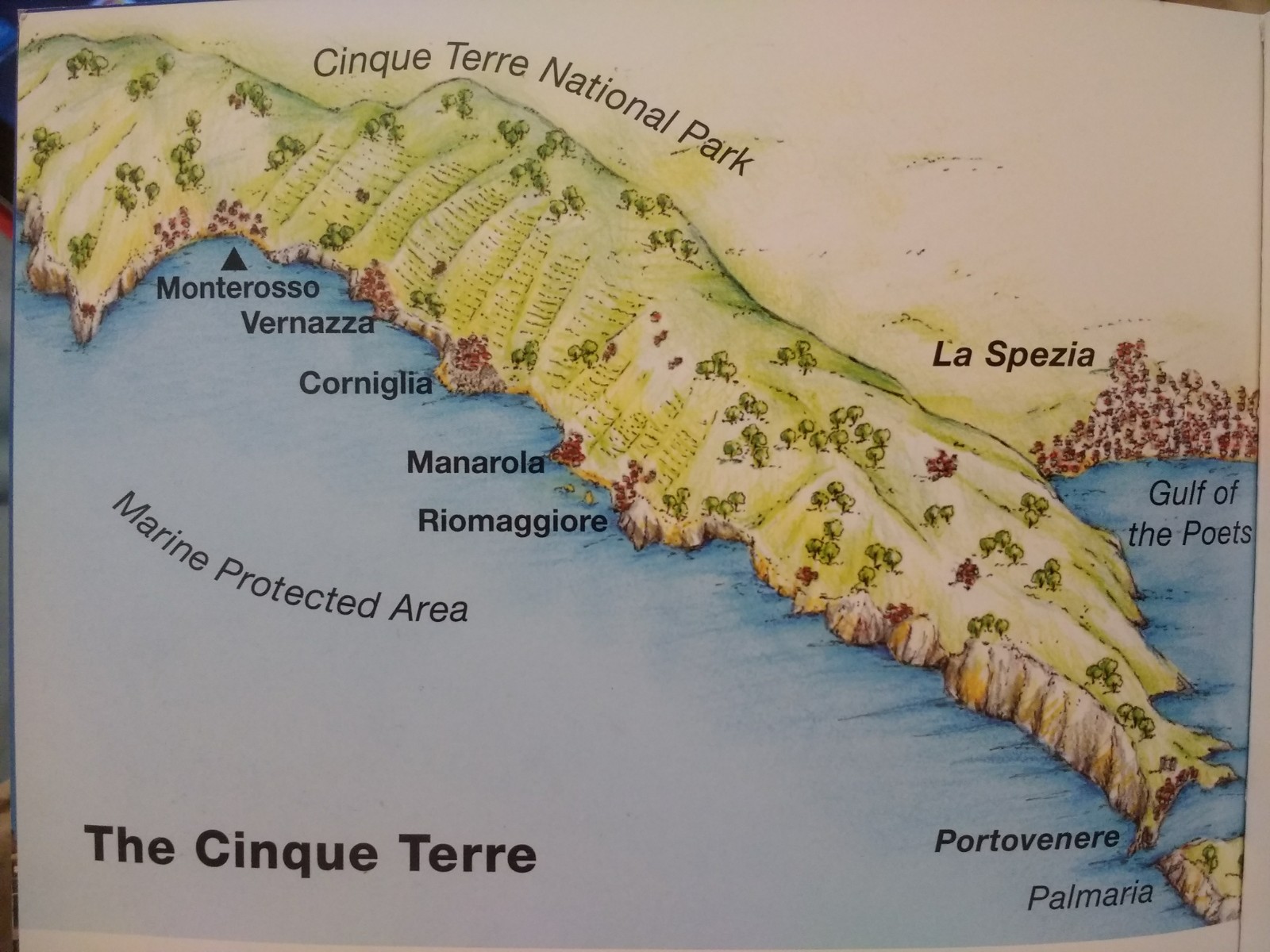
Above Manarola is the hamlet of Volastra, which we had a hot climb to the other day, on our way to the next village, Corniglia.You can sea Volastra on the map.We sailed right past Corniglia, as there is no quay.Vernazza Monterosso was the last stop on the outward leg, and the first time we got off the boat after La Spezia. It was the only one of the ‘Terre’ we had not visited before.Monterosso is the largest of the five settlements, and like a proper seaside town. I thought I wouldn’t like it for this reason, but it was charming. This is the new part with brightly-coloured umbrellas on the private beaches.The old part has a harbour.The oleander-lined promenade in the new part of Monterosso
After lunch, a walk round Monterosso and an ice-cream we were ready to get back on the boat. It was a good job we had decided not to stop at any places on the way back as instead of following the timetable, the boat proceeded straight to Portovenere without stopping once. We then all had to get off and wait for the next boat to La Spezia. No explanation.
While two of the four coastal paths between the villages of the Cinque Terre are closed due to landslides (and one wonders if they will ever open again) it is still possible to walk between all the villages using higher marked paths (no need to buy a pass when walking them either). Having already visited Riomaggiore and Manarola (we are visiting them in order starting with the most easterly) we planned to walk the higher path from Manarola to Corniglia (pronounced Cornelia) yesterday evening in an attempt to avoid the worst of the day’s heat.
The coastal paths from Riomaggiore to Manarola, and from Manarola to Corniglia are closed, but if you like walking, there are a number of other options available.
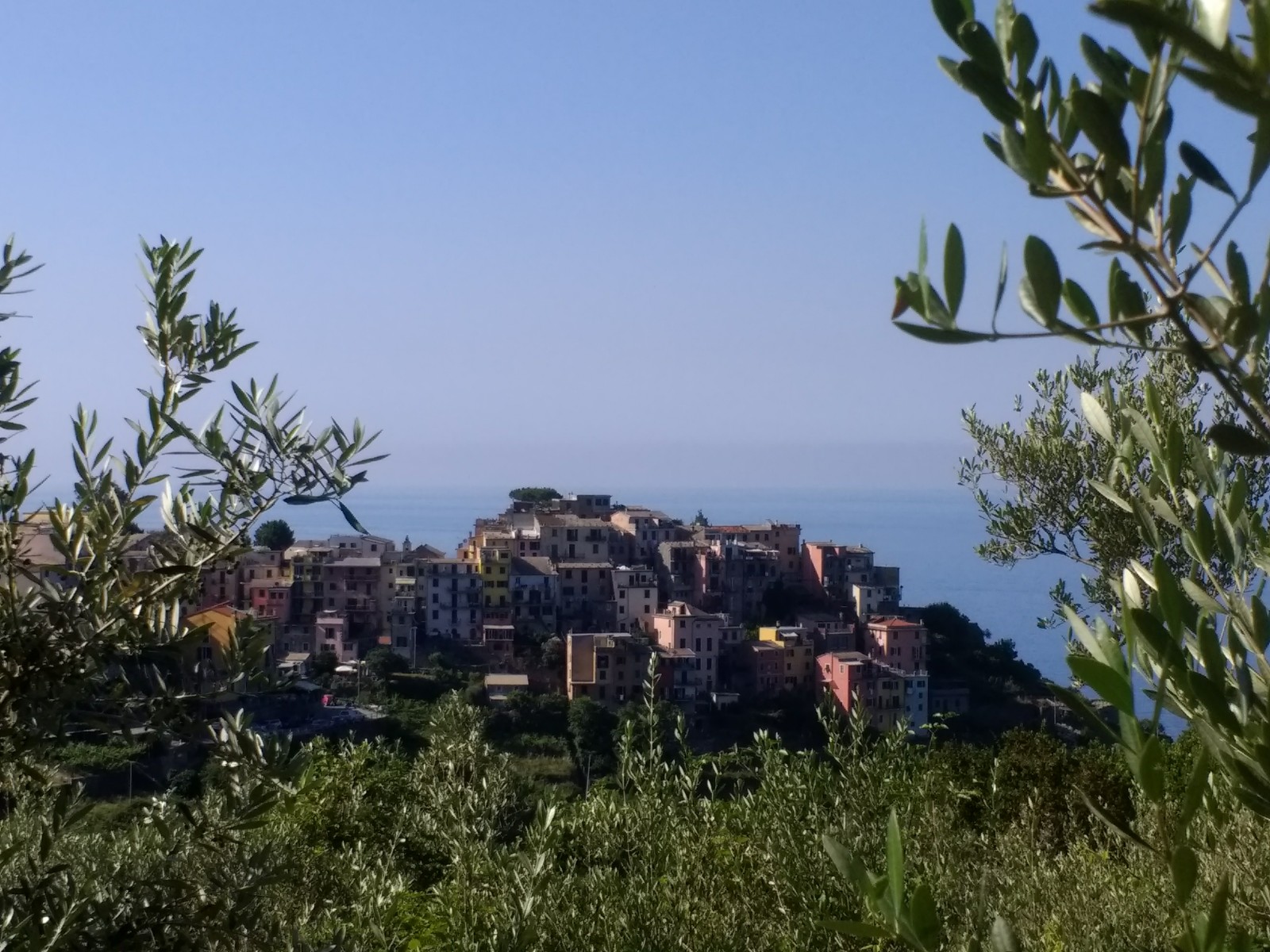
Corniglia is the oldest of the Cinque Terre villages and the only one not directly on the coast. Perched on its rocky promontory, it can be seen from all the other Terre.
Corniglia
We first had the steep climb out of Manarola, the most exhausting part of the walk, and although it was early evening, it was still very hot.
Leaving Manarola
After about twenty-five minutes, when we were still only half-way up, a friendly descending American called out, ‘Nearly there!’ I soon realised this was a fib, and put it down to motivational banter.
Eventually, we did indeed reach the top of the slope where the small settlement of Volastra sits. After a cool drink, we continued for a distance along terraces of vines before descending to Corniglia.
The path coming down was sometimes a little challenging. Corniglia The residents must have wonderful views.
From the village it was a mere 377 steps down to the station. Incidentally, there is also a shuttle bus, but wanting to complete the whole journey on foot, we didn’t take it. It was only while waiting for the train that the heat and exertions of the walk caught up with me. Still very hot, we are enjoying a ‘rest’ day today.
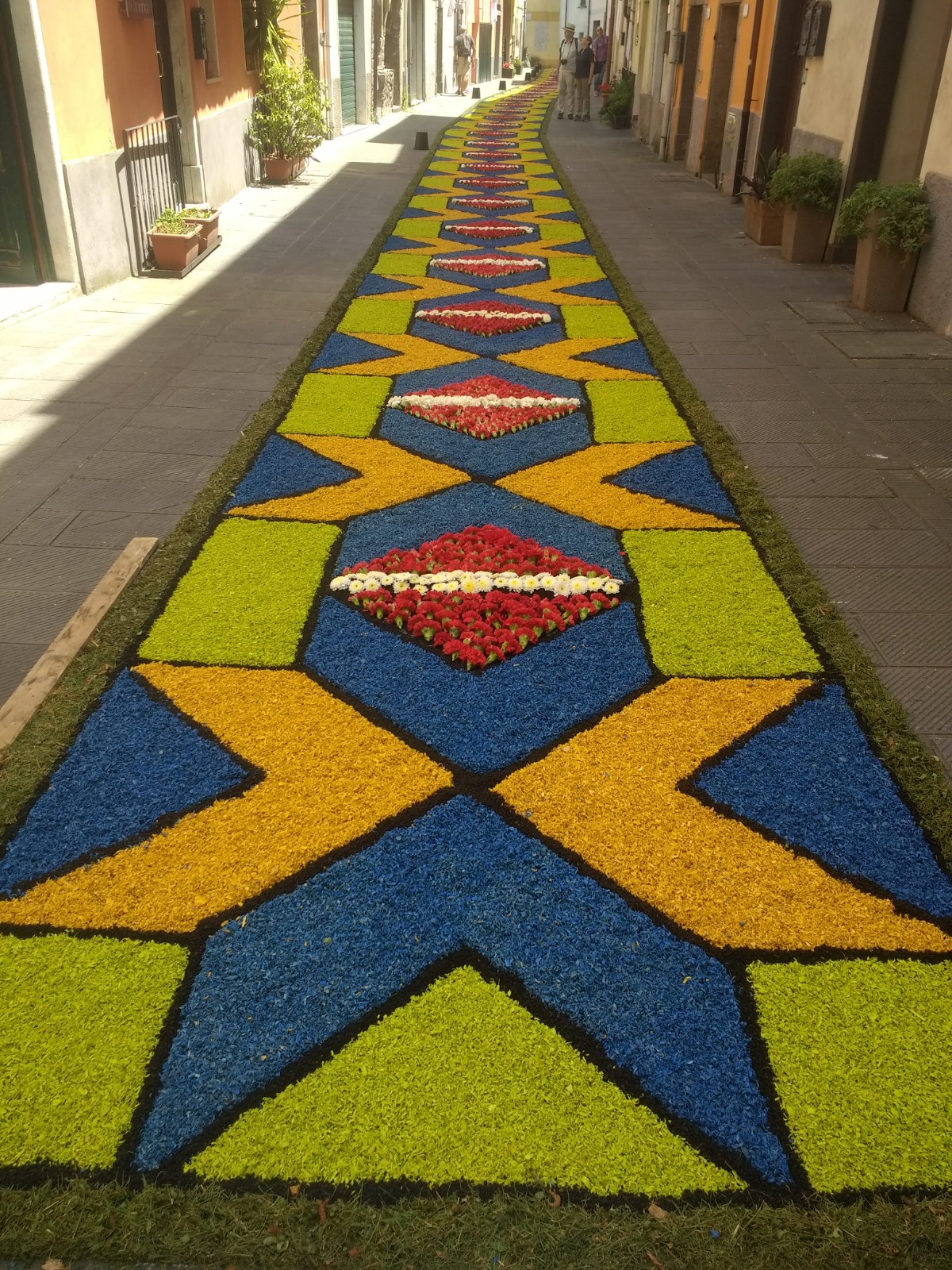
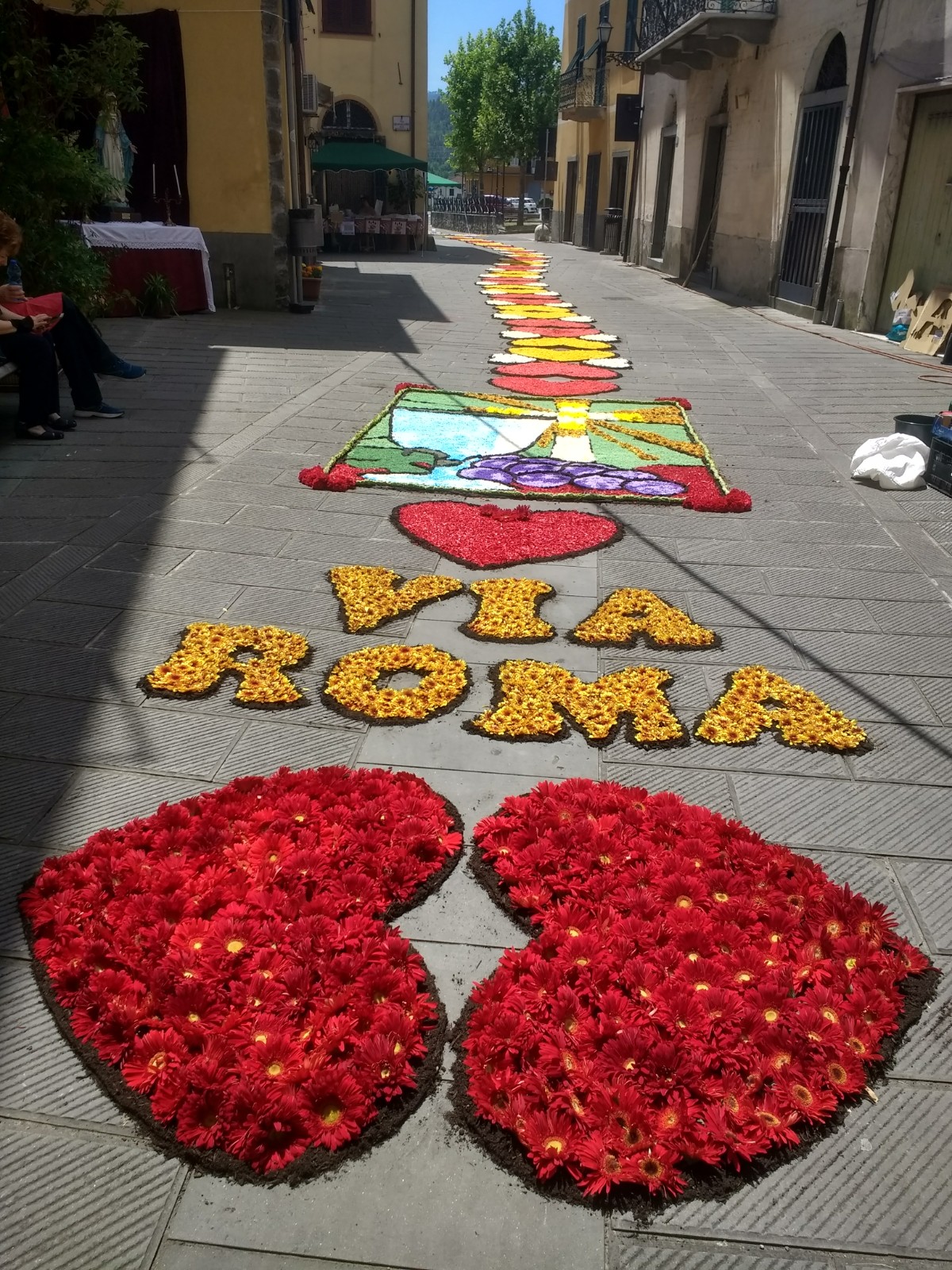
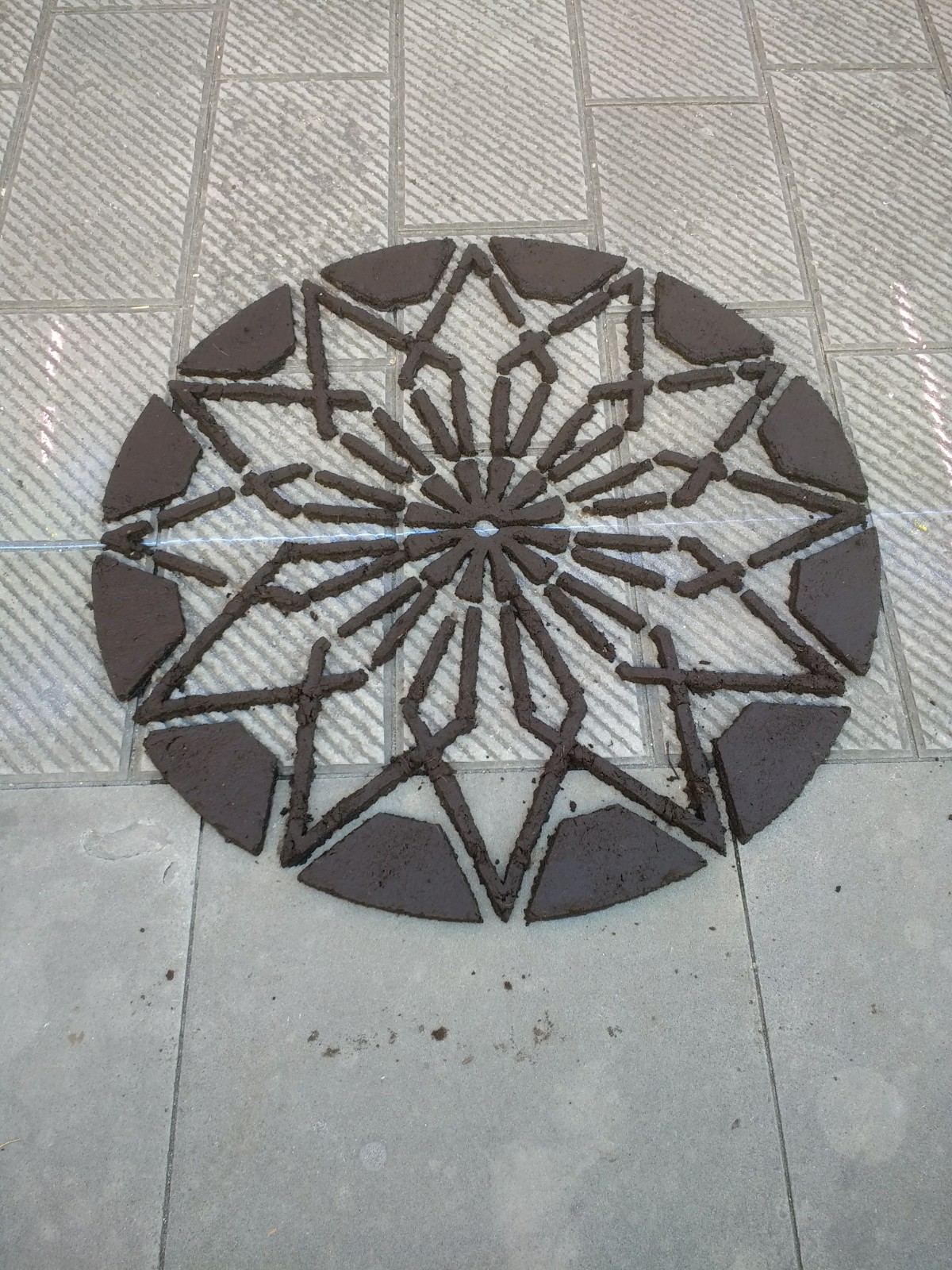
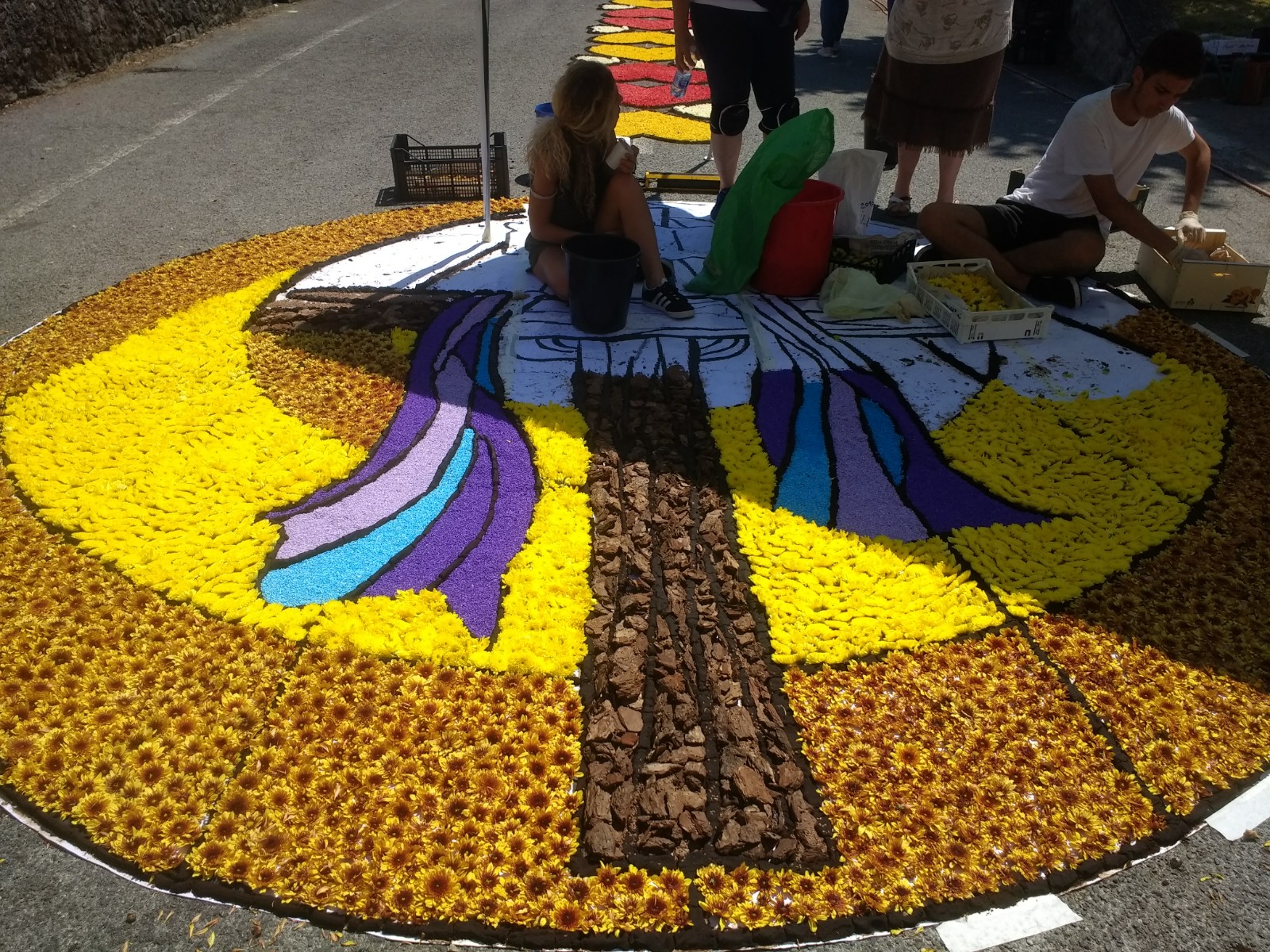
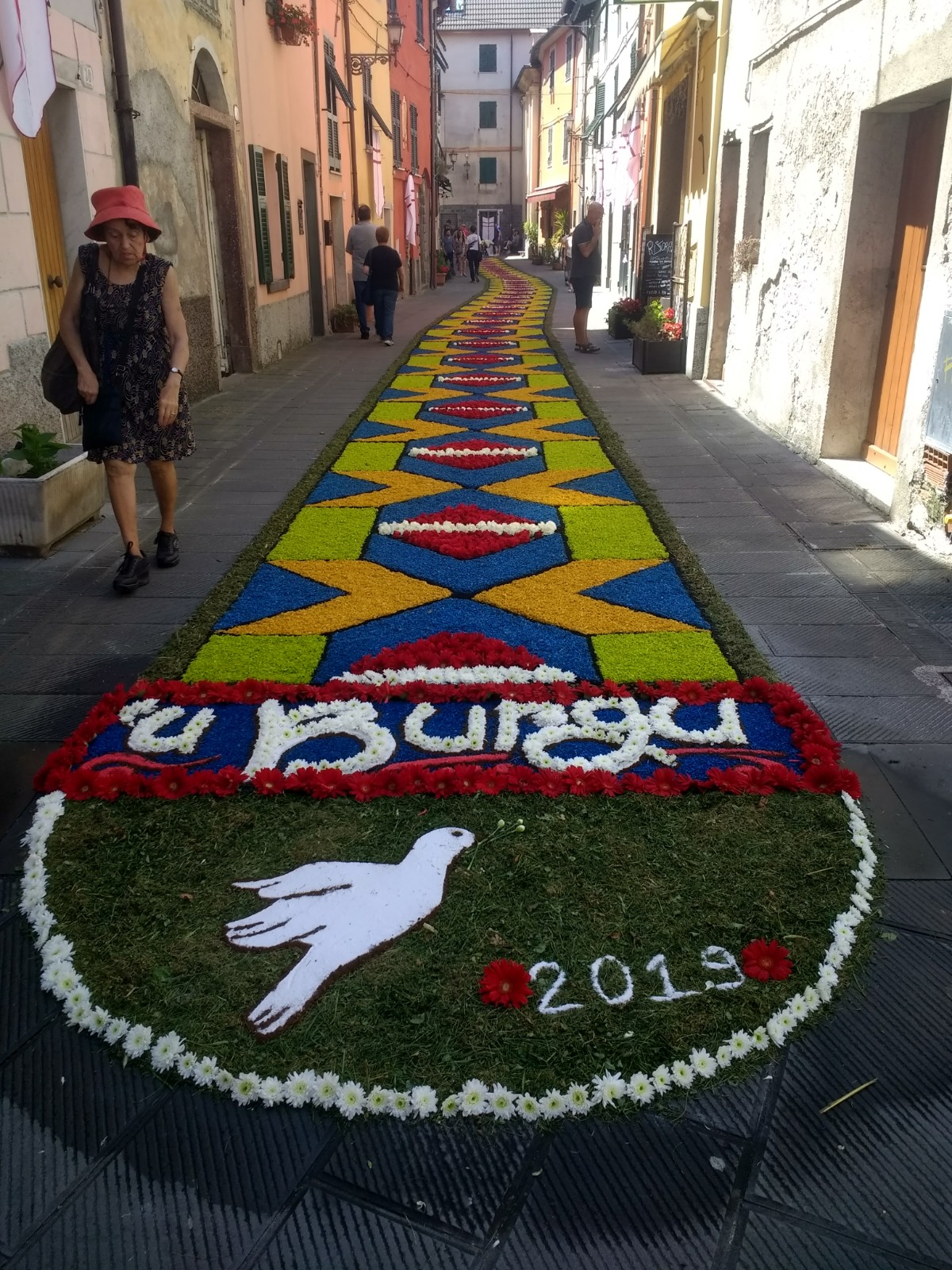
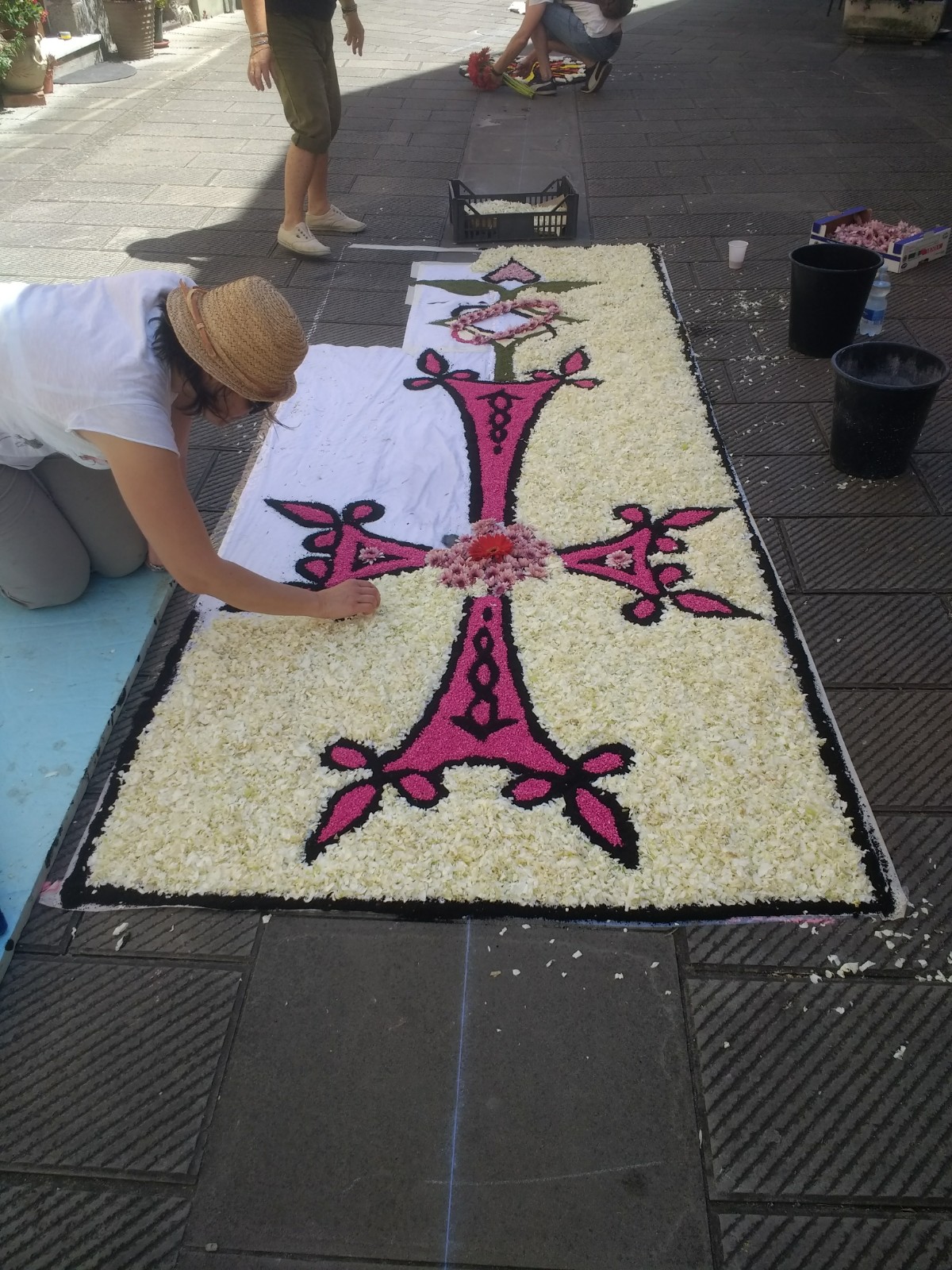
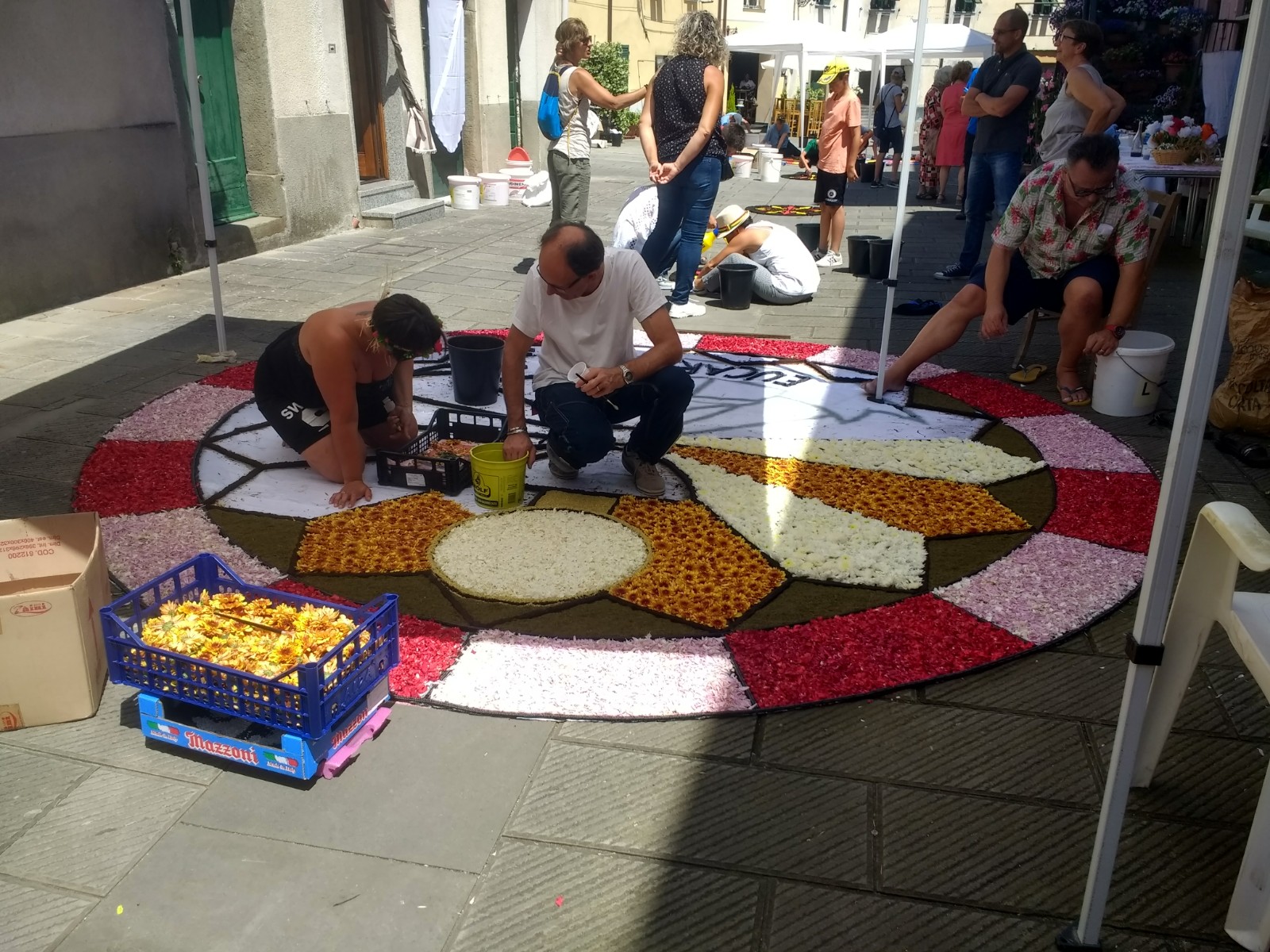
Across Italy, a supposed miracle that happened over 600 years ago is today celebrated by communities coming together to lay out carpets of flowers to their own designs.
Brugnato, 2019
In 1263 in Bolsena, in the region of Lazio, consecrated bread allegedly bled onto the cloth on which it was standing. This was seen as a miracle and confirmed the Roman Catholic belief that the bread and wine served during Mass become the body and blood of Christ (rather than representing the body and blood) at the moment of consecration. It was said that the miracle occurred in the hands of a priest who had doubts about this process (transubstantiation).
Today, the cloth with the spots of blood (which apparently show a similarity with the Renaissance image of Christ) is kept in Orvieto Cathedral, not far from Bolsena.
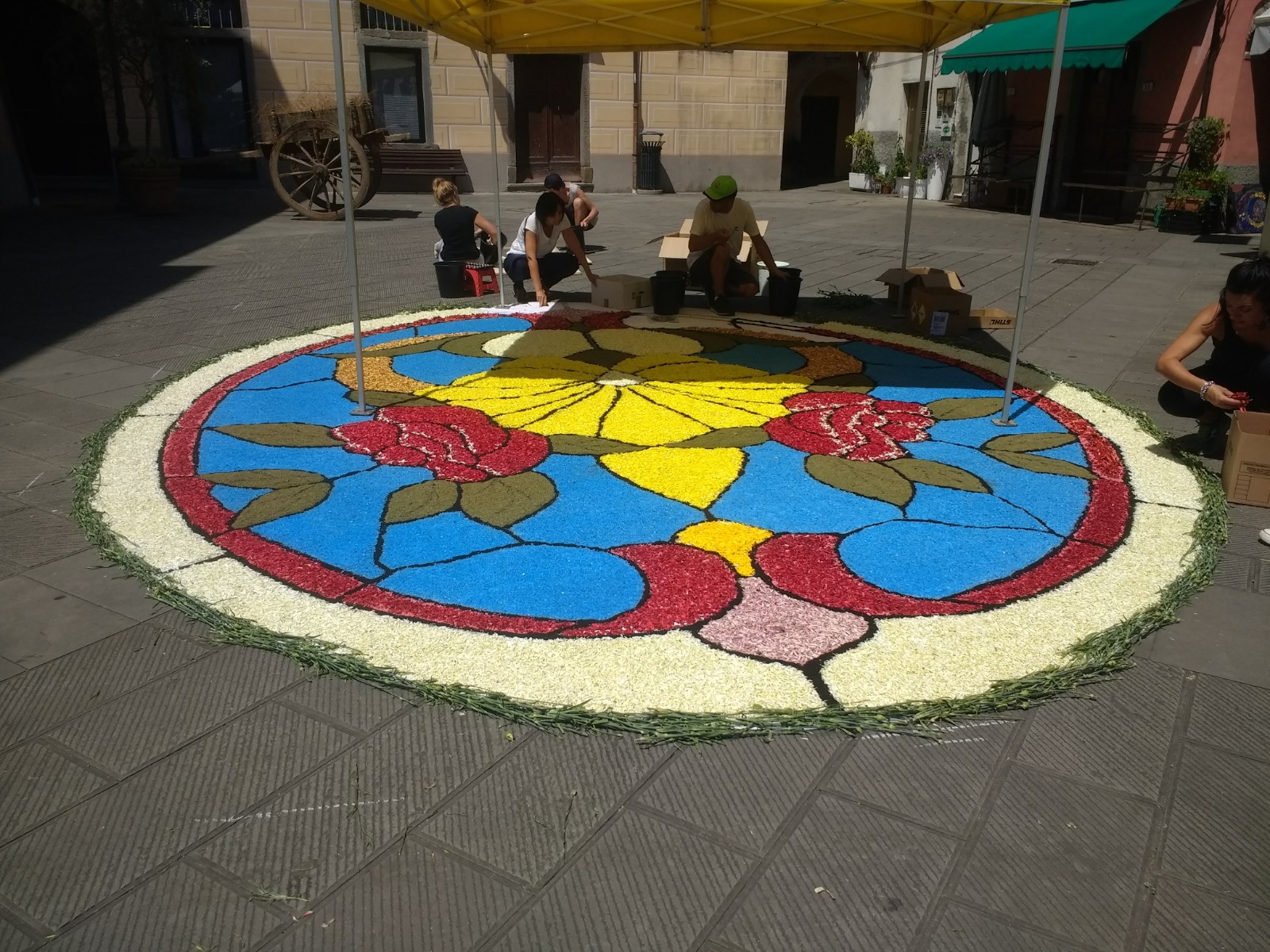
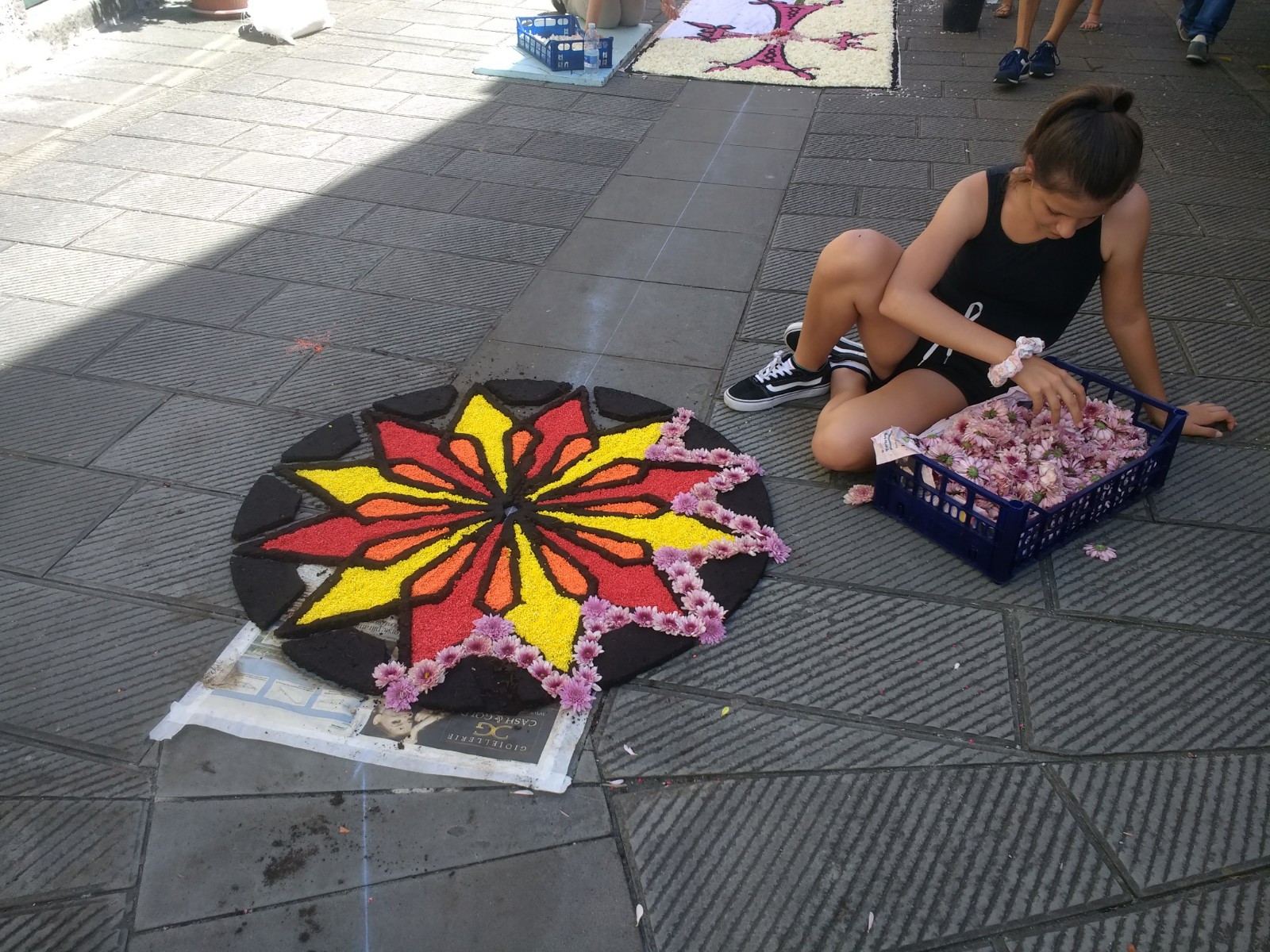
The village of Brugnato, a bus ride from La Spezia, and recognised as one of the most beautiful villages in Italy, takes part in this celebration and when we arrived mid-morning, design outlines were taking shape along the roads and alleyways.
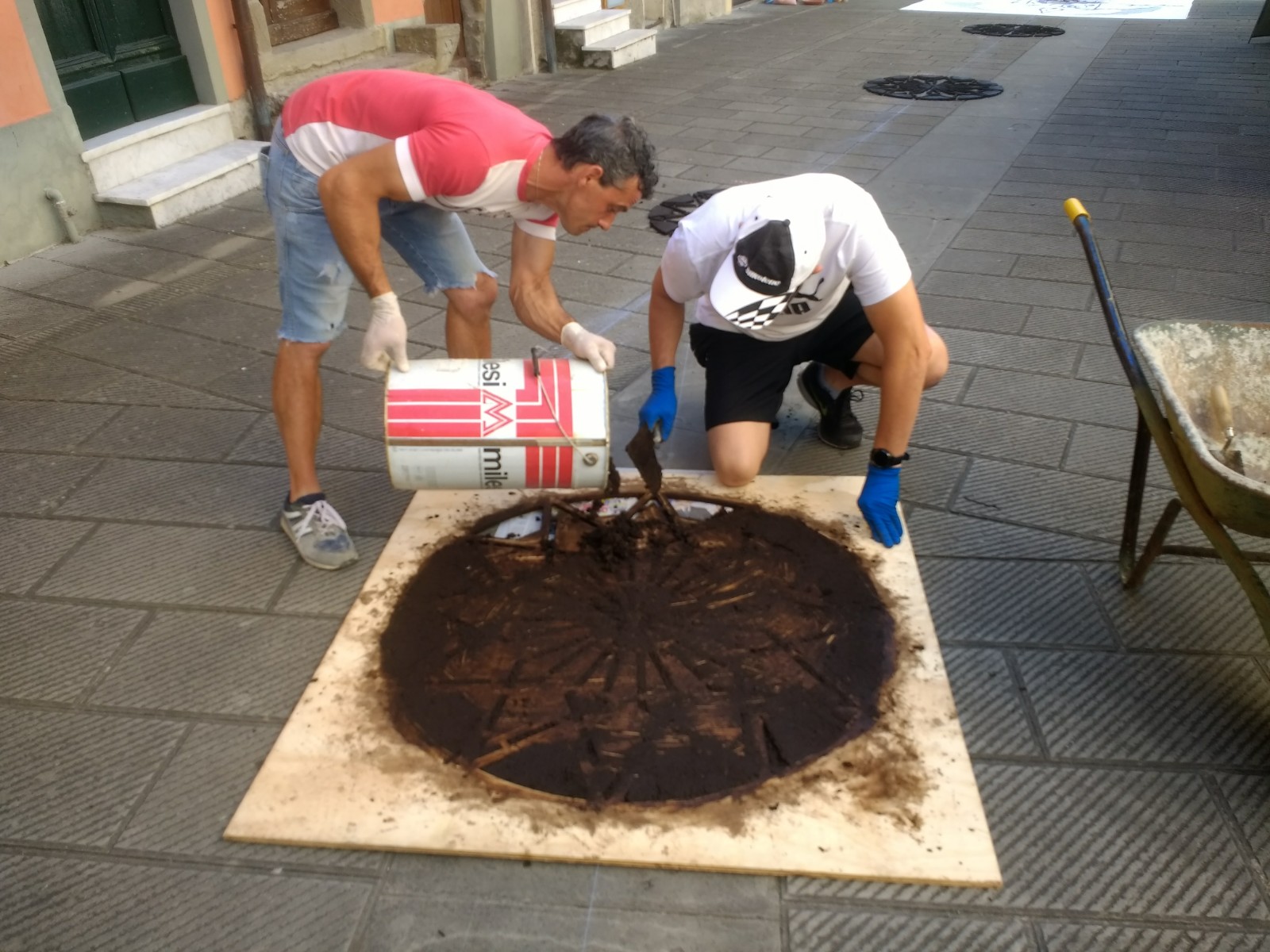
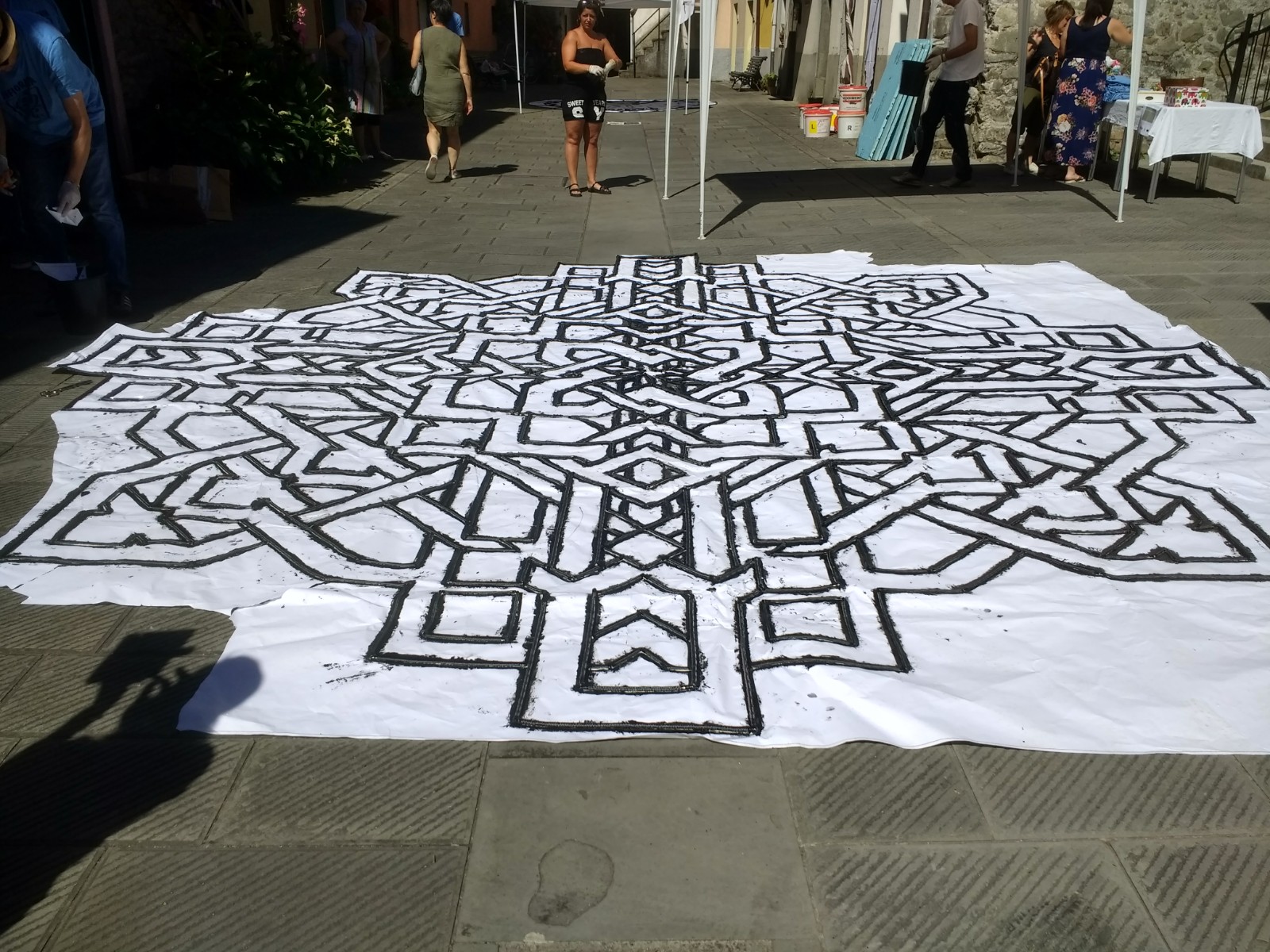
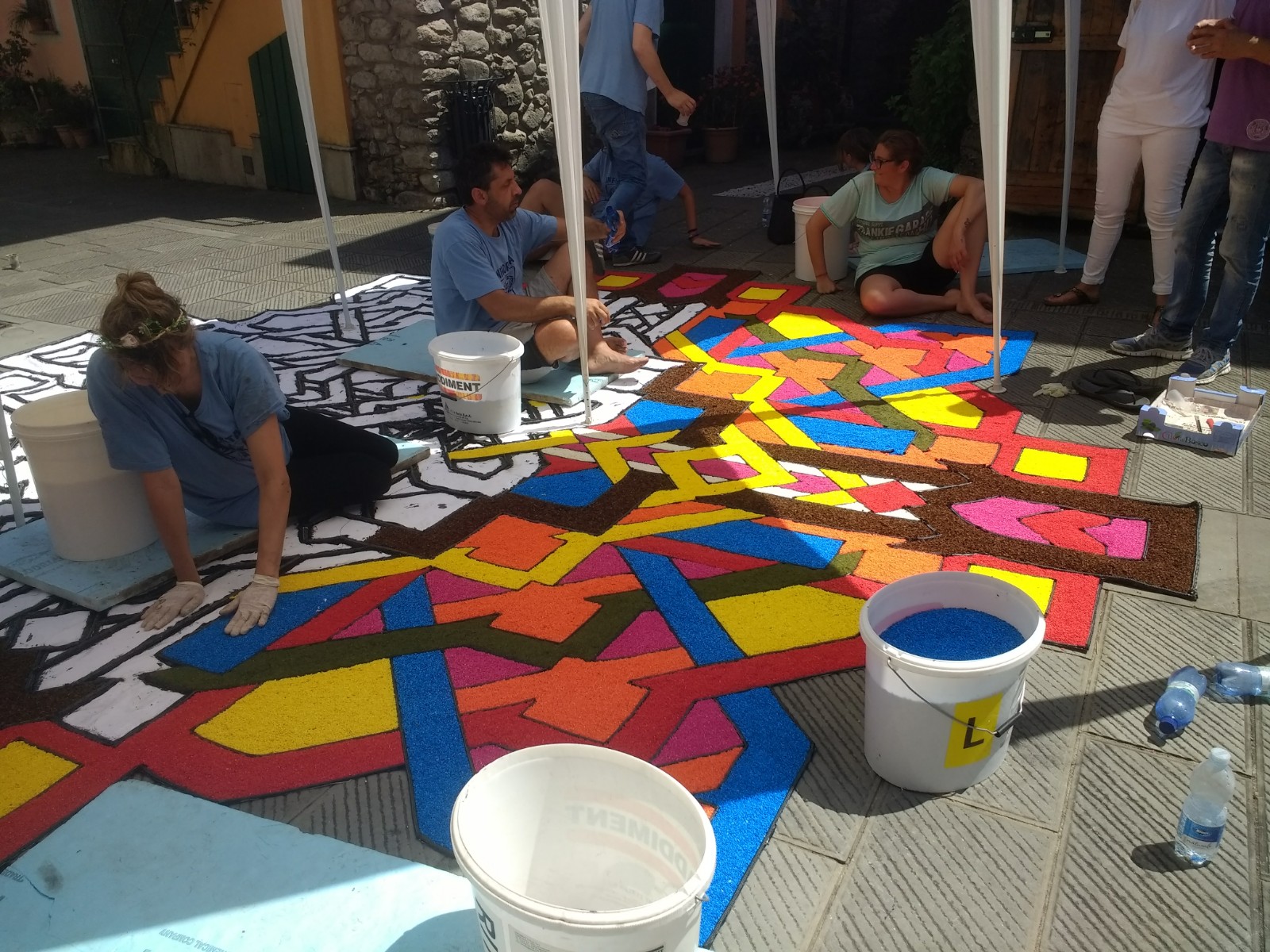
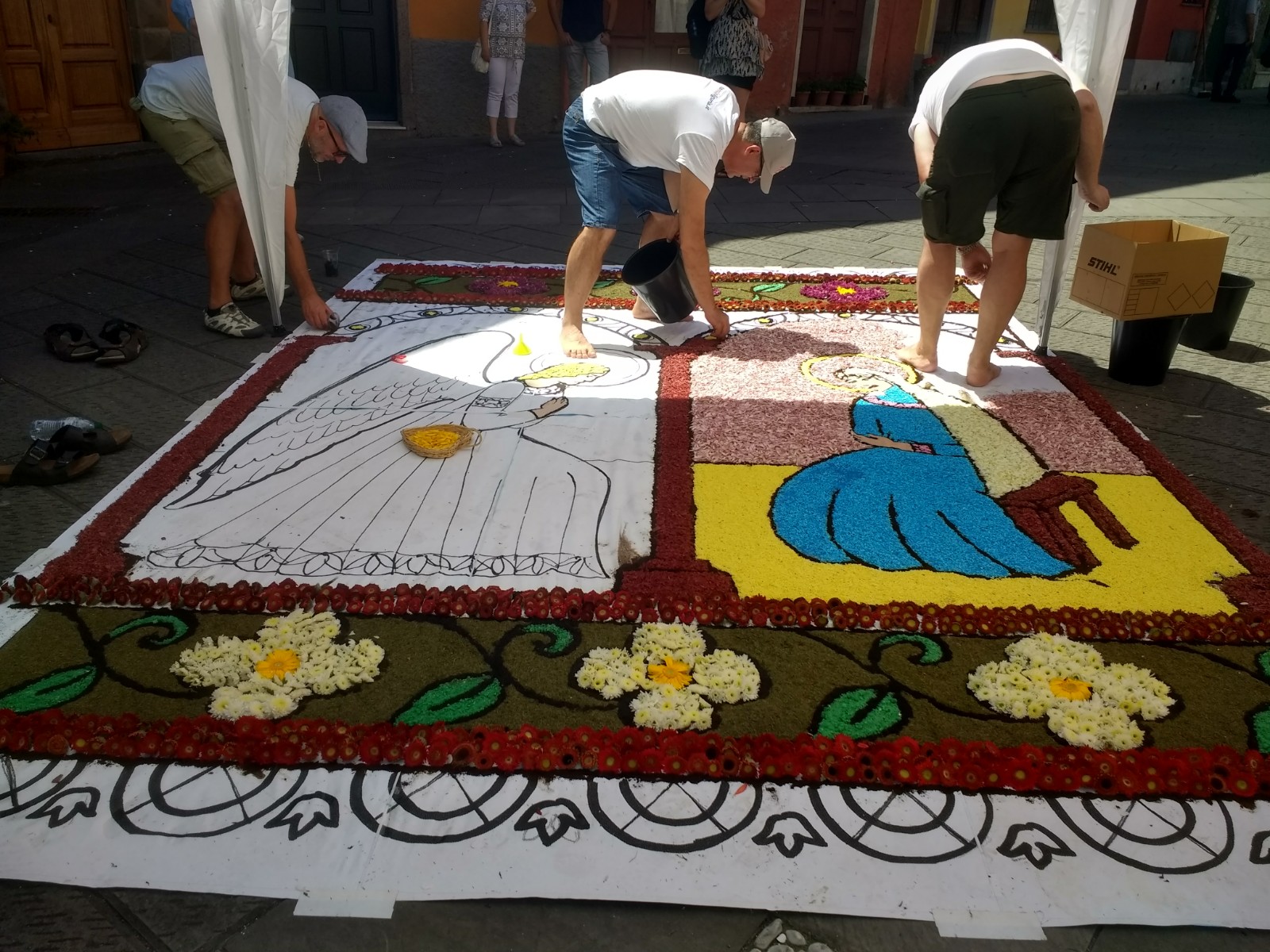
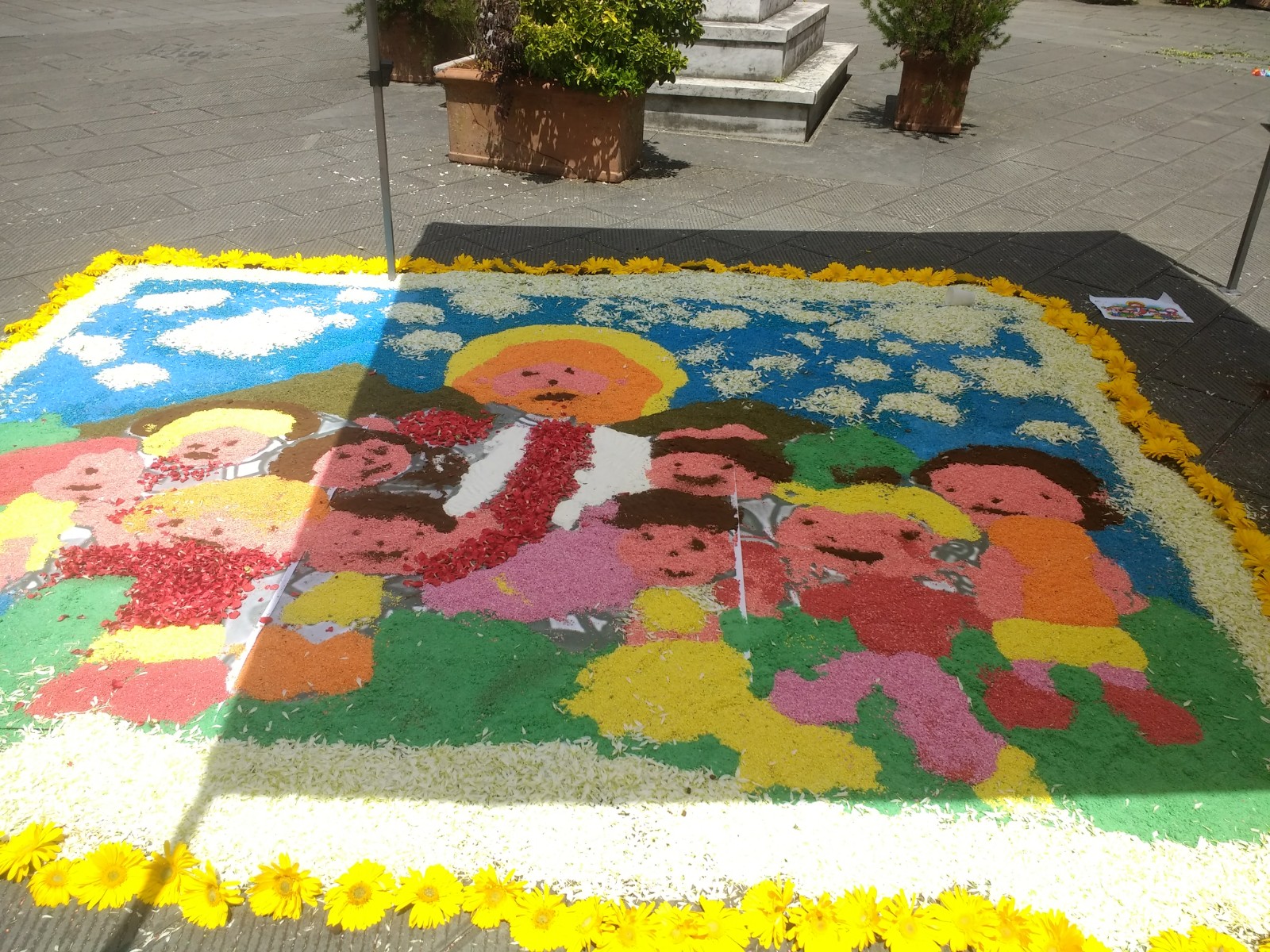
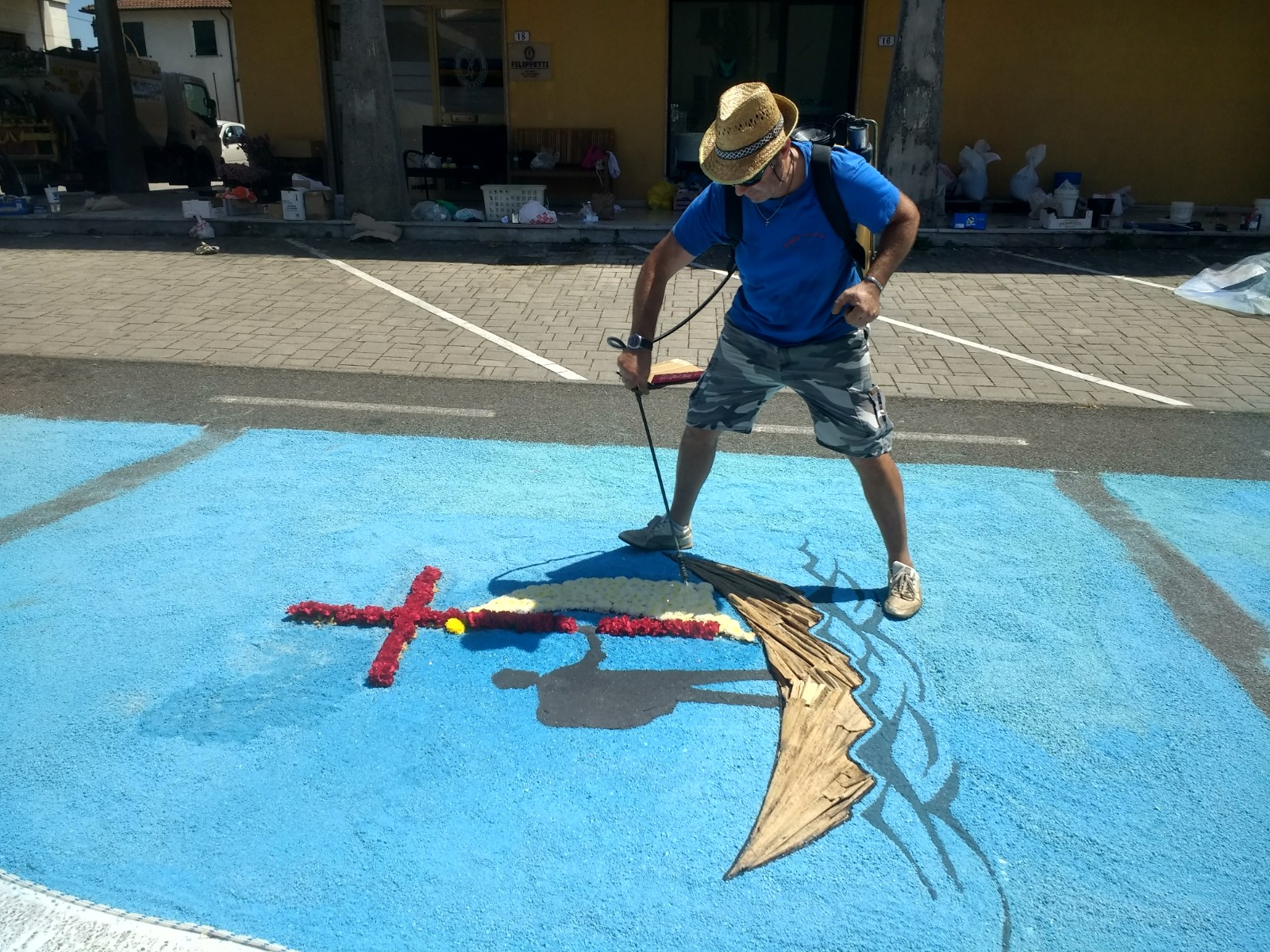
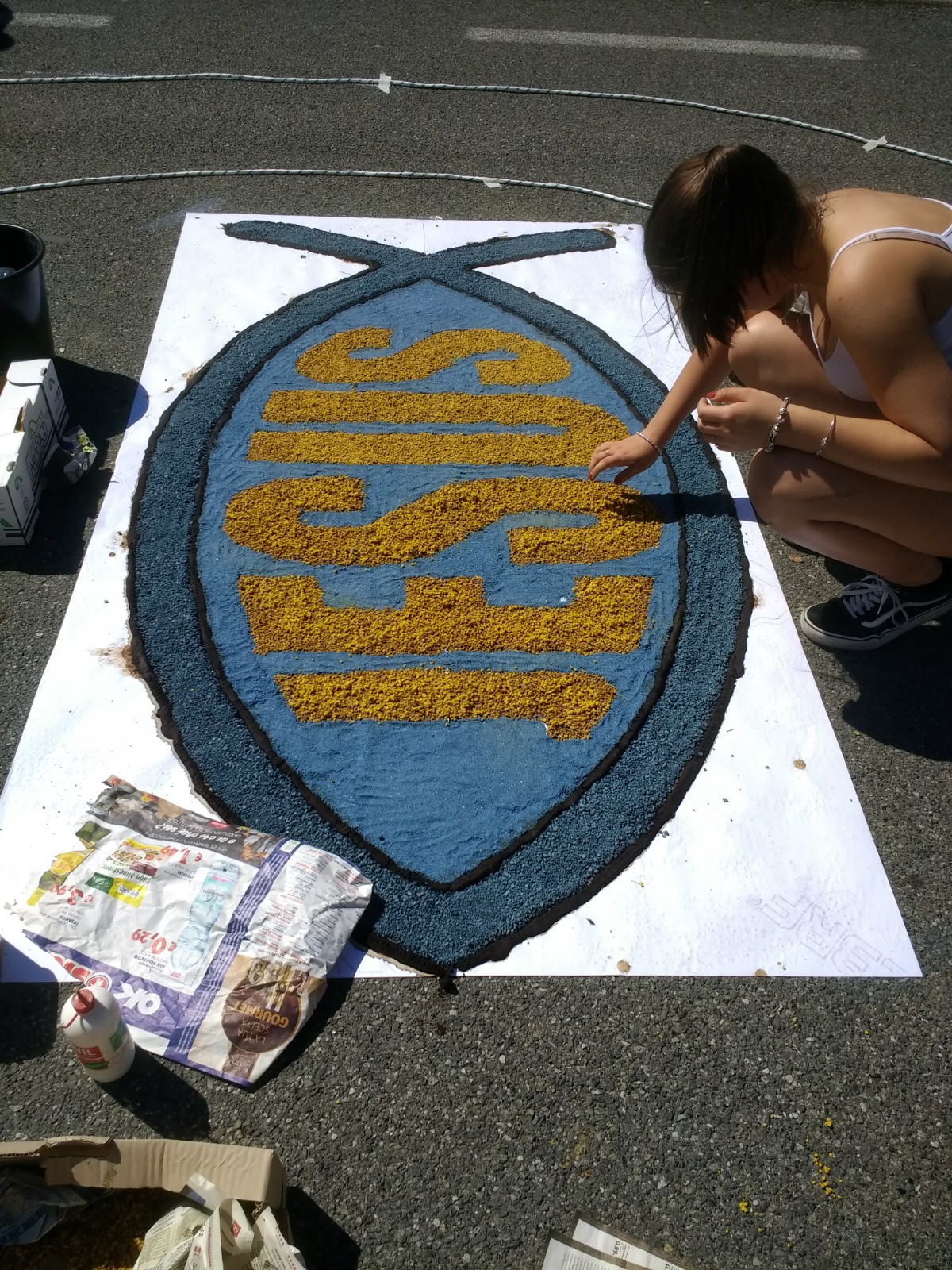
Some used compost or coffee grounds to outline the design using a stencil.The outline of the design.The design was then filled in with natural objects including petals, salt, sawdust, nutshells and chopped foliage.Some designs had been printed onto sheets of plastic.The infilling of the deign was a very lengthy process and must have been very uncomfortable in the hot sun.
By mid-afternoon most designs were far from completion, but sadly we had to leave to catch one of the infrequent buses home. This evening would really be the optimum time to be in Brugnato, when all the work is done and there is a procession in the village.
This is the progress made before we left.
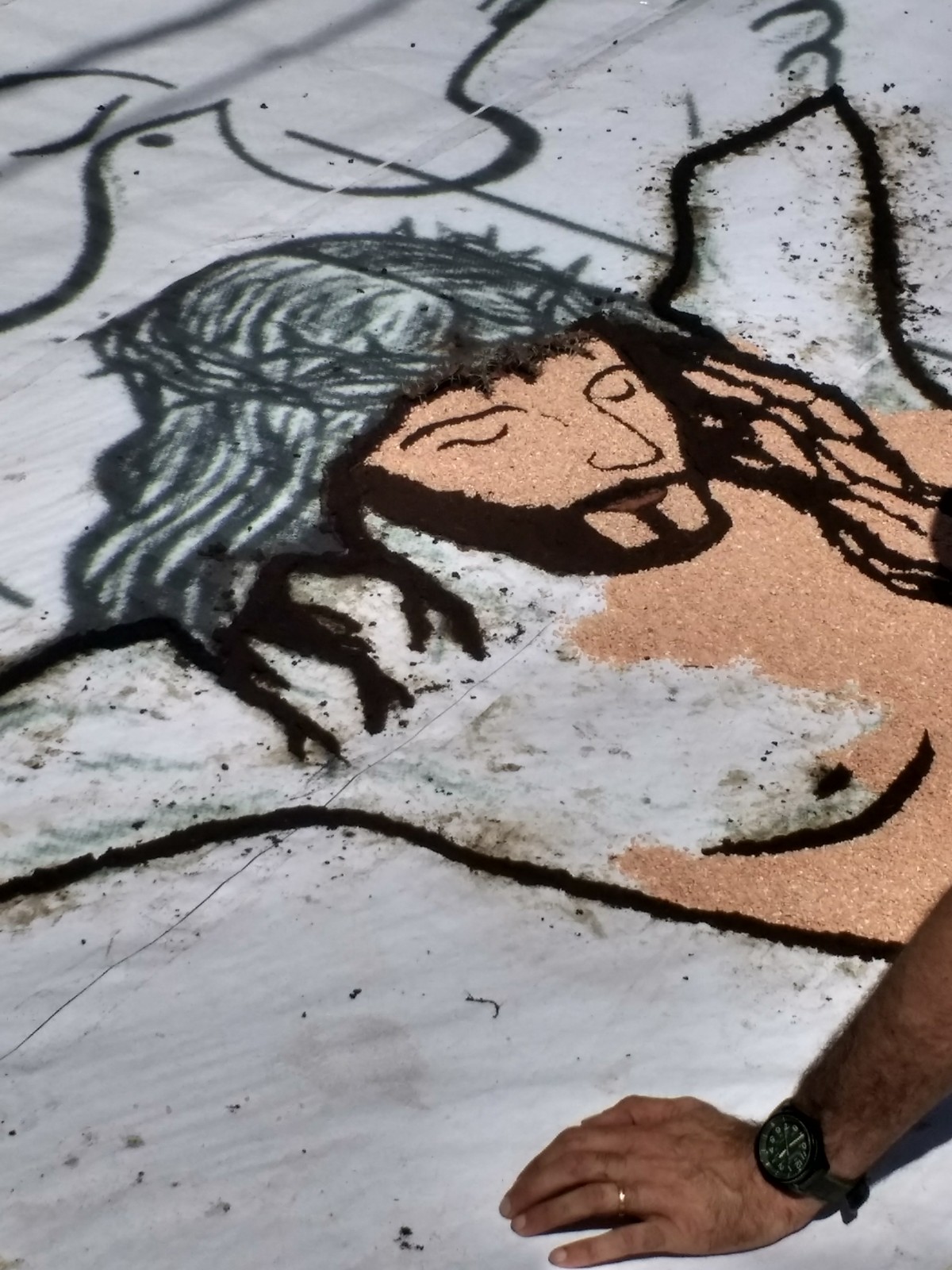
There are five districts in the village, and they compete to create the best display.Thus was one of my favourite pieces. Christ’s face has been done so delicately.This design, worked on by a large group of children, was the first to be completed.All the deigns were regularly sprayed with water to help prevent them being blown away.
Three of the best flower festivals in Italy are reportedly in Spello in Umbria, Noto in Sicily and Genzano in Lazio and would be worth checking out if you’re staying close by in May or June one year.
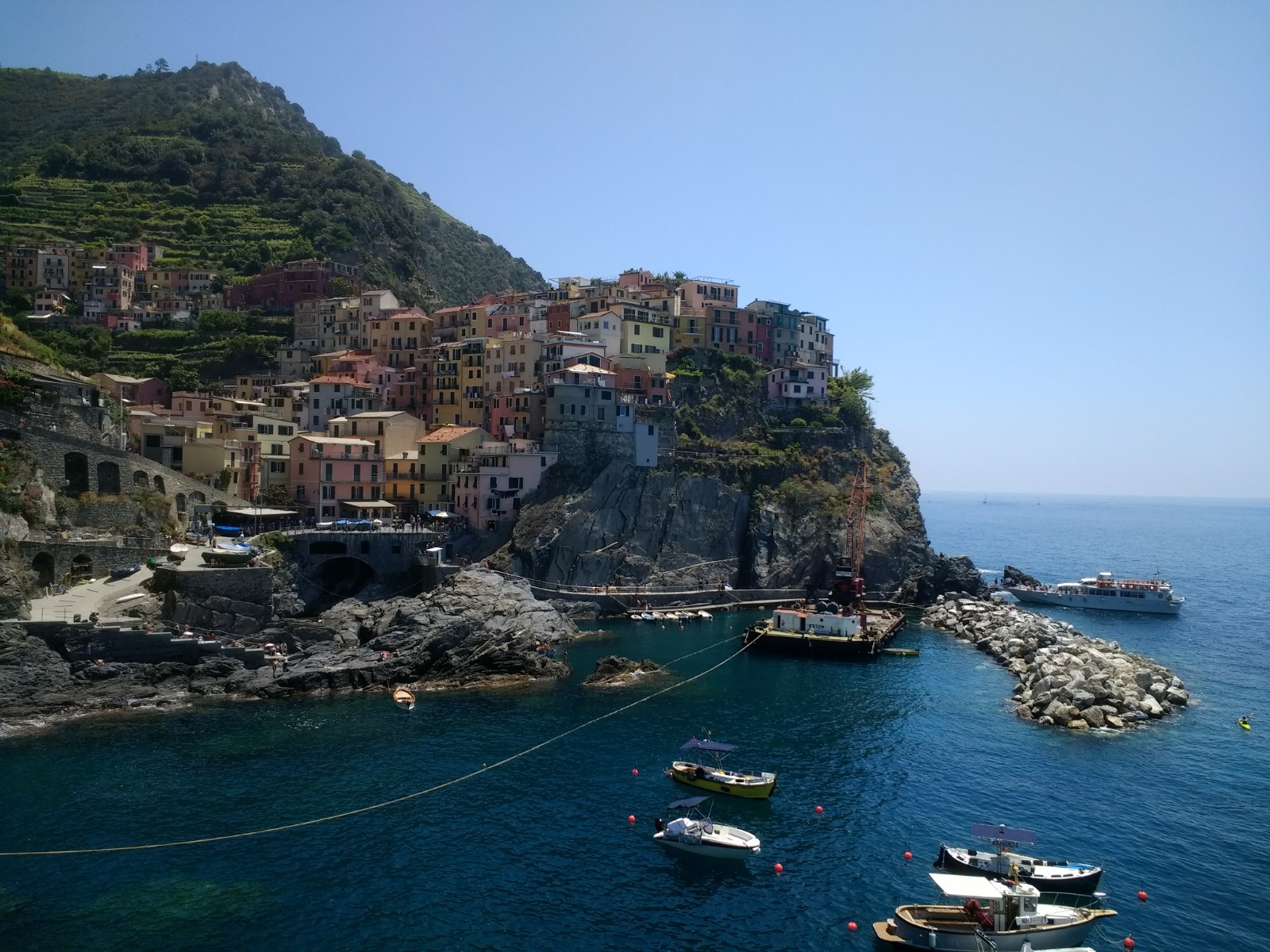
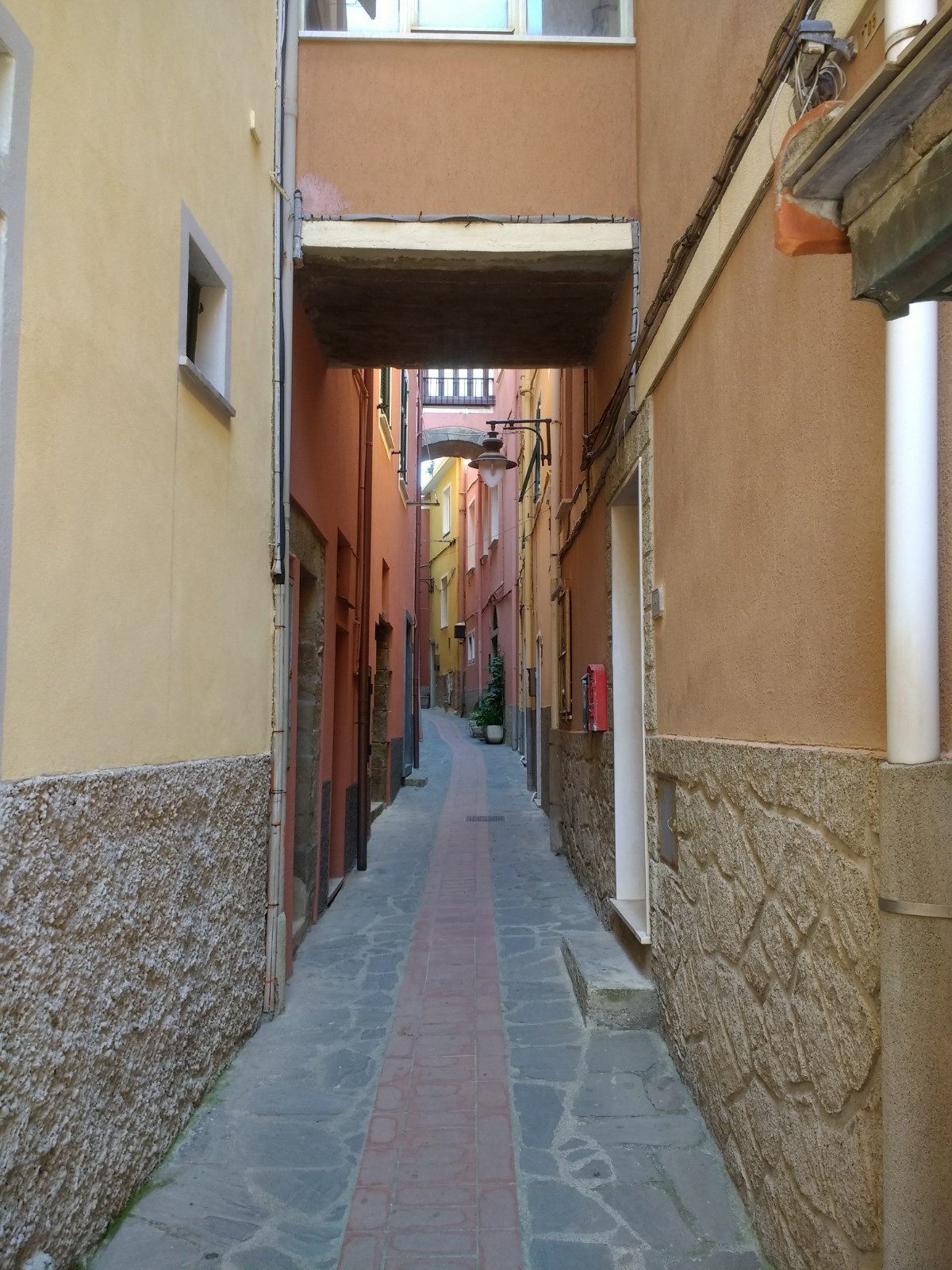
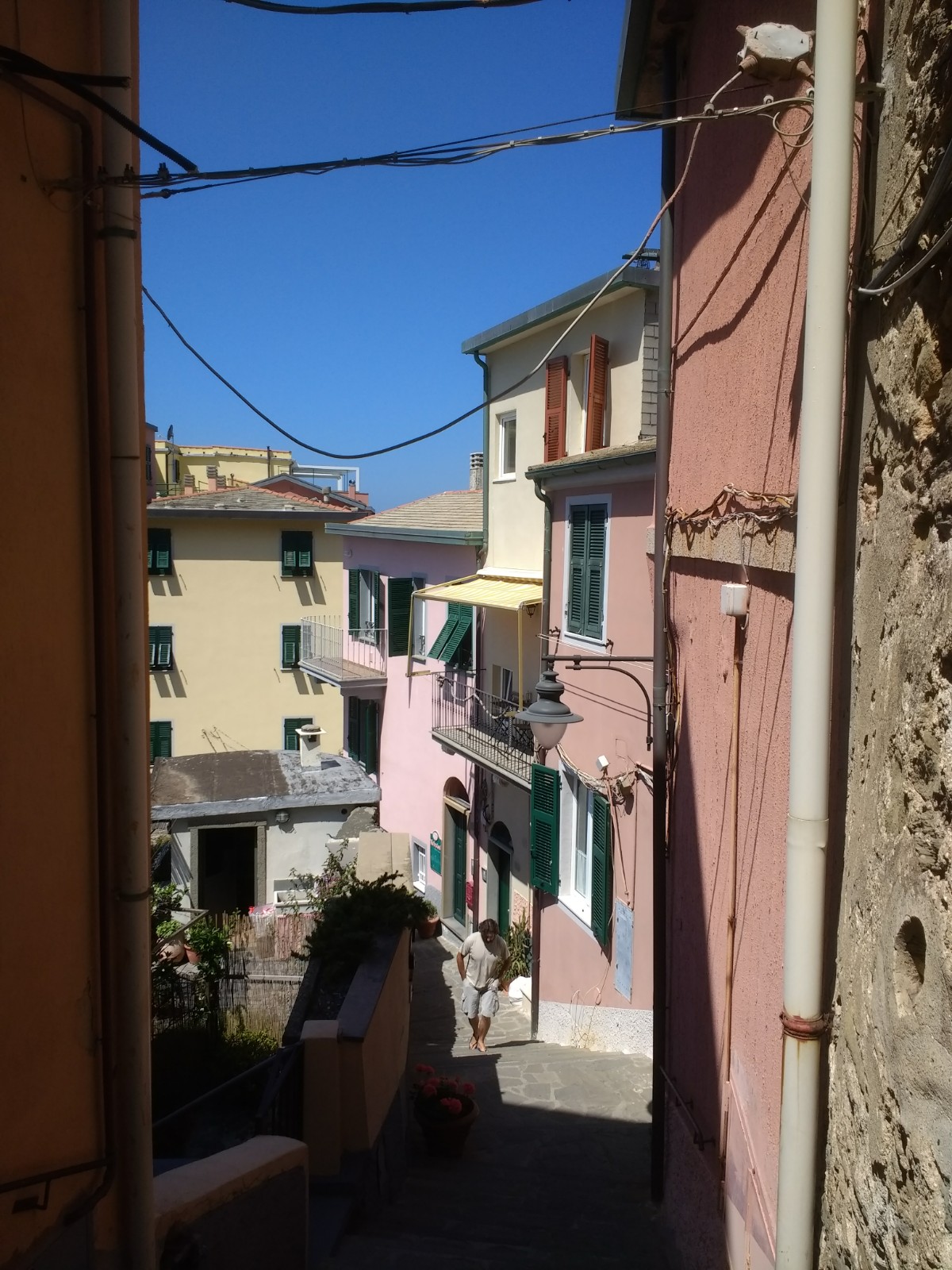
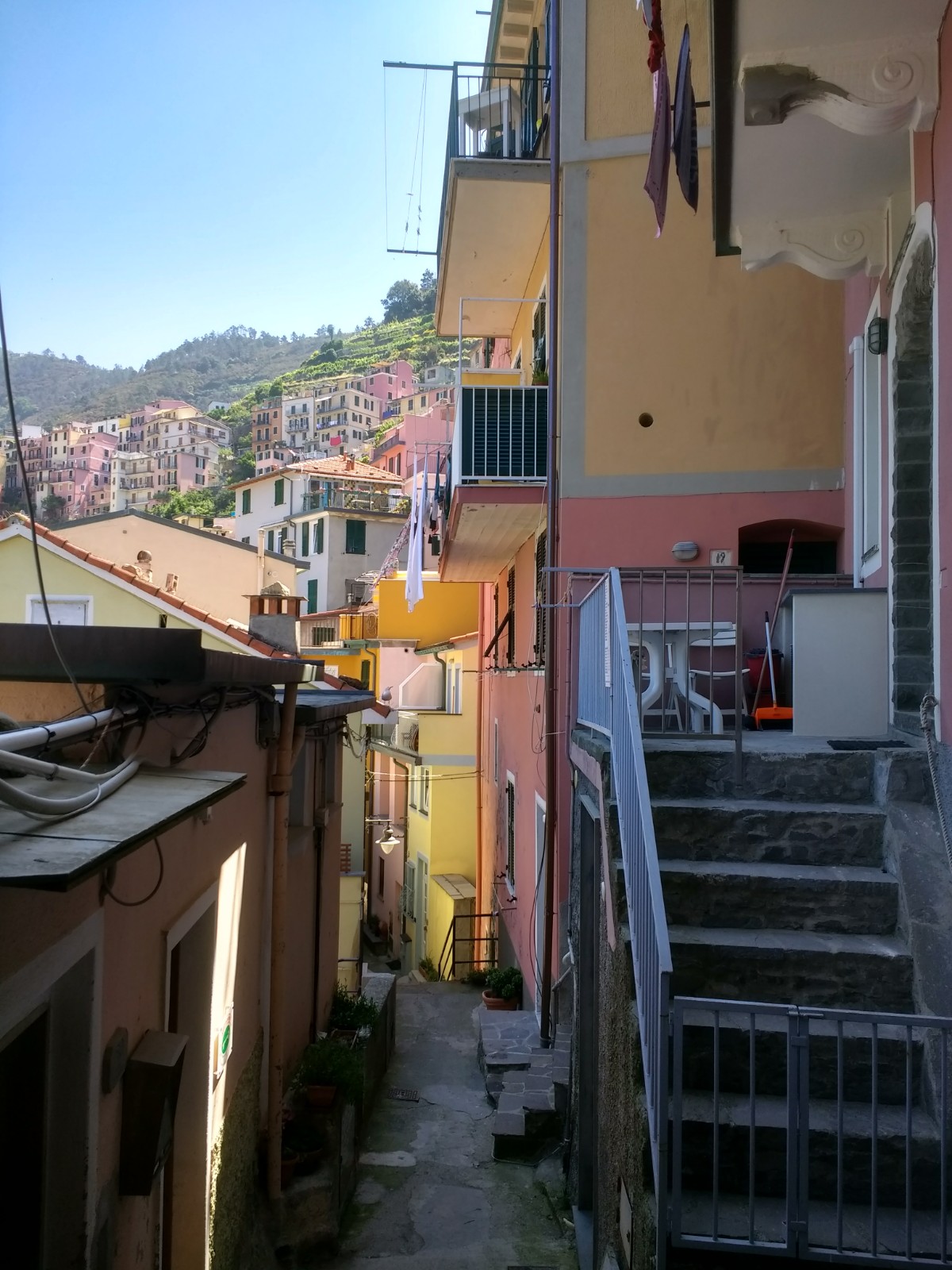
The Cinque Terre is very busy now, but we managed to get away from the crowds by walking round the backstreets in Manarola, the second village on our ‘Five Lands’ tour.
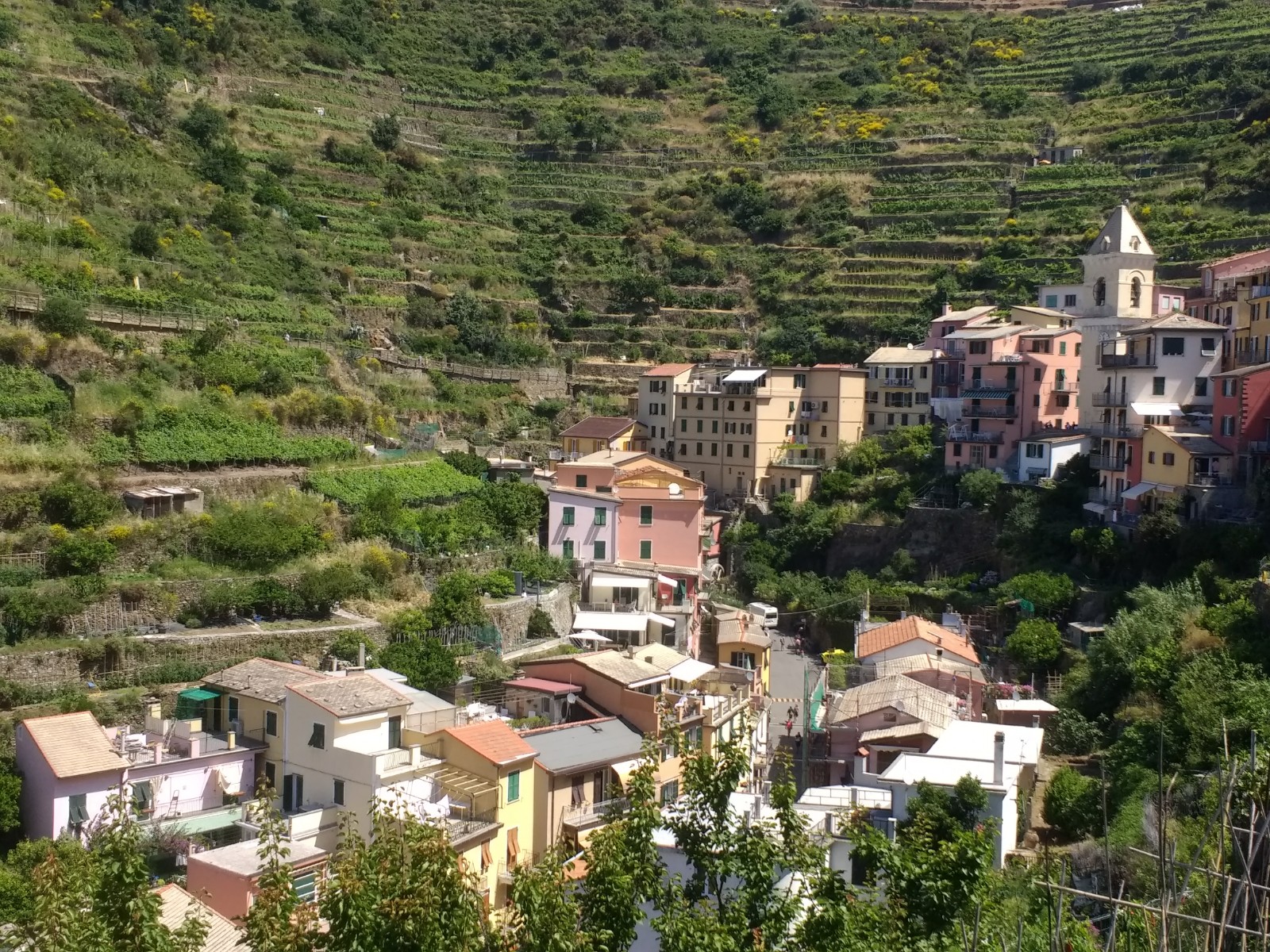
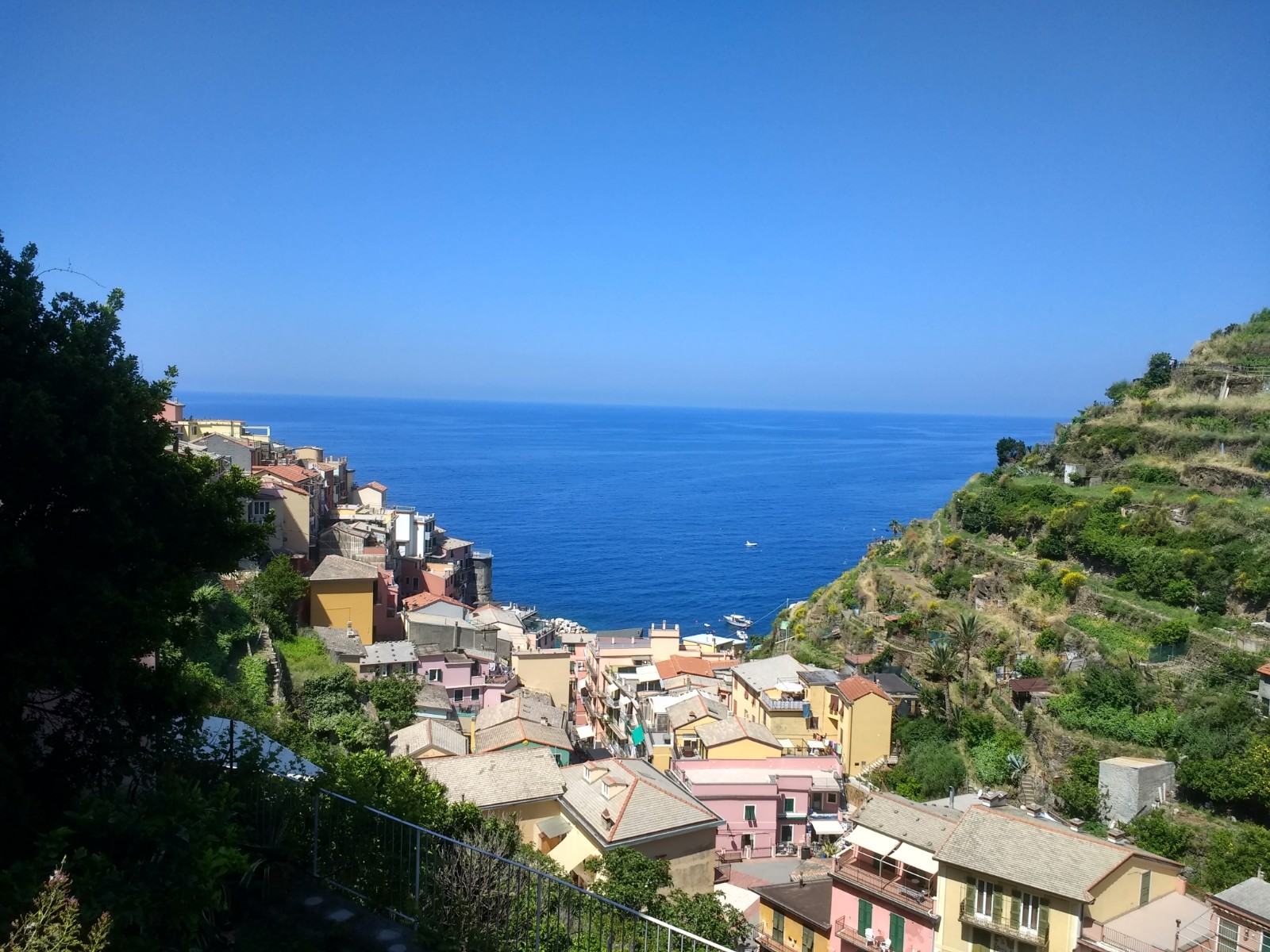
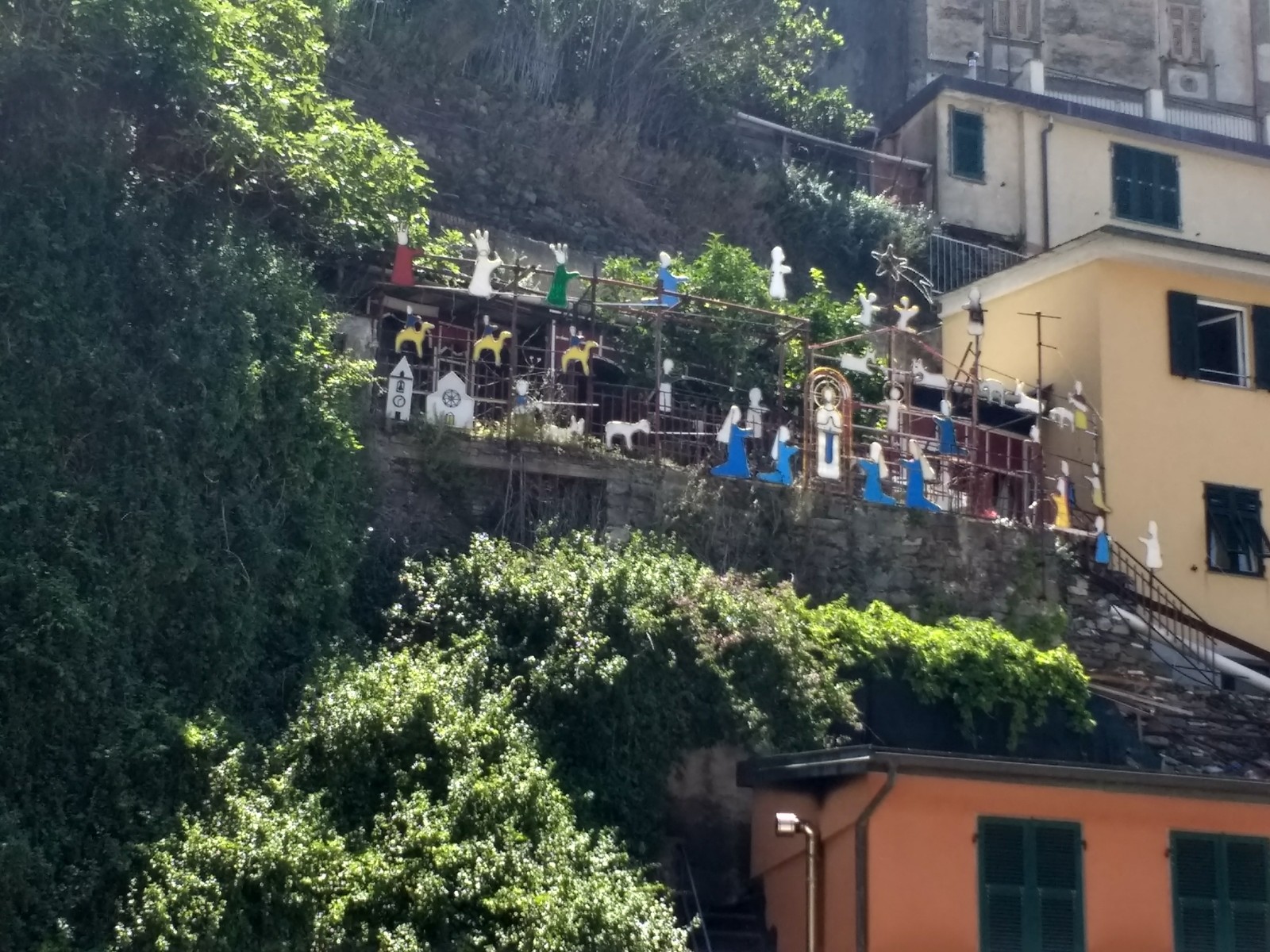
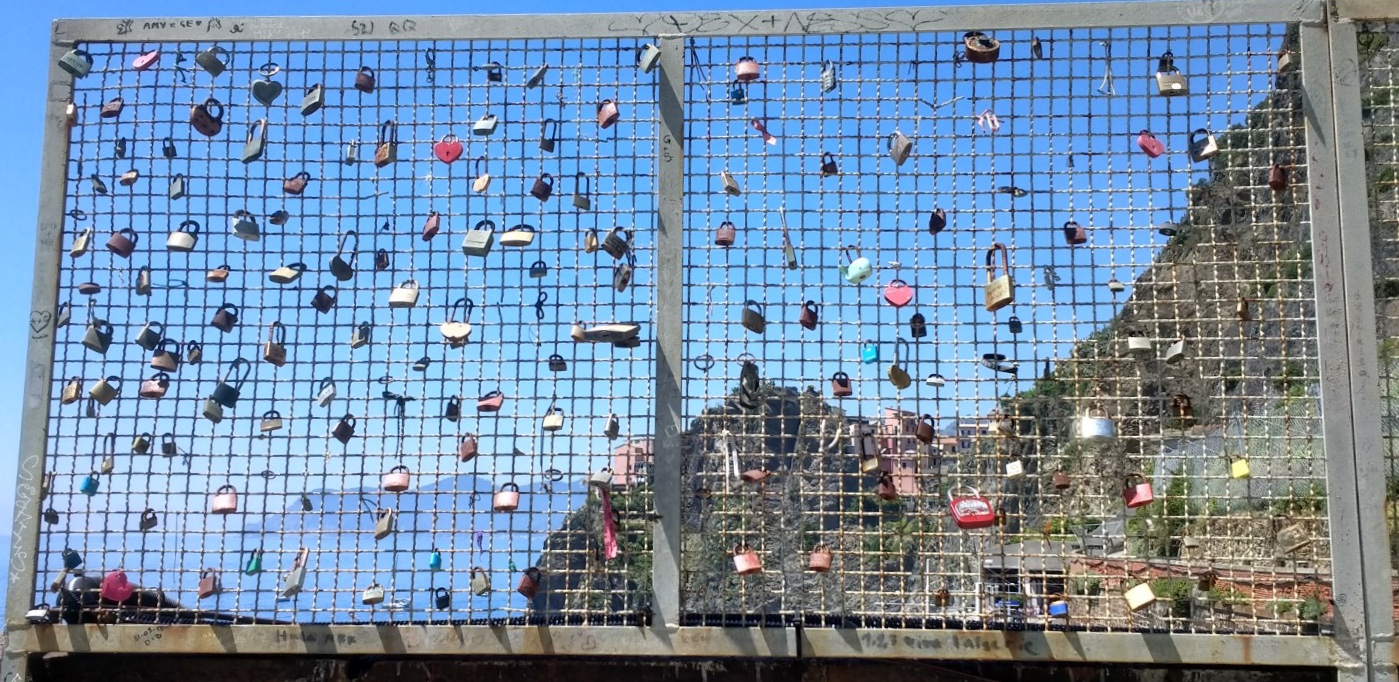
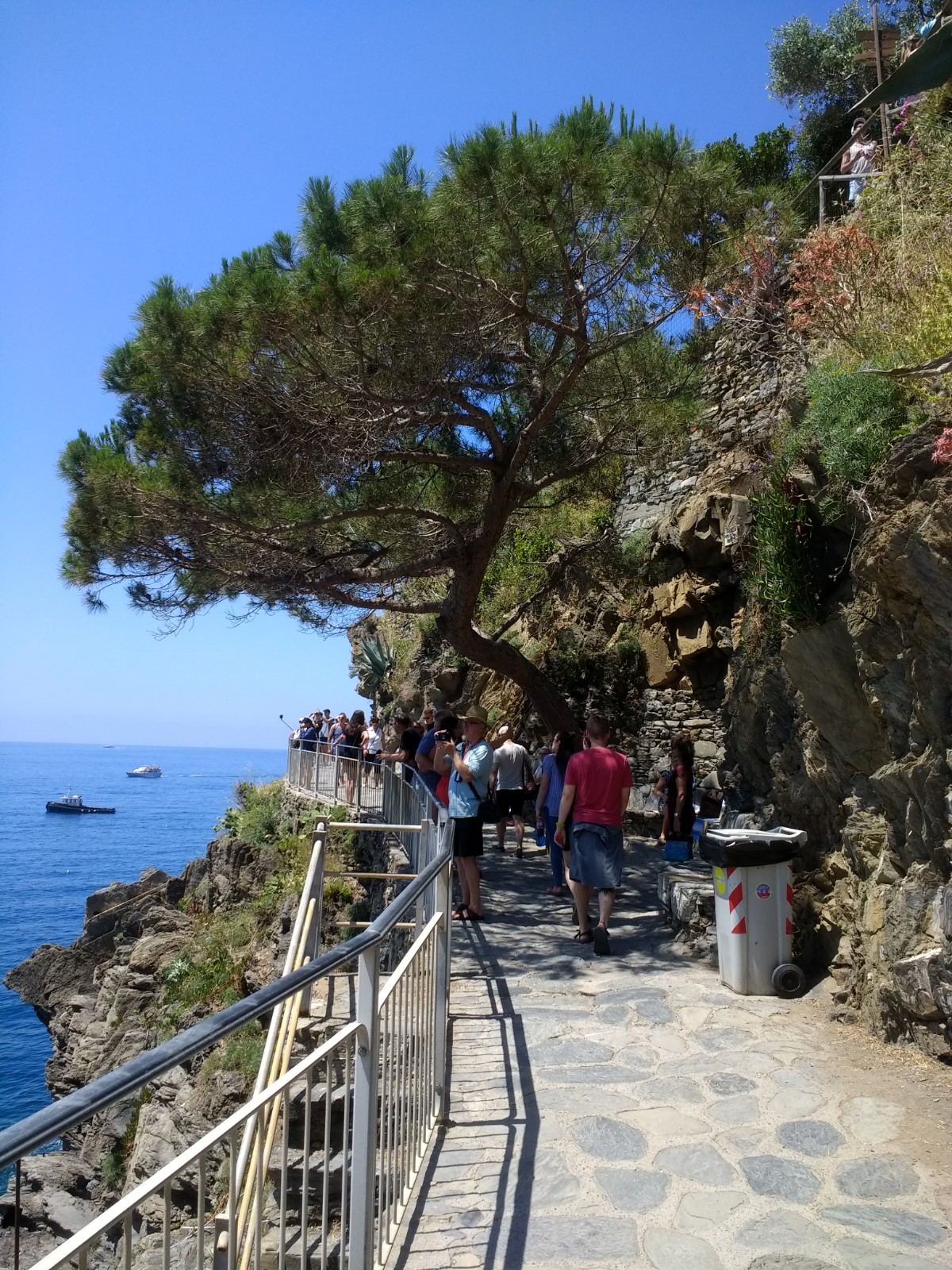
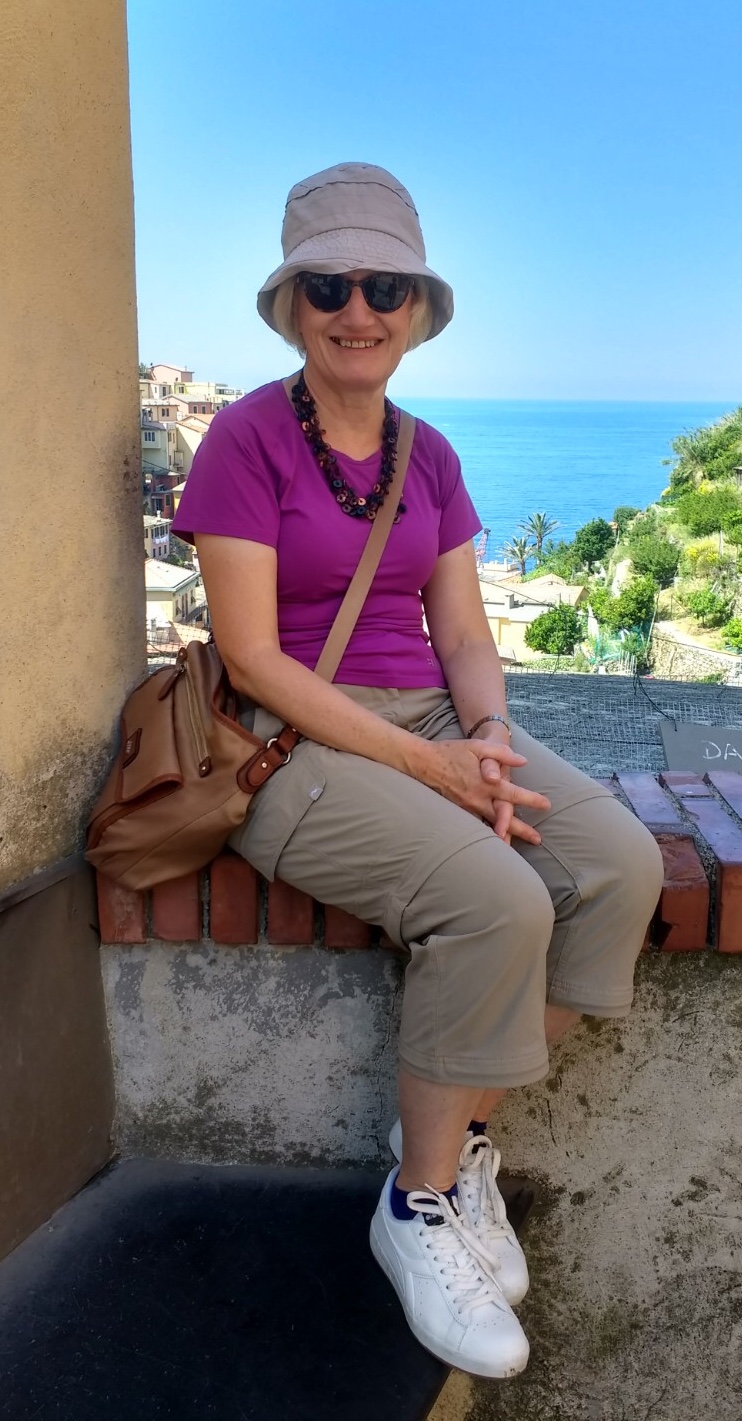
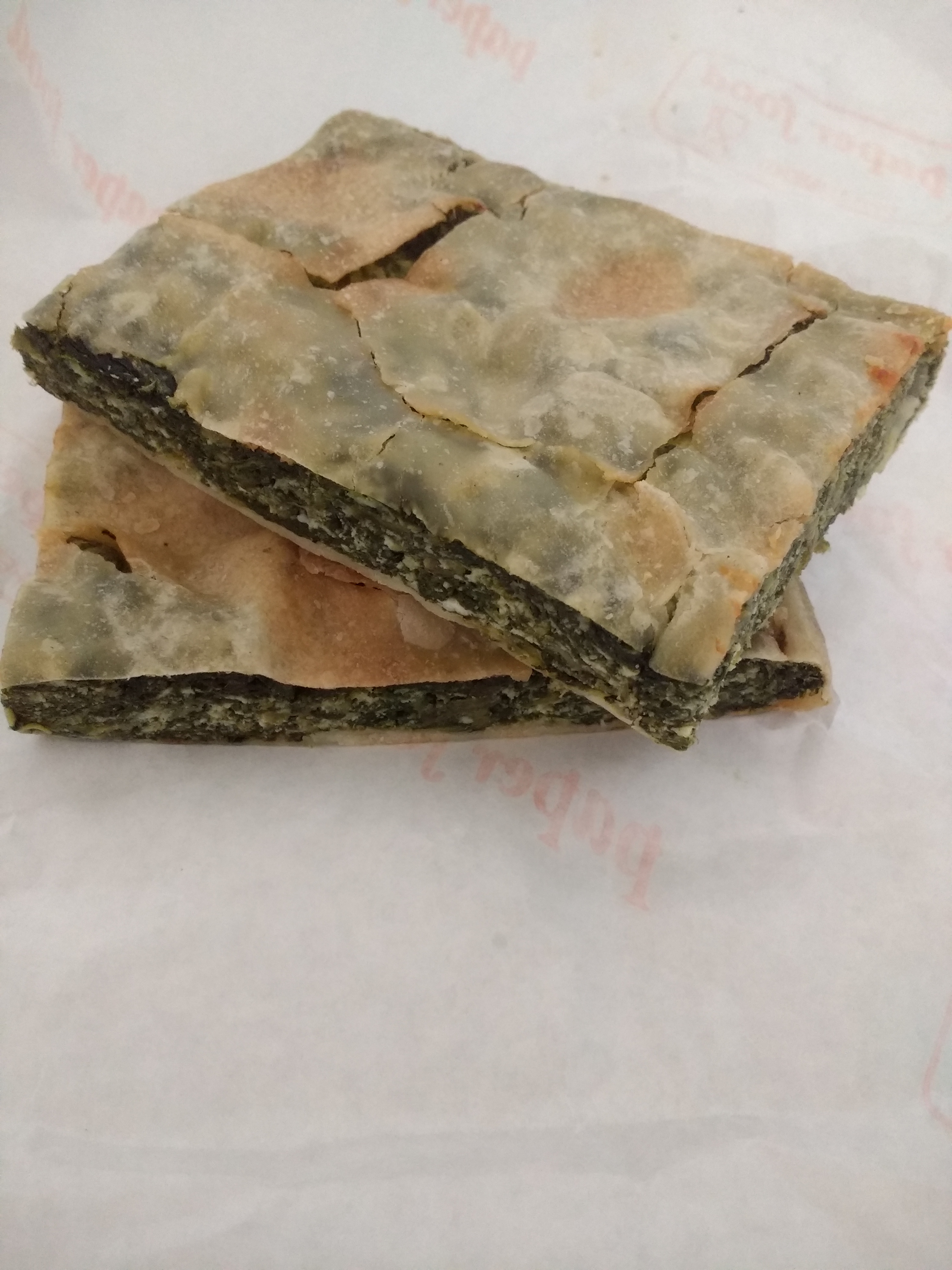
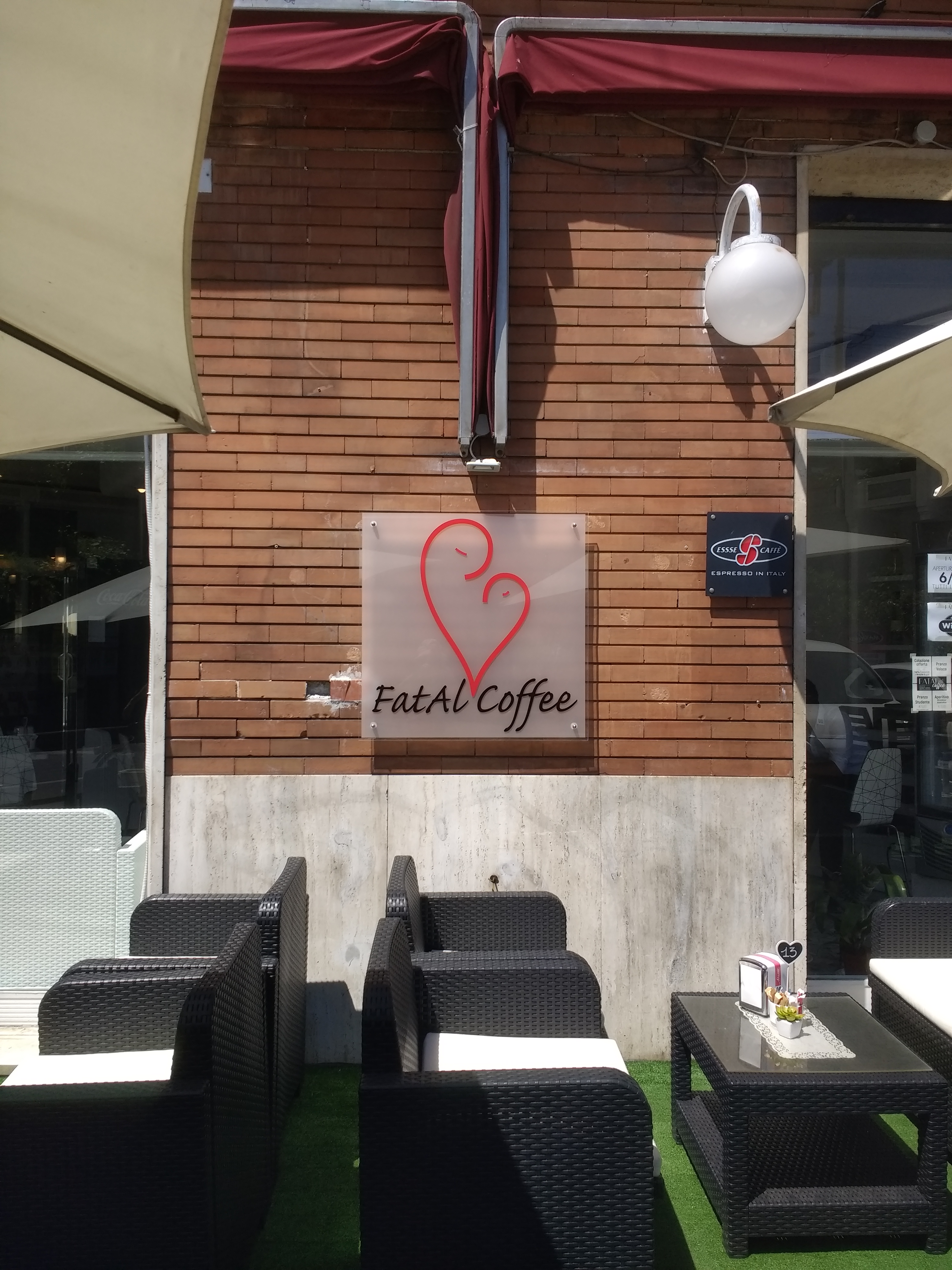
Like Riomaggiore, the houses were built along a river which flows out to the sea. The river now runs beneath a road.The hillsides are steep, and terraced for vines.The harbourNarrow (and quiet) backstreetAnother backstreet Manarola is very much still lived in by localsLooking down to the main streetThe harbour is so small some of the boats are kept in the road There is no jetty. The metal contraption is for hoisting the boats up, then lifting them down into the water.Tunnels were created in the cliffs along Cinque Terre to lay the train track. This train has stopped at Manarola Station.Every Christmas, Mario Andreoli, a local man, creates an illuminated Nativity scene on the hillside using discarded materials.We were able to walk part of the way along the Via dell’Amore which connects Riomaggiore to Manarola. The padlocks are apparently a sign of eternal love.We could also walk part of the way to the next ‘Terre’ Corniglia as well,but most of the route is closed due to a landslide. Woman in Manarola We did a little food shopping on the way home and bought some ‘torte di verdura’ (vegetable tart) which is a speciality in Liguria. I spoke Italian to the lady which she complimented me on. Then I blew it when I failed to understand her question, ‘Where are you from?’We pass this every day, but daren’t try the coffee. The name is a puzzle – ‘fatal coffee’ is similar in Italian (caffe fatale). Surely he doesn’t mean that. Perhaps the owner is ‘Al’?





 Tortoise Travel