Naples, not doing things by halves, has not one, but over fifty official saints, the principal one being San Gennaro, or Saint Januarius, to whom the Duomo in Naples is dedicated.
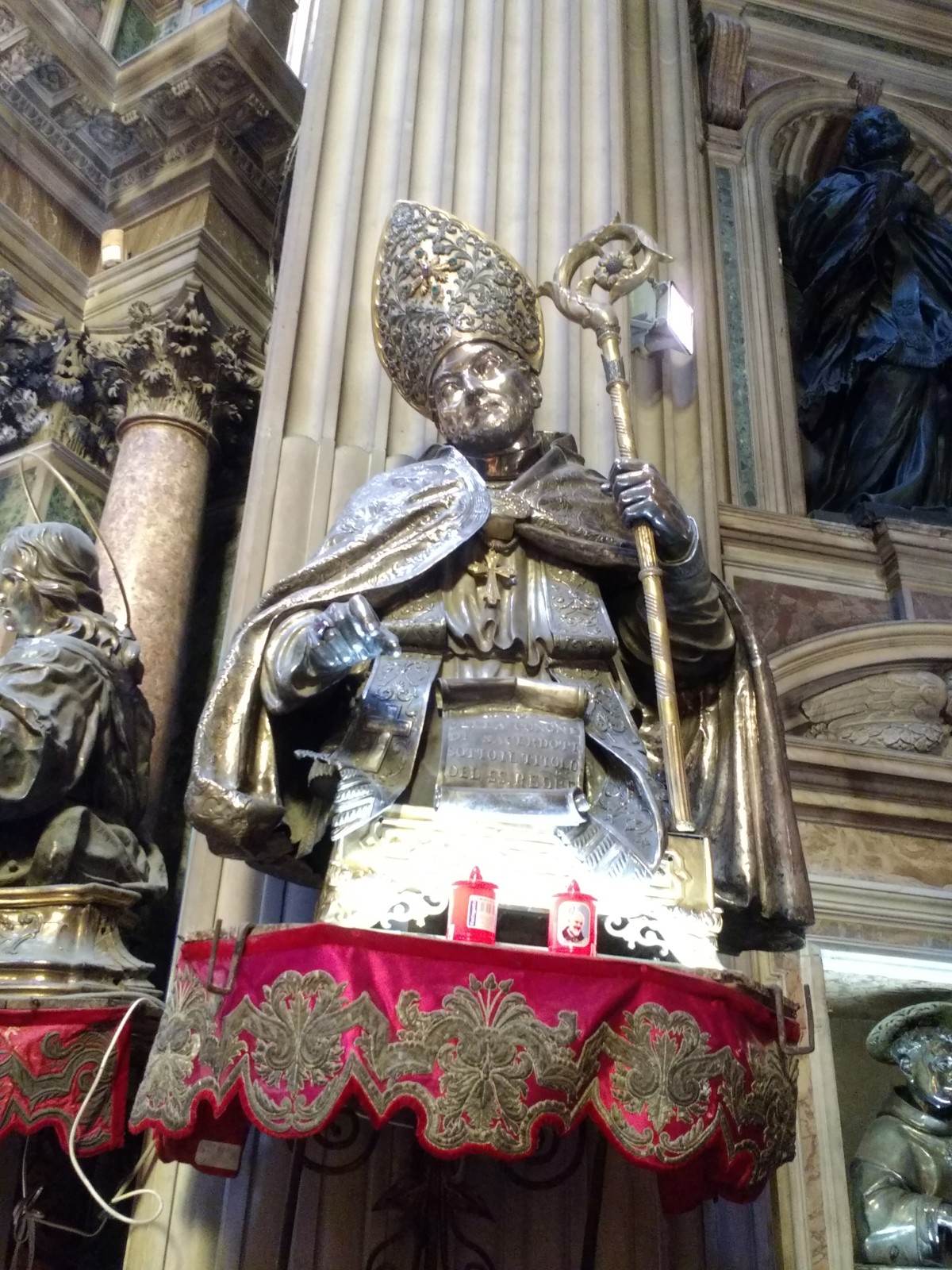
Gennaro was born in the third century during a time that Christians were commonly persecuted. He was imprisoned and sentenced to be thrown to the lions, but popular legend has it that the lions, instead of jumping on Gennaro, knelt at his feet after he had blessed them.

Unfortunately for Gennaro, instead of having his death sentence commuted, he was executed. Two flasks of his blood were allegedly collected by a woman in the crowd to keep as a relic.
The first record of a phenomenon known as ‘liquefaction’ dates from 1389 when blood in the two containers is said to have changed from dried matter to one of a liquid.
Today people throng to the Duomo in Naples to bear witness to this event three times a year: 19 September for San Gennaro’s Day, 16 December, to remember the eruption of Vesuvius in 1631 when the lava flow stopped in front of Gennaro’s relics (bones and blood) and also on the Saturday before the first Sunday in May when the reunification of his relics (the bones and blood had previously been separated) is celebrated.


During the service one of two small amphoules (today they are kept in a bank vault) is held up to show the contents are solid. After prayers, the amphoule is held up again and tilted to show that the contents have liquified.

To ensure that the whole congregation can be in no doubt that this change has happened, a white handkerchief is waved and the news is broadcast to the residents of Naples as a whole with a 21-gun salute from the thirteenth century Castel Nuovo.


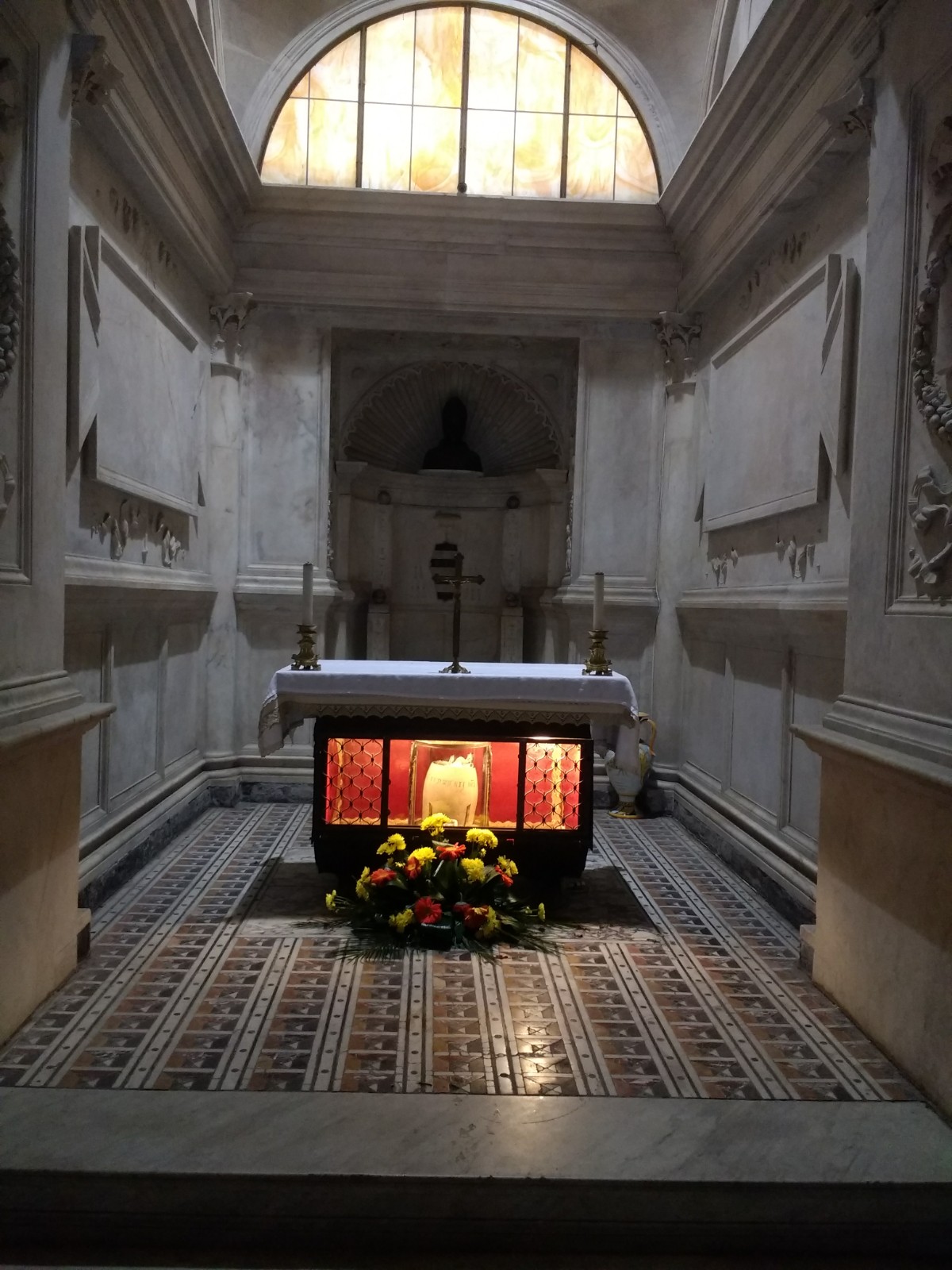
Occasions when Gennaro’s blood has failed to liquify are seen as portents of doom. In recent times there have been two such occasions, in 1973, when Naples endured an outbreak of cholera, and in 1980, when 3,000 people were killed in an earthquake which devastated much of southern Italy.
This story of liquidfying blood is the reason that Naples is sometimes known as the ‘City of Blood’. However, it seems that Gennaro is not alone. This phenomenon is reported to have occurred to other people in the past, mostly in Campania, the region of Italy we are now in.

 Tortoise Travel