Back in 79AD the inhabitants of Pompeii, Herculaneum and surrounding area were unaware that they were living in the shadow of a volcano. Vesuvius hadn’t erupted for centuries and was just a benign backdrop to their daily lives. When Vesuvius did start spewing out her insides, the wind first carried pumice and ash over Pompeii, where roofs and houses soon collapsed under the weight. The ash that was later dropped on Herculaneum, together with a sea of mud, buried the town to a depth of fifty to sixty feet without incurring the same volume of damage as Pompeii suffered. What the ash and mud buried, it conserved. Wooden rafters, wooden furniture and statues have all been found in Herculaneum.
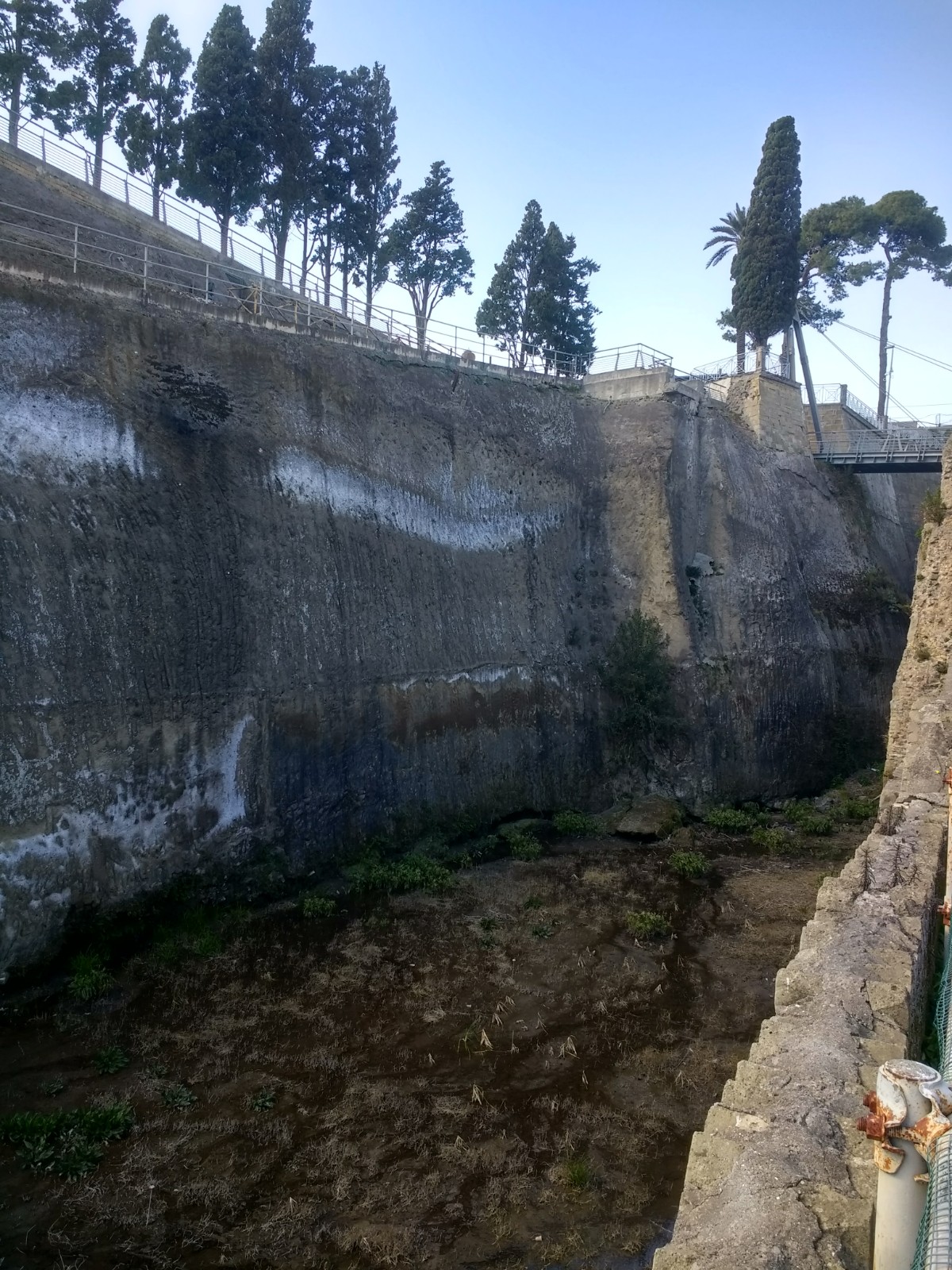
An unexcavated wall of mud and ash at Herculaneum. Only one quarter of the ancient city has been unearthed to date. The remainder lies beneath the modern city of Ercolano.
Apart from being better preserved, Herculaneum is smaller than Pompeii, and much less crowded, which made our visit today very pleasant.
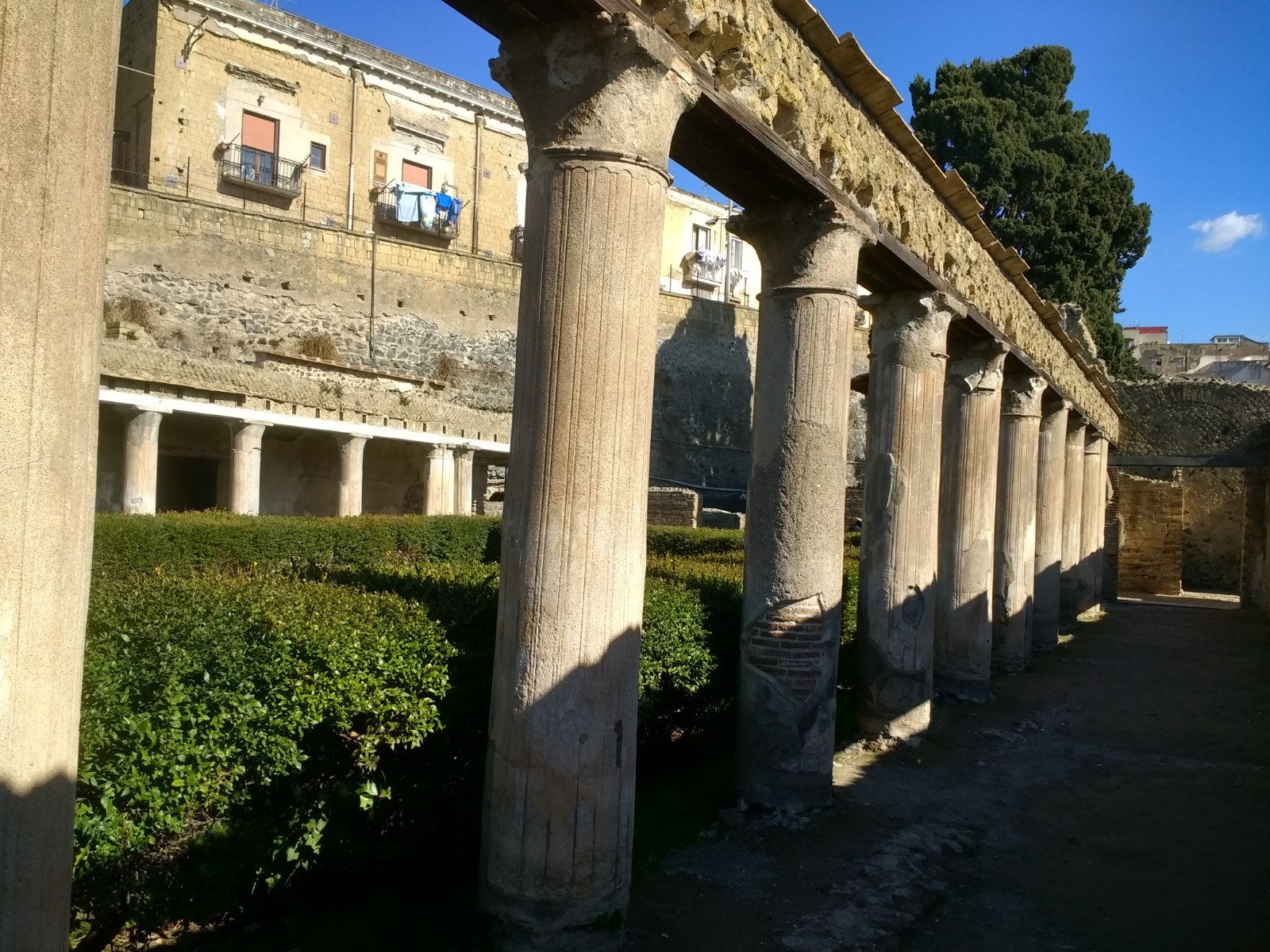
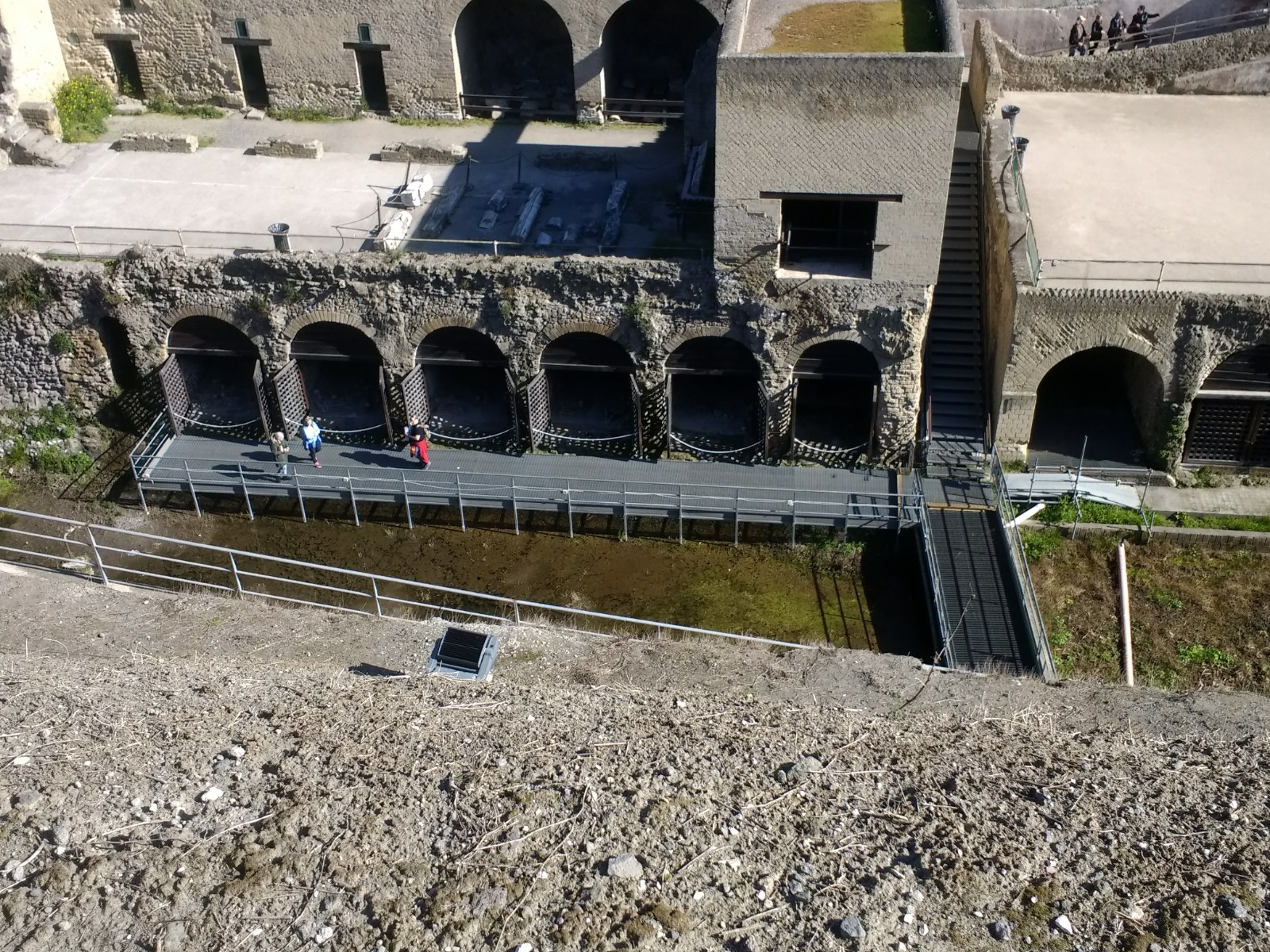
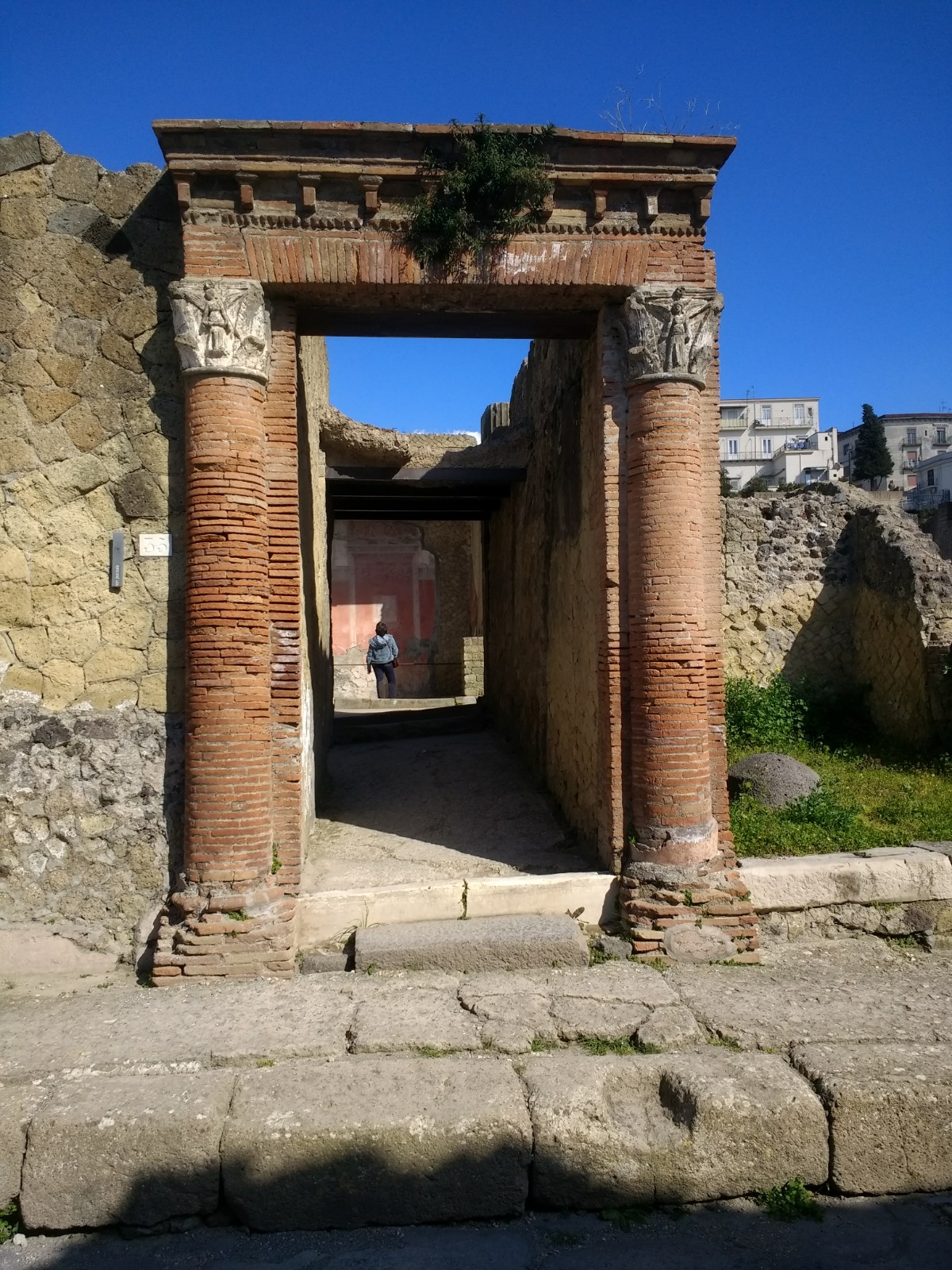
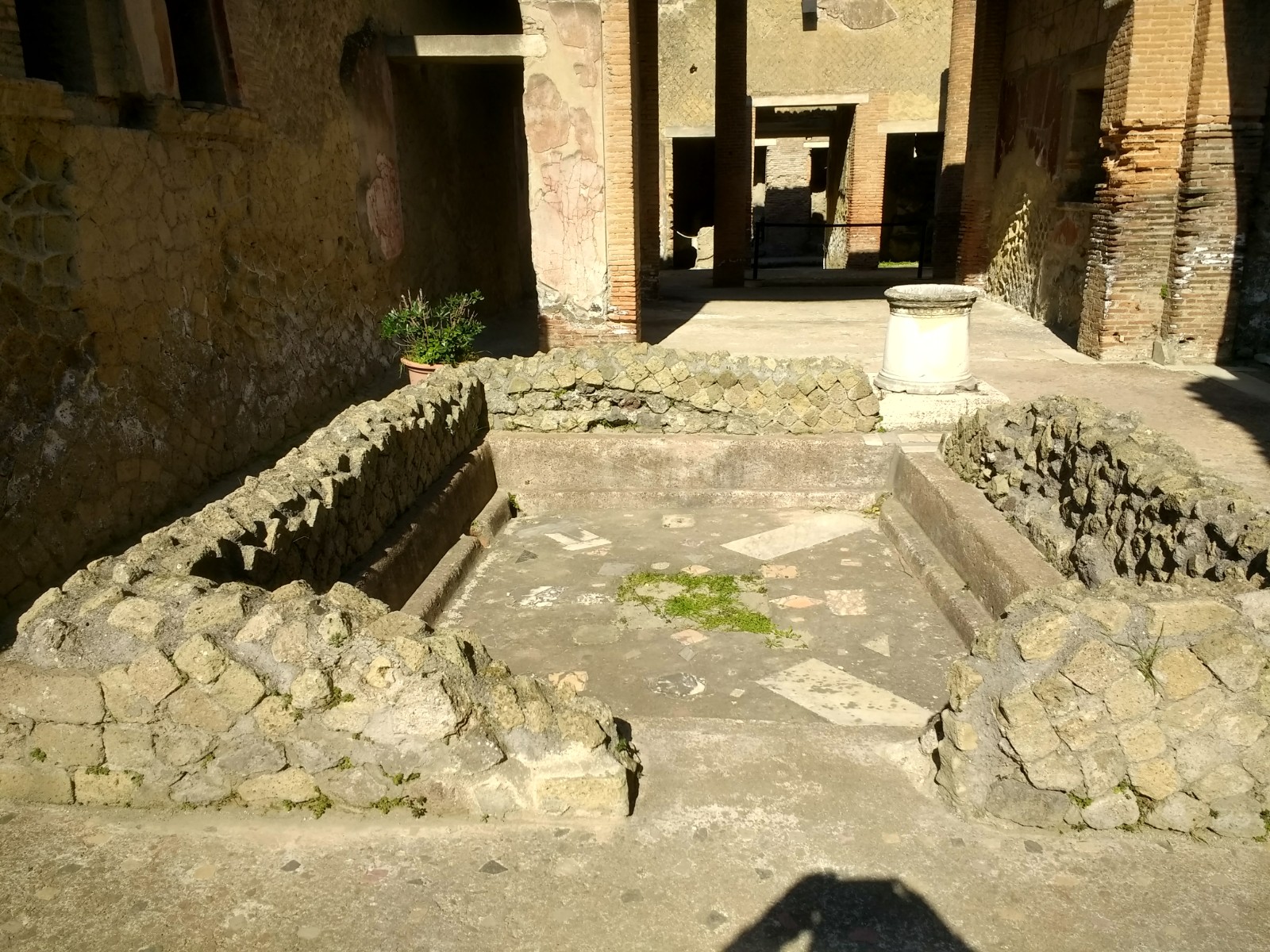
Garden in Herculaneum. The modern city is slap bang next to the ruins as is evident from the washing.Warehouses and ancient beach. Back in 79AD, Herculaneum was on the coast (It is now 500 metres away). In 1980 about 300 skeletons, of people attempting to save themselves from the disaster, were found in the warehouses. Most residents, though, did escape.House entrance Impluvium (rainwater pool). A lot of people In Herculaneum did not need an impluvium, though, as water was piped into their homes. Herculaneum was a more affluent town than Pompeii.
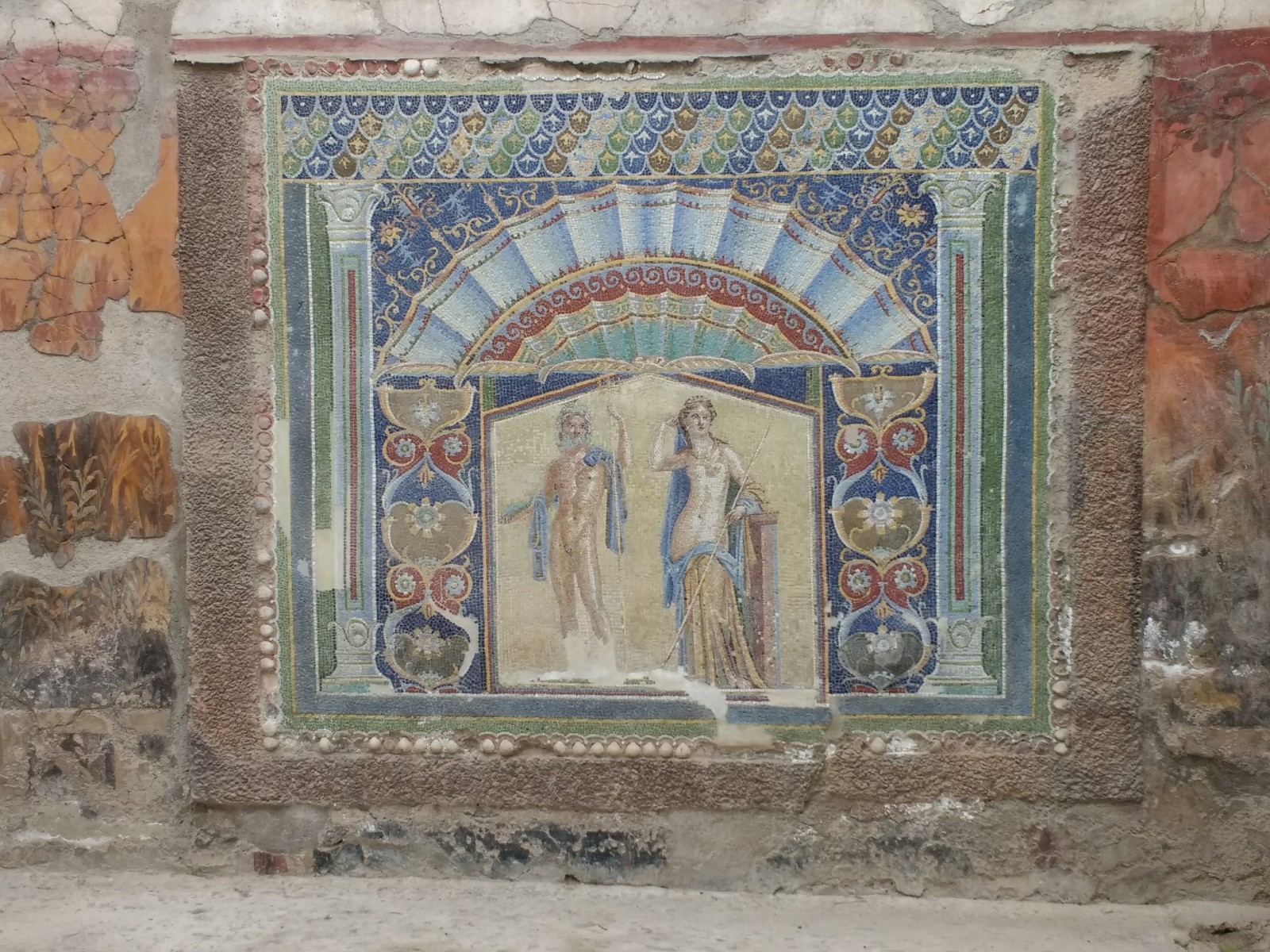
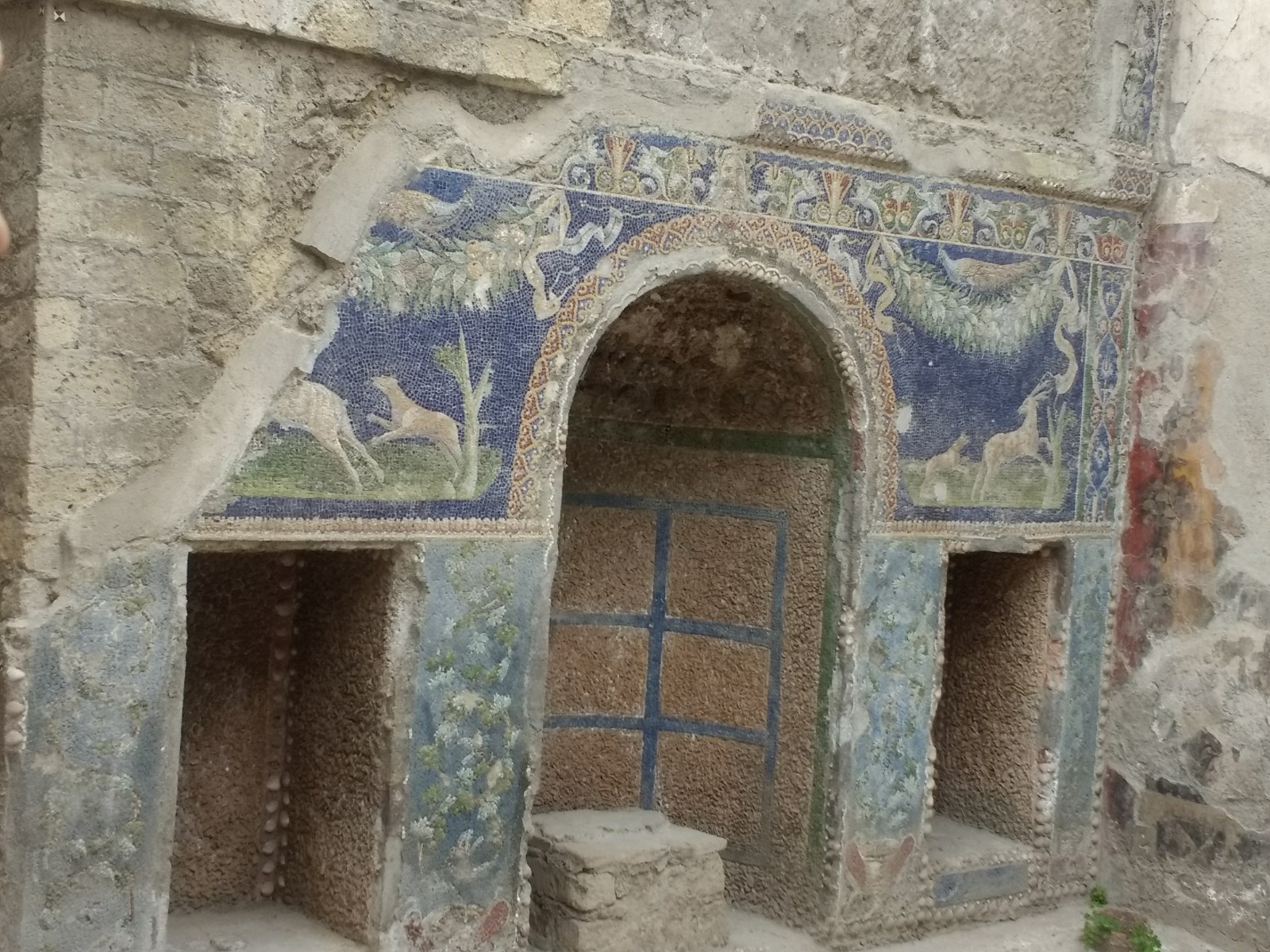
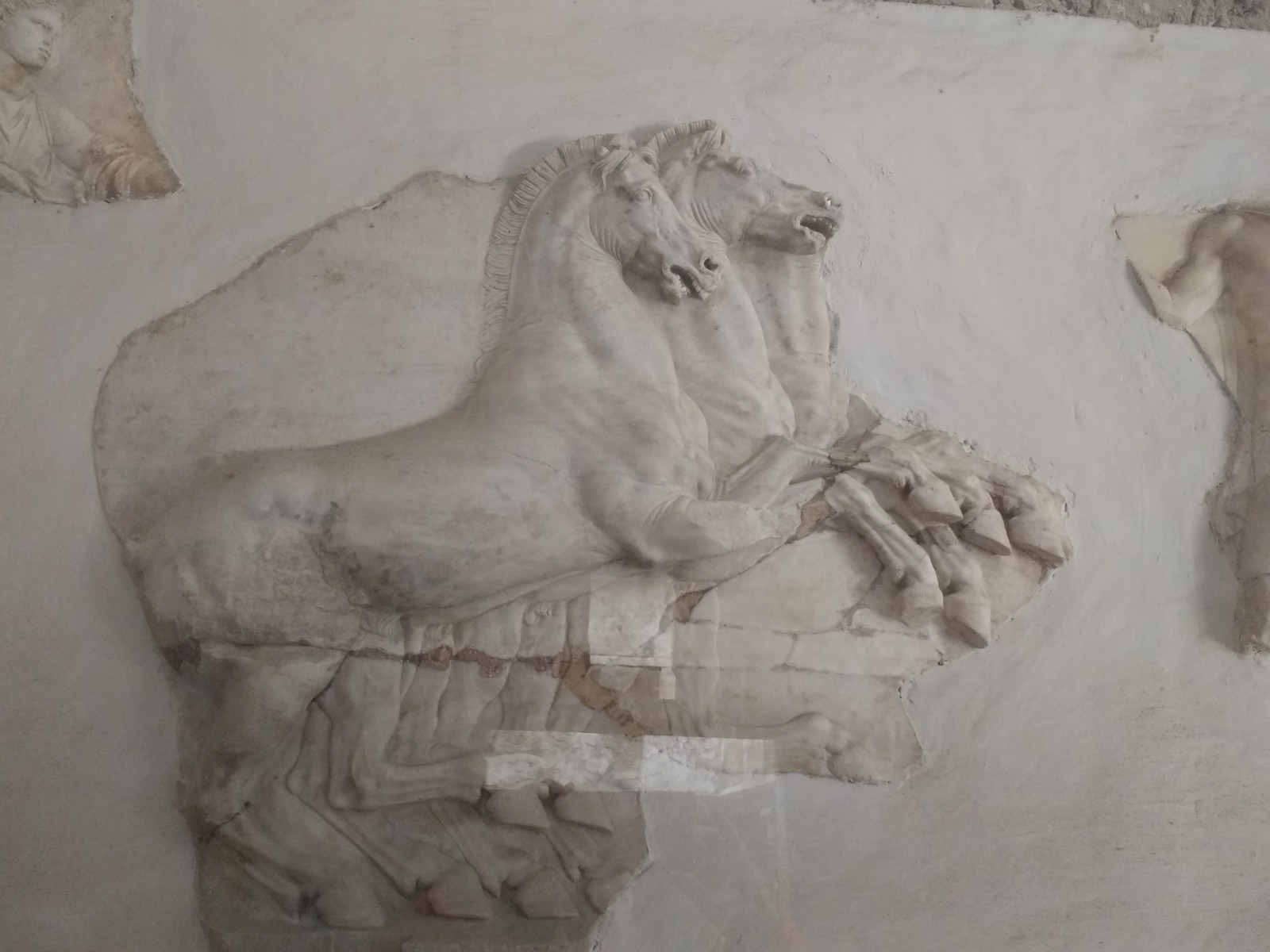
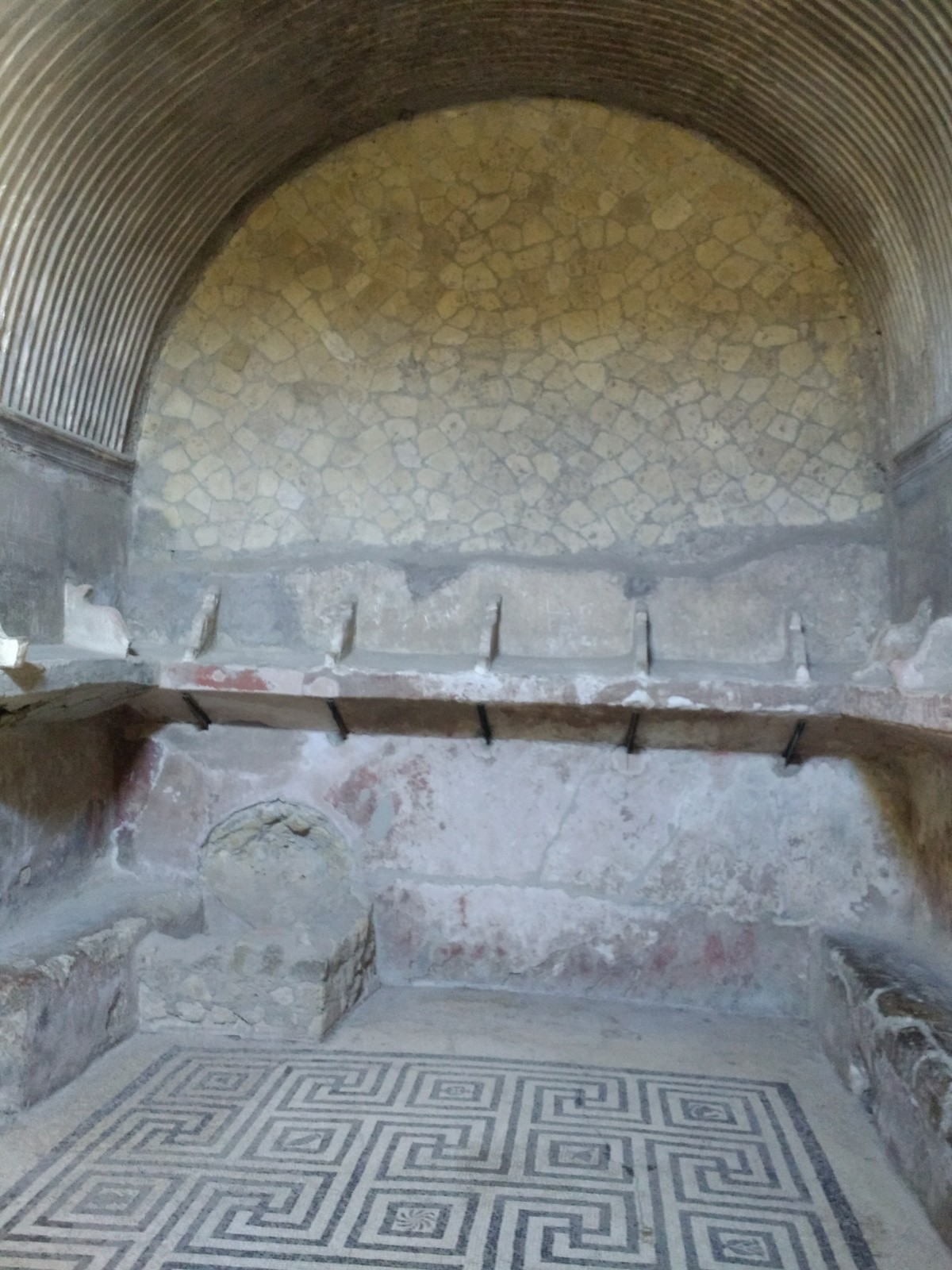
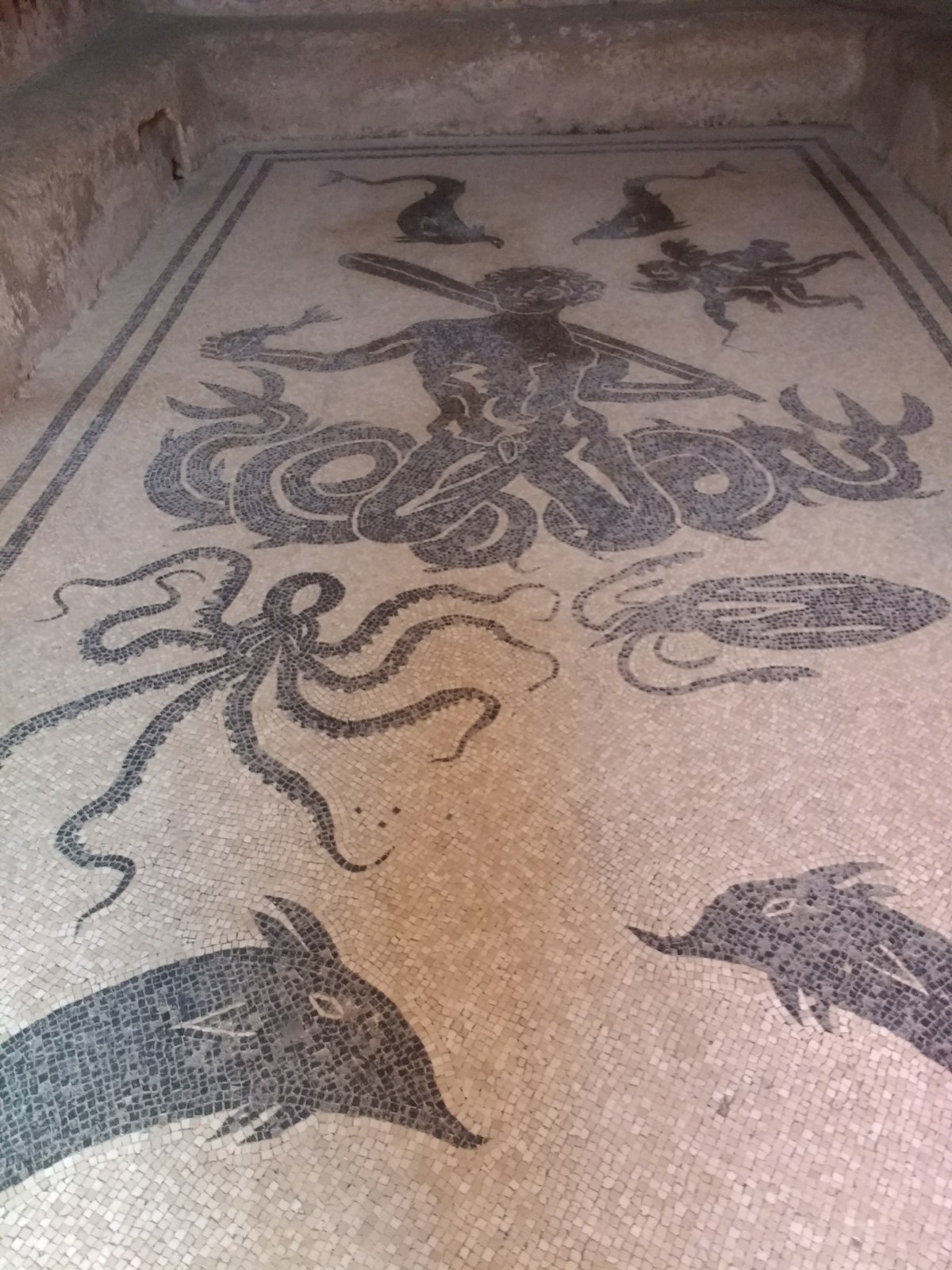
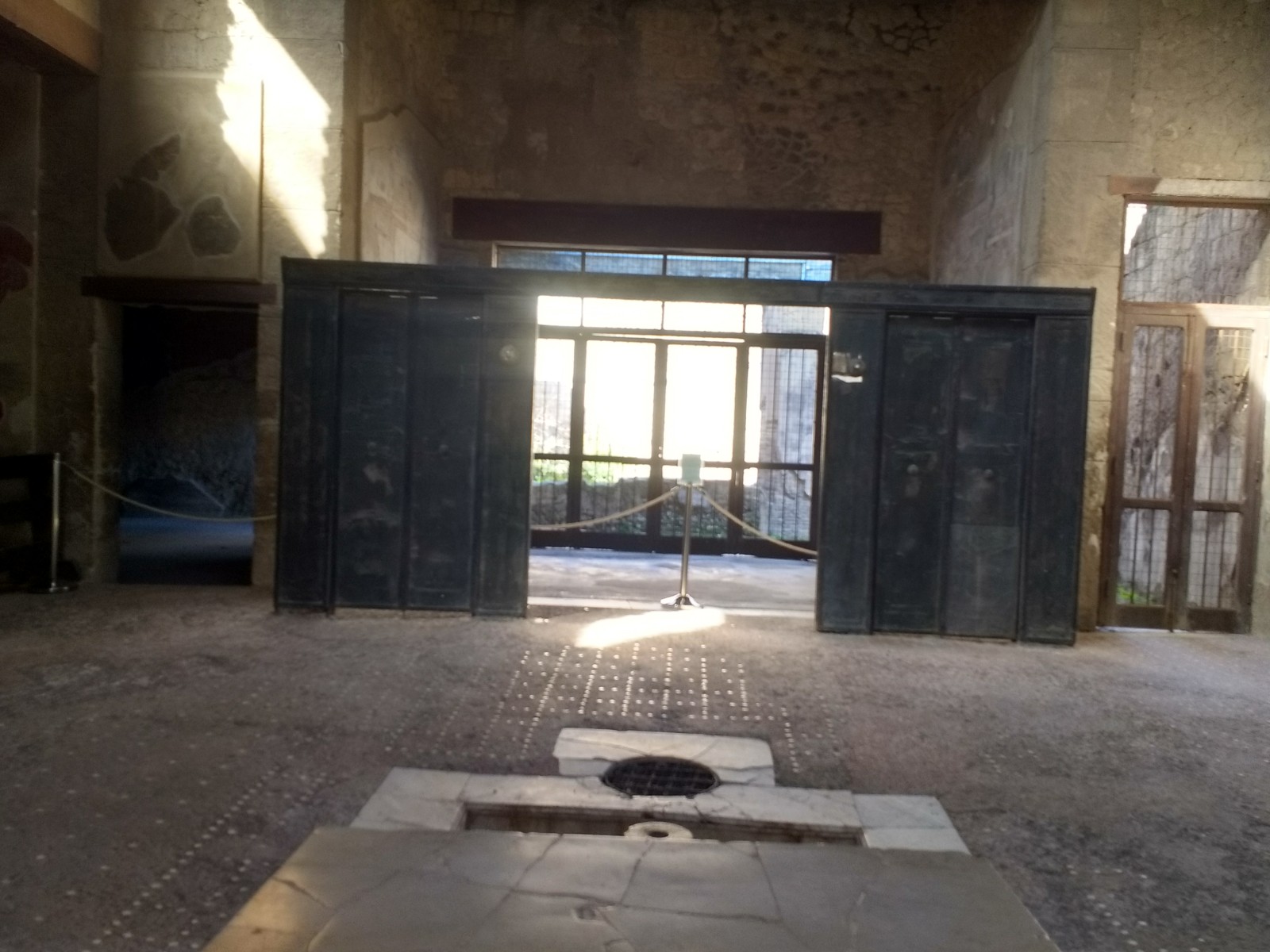
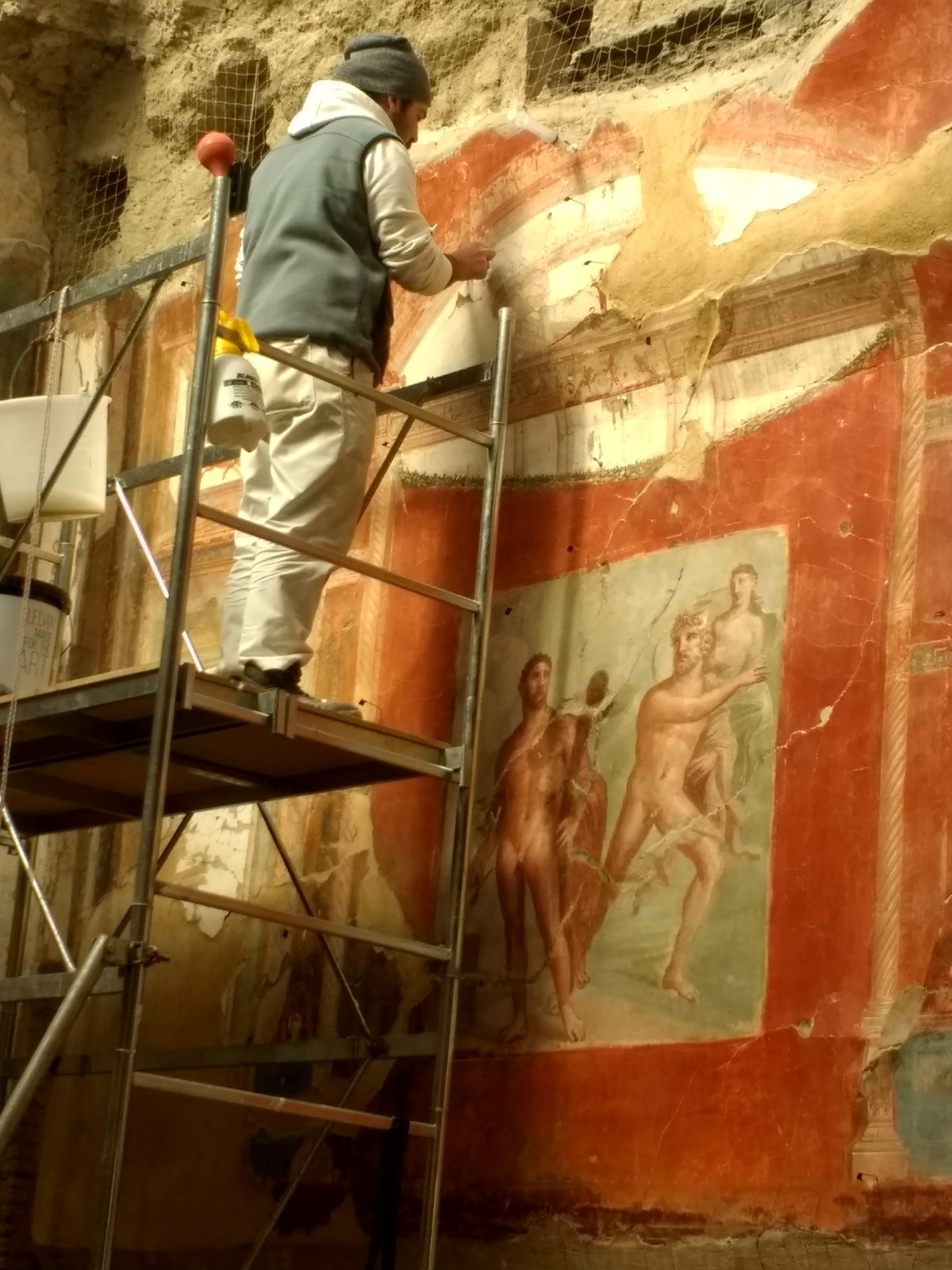
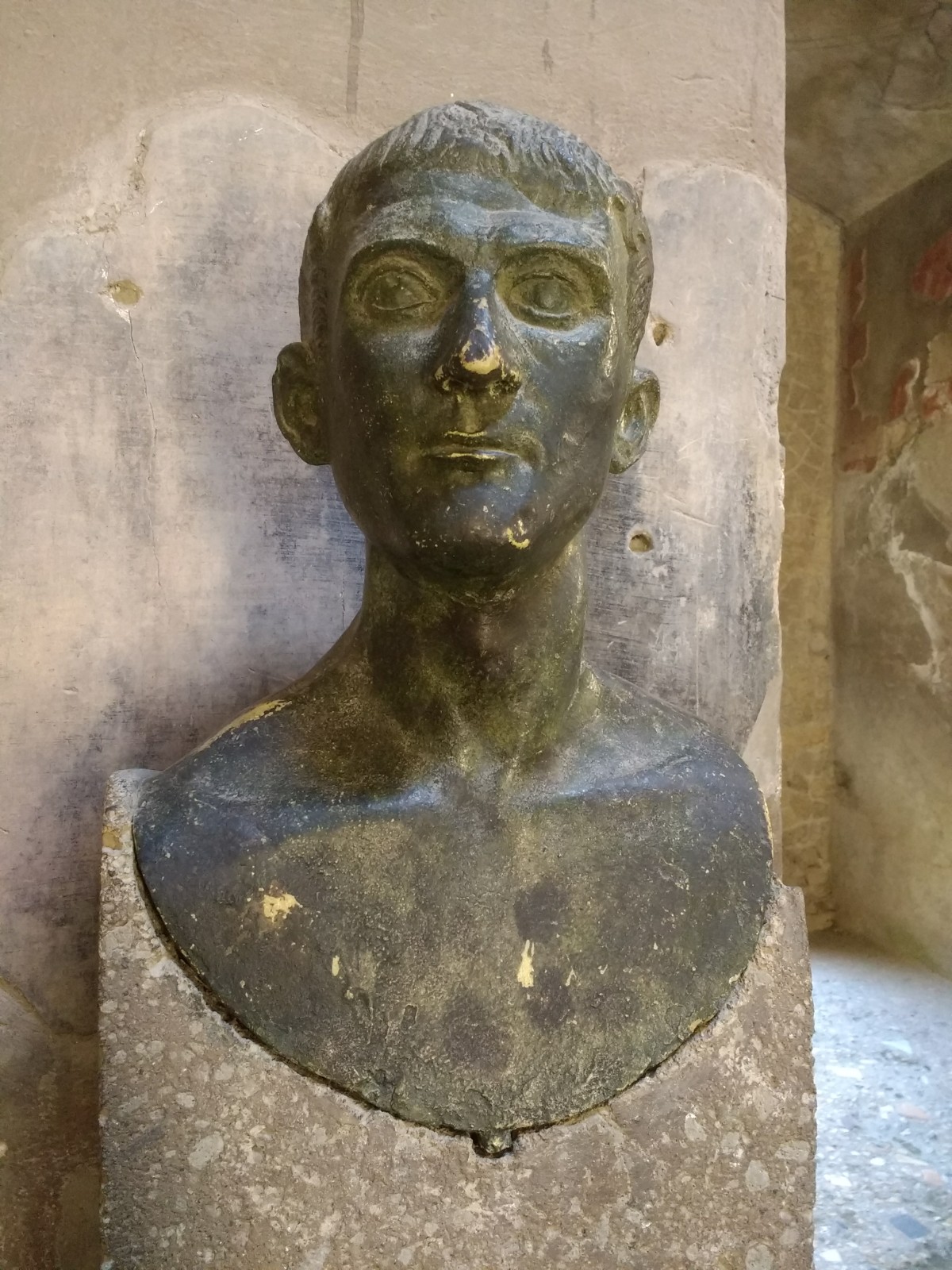
MosaicAnother mosaic Part of a friezeLadies’ changing room in the bath house. The niches on the walls are for the women to store their clothes.Mosaic in ladies’ bath houseThese wooden sliding doors, affording a little more privacy in the dining room, have survived, complete with brass handles.Conservation in progressBronze statue
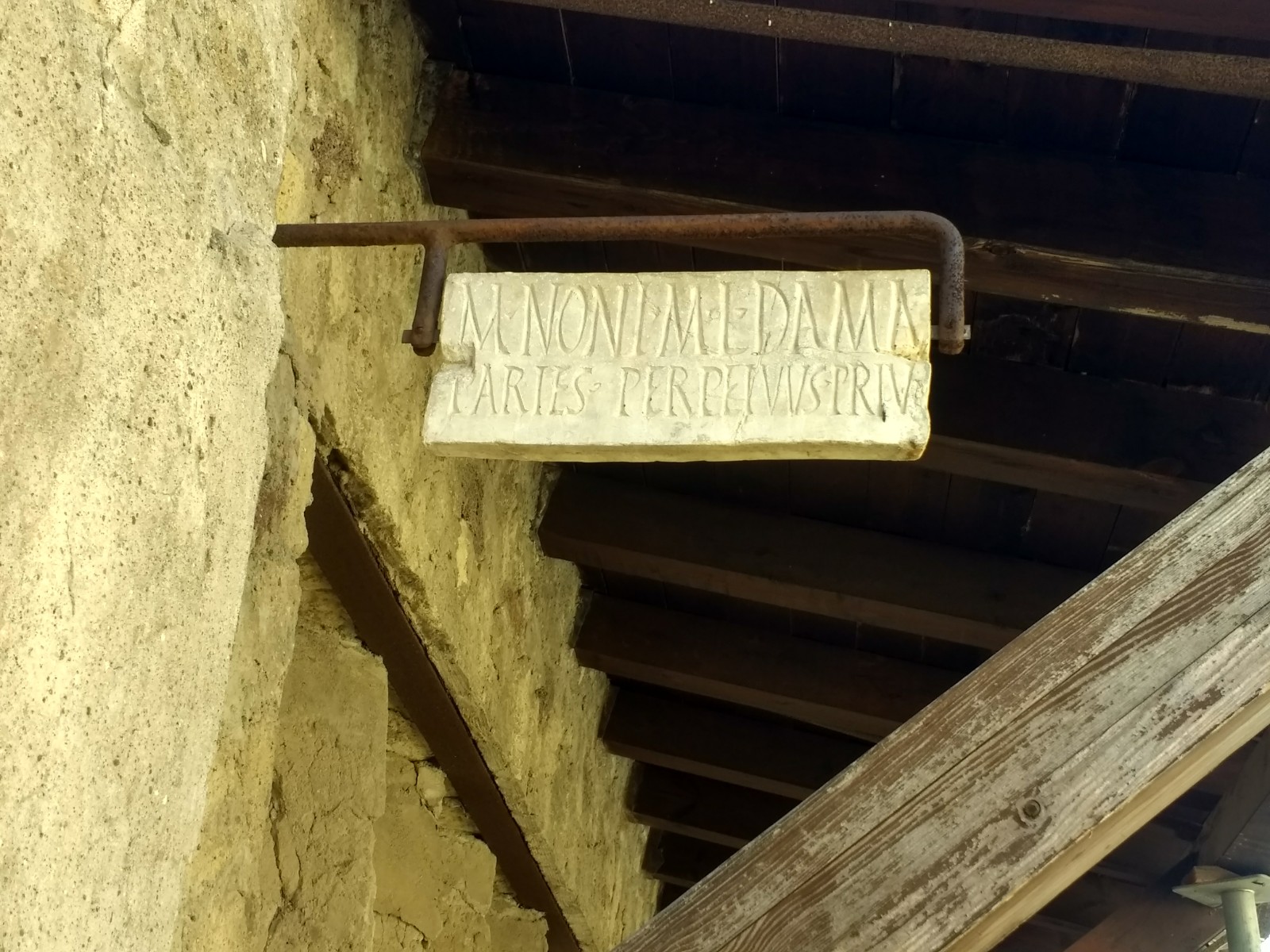
A house sign with the name of the inhabitant. This man was a former slave who became a citizen.
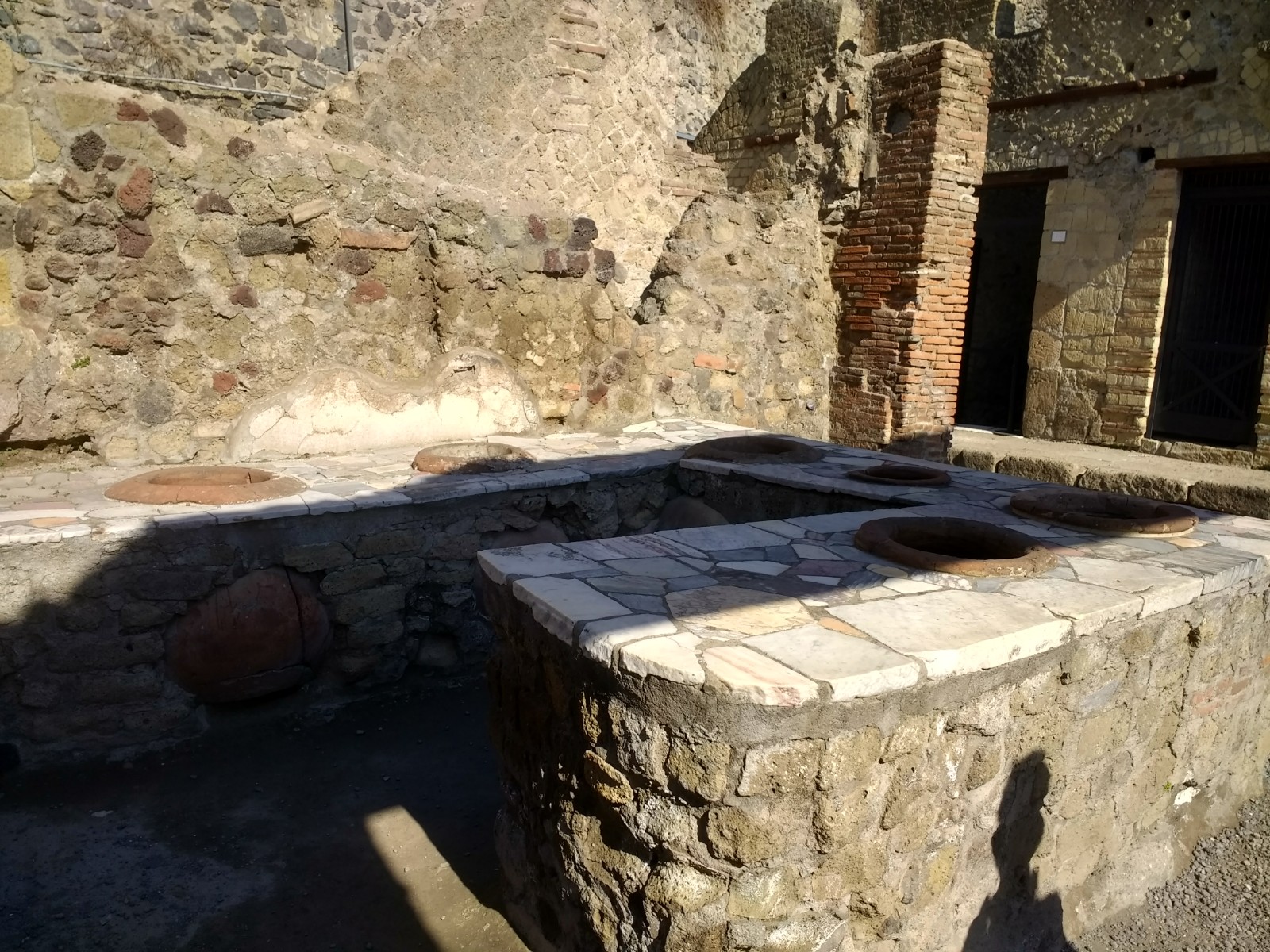
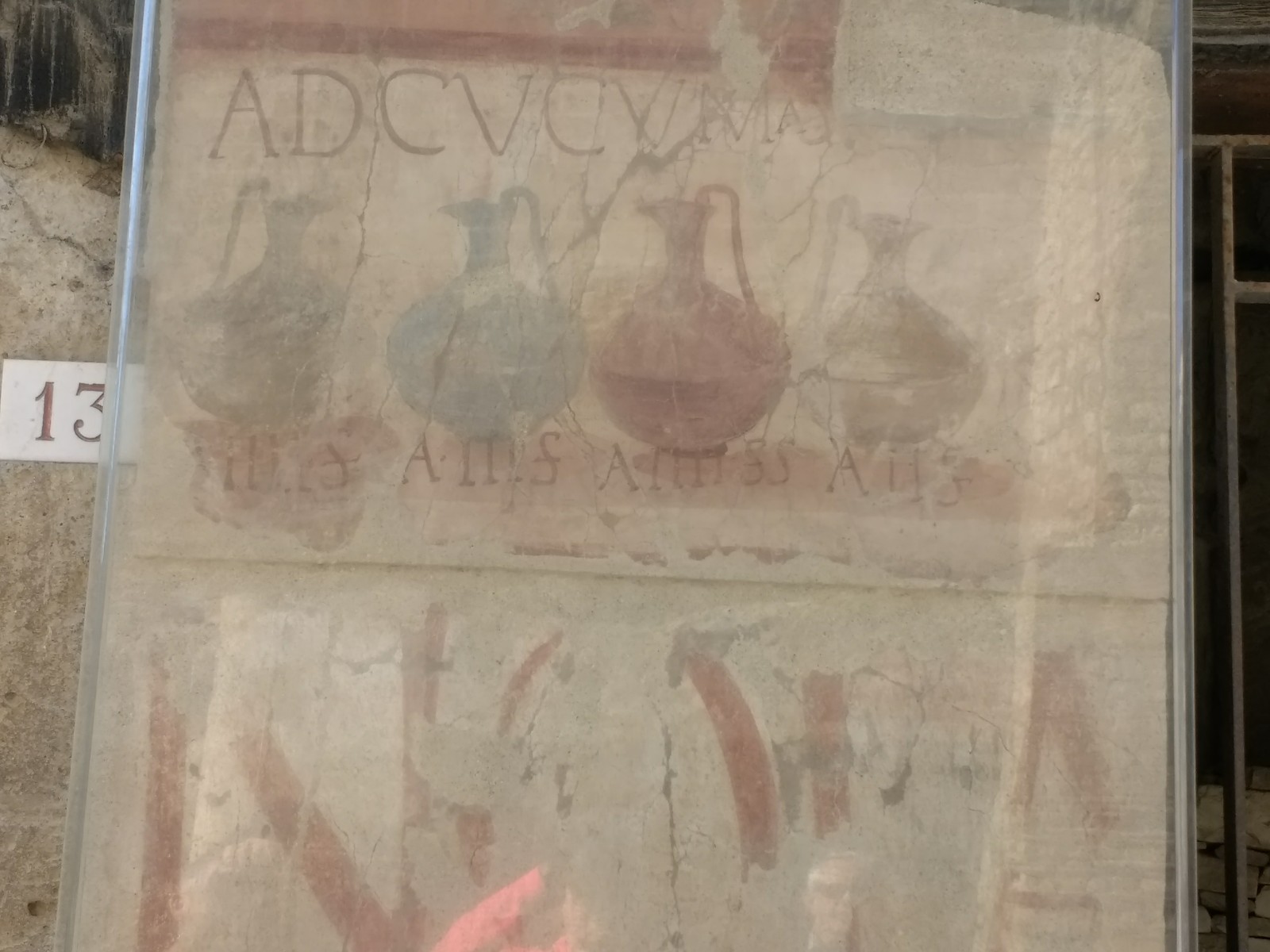
Thermopolium. A place where poor people who had houses with no cooking facilities could come and buy ready-cooked food.Wine menu outside a shop.
My husband, Mark, and I have just sold our house and are taking a year out to have an adventure before we settle down to retirement. We decided on a journey through Italy as it has the perfect combination of good weather, interesting history, great wine and wonderful ice-cream! As we will be starting our journey in January, we are beginning in the very south of the country.
View all posts by tortoisesontour

 Tortoise Travel